
寿司狗派对!Sushi Go Party!
一句话概览
寿司狗派对! 是一款已收录于村了吗规则库的桌游,支持 2–8 人,原名 Sushi Go Party!。
本页内容:一句话概览 · 游戏概述 · 1. 游戏组件 · 2. 游戏设置 · 3. 游戏流程 · 4. 卡牌详解 · 关键规则与常见问题 · 常见问题
寿司狗派对! 规则速览
以下规则速览由本站整理,与官方规则书表述不同,仅供快速上手参考。
游戏概述
在一场丰盛的寿司盛宴中,玩家各自挑选菜品组合,通过3轮抢牌(选牌→亮牌→传牌)比拼得分最高的组合。每回合所有人同时从手牌中选1张扣放,翻开后将剩余手牌顺时针传给下家,直到手牌用完。
核心机制: 同步选牌、手牌轮转、可定制菜单、甜品跨轮计分
1. 游戏组件
| 组件 | 数量 |
|---|---|
| 游戏板 | 1块(含计分轨道) |
| 菜单板块 | 22块(展示各卡牌效果) |
| 玩家棋子 | 8个(不同颜色) |
| 卡牌总计 | 181张 |
| ┣ 握寿司(Nigiri) | 12张(蛋/�的/鱿鱼各若干) |
| ┣ 卷类(Maki Roll / Temaki / Uramaki) | 各12张 |
| ┣ 前菜(天妇罗 / 刺身 / 饺子 / 鳗鱼 / 豆腐 / 饭团 / 毛豆 / 味噌汤) | 各8张 |
| ┣ 特殊(筷子 / 酱油 / 茶 / 菜单 / 勺子 / 特别点单 / 外卖盒 / 芥末) | 各3张 |
| ┗ 甜品(布丁 / 抹茶冰淇淋 / 水果) | 各15张 |
2. 游戏设置
- 将游戏板放在桌面中央。
- 每位玩家选一种颜色,将对应棋子放在计分轨道的 0 附近。
- 首次游戏时按类型将卡牌分好放入盒中对应槽位。
- 所有玩家共同决定本局使用的卡牌组合(见"菜单选择")。
- 找到对应菜单板块放入游戏板的对应槽位,让所有人一目了然。
- 将选定的甜品卡牌洗匀,面朝下放在游戏板旁边单独成堆。
- 将其余选定卡牌全部洗匀,面朝下形成主牌堆放在旁边。
菜单选择
可从以下预设方案中选择,也可自组菜单:
| 方案 | 适用说明 |
|---|---|
| 我的第一餐 | 入门推荐 |
| 经典寿司去! | 原版游戏配方 |
| 聚会拼盘 | 体验新卡牌 |
| 大师菜单 | 进阶策略向 |
| 得分拼盘 | 追求高分 |
| 残酷组合 | 互动性强 |
| 大型宴会 | 适合6–8人 |
| 双人晚餐 | 适合2人 |
自组菜单规则: 必须包含握寿司(每局必用)、1种卷类、3种前菜、2种特殊、1种甜品。菜单(Menu)和特别点单(Special Order)不能用于7–8人游戏;勺子(Spoon)和毛豆(Edamame)不能用于2人游戏。
3. 游戏流程
3.1 回合结构
游戏共进行 3 轮。每轮开始前,按以下数量将甜品卡牌洗入主牌堆:
| 人数 | 第1轮 | 第2轮 | 第3轮 |
|---|---|---|---|
| 2–5人 | 5张 | 3张 | 2张 |
| 6–8人 | 7张 | 5张 | 3张 |
然后按人数发牌:
| 人数 | 每人发牌数 |
|---|---|
| 2–3人 | 10张 |
| 4–5人 | 9张 |
| 6–7人 | 8张 |
| 8人 | 7张 |
剩余卡牌面朝下放在旁边作为备用牌堆。玩家拿起手牌(不展示给他人),开始游戏。
3.2 回合行动
所有玩家同步进行:
- 从手牌中秘密选择1张卡牌,面朝下放在面前。
- 所有人同时翻开选中的卡牌。
- 将剩余手牌面朝下顺时针传给左手边的玩家。
- 拿起收到的新手牌,开始下一轮选择。
已翻开的卡牌留在面前直到本轮结束计分。建议按颜色分组整理。
3.3 特殊卡牌即时效果
以下卡牌在打出当回合即可产生效果(非等待回合结束计分):
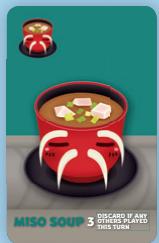
- 味噌汤(Miso Soup): 若本轮只有你一人打出味噌汤,则保留并最终得3分;若多人同时打出(包括你自己打出多张),全部弃掉不得分。
- 芥末(Wasabi): 打出后无即时效果,但你打出的下一张握寿司必须放在芥末上,该握寿司分数×3。
- 菜单(Menu): 从备用牌堆抽4张看,选1张立即打出(不能再选菜单),剩余3张放回洗匀。菜单卡本身弃掉。
- 特别点单(Special Order): 复制你本轮已打出的某张卡牌。打出时将卡指向要复制的卡,翻开后叠放在上面,计分时视作该卡。
- 外卖盒(Takeout Box): 翻开后可立即将本轮之前打出的任意数量卡牌翻面朝下,这些卡不再视为原卡,每张在回合结束时得 2分。
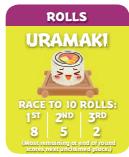
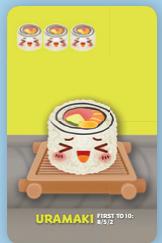
- 寿司卷之里卷(Uramaki): 若打出后你面前的里卷图标总数≥10,立即按到达顺序得分(第1名8分、第2名5分、第3名2分),然后弃掉所有里卷卡。同轮多人同时到达则按图标总数决胜。
3.4 额外行动卡(筷子与勺子)
筷子(Chopsticks)和勺子(Spoon)打出当回合无效果,但可在之后任意回合使用。使用时在所有人翻开卡牌时喊出卡名,所有人正常打出选中卡后,你再执行额外行动:
- 筷子: 从当前手牌中再选1张打出。筷子卡收回手中(可继续传递)。
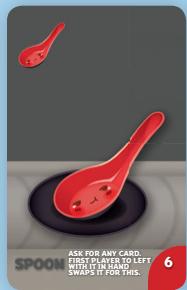
- 勺子: 宣布想要的卡牌名称,从左手边玩家开始依次检查手牌,有人持有则交给你立即打出,你将勺子卡交给该玩家放入手中。若无人持有,勺子本轮弃掉。
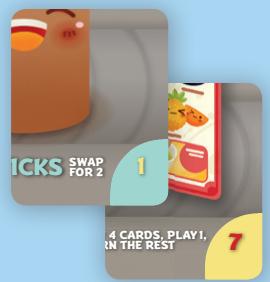
多张额外行动同时使用时: 按卡牌右下角小数字由小到大依次执行。
3.5 轮结束计分
手牌用完后本轮结束:
- 先将甜品卡单独放在一旁(留到游戏结束计分)。
- 其余卡牌按各类型规则计分,移动棋子在计分轨道上前进。
- 收集所有非甜品卡牌洗匀,根据当前轮次加入新甜品卡,开始下一轮。
3.6 游戏结束
3轮结束后,除常规计分外还需计甜品卡分数。得分最高者获胜;平局时甜品卡最多者胜。
4. 卡牌详解
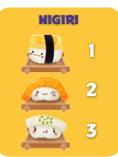
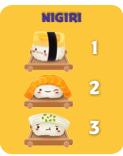
4.1 握寿司(Nigiri)
每局必用卡牌。
| 握寿司类型 | 基础分值 |
|---|---|
| 蛋握寿司 | 1分 |
| 三文鱼握寿司 | 2分 |
| 鱿鱼握寿司 | 3分 |
放在芥末上时分值×3:蛋3分、三文鱼6分、鱿鱼9分。
4.2 卷类
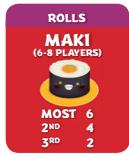
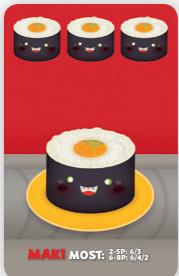
卷寿司(Maki Roll)
回合结束时比较各玩家卡牌顶部的卷寿司图标总数:
- 2–5人游戏: 最多者得6分,第二多者得3分;多人并列最多或第二多则均得满分。至少拥有1张卷寿司卡才能得分。
- 6–8人游戏: 最多者得6分,第二多者得4分,第三多者得2分。
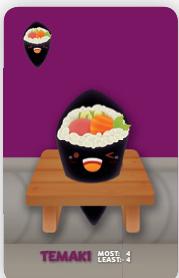
手卷(Temaki)
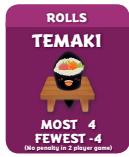
回合结束时比较各玩家拥有的手卷卡数量:最多者得4分,最少者(包括0张)扣4分。多人并列则均得/扣满分。2人游戏中最少者不扣分。
里卷(Uramaki)
比赛中先到10图标者立即得分,无需等到回合结束:
| 到达顺序 | 得分 |
|---|---|
| 第1名 | 8分 |
| 第2名 | 5分 |
| 第3名 | 2分 |
多人同轮同时达到10图标,按图标总数决胜;仍平则均得该名次满分,下一顺位跳过。回合结束时若仍有未领奖的名次,剩余里卷卡最多的玩家获得下一个未领取的名次分数。
4.3 前菜
天妇罗(Tempura)
| 数量 | 得分 |
|---|---|
| 1张 | 0分 |
| 2张 | 5分 |
可计多组(如4张=2组=10分)。
刺身(Sashimi)
| 数量 | 得分 |
|---|---|
| 1–2张 | 0分 |
| 3张 | 10分 |
可计多组。
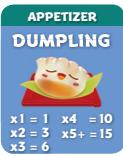
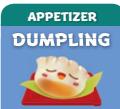
饺子(Dumpling)
| 数量 | 得分 |
|---|---|
| 1张 | 1分 |
| 2张 | 3分 |
| 3张 | 6分 |
| 4张 | 10分 |
| 5张及以上 | 15分 |
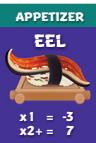
鳗鱼(Eel)
| 数量 | 得分 |
|---|---|
| 1张 | 扣3分 |
| 2张及以上 | 7分 |
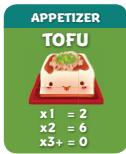
豆腐(Tofu)
| 数量 | 得分 |
|---|---|
| 1张 | 2分 |
| 2张 | 6分 |
| 3张及以上 | 全部0分 |
饭团(Onigiri)
有4种不同形状(圆形、三角形、方形、长方形)。按拥有的独特形状数量计分,可计多组:
| 独特形状数 | 得分 |
|---|---|
| 1种 | 1分 |
| 2种 | 4分 |
| 3种 | 9分 |
| 4种 | 16分 |
毛豆(Edamame)——仅限3–8人游戏
每张毛豆卡的分值 = 拥有毛豆的对手数量(每人1分),上限4分。若仅1人打出毛豆则所有毛豆卡得0分。
味噌汤(Miso Soup)
若本轮仅你一人打出味噌汤,保留并得3分;若多人打出(包括你自己打出多张),全部弃掉。可在一个回合内得分多张味噌汤(只要都是唯一打出者)。
4.4 特殊卡
筷子(Chopsticks)
打出当回合无效果。后续任意回合可喊"筷子!",在正常打出选中卡后,从手牌中再选1张打出。筷子卡收回手中。
勺子(Spoon)——仅限3–8人游戏
打出当回合无效果。后续任意回合可喊"勺子!",宣布想要的卡牌名称,从左手边开始依次检查,有人持有则交给你立即打出。你将勺子卡交给该玩家。若无人持有则勺子本轮弃掉。询问有变体的卡牌时可笼统询问(如"握寿司")或指定具体种类。
菜单(Menu)——仅限2–6人游戏
从备用牌堆抽4张,选1张立即打出(不能选菜单),其余3张放回洗匀。菜单卡弃掉。
特别点单(Special Order)——仅限2–6人游戏
复制本轮已打出的任意一张卡牌。打出时指向要复制的卡,翻开后叠放。若打出时面前无其他卡则立即弃掉。复制多图标卡时视为拥有全部图标。
复制特殊卡的规则:
- 复制握寿司:若原卡在芥末上,复制卡不算在芥末上;若你有空芥末,可将复制卡放在芥末上。
- 复制芥末:放在芥末旁边,不算上面有握寿司。
- 复制味噌汤:若本轮有其他味噌汤(包括你自己的),全部弃掉。
- 复制里卷:若达到10图标则立即得分,特别点单随里卷一同弃掉。
- 复制特别点单:视为复制该特别点单所复制的卡。
- 复制筷子/勺子:视为相同编号的卡,可在后续回合使用。
- 复制被外卖盒翻面的卡:特别点单也翻面,回合结束得2分。
- 复制甜品卡:随甜品卡一同放到旁边,计入游戏结束计分,不再洗回牌堆。
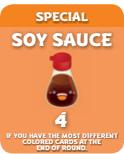
酱油(Soy Sauce)
回合结束时,所有玩家比较各自打出卡牌的背景颜色种类数。拥有最多(或并列最多)颜色种类且打出了酱油卡的玩家,每张酱油卡得4分。酱油卡本身也计入颜色种类。当轮打出的甜品卡计入统计。
茶(Tea)
回合结束时,计算你面前相同背景颜色的最大一组卡牌数量,每张茶卡得该数量的分值。
外卖盒(Takeout Box)
打出时可立即将本轮之前打出的任意数量卡牌翻面朝下,每张在回合结束时得2分。外卖卡本身弃掉。被翻面的卡若正被特别点单复制,特别点单仍视为原卡。
4.5 甜品卡
甜品卡在回合结束时单独放到旁边,3轮结束后统一计分。
布丁(Pudding)
游戏结束时比较各玩家布丁卡数量:最多者得6分,最少者(包括0张)扣6分。多人并列则均得/扣满分。2人游戏中最少者不扣分。
抹茶冰淇淋(Green Tea Ice Cream)
| 数量 | 得分 |
|---|---|
| 1–3张 | 0分 |
| 4张 | 12分 |
可计多组。
水果(Fruit)
游戏结束时统计3种水果(西瓜、橙子、菠萝)各自的图标数,分别按以下标准计分后相加:
| 图标数 | 0 | 1 | 2 | 3 | 4 | 5+ |
|---|---|---|---|---|---|---|
| 得分 | -2 | 0 | 1 | 3 | 6 | 10 |
未打出任何水果卡的玩家扣6分。
关键规则与常见问题
易错规则
- 芥末强制放置: 若你面前有空芥末卡,打出握寿司时必须放在芥末上。
- 味噌汤同时打出判定: 多人同轮打出味噌汤(包括同一玩家打出多张),全部弃掉不得分。
- 里卷即时结算: 达到10图标立即得分并弃卡,不等到回合结束。
- 外卖盒翻面不可逆: 被翻面的卡不再视为原卡,统一得2分。
- 特别点单复制甜品卡时: 不洗回牌堆,随甜品一同计分。
- 筷子/勺子打出当回合无效果: 只能在后续回合使用。
- 菜单/特别点单限2–6人: 7–8人游戏不能使用。
- 勺子/毛豆限3人以上: 2人游戏不能使用。
- 多额外行动同时使用时按卡牌右下角数字顺序执行。
- 2人游戏手卷/布丁最少者不扣分。
常见问题
-
Q:里卷同轮多人同时达到10图标怎么办?
A:按图标总数决胜;仍平则均得该名次满分,下一顺位跳过。 -
Q:特别点单可以复制被外卖盒翻面的卡吗?
A:可以,特别点单也会翻面,回合结束得2分。 -
Q:用筷子/勺子打出的味噌汤算同轮吗?
A:算,若同轮有其他味噌汤则全部弃掉。 -
Q:勺子询问时可以说笼统类型吗?
A:可以笼统问"握寿司",持有者可选择给哪种;也可指定具体种类,持有者只有该种类才需给出。 -
Q:茶的计分只算当前轮打出的卡吗?
A:是的,只计算当轮面前的卡牌(不含之前轮次的甜品卡)。 -
Q:水果卡0图标是什么意思?
A:若某种水果你完全没有该类型卡牌,该水果扣2分。所有水果都为0则总共扣6分。
常见问题(FAQ)
以下 1 条问答中 0 条来自站内玩家的真实提问,其余 1 条为本站整理的常见疑问;答复内容保持原样。
寿司狗派对!支持几个人玩?
2–8 人。
去哪查完整规则
想核对具体规则细节、卡牌效果或某个回合的结算方式,可以在村了吗里选中这款游戏后直接提问。
同类桌游
规则原文(Markdown)
本站收录这款游戏的规则原文 1 个文件,此处内联渲染 1 个,可直接展开阅读或下载。
Sushi Go Party! Rules.md32.4 KB
SUSHiGO TM
RULES OF PLAY
Ages 8+
2-8 Players
GAMEWRIGHT®
The Deluxe Pick and Pass Card Game
APPETIZER


Welcome to Sushi Go Party! You are dining à la carte at a deluxe sushi feast. Before you eat, you must first create your own menu from a wide variety of delectable options. Then try to score the most points over three rounds by grabbing the best combination of cards before they whiz by!
CONTENTS
181 Cards + 22 Menu Tiles + 8 Pawns + 1 Game Board
NIGIRI
Nigiri12x:
SUSHI ROLLS
APPETIZERS
Maki Roll, Temaki, Uramaki12x each:
Tempura, Sashimi, Dumpling, Eel, Tofu, Onigiri, 8x each: Edamame, Miso Soup
SPECIALS Chopsticks, Soy Sauce, Tea, Menu, Spoon,3x each: Special Order, Takeout Box, Wasabi
DESSERTS Pudding, Green Tea Ice Cream, Fruit15x each:
SETUP
-
Place the game board in the center of the playing area.
-
Each player chooses a player color and places their corresponding pawn on or near the 0 space of the game board.
-
The first time you play, divide the cards according to type and place each type in a slot in the box.
-
Together, decide which cards to use in this game. See “Card Selections.”
-
Find the menu tiles that correspond to the chosen cards and place them into their appropriate slots on the game board. These tiles allow everyone to see at a glance which cards are in play and how they work.
Note: When playing with maki rolls in a 6-8 player game, flip its menu tile over to show the 6-8 player game scoring.
-
Shuffle the chosen dessert cards and place them in a face-down pile to one side of the board.
-
Take all the other chosen sets of cards and shuffle them together to form a face-down deck which is also placed near the board.
CARD SELECTIONS
In Sushi Go Party! you choose what’s on the menu for each game! Different combinations will make the game feel very different.
Choose from one of the following:
MY FIRST MEAL A mellow menu that goes down easy for first time players.

MAKI(2-5 PLAYERS)

MOST 62ND 3

x2 = 5
SASHIMI

x3 = 10
MISO SOUP

WASABI

NEXT NIGIR YOU PLAY IS
SUSHI GO! The classic menu from the original game.


TEMPURA
GREEN TEA ICE CREAM
SASHIMI


x2 = 5
x3 = 10
DUMPLING

GAME END x4 = 12
x1 = 1 x4 =10
x2 = 3 x5+ =15
x3 = 6
CHOPSTICKS

KEEP TO USE LATER
WASABI

NEXT NIGIRI YOU PLAY IS WORTH x

PUDDING
MOST EST -6
PARTY SAMPLER Taste what’s new in Sushi Go Party!


TEMPURA

x2 = 5
DUMPLING

x1 = 1 x4 =10
x2 = 3 x5+ =15
x3 = 6

WASABI
x1 = 2 x2 = 6 x3+ = 0

NEXT NIGIRI YOU PLAY IS
SPECIAL
MENU

USE WHEN PLAYED 4 CARDS. PLAY 1
DESSERT
GREEN TEA ICE CREAM

GAME END x4 = 12
MASTER MENU For seasoned Sushi Go! players who want to think!

MOST 4
FEWEST -4

UNIOUE SHAPES:
1 = 1
2 = 4
3 = 9
4 = 16
x1 = 2 x2 = 6 x3+ = 0
SASHIMI

x3 = 10
SPOON
KEER TO USE LATER ANNOUNCE A CARD. THE FIRS
TAKEOUT BOX

USE WHEN PLAYED FLIP OVER ANY PREVIOUSLY
DESSERT
FRUIT

GAME END PER TYPE: x0 = -2 x3 = 3 x1 = 0 x4 = 6 x2 = 1 x5+ =10

POINTS PLATTER Score big points!



CUTTHROAT COMBO Interactive and in your face!




KEEP TO USE LATER ANNOUNCE A CARD. THE FIRST

BIG BANQUET Works well with 6–8 players.


x1 = 1 x4 =10 x2 = 3 x5+ =15 x3 = 6
KEER TO USE LATER ANNOUNCE A CARD. THE FIR


KEEP TO USE LATER
DINNER FOR TWO Works well with 2 players.


CREATE YOUR OWN MENU Pick your own card combination to play with! You can play with any combination of cards you like. Just make sure your game is made up of the following:
• Nigiri cards are used in every game.
• 3 types of appetizers.
• 1 type of rolls.
• 2 types of specials.
• 1 type of dessert.
IMPORTANT: Menu and special order may not be used in a 7–8 player game. Spoon and edamame may not be used in a 2 player game.
STARTING A ROUND
A game of Sushi Go Party! takes place over 3 rounds. Before each round, shuffle a group of face-down dessert cards into the main deck based on this table:
2–5 PLAYERS
ROUND 1
ROUND 2
ROUND 3
5 dessert cards
3 dessert cards
2 dessert cards
6–8 PLAYERS
7 dessert cards
5 dessert cards
3 dessert cards

(In a 2–5 player game, the extra 5 dessert cards are not used.)
Then deal cards face-down to each player, based on this table:
| PLAYERS | CARDS |
| 2-3 | 10 |
| 4-5 | 9 |
| 6-7 | 8 |
| 8 | 7 |
Place the remaining cards in a face-down deck beside the game board. Take your cards into your hand, secret from other players. Play now begins!
PLAYING A TURN
Turns in Sushi Go Party! happen simultaneously. Each player chooses 1 card in their hand that they would like to keep and places it face-down in front of them. When all players have done this, everyone reveals their chosen cards by turning them face-up.
After revealing cards, pass your remaining hand face-down to the player on your left. (In this way, each hand will move clockwise around the table.) Pick up this new hand and the next turn begins. (You will have a smaller hand to choose from.)
Note: Face-up cards remain with you until the end of the round, when they are scored. As you accumulate cards, group them together in columns of the same color.
SPECIAL CARD ACTIONS
Most cards score at the end of a round, but there are a few that have special rules that may affect the current turn:
URAMAKI
MISO SOUP

WASABI

MENU

SPECIAL ORDER

TAKEOUT BOX
See the “Card Guide” in the back for more details about how each card works.
Chopsticks and spoon cards allow you to perform a bonus action on any turn after the turn in which the card is originally played. To use a bonus action card, simply call out the name of the card as all players are revealing the cards during a turn. After all players have played their chosen cards as normal, the called out action then takes effect. Bonus actions happen before players pick up the hand of cards from their right neighbor to begin the next turn. See the “Card Guide” for more details about how each card works.

CHOPSTICKS
SPOON
IMPORTANT! If multiple bonus actions are used in the same turn and/or if multiple menus or takeout boxes are played in the same turn, the order in which these cards are used is indicated by the small number in the lower-right corner of the card. The lowest number goes first, and then the others follow in ascending order.
ENDING A ROUND
When all of the cards have been played and everyone’s hand is empty, the round is over. First, place any dessert cards off to your side. (Keep them there until the end of the game, which is when they are scored. The strawberry icon in the lower-left corner of all the dessert cards is a reminder of this.)

Next, score all the other cards you have played this round. Each card type scores in a different way, as described in the “Card Guide”. Move your pawn along the score track on the game board, showing how many points you scored in the round.
All cards, except for played dessert cards, are then collected and re-shuffled together. (Remember to add in a new set of dessert cards, according to the round.) Start the next round, which plays just like the previous.
ENDING THE GAME
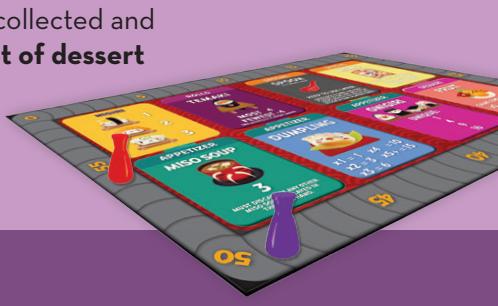
When you have played 3 rounds, the game is over. In addition to regular scoring, be sure to also score your dessert cards, as described in the “Card Guide.” Whoever has the most points is the winner! If there is a tie, the player with the most dessert cards wins.
A WORD FROM GAMEWRIGHT
We heard your requests… You want more Sushi Go! Well here it is, you got more Sushi Go! This deluxe edition features lots of opportunities to customize your playing experience. You’ll find that while the overall game is basically the same, the variety of cards offers many new ways to play. You’ll also notice that your strategy will change from game to game. Send us your favorite combinations and we may include them in a future edition!
CARD GUIDE

Here are details about how each type of card works.
NIGIRI
Nigiri are an essential part of any great sushi meal.
Each egg nigiri is worth 1 point.
Each salmon nigiri is worth 2.
Each squid nigiri is worth 3.
An egg nigiri on a wasabi card is worth 3.
A salmon nigiri on a wasabi is worth 6.
A squid nigiri on a wasabi is worth 9.
MAKI ROLLS
Small and tasty, can you eat more maki than anyone else?
End of the round: Compare how many maki roll icons you have at the top of your played maki roll cards. Whoever has the most scores 6 points. Whoever has second most scores 3. If multiple players tie for most or second most, all players receive the full points. A player must have at least 1 maki roll card to receive any points for maki rolls.
Example: Chris and Meredith have 5 maki roll icons, Kerry has 3 and Andrew has 1. Chris and Meredith each score 6 points and Kerry scores 3.
In a 6-8 player game: The player with the second most maki rolls scores 4 points, and the player with the third most scores 2. Tied players all score the full points as above.
TEMAKI
You don’t want to miss out on temaki - a roll that’s big enough to fit in your hand!
End of the round: Compare how many temaki roll cards you have. The player with the most scores 4 points. The player with the fewest (including 0) loses 4 points. If multiple players tie for most/fewest, all players receive or lose the full points.
In a 2 player game: The player with the fewest temaki does not lose any points.
Example: Chris has 3 temaki cards, Meredith has 2, and Kerry and Andrew have 0. Chris scores 4 points. Kerry and Andrew both lose 4 points.

URAMAKI
Uramaki rolls are inside-out. Race your friends to eat ten of them!
During a round: If you are the first to have at least 10 icons at the top of your played uramaki cards, you immediately score 8 points. Move your pawn on the score track and then immediately discard your uramaki cards. The next player to collect 10 uramaki icons scores 5 points, and the third player scores 2. Again, these points are scored immediately and the cards are discarded. If multiple players reach 10 or more icons on the same turn, ties are broken by the highest total number of uramaki icons on the tied players cards. If players are still tied, they both receive the full points for the place they are contesting. If this happens, the next place is skipped in scoring.
End of the round: The player with the most uramaki icons still in front of them scores points for the next unclaimed place (8 points if no one has scored uramaki in the round, 5 if only first place has scored, 2 if both first and second place has scored, 0 if all three places scored). If multiple players tie for the most, they each receive the full amount. It’s possible that one player may be awarded multiple placings for uramaki in a single round.
Example: Chris and Meredith play uramaki cards on the same turn, and now both have 12 uramaki icons. They are the first players to pass 10 icons and so both immediately score 8 points. Second place will now not be awarded, so the next player to pass 10 icons will only receive 2 points. The round ends and no one else has reached 10 icons. Out of the players left with uramaki cards, Kerry has the most icons, so she scores the 2 points.
Tip: Place discarded uramaki cards in a face-up pile beside the score board after scoring them as a reminder of how many places have been awarded in the round. They are of course shuffled back into the deck for the next round.


DUMPLING
Dumplings are so yummy - the more you eat, the more you want!
Score points based on how many dumplings you have, as follows:

Dumplings: Points:
2 3 4 5+
1 3 6 10 15
EDAMAME (only use in 3-8 player games) These beans are the perfect snack to share at the table!
Score 1 point per opponent with any edamame for each of your played edamame cards. Edamame are worth 0 if only 1 player plays any edamame in the round. Even if more than 4 opponents play edamame, the maximum each edamame card can be worth is 4 points.
Example: At the end of the round, Chris has 3 edamame, Kerry has 2 edamame and Andrew has 1. Each of Chris’s edamame is therefore worth 2 points (1 per opponent with any edamame) for a total of 6. Kerry scores 4 points and Andrew scores 2 points.

EEL
You might not enjoy your first taste of eel, but it sure grows on you!
If you have 1 eel, you lose 3 points.
If you have 2 or more eel, you score 7 points.
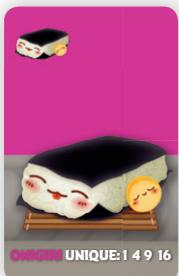
ONIGIRI
These rice balls come in all different shapes - get one of each!
There are 4 different shapes of onigiri: circle, triangle, square and rectangle. Score points based on how many unique shapes you collect, as follows:
Unique shapes: Points:
1 2 3 4
1 4 9 16
You may score multiple sets of unique onigiri.
Example: Chris has 1 circle onigiri, 1 triangle onigiri and 2 square onigiri. He scores 9 for his set of 3 unique onigiri, and 1 for his second set of just 1 unique onigiri (the second square), for a total of 10 points.
MISO SOUP

Everyone’s always jealous of that one person who orders a hot cup of miso soup!
If you play a miso soup card and it is the only one played in the turn, it remains in your play area until the end of the round when it will score 3 points. However, if more than 1 miso soup is played on the same turn (including by you), then all these miso soup cards are immediately discarded and will not score at the end of the round. Place them face-up beside the game board, to be shuffled back into the deck for the next round.
If a player plays a miso soup by using chopsticks, spoon, menu, or special order it counts as being played on that same turn.
• You may score multiple miso soups in a round.
SASHIMI
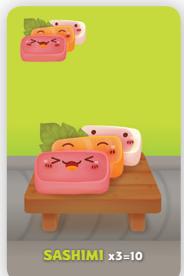
A true delicacy, sashimi takes time to fully appreciate.
If you have 1 or 2 sashimi, you score 0.
If you have 3 sashimi, you score 10.
You may score multiple sets of sashimi in a round.
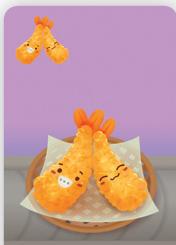
TEMPURA
A deep-fried delight - you can’t eat just one piece of tempura.
If you have 1 tempura, you score 0.
If you have 2 tempura, you score 5.
TEMPURA x2=5
You may score multiple sets of tempura in a round.
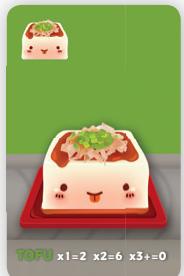
TOFU
Tofu is really good for you, but eat too much and you could get sick of it.
If you have 1 tofu, you score 2 points.
If you have 2 tofu, you score 6 points.
If you 3 or more tofu, all are worth 0 points.

CHOPSTICKS
Use chopsticks to grab those two dishes you really need at the same time.
Chopsticks let you take 2 cards on a future turn. Nothing happens on the turn when you initially play chopsticks. However, you may use it on a future turn to take a bonus action. When you want to use it, call out “chopsticks!” as all players are turning over their played cards. Then choose a second card from your current hand to play this turn, and play it immediately. Place the chopsticks card back into your hand before it is passed on. This way, other players may choose to play the chopsticks card later in the round. An unused chopsticks card is worth 0 points at the end of a round.

MENU (only use in 2-6 player games)
Not happy with the dishes on the table? Order something else off the menu!
If you play a menu card, draw 4 cards from the unused deck near the board and look at them. Then choose any 1 card to play immediately (except another menu card). Return the remaining 3 cards to the deck and shuffle it. Discard the menu card face-up beside the board. (It will be shuffled back into the deck for the next round.)

SOY SAUCE
Soy sauce makes every dish taste better. It’s the perfect addition to a varied meal.
At the end of a round in which soy sauce is played, all players compare how many different colored backgrounds they have among the cards they have played. If a player has the most (or tied for the most) different colors and has also played a soy sauce card, it is worth 4 points. You may score multiple soy sauce cards in a round. A soy sauce card itself is considered when determining the most different colors. Only dessert cards played in the current round are counted.
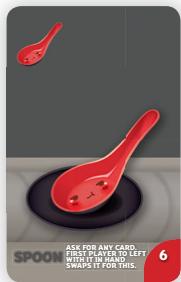
SPOON (only use in 3-8 player games) Grab that dish you missed out on earlier by reaching over and taking it with your spoon.
A spoon card allows you to take a card from another player’s hand. Nothing happens on the turn when you initially play a spoon. However, you may use it on a future turn to take a bonus action. When you want to use it, call out “spoon!” as all players are revealing their played cards. All players play their chosen cards as normal. Then announce the name of any card you would like. The first player to your left checks to see if he has this card in his
current hand. If not, the second player to your left checks her current hand, and so on until a player announces they have the card. This card is then given to you, and you play it immediately. Give your spoon card to the player you took it from, to place in their hand.
If no opponent has the announced card in their hand, then the spoon is discarded for the round. Place it face-up beside the game board, to be shuffled back into the deck for the next round. An unused spoon card at the end of the round is worth 0 points.
Note: When you ask for a type of card that has variations (nigiri, maki rolls, etc), you may ask for the card type in general, or one of the specific variations. If you ask for a specific card, the other players need to give it to you only if they have the exact card in their current hand. If you ask for the general card type, the player may choose between the different variations if they have more than one. For example, if you ask for just “nigiri” and the player has a squid and an egg nigiri in his hand, he chooses which one to give. The same is true for asking for “3 maki rolls” or just “maki rolls,” etc.
EXTRA RULES FOR USING CHOPSTICKS, SPOON OR MENU
These three cards allow you to play another card during a turn. Here are some rules clarifications based on which extra card you play:
NIGIRI: If you already have a wasabi card with no nigiri on it, you must play this nigiri on top of your wasabi.
MISO SOUP: If a previous miso soup card has already been played in this turn (including by you) then they are all discarded and will not score.
URAMAKI: If this card gives you a total of ten or more icons on your uramaki cards, immediately score them.
MENU OR TAKEOUT BOX: The card is played this turn. If other menus or takeout boxes are played this turn, the order in which they are used is indicated by the small number in the lower-right corner of the card. (See page 6 for more details.)
CHOPSTICKS OR SPOON: Keep the card to use on a later turn.
SPECIAL ORDER: Immediately choose which of your already played cards you want to copy.
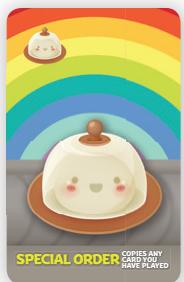
SPECIAL ORDER (only use in 2-6 player games) Enjoyed a dish you’ve already eaten and want more of it? Ask the chef for a special order!
A special order card copies any other card you previously played in the current round. When you choose to play special order from your hand, place it face-down on the table and point the top of the card at the card you wish to copy. Then, when the special order is revealed, place it on top of that card to show that the special order card is copying it. The special order card will score as if it is the card it is copying.
If you have not played any other cards when you play special order then there is nothing for special order to copy so it is immediately discarded. (It will be shuffled back into the deck for the next round.)
If special order is used to copy a card with multiple icons on it, then the copy is considered to be the same card with all of the same icons.
Rules clarifications based on which card you decide to copy:
NIGIRI: If you copy a nigiri that is on top of a wasabi, the special order is not considered to be also on top of that wasabi. If you copy a nigiri that is not on top of a wasabi and also have a wasabi card without a nigiri on it, you may play the special order (now considered a nigiri) on top of the wasabi. You must remember which nigiri it is copying.
WASABI: If you copy a wasabi (whether it has a nigiri card on it or not) place the special order card next to the wasabi. It is not considered to have any nigiri on top of it.
MISO SOUP: If you copy a miso soup and any other miso soup cards are played in the same turn (including by you), all are discarded.
URAMAKI: If the copy gives you a total of ten or more icons on your uramaki cards, immediately score them. Discard the special order along with the uramaki cards. (It will be shuffled back into the deck for the next round.)
SPECIAL ORDER: If you copy a special order that you previously played, the card is considered to also be whatever that special order is copying.
CHOPSTICKS OR SPOON: The special order is considered to be a copy with the same number in the lower-right corner. This card may be used in a later turn.
ANY CARD PREVIOUSLY FLIPPED BY TAKEOUT BOX: If you copy a flipped card, flip special order too. It will be worth 2 points at the end of the round.
PUDDING, FRUIT, GREEN TEA ICE CREAM: If a special order copies a dessert card, it is moved with the other dessert cards to the side for scoring at the end of the game. (It will not be reshuffled into the deck for any following rounds.)
TAKEOUT BOX

Not feeling like eating one of your dishes now? Save it for later and score more points.
When played, you may immediately choose any number of the cards you played on previous turns this round and flip them face-down. These cards are now no longer considered to be the card depicted on their front. Instead, each are worth 2 points at the end of the round. Discard the takeout box card face-up beside the game board. (It will be shuffled back into the deck for the next round.)
Note: If you choose to turn a card face-down that is being copied by a special order card, the special order continues to be considered as the card it is copying. (Remember which type of card the special order is copying.)
TEA

Tea clears the palate after eating a big meal.
End of the round: Count the number of cards in your largest (or tied for largest) set of cards with the same background color. Tea is worth 1 point per card in that set.
Example: Chris has 1 wasabi, 1 squid nigiri and 2 salmon nigiri. These 4 yellow cards are his largest set. His tea is therefore worth 4 points.

WASABI
Dipping a nigiri in some wasabi makes it extra hot!
When you play a wasabi card, it has no effect. However, the next nigiri card that you play must be placed on top of the wasabi card. This means that the nigiri will be worth triple points at the end of the round! You may only place 1 nigiri on top of each wasabi. You may play multiple wasabi cards in one round, though a wasabi without any nigiri on it at the end of the round is worth 0 points.

GREEN TEA ICE CREAM
A heaping bowl of ice cream is always satisfying after you eat.
At the end of the game, 1, 2 or 3 green tea ice cream are worth 0.
If you have 4 green tea ice cream cards you score 12 points.
A player may score multiple sets of green tea ice cream.

PUDDING
Pudding is the perfect end to a meal - make sure you don’t miss it!
At the end of the game, players compare how many pudding cards they have. The player with
the most scores 6 points. The player with the fewest (including 0) loses 6 points. If multiple players tie for most or fewest, all tied players gain or lose the full points.
In a 2 player game: The player with the fewest pudding does not lose any points.
Example: Chris has 4 pudding cards, Meredith has 2, and Kerry and Andrew have 1. Chris scores 6 points. Kerry and Andrew both lose 6 points.
FRUIT
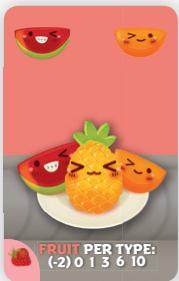
A selection of different fruit is a healthy way to finish your meal.
At the end of the game, all players score the 3 types of fruit: watermelon, orange and pineapple. Add up and
score the icons at the top of your cards based on this table:
Fruit type: Points:
0 1 2 3 4 5+ -2 0 1 3 6 10
Example: Chris has 0 watermelon, 1 orange and 4 pineapple icons. He loses 2 points for the watermelon, scores 0 for the orange and scores 6 for the pineapple, for a total of 4 points. Meredith played 0 fruit cards and so loses 6 points.
Game by Phil Walker-Harding Illustrations by Nan Rangsima

Games for the Infinitely Imaginative
70 Bridge Street
Newton, MA 02458
email: jester@gamewright.com
www.gamewright.com
©2016 Gamewright, a division of Ceaco, Inc. All worldwide rights reserved.
Follow us!

/gamewright

@gamewright

原文为社区整理/出版社公开资料,版权归原作者,仅供个人学习查阅。