
电波同步Wavelength
一句话概览
电波同步 是一款已收录于村了吗规则库的桌游,支持 2–12 人,原名 Wavelength。
本页内容:一句话概览 · 游戏概述 · 1. 游戏组件 · 2. 游戏设置 · 3. 回合流程 · 4. 超能力者阶段 · 5. 队伍阶段 · 6. 猜左右阶段 · 7. 计分阶段 · 8. 获胜条件 · 9. 线索提供规范 · 10. 关键规则与常见问题 · 11. 合作模式 · 常见问题
电波同步 规则速览
以下规则速览由本站整理,与官方规则书表述不同,仅供快速上手参考。
游戏概述
两支队伍进行头脑竞赛——一方派出"超能力者"根据波长卡牌上的两个对立概念给出一条线索,队友据此在频谱上定位隐藏的得分区,另一支队伍则猜测得分区位于指针左侧还是右侧。核心机制:双人协作猜词、范围推理、博弈猜测。
1. 游戏组件
| 组件 | 数量 / 说明 |
|---|---|
| 电波测试仪(带指针和转盘的塑料板) | 1件,放入游戏盒中央插槽 |
| 蓝色屏风 | 1件,可旋转开合,遮挡转盘上的得分区 |
| "头脑"标记(每队一个计分标记) | 2个 |
| 猜测标记 | 1个,用于猜左右阶段标记猜测方向 |
| 波长卡牌 | 若干张,双面印刷,每张印有两个对立概念构成频谱两端 |
2. 游戏设置
2.1 分组与队名
将玩家分成人数大致相等的两支队伍,分别称为"左脑"和"右脑"(也可自行命名)。决定第一轮的超能力者——即给出线索的玩家。如果玩家人数太少,可使用合作模式。
2.2 初始分数
- 先手队伍从 0 分开始
- 后手队伍从 1 分开始
2.3 仪器设置
- 将电波测试仪放入游戏盒收纳中央的插槽。
- 将 3 个标记(2 个"头脑"标记、1 个猜测标记)插入对应的插槽。
- 用塑料把手旋转屏风直至完全关闭,把手嵌入凹槽。
准备完成,可以开始游戏。
3. 回合流程
每轮包含四个阶段:超能力者阶段 → 队伍阶段 → 猜左右阶段 → 计分阶段。两支队伍的超能力者交替轮流担任。
完整流程:超能力者给出线索 → 队友讨论并旋转指针 → 对方队伍猜左/右 → 揭开得分区并为两队加分。
4. 超能力者阶段
本轮行动的超能力者秘密执行以下步骤(不能让队友或对方队伍看到得分区位置):
4.1 关闭屏风
用塑料把手旋转屏风,使其完全关闭,把手嵌入凹槽。
4.2 抽取波长卡牌
从牌堆抽出 1 张波长卡牌。卡牌双面印刷,超能力者可任意选择一面朝前展示——选你觉得有趣的一面就好。
4.3 随机决定得分区
用手指沿转盘波浪形边缘旋转转盘,直到得分区转到一个随机位置(此时你已经不知道它在哪)。注意:旋转转盘时必须保持屏风已关闭,绝不能在屏风打开的状态下选择得分区位置。
4.4 打开屏风查看
用塑料把手打开屏风,确认得分区中央(即 4 分所在的扇形)完全可见且未被遮挡。如果被遮挡,需合上屏风再次旋转,直到露出为止。
4.5 给出线索
根据屏幕上显示的两个概念构思一条线索——该线索所指涉的范围就是得分区所在的位置。将波长卡牌放在电波测试仪前面(选择一面朝前),朗读卡牌文字使所有人听到。
> 例:卡牌写着"冷的咖啡 — 热的咖啡",超能力者提示"热一点",暗示得分区偏向"热"侧。
4.6 关闭屏风
再次合上屏风,然后将游戏盒转向面对你的队友,让他们可以使用这台仪器。
完成后,超能力者停止一切交流! 不可再做任何解释、不能改变表情。若超能力者在给出线索之后泄露了得分区位置(无论通过语言与否),由全体玩家决定是否给予惩罚——推荐让超能力者换一张新卡牌重新给出线索。
5. 队伍阶段
5.1 自由讨论
这是游戏的核心环节,几乎没有规则限制。队友可以通过讨论、辩论甚至争吵来确定指针位置。
5.2 表达方向
尽量使用方向性提示来表达,例如"再往右边""往下一点"。不要说出具体百分比或数字(如"转到 25%"之类的话语)。
5.3 达成共识
意见一致后,通知另一支队伍已决定好指针位置。
6. 猜左右阶段
另一支队伍猜测得分区中央(4 分所在扇形)是在指针的左边还是右边。这支队伍将猜测标记放在波长卡牌左侧或右侧的插槽中。
此阶段节奏应较快,本质是一个二选一决策。
> 接上例:队伍猜了左边,意味着他们认为超能力者提示的"热"比他们的猜测更偏暖色调一侧。
7. 计分阶段
7.1 基本计分
揭开幕布,展示得分区位置:
- 另一支队伍猜对方向(得分区确实在他们猜测的一侧)→ 获得分数。得分高低取决于猜测位置与得分区的接近程度——越靠近得分区中央,获得的分数越高。
- 另一支队伍猜错方向 → 不得分。
> 举例:图中队伍猜了左边,且得分区确实位于指针左侧——该队获得相应分值。
7.2 落后补偿
如果超能力者所在队伍在本轮获得了 4 分,但计分结束后仍然落后于另一支队伍,则可以立即再执行一个回合(换另一位玩家担任超能力者)。
这意味着即便比分落后悬殊(如 9:0),落后队伍仍有机会连续执行多个回合翻盘。
7.3 回合推进
计分完成后,换另一支队伍开始新一轮。双方轮流更换超能力者,持续进行。
8. 获胜条件
- 当有队伍到达 10 分 时,游戏结束,该队伍获胜。
- 平局处理: 双方各进行一次最终决战回合,得分最高的一方获胜(含猜左右环节的得分)。如仍平手,重复此流程直至决出胜负。
9. 线索提供规范
以下是控制线索数量和质量的行为准则。这些规则仅用来限制几种时常破坏游戏体验的线索类型;你和朋友可根据实际情况自由调整。
规则一:只表达一个单独的想法
不要把多个概念组合在一条线索中,也不要附加大量解释。连词("但是""当……""在……时"等)在某些情况下可以使用,但不可以用来把两条线索拼在一起。如果把线索拆成两部分来讨论,相当于作弊——这就是为什么"开车的时候打字"是一条有效的线索,却不允许在里面夹带汽车类型的信息。
规则二:不得发明新事物
线索必须是这个宇宙中存在的事物。可以是虚构作品中的事物,但不能是你专门为这次提示而编造的。
规则三:必须贴题
线索必须贴合本轮卡牌上的两个概念。只有当两个概念各自都存在相对的双关含义时,才能利用线索指示它们之间的范围。
> 例:卡牌为"安全 — 危险"
> - ✅ "一辆本田雅阁"或"开车的时候打字"(可以联想到安全的驾驶环境)
> - ❌ "在鳄鱼群上方蹦极跳"(不贴题、过于牵强)
如果数字出现在一个合理存在的名称中,线索中可以包含这个数字。
规则四:不使用卡牌上的词语及同义词
给出的线索不能包含卡牌上已有的词语及其单字(包括同义词衍生)。
> 例:卡牌为"和平 — 战争"
> - ✅ "甘地"或"美国"(都与和平主题关联)
> - ❌ "和平鸽"或"地道战"(包含卡牌上的"和平"或"战"字)
规则五:不含数字
不得使用任何数字、百分比、比率或以数字形式暗示得分区位置的内容。
> 例外:若数字包含在一个合理存在的名称中,可以使用。
> - ✅ U2 乐队的"One"或"三人行"
> - ❌ "1991"或"B+ 分数"
规则六:简洁明了
尽量控制在 10 个字以内。这有助于避免给出过于针对性、冗长繁琐的线索。
> 例:卡牌为"敏感 — 冷漠"
> - ✅ "弗莱迪·克鲁格"(经典惊悚角色)
> - ❌ "偷走小孩子的糖果的人"(过于宽泛冗长)
规则七:不加修饰
不使用程度修饰词(如"仅仅""非常""几乎""稍微""有点"等),因为它们会与线索本身之间的关系产生歧义。
> 例:卡牌为"可怕的人 — 和善的人"
> - ✅ "黑山老妖"
> - ❌ "偷走小孩子糖果的人"(带有修饰性质,不够直接)
规则八:使用恰当的名词
当卡牌指定了线索的类型时(如涉及"……的人"),尽量使用具体名词,而非笼统表述。
> 例:卡牌为"可怕的人 — 和善的人"
> - ✅ "弗莱迪·克鲁格"
> - ❌ "我的哥哥每天早晨 5 点就出门干活"(太过宽泛)
10. 关键规则与常见问题
易错规则
- 超能力者必须全程沉默: 给出线索后不能做任何解释、不能改变表情。
- 泄露后由全体决定惩罚: 推荐方案是换一张新卡牌重新给出线索。
- 不能拼接多条线索: 禁止用"但是""当……"等连词把两个概念绑在一起。
- 不能用卡牌上的词及其同义词: 包括单字也不能出现。
- 不含数字原则: 百分比、比率都不能说;但若数字存在于某个合理存在的名称中可以。
- 线索须控制在 10 字内: 避免给出过于针对性的冗长线索。
- 不能用程度修饰词: "非常""稍微"这类词汇会造成歧义。
- 必须用具体名词: 不要用"……的东西""……的人"这种笼统表述。
- 双关语一般不被允许: 因为通常无法满足"贴题"要求(假设卡牌"多学无术—黔驴技穷",线索"阿凡提"骑"驴"属于投机取巧)。
- 时间相关表述可以接受: "[某段时间]之后"或"[某时期]中"类短语是允许的。
- 超能力者泄露后可换卡重来: 由全体玩家决定是否惩罚。
- 极端位置只看一端: 得分区在频谱最左/最右时两端会各露出一小块区域,计分只看 4 分所在扇形的一端。
- 落后补偿触发条件: 本队得 4 分且赛后仍落后 → 立即加赛一轮。
- 每轮必换超能力者: 两支队伍轮流更换玩家担任,不固定一人。
常见问题
- Q:超能力者能否在给出线索后做补充解释?
A:绝对不行。一旦给出线索,必须全程沉默、不能做任何解释、不能改变表情。
- Q:如果超能力者不小心泄露了得分区位置怎么办?
A:由全体玩家共同决定是否给予惩罚。推荐方案是让超能力者换一张新卡牌,重新给出线索。
- Q:线索中能否使用卡牌上已有词语的同义词?
A:不能。线索中不允许包含卡牌上的词语及其同义词(含单字)。
- Q:卡牌上两个概念中没有明显的双关含义,还能给出线索吗?
A:只有当两个概念各自都具备相对的双关含义时,才可以利用线索指示它们之间的范围。否则不能使用此类线索。
- Q:得分区恰好处于极端位置(最左或最右)怎么办?
A:此时频谱两端各露出一小块彩色扇形区域是正常的几何现象。计分只看 4 分所在扇形的一端,忽略另一端露出的区域。
- Q:我能不能使用押韵、谐音字之类的?
A:不许胡闹!双关语、谐音、脑筋急转弯式的线索通常不符合"贴题"规则,不建议使用。
11. 合作模式
当玩家人数较少(2–5 人)且希望团队协作时,可使用合作模式。同一队伍荣辱与共,除以下改动外,其余规则与标准玩法相同:
11.1 牌堆设置
游戏开始时,将随机的 7 张波长卡牌 置于卡牌插槽中作为公共牌堆。牌堆用完即触发游戏结束。然后参考表现评分表判定成绩(见文末)。
11.2 计分变更
- 猜中中央扇形(4 分区)获得 3 分(正式比赛中该位置基础分更高)。
- 除此之外,每次使用后还会抽取一张额外卡牌加入牌堆,增加游戏额外一轮。
11.3 跳过猜左右阶段
合作模式中直接跳过猜左右环节,队伍统一协作判断指针位置和得分区。
11.4 表现评分表
你们的表现如何?参考下表评估"电波同步"度:
| 总得分 | 评价 |
|---|---|
| 0–3 | 仪器是不是没插上电?重启试试 |
| 4–6 | 仪器刚刚在热身 |
| 7–9 | ·将要开始游戏 |
| 10–12 | 不赖!但也不怎么好 |
| 13–15 | 就差一点 |
| 16–18 | 你们赢了! |
| 19–21 | 你们的电波……同步了 |
| 22–24 | 最强大脑 |
| 25+ | 苗苗苗(最强境界) |
游戏设计:Wolfgang Warsch, Alex Hague & Justin Vickers。出版:Palm Court。中文翻译:Mikan。
常见问题(FAQ)
以下 1 条问答中 0 条来自站内玩家的真实提问,其余 1 条为本站整理的常见疑问;答复内容保持原样。
电波同步支持几个人玩?
2–12 人。
去哪查完整规则
想核对具体规则细节、卡牌效果或某个回合的结算方式,可以在村了吗里选中这款游戏后直接提问。
同类桌游
规则原文(Markdown)
本站收录这款游戏的规则原文 2 个文件,此处内联渲染 2 个,可直接展开阅读或下载。
rules_zh_电波同步_4819.md15.3 KB

都是随机的。 得分区完全地隐藏在蓝色屏风背后,并且每轮得分区的位置
旋转红色指针,尽可能地让它靠近彩色的得分区中央。
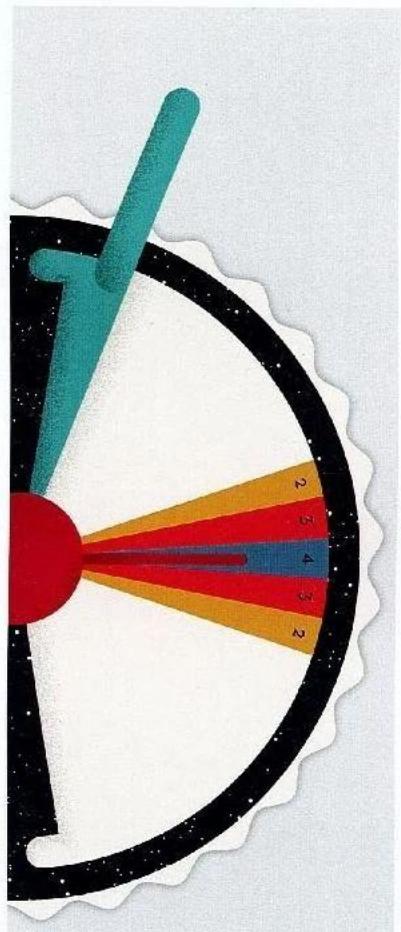
队伍的目标
没这么容易

都是随机的。 得分区完全地隐藏在蓝色屏风背后,并且每轮得分区的位置
旋转红色指针,尽可能地让它靠近彩色的得分区中央。

队伍的目标
没这么容易


想法——而对方队伍则用糟糕的建议来干扰你们的大脑。 每个人都大声地说出了自己心中所想,认真地思考着一些很蠢的
决定指针要转到什么位置 现在轮到这位超能力者的队友来讨论这条线索,


《电波同步》游戏准备只需花费不到一分钟,并且完全在游戏盒中进行游戏:只需要传递这盒游戏,不用拿出
准备的注意事项
先手队伍从0分开始游戏。后手队伍从1分开始游戏。两支队伍分别称为“左脑”和“右脑”,但你们也可以按照自己喜好来起队名。至此你们就完成了准备工作,可以开始游戏了。
两支队伍需要轮流转动指针,指向自己认为得分区在频谱上的位置(得分区隐藏在屏风背后)。当前队伍的一个玩家成为“超能力者”,知道得分区所在的位置,但只能够给出一条线索,指示在两个相对概念之间,得分区在频谱上的位置。然后,他/她的队友必须要猜测得分区所在的位置。
游戏总结《电波同步》是一款猜测类的聚会游戏,两支队伍相互竞争,以读懂对方的想法。
现在分成人数大致相等的两支队伍(如果玩家人数太少使用规则书末尾的合作规则)。然后,决定两支队伍分别由谁成为第一轮的超能力者——给出线索的人。
任何东西。要开始游戏,先将电波测试仪(带有指针和转盘的塑料板)放到游戏盒收纳中央的插槽。然后将3个标记——2个“头脑”标记和猜测标记 —插入对应的插槽。左页的图示显示了所有配件放置的位置。
- 合上屏风:用塑料把手来旋转屏风,直到屏风完全关闭,把手嵌入凹槽。
推荐超能力者按照以下顺序来执行(以下指示可能过于详细,但实际操作起来很容易):
超能力者应秘密地完成上述操作,不要让自己队友和对方队伍的玩家看到得分区在什么位置。
每轮开始时,当前队伍的超能力者旋转转盘,随机决定得分区的位置,抽取一张波长卡牌,给出一条线索,指示这张卡牌上的2个概念之间的一个范围。
将这张卡牌放在电波测试仪前面,以你选择的一面朝前,朗读卡牌上的文字,让所有人都能听到。
- 随机决定得分区的位置:用手指沿着波浪形边缘转动转盘——直到得分区已经转到了随机位置(你已经不知道得分区在哪)。转动转盘的时候,应该合上塑料屏风:不能在屏风打开的状态下选择得分区的位置。
超能力者阶段
- 给出一条线索:查看得分区中央在转盘可见区域的位置。根据卡牌上的两个概念来构思一条线索,线索表达的概念在它们之间的一个范围,这就是得分区的位置。规则书之后的页面会说明如何给出线索。
置。 遮挡,合上屏风,再次旋转转盘,随机决定得分区的位 得分区中央(4分所在的扇形)必须完全可见。如果它被
-
选择一种波长:从牌堆抽出1张波长卡牌。卡牌是双面的,超能力者可以选择一面来给出线索。别太纠结:选你觉得最有意思的一面就好!
-
打开屏风:用塑料把手打开屏风,查看得分区所在位置。你需要保持着屏风完全开启的状态(即使半开状态能看到得分区也要完全打开屏风):不然玩家就能通过观察你的动作,猜到得分区在什么位置。
现在,超能力者停止一切交流!
超能力者给出自己的线索后,不能再说出任何信息—不能作任何的解释 ——必须保持表情不变。
如果超能力者在给出线索之后泄露了得分区的位置(不论是否通过语言进行泄露),由所有玩家决定是否要惩罚这支队伍。我们推荐让这位超能力者重新用一张新的卡牌,给出一条新的线索来指示得分区的位置,但你们也可以按照自己的解决方式来处理。
- 合上屏风:用塑料把手完全关闭屏风。将游戏盒转向,面对你的队友,好让他们能够使用这台电波测试
队伍阶段
这是这款游戏的核心环节,几乎没有规则限制:队友可以以自己喜欢的方式进行讨论、辩论和争吵。
超能力者的队友意见达成一致后,告诉另一支队伍他们已经决定好指针的位置。
因为这款游戏是以直觉为基础的,你应该限制自己,尽量用“再往右边”或“往下一点”来表达,而不要说出“转到25%”这类话语。
猜左右阶段在《电波同步》中,两支队伍都有机会从一条线索得
超能力者的队友决定好指针的位置后,另一支队伍来猜测得分区中央(4分所在的扇形)是在指针的左边还是右边。此时应当缩短讨论时间,因为只是二选一:左边还是右边。这支队伍进行猜测,将猜测标记放在波长卡牌左边或右边的插槽。
例如,本页图中显示这支队伍猜的是左边,也就是说他们认为,这位超能力者提示的“咖啡”比他的队友猜测的要更“热”一些。

计分阶段
每支队伍的计分标记移动相应步数。
分所在的扇形),另一支队伍不能得分。

另一支队伍如果猜出得分区中央在指针的左边还是有边,获得分数。如下图,这支队伍如果猜了左边,获得1分。
在《电波同步》中,不管一支队伍落后多少分,他们都计分后,另一支队伍开始新的一轮,除非触发了落后补偿(下一段详述)。
两支队伍轮流更换玩家担任超能力者并给出新的提示,如此继续游戏。
游戏流程超能力者阶段:当前队伍的超能力者给出线索队友阶段:超能力者的队友讨论并旋转指针猜左右阶段:另一支队伍猜测是左边还是右边计分:超能力者揭示得分区并给两队加分
这意味着,比分9-0的落后队伍有可能连续进行3个回合并获得胜利。
有机会迎头赶上。如果超能力者所在队伍获得4分,但该轮计分结束后他们仍然落后于另一支队伍,那么他们可以立即再执行一个回合(换另一位玩家担任超能力者)。
获胜
一旦有队伍到达10分,游戏结束——分数最高的队伍获胜!如果出现平手,两支队伍各进行一次最终决战回合。这一轮得分最高的队伍获胜(包括猜测左/右)。如果仍是平手,重复以上流程直至一方获胜。
- 表达单独一个想法:不要把多个概念组合在一条线索,也不要附加大量解释。像“但是” “当……”"“在...….时”这样的语句有些情况是可以使用的,但是不可以用来将两条线索结合在一起。队伍将线索拆开两个部分进行讨论就相当于作弊:这就是为什么“开车时候打字”这条线索成立,却不能把车子的类型也加进提示。
《电波同步》会出现各种天马行空的线索。我们知道语言是复杂而狡猾的,所以想要赋予玩家更多的自由!这些规则只用来限制几种时常会破坏游戏体验的线索你可以根据你和朋友们的情况来自由调整。如果你进行了自己的调整,请向我们分享你创造的规则!
示例:杰作一败笔符合要求:“蒙娜丽莎”或“猴子耶稣壁画”不符要求:“原班人马翻拍《泰坦尼克号》“或者“一张由胖虎独家献唱的披头士专辑
-
不能发明新事物线索:必须是这个宇宙中存在的事物。它可以是虚构的,但不能是你专门为了这次提示而编造的东西。
-
不使用卡牌上的词语及其同义词:给出的线索不能包含卡牌上的词语及其单字。
示例:和平一战争符合要求:“甘地”或者“美国”不符要求:“平和”或“和平鸽”或“地道战”
示例:安全一危险符合要求:“一辆本田雅阁”或者“开车时候打字”不符要求:“开本田雅阁的时候打字”或者“在鳄鱼群上方蹦极跳”
示例:肮脏一干净符合要求:“我的卧室”或者“荤段子”或者“交易”不符要求:“太监”或者“一把火”
- 贴题:你的线索必须贴合本轮卡牌上的概念。只有当卡牌上的两个概念都有相对的双关含义,你才能使用线索来指示它们之间的范围(如果它们没有相对的双关含义,则不能在给出线索时考虑部分的双关含义)。
如果数字包含在一个合理存在的名称当中,那么线索中可以出现这个数字。
示例:80年代—90年代符合要求:“U2乐队的《One》”或者“三人行”不符要求:“1991”或者“拿B+的分数”
- 不含数字:不能使用数字、百分比、比率或者任何数字来暗示得分区的位置。
| 给出线索:建议 简单点就好。 以下规则并不是必须服从的,但我们认为,特别是当玩 | 同样的还有“[一段时间]之后”或者“[时期]中”。线索 示例:糟糕的约会一不错的约会 不建议:“看一部非常恐怖的电影”或者“结婚一周年 | 常见问题 如果本轮的卡牌为“伤感的歌曲一愉快的歌曲”,我能 | 我能不能使用押韵、谐音字之类的? 不许胡闹! |
| 家开始篡改规则、使游戏乐趣大打折扣时,这些规则更 能维持游戏原有的理念。 建议:“看恐怖片” | 不能将名为“伤感”或“愉快”的歌名作为提示? 可以,因为你是引用了一个事物的名称,而不是这个概 | 得分区处在一个极端的位置(最左边或最右边)时,只在频 | |
| 6. 简洁明了:尽量使用10个字以下。这通常能约束玩家 外出吃饭”。 给出太过具有针对性的繁琐线索。 8. 使用恰当的名词:当卡牌指定了线索的类型,比 示例:敏感一冷漠 如“ 的人”,尽量使用恰当的名词,而不是“……的 | 念,所以这条线索依然是贴题的。 我可以使用双关语或者玩文字游戏吗? | 谱的左右两端各露出一块细窄的彩色扇形区域。我的队 友猜中这块区域得分吗? 由于几何法则,这种情况无法避免。但是,你只需要关 | |
| 建议:“我的哥哥” 东西”或“…….的人” 不建议:“我的哥哥每天早晨5点就出门干活。“ 7. 不加修饰:像“仅仅、“非常”、“几乎”、“稍 | 一般来说,双关语总是不符合“贴题”的规则。例如,假 | 注得分区中央(4分所在的扇形)所在的位置,忽略另一端 露出的得分区。线索只提示4分所在扇形这一端的得分 | |
| 示例:可怕的人一和善的人 建议:“弗莱迪·克鲁格”或者“黑山老妖” “有点”这种修饰程度的词通常会让队伍考虑它 不建议:“偷走小孩子的糖果的人” | 设一张波长卡牌上是“语鼠五技—黔驴技穷”,给出的线 索是“阿凡提”,因为大家都知道阿凡提骑“驴”。这样 的线索相当聪明,但基本上也是作弊。 | 区。 | |
| 和线索本身之间的关系。 |
线索提供:@MesaGameLab
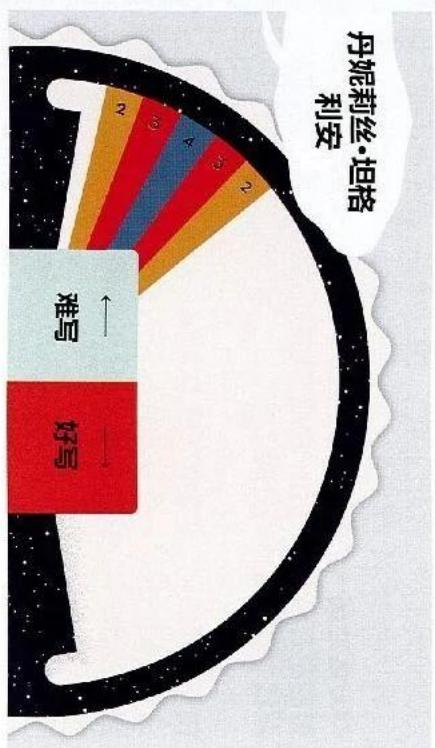
优秀线索示范(以下线索来自我们的社群每日挑战参加者)
线索提供:@geminióice

线索提供:@JohnduBois

线索提供:@zannah

| 合作模式 在这个模式中,同一队伍中的每个人荣辱与共。在2到5 | 你们的表现 计分 仪器是不是没插上电? o-3 4-6 重启试试 | 制作人员 游戏设计: Wolfgang Warsch, Alex Hague, & Justin Vickers. 如有需要,请联系:wavelength.the.game@gmail.com 策划:Sarah Pavis 制作: Strom Mfg | Wen DeWitt, Cory Margulis, Dan “Shoe" Hsu, David Carter, Donald Shults, Dwight Haesler, Edward Soderberg, Edward Uhler, Elaine & Efka from No Pun Included, Elizabeth Goodspeed, Eric Garneau, Eric Zimmerman, Fred Benenson, Grace Margulis, Gunther Dastl, James Nathan Spencer, Jessica Cassady Davis, Josh Stern, Juan Jose Lado, Julian Steindorfer, Kali Handelman, Karoline Kollmann, Kevin Nguyen, Kristen Leach, Kurtis Melby, Kyle McKay, Lucas Cosens, Madison Boan, Markus Slawitscheck, Marnie Thompson, Massimo Zeppetelli, Matt Lees, Mike Chuck Bretzlaff, Nick Riggle, Niki Shults, NYU Game Center, Peter Prinz, Rand Lemley, Rebecca |
| 人参加的游戏中,这个模式能够取得很好的效果。与正 常游戏的规则基本一致,除了以下几项: | |||
| 仪器刚刚在热身 7-9 ·将要开始游戏时,将随机的7张波长卡牌放在卡牌插 10-12 槽。这个牌堆用完之后,游戏结束。然后参考右边的表 13-15 格,看看你们表现得如何! | |||
| ·得分规则与正常规则一致,但猜出中央的扇形只获得3 | 不赖!但也不怎么好 就差一点。 你们赢了! 16 - 18 19 - 21 你们的电波.…….同步了 最强大脑 苗苗苗 | 包装设计:Hvass&Hannibal 出版: Palm Court 中文翻译:Mikan 中文校对:Francis Garland Martin, Renee Hammer, Rikki Tahta, Robert Vinluan, Sarah Pavis, 感谢 Sean McCoy, Sebastian Kollmann, SHUX, Stefan Schreibmaier, Tom Dyke, Zach Gage, & Zadie Louise Martin Vickers. 感谢我们的所有朋友和游戏测试者,包括 Alan Gerding, Alexa 在此还要隆重感谢每一位众筹支持者:多亏你们,这款游戏才 | |
| 但除此之外,你们还能抽取一张额外的卡牌并加 22-24 入牌堆,游戏增加额外一轮。 25+ ·跳过猜左右的阶段。 |
Wavelength rules.md17.2 KB
How to play
WAVELENGTH
Your team’s goal

Turn the red dial as close to the center of the colored target as you can.
Here’s the twist

The target is completely hidden behind this blue screen and is in a random location each round.
Fortunately, one of your teammates is Psychic and knows exactly where the target is!

They draw a card that has two opposing concepts on it, like “Underrated - Overrated” or “Hot - Cold.”
The Psychic gives a clue where the target is located ON THE SPECTRUM between the two concepts

In this example, the target is slightly to the “hot” side, so the Psychic says “Cofee” since cofee is hot, but not the hottest thing imaginable.
Now it’s up to the Psychic’s team to discuss the clue and decide where to turn the dial

Everyone thinks out loud and ponders very dumb ideas—all while the other team poisons your brain with bad suggestions.
Finally, the Psychic opens the screen to reveal whether the dial is in the target area

The closer to the center of the target, the more points your team scores! (The other team also gets a chance to score)

GAME SUMMARY
Wavelength is a social guessing game where two teams compete to read each other’s minds.
Teams take turns rotating a dial to where they think a target is located along a spectrum that’s hidden behind a screen. One player from the active team—the Psychic—knows where the target is, but can only give a clue ON THE SPECTRUM between two opposing concepts. After that, their teammates have to guess where the target is.
SETUP NOTES
Wavelength takes less than a minute to set up and is played entirely in the box: you can just pass the game around
without ever taking anything out. To start, place the device (the big plastic thing with the dial and rotating wheel) into the slot in the middle of the box’s tray. Then insert the 3 tokens—the “heads” and guessing piece—into their various slots. The diagram on the left shows where everything goes.
Now divide into 2 teams of roughly the same size. Then decide who on those teams will be the Psychics (clue givers) for the first round.
The team that goes first starts at 0 points. The team that goes second starts at 1 point. We call the teams Left Brain and Right Brain, but you can call yourselves anything you like.
That’s it! You’re ready to play Wavelength.
PSYCHIC PHASE
Each round begins with the current team’s Psychic spinning the wheel to randomize the target’s location, drawing a wavelength card, and giving a clue ON THE SPECTRUM between the two concepts on the card.
The Psychic should do all of this secretly, so players on both teams can’t see where the target is.
Here’s the oficial order the Psychic should go in (it’s a little over-detailed, but in practice it’s easy):
-
Close the screen: Rotate the screen using the plastic handle until it’s entirely closed and clicks into place.
-
Choose a wavelength: Draw 1 wavelength card from the deck. They’re double sided, and the Psychic can choose the side they want to use for their clue. On most cards there’s a “normal” side and a “weird” side. Don’t think too hard about it: just pick the one you find most interesting!
Place the card in the slot in front of the device, with your chosen side facing forward, and read the card text so both teams can hear.
-
Randomize the target location: Turn the wheel—using your fingers along the wavy edges—until you’re sure that the target is in a completely random position. The plastic screen should be CLOSED while you spin: you can’t keep it open to select the target’s location.
-
Open the screen: Using the plastic handle, open the screen and look at where the target is located. You should always open the screen COMPLETELY, even if you can see the target with it partially open: otherwise, players watching you will be able to guess the general target location.
Very infrequently, the target’s center (the 4 point wedge) won’t be visible at all. If that happens, close the screen and spin again. If the center target is ever partially in view on the left or right extreme, that’s valid—even if it’s just a sliver.
-
Give a clue: Look at where the target’s center is located spatially along the visible area of the wheel. Now think of a clue that is conceptually where the target is located ON THE SPECTRUM between the two concepts on your card. Rules for how to give clues can be found later in this book.
-
Close the screen: Using the plastic handle, close the screen completely. Now turn the box to face your team, so they can interact with the device.
Now the Psychic stops communicating ENTIRELY!
After the Psychic has given their clue, they are no longer allowed to say ANYTHING—not even clarifications—and must keep an entirely straight face.
If a Psychic ever gives away the target location after giving their clue, either verbally or nonverbally, it’s up to everyone playing to decide whether to penalize the team. We tend to just let the Psychic give a new clue with a new card and target location, but we’re generous that way.
TEAM PHASE
After the Psychic gives their clue, it’s up to the rest of their team to READING THEIR MIND and turn the dial as close to the center of the target area as they can.
This is the core of the game and it is almost entirely free of rules: teammates can discuss, debate, and argue in any way they like.
After the Psychic’s team has come to an agreement, they let the other team know that they’ve finalized their dial position.
During this phase, just keep a couple things in mind:
• Don’t use percentages or numbers as shorthand for where to turn the dial.
Since Wavelength is based of of gut feelings, you should restrict yourselves to saying things like “way more to the right,” or “down a little” rather than “turn it to 25%.”
There’s no penalty associated with doing this—you should just avoid it in the spirit of the game.
• Everyone on the team has the right to turn the dial at any time. It’s up to the team to determine how to negotiate this.
LEFT/RIGHT PHASE
In Wavelength, BOTH teams always have a chance to score points from a clue.
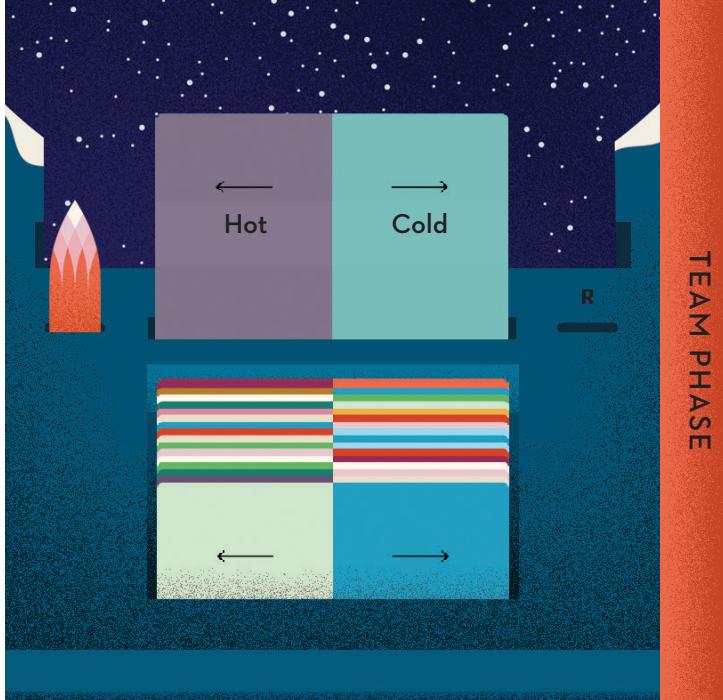
After the Psychic’s team has finalized their dial position, the other team gets to guess whether the center of the target (the 4 point wedge) is to the left or right of the dial. This discussion should be fairly brief, since it’s a simple binary choice: LEFT or RIGHT. The team makes their guess by placing the marker in either the LEFT or RIGHT slot next to the wavelength card.
For example, the image on this page shows the team guessing LEFT, i.e. they think the Psychic meant to convey something MORE HOT than the current team guessed.
SCORING PHASE
Once both teams have finalized their guesses, it’s time for the most exciting part of the game: THE REVEAL. The Psychic opens the screen to reveal the target. Their team scores points if the dial is within the colored target area, as listed on the colored wedges (2-4 points). If the dial is ever on an edge between two results, the Psychic’s team always scores the better of the two results.
The other team scores 1 point if they correctly guessed whether the target is to the left or right of the final dial position. If the Psychic’s team guessed perfectly (the 4 point wedge), the other team cannot score.
Move each team’s scoring marker by those amounts.

HOW THE GAME PROGRESSES
PSYCHIC PHASE: Current team’s Psychic gives clue TEAM PHASE: Psychic’s team discusses and turns dial LEFT/RIGHT PHASE: Other team guesses left/right SCORING: Psychic reveals target and points are given
After Scoring, the other team begins their round UNLESS the catch up rule is triggered, detailed in the next section.
Play continues like this, with teams take turns giving clues, with a new player being the Psychic each time.
AN IMPORTANT CATCH UP RULE
No matter how much a team is losing in Wavelength, there’s always a chance to catch up. If the Psychic’s team scores 4 points, and is still losing to the other team after that round’s scoring, they immediately take another turn (with a diferent player as Psychic).
This means that a team down 9-0 could hypothetically take 3 turns in a row and win.
WINNING
Once a team has reached 10 points, the game ends—and the team with the highest score wins! If there’s a tie, each team takes a final sudden death turn. The team that scores the most points that round wins (including the LEFT/RIGHT guess). If there’s still a tie, repeat until a team has won.
CLUE GIVING: FIRM RULES
Wavelength is all about wildly creative clues. So we tried to give players as much freedom as possible to do that. These rules are here only to restrict clue giving methods that frequently broke the game—feel free to adapt them to whatever works best for you and your friends. And if you do, please share them with us!
- Convey a single thought: A clue shouldn’t combine multiple ideas or give a lot of explanatory context. Words like “AND,” “BUT,” “WHILE,” “WHO,” and “WHEN” are sometimes OK, but not when they basically combine two clues together. A dead giveaway is a team debating one part of the clue, then debating the other part, and figuring out how to weigh both.
EXAMPLE: Safe – Dangerous
ALLOWED: “A Honda Accord” or “Texting while driving”
NOT ALLOWED: “Texting while driving a Honda Accord” or
“Bungee jumping over crocodiles”
- Don’t “invent” something: The clue must exist as a thing in the universe outside of you giving the clue. It can be fictional, just not something you’re making up exclusively for this situation.
EXAMPLE: Masterpiece – Failure ALLOWED: “The Mona Lisa” or “The monkey Jesus fresco” NOT ALLOWED: “A Beatles album performed exclusively by Nicolas Cage” or “A gritty reboot of The Odyssey”
- Be on topic: Your clue has to be related to the concepts on this round’s card. You aren’t allowed to use one side as a double meaning, e.g. “hot” meaning attractive—though if both words have the same double meaning, like the examples below, you can use those meanings.
EXAMPLE: Dirty – Clean ALLOWED: “My bedroom” or “Stand up comedy” or “A cop” NOT ALLOWED: “The speed of light” or “Ennui”
- Don’t use the words on the card or any synonyms: You can’t use words from the same “family” as those on the card.
EXAMPLE: Peaceful – Warlike
ALLOWED: “Gandhi” or “America”
NOT ALLOWED: “Peace” or “A pacifist” or “Siege warfare”
- No numbers: You can’t use numbers, percentages, ratios, or anything numeric to sneakily suggest the location of the target.
If a number is in the proper name of a thing, that’s OK.
EXAMPLE: 80s – 90s ALLOWED: “One by U2” or “Three’s Company” NOT ALLOWED: “1991” or “A B+ grade”
CLUE GIVING: SUGGESTIONS
These rules aren’t 100% necessary, but we’ve found that they improve the spirit of play, especially if players start bending the rules in ways that make the game less fun.
- Be concise: Try to use five words or fewer. This often stops people from giving overly targeted, fussy clues.
EXAMPLE: Neurotic person - Chill person
ENCOURAGED: “My older brother”
DISCOURAGED: “My older brother who works out at 5:00
am every day.”
- No modifiers: Words like “but,” “very,” “almost,” “slightly,” and “kind of” nearly always makes a team weigh the thing itself versus the qualifier used. Same with adding things like like “after [an amount of time]” or “during [another thing].” Keep it simple.
EXAMPLE: Bad date - Good date ENCOURAGED: “Seeing a scary movie” DISCOURAGED: “Seeing a very scary movie” or “Going out to dinner after being married for a year.”
- Use proper nouns: When a card asks for a specific category of thing, like “__ ___ person” try to use a proper name and not “Something that…” or “Someone who…”
EXAMPLE: Scary person - Nice person ENCOURAGED: “Freddy Krueger” DISCOURAGED: “Someone who steals candy from kids”
If this round’s card is “Sad Song – Happy Song,” can I say “Happy” by Pharrell even though it has a word from the card in the title?
Yes, assuming the clue is still on topic, since you’re referenc ing the name of a thing not the concept.
Can I use a pun or play on words?
In general, puns nearly always break the “on topic” rule. For example, imagine a wavelength of “Jack of all trades - One trick pony” and the clue being “Ginuwine,” since Ginuwine has a song called “Pony.” That’s kind of clever, but basically cheating.
Can I use rhymes, homonyms, and such?
No funny business!
When the target is in an extreme position to the left or right, we can see a tiny section of colored wedge area on the *opposite* side of the spectrum as well. Can our team score points if they guess there?
Because of the laws of geometry, there wasn’t any way to prevent this from happening. But you should just ignore any visible target area on the opposite side of where the center target (the 4 point wedge) is. That’s the one you’re aiming for.

Clue by @MesaGameLab

Clue by @gemini6ice
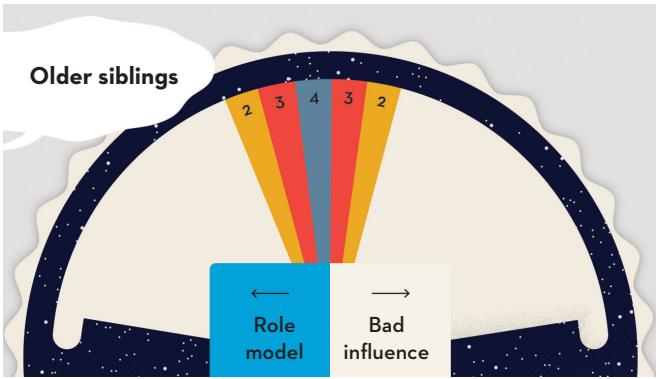
Clue by @JohnduBois

Clue by @zannah
COOPERATIVE MODE
In this mode, everyone wins or loses together as a single team. It works really well with 2–5 players, but you can play at any size. The rules are mostly the same, except:
• To start, put 7 random wavelength cards in the card slot. When that deck runs out, the game is over. Then use the chart on the right to determine how well you did!
• Points works the same as usual, except the center wedge is only worth 3 points—but you ALSO get to draw a bonus card to add to the deck, adding an extra round to the game.
• Skip the left/right guessing phase.
| Score 0 -3 4- 6 | How you did Are you sure it's plugged in? |
| 7-9 10 - 12 | Try turning it off and back on again Blow into the bottom of the device Not bad! Not great, but not bad |
| 13 - 15 | SO CLOSE |
| 16 - 18 19 - 21 | You won! You're on the same...wavelength |
| 22 - 24 | Galaxy brain |
| 25+ | 香香香 |
CREDITS
A game by Wolfgang Warsch, Alex Hague, & Justin Vickers
Graphic Design & Art: Hvass&Hannibal
Engineering: Sarah Pavis
Manufacturing: Strom Mfg
Publishing: Palm Court
THANKS
Thanks to all our friends and playtesters, including Alan Gerding, Alexa McKay, Alexander Pfister, Allen Tan, Amy Sebeson, Andrew Kay, Andy Mesa, Asher Vollmer, Chantal Johnson, Charlie Tran, Cher-Wen DeWitt, Cory Margulis, Dan “Shoe” Hsu, David Carter, Donald Shults, Dwight
Haesler, Edward Soderberg, Edward Uhler, Elaine & Efka from No Pun Included, Elizabeth Goodspeed, Eric Garneau, Eric Zimmerman, Fred Benenson, Grace Margulis, Gunther Dastl, James Nathan Spencer, Jessica Cassady Davis, Josh Stern, Juan Jose Lado, Julian Steindorfer, Kali Handelman, Karoline Kollmann, Kevin Nguyen, Kristen Leach, Kurtis Melby, Kyle McKay, Lucas Cosens, Madison Boan, Markus Slawitscheck, Marnie Thompson, Massimo Zeppetelli, Matt Lees, Mike Chuck Bretzlaf, Nick Riggle, Niki Shults, NYU Game Center, Peter Prinz, Rand Lemley, Rebecca Martin, Renee Hammer, Rikki Tahta, Robert Vinluan, Sarah Pavis, Sean McCoy, Sebastian Kollmann, SHUX, Stefan Schreibmaier, Tom Dyke, Zach Gage, & Zadie Louise Martin Vickers.
And a HUGE thanks to each and every one of our 8,674 Kickstarter backers. The game wouldn’t exist without you!
CLUE GIVING RULES
• Convey a single thought
• Don’t invent something
• Be on topic
• No synonyms
• No numbers
CLUE GIVING SUGGESTIONS
• 5 words or less
• No qualifiers, like “very,” “kind of,” or “after three drinks”
• Use proper nouns, not “Someone who…” or “A place where…” or “A thing that…”
ROUND GUIDE
- Psychic player prepares and gives a clue:
• Close the screen
• Draw one card and choose a side
• Rotate the wheel until randomized
• Open the screen
• Give your clue
• Close the screen
-
Psychic’s team discusses and turns dial
-
Other team guesses LEFT or RIGHT
-
Psychic opens screen to reveal target
-
Scoring
-
Other team’s turn (unless catchup rule is triggered)
原文为社区整理/出版社公开资料,版权归原作者,仅供个人学习查阅。