rules_zh_快餐连锁大亨_1346.md


Game design: Jeroen Doumen, Joris Wiersinga
Graphic design: Ynze Moedt, Iris de Haan
Rule translations: Birgit Hugk, Torsten Hintz
Published by: Splotter Spellen, The Netherlands, info@splotter.nl, http://www.splotter.nl
Playtesting by: Dan Blum, Eric Brosius, Ed Bryan, Nora Ghaoui, James Hayward, Gil Hova, Trisha Huang, Wei-Hwa Huang, Joe Huber, Larry Levy, Ian Mackey, Roel van Meerendonk, Mirjam Molenkamp, Douwe Mulder, Gerard Mulder, Kent Neumann, Steffan O'Sullivan, Joe Rushanan, Alan Stern, Tucker Taylor, Bartel van der Veek, Henriette Verburg, Roel Vinkenvleugel, Stefan Wegner, Arthur Zonnenberg. Apologies if you are not on the list, or if we spelled your name wrong! Special thanks to Ragnar Krempel and Bianca van Duijl who playtested the game multiple times a day on many, many Sundays for almost three years. Without them, this game would not exist.
© Splotter Spellen BV, Woerden, 2015. 3rd printing with some modifications.
“柠檬水?你告诉我他们要柠檬水?这个世界疯了吗?让所有的电台都给我播汉堡的广告,15分钟一次!我们是正宗汉堡之家,不是什么健康餐馆。还有,在那个新房子旁边的街角竖一块广告牌,让那些人在他们新花园的每一秒都渴望着我们的啤酒。“新来的管理实习生颤抖着站在CEO的面前,想要礼貌的说些什么...“你说什么?我们员工不够?不是你在分管人力资源主管吗?招人,招更多的人!先给他们试用期。记着,我不管你怎么做,总之别给他们工资,我投资做生意可不是为了越变越穷的!然后让那个折扣经理滚蛋,她除了浪费我的工资以外一无是处!从现在起,我们出售美食家汉堡,原料还用那些垃圾,价格给我翻倍!让市场主管进来!“
Food Chain Magnate是一个关于快餐连锁店的重策游戏。游戏的主题是通过一个卡牌驱动的管理系统来建设自己的公司。玩家在可变的地图板块上通过购买、营销和折扣来竞争,在人才市场雇佣主要的雇员。游戏可供2-5名
重策玩家进行,时长2-4小时。

翻译By焦无耻
4DINNERTIME
UMSTRUKTURIERUNG

1游戏盒

1本规则书


RESTRUCTURING
1个顺位轨
3ARSEIT VON UNR BIS 17 UHR


8张花园片

20张地图片
5张德语提示卡
16张营销片:6广告牌、4信箱、3飞机、3广播


5张英语提示卡

8张住宅片
3WORKING 9:00-5:00
4ESSENSZEIT





14
16张标有数字的忙碌标志


每名玩家3张连锁店片


每名玩家1张顺位片


222张员工卡
84张成就卡

18张储备金卡

6张CEO卡

40个软饮标记

40个披萨标记


\$15 discount on salarles


纸币

40个啤酒标记

40个柠檬水标记

40个汉堡标记

概览
游戏开始时,每名玩家都是一个立志建立起快餐连锁王国的个人企业家。玩家通过雇佣和培训由卡牌代表的员工在可变的地图上运营连锁店。在银行的现金两次耗尽之后,拥有最多现金的玩家获得胜利。
重要概念
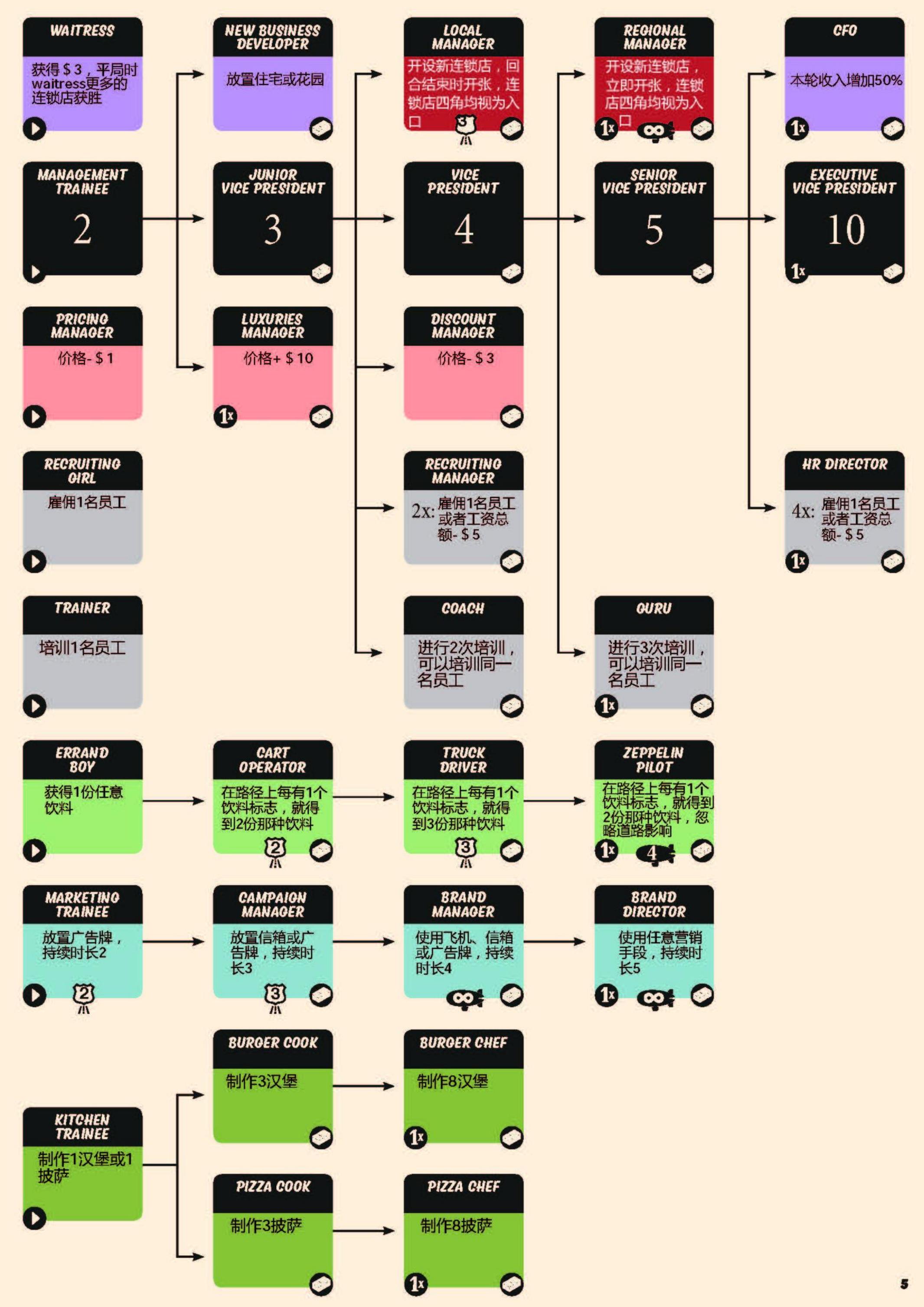
员工卡:每张员工卡代表一名员工,员工卡上的文字叙述介绍了这名员工在工作效果。左上角带有三角标记的员工卡可以被直接雇佣(其他员工卡只能通过培训来获得);有钱币标记的员工卡需要玩家支付工资;员工卡的左下角标有这名员工可以通过培训晋升的职位。一些员工卡的左下角有一个1×标记,这些员工卡代表了公司中的最高职位,这样的同名员工卡每名玩家只能拥有1张。在一些员工卡的右上角有道路或者飞艇标记,这个标记上的数字代表这张员工卡的作用距离。员工卡包含经历、市场工作人员、后厨工作者以及其他各种职员。
空格:在公司结构图中一个可以放置员工卡的位置。
距离:玩家可以进入到相邻地图片的最大次数。也就是说,同一片地图片上的两格距离为0,相邻地图片上的两格距离为1,依此类推。
连锁店:每名玩家最多可以开办三家连锁店,每家连锁店的大小是2*2格,每家连锁店的一个角上有一个入口标记。需要计算到餐厅的距离时,以连锁店的入口为准。
地图片:一张地图片的大小是5*5格,每一格上可能标有道路、饮料标记、住宅的一部分或者单纯是一个空格。
食物和饮料:游戏中的食物和饮料用木质标记来表示。放在住宅上的标记代表食物或饮料的需求,放在营销片上的标记代表广告的内容和时长。玩家手中的标记代表玩家的存货。在地图片上可能也印有饮料标记,这些标记代表采购员可以采购这些饮料的位置。

游戏设置
卡牌设置
按照右图所示将员工卡和成就卡排列出来。
如果玩家按照右图所示排列了员工卡和成就卡,那么玩家很容易就可以看出员工的职位晋升途径以及哪些卡牌即将被用完。
按照下表,将对应数量的1×员工卡留在游戏中,其余1×员工卡不会在本局游戏中被用到。
将上表所示的营销片放回游戏盒中
| 玩家人数 员工卡数量移除营销片 地图大小 | |||
| 2 | 1 | #12,#15, #16 | 3x3 |
| 3 | 1 | #15,#16 | 3x4 |
| 4 | 2 | #16 | 4x4 |
| 5 | 3 | None | 5x4 |
- 2 Management Trainees
将上表所示的营销片放回游戏盒中.
地图设置
玩家随机使用地图片来设置游戏地图,在放置地图片前首先随机旋转它们。玩家按照上表和右图所示来确定地图大小。
FIRST TO HIRE 3 PEOPLE IN 1 TURN

FIRST TO THROW AWAY DRINK/FOOD
得到一个可以储存10单位食物/饮料的冷藏柜

FIRST WAITRESS PLAVED
每名 waitress +\$2

FIRST TO HAVE \$20
可以看到其他玩家的储备金

FIRST TO HAVE \$100
你的CEO视为CFO,你不能雇佣CFO。
FIRST TO
LOWER PRICES
价格-\$1

工资总额减少
可以让多名培训员培训同一员工
FIRST TO TRAINSOMEONE

FIRST BURGER PRODUCED
+1 burger cook
FIRST PIZZA PRODUCED
+1 pizza cook

FIRST ERRAND BOY PLAYED
所有采购人员得到饮料的能力+1

FIRST CARTOPERATOR PLAVED
所有采购人员采购距离+1

FIRST TO PAY \$20 OR MORE IN SALARIES



4 players
FIRST BILLBOARD PLACED
无需为营销人员支付工资,营销没有时限。

FIRST BURGER MARKETED
每个出售的 汉堡+\$5

FIRST PIZZA MARKETED
每个出售的披萨+\$5

FIRST DRINK MARKETED
每个出售的饮料+\$5

FIRST AIRPLANE CAMPAIGN
在决定顺位时,空格+2

FIRST RADIO CAMPAIGN
用电台营销时每轮可以营销两种食物/饮料


5 players

为银行补充现金
在银行中加入数量等于玩家人数×50的现金,其余现金在游戏开始时不会被用到。玩家在游戏开始时没有现金。
玩家的起始资源
每名玩家选择一家连锁店并拿取1张CEO卡,3张连锁店片和一组3张储备金卡。
起始顺位
拿取所有玩家的顺位片并洗混,随机将顺位片摆在顺位轨上来决定游戏的起始顺位。
开设第一家连锁店
按照起始顺位的倒序,每名玩家依次选择开设自己的连锁店或者让过。如果有人选择让过,那么让过的所有玩家按照起始顺位进行第二轮。在第一轮没有开设自己连锁店的玩家必须在第二轮中开设自己的连锁店。
在游戏设置时开设连锁店有几条限制规则
连锁店必须开设在完全的空格上,开设连锁店的格子中不能包含其他连锁店、道路、饮料标记或住宅。
连锁店的入口标记必须与道路相邻。
每名玩家的连锁店入口必须在不同的地图片上。
设定目标
每名玩家从自己的3张储备金卡中选择一张暗扣在银行旁边,其他储备金卡背面朝上移出游戏。
玩家选择的银行储备金卡决定了银行现金第一次耗尽后将会加入银行的现金数量。储备金的数值越高,游戏需要的时间就越长。游戏开始时玩家并不会知道游戏持续的时间长度,因此平衡短期与长期利益是非常富有挑战性的。
阶段1:公司改组
所有玩家同时选择本轮使用的员工卡,将选定的员工卡放在一堆,本轮不用的员工卡放在另一堆。当所有玩家选定本轮使用的员工卡后,所有玩家同时展示自己选定的员工卡。这些员工处于工作状态,未被选定的员工卡处于度假状态。玩家不能使用处于度假状态的员工,但可以培训这些员工,如果你不解雇他们,处于度假状态的员工也要支付工资。
除了在阶段1,所有玩家可以在任意时刻要求查看其他玩家的全部员工卡。
在游戏的第一轮,玩家唯一能使用的就是CEO卡,CEO永远处于工作状态。
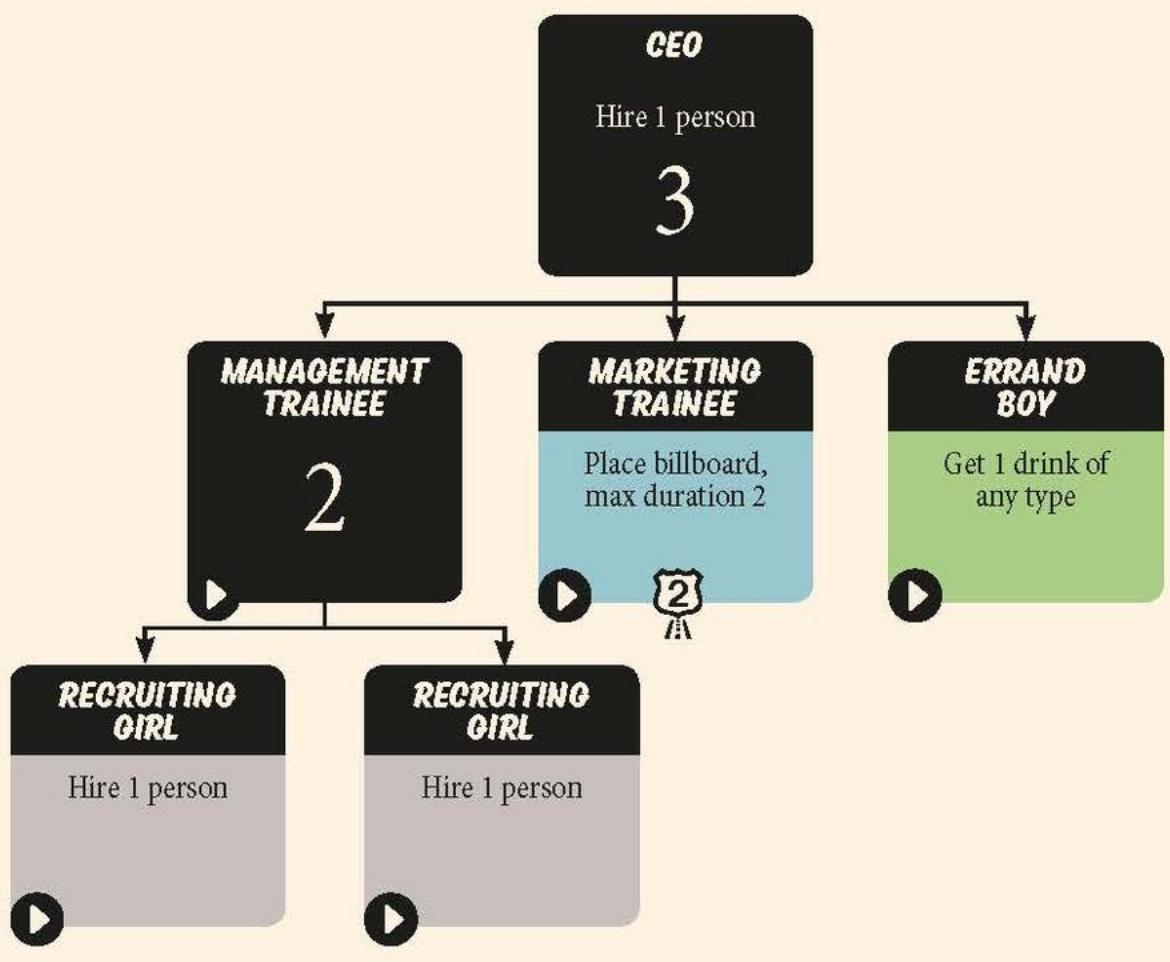
在之后的游戏轮中,玩家在展示使用的员工卡后,需要将使用的员工卡组成金字塔型的公司结构。每名员工被放在他直接上级的下方。CEO在金字塔尖的位置,显然CEO没有直接上级。
CEO永远是公司结构的一部分,玩家可以在CEO卡上看到3个矩形,代表CEO最多可以有3名直接下级。CEO的直接下级可以是普通员工或经理(黑色卡)。黑色的经理卡上有一个在2-10之间的数字,代表每名经理可以拥有的直接下级的数量。经历的直接下级只能是普通员工,不能是其他经理。
如果一名玩家选择了超过公司结构允许的员工卡,那么这名玩家必须弃掉除CEO外的所有员工卡。本轮这名玩家只有CEO在工作状态,其他员工都在度假。
当银行的现金第一次耗尽之后,CEO的直接下级数量可能会变为2或4。取决于所有玩家选择的储备金卡。
阶段2:决定顺位
在这一阶段,所有玩家决定这一轮的游戏顺位,在公司结构中空格最多的玩家首先选择顺位,接下来由公司结构中空格次多的玩家选择,依此类推。如果一名玩家拥有"First airplane campaign“成就卡,那么他的空格数+2。
如果多名玩家的空格数相等,那么按照前一轮游戏顺位从前到后来依次选择。
玩家将顺位片放在顺位轨上选定的位置,注意玩家不能选择数字大于玩家人数的位置。例如在3人游戏中,顺位轨上的4、5两个位置是不可选的。
阶段3:工作时间
在这一阶段,按照游戏顺位每名玩家依次执行行动,前一名玩家执行完全部员工卡的行动后后一名玩家再开始执行他的员工卡行动。Pricing manager、discountmanager、luxury manager、CFO、recruitingmanager、HR director以及waitress的行动是强制执行的,其他员工卡的行动是选择执行的。
玩家所执行的行动必须按照下面的顺序依次进行:
雇佣
每名玩家总是可以依赖CEO来进行一次雇佣。如果玩家还有其他拥有雇佣能力的员工卡,玩家就可以进行更多次的雇佣。每进行一次雇佣,玩家就可以雇佣一名新的员工。
玩家只能雇佣左上角有三角标记的可雇佣员工。玩家选择要雇佣的员工,拿取员工卡然后将拿取的员工卡放入处于度假状态的员工卡牌堆。如果一种员工卡已经被用光,那么玩家就不能雇佣这种员工。但如果在雇佣之后玩家立即将员工培训为更高级的员工,玩家可以直接雇佣更高级的员工,不管低级的员工卡是否耗尽。(例如即使KitchenTrainee已经被耗尽,玩家可以通过一次雇佣和一次培训直接拿取Burger Cook)
拥有雇佣行动的员工卡包括recruiting girl(1次)、recruiting manager(2次)和HR director(4次)。注意如果玩家没有用尽recruiting manager和HR director的雇佣次数,剩余的每次雇佣行动可以转化为阶段5的\$5工资减免。
培训
每次培训行动可以让玩家的一名员工晋升一级。玩家只能培训处于度假状态的员工,包括刚刚被雇佣的员工。营销人员、采购人员和后厨员工有他们独特的升职结构,其他所有高级员工都是由经理(黑色员工卡)升职而成的。
大部分卡牌在正下方有培训升职的选项。例如kitchentrainee可以晋升为burger cook或pizza cook。在卡牌下方没有升职选项的员工不能接受培训。
玩家将接受培训的员工放回公共牌堆,然后拿取升职后的员工卡。
一般来说,玩家不能在同一回合对一名员工进行多次培训,除了以下特例:
Coach可以在一轮中对同一名员工进行2次培训
Guru在一轮中最多可以对同一名员工进行3次培训
如果你拥有“First to pay \$20 in salaries”成就卡,那么你可以使用多张员工卡来训练同一名员工。
Coach和Guru可以选择对一名员工进行多次培训,也可以将培训次数分配给多名员工。
如果培训后需要换取的新员工卡已经被耗尽,那么玩家不能进行培训。但是对一名员工进行多次培训时,中间过程的员工卡是否耗尽无关紧要。
含有1×标记的员工卡(顶级职位),每名玩家最多只能拥有一张。〔勘误:旧译「每名员工最多只能拥有一张」系误译,英本原文 "Each player may only own one of that particular card",限定对象为玩家。〕
营销
每使用一名营销人员,玩家就可以在地图上放置一张营销片。根据营销人员的级别,玩家可以利用广告牌、信箱、飞机广告或电台广告来进行营销。在营销员工卡上还标有投放广告的最远距离和持续的最大时长。
距离:每名营销人员都有一个投放广告的最远距离。例如marketing trainee的最远距离是2。也就是说他可以在连锁店所在地图片(距离为0),上下左右相邻的地图片(距离为1)以及距离2格的地图片上投放广告。需要注意的是,在计算投放广告的距离时,必须从连锁店的入口开始计算,并且连锁店的入口必须与广告投放地直接由道路相连。如果玩家有多家连锁店,玩家可以选择从任意一家的入口开始计算。
Brand manager以及Brand director投放广告没有距离限制,他们投放广告的位置与连锁店无需以道路相连。但当投放广告牌、信箱或电台广告时,投放位置仍然必须与道路相邻。
持续时长:每名营销人员的员工卡上都标有他投放广告时广告持续的最大时长。广告持续的最小时长为1轮。例如marketing trainee的最大时长为2,因此他可以投放一份持续时长为1或2的广告。玩家拥有不能提前结束广告的投放。
投放广告:广告牌、信箱和电台广告必须放在与道路相邻的空格上,与这些广告相邻的道路必须能够通往玩家的连锁店。营销片和与营销片相邻的道路都必须至少有1格在营销人员的最大距离之内。
飞机营销片应当被放在地图的边上。飞机无需与道路相邻,也没有距离限制。3架飞机的大小分别是1格、3格和5格,玩家将飞机放在地图旁边,标示飞机会飞过哪几行或哪几列。飞机的任意一部分不能在地图范围之外飞行。
玩家可以在一个也无法连接到任何住宅的位置投放广告。
决定广告内容:玩家的广告内容可以是汉堡、披萨或任意一种饮料。玩家拿取对应的食物标记放在营销片上来表示营销的内容,食物标志的个数表示营销的持续时长。
忙碌的营销人员:投放广告之后,玩家将用过的营销人员员工卡放在一边,并在员工卡上放上一枚与投放广告数字相同的忙碌标记。直到广告结束投放,玩家都无法再次使用这张员工卡,这名员工也不会占据玩家公司结构中的空格。
如果玩家拥有“First billboard placed”成就卡,那么玩家投放的广告将永远不会停止。玩家将营销片翻到永久投放的那一面,并且在上面放上一个单独的食物标记来表示这个永久持续的广告。因此对应的营销人员将永远无法被再次使用,这张员工卡既不会返回玩家的手牌也不会返回公共牌堆。

Xango Blue Bar本轮使用了两张marketing trainee员工卡,他决定投放广告牌11和14。广告牌11到连锁店的距离为0,广告牌14到连锁店的距离为2(marketingtrainee的距离上限)。
尽管Xango Blue Bar暂时无法为住宅15送餐,但是广告牌14仍然是有意义的。当为住宅15增加一个花园时,住宅15就会变为在送餐范围之内。
生产食物和饮料
如果玩家本轮打出了后厨员工或采购人员,玩家就可以从供应堆按照卡牌的指示获得食物或饮料。获得的食物和饮料放在玩家的面前,玩家的所有连锁店都可以使用这些食物和饮料。
Kitchen trainee:获得1汉堡或1披萨
Errand boy:获得1饮料(软饮、啤酒或柠檬水)
Burger cook and/or chef:获得卡牌标示数量的汉堡
Pizza cook and/or chef:获得卡牌标示数量的披萨
Cart operator:从玩家的连锁店入口开始,选定一条距离为2的路径。也就是说包含连锁店所在的地图片在内的话,这条路径总共会覆盖3张地图片。在这条路径上,路边每有1个饮料标志,玩家就拿取2个对应的饮料标记。玩家选择的路径不能出现回头的情况,路径无需终止于玩家的连锁店。
Truck driver:与Cart operator相同,区别是TruckDriver的行动距离为3,并且每经过1个饮料标志玩家可以获得3个对应的饮料标记。
Zeppelin pilot:从玩家的连锁店入口开始,选定一条距离为4的路径,路径无需沿道路前进。包含连锁店所在的地图片在内,这条路径总共会覆盖5张地图片。玩家不能两次进入同一张地图片。玩家选定的路径上每有一个饮料标志,玩家就拿取2个对应的饮料标记。
如果玩家拥有“First errand boy played”成就卡,每个饮料标志会额外提供1个对应的饮料标记。Errand boy可以拿取2个同种饮料标记。
如果玩家拥有“First cart operator played“成就卡,那么玩家的采购人员距离+1。
放置住宅或花园
如果玩家打出了一张new business developer,玩家可以在地图上放置一所新的住宅,或者为一间住宅增加一个花园。
放置新住宅:新住宅可以放在地图上的空格中,并且住宅必须至少与一条道路相连,放置新的住宅没有距离限制。
放置新的花园:新的花园必须与地图上的一间住宅相连,并且花园和住宅最终必须组成1个2×3格的矩形。花园只能放在空格上,每所住宅只能拥有1个花园。由newbusiness developer建造的住宅自带一个花园,因此不能再放置新的花园。
新连锁店的开设或搬迁
如果玩家打出了local manager或regional manager,那么玩家可以选择开设一间新的连锁店或者将已开设的连锁店搬迁到其他位置。开设连锁店的位置必须是完全的空格,不能包含其他任何元素(道路、住宅、花园、饮料标己等等),并且连锁店的入口必须与一条道路相邻。唯一与游戏开始时放置连锁店不同的规则是,这时放置的连锁店的入口可以与其他连锁店的入口在同一地图片上。
Local manager:local manager放置连锁店的最大距离是3,并且必须与起点连锁店由道路相连。新放置的连锁店入口必须与道路相连,但无需是通往起点连锁店的道路。新放置的连锁店”coming soon”面朝上,在本轮结束时这家连锁店才会正式开张。注意当local manager处于工作状态时,玩家的连锁店的四个角都视为入口。
Regional manager:Regional manager可以在地图上的任意位置放置一间新的连锁店,但连锁店的入口必须与道路相邻。玩家也可以将一间已经开设的连锁店移动到地图上的其他位置和/或旋转这间连锁店。由Regionalmanager开设或移动的连锁店立即开张,无需经过coming soon”的阶段。注意当Regional manager处于工作状态时,玩家的连锁店的四个角都视为入口。
阶段4:晚餐时间
夜晚来临,住宅中的居(xi)民(xue)们(gui)要出发觅食了。居民们按照住宅编号从小到大的顺序依次出发觅食。玩家在这一阶段无需做出任何决策,居民们会根据下面的规则自己决定要前往哪家连锁店消费。
要判断一间住宅中的居民是否消费以及到何处消费,按照下面的步骤进行判断:
如果这间住宅上没有需求标记,那么这间住宅的居民不会外出消费。
如果这间住宅上有需求标记,那么检查通过道路能否将这间住宅连接到一家可以满足全部需求的连锁店。例如一间住宅的需求是2汉堡+1啤酒,那么玩家就要寻找一间与这间住宅由道路相连,并且可以提供汉堡和啤酒的连锁店。如果一家连锁店只提供汉堡,或者不能提供足够数量的汉堡,那么这间住宅的居民会寻找一家更好的连锁店或者索性放弃外出。居民外出寻找连锁店没有距离限制,但住宅和连锁店必须由道路相连。玩家可以从与住宅水平或竖直相连的任意一条道路开始搜寻。如果没有满足条件的连锁店,那么这间住宅的居民不会外出。
如果有多家连锁店都可以由道路相连,并且都能提供全部需求,那么这些连锁店会在价格和距离上展开竞争来确定这家住宅的居民会前往哪家连锁店消
每份食物和饮料的基础价格是\$10,但是会受到Price manager(-\$1)、discount manager(-\$3).luxury manager(+\$10)的影响。"First to lowerprices”成就卡会也会让价格-\$1。注意额外收入不会计入到产品单价中(CFO、“First burgermarketed”等)。
从住宅沿道路走到连锁店入口,每经过一次地图卡边就记作1距离,因此如果住宅和连锁店入口在同一张地图卡上,那么距离为0。
将产品单价(不要与需求数量相乘!)与距离加和,住宅中的居民会选择结果最小的连锁店。
如果有多家连锁店结果均为最小,那么居民会选择waitress最多的连锁店(色狼!)。如果仍然出现平局,那么居民们会选择游戏顺位靠前的连锁店。
如果这间住宅有一个花园,那么计算玩家收入时产品的单价会加倍,但是额外收入不会加倍。因此玩家的实际收入是产品单价*2+额外收入。
随着住宅的需求不断被满足,可能出现一名玩家的全部库存被卖光的情况。在一些情况中,居民们会走上很远的距离来得到需求的满足,甚至根本无法满足需求。
例:一名玩家出售了1汉堡和2啤酒给一个带有花园的住宅。他拥有“First burger marketed”成就卡,效果是卖
出每个汉堡可以得到\$5的额外收入;以及打出了一张luxury manager,效果是所有产品单价+\$10。因此他的
产品单价为\$10+\$10=\$20。花园使产品单价翻倍,再加上成就卡的额外收入,这名玩家的每个汉堡的收入是
\$20*2+\$5=\$45。这名玩家的饮料没有额外收入,因此每份啤酒的收入是\$40,他的总收入是\$45+\$40*2=\$125。
Waitress:在结算完所有住宅的需求后,玩家每打出1张Waitress,就获得\$3(如果玩家有“First waitressplayed”成就卡,则每张waitress获得\$5)。
CFO:接下来每名打出了CFO(或者拥有“First to have\$100”成就卡)的玩家获得数量等于本轮全部收入(包括waitress的小费)的50%的额外奖励(向上取整)。
如果在这一阶段中的任意时刻,银行的资金不足以支付玩家的收入,那么银行的资金第一次宣告耗尽,所有玩家展示自己的储备金卡。如果银行的资金第二次宣告耗尽,那么游戏将在本阶段结束时宣告结束。本轮玩家无需支付工资。
银行资金第一次耗尽:所有玩家展示游戏开始时选定的储备金卡。将储备金卡上的金钱数额加和并将相应的现金加入银行。每张储备金卡上也标有2,3或4个空格,出现次数最多的储备金卡将决定接下来每名玩家的CEO拥有最多可以拥有几名直接下属。例如,如果出现两张2格卡,一张3格卡和一张4格卡,那么接下来的游戏中所有玩家的CEO最多只能有两名直接下属。如果有多张储备金卡出现的次数都是最多,那么金额最高的储备金卡上的格数代表接下来的游戏中每名玩家的CEO的最大直接下属数量。例如,如果出现了2张2格卡和2张4格卡,那么接下来的游戏中所有玩家的CEO最多可以有4名直接下属。
银行资金第二次耗尽:当银行资金第二次耗尽时,游戏将在本阶段结束时宣告结束。所有玩家继续进行第四阶段,获得本轮全部应得的收入。在这一阶段结束时拥有最多现金的玩家获得胜利,如果出现平局,顺位靠前的玩家获得胜利。
阶段5:支付工资
现在每名玩家可以选择解雇任意数量的员工。被解雇的员工卡将被放回公共牌堆。
一般来说,处于忙碌状态的营销人员不能被解雇。
然后玩家每有一名需要发薪的员工,就要支付\$5的薪水,注意一些员工卡和成就卡允许玩家减少薪水总额。支付的薪水将被交还给银行。
忙碌的营销人员必须被支付薪水,在罕见的情况中,一名玩家没有足够的现金但需要给忙碌的营销人员支付薪水,这时玩家必须解雇这名忙碌的营销人员,但是保留营销片。玩家在解雇忙碌的营销人员前必须首先解雇全部其他需要支付薪水的员工。
Recruiting manager和HR director:如果玩家没有用尽recruiting manager和HR director的雇佣次数,剩余的每次雇佣行动可以转化为阶段5的\$5工资减免。
所有可用的工资减免都是强制使用的(这与“First to pay\$20 in salaries”成就卡相关),但玩家支付的工资总额最低为0。没有人为自己掏钱为你工作的。
阶段6:市场营销
在这一阶段,所有营销片将会发生作用。按照营销片上的数字按照从小到大的顺序进行结算。
注意每间住宅最多可以拥有3个需求标记,有花园的住宅最多可以拥有5个需求标记。已经拥有足够需求标记的住宅无法得到新的需求标记。
广告牌:广告牌只会影响到与其水平或竖直相邻的住宅,一般来说广告牌只会影响到1-2间住宅。花园与广告牌相邻的住宅也会被影响到。在每间影响范围内的住宅上放置1个对应的需求标记。
信箱:信箱可以影响到所有无需过马路即可到达的住宅。信箱的影响范围只会被道路限制,不会被其他任何地图元素(连锁店、住宅)所阻挡。在每间影响范围内的住宅上放置1个对应的需求标记。
飞机:飞机会影响到飞过区域的每间住宅,即使飞机只飞过住宅的一部分或者花园的一部分,这间住宅依然会受到广告的影响。在每间影响范围内的住宅上放置1个对应的需求标记。
广播:广播会影响到营销片所在地图片上的每间住宅,以及周围8张地图片上的每间住宅。即使住宅只有一部分或者花园只有一部分在影响范围内,这间住宅也会受到广播的影响。“拥有First radio campaign”成就卡的玩家在进行广播时会在每间住宅上放置2个对应的需求标记,否则在每间影响范围内的住宅上放置1个对应的需求标记。
在进行了一次营销后,从营销片上取下1个营销标记(例外:永久的营销片)。如果营销片上没有剩余任何标记,那么将营销片放回供应堆,并且将营销人员返回玩家手牌。否则玩家无法取回这名营销人员,这名员工也不会占据玩家公司结构中的空格。但玩家仍然要为忙碌的营销人员支付工资。
阶段7:整理
所有没有“First to throw away drink/food”成就卡的玩家必须弃掉他们全部的食物和饮料。
玩家将所有处于工作状态和度假状态的员工卡收回手中,玩家可以在这时要求查看其他玩家的员工卡。
所有处于“COMING SOON”状态的连锁店翻面到WELCOME的一面。
如果有一种成就卡本轮被玩家获得,那么将剩余的全部同名成就卡。翻面,这些成就卡之后无法被获得。
营销片上的营销标记和住宅上的需求标记仍保留在地图
现在下一轮从阶段1重新开始。

玩家在达成成就卡的要求时立即得到对应的成就卡。大部分成就卡会为玩家带来收益,这些收益会立即生效。即使这些收益对玩家没有帮助,玩家也必须发动成就卡的效果。
其他玩家也可以在这一轮中得到这张成就卡,偶尔会出现成就卡不够用的情况,这时玩家可以寻找一个替代品暂时代表这张成就卡。在每一轮的阶段7中,所有在本轮被获取过的成就卡的同名卡都要被翻面,这些成就卡之后不能再被其他玩家获取。
成就卡在游戏中非常重要,玩家的游戏策略与成就卡紧密相关。
当玩家在地图上放置了一张广告牌营销片时,玩家得到这张成就卡。在游戏的剩余阶段,这张成就卡带来两个效果:
玩家不再给营销人员支付工资(campaign manager, brand manager,brand director)。玩家不能主动为营 销人员支付工资
玩家投放的广告将永远不会停止。玩家将营销片翻到永久投放的那一面,并且在上面放上一个单独的食物标记来表示这个永久持续的广告。因此对应的营销人员将永远无法被再次使用,这张员工卡既不会返回玩家的手牌也不会返回公共牌堆。玩家刚刚放置的广告牌也会获得这个效果
First to train someone当玩家第一次培训员工时,玩家得到这张成就卡
在游戏的剩余阶段,玩家的工资总额成少\$15,工资总额最低为0。工资总额的减少是强制的,玩家不能主动支付工资。
First to hire three people in one turn当玩家在一轮中至少雇佣了3名员工时,玩家得到这张成就卡:
玩家立即获得2名处于度假状态的management trainee。如果 玩家还有没用光的培训次数,玩家可以立即对获得的员工进行培 训。偶尔剩余的management trainee不足2张,那么玩家获得 剩余张数的management trainee.
First burger/pizza/drink marketed
当玩家投放了一个汉堡/披萨/饮料的广告时,玩家得到对应的成
就卡
在游戏的剩余阶段,玩家在出售汉堡/披萨/饮料时将得到\$5的额外收入。额外收入与单价不同,不会影响居民选择连锁店,也不会因为花园而加倍收入。但与其他所有收入一样,会受到CFO的影响。
如果玩家拿取的是饮料成就卡,那么玩家的所有饮料都会得到额外收入。
First errand boy played
当玩家有一名errandboy处于工作状态时,玩家得到这张成就
卡
在游戏的剩余阶段,玩家的采购人员(errand boy,cartoperator,truck driver,zeppelin pilot) 获得饮料的能力+1。也就是说errand boy可以得到2份同种饮料。Cartoperator和zeppelin pilot可以在每个标志上得到3份饮料truck driver可以在每个标志上得到4份饮料。
玩家刚刚使用的errand boy也受到这张成就卡的影响。
First to have \$20在任何时刻只要玩家拥有了\$20,玩家得到这张成就卡
玩家可以看到所有玩家的储备金卡。这时玩家可以发出真诚的或者带有欺骗性的噪音,但玩家不能让其他玩家看到储备金卡。
First burger/pizza produced当玩家生产了一份汉堡/披萨时,玩家得到对应的成就卡。
玩家立即得到1名burger cook/ pizza cook,玩家不能立即培训得到的员工。如果两种员工卡都已经耗尽,那么玩家将无法得到任何收益。cook在阶段5需要被支付薪水,如果玩家不想支付,可以直接解雇这名cook。
First waitress played当玩家有一名waitress处于工作状态时,玩家得到这张成就卡
在游戏的剩余阶段,每名处于工作状态的waitress会带给玩家\$5的小费而不是\$3。玩家刚刚打出的waitress也获得这个效果。
First to throw away drink/food
当玩家在阶段7至少弃掉了1份食物/饮料时,玩家得到这张成就
卡
在游戏的剩余阶段,这张成就卡被视为一个冷藏柜,玩家可以在阶段7中在冷藏柜中储存最多10单位食物和/或饮料。储存在冷藏柜中的食物和饮料可以在之后的游戏轮中继续出售,如果玩家剩余的食物和饮料超过10单位,那么玩家可以自行选择保留哪些。
玩家在获得成就卡的当轮不能在冷藏柜中储存食物和饮料。
First to lower prices
当玩家使用pricing manager或discount manager降价时,玩家得到这张成就卡
在游戏的剩余阶段,玩家的产品单价会自动降低\$1。也就是说如果玩家不使用任何改变单价的员工的话,玩家的产品单价将变为\$9。玩家不能取消这个效果。
当玩家得到这张成就卡时,这个效果立即自动执行。
First cart operator played
当玩家有一名cart operator处于工作状态时,玩家得到这张成
就卡
在游戏的剩余阶段,玩家的cart operator、truck driver、zeppelin pilot将获得距离+1。这个效果立即执行,因此本轮玩家的cart operator已经拥有3行动距离。
First airplane campaign当玩家第一次发布飞机广告时,玩家得到这张成就卡
在游戏的剩余阶段,在决定游戏顺位时,玩家的空格数自动+2,这2个空格不能使用经理或其他员工卡,只是在排定顺位时给玩家带来好处。
First radio campaign
当玩家第一次发布电台广告时,玩家得到这张成就卡
在游戏的剩余阶段,如果玩家在阶段6有电台在进行营销,那么在营销范围内的每所住宅上放置2个与发布广告相对应的需求标记,如果由于标记的上限玩家不能放置2个标记,那么放置尽量多的需求标记。玩家不能放置两种不同的需求标记。
这个效果在得到成就卡时立即生效,因此在得到这个成就卡的当轮玩家就可以发动这个效果。
First to have \$100
当玩家在阶段4结束时拥有至少\$100的现金时,玩家得到这张成就卡
玩家的CEO获得CFO的能力,这使得玩家在阶段4中获得50%的额外现金。玩家无需拿取一张CFO卡片,如果玩家已经拥有CFO,那么玩家必须在本轮的阶段5解雇CFO。玩家之后也不能再将其他员工培训为CFO。
玩家的CFO能力将从下一轮开始生效,因此本轮玩家无法得到CFO的额外奖金。
First to pay \$20 or more in salaries当玩家在阶段5至少支付了\$20的工资时玩家得到这张成就卡。玩家必须是在计算过所有工资减免之后实际支付了至少\$20。玩家不能主动多付工资。
在游戏的剩余阶段,玩家可以使用多名员工的培训能力来培训同一名员工。例如,利用2名trainers和1名coach的能力玩家可以在一轮内将一名management trainee训练为一名executivevice president.
初次游戏
Food chain magnate是一款容错率极低的游戏。如果玩家犯了一次错误,那么玩家在之后将很难甚至根本无法追上。
为了逐步了解游戏,我们强烈建议在初次游戏时玩家采用下面的简化规则:
不使用储备金卡
加入银行的现金数等于玩家数乘以75
不使用成就卡
不支付工资
在银行现金第一次耗尽时游戏结束
按照上面的规则游戏流程会变得较短,并且玩家很难将公司搞砸。在下一次游戏中,我们建议玩家仍然采用上面的规则,但是加入成就卡。
策略指引
游戏中的最佳策略取决于:摆出的地图,玩家在地图上的位置以及其他玩家的行动。
成就卡是玩家决定策略路线的关键,你必须在其他玩家之前拿到成就卡。在其他玩家之前拿到合适的成就卡是非常重要的。
玩家总要在通过雇佣和培训壮大公司和通过营销和促销挣得现金之间进行权衡。最佳的比例取决于游戏长度。
一般来说,玩家在游戏中赚钱的速度会越来越快。如果准备得当,玩家甚至可能仅凭借最后一轮赚得的现金就能赢得游戏。或者游戏也可能在你做好准备之前就已经结束。
你可以通过营销其他玩家无法供应的食物来卡对方。但要小心你可能会帮助他们在之后卖出更多。
价格战在卡人的时候非常有效,但伤敌一千自损八百,要谨慎的使用价格战啊。
有花园的住宅可以提供很多的收入,当然也会造成激烈的竞争。
一些时候你可以以高价出售少量食物,低价出售很多的食物。当然反过来也是完全可行的。
有时候你的营销会让其他玩家赚钱,但是别介意,只要你能赚到更多的钱!
将上面两个建议结合使用。
下载 MarkdownFCM_Rules_EN_v3.md
CHAIN
Magnate

RULES


Game design: Jeroen Doumen, Joris Wiersinga
Graphic design: Ynze Moedt, Iris de Haan
Rule translations: Birgit Hugk, Torsten Hintz
Published by: Splotter Spellen, Th e Netherlands, info@splotter.nl, http://www.splotter.nl
Playtesting by: Dan Blum, Eric Brosius, Ed Bryan, Nora Ghaoui, James Hayward, Gil Hova, Trisha Huang, Wei-Hwa Huang, Joe Huber, Larry Levy, Ian Mackey, Roel van Meerendonk, Mirjam Molenkamp, Douwe Mulder, Gerard Mulder, Kent Neumann, Stef an O’Sullivan, Joe Rushanan, Alan Stern, Tucker Taylor, Bartel van der Veek, Henriette Verburg, Roel Vinkenvleugel, Stefan Wegner, Arthur Zonnenberg. Apologies if you are not on the list, or if we spelled your name wrong! Special thanks to Ragnar Krempel and Bianca van Duijl who playtested the game multiple times a day on many, many Sundays for almost three years. Without them, this game would not exist.
© Splotter Spellen BV, Woerden, 2015. 3rd printing with some modifi cations.
“Lemonade? Th ey want lemonade? What is the world coming to? I want commercials for burgers on all channels, every 15 minutes. We are the Home of the Original Burger, not a hippie health haven. And place a billboard next to that new house on the corner. I want them craving beer every second they sit in their posh new garden.” Th e new management trainee trembles in front of the CEO and tries to politely point out that... “How do you mean, we don’t have enough staf ? Th e HR director reports to you. Hire more people! Train them! But whatever you do, don’t pay them any real wages. I did not go into business to become poor. And fi re that discount manager, she is only costing me money. From now on, we’ll sell gourmet burgers. Same crap, double the price. Get my marketing director in here!”
Food Chain Magnate is a heavy strategy game about building a fast food chain. Th e focus is on building your company using a card-driven (human) resource management system. Players compete on a variable city map through purchasing, marketing and sales, and on a job market for key staf members. Th e game can be played by 2-5 serious gamers in 2-4 hours.


1 game box

1 rulebook

UMSTRUKTURIERUNG
ttaebcterkarten veslede in Mape Bes der Arbet" oder Am
TAGESORDHUNG
3 ARBEIT VON 9 UHR BIS 17 UHR

4ESSENSZEIT

7AUFRÄUMEN

5 German player menus

1RESTRUCTURING
3WORKING 9:00-5:00

4DINNERTIME

MARKETING CAMPAIGNS
7CLEANUP

5 English player menus
16 numbered “busy” chips

1 turn order track

20 map tiles
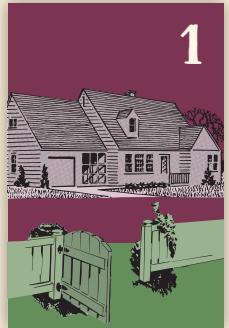
8 house tiles
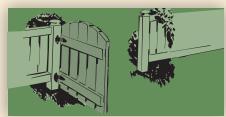
8 garden tiles


16 marketing tiles: 6 billboards, 4 mailboxes, 3 airplanes and 3 radios

14


3 restaurants for each player


1 turn order marker for each player


222 employee cards


84 milestone cards


18 bank reserve cards


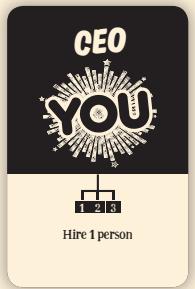
6 CEO cards

Bills of paper money

40 soft drinks (wood)


40 pizzas (wood)

40 beers (wood)
40 lemonade (wood)

40 burgers (wood)

Overview
Each player starts as a single entrepreneur and builds up a fast food chain. Th ey do this by hiring and training staf , represented by cards; and by running the operations of their company, which is done on a variable board. Th e game continues until the bank runs out of money (twice). Th e richest player then wins.
Th e game is played in phases. Some phases are played simultaneously;
others use a turn order.
Concepts
Employee cards: these cards depict a person. Th e text under the picture describes what that person can do in the company. Cards with a in the top left can be hired by recruiters. Cards that show a require a salary. Cards that can be trained show future career options in the bottom left . Some cards instead show a in the bottom left . Th ese are top positions. Each player may only own one of that particular card. On the top right, some cards show “range”, counted by road or zeppelin. Employee cards can be managers, marketeers, kitchen staf , and many other things.
Open slot: a position in the company structure where an employee card could have been played.
Range: the number of times you cross onto a dif erent tile. Range is normally tracked following a road, unless the card has a zeppelin symbol .
Restaurant: Each player has three restaurants available. Each restaurant is 2x2 squares big. One of these squares is marked as its entrance by the doors in the corner. If you need to count range from a restaurant, always start counting from its entrance.
Map tile: a map element that can be picked up. It consists of 5x5 squares.
Initially, a square can contain a road, drinks, part of a house, or empty space.
Food and drinks: Th e wooden pieces symbolize food (burgers and pizzas) and drinks (soft drinks, lemonade, and beer). Placed on a house, they show demand. Placed on a marketing campaign, they show what is being advertised and for how long. In the hands of a player, they represent their stock. Drinks are also printed on the map. Th ese indicate locations where buyers can get these type of drinks.

Cards setup
Lay out the employee and milestone cards according to the image to the right.
If you lay out the cards as pictured, you will have an overview of upgrade paths and you can easily see which cards are in danger of running out.
For each employee card marked with , remove a number of cards so that you end up with the following number:
| players 1xemployee Billboards Map sizecards used removed | |||
| 2 | 1 | #12,#15,#16 | 3x3 |
| 3 | 1 | #15,#16 | 3x4 |
| 4 | 2 | #16 | 4x4 |
| 5 | 3 | None | 5x4 |
Put the billboards listed in the above table back in the box.
Map setup
Create a map by randomly selecting map tiles. Rotate each tile randomly before placing it in a grid. Th e number of map tiles used depends on the number of players, as shown in the table above and the image to the right.


2 players
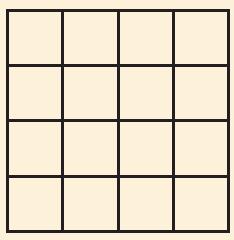
4 players

3 players

5 players

Filling the bank
Place \$50 x the number of players into the bank pool. Use a practical set of (small) bills. Put the rest of the money back into the box for now. Players do not get any money at the start of the game.
Player markers
Each player chooses one of the restaurant chains available and receives a CEO card, 3 restaurants and a set of 3 bank reserve cards.
Initial order of play
Collect the turn order markers of the chosen restaurant chains and shufl e them. Randomly take out the turn order markers and place them on the turn order track in the order in which they were drawn.
Placing the first restaurants
Each player has to place one starting restaurant.
Start with the player who is last on the turn order, and end with the player who is fi rst. Each player may either place a restaurant, or pass. If anyone passed, a second round is executed in turn order. Each player who has not yet placed a restaurant must now place it. Players who have already placed a restaurant do not participate in the second round.
Th ere are a few limitations on the initial placement of restaurants:
• Restaurants must be placed fully on empty squares that do not contain any other restaurants, roads, drinks, or houses.
• Restaurants must be placed so that their entrance borders on a square with a road.
• Restaurants may not be placed in such a way that their entrance is on the same tile as the entrance of an existing restaurant.
Setting goals
Each player now chooses one of their bank reserve cards. Th e chosen reserve cards are placed face down next to the bank. Th e other reserve cards are discarded unseen. Th ey will not be used for now.
Th e chosen bank reserve cards collectively indicate how much money will be added to the bank once it runs out of money. Th e higher the value of the cards, the longer the game will last. At the start of the game, players will not know exactly how long the game will take, which makes balancing short and long term strategies more challenging.

Phase 1: Restructuring
Each player simultaneously chooses which of their employees to use this turn. Th ese cards are placed face down on the table. All other cards are placed face down in a separate pile. Aft er all players have chosen their cards, they simultaneously open the pile of cards to be used this turn. Th ese employees are said to be “at work”. Th e rest of the cards cannot be used this turn, although they can be trained, and you will need to pay their salary if they are not fi red. Th ese cards are said to be “on the beach”.
During all phases except this one, every player can at any time request to see the cards of another player. Th is includes both the cards at work and those cards ‘on the beach’.
In the fi rst turn, the CEO will be the only card played. Th e CEO is always at work.
In all subsequent turns, aft er opening the pile, the cards at work must be placed into a company structure. Th e cards are placed in a pyramid. Each card is placed under the person he/she is reporting to. Th e top of the pyramid is the CEO, who obviously reports to nobody.
Th e company structure always contains the CEO. Th e CEO can have up to three cards reporting to him. Th is is indicated by the 3 slots (rectangles) on the CEO card. Th e cards reporting to the CEO can be either normal staf or managers (black cards only). Each manager can have between 2-10 people reporting to him, as indicated by the number of slots on the card. Cards reporting to a manager can only be normal employees, not other managers.
If a player has inadvertently placed more cards than can fi t into the company structure, all cards except the CEO are placed on the beach and the player has to play his turn with only the CEO.
Aft er the bank reserve cards have been opened, CEOs may gain or lose a slot. Th e extra slot can be used for normal staf or managers. You can use a reserve card to indicate the new number of CEO slots.
Phase 2: Order of business
In this phase, players choose their position on the turn order track. Th e player with the most open slots in his company structure may choose fi rst, followed by the player with the second largest number of open slots, etc. Open slots are slots on a CEO or manager that have not been used for an employee card. If a player has the “First airplane campaign” milestone, he counts two extra open slots.
If two or more players have the same number of open slots, the one who was ahead in turn order in the previous turn chooses fi rst.
Players choose their position in the turn order by placing the turn order marker on an available spot on the turn order track. Note that there are only as many spots on the chart as there are players participating. For example, with 3 players, you cannot choose the 4th position.

Phase 3: Working 9:00–5:00
In this phase, all players take turns in turn order. Each player may perform one action for each card he has at work. The actions of the pricing manager, discount manager, luxury manager, CFO, recruiting manager, HR director and waitress are mandatory; the actions of all other employees are optional. A player completes all of his actions before the next player gets his turn. The available actions are indicated on the cards.
Actions have to be performed in the order listed here; The position of a card in the organizational chart has no influence.
Recruit
Each company always gets one free recruitment action performed by the CEO. You can hire additional employees by having recruitment cards in your company structure. For each recruitment action available, you may hire one additional employee.
You may only hire people at entry positions (indicated by in the top left corner of the card). Take the card(s) you want and add them to your pile of cards that are on the beach. If a certain deck runs out of cards, you may no longer hire that type of employee until cards become available again. However, you may hire such a card if you immediately train it to a higher level in the training sub-phase of this turn (so you don’t actually have to take the card).
Recruitment actions are available on the recruiting girl card (1x), the recruiting manager (2x) and the HR director (4x). Note that unused recruitment actions on the recruiting manager and HR director will give a salary discount in phase 5.
Train
For each training action in your company structure you may train one person one step. You may only train employee cards that are on the beach, including employees you just hired. Employees that are currently at work in your company structure and busy marketeers cannot be trained. Marketeers, kitchen staf and buyers each have their own upgrade track. All other (non-entry) employees are trained directly from managers (black cards).
Most cards list a number of training options on the bottom of the card. For example, the kitchen trainee can be trained into a burger cook or a pizza cook. Cards that have no training options listed cannot be trained.
Return the card you want to train to the main stock of cards and replace it with the card you want to train it to.
In general, you may not train an employee you have just trained any further in the same turn. Exceptions are:
• A coach may train the same card two steps ;
• A guru may train the same card up to three steps;
• If you have the “First to pay \$20 in salaries” milestone, you may use multiple trainers, coaches and gurus to train the same card.
A coach (or guru) may alternatively divide their attention over multiple employees, for example training each one step.
You cannot train to a position if the final card is not available in the stock. However, if you train multiple steps or hire and immediately train a person, the intermediate cards do not have to be available.
You may only have one copy of each card marked with

Initiate marketing campaigns
For each marketeer in your company structure, you may place a marketing campaign on the board. Depending on the type of marketeer, you may place either a billboard, a mailbox, an airplane or a radio campaign. Th e marketeer also indicates a certain specifi c range and maximum duration. Aft er you place the campaign, you have to choose what you want to advertise.
Type of campaign: Marketing trainees may place only a billboard; Campaign managers may place a mailbox or billboard; brand managers may place an airplane, mailbox or billboard; and a brand director may place any type of campaign.
Range: Each marketeer has a certain range. For example, the marketing trainee has a range of 2. Th is means he can place billboards on his own tile (0), an adjacent tile (1) or a tile two steps away. All connections must be by road and start at a restaurant entrance. You can freely choose which of your restaurants the marketeer starts counting range from.
Brand managers and directors are not limited by range. Th ey can place campaigns on areas that they cannot reach by road, but when they place a billboard, mailbox, or radio, it still has to be placed adjacent to a road.
Duration: Th e text on the marketeer card states the maximum duration of a campaign that the marketeer can initiate. Th e minimum duration of a campaign is 1 turn. For example, a marketing trainee has a maximum duration of 2, so he can initiate a campaign that runs for 1 or 2 turns. Marketing campaigns can never be ended prematurely.
Placing the campaign: Billboards, mailboxes and radios must be placed on empty squares on the board. Th ey must connect to the road used to reach the tile. If a marketing campaign spans multiple tiles,
only one of the squares adjacent to a road needs to be in range of the marketeer. Th e marketing tile itself has to be in range, not just the road used to get there.
Airplanes must be placed on the side of the board. Airplanes do not have to be connected to a road and are not af ected by range. Th e available airplanes have a size of 1, 3 or 5 squares and must always be placed so that they fl y over the corresponding number of rows or columns on the board—it is not allowed to place an airplane so that it would fl y outside of the board.
It is allowed to place a marketing campaign in a location where it will not reach any houses.
Determine what to advertise: A campaign can advertise either pizza, burgers, or one type of drink. To indicate this, place wooden pieces of the advertised type on the campaign as advertising markers. Th e number of pieces should correspond to the duration of the campaign.
Marketeer will be busy: Aft er placing the campaign, put the marketeer card aside and place a “busy” chip on the card. Th e number on the “busy” chip should correspond to that on the marketing campaign. Th is indicates the marketeer card will be unavailable until the marketing campaign ends. Th e marketeer will not take up a slot in your organizational structure when busy.
If a player has the “First billboard placed” milestone, marketing campaigns placed by that player will not end. To indicate this, place the campaign tile on its eternal side on the board with a single wooden piece on it. Th e corresponding marketeer card will be unavailable for the rest of the game. It will not be returned to the stock or the player’s hand.

Even though it is not yet possible for Xango Blues Bar to deliver to house 15, placing billboard 14 may still make sense: by adding a garden to house 15, it will become accessible by road.
Xango Blues Bar has played two marketing trainees in its structure this turn. It can place both billboards 11 and 14, as shown in the picture above. Th e range to play billboard 11 is 0, as it is on the same tile as the restaurant. Th e range to play billboard 14 is 2 (the maximum for the marketing trainee), as you have to cross into an adjacent tile twice.
Get food & drinks
If you have any kitchen staf and/or buyers in your structure, you may take food and drinks from the general stock following the instructions on the card. Earned food and drinks are kept in front of the player and are available to all restaurants in the player’s chain when needed.
Kitchen trainee: take one burger or pizza.
Errand boy: take one drink (softdrink, beer, or lemonade) of your choice.
Burger cook and/or chef: take the number of burgers as written on the card.
Pizza cook and/or chef: take the number of pizzas as written on the card.
Cart operator: starting from one of your restaurant entrances, trace a route of range 2 over roads. Including the tile of your restaurant, the route will thus cover up to three tiles. Take 2 drinks from the stock for each drink symbol you pass by on either side of the road. Note that you have to traverse the road directly (orthogonally) adjacent to the drink symbol. If there are multiple drink symbols on the same tile, it is sometimes possible to pass more than one of them. However, it is not allowed to make U-turns in order to do so. There is no need for the cart operator to return to one of your restaurants..
Truck driver: Same as cart operator, but the truck has a range of 3, and takes 3 drinks per symbol you pass by.
Zeppelin pilot: Starting from your restaurant entrance, trace a route of range 4, ignoring roads. Including the tile of your restaurant, the route will cover up to five tiles. You may not cover the same tile twice. Collect 2 drinks from stock for each drink symbol on the tiles you fly over. If there are multiple drink symbols on a tile, you may collect drinks for all of them.
If a player has the “First Errand Boy Played” milestone, each source will provide an extra drink. Errand boys will also bring in two drinks of the same type, including the errand boy just played.
If a player has the “First Cart Operator Played” milestone, his cart operators, truck drivers and zeppelin pilots have one additional range.
Place new houses and gardens
If your structure contains a new business developer, you may place a new house on the map, or add a garden to an existing house.
Placing a new house: A new house may be placed in any empty area on the map, provided the house is connected to at least one road. There are no range limitations. You may freely choose which house to place.
Placing a new garden: A new garden must be placed so that it connects to a house printed on a map tile. It has to connect over 2 squares, so that the final house and garden forms a 2x3 rectangle. Gardens may only be placed on empty squares. Each house may only get one garden. Turn the garden so that it is obvious which house it belongs to. Houses that have been placed on the board by a new business developer automatically come with a garden, and may not get another one.
Place or move restaurants
If you have a local manager or a regional manager in your structure, you may place a new restaurant or move an existing one. A restaurant must be placed fully on empty squares that do not contain any other map elements. It must be also be placed so that its entrance is adjacent to a road. However, unlike during the initial placement, a restaurant may be placed in such a way that its entrance is on the same tile as the entrance of another restaurant.
Local manager: A local manager may place a new restaurant within a range of 3 tiles, travelled by road, from one of the chain’s existing restaurants. The new restaurant must be placed with the printed entrance connecting to a road. This does not have to be the road used to determine the range. The new restaurant is placed with the “COMING SOON” side up. It will only open at the end of the turn. Note that as long as the local manager is active, restaurants of that chain have a drive-in, and are considered to have entrances in each corner.
Regional manager: A regional manager may place a restaurant anywhere on the board, provided the entrance connects to a road. He may also pick up one of his restaurants already on the board and place it somewhere else and/or rotate it. Restaurants that have been placed or moved by a regional manager are active immediately: there is no “COMING SOON” waiting period. Note that as long as the regional manager is active, restaurants of that chain have a drive-in, and are considered to have entrances in each corner.
Phase 4: Dinnertime
It’s evening, and the inhabitants go out to get some food. This happens in the order of the numbers printed on the houses, starting with the lowest number on the board. Players make no decisions in this phase; the inhabitants of the houses will determine where to eat based on the rules given in this section.
To determine if and where a house will eat, follow these steps:
• If no demand counters have been placed on the house, its inhabitants will not go out to eat.
• If there are demand counters, check if there is a chain with a restaurant connected to the house by road which can deliver all of the food and drinks the inhabitants want. For example, if the house contains demand for 2 burgers and a beer, there needs to be a chain that can provide 2 burgers and a beer—if the chain has only burgers, or not enough burgers, the inhabitants will search for a better place or decide not to go out. There are no range restrictions, but there must be a road connection between the house and the restaurant. You may start at any road orthogonally adjacent to the house or the garden. If there is no road connection, the inhabitants will stay at home. If there is one chain that fulfills the requirements, the inhabitants will eat there.
• If there are multiple chains that can provide the full menu, and that have a restaurant connected by road to the house, competition ensues. The inhabitants will go to the restaurant by evaluating the price and the distance.
• The standard unit price of each good is \$10. This unit price will be diferent if the chain has one or more price managers (-\$1), discount managers (-\$3), or a luxury manager (+\$10) in its structure. The ‘First to lower prices’ milestone permanently lowers the unit price of that chain by \$1. Note that bonuses (CFO, “First burger marketed”, etc.) do not alter the unit price. For example, a chain with 2 active price managers and an active discount manager will charge a unit price of \$5.
• To determine the distance, determine the range from the house to the closest restaurant of each of the chains. You must follow the road and end up at an entrance of the restaurant. Each tile border you cross counts as one step. So, a house on the same tile as an restaurant entrance will be at distance 0 if the two are connected by a road on the same tile.
• Add up the unit price and the distance. Note that the number of demand tokens does not matter for this calculation. The inhabitants will eat at the restaurant which has the lowest result. So, they may walk one step further to save \$1 per item, 2 steps to save \$2, etc.
• If two chains have the same (unit price + distance), inhabitants will go to the restaurant with the most waitresses in its structure.
• If both chains also have the same number of waitresses in their structure, inhabitants will go to the chain that is earlier in the turn order.
The chain which is chosen by the inhabitants must serve the food and drinks. Discard the demand counters from the house and the identical markers from the chain’s stock. The chain gets paid for each item it sells. Specifically, they get the unit price + bonuses from milestones for each item sold.
If the house has a garden, the chain receives double the unit price for each item. Note that the bonuses are not doubled, so the final income is (2 x unit price) + bonuses.
As the order of the houses depends on the house numbers, it is quite possible that a chain runs out of food to serve houses later in the order. These will then search for food elsewhere. In some cases, this may lead to some of the inhabitants travelling very long distances, or not finding food at all.
Example: a player sells 1 burger and 2 beer to a house with a garden. He has the “First burger marketed” milestone card, which gives a bonus of \$5 on burgers. He has also played a luxury manager, which raises the unit price by \$10. His unit price is \$10 + \$10 = \$20. The garden doubles this income, to 2 x \$20 = \$40. The burger bonus of \$5 is then added, so the income for the burger is \$45. He has no bonus for drinks, so the beer sells for the same unit price of \$20, which is doubled because of the garden to \$40. So his total income is \$45 + 2x \$40 = \$125.
Waitresses: After all houses have been processed, each chain receives \$3 (or \$5 if they have the “First waitress played” milestone) for each waitress in their structure.
CFO: Then, each chain that has a CFO in their structure (or the “First to have \$100” milestone) receives a 50% bonus on all cash, including waitress tips, that it earned in this turn (rounded up).
If at any time during this phase the bank has insuficient funds to pay out all income, the bank breaks and reserve cards are opened (see breaking the bank). If the bank breaks a second time, the game ends at the end of this phase, and salaries will not be paid this turn.
Breaking the bank (1st time): Open the reserve cards that were chosen by the players at the start of the game. Sum the money amounts shown on the reserve cards and add this total to the bank.
Each reserve card also shows 2, 3 or 4 open slots. Whichever number occurs most determines the number of slots all CEO’s will have from the next turn onwards. For example, if there are two ”2 slot” cards, one “3 slot”, and one “4 slot”, all CEOs will have 2 slots instead of 3 for the remainder of the game. If two types of reserve cards occur equally often, the highest number determines the slots—for example, two “2 slots” cards and two “4 slots” cards will lead to all CEOs having 4 slots. Place the appropriate reserve cards under the CEOs as a visual reminder of the new number of slots.
Breaking the bank (2nd time): If the bank breaks a second time, the game ends. Finish phase 4 and continue paying all players their earnings, if need be by writing cash still owed from the bank down on paper. Whoever has the most cash at the end of this phase wins the game. In case of a tie, the tied player who is earlier in turn order wins.
Phase 5: Payday
Each chain may now choose to fire any number of people in the company structure or on the beach. Cards that are fired must be placed back into the general stock of available cards.
Normally, marketeers that are busy may not be fired.
Then, each chain needs to pay \$5 for each card in their structure or on the beach that has a on the card. Note that there are a number of milestones and employee abilities that allow you to reduce the amount of salary you pay. Paid wages are returned to the bank.
Busy marketeers with a must still be paid. In exceptional cases, a player may have no money but an obligation to pay a busy marketeer. In this case, the marketeer must be fired. The corresponding marketing campaign remains on the board. Note that this is only allowed if you have already fired all of your other employees that require a salary.
Recruiting manager and HR director: If the company structure contains a Recruiting manager or HR director that has not been used to full capacity for hiring new people, the additional actions of these managers reduce the amount the chain pays in salaries. Each left-over action gives a \$5 discount.
All discounts that are available have to be used (this may be relevant if you want to get the “First to pay \$20 in salaries” milestone). No matter how much salary discount you have, however, the minimum amount to be paid is \$0—people will not pay to work for you!
Phase 6: Marketing campaigns
In this phase, all marketing campaigns run. This happens in the order of the numbers printed on the campaigns, with the lowest number first.
Note that each house can have at most 3 demand tokens in total, or 5 if the house has a garden. If a campaign reaches a house that is already filled with demand tokens, it has no efect on that house. This may lead to some campaigns being utterly useless, as is the nature of marketing campaigns.
Billboard campaign: A billboard reaches all houses it is orthogonally adjacent to. Normally, it will reach 1 or 2 houses only. Place a demand token of the type advertised by the campaign on each adjacent house. A house will be reached even if only its garden is adjacent to the billboard.
Mailbox campaign: A mailbox reaches all houses it can get to without crossing a road (you can think of the area enclosed by roads and perhaps the border of the board as a “block”). A mailbox is only stopped by roads, and will freely pass through other map elements such as restaurants and houses. Place a demand token of the type advertised by the campaign on each house in the block.
Airplane campaign: An airplane reaches every house that it can fly over. These are all houses in a line of 1, 3 or 5 rows or columns across the board starting from the airplane counter. Place a demand token of the type advertised by the campaign on each house in the fly-over zone. A house will be reached even if only part of the house, or its garden, is in the fly-over zone.
Radio campaign: A radio campaign reaches every house on the tile on which the radio campaign has been placed, as well as houses on all
8 tiles surrounding that tile. A house will be reached even if only part of the house, or the garden, is on one of these tiles. A radio campaign started by a player with the “First radio campaign” milestone will place two demand tokens.
After running a campaign, remove one advertising token from the campaign (unless it is an eternal campaign). If the campaign has no more tokens left, return it to the stock and return the corresponding marketeer to the player. Otherwise, the campaign stays on the board, and the marketeer remains busy. Note that a busy marketeer is never placed into your company structure next turn, and also will not require an (open) slot. He may still require a salary though!
Phase 7: Clean up
All players who do not have the “first to throw away drink/food” milestone must discard any food or drinks they still own.
All cards from the company structure and the beach are taken back into hand. Other players may ask to see them at this point.
All restaurants that are showing the “COMING SOON” side are turned over to their “WELCOME” side.
If any milestones have been awarded this turn, all remaining milestone cards of the same type are turned upside down. These are no longer available for the rest of the game.
Advertising tokens that have been placed on campaigns, and demand tokens that have been placed on houses remain on the board.
The next turn then starts, commencing with phase 1.

If a player at any point in the turn fulfi lls the requirements of a milestone card, he is immediately awarded that milestone card. Most milestones give benefi ts. Th ese benefi ts take ef ect immediately. You must apply the benefi t for the rest of the game, even if it is not helpful.
Other players can claim the same milestone provided that they do so during the same turn. Occasionally there may not be enough milestones cards; please make a proxy copy to hand out in that case. In phase 7 of each turn, all remaining milestone cards that have been claimed at least once are taken out of the game and can no longer be claimed by other players.
Milestones are very important in the game and it is vital to plan your strategy around them.
First billboard placed
Th is milestone is awarded when you place a billboard campaign on the map.
For the rest of the game, two ef ects occur:
• You no longer pay salaries for marketeers (campaign manager, brand manager, brand director). It is not allowed to pay salaries voluntarily.
• When you place a marketing campaign, it remains on the board forever. To indicate this, place the campaign tile on its eternal side on the board with a single wooden piece on it. Th e corresponding marketeer card will be unavailable for the rest of the game. It will not be returned to the stock or the player’s hand. Th is rule already applies to the billboard you place to get the milestone.
First to train someone
Th is milestone is awarded when you train an employee to a higher level.
For the rest of the game, you will receive a \$15 discount on salary costs.
Salary costs can never go below \$0. Using the discount is obligatory;
you may not voluntarily pay salaries.
First to hire three people in one turn
Th is milestone is awarded when you hire three people or more in the same turn.
You immediately receive 2 management trainee cards that are placed on the beach. If you have active training capacity, you may immediately train these cards as recruitment happens before training. In the unlikely case that there are not enough management trainee cards left , you receive whatever is left .
First burger/pizza/drink marketed
Th ese milestones are awarded when you place a marketing campaign that advertises burgers/pizza/any type of drink, respectively.
For the rest of the game, that chain receives a bonus for being the “Home of the original burger/pizza/drink”. Whenever it sells a burger/ pizza/drink, it gets an additional \$5 bonus. Th is bonus does not af ect the unit price. Th is means it has no infl uence on the inhabitants’ decisions on where to eat; and it is not doubled by gardens. Like all income, however, it can be boosted by a CFO.
In the case of drinks, the bonus counts for all drinks, not just the type originally marketed.
First errand boy played
Th is milestone is awarded when you play an errand boy in your structure. It is not awarded for errand boys on the beach.
For the rest of the game, your buyers (errand boys, cart operators, truck drivers, and zeppelin pilots) get 1 extra drink per source they encounter. So, errand boys will get 2 (identical) drinks of any type. Cart operators and zeppelin pilots will gather 3 drinks for each drink symbol they pass, and truck drivers will receive 4.
Th is bonus applies to the errand boy played to get the milestone.
First to have \$20
Th is milestone is awarded if you have \$20 cash at any time (in practice this means aft er getting income and before paying out salaries).
You may look at the face down reserve cards. You are allowed to make truthful or confusing noises about whatever you see on the cards. However, you may not show them to other players.
First burger/pizza produced
Th ese milestones are awarded when you produce a burger/pizza, respectively.
You immediately receive a burger cook/ pizza cook card. As this milestone is awarded during production, you may not train the burger cook, as training occurs before production. If there are no more cook cards of the correct type, you receive nothing. Th e cook will require a salary in the Payday phase. If you do not want to pay her, you may fi re the cook instead.
First waitress played
Th is milestone is awarded when you play a waitress in your structure. It is not awarded for waitresses on the beach.
For the rest of the game, you will receive \$5 for each waitress in your structure rather than \$3. Th is bonus already applies to the waitress played to get the milestone.
First to throw away drink/food
Th is milestone is awarded when you throw away at least one food or drink token in phase 7 (Cleanup).
For the rest of the game, this milestone card functions as a freezer. You may store up to 10 tokens (food and/or drink) in the freezer during phase 7. Th ese items may be sold in subsequent turns. Items can be kept in the freezer for as long as you want. If you have more than 10 tokens, you may freely choose which ones to keep and which ones to discard.
You may not yet store anything in the freezer in the turn in which you receive this milestone.
First to lower prices
This milestone is awarded when you play a pricing manager or a discount manager into your structure, thereby lowering your prices.
For the rest of the game, you may use training actions provided by multiple employees to train the same person. For instance, with 2 trainers and a coach, you could now train a management trainee up to an executive vice president in one turn.
For the rest of the game, your prices will automatically be \$1 lower. For instance, they will be \$9 if you play no price related managers. You cannot undo this efect.
This takes efect immediately, so your prices will already be \$1 lower in the turn in which you first lowered prices.
First cart operator played
This milestone is awarded when you place the first cart operator into your structure. It is not awarded for cart operators on the beach.
For the rest of the game, your cart operators, truck drivers and zeppelin pilots will have +1 range. This takes efect immediately, so your first cart operator will already have a range of 3.
First airplane campaign
This milestone is awarded when you place an airplane campaign.
For the rest of the game, when determining order of play, you add 2 extra open slots. These slots cannot be used to play managers or other employees, they are just a bonus when determining the order of play.
First radio campaign
This milestone is awarded when you place a radio campaign.
For the rest of the game, if you have a radio campaign running in phase 6: place 2 goods of the type advertised on each of the houses reached by the radio. If the house is already full, place 0 or 1 goods, depending on how much advertising the house will still take.
You may not choose to market 1 instead of 2 goods. Your radio will market the same good twice, it cannot market two diferent goods.
This takes efect immediately, so in phase 6 of the turn in which the milestone is achieved.
First to have \$100
This milestone is awarded if you have \$100 or more in cash at the end of phase 4.
Your CEO gets the ability to also do the work of a CFO. This gives a 50% cash bonus at the end of phase 4 (dinnertime). You do not get a CFO card. If you already have a CFO card, you must fire the CFO in phase 5 of this turn. You may not train a CFO anymore after you have achieved this milestone.
The new ability takes efect only from the next turn onward, as you can get it only after phase 4 has just ended.
First to pay \$20 or more in salaries
This milestone is awarded if you have to pay \$20 or more in salaries in phase 5. These salaries have to be actually paid out— you may not count salaries that are covered by a discount. Note that you have to use all discounts still available to you at the start of phase 5. You may not voluntarily pay more salaries than you have to. (Of course, you may use a recruiting manager or HR director to hire an employee in phase 2 so her salary discounts are no longer available in phase 5).

Food Chain Magnate is a highly unforgiving game. If you make a mistake, it can be very hard or even impossible to get back on track.
In order to get to know the game, we strongly advise during your fi rst game to alter the rules as follows:
• Do not use the reserve cards.
• Put \$75 per player into the bank pool instead of \$50.
• Take out all milestones.
• Do not pay any salaries (skip phase 5).
• Th e game ends when the bank breaks once.
Th is will allow for a somewhat shorter game that enables everyone to get to know the rules without running their companies into the ground. For your next game, we recommend playing with these same alterations and adding the milestone cards (even if some of them will not have a benefi t in the introductory game).

Some strategic pointers:
• Th e best strategy in this game is highly dependent on: the board layout, your board position, and the actions of other players (in no particular order).
• Milestones are the key to planning your strategy. You will need to achieve milestones before others do. Reaching the right milestones as soon as possible is oft en essential, as the others will likely be taken by the time you reach them.
• Th ere is a trade-of between building up your company through recruitment and training and earning money through marketing and sales. Th e winning mix depends on how long the game will take. Th is is strongly determined by the trade-of chosen by the players.
• Th e game normally accelerates strongly towards the end. You can win by earning money only in the last turn, if you have prepared well. Or, you could still be preparing for a turn that never comes.
• You can hurt other players by advertising goods they cannot produce. But beware, you may also be helping them sell more later on!
• Price wars are very ef ective to attack others, but they will be very costly to yourself as well. Use them tactically.
• Houses with gardens are very lucrative but may attract competition.
• You can sometimes make more money selling a few things at high prices than by selling a lot of things at a discount. But it can also be the other way around.
• Sometimes, it can be useful to advertise in such a way that other players earn money—as long as you earn more yourself!
• Combine the previous two ideas.
下载 Markdown