rules_zh_抵抗组织_1362.md
抵抗組織
游戏配件:
11张角色卡(10张角色及1张领袖)
5张队伍卡
20张投票卡(10张赞成卡及10张反对卡)
10张任务卡(5张成功卡,5张失败卡)
15张谋略卡(在「阴谋变得更复杂」扩充里使用)
6个计分标志物(3个红色标志物及3个蓝色标志物)
1个 回合标志物(黑色圆盘)
1块计分板
游戏目的:
抵抗组织是一个需要玩家隐藏身份的社交型推理游戏。玩家们可能各自扮演反抗军的成员,为的就是推翻邪恶腐败的政府;也可能是扮演间谍阻挠反抗军的活动。只要成功完成三个任务,反抗军玩家们便可宣告赢得游戏;反之,有三个任务失败时,便由间谍玩家们获得胜利。另外,当在游戏中任何时候里,反抗军无法编成「任务队伍」(亦即一个回合任务中有5次任务投票都遭到否决)时,间谍玩家们也会赢得游戏。
游戏中一个基本的规则就是,在游戏里的任何时候,玩家想说什么大致上是可以的。讨论、欺瞒、直觉、人际互动和逻辑推理,这些都是对于取得最后的胜利有着不可缺少的重要性。
游戏卡牌:
角色卡一决定玩家所属的阵营(每位玩家都只可以是反抗军成员或者是间谍,两种阵营之中的其中一种)。在游戏过程中的任何时候,玩家
的角色卡都不可以展示给别人看,也不能讨论卡牌的样子。
领袖卡一指定一位玩家去负责编成「任务队伍」。

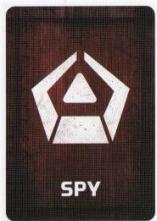
间谍

反抗军成员

领袖卡
队伍卡一指派「任务队伍」的成员。
投票卡一对由领袖编成的「任务队伍」表达赞成或反對。
任务卡一决定任务成功或失败。
谋略卡一使用在「阴谋变得更复杂」扩展中的额外行动。

投票反对
队伍卡

任务失败
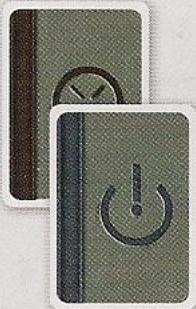

投票赞成
任务成功
谋略卡
游戏准备:
将计分板置于桌子中央,并将计分标志物、队伍卡及任务卡放在计分板
将回合标志物放在计分板第1回合的位置上。给予每位玩家一套两张的投票卡。
随机决定一位玩家担任反抗军领袖;领袖获得该领袖卡。利用下面的表格来决定,游戏中反抗军成员及间谍的各自数量。
| 玩家人数 5 6 7 8 9 10 |
| 反抗军人数 3 4 4 5 6 6 |
| 间谍人数 2 2 3 3 3 4 |
将合乎数量的角色卡洗匀。以面朝下方式,给予每位玩家一张角色卡。
每位玩家各自秘密地检视自己刚获得的角色卡所属阵营。
间谍同袍的确认:
在所有玩家都各自确认过自己的身份之后,领袖必须反复利用下面的步骤,来确保所有间谍能够互相知道对方:
「请所有人闭上你们的眼睛。」
「请间谍打开你的眼睛。间谍可以环视一下来确认所有其他间谍是谁。」
「请间谍闭上你们的眼睛。现在,所有人的眼睛仍然要保持闭着。」
「请所有人张开你们的眼睛。」
游戏流程:
游戏进行分成好几个回合;每个回合又分成「队伍编成阶段」和「任务执行阶段」。
编成队伍
在「队伍编成阶段」时,由领袖挑选出任务的队伍成员玩家,之后所有玩家都会对这个任务队伍的编成进行赞成/反对的投票。
任务队伍成员的指派:经过适当的讨论后,领袖拿取任务所需数量的队伍卡(参考下面的图表),并将每张队伍卡分配给任何玩家,当然也可以选择领袖自己。注意每位玩家只可以被分配到一张队伍卡。
| 玩家人数 5 6 7 8 9 10 |
| 第一任务的队伍 2 2 2 3 3 3 |
| 第二任务的队伍 3 3 3 4 4 4 |
| 第三任务的队伍 2 4 3 4 4 4 |
| 第四任务的队伍 3 3 4 5 5 5 |
| 第五任务的队伍 3 4 4 5 5 5 |
任务队伍编成的投票:经过适当的讨论后,领袖需要对任务队伍编成进行投票。每位玩家,包括领袖本身,各自秘密地选择一张投票卡。当所有玩家选择好要打出的投票卡之后,领袖便会要求把所有打出的投票卡展示出来。如果投票中「赞成」是占大多数的话,代表任务队伍可以获得批准出动;反之,如果投票中「反对」是占大多数的话,则代表拒绝该队伍出动;如果「赞成」和「反对」的数量一样多时,也是代表拒绝该队伍出动。如果任务队伍可以获准出动时,游戏继续进行下一个「任务执行阶段」。如果任务队伍未能获准出动时,领袖便会以顺时针方式,交由下一位玩家来担任,并重复上述「队伍编成阶段」。

如果在一个回合中,有5组任务队伍遭到拒绝(亦即5次投票都是否决)的话,间谍便会赢得这场游戏。
执行任务
在任务队伍中的每位成员玩家,必须秘密地各自决定要支持任务的进行,还是要破坏任务的进行。领袖给予每位任务队伍成员一套任务卡。每位任务队伍成员选择一张任务卡,并以面朝下方式将其打出到自己的前面。领袖把打出来的任务卡收起来,并进行洗牌,之后才是把这些任务卡展示出来。如果所有打出的任务卡都是「成功卡」的话代表任务成功;如果打出的任务卡中有1张(或以上)的「失败卡」时,则代表任务失败。
注意:反抗军成员必须选择任务「成功卡」;间谍可以选择任务「成功
卡」或任务「失败卡」。
注意:在7人或以上玩家游戏的第4个回合任务中,必须出现至少2张「失败卡」才会判定任务失败。
注意:建议由两位不同的玩家把打出的任务卡和弃掉的任务卡,分别洗匀再进行任务卡结果的公开。
在任务结束之后,将计分板上的回合标志物往前移动到下一回任务的格子上。如果刚结束的任务为成功时,把一个蓝色计分标志物放在任务格子上;如果刚结束的任务是失败时,把一个红色计分标志物放在任务格子上。然后,领袖会以顺时针方式,交由下一位玩家来担任,并进行下一回合的「队伍编成阶段」。
自己和查尔斯一组两张的任务卡,保罗选择任务成功卡,并把它面朝下打出到他自己的前面;查尔斯打出任务失败卡,并把它面朝下打出到他自己的前面。


保罗把两张打出的任务卡收回,并在展示结果前洗匀它们;结果为任务失败。
游戏结束:
当不论是三个成功或三个失败的任务出现时,游戏便立即宣告结束。如果有三个任务是成功的话,反抗军获胜;如果有三个任务是失败的话,间谍获胜。
提醒:
在抵抗组织游戏中,资讯的来源是多方面的。第一种可以是来自玩家们的投票模式,第二种可以是来自任务的结果,第三种可以是来自你观察
到玩家间互动的线索。反抗军成员必须使用所有掌握的信息,才可能铲除被渗透的间谍。
要推翻了强大的政府并不容易。你可以预期在核心规则的情况之下,间谍的赢面是比较大的,尤其是在7人或以上玩家同乐时更为明显。使用「阴谋变得更复杂」扩展(已包括在这盒游戏中)里的「谋略卡可以提供额外的资讯给反抗军成员知道,也可以提供更多机会给间谍去瞒骗敌人。
变体规则:
抵抗组织是一个高度依赖团体互动的游戏,请随意实验更多新的变体玩法。以下介绍两种比较热门的变体规则:
指定任务:领袖提出任务(可任何任务次序)及出动的任务队伍,但每个任务只能进行一次,而且第5任务必须在得到2个成功任务之后才能进行。
未能相认的间谍:跳过「间谍同袍的确认」步骤。
游戏制作成员
游戏设计:Don Eskridge游戏开发: Travis Worthington
美工设计/插图:Luis Francisco、Jordy Koop、Charles Rassmussen鸣谢:Brian Carpenter、Eric Hehl、Martin Burley、Berkely BoardgamersMike Lee、Pete Vasiliauskas、Eric Zimmerman、Katie Salen、ChrisJones、BGG community、Eskridges、Narae、Thomas and Jessica、DoPa、Team Don . ..
中文版翻译:林中华(Chung-Wah Lam, cchopman)
出版:战棋会出版有限公司
香港旺角弥敦道678号华侨商业中心8楼B室
如果你有意见、问题或建议,欢迎写信给我们:
info@wargames.com.hk
更多游戏产品,请浏览本公司网页:
www.wargames.com.hk
©2010 Lone Oak Games, LLC.
©2011 战棋会出版有限公司 版权所有


The Resisance consolidated rules v1.1.md
THE RESISTANCE
CONTENTS:
•10 Character Cards
•10 Mission Cards (5 Success & 5 Failure Cards)
•5 Team Tokens
•20 Vote Tokens (10 Approve & 10 Reject Tokens)
•5 Score Markers (Blue & Red Markers)
• 1 Round Marker
•1 Vote Track Marker
•1 Leader Token
•3 Score Tableaus
OBJECTIVE:
The Resistance is a social deduction game with secret identities. Players are either members of the Resistance attempting to overthrow a malignant government, or Spies trying to thwart the Resistance. The Resistance wins the game if three Missions are completed successfully, the Spies win if three Missions fail. The Spies can also win if the Resistance is unable to organize the Mission Team at any point in the game (5 failed votes on single mission).
A fundamental rule of the game is that players may say anything that they want, at any time during the game. Discussion, deception, intuition, social interaction and logical deductions are all equally important to winning.
THE CARDS & TOKENS:
Character Cards – Determine the player's affiliation (each player is either a resistance operative or a spy). A player's Character Card may not be revealed at any point in the game, nor the character art discussed.
Leader Token – Designates the player that will propose the Mission Team.
Team Tokens – Allocate positions on the Mission Team.
Vote Tokens – Approve or reject the Leader's proposed Mission Team.
Mission Cards – Determine Mission success or failure.
Score Markers – Indicates if the Mission was success or failure.
Round Marker – Indicates the current game round.
Vote Marker – Indicates how many times in one round Mission Team was rejected
Tableau


SET UP:
Select the tableau corresponding to the number of players. Place the tableau in the center of the play area with the Score Markers, Team Tokens and Mission Cards adjacent to the tableau. Place the Round Marker on the tableau's 1st Mission Space. Give each player set of two Vote Tokens.
Randomly select a Leader; the Leader receives the Leader Token. Use the chart below to determine the number of Resistance Operatives and Spies that will be in the game.
| PLAYERS | 5 | 6 | 7 | 8 | 9 | 10 |
| RESISTANCE | 3 | 4 | 4 | 5 | 6 | 6 |
| SPIES | 2 | 2 | 3 | 3 | 3 | 4 |
Shuffle the appropriate numbers of Character cards. Deal one to each player face down. Each player secretly looks at the role assigned to them on the Character card.
SPIES REVEAL:
After all players know their affiliation, the Leader must ensure that all the Spies know one another by repeating the following script:
“Everyone close your eyes”
"Spies open your eyes. Spies look around and make sure that you know all the other Spies”
"Spies close your eyes. Everyone's eyes should be closed."
“Everyone open your eyes."
GAME PLAY:
The game consists of several Rounds; each Round is comprised of Team building phase and a Mission phase.
Build the Team
The team building phase consist of the Leader picking the players that he would like on the Mission Team followed by all the players voting to approve/reject the Mission Team.
RESISTANCE STRATEGY TIP: GET ON THE TEAM
As a resistance operative you need to get on the mission teams, letting even a single spy on the team is enough to make it fail. The leader gets to propose team members, but everyone gets a vote. If the leader's proposal doesn‘t get enough votes than the next player becomes the leader and gets to propose a new team.
Mission Team Assignment: After appropriate discussion, the Leader takes the required number of Team Tokens (using the following chart) and assigns each Team Token to any player including himself. Note a player may only be assigned one Team Token.
| PLAYERS | 5 | 6 | 7 | 8 | 9 | 10 |
| 1ST MISSION TEAM | 2 | 2 | 2 | 3 | 3 | 3 |
| 2N° MISSION TEAM | 3 | 3 | 3 | 4 | 4 | 4 |
| 3R° MISSION TEAM | 2 | 4 | 3 | 4 | 4 | 4 |
| 4TH MISSION TEAM | 3 | 3 | 4 | 5 | 5 | 5 |
| 5™H MISSION TEAM | 3 | 4 | 4 | 5 | 5 | 5 |
Example: The first mission in a five player game requires a Team of two players. The Leader passes Team Tokens to Paul (himself) and Charles, then calls for a Vote.

SPY STRATEGY TIP: ACT LIKE THE RESISTANCE
The resistance players are out to get you – think fast and remember if you act and vote like a resistance player you will be harder to spot. All the resistance operatives will want to go on the missions, and so should you.
RESISTANCE STRATEGY TIP: BUILD TRUST IN YOURSELF
A good resistance player not only determines who the spies are, but also builds trust in themselves. The best way to build trust is to explain to others what you are attempting to do and why. When interrogated by spies can stumble in their web of deceit and expose themselves.
Mission Team Vote: After appropriate discussion, he Leader calls for a vote on a Team assignment. Each player, including the Leader, secretly selects one Vote Token. When all players have their selected Vote Token ready, the Leader asks for the Votes to be revealed. All players flip over their Vote Tokens so everyone can see how they Voted. The Mission Team is approved if the majority of Votes approved and fails if a majority rejected the assignments; a tied vote is also a rejection. If the Mission Team is approved, play continues in the Mission phase. If the Mission Team is rejected, the Leader passes in a clockwise manner and the Team building phase is repeated.
The Spies win the game if five Mission Teams are rejected in a single round (5 consecutive failed Votes).
Example: Paul, Charles, Candice and lan Approve, Ralph Rejects – the Vote is approved, play continues in the Mission Phase.

SPY STRATEGY TIP: CHANGE YOUR MO
From game to game spies can get stuck in predictable patterns of behaviour, such as never failing the first mission. If the resistance operatives can predict your behaviour, they are more likely to uncover your identity.
RESISTANCE STRATEGY TIP: TRUST NO ONE
If you don't trust everyone on the team, then strongly consider rejecting the proposed Mission Team. Good resistance player will usually use three or more votes per round, carefully watching who is voting yes and asking them why. Remember the spies know each other and sometimes you can catch them approving a vote just because a spy was on the proposed team.
Conduct the Mission
Each player on the Mission Team must secretly decide to either support or sabotage the Mission. The Leader passes a set of Mission Cards to each Mission Team member. Each player on the Mission selects a Mission Card and plays it face down in front of themselves. The Leader collects and shuffles the played Mission Cards before revealing. The Mission is successful only if all the Cards revealed are Mission Success cards. The Mission fails if one (or more) Mission Fail cards have been played.
Note: The Resistance Operatives must elect the Mission Success card; Spies may select either the Mission Success or Mission Fail card.
Note: The 4th Mission in games of 7 or more players requires at least two Mission Fail cards to be a failed mission.
Note: It's suggested that two different players shuffle the played and discarded Mission cards before revealing.
After the Mission has been completed, advance the Round Marker to next Mission space on the Tableau. Indicate a Mission Success with a Blue Score Marker or Mission Fail with Red Score Marker in the Mission space. The Leader passes in a clockwise manner and the Team building phase of the next Rounds begins.
Example: Paul gives himself and Charles a set of two Mission cards. Paul selects the Mission Success card and places it face down in front of him, Charles places Mission Fail card face down in front of himself.

Paul takes the two Mission cards and shuffles them before revealing that the Mission failed. Place Red Score Marker on the first Mission space on the Tableau, advance the Round Marker to the second Mission space on the Tableau and advance Leader token clockwise.

GAME END:
The game end immediately after either three successful or three filed Missions. The Resistance wins if three Missions are successful. The Spies win if three Missions fail. The Spies win the game if five Mission Teams are rejected in a single round (5 consecutive failed Votes).
SPY STRATEGY TIP: NEVER GIVE UP
Even if you are caught as a spy, you still have a valuable role to play in keeping the other spies safe. Use your status as a known spy to create confusion and discontent among the resistance operatives while protecting the remaining undercover spies.
RESISTANCE STRATEGY TIP: USE ALL INFORMATION AVAILABLE
Information in The Resistance comes at multiple levels. First are players voting patterns, second are Mission results, and third are cues that you can discern from player interactions. Resistance Operatives must use all the information at hand to root out the Spy infestation.
VARIANTS:
The Resistance is a game highly dependent upon the group playing it, feel free to experiment with different variants. Two popular variants are:
Targeting – The Missions do not have to be undertaken in a set order. The Leader chooses which Mission to go on (using the Round Marker on the Tableau) before completing the Team Assignment phase. The number of players on the team corresponds to the Mission selected by the leader.
The players Vote on both the Leader's proposed Mission and Team.
Each Mission can only be attempted once. No Mission is required. The 5th Mission cannot be selected until two other Missions have been successfully completed.
Blind Spies – Skip the Spies Reveal Step
SPIES WINNING TOO OFTEN?
It's not easy to overthrow a powerful government. You can expect the spies will win significant proportion of the time when the ore game rules, particularly when played with 7 or more players. The Plot cards in the “The Plot Thickens" expansion provide additional information for resistance operatives, and opportunities for the spies to be more deceitful.
THE PLOT THICKENS
AN EXPANSION FOR THE RESISTANCE
CONTENTS:
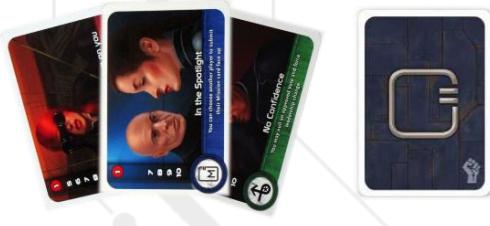
15 Plot Cards
Plot Cards
OBJECTIVE:
The "Plot Thickens" introduces Plot cards. These cards provide additional opportunity for Character affiliations to be identified or concealed.
The Plot cards are marked to indicate which cards are included in the game for the number of players present. Games of 5-6 players use 7 Plot cards; games with 7+ player use all 15 Plot cards.
Plot cards are not secret. Flip over Plot cards as soon as they are drawn and keep them exposed as long as they remain in play.
DISTRIBUTING PLOT CARDS:
At the beginning of each Round the leader draws Plot cards (1 for 5-6 players, 2 for 7-8 players and 3 for 9- 10 players) and distributes the drawn Plot cards to other players (not himself) Remember there are only 5 Rounds in the game.
PLAYING PLOT CARDS:
There are three types of Plot cards. Cards with Leader symbol (★) on them are used immediately then discarded, those with “one" icon (1) are held until used, and one card with a square icon (α) which remains in play for the entire game. I situation arises in which multiple Plot Cards could be used, precedence and order is determined by proximity to the Leader (starting with Leader in a clockwise manner). Each player gets one chance to play any applicable cards, a player may not pass and then subsequently elect to play cards later in the same opportunity. Information gained by the use of a Plot card can be discussed, but players Character, or Mission cards may never be shown to the other players.

DETAILED CARD DESCRIPTIONS:

(★) Overheard Conversation (2x)
The player to whom the Leader passes this card must look at the Character card of one adjacent player.

(-) Opinion Maker (2x)
Permanent Effect – The player to whom the Leader passes this card must select and reveal their Vote token before any other players have selected their Vote tokens. This card remains in effect until the end of the game. If two “Opinion Maker" cards are in play those, players must reveal their votes simultaneously.
(★) Establish Confidence(1x)
The Leader must pass their Character card to any other player for examination.
(★) Open Up (1x)
The player to whom the Leader passes this card must pass their Character card to any other player (including the Leader) for examination.

(1) No Confidence (3x)
The player to whom the Leader passes this card may use this card to reject an approved Mission tem (successful Vote). Using this card counts as failed Vote.

(1) Keeping a close eye on you (2x)
The player to whom the Leader passes this card may use this card to examine a played Mission card. Using this card does not require a player to announce its use before the Mission cards are played, nor does it affect the Mission card played. Multiple Mission cards may be checked in a single round, but no more than one player may check a single player's Mission card on a round.

(1) Strong Leader (2x)
The player to whom the Leader passes this card may use this card to become Leader. Use of this card must be declared before the Leader takes any actions (draw Plot Cards or distributing Team tokens). When a “Strong" leader" is played, another “Strong Leader" may not be played until a Vote has been taken.

(1) In the Spotlight (1x)
The player to whom the Leader passes this card may use this card to force a player to play their Mission card face up. The player playing this card must declare its use and the target player prior t any player on the Mission team selecting their Mission card.

(1) Take Responsibility (1x)
The player to whom the Leader passes this card must take one Plot card from any other player.
Example: The Leader draws “Overheard Conversation” and “Strong Leader”. The Leader passes “Overheard Conversation” to Deniz, who immediately uses it to look at Paula's (who is seated next to Deniz) Character card. Deniz may take any (true or false) statement regarding Paula's affiliation, but may not show anyone (other than himself) her Character card. The Leader passes "Strong Leader” to Charles, Charles may not play the card immediately, he holds the card to play in future.
FAQ:
If I've never played The Resistance before, should I try the Plot cards in my first game?
It is not recommended, try playing a couple of time without the Plot cards first. If after a few plays you feel you want more information, then try adding them the next time you play.
MODULES
How you play and win The Resistance remains the same as the base game except for the changes outline in each of the various module sections. Modules can be combined, though it is recommended that you play each module separately (and without the Plot Cards) before combining them.
COMMON CONTENTS:
4 Inquisitor Loyalty cards (spy, resistance) –2 from Hidden Agenda and 2 from Hostile Intent


MODULE FOR THE RESISTANCE
CONTENTS:
6 Assassin Character cards (Commander, Assassin, Body Guard, Deep Cover, Blind Spy, False Commander)
Character Cards
Assasin

Commander

OBJECTIVE:
The Commander knows the Spies, but the Resistance only wins if the Commander remains undiscovered.
SET UP CHANGES:
Use the Commander & Assassin character cards in place of one Resistance and one Spy character card.
OPTIONAL CHARACTER CARDS WITH SPECIAL POWERS:
Four additional Characters with special powers are available to play. You can play with these cards in any combination that you would like. Different combinations will make the game harder to win for one the side or the other. It is best to add one special Character card into a game at a time, adding more or changing when you are familiar with how they play.

Body Guard
The Body Guard's special power is knowledge of the Commander at the start of the game. Using the Boy Guard's knowledge wisely is key to protecting the Commander's identity. Adding the Body guard into a game should make the resistance win more often.
Note: For games of 5, be sure to add either the Deep Cover spy or False Commander when playing with the Body Guard.

Deep Cover
The Deep Cover spy's identity is not revealed to the Commander at the start of the game. Adding Deep Cover spy into a game should make the spies win more often.

Blind Spy
The Blind Spy does not reveal himself to the other spies, nor does he gain knowledge of the other spies at the start of the game. Adding the Blind Spy into a game should make resistance win more often.

False Commander
The False Commander appears as the Commander to the Body Guard. Adding the False Commander into a game should make the spies win more often.
SPIES REVEAL PHASE:
The “reveal" phase at the start of the game will vary depending on which roles are added – see below for new scripts to use for different Character cards that are included.
“Everyone close your eyes and extend your hand into a fist in front of you"
“Spies, not the Blind Spy – open your eyes and look around to see your fellow spies”
“Spies close your eyes”
“All players should have their eyes closed and hand in a fist in front of them”
“Spies, not the Deep Cover spy –extend your thumb so the Commander will know you"
“Commander, open your eyes and see the Spies”
“Spies – put your thumbs down and re-form your hand into a fist”
"Commander, close your eyes"
“All players should have their eyes closed and hands in a fist in front of them"
“Commander & False Commander – extend your thumb so that the Body Guard knows you”
“Body Guard, open your eyes so you know the Commander & False Commander"
“Commander & False Commander – put your thumbs down and for your hand into a fist”
“Body Guard, close your eyes”
“All players should have their eyes closed and hands in a fist in front of them"
"Everyone open your eyes”
GAME PLAY CHANGES:
The game ends after either three successful or three failed missions. If three missions fail, the Spies win as normal. If three missions are completed successfully, the Spies will have a final opportunity to win the game by correctly naming which of the Resistance players is the Commander. Without revealing any Character cards, the Spies discuss and the player with the Assassin character card will name on Resistance player as the Commander, If the named player is the Commander, then the Spies win, If the Spies do not name the Commander, the Resistance wins.
If the Assassin Module is combined with any variant that reveals Character cards, use the Inquisitor Loyalty Cards instead of passing Character cards: a spy must pass the spy Loyalty card, resistance players must pass the resistance Loyalty card.
TRAPPER
MODULE FOR THE RESISTANCE
CONTENTS:
OBJECTIVE:
Mission Teams are bigger than needed so the Leader can isolate a team member and watch their every move. If you are a spy on the Mission Team, you'll never be sure if you’re bringing the mission down... or giving your identity away.
SET UP CHANGES:
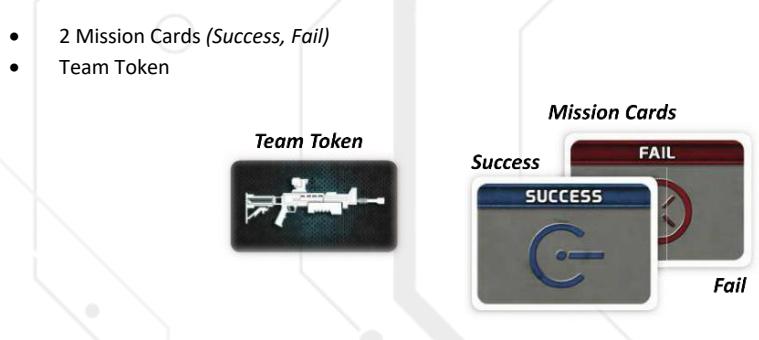
If playing with 8 (or more) players place the extra set of Mission cards and the extra Team token provided in this expansion by the Score Tableau.
GAME PLAY CHANGES:
During the Mission Team Assignment phase, the Leader takes one more Team token than normal and assigns an extra member to the Team. The Mission Team Vote phase is unchanged.
During the Conduct the Mission phase, each player on the mission selects a Mission card and plays it face down in front of themselves, The Leader selects one of the played Mission cards, looks at it and sets it aside; that Mission card does not affect the mission results. The Leader then collects and shuffles the remaining played Mission cards before revealing them.
The Leader may discuss but cannot reveal the played Mission card he discarded.

MODULE FOR THE RESISTANCE
CONTENTS:
• 2 Defector Character cards
•5 Defector Switch cards (3x No Change, 2x Change Allegiance)
Defector Switch Cards

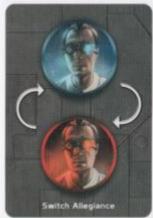
Switch Allegiance

No Change

Character Cards
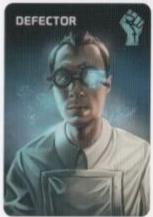
OBJECTIVE:
Defectors switch allegiance during the game.
SET UP CHANGES:
Use both Defector character cards in place of one resistance and one spy character card.
Build a Loyalty deck of the 5 Defector Switch cards, shuffle and place the Loyalty deck face-down adjacent to the Score Tableau.
SPIES REVEAL PHASE:
During the Reveal phase, the spy Defector does not open his eyes, but instead extends his thumb so that he is known to the other spies.
GAME PLAY CHANGES:
At the beginning of the 3rd round and at the very start of each subsequent round, flip one card from the Loyalty deck. If the card is “No Change", there is no change of allegiance and play continues as normal.
If the “Switch Allegiance" card is drawn, the two Defector players secretly switch their allegiances - The spy Defector is now resistance, and the resistance Defector is now a spy. This switch applies to all aspects of game play including victory conditions and rules regarding playing Mission cards. They do not swap or show their Character cards.
It is possible that the Defectors will switch allegiance once, twice or even not at all during a game.
VARIANT:
The two Defector players know each other. Recommended for larger groups only.
SET UP CHANGES:
Use both Defector character cards in place of one Resistance and one Spy character card.
SPIES REVEAL PHASE:
Add a step to the end of the script as follows:
"Defectors open your eyes to reveal your counterpart”
“Defectors close your eyes”
If the Defector Module is combined with any variant that reveals Character cards, use the Inquisitor Loyalty Cards instead of passing Character cards: a spy must pass the spy Loyalty card, resistance players must pass the resistance Loyalty card. Defector players must pass the Loyalty card that corresponds to their current allegiance.
ROGUE AGENT
MODULE FOR THE RESISTANCE
CONTENTS:
•2 Rogue Character Cards
Watch token
•6 Rogue Mission cards (Rogue Success)
Rogue Mission Cards

Watch Token

Character Cards


OBJECTIVE:
Rogue Agents march to a different drum, whenever spy or resistance they have their own victory conditions and would rather win by themselves than see their side victorious.
SET UP CHANGES:
Start with either both of these Character cards: resistance Rogue and/or spy Rogue – using the remaining resistance/spy Character cards as determined by the player count.
Place the Rogue Mission cards and Watch token adjacent to the scoring tableau
During the reveal phase the spy Rogue does not open their eyes – the spy Rogue neither knows the other Spies, nor do the other Spies knows him. If playing with the Commander Variant, the spy Rogue does not reveal themselves to the Commander.

MODULE FOR THE RESISTANCE
GAME PLAY CHANGES:
After a Mission Team is approved, the Leader must give the Watch token to one player on the Mission Team. Note: In a 5-6 player game, a Watch token is not used on the first two approved missions.
The Leader passes a set of three Mission cards (Success, Fail, Rogue Success) to each Mission Team member. The resistance Rogue is the only player that may play Rogue Success card. The Rogue Success card act as Success card. If the Watch token was given to resistance Rogue, the Rogue may not play the Rogue Success Mission card.
A resistance Rogue wins immediately after third successful Mission if they played the Rogue Success card on the third successful mission and at least once more on prior mission.
A spy Rogue wins immediately after the third failed mission if they have played a Fail Mission card on the third failed mission and at least once more on a prior mission.
Either Rogue gets a “partial" victory of their team wins after the 5th mission but the were not able to meet their individual victory conditions.
If the Rogue Module is combined with the Commander variant, the Assassination phase is skipped if a Rogue has won.
If the Rogue Module is combined with Hunter variant the Accusation stage is skipped if the Rogue has won, if not then the Accusation phase is completed as normal (potentially giving the resistance Rogue a 2ⁿd chance to win).
If the Rogue Module is combined with any variant that reveals Character cards, use the Inquisitor Loyalty Cards instead of passing Character cards; a spy must pass the spy Loyalty card, resistance players must pass the resistance Loyalty card.
OBJECTIVE:
The Sergeant can be added to the game as optional player power. The Sergeant is a player on the Mission Team with an optional ability to alter outcome of the mission by switching another player's played Mission card.
GAME PLAY CHANGES:
During Team Building Phase (before Voting), the Sergeant role is assigned by the Leader to one of the players on the Team by giving that player both a Team token and the Sergeant token. The Leader cannot make himself the Sergeant.
During the Mission Phase, Team Members select their Mission card and play it face down in front of themselves so that it is clear which player played what card. Before colleting the played Mission cards, the Sergeant may tell any one other player to switch their Mission cards (the unplayed card becomes the played card).
After switching the cards, the Sergeant looks at the switched card (the card that was originally played). He thus knows which card that player chose, and if his switch was beneficial or harmful to the mission. The Leader then collects and shuffles the played Mission cards before revealing as normal.
Example: Ron, the Leader, entrust Sarah to both be on the Team and be the Sergeant. He also chooses himself and Pat to be in the Team. After the Team is approved, Ron, Pat and Sarah play their Mission cards in front of themselves. Sarah elects to use the Sergeant ability and switches the Mission card that Pat had played. Sarah then looks at the Mission card that Pat originally played (Success) and she knows that her switch has doomed the mission to fail. The Leader collects and shuffles the Mission cards before revealing two Success and one Fair card.
If using The Plot Thickens cards: the Sergeants ability comes into play before a player may use Keeping a close eye to you. Also, the Sergeant may not switch a set of cards if theyve been played face up due to In the spotlight.
The Sergeant module is not compatible with modules that use special Mission cards, for example Rogue or Hunter with 7 or more players.

MODULE FOR THE RESISTANCE
CONTENTS:

OBJECTIVE:
The Inquisitor token is an optional player ability. The player with the Inquisitor will be able to look at the affiliation of another player. Unlike some other character powers, the player that has this ability is open information. Note: the Inquisitor is best saved for games of 7 or more players.
SET UP CHANGES:
At the beginning of the game, give the Inquisitor token to the player on the Leader's right.
GAME PLAY CHANGES:
Immediately after the 2d, 3rd, and 4th mission is resolved, the player with the Inquisitor token will chose one player to examine. The player being examined passes their Character card to the Inquisitor.
The Inquisitor may discuss but cannot reveal the Character card passed.
The player being examined receives the Inquisitor token. The Inquisitor will only be used three times in the game. A player that used the Inquisitor cannot have the Inquisitor used on them.
Example: Jeremiah (spy) starts the game to the Leader's right and receives the Inquisitor token. The first mission ends in success, the second mission is a failure. Jeremiah, as the Inquisitor, choses Don (resistance) to examine. Don passes his Character card to Jeremiah. Jeremiah looks at the resistance card and proclaims “Don is a spy!” – an outright lie! Don is outraged and quickly rebuts “I never trusted you Jeremiah and now I know you are a liar and a spy”. Jeremiah passes the Inquisitor token to Don. Don will be able to examine another player's Character card after the third mission is resolved.
Don cannot use the Inquisitor to Jeremiah.

MODULE FOR THE RESISTANCE
CONTENTS:
6 Reverser Mission cards (Reverse)
• 2 Reverser Character cards

Character Cards


OBJECTIVE:
Reversers have the ability to change the results of any mission – in the hands of the resistance this can make a doomed mission succeed, or turn certain victory into defeat.
SET UP CHANGES:
Start with either, or both of these Character cards: resistance Reverser and/or spy Reverser – using the remaining resistance/spy Character cards as determined by the player count.
Place the Reverse Mission cards adjacent to the Score Tableau.
GAME PLAY CHANGES:
During the Conduct the Mission phase the Leader passes a set of three Mission cards (Success, Fail, Reverse) to each Mission Team member. Only the Reverser(s) may play a Mission Reverse card. The spy Reverser may only play Success, or Reverse – he may not play Fail.
The mission is successful only if all the Cards revealed are Mission Success cards and either none or both Reverse card. The mission is also successful if one (or more) Mission Fail cards have been played with one Reverse card.
The mission fails if one (or more) Mission Fail cards have been played and either none or bot Reverse cards. The Mission also fails if all the Cards revealed are Mission Success cards and one Reverse card.
Example: a four member mission reveals Success, Success, Fail, Reverse. The mission is success.
If the Reverser Module is combined with any variant that reveals Character cards, use the Inquisitor Loyalty Cards instead of passing Character cards: a spy must pass the spy Loyalty card, resistance players must pass the resistance Loyalty card
OPTIONAL RULE:
The spy Reverser does not reveal themselves in the Spies Reveal phase.

MODULE FOR THE RESISTANCE
CONTENTS:
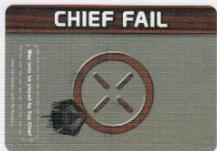
6 Hunter Mission Cards (Chief Fail)
4 Hunter Loyalty Cards (spy Chief, resistance Chief, Chief, Not a Chief)
•Investigator Token
10 Hunter Character cards (4x Chief, 2x Hunter, Dummy Agent, Coordinator, Deep Agent, Pretender)
Hunter Loyalty Cards


Hunter Mission Cards


Investigator Token

Resistance Chief

Spy Chief


Spy Hunter

OBJECTIVE:
In this module both resistance and spies must identify a specific individual among the opposing team to win. The spy Hunter reveals themselves after the third failed mission and has to correctly Accuse the resistance Chief to secure the win. Likewise, the resistance Hunter reveals themselves after third successful mission and has to Accuse the spy Chief in order to secure the win.
SET UP CHANGES:
Select the tableau corresponding to the number of players. Place the tableau in the center of the play area with the Score Markers, Tem Tokens, Mission Cards and Investigator token. Place the Round Marker on the tableau's 1st Mission space. Give each player a set of Vote Tokens. Randomly select a Leader; the Leader receives the Leader token.
For games of 5 or 6 players, place two Hunter Module Loyalty cards (Chief and Not a Chief) adjacent to the scoring tableau.
For games with 7 or more players, place three Hunter Module Loyalty cards (spy Chief, resistance Chief and Not a Chief) and the Hunter Mission Cards (Chief Fail) adjacent to the scoring tableau.
Start with the following Character cards, resistance Chief, resistance Hunter, spy Chief, spy Hunter – using the remaining resistance/spy Character cards as determined by player count. For games of 8 (r more) players, use the second resistance Chief so that there are two resistance Chiefs in play. For games of 10 players, use the second spy Chief card, so that there are two spy Chief in play. Shuffle the appropriate Character cards and deal one card to each player. Each player secretly looks at the role assigned to them.
5 Players: resistance Chief, resistance Hunter, spy Chief, spy Hunter, “standard” resistance
6 Players: resistance Chief, resistance Hunter, spy Chief, spy Hunter, 2x “standard” resistance
7 Players: resistance Chief, resistance Hunter, spy Chief, spy Hunter, 2x “standard” resistance, “standard” spy
8 Players: 2x resistance Chief, resistance Hunter, spy Chief, spy Hunter, 2x “standard” resistance, “standard” spy
9 Players: 2x resistance Chief, resistance Hunter, spy Chief, spy Hunter, 3x “standard” resistance, “standard” spy
10 Players: 2x resistance Chief, resistance Hunter, 2x spy Chief, spy Hunter, 3x “standard” resistance, “standard” spy
SPIES REVEAL PHASE:
Use this script so the spies know each other and their Chief:
“Everyone close your eyes and extend your hand into a fist in front of you"
"Spy Chief(s) – extend your thumb"
Spies open your eyes and look around to see your fellow Spies and your Chief"
“Everyone close your eyes and put your thumbs down"
“All players should have their eyes closed and hands in a fist in front of them"
“Everyone open your eyes"
If playing with 8 or more players, add this step to your opening script so that the resistance Chief(s) know each other:
“Resistance Chiefs open your eyes; you should see the other Chief"
“resistance Chiefs close your eyes”
GAME PLAY CHANGES:
Team building
During the Team Assignment (before the Team Vote), the Leader gives the Investigator token to a player (other than himself) not on the Mission Team. If the Mission Team is approved, that player is now the Investigator if the Mission fails. Note: this step is skipped in the 5th mission; there is never an Investigation on the 5th mission.
Conducting the mission
For games with 7 or more players: The Leader passes a set of three Mission cards (Success, Fail, Chief Fail) to each Mission Team member. The Chief can only play a Success or Chief Fail card – they are not allowed to play Fail. Only the spy Chief may play the Chief fail card. The mission fails if either one (or more) Fail and/or Chief Fail cards have been played, except the 4th mission which requires two (or more) Fail and/or Chief Fail cards. Note: this rule does not happen in games with 5 or 6 players. The Chief Fail cards are not use at that player count, instead the Chief uses the regular Fail cars.
Early end game trigger: The spy hunter can attempt to take down resistance Chief and end the game early when the spy Chief fails a mission. Note: And Early End Game Accusation must be made before the investigation Phase starts.
5 or 6 players: If mission has a Fail card played by the spy Chief, the spy Hunter may reveal themselves and make an Accusation (see below). The spy Hunter will know that the spy Chief played the Fail.
7 or more players: If a mission has at least one Chief Fail card played, the spy Hunter may reveal themselves and make an Accusation (see below). Note: the 4th mission requires that the mission fails and a Chief Fail card is played to trigger the Early End Game Accusation.
Early End Game Accusation: If the Accused is the resistance Chief, the spies have won. If the Accused is not the resistance Chief, the mission results are reversed – the failure turns into a success (flip over the Score marker to indicate the change) and play continues as normal except that everyone now knows the spy Hunter.
Note: If the Early End Game Accusation is incorrect it could result in the third successful Mission. In this case the normal Accusation rules apply – the resistance Hunter must Accuse the spy Chief to win, a false Accusation reverses the mission once again to be a failure.
Early End Game Accusation can only happen once per game.
Note: the Investigation phase is delayed if Early End Game Accusation is made.
Investigation
If the mission is successful, the Leader will Investigate any player (other than himself). If the mission is a failure, the Investigator will Investigate any player (other than himself).
Note: the Investigation phase is delayed if it is either the third successful mission or the third failed mission. In this case proceed immediately to the Accusation phase, returning to the Investigation if the Accusation is incorrect.
The player under Investigation is given the Hunter Loyalty cards, then select the card that corresponds to their Character card and hands that card to the Investigator.
The resistance Chef must show the Chief (5 or 6 players) or resistance Chief (7 or more players) Loyalty card.
•The spy Chief must show the Chief or spy Chief card.
•All other players must show the Not a Chief card.
It Investigator can discuss the information gained but may never show cards to the other players. Loyalty cards are returned and shuffled together before play resumes.
Accusation
Immediately after the third successful mission the resistance Hunter reveals themselves. The resistance Hunter must Accuse another player of being the spy Chief – the Accused must answer honestly, but does not reveal their Character card if falsely Accused.
If the Accused is the spy Chief, the mission results are reversed- the success turns into failure. Flip over the Score marker to indicate the change. Complete the Investigation phase and then play continues as normal except that everyone now knows the resistance Hunter.
Immediately after third failed mission the spy Hunter reveals themselves. The spy Hunter must Accuse another player of being the resistance Chief – the Accused must answer honestly, but does not reveal their Character card if falsely Accused.
If the Accused is the resistance Chief, the spies have won. If the Accused is not the resistance Chief, the mission results are reversed – the failure turns into a success. Flip over the Score marker to indicate the change. Complete the Investigation phase and then play continues as normal except that everyone now knows the spy Hunter.
After the 5th mission, a false Accusation will result in the other team to being given a chance to make a n Accusation. Repeat the Accusation process above; a correct Accusation results in a tem win while an incorrect Accusation repeats the process, alternating between teams until a team wins.
If the Hunter Module is combined with any variant that reveals Character cards, use the inquisitor Loyalty Card instead of passing Character cards: a spy must pass the spy Loyalty card, resistance players must pass the resistance Loyalty card.
VARIANTS:
Additional Characters with special powers are available to play this module. It is best to add one special Character card into a game at a time, adding mode or changing when you are familiar with how they play.

Resistance Dummy Agent
If Investigated, the resistance Dummy Agent may show the Chief (5 or 6 players) or resistance Chief Loyalty card (7 or more players). If Accused, the Accusation is false as the Dummy Agent is not the resistance Chief.

Resistance Coordinator
The resistance Chief(s) will know the resistance Coordinator at the beginning of the game and can use that knowledge to help build successful mission teams. If investigated, the resistance Coordinator must show the Not a Chief Loyalty card. If the Coordinator is Accused by the spy Hunter, the spies win. During the Spies Reveal phase add these lines if playing with the Coordinator:
Resistance Coordinator – The resistance Chief(s) will know the resistance Coordinator at the beginning of the game and can use that knowledge to help build successful mission teams. If investigated, the resistance Coordinator must show the Not a Chief Loyalty card. If the Coordinator is Accused by the spy Hunter, the spies win. During the Spies Reveal phase add these lines if playing with the Coordinator:
"Resistance Chief(s) open your eyes. Coordinator rise your thumb"
“Resistance Chief(s) close your eyes, Coordinator thumbs down"

Spy Deep Agent
The Deep Agent doesn‘t know the other spies, but the other spies will know the Deep Agent.

Resistance Pretender
Can be used with the Deep Agent, the Pretender appears as the Deep Agent to the other spies. If using Deep Agent (with or without the Pretender), use this as the Spies Reveal script:
Resistance Pretender – can be used with the Deep Agent, the Pretender appears as the Deep Agent to the other spies. If using Deep Agent (with or without the Pretender), use this as the Spies Reveal script:
“Everyone close your eyes and extend your hand into a fist in front of you" "Spy Chief(s), Deep Agent and Pretender – extend your thumb" “All Spies, but not the Deep Agent open your eyes" - the spy Chiefs have thumbs up and eyes open. O “Everyone close your eyes andput your thumbs down”
“All players should have their eyes closed and hands in a fist in front of them" “Everyone open your eyes"
BLAME - OPTIONAL RULE:
Optional Special Rule when playing with Deep Agent & Pretender:
At any time during Team Building Phase prior voting, the Deep Agent may Blame Pretender. The Deep Agent reveals themselves and must Blame another player of being the Pretender. The Blamed must answer honestly, but does not reveal their Character card if falsely Blamed. If the Blamed is the Pretender, the Deep Agent and Pretender switch Character cards (and allegiances). If the Blamed is not the Pretender, the play continues as normal except everyone now knows the Deep Agent.
Blame can only happen once in a game.

Game Design: Don Eskridge
Game Development: Travis Worthington
Graphic Design/Illustration: Luis Francisco, Jarek Nocon, Jordy Knoop, Michael Rausmussen, George Patsoutaus, Jardan Saia, Maryam Khatoon, Luis Tomas, Vinh Mac, Alex Murur
Acknowledgements: Thanks to Brian Carpenter, Erc Hehl, Martin Burley for playtesting and the Berkeley Boardgamers, Mike Lee, Pete Vasiliauskas for assisting the development f “The Plot Thickens” expansion. Special thanks to Eric Zimmerman, Katie Salen, Chris Jones, the BGG community, the Eskridges, Narae, Thomas and Jessica, DaPo, Team Don, and may more. Don extend special thanks to Joshual Kimble, Matt Coruzzi, Clyde Wright, Youjin, Meliss & Amos, Ken & Jieun, Kwang-hee, Hellena, Walter, Evie, Justin & Laura. Thank you all the players that helped make this expansion possible, especially Chris, Patrick, Erdwin, David, Pate, ad Phil. Many thanks to my excellent family, the BGG community and play-testers, KJ, Dave, Narae, Tom, Jess, the Berkeley Board Gamers, and anyone who's ever kicked the ceiling over a game of Resistance.
If you liked this game, you can find it and other small publisher games online at www.indieboardsandcards.com
(The Resistance consolidated rules with Hostile Intent, Hidden Agenda and The Plot Thickens, v1.1)
下载 Markdown