rules_zh_欢迎来到__2656.md
Your perfect Home你的理想家園
遊戲說明書
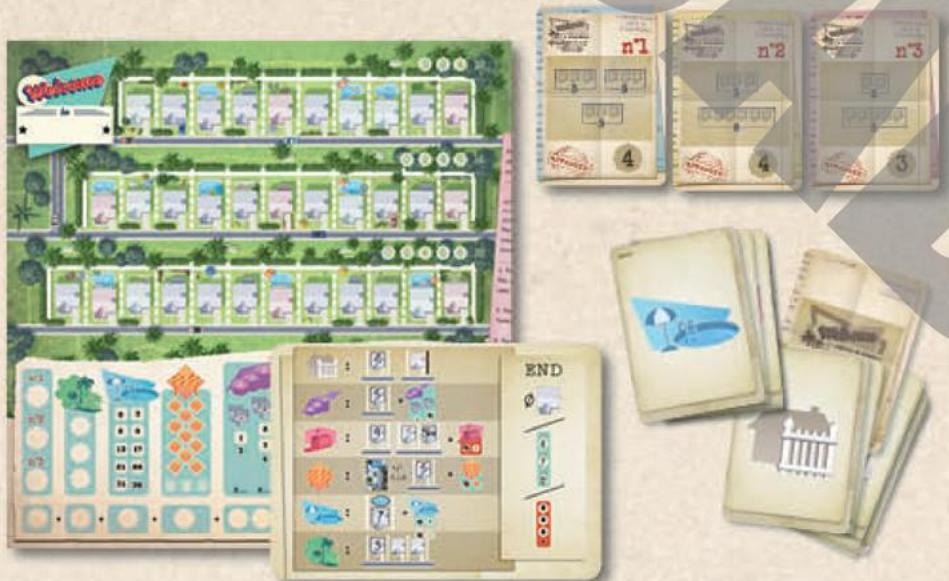
遊戲配件
★29張城市規劃牌(58×88毫米)
數字1、2、或3。一面是「規劃」,另一面是「批准」。1張「單人遊戲」牌用於單人模式。18張基本遊戲的城市規劃,10張進階规則的城市规劃(有大號標示)

★4張玩家輔助牌

★計分應用程式

★81張 建築牌(58×88毫米)一面是數字,另一面是效果

卡牌分佈:
效果分佈:9張泳池建造商、9張臨時工、9張郵差、18張園藝師、18張地產經紀、18張普查員。
数字分佈:3x1 2 14
4x 3 13, 5x 4 12, 6x 5 11, 7x 6 10
8x 7 9,9x 8

遊戲概覽
在歡迎來到……你的理想家園,你們扮演五十年代美國嬰兒潮的房地產建築師,負責規劃和建設三條街道·但這城市的建築師可不止一人!你要與其他玩家競逐最高功績,誰會最快完成城市規劃,同時兼顧寬閣的公園和精巧的泳池,最終興建出讓人津津樂道的社區呢?
大家會同時遊玩,並從相同卡牌中各自决定要使用什麼號碼和與之成對的特殊效果。只有把兩種組合運用得出神入化,才可成為最出色的建築大師!
遊戲目的
玩家會慢慢興建不同數字的房子,發展自己負責的三條街道。
多間房子集合在一起稱為街區,完成了街區才可在遊戲結束時得分。
公園和泳池會改善社區。
你們還可以改善房子質素,從而提升街區價值。
每人更會努力首先完成城市規劃!
最後,聘請更多臨時工加快進度,博得市長青睐
遊戲設置
★每位玩家拿取1支筆(請自行安排)和1張計分紙。
★每位玩家拿取1張玩家輔助牌。
★隨機抽取3張城市規划牌—一n1、n2、n3各1張,把下方有兩個八角形(即兩個分數)那面朝上;餘下所有城市規劃牌放回遊戲盒。
★洗勻全部81張建築牌,平均分成三疊(每疊27張),並排在一起,以數字那面朝上。

進行遊戲
每輪開始時,翻開每疊牌庫最顶的1張牌,並放到各自的牌庫旁的棄牌堆頂。這樣會組成三組牌,每組各有一個數字和一個效果。

然後所有玩家同時進行回合:
各自從中選擇一組填到自己的計分紙,容許多位玩家選擇同一組。
每位玩家必須把該數字寫在自己三條街道其中一個空房子上,而且必須遵守放置規則:

1.街道上的所有數字從左至右必須由小至大排列。
2.同一條街道裏不能填寫相同數字(除非使用郵差——詳見第7页)。
★注意★
玩家可以留空數字之間的房子,等之後再填寫,但依然必須符合由小至大的順序。
此外玩家可以跳過中間一些號碼·範例:在7右邊寫下10。
若玩家沒有位置讓他/她按放置規則寫下所選的數字,他刪掉最上面的停工格子(順序是○·0、3)。

若玩家没有停工,便可使用所選那組的效果
注意:玩家可選擇不使用效果!
當所有玩家都建造了房子並執行了效果(或放棄執行),開始新的回合,再翻開每疊牌庫頂那張牌組成三組牌·若已抽光牌庫,便洗勻所有棄牌重新組成三疊牌庫。
效果

★普查員
玩家使用普查員可在任何街道的兩座房子之間建造柵欄,把街道分成街區。街區裏所有房子都填上數字便算作完成,使該玩家得分。街區是由一到六座相鄰的房子所組成,且每個格子都填上了數字。遊戲開始時,每條街道左右兩端都已有柵欄,於是建造更多柵欄便可分割出更多街區(用來達成城市規劃的街區不可分割,詳見第8頁—城市規)。
範例:這玩家在第二條街道第三座房子寫下了5,然後在第一條街道第一和第二座房子之間建造柵欄,把3座房子的街區分割成1座和2座房子的街區


★地產經紀
玩家使用地產經紀可以提升完成的街區的價值(完成的街區請看上面普查員)。使用地產經紀時,選擇自己街區價值內1-6當中任何一條直行,從小至大的順序刪掉下一個格子。遊戲結束時,每個完成的街區,玩家會按其中有多少座房子,獲得該行還沒刪掉的最低的分數。注意:街區不能多於六座房子,否則不會得分
範例:右圖表示該玩家每個2座房子和3座房子的街區都會獲得3分·沒有使用過任何地產經紀的話是每座房子1分(4座房子的街區得4分)。


★園藝師
玩家使用園藝師可以建造公園。他在哪條街道寫下這組合的數字,便從該街道的公
園格子,由小至大刪掉下一個。遊戲結束時,各公園還沒刪掉的最小的數字便是得分。
範例:右圖刪掉格子的順序是0、2、4。

★泳池建造商
P
玩家在有泳池的房子寫下這組合的數字,便可使用泳池建造商,由小至大刪掉泳池建造商的下個格子,並圈起該房子的泳池作記認。遊戲結束時,還沒刪掉的最小的數字便是泳池建造商的得分。
★注意★即使某組合的效果並非泳池建造商,玩家也可把那數字寫在有泳池的房子。相反,即使效果是泳池建造商,玩家也可把那數字寫在其他房子。但雨者均不能使用泳池建造商的效果,以刪掉泳池建造商格子。


★臨時工
玩家使用臨時工可以把該組合的數字加或減一至二,使得數字可以出現0-17·使用了臨時工(無論有否調整數字),便會刪掉一個臨時工格子。遊戲結束時,刪掉最多臨時工格子的玩家獲得7分,第二多的獲得4分,第三多的獲得1分·若遇平手,玩家們各獲得自己名次的全額分數。
範例:這組合的數字牌是8,所以玩家可寫下6·78、9或10·接著刪掉一個臨時工格子。


★郵差
BIS 玩家使用郵差可選擇任何街道中任何一座房子,在它相同街區裏左或右一座相鄰的空房子寫下與之相同的數字。使用了郵差的房子跟原本數字的房子在整局遊戲也不能用柵欄分割。可以對同一座房子多次使用郵差·每次使用郵差,便須由小至大刪掉計分紙下一個郵差格子。所重複的房子號碼可以不需要是這次所選的數字。遊戲結束時,這裡還沒刪掉的最小的數字便是該玩家被扣的分數。

城市規劃
城市規划是本市給各位建築師的課題,例如建造若干個特定大小的街區給居民。
首先達成某城市規劃的玩家會獲得該城市規劃牌較高的分數(左下角)。若多位玩家在同一回合達成同一城市規劃,他們一同獲得較高的分數。把那分數寫在自己的計分紙相應位置(n1、2或3),然後把該城市規劃牌翻到背面(有批准字樣那面)。每位玩家只能完成每張城市規劃牌各次。

n°2
9
其他玩家也能在之後完成被翻到背面城市規劃,但只能獲得較低的分數。
街區規劃:
玩家必須擁有所有指定數量和大小的街區才達成城市規劃。
由於城市規劃對位置沒有要求,所以任何街道的街區都可用於達成規劃。
★注意★若某街區已經用於達成規劃,在它上面畫一條線標示。它在本局遊戲中不能再被分割,也不能用於達成另一個規劃。
首先達成某城市规劃的玩家可選擇重洗全部81張建築牌,重新組成3疊新牌庫來繼續遊戲(每張城市規劃可重洗一次,即整局遊戲最多因這规則重洗三次)。若多於一位玩家同時首先達成城市規劃,只要當中任何玩家選擇重洗,便須重洗。
遊戲結束
達成以下任何條件時,遊戲結束:
★任何玩家第三次停工(刪掉自己第三格停★任何玩家第三次達成城市規劃(每張城市規劃都已達成);
★任何玩家三條街道所有房子都填上了數
遊戲結束時,玩家把泳池建造商、完成的街區、每條街道的公園、城市規劃、臨時工的分數加起來,减去郵差和停工的扣分,便是自己的總分。最高分的玩家勝出·若最高分遇平手,他們當中完成了最多街區的玩家勝出。若再遇平手,他們當中有最多一座房子街區的玩家勝出,若再遇平手則最多雨座房子街區,如此类推。若最終還是再遇平手(真的嗎?),你們再玩一局吧!
單人模式
本變體規則讓玩家挑戰自己,嘗試取得更高分。
遊戲設置:
洗匀全部建築牌,平均分成兩疊,並把單人遊戲牌放進當中任何一疊再洗勻,然後把該疊放到另一疊的下面,組成牌庫·所有建築牌以效果那面朝上·如同基本規則設置3張城市規劃,並拿取1張計分紙和1張玩家輔助牌。
進行遊戲:
遊戲開始時,玩家抽取牌庫頂3張牌,從中選擇2張,使用一張的數字和另一張的效果。
建築牌角落有圖示,說明該牌背面是什麼效果。

使用那兩張牌後,連同没有使用的那張棄
接下來他再抽3張牌並重複以上步驟。一旦抽到單人遊戲牌,便立刻把所有城市規劃牌翻到「批准」那面,此後玩家達成城市規劃也只能獲得較低的分數·其他關於城市規劃的規則與多人遊戲一樣。
遊戲結束
除了多人遊戲的遊戲結束條件,若牌庫被抽光,遊戲也會結束。
玩家如同基本規則計算自己的分數,只有臨時工的規則有變——若玩家刪掉最少6個臨時工格子便得7分,反之0分。
進階規則
額外城市規劃牌:
可以把這些牌加跟基本的城市規劃牌,遊玩方法與基本規則相同。
規劃詳解:

指定街道中全部房子都已寫上數字便達成此目標

每條街道最左和最右的房子都已寫上數字便達成此目標。

建造了指定街道所有公園和泳池便達成此目標。

使用臨時工七次便達成此目建造了任何兩條街道的所有泳池或它們的所有公園便達成此目標。


在同一條街道建造了所有公園、所有泳池、還有一個迴旋處便達成此目標。

在同一條街道使用五次郵差便達成此目標。
★提示★一個街區或一座房子只能用於達成1張城市規劃牌,完成後便不能再次用於達成另一張。在已經使用的房子或街區上畫一條線標示·但若使用了泳池來達成某城市規劃,仍可再用該房子達成另一張城市規劃。必須使用泳池建造商效果建造的泳池才可用來達成城市規劃。
迴旋處:
玩家在自己的回合,除了使用一個組合,還可選擇建造一個迴旋處。若選擇建造迴旋處,改為在任何一座空房子畫下一個圓圈和一點,並在迴旋處左邊和右邊建造柵欄,把那條街道分為兩段,兩邊的數字獨立計算,右邊可以寫下比迴旋處左邊更小的數字,左邊也可以寫下比迴旋處右邊更大的數字;亦無須理會另一邊是否已有該數字。

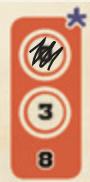
建造第一個迴旋處便刪掉上面那個格子,在遊戲結束時扣3分;建造第二个便刪掉下面那個,在遊戲結束時改為扣8分。

專家規則
本規則為熟練玩家增加建築牌的選擇和控制,而且可使玩家之間更多互動·你們可以同時遊玩專家規則和進階變體,實際上我們很建議你們這樣做。
遊戲設置
洗勻所有建築牌,疊好組成一疊牌庫,以效果那面朝上。如同基本規則設置3張城市規劃牌·把單人遊戲牌給隨機一位玩家。
每位玩家拿取1張計分紙。
進行遊戲
遊戲開始時,每位玩家抽牌庫頂3張牌,從中選擇2張·使用一張的數字和另一張的效果(不可使用同一張牌的效果和數字)。
把使用的2張牌放到自己前面,如同基本規則使用並棄掉。
把第三張牌(以效果那面朝上)傳給左邊的玩家,然後由持有單人遊戲牌的玩家起,每位玩家再按順時針方向輪流抽牌庫頂2張牌,如上述再從中選擇2張。其他所有規則與基本遊戲一樣。
EmperorS4
工作人员
遊戲設計:Benoit TURPIN
插畫與圖像設計:Anne HEIDSIECK
開發:BLUE COCKER
規則撰寫:Dominique BODIN
翻譯: Lorédana CHAILLOT & Benoit TURPIN
監修:Sandra GRÈS
中文版翻譯:陳浩仁
中文版監修:何仲爆
中文版美術:Laangel
鳴謝
本公司由衷感謝 Andrée Frances, Bruno Desch, Matthieu Halfen, ChristopheHermier, Jean-Emmanuel Gilbert, Michel Schoenacker, Alain Blaizeau, NathalieGeoffrin, Renaud Challiat 和 Lola Estève.還有"dice killer"的Fred 和 Didier.
遊戲設計師要感謝 Virginie 支持·Matthieu Lasne 和整隊 Muge 團隊多年來在遊戲行業付出、Clément 和 Sebastien, Nicholas, Simon, Florian, Romaric, Joan,Alexis,Nicolas 以至MALT 所有成員協助和反饋、Anne美麗的遊戲美術,還有Alain跟他切磋砥礪,同時推心置腹。

Welcome_To_English_Rulebook_v2.0.md
Welcome
★ Your perfect Home ★
Rulebook
Game components
★29 City Plan cards (58x88 mm)
★81 Construction cards (58x88 mm) (House number on one side & effect on back)
18 City Plans for the basic game & 10 City Plans for the advanced variant (marked by a ). One Solo card included for the solo variant. Cards numbered 1, 2, or 3 with a Project side & an Approved side.

★4 Player aids
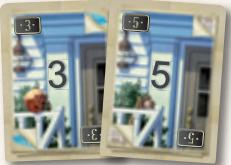

Card distribution:
Effect side: 9 Pool Manufacturer cards, 9 Temp Agency cards, 9 "Bis" cards, 18 Landscaper cards, 18 Real Estate cards, and 18 Surveyor cards.
House Number side : 3x1 2 14 15
4x 3 13,5x4 12,6x 5 11, 7x6 10
8x7 9,9x8

★Player Sheet application
★100 player sheets


Purpose of the game
In Welcome To, players are American architects in the 50s during the Baby Boom. But beware of the competition! Who will best accomplish the city's plans by creating the nicest housing estates in the three streets they've been assigned? Will your luxurious parks and fancy pools be enough to earn you title of Best Architect?
Welcome To is a game where everyone plays at the same time with the same cards. It's all about cleverly combining the house numbers with their associated effects in order to become the greatest architect of tomorrow !
Architects gradually develop their three streets by building houses, identified by their numbers.
Houses will be grouped into housing estates, but only fully-completed ones count at the end of the game.
Parks and pools help to improve the neighborhood.
Architects can raise the quality of their constructions in order to promote their estates' value.
All of this while trying to be the first to complete the City Plans!
Finally, by increasing recruitment through temp agencies, architects can hasten the construction and get in the mayor's good graces.

Setup
Each player takes a pen or pencil (not provided) and a sheet from the player sheet.
Distribute the Player Aids to the players.
★ Shuffle and randomly choose 3 City Plan cards from the basic set: one n'l, one n°2, and one n°3. Place them "Project" side face up so all players may see.
Return all remaining City Plans to the box.
Shuffle the Construction cards. Deal 3 equal stacks of 27 each, house number face up. Place these in a column with room for discards to their right.




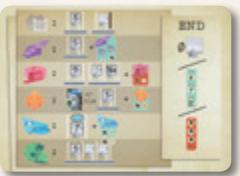
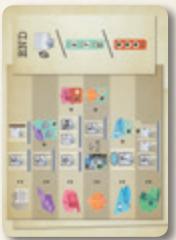
Game turn
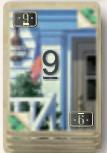
At the beginning of each turn, flip over the top card of each construction stack and place it to the right with its effect displayed. These stacks create three combinations, comprised of a House Number and an Effect. These combinations are used to perform actions.

Each player individually chooses one of the three combinations available to perform an action on their sheet. Multiple players can pick the same combination.
Each player must write the number from the chosen combination in a house on one of the three streets on their sheet. Numbers must always be written in an empty house and must be written in ascending order from left to right.

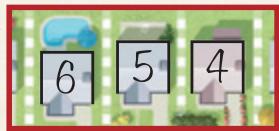
The same number can never appear twice in the same street (except for the "Bis" effect p.19).
★Note★
When filling in houses, players may leave as many empty houses between two built houses, and then fill them in later. Numbers must still be in ascending order.

Also, players may skip numbers when filling in houses, like placing a 10 directly after a 7.

If a player cannot follow the placement rules, they do not fill in a house number and receive a building permit refusal. Cross off the top-most, lowest-numbered space.

The player's chosen combination also allows them to perform an effect. Players may perform the effect only if they did not receive a building permit refusal Note: performing an effect is optional
Once all players have built their houses and carried out effects, a new turn begins. If the construction stacks are ever empty, reshuffle them and deal out as before.
Effects

★ Surveyor:
Allows the player to build a fence between two houses on the same street. To build a fence, choose any available, white-dotted space and draw a line on it. Permanent fences are present on both sides of each street. Fences determine the
boundaries of housing estates. A completed housing estate is a row of l to 6 neighboring houses, all numbered (no blank spaces between them) and built between two fences. Completed housing estates are necessary to fulfill City Plans and may be split further, as long as they have not previously fulfilled a City Plan, p.20).
Example: The architect has written a 5 on the third house of the second street in order to start a 3-house estate. Then they built a fence between the first and the second house of the first street, therefore splitting a 3-House estate into l-house and 2-house estates.



★ Real Estate Agent:
Promotes and increases the value of completed housing estates. To use the Real Estate Agent, choose a Real Estate column and cross off the top-most, lowestnumbered space. At the end of the game, each completed estate (size 2, 3, 4, etc.) iany points as the smallest, unchecked number from its corresponding column.
Example: After crossing off the top-most space in the 2-House estate column, each 2-house estate now scores 3 points at game end. The 3- and 4-house estates score points equal to their initial amount.


★ Landscaper:
Allows the player to build a park. The player crosses off one of the trees at the end of the street. Parks must be
crossed off on the same street that the house number is written. Parks are crossed off, leftto-right in ascending order.

★ Pool Manufacturer:

Allows a player to score points when building houses that have a planned pool. If a player writes the house number associated with the Pool Manufacturer effect in a house with a planned pool, then the pool is built. Cross off the top-most, lowest-numbered space in their pools column.
★Note★ A player can use a house number/effect combination without a Pool Manufacturer effect to write a number in a house. Oppositely, a player can write a number associated with the Pool Manufacturer effect in a house without a pool. However, in both cases, the pool is not built; therefore the player does not cross off a new pool in their pools column.


★ Temp Agency:
Allows the player to add or subtract l or 2 to the house number they are building. The Temp Agency allows the player to write numbers from 0 to 17. For each use of the Temp Agency, cross off one box from the Temp Agency column. At the end of the game, the player who crossed off the most Temp
Agency boxes scores 7 points. The next highest scores 4 points, and the third highest scores 1 point. In case of a tie, players score the same amount of points.
Example: Using a number 8 card, build a house with the number 6, 7, 8, 9, or 10. Then, cross off one box.


★«Bis»:
Allows the player to duplicate a house number on any street. The new house must be directly adjacent, to the left or right of the house with the same number.
Duplicate houses can never be separated by fences. When duplicating a number, write "bis" next to the number in the new house. A house can be duplicated multiple times, and the duplicated number does not have to be associated with the number/effect combination. Cross off the top-most, lowest-numbered space in the "bis" column. At the end of the game, subtract the smallest, unchecked number from the final score.


A City Plan presents a goal set by the City to its architects, as in building a certain number of housing estates with mandated sizes.
The first player(s) who meet the required conditions of a City Plan during the same turn immediately score the points indicated. Write the higher amount from the "Project" side of the City Plan card in the corresponding box (n°1, 2, or 3) in their Plans column. Turn over the City Plan to its "Approved" side. A player can only score each City Plan once.

Other players who later achieve the same City Plan score the lower point amount.
Housing Estates Plans:
To fulfill these City Plans, the player must complete all of the required housing estates.
The estates do not have to be in the same street. There is no restriction to the location of a Plan's estates.
★Note★ After an estate has fulfilled a City Plan, it cannot be further subdivided with a Surveyor's fence. Also, it cannot fulfill another City Plan. The player marks out the fence above each house to indicate it has already fulfilled a City Plan.
The first player who completes a goal can choose to reshuffle the 81 Construction cards and deal three new stacks of cards as in game setup.

The game ends immediately when:
★ A player crosses off their third Building Permit Refusal or
★ A player achieves all three City Plans or
A player has built all of the houses on their streets.
Add up the points for City Plans, parks on each street, pools, temps, and completed estates Subtract the points from the "Bis" column and the Building Permit Refusal column.
The player with the most points wins!
In case of a tie, the player with the most completed estates wins. In case of another tie, the player with the most l-house estates wins, then 2-house, etc.. In case of another tie, (seriously?) players play another game of Welcome To.
Sologame
This variant allows players to play a game of Welcome To while trying to achieve their best score.
Setup:
Shuffle the Construction cards, effect side face up and randomly deal out two equal stacks. Shuffle the Solo card into one of these two stacks, then place this stack under the other without shuffling again. Shuffle and randomly pick three City Plan cards. Place them "Project" side face up next to the Construction cards. Take a player sheet from the pad and a player aid.

Game turn:
At the beginning of the game, draw 3 Construction cards. Then, choose two of the three cards, one for its number, and one for its effect. Discard the remaining card.
A player can always refer to the corners of the card on its number side, as it displays the effect from the reverse side of the card.

Perform actions using the two cards as you would in the multiplayer game, discarding after playing them. Begin a new round by drawing 3 new cards and repeat. When the Solo card is drawn, all Plans are considered "approved" and it is no longer possible to acheive the higher score. Turn over the Plan cards to their "approved" side. All other rules from the classic game remain the same.
End of the game:
The game ends when the stack of cards is empty, or one of the three end conditions of the basic version occurs.
The player counts their points as in the classic mode. Exception: in the Temp Agency, the player only earns 7 points if they hired at least six temps. Less than six and the player receives zero points.
Additional City Plans:
These goals can be added to the basic version. The same rules apply to them.
List of objectives:
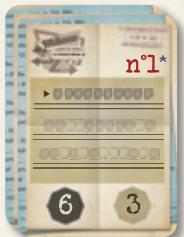
To fulfill this City Plan, all houses must be built on the required street.

To fulfill this City Plan, the first and last house of each street must be built.

To fulfill this City Plan, all of the parks AND all of the pools on the required street must be built.

To fulfill this City Plan, 7 temps must be hired.

To fulfill this City Plan, two streets must have all of the parks OR all of the pools built.

To fulfill this City Plan, the player must build all of the parks, all of the pools, and one roundabout in the same street.

To fulfill this City Plan, 5 duplicate houses' numers (bis) must be built on the same street.
★Reminder★ When an estate or a house has been used for a Plan, it cannot fulfill another City Plan. The player marks out the fence above each house to indicate it has already fulfilled a City Plan. However, a pool used for a City Plan does not invalidate its corresponding house for another plan.
Roundabout:
Before or after building a house and activating an effect on their turn, a player can choose to create one of the two available roundabouts. Choose an empty house's box, draw a circle and a dot inside it where a house number would go, and then build estate fences to the left and the right of the roundabout.
The roundabout divides the street in two. Therefore, house numbers may start over directly to the right of the roundabout. Players can use numbers 0-17 to the left of a roundabout, while also using numbers 0-17 on the other side.

Cross off the top-most space on the roundabout column. The first costs 3 points and the second costs 5 points. At the end of the game, subtract the smallest, unchecked number from the final score.
Expert rules
This variant allows players to have more control over choosing Construction cards, while increasing the interaction between players. It is possible, and even recommended, to use the advanced variant with the expert rules.
Setup:
Shuffle all of the Construction cards, effect side face up, into a single deck. Shuffle and draw three City Plan cards and place them Project side face up next to the Construction cards deck. Randomly give a player the Solo card. Each player takes a player sheet from the pad.
Game turn:
On the first turn, all players draw three cards from the Construction cards deck. From those cards, players choose two of the three cards: one for its number and another for its action. Players cannot use the same card for its effect and number.
Then, players place the cards in front of them and use them per the basic rules (the house number of one and the optional effect of the other). Discard the cards after play.
Next, each player passes their remaining card, effect side face up, to the player on their right. Finally, a player deals two Construction cards to each player for the next turn, beginning with the architect who has the Solo card.
The other rules of the basic version apply.
Game designer : Benoit TURPIN
Illustrator and graphic designer : Anne HEIDSIECK Development : BLUE COCKER Rules writing : Dominique BODIN
Translation: Lorédana CHAILLOT & Benoit TURPIN Proofreading and Rectification : Sandra GRES English Editing:Travis D. Hill
Thanks
The blue dog gives a gratitude-filled lick to Andrée Frances, Bruno Desch, Matthieu Halfen, Christophe Hermier, Jean-Emmanuel Gilbert, Michel Schoenacker, Alain Blaizeau, Nathalie Geoffrin, Renaud Challiat and Lola Estève. And a bark to the "Dice Killer" Fred & Didier.
The game designer thanks Virginie for her support, Matthieu Lasne and the whole Muge Team for all these years of gaming, Clément & Sebastien, Nicholas, Simon, Florian, Romaric, Joan, Alexis, Nicolas and all the members of the MALT for their help and their feedbacks, Anne for successfully making Welcome To a beautiful game and Alain for putting up with him and trusting him.
BLUE COCKER GAMES www.bluecocker.com
© BLUE COCKER 2018 All rights reserved.
Deep Water Games www.deepwatergaming.com
© Deep Water Games 2018 For the English language Version
下载 Markdown