rules_zh_跑跑龟_991.md
×1


跑跑龟
SCHILD KRÖTEN RENNEM
Wer mampft aes Erster den faeat?
人数:2-5人 年龄:5岁以上 时间:约20分钟

游戏牌图


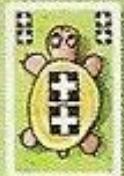


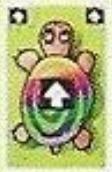

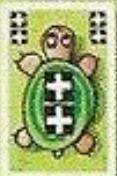


5种不同颜色的乌龟
5种颜色的乌龟版块
⑤说明书
游戏计划
小乌龟们是很难得会爬很快的,但是它们有时总是会互相竞争赛跑的。举例来说,想要最快去吃到远方草地上轻脆可口的莴苣,这就会使小乌龟们努力地爬行。
也因为它们并不是非常固执的笨龟,所以乌龟们有时会爬到
其他的乌龟上面,
让它背者自己前进。
在混乱的场合之中,
这看起来很像是乌
龟会笨到走回去错
误的方向,但是却
有可能是第一个吃
到莴苣的乌龟。

游戏准备
将游戏牌图摆放在中央,并且将5只乌龟分别放在起始点处。将5个乌龟版块洗牌后,任意地发给每个玩家1个版块。每个玩家都可以看自己的版块是哪种颜色的乌龟,并且放在自己前面后盖上不给其他人看到。而剩余的版块就放回盒子中不让玩家们看到。
然后将所有的卡片洗牌后,发给每个玩家5张面朝下的卡片。每个玩家拿取自己的卡片为自己的起始手牌。而剩余的卡片就放在版图旁边面向下成一抽牌堆。而由最年轻的玩家开始。以顺时钟方向来进行游戏。
游戏结束
在这游戏之中,每个玩家要想办法让自己拥有颜色的乌龟能够最先跑到莴苣草地(最后一格)。
回合的玩家从他的手中选择一张卡并且面向是使用。然后它可以移动卡上相对应的乌龟。
卡上颜色的乌龟
向前移动2格

卡上颜色的乌龟向前移动1格

卡上颜色的乌龟
向后移动1格(这卡片不能对还在起始点的乌龟使用)

在最后面的乌龟
向前移动1格(如果有多于一只的乌龟是在最后,那么玩家可选择其中一只移动)

在最后面的乌龟
向前移动2格(如果有多于一只的乌龟是在最后,那么玩家可选择其中一只移动)
乌龟是根据卡片上的颜色所移动的,既使那不是玩家的乌龟。而玩家是不需要泄漏自己的乌龟是啥颜色的,不过可以稍微的骗一下其他玩家。
如果卡上的是彩色乌龟的话,那么玩家可以选择任何乌龟移动。如果乌龟移动到一个已经有其他乌龟在的格子时,那它就迭在这些存在的乌龟之上。而每个格子中的乌龟数量是没有限制的。
当有只乌龟从乌龟堆栈中被移动时,任何其他在它上面的乌龟一样会跟者它移动。而在他之下的乌龟就依然留在原格子处。
例如
玩家使用彩色单箭头的卡片并且选择了在最后格子中,三只乌龟里的红色的乌龟

想当然的,站在红色乌龟上的黄色乌龟会跟者它一起走。而在红色乌龟之下的蓝色乌龟就孤单的留在原地了。
下个玩家使用一张紫色减号卡片。
紫色的乌龟就必须后退1格,并且带着
红色和黄色的乌龟一起后退。
下个玩家使用红色双重加号卡片使得红色乌龟向前移动2格并且黄色乌龟也跟着它。

游戏结束和胜利者
这场赛跑直到有任何的乌龟抵达最后的格子或者是超过它。然后每个玩家展示他的版块的颜色。而在最前面的乌龟的玩家就是胜利者。
在游戏结束时,如果乌龟都迭在一起,最下面的乌龟视为承载身上的其他乌龟,因此是在他们之前完成,而在底下乌龟正上的乌龟则是第二名,在底下乌龟正上的乌龟则是次之,以下类推。
变体规则
如果和年轻的玩家一起游玩时,你可以选择不隐藏颜色。每个玩家选择自己喜好颜色的乌龟和版块,并且将乌龟放在自己前面相对应颜色的版块上。
下载 MarkdownVariant-SCHILDKROTENRENNEN-4YEARS-EN.md


SCHILDKRÖTENRENNEN 4
years
old
Variant
Version
1.0
From
2
to
5
players From
4years
old 10
minutes
Introduction
The
variant
presented
in
this
rulebook
enables
to
play
Shildkrötenrennen
with
4
years
old
kids.
Aim
of
the
game
Each
player
tries
to
make
the
turtle
of
his
own
color
to
reach
the
last
space
to
eat
the
lettuce.
The
winner
will
be
the
first player
reaching
it
or
the
turtle
on
the
lowest
position
in
case
several
turtles
are
reaching
the
last
space
at
the
same moment.
Content
1
game
board
5
wooden
turtles
in
5
different
colors
52
cards
5
square
tiles
in
5
different
colors
Preparation
1.
Placement
of
the
turtles
The
board
is
placed
in
the
middle
of
the
table.
The tiles
are
shuffled
face‐down
and
picked
one
by
one. Take
each
turtle
corresponding
and
place
them
one on
the
other
on
the
start
space.
2.
Turtle
attribution
The
5
tiles
are
shuffled
face‐up
and
each
player
Each player
then
selects
the
turtle
in
his
favorite
color and
places
its
corresponding
tile
in
front
of
himself. The
remaining
tiles
are
placed
back
into
the
box.
3.
Card
preparation
Shuffle
all
the
cards
and
place
them
as
a
face‐down draw
pile
next
to
the
board.
4.
First
player
determination
:
The
youngest
player
goes
first.
Play
continues
in clockwise
order.
How
to
play
The
current
player
reveals
the
first
card
of
the
draw
pile
and
applies
its
action
:

The
turtle
whose
color
is
shown
on
the
card
moves
2
spaces
forward.
The
turtle
whose
color
is
shown
on
the
card
moves
1
space
forward.

The
turtle
whose
color
is
shown
on
the
card
moves
1
space
backwards. (This
card
may
not
be
played
for
a
turtle
that
is
still
on
the
Start
space.)
1 The
turtle
that
is
currently
in
last
place
moves
1
space
forward. If
more
than
one
turtle
is
tied
for
last
place,
the
player
chooses
which
to
move.

The
turtle
that
is
currently
in
last
place
moves
2
spaces
forward. If
more
than
one
turtle
is
tied
for
last
place,
the
player
chooses
which
to
move.
The
turtle
moved
is
always
the
one
whose
color
is
shown
on
the
card,
even
if
it
is
not
the
player’s
own
color.
If
a
rainbow‐colored
turtle
is
pictured
on
the
card,
then
the
player
may
choose
any
turtle
to
move.
If
a
turtle
is
moved
to
a
space
that
already
holds
others,
it
is
stacked
on
top
of
the
existing
turtles.
There
is
no
limit
to
the number
of
turtles
stacked
on
a
space.
IMPORTANT
:
In
any
case,
when
a
turtle
is
moved
from
such
a
stack,
any
turtles
sitting
on
top
of
the
chosen
turtle
are
moved
with
it.
Any
turtles
below
the
chosen
turtle
remain
on
the
space.
If
the
pile
is
emplty,
the
cards
are
shuffled
again
on
a
new
draw
pile.
End
of
the
game
The
race
ends
when
any
turtle
has
reached
the
last
space,
or
beyond.
The
player
whose
turtle
is
farthest
in
front
wins.
If
any
turtles
are
stacked
together
at
the
end
of
the
game,
then
the
undermost
one
has
carried
the
others,
and
so
is considered
to
have
finished
ahead
of
them.
The
turtle
directly
on
top
of
the
bottom
turtle
is
considered
the
next
best
in the
stack,
and
so
on.
Examples

The
red
turtle moves
2
spaces forward

The
purple
turtle moves
1
space forward

The
turtle
chosen
bythe
player
moves
1space
forward

The
turtle
in
the
last place
moves
2 spaces
forward.

The
turtle
in
the
last place
moves
2 spaces
forward.

The
green
turtle moves
1
space
back
• If
more
than
one
turtle
is
tied
for
last
place,
the
player
chooses
which
to
move.
• Any
turtles
sitting
on
top
of
the
chosen
turtle
are
moved
with
it.
Any
turtles
below
the
chosen
turtle
remain
on the
space.
Legal
notice
The
original
version
of
the
game
is
the
property
of
Winning
Moves
and
of
its
author
Reiner
Knizia.
The
following
rules are
an
un‐official
variant
for
the
free
use
on
private
purpose
only.
These
rules
are
provided
in
good
faith
of
the
use
you are
going
to
make
of. The
downloading
of
this
variant
gives
you
the
ability
to
use
it,
but
not
to
make
benefit
from
it.
All downloading
or
printing
for
other
uses
(including
selling
of
the
rules,
delivery
of
the
rule
with
the
buying
of
original
game,
public
events
handing
out,
etc.)
are
forbidden.