Codex_UMR_v13w.md

Unoficial Manual Rewrite

Overview
Codex is a customizable, non-collectable card game set in the Fantasy Strike universe. Each player begins with a base building, where they summon units, cast spells, and construct additional buildings—much like the gameplay of a real-time strategy videogame.
Playing Cards
In the standard game, each player begins with three hero cards, a worker card, and a deck of starting cards. Your deck may include units that attack and defend, spells that give one-time bonuses, or upgrades that provide permanent bonuses.
At the start of the game, you draw a hand of cards from your deck.
Your workers produce gold on your turn. You spend gold to play cards from your hand.
At the end of your turn, you discard your hand, then draw replacement cards from your deck. The more cards you play, the fewer cards you draw for the next turn.
Heroes aren’t in your deck—you spend gold to summon a hero from your base. Heroes can attack and defend, and you can’t play spells without a hero in play.
Building Your Deck and Codex
Each hero has a set of unique spell and tech cards. You place your heroes’ cards into a binder or stack as your codex.
At the end of your turn, you choose and discard any two cards in your codex. These cards eventually shufle into your deck, letting you customize your deck for diferent situations.
You can’t play your hero’s tech cards until you construct certain tech buildings in your base.
You can put any hero on your team with any other hero, so you can discover new combinations of cards by mixing diferent heroes’ codex cards together.
Attacking and Defending
Your heroes and units can each attack once on your turn. If they don’t attack, then they can defend in your patrol zone.
When your cards attack, they must attack a card in your opponent’s patrol zone if possible.
When your opponent’s patrol zone is empty, you can attack anything with HP, including the opponent’s base, buildings, or heroes and units that aren’t patrolling.
Each player’s base begins with 20 HP. When you destroy your opponent’s base, you win!

A white Discipline hero (Grave Stormborne), white worker card, and starting white unit card

When you play with Grave, you add his Discipline cards to your codex, like these spell, tech I, and tech III cards

You can’t play tech I cards until you first spend 1 gold to construct a tech I building in your base

Lock cards into your patrol zone to defend your base
Setup
In a 1v1 game, two players each take a playmat. Set up your playmat as shown here.
Hero Card: Place your hero cards on slots in your command zone.
(Basic Game) In the basic game, each player chooses one hero. Play this for a faster game or a simpler learning game.
(Standard Game) In a standard game, each player chooses three heroes.
First Player: Randomly choose a player to be the 1st player.
Worker Card: The 1st player places this card with the x4 side up. The 2nd player places this card with the x5 side up. (The 1st player starts with 4 workers, and the 2nd player starts with 5 workers.)
Starting Deck: Shufle your 10 starting cards face‑down to form your deck.
(Basic Game) Use the 10 starting cards that match your hero’s color.
(Standard Game) Use the 10 starting cards that match one of your three heroes’ colors.
Starting Hand: Draw 5 cards from your deck.
Codex: Find the 24 spec cards matching each of your heroes’ specs (short for specialization). Don’t shufle these cards—keep them in a binder or stack beside your playmat.
Each spec has two copies each of 12 unique cards: three spells, one ultimate spell, two Tech I, five Tech II, and one Tech III.
Add-ons: Place these cards on the table between players. (Any player can construct these.)
(Basic Game) Only use the tower and surplus add-ons. You can’t construct heroes’ halls or tech labs.
Base HP: Set a counter or scorepad to 20 HP for each player.


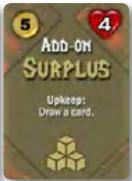


Add-ons


First Game Suggestions
With the Deluxe Set, try a basic game with the two neutral heroes, Troq Bashar (Bashing) vs. River Montoya (Finesse), for a simpler first game.
With the Core Set, try Calamandra Moss (green Feral) vs. Jaina Stormborne (red Fire) for a simpler game of strong units vs. damaging spells.
Deluxe Variant: Maps
The Deluxe Set has a deck of map cards. You can choose a random map card and place it on the table for a random efect that afects all players during the game.

If you play a hero team of Calamandra (green Feral), Jaina (red Fire), and Rook (white Strength), you build a 72-card codex with the Feral, Fire, and Strength cards.
Your starting deck can only have one color, so you must choose the green, red, or white starting deck.
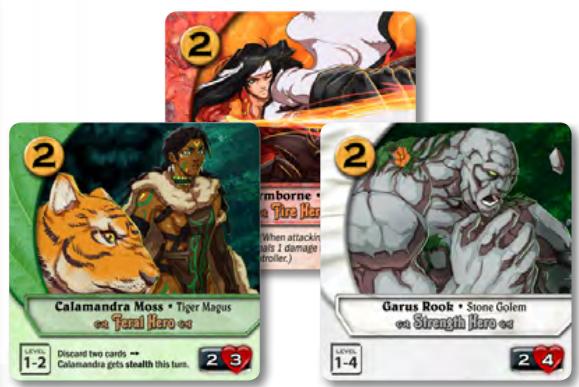
Starting cards have a dot in the corner and a description color (like Red).

Spec cards have no corner dot and have a description spec (like Fire).


Suggested Codex Binder Setup
Spells


Tech II
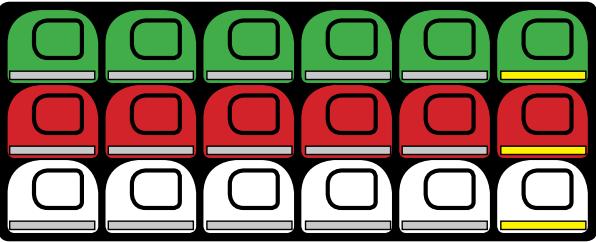
Multicolor Teams
It’s simpler to build a team with three heroes of the same color, but you may find strong card combinations on a multicolor team
There are two penalties for a team with multiple hero colors:
The first tech building or add-on you construct costs +1 gold.
A starting spell costs +1 gold when played by a hero of the wrong color, like a white hero casting a red spell.
The neutral heroes, Troq and River, don’t count as an additional color, and neutral starting spells never cost extra gold to play.
Setup for 3–5 Players
Add the following setup rules when playing with more than two players. (See Multiplayer Mode p12 for the full rules.)
Free-for-all: The 1st player begins with workers x4.
The other players begin with workers x5.
The 3rd, 4th, and 5th players begin respectively with 1, 2, or 3 Mercenary 1/1 tokens in play.
Two-headed dragon (2v2 teams): Set each team’s base to 30 HP.
Both players on the 1st team begin with workers x4. Both players on the 2nd team begin with workers x5.
Player Turn
Each of your turns has five phases.
#1. Ready Phase
Discard the cards you chose during your last Tech Phase. Discard the cards you chose during your last Tech Phase.
You exhaust a card (turn it sideways) to attack or use some abilities. In this phase, ready all of your cards (turn them straight).
An exhausted card must ready before it can attack or exhaust for an ability again.
#2. Upkeep Phase
This phase resolves several efects.
Gain 1 gold for each of your workers.
Remove one summoning rune from each of your heroes (see Destroyed Heroes p10).
Resolve your upkeep efects. (For example, the surplus add-on building lets you draw a card during your upkeep.)
In a free-for-all, return all patrollers that were lent to you (see Lending Patrollers p11).
#3. Main Phase
You take actions during this phase. See the next section for the actions.
This phase ends when you lock cards in your patrol zone, choosing defenders for your opponent’s turn.
#4. Draw Phase
In this phase, discard all cards in your hand, face-down. Then, draw cards equal to the cards you discarded, plus 2, to a maximum of 5.
Discard 0–2 cards 4 Draw 2–4 cards
Discard 3+ cards 4 Draw 5 cards
#5. Tech Phase
Remove any 2 cards from your codex. You discard these cards face‑down at the start of your next turn.
During your first turns, you must choose 2 cards.
If you have at least 10 workers, then you can choose to tech 0, 1, or 2 cards from your codex.
As soon as your tech phase begins, your opponent’s turn begins. You choose tech cards while your opponent acts. You don’t need to finish choosing cards until your next turn begins.

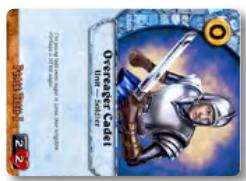
Exhausted


Gold Limits: You don’t lose your gold at the end of your turn.
You can hold a maximum of 20 gold. You immediately lose any gold that you gain beyond that.
Opponents’ Turns: You can’t take any actions during your opponents’ turns. You can only play cards and abilities during your main phase.
Deck Shufling: Anytime you try to draw a card when your deck is empty, shufle your discards to refill your deck, then continue drawing.
You can only shufle your discards once per phase. If you can empty your deck more than once in a main phase, then you can’t continue drawing from an empty deck.
Hand Limit: You can have more than 5 cards in your hand at any time. You’re only forced to discard and redraw to 5 during your draw phase.
Tech Phase: You can tech 2 copies of the same card, or 2 diferent cards.
You don’t pay anything or check any requirements to choose tech cards. For example, you don’t need gold to choose an expensive card, and you don’t need a tech II building to choose a tech II card.
If you shufle your discards during your opponent’s turn, you don’t get to shufle your new tech cards in.
If you’re not planning to shufle your discards during your opponent’s turn, then you can pick and discard your tech cards as early as you want, to keep the game moving.

Main Phase Actions
You can take any of these actions during your main phase, in any order. You can repeat most of these actions any number of times.
#1. Hire a Worker (Once)
To hire a worker, pay 1 gold, then tuck 1 card from your hand face‑down under your worker card.
You can only take this action once on your turn.
#2. Summon or Level Up a Hero
Pay a hero’s gold cost to move it from your command zone to your play zone.
A hero arrives at level 1. Place a 1-level rune on it.
A hero has arrival fatigue on the turn you summon it. It can’t attack or exhaust to use abilities that turn. It can patrol, cast spells, and use abilities that don’t require exhausting.
You can’t summon a hero that has summoning runes, a hero that’s been destroyed since your last turn. (See Destroyed Heroes p10.)
Pay 1 gold to level up a hero in play. Place level runes on it to track its level.
You can pay any amount of gold to level a hero any number of times, up to its max level.
Each hero has three level bands. A hero has the ATK, HP, and abilities of the band matching its level. It also keeps the abilities of any bands below its level.
When your hero levels up to a new level band, it heals all damage.
You begin the game with a hero limit of 1, which means that you can’t summon a hero while you have a hero in play. Build a tech II or tech III building to increase your hero limit, letting you summon a 2nd or 3rd hero.
When one of your heroes dies, you can immediately summon a diferent hero to replace it.
Your hero limit only afects summoning heroes. For example, you’re not forced to destroy a hero if you have two heroes in play when an opponent destroys your tech II building.

Tuck a face-down card to hire a worker
On your first few turns, you should usually hire one worker and play one card. That lets you draw back up to five cards at the end of your turn. If you have more gold to spend, perhaps summon a hero or construct a tech building...
Hire workers with cards that you don’t want to play again, since they don’t return to your deck!

Gold Cost

Pay 2 gold to summon Grave. He arrives at level 1 with 2 ATK / 3 HP and the sparkshot ability.
Pay 2 gold to level Grave from level 1 to level 3. This puts him at a new level band, so he heals all damage, increases to 3 ATK / 4 HP, and gains the readiness ability. He keeps the sparkshot ability from his first level band.
#3. Play a Tech Card
To play a tech card from your hand, pay its gold cost and place it in your play zone. There are three types of tech cards.
Units can attack and patrol. They have ATK and HP.
Buildings provide an ability action or permanent bonus. Buildings have HP, so your opponent can attack and destroy them.
Upgrades provide various bonuses, but they don’t have HP, so your opponent can’t attack them.
All cards have arrival fatigue on the turn they arrive in play. They can’t attack or exhaust that turn, but they can patrol or use abilities that don’t require exhausting.
You can always play tech 0 cards. You need a tech building to play more advanced tech cards.
#4. Play a Spell Card
To play a spell card from your hand, pay its gold cost, immediately resolve its efect, then discard the card face‑down.
You must have a hero in play. (The hero actually casts the spell.)
Any hero can cast any starting spell. Pay +1 gold to play a spell with a hero of the wrong color.
To play a spec spell, you must have that spec’s hero in play.
To play a hero’s ultimate spell, that hero must have been in play at maximum level at the beginning of your turn. You can’t play an ultimate spell on the same turn that you level your hero to max.
Neutral spells are easy to cast. Any hero can play a neutral starting spell for no extra cost.
You don’t discard ongoing spells when you play them. These spells remain in play and provide a permanent efect.
Some ongoing spells attach to another card. Place the spell beside the attached card, and discard the spell when the attached card leaves play.
Channeling spells are sustained by the hero that cast the spell. Discard these spells when that hero leaves play or leaves your control.

A starting black unit, building, and upgrade

Three ongoing spells—a buf (improves the attached card), a debuf (penalizes the attached card), and a channeling spell (afects multiple cards)

This team has Jaina (red Fire), Zane (red Anarchy), and Calamandra (green Feral) and uses the red starting deck.
Jaina and Zane play red spells for normal cost. If Calamandra is the only hero in play, red spells cost +1 gold.
You can’t play Fire spells unless Jaina is in play. Zane shares a color with Jaina, but he doesn’t have the skill for Jaina’s flaming arrow spells.
#5. Play Ability Actions
An ability action is a line on a card in play that reads “(Cost) 4 (Efect).” As an action, pay the cost to gain the efect.
You must pay the ability’s entire cost to gain its efect. For example, if an ability requires you to exhaust a unit you control, you can’t play that ability if you don’t control any ready units.
A card can’t exhaust to pay for an ability on the turn that you play or summon it.
#6. Construct a Tech Building
To construct a tech building, pay the building’s gold cost and place a construction rune on it.
You must have a number of workers as shown on the building.
You need a tech I building to construct a tech II building, and a tech II building to construct a tech III building.
A new tech building finishes construction at the end of your turn, much like how new units have arrival fatigue. You can’t play a tech building’s tech cards, start constructing the next tech building, or deal damage to a tech building on the turn that you constructed it.
Tech buildings are an extension of your base. When a tech building is destroyed, your base takes 2 damage.
It costs 0 gold to reconstruct a tech building that was destroyed (but it still finishes construction at the end of the turn).
Multicolor teams require more complicated buildings. If your team has multiple hero colors, then your first tech building or add-on costs +1 gold.
Neutral heroes don’t apply this cost to your team. For example, a team with Jaina (red), Zane (red), and Troq (neutral) wouldn’t add to your building cost, but a team with Jaina, Troq, and Calamandra (green) would.
In a standard game, when you construct your tech II building, you must choose a spec.
Take a spec card that matches one of your heroes specs. Place that card on your base.
You can only play tech II and tech III cards of your chosen spec.
You don’t get to change this spec when your tech II building is destroyed and reconstructed.

Exhaust
At level 4, I gain an ability action that lets me exhaust to deal 1 damage to a target. But if I use that ability, then I can’t exhaust to attack. Is it better to attack for 3 damage or to safely shoot for 1 damage?


→ Deal 1 damage to a patrolling unit or building. ©

Required Workers
Gold Cost

HP
Construction Rune
| TechLevel | GoldCost | Req.Workers | HeroLimit |
| 1 | 1 | 6 | 1 |
| II | 4 | 8 | 2 |
| III | 5 | 10 | 3 |
SPEC CHOICE

BASE 20
Spec Card
#7. Construct an Add-on Building
You have room to construct one add-on in your base. Choose an add‑on card, pay its gold cost, and place it in your base.
Like tech buildings, add-ons finish construction at the end of your turn, and they deal 2 damage to your base when destroyed.
When an add-on is destroyed, return it to its stack.
With a multicolor team, your first tech building or add-on costs +1 gold.
You don’t get to reconstruct an add-on for free. You can construct a diferent add-on in its place.
You can intentionally destroy your add-on to make room for a diferent add-on, but this deals 2 damage to your base.
Surplus lets you draw a card during your upkeep phase.
Towers detect 1 card per turn. A detected card loses the advantages of stealth or invisible until the end of the turn.
On your opponents’ turns, your tower detects the first stealth or invisible card that attacks you that turn.
On each of your turns, your tower can detect any one stealth or invisible card.
Your tower also deals 1 combat damage to any visible card that attacks anything you control, at the same time that the attacker deals combat damage.
Towers can damage attackers with flying, swift strike, long-range, or any other ability.
A tower doesn’t damage undetected stealth or invisible attackers, even when those cards attack the tower.
In a free-for-all, a tower can detect one attacker on each opponent’s turn, but it only detects cards that attack you. In a two-headed dragon, a tower can detect a card attacking you or your team’s shared base but not a card attacking your teammate’s cards.
If a card has multiple stealth or invisible abilities, a tower detects all of the card’s abilities with a single detection. If an attacker has stealth and unstoppable, the tower removes the advantage of stealth, but the unstoppable card can still ignore the patrol zone.
Heroes’ hall increases your hero limit by 1.
This only afects summoning heroes. Destroying this add-on doesn’t force you to destroy heroes in play.
You can’t immediately summon a new hero when you construct this, because it finishes construction at end of turn.
When you construct tech lab, place a spec card on it. You can play tech II and tech III cards of that spec and your tech II building’s spec. You still need the appropriate level tech building to play those cards.
If you don’t have a tech II building when you construct this, you don’t choose its spec until you construct a tech I building.
Construct a surplus when you have lots of gold and nothing to spend it on.
When this is destroyed, you lose its bonus spec. If you reconstruct the tech lab, you can choose a diferent spec. You can never change the spec of your tech II building.
You can’t immediately play cards of the new tech when you construct this, because it finishes construction at end of turn.
Construct a tower when your opponent attacks with an army of small units or tokens.
Heroes’ hall is cheaper than a tech II building. Construct it when you want to quickly play more heroes or fill your deck with diferent heroes’ spells.
Construct a tech lab to make interesting combos of tech II cards from diferent specs.


#8. Attack
Exhaust a hero or unit to make it attack. Your heroes and units attack one at a time.
Your attacker must choose an opponent’s card or building as the defender.
1. You must attack the squad leader if possible.
2. If there’s no squad leader, then you must attack any other patroller if possible.
3. If the entire patrol zone is empty, then you can attack anything with HP—any hero, unit, or building, including exhausted cards or the base.
Your attacker deals combat damage equal to its ATK to the defender.
When you attack a hero or unit, the defender simultaneously deals its ATK damage to the attacker.
Put damage markers on each card equal to the damage it takes.
Destroy a card or building when it has damage markers equal to or more than its HP.
When cards from your deck are destroyed, discard them facedown.
Destroyed tech buildings lose their construction runes. Destroyed add‑ons return to their stacks.
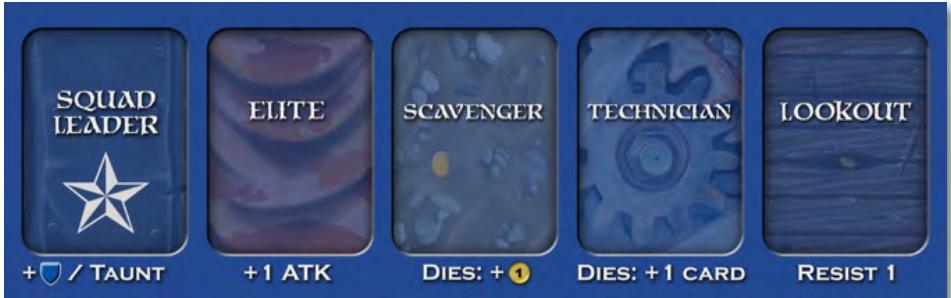
| Squad Leader | First priority defender, +1 armor—ignoresthe first damage taken each turn |
| Elite | +1 ATK |
| Scavenger | Controller gains 1 gold when it dies |
| Technician | Controller draws a card when it dies |
| Lookout | Resist 1—opponents pay 1 gold to targetthis with a spell or ability |
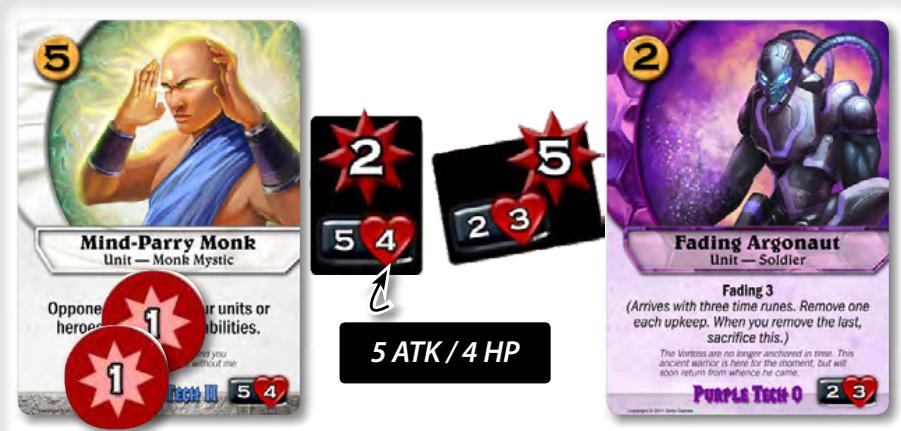
This 5/4 Mind-Parry Monk attacks a 2/3 Fading Argonaut. The Monk deals 5 combat damage and destroys the Argonaut.
Damage Marker
The Fading Argonaut deals 2 damage back to the Monk, giving the Monk 2 damage markers.


Misc Rune (summoning rune)
Destroyed Heroes
When a hero is destroyed, discard all of its levels and other runes and return it to your command zone.
Put two summoning runes on the hero. You can’t summon a hero that has a summoning rune.
Remove one summoning rune from each of your heroes during your upkeep. (You can’t re-summon the hero until after your next turn.)
When you destroy an opponent’s hero, one of your heroes immediately gains 2 levels.
A hero must be in play to gain levels.
If you have multiple heroes in play, choose one hero to gain the levels from destroying an opponent’s hero.
Unit Bounties (Free-for-all)
You can’t just sit on the sidelines and hope that your opponents finish each other of. In a free-for-all, you get 1 gold each time you destroy an enemy unit on your turn, by any means. You can earn a maximum 3 gold each turn this way.
You don’t get this reward for destroying heroes or buildings.
Team Patrol Zones (Two-headed Dragon)
In a team game, both teammates’ patrol zones protect the entire base. Your attack priorities are:
1. Either opponent’s squad leader
2. Any other patroller in either’s opponent’s patrol zone
3. Anything else with HP controlled by either player, including their shared base
Exhausted Defenders: Exhausted defenders still deal combat damage.
Damage Remains: Damage doesn’t heal at the end of the turn. Damage markers remain until healed.
Ready After Attacking: If you ready a card after it attacks, it can exhaust and attack again.
Arrival Fatigue: A card can’t attack on the turn that it’s summoned or played.
#9. Repair Base (Free-for-all only)
In a free-for-all game, you can pay 3 gold to repair 1 damage on your base (to a maximum of 20). This gives players a chance to bounce back after the other players gang up on them.
#10. Lock Patrollers (Ends the phase)
To end your main phase, place heroes and units in any slots in your patrol zone.
Exhausted cards can’t patrol.
You can place one hero or unit in each patrol slot. You can move patrollers in and out of the patrol zone at any time until you lock them in.
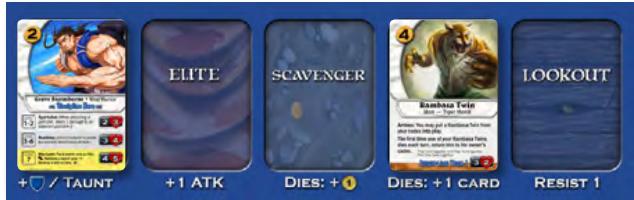
Cards may patrol while they have arrival fatigue.
Cards only gain patrol bonuses during other players’ turns. For example, you can’t sacrifice your technician patroller on your turn and gain a card.
Your cards can’t patrol in a teammate’s or opponent’s patrol zone, except for lending patrollers in a free-for-all game.
Lending Patrollers (Free-for-all)
In a free-for-all game, you may lock cards in empty slots in an opponent’s patrol zone. A free‑for‑all ends when any player’s base is destroyed, so you might patrol for the weakest player to keep the game from ending.
This lends your patrollers to the opponent. That player gains control of these cards (and you lose control). However, you gain any coins or cards if your lent cards are destroyed as scavenger or technician patrollers.
You may lock cards in more than one patrol zone, including your own and any number of opponents’.
During your upkeep, you return all patrollers that were lent to you. You usually can’t protect an opponent between the end of their turn and the beginning of yours.
When a lent patroller is destroyed, it goes to the owner’s discard pile or command zone.
Multiplayer Mode: Free-for-all (3–5 players)
In a free-for-all, 3 to 5 players build their own bases and fight the other players. There is no player elimination—the game ends when any player’s base is destroyed, and the player with the most remaining base HP wins.
Set up the game normally (as the basic or standard game) with these changes.
Randomly choose a 1st player. Players take turns in clockwise order.
The 1st player begins with workers x4. All other players begin with workers x5.
The 3rd, 4th, and 5th players begin respectively with 1, 2, or 3 Mercenaries in play. These are 1/1 neutral units. They have arrival fatigue on their owners’ first turns (they cannot attack or exhaust for abilities).
Add these rules to the game.
Players can spend 3 gold to repair 1 base HP as an action.
You gain 1 gold when you destroy an enemy unit on your turn, to a maximum of 3 gold per turn.
You can lend patrollers to your opponents to defend their bases. You regain control of these units during the opponent’s upkeep (see Lending Patrollers p11).
If there’s a tie for most base HP when a player is eliminated, then finish the current player’s turn. Then, every player with the most tied HP takes one more turn. After those turns, the player with the most HP wins, or repeat this process if any of those players are still tied.

| Player | Workers | Mercenaries |
| 1 | 4 | 一 |
| 2 | 5 | 一 |
| 3 | 5 | 1 |
| 4 | 5 | 2 |
| 5 | 5 | 3 |
Multiplayer Mode: Two-headed Dragon (2-player teams)
In a two-headed dragon, four players split into teams of two. Each team shares a single base with 30 HP, and you win by destroying the other team’s base.
Set up the game normally (as the basic or standard game) with these changes.
Set each team’s base to 30 HP.
Sit beside your teammate. You may show your cards to and discuss strategy with your teammate at any time.
All players take their own playmats, heroes, decks, codexes, workers, and hands of cards.
Randomly choose a team to go first. Both players on the 1st team begin with workers x4. Both players on the 2nd team begin with workers x5.
Add these rules to the game.
Teammates take their turns at the same time, one phase at a time. Both teammates take a ready phase together, then an upkeep phase together, and so on.
In the main phase, teammates can take actions in any order, but the team takes and resolves one action at a time.
Your patrol zone also protects your teammate’s play zone. When you attack, you must attack either opponent’s patrollers if possible (see Team Patrol Zones p11).
You only share a base with your teammate. You can’t spend your teammate’s gold, use your teammate’s abilities, or lock cards in your teammate’s patrol zone. Both teammates may construct one add-on.
The word you refers to your cards, and the word friendly can refer to a teammate’s cards. For example, if an efect lets you take an extra turn, then you take that turn without your teammate. If an efect gives +1/+1 to all friendly units, then your teammate’s units also gain that bonus.
Game Concepts

Exhaust, Ready, and Arrival Fatigue
Exhaust a card by turning it sideways. An exhausted card can’t exhaust again. You ready your cards, turning them straight, at the beginning of your turn.
All cards have arrival fatigue on the turn they enter play, even buildings and upgrades. They can’t attack or use ability actions that require exhausting.
You must exhaust a card to make it attack. An exhausted card can’t attack again and can’t patrol.
If a card’s ability doesn’t require it to exhaust, then you can use that ability while the card is exhausted or has arrival fatigue.
If you ready a card after it attacks (using a spell or another efect), it can attack again. You can also reuse ability actions that require exhausting this way.

Target
A spell or ability has the target icon in its text or description if it targets something.
Some abilities refer to target efects. For example, if an opponent’s card has resist X, you must pay X gold to target it (use any spell or ability with a icon against it).

Tokens
A token is a temporary unit. It follows all normal rules for units.
An X/Y token has X ATK and Y HP. For example, the Necromancy hero Garth Torken can summon a 1/1 Skeleton token, with 1 ATK / 1 HP.
Tokens can’t go into a deck, discard pile, or hand. If a token ever leaves play, it is trashed and removed from the game.
Tokens are tech 0 cards that cost 0 gold. Efects that afect tech 0 cards or 0-cost cards also afect tokens.
Runes
A rune is a game piece that you place onto a card.
A +1/+1 rune adds 1 to a card’s ATK and HP. A -1/-1 rune does the opposite.
+1/+1 and -1/-1 runes cancel each other. For example, if you would place a -1/-1 rune on a unit with +1/+1 runes on it, you remove one +1/+1 rune instead of placing the new rune.

Some cards deal combat damage in the form of -1/-1 runes. Place a number of -1/-1 runes equal to the card’s ATK, rather than a number of damage tokens. This counts as combat damage, so it can be prevented by armor or trigger efects that resolve from combat damage.
Damage, Destroy, and Trash
A card or building is destroyed when its damage is equal to its HP.
Destroyed tech or spell cards are discarded face-down. Destroyed heroes return to the command zone. Destroyed tech buildings lose their construction runes. Destroyed add-ons return to their stacks.
Trashed cards are removed from the game face-down and set aside. They can’t return to any deck or codex unless otherwise specified.
You can’t heal something above its HP. If you would heal something beyond its starting HP, then remove all damage from it.
Destroy any card with 0 or less HP. For example, if you place a -1/-1 rune on a 1/1 unit, it’s immediately destroyed, even if it’s taken no damage.
If a card loses HP, it immediately dies if its damage is equal or more than its new HP. For example, the Spore Shambler is a 0/1 unit that comes into play with two +1/+1 runes. If it has 1 damage on it, then it dies immediately if it loses both of its runes.
Decisions on Opponents’ Turns
The active player, the player taking the current turn, makes all decisions about timing and other matters. For example, if you play a spell that destroys multiple units, it may trigger multiple death efects, including patrol abilities for dying units. The active player chooses the order that the abilities resolve, no matter who controls the cards that have those abilities.
In the rare event that an efect asks you to make a decision on an opponent’s turn, you do not resolve that efect. For example, the Demonology hero Vandy Anadrose chooses two units to gain +2/+2 when she reaches max level. If she reaches max level during an opponent’s turn (perhaps the opponent’s hero died and she immediately gained 2 levels), then the efect doesn’t resolve, because Vandy’s controller can’t choose which units gain the bonus.
Flying, Ground, and Anti-air
Flying cards may fly over ground patrollers while attacking. (Flying cards may ignore patrollers that don’t have flying.)
Flying cards may attack a ground card. Ground cards deal no combat damage to flying cards.
Flying cards can’t be attacked by ground cards. Ground cards ignore patrolling flyers.
Anti-air cards can attack and deal combat damage to flying cards.
Anti-air cards may ignore or attack flying patrollers.
Attacking flying cards may fly over (ignore) anti-air patrollers, but those patrollers deal combat damage to the attacker. Basically, the anti-air patrollers take a shot at an attacker that flies overhead. This occurs at the same time as normal combat damage.
A non-patrolling anti-air unit doesn’t deal combat damage unless directly attacked by a flying card.
If a patroller has anti-air and swift strike, it may damage and destroy a card that flies over it before the flyer deals normal combat damage.
A flying card gains no benefit if it ever gains anti-air. For example, a flying/anti-air card can’t ignore patrollers with flying.
There is no benefit to having more than one instance of flying or anti-air. For example, if an anti-air unit also gains anti-air from a spell, it doesn’t get to deal combat damage twice to flying attackers.
A blue flying illusion attacks a player with three green patrollers. Two Huntress patrollers have anti-air.
The illusion attacks the squad leader Huntress 4 The two units damage each other.
The illusion flies over the squad leader and attacks a Tiger patroller 4 The Huntress squad leader deals combat damage, but the ground Tiger does not.
The illusion flies over the patrol zone and attacks a building 4 All anti-air patrollers deal combat damage to the illusion as it damages the building.

Play, Put Into Play, and Summon
You play a card from your hand as an action, when you pay its gold cost. When an efect puts a card into play, you don’t have to pay the card’s gold cost, meet its tech requirements, or have the appropriate hero in play unless otherwise specified.
For example, the Graveyard lets you play a card from its unique zone. Since you play the card, you must pay its gold cost and meet its tech requirements. The Circle of Life spell lets you put a green unit from your codex into play—you don’t need gold or tech buildings for this.
Heroes and tokens are summoned, not played. These cards come into play and resolve arrival efects, but they’re usually not afected by efects that resolve when a card is played from your hand.
Some efects only afect cards that you play from your hand. For example, Drill Sergeant puts a rune on cards that you play, so it doesn’t afect summoned tokens or units that were put into play by an efect.
Some cards let you put a card into play if you meet its tech requirements. This lets you play any tech 0 card. You need a tech I building for any tech I card. You need a tech II or tech III building and the matching spec to play a tech II or tech III card.
Legendary Cards
One player can’t have two copies of a legendary card in play at one time, such as two copies of Galina Glimmer (Legendary Growth Tech I). If you ever have multiple copies of a legendary card in play, the newest copy is immediately destroyed.
You can have two copies of a legendary card in your deck.
Diferent players may have a copy of the same legendary card in play, if they’re playing the same color or spec.
This rule supersedes any other rule about units. You must always destroy the second copy of a legendary unit, even an indesctructible unit.
Owner and Controller
You own all of the cards that you have in your zones, deck, and codex at the beginning of the game. You also own any tokens that you summon. Some efects let you gain control of a card, such as Kidnapping an opponent’s unit. When you gain control of a card, put it in your play zone and use it as though it were your own card.
Unless specified otherwise, efects that afect your cards refer to cards in play that you control. For example, if an efect gives +1/+1 to all of your units, it applies to units you control that you took from an opponent, and it doesn’t apply to units that you own that an opponent controls.
When a card leaves play, it returns to its owner. For example, if you sacrifice an opponent’s unit that you control, discard it to the owner’s discard pile. If an efect returns a card that you control to your hand, return it to its owner’s hand. If you attach a channeling spell to an opponent’s unit, discard that spell to your discard pile when the unit leaves play.
An efect that removes a card from play and immediately returns it to play does not cause a change of control. For example, Max Geigar’s max level ability trashes a friendly unit and returns it to play. This doesn’t return the card to its owner.
In a free-for-all, when you lend a card to patrol for another player, that player gains temporary control of your card. For example, if an efect gives all of your units +1/+1, it applies to units that were lent to you but not to units that you lend to other players.
See Assimilate, Graveyard, Mind Control, and Spirit of the Panda in the Card FAQ for some peculiar control efects.
Workers
When a worker is sacrificed or destroyed, it is trashed face-down. It doesn’t return to your deck or codex. You don’t need to reveal the card to your opponents.
Your starting workers can be destroyed or sacrificed. Put a -1/-1 rune on your workers card for each missing worker. You must still tuck a card from your hand to hire another worker after that.
Heroes, Units, and Buildings
A hero isn’t a unit, and vice versa. An efect that only afects units has no efect on heroes.
If an efect afects a building, it can afect a base, tech building, add-on, or building card from a player’s deck.
If an efect afects a building card, it can’t afect a base, tech building, or add-on. A building card is a card from a player’s deck or codex.
General Rules
Resolve as much of an efect as you can, even if you can’t resolve everything. If a spell or ability tells you to do multiple things, you can play it as long as you can do one of those things.
All efects resolve instantly. You can’t interrupt an action or efect with a diferent action or efect. For example, if you attack with a unit, and that unit takes enough damage to be destroyed, you couldn’t instantly play a spell that gives the unit a +1/+1 rune to keep it alive.
When a card leaves play, it loses all runes, attachments, and any other efects. If that card returns to play, it is not afected by what it was before leaving play.
Most abilities do not stack with themselves. For example, nothing happens if a flying card gains flying from an efect, or if a card has two instances of swift strike or overpower. Armor, frenzy, resist, sparkshot, and changes to ATK or HP do stack.
Glossary
Armor X: Prevents the first X damage taken each turn.
A squad leader patroller gets armor 1 and prevents the first damage each turn.
A unit’s armor refreshes at the beginning of each turn, including the beginning of each opponent’s turn in a free-for-all game.
This ability stacks. For example, if a card with armor 2 is locked as a squad leader patroller, which provides armor 1, then treat the card as though it had armor 3.
Armor-prevented damage is still considered to be dealt. For example, a deathtouch unit’s combat damage destroys an armored unit even if the armor prevents all damage.
Temporary armor, such as the bonuses of Rampant Growth or Aged Sensei, disappears at the end of a turn if it isn’t used up.
Armor Piercing: Armor can’t prevent this card’s combat damage.
After an armored card takes armor-piercing damage, its armor still prevents the first non-piercing damage it takes that turn.
Arrives: A card arrives when it enters play from anywhere. An Arrives: efect resolves when this happens.
Anti-air: Can attack flying cards. May ignore patrolling flying cards. Deals combat damage normally to flying cards. Patrolling anti-air cards deal combat damage to attackers that fly over them. (See Flying and Anti-air in Game Concepts.)
Attacks: An Attacks: efect resolves when a card attacks, after exhausting the card and declaring the defender but before dealing combat damage.
Boost X: When you play or summon this card, pay X additional gold for the described efect.
You can’t pay for boost when an efect puts a card into play. You can only boost a card that you played or summoned as an action.
You can boost a card when you play it from a zone other than your hand, such as the efects of Jurisdiction, Graveyard, or Vir Garbarean’s mid level ability.
Channeling: Discard a channeling spell when the hero that cast it leaves play or leaves your control.
Copy: A copy of a card gains the original card’s ATK, HP, types, and abilities printed on the card.
A copy doesn’t gain any of the original card’s modifiers, including runes, attached cards, or temporary bufs. The efects of Chaos Mirror and Polymorph: Squirrel are two exceptions that change the card’s base values and thus afect copies. For example, if you copy a 3/3 unit with a +1/+1 rune that’s been polymorphed into a 1/1 Squirrel, then your copy is a 1/1 Squirrel without copying the rune.
Arrival efects only afect a copy if the copy enters play with those efects. For example, if a card in play copies a card with fading, the copy doesn’t arrive with fading, so it doesn’t gain any time runes.
Deathtouch: Destroy any unit or hero that takes combat damage from this card, including damage prevented by armor. This doesn’t afect buildings.
When a card is destroyed by deathtouch, it counts as death from combat damage.
Detector: This card lets you attack and target stealth and invisible units.
The tower add-on lets you detect one card per turn.
Dies: A card dies when it is destroyed or sacrificed. A Dies: ability resolves when this occurs.
Some efects return a card to hand or return a hero to the command zone. These efects do not resolve death abilities.
Disable: Exhaust the target card. It doesn’t ready during its next ready step.
Cards can’t patrol while exhausted, so a disabled patroller returns to the play zone.
Ephemeral: Destroy this card at the end of any turn, including any opponent’s turn.
Fading X: Place X time runes on this card when it arrives.
During your upkeep, remove one time rune from this card.
Sacrifice the card when you remove its last time rune.
A fading card can gain more time runes than it arrives with.
You only sacrifice this card when it loses its last time rune. For example, you destroy a fading card if you use the Time Spiral spell to remove its last time rune. When you copy a card with fading, it never gains any time runes, so you never remove its last rune and it isn’t sacrificed.
Flagbearer: While you control a flagbearer, your opponents’ spells and efects must target a flagbearer if possible. You can target a non-flagbearer normally (unless your opponent also controls a flagbearer).
If a flagbearer has resist, you’re not required to target the flagbearer if you can’t pay the resist cost. For example, if you have 2 gold and you play a spell that costs 2 gold, you aren’t required to target a flagbearer with resist 1.
This doesn’t afect spells and abilities that don’t target . Attacking cards aren’t forced to attack a flagbearer.
If a spell or efect can target multiple cards, it only needs to target a flagbearer once. For example, If a card lets you deal 3 damage divided among any number of units, you could deal 1 damage to the flagbearer and 2 damage to other units.
Flies Over: When a flying card attacks and ignores a ground patroller, it flies over that patroller. Anti-air patrollers deal combat damage to units that fly over them. (See Flying, Ground, and Anti-air in Game Concepts.)
This doesn’t refer to any other methods of ignoring patrollers.
Flying: May ignore ground patrollers, but can still attack ground cards. Ground cards can’t attack or deal combat damage to flying cards. (See Flying, Ground, and Anti-air in Game Concepts.)
Forecast X: Place X time runes on this card when you play it. During your upkeep, remove one time rune from this card. The card arrives and enters play when it has no time runes on it.
When you play this card, it is in the future, not in play. It can’t be targeted, damaged, or afected in any way. Cards that add or remove time runes from other cards usually specify whether they can afect cards in the future.
Forecast cards resolve arrival efects and have arrival fatigue on the turn they arrive from the future, not the turn that you play them.
You need the correct tech to play a forecast card. A card in the future can arrive even if you lose the relevant spec or tech building.
Friendly: Something controlled by you or your teammate.
Frenzy X: This card gains +X ATK on your turn.
The card loses the ATK at the end of the turn.
This ability stacks. A card gains ATK from each of its frenzy abilities.
Ground: A card without flying.
Haste: This card has no arrival fatigue. It can exhaust to attack or use abilities on the turn it arrives.
Healing X: During your upkeep, remove X damage tokens from each friendly hero and unit.
This can’t heal a card over its starting HP.
Illusion: Destroy this card when it is targeted by any efect.
The efect doesn’t actually resolve. The illusion is destroyed as soon as the targeting occurs.
This isn’t an ability. This keyword is a type, listed in the same box as the card’s name.
Indestructible: This card doesn’t leave play when destroyed. Instead, exhaust it, remove all of its damage, and remove any cards attached to it. Don’t remove the card’s runes.
You can’t sacrifice this card.
If this card has 0 HP because of -1/-1 runes, it remains permanently exhausted. It immediately loses any damage or attachments that it gains.
Invisible: This card can’t be attacked, can’t be targeted by opponents, and can ignore patrollers.
You can target your own invisible cards.
This card can be attacked while it patrols.
When this card attacks a hero or unit, the defender deals combat damage normally.
Leaves: A card leaves when it leaves play, such as being discarded, returned to hand, or trashed. A Leaves: efect resolves when this occurs.
Legendary: One player can’t have two copies of the same Legendary card in play. (See Legendary in Game Concepts.)
Long-range: When this card attacks, the defender deals no combat damage unless it also has long-range.
This doesn’t let ground units deal combat damage to flying units.
Max Level: An efect that occurs when the hero reaches its maximum level.
Don’t resolve the efect again if the hero would gain a level while already at max level.
Obliterate X: When this card attacks, destroy the defending player’s X lowest tech units, of the attacker’s choice.
If this destroys the card that you attack, then you may choose a diferent defender. For example, you may be forced to attack the squad leader. If this obliterates the squad leader before combat, then you can choose a diferent defender.
This isn’t a target efect, so it can destroy invisible and untargetable units.
Overpower: When this card attacks and its combat damage destroys a patroller, apply the excess combat damage to anything else this could attack. For example, if a card with 3 ATK and overpower attacks a patroller with 3 HP and 2 damage tokens, it destroys the defender and deals 2 damage to something else.
You must obey attack priorities for choosing the second defender. You must choose a patrolling unit if possible. A ground unit can’t choose a flying unit (unless it has anti-air).
If the excess damage destroys another card, you can’t reapply any excess damage again.
You can reapply excess damage when attacking units that can’t be destroyed. For example, if you attack an indestructible 1/1 unit, then you deal 1 damage to that unit and reapply any damage beyond that.
Overpower has no efect when defending or when attacking cards that aren’t patrolling.
One deathtouch damage is enough to destroy a card, so a deathtouch card with overpower or Stampede reapplies all damage after the first damage.
Readiness: This card doesn’t exhaust when it attacks. It can only attack once per turn.
The card can’t attack while it’s exhausted or while it has arrival fatigue. The card can attack, then exhaust for a diferent efect.
Repair: Remove damage tokens from a building.
Resist X: Opponents must pay X gold each time they would target this with a spell or ability.
This ability stacks. Opponents must pay gold for each resist ability on the card, such as when a card with resist is locked as a lookout patroller.
This doesn’t afect combat in any way.
Sacrifice: Destroy a card that you control.
Treat the card as if it were destroyed by normal means. Units are discarded face-down, heroes return to the command zone, and tokens and workers are trashed.
This can resolve death efects.
This can destroy untargetable cards.
Sideline: Move a patroller to its controller’s play zone.
Sneak: A card sneaks past another card when it uses stealth or invisible to ignore a patroller.
Sparkshot: When this card deals combat damage to a patroller, it also deals 1 damage to any patroller in an adjacent patrol space. This occurs simultaneously with the card’s normal combat damage.
Ground units can use sparkshot to damage a flying patroller.
This ability counts as combat damage and doesn’t target a card.
This can’t cross an empty patrol space to hit the next patroller in line.
This ability stacks. A card deals 1 damage for each of its sparkshot abilities and can choose diferent patrollers for each damage.
Steal: Take something from another player, usually gold. If that player has less than you would steal, then steal as much as you can.
Stealth: This card can ignore patrollers while attacking.
When this card attacks a hero or unit, the defender deals combat damage normally.
Swift Strike: This card deals combat damage before cards without swift strike. A card deals no combat damage if it is destroyed before dealing regular combat damage.
When a card with swift strike attacks another card with swift strike, the two cards damage each other simultaneously.
Two Lives: When this card is destroyed, remove all damage from it and put a crumbling rune on it. When this card is destroyed while it has a crumbling rune, then it is actually destroyed.
Don’t resolve any death efects, such as the technician patroller efect, when the card gains a crumbling rune instead of leaving play.
If you sacrifice a two lives card while it has no crumbling rune, place a crumbling rune on it, and you get the sacrifice efect as though the card were destroyed.
Unattackable: Attackers can’t choose this card as a defender, even while the card is patrolling.
This doesn’t stop opponents from targeting this card.
Unstoppable: This card can ignore patrollers while attacking.
Untargetable: This card can’t be the target of spells or abilities.
This doesn’t stop opponents from attacking this card.
Upkeep: An Upkeep: ability on your cards resolves during your upkeep phase. Resolve these abilities in any order.
Your upkeep abilities don’t resolve during any other player’s upkeep.
Weakest: A player’s weakest unit is the lowest tech unit with the least ATK. For example, a tech 0 unit with 4 ATK is weaker than a tech I unit with 0 ATK.
Card FAQ
Abomination (Disease): This also afects your own units. If you have two Abominations, they give each other -1/-1.
Appel Stomp (Finesse): Discard this spell normally if you don’t choose to put it on top of your draw pile.
Assimilate (Future): This can’t target a base, tech building, or add-on.
If this takes control of a channeling spell, discard the spell, since you don’t also control the hero that cast that spell.
Banefire Golem (Demonology): This can sacrifice itself, which still resolves the ability’s damage. You must resolve this efect during each of your upkeep phases, and this card must sacrifice itself if you control no other units.
Behind the Ferns (Feral): If you play this card before playing or leveling up Master Midori, it may prevent Midori from giving +1/+1 to units with no abilities. For example, if you control a Tiger Cub (2/2 with no abilities) and an Iron Man (3/4 with no abilities), then play Behind the Ferns, then level up Midori to level 5, then these units do not gain Midori’s +1/+1, because they gained stealth before gaining +1/+1.
In the previous example, if Midori becomes level 5 before playing Behind the Ferns, then the Iron Man becomes 4/5 and would not gain stealth. The Tiger Cub becomes 3/3, then gains stealth, then loses Midori’s +1/+1 because it has an ability.
This checks a unit’s ATK before it attacks, without checking bonuses against specific defenders. For example, Steam Tank and Air Hammer both gain ATK when attacking buildings. They gain stealth from Behind the Ferns if they have 3 ATK or less when they declare the attack.
Bigby Hayes (Law): You should end a turn with the same number of cards in hand whether you do or don’t use stash. For example, if you start your draw phase with 2 cards in hand, you either discard 2 and draw 4, or you discard 1 and draw 3, so that you always end with 4 cards.
Bird’s Nest (Strength): If you play a second Bird’s Nest when you have one in play, you immediately gain 2 more Birds. However, you only resummon up to two Birds during your upkeep, since each nest stops summoning Birds when it sees two Birds in play. You don’t immediately destroy your Birds when you lose control of a Bird’s Nest.
Blackhand Dozer (Demonology): This afects damage you deal from any source, including combat, spells, and abilities. This afects damage dealt during another player’s turn, such as Crash Bomber’s dying efect. When you destroy a tech building or add-on, the 2 damage dealt to the base can’t reduce the base below 6 HP.
Blackhand Resurrector (Necromancy): This can summon a hero that has summoning runes (that was recently destroyed). Resolve the hero’s max level abilities when it arrives.
If an opponent has Chronofixer in play, the hero arrives at level 1.
Blademaster (Finesse): Your cards only have first strike while Blademaster remains in play.
Bloodrage Ogre (starting red): This returns during its controller’s turn, after the draw phase. If it somehow enters play on an opponent’s turn, it remains in play until after its controller’s next draw phase.
Boot Camp (Peace): This may target an exhausted card or a card with arrival fatigue.
Brave Knight (Peace): Combat damage includes damage from sparkshot, overpower, deathtouch, tower add-on buildings, and combat damage dealt in the form of -1/-1 runes.
Building Inspector (starting blue): This afects add-ons and tech buildings, even when rebuilding destroyed tech buildings (pay 1 gold instead of 0 gold).
Burning Volley (Fire): You must assign at least 1 damage to each chosen target. For example, you couldn’t choose an illusion as a target and deal 0 damage to it.
Calypso Vystari (Anachy): You can’t use this ability if you haven’t played a spell this turn.
Captain Zane (Anarchy): Zane’s mid level ability only applies when he destroys a card with his own combat damage or his max level ability. You can’t get this efect from spell damage or from another card’s damage. (continued next column)
Zane’s max level ability moves a patroller to any empty patrol slot, even if there are other patrollers in between slots. If the patrol zone is completely full, you can’t move the target, but you still deal 1 damage to it.
Captured Bugblatter (Blood): When this card dies, it activates its own efect. In a two-headed dragon game, this card’s efect only damages the opponents’ base once for each unit.
Censorship Council (Law): This doesn’t apply to efects that put a card into play.
Chameleon Lizzo (Anarchy): This returns after the draw phase of any player’s turn.
Chaos Mirror (Anarchy): This doesn’t afect any ATK gained from runes, attachments, or other efects. For example, if you swap a 4/4 unit with a 2/3 unit that has a +1/+1 rune, then you end up with a 2/4 unit and a 4/3 unit with a +1/+1 rune.
This is one of the only efects that is retained by a copy of a card.
Chronofixer (Present): The hero can’t level up by any means, including levels from killing enemy heroes or Blackhand Resurrector’s ability.
Cinderblast Dragon (Fire): You don’t need a Fire hero in play to play the spell from this card’s ability. When attacking, play the spell after you exhaust the dragon and choose its defender, but before resolving combat damage. If the spell destroys the defender before combat begins, you may choose a diferent defender, but you do not get to play another spell.
Circle of Life (Balance): Sacrificing a tech 0 unit lets you put a tech I unit into play, and so on. You can’t play Gigadon with this, because its base cost is more than 5 gold.
Cursed Crow (Disease): This card’s efect doesn’t resolve when it destroys an add-on or tech building and that building deals 2 damage to the base.
Desperation (Blood): If this card is the only card in your hand, then your hand is empty when you play it. Discard your hand before the draw phase, so that you draw 2 cards in the draw phase.
Detonate (Anarchy): This can trash any player’s worker. This can’t target a base, add-on, or tech building.
Dothram Horselord (Balance): This card’s ATK counts toward its controller’s total ATK.
If a spell or efect changes who controls this card, it can still try to change control during its controller’s upkeep phase. The exception is Mind Control, which is an ongoing efect that continuously holds control and prevents the card from checking other players’ total ATK.
Double Time (Future): If two copies of Double Time arrive on the same turn, then you get two additional turns, one after the other.
Doubling Barbarian (Strength): This card gets +2 armor as a squad leader patroller. Its +1/+1 runes instead provide +2/+2.
This also doubles temporary efects, such as Aged Sensei’s bonuses. The doubled efect ends when the temporary efect ends.
Drakk Ramhorn (Blood): Drakk’s max level ability afects units that were played from hand or put into play from your hand by any efect.
Token units, forecast units, and units that leave the Jail don’t arrive from your hand. Their arrivals don’t prevent another unit from gaining haste during that turn.
If a unit entered play from your hand before you raised Drakk to max level, he doesn’t give haste to that unit, and he doesn’t give haste to any other units you play this turn.
In a two-headed dragon game, Drakk only damages the opponents’ base once when he dies.
Drill Sergeant (Peace): This doesn’t afect units that are put into play by a spell or efect.
Ember Sparks (Fire): You must assign at least 1 damage to each chosen target. For example, you couldn’t choose an illusion as a target and deal 0 damage to it.
Fairie Dragon (Balance): Feather runes only have efect if you control a Fairie Dragon. One Fairie Dragon enables all feather runes in play, even feather runes placed by diferent Fairie Dragons.
Feather runes don’t afect a unit’s other runes, attachments, or other efects. For example, if you put a feather rune on a 2/2 unit with a +1/+1 rune, it becomes 4/2 (as a 3/1 unit with a +1/+1 rune).
When you copy a unit with a feather rune, the copy doesn’t gain the feather rune efects.
Feral Strike (Feral): This card ignores the spec of your tech building, so a tech II building lets you put a tech II unit of any spec into play. You can always put tech 0 units into play.
Final Showdown (Balance): Place the Hunters in one opponent’s play zone. That opponent controls the Hunters and may use them normally but can’t lock them as patrollers during your turn.
Firehouse (Fire): You don’t untap this when you target an illusion, since you destroy the unit with targeting rather than with damage.
Focus Master (Discipline): One deathtouch damage is exactly lethal damage. Any additional deathtouch damage is not.
This card can’t prevent damage to a unit whose excess damage is reapplied from overpower or Stampede.
Fox’s Den School (Ninjutsu): When this changes a unit into a Ninja, that unit remains a Ninja even when Fox’s Den School leaves play.
Free Speech (Truth): This afects any heroes currently in play and any heroes played while the player is silenced.
A silenced player’s heroes can’t gain abilities from any source. Any permanent abilities return when the silence efect ends. Those heroes can still gain changes to ATK and HP.
Silenced players can still level up heroes. Their heroes still heal when they reach a new level band.
Galina Glimmer (Growth): This counts itself as a green unit. The gold that you gain is rounded down (gain 1 gold if you have 3 green units).
Garth Torken (Necromancy): You don’t pay any gold to use the max level ability. To play a tech II unit this way, you must have a tech II building and have the matching spec on it or a tech lab.
Gigadon (Feral): This card costs 9 gold for any efect that checks a card’s cost, including Insurance Agent or Garth Torken. The discount only applies to play this card from hand. You can’t pay less than 0 gold for this card.
Gilded Glaxx (Future): While you have gold, this card doesn’t die from having 0 HP (from -1/-1 runes or other efects). While it has 0 HP, any amount of combat damage kills it, unless that damage was prevented from armor or some other means. This can always die from deathtouch damage or combat damage dealt in the form of -1/-1 runes.
Grappling Hook (starting white): This moves a patroller to any empty patrol slot, even if there are other patrollers in between slots.
Grave Stormborne (Discipline): With readiness, Grave can attack without exhausting, then exhaust for his max level ability in the same turn.
Guardian of the Gates (Law): This card’s efect doesn’t disable itself. It disables the card that deals combat damage to this card, which is mostly useful for attackers with readiness. This afects the attacker even if the damage is prevented by armor.
Guargum, Eternal Sentinel (Growth): This lets you play the ultimate Growth spell for free, even if you didn’t control this card at the start of your turn.
Graveyard (starting black): A buried unit is not in play or in the discard pile. It loses all runes, attachments, and other efects. When you play a card from the Graveyard, it resolves any arrival efects.
When you gain control of an opponent’s Graveyard, you gain control of its buried units. You can play any of its tech 0 units. You need a tech I building to play tech I units. You usually can’t play its buried tech II or tech III units, since you don’t have the matching spec. Your tech II building and tech labs must have a spec matching one of your heroes’ specs, so you can’t choose an opponent’s spec to gain access to their buried units.
Grounded Guide (Finesse): If you have more than one of these cards, their efects stack.
Hardened Mox (starting purple): This isn’t afected by tech III units, tech II buildings or upgrades, or units in the Jail or Graveyard.
Harmony (Finesse): When you play a spell that targets a unit, it must target a unit that was in play before playing the spell. It can’t target the Dancer that Harmony immediately puts into play.
”Stop the music” changes your Dancers into Angry Dancers. They don’t lose any runes, attachments, or other efects when they change. When Harmony is leaves play in any other way, you don’t immediately destroy your Dancers, but you don’t change them to Angry Dancers.
Hidden Ninja (Ninjutsu): The targeted units don’t lose stealth if they later gain ATK and have more than 4 ATK.
Hired Stomper (Bashing): You must resolve the arrival efect. You must target one of your own units, or even Hired Stomper itself, if there are no other targets.
Hive (Future): If you have two Hives, you may control 10 Stingers. When any Hive dies, the active player decides which 5 Stingers are sacrificed.
Hooded Executioner (Necromancy): When choosing targets for the boost efect, ignore any indestructible units. Destroy the weakest unit that this efect could destroy.
Hotter Fire (Fire): This afects red spells, red heroes’ abilities, and abilities on any red card. This does not afect any combat damage, including sparkshot, overpower, or anti-air damage. If you have two copies of this card, the efects stack.
An efect that damages multiple cards or buildings, such as Molting Firebird, deals +1 damage to each card and building. Ember Sparks and Burning Volley get +1 total damage from this card, not +1 per target.
Injunction (Law): This afects all of the player’s tech I or tech II units, even if those units don’t share a spec with the appropriate tech building.
You can’t construct a tech II building if the tech I building is disabled, or a tech III building if the tech II building is disabled. If your tech I building is disabled but your tech II building is functioning, you can construct your tech III building.
Insurance Agent (Law): If this targets an illusion, the illusion is destroyed before it receives the token, so you don’t receive gold and a card for it.
An insurance rune is only afected by the Insurance Agent that placed the rune. If that Insurance Agent leaves play, then the rune no longer provides a bonus.
Two Insurance Agents may target the same unit. When that unit is destroyed, you gain the insurance bonus twice if both agents remain in play.
Insurance runes have no efect on a unit that’s trashed or returned to hand. Insurance runes do afect sacrificed units.
Plague Lab can duplicate insurance runes, but the duplicated rune has no efect.
Inverse Power Ninja (Ninjutsu): This is afected by the other cards in play that you control.
Jade Fox, Den’s Headmistress (Ninjutsu): This gives itself flying and swift strike. This doesn’t afect Setsuki Hiruki, who has the Ninjustu spec but is not a Ninja.
Jail (starting blue): A unit does not arrive or enter play when it goes to jail. Jailed units arrive when they leave jail. Forecast units arrive from the future and are not jailed.
When you play and jail a unit with a boost ability, you can pay the boost when you play the unit, and the boost ability resolves when the unit leaves jail. You can’t pay for the boost ability as the unit leaves jail.
Jandra, the Negator (starting black): This card’s dying ability resolves if it dies from deathtouch or combat damage dealt as -1/-1 tokens.
Jurisdiction (Law): If you play a channeling spell, you immediately discard it if you don’t control the appropriate hero.
Kidnapping (Blood): At the end of turn, the unit returns to the control of its previous controller. For example, if you kidnap a unit that was controlled by Mind Control, the unit returns to the player that played Mind Control on it.
When an efect returns a unit to play after it leaves play (such as Max Geigar or Second Chances), the unit returns under control of the player who controlled it when it left play. When played on a Kidnapped unit, that unit forgets that it was the target of Kidnapping and thus doesn’t change control at the end of the turn.
Lawbringer Gryphon (Law): Your base loses flying when this leaves play.
Liberty Gryphon (Truth): Any copy of this card (such as Sirus Quince’s Mirror Illusion copies) is also named Liberty Gryphon, so you must control a diferent illusion to gain this card’s abilities.
Lord of Shadows (Necromancy): This makes itself invisible.
Maestro (Finesse): Your Virtuosos can’t use the granted ability while they have arrival fatigue. They can use the ability while Maestro has arrival fatigue (since they exhaust rather than the Maestro).
Marauder (Anarchy): The boost efect can trash any player’s worker.
Martial Mastery (Discipline): Do not discard this card until its efect completely resolves. You can’t shufle this card into your deck while drawing cards for its efect.
Master Midori (Balance): A unit with no abilities has no keywords or efects of any kind. Changes to ATK and HP (such as +1/+1 runes), damage tokens, and runes are not abilities. Legendary and illusion keywords are types and do not count as abilities. The bonuses of patrol slots do not count as abilities for this.
Max Geigar (Present): When Max trashes and returns a unit, the unit loses all runes, attachments, and any other efects and returns with arrival fatigue. The unit return to play under control of the player that controlled it when it left play.
Metamorphosis (Demonology): This spell has no efect on heroes that were already Demons from a previous spell. A hero stops being a Demon when it leaves play. Vandy Anadrose has the Demonology spec but is not a Demon, so this spell afects her normally.
Might of Leaf and Claw (Growth): This card doesn’t get a rune from dealing 0 combat damage. It does get a rune from damage prevented by armor.
Mind Control (Truth): When this card leaves play, return the attached unit to its owner’s control.
If you play Assimilate to take control of Mind Control, you gain control of the attached unit.
Moment’s Peace (Balance): This prevents opponents’ units from attacking anything you control. In a two-headed dragon game, this doesn’t protect your teammate’s cards, but it does protect your shared base.
Morningstar Pass (Strength): Opponents can’t attack this if they can’t pay 1 gold.
Moss Ancient (Feral): Your Squirrels only have haste and invisibility while this card remains in play.
Nature Reclaims (Balance): This can’t target a base, add-on, or tech building.
Nether Drain (Necromancy): This can drain any player’s hero to level up any other hero. Max level abilities that require a decision can’t resolve on an opponent’s turn.
Nimble Fencer (Finesse): This gives itself haste.
Nullcraft (starting purple): This card can’t be targeted by cards with the Buf or Debuf type (found in the same box as the card’s name and type).
Oathkeeper of Kor Mountain (Strength): The first oath doesn’t prevent you from using efects that put cards into play. The second oath prevents you from discarding or drawing cards during your draw phase.
Origin Story (Past): This doesn’t resolve any death efects, but the hero loses all runes and efects as though it were destroyed. The hero’s owner may resummon it next turn.
Patriot Gryphon (Peace): When this destroys an add-on or tech building, it deals 6 damage to the base, plus the 2 damage that the destroyed building always deals to the base.
Pestering Haunt (starting black): Ignore this unit when choosing sacrifices. For example, if this is your weakest unit when you play Sacrifice the Weak, you must sacrifice your next weakest unit.
Plague Lab (Disease): You may choose to not duplicate runes on any particular card. If a card has more than one type of rune, you may only duplicate one of those runes. Future cards are not in play, so this couldn’t duplicate time runes on a forecast card.
Plague Lord (Disease): The upkeep efect only resolves during this card’s controller’s turn. This can damage its controller’s base.
Polymorph: Squirrel (Growth): This transformation does not trigger arrival efects. The target retains all of its runes, attachments, and other efects. This efect can remove abilities from indestructible units or Gilded Glaxx, allowing you to destroy those cards. The transformed unit keeps its previous tech level.
When you copy a polymorphed card, you get a 1/1 Squirrel. This is one of the only efects that is retained by the copy of a card.
Porkhand Magistrate (starting blue): This can target exhausted cards or your own cards. This can’t target itself.
Promise of Payment (Future): Before paying the loan during your upkeep, you can resolve any other upkeep efects, including producing gold from workers and other abilities like Gemscout Owl. You can’t play ability actions during your upkeep, so you couldn’t use Rickety Mine to pay this cost.
This efect changes the cost to play a card now, but you pay that card’s cost without changes during the next upkeep. For example, if you play a building with Promise of Payment, an opponent’s Building Inspector may increase the cost from 0 gold to 1 gold. The Building Inspector wouldn’t afect the cost you pay during the next upkeep.
This card can’t change the cost to hire a worker, build an add-on or tech building, or use a card’s ability.
This card must afect the next card you play. You can’t save the discount for a future card that you play.
If you don’t play a card after playing Promise of Payment, then you don’t lose the game during your next upkeep.
Prynn Pasternaak (Past): Sacrifice Prynn when she loses her last time rune for any reason, including using her max level ability. Her mid level ability only resolves if she dies from losing her last time rune during your upkeep.
When Prynn’s max level ability returns units to play, they return under control of their previous controllers. They return as though they had just arrived, with arrival fatigue and with none of the runes, attachments, or other efects that they had when they were trashed.
Rambasa Twin (Discipline): If two copies of this card die simultaneously, then the active player chooses which copy returns to your codex.
Reaver (Future): This card’s ability lets you deal 6 damage each to 2 cards, which can be any combination of units and heroes.
Rememberer (Past): When you remove the last time rune from this card, it activates two efects at the same time: it sacrifices this card, and it lets you return a discarded unit with fading into play. If you are the active player, you can sacrifice this card before returning a discarded unit, which lets you return this unit back to play with its own ability.
Reputable Newsman (starting blue): This card’s efect ends when the card leaves play.
Research & Development (Present): Do not discard this card until its efect completely resolves. You can’t shufle this card into your deck while drawing cards for its efect.
Reteller of Truths (Truth): Any afected illusions still die, so you still resolve any dying efects, such as drawing a card from an illusion in the technician patrol slot.
Rewind (Past): This doesn’t cause death efects to occur.
Rich Earth (starting green): This lets you pay 0 gold and tuck a card from your hand to hire a worker. If another efect increases the cost to hire workers, then you pay 0 gold plus that additional cost.
Rickety Mine (Blood): “Phew!” has no game efect.
River Montoya (Finesse): You can’t reduce a unit’s cost below 0.
Sacrifice the Weak (starting black): When choosing sacrifices, ignore units that can’t be sacrificed, like indestructible units. Players must sacrifice the weakest unit that can be sacrificed.
Safe Attacking (starting white): If a unit attacks more than once in a turn, it gets 1 armor from this card on each attack. Unused armor is lost after each attack.
Sanatorium (Anarchy): If the units somehow don’t die at end of turn (because the ephemeral ability was blocked for a turn), those units keep the Sanatorium bonuses and die at the end of any other turn.
Second Chances (Past): This returns a unit under control of the player that controlled it when it left play. The unit loses all runes, attachments, and any other efects and returns with arrival fatigue.
If multiple units leave play on an opponent’s turn, randomly choose which unit returns. This doesn’t count as making a decision on another player’s turn.
This can’t return a unit that was destroyed by a combat damage ability, like sparkshot, overpower, or tower damage. This can return a sacrificed unit, a unit that returns to hand, an obliterated unit, or a unit killed by Shadow Blade’s spell damage.
Seer (Past): This can afect time runes on any player’s cards.
Sentry (Present): This can prevent sparkshot damage, in the rare case that sparkshot damage is the first damage dealt in a turn.
Shadow Blade (Demonology): If this targets an illusion, its controller still discards a card, since this card doesn’t specifically say that the damage must kill the target.
Shimmer Ray (Past): You can’t use this card’s ability to discard a card during your upkeep. You can only use this as an action during your main phase.
Shrine of Forbidden Knowledge (Demonology): With one of these cards in play, you discard your hand and draw that many cards +3 in the draw phase, to a maximum of 6. With two copies of this, you draw +4 cards, maximum 7.
Sickness (Disease): This targets 1 or 2 cards, in any combination of units or heroes.
Sirus Quince (Truth): When a Mirror Illusion copies a card, it changes into that card’s type, then it becomes an illusion. For example, if it copies a Squirrel, it becomes an Illusion Squirrel. Destroy any illusion when it is targeted, including copied illusions.
Don’t resolve arrival efects when a Mirror Illusion copies a card, since copying doesn’t bring a card into play. For example, if you copy an Insurance Agent, you don’t get to place an insurance rune.
A Mirror Illusion can only copy a card once per turn. For example, once a Mirror Illusion copies a Squirrel, it stops being a Mirror Illusion and becomes an Illusion Squirrel. Quince’s abilities only afect Mirror Illusions, so Quince could not make that card copy something again. However, each copied illusion counts toward your limit of 2 Mirror Illusions.
Sirus’s mid level ability trashes a unit once at the end of the turn. His max level ability may attempt to trash a card twice, once when Quince leaves and once when the original leaves.
You don’t destroy or lose control of your Mirrors or copied illusions when you lose control of Quince. When Quince leaves play, destroy any illusions that used his max level ability.
Skeletal Lord (Necromancy): You can exhaust Skeletons with arrival fatigue for this card’s ability, since the Skeletal Lord performs the exhaust efect, not the other units. You don’t need to meet any requirements for the card that you put into play.
Smoker (starting white): When this is targeted, it returns to hand before the targeting efect resolves.
Soul Stone (Demonology): When the attached unit would die, it does not resolve any death abilities, since the unit stays in play.
You can attach Soul Stone to a unit with two lives. When that unit dies, place a crumbling rune on it if it doesn’t have that rune. Sacrifice Soul Stone when the unit dies while it has a crumbling rune.
Snapback (starting white): Snapback can return a hero to play that has summoning runes (a hero that recently died). Remove the hero’s summoning runes when it enters play. Put two summoning runes on the hero that returns to the command zone, to track when it can return to play.
Sparring Partner (Discipline): “He can only spar” means this card’s second ability lets it exhaust to reuse its first ability, but the card then can’t attack that turn. This card can use its second ability after attacking.
Spirit of the Panda (Growth): You can attach this to any player’s unit, but when the attached unit attacks, that unit’s controller gains 1 gold. This card’s Healing benefits this card’s controller, not the attached unit’s controller. Gaining control of Spirit of the Panda doesn’t grant control of the attached unit but does grant control of the Healing efect.
Stampede (Growth): This doesn’t cause cards to lose overpower, but all excess damage must apply to the opponent’s base. You couldn’t use overpower to apply the damage elsewhere.
Star-Crossed Starlet (Finesse): If you have any cards with Healing, you could resolve this card’s damage before or after any healing efects.
Temporal Distortion (Present): This has no efect if you try to return a unit that can’t leave play.
This usually can’t target tokens, which are tech 0. This could target a token that copies a tech I or tech II unit (such as Sirus Quince’s Mirror Illusions). This trashes the token, which can’t return to a player’s hand, but still provides the Temporal Distortion efect.
Terras Q, the Shackled (Demonology): One chosen opponent controls the Warlock tokens this puts into play. That opponent may use those units normally, including attacking or sacrificing. (continued in next column)
Terras Q is only restricted by the Warlocks that it put into play. A copy of this card is unrestricted if it puts no Warlocks into play. If you and your opponent both play a Demonology hero, and you both play a copy of this card from hand, each copy is only restricted by the Warlocks that it put into play.
If an efect trashes and returns this card to play (such as Max Geigar), put four new Warlocks into play. This card is then only restricted by those four Warlocks, and any previous Warlocks have no efect on control.
Thunderclap (Strength): This card can target tokens, which are cost 0. This can’t target a token that’s a copy of a card that costs more than 2.
Time Spiral (starting purple): This can afect time runes on any player’s cards.
Tinkerer (starting purple): This can afect time runes on any player’s cards.
Troq Bashar (Bashing): When Troq attacks, his mid level ability deals 1 damage to the base of the defender’s controller, even when he attacks that player’s base.
Twilight Baron (Demonology): This doesn’t afect any tech II or tech III units you controlled when this card came into play, including forecast units in the future. You can still use efects that put tech II or tech III cards into play. You can still play tech II or tech III buildings or upgrades.
Two Step (Finesse): A unit can’t become a dance partner twice from a second copy of this spell. Sacrifice this spell if either partner leaves play or leaves your control.
Tyrannosaurus Rex (Balance): This destroys two cards, in any combination of units, upgrades, or workers.
Vandy Anadrose (Demonology): When this reaches max level, you must use as much of its max level ability as possible. For example, if your opponent controls no units, you must still target one of your own units with this efect. The targeted units die during your next upkeep even if Vandy is no longer in play.
Verdant Tree (starting green): This card’s ability lets you construct multiple tech buildings in one turn. You could construct your tech I building, which immediately finishes construction, then construct your tech II building immediately (if you meet the worker requirements for each building).
Vir Garbarean (Future): You can’t look at or exchange the top card of your deck if your deck is empty.
Vir’s max level ability creates a Mech token in the future with 2 time runes, as though it were a forecast 2 unit. The Mech has arrival fatigue when it arrives from the future.
Voidblocker (Demonology): This doesn’t force you to exhaust a card as a cost to attack, so you can attack this when you don’t have another ready card to exhaust.
Vortoss Emblem (Past): You can attach this to an opponent’s unit. You then still control this card, so its time runes count toward Temporal Research and other efects that count your time runes.
Wandering Mimic (Balance): Copies of this card can’t gain abilities from each other. For example, if you have two Wandering Mimics and a flying unit in play, then both Mimics gain flying. If the flying unit leaves play, then both Mimics lose flying.
Stampede doesn’t cause cards to lose overpower, so Mimics can still gain overpower from units afected by Stampede. Mimics can also gain haste from units afected by Sanatorium.
War Drums (Blood): This counts the units in play that you control. This doesn’t include units in Jail, the Graveyard, or the future.
Yesterday’s Golgort (Past): This gains a time rune each time a card or efect you control deals damage to a building, including spell damage or combat damage from other units.
Factions and Colors


Renegades (Neutral)
The Renegades don’t consider themselves part of any faction. They see Flagstone as corrupt, the Blood Anarchs as crazy, and the Whitestar monks as just too boring. River Montoya leads a group of agile fencers, dancers, and thespians, while Troq Bashar is part of an eclectic entourage of beasts and rugged individuals.


Blood Anarchs (Red)

The Blood Anarchs are a shaky federation of pirates, robbers, brigands, and troublemakers. They rely on shoddy and stolen equipment, and they employ captured monsters and mercenaries of several races. They have no single leader, though the unpredictable Captain Zeno Zane, “Zane the Insane,” is perhaps the most feared, as he leads the Anarchs in a headlong rush against his enemies without a care for defense.


Moss Sentinels (Green)
The Moss Sentinels respect the beauty and power of nature and defend it from those who would corrupt or defile it. They draw allies from the forests and marshlands in the form of small critters, large beasts, and even the trees themselves. A wanderer in Sentinel lands may come face to face with dinosaurs, shapeshifters, or legions of squirrels, and it’s unclear which is the most dangerous. Their leader is Calamandra Moss, the tiger magus.
Flagstone Dominion (Blue)

The realm’s capital city, Flagstone, is a paragon of morality, due process, and family values. The city government keeps a watchful eye over the city to make sure its citizens make the right choices. Flagstone’s laws are strictly enforced, and its army keeps the peace across the land. Flagstone’s leader, Sirus Quince, speaks the truth to all.

Blackhand Scourge (Black)


Flagstone has long ignored the poor lands north of the realm, allowing a shadowy presence to fester and spread there. Vandy Anadrose, now called The Queen of Demons, made a pact with nefarious, otherworldly beings to serve her. The Blackhand Scourge is now on the move, spreading plague and death where it goes and raising the bones of the dead to serve it. The demons grant terrifying power to the Scourge, but power comes at a price, and it’s unclear who the demons truly serve.

Whitestar Order (White)


The stone golem Garus Rook founded the Whitestar Order by inviting the realm’s strongest, most disciplined warriors to train at Morningstar Monastery. The training grounds are now home to enlightened monks, mighty barbarians, and agile ninjas with their cute animal friends, who emphasize the strength of teamwork and dedicated skill. The Order hosts a series of fighting tournaments called Fantasy Strike, bringing the realm’s many diferent peoples together in hopes that they learn to question Flagstone’s rule.

Vortoss Conclave (Purple)
The Vortoss are an ancient race of researchers, historians, and mystics who once developed an advanced technology, far beyond that of current times. They experimented with the magic of time, developing machines that could control its ebb and flow, but their experiments lead them to become stuck in time. They are mostly considered a myth, but the present-day scientist Max Geiger made contact with them. Now unstuck from time, Geiger serves as the Vortoss’s emissary.
The Turn
Ready: Discard cards from last Tech Phase, ready your cards
Upkeep: Gain 1 gold per worker, remove 1 summoning rune from each hero, resolve any upkeep efects
Main: Take actions, lock patrollers to end the phase
Draw: Discard all cards, draw that many cards +2, maximum 5 cards
Tech: Choose 2 cards from your codex, discard at start of your next turn, may choose to tech 0–2 cards at 10+ workers
FAQ
Flying cards can fly over ground patrollers, take no combat damage from ground defenders
Ground attackers can’t attack flying cards, must ignore flying patrollers
Anti-air can damage flyers, anti‑air patrollers deal combat damage to flying cards that fly over them
Gold isn’t discarded between turns, max 20 gold in hand
Your buildings are your base, tech buildings, add-ons, and building cards
Destroyed tech buildings and add‑ons deal 2 damage to the owner’s base
Destroyed heroes lose all levels and runes, can’t be resummoned until after your next turn (put two summoning runes on the hero and remove one during each upkeep)
Shufle discards into deck when you draw from an empty deck, can only shufle discards once per phase
Free-for-all gives 1 gold each time you destroy an opponent’s unit on your turn (max 3 gold), can pay 3 gold to repair 1 base damage as an action, can lend patrollers to an opponent’s patrol zone (return during that opponent’s upkeep)
Actions
Hire a Worker (Once): Pay 1 gold, tuck one card from your hand
Summon or Level Up Hero: Pay hero’s gold cost to summon, arrives at level 1, pay 1 gold per level to level up
Heal all hero damage when leveled up to a new level band
Play a Tech Card: Pay card’s gold cost, must have the matching tech building
Play a Spell Card: Pay card’s gold cost, must have a hero in play
Pay +1 gold for a starting spell with the wrong color hero in play
Spec spell can only be played by that spec’s hero
Ultimate spell requires hero in play at max level at beginning of turn
Play an Ability Action: Pay action’s cost to gain its efect
Construct a Tech Building: Pay building’s cost, must have required workers and have the previous tech building, building finishes construction at end of turn
Costs 0 gold to rebuild a destroyed tech building
Choose a spec for your tech II building, can only play tech II and tech III cards of that spec
+1 gold for first tech building or add-on with a multicolor team
Construct an Add-on Building: Pay building’s gold cost, put in base, finishes construction at end of turn
Attack: Exhaust a hero or unit to make it attack
Must attack squad leader, then any other patroller, then anything else with HP
Attacker and defender deal ATK damage to each other
Lock Patrollers: Ends the phase, exhausted cards can’t patrol

© Sirlin Games 2016
Rulings and Clarifications: www.sirlin.net/rules
Forums: forums.sirlingames.com/c/codex
Connect: facebook.com/SirlinGames or @SirlinGames on Twitter
Rate and Discuss: www.boardgamegeek.com/boardgame/131111/
Become a Patron: www.patreon.com/sirlin
Unoficial Manual Rewrite v1.3: This document was edited and formatted by Dean Ray Johnson / dreamshade @ BGG. This document contains text and graphics from the original manuals for Codex, Puzzle Strike, and Flash Duel, published by Sirlin Games. All text and graphics copied in this document are assumed to fall under fair-use purposes for non-profit works. The Card FAQ section is based on the Codex Rulings document by Chris Franka / bigtex01 @ BGG.
下载 Markdown