rules_zh_行动代号_100.md
初始设置
游戏开始前,你需要将所有玩家分成人数和水平大体相当的两支队伍。在一局标准游戏中,你至少需要4名玩家参与(每队2名)。至于2人或3人游戏的变体规则,你可以查看规则书的最后部分。
每支队伍推选出一名间谍头目,两名间谍头目将坐在桌子的同侧。相应的队员则分别坐在自己队伍间谍头目的正对面,扮演着间谍下线的角色。然后,随机抽取25张行动代号牌,并在桌面上排列成一个5x5的网格。
注意:洗混行动代号牌堆时,你需要时不时的将一半卡牌翻面,以保证所有牌都被充分洗混。

关键牌
每局游戏都有一张关键牌,记录了所有行动代号牌的秘密身份。间谍头目随机抽取一张关键牌,任选一边插入底座,并放在两名间谍头目之间。注意:抽牌时,间谍头目不能思考太久,抽完后迅速插入底座,也不能让间谍下线看到卡牌内容。
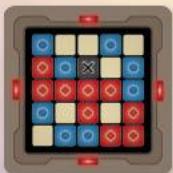

关键牌上的方格逐一对应着桌面网格排列的所有行动代号牌上的词语。蓝色方格对应着蓝色队伍必须猜出的词语(即蓝方线人)。红色方格对应着红色队伍必须猜出的词语(即红方线人)。灰白方格对应着不正确的中立词语(即旁观者),黑色方格对应着与红蓝双方都不相关的词语(即暗杀者)。
起始队伍

在关键牌的四周绘有亮色区域,该区域的颜色决定了本局游戏的起始队伍。成为起始队伍的一方在整局游戏中需要猜出9个词语,另一方只需要猜出8个词语。起始队伍的间谍头目将给出本局游戏的第一条线索。
线人牌
8张红方线人牌

1张双面线人牌
8张蓝方线人牌

将红方线人牌堆和蓝色线人牌堆分别放在自己队伍的间谍头目面前,这样有助于让每位玩家记住自己所属的队伍。


双面线人牌归属于起始队伍。当起始队伍决定后,将该牌翻至起始队伍颜色的那一面。在接下来的整局游戏中,双面线人牌的颜色都不会发生改变。
飞张旁观者牌
1张暗杀者牌


将所有的旁观者牌和暗杀者牌放在两名间谍头目之间便于拿取的
游戏概述
两名间谍头目都知道25张行动代号牌的秘密身份,而间谍下线只能通过行动代号牌来联络自己队伍的线人。
游戏过程中,每支队伍的间谍头目将轮流提供一条仅含一个词语的线索。这条线索可能关联多张行动代号牌上的词语。间谍下线需要根据自己间谍头目提供的线索联络到正确的线人。当有一名间谍下线指向某张行动代号牌时,间谍头目需要揭示它的秘密身份。如果的确属于该间谍下线队伍的线人,那么他(她)可以继续联络。否则,将直接进入对手的回合。率先联络到自己队伍所有线人的一方将获得游戏的胜利。
进行游戏
两支队伍轮流进行自己的回合。起始队伍由关键牌亮色区域的颜色决定。
提供线索
如果你是一名间谍头目,你需要提供一条仅含一个词语的线索,它最好和自己队伍多个线人所对应的行动代号牌上的词语相关。当你想好后,你可以附上一个关联数字一起说出,该数字表示目前桌面上有几张自己队伍线人所对应的行动代号牌与这条线索有关。
例如:你的两名线人所对应的行动代号牌上的词语是“坚果”和“柠檬”。因为二者都长在树上,所以你提供的线索可以是“树:2”。
你也可以提供关联数字为1的线索,像“杏仁:1”。但是尝试提供2或以上的关联数字会让游戏更加有趣。当你提供一条关联数字为4的线索时,你已经达成了一项很高的成就。
一个词语
你的线索只能包含一个词语,你也不允许给出其他的暗示。例如,你不允许说“它可能包含非常多的延伸意思”。实际上,一些行动代号牌上的词语本身就具有多种含义。你提供的线索也不能是桌面上可见的任何行动代号牌上的词语。但是在后续的回合中,一些行动代号牌可能会被覆盖,这时候你才可以提及那些被覆盖的词语。
联络线人
当间谍头目提供一条线索后,相应的间谍下线需要揣测具体的含义。如果存在多位间谍下线,他们可以互相讨论,但间谍头目需要始终保持缄默。当间谍下线得出最终的猜测后,他(她)只需要指向桌面的某张行动代号牌。
·如果那张牌对应着该间谍下线队伍的线人,那么间谍头目需要用相应颜色的线人牌将其覆盖。同时,该间谍下线获得再猜一次的机会。
·如果那张牌对应着一名旁观者,那么间谍头目需要用旁观者牌将其覆盖。然后,该间谍下线队伍的回合立即结束。
·如果那张牌对应着对方的线人,那么间谍头目需要用对方的线人牌将其覆盖。然后该间谍下线队伍的回合立即结束。(相当于帮助对方联络到一个线人)
·如果那张牌对应着一名暗杀者,那么间谍头目需要用暗杀者牌将其覆盖。然后,本局游戏结束。(联络到暗杀者的队伍输掉游戏)
提示:间谍头目在提供线索时,应该尽可能地保证不会错误引导自己的间谍下线联络到暗杀者。
猜测次数
每支队伍的间谍下线每回合必须做出一次猜词行动。任何错误的猜测都会立即结束自己队伍的回合。但是如果你猜对了,你可以再猜一次。
在任何时候,间谍下线都可以主动结束猜词行动,但你通常更希望猜出与间谍头目提供
的关联数字一样多的词语。有时候你甚至想进行一次额外的猜词行动:
例如:红色队伍提供的第一条线索是“树:2”。红方间谍下线决定猜“橘子”和“坚果”。她首先指向了“橘子”那张牌,但是很遗憾其秘密身份是一名旁观者,所以她没有机会再猜“坚果”了。
轮到蓝色队伍行动,他们成功猜出了两个词语。现在,又到红色队伍的回合。
红色队伍的间谍头目提供了“河:3”这条线索。红方的间谍下线首先断定“亚马逊”是一条河,所以她指向那张牌,结果正确。于是间谍头目用红方线人牌覆盖住“亚马逊”,同时红方的间谍下线可以再猜一次。一条河拥有河床,所以她指向“床”那张牌。很不错她又猜对了,又获得再猜一次的机会。
她不确定第三个与“河”有关的词语是什么。所以她回想起第一回合的线索,指向了“坚果”那张牌。非常幸运,“坚果”也是一名红方线人所对应的牌。现在,她已经根据河:3”这条线索成功猜出了3个词语,所以她得到了一次最终的猜测机会。她可以回过头继续寻找与“河”有关的词语,也可以调整路线寻找与“树”有关的词语。当然,她甚至可以主动放弃,将回合转交给蓝色队伍。
你只能获得一次额外的猜词行动。在上述例子中,红方的间谍下线被允许猜测4次,是因为间谍头目提供的关联数字是3。当红方的间谍下线主动放弃或猜错时,才会轮到蓝色队伍行动。
游戏流程
两名间谍头目轮流提供线索,每回合至少会覆盖一张行动代号牌。随着游戏的进行,猜词会变得越来越简单。
游戏结束
如果关键牌上一支队伍所有线人对应的行动代号牌都被覆盖,那么该队伍获得游戏胜利。
如果对方在他们的回合猜出了你们队伍的最后一个词语,也视作你们队伍获胜。
如果任何一名间谍下线联络到了暗杀者,游戏将提前结束。毫无疑问,联络到暗杀者的队伍输掉游戏。
下局游戏的初始设置
其他玩家也想扮演间谍头目?第二局游戏的初始设置非常简单。将行动代号牌上覆盖的线人牌全部放回相应的牌堆,然后将所有行动代号牌翻面就可以开始下局游戏了!

提供无效线素的惩罚
如果一名间谍头目提供了一条无效的线索,那么该队伍将立即结束他们的回合。与此同时,对方的间谍头目可以在提供线索前,免费将一张他们队伍的线人牌覆盖到他们队伍线人所对应的任意一张行动代号牌上。
但是如果没有玩家提议这条线索是无效的,游戏将默认该线索有效。
保持缄默
间谍头目被要求始终保持缄默。当你的间谍下线在考虑指向哪张牌时,你禁止触碰任何行动代号牌。当你的间谍下线指向一张牌后,你需要查看关键牌上的内容,然后用相应颜色的线人牌将其覆盖。无论你的间谍下线是否做出了正确选择,你都不能表露出任何暗示。
如果你是一名间谍下线,在猜测过程中你应该专注于桌面的卡牌,而不是用眼神和你的间谍头目交流,这会帮助你规避那些非语言类的暗示。
如果你获得的线索被严格限定为一个词语加一个数字,那么恭喜你!你的队伍已经掌握这款游戏的精髓了。
沙漏的作用
抱歉,差点忘记了。毕竟我们并不需要频繁地使用计时工具。
如果一名玩家思考的时间太长,任何玩家都可以翻转沙漏开始计时,并且告诉他(她)需要在沙漏漏完前做出选择。
当你陷入困境时,你也可以为自己使用沙漏。如果在沙漏漏完前,你也不能想出一条精妙的线索,那么你可以先为最难猜的词语提供线索,然后在对手的回合继续思考。
如果你更喜欢在严格的时间限制下进行游戏,你可以从codenamesgame.com下载我们的计时App。
有效的线素
我们测试过许多变体规则。一些玩家喜欢它们,但另一些玩家却喜欢其他规则。因此,我们建议你按照以下规则全部试玩一遍,再决定采用哪些规则。多次体验中文规则后,你也可以尝试原版的英文规则。
严格的规则
通常情况下,我们认为违反游戏精髓的线索都是无效的。
你的线索必须和卡牌上的词语有所关联。你不能使用词语的字或者位于桌面的坐标来构成线索。例如,“格兰”对于词语“英格兰”而言就不是一条有效的线索。你也不能为火车”,“救护车”和“吊车”提供一条“车:3”的线索(因为这三个词语中都包含了“车”字),也不能是“3:3”(因为这三个词语都位于桌面的第3行)。
然而……
当你使用文字和数字是为了表达词语的含义时,它们也被视作有效的线索。例如,你可以使用“镭:1”作为词语“射线”的线索。你也可以使用“8:3”作为“好运”,“数字”和“章鱼”的线索。
你不能使用关联数字作为你的线索。例如,“柑橘:8”对于“八卦”和“章鱼”而言就不是一条有效的线索。
你不能使用同音异义词作为你的线索。例如,“歧视”和“骑士”的发音一样,但从游戏精髓和中文用法的考虑,你不能使用“歧视”作为“骑士”的线索。
你必须使用本国语言进行游戏。如果你队伍的玩家想要使用其他语言,他(她)只能将其融入相应的短语中使用。例如,你不能使用“film”作为“美国”和“电影”的线索,但是你可以使用“好莱坞”。
你不能使用未被覆盖的词语的其他词性或衍生词来构成你的线索。在“打破”这张牌被覆盖前,你不能使用“破碎的”或“破碎”作为它的线索。此外,像“渔”作为“鱼”的衍生词也不能成为其线索。
你不能使用未被覆盖的复合词的一部分来构成你的线索。在“马蹄铁”这张牌被覆盖前,你不能使用“马”或“蹄铁”作为它的线索。
英文规则
在以上规则的基础上,英文规则还涉及同音异义词和拼写。
同音异义词和拼写
英文中有许多的同音异义词。例如,“Night”的发音听起来像“Knight”,但这两个词的含义截然不同。
一些发音相近但含义和拼写不同的词语被认为是不同的词语。所以,你不能使用“Night”作为与“Knight”有关的词语的线索。
一些拼写相同但发音和含义不同的词语被认为是相同的词语。例如,你可以使用“Bow”作为“Theater”和“Ship”的线索,因为“Bow”既有“鞠躬”又有“船首”的意思。同样地,你也可以使用“Bow”作为与“Archery”有关的词语的线索,即使有时候“Bow”的发音或含义不尽相同。
你可以直接拼写出你的线索。例如,如果你想让队友成功指向“Theater”和“String”这两张牌,你可以使用“Bow”作为线索,但不是直接提供发音而是通过拼写的方式像“B-o-w”。如果你想让队友指向“Night”这张牌,你也可以通过拼写“K-n-i-g-h-f”来提供线索。但是,你不能使用“T-h-e-a-t-r-e”作为“Theater”的线索,因为“Theatre”和“Theater”的拼写方式明显不同。
如果队友希望你通过拼写的方式提供线索,你可以这么做。甚至,当你的拼写能力不够好时,你还可以向对方的间谍头目寻求帮助。
提示:通过拼写来提供线索并不只适用于同音异义词。当游戏环境十分嘈杂或者一些玩家带有浓重的口音时,它也是非常有用的。
别太严格
本质上,“England”和“Island”都属于复合词。就目前而言,“Island”可以视作“England”的有效线索,甚至“land”也可以。因此,当有玩家提议你不能使用“Sparrow”作为“Row”的有效线索时,他(她)纯属在捣乱。
如果对方的间谍头目允许,有些线索也是有效的。如果你不确定自己提供的线索是否有效,你可以先行询问对方的间谍头目。(注意小声商量,不要让其他玩家听见)
灵活的规则
有时候你必须严格判断一些线索是否有效,但不同玩家的判断依据不同。换言之,有些玩家更喜欢灵活地变动游戏规则。
专有名词
如果玩家允许,专有名词也经常被视作有效的线索。“东风”是一条有效的线索,但是你可能需要表达清楚它指的是东风“导弹”还是东风“汽车”。如果玩家同意将包含多个词的专有名词视作一个词语,那么像“三个火枪手”这种书名/标题类的线索也是有效的。即使你不允许包含多个词的专有名词,当碰到“纽约”这种地名类的专有名词时,你可能不得不放宽限制。
但是,间谍头目不允许自己创造专有名词,即使它本身是真实合理的。例如,你不能使用人名“华官司”作为“中国”和“律师”的有效线索。
缩略词
理论上,“CIA”不是一个词,但它可能是条不错的线索。你可以与其他玩家协商是否允许像“UK”,“LOL”和“PhD”等常见的缩略词作为有效的线索,即使它们本质上是一些缩略词。其他的像“Laser”,“Radar”和“Sonar”等通常也会被玩家视作有效的线索。
同音异意词
一些玩家倾向于自愿使用同音异义词。在这种情况下,为了充分享受游戏的乐趣,你可以使用“歧视”作为与“骑士”有关的词语的线索。
押韵词
与词语关联的押韵词通常也被认为是有效的。例如,你可以使用“池塘”作为“回廊”的有效线索,因为它们都拥有一个常见的尾韵。但是“池塘“不能作为“食堂“的有效线索,因为它们最大的共同点是发音相近。
一些玩家喜欢使用各种押韵词。如果你被允许的话,你需要记住你不能告诉其他玩家你是通过押韵词的方式提供线索的,只能让你的间谍下线自己主动发觉。
英文规则
在以上规则的基础上,英文规则还涉及复合词和押韵词。
复合词
英文中复合词的构成有三种方式。像"Greenhouse"由一个词构成,"Pack rat"由两个词构成,而"Mother-in-law"则是带有连字符的多个词。理论上,只有"Greenhouse"属于仅含一个词的线索。你也可以人为地允许任何复合词,但是规则中决不允许你自己创造复合词。例如,你不能使用"Lunar squid"作为"Moon"和"Octopus"的有效线索。
押韵词
与词语关联的押韵词通常也被认为是有效的。例如,你可以使用"Snail“作为“Mail"的有效线索,因为它们都拥有一个常见的尾韵。“Snail"也可以作为"Whale"的有效线索,因为它们都属于动物。但是"Snail"不能作为"Scale"的有效线索,因为它们主要是发音相近。(当然,如果你的队友中有人从事"WeightSnail"的工作,这会是条绝妙的线索)
一些玩家喜欢使用各种押韵词。如果你被允许的话,你需要记住你不能告诉其他玩家你是通过押韵词的方式提供线索的,只能让你的间谍下线自己主动发觉。
进阶规则:0
你可以使用“0“作为有效线索的一部分,例如"Feathers:0"。这意味着你的所有线人所对应的词语都与"Feather“无关。
如果“0“作为线索的关联数字,那么猜测次数的规则对其无效。间谍下线可以猜测任意次数,但至少一次。
如果你不理解这条规则的用意,别担心。你将在游戏中深刻体会到这点。
进阶规则:无眼
有时候你可能因为多个回合的累积,有不少已知的线索但尚未猜出相应的词语。这时候,如果你想让队友猜出更多的词语,你可以使用无限作为关联数字。例如,“Feather:无限”。
这条规则的缺点在于你的队友不知道有多少词语和当前的线索有关。但优势也很明显,你的队友可以猜测任意次数。
进阶规则:团队竞技
有时候你可能因为多个回合的累积,有不少已知的线索但尚未猜出相应的词语。
这时候,如果你想一口气挽回局势,或者势如破竹的拿下这一局,你可以使用任意数字作为关联数字。
例如:在之前的游戏中,关于“动物:2”你只猜对了1个,你可以在这次的提示"水果:1"中使用任意数字。
这条规则的缺点在于你的队友不知道你是否使用了这条规则,因此不能确定场上有多少词语和当前的线索有关。这对团队默契度有了更大的要求。但优点也很明显,这可以帮助落后的队伍追上游戏进程,使游戏更具竞技性。
2人游戏
如果只有两名玩家参与游戏,那么你们可以同属一队。2人游戏的变体规则和标准游戏规则一样,只是缺少竞技性。你们可以虚拟一支队伍,并尝试让自己队伍获得更高的分数。
2人游戏的初始设置没有任何变化。一名玩家扮演间谍头目,其他人扮演间谍下线。另一支队伍是虚拟的,但是你仍需要为其准备相应的线人牌。你所在的队伍作为起始队伍,抽取一张关键牌后按照标准游戏规则进行游戏。
同样地,试图规避对方的线人和暗杀者。
每当虚拟队伍的回合,间谍头目必须替代对方将一张他们的线人牌覆盖到相应的行动代号牌上。间谍头目可以自行选择覆盖哪张行动代号牌,这里可能会体现出一些策略性。
如果你的队伍联络到暗杀者或者对方的所有线人,那么你们将输掉游戏,也不会获得任何分数。
如果你的队伍赢了,你们可以根据对方线人牌堆剩余的卡牌数量,获得相同的分数。
8 丧心病狂的外挂者!
7 在你面前没有不可能。
6 Wow, 还能说什么!
5 欢迎加入军情六处。
4 简单,绝密文件已到手!
3 观察力和逻辑的精妙配合。
2 表现不错,期待你的进步。
1好吧,不管怎么说还是赢了。
注意:你们队伍的分数取决于你们能在几个回合内赢得游戏,以及因为失误你们帮助对方联络到的线人数量。
3人游戏
如果只有三名玩家参与游戏,你们可以像2人游戏一样同属一支队伍。当然,如果你们想增加一些竞技性,也可以让其中两名玩家分别扮演红蓝队伍的间谍头目,而第三名玩家扮演他们共享的间谍下线。
初始设置和游戏规则都与标准游戏一样,最大的区别在于原本隶属于一支队伍的间谍下线现在为两支队伍工作了。(就像现实生活中的双面间谍!)
更多明变体搜则调访问:www.codenamesgame.com

一刻馆(One Moment Games)是由
北京桌游行业领先人士A.T.zhou& Chesterwoo &Mike Lei创立的桌游公司。
公司集出版,O20售卖,体验为一体,覆盖桌游行业的各方向,致力于在中国推广正版桌游与战棋文化,以及扶植中国原创桌游设计师在国际市场上取得成绩。公司产品拥有大中华区代理权,分销体系可以覆盖大陆,台湾,香港,澳门,在中国大陆拥有1家自营店,17家加盟店(线下).3家网络线上合作店,台湾6家合作分销店,香港1家。产品在全国100多家桌游的,书店,玩具店上架销售。


CGE是国际知名出版社,来自捷克。
在10年的发展历程中,他们一直充满活力和创造力。他们坚持发行捷克本土优秀设计师的作品,并帮助作品走向国际,以VlaadaChvátil为主的捷克设计师群体是令人赞叹,甚至是令人惊讶的。
一刻馆正式成为CGE大中华区合作伙伴会在在未来的几年里,
为大陆、台湾、香港和澳门的玩家不断引I进CGE的汉化版本和英文原版作品。
一刻馆很高兴能够为玩家群体、社区贡献一份力量,
也欢迎更多商家合作推进CGE在大中华区的普及,让更多玩家了解并喜欢CGE的作品。
游戏设计师:Vlaada Chvátil
插画师 Tomáš Kučerovský
平面设计: Filip Murmak 鸭子君
中文汉化:田方舟天凌
CG3
Czech Games Edition
© Czech Games Edition
www.CzechGames.com
下载 Markdowncodenames-rules-en.md
VLAADA CHVÁTIL
CODENAMES
TOP SECRET
WORD GAME
rules overview video

SETUP
Players split up into two teams of similar size and skill. You need at least four players (two teams of two) for a standard game. Variants for two or three players can be found on the back page.
Each team chooses one player to be their spymaster. Both spymasters sit on the same side of the table. The other players sit across from their spymasters. They are field operatives.
Randomly choose 25 codenames and place them on the table in a 5-by-5 grid.
Note: While shuffling the codename cards, be sure to flip over half the deck once in a while. This will mix the words more thoroughly.

THE KEY
Each game has one key that reveals the secret identities of the cards on the table. The spymasters should choose the key card randomly and slide it into the stand between them. Any side can be up. Don't think about it. Just slide it into the stand. And don't let the field operatives see it.


The key corresponds to the grid on the table. Blue squares correspond to words that Blue Team must guess (blue agents). Red squares correspond to words that Red Team must guess (red agents). Pale squares are innocent bystanders, and the black square is an assassin who should never be contacted at all!
STARTING TEAM

The four lights around the edge of the key card indicate which team starts. The starting team has 9 words to guess. The other team has 8. The starting team will give the first clue of the game.
AGENT CARDS
8 red agents

8 blue agents

The red agent cards go in a stack in front of the red spymaster. The blue agent cards should be in front of the blue spymaster. This helps everyone remember which team they are on.
1 double agent


The double agent belongs to whichever team starts. Flip it to that team's color. It will be one of that team's agent cards for the duration of the game.
7 innocent bystanders
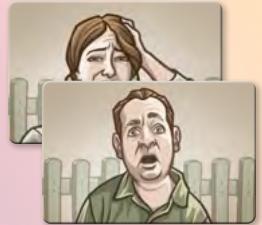
1 assassin

The innocent bystander cards and the assassin should be kept in between, where both spymasters can reach them easily.
GAME OVERVIEW
Spymasters know the secret identities of 25 agents. Their teammates know the agents only by their codenames.
Spymasters take turns giving one-word clues. A clue may relate to multiple words on the table. The field operatives try to guess which words their spymaster meant. When a field operative touches a word, the spymaster reveals its secret identity. If the field operatives guess correctly, they may continue guessing, until they run out of ideas for the given clue or until they hit a wrong person. Then it is the other team's turn to give a clue and guess. The first team to contact all their agents wins the game.
GAME PLAY
Teams take turns. The starting team is indicated by the 4 lights on the edges of the key card.
GIVING A CLUE
If you are the spymaster, you are trying to think of a one-word clue that relates to some of the words your team is trying to guess. When you think you have a good clue, you say it. You also say one number, which tells your teammates how many codenames are related to your clue.
Example: Two of your words are NUT and BARK. Both of these grow on trees, so you say tree: 2.
You are allowed to give a clue for only one word (cashew: 1) but it's fun to try for two or more. Getting four words with one clue is a big accomplishment.
One Word
Your clue must be only one word. You are not allowed to give extra hints. For example, don't say, "This may be a bit of a stretch..." You are playing Codenames. It's always a bit of a stretch.
Your clue cannot be any of the codenames visible on the table. On later turns, some codenames will be covered up, so a clue that is not legal now might be legal later.
MAKING CONTACT
When the spymaster gives a clue, his or her field operatives try to figure out what it means. They can debate it amongst themselves, but the spymaster must keep a straight face. The operatives indicate their official guess when one of them touches one of the codenames on the table.
If the field operative touches a card belonging to his or her team, the spymaster covers the word with an agent card in that color. The operatives get another guess (but not another clue).
If the field operative touches an innocent bystander, the spymaster covers it with an innocent bystander card. This ends the turn.
If the field operative touches a card belonging to the other team, the word is covered by one of the other team's agent cards. This ends the turn. (And it helps the other team.)
If the field operative touches the assassin, the word is covered by the assassin card. This ends the game! The team that contacted the assassin loses.
Tip: Before saying your clue out loud, make sure it doesn't relate to the assassin.
Number of Guesses
The field operatives must always make at least one guess. Any wrong guess ends the turn immediately, but if the field operatives guess a word of their team's color, they can keep guessing.
You can stop guessing at any time, but usually you want to guess as many words as the spymaster said. Sometimes you might even want to guess one more:
Example: Red Team's first clue was tree: 2. The red operative wanted to guess ORANGE and NUT.
She guessed ORANGE first. That was an innocent bystander, so she did not get a chance to guess NUT.
Blue Team took a turn and correctly guessed two words. Now it is Red Team's turn again.
The red spymaster says river: 3. The red operative is pretty sure the AMAZON is a river, so she touches that card. The spymaster covers it with a red agent card, so she gets to go again. A river has a BED, so she touches that codename. It's also red, so she can go again.
She's not sure of the third river word. She picks NUT. This has nothing to do with river. She is guessing a word from the previous clue.
NUT is a red word. The operative has made 3 correct guesses for the clue river: 3. She is allowed one final guess. She can try to find the third river word, or she can try to find the other tree word. Or she can stop at three and let Blue Team have a turn.
You are allowed only one extra guess. In the example above, the red operative would be allowed 4 guesses because her spymaster said the number 3. When the field operatives say they are done guessing (or when they guess wrong) it is the other team's turn.
GAME FLOW
Spymasters take turns giving clues. After a spymaster gives a clue, his or her team starts guessing. Their turn ends when they guess wrong, when they decide to stop, or when they have made the maximum number of guesses for that clue. Then it is the other team's turn.
ENDING THE GAME
The game ends when one team has all their words covered. That team wins.
It is possible to win on the other team's turn if they guess your last word.
The game can end early if a field operative makes contact with the assassin. That operative's team loses.
Setup for the Next Game
Do other people want a chance to be spymasters? Setup for the second game is easy. Remove the cards covering the codenames and put them back in their stacks. Now just flip over the 25 codenames, and you're ready to go!

PENALTY FOR INVALID CLUES
If a spymaster gives an invalid clue, the team's turn ends immediately. As an additional penalty, the other team's spymaster may cover one of his or her words with an agent card before giving the next clue.
But if no one notices that a clue is invalid, it counts as valid.
KEEPING A STRAIGHT FACE
The spymaster is expected to keep a straight face. Do not reach for any card while your teammates are considering the words. When a teammate touches a word, consult the key card and cover the word with the card of the corresponding color. When a teammate chooses a word of the correct color, you should act as though it was exactly the word you meant, even if it wasn't.
If you are a field operative, you should focus on the table when you are making your guesses. Do not make eye contact with the spymaster while you are guessing. This will help you avoid nonverbal cues.
When your information is strictly limited to what can be conveyed with one word and one number, you are playing in the spirit of the game.
WHAT'S THE TIMER FOR?
Sorry. We almost forgot. You see, we don't use the sand timer very often.
If a player is thinking too long, any player can flip the sand timer and ask the slow player to make a decision before time runs out.
If you are having trouble, you can even use the sand timer on yourself. If you can't find a good clue before time runs out, just give a clue for your hardest word and keep thinking while the other team plays.
If you prefer to play with strict time limits, you can download our timer app at codenamesgame.com.
VALID CLUES
We playtested various rules. Some groups like the rules one way. Some like the rules another way.
You should experiment to find out what your group likes.
FIRM RULES
Some clues are invalid because they violate the spirit of the game.
Your clue must be about the meaning of the words. You can't use your clue to talk about the letters in a word or its position on the table. Gland is not a valid clue for ENGLAND. You can't tie BUG, BED, and BOW together with a clue like b: 3 nor with a clue like three: 3. However ...
Letters and numbers are valid clues, as long as they refer to meanings. You can use X: 1 as a clue for RAY. You can use eight: 3 as a clue for BALL, FIGURE, and OCTOPUS.
The number you say after your clue can't be used as a clue. Citrus: 8 is not a valid clue for LEMON and OCTOPUS.
You must play in English. A foreign word is allowed only if the players in your group would use it in an English sentence. For example, you can't use Apfe/ as a clue for APPLE and BERLIN, but you can use strudel.
You can't say any form of a visible word on the table. Until BREAK is covered up by a card, you can't say break, broken, breakage, or breakdown.
You can't say part of a compound word on the table. Until HORSESHOE is covered up, you can't say horse, shoe, unhorsed, or snowshoe.
HOMONYMS & SPELLING
English has many homonyms and homophones. E. g. night sounds like knight, but these two words don't mean the same thing.
Same-sounding words with different meanings and different spellings are considered different words. So you can't give knight-related clues for NIGHT.
Words that are spelled the same are considered the same even though they might have different pronunciations and meanings. For example, actors take a bow and the bow is part of a ship, so you could use bow as a clue for THEATER and SHIP. You could also use it as a clue for archery-related things, even though that bow is pronounced differently.
You are allowed to spell out your clue. For example, if you want your teammates to guess THEATER and STRING, you can spell out b-o-w without committing to a pronunciation. You can give the clue k-n-i-g-h-t even when NIGHT is one of the codenames on the table. (But you can't use t-h-e-a-t-r-e when THEATER is on the table. Theatre and theater are different forms of the same word.)
You should spell out your clue if someone asks. If you aren't that strong on spelling, ask the opposing spymaster for help.
Tip: Spelling is not just for homonyms. It's also useful when the room is noisy or when the players have very different accents.
DON'T BE TOO STRICT
England and island were originally compound words, but in this century, island is a valid clue for ENGLAND. Even land is a valid clue for ENGLAND. And anybody who says you can't say sparrow when ROW is on the table is just trying to cause trouble.
If the opposing spymaster allows it, the clue is valid. If you aren't sure, ask your opponent. (Quietly, so the others can't hear.)
FLEXIBLE RULES
Sometimes you have to make judgment calls about what is valid and what is not. Different groups may prefer to play the game differently.
Compound Words
English has three ways to write a compound word. Greenhouse is one word. Pack rat is two words. Mother-in-law is hyphenated. Technically, only greenhouse can be a one-word clue.
You can decide to allow any compound words. However, in no case should a player be allowed to invent compound words. Lunar squid is not a valid clue for MOON and OCTOPUS.
Proper Names
Proper names are always valid clues if they follow the other rules. George is a valid clue, but you might want to specify whether you mean George Washington or George W. Bush. Your group can agree to count proper names as one word. This would also allow titles such as The Three Musketeers. Even if you don't allow multiword proper names, you might want to make an exception for place names like New York.
Spymasters should not be allowed to make up names, not even names that turn out to be real. Lily X. Rockne is not a valid clue for ROSE, RAY, and MARBLE.
Some people prefer to allow a more liberal use of homonyms. You can allow knight to be a clue for night-related things if that makes the game more fun for you.
Acronyms and Abbreviations
Rhymes
Technically, C/A is not one word. But it is a great clue. You can decide to allow common abbreviations like UK, lol, and PhD. And words like laser, radar, and sonar are always allowed, even though they originated as acronyms.
Homonyms
Rhymes are always valid when they refer to meanings. Snail is a valid clue for MAIL because this rhyme is a common phrase. Snai/ is also a valid clue for WHALE because they are both animals. Snail is not a valid clue for SCALE because their main association is through the sound of the words. (If someone in your group has a job weighing snails, however, this clue is perfectly fine.)
You are allowed to use O as the number part of your clue. For example, feathers: O means, "None of our words relate to feathers."
EXPERT CLUE: ZERO
Some people like to allow any kind of rhyming clue. If you decide to allow this, just remember that you aren't allowed to indicate you are giving a rhyming clue. Your operatives will have to figure that out for themselves.
If you're not sure why this is useful, don't worry. You'll figure it out.
If O is the number, the usual limit on guesses does not apply. Field operatives can guess as many words as they want. They still must guess at least one word.
EXPERT CLUE: UNLIMITED
Sometimes you may have multiple unguessed words related to clues from the previous rounds. If you want your team to guess more than one of them, you may say unlimited instead of a number. For example feathers: unlimited.
The disadvantage is that the field operatives do not know how many words are related to the new clue. The advantage is that they may guess as many words as they want.

WITH FEWER PLAYERS
Two-Player Game
If there are only two of you, you can play on the same team. This two-player variant also works for larger groups of people who don't feel like competing against each other. You will try to get a high score against a simulated opponent.
Set up the game as usual. One player will be the spymaster and the rest will be field operatives. The other team has no players, but you still need their stack of agent cards.
Your team should go first, so be sure to pick a key card that makes you the starting team.
Play your turns as usual. Try to avoid enemy agents and the assassin.
The spymaster simulates the enemy team by covering up 1 of their words each time they get a turn. The spymaster gets to choose which word is covered, so there is a bit of strategy here.
If your team contacts the assassin, or if all the enemy agents are contacted, you lose. There is no score.
If your team wins, give yourselves a score based on how many agent cards are still left in the enemy's stack.
Note: Your score will be determined by how many turns you needed and also by how many enemy agents you contacted accidentally.
That is ... difficult to believe.
Mission impossible.
Wow!
5MI6 will be giving you a call.
Top secret clearance.
3 Your watches are synchronized.
Okay. But you can do better.
Well, a win is a win, right?
Three-Player Game
Three players who want to be on the same team can play as described above. If two players want to compete against each other, they can be spymasters and the third player can be their operative.
Setup and game play are as usual, except that the single field operative is working for both sides. (Just like spies in real life!) The winning spymaster is determined in the usual way. The field operative tries to do a good job for both sides.
For online play and other game info, please visit: www.codenamesgame.com
TRY CODENAMES DUET

Codenames Duet is a cooperative version of Codenames specifically designed for small numbers of players. Double-sided key cards allow all players to be spymasters simultaneously! (Also, you get 400 new words.)
A Game by Vlaada Chvátil Illustration: Tomáš Kučerovský Graphic Design: Filip Murmak Translation: Jason Holt
Special thanks to: our spouses and children, Brno Board Game Club, Paul and
his friends, Jason and his family, Laadinek and his game club, Dita and STOH gaming
club, and all those good people at Czechgaming, Gathering of Friends, MisCon,
Herní víkend, Severské hraní, Stahleck, UK Games Expo, and other gaming events.
The clever clues you found during playtesting were truly inspiring.
CG3 Czech Games Edition
© Czech Games Edition July 2015 www.CzechGames.com
下载 Markdown