rules_zh_黄金时代_3993.md
THE GOLDEN AGES
LUIGI FERRINI
ARTWORK ALEXANDRE ROCHE
黃金時代 中文規則書 翻譯/排版:小柴
你能在人類歷史的發展過程中成功演進你的文明並打敗你的對手嗎?
遊戲配件


1個廣場

1個遊戲圖板

25張文明卡
分成4個牌庫
16個光榮板塊

10張未來科技卡
17個陸地板塊


100個錢幣
1 張貼紙
16張奇蹟卡
分成4個牌庫

9 張歷史審判卡
4個玩家顏色各拿

24張建築卡
分成4個牌庫
1 本說明書
1 張玩家幫助卡

1個玩家圖板

3個殖民者


1個計分標記
16個科技板塊


1個首都
(其中一面要貼上貼紙,代表不啟動/跳過的那面)

12個方塊
遊戲設置
① 把遊戲圖板及廣場放到場中央。
② 把陸地板塊按尺寸分類,並把它們正面朝下放到遊戲圖板旁。把正方形的陸地板塊放到遊戲圖板中央。由玩家決定方向(或者隨機決定)。
註記:雖然遊戲中的板塊可以組成我們世界「正確」的地圖,遊戲中可以不必這麼做!
③ 把建築卡按照時期分類(Ⅰ、Ⅰ、Ⅰ、Ⅰ、Ⅰ),並把它們分成四個牌庫正面朝下放到遊戲圖板旁。
註記:3人遊戲時,從遊戲移除所有標有「4+」的建築卡。2人遊戲時,從遊戲移除所有標有「3+」及「4+」的建築卡。
4 把奇蹟卡按照時期分類(Ⅰ、Ⅰ、Ⅰ、Ⅰ、ⅠV),並把它們分成四個牌庫正面朝下放到遊戲圖板旁。
5 把文明卡按照時期分類(Ⅰ、Ⅱ、Ⅲ、Ⅳ),並把它們分成四個牌庫正面朝下放到遊戲圖板旁。
⑥ 洗混所有的歷史審判卡並隨機抽五張卡片,把這些卡片正面朝上放到遊戲圖板旁。把剩餘的卡片放回遊戲盒中,遊戲中不會再用到。
⑦ 洗混所有的未來科技卡並把它們正面朝下放到遊戲圖板旁。
洗混光榮板塊並把它們正面朝下放到遊戲圖板旁。

把錢幣放到遊戲圖板旁,組成一般供應區。
10 每個玩家挑選一種顏色,並拿取對應顏色的配件:玩家圖板、科技板塊、首都、殖民者、方塊,以及計分標記

11 每個玩家拿取3元,並把錢放到他玩家圖板的錢幣區。玩家擁有的金錢數量是公開資訊。

12 每個玩家拿取4張文明卡(每個時期1張),以及1張未來科技卡,並把這些卡片正面朝下放到他的面前,不要讓其他玩家看到。把所有未使用的文明卡及未來科技卡放回遊戲盒中,不要察看卡片內容。
· 計分標記放在遊戲圖板上計分軌「O」的位置。

- 玩家把玩家圖板放在他們面前(見第2頁玩家圖板設置的細節)。


見第2頁了解玩家圖板設置
玩家圖板
玩家圖板是你遊戲體驗的核心,它會顯示所有可以開放給你使用的科技,包含建築區、入侵軌,以及開放行動的總覽。
玩家圖板設置
1、把科技板塊放到你玩家圖板上對應的區域。
2、把7個方塊放到科技板塊上指定的方塊區,剩餘的5個方塊放到玩家圖板的供應區。
建築區

你可以在這裡建造你的建築。一開始你只會有一個開放的建築區,但是當你發展「書寫」及「建築」你可以解鎖附加建築區。
2
方塊區
1
3
1
3
3
1
5科技板塊
5 $=$
5
2
5
3

8
8
3
8
3

8 2

12
→ +

12
12
2
2

12
1
4
3 5 8 12
D /
這個區塊顯示所有每個時期的階段 C,你可以執行的所有行動總覽。這裡分成兩組:需要一個殖民者的行動,以及不須殖民者就能執行的行動。
輪子
開放的行動
你可以在地圖上移動殖民者最多1步。
四輪馬車
火箭技術
你可以在地圖上移動殖民者最多2步。(輪子被淘汰了)
航空技術
鐵路
你可以在地圖上移動殖民者最多3步。(四輪馬車被淘汰了)
你可以在地圖上把殖民者移動到任何區域。(鐵路被淘汰了)
當你發展這個科技時,你每控制一個寶石符號就獲得3分。你可以不用殖民者就能攻擊地圖上的任何區域。攻擊後,你可以在被攻擊的區域建造一個城市。




打獵
每次你控制一個獵物符號,你就可以獲得1元。
農業
每次你控制一個小麥符號,你就可以獲得
建築
起始科技
你可以使用編號3的建築區。你不需要發展「書寫」來使用這個區域。
醫學
科技板塊
每次你控制一個小麥符號,你就可以獲得3元。(農業被淘汰了)
遺傳學
當你發展這個科技時,你每控制一個小麥符號就獲得2分。你執行建築師行動時不需要使用一個殖民者。


生火
你可以使用編號1的建築區。
冶金術

每次你控制一個石頭符號,你就可以獲得1元。
建造
當發現一個城市時,
你必須放置2個方塊。
(你不能選擇只放1個)
工程學

每次你控制一個石頭符號,你就可以獲得3元。(冶金術被淘汰了)
電腦科學


當你發展這個科技時,你每控制一個石頭符號就獲得2分。每次你的其中一個殖民者到廣場時,你獲得額外的2分。

入侵軌
每次你想要攻擊其他玩家時,你將從這一軌最左邊開放的位置放置一個光榮板塊。紅色的數字代表執行攻擊時你必須支付的金錢。
交易
每次你放置一個方塊到地圖上時獲得1元。
書寫
你可以使用編號2的建築區。
貨幣
每次你控制一個寶石符號,你就可以獲得2元。
商業
每次你放置一個方塊到地圖上時獲得2元。(交易被淘汰了)
經濟
當你發展這個科技時,地圖上你每有一個方塊就獲得1分。每次你控制一個寶石符號,你就可以獲得2元。(貨幣被淘汰了)
遊戲進行
每一輪代表人類歷史的不同時期。
遊戲進行四個時期,每個時期進行五個階段:
A、時期設置
B、擴展地圖
C、玩家行動
D、時期結束
E、準備下個時期
A、時期設置
每個時期一開始,執行以下步驟:
1、翻開所有當時期的奇蹟卡,並把這些卡片正面朝上放到遊戲圖板旁。
2、翻開當時期和玩家人數相等數量的建築卡,並把這些卡片正面朝上放到遊戲圖板旁。

範例:3人遊戲時,翻開3張卡片。其它的牌庫會在對應的時期翻開。
3、由起始玩家開始,並按照順時針方向,每個玩家翻開他當時期的文明卡,並決定他是否保留上一輪的文明卡,或者選擇保留當輪的文明卡,接著他把另一張文明卡棄掉。註記:第一輪時忽略這個步驟;每個玩家就只是翻開他的第一張文明卡。
重要:卡片提供的立即性效果(閃電符號)必須在卡片挑選後立即啟動,而且即使這張卡片下一個時期保留也只能啟動一次。然而永久效果可以持續產生效果,直到這張文明卡被棄掉為止。
4、文明卡上有最低數字(卡片右上角)的玩家成為當時期的起始玩家。

B、擴展地圖
由起始玩家開始,並按照順時針方向,每個玩家執行以下步驟:
1、放置1個陸地板塊
玩家抽一個陸地板塊,並且把它放到遊戲圖板上。
重要:第一個時期時,你必須放置一個有三個方塊大小的陸地板塊。接下來的時期,你必須放置一個有兩個方塊大小的陸地板塊。
放置陸地板塊的規則:
- 每個新放置的陸地板塊必須與已經放置的陸地板塊相鄰。
·每個陸地板塊必須放在格線內。
• 陸地板塊可以旋轉,並以任意方向放置。
- 必須要遵守地形的結構(陸地碰觸陸地、海洋碰觸海洋)。地圖的邊緣不受上述影響。這意指如果把一個海洋的邊放在地圖邊緣,這個板塊陸地的那一邊可能會在地圖上另一個對應的邊緣。
- 一個陸地板塊不能疊放到另一個陸地板塊之上(包含正方形陸地板塊)。
- 一個陸地板塊可以覆蓋在地圖上所印的島嶼上。
- 被覆蓋區域上的殖民者回到各自的首都。
2、放置/移除首都
第一個時期時,玩家必須把他的首都放到他剛放置的陸地板塊上其中一個區塊中,並把啟動的那面朝上(沒有貼紙的那面)。接著他從供應區把3個殖民者放到這個方塊。他把他的首都放在這個區塊的中央,覆蓋資源符號(因此讓這個資源不開放給所有玩家,包含他自己!)。接下來的每個時期,每個玩家可以把他的首都移動到他最近一次放置的陸地板塊上。當有玩家這麼做時,他必須把原本首都上的殖民者都移動到新首都的區塊。
重要:玩家必須把首都放在剛放置的板塊,或者把首都留在原本的位置上。

範例:在這個時期,紅色玩家把他的首都放在板塊上(A)。第二時期,他把板塊放在圖板上(B),並把他的首都放在新放置的板塊上(C),覆蓋資源符號(石頭),因此讓這個符號不開放給所有玩家(每個玩家把這個資源視為不存在,直到這個首都移到其它地區為止)。紅色玩家接著必須把他所有的殖民者從前一個首都所在的地區移到新的地區(D)。
C、玩家行動
這個階段是每個時期的主要階段,由起始玩家開始,然後按照順時針方向,玩家輪到他的回合時必須執行一個行動,直到所有玩家開始一個黃金時代。
每個玩家輪到他的回合時,可以從八個行動中選擇一個行動。每個時期可以執行多次相同的行動(除了8、開始一個黃金時代以外,你只能執行這個行動一次)。
以下行動需要使用一個站立的殖民者:
1、探險家:移動一個殖民者,以及/或者建造一個城市
2、建築師:建造一個建築
3、藝術家:獲得3分
4、士兵:攻擊一個對手

1、探險家
這個行動有兩個不同的行動:a)移動一個殖民者以及/或者b)建造一個城市。你可以兩個都執行,或者只執行其中一個,但是你必須按照這個順序執行;你不能在建造一個城市之後移動一個殖民者。
a)移動一個殖民者

玩家選擇遊戲圖板上他其中一個站立的殖民者並把它在遊戲圖板上移動。
移動殖民者的規則:
· 一個殖民者只能注水平或垂直方向移動。
· 一個殖民者可以在陸地板塊上,以及遊戲圖板上印的地圖的任何區域移動(陸地或海洋)。
·一個殖民者可以進入、移動,並停在被任何玩家的殖民者、城市,以及/或者首都所佔據的區域。
· 遊戲一開始,一個殖民者最多可以移動一個區域。特定的科技(「四輪馬車」、「鐵路」,以及「航空技術」)可以增加移動區域數量。
· 一個殖民者可以從地圖的左邊或右邊離開,然後再從對應的另一邊出現。
- 可以選擇不移動一個殖民者。
如果移動之後,殖民者停在有一個資源符號(獵物、小麥、石頭,或者寶石)在上面的區域,而且他還沒有一個殖民者以及/或者城市在那裏,則他控制該符號。
重要:特定卡片以及科技上,一個寶石/石頭/獵物/小麥的符號有紅色的圈圈,這代表當你取得這些資源的控制權時,你會獲得金錢;這當你把一個殖民者移動到一個含有一個或兩個符號的區域,以及/或者把一個城市建造在那個區域時會發生。如果符號外圍就只是一個黑色的圈圈,這代表你控制一個資源;這意指你有一個殖民者或者城市已經在那個區域。相同資源的控制權甚至可以讓不同的玩家分享,例如2個殖民者以及1個不同玩家的城市。同一個區域裏只能有一個玩家的城市。請注意之前提的規則,當有一個首都在一個區塊時,它會完全覆蓋資源:沒有玩家可以取得該資源的控制權。

範例:藍色玩家在有一個石頭的區域上有一個城市。紅色玩家移動一個殖民者到相同的區域。兩個玩家現在都享有石頭的控制權。不過,如果紅色玩家想要建造城市在這個區域,他必須攻擊藍色玩家(見「4、士兵」的說明)。
以下行動不需要使用一個殖民者:
5、建造一個奇蹟
6、啟動一個建築或者一個奇蹟
7、發展一個科技
8、開始一個黃金時代

玩家根據已經發展的科技以及/或者擁有的卡片拿取金錢。
b) 建造一個城市

移動選擇的殖民者(或者沒有)之後,如果殖民者是站在一個沒有城市或首都的陸地區塊,該玩家可以在這個區域建造一個城市:他從供應區把一個方塊(或者兩個方塊,如果他有發展「建造」的話)放到該區域。如果玩家沒有足夠的方塊,他必須從地圖上任何一個地方拿取。
玩家每個放置的方塊可以獲得金錢。數量根據已經發展的科技以及/或者擁有的卡片而有所不同。
方塊與城市:你必須在這個規則中了解「方塊」以及「城市」的差異,以及玩家所做的事。一個「方塊」指的是實際在地圖上的木製方塊,或者你玩家圖板上的木製方塊。一個「城市」指的是地圖上由一個或兩個方塊組成的城市。
你只能把城市建造在陸地板塊上。禁止把城市建造在地圖印的島嶼上。
探險家行動結束後,玩家把使用過的殖民者放倒。
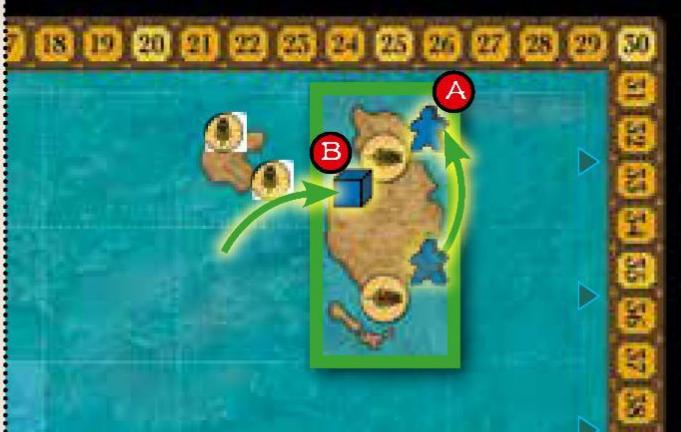
範例:藍色玩家移動一個殖民者到一個小麥符號(A)。因為他已經發展了「農業」,他獲得1元。接著他建造一個城市(B),多獲得1元(因為他有「」)。最後,他放倒這個殖民者。
2、建築師

玩家拿起遊戲圖板上他其中一個站立的殖民者,並把他放倒在廣場上。接著他從桌上拿起一張正面朝上的建築卡,並把這張卡放到他玩家圖板上一
個免費的建築區域。遊戲一開始每個玩家只能使用建築區域1。發展「書寫」以及「建築」可以解鎖額外的建築區域。
如果沒有空的建築區域,玩家必須從他的玩家圖板棄掉一個建築。該建築從遊戲中移除。遊戲中可以蓋重覆的建築。
建築卡說明
這張卡片會進場的時期
建築
能力

顯示至少需要多少玩家人數這張卡片才會進場
顯示這個能力何時進場(這裡的範例是當建築啟動時)
3、藝術家

玩家拿起遊戲圖板上他其中一個站立的殖民者,並把它放倒在廣場上。接著他獲得3分,移動他分數軌上的計分標記。
4、士兵

玩家拿起遊戲圖板上他其中一個站立的殖民者,並把它移動到地圖上有一個或多個對手殖民者的區域,或者移動到一個有對手城市的區域(首都不能被攻擊)。移動的規則和探險家相同。
移動後(或者不移動,玩家可以讓他的士兵停在同一區),該玩家支付他侵入軌最左邊區域顯示的金錢,並把錢放到一般供應區。
重要:每場遊戲玩家可以執行的士兵行動數量上限為4次。
對手的方塊放回該玩家的供應區。所有這個區域上對手的殖民者都回到他們自己的首都(如果殖民者還是站立的狀態,則保持站立)。
發起攻擊的玩家隨機拿取一個光榮板塊,並把它正面朝下放到他侵入軌的第一個空位。

範例:紅色玩家決定攻擊藍色玩家城市所在的區域(那裏有兩個方塊,因為藍色玩家已經發展過「建造」)。他移動他的殖民者,並支付8元,因為他在遊戲中已經攻擊過兩次。藍色玩家移除他的城市方塊,並把方塊放回他的供應區,而黃色玩家必須移除他站立的殖民者,並把這個殖民者放回到他的首都旁。
註記:如果有個玩家已經發展火箭技術,他不用移動一個站立的殖民者就能攻擊。

5、建造一個奇蹟
玩家選擇一個開放的奇蹟卡,支付卡片上顯示的費用,並把這張卡放到他的玩家圖板旁。有些文明卡會減少玩家建造奇蹟卡的花費。
建造奇蹟後,玩家立刻執行奇蹟卡上的立即效果(),如果有的話。
玩家可以建造的奇蹟卡數量沒有上限。
奇蹟卡說明
一般建造花費
立即行動玩家持有特定文明卡的花費(這裡的範例是腓尼基)

啟動能力(見第6頁的說明)
6、啟動一個建築或奇蹟

玩家選擇他其中一個有啟動能力()。的建築或奇蹟。執行卡片上顯示的能力並把這個卡翻到背面(以顯示這個能力這個時期已經使用過)。每張卡片的能能使用一次。
7、發展一個科技
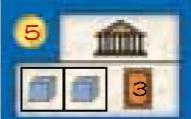
玩家選擇一個科技進行發展。他支付板塊上顯示的費用,並把這個板塊正面朝下放到他的玩家圖板旁。任何在板塊上的方塊放回玩區。新的科技效果立刻生效。
有些科技會讓之前的科技失效:當你發展新的科技時,你失去舊科技的能力。
Important:
重要:為了發展一個科技,同一排的前一個科技(以箭頭指示)必須已經發展過。

範例:為了發展「建造」,「冶金術」必須要先發展。
8、開始一個黃金時代

如果遊戲圖板上玩家已經沒有站立的殖民者,他可以開始一個黃金時代。這意指他跳過回合,而且這回合不再執行任何其它的行動。每次又輪到該玩家的回合時,他獲得2元。重要:該玩家在開始一個黃金時代的那個回合不會獲得任何金錢。
為了開始他的黃金時代,該玩家把他的首都翻到黃金時代那面(有貼貼紙的那面)。當時期第一個開始一個黃金時代的玩家選擇一張「歷史審判」卡,並把它放到廣場旁。
D、時期結束
當所有玩家都開始一個黃金時代,這個時期立刻結束。
例外:第四時期在有第一個玩家開始一個黃金時代後結束(見遊戲結束的說明)。
所有玩家根據廣場旁的「歷史審判卡」計分。
E、準備下一個時期
註記:第四個時期結束時跳過這個階段。
為了準備下個時期,按照以下步驟執行:
1、棄掉這個時期沒有建造的建築卡及奇蹟卡。棄掉廣場旁的歷史審判卡。把這些卡片放回遊戲盒中。
2、把所有首都翻到啟動的那一面(沒有貼紙那面)。
3、把所有在地圖上的殖民者轉成站立狀態,留在原地。
4、把所有在廣場上的殖民者拿起來,並把他們轉成站立狀態,放到各自玩家首都的區塊上。
遊戲結束
當有玩家在第四輪/時期時開始一個黃金時代,遊戲進行最後一個回合。除了該玩家以外的每個玩家還有最後一個行動。遊戲在觸發遊戲結束玩家的右手邊玩家結束他的回合後結束。挑選的歷史審判卡照常結算,然後遊戲結束。
遊戲結束時,每個玩家進行以下的計分:
· 金錢:每3元1分。
·發展的科技:玩家圖板旁科技板塊背面顯示的分數。
- 光榮板塊:玩家的侵入軌上光榮板塊的分數。
- 未來科技卡:每個玩家翻開有達成條件的未來科技卡並計分。
最高分的玩家獲勝,如果平手,則平手的玩家中地圖上有最多城市的玩家獲勝。如果還是平手,共享勝利。
This game would not have been created without the ideas and suggestions of many friends who have playtested over and over again the different versions of the prototype. In particular: Martina Mealli, Andrés J. Voicu, Paola Lamberti, Roberto Duca, Carmelo Andrea Lo Moro, Greta Tamosiunaite, Gino Lucrezi, Raffaele Prencipe, Emanuele Giungarelli, Giacomo Pantani, Lucia Batistoni, Stefano Fabiani, Daniele Fabiani, Leonardo Maggi, Fabio Favilli, Alessandro Lanzuisi and his many friends, Domenico Di Giorgio, Roberta Barletta, Sonia Rossi, Raffaele Perini, Stefano Parducci, Marco Sottani, Eleonora Gioli, Alessandro Mongelli, Sergio Roscini, Rinaldo Chiti, Pierfilippo Dionisio and many others too numerous to list.
Thank you all, I hope you enjoyed to test this game as I enjoyed to develop it!
符號說明
遊戲中所有的科技跟卡片有各種符號。這裡列出你必須了解,最重要的符號。你會在玩家幫助卡上找到所有卡片的總覽。


當你取得一個寶石/石頭/獵物/小麥符號的控制權:這發生在你放置一個城市/殖民者到地圖上有該資源符號的區域。見第4頁了解更多。


每個你控制的寶石/石頭/獵物/小麥符號:這指的是地圖上該種資源符號上有你的一個城市或一個殖民者。見第4頁了解更多。

獲得顯示的分數。

獲得顯示的金錢。

你購買一個物件時,可以減去顯示的金錢。

支付顯示的金錢。有可能會顯示○,在這種情況下,你免費獲得顯示的物件。

當你啟動這張卡時,你獲得顯示的獎勵。

遊戲結束時,你獲得顯示的獎勵。

你立刻執行這個行動一次。

一個方塊。

一個城市(可能由一個或兩個方塊組成)。

任何玩家的任何殖民者(包含你自己的殖民者)。

你的殖民者。



另一個玩家的殖民者/城市/首都。
銘謝
Quined Games would like to thank: spelgroep Phoenix, Olav Fakkeldij, Jeroen Hollander en Rafaël Theunis.
Game Design: Luigi Ferrini
Artwork: Alexandre Roche
Rules Booklet and Player Aid Rafael Theunis
Translator: Jeroen Hollander


文明卡
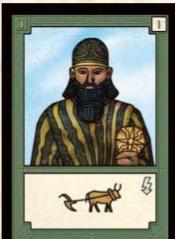


時期
巴比倫帝國
你立刻免費發展「農業」。你從你的玩家圖板上移除對應的科技板塊,並把它放到你的面前。
腓尼基
你立刻免費發展「書寫」。你從你的玩家圖板上移除對應的科技板塊,並把它放到你的面前。
埃及
你立刻免費發展
「冶金術」。你從你的玩家圖板上移除對應的科技板塊,並把它放到你的面前。
希臘
你可以免費建造一個奇蹟。這個能力在遊戲中只能使用一次。
波斯
你立刻免費發展「四輪馬車」。你從你的玩家圖板上移除對應的科技板塊,並把它放到你的面前。
羅馬帝國
你立刻獲得2元。當你執行「建築師」的行動時,你可以不必使用殖民者。
中國
當攻擊時你少付2元。你可以查看兩個光榮板塊,並保留其中一個,然後把另一個放回一般供應區。
時期

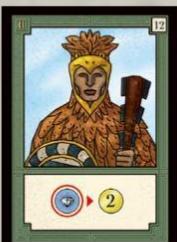


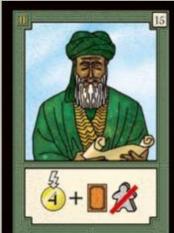

11
印加帝國
每次你取得一個小麥符號的控制權時,你獲得額外2元。
阿兹特克
每次你取得一個寶石符號的控制權時,你獲得額外2元
蒙古
每次你取得一個石頭符號的控制權時,你獲得額外2元。
法國
當你發動攻擊後,
你獲得4元。
阿拉伯
你立刻獲得4元。當你執行「建築師」的行動時,你可以不必使用殖民者。
拜占庭帝國
你立刻獲得5元。


時期
西班牙
每次你取得一個寶石符號的控制權時,你獲得額外3元。
土耳其
如果你已經發展「農業」,你可以免費發展「建築」。如果你已經有「建築」,你獲得6元。*
英國
如果你已經發展「書寫」,你可以免費發展「貨幣」。如果你已經有「貨幣」,你獲得6元。*
葡萄牙
你立刻獲得4元。如果你其中一個殖民者在移動時,至少經過圖板左邊或圖板右邊一次,你獲得3元。
普魯士
如果你已經發展「四輪馬車」,你可以免費發展「鐵路」。如果你已經有「鐵路」,你獲得6元。*
奥地利
如果你已經發展「冶金術」,你可以免費發展「建造」。如果你已經有「建造」,你獲得6元。*
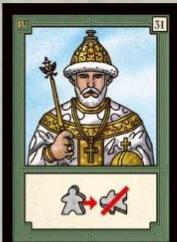


時期
IV
俄羅斯
當你把殖民者當作探險家使用時,不必把它們放倒。
日本
當發展科技時,你少付2元。你可以在一個行動中發展多個科技。
美國
每次你其中一個殖民者結束移動後,停在一個有其他對手殖民者、城市,或者首都的區域,你獲得4元。這發生在可能的攻擊之前。
歐盟
每次你的其中一個殖民者到廣場時,你獲得4元。
印度
你立刻選擇並免費發展最後一個欄位的科技(即使該科技前的科技還沒發展)。你不會獲得板塊正面顯示的分數,但你會獲得板塊背面的分數。
巴西
每次你取得一個寶石符號的控制權時,你獲得額外4元。

*這也在你的回合時生效。例如,你的回合時,如果你有普魯士,而且發展了「四輪馬車」,你也立刻發展「鐵路」!

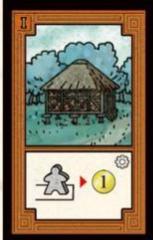
市場
(啟動)廣場上每個殖民者(任何玩家)可以讓你獲得1元。
圖書館
(啟動)你發展一個科技可以少付2元。
穀倉
(啟動)你地圖上每個站立的殖民者獲得1元。


銀行
(啟動) 你獲得4元。
大學
(啟動)你發展一個科技可以少付3元。
城牆
(永久)當有玩家攻擊你時,他必須多付3元。如果你有兩個城牆,該玩家必須多付6元。
建築卡


博物館
(啟動) 你獲得6元
天文台
(啟動)你發展一個科技可以少付5元。
工廠
(啟動)你可以重新啟動地圖上你其中一個放倒的殖民者。


電影院
(啟動)廣場上每個殖民者(任何玩家)可以讓你獲得1元。
實驗室
(啟動)你可以免費發展一個科技。
總部
(啟動) 地圖上每個你的城市及首都可以獲得 2 元。
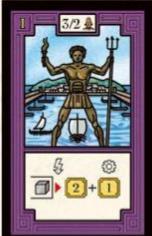


時期
競技場

花費:3元/如果你有腓尼基則為2元。
(立即)地圖上你的每個方塊獲得2分。
(啟動)你獲得1分
亞歷山大圖書館
花費:4元/如果你有中國則為3元。
(立即)你免費發展1個科技。
金字塔
花費:3元/如果你有埃及則為2元。
(立即) 每個你控制的石頭符號獲得 2 分。
(啟動) 你獲得 1 分

空中花園
花費:3元/如果你有巴比倫帝國則為3元。
(立即)每個你控制的小麥符號獲得2分。
(啟動) 你獲得 1 分


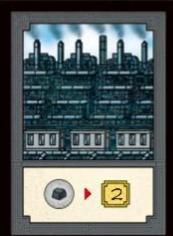
時期
聖母院
花費:6元/如果你有法國則為4元。
(啟動)把地圖上你任何數量放倒的殖民者拿到廣場上,或者,從廣場把殖民者放到你的首都。殖民者保持放倒的狀態。
聖索菲亞大教堂
花費:6元/如果你有拜占庭帝國則為4元。
(啟動)每次你建造一個城市時獲得2元(無論你使用一個或兩個方塊)。
薩邁拉大清真寺
萬里長城
花費:6元/如果你有阿拉伯則為4元。
(遊戲結束時)你玩家圖板上最後2欄每個發展的科技可以讓你獲得2分。
花費:8元/如果你有中國則為6元。
(永久) 每次有其他玩家執行攻擊行動時,你獲得3元。
時期
花費:14元/如果你有英國則為11元。
牛津大學
(立即)你免費發展2個科技。
凡爾賽宮
花費:6元。
(立即) 每個你控制的小麥符號可以獲得1分。


艾菲爾鐵塔

(立即)每個你控制的石頭符號可以獲得1分。
花費:6元。
大報恩寺
花費:6元/如果你有中國則為4元。

(立即) 每個你目前為止收集的光榮板塊可以讓你獲得3分。
奇蹟卡


IV
網路
阿波羅計畫
花費:8元/如果你有美國則為6元。
奈米科技
聯合國
(永久)當有玩家執行攻擊行動,他所支付的錢都給你(包含任何因為「城牆」建築卡而行伸的額外費用)。
最城市化的文明
(立即)地圖上你每個城市及首都可以獲得1分。
花費:8元/如果你有俄羅斯則為6元。
遊戲結束時,如果你控制最多石頭符號,獲得8分。
所有玩家為他們
玩家圖板上每張
建築卡獲得2分
最工業化的文明
新世界秩序
所有玩家為每個控制的石頭符號獲得2分。
克里姆林宮
遊戲結束時,如果你有最多的錢,獲得8分。
生物科技

花費:8元。


(立即)地圖上每個放倒的殖民者(任何玩家)讓你獲得1分
(立即)每個你控制的寶石符號可以獲得2分。
時期
最強盛的文明
所有玩家為他們擁有的每個光榮板塊獲得2分。
人工智慧
最貼近生態的文明
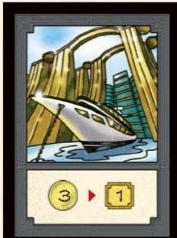
花費:6元。
所有玩家為每個控制的獵物符號獲得2分。
遊戲結束時,如果你控制最多獵物符號,獲得8分。
遊戲結束時,如果你發展最多科技,獲得8分。


歷史審判卡

最有錢的文明

所有玩家每3元獲得1分。

時間旅行
最農業化的文明
所有玩家為每個控制的小麥符號獲得2分。
遊戲結束時,如果你建造最多奇蹟,獲得8分。
未來科技卡
遊戲結束時,如果你控制最多寶石符號,獲得8分。
冷聚變
最多人口的文明
遊戲結束時,如果遊戲圖板上你有最多的方塊,獲得8分。
所有玩家地圖上每有自己的一個方塊獲得1分。
最富裕的文明
所有玩家為他們建造的每個奇蹟獲得4分。
心理學
遊戲結束時,如果你控制最多小麥符號,獲得8分。
深海農耕

最壯麗的文明
所有玩家為每個控制的寶石符號獲得2分。

最進步的文明
所有玩家為他們發展的每個科技獲得1分。

太空飛行
遊戲結束時,
如果你有最多
光榮板塊,獲得8分。
© Quined Games & Ergo Ludo Editions, 2014
下载 MarkdownThe Golden Ages - rules English LD.md
100 gold
THE GOLDEN AGES
FERRINI Will you succeed in evolving your civilisation through human history, overwhelming your opponents on the way of progress?
COMPONENTS

1 game board

1 agora

25 civilisation cards divided in 4 decks

This rulebook
In each of the 4 player colours:
1 player aid

16 glory tiles


1 player board
10 future technology cards

3 colonists

17 continent tiles

9 history's judgement cards


1 sticker leaflet
1 score marker

16 wonder cards

24 building cards divided in 4 decks
16 technology tiles

1 capital
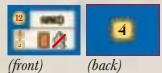
(one side has to be marked with a sticker, indicating the inactive/pass side)
SET UP
Put the game board and the agora in the middle of the table.
② Sort the continent tiles by size and place them face down next to the game board. Place the square continent tile in the middle of the game board. Orient it as you please (or decide randomly)
Note: although the tiles of the game can make up a correct' map of our world, there's no need to do that in this game!
③ Sort the building cards by Era (I, II, III, IV) and place them face down in four separate decks next to the game board.
Note: In a 3-player game remove all building cards with 4+’ from the game. In a 2-player game remove all building cards with ‘3+’ and 4+’ from the game.
① Each player takes 3 Gold and places these on the Gold space on his player board. The amount of Gold a player owns is public information during the game.

12 Each player takes 4 civilisation cards (one of each Era) and 1 Future Technology card and places these without showing them to the other players face down in front of him. Put all unused civilisation and future technology cards without looking at them back in the box.
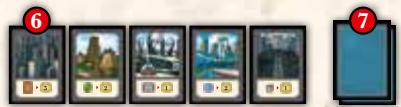
Score marker 1
④ Sort the wonder cards by Era (I, II, II, IV) and place them face down in four separate decks next to the game board
⑤ Sort the civilisation cards by Era (I, II III, IV) and place them face down in four separate decks next to the game board.
⑥ Shuffle all history's judgement cards and draw five random cards. Place these cards face up next to the board. Put the remaining cards back in the box, these won't be used this game.
⑦ Shuffle all future technology cards and place them in a face down deck next to the game board.


Shuffle the glory tiles face down next to the board.
⑨ Place all Gold next to the game board, forming the general reserve.
10 Each player chooses a colour and takes the corresponding components: player board, technology tiles, capital, colonists, cubes and score marker.
• The score marker is placed on space ‘0’ of the score track on the game board.
• Players put their player board in front of them. (See page II for detailed setup of the player board).


See page II for more detailed setup
PLAYER BOARD
The Player Board is the centre of your game experience. It will show you all the available technologies at your disposal, contains the building spaces, invasion track and an overview of the available actions.
Player Board setup
-
Place the technology tiles on the corresponding spaces on the player board.
-
7 cubes are placed on the designated cube spaces on the technology tiles. The remaining 5 cubes go to the reserve space on the player board.

Building spaces
You will be able to build your buildings here. You begin with only one available Building Space, but you can unlock supplemental Building Spaces when you develop 'Writing' and 'Architecture'.
Available actions
Invasion track
Every time you wish to attack another player, you will place a glory tile on the first available spot on this track starting from the leftmost one. The red number indicates the number of Gold you must pay to perform the attack.
This section features a practical overview of all the actions you can perform in phase C of every Era. They are split into two groups: actions that require a colonist, and ones that you can perform without using colonists.
STARTING TECHNOLOGIES
Wheel
You can move colonists up to 1 space on the map.

Hunting
You receive 1 Gold every time you take control of a game symbol.

Fire
You can use building space number 1.

Barter
You receive 1 Gold every time you place a cube on the map.
TECHNOLOGY TILES

Carriage
You can move colonists up to 2 spaces on the map ('Wheel' becomes obsolete).

Rail
You can move colonists up to 3 spaces on the map (Carriage' becomes obsolete).

Aviation
You can move colonists to any space on the map (Rail’ becomes obsolete).

Rocketry
You immediately receive 3 VPs for each gem symbol you control at the
moment you develop this technology. You can attack anywhere on the map without using a colonist. After the attack, you may found a city on the attacked space.


Agriculture
You receive 1 Gold every time you take control of a wheat symbol.
Architecture
You can use building space number 3. You don't need to have developed 'Writing' to use this space.
Medicine
develop this technology. You may perform the builder action without using a colonist.
Genetics
You earn 3 Gold every time you take control of a wheat symbol (agriculture become obsolete).
You receive 2 VPs for each wheat symbol you control at the moment you

Metallurgy
You receive 1 Gold every time you take control of a rock symbol.


Construction

You must place 2 cubes when founding a city (you cannot choose to place only one).
You can use building space number 2.
Engineering
You receive 3 Gold every time you take control of a rock symbol (Metallurgy becomes obsolete).

Writing
Computer Science You receive 2 VPs for each rock symbol you control at the moment you
develop this technology. You receive 2 extra VPs every time one of your colonists goes to the agora.


Currency
You receive 2 Gold every time you take control of a gem symbol.
Commerce

You earn 2 Gold each time you place a cube on the map (Barter becomes obsolete).
Economy
You receive 1 VP for every cube you have on the map at the moment you
develop this technology. You receive 4 Gold every time you take control of a gem symbol (Currency becomes obsolete).

THE GAME
Every round represents a different Era of human history.
The game is played in four Era's. Each Era consist of five phases:
A. Era setup
B. Expand the map
C. Player actions
D. End of the Era
E. Prepare for the next Era
A - Era setup
At the beginning of each Era execute the following steps:
-
Reveal all the wonder cards of the current Era and place these face up next to the game board.
-
Reveal a number of building cards of the current Era equal to the number of players and place these face up next to the game board.

Example: in a three-player game, three cards are revealed. The other piles will be revealed in the approriate Era.
- Starting with the first player and followed by the other players in clockwise order, each player reveals his civilisation card of the current Era and chooses if he wants to keep his civilisation card from the previous turn or the card from the current turn. He then discards the other civilisation card. Note: In the first round, skip this phase; every player simply reveals his first civilisation card.
Important: The immediate effects (lightning sign) a card may provide must be applied directly after a card has been chosen and can only applied once even if a player keeps the card in the next Era. The permanent effects, however, stay in effect until the civilisation card is discarded.
- The player who ends up having the civilisation card with the lowest number (in the upper right corner) becomes the first player of that Era.

B. Expand the map
Each player, starting with the start player followed by the other players in clockwise order, executes the following steps:
1. Place a continent tile:
The player draws a continent tile and places it on the game board.
Important: In the first Era you must place a continent tile with three squares. In all the following Eras you must place a continent tile with two squares.
Rules for placing continent tiles:
• Each continent tile must be placed adjacent to another already placed continent tile.
• Each continent tile must be placed within the grid.
• The continent tile can be rotated and placed in any direction.
The conformation of the terrain must be respected (land touching land, sea touching sea). The edges of the map don't count in this matter. Meaning that if you place a tile with its sea side on one edge of the map IT IS possible to place a tile with its land side on the other corresponding edge of the map.
• A continent tile cannot be placed on top of another continent tile (inculding the sqaure continent tile).
• A continent tile can cover the islands printed on the map.
• Colonists on the covered spaces go back to their respective capital.
2. Place/move capital
In the first Era the player must place his capital on a square on his just placed continent tile with the active side up (the empty side). He then moves the three colonists in his reserve to this square. He places his capital in the middle of the square, covering up the resource symbol (and thus making the resource unavailable to all players, including himself!). In the following Eras each player may move his capital to a square on his most recently placed continent tile. When a player does so, he must move all the colonists that are still present on the square where his capital was placed to the new capital location.
Important: A player must always either place his capital on the tile he just placed or leave it standing on its current location.

Example: In his first Era, the red player placed his capital on the red highlighted tile A. in the second Era, he places the green highlighted tile on the boardB, and moves his capital marker on a square on the newly placed tile C, covering up the resource shown (rock) and thus making this symbol invisible to all players (every player considers this resource to be non-exitant until that capital is moved to another location).
The red player must then move all the colonists present next to the previous capital location to the new oneD.
C. Player actions
This phase is the main phase of each Era. Each player, starting with the start player followed by the other players in clockwise order, must execute one action per turn until all players have started a Golden Age.
A player can choose from eight actions in his turn. It is allowed to execute the same action multiple times each Era (except for 8. Start a Golden age: you can only perform this action once).
The following actions require the use of an upright colonist:
-
Explorer: Move a colonist and/or found a city
-
Builder: Erect a building
-
Artist: Score 3 victory points
-
Soldier: Attack an opponent

1. EXPLORER
This action consists of two separate actions: a) move a colonist and/ or b) found a city. You can execute either or both, but you must respect the order; you cannot move a colonist after you founded a city.
a) Move a colonist

The player chooses one of his standing colonist anywhere on the game board and moves it on the map.
Rules for moving colonists:
• A colonist can only move horizontally or vertically.
• A colonist can move over the continent tiles and any space (land or sea) of the printed map on the game board.
• A colonist can enter, move over and end on a space occupied by any player's colonists, cities and/or capitals.
• At the beginning of the game a colonist can move up to one space. Certain technologies (Carriage’, Rail’ and ‘Aviation’) increase this number.
• A colonist may exit the map through the left and right edges and reappear on the corresponding opposite side.
• A colonist may also choose not to move.
If after the movement the colonist ends in a space with a resource symbol (game, wheat, rock or gem) on it and he didn't already have a colonist and/ or city there, he takes control of that symbol.
Important: The red circle you fnd on certain cards and technologies around a Gem/Rock/Game/Wheat symbol indicates that you receive gold when you take control of this resource; this happens when you move a colonist on a space containing one or two resource symbols and/or found a city there. If there is a simple black circle round the resource, it indicates you control a resource; meaning you have a colonist or city already standing on that space. The control of the same resource can even be shared between different players, e.g 2 colonist and 1 city of different players. It is not possible to have cities of different players on the same square. Do note as previously mentioned that when there is a capital on a square, it covers the resource completely: no player has or can take control over that resource.

Example: the blue player has a city on a space with a rock. The red player moves a colonist to the same space. Both players now share the control of the rock. However, if the red player wants to found a city here, he must attack the blue player (see 4. Soldier’).
The following actions do not require the use of a colonist:
-
Build a wonder
-
Activate a building or a wonder
-
Develop a technology
-
Start a Golden age

The player takes Gold according to which technologies a player has developed and/or which cards he may have.
b) Found a city

After moving the chosen colonist (or not), if the colonist is standing on a continent square without cities or capitals, the player may found a city there: he places one cube (or two cubes if he has developed Construction') from his reserve on the space. If a player doesn't have enough cubes, he must take the missing ones from anywhere on the map.
For each placed cube the player gets Gold. The amount can vary depending on which technologies a player has developed and/or which cards he may have.
Cubes vs cities: You must understand the difference between cubes’ and city’ in these rules and the player aid. A cube’ refers to the actual wooden cube on the map or your player board, a city’ refers to the one or two cubes that form a city on the map!!
You may only found cities on continent tiles. It's forbidden to found a city on the islands printed on the map.
At the end of the explorer action, the player lays down the used colonist.
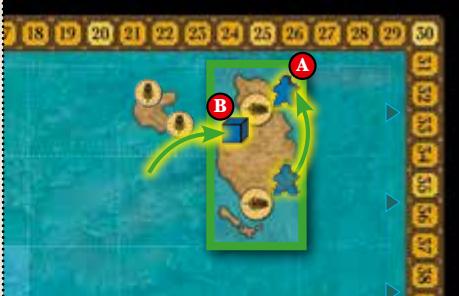
Example: The blue player moves a colonist to a wheat symbol A. Since he had developed Agriculture’, he gets one Gold. Then he founds a city B, getting one more Gold (because he has Barter’).
Finally, he lays down his colonist.
2. BUILDER

The player takes one of his standing colonists anywhere on the game board and lays it down on the agora. Then he takes one face up building card from the table and places this on a free
building space on his player board. At the beginning of the game each player can only use building space 1. Developing 'Writing' and Architecture' unlocks additional building spaces.


If no free building space is available, the player must discard a building from his player board. This building is removed from the game. It is allowed to have duplicate buildings.
Anatomy of a building card:
Era when the card may come into play
Building ability

• Indicates the minimum number of players needed for this card to enter play.
Indicates when the ability comes into play (here: when the building is activated)
3. ARTIST

The player takes one of his standing colonists anywhere on the game board and lays it down on the agora. Then he scores 3 victory points by narker on the score track.
4. SOLDIER

The player chooses one of his standing colonist anywhere on the game board and may moves it on the map to a space that contains one or more colonists from his opponents and/or an opponent's city (capitals, however, can NOT be attacked). The rules for moving are the same as with the Explorer.
After moving (or not, the player can leave his soldier on the same spot), the player pays the amount of Gold indicated by the leftmost free space on his invasion track to the general reserve.
Important: the number of Soldier actions a player can execute each game is limited to four.
The cube(s) of the opponent go back to that player's reserve. All opponents’ colonists on this space go back to their owners' capitals (if they were still standing, they remain standing). The attacking player takes one random glory tile and places it face down on the first free space on his invasion track.
Afterwards, the attacking player may immediately execute the action 1b) Found a City. As a final step, he lays down his colonist.

Example: the red player decides to attack the space where the blue player has a city (with two cubes since he has developed Construction’). He moves his colonist, and pays 8 Gold since he has already attacked twice this game. Blue has to remove his city cubes and place them back on his reserve, and Yellow must remove his standing colonist and place it back next to his capital.
Note: If a player had developed Rocketry, he doesn’t need to move a standing colonist to attack.

5. BUILD A WONDER
The player chooses one available wonder card, pays the indicated costs in Gold and places the card next to his player board. Some civilisation cards reduce the cost for the player holding that card.
Execute the instant effect () on the wonder card immediately after building, if applicable.
There's no limit to the number of wonders a player can build.
Anatomy of a wonder card:
Regular building costs
Instant action

Building costs for a player holding a specific civilisation card (here: Phoenicia)
Activation ability (see 6.)
6. ACTIVATE A BUILDING OR WONDER

The player chooses one of his buildings or wonders with the activation ability(). He executes the indicated power and flips the card (to show the power has been used this Era). You can only use the power on each card once each Era.
7. DEVELOP A TECHNOLOGY

The player chooses a technology to develop. He pays the indicated costs on the tile and places the tile face down next to his player board. Any cubes present on the tile go to the player's reserve. The new technology's benefit applies immediately.
Some technologies make previous ones obsolete: when you develop the new one, you lose the benefits of the old one.
Important: To develop a technology the previous one in the same row (as indicated by the arrows) must be developed already.

Example: In order to develop Construction’, ‘Metallurgy’ should already have been developed.
8. START A GOLDEN AGE

If a player has no standing colonists on the game board, he may start a Golden Age. This means he passes and cannot perform any other actions this
turn. Each time the player should be taking a turn, he gets 2 Gold from the general reserve. Important: The player doesn't get any money when he starts his Golden Age.
To start his Golden Age, the player flips his capital to the Golden Age side (the side with the sticker). The first player to start a Golden Age during the current Era chooses a “History's Judgement" card and places it next to the agora.

D. End of the Era
When all players have started a Golden Age, the Era ends immediately.
Exception: The end of the fourth Era is triggered after the first player starts a Golden Age (see End of the game).
All players score victory points according to the History's judgement' card on the agora.
E. Prepare for the next Era
Note: Skip this phase at the end of the fourth Era.
To prepare for next Era perform the following steps:
-
Discard building cards and wonder cards which weren't build in this Era. Discard the history's judgement card next to the agora. Place these cards back in the box.
-
Flip all capitals active side (blank side) up.
-
Place all the colonists on the map upright. They all remain in place.
-
Take all colonists from the agora and place these upright on the square with their owner's capital.
END OF THE GAME
When a player starts a Golden Age during the fourth round/Era, it is the last turn. After him all other players have a single last action. The game ends with the turn of the player right of the player who triggered the end of the game. The chosen History’s Fudgment card is normally resolved, then the game ends.
At the end of the game, each player scores points for:
• Gold: 1 VP for every 3 Gold.
· Developed technologies: the VPs on the back of the technology tiles next to his player board.
• Glory tiles: the VPs on the glory tiles on his invasion track.
• Future technology card: Each player reveals and scores his future technology card if he has achieved the prerequisite.
The player with the most VP is the winner. In case of a tie, the tied player with the most cities on the map wins. If a tie remains, victory is shared.
Symbols
All the technologies and cards in the game feature all sorts of symbols. Here are the most important ones you must understand. You will fnd an overview of all the cards in the game in the handy Player Aid.


When you take control of a Gem/Rockl Game/Wheat symbol: This happens when you place a city/ colonist on a location on the map with that resource symbol on it. See page IV for more details.


symbol you control: this refers to every resource symbol of that kind on the map where you have either a city or a colonist. See page IV for more details.

Receive the indicated amount of Victory points (VPs).

Receive the indicated amount of Gold.

You may purchase an item minus the indicated amount of Gold

Pay the indicated amount of Gold. This can be 0, in that case you receive the indicated item for free

You receive the indicated bonus when you activate this card.


You receive the indicated bonus at the end of the game.
You immediately execute the action once.

A cube.

A city (can consist of one or two cubes).

Any colonist from any player (including your own colonists).

Your colonist.
Another player's colonist / city / capital.
CREDITS
This game would not have been created without the ideas and suggestions of many friends who have playtested over and over again the different versions of the prototype. In particular: Martina Mealli, Andrés J. Voicu, Paola Lamberti, Roberto Duca, Carmelo Andrea Lo Moro, Greta Tamosiunaite, Gino Lucrezi, Raffaele Prencipe, Emanuele Giungarelli, Giacomo Pantani, Lucia Batistoni, Stefano Fabiani, Daniele Fabiani, Leonardo Maggi, Fabio Favilli, Alessandro Lanzuisi and his many friends, Domenico Di Giorgio, Roberta Barletta, Sonia Rossi, Raffaele Perini, Stefano Parducci, Marco Sottani, Eleonora Gioli, Alessandro Mongelli, Sergio Roscini, Rinaldo Chiti, Pierfilippo Dionisio and many others too numerous to list.
Thank you all, I hope you enjoyed to test this game as I enjoyed to develop it!
Quined Games would like to thank: spelgroep Phoenix, Olav Fakkeldij, Jeroen Hollander en Rafaël Theunis.
Game Design: Luigi Ferrini
Artwork: Alexandre Roche
Rules Booklet and Player Aid: Rafaël Theunis Translator: Jeroen Hollander


简繁检索对照.md
165338_164338_the-golden-ages — 简体/繁体检索对照
本游戏的规则书是繁体中文原文。用户用简体提问时,把关键词按下面这张表转成繁体再去 grep 原文,命中率最高。
回答时用简体或繁体都可以,但引用的原文保持繁体。
简体 → 繁体 对照(按该游戏原文出现频率排序,共 60 字)
| 简体 | 繁体 | 原文出现次数 |
|---|---|---|
| 个 | 個 | 284 |
| 时 | 時 | 123 |
| 块 | 塊 | 95 |
| 动 | 動 | 91 |
| 获 | 獲 | 88 |
| 图 | 圖 | 87 |
| 这 | 這 | 68 |
| 游 | 遊 | 67 |
| 戏 | 戲 | 67 |
| 区 | 區 | 63 |
| 发 | 發 | 57 |
| 号 | 號 | 48 |
| 并 | 並 | 43 |
| 筑 | 築 | 43 |
| 费 | 費 | 37 |
| 开 | 開 | 36 |
| 为 | 為 | 35 |
| 当 | 當 | 31 |
| 启 | 啟 | 28 |
| 结 | 結 | 27 |
| 张 | 張 | 25 |
| 陆 | 陸 | 25 |
| 须 | 須 | 25 |
| 执 | 執 | 22 |
| 则 | 則 | 21 |
| 场 | 場 | 21 |
| 后 | 後 | 21 |
| 经 | 經 | 21 |
| 钱 | 錢 | 19 |
| 迹 | 蹟 | 19 |
| 显 | 顯 | 19 |
| 从 | 從 | 18 |
| 击 | 擊 | 18 |
| 会 | 會 | 17 |
| 应 | 應 | 17 |
| 数 | 數 | 17 |
| 轮 | 輪 | 17 |
| 国 | 國 | 17 |
| 对 | 對 | 16 |
| 头 | 頭 | 16 |
| 们 | 們 | 15 |
| 该 | 該 | 15 |
| 黄 | 黃 | 14 |
| 广 | 廣 | 14 |
| 选 | 選 | 14 |
| 两 | 兩 | 14 |
| 资 | 資 | 13 |
| 宝 | 寶 | 13 |
| 麦 | 麥 | 13 |
| 边 | 邊 | 13 |
| 进 | 進 | 12 |
| 没 | 沒 | 12 |
| 过 | 過 | 11 |
| 来 | 來 | 11 |
| 让 | 讓 | 11 |
| 术 | 術 | 11 |
| 择 | 擇 | 11 |
| 书 | 書 | 10 |
| 历 | 歷 | 10 |
| 荣 | 榮 | 10 |