rules_zh_煤矿雇农_8125.md
《煤矿雇农》将带你回到16世纪煤矿开采初期的鲁尔流域
很久以前,在鲁尔流域,一个年轻的牧羊人在一个坑里生火取暖。他的篝火似乎比往常燃烧得更久。第二天,他在灰烬中发现了闪亮的黑色石头,这些石头仍在燃烧着。
他把这个发现告诉了雇用他的农民。当田间的工作完成后,他们就一起去挖这些黑色石头。随着他们越挖越深,碍事的矿坑水越来越多,使挖掘变得越来越困难。回到家后,他们讨论了哪些方法和工具能够被用于排除矿坑水、深入地下以挖取那些神奇闪亮的、名为煤炭的黑色石头。

游戏目标
《煤矿雇农》游戏发生在16世纪鲁尔南部地区,此时大部分土地被森林覆盖,道路稀少。煤炭在这里靠近地表的位置被首次发现,玩家则扮演在这里开采煤炭的农民。
玩家将发展各种项目,扩大他们的农场,排除矿坑水以挖取地底深处的煤炭,并将它们运送至地面。游戏中有许多途径可以为玩家带来胜利点数。
游戏配件
游戏面板

- 1个年份面板,印有游戏阶段、顺位条和计分条

- 4个玩家面板,印有一个农场和一个煤矿。

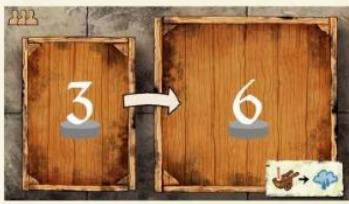
- 3个资源面板:1个印有两个行动区和两个储备区;2个印有一个行动区和一个储备区。
板块

- 20个发展板块: 等级1至4各5个
- 4个辅助板块:等级1至4各1个

标记


- 24个行动标记:对应于发展板块的6种行动标记各4个
- 4个“矿工与煤矿雇农”板块
- 16个建筑板块:
4个仓房,
4个木炭桩,
4个煤仓,
4个水力磨坊
- 4个高级雇农板块

- 44个玩家圆片:每种玩家颜色各11个

18个矿坑水 1个阶段标记


- 24个债务欠条
- 16个钱币
- 1个年份标记

煤炭、木头、粮食和矿坑水无数量限制。若数量不足,请寻找替代品。
- 36个行动圆片:13个黑色圆片、13个棕色圆片、10个黄色圆片

其他
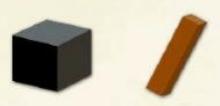

- 80个煤炭
- 34个木头
- 18个粮食

- 1个暗抽袋

- 1本规则


准备
玩家面板
每位玩家拿取18个煤炭、某种颜色的11个玩家圆片和一个印有工人、农场、煤矿的玩家面板。
每位玩家将其18个煤炭分别摆放至其玩家面板上的对应位置。

发展版图
根据玩家人数,发展版图由12- 20个发展板块组成。发展版图分为四行,每行由颜色相同的3- 5个发展板块组成。将辅助板块摆放至发展板块旁。
将对应于发展板块的行动标记和建筑板块置于发展版图旁。将钱币、债务欠条、资源、矿坑水和“矿工与煤矿雇农”板块置于发展版图旁,组成供应区。
初次游戏时,建议使用各颜色中数字最小的发展板块,根据数字顺序摆放至辅助板块旁。
2- 3人游戏时,将多余的发展板块以及它们对应的行动标记放回盒中。
变体规则请见本规则书末尾。
4人游戏
20个发展板块
(每种颜色5个)
3人游戏 16个发展板块 (每种颜色4个)
2人游戏12个发展板块(每种颜色3个)
年份面板
将阶段标记摆放至年份面板上第一个印有矿坑水的空格,将年份标记摆放至年份面板上对应于第一年的空格。
所有玩家分别将他们的一个玩家圆片摆放至计分条上印有 “0/50” 的空格。
在第一轮游戏开始前,玩家随机决定顺位,并分别将他们的一个玩家圆片摆放至顺位条的对应空格。
每位玩家现在各剩有9个玩家圆片。将这些玩家圆片置于各自玩家面板旁。

玩家面板

4人游戏 3人游戏
2人游戏
辅助板块

阶段标记

年份标记


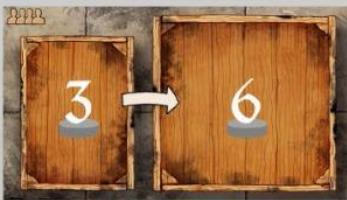
资源面板
2人游戏:
7个黑色圆片
7个棕色圆片
4个黄色圆片
3人游戏:
10个黑色圆片
10个棕色圆片
7个黄色圆片
4人游戏:
13个黑色圆片
13个棕色圆片
10个黄色圆片

露天煤矿中有7个煤炭

露天开采奖励
在第一年挖取露天煤矿中的全部7个煤炭的玩家获得2胜利点数;在第二年达成此目标的玩家获得1胜利点数。

将“矿工与煤矿雇农”板块摆放至玩家面板上
资源面板
拿取左上角玩家符号数量小于等于玩家人数的所有资源面板,摆放至桌面中央所有玩家可及范围内。每个资源面板分为一个行动区和一个储备区。
根据玩家人数,将一定数量(见左侧说明)的行动圆片放入暗抽袋。
设置资源面板。
从暗抽袋中抽取行动圆片,在每个储备区随机摆放3个行动圆片,在每个行动区随机摆放6个行动圆片。
此后,暗抽带中应没有行动圆片。
采煤
煤矿
每个玩家面板均包含两个煤矿——露天煤矿和井工煤矿,这里就是玩家指挥工人采煤的地方。必须保证露天煤矿和井工煤矿没有矿坑水。
露天开采
每位玩家的玩家面板上均有一个露天煤矿。游戏开始时,每位玩家的露天煤矿中均有7个煤炭。玩家根据从左到右的顺序挖取煤炭,将挖取的煤炭直接摆放至其农场。
露天煤矿印有2个木头符号。位于木头符号右侧的煤炭不能被玩家挖取,除非该木头符号上已摆放了一个木头。
玩家随时可以在木头符号上摆放木头。通过摆放木头,玩家采煤的区域将被扩展。
在第一年挖取露天煤矿中的全部7个煤炭的玩家获得2胜利点数;在第二年达成此目标的玩家获得1胜利点数。
露天煤矿资源枯竭
当露天煤矿的所有煤炭均被玩家挖取后,其资源枯竭,井工采矿开始。将露天煤矿中的矿坑水移至左侧井道的指定位置,将露天煤矿中的木头放回供应区。最后,将“矿工与煤矿雇农”板块摆放至玩家面板的露天煤矿上。
井工开采
当接近地表的煤炭资源枯竭时,早期的矿工深入地下。首先挖掘井道,然后建成井工煤矿。一旦完工,就可以挖取深部煤层的煤炭并将其运送回地表。
露天煤矿
由于地理变化沉积在地表或浅层的煤炭层,通过直接露天采掘煤矿。
当露天煤矿资源枯竭后,仅能从井工煤矿中挖取煤炭。
井工煤矿分为7个区域,共计有11个煤炭。玩家根据从左到右的顺序挖取煤炭。
井工煤矿印有7个木头符号。位于木头符号右侧的煤炭不能被玩家挖取,除非该木头符号上已摆放了一个木头。
玩家随时可以在木头符号上摆放木头。通过摆放木头,玩家采煤的区域将被扩展。
矿工、农民和低级雇农可以从井工煤矿中挖取煤炭。采煤工已不再可用。
不同于露天煤矿,玩家不能将挖取的煤炭直接摆放至其农场,而是先将煤炭移至左侧井道的指定位置。煤炭必须通过煤矿雇农的行动运送至玩家的农场。
游戏结束时,为井工煤矿计分。玩家根据井工煤矿没有煤炭的区域数量获得胜利点数。每个没有煤炭的区域使玩家获得1-3胜利点数。
发展项目将使玩家获得额外的胜利点数。
将木头摆放至井工煤矿…

井工煤矿
注意:同个阶段中,低级雇农或农民仅能从露天煤矿或井工煤矿中挖取煤炭!但是,在用一个工人挖取露天煤矿中的最后一个煤炭后,可以在同个阶段中用另一个工人挖取井工煤矿中的第一个煤炭。
…以挖取煤炭

胜利点数(银币)以及发展项目带来的胜利点数(铜币)

煤矿雇农、井道和矿坑水
将挖取的煤炭摆放至此位置
将矿坑水摆放至此位置
矿坑水
矿坑水或矿井水指在煤矿中蓄积的水。必须将矿坑水输送至地表以保证采矿作业安全开展。

露天煤矿-矿坑水区

井道-矿坑水区
冬季阶段贮存:每位玩家在农场贮存资源,然后将不能贮存的资源放回供应区。
冬季阶段支付地租:每位玩家支付地租(食物/钱币)。若不能支付,每少支付1个食物/钱币,拿取1个债务欠条。
冬季阶段计分:所有玩家根据各自农场中的煤炭数量获得胜利点数。
矿坑水
游戏过程中,矿坑水将在露天煤矿或井道中蓄积。玩家的工人将不得不排除矿坑水以确保能够进行煤炭挖掘。
摆放矿坑水
直至露天煤矿资源枯竭前,矿坑水被摆放至玩家面板露天煤矿的指定位置。露天煤矿资源枯竭后,矿坑水被摆放至玩家面板井道底部的指定位置。
游戏流程
游戏进行3轮。每轮代表一年,并被分为3个行动阶段(春季、夏季和秋季)和1个计分、支付地租和贮存阶段(冬季)。玩家通过移动阶段标记来记录当轮游戏已进行的阶段。
每年包含以下阶段:
下一年:一年结束,将年份标记移至下一年。新的一年开始。
从此处开始:按顺时针的顺序

年份面板,印有顺位条和计分条
秋季行动阶段:同春季行动阶段。
秋季矿坑水:每位玩家获得1个矿坑水。
春季矿坑水:每位玩家获得1个矿坑水。
春季行动阶段:
填充资源面板拿取行动圆片决定玩家顺位
所有玩家同时规划行动按玩家顺位执行行动
夏季行动阶段:同春季行动阶段。(每当农民至少生产1个食物时,玩家额外获得1个食物。)
发展项目能改变某些规则。
行动阶段 (春季、夏季、秋季)
每个行动阶段被分为以下几个步骤:
-
填充资源面板
-
拿取行动圆片
-
决定玩家顺位
-
规划并执行行动
1. 填充资源面板
第一年的第一个阶段中跳过此步骤。
每个行动阶段开始时,所有玩家将他们的全部行动圆片放回暗抽袋,无论这些行动圆片是否已被使用。
将储备区的3个圆片移至行动区。然后,从暗抽袋中抽取行动圆片,在每个储备区随机摆放3个行动圆片。最后,在所有行动圆片少于6个的行动区随机摆放行动圆片,直至每个行动区中的行动圆片均为6个。此后,暗抽带中应没有行动圆片。
少数情况下,某个行动区中的行动圆片可能多于6个,那么最后某个行动区中的行动圆片将必然少于6个。
2. 拿取行动圆片
行动圆片分两个环节拿取。
在环节一中,所有玩家根据顺位依次选择一个行动区,并拿取该行动区中某种颜色的所有行动圆片。
在环节二中,所有在步骤一中拿取行动圆片少于5个的玩家可以再次拿取行动圆片,但这些玩家拥有的行动圆片不能多于5个(多于5个的部分不能被拿取)。
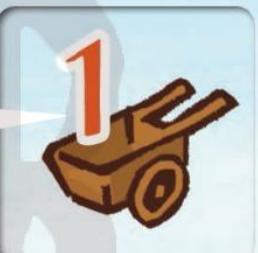
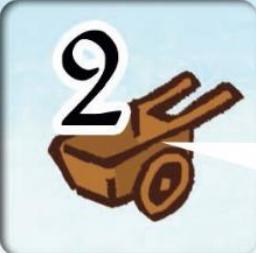
每位玩家将拿取的行动圆片摆放至其玩家面板的推车区。将在环节一中拿取的行动圆片摆放至印有数字“1”的推车区;将在环节二中拿取的行动圆片摆放至印有数字“2”的推车区;
在环节一中拿取的行动圆片摆放至此
示例:某位玩家在环节一中拿取了3个黑色圆片,在环节二中选择了一个有3个棕色圆片和1个黄色圆片的行动区,并拿取了2个棕色圆片。该玩家现在拥有的行动圆片已达到上限(5个)。
某些行动区印有矿坑水符号。当玩家在环节一中从这些行动区拿取行动圆片时,其获得1个矿坑水。
3. 决定玩家顺位
每位玩家计算各自印有数字 “1” 的推车区中行动圆片的总行动值:每个黄色圆片的行动值为3点,每个棕色圆片的行动值为2点,每个黑色圆片的行动值为1点。
总行动值最低的玩家将其用于记录顺位的玩家圆片摆放至顺位条最左侧的空格(顶部印有“I”)。其他玩家根据总行动值从低到高的顺序,依次将用于记录顺位的玩家圆片从左到右摆放至顺位条剩余的空格。
若几位玩家的总行动值相同,原顺位较靠后的玩家取得较靠前的新顺位。

在环节一中,若某个行动区中有6个相同颜色的行动圆片,玩家可以拿取这6个行动圆片。
第一年的特殊规则:
若某位玩家在第一年的春季阶段中拿取的行动圆片少于5个,其可以移除1个矿坑水。
在环节二中拿取的行动圆片摆放至此


行动圆片


食物和钱币
行动圆片摆放至此
可以执行的行动
农民
发展项目

低级雇农
注意:仅当农民发展项目时,不同颜色的行动圆片能被摆放至工人旁的空格。

夏季奖励
夏季中每当农民至少生产1个食物时,玩家额外获得1个食物。
4. 规划并执行行动
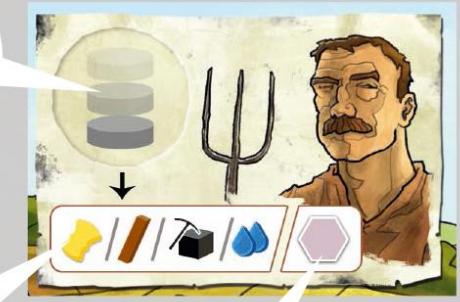
每个工人旁均印有一个空格。下方印有的符号表示该工人可以执行的行动。玩家通过将他们的行动圆片、食物或钱币摆放至工人旁的空格来为他们的工人规划行动。玩家们可以同时进行规划。若玩家们认为其他玩家的行动将影响自己的规划,可以按顺位依次进行规划。
当所有玩家均规划完毕后,按顺位依次执行他们所有工人的行动。
玩家自行决定工人们执行行动的顺序。仅当一个工人的行动被执行完毕后,才能开始执行下一个工人的行动。
自身作为工人
农民
通过将行动圆片摆放至农民旁的空格,可以执行多种行动:生产食物、生产木头、挖取煤炭、移除矿坑水或发展项目。每个阶段中仅能执行这些行动中的一个。挖取煤炭和移除矿坑水例外,这两个行动能够被合并执行。
低级雇农
通过将行动圆片摆放至低级雇农旁的空格,可以执行多种行动:生产食物、生产木头、挖取煤炭或移除矿坑水。每个阶段中仅能执行这些行动中的一个。挖取煤炭和移除矿坑水例外,这两个行动能够被合并执行。
发展项目
游戏初期,仅农民可以发展项目。发展板块顶部印有发展该项目时所需的彩色或灰色行动圆片。为了发展该项目,玩家需将所需的行动圆片摆放至农民旁的空格。印有的灰色圆片代表任意颜色的行动圆片。
示例:为了发展项目【矿用木材】(No. 31),玩家需要4个行动圆片,其中1个为黑色,其它3个可以为任意颜色。玩家将2个黑色圆片和2个棕色圆片摆放至农民旁的空格。
生产食物/生产木头/挖取煤炭/移除矿坑水
将1个或多个同种颜色的行动圆片摆放至工人旁的空格,每摆放1个行动圆片即获得1个同颜色的资源。摆放黄色圆片以获得食物;摆放棕色圆片以获得木头;摆放黑色圆片以移除矿坑水和/或挖取煤炭。
获得食物或木头时,从供应区中拿取并摆放至农场。木头是唯一能够被立即使用的资源,获得的木头能够被立即摆放至煤矿的木头符号上(见第5页“采煤”章节)。
每摆放1个黑色圆片,可以执行1个行动。每个行动可以从露天煤矿中移除1或2个矿坑水或挖取1个煤炭。
从露天煤矿移除矿坑水
一旦露天煤矿中有至少2个矿坑水,挖掘即受到矿坑水阻碍,矿坑水被移除前不能挖取煤炭。
移除矿坑水时,将其放回供应区。
从井道移除矿坑水
一旦井道中有至少2个矿坑水,则矿坑水被移除前不能将煤炭从井道移至农场。一旦井道中有至少5个矿坑水,挖掘即受到矿坑水阻碍,矿坑水被移除前不能挖取煤炭。
井道中的矿坑水仅能通过煤矿雇农的行动被移除。
移除矿坑水时,将其放回供应区。
合作奖励
若农民和低级雇农同时生产某种资源,或同时移除矿坑水或挖取煤矿,则玩家获得一个额外的行动,就仿佛有一个额外的行动圆片被摆放在此阶段上一个被启动的工人旁的空格。(见第11页示例2)
合同工
合同工包括采煤作业中的行家:采煤工、矿工和煤矿雇农。
采煤工
采煤工仅在游戏前期的露天煤矿中工作。通过将1个黄色圆片或1个食物或1个钱币摆放至采煤工旁的空格,可以执行2个行动。
- 若有至少2个矿坑水,采煤工的每个行动将移除2个矿坑水。
- 若矿坑水少于2个,采煤工的每个行动将挖取1个煤炭。
矿工
矿工仅在游戏后期的井工煤矿中工作。通过将1个食物或1个钱币摆放至矿工旁的空格,可以执行1个挖取至多3个煤炭的行动。矿工不能移除矿坑水。
煤矿雇农
煤矿雇农仅在游戏后期的井工煤矿中工作。通过将1个黄色圆片或1个食物或1个钱币摆放至煤矿雇农旁的空格,可以执行至多3个行动。每个行动可以从井道中移除2个矿坑水,或将井道中的1个煤炭移至农场。
示例:某位玩家的井道中有5个矿坑水。该玩家将1个黄色圆片摆放至煤矿雇农旁的空格,因此可以执行3个行动,每个行动可以从井道中移除2个矿坑水,或将井道中的1个煤炭移至农场。该玩家移除4个矿坑水,然后将1个煤炭移至农场。

(+)

露天煤矿中有至少2个矿坑水:不能挖取煤炭

(+)

井道中有至少2个矿坑水:不能将煤炭从井道移至农场


井道中有至少5个矿坑水:不能挖取煤炭


合作奖励

采煤工

矿工
煤矿雇农
早期采煤作业中,位于地面并负责井道中煤炭的垂直运输的雇农。

煤矿雇农
工人合作示例
示例 1:玩家拥有3个黄色圆片和2个棕色圆片。露天煤矿中有2个矿坑水且没有煤炭。
规划步骤中,玩家将1个黄色圆片和2个棕色圆片摆放至农民旁以发展项目【水桶】(No. 21);将1个黄色圆片摆放至低级雇农旁以获得1个食物;将1个黄色圆片摆放至采煤工旁以从露天煤矿中移除2个矿坑水并挖取1个煤炭。将获得的食物和煤炭摆放至农场。
示例 2:露天煤矿中有3个矿坑水和1个煤炭。玩家将2个黑色圆片摆放至低级雇农旁;将2个黑色圆片摆放至农民旁。玩家农场中有4个木头。
玩家启动低级雇农:用1个黑色圆片移除2个矿坑水并用1个黑色圆片挖取露天煤矿中的最后1个煤炭。将获得的煤炭摆放至其农场。然后玩家将露天煤矿中剩余的1个矿坑水移至井道中,并将“矿工与煤矿雇农”板块摆放至露天煤矿。玩家将其所有木头摆放至井工煤矿,启动农民以将2个煤炭移至井道。因合作奖励将1个额外的煤炭移至井道。

年份面板 - 煤炭表

年份面板 - 地租表

年份面板 - 贮存表
计分、支付地租和贮存阶段 (冬季)
每个冬季阶段被分为以下4个步骤:
-
计分
-
向地主支付地租
-
贮存
-
下一年开始
玩家的某些发展项目可能影响冬季阶段。
1. 计分
所有玩家根据各自农场中的煤炭数量获得胜利点数。若农场中仅有1或2个煤炭,则玩家不获得胜利点数;若农场中有3个煤炭,则玩家获得2胜利点数,在此基础上每多1个煤炭则额外获得1胜利点数(见年份面板上的煤炭表)。
2. 向地主支付地租
第一年,每位玩家必须支付2个食物;第二年,每位玩家必须支付2个食物和1个钱币;第三年,每位玩家必须支付1个食物和2个钱币(见年份面板上的地租表)。若玩家不能支付,每少支付1个食物/钱币,必须拿取1个债务欠条。游戏结束时,债务欠条将使玩家失去胜利点数。
支付是强制的,若玩家拥有食物/钱币,则必须支付。
3. 贮存
每位玩家可以在其农场贮存1个食物、木头或煤炭。贮存的资源可以在下一年游戏中被使用。
所有玩家将多余的资源(不能贮存的资源)放回供应区,冬季阶段随即结束。若玩家贮存1个木头,则其获得1胜利点数。
发展项目能够使玩家贮存更多资源、获得胜利点数。
4. 下一年开始
一年结束,将年份标记移至下一年。新的一年开始。游戏在3年结束后结束。
发展项目
发展项目时,玩家获得对应发展板块的胜利点数和/或效果。
为了发展一个项目,玩家需将对应数量和颜色的行动圆片摆放至农民旁的空格。然后,在对应发展板块上摆放1个玩家圆片,表示已发展该项目。
每个项目能且仅能被每位玩家各发展一次。摆放玩家圆片时,若该发展板块上已有其他玩家的玩家圆片,则将玩家圆片叠放至已有的玩家圆片上。(位于底部的玩家圆片属于最早发展该项目的玩家,位于顶部的玩家圆片属于最晚发展该项目的玩家。)
此外,发展项目时,必须遵循以下规则:
- 等级1的项目,能够被所有玩家发展。
- 等级2-4的某个项目,能够被所有已发展其任意一个相邻项目的玩家发展。
- 即使某个项目不与某位玩家已发展的任意项目相邻,只要该项目已被其他玩家发展,该玩家仍可以发展该项目。此种情况下,该玩家必须根据辅助板块所示向当前最晚发展该项目的玩家支付资源(玩家支付的资源来自其农场):
等级1:无需支付资源
等级2:1个煤炭、木头或事物
等级3:1个煤炭
等级4:1个食物
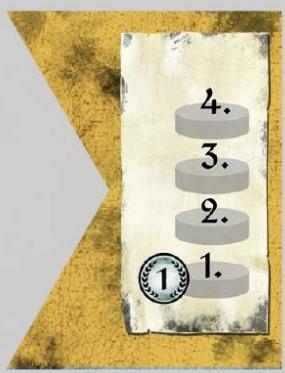
当玩家发展一个项目时,其立即根据辅助板块所示获得胜利点数:
等级1:最早发展该项目的玩家获得1胜利点数
等级2:最早发展该项目的玩家获得2胜利点数;第二位发展该项目的玩家获得1胜利点数
等级3:最早发展该项目的玩家获得3胜利点数;第二位发展该项目的玩家获得2胜利点数;第三位发展该项目的玩家获得1胜利点数
等级4:最早发展该项目的玩家获得4胜利点数;第二位发展该项目的玩家获得3胜利点数;第三位发展该项目的玩家获得2胜利点数;最晚发展该项目的玩家获得1胜利点数
发展项目的需求
将玩家圆片摆放至此

可能因此获得胜利点数
直接或间接效果
拿取对应标记

红色玩家可以发展的项目


辅助板块










游戏结束
3年结束后,游戏结束,玩家根据以下项目获得胜利点数:
井工煤矿
玩家每有1个没有煤炭的区域,即获得1-3胜利点数。玩家面板上印有具体的胜利点数值。
井工煤矿奖励
若玩家发展了【独轮手推车】项目,每有1个没有煤炭且印有独轮手推车符号的区域,即获得1胜利点数。
若玩家发展了【煤油灯】项目,每有1个没有煤炭且印有煤油灯符号的区域,即获得1胜利点数。
若玩家发展了【矿车】项目,每有1个没有煤炭且印有矿车符号的区域,即获得1胜利点数。
发展奖励
若玩家发展了【手推车】项目,玩家每发展一个印有农业符号(草叉)的项目,即获得1胜利点数。
若玩家发展了【煤炭运输工】项目,玩家每发展一个印有矿业符号(锤和镐)的项目,即获得1胜利点数。
建筑奖励
玩家根据发展项目对应的发展板块上建筑符号的数量获得胜利点数:
1个建筑符号 - 1胜利点数
2个建筑符号 - 3胜利点数
3个建筑符号 - 6胜利点数
4个建筑符号 - 10胜利点数
来自发展板块的、未使用的行动标记玩家每有1个未使用的行动标记,即获得1胜利点数。
钱币
玩家根据所剩的钱币数量获得胜利点数:
1个钱币 - 2胜利点数
2个钱币 - 5胜利点数
3个钱币 - 9胜利点数
4个钱币 - 14胜利点数
每个额外的钱币 - 6胜利点数
债务欠条扣分
玩家根据拥有的债务欠条数量失去胜利点数:
1个债务欠条 - 失去1胜利点数
每个额外的债务欠条 - 失去2胜利点数
若玩家有至少2个矿坑水,则失去(矿坑水数量-1)的胜利点数。因此,若有1个矿坑水-不失去胜利点数;2个矿坑水-失去1胜利点数;3个矿坑水-失去2胜利点数。
胜利者
游戏的胜利者为拥有最多胜利点数的玩家。若出现平局,挖取最多煤炭的玩家成为胜利者。若仍出现平局,平局玩家中玩家顺位靠前的玩家成为胜利者。
发展板块


11 - 扁担玩家立即获得1个钱币。
12 - 仓房
玩家获得仓房建筑板块,并将其拼接至玩家面板右侧。冬季阶段,玩家可以在仓房贮存1个木头、食物或煤炭。若在仓房贮存1个食物,则玩家获得2胜利点数。
13 - 尖嘴镐
玩家获得高级雇农板块,并将其摆放至玩家面板的低级雇农上。高级雇农就像农民,可以执行低级雇农所能执行的全部行动,并且可以发展项目。
14 - 牵引绳
玩家获得对应行动标记。该行动标记可以且仅可以在后续的阶段中被使用一次。玩家可以使用该标记以立即移除1个矿坑水并获得1胜利点数。使用该标记后,将其放回供应区。
15 - 木炭桩
玩家获得木炭桩建筑板块,并将其拼接至玩家面板右侧。拥有此建筑的玩家可以在任何时候将2个木头转换为2个煤炭和1胜利点数。此煤炭来自供应区。


21 - 水桶
玩家在春季和秋季的矿坑水阶段中不再获得矿坑水。
22 - 独轮手推车
玩家获得对应行动标记。该行动标记可以且仅可以在后续的阶段中被使用一次。该标记可以被当作黄色圆片使用。使用该标记后,将其放回供应区。
游戏结束时,玩家每有1个没有煤炭且印有独轮手推车符号的区域,即获得1胜利点数。

23 - 梯子
玩家获得对应行动标记。该行动标记可以且仅可以在后续的阶段中被使用一次。该标记可以被当作棕色圆片使用。使用该标记后,将其放回供应区。

24 - 煤仓
玩家获得煤仓建筑板块,并将其拼接至玩家面板右侧。

冬季阶段,玩家可以在煤仓贮存1个煤炭和1个木头。若在煤仓贮存1个煤炭,则玩家获得1胜利点数。
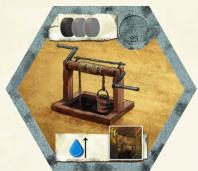
25 - 绞盘
玩家可以立即移除1个矿坑水。
玩家获得对应行动标记。该行动标记可以且仅可以在后续的阶段中被使用一次。玩家可以使用该标记以启动煤矿雇农,免费执行煤矿雇农的3个行动。在使用该标记的阶段中,若煤矿雇农已被启动,则可以额外启动一次。使用该标记后,将其放回供应区。

31 - 矿用木材
玩家立即获得3个木头和1个矿坑水,或1个钱币。

32 - 煤油灯
玩家立即获得1个钱币。
玩家获得对应行动标记。该行动标记可以且仅可以在后续的阶段中被使用一次。玩家可以使用该标记以交换一个储备区中1个行动圆片和对应行动区中1个行动圆片的位置。使用该标记后,将其放回供应区。
游戏结束时,玩家每有1个没有煤炭且印有煤油灯符号的区域,即获得1胜利点数。

33 - 锤和镐
玩家获得1个木头,并且可以立即挖取1个煤炭。
玩家获得对应行动标记。该行动标记可以且仅可以在后续的阶段中被使用一次。该标记可以被当作黑色圆片使用。使用该标记后,将其放回供应区。

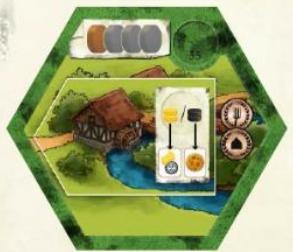
34 - 煤袋
玩家可以立即将1个煤炭转换为1个钱币,或将2个煤炭转换为1个钱币和1个食物。煤炭必须来自农场。
35 - 水力磨坊
玩家获得水力磨坊建筑板块,并将其拼接至玩家面板右侧。拥有此建筑的玩家可以在之后的行动阶段中将2个黄色圆片转换为1个食物和2胜利点数,或将2个黑色圆片转换为1个钱币。

41 - 煤炭运输工
玩家立即获得1个钱币。
游戏结束时,玩家每发展一个印有矿业符号(锤和镐)的项目,即获得1胜利点数。

42 - 矿车
玩家立即将井道中的2个煤炭移至农场,并获得1个木头。
游戏结束时,玩家每有1个没有煤炭且印有矿车符号的区域,即获得1胜利点数。

43 - 手推车
玩家立即获得1个食物。
游戏结束时,玩家每发展一个印有农业符号(草叉)的项目,即获得1胜利点数。

44 - 马车
玩家立即获得1个钱币和1个食物。

45 - 小煤窑玩家立即获得3个钱币。
下载 MarkdownHK_Rules_EN_second_edition.md
Thomas Spitzer HASPELKNECHT Artwork Jobannes Sich
Haspelknecht will take you to the beginníng of coal míníng in the Rubr valley in the 16tb century
A
The boy told the farmer wbo employed bím about tbís and togetber, wben the work in the fields was done, tbey dug in the Pinge for tbese black rocks. The deeper tbey dug, the more nasty pit water appeared, making the digging increasingly difficult.
At bome tbey díscussed wbat tecbníques and tools could be used to get ríd of the pit water and go deeper in the ground to get tbose magical sbíny black rocks named coal.

Goal of the Game
In Haspelknecht, the players take upon the role of farmers who exploit the presence of coal in their lands in the southern part of the Ruhr region. Coal was found here close to the earth's surface. The game takes place during the 16th century, a time where the lands were mostly covered with forests and roads were rare.
The players will obtain unique developments, expand their farm, free the coal deep in the ground from pit water, and bring the coal to the surface. The game has many paths that lead to victory.

36 Action disks: 13 black, 13 brown and 10 yellow
Components
Boards

1 Year wheel board, displaying game phases, turn order chart and score track

- 4 Player boards displaying a farm and a mining area


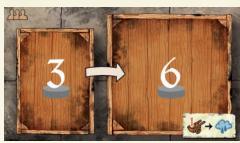

3 Resource boards: 1 displaying two action pools and two reserve pools; 2 displaying one action pool and one reserve pool
Tiles
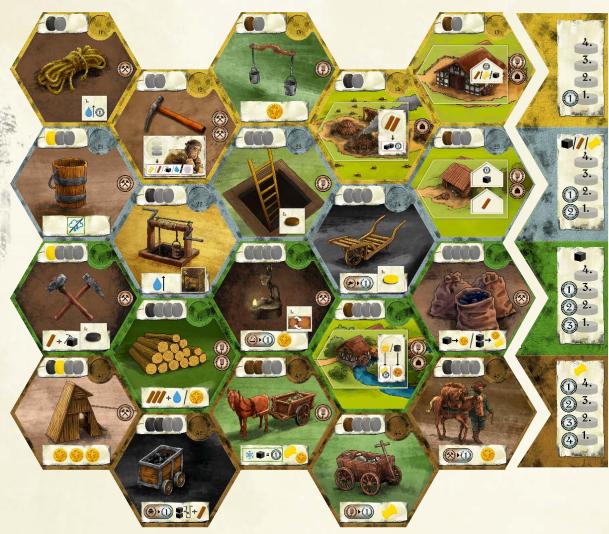
20 Development tiles: 5 each of levels 1 to 4 4 Assist tiles: 1 per level


4 “Coal-miner and Haspelknecht" tiles
16 Building tiles:
4 barns,
4 charcoal burners,
4 coal storages,
4 watermills

Markers and Tokens

- 80 Black coal cubes
- 34 Wood
- 18 Food
- 4 Improved farmhands
24 Action markers: 4 each of 6 different action markers corresponding with development tiles.
24 Debt chits
16 Thaler coins
1 Year marker
18 Pit water
1 Phase marker


Coal, wood, food and pit water are unlimited. If there is not enough, find an alternative replacement.

44 Player disks: 11 in each player color


Misc

- 1 Bag

- 1 Rulebook

Preparatíon
Player board
Each player receives 18 coal cubes, 11 player disks in one color and a player board displaying workers, a farm and a mining area.
Each player places a coal cube on every indicated place on his player board (18 in total).
Development board
Depending on the number of players, the development board is formed from 12 to 20 hexagon tiles. The board will always contain four rows of 3-5 tiles of the same color. The assist tiles are placed alongside the development tiles.
The action markers and buildings that correspond to the development tiles in play are conveniently placed next to the board. The same goes for coins, debt chits, resources, pit water and the “Coal-miner and Haspelknecht" tiles
For your first play, it is recommended to use the tiles that have the lowest numbers per color and place them in numerical order with the assist tiles attached.
In 2 and 3 player games, the extra development tiles and their action markers are returned to the box.
Variants can be found at the end of this rulebook.
4 players
20 development tiles (5 of each color)
3 players 16 development tiles (4 of each color)
2 players 12 development tiles (3 of each color)
Year wheel board
Place the phase marker on the first ‘pit water' field and place the year marker on the first year on the Year wheel board. All players place one of their player disks on the “0/50” space on the scoring track.
Before starting the first round, the players randomly determine turn order and place their disks on the turn order chart accordingly.
Each player now has 9 disks of his color remaining and places these beside his player board.

Player Board

4 players 3 players
2 players


Year marker


2 players: 7 black disks, 7 brown disks, 4 yellow disks
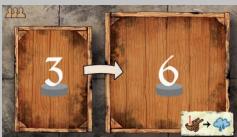
3 players:
10 black disks,
10 brown disks,
7 yellow disks
4 players:
13 black disks,
13 brown disks,
10 yellow disks
Resource boards

Pinge with 7 coal cubes

Pinge bonus
A player receives 2 victory points when he excavates all 7 coal cubes during the first year of the game. If this goal is met in the second year, only 1 point is received.

Put the Coal-miner and Haspelknecht Tile onto the player board
Resource boards
In the middle of the table, within reach of all players, a number of resource boards are placed. Take the resource boards where the player symbols are less than or equal to the number of players.
Each resource board shows an action pool and a reserve pool.
Depending on the number of players, a number of action disks are used and placed in the drawing bag as shown in the example on the left. These numbers and the colors of the disks are listed in the left column of this page.
Prepare the resource boards.
For each reserve pool, draw 3 action disks and place them in the reserve pools. Then, for each action pool, draw 6 disks from the bag and place them in the action pools.
After this, the drawing bag should be empty.
Coal Míníng
Coal Mining Areas
Each player board has 2 areas, the Pinge and the Tunnel, where players break down coal with their workers. The Pinge and the Tunnel must be kept free from pit water.
Coal mining in the Pinge
Each player has an area on his player board called the Pinge. At the start of the game, there are 7 coal cubes on each player's Pinge.
The Pinge also has 2 fields with a wood symbol. Players access the coal cubes from left to right. Any coal cubes up to the first empty wood symbol can be excavated. If an empty wood symbol in the Pinge is covered with a wood, then the player can also excavate the coal cubes to the right of the placed wood up to the next empty wood symbol.
A player can place wood at any time. By placing wood, the player extends the area where coal can be excavated.
Coal cubes are removed from the Pinge when it is excavated, and wood has to be placed in the Pinge.
Coal cubes excavated from the Pinge are placed directly in the player's Farm area.
A player receives 2 victory points when he excavates all 7 coal cubes during the first year of the game. If this goal is fulfilled in the second year, 1 point is received.
Pinge exhausted
Once all coal cubes have been excavated from the Pinge, it is exhausted. Then, coal excavation in the Tunnel starts. Move all remaining pit water in the Pinge to the designated area in the Shaft and return the wood placed in the Pinge to the general supply.
Finally, place a “Coal-miner and Haspelknecht" tile on the player board so that it covers the Coal-digger and Pinge.
Coal Mining in the Shaft and Tunnel
When the coal close to the surface was exhausted, the early miners went deeper into the ground. A shaft was first constructed, and then a tunnel would be built. Once this was done, coal could be excavated and be brought back to the surface.
Coal can only be excavated from the tunnel when the Pinge is exhausted.
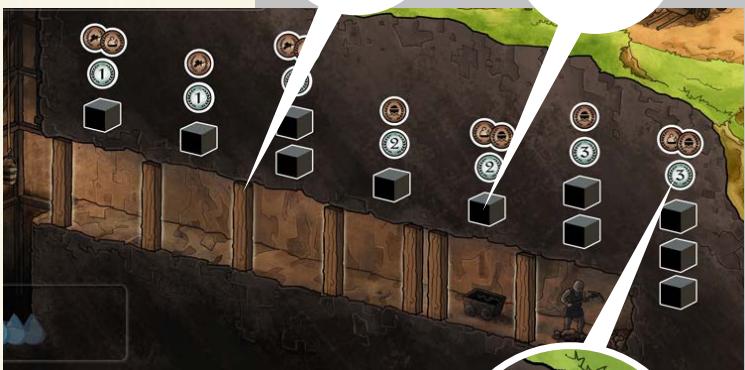
The tunnel is the mining area where coal cubes are excavated underground. The tunnel has 7 areas which contain a total of 11 coal cubes. These coal cubes can only be accessed for excavation from the left to the right.
The tunnel also has 7 fields with a wood symbol. As players have to access the coal cubes from left to right, any coal to the left of the first empty wood symbol can be excavated.
is a German word which at best can be translated as a mine slump or mining sink hole. It is a direct result of mining activity close to the earth's surface.
If an empty wood symbol in the tunnel is covered with wood, the player can excavate the coal cubes to the right of the placed wood up to the next empty wood symbol.
A player can place wood at any time. By placing wood, the player extends the area where coal can be excavated.
At least one wood has to be placed in the tunnel before any coal can be excavated from the tunnel.
The Miner, the Farmer, and the Farmhand are able to excavate coal cubes from the tunnel. The Coal-digger is no longer available.
Unlike the Pinge, excavated coal cubes are not moved directly from the tunnel to the player's farm area. The coal is first placed in the designated area in the Shaft, located to the left of the tunnel. The coal cubes have to be reeled up by the
Haspelknecht. Once they have been reeled up to the surface, the coal cubes are moved to the players farm area.
The Tunnel
The tunnel scores victory points at the end of the game. Players will receive victory points depending on the completed areas of the tunnel. Each completed area earns 1 to 3 victory points.
Acquired developments can provide additional victory points.
Pinge (or Binge)
Put wood into the tunnel ...
Note: During the same phase, the Farmhand or the Farmer can only excavate coal cubes in either the Pinge or the Tunnel!
However, it is possible to excavate the last coal cube from the Pinge with one of the workers and then use the other worker to excavate the first coal cube from the tunnel during the same phase.
... to get the coal out

victory points (silver) and possible points depending on acquired developments (bronze)

Haspelknecht, shaft, and pit water
place
excavated
coal cubes
here
place pit water here
Autumn Pit Water: Each player receives a pit water.
Pit water
Pit water or mining water is water that collects in a mine and which has to be brought to the surface in order to enable the mine to continue working.


Winter payment phase:
Winter storage phase:
Each player pays the cost (in food and Thaler) as indicated on the winter chart on the year wheel board or takes a Debt chit for each food and/or Thaler not paid.
Winter scoring phase:
Players count the number of coal cubes on their farm area and score victory points according to the coal chart on the year wheel board.
Each player stores resources in his buildings. Resources in the correct buildings will earn the players victory points. Finally each player returns the resources he cannot store to the general supply.
Pít water
Autumn action phase:
Placing pit water
see Spring action phase
The game is played over 3 rounds which represent 3 years. Each round is divided into 3 action phases (spring, summer and autumn), followed by a payment, scoring and storage phase (winter). Players will keep track of all phases of the round by using the phase marker. A year has the following phases:
During the game, pit water will gather in the Pinge or Shaft. The player's Workers will have to remove pit water to enable coal excavation.
Until completion of the Pinge, pit water is placed on the water field in the pinge area on the player board.
Game flow
After completion of the Pinge, pit water is placed on the water field in the Shaft at the bottom left of the player board.
Next year
After a year is concluded, move the year marker to the next year. A new year starts.
Start here, follow clockwise

Spring Pit Water:
Each player receives a pit water.
Spring action phase:
Every player takes action disks, up to two times, and places them on his player board. The player order is then changed accordingly.
After that, all players place their action disks simultaneously on their player boards.
Finally, the action disks are resolved in player order.
Summer action phase:
see Spring action phase (Yellow disks on a Farmer field generate a summer bonus of 1 extra food.)
Acquired developments can change some of the rules.
Actíon Pbase (Spríng, Summer, Autumn)
An Action phase is divided into the following steps:
-
Refilling the resource boards
-
Taking action disks
-
Determining player turn order
-
Planning and executing actions
1. Refilling the resource boards
This is skipped in the first phase of the first round. At the beginning of each action phase, all players return all their action disks, whether used or unused. The disks are put into the drawing bag.
The 3 disks in the reserve pool are moved to the action pool and added to the disks that were not taken in the previous action phase.
Then 3 action disks are drawn from the bag and placed in each reserve pool. Then, for each action pool that contains less than 6 disks, draw as many disks from the bag and place them in the action pools until the action pools each contain 6 disks. After this, the drawing bag should be empty.
It is possible that a resource board contains more than 6 disks. In this rare case, the final resource board that has to be supplemented will get less than 6 disks.
2. Taking action disks
The action disks are taken in 2 steps.
In the first step and in player order, each player takes action disks from one of the action pools. He chooses 1 pool from which he has to take all disks of one single color. Then the next player follows.
If a player took less than 5 disks during the first step, he may take disks a second time.
After conducting the second step, a player may not have more than 5 action disks.
Action disks first step
Example: A player took 3 black action disks in the first taking. When it is his turn to take action disks in the second step, he chooses an action pool which contains 3 brown disks and 1 yellow disk. He takes 2 brown disks from that action pool. The player now has the maximum of 5 disks.
Some of the action pools show a water symbol. When a player takes action disks from one of these pools during the first step of taking action disks, the player also receives 1 pit water.
Every player places his action disks on the cart fields of his player board. The disks taken during the first step are placed on the cart field marked 1. The disks taken during the second step are placed on the cart field marked 2.
3. Determining player turn order
Then each player adds up the values of his action disks placed on the cart field marked 1. Yellow disks are worth 3 points each, brown disks 2 points each and black disk 1 point each.
The player with the lowest total value places his turn order marker on the leftmost field of the turn order chart (marked I). The other players follow in order of increasing total value.
In case of equal values, the last player in the current turn order (the player who took his resource disks last) will go before the other player(s) in the new turn order.

During the first step, if there are 6 disks of the same color in the pool, a player may take all 6 disks.
Special rule for the first round: If a player takes less than 5 disks during the spring action phase of the first round, he may return his one pit water to the general stock.


Action disks second step


Action disks

Food and Thaler
place action disks here
Possible actions

Development

Farmhand
Important: Only when the farmer develops, disks of different colors can be placed on the farmer.

Summer bonus
During summer a player receives one additional food when the farmer produces at least one food.
4. Planning and executing actions
The players can use their action disks, food and Thalers to plan actions for their workers. The players can do planning simultaneously.
If players feel that their actions depend on what other players do, the players can decide to conclude planning in turn order.
Each worker has a space where the action disks or other requirements can be placed. Below the fields are symbols showing which actions the worker can perform.
When all players have planned their actions, in turn order, the players will execute all their workers' actions.
Players decide in which order the workers perform their actions. A single worker has to finish his actions before the next worker can perform their actions.
It is possible in a single player's turn that a worker finishes the Pinge and the following worker works in the tunnel.
Own Workers
Farmer
The farmer can use action disks in various ways: produce resources, excavate coal, remove pit water, or acquire a development. Only one of these actions can be used in a single phase. Exceptions are removing pit water and producing coal, these two actions can be combined.
Farmhand
The farmhand can use action disks in various ways: produce resources, excavate coal, or remove pit water. Only one of these actions can be used in a single phase. Exceptions are removing pit water and producing coal, these two actions can be combined.
Development
Once per phase, the farmer can do a development. At the start of the game, this can only be done with the farmer.
To acquire a development, place the required action disks as shown on the top side of the development tile on your worker's field.
The requirement shows colored and grey disks. For colored disks, the corresponding colored disk must be used. Grey disks can be of any color of your choice.
Example: For the Mining Timber development tile (No. 31), the player needs 4 action disks. One of those has to be black. The other 3 disks can be of any color. The player places 2 black and 2 brown disks on the farmer.
Resources
Place 1 or more action disks of the same color to receive one or more resource(s) (food, wood, or coal). Per disk placed, you get 1 resource of the same color. Yellow disks are for food, brown disks for wood, and black disks for coal mining. Food and wood are taken from the general supply
Food and coal are placed in your farm area. Wood can be used immediately in your mining area or can also be placed in your farm area. Wood is the only resource which can be used immediately. It is used according to the rules as explained in the Coal Mining section.
Coal cubes are taken from the appropriate mining area on the player's player board. Coal can only be excavated if the excavation is not hindered by pit water. Black action disks can be used to remove pit water or to excavate coal.
With one black disk, a personal worker can either:
remove 1 or 2 pit water
excavate 1 coal cube

Removing pit water from the Pinge
Once there are at least 2 pit water tokens in the Pinge, pit water has to be removed before any coal cubes can be taken.
Removed pit water goes to the general supply.
Removing pit water from the shaft
Once there are at least 2 pit water in the Shaft, pit water has to be removed before any coal cubes can be transported from the shaft to the farm area. Pit water in the Shaft can only be removed by the Haspelknecht.
If there is 5 or more pit water in the tunnel, no coal can be excavated.
Removed pit water goes to the general supply.
Synergy bonus
If the farmer and farmhand both produce the same resource or both work in the mining area to remove pit water or to excavate coal, then the player receives an additional action as if there were an additional disk for the worker who was activated last in this phase.
(See Example 2 on page 11)
Contract workers
The contract workers are specialists: the Coal-digger, Coal-miner, and Haspelknecht. Each can be activated only once during an action phase by paying 1 of their requirements.
The Coal-digger is available in the beginning of the game. Later in the game, the Coal-digger will be succeeded by the Coal-miner and Haspelknecht.
Coal-digger
To pay the Coal-digger, you have to place exactly 1 yellow disk, 1 food, or 1 Thaler on the Coal-digger's field.
The Coal-digger only works if he is paid. He performs 2 actions.
If there is more than 1 pit water, the Coal-digger will remove 2 pit water per action until there is less than 2 pit water.
If there is less than 2 pitwater, the Coal-digger excavates 1 coal cube per action.
The Coal-digger only works in the Pinge.
Coal-miner
The Coal-miner comes into play when the Pinge is exhausted. The miner excavates coal in the tunnel only.
To pay the miner you have to place exactly 1 food or 1 Thaler on the miner's field.
The miner only works if he is paid. He then excavates up to 3 coal cubes. He cannot remove pit water.
Coal excavated in the tunnel is moved to the shaft.
Haspelknecht
The Haspelknecht removes pit water from the shaft or he reels coal up from the shaft to the farm.
To activate the Haspelknecht, you have to place exactly 1 yellow disk, 1 food, or 1 Thaler on the Haspelknecht's field.
The Haspelknecht only works if he is paid. When paid, he can perform up to 3 actions. Per action, he can remove 2 pit water from the shaft or excavate 1 coal back to the surface. Excavated coal is stored in the courtyard area on the player board. If there is more than 1 pit water in the pit, he must remove it first.
Example: There are 5 pit water in the Shaft. The player uses one yellow action disk on his Haspelknecht. With this he gets 3 actions. Per action, he can remove up to 2 pit water or reel up one coal cube.
He removes 4 pit water and moves 1 coal to his farm area.


2 or more pit water: No coal can be taken from the pinge

2 or more pit water in the shaft: No coal can be transported from the shaft up to the farm area.


5 or more pit water in the shaft: no coal can be excavated


Synergy bonus

Coal-digger

Coal-miner
Haspelknecht
or Haspler can be translated as reel farmhand. In early coal mining, he took care of the vertical transport in the shaft.

Haspelknecht
Examples of combining workers
Example 1: The player has three yellow and two brown action disks. In the Pinge there is two pit water and no coal has been removed.
During the planning phase, the player places one yellow and two brown action disks on the farmer to do the development of the Bucket (tile 21). He places one yellow disk on the farmhand to get one food. He places one yellow disk on the Coal-digger to remove two pit water from the Pinge and take one coal from the Pinge to the farm area. The food and the coal is placed in the farm area and cannot be used to activate a worker during this turn.
Example 2: There is 3 pit water and 1 coal in the Pinge, and the player placed 2 black action disks on the farmhand and 2 black action disks on the farmer. The player has 4 wood in his farm area.
The player uses his farmhand: 1 black action disk to remove 2 pit water and 1 black action disk to excavate the last coal cube from the pinge. The cube is placed on his farm area. Then the player moves the remaining pit water from the pinge to the tunnel and places the “Coal-miner and Haspelknecht" tile to cover the Pinge area. The player then places all his wood in the tunnel and then activates the farmer who moves 2 coal to the shaft. Then, due to the synergy bonus an additional coal is excavated from the tunnel and moved to the shaft.

Yearwheel – scoring points
Yearwheel – paying leases

Yearwheel – storage
Scoríng, Payment, and Storage Phase (Winter)
Each winter 4 phases will take place:
-
Scoring points
-
Paying leases to the nobility
-
Storage
-
Next year
With certain development tiles owned by the players, the winter phase can be influenced in their advantage.
1. Scoring points
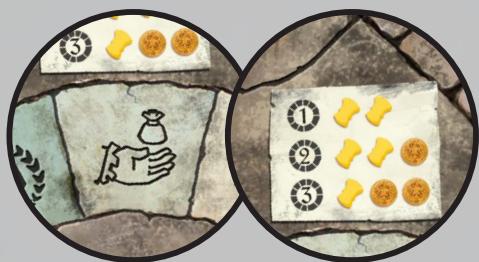
Each player counts the coal cubes in his farm area to determine the number of victory points he scores.
Players do not receive points for 1 or 2 Coal cubes. 3 Coal cubes will yield 2 victory points, after which every extra coal cube will yield 1 more victory point (see the coal chart on the year wheel board).
2. Paying leases to the nobility
Each player must pay a lease for his lands to the nobility. During the first round you have to pay 2 food, the second year will cost you 2 food and 1 Thaler, the third year costs 2 Thalers and 1 food. The costs per year are displayed on the year wheel board.
Players have to take one debt chit for each commodity they cannot pay. Debt chits will cost you victory points at the end of the game. Payment is obligatory. If you possess the appropriate commodities, you must pay.
3. Storage
Each player can store one single unit of food, wood, or coal in the farm area on his player board.
Stored resources can be used later in the game.
The winter phase ends with each player returning his extra resources (the resources he cannot store) to the general stock.
A player is granted 1 victory point when he stores 1 unit of wood on the farm area.
Acquired developments can provide additional storage and victory points.
4. Next year
A year is finished, and the year marker is moved to the next year. A new year starts.
The game ends after 3 years.
Development tíles
At the beginning of the game, in 4 different levels, a number of development tiles are placed on the table. When acquired, these development tiles provide players with victory points and/or advantages during the game.
Development tiles can be owned by all players. A player can own each development tile once and receive the appropriate advantage.
To acquire a development tile, the player places the number of action disks of the correct color on his Farmer. When the action is executed, the player places one of his player disks on the development tile to show that he now owns it.
The player disks are stacked on a development tile. The player places his disk on top of already placed disks. The bottom disk belongs to the player who took the development first. The top disk belongs to the player who took the development last.
If a player wants to acquire a development, the following rules must be followed:
On the top row, a player can acquire any development tile.
On non-top rows, a player can acquire a development tile if the development tile is adjacent to a development tile the player already owns.
Alternatively, a player can acquire a development tile if the development tile is already owned by another player and not adjacent to a development the player already owns. In this case the player has to pay a resource, as indicated on the assist tile, to the last player who previously acquired this development (the current top disk). The resource the player pays is taken from his farm area.
Additional cost, to pay to the player whose disk is on top of the development tile, if the player has no development adjacent to the targeted development:
Level 1: no costs (top row)
Level 2: a coal cube, wood, or food
Level 3: a coal cube
Level 4: a food
If a player obtains a development, he immediately gains victory points. The points are also displayed on the assist tiles.
Level 1: 1st player: 1 victory point
Level 2: 1st player: 2 victory points, 2nd player: 1 victory point
Level 3: 1st player: 3 victory points, 2nd player: 2 victory points, 3rd player: 1 victory point
Level 4: 1st player: 4 victory points, 2nd player: 3 victory points, 3rd player: 2 victory point, 4th player: 1 victory point

direct and indirect benefits
take this marker
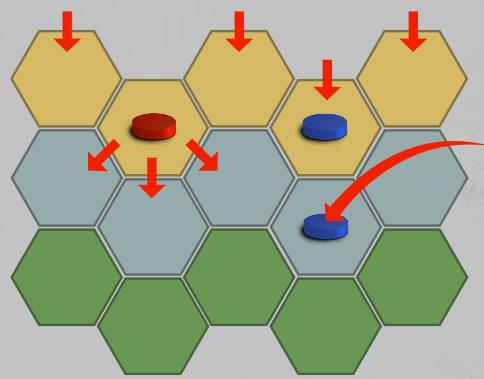
possible developments for red player


Assist tiles with victory points and costs for distant development







Game End
The game ends after 3 completed years. At the end of the game, victory points are awarded as follows:
Tunnel
Players receive 1 to 3 victory points for each emptied section. The number of points is printed on player board.
Tunnel bonus
If the player owns the Wheelbarrow development, he receives 1 victory point for each emptied section that has the corresponding symbol.
If the player owns the Oil Lamp development, he receives 1 victory point for each emptied section that has the corresponding symbol.
If the player owns the Lorry development, he receives 1 victory point for each emptied section that has the corresponding symbol.
Development bonus
If a player owns theHand Cart development, he receives 1 victory point for each agricultural (fork) symbol on development tiles the player has.
If a player owns the Coal Driver development, he receives 1 victory point for each mining (hammer and pick) symbol on development tiles the player has.
Buildings bonus
Players receive victory points for the number of building symbols on development
tiles the player has:
1 building symbol – 1 victory point
2 building symbols – 3 victory points
3 building symbols – 6 victory points
4 building symbols – 10 victory points
Unused action markers from development tiles Players receive 1 victory point for every unused action marker.
Thaler coins
Players receive victory points for the number of coins the player has left:
1 Thaler – 2 victory points
2 Thaler – 5 victory points
3 Thaler – 9 victory points
4 Thaler – 14 victory points
Every additional Thaler – 6 victory points
Debt chit deduction
Players lose victory points for the number of debt markers a player owns:
1 debt chit – minus 1 victory point
Each additional debt chit – minus 2 victory points
Pit water deduction
If the player has more than 1 pit water, the player loses as many points as the number of remaining pit water minus 1. So, 1 pit water - no deduction, 2 pit water - minus 1 victory point, 3 pit water - minus 2 victory points etc.
Winner
The winner is the player who has the most victory points. In case of a tie, the player who removed the most coal from his mining area is declared the winner. If this is equal as well, the tied player who stands first in the player order wins.
Development Tiles

11 - Carrying Pole The player immediately receives 1 Thaler.

12 - Barn
The player adds this additional building to his player board.
With this building, the player can store 1 unit of wood, food, or coal. If the resource stored during the winter storage phase is a food, the player gains 2 victory points.


13 – Pickaxe
The player obtains the tile with the improved farmhand. The improved farmhand can do the same as the farmhand but the improved farmhand can also obtain development tiles, just like the farmer. The player places the "Improved farmhand" tile on top of the Farmhand on the player board.

14 - Hauling Cable
The player obtains the corresponding action marker. The action marker can be used once at any time in a later phase. The player can use the marker to immediately remove 1 pit water and gain 1 victory point. After use, return the action marker to the general supply.
15 - Charcoal Burner
The player adds this additional building to his player board.
With this building, at any time the player can exchange 2 wood for 2 coal and 1 victory point. The coal is taken from the general supply.

21 - Bucket
The player no longer obtains pit water during the pit water phases in spring and autumn.

22 – Wheelbarrow
The player obtains the corresponding action marker. The action marker can be used once at any time in a later phase. The action marker with the yellow disk can be used as if it is a yellow action disk. After use, return the action marker to the general supply.
At game end, the player receives 1 victory point for each section in the coal tunnel with the corresponding cart sym bol where all coal cubes have been removed.

23 - Ladder

The player obtains the corresponding action marker. The action marker can be used once at any time in a later phase. The action marker with the brown disk can be used as if it is a brown action disk. After use, return the action marker to the general supply.
24 - Coal Storage
The player adds this additional building to his player board.
With this building, the player can store 1 unit of coal and 1 unit of wood. If a coal is stored during the winter storage phase, the player gets 1 victory point.
25 – Windlass
The player can remove 1 pit water immediately.
The player obtains the corresponding action marker. The action marker can be used once at any time in a later phase. The marker can be used to activate the Haspelknecht to do 3 reeling actions without pay. After use, return the action marker to the general supply. If the Haspelknecht is paid in the phase when the action marker is used, the Haspelknecht can be activated twice that phase.

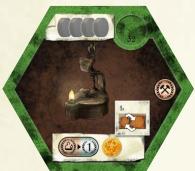
31 - Mining Timber
The player obtains immediately
a) 3 wood and receives 1 pit water or
b) 1 Thaler.
Pit water is placed on the current pit water field of the player board.
32 - Oil Lamp
The player immediately receives 1 Thaler.
The player obtains the corresponding action marker. The action marker can be used once at any time in a later phase. The action marker can be used to exchange 1 action disk in a reserve pool with 1 action disk in the accompanying action pool. After use, return the action marker to the general supply.

At game end, the player receives 1 victory point for each section in the coal tunnel with the corresponding oil lamp symbol where all coal has been removed.
33 - Hammer and Pick
The player obtains 1 wood. The player can immediately move either a) 1 coal cube from the Pinge to his farm area or b) 1 coal from the tunnel to the shaft. The coal has to be accessible.
The player obtains the corresponding action marker. The action marker can be used once at any time in a later phase. The action marker with the black disk can be used as if it is a black action disk. After use, return the action marker to the general supply.
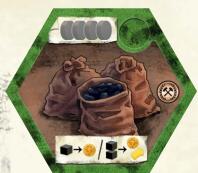

34 - Coal Sacks
The player may immediately exchange either a) 1 coal for 1 coin or b) 2 coal for 1 coin and 1 food. The coal has to come from the players farm area.
35 - Water Mill
The player adds this additional building to his player board. With this building, during a later action phase, the player can use 2 yellow action disks to obtain 1 food and 2 victory points or the player can use 2 black action disks to obtain 1 Thaler.
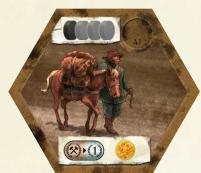
41 - Coal Driver
The player immediately receives 1 Thaler. At game end, the player receives 1 victory point for each hammer and pick symbol on development tiles obtained by the player.

42 - Lorry

The player immediately receives 2 coal cubes placed in his mine shaft and a wood from the general supply. At game end, the player receives 1 victory point for each section in the coal tunnel with the corresponding lorry symbol where all coal cubes have been removed.

43 - Handcart
The player immediately receives 1 food.
At game end, the player receives 1 victory point for each fork symbol on development tiles obtained by the player.

44 - Horse and Cart
The player immediately receives 1 Thaler and 1 food
During the scoring points phase of each winter, the player receives 1 victory point for each coal he has on his farm. The coal chart no longer applies.
45 - Small Coal Mine
The player immediately receives 3 Thaler.
Varíants for Experienced Players
At the beginning of the game, players can agree to play a different setup of the development tiles. Keep the following rules in mind.
The number of tiles per level should be at least 3. When playing with 3 or 4 players, the players can consider playing with the number of tiles equal to or 1 more than the number of players.
Every tile should connect to at least 1 tile of 1 level higher.
Tiles cannot connect to a tile of 2 or more levels higher.
The players can decide to start with the buildings attached to their farm area if the concerned buildings cannot be obtained in the development board.
The players can decide to start with the improved farmhand if the Pickaxe development tile is not in the development board.
Attention! For a 2 player board, when tiles are placed randomly and there are not enough development tiles to receive the required 3 Thaler during the third year payment phase, an adjustment is advised.
3334 Tower 3P

3333 Three long legs 2P/3P
5444 Four long legs 4P


3344 Wings 3P
3333 Three short legs 2P/3P

5544 Four short legs 4P

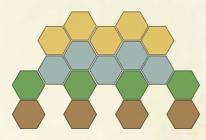
3333 Two short asymmetric legs 2P/3P
4334 Flower 3P
5445 Three circles 4P
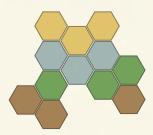

3333 Two long asymmetric legs 2P/3P

3333 Two rounds 2P/3P

4334 Butterfly 3P


Imprínt
Contact
Quined Games bv P.O. box 1121 3260 AC Oud-Beijerland The Netherlands
Testplayers:
Michael Naujokat, Andreas Molter, Martin Schipper, Frank Bernhart, Reiner Frensemeyer, Werner Boneß, Matthias Schulz, Heinz Tenk, Wolfgang Heidenheim, Petra Hoven, Gerhild Sobolewski, Roel Vinkenvleugel, Kristine Finn, Sascha Schneider, Ralf Rudolph, Ulf Glinka, Carsten Lauber, Christian Fürst-Brunner, Dietmar Gottschick, Bernd Rudi Emter, Petra Emter, Reinhard Kuschmirz, Peter Oud, Daniel Goll, Tobias Jochinke, Johannes Sich
Rulebook:
Peter Oud, Wesley Fechter, Erwin Broens, Roel Vinkenvleugel, Olav Fakkeldij, Arno Quispel
Author and publisher thank all testplayer of the 'Spieletreffs': Bödefeld, Autorentreffen mittleres Ruhrgebiet, Spieltreff Weseke, Herner Spieleclub, Mengede spielt, Spielekult Witten
下载 Markdown