rules_zh_危情13日1962年古巴导弹危机_844.md
危情13日 古巴導彈危機
游戲配件
1張版圖
39張策略牌
(13張美國&13張蘇聯,13張聯合國)
1張私人信件牌
13張目的牌
34枚影響力方塊(17枚紅色&17枚藍色)
6枚戒備狀態標誌(3枚紅色&3枚藍色)
LL&IT
6枚國旗標誌(3枚美國&3枚蘇聯)
1枚聲望標誌(黃色圓片)
1枚回合標誌(黑色圓片)
危情13日


2位玩家 · 10歲以上 · 45分鐘
游戲設置
將版圖在桌上展開,決定持美國(藍色)和蘇聯(紅色)的玩家。
B 玩家分別拿取各自的17個影響力方塊和3個國旗標誌。
C 在版圖上,分別在意大利和土耳其的位置放上1個藍色影響力方塊,在古巴(軍事)和柏林的位置上放上一個紅色影響力方塊。
D 將回合標誌放在第1回合的位置。
E 將聲望標誌放在聲望計量條的中間位置。
F 將3個藍色和3個紅色戒備狀態標誌分別放在雙方各自的戒備狀態表的初始位置上。
G 將13張目的牌洗牌,面朝下放置在版圖旁。
H 將39張策略牌洗牌,面朝下放置在版圖旁。
I 代表美國的玩家持有私人信件牌并開始遊戲。
目標
在古巴導彈危機的緊張時日裡,作為美國總統肯尼迪或者蘇聯總理赫魯曉夫,你領導著各自的超級大國,在解決危機的過程中通過贏得更多的聲望最終獲得勝利。
在遊戲中,依靠在全球各地的九個戰場佔據優勢,或者是在政治、軍事或輿論的舞臺上獲取主動,從而贏得聲望。每一回合選擇一個隱藏的目的,佔據優勢的一方將由此贏得聲望。因此,不要過早展露你的真實目的,力爭智取你的對手。
玩家輪流打出策略牌,依次放置或移除影響力方塊,盡力在版圖上贏得優勢。難點在於:如果施力過度,就會引發核戰而輸掉遊戲。你將被歷史如何記住:是英雄,還是惡棍,亦或是懦夫?
游戲流程
危情13日一共進行三回合。每一回合兩位玩家將各自完成以下步驟:
-
提高戒備狀態等級
-
抽取目的牌
-
確定先後次序后依次打出策略牌
-
保留後果牌
-
與論加成
-
執行目的牌
-
檢查是否引發核戰
-
移動回合標誌 sulfin'
meeple

1. 提高戒備狀態等級
在戒備狀態等級表上,將所有戒備狀態等級標誌提高一位(從第一回合開始)。

2. 抽取目的牌
首先將目的牌組洗牌,隨後給每個玩家各發3張牌。雙方取得各自的國旗標誌,並將其
放在他們各自抽取到的戰場和(或)戒備狀態等級表的三個位置上(獲得私人信件目的牌的一方將國旗標誌放在聯合國的戰場位置上)。
兩方玩家各自秘密選取1張目的牌,將其面朝下塞進版圖上標示的目的處。這兩張牌將在回合結束時被展示。剩下的牌不做展示,放回牌組裡。
目的牌概述:
A. 牌名(版圖上特定的戰場或戒備狀態表位置)
B. 顏色和副標題(政治外交,軍事實力或是國際輿論)
C. 戒備狀態影響(如果目的對戒備狀態產生影響)
D. 聲望加成
軍事實力

將戒備狀態等級表第2階段的所有標誌提升一級。
佔據上風的玩家獲得雙方在戒備狀態等級上差值+1點的聲望。
佔據上風的玩家獲得雙方在影響力方塊數量上差值相等的聲望。
將最多3個影響力方塊放置在大西洋戰場上。
古巴的核導彈部署將重建戰略平衡。

在數個北約國家人民上街游行,要求尋找非武力的危機解決辦法。
3. 抽取策略牌,確定先手玩家
每位玩家抽取5張策略牌(請勿讓對手看到牌的內容)。玩家可以查看自己的牌。當前在聲望上落後的玩家決定本回合哪一方先行。如果雙方聲望持平,蘇聯選擇一方先行(從第一回合起)。先手玩家必須率先打出策略牌。
策略牌有兩種打法:命令或者事件。每打1張策略牌就代表在導彈危機中度過半天。
命令
任何策略牌都可以作為命令被打出。這種情況下,你可
以按照策略牌上提示的影響力方塊數量,在單一一個戰場上放置或移除不多於提示數量(可以是0個)的影響力方塊,但僅限於己方的方塊。一個戰場上可以放置的一方玩家的影響力方塊最多5個。
每個玩家有至多17個影響力方塊。在放置方塊時,已存在於版圖上的方塊不能被使用。如果當前沒有方塊可供使用,必須先設法移除版圖上的方塊才能重新放置。放置或移除影響力方塊時,戒備狀態等級也會受到影響。所有的軍事實力戰場都和軍事


親密盟友

總計最多2個影響力方塊放置在個或更多的政治外交戰場上。
E
機時刻徵詢政治盟友的意見,有利于超級大國實現目標。
策略牌概述
A. 牌名
B. 國別
C. 命令方塊數
D. 戒備狀態影響(如果該事件對戒備狀態產生影響)
E. 事件內容
F. 歷史描述
F
大西洋
軍事實力戰場
實力戒備狀態列相關聯。同樣的,政治外交戰場和國際輿論戰場也和對應的戒備狀態列相關聯。放置影響力方塊會導致相關聯的戒備狀態等級被提升,而移除影響力方塊則會導致降低。對於戒備狀態的影響效果是:在放置(或移除)第一個影響力方塊以後,每多放置(或移除)一個影響力方塊則造成戒備狀態等級提升(或降低)一級。因此,放置1個影響力方塊不會造成戒備狀態等級變化,而放置3個影響力方塊將使得戒備狀態等級提升兩級。
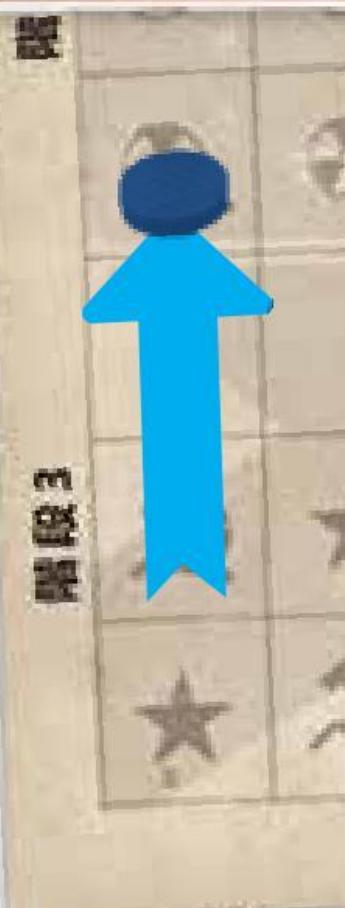
戒備狀態等級標誌只能在戒備狀態等級表內移動。當標誌到達等級表的頂部(或底部)以後,進一步的提升(或降低)效應將使其保持在原位。
和對手玩家所代表的超級大國有關的牌只能以命令打出,而非事件。在此種情況中,首先將牌遞給對手。他有權在你施加命令之前,選擇是否觸發事件。如果其選擇觸發,則該牌視同被其打出(但卻是在你的回合中打出)。
持有私人信件的玩家可以在他出牌時,將私人信件牌與策略牌以命令一同打出,此時影響力將在原有基礎上增加一級。之後將私人信件移交給對手。
私人信件
事件
對於和你自己所代表的超級大國或是和聯合國有關的策略牌,你可以選擇以事件而非命令打出。典型的情況裡,事件提供了一種用來打破或者扭轉命令動作的核心規則,或者是允許玩家施加一種更強有力卻同時有更多限制的動作。當1張牌以事件打出時,按照牌上的事件內容進行遊戲:如果其與使用影響力方塊的一般規則相衝突,則該事件內容享有更高優先順序(不包括在一個戰場上不得放置超過5個影響力方塊)。如果這張牌上有戒備狀態圖示,則該事件可依照放置或移除影響力方塊的一般規則來對戒備狀態等級產生影響。反之,如果牌上沒有戒備狀態圖示,則該事件不對戒備狀態等級產生影響。
4. 保留後果牌
在打完4輪策略牌之後,兩位玩家各自手中將剩餘1張策略牌。這張牌將被面朝下塞進版圖的標示位置,從而構成特殊的後果牌組,在遊戲結束時進行計算。

5. 國際輿論加成
在三個國際輿論戰場上擁有最多影響力方塊的玩家,可以觸發相應的回合結尾效應(如果平局則沒有人觸發效應)。效應的觸發依照如下順序進行:
- 電視媒體戰場:佔據優勢的玩家可以提升或者降低他的任一戒備狀態等級一級。
- 聯合國戰場:佔據優勢的玩家從對手處獲得私人信件。如果其已持有該牌則不觸發該效應。
- 盟國戰場:佔據優勢的玩家從策略牌組中抽取最上面的牌,並決定是將其面朝下加入後果牌組還是面朝上加入棄牌組。
6. 執行目的
將回合開始時選擇的兩張目的牌翻面朝上展示。同時從版圖上回收你的國旗標誌。如果1張目的牌上有戒備狀態圖示,則在戒備狀態等級表第2階段對應欄的所有標誌提升1級。
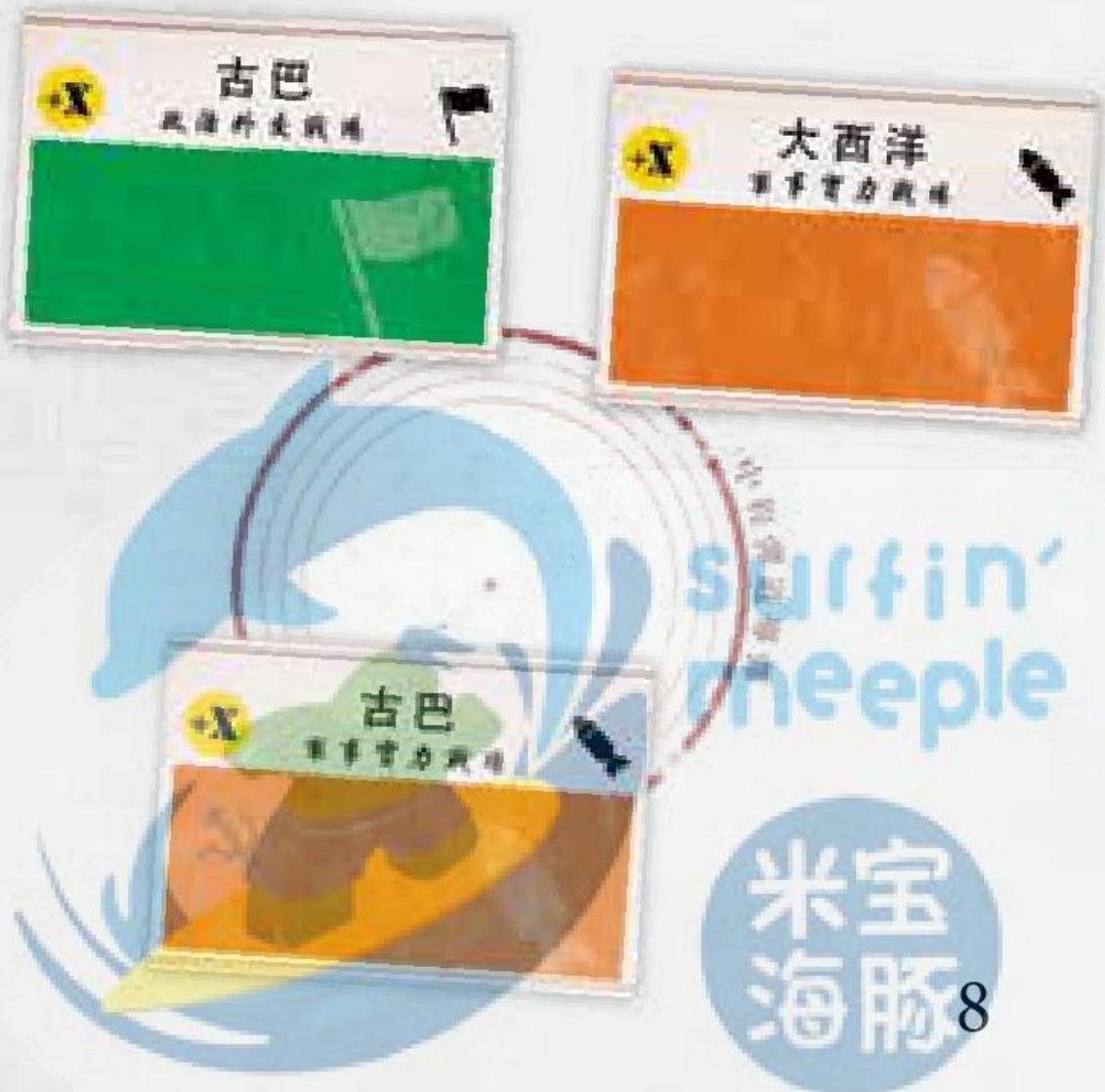
執行兩張目的牌,根據牌上的內容將聲望獎予佔據優勢的玩家。基礎聲望等於玩家之間的影響力方塊數或戒備狀態等級的差值(若是平局,則該目的牌不獎勵聲望)。通常還會加上額外聲望。在目的牌以及版圖上戰場的黃色圓形區域中發現額外聲望(目的牌和對應的版圖上戰場黃色圓型區域中標識的額外聲望相同,不必重複累加)。戒備狀態等級總是產生1點額外聲望,戰場則產生0到2點

額外聲望。請注意古巴(軍事)、古巴(政治)和大西洋是相鄰的戰場。玩家每在一個相鄰的戰場佔據優勢,都可以獲得1點聲望。一個玩家不能領先超過5點聲望。
執行完畢後,將目的牌面朝上放進棄牌組。
7. 檢查是否引發核戰
如果將敵我一方逼至絕境,你將冒無法懸崖勒馬的危險。在這第7階段,玩家可以引發全球核戰,從而直接輸掉遊戲。當以下任一條件滿足時,核戰即被觸發(這些條件也可能在1-6階段被達成,但不會引發核戰):
- 當任意戒備狀態標誌達到等級表的第1階段
- 當所有3個戒備狀態標誌到達等級表的第2階段
如果兩位玩家在同一回合中都觸發了核戰,則他們都輸了這局遊戲。

8. 移動回合標誌
在回合數指示位元上移動回合成1回合,向前移動1格,如果回合標記還沒有移動到後果A的位置,開始新的一回合;如果移動到後果階段,執行相應的步驟並決定最終獲勝方。

游戲結束
將在遊戲過程中保留的用於後果計算的策略牌翻開展示(牌組中應當有6-9張牌)。之後計算所有牌上美國與蘇聯各自陣營的卡牌上影響力方塊的總數。忽略聯合國的卡牌。不

考慮牌的歸屬問題。擁有較高影響力方塊總數的玩家獲得2點聲望。如果發生平局,則此環節沒人獲得聲望。
假設無人引發核戰,則獲得較多聲望的玩家勝出。如果此時平局,則持有私人信件的玩家勝出。

危情十三日 1962年古巴導彈危機 規則實例講解
David Janik-Jones (美國) vs Robert Hahn (蘇聯)
遊戲開始時,兩方玩家的聲望都為0,無人佔據優勢。戒備狀態等級標誌被放在版圖上標示的位置,分別代表美國和蘇聯的玩家將各自的一個影響力方塊放在四個戰場上:美方放在意大利和土耳其上,蘇方放在古巴和柏林上。美方持有私人信件。那個曾經將世界帶到核戰邊緣的危機,現在又開始了。
第1回合
在第一回合的初始階段,戒備狀態標誌上移,每位玩家獲得3張目的牌。美國玩家走運了!他得到了土耳其、意大利和國際輿論目的牌。蘇聯玩家得到大西洋、私人信件和政治外交目的牌。每位玩家將各自的3張目的牌拿出面朝下放在版圖上。
美國玩家覺得增強在意大利的現有影響力對他而言更容易,因此選擇了意大利目的牌。蘇聯玩家注意到一開始他便在政治外交戒備狀態等級上落後,所以選擇私人信件目的牌更容易。他希望從這張牌上取得優勢,這在後來可能會有用處。未被選擇的4張目的牌在打亂後被重新放入目的牌組。
每個玩家抽取5張策略牌。美國玩家得到了:公眾抗議(美國)、遏制戰略(聯合國)以及擊落U-2偵察機、防禦性導彈和蘇伊士-匈牙利危機(3張蘇聯牌)。5張裡有3張牌允許蘇聯玩家觸發對應事件,這對於美國來說算不上很有利的起手牌。蘇聯得到了:菲德爾·卡斯特羅(蘇聯)、緊急出動和機密情報(兩張聯合國牌)以及慕尼黑教訓和隔離(兩張美國牌),對於蘇聯來說也不是特別好的起手牌。因為此時雙方聲望持平,蘇聯玩家有權選擇在本回合打先手還是後手。他想觀察美國是如何應對危機的,所以選擇打後手。
設計師注:這是一個很好的例子,兩位玩家都體會
到了抽到對手事件牌的痛苦。你將要打這些有利于
你對手的牌,所以你的任務就是在這些牌對你損害
最小的時候把它們打出去,當抽到壞牌時請記住:
你的對手恐怕也處境相似。
美國玩家將公眾抗議牌以命令打出,將三個影響力方塊放置在大西洋戰場上,作為阻擋未來蘇聯進犯該地區的手段,若對方選擇了大西洋戰場這張目的牌,那麼這一手還起到了相應的抑制作用。命令動作只要放置或移除超過一個以上的影響力方塊,就會影響戒備狀態等級。此處美國的軍事實力戒備狀態提升兩級(比放置的影響力方塊數量少一個)。蘇聯以事件打出緊急出動牌,各將一個影響力方塊放置在大西洋、聯合國和土耳其戰場上(從而抵消美國玩家的影響力)。由於該牌上沒有戒備狀態標誌,打出此牌不會提升戒備狀態等級。
美國玩家打出的第2張牌是防禦性導彈。由於這是1張蘇聯牌,蘇聯玩家可以先手引發該牌的事件。他選擇在電視媒體和聯合國戰場各放置一個蘇聯影響力方塊(儘管兩個都是國際輿論戰場,但因為每個戰場上只放置一個影響力方塊,戒備狀態等級不受影響)。接著輪到美國,他將一個影響力方塊放到聯合國戰場上抵消蘇聯增長的影響。
蘇聯玩家打出的第2張牌是慕尼黑教訓。美國玩家為了誤導對手,隱藏他的意大利目的牌,同時抵消蘇聯已有的影響力,選擇觸發事件,將一個影響力方塊放置在柏林戰場上。蘇聯玩家此時可能不確定美國玩家的目的牌,但依照自己的計畫推進。他使用命令將三個影響力方塊放置在大西洋戰場,同時提升蘇聯軍事實力戒備狀態等級兩級。美國玩家現在犯難了,蘇聯的目的是大西洋嗎?
美國玩家打出的第3張牌是擊落U-2偵察機。蘇聯觸發該牌的事件,又放置兩個影響力方塊在土耳其上,如果本回合美國的目的是土耳其的話,他希望借此阻礙對方。因為美國在古巴的兩個戰場都沒有影響力方塊,因此蘇聯觸發的事件到此為止。美國以命令將兩個影響力方塊放置在大西洋上(使得此處美國的影響力達到最大數五),確信這是蘇聯的目的。

蘇聯玩家打出隔離牌,放置一個影響力方塊。該牌的事件美國無法觸發,因為此時他在大西洋戰場上已經達到最大影響力。蘇聯使用命令。在聯合國戰場上增加一個影響力方塊。
美國現在打出本回合的最後1張牌:遏制戰略。他假定意大利不會受到蘇聯影響力的威脅,以命令將兩個影響力方塊放置在盟國國際輿論戰場上(提升國際輿論戒備狀態等級一級)。美國玩家把注押在蘇伊士-匈牙利事件牌上,如果在後果牌組裡只增加兩個蘇聯影響力方塊的話,他還是安全的。蘇聯卻出其不意打出了機密情報牌,觸發事件迫使美國將蘇伊士-匈牙利事件牌交給自己(因為這是美國手裡僅存的牌),之後又抽取1張。蘇聯錯誤地假定意大利不是美國的目的,丟棄了這張牌,他選擇保留影響力方塊到之後的回合。對於美國玩家而言不幸的是,抽到的替代牌是主腦莫斯科,1張三個影響力方塊的蘇聯牌,它將進入到後果牌組裡。
設計師注:蘇聯玩家本來可以使用蘇伊士-匈牙利事件牌來奪取意大利戰場,從而在末期獲得兩點聲望。但是美國玩家成功地誤導了他,而這在此時更為重要,因為蘇聯玩家執後手,本來可以對美國在意大利的影響力大幅增加做出應對。在本游戲裏,你打對手的牌和打自己的牌一樣多。
兩位玩家將他們手上剩餘的1張策略牌放進後果牌組裡,進行該回合的最後幾步。輿論加成被算出。蘇聯玩家贏得了聯合國國際輿論戰場並獲得了私人信件,他也贏得了電視媒體戰場,選擇降低其軍事實力戒備狀態等級一級。美國贏得了盟國戰場並抽取1張策略牌,是豬灣事件牌,1張蘇聯牌,因此美國丟棄了它而沒有將其加入後果牌組
fin' eple
裡。隨後展示各自的目的牌。美國展示出意大利,由於在意大利戰場上領先一個影響力方塊得到的一點聲望,加上目的牌本身的額外一點聲望共兩點聲望。
蘇聯展示出私人信件,因為持有它而獲得兩點聲望。因此聲望在此回合未有變化,雙方仍是持平。美蘇兩方都沒有觸發全球核戰。回合標誌前移,第二回合開始。

第2回合
戒備狀態等級已提高,目的牌重新抽取。美國得到了政治外交戒備狀態牌、古巴政治外交和柏林牌。蘇聯得到了土耳其、大西洋和軍事實力戒備狀態牌。美國選擇古巴這張牌,同時希望能維持自己在大西洋的影響力優勢。蘇聯選擇了大西洋這張牌,希望把美國從此地驅除。美國玩家手上的影響力方塊所剩無幾,需要從目前的戰場上調取一些使用在新的地方。蘇聯希望經由控制至少古巴的一個戰場來獲得額外聲望。由於目前雙方聲望持平,蘇聯再一次選擇後手。每位玩家抽取5張策略牌。
美國抽到中遠程彈道導彈、戰略平衡、柏林封鎖、貓鼬行動牌,以及擺手微笑,依然是一手蘇聯為主的策略牌。蘇聯抽到空襲、不侵犯承諾、導彈減持交易、危機邊緣和五五對開等牌。不算非常好的牌,不過好在其中只有兩張美國牌。
美國想擺脫他手上的蘇聯牌,所以打出了柏林封鎖。在蘇聯選擇獲得兩點聲望后,美國提升了蘇聯的國際輿論戒備狀態兩級,企圖迫使蘇聯進入核戰。美國玩家將兩個影響力方塊(他在此處放下的第二和第三個方塊)放到土耳其上,試圖平衡該戰場上蘇聯的三個影響力方塊(美國錯誤地假設蘇聯的目的是那裡)。蘇聯打出五五對開,觸發事件,降低自己的國際輿論和軍事實力戒備狀態等級一級。
設計師注:第2回合的開局美國玩家在戒備狀態等級上較為不利。我對柏林封鎖這張牌的解讀是:美國玩家嘗試對蘇聯玩家加壓,減少他的一些選擇。冒着在後期觸發核戰的危險獲得兩點聲望對于蘇聯是一個兩難矛盾。這個策略沒有見致。因為接下來的兩個事件讓蘇聯玩家降低了他的戒備狀態等級,卻下了之前增加的壓力。
美國第2張牌打出了中遠程彈道導彈。蘇聯觸發該牌事件,降低他的戒備狀態等級一級,同時將一個影響力方塊放置在大西洋戰場上。美國玩家將一個影響力方塊放置在柏林戰場上,企圖迷惑蘇聯。由於只以命令放置了一個影響力方塊,美國的軍事實力戒備狀態等級保持不變。蘇聯打出了危機邊緣這張牌,觸發事件牽制美國(現在美國的每一個命令都會導致其損失一個影響力方塊)。
美國打出第3張牌,擺手微笑,觸發事件。他將兩個影響力方塊從盟國戰場轉移到了古巴政治外交戰場。

準確判斷到美國的目的是古巴政治外交戰場,蘇聯打出了不侵犯承諾。美國觸發事件,將蘇聯的兩個影響力方塊從土耳其移除,因為那可能是蘇聯的目的,同時降低美國的政治外交戒備狀態等級兩級。蘇聯將兩個影響力方塊放在古巴政治外交戰場上,從而平衡美國在那裡的兩個影響力方塊(此舉提升了他的政治外交戒備狀態等級一級)。
fin' eple
美國的最後1張牌打出了戰略平衡。由於蘇聯在大西洋戰場已經達到了五個影響力方塊的上限,因此他不能觸發該牌事件,從而只能讓美國在古巴政治外交戰場上再放置一個影響力方塊。蘇聯打出了空襲。美國觸發該牌事件,將蘇聯的一個影響力方塊從古巴政治外交戰場移除,可是蘇聯又以命令將兩個影響力方塊放回該地(此舉造成蘇聯政治外交戒備狀態提升一級),從而持平美國的影響力方塊。

貓鼬行動和導彈減持交易被加入到後果牌組裡。蘇聯玩家贏得了聯合國戰場,從而保留住私人信件。同時他贏得了電視媒體戰場,將國際輿論戒備狀態等級降低一級。沒有人贏得盟國戰場。美國展示出他的古巴政治外交目的牌,但是由於雙方在該戰場各有均等三個影響力方塊,所以沒人在此贏得聲望。蘇聯展示出他的大西洋目的牌,可是雙方在該戰場各有均等五個影響力方塊,因此沒人贏得聲望。此時由於之前柏林封鎖牌所觸發的事件,蘇聯得到兩點聲望。雙方玩家再次檢查是否觸發核戰,結果沒有觸發。回合標誌前移,第三回合開始。
設計師注:圍繞古巴的三個戰場相當重要。雙方在此處針鋒相對,力求獲得優勢,消除對方的影響。但這不意味着本回合全然無意義。玩家通過各種手段來取得對大局的控制,戒備狀態等級持續升級,玩家手上的影響力方塊也減少了。這對於最後決勝回合的策略選擇將產生巨大的影響。
第3回合
戒備狀態等級已提升(美國的軍事實力戒備狀態等級已經到了性命攸關的第1階段,而蘇聯的所有三個戒備狀態等級也到了第2階段,因此雙方都要小心以免觸發核戰),目的牌也已抽取。美國拿到了政治外交戒備狀態、軍事實力戒備狀態和古巴軍事實力牌。蘇聯拿到了柏林、政治外交戒備狀態和國際輿論戒備狀態牌。美國選擇軍事實力戒備狀態,因為他在此比蘇聯領先。蘇聯選擇了柏林,儘管開局時美國在該處擁有一個影響力方塊的領先優勢,但蘇聯玩家仍有餘地,能在不將戒備狀態等級提升到第1階段的情況下增加該戰場影響力。美國在聲望上落後,所以有權選擇後手。每位玩家獲得5張策略牌。
設計師注:美國在軍事實力戒備狀態等級上有非常大的壓力。蘇聯本來可以利用這一點,選擇政治外交戒備狀態目的,考慮到美國不太可能在此處提升等級。
美國抽到了國家解放、針鋒相對、高峰會面、親密盟友和核潛艇這5張好壞參半的牌。蘇聯抽到了SOPs、吳丹、留面子、入侵古巴和算數式精確這5張牌,兩張美國牌和3張聯合國牌,對於後果清算而言不是什麼好牌。
蘇聯打出第1張牌SOPs,觸發其事件,因此之後蘇聯的所有以命令打出的牌都將可以額外調用一個影響力方塊。由於蘇聯目前可使用的方塊所剩無幾,所以當蘇聯在移除方塊時,這張牌將給他更多的施展空間。美國打出了高峰會面,從大西洋移除兩個影響力方塊,從而降低軍事實力戒備狀態等級一級(回到了第2階段)。蘇聯打出的第2張牌是入侵古巴,美國決定不觸發該牌事件(他並不想把軍事實力戒備等級重新提升到第1階段),因此蘇聯將一個影響力方塊放置在盟國戰場上。美國打出針鋒相對,由於他在軍事實力戒備狀態上等級更高,他觸發事件,將一個影響力方塊放在古巴軍事實力戰場上,因而沒有進一步提升軍事實力戒備狀態等級。

蘇聯打出的第3張牌是算數式精確。美國玩家觸發該牌事件,將自己的政治外交戒備狀態等級降低一級,同時在古巴軍事實力戰場上放置一個影響力方塊。蘇聯隨之以命令將四個影響力方塊從大西洋戰場上移除(牌本身允許調用三個方塊,之前又因為SOPs牌而可額外調用一個),從而降低了蘇聯的軍事實力戒備狀態等級三級。美國打出了親密盟友牌,將兩個影響力方塊從大西洋移除,再將他的軍事實力戒備狀態等級降低一級。
設計師注:由于美國玩家持續在古巴軍事實力戰場上增加影響力,蘇聯玩家錯誤的假設這是他隱藏的目的。基于此,同時又由于手上剩下的影響力方塊不多,蘇聯玩家從大西洋戰場調取四個方塊,降低其軍事實力戒備狀態等級三級。該手本來不算壞手,盡管實際上代價很大。
蘇聯打出了最後1張牌:留面子的命令動作。他將兩個影響力方塊放置到柏林(此處再一次利用了SOPs牌的加成作用),提高軍事實力戒備狀態等級一級。美國打出了國家解放牌。蘇聯玩家決定放棄觸發事件,從而避免將政治外交戒備狀態等級提升到第1階段)。美國將一個影響力方塊放置在柏林,抵消蘇聯之前的動作。
核潛艇和吳丹這兩張牌被加入後果牌組裡。蘇聯玩家贏得了國際輿論戰場,保留了私人信件。同時也贏得了電視媒體戰場,將他的政治外交戒備狀態等級降低一級(以免萬一美國玩家持有政治目的牌,從而最後將蘇聯的政治外交戒備狀態等級推進第1階段)。蘇聯同時贏得了盟國戰場,抽到U-2偵察照片牌並棄牌。美國展示他的軍事實力戒備狀態目的牌。他已在軍事實力戒備狀態等級上領先了三級,又再向上提升一級,從而由此得到四點聲望,使得聲望標誌處於美國一側的第2格。蘇聯展示他的柏林目的牌。雙方此時都持有三個影響力方塊,沒有人因此獲得聲望。
兩位玩家都沒有觸發核戰,因此後果牌被展示並計算。聯合國牌被丟棄,只有美國和蘇聯牌上的方塊數被計算在內。美國的1張牌上只有兩個方塊,而蘇聯的3張牌上總共有九個方塊,因此蘇聯從此處獲得兩點聲望。雙方最終在總聲望上持平,而蘇聯由於持有私人信件而最終勝出。遊戲到此結束,蘇聯從危機中順利脫身,成為世界人民眼中的勝利者。核戰被避免了。


設計 DANIEL SKJOLD PEDERSEN / ASGER SAMS GRANERUD
特別鳴謝
Rasmus Schou Christensen, Kim Dorff, Kasper Foskjaer, Johannes Følsgaard, Hans Peter Hartsteen, Anders Hebert, Travis Hill, Lars Hofmann, David Janik-Jones, Bo Jørgensen, Lars Krebs, Thomas Løfgren, Jens Ladefoged Mortensen, Jeppe Norsker, Jakob Lind Olsen, Andreas Skjold Pedersen, Ravindra Prasad, Lars Præstegaard, Rhinoceros (BGG), Ian Scrivins, Johannes Sjolte, Morten Skovgaard, Ole Steiness, Morten Weilbach, Anders Wivel, Nordic Game Artisans, and the great BGG community.
平面設計
Jacob Walker
中文版制作組
冰山(排版),楊乃憶(翻譯),Jason Chen (校對)


Ultra•PRO®
www.jollyrogergames.com
www.ultrapro.com
www.surfinmeeple.com sulfin'
meeple

History Booklet.md
A BRIEF HISTORY OF THE CUBAN MISSILE CRISIS
THE PROLOGUE
Few people now realize the significance of the Cuban Missile Crisis and what it meant for modern political history. In school books, it is explained in a paragraph or two and never with the most important point mentioned—at no point since the creation of the atomic bomb has the world truly been closer to destruction. A different decision here or there and no one is reading this history; we are in Einstein's world where the next war is fought with sticks and stones.
The opening act comes much earlier than October, 1962. It started with Castro's revolution and Kennedy's botched attempt to overthrow the Cuban communist regime with the Bay of Pigs Invasion. That attempt showed Castro the United States was serious about his removal and encouraged him to look for more and stronger support from his benefactor, the Soviet Union.
But that wasn't the start. In the 1960 election, Kennedy asserted there was a ‘missile gap' between the US and Soviet Union, a false statement as the Eisenhower administration knew from its spy flights and satellite information. Since that information was secret, Kennedy had boxed himself in in terms of foreign policy; for domestic political consumption, he needed to be firm and aggressive with 'the communist menace', so he continued an Eisenhower program to deploy missiles to Europe, placing Jupiter medium-range missiles in Italy and Turkey beginning in 1961.
But it went deeper still for Kennedy. He'd met with Khrushchev in June, 1961, in Vienna, and though the media thought Kennedy the ‘victor' initially, opinion changed over the following months to the point that Kennedy declared, "He beat the hell out of me. Unhappy to have been shown up, his angst was reinforced by
American inability to take effective action when the Berlin Wall was constructed that summer during the second Berlin Crisis. Faced with this impotence, Kennedy vowed that he'd be tough the next time, win the next crisis no matter the cost
The USSR was unhappy with the missiles in Turkey, less than one hundred miles from the Soviet border. The Soviets felt this was a significant threat and said so to the United States. The US response was simple—Turkey is an independent nation and we have an agreement with them and that's that. American intransigence on what the USSR saw as a vital issue to their national security now led Khrushchev to look at American logic and formulate his own plan, what was known as Operation Anadyr.
The US had suspicions the Soviets were constructing a missile base in Cuba as early as August, but after the downing of a Taiwanese U-2 over China, the CIA was worried about surfaceto-air missiles in Cuba, so that the US was relying on satellite photographs. Unfortunately, those were blocked by storms and heavy cloud cover, creating what was eventually called ‘The Photo Gap'. Finally on October 14, a U-2 was finally able to overfly Cuba and return with photographs of the Soviet missile base under construction. This, according to history, is the beginning of the Cuban Missile Crisis.
THE CRISIS
When President Kennedy saw the photographs the next day, he created a committee, eventually called EXCOMM' to discuss options and figure a course of action. EXCOMM met for the first time the next day, the 16th. The primary US options were:
• Air strike to destroy the base before it could be completed
• Military invasion and occupation of Cuba
• Blockade Cuba
• Diplomacy
• Negotiations with Cuba looking to convince Castro to give up communism
• Do nothing
Because of his 1960 campaign and feelings on Berlin and Vienna, doing nothing was a political impossibility for Kennedy, and after the Bay of Pigs, there was no chance of Castro leaving the Soviet orbit or trusting the United States which immediately reduced the possible options. On the 18th, Kennedy spoke with Andrei Gromyko though there was no progress. It was suggested by Gromyko that the missiles were not the business of the US, that they were there with Cuban permission and that was that, using the same logic the United States used with the Jupiter missiles in Turkey.
The following day, the 19th, the US began mobilizing five divisions and all continental elements of the Air Force, prepared to implement one of two plans, OPLAN 312 or OPLAN 316, while the State Department worked to prepare the structure of a new Cuban government for when Castro was removed. Kennedy wanted tough action and the US military prepared for that, though documents released in the past decade, well after the Crisis show that at no time did the Soviet military bring itself to full military readiness—and that the US was well aware of this behind the scenes.
Three days later, the US briefed NATO and allied leaders on possible Soviet actions. Approval was unanimous from the NATO nations, at which point the media was informed and a blockade, referred to as a quarantine, was put in place, enforced by several nations, though primarily by the US Navy. It was important that it be referred to as a quarantine—a blockade was an act of war and the US did not want to be seen as provoking World War Three.
With the world now aware of the situation and the potential stakes involved (though details were secret, there was no question of what the ultimate fear was), efforts now began to lessen the tension or find a diplomatic solution. Using backchannels, the United States now let it be known they would consider the removal of the Turkish missiles if the Soviets
ceased construction in Cuba and removed the missiles there. Added to this, on the 25th, a message from the Pope urging peace was broadcast worldwide (though it was not broadcast in the USSR until the 26th). The Pope's message was critical, changing the course of the crisis and giving a rational reason for both sides to back away from saber-rattling and intractable positions. In the meantime, at the same time as the Pope recorded his message, Khrushchev wrote a letter to Kennedy informing the President that Soviet ships would continue towards Cuba and that the US had no business stopping them, leaving unsaid an implicit or else' and setting up a confrontation between the two navies.
But Khrushchev was never a man to put all his eggs in a single basket and even as he told Kennedy that Soviet ships would violate the quarantine, a dozen Soviet merchant ships turned away from Cuba rather than be boarded by US Navy vessels. That was not enough for members of EXCOMM, and one of Kennedy's advisors, Curtis LeMay, demanded the US take the opportunity given to provoke a war and eliminate communism and the Soviet threat once and for all, even as the committee saw evidence that Soviet forces were not mobilizing for war. At the behest of men like LeMay, for the first and only time in history, the president authorized the raising of military alertness to “DEFCON 2", putting B-52 bombers in the air everywhere, armed with nuclear bombs. The only alternative left was to wait...
Twenty-four hours later, a letter arrived from Khrushchev, suggesting that the knot of war not be pulled so tight that it could not be undone. Later, Kennedy would say Khrushchev blinked, but at the moment, it provided another reason to climb down from the brink. The basis of negotiations would be the removal of missiles from Turkey in return for the removal of the Cuban base. The timing of that consensus was important. Even as the two sides were reaching an agreement, a U-2 was shot down over Cuba on the orders of a local commander and against the wishes of Khrushchev. The US had decided that if a U-2
was shot down, it meant outright war, but Kennedy decided not to take the next step, hoping that the decision was an accident or taken by an ‘itchy trigger finger'on the scene and not representative of Soviet intent.
Just as important, out at sea, a US destroyer spotted a Soviet submarine on sonar and dropped training depth charges (basically hand grenades), forcing the Soviet sub to remain submerged to the limit of its engines and oxygen. On board the sub, a debate raged whether the depth charges permitted the use of the nuclear torpedo on board. To launch required unanimity, but the vote was 2-1; the first officer refused to agree even when pressured by the political officer on board. If it had been launched, nuclear war would have been unavoidable.
Even then, that was not the last threat to peace. Behind the scenes, Fidel Castro urged Khrushchev to use the missiles and planes already in Cuba to launch a first-strike on the US, going so far as to suggest that he would rather see his own land vaporized than the Americans win. Castro even formulated plans for his own soldiers to seize the Russian nukes and use them himself against the United States. Luckily cooler heads prevailed.
On October 28, the day after these incidents, the crisis ‘ended'. The US guaranteed it would not invade Cuba or sanction invasion by Cuban emigres, and that it would remove the Jupiter missiles from Europe—something already planned for 1963 anyway (though the USSR did not know that). In return, the Soviet Union dismantled its missiles in Cuba.
THE AFTERMATH
The 'quarantine' was lifted in November and the Jupiters were gone in April, but repercussions continued. Buoyed by his success, Kennedy decided a harder line and a more active US role in fighting communism could work, setting the stage for Vietnam. Unhappy that Khrushchev backed down in a way that cost the USSR prestige, he was removed almost exactly two years later in a conspiracy led by Leonid Brezhnev. Brezhnev wanted stability, something the erratic Khrushchev was not known for, and thus the era of bureaucracy overtook the Soviet Union.
The crisis also showed the two superpowers that they needed quicker communications and that there were too many ways miscommunication could lead to unwanted drastic actions. Initially, this meant the creation of the Hotline, a direct phone link between Washington and Moscow in case of emergencies. Later, but before the decade was ended, Brezhnev reached a consensus with President Nixon that continuing an arms race hurt both nations, so that 'detente' was born, solidifying Brezhnev's quest for stability and reducing the ruinous military spending of both nations.
History has been cruel and kind to the actors in the Cuban Missile Crisis. While criticized for allowing ego to drive him to push the situation into a crisis, Kennedy's cool at the key moment prevented nuclear war. Similarly, whileKhrushchev had gone forward with the missiles, knowing it would cause a US reaction, he quickly backed away from the brink.
How do you explain the brink of nuclear war to someone who did not live through it? Is there a way to explain life with two nuclear superpowers and the potential for World War Three on any given day for any given reason to the generations who have been born since the collapse of the Soviet Union in 1989? Our remoteness from events such as the Cuban Missile Crisis should not lessen our worry over how close we came to destroying civilization in 1962 or that such a crisis could happen again whether in Kiev, Seoul, or Cairo. Will the leaders in such a crisis be as level-headed and determined to avoid Armageddon? We can only hope.
SCORING CARDS
Berlin: The site of two earlier crises in 1948 and 1961, most prognosticators figured that Berlin would be the spark which would set off a US-Soviet conflict within Europe given the city's divided status and location far within the Soviet zone (which became the German Democratic Republic). West Berliners understood that in case of war, they would be overwhelmed by Communist forces.
Italy: It may seem hard to believe today, but in the 1950s and early 1960s, Italy's economy was the second most prosperous in Europe (behind West Germany's), making it a critical nation for rebuilding the continent in the years after World War Two. A loyal ally of the United States and staunchly anti-communist (perhaps a feeling leftover from its decades of fascism), Italy gladly permitted US bases on its soil as well as Jupiter missiles positioned around the airbase at Giola del Colle. The Jupiters were used as tokens in negotiations during the Cuban crisis
Turkey: With a long hatred of Russia, communist or otherwise, Turkey's military happily agreed to host a squadron of Jupiter missiles. Negotiated with Eisenhower, the missiles were deployed after Kennedy was in office. Turkey's outright hostility to the Soviet Union made it a staunch advocate of American hardline positions, while the US enjoyed having an ally adjacent to the Soviet Union, capable of restricting Soviet naval movement to the Black Sea vis a vis control of the Bosporus and Dardanelles.
US CARDS
Air Strike: The US prepared to flatten Cuba if need be, deploying B-47 bombers to the American Southeast. Pilots were trained to launch rapidly in case of nuclear war,
sometimes taking only 10-15 seconds between take-offs. Cuba's close proximity to the US (and distance from the USSR) was a significant military advantage for the US during the Crisis.
EXCOMM: The Executive Committee of the National Security Council, set up to handle the Crisis and advise Kennedy. Historians have credited the core committee members with avoiding 'groupthink' and remaining open to all possibilities rather than marching headlong towards full conflict. Given their ages and knowledge of World War Two, and that it was less than twenty years since Hiroshima and Nagasaki, those life experiences probably served to temper any aggression members held towards the USSR.
Eyeball to Eyeball: Castro was furious when Khrushchev agreed to remove missiles from Cuba to defuse the Crisis. He felt it would encourage anti-communist emigres in Florida and hurt his own chances of survival. The phrase is a quote from Secretary of State Dean Rusk: “We went eyeball to eyeball, and the other fellow just blinked.'
Invasion of Cuba: One option for the US was an immediate invasion of Cuba. The US was not fully prepared for this and had to rush to make sure a replacement government could be made available quickly. While the idea had some backers (such as Gen. LeMay), it was never given extended, serious consideration by EXCOMM.
Lessons of Munich: Ever since the agreement in 1938, any time discussions take place with an authoritarian regime, the name 'Munich' is brought up along with the word appeasement'. The difficulty is that historians do not agree whether the concessions made to Hitler at Munich were good or bad for the long term, but for a generation which grew up or fought during World War Two, there is no question: 'Munich' was a very bad thing, something to avoid being compared to.
Mathematical Precision: Beginning with World War Two, math was applied to war more effectively, starting first with Robert McNamara's analyses of US firebombing of Japan This meant that by the time of the Cuban Missile Crisis, bombs and missiles were far more accurate, so that strikes designed to hit specific targets (such as missile launch rails) were now feasible and effective.
Non-invasion Pledge: Suggested by the UN Secretary-General, Kennedy's promise that the US would not invade Cuba helped de-escalate the Crisis. Along with the removal of the Jupiter missiles from Italy and Turkey, this pledge gave Khrushchev enough political maneuvering space to turn his boats around and agree to remove Soviet missiles from Cuba.
Offensive Missiles: Practically speaking, there was no difference between missiles in Turkey pointed at the USSR and missiles in Cuba pointed at the US, but to Kennedy and his advisers, the difference was significant since the US had no intention of beginning a war and believed the USSR did. Thus, the missiles in Cuba offered the Soviets a chance at a crippling first strike.
Operation Mongoose: A series of plans created by the CIA for the overthrow of Cuba, including the use of propaganda assassination of communist leaders, faking a Cuban attack on the US to justify intervention, and the covert destruction of Cuban crops. As of 2015, Fidel Castro and the Communist Party remain fully in control of Cuba.
Public Protests: Europeans protested American military deployments and nuclear missiles regularly, right up to the end of the Cold War. In most instances, the US and NATO ignored the protesters, but in others, the US used the protests to justify actions (such as reducing deployments or engaging in arms talks) which may otherwise have been damaging within US domestic politics.
Quarantine: The US euphemism for blockade'. The use of the term is important. With a quarantine, the US was in the gray area of legality when it came to searching ships approaching Cuba. A blockade was an act of war, and while the US was escalating the Crisis when the quarantine was declared, Kennedy did not want to go straight to war with the USSR.
U-2 Photographs: The spyplane proved necessary over Cuba when weather blocked satellite surveillance. The U-2 was no longer fit for duty by 1962, as surface-to-air missiles could now reach its flight altitude. Indeed, at a critical moment during the Crisis, a U-2 was shot down while flying over the Soviet missiles.
Wave and Smile: Kennedy continued to exude confidence during the Crisis, hoping to keep the American public calm—and confident in his leadership. Eisenhower had been similar, smiling and golfing regularly, noting to friends that if the President can smile and golf, it means the American public doesn't need to worry. A calm president is a safe America.
SOVIET CARDS
Bay of Pigs: A 1961 CIA operation to land Cuban emigres to overthrow Castro's regime. The operation was poorly planned and lacked proper intelligence, relying on the word of emigres about conditions instead of actually checking them. Kennedy went forward with the operation even though Eisenhower had warned him not to (during the transition period between November 1960-January 1961).
Berlin Blockade: In 1948, Stalin attempted to force the Allies out of Berlin by cutting off all ground access to the city. This was averted by the Berlin airlift, a constant flight of planes bringing in supplies, but the blockade was a fear that never went away even as decades passed. The Soviets would occasionally use this threat to exact concessions in various negotiations with the US, or even the Federal German Republic.
Defensive Missiles: Counter to American claims, Khrushchev said the deployment to Cuba was purely defensive. In the realm of nuclear weapons, this was plausible, as it countered the American deployment on the Soviet border (in Turkey). Realistically, however, Khrushchev and his circle of advisers had to know the US would react like a beehive hit with a stick when the missiles were found.
Fidel Castro: Communist leader of Cuba, he denied being communist until the Bay of Pigs invasion. After that, he outlawed all non-Communist parties and made Cuba a singleparty state. During the Crisis, Castro demanded Khrushchev strike at the US, and even plotted to seize Soviet missiles and use them himself against the United States, even if it meant destroying Cuban territory, incensed by repeated and constant attempts by the CIA and the US government to remove him from power (or assassinate him).
Maskirovka: The Russian term for deception. Soviet camouflage and misdirection was the best in the world, used to hide forces from the Germans during World War Two, aggressive intents in Hungary during 1956, and the construction of the missile facilities in Cuba in 1962.
Missile Trade: A key part of defusing the Crisis was Khrushchev's suggestion that the USSR would remove missiles from Cuba if the US removed their missiles from Turkey and Italy, though it is left for perpetual argument whether the same goal could have been achieved merely by threatening to position missiles in Cuba rather than actually doing it.
Moscow is our Brain': A statement by Fidel Castro, the full quote is ‘Moscow is our brain and our great leader.' It suggested that the world leader for communism was the USSR, but also that the USSR would support other post-colonial nations in their quest for independence (whether from colonial states or their remaining influence).
MRBM & IRBM: Medium Ranged Ballistic Missiles and Intermediate Ranged Ballistic Missiles. MRBM have a operational range of 2,000 miles (roughly) while IRBM have greater range, up to 3,500 miles. Soviet MRBM in Cuba could have potentially struck 2/3 of the United States, including all East Coast population centers as well as many ICBM bases in the Midwest.
National Liberation: When the USSR was founded, it was with the belief that the workers of the world would rise up and overthrow oppressive governments. That didn't happen, nor did it happen after World War Two, not even in freed colonial territories. Thus, the Cuban Revolution was important as it represented a link to original Soviet ideology (as opposed to fraying relations with Communist China).
Strategic Balance: Khrushchev and Soviet leaders feared American efforts at containment, so that they tried to counter American actions wherever possible. In the case of the Crisis, this meant missiles in Cuba because of those in Italy and Turkey. After the putsch which removed Khrushchev, the concept of strategic balance became an underpinning for detente: that balance was more preferable than one side gaining a surprise advantage and provoking a first strike by the other side.
Suez-Hungary: When France and Israel convinced Britain to join them in invading Egypt in 1956, the Soviet Union had been dealing with uprisings within its eastern European satellites, starting with Poland, though it spread to Hungary. With attention focused on the Middle East, the USSR sent more than a corps into Budapest and crushed Hungarian dissent. Later the Soviet Union followed a similar strategy in timing actions with Czechoslovakia (the Prague Spring of 1968) and Poland (consenting to martial law in Poland after Solidarity's growth in 1981).
Turn Back the Ships: Khrushchev's decision to not test the American quarantine and provoke a confrontation kept tensions from rising. A dozen ships turned back, but not all ships heading to Cuba, suggesting that there had been many more missiles en route to the island.
U-2 Downed: On October 27, a U-2 (piloted by Rudolf Anderson) was shot down by an SA-2 Guideline SAM. The downing raised tensions—initially EXCOMM determined that if a U-2 was shot down, it meant immediate war, but cooler heads prevailed. Anderson was the only combat fatality on either side during the Crisis.
NEUTRAL CARDS
To the Brink: Many crises reach a very simple point, yes or no, war or back down. The question is always: how will the decision-makers respond? In August 1914, they went forward to war, figuring it was inevitable. At Munich, leaders backed away, afraid of another war like 1914. and they have been criticized ever since. But with the Cuban Missile Crisis Khrushchev and Kennedy feared something far worse, the potential destruction of modern civilization.
Close Allies: Though the Cold War is usually considered to be the US vs. the USSR, neither superpower stood alone. Both had to work with allied and associated nations. In the Crisis for the Soviets, that meant primarily Cuba; Warsaw Pact nations were not consulted and were expected to toe the line. For the US, consulting NATO, but especially Britain, France, and West Germany was critical since they would be on the frontline if the situation expanded into all-out war.
Containment: Coined by George Kennan in ‘The Long Telegram', containment was an American policy designed originally to prevent the USSR from expanding its influence into areas of critical importance to American economic and military security. Truman then expanded the idea, using it to justify US efforts to prevent any Soviet influence being exerted worldwide. Containment was pursued through numerous organizations and ideas. A pet theory of Kennedy was flexible response', and it can be argued that that idea, combined with containment, led to America's tragic decade fighting in Vietnam.
A Face-Saver: Once Khrushchev consented to removing the missiles from Cuba, it would look as if he backed down for no reason at all. Within the USSR, that would be political suicide and likely lead to a new Soviet leader pursuing a more militant policy. Thus, Kennedy agreed to remove the Jupiter missiles in Italy and Turkey, so that Khrushchev could claim some form of victory of his own.
Fifty-fifty: At the height of the crisis, Kennedy was asked the chances of war. He said, "Fifty-fifty." What has gone unsaid until recently was that the Soviets had not fully mobilized like the US had, and if war came, would have been unprepared. The chances of war were far less than 50-50 unless the US provoked it.
The Guns of August: Published by Barbara Tuchman in 1962, it is a history of the events leading up to the beginning of the Great War in Europe. Her thesis is that it was a collection of mistakes and misunderstandings which led to the war. Kennedy read the book before the Crisis and said he was greatly affected by Tuchman's conclusions.
Intelligence Reports: Lack of intelligence provoked the crisis, as the US discovered too late that the Soviets were constructing a missile base in Cuba. The Crisis also showed the limits of various forms of intel. The US lacked sources within Cuba, Cuba was capable of shooting down US spy planes, and weather prevented satellite coverage in the first part of the Crisis. The USSR was hurt by the lack of spy satellites scouting abilities on par with those possessed by US Navy fleets.
Nuclear Submarines: Faster and quieter than their World War Two counterparts, nuclear submarines could remain submerged for extended periods, ideal for vessels armed with nuclear missiles, and making any first-strike by an opponent suicidal since it would be impossible to eliminate the opposing submarines. Both sides deployed subs in the Crisis and the US practice' depth-charging of the B-59, a Soviet sub, almost led to the B-59's use of a nuclear torpedo.
Personal Letter: Both sides communicated via multiple written letters during the conflict. This was critical for keeping negotiations personal—that it was people on the other side of the Crisis, not just a faceless government. It was a means of private communication, but it also created some tension as in at least one instance, when Khrushchev contradicted himself in two different letters, leading to some confusion, and a debate regarding trustworthiness.
Scramble: Scrambling is the rapid launch of aircraft to either launch a strike or prevent an enemy attack. During the Crisis, the US kept multiple stations on full-alert, prepared to launch on less than 5-10 minutes notice. In the Far East, a U-2 violated Soviet air space, triggering a scramble of MiG fighters whose launch triggered the scramble of an American fighter squadron in turn.
SOPs: An acronym for ‘standard operating procedures', guidelines designed to maximize efficiency and in many instances add a level of security against espionage or deception.
Speech to the Nation: Especially critical in democracies, Kennedy twice addressed the American public, once at the onset of the Crisis and again after it concluded. He did this initially to gain backing against Congressmen who wanted to use the discovery of missiles in Cuba as a pretext for aggressive action worldwide against the USSR.
Summit Meeting: Many political leaders believe that in-person discussions are more fruitful, a tradition that has continued into the modern day. Unfortunately, Kennedy's performance at the Vienna summit, convinced Kennedy he needed to be more aggressive and led to a more aggressive US approach to Cuba and thus the crisis.
U Thant: His name was actually 'Thant'. 'U' is a sign of respect within Myanmar/Burma, the equivalent of 'Mister' in the US or Britain. Thant spent a decade as Secretary-General of the United Nations. During the Crisis, Thant was the first to suggest a non-invasion pledge for Cuba and may have also convinced Khrushchev to turn ships back rather than run the American quarantine.

Ultra·PRO°
www.jollyrogergames.com www.ultrapro.com
下载 Markdown简繁检索对照.md
178590_177590_13-days-the-cuban-missile-crisis — 简体/繁体检索对照
本游戏的规则书是繁体中文原文。用户用简体提问时,把关键词按下面这张表转成繁体再去 grep 原文,命中率最高。
回答时用简体或繁体都可以,但引用的原文保持繁体。
简体 → 繁体 对照(按该游戏原文出现频率排序,共 26 字)
| 简体 | 繁体 | 原文出现次数 |
|---|---|---|
| 国 | 國 | 139 |
| 联 | 聯 | 121 |
| 苏 | 蘇 | 109 |
| 响 | 響 | 101 |
| 个 | 個 | 95 |
| 级 | 級 | 92 |
| 块 | 塊 | 91 |
| 战 | 戰 | 91 |
| 备 | 備 | 87 |
| 状 | 狀 | 86 |
| 态 | 態 | 86 |
| 将 | 將 | 73 |
| 场 | 場 | 69 |
| 张 | 張 | 67 |
| 两 | 兩 | 48 |
| 声 | 聲 | 45 |
| 后 | 後 | 45 |
| 对 | 對 | 44 |
| 发 | 發 | 44 |
| 标 | 標 | 36 |
| 时 | 時 | 35 |
| 实 | 實 | 34 |
| 这 | 這 | 33 |
| 触 | 觸 | 33 |
| 军 | 軍 | 32 |
| 从 | 從 | 31 |