rules_zh_本州_3364.md
Honshū 本州
A trick-taking, map building card game for 2 to 5 players.
“本州”是一款 “trick-taking” 、地图建造机制的游戏,游戏背景设定在封建时代的日本。玩家扮演上层阶级的藩主,为了名声和财富,寻找新的土地与机会。
游戏进行12轮,每一轮分为两个阶段。首先,玩家轮流出一张牌,由出牌最大的玩家优先从出牌堆中选取需要的地图牌。然后玩家用拿到的地图牌来扩张自己的领地。每名玩家需要扩张自己的领地,尽可能多的获得分数。
在出牌时有策略性地选择你的出牌顺序,将是游戏获胜的关键。
游戏部件
(1) 40个资源木块(10个蓝色, 10个棕色, 10个灰色, 10个黄色)
② 6张 “起始藩” 卡(每张卡的A面都是一样的,起始设置相同;而B面为玩家提供了不同的开局设置)
③ 60张地图卡,编号1-60
④ 8张特殊计分卡
⑤ 5张玩家顺位卡
⑥ 5张计分提示卡


游戏设置
把资源木块放在桌子中间,形成公共供应堆①。
先决定要使用起始藩卡的哪一面,然后再随机发给每名玩家一张起始藩卡②,翻到所选择的那一面。起始藩卡上标记的每个产地方格,放置相对应的资源。起始藩卡是每名玩家自己领地的第一张卡。
随机发给每名玩家一张玩家顺位卡③和一张计分提示卡④。
洗混所有的地图卡,面朝下发给每名玩家6张,做为起始手牌⑤。
剩余的地图卡形成牌库⑥。
接下来就可以进行游戏了。

资源,产地方格,工厂:
资源:

产地标志:

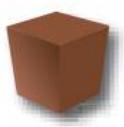



工厂标志:




产地方格 工厂方格
蓝 棕 灰 黄
游戏进行
游戏进行12轮,每轮由一个出牌-拿牌阶段,和一个扩张阶段构成。
出牌-拿牌阶段(3-5人游戏)
- 每个出牌-拿牌阶段,将按照玩家顺位依次进行(玩家顺位卡:1、2、3...)。
- 打出牌的大小,决定了挑选地图卡的先后顺序。
出牌
按照顺位顺序,玩家从手中面朝上地打出一张地图卡到出牌区。当打出地图卡时,玩家可以选择从自己领地上的产地方格拿一个资源,放到打出的这张地图卡上“加码”,使这张卡的点数增加60。第一个由玩家放到出牌区的资源,可以是任意一种。而随后的玩家如要打出的资源,则必须是与此同一种颜色。
在所有玩家都打出一张地图卡(可能同时也放置了资源)后,由此决定下一轮的玩家顺位。
按照打出地图卡的点数,从高到低排序,玩家重新分配顺位卡(见下面示例说明)。
按照新的顺位顺序,每名玩家轮流从出牌区选取一张地图卡,并进入扩张阶段。使用过的资源放回公共供应区。
示例:小智打出地图卡#11。
小霞打出地图卡#29和一个蓝色资源(29+60=89)。
小刚打出地图卡#57和一个蓝色资源(57+60=117),
(因为小霞出先了一个蓝色资源,小刚也只能出蓝色)。
小遥打出地图卡#59。
小刚新的顺位第一,小霞第二,小遥第三,小智第四。


扩张阶段
这个阶段玩家需要用出牌阶段拿到的地图卡来扩张自己的领地。玩家将新的地图卡放在自己的领地上,新的地图卡必须至少有一个方格与领地上的方格重合,可以盖在现有的卡上面,或垫在下面,新卡不能完全垫在原来的卡下面,必须至少留有一个方格是露出来的。

例外:湖泊方格不能被覆盖,必须露出来。
新放置的卡上如果有产地方格,则放置一个对应的资源。如果玩家新放置的卡盖住了一个产地方格,而该方格上还有未使用的资源,那么这个资源必须弃掉,放回公共供应区。
后续几轮

由顺位第一的玩家,从手上打出一张地图卡,开始新的一轮。
例外:
- 在第3轮之后,玩家手上剩下的三张牌,交给左手边的玩家。
- 在第6轮之后,每名玩家从牌堆面朝下抓6张牌作为新的手牌。
- 在第9轮之后,玩家手上剩下的三张牌,交给右手边的玩家。
- 在第12轮之后,游戏结束,玩家计算分数。
2人游戏的出牌阶段
在出牌阶段开始时,从牌堆翻开两张牌,这两张牌组成一组。两名玩家同时从手上出一张牌,组成第二组。由出牌较大的玩家,先选择拿取其中一组牌(在此之前,出牌较小的玩家可以从自己的领地上移除两种任意资源,以此为代价来优先选择牌组),剩下一组牌交给另一名玩家。玩家在这两张牌中选择一张弃掉,剩余的一张可以在扩张阶段加入到领地中。

游戏概要
地图卡上不同的地区类型

森林:
最后计分阶段,每个森林方格得 🌒️ 🌒️。

城镇:
最后计分阶段,每个城镇方格得 🌒,但只有最大的城镇区域可以计分。

产地方格:
在扩张阶段,每张新地图卡上的产地方格,可以获得一个对应的资源。资源可以在出牌阶段用来增加出牌的点数(增加60点),也可以在最后计分阶段运送到对应的工厂。

工厂:
最后计分阶段,每个未使用的资源可以运送到对应的工厂,根据工厂方格上的图标,可以获得☀️☀️/☀️☀️☀️/☀️☀️☀️☀️,每个工厂只能放置一个资源。

湖泊:
在扩张阶段,湖泊不能被覆盖。在最后计分阶段,所有相连的湖泊区域都会计分。每个湖泊区域中,第一个湖泊计0①,而之后的每一个湖泊方格可得②③④⑤⑥⑦。

休耕地:
休耕地在游戏中没有特殊效果,在出现平局时用于分出胜负。
可选规则:特殊计分卡
在游戏开始时,翻开一张特殊计分卡,在最后的计分阶段应用其特殊计分规则,具体如下:
你可以运送两个资源到一个工厂。
每有一行或一列连续3个的森林方格,可额外获得💡💡💡。
每个2x2的休耕地区域,可得💡💡💡💡。
每个湖泊可得 🌱️ 🌱️,而不使用常规湖泊计分方式。
一个城镇方格如果正好与4个其它城镇方格相邻,每个这样的方格得💡💡💡。
每个没有资源的产地方格,得💡💡。
每个工厂里的蓝色和/或黄色资源,额外得💡💡。
每个工厂里的灰色和/或棕色资源,额外得💡💡。
最后计分
玩家根据最终领地上的工厂、森林、湖泊和城镇方格进行计分。
- 每个森林方格计 🍎 🍎。
- 每个城镇方格计 🌒,但是只有自己最大的城镇区域参与计分。相同类型的方格横向或纵向相连,则算是同一个区域。
- 每个有对应资源的工厂,根据方格上的标志可计 🌱️/ 🌱️/ 🌱️/ 🌱️。
- 每个湖泊区域,第一个湖泊方格计0,之后的每一个湖泊计。
- 得分最多的玩家获得游戏胜利。如果出现同分,则最多休耕地的玩家获胜。

- 湖泊区域 - 最大城镇区域
计分示例:
森林:20 (10x2)
城镇:17
工厂: 14 (蓝: 3, 棕: 2, 灰: 4 + 2, 黄: 3)
湖泊:12 (0+4x3)
CREDITS
Designer: Kalle Malmioja
Art Director: Jere Kasanen
Illustrator: Ossi Hiekkala
Thanks to the following people:
Tobias Björkwall, Oskari Westerholm, playtesters from Gaming Club Kärmes, especially Kimmo Leivo, Tomi Mononen, Antti Muhonen, and Tuonela Gaming Club, especially Janne Kössö, Marko Naumanen, and Raisa Rautiola.
Special thanks for loving support and the 2-player playtesting: Kaisa Malmioja

© 2016 Lautapelit.fi
Urho Kekkosen katu 1
00100 Helsinki, Finland
info@lautapelit.fi
www.lautapelit.fi

Honshu_Rules_US_ENG_2017_2_7_web.md
Honshu
A map building card game for 2 to 5 players.
Honshu is a map building card game set in feudal Japan. Players are lords and ladies of Noble houses seeking new lands and opportunities for fame and fortune.
One game of Honshu lasts 12 rounds, and each round is divided into two phases.
First, Map Cards are chosen and the player who placed the highest valued card picks first from those played. Then the players use the Map Cards picked to expand their personal maps. Each player must expand their personal maps to maximize their scoring possibilities.
Manipulating your position in the player order is crucial for mastering Honshu.
CONTENTS
40 Wooden Resources (10 blue, 10 brown, 10 grey, and 10 yellow)1
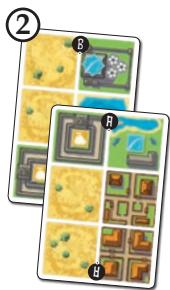
6 Starting Province Cards (The A-sides are identical and guarantee an equal setup2 while the B-sides provide an asymmetric setup for the players)
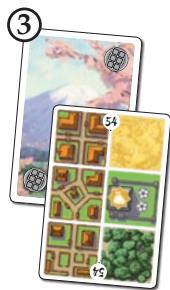
60 Map Cards (numbered 1 through 60)3
8 End of Game Scoring Cards4
5 Player Order Cards5
5 Scoring Summary Cards6
1 Score Pad7



GAME SET UP
Place the resources in the center of the playing area in a common pool . Decide1 which side of the Starting Province cards to use, then deal one random Starting Province card to each player with the chosen side face up. Place a matching2 resource on each of the production squares found on the Starting Province cards. The Starting Province card is the first card in each player’s respective map. Deal one random Player Order card and one Scoring Summary card face up to each3 4 player. Shuffle all the Map cards and deal 6 to each player face down as their starting hand . The rest of the Map cards form a draw pile .5 6
You are now ready to play the game.

Resources, Production Squares and Factories:
Resources:
Production Symbols:
Factory Symbols:
Blue Brown Grey Yellow

Production Square
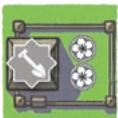
Factory Square
PLAYING THE GAME
The game is played over 12 rounds. Each round consists of a Card Selection Phase and a Building Phase.
CARD SELECTION PHASE (3 TO 5 PLAYERS)
• Each Card Selection Phase is played in ascending player order (Player Order cards: 1, 2, 3...).
• The cards played determine the order of picking the played Map cards.
Choosing Map Cards
Following the player order, the players play one Map card from their hands face up on the playing area. When the players play Map cards in this fashion, they may add a single resource from their production squares to the Map card. The first resource played each round can be of any type. Any further resources played in the same round must be of the same type. A resource on a Map card increases its value by 60.
After all players have played one Map card and a possible resource, a new player order is determined.
The Player Order cards are given to players in descending order of the total values of the played Map cards and spent resources. (see the example below).
In the new player order, every player chooses one of the Map cards to add to use during the Building Phase. The used resources are returned to the common pool.

Example: Jack played Map card #11. Mary played card #29 and a blue resource (=89). Chris played card #57 with a resource (=117), (blue because Mary already played a blue resource). Lisa played card #59. Chris is the new 1st player, Mary is 2nd. Lisa is 3rd and Jack is 4th.


BUILDING PHASE
In the Building Phase, the players expand their maps by placing the card they acquired in the previous Card Selection Phase. Each player must place their Map card in their respective map in such a way that at least one square of the new card is either on top of or hidden under a previously placed Map card, and at least one square of the new card remains visible.

Exception: Lake squares must always be visible and cannot be hidden.
A single matching resource is placed on each production square of the newly placed Map card. If a player places a card on top of a production square which still has a resource, that resource is discarded to the common pool. The resources are limited to the number of components in the box.

CONSECUTIVE ROUNDS
The player with the Player Order card #1 starts the Card Selection Phase of a new round by playing a Map card from their hand.
Exceptions:
• After the third round, the remaining three Map cards in the players’ hands are given to the player on the left.
• After the sixth round, deal six Map cards from the draw pile to each player face-down as their new hand.
• After the ninth round, the remaining three Map cards in the players’ hands are given to the player on the right.
• After 12 rounds the game ends and the final scoring takes place.
2 PLAYER CARD SELECTION PHASES
In the beginning of each Card Selection Phase, two Map cards are revealed from the draw pile. These cards form a pair. Then both players simultaneously reveal a Map card they want to play from their hand. These two cards form a second pair. The player who played the higher valued Map card wins and decides which pair he wants. However, before the winner can take the cards, the loser may choose to remove any two resources from their own map and take either of the pairs instead. The pair that was not chosen goes to the other player. Then each player discards one card from the pair and begins the Building Phase with the card left in their hand.

DIFFERENT AREA TYPES ON THE MAP CARDS

Forest:
In the final scoring, each visible forest square is worth .
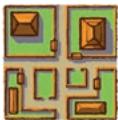
Town:
In the final scoring, each town square is worth a , but only the biggest town district of each player is counted.

Production Squares:
During the Building Phase, each new production square receives a matching resource on its space. Resources can be used in the Card Selection Phase to increase the card value by 60, or delivered to matching factories during the final scoring.
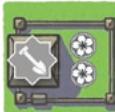
Factory:
In the final scoring, each unused resource can be scored by moving it to a matching factory for / / . Only one resource per factory.
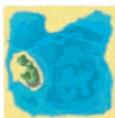
Lake:
In the Building Phase, lakes cannot be placed under another Map card and must always be visible. In the final scoring, each lake district is counted. The first lake square in each lake district is worth 0 , while each consecutive square in the district is worth .

Deserts:
Deserts have no effect on the gameplay. They are only used as a tie-breaker in the final scoring.
OPTIONAL RULE: End of Game Scoring Cards
At the beginning of the game, reveal one End of Game Scoring card. Each player will score the points indicated on the card as described below:

: You may deliver two resources instead of one to each factory.

: Each row or column of three consecutive forest squares gives bonus of .

: Each 2x2 block of Desert is worth .

: Each lake square is worth instead of the normal scoring.

: Each town square adjacent to exactly 4 other town squares is worth .
: Each visible and empty production square is worth .

: Each blue and/or yellow resource in a factory is worth extra .

: Each grey and/or brown resource in a factory is worth extra .
FINAL SCORING
Players score their maps based on their visible factories, forests, lakes, and towns.
• For each forest square the players score .
• For each town square the players score a , but only the biggest town district of each player is counted. A district consists of all orthogonally adjacent squares of the same area type.
• For each factory which can be given a resource from a matching production

square the players score / / .
• The first lake square of each lake district is worth 0 and each consecutive square is worth .
• The player who has the most wins the game. In case of a tie, the player with the highest number of visible Deserts wins the game.
Lake District
Biggest Town District
EXAMPLE SCORE: 63
Forest: 20 (10 x 2 )
Biggest Town District: 17
Factories: 14 (blue: 3 , brown: 2 , grey: 4 + 2 , yellow: 3 )
Lakes: 12 (0 + 4 x 3 )
CREDITS
Designer: Kalle Malmioja Art Director: Jere Kasanen Illustrator: Ossi Hiekkala
Thanks to the following people:
Tobias Björkwall, Oskari Westerholm, playtesters from Gaming Club Kärmes, especially Kimmo Leivo, Tomi Mononen, Antti Muhonen, and Tuonela Gaming Club, especially Janne Kössö, Marko Naumanen, and Raisa Rautiola.
Special thanks for loving support and the 2-player playtesting: Kaisa Malmioja
下载 Markdown