rules_zh_方鸟_9024.md
CuBirds 方·鸟

每天都有几十只小鸟栖息在我们乡村的篱笆上。到了该飞走的时候,这些小鸟会乱成一团,无法成群结队地飞回家。让我们帮助它们找到回家的路吧。
游戏设计师 Stefan Alexander, 游戏插画师 Kristiaan der Nederlanden

游戏设置
随机指定一名玩家作为发牌者。发牌者将这里110张鸟类卡洗匀,然后在桌子中间摆出4行鸟类卡,每行3张,这些鸟类卡请正面朝上地摆放a,这里称它为中央区。中央区每行必须由3张不同的鸟类卡组成。如果同种的鸟类卡在同一行出现多次,则将多出来的鸟类卡弃掉并换上新卡,直到每一行有3张不同的鸟类卡为止。将所有剩余的卡牌洗匀,形成一个正面朝下的抽牌堆b。
将抽牌堆放在靠近中央区,以便所有玩家都可抽到卡牌。发牌者从抽牌堆里给每名玩家分发8张正面朝下的鸟类卡:这些牌就是他们起始的手牌。然后发牌者再给每名玩家发一张正面朝上的鸟类卡,玩家们把这张牌放在自己的面前 C:这是他们所收集的首张鸟类卡。在抽牌堆的旁边预留足够的空间,以形成弃牌堆。
游戏中有110张鸟类卡,分别有8个种类。它的左下角会显示该种类的卡牌一共会有多少张。

游戏目标
谁先按以下的方式收集到指定数量的鸟类卡,他就是此游戏的赢家:
收集到7种不同的鸟类卡

或者
有2种鸟类卡至少3张


游戏概述
一局游戏会连续进行好几个轮。在每一轮开始,每名玩家手牌都有8张。该轮会不断地进行,直到其中一名玩家没有手牌为止。游戏会从发牌者开始按顺时针方向进行,一名玩家当其回合结束之后便会轮到下一名玩家进行游戏。在玩家回合里,他会在中央区放置一张或多张鸟类卡,以便将中央区的鸟类卡拿到手上。然后,如果该玩家可以完成一个鸟群,就可将其收集到自己面前。
玩家轮流进行回合,直到该轮结束,或者直到有玩家胜出游戏为止。


玩家回合
在回合里,你必须从自己手牌中放置一张或多张鸟类卡,然后你可以完成一个鸟群。然后按顺时针方向轮到下一名玩家继续进行游戏。
1. 放置鸟类卡
(强制执行)
你从手中选择一种鸟类卡,然后必须将该种鸟类卡全部打出。然后把它们放在中央区其中一行,接着把它们全部放到该行的左边或右边,摆放时应一张挨着一张地摆。你能选择任意种类的鸟类卡打出,这与已经摆放在中央区的鸟类卡无关。
当你把一张鸟类卡放到其中一行,若该行里已有一张或多张鸟类卡与新放置的卡牌种类相同,那么你必须将这些相同鸟类卡之间的所有卡牌拿到手上。

玛丽把她的两张鹦鹉卡放在这行的左边。因为在这行的另一边已经有另一张鹦鹉卡,这样她
举例

玛丽有四张鸟类卡。因为她想打出鹦鹉卡,所以她必须将手中两张鹦鹉卡都打出。

就围住了一张火煦鸟卡和一张猫头鹰卡。然后她将这两张牌拿到手上。

接下来,玩家将剩下的鸟类卡移到一起,从而使它们能够连成一行。
举例


一旦玛丽将卡牌拿了,她就把卡牌转到一起,便以将这行重组。
当(而且仅当)玩家从这一行拿了卡牌之后,如果这行只剩下一种鸟类卡,发牌者必须从抽牌堆中一张接一张地将卡牌添加到这行,直到里面有两种不同的鸟类卡为止。
从抽牌堆中添加的鸟类卡可以放在该行的左边或右边。

举例



这行只剩下鹦鹉卡?!必须添加新的鸟类卡!

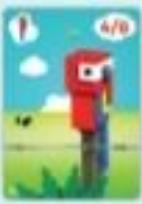

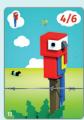
添加的苗张是一张鹦鹉卡。在这行仍然只有一种鸟类卡,所以发牌者要继续添加新卡到这行。


第二张是巨嘴鸟卡。现在这行有两种不同的鸟类卡,这就符合
要求,发牌者不用再往这行添加新牌。现在该行已经有五张卡了。
你放置一张或多张鸟类卡后,可能会发生一种情况,就是在同种鸟类卡之间没有围住其他任何的卡牌。此时,玩家就不会从中央区拿取卡牌。相反他们可以选择从抽牌堆中拿取首两张卡牌并将其加到手牌里。
举例

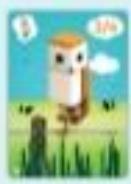


玛丽把一张猫头鹰卡或一张喜鹊卡放在这里,她连一张鸟类卡也没有围住,那就拿不到任何卡牌了。
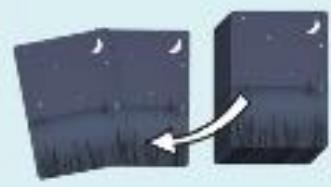
但她可以选择从抽牌堆中拿取苗两张卡牌。

2. 完成一个鸟群
(可选执行)
鸟群是由多张同种的鸟类卡组成。完成一个鸟群后,你可以将该鸟群其中的一张或两张鸟类卡进行收集,将收集的这些卡牌放在自己的面前。
鸟群
鸟群会有两种不同的规模:小型或大型。

所有同种的鸟类卡都具有相同的鸟群数量。
为了完成一个鸟群,你必须展示手中同种的所有鸟类卡。
若展示的卡牌数大于或等于该小型鸟群的数量,你就将其中一张展示的鸟类卡收集到自己面前。
若展示的卡牌数大于或等于该大型鸟群的数量,你就将其中两张展示的鸟类卡收集到自己面前。
无论是哪一种情况,剩余的鸟类卡都会放到弃牌堆。
如果你没有足够的鸟类卡去完成一个鸟群,你将不允许展示卡牌。
举例

弗雷德手里有6张喜鹊卡,他决定完成一个鸟群。于是弗雷德展示他所收集的所有喜鹊卡,这样便完成一个小型鸟群(5张卡)。
举例
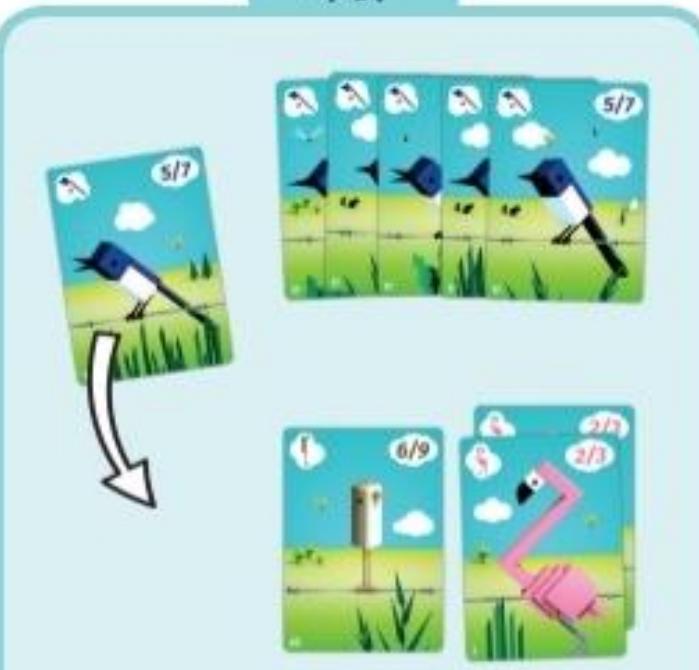
当他完成一个小型鸟群,弗雷德将其中一张喜鹊卡收集到自己面前。而其余的五张喜鹊卡都会放到弃牌堆。
每回合玩家只能完成一个鸟群,但不会强行玩家去完成一个鸟群。一旦玩家把鸟类卡收集到自己面前,该卡将永远不会回到玩家手中或者抽牌堆。
结束一轮
只要有一名玩家手上没有剩余的卡牌,这轮便会结束。而其他玩家手上剩余的卡牌必须放到弃牌堆。排列在中央区的卡牌保留在原处。
刚刚结束这轮的玩家成为新的发牌者,从抽牌堆中给每名玩家分发8张鸟类卡。如果抽牌堆已耗尽,就将弃牌堆里的卡牌重洗,形成新的抽牌堆。新的发牌者成为这轮的起始玩家。
举例
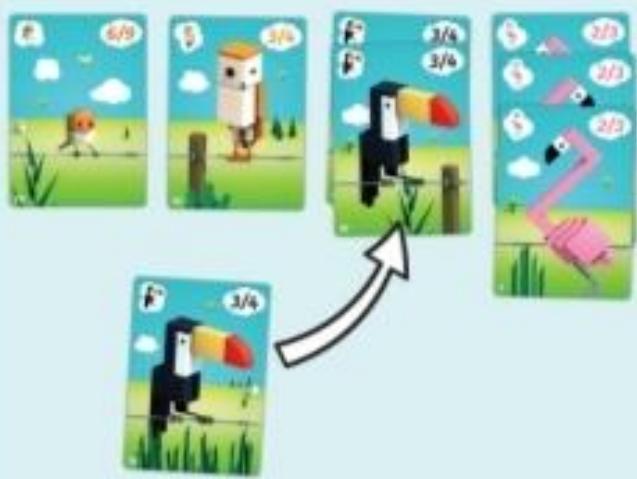
塞巴已收集了2张巨嘴鸟卡和3张火熙鸟卡。他透过完成一个小型鸟群来收集第三张巨嘴鸟卡。现在他达成两个种类至少有3张鸟类卡的胜利条件,所以他立即获得这局游戏的胜利。
结束游戏
如果一个玩家在自己回合结束时收集到7个不同种类,或者2个种类至少有3张鸟类卡,他就是这局游戏的赢家。
游戏立即暂停,该轮游戏也随之结束。
如果发牌者即使将弃牌堆重洗成为新的抽牌堆,也无法向每名玩家分发8张卡牌,在这种情况下游戏也会立即结束。然后,收集鸟类卡数量最多的玩家就是这局游戏的赢家。
若出现平局,那么平局者们共同获胜。
下载 MarkdownPANCUBIRCORE-cubirds_rules_ENG-1st_Printing.md
CuBirds

Every day, dozens of birds perch on the fences
of our countryside. When
it is time to fly away, these
birds jumble up, unable to
organize themselves into flocks to fly home. Help
them find their way back to their nest.

SAURUS

Game Design: Stefan Alexander Illustrations: Kristiaan der Nederlanden

Setup
One player is randomly designated as the dealer. The dealer then shuffles the 110 Bird cards and lays out 4 rows with three cards faceup at the center of the table . Each row must be composed of 3 different Birds. If the same Bird is present multiple times on a given row, discard the extra Birds and place new cards until each row contains 3 Birds from different species. All of the remaining cards are shuffled to form a facedown draw pile . This draw pile is placed near to the center of the table, accessible to all players. The dealer gives 8 facedown Bird cards from the draw pile to each player: this is their starting hand. Then the dealer deals one Bird card to each player, faceup, which the players keep in front of them : this is the first Bird in their collection. Keep enough free space next to the draw pile to form a discard pile.


Object of the game
The game is won by the first player that manages to have gathered in their collection in front of them:
Either 7 different species

Or 2 species of at least 3 Birds


Game overview
A game plays in several successive rounds. At the beginning of each round, each player starts with 8 cards in their hand. A round continues until one of the players has no cards left in their hand. Starting with the dealer and going clockwise, each player fully completes their turn before proceeding to the next player. On their turn, a player lays one or more cards at the center of the table in order to pick cards on the table to put into their hand. Then they can complete a Flock in order to add Birds to their collection.
Players take turns until the end of the round or until a player manages to win the game.
Turn of a player
On their turn, a player must lay one or more Birds from their hand, then they may complete a Flock. The play then proceeds to the next player, going clockwise.
1. LAY BIRDS (MANDATORY)
The player chooses a Bird from their hand and must play all the Birds of this species that they have in their hand. They lay these birds, each one next to the other on the left or on the right side of one of the 4 rows at the center of the table. They can choose their cards independently of the species of the Birds already present in the rows.
If a player places a Bird in a row that already has one or more Birds of that species, the player must take all the cards between these Birds into their hand.

EXAMPLE

Mary has 4 Birds. As she wants to play the Parrots, she has to play the 2 Parrots that she has in her hand.
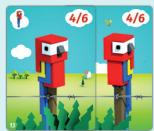


Mary lays her 2 Parrots on the left side of the row. As there is already another Parrot on the other side of the row,

she surrounds a Pink Flamingo and an Owl. She then puts these two cards into her hand.

Next, the player slides the remaining Birds together, so that they form a continuous row.
EXAMPLE


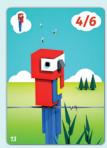
Once she has taken the cards, Mary reorganizes the row by bringing the cards together.
If (and only if) there is only one species of Birds left in the row right after the player has taken cards from it, the dealer must add cards from the draw pile to this row, one by one, until it contains two different species.
The Birds added from the draw pile can be placed either to the left or to the right of the row.

EXAMPLE


There are only Parrots left in the row! New Birds must be added!


The first card added is a Parrot. There is still only one species of Birds in the row, so the dealer adds a new card.




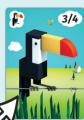
The second card added is a Toucan. With two different

species, the row is now complete, and the dealer stops adding new cards to it. There are now five cards in the row.
It may happen that a player lays one or more Birds without surrounding any other cards between Birds of the same species. In this case, the player takes no cards from the center of the table. If they so choose, they have the option to take the two first cards from the draw pile and add them to their hand.
EXAMPLE


By placing an Owl or a Magpie here, Mary would not surround a Bird and would not take any cards.

She would then have the option to take the 2 first cards from the draw pile.

Flocks can come in two different sizes: small or big.
2. COMPLETE A FLOCK (OPTIONAL)
A Flock is a series of Birds of the same species. Completing a Flock allows the player to add one or two Bird cards to their collection, which is kept in front of them.
Flocks


The number for a small Flock is displayed on the left.


The one for a big Flock is displayed on the right.
All Birds from the same species also possess the same Flock numbers.
In order to complete a Flock, the player must reveal all Birds of the same species that they hold in their hand.
If the number of revealed cards is higher or equal to the number stated for a small Flock, the player adds one of these revealed cards to their collection.
If the number of revealed cards is higher or equal to the number stated for a big Flock, the player adds two of these revealed cards to their collection.
In both cases, remaining cards are placed in the discard pile.
A player is not allowed to reveal cards if they do not have enough of them to complete a Flock.
EXAMPLE

Fred has 6 Magpies in his hand and decides to complete a Flock. He reveals all the magpies that he has in his hand and produces a small Flock (5 cards).
EXAMPLE
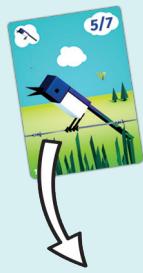


As he completes a small Flock, Fred keeps one Magpie and adds it to his collection in front of him. The five other Magpies are placed in the discard pile.
On their turn, a player can only complete a single Flock, but they are never forced to complete a Flock. Once a Bird has been added to a player’s collection, it can never be put back into their hand or into the draw pile.

End of a round
As soon as a player has no cards left in their hand (only checked at the end of a player’s turn), the current round ends. Other players must place any cards that they have left in their hand into the discard pile. The cards laid in rows at the center of the table remain in place.
The player who just ended the round becomes the new dealer and gives 8 cards from the draw pile to each player. If the draw pile becomes depleted, shuffle all the cards from the discard pile to form a new draw pile. The new dealer is the first to play in this round.
End of the game
If a player has 7 different species or 2 species of at least 3 Birds in their collection at the end of their turn, they win the game. The play immediately stops, and the round is ended.
EXAMPLE

Seb has 2 Toucans and 3 Pink Flamingos in his collection. He obtains a third Toucan by completing a small Flock. With now 2 species of at least 3 Birds, he immediately wins the game.
The game ends immediately if it is impossible for the dealer to deal 8 cards to each of the players even after reshuffling the discard pile into a new draw pile. The player with the most Bird cards in their collection then wins the game (you only score birds in your collection, even if you have a complete set in your hand). In the case of a tie, tied players share victory.
下载 Markdown