rules_zh_奇伍德漂流_7340.md
Key Flow
2-6人的遊戲 \~ 非官方重寫手冊 v1.1 - by bgg member 'dreamshade'
中文翻譯:willhigh.tw - 2019/8/29
概觀
在Key Flow 中,每位玩家是 Keydom 這片土地上新村莊的創立者。透過輪抽顯示不同田地、港口和建築的卡片來建設你的村莊:
- 每輪(稱為一季)開始你會持有一堆手牌。選擇一張打出,然後把剩餘的手牌傳給下一家。
- 接著從傳給你的手牌中選擇一張打出。這一季會在所有輪流傳的牌都被打出後結束。
所有卡片不是村莊卡就是村民卡(奇寶)。打出村莊卡可以加入到你的村莊。
- 某些村莊卡附帶一個行動。把村民卡打在行動上可以執行它。
- 某些村民卡可在同一季中執行一個行動多次或者使用行動在對手的村莊。
- 在季末需移除桌上所有村民卡,以便再次使用卡片行動。
輪過四季後,計算所有卡片上的分數,分數最高的為贏家。
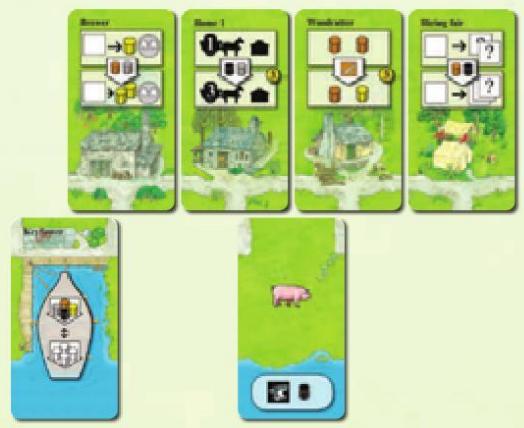
你的村莊會從一張家園卡開始。新的村莊卡打出時要相鄰在村莊中的卡片。

這張卡片提供一片鐵砧技能板塊和一個鐵塊。卡片上的豬可因其他卡片得分


遊戲結束時,農園卡可使你卡片上的動物得分
這張船卡片提供一個獨特能力

遊戲結束時,執行運輸行動把資源移到穀倉上可得分
這張卡片有一個行動。打出一張村民卡在上面可獲得木頭資源


執行升級行動,可覆蓋穀倉上半部來增加得分
Components

★ 6張家園卡
6張商店卡

186張季節卡一
36張春季卡, 42張夏季卡,
48張秋季卡, 60張冬季卡★ 180個資源 —

40個鐵塊, 40個木頭, 40顆石頭, 60個黃金

45片單面技能板塊 —
15片鐵砧, 15片十字鎬, 15片鋸子
9片雙面技能板塊 —
3片鐵砧, 3片十字鎬, 3片鋸子

51個村民指示物,
12片資源乘倍板塊,
45片升級板塊
遊戲設置
季節卡牌庫
每張季節卡有一個玩家數字或K 印在背面。把所有季節卡翻到背面,然後執行下列步驟:
i. 找出玩家數字比遊戲人數大的卡片,把這些卡片放回盒中。例如:在4人遊戲時,把玩家數字5+和6+的都放回盒中。
ii. 參考右邊左下表,依據玩家人數把對應張數印有K的春季卡放回盒中。對夏季卡和秋季卡也一樣方式處理。
iii. 把剩餘有K 和玩家數字的春季卡 形成牌庫。對夏季卡 和秋季卡 也同樣方式處理。
iv. 把有數字的冬季卡放到一旁。
v. 混洗印有K 的冬季卡 形成另一堆牌庫。每位玩家面朝下發5張卡(兩人遊戲時發7張)。把剩餘印有K 的冬季卡放回盒中。
④ 放回盒中的卡片不可翻開查看。這些卡片在遊戲中不會再使用。
玩家卡片
把商店卡放在一旁。上面會放你在季末時收集到的村民卡。
④ 未用到的家園卡和商店卡放回遊戲盒中。
隨機發給每位玩家一張家園卡和一張商店卡。把家園卡放在你的面前,作為你村莊的第一張卡片。
④ 任何時候,可以查看自己的K冬季卡。
公用區
把K冬季卡放在商店卡旁邊。冬季開始時,打出其中一張,再把剩餘的卡片放入其他冬季卡一起混洗。
把所有資源、技能板塊、村民指示物和升級板塊放到桌上,形成公用區。把單面技能板塊翻到背面,並混合成一堆。
當你獲得或付出這些物件時,就從公用區拿取或歸還。
- 這些物件數量是無限供應的,如果用完請找其他東西代替。

春季卡
秋季+6人玩家卡





五堆牌庫—春天、夏天、秋天、冬天(玩家數字)、冬天(K,發給玩家的)
| 放回遊戲盒的K卡張數 | |
| 2-3p | 6張卡 |
| 4p | 4張卡 |
| 5p | 2張卡 |
| 6p | 0張卡 |
| 各季每位玩家擁有的手牌張數 | ||
| 3-6p | 2p | |
| 6 | 8 | |
| 7 | 9 | |
| 8 | 10 | |
| 9 | 12 | |

家園卡

商店卡

季節(一輪)
一場遊戲會按照春 🍎、夏 🍎、秋 🍎、冬 🍎 順序進行四個季節。每一季有四個階段。
I. 分發卡片
拿當季的牌庫分發卡片給每位玩家。整堆牌庫要發完並確保每位玩家獲得一樣的張數。
II. 輪抽卡片
這個階段的回合數就是每位玩家獲得的卡片張數。每回合執行下面步驟:
- 各玩家秘密選擇一張手牌,面朝下放在面前桌上。
- 當所有玩家選好後,同時翻開並打出卡片。
- 把剩餘的手牌傳給相鄰玩家。春秋時傳給左邊(順時針),夏冬時則傳給右邊(逆時針)。
下一回合,玩家從收到的手牌中選擇一張。重複上述步驟,直到每位玩家打出最後一張牌。
玩家有三種方式執行回合:
- 打出一張村莊卡,加入到你的村莊。
- 打出一張村民卡在一張村莊卡上,使用它的行動。某些村民卡可讓玩家使用自己或對手村莊的行動。
- 面朝下棄掉一張卡片到桌子中央,拿取一個村民指示物。但不能使用這張卡片的效果。

季節卡背面有顯示傳遞卡片的方向
打出村莊卡
打出村莊卡時,把它加入你的村莊。
- 打出位置必須至少相鄰一張你村莊中的卡片。
- 你的村莊會有兩列。有道路的卡片(例如你的家園卡)必須打到上面那列。
- 有河流的卡片必須打到下面那列。對照上面列,順移半張卡片距離。
- 同列卡片之間可以留空。
(續下頁)

III. 村民指示物行動
輪抽後,玩家可以打出村民指示物,執行自己卡片上的行動 (見第5頁)。
IV. 重置行動
清除行動上所有村民。
• 棄掉所有打出的村民指示物,歸還到公用區。
- 把打出到村莊的村民卡面朝下塞到你的商店卡之下。
- 現在,你可以查看所有在你的商店卡下面的卡片。其他階段時,你不可以這樣做。
秋季末
第三季結束後,每位玩家秘密從K冬季卡牌堆任選一張卡片。所有玩家都選好後,同時翻開並打出卡片,類似玩家在輪抽階段打出村莊卡的動作。
混洗剩餘未選擇的K冬季卡和玩家數字的冬季卡牌庫,形成最後一季使用的冬季牌庫。
★ 季節間保留未打出的村民指示物。
打出卡片不需付出費用,除非是打出村民卡在一個需要付出費用的行動上。
秋季末,玩家必須選擇並打出一張K冬季卡。不可棄掉這張卡換取村民指示物。
競爭玩法(初學者不建議)
玩家仍同時翻出所有選擇的卡片。這種玩法讓玩家在決定自己行動前有機會先看對手做了什麼行動。玩家都翻開卡片後按照下面順序打出卡片:
i. 若有需要,同時面朝下棄掉卡片拿取村民指示物。
ii. 再按由小到大順序打出所有村民卡,從數字最小的卡片開始,一次打出一張卡片。
iii. 最後同時打出所有村莊卡


行動
道路村莊卡提供一個行動。打出村民卡在行動上可以獲得顯示的物件或執行運輸(馬車)和升級(建造圖示)行動。

獲得1塊木頭
玩家只能使用卡片上半面板的行動。要使用下半面板,玩家必須先執行一個升級行動將上半部覆蓋。

獲得3塊木頭
若有一部分包含分數(黃色數字)圖示,表示它不是行動。只是表示遊戲結束時會計分。
X ⑤
計分面板
(非行動)
打出村民卡
把村民卡打出在你想執行的行動上。卡片上的箭頭表示可以打在哪些村莊的卡片上 — 自己的村莊或是左邊或右邊玩家村莊的卡片上。
4-6人玩家時,永遠不能使用與你不相鄰玩家的村莊中行動。
所有單一村民卡都有三個箭頭。
左箭頭一
可打在左邊玩家
的村莊
右箭頭—
可打在右邊玩家
的村莊
下箭頭一
可打在自己村莊
卡片號碼一只適用競爭玩法
兩人遊戲箭頭
兩人遊戲時,玩家的村莊是以家園卡分成兩邊。左右箭頭允許玩家把卡打在對手村莊的家園卡上或者是在家園卡的某一對應邊(從打出卡的玩家角度看)

右箭頭—
家園或它右邊
立即獎勵
當玩家打出一張河流村莊卡,立即獲得卡片上圓角框內顯示的物件。

船
船卡沒有行動。它們提供獨特能力或者打到村莊時可計分(見第8頁的船卡列表)。
有獨特能力的船卡片
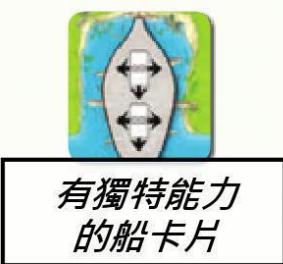
動物
牛、豬和綿羊沒有效果。遊戲結束時,某些村莊卡可以對卡片上的動物計分。

重用行動
每張村民卡上會顯示1, 2或3名村民。想再使用某個行動,玩家必須打出一張卡上村民人數比已經打在那個行動上的卡片張數更多的村民卡才行。
村民卡放置時要露出卡片下方的小村民圖案,以便玩家可以看到。這些小村民圖案並沒任何效果,它們是幫助玩家記憶多少張卡已經打出。
♦ 卡片上的數字並不影響打出卡片的順序。

無卡一
可打出任意村民人數的卡
1張卡一可打出有2或3名村民的卡
2張卡一可打出有3名村民的卡
3張卡一無法再使用這個行動
顏色和動物
村民的顏色對應季節的顏色。遊戲結束時,某些村莊卡可以對押在商店卡下方某些顏色的村民卡計分。
打出村民卡時,卡片上的動物並無效果。但是遊戲結束時,某些村莊卡可對這些動物計分。

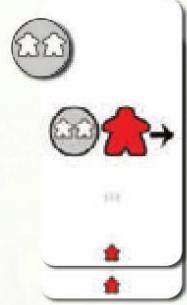
忽略同一回合中的改變
當玩家打出村民卡時,當作是在回合開始時執行的狀況一樣。
- 村莊卡打出的當回合,不可打村民卡在上面執行。
- 村莊卡升級的當回合,打出村民卡在上面只能執行未升級動作。
- 多人打出村民卡在同一張村莊卡上,只需以眾人未打上前在村莊卡上的村民卡張數來比較即可。
玩家同時打牌時,一個行動上可能會有超過3張的村民卡。
此欄規則主要是讓玩家可在同一回合中同時打出卡片所設計。
獲得和付出物件
資源是唯一必須保留在村莊卡上的物件。
- 當玩家從自己村莊的一張卡片上獲得資源,把資源放在卡片上。

- 當玩家從對手村莊的一張卡片上獲得資源,把資源放到家園卡上。
如果一張卡上有6個同樣資源,可以換成一片資源乘倍板塊。

黃金是百搭資源。玩家可在付出或計分時用它取代其他資源。
- 遊戲結束時,沒有用在卡片計分的黃金可得1分。

打出村民指示物
玩家有兩種方式可以使用村民指示物。
當打出村民卡時也可以打出村民指示物。這樣做可以把村民卡視為有3個村民,就可以打在已有1或2張村民卡在上面的行動上來使用它。
- 打出一張上面有村民指示物圖案的村民卡,可以獲得1個村民指示物。玩家可以立即打出剛獲得的指示物在這張卡片上。
玩家打出有指示物圖案的卡片當時,可以獲得村民指示物,不是其他玩家打牌在自己村莊時。
村民指示物無法讓你使用已有3張村民卡在上面的行動。

打出這張村民卡時,可以獲得村民指示物。可立即把獲得的指示物直接打在這張卡上,以使用已經有村民卡在上面的行動。

回合開始時,這張行動卡有1張村民卡在上面。周圍3位玩家都可在這回合打出1張村民卡,只要每位玩家的卡都至少有2名村民。
把技能板塊放在面前。
- 當玩家獲得1片隨機(?)的技能板塊,就抽一片單面板塊。保持面朝下並可隨時查看它。


- 當玩家獲得一片特定的技能板塊,拿取一片對應的雙面板塊,並放在面前。
不論單面或雙面,付出或計分技能板塊時視為相同。
要付出一片單面板塊時,把它翻面然後面朝下放回供應堆。
白色的資源和板塊圖示表示可以用任意種類的資源或技能板塊來付出或計分。

把村民指示物保持在你的面前。

在每季卡片輪抽結束時,玩家可以打出村民指示物執行自己村莊的行動。每個指示物視為有2名村民的卡片。
- 打出1個指示物在上面有0或1張村民卡的行動上,或打出2個指示物使用上面有2張村民卡的行動。
- 透過這種方式,可重複使用同一行動,直到上面有3張村民卡(每個這樣放上去的指示物視為1張卡)。
The image contains no discernible text or characters. It is a simple graphic with two brown cylindrical objects above a rectangular frame containing a small orange rectangle. Therefore, no OCR output can be generated.

The quick brown fox jumps over the lazy dog.
用1個指示物
執行沒有卡在
上面的行動用1個指示物
執行上面有1張
卡的行動
用指示物執行3次上面無卡的行動

運輸和升級行動
家園卡行動可以運送資源,以及升級卡片。某些卡也提供這種行動。

每一次運輸可以移動任1個資源到相鄰卡片上。卡片的馬車上數字表示可以執行最多幾次運輸。
4次運輸
和2次升級
- 若可做多次運輸,可以移動同一資源多次或者移動不同資源。
玩家只能對自己村莊的卡片執行運輸和升級行動。


3次運輸行動,可移動最多3個資源。
遊戲結束
四個季節後,計算自己村莊的得分,分數最高的為贏家。若有平手,擁有綿羊最多的玩家勝出。
如果綿羊數又有平手狀況,則豬最多的贏。若還是平手,則牛最多的勝出。若還平手,都是贏家吧!
基本得分
卡片面板:每張村莊卡片計分它露出部份最上方標示分數。

升級板塊:每片翻面的升級板塊得1分。

黃金:每個未被用來計分卡片的黃金得1分。

然後每個建造符號可以執行一次升級。
- 每一次升級行動,選擇一張卡,付出卡片上箭頭內的費用,然後拿一片升級板塊覆蓋卡片上半面板。
- 若費用包含資源,玩家必須付出想要升級的卡片上顯示的資源。
- 放置升級板塊時,有黑色圖示那面要朝上。
★ 升級板塊不可覆蓋卡片下半面板。

付出1個鐵塊和1塊木頭把啤酒館升級,提升卡片行動,遊戲結束時可計分卡片下半面板標示分數。
不做升級卡片,也可改用升級行動把自己村莊中一片升級板塊翻面。這樣做不需要費用,板塊可得1分。
村莊卡計分
某些卡片可對玩家擁有的資源、技能板塊和村民指示物來計分。每1個物件只能用在某張卡片的計分。
- 可把黃金用在某張卡計分,百搭成其他需要的資源。
- 大多數計分資源的卡片可對玩家任意卡片上的資源計分。一張倉庫卡只能計分遊戲結束時配在它上面的資源。
其他卡片則會對動物、船隻、村民和運輸行動的卡片來計分。這種情況下,一張卡片也只能用在某張卡片的計分。
披露押在商店卡下的村民卡片。每張村民卡片可以用在某張卡片的計分。
若一張卡計分條件為成套,則只有完整成套才能得分。部份完成沒有分數。
用在行動上的村民指示物不可用來計分,因為這些指示物用完後應該都要歸還公用區。
卡片上框中的動物和村民圖案只是計分圖示。不可用來加入計分條件使用。



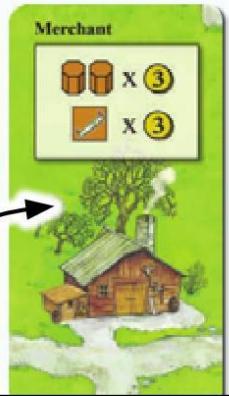
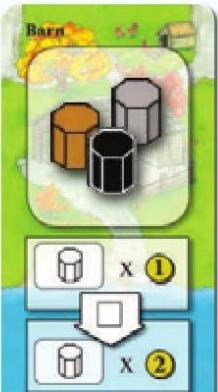
每2塊配給商人的木頭可得3分。穀倉是一張倉庫卡,因此每1個在它上面的資源才可得1分(升級後2分)。若兩張卡都有,只能把木頭配給其中一張卡。
村莊卡總覽
物件行動:獲得卡片上顯示的物件。
啤酒屋和工作坊提供任選的一個顯示物件(或升級後顯示的物件)。


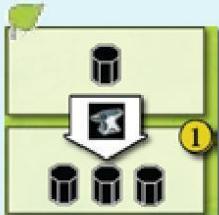
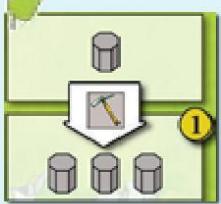


物件計分:配置資源或技能板塊到這些卡片上以在遊戲結束時可計分。
倉庫計分:這些卡可計分資源。但只對遊戲結束前,運送到它們上面的資源計分。



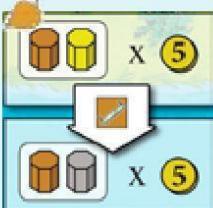
小販:這張卡的行動可讓玩家運送資源並提供村民指示物。但它不能升級任何東西。

旅人小屋:把運輸卡配置到這張卡上可以獲得等於配置卡片張數的分數;也可配置船卡給它,每張船卡2分。

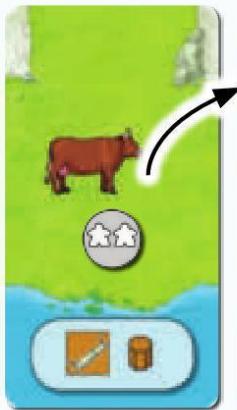

染坊可對每套配給它的一隻牛和一個村民指示提供5分。左邊染坊卡上的牛可配給自己或其他對牛有計分的卡片。
X③
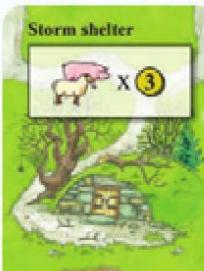


這張村民卡有2名紅色村民和1隻豬。玩家只能把它配給1張卡的計分,不可分割村民卡和豬給不同卡片。
付出技能行動:玩家不可執行這些行動,除非先付出顯示在箭頭左方的技能板塊。


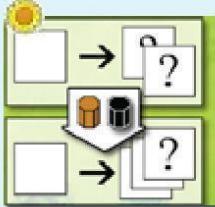
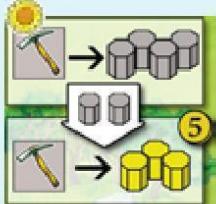

運輸和升級行動:這些行動可以運送資源和升級卡片(或者翻面升級板塊)。


技能板塊分開計分。不需要兩者都有才能計分。
相同計分:針對這些卡,玩家選擇一種技能板塊或者一種村民顏色,然後對每一個有配置給這些卡的物件計分。


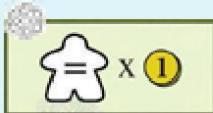
村民計分:配置村民卡到這些卡上,可以對在這些卡上顏色相符的村民圖案個別計分。商場需一個黃金搭配村民才可計分。
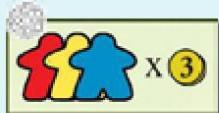
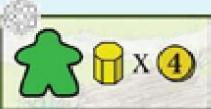
動物計分:配置村莊卡或村民卡給這些卡,然後對配置卡片上的動物計分。這種卡大多數需要成套的物件才可計分。


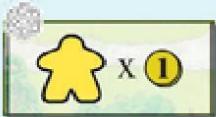


村民卡計分:這些卡可對任意顏色的特定村民卡計分(並非對單一村民)。大公會(Key Guild)必須一張有一名工人搭一個指示物圖案的卡片加上一個未使用指示物成為一套才可計分。


雙份升級計分:這些卡本身沒有計分或行動功能,但玩家有機會升級兩次,每次可獲得更高的分數。

船卡總覽

奇想號:玩家可打出有1個村民搭1個指示物圖案的卡以及有2個村民的卡,當作有三個箭頭方向可打。

曼思菲爾德方舟號:遊戲結束時,卡片計分時可把2隻綿羊當成1隻豬,反之亦然(平手狀況不適用)。

魚鰭號:每次翻面一片升級板塊,玩家可立即獲得一個黃金,把它放在升級板塊的那張卡片上。


大五月花號:需要付出費用升級某張卡時,玩家可付出任意種類資源來替代原本要求的資源種類。

感謝名單

遊戲設計: Sebastian Bleasdale, Richard Breese, Ian Vincent
首席畫師: Vicki Dalton
大五月花號傳承繪畫和大河流標誌設計: Juliet Breese忘形號、無敵號、海堡壘號、海布李斯號(由左而右):遊戲結束時,可配置卡片到這些船卡上計分。計分規則是依據動物的數量或者配置的船卡而定。例如:忘形號上少於3條牛沒分數,3-4條牛則有10分,而5條或以上則有20分。計分海布李斯號時,玩家可以把它本身也配置給自己來計分。同一張船卡不可同時配給海堡壘號和旅人小屋。
繪圖: Sebastian Bleasdale and Richard Breese
Mark Adams, Ralph Anderson, Josh Baldwin, Lynwen Barkham, Michael Baskal, Ben Bateson, Jon Benjamin, Caroline Bleasdale, Tony Boydell, Jenny Bradbury, David Brain, Jonathan Breese, Mark Breese, Stuart Breese, Paul Bryant, Robert Canner, Dominic Capuchettes, Mark Chessher, Vicki Dalton, Tom DeMarco, Will DeMorris, Jeroen Douen, Exeter Board Games Club, Martha Garaan-Murillo, Penny Gray, Paul Grogan, Andrew Harding, Peter Hazlewood, Mikko Heikelä, Alan How, Anthony Howgego, Joe Huber, Tanya Ironmonger, Paul Jefferies, Andrew Kerrison, Ron Krantz, Wendy Lefevre, Paul Mansfield, Ian Markey, Paul Marsh, John Mitchell, Kris Moulton, Simon Neale, Alan Paull, Charlie Paull, Nikolay Pegasov, Benjamin Pfob, John Plant, Tony Ross, Frank Sandstom, Jennifer Schlickbernd, Fran Snook, Graham Staplehurst, Jago Staplehurst, Tom Staplehurst, Britta Stöckmann, Swiggers Games Club (London), Bianca van Duyl, Rick van Horn, Simon Weisberg, Janet Welch, Craig Wheatley, Ian Wilson, and Stephen Wright.
特別感謝 Hans im Glück 再次慷慨地准許使用廣受歡迎的卡卡頌米寶外型,來呈現他們的遠親-奇寶-在Key系列遊戲中。
實作: Richard Breese
德文翻譯: Ferdinand Köther
遊戲由 Ludo Fact GmbH 製造和核對整理。
設計師想感謝下列遊戲測試者和貢獻者的協助:
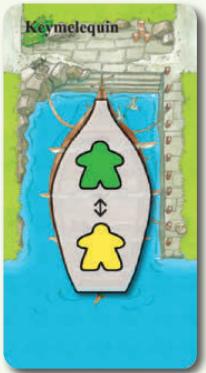
梅洛葵號:遊戲結束時,卡片計分時可把綠色村民當作黃色使用,反之亦然。
Published in 2018 by: Co-publisher:

HUCH!
R&D Games,
6 Denne Close,
Stratford upon Avon,
CV37 6XL,
UK.
Hutter Trade GmbH + Co KG
Bgm.-Landmann-Platz 1-5
89312 Günzburg
GERMANY.
rqbreese@gmail.com
www.hutter-trade.com
North American Distribution:
Game Salute LLC,
34 Londonderry Road
Londonderry, NH 03053
USA
www.GameSalute.com
Missing Pieces
Whilst the manufacturers make every effort to ensure that your copy of Key Flow is complete and in good condition, the large volume of units and components means that occasionally errors will arise. In these circumstances, depending on where you acquired your copy of the game, please contact us at:
In North America: www.starling.games/replacements
From R&D Games at the Spiel, Essen: rqbreese@gmail.com
Elsewhere in the World: info@hutter-trade.com or visit www.hutter-trade.com
非官方重寫手冊 v1.1: (譯按:本中文手冊翻譯的來源)
此份手冊是由Dean Ray Johnson (BoardGameGeek.com會員ID: dreamshade)製作、編輯和排版。此份文件有包括了R&D Games原始官方手冊的文字和圖片以及由原作者Richard Breese上傳到BoardGameGeek.com的圖片。所有拷貝到文中的文字和繪圖都應屬非營利工作者無私分享目的。
下载 Markdown180813 5306735-001_Spielregel_Key Flow_GB.md
Key Flow
Game overview
The game Key Flow is played over four seasons (rounds): spring, summer, autumn and winter.
At the start of the game, a player's village consists of just their home card. Éach player is then dealt a number of winter cards (which they keep until winter) and a hand of spring cards. Players then choose one of their spring cards and pass the remaining cards to the player on their left. This process is repeated until all spring cards have been chosen.
There are two main types of cards, village cards and keyple cards.
Village cards feature either a road or a river. If the card features a road it is placed in the top row of cards alongside the player's home card. If the cards features a river it is placed in a row below (offset by half a card's width).
Keyple cards are played above the top row of village cards (see diagram below) in the player's own village or in their neighbours' villages, in order to generate resources or actions. The buildings on the top row of cards may produce gold, iron, stone, wood, skill tiles, keyple tokens, transportation and/or building upgrade opportunities.
Village cards on the bottom row cannot be used by keyples, but give their owner resources, skill tiles and animals.
Players are dealt and choose further cards in summer and autumn. In summer, cards may also include boats, which give special unique abilities to their owner. In autumn, village cards may include storage buildings, which require resources to be transported onto that card.
At the end of autumn each player will choose and play one of the winter cards they received at the beginning of the game. The other cards will be included in the cards dealt out and chosen in winter. All the winter village cards give different point scoring opportunities.
Throughout the game players may transport goods in order to upgrade buildings to make them more productive or to generate additional points. Keyple tokens can be obtained and used to supplement the number of keyples shown on the keyple cards or to generate extra turns at the end of a season.
All of the scoring in the Key Flow game takes place at the end of winter. Points are scored from the village cards in various ways, through upgrading buildings and from gathering gold. The player who scores the most points wins the game.

Components
Cards:
6 home cards.
6 store cards.
186 season cards (36 spring, 42 summer, 48 autumn and 60 winter cards).



Spring

Summer


Winter
Resources counters:
180 octagonal wooden resource counters:

40 iron
40 wood


60 gold, which can be used in place of any of the above types of resource and is worth 1 point at the end of the game.
Note, a white resource icon means any type of resource of the player's choice.
Tiles and tokens:
12 resource-multiplier tiles - exchange these for 6 resource counters if there are insufficient resource counters available.

51 keyple tokens
45 upgrade tiles

45 single sided skill tiles:


Back of tiles.
15 anvils, 15 pick axes and 15 saws.
9 double-sided skill tiles: 3 anvils, 3 pick axes and 3 saws. (Take these when a specific type of skill tile is obtained from a village card.)

Note, a white skill tile icon means any type of skill tile of the player's choice. A white ‘=' skili tile icon means skill tiles of the same type. A white ?' skill tile icon means a skill tile taken at random.

Set up
Place the following in easy reach of all players (for example in the middle of the table):
Resources counters
Keyple tokens
Upgrade tiles
Single-sided skill tiles (face down and well mixed)
Double-sided skill tiles
Based on the icons on the back of the cards, separate the cards into 6 piles: home, store and the four seasons: spring, summer àutumn and winter (see illustrations left).
Sorting the season cards
The season cards have either the letter or a player number indicator from 2+' to 6+' on the back of the card. Separate the , cards and the numbered cards for each season.

K, cards
Player number indicator
Then for each season's cards:
K cards
Shuffle the K, cards. For spring, summer and autumn, return a number of the , cards unseen back in the game box as follows:
2 or 3 players – 6 cards,
4 players – 4 cards,
5 players – 2 cards,
6 players – 0 cards.
All cards returned to the game box are not used in this game.
Numbered cards
Return to the game box the cards showing a higher player count, if any, than the number of players in the game. E.g. in a 4 player game, return the cards marked 5+ and 6+ to the game box.
Shuffle the remaining spring K, and spring numbered cards together to create a spring deck. Repeat the process with the remaining summer and autumn cards.
Shuffle the winter K. cards and place in a deck.
Place the numbered winter cards in a separate deck.
There should now be 5 separate decks, one each for: spring, summer, autumn, the winter K, cards and the winter numbered cards.


Set up
Dealing the cards
Deal each player the following:
1 home card, which they place face up in front of themselves. Return any unused home cards to the box.
1 store card. This is placed to the side. Used cards are placed underneath the store card later in the game.
6 spring cards (or 8 in a two-player game). These are alil of the cards not already returned to the game box and form the players' starting hands. Players may look at their cards. Note, it does not matter that the backs of the cards give some identification as to the mix of cards each player has been dealt.
5 winter , cards (or 7 , cards in a two-player game). Return any unused winter K, cards unseen to the game box. Players may look at their winter cards at any time in order to heip them decide their strategy. The winter K, cards are kept face down next to the player's store card.
Place the stacks of summer, autumn and winter cards to one side. These will be used later in the game.
The game can now begin.

Overview
The game takes place over four seasons (rounds): spring, summer, autumn and then winter, with the following phases:
-
Dealing the cards.
-
Drafting and playing the cards.
-
Use keyple tokens.
-
Remove keyple cards and tokens.
-
At the end of autumn, winter is coming, prepare.
-
At the end of winter, perform final scoring.
1. Dealing the cards
The spring cards were dealt out in the Set Up. At the beginning of summer, autumn and winter, deal the deck of cards for that season face down to the players.
In a 3 to 6 player game players will receive 7 cards in summer, 8 cards in autumn and 9 cards in winter. In the 2 player game each player will receive 9 cards in summer, 10 cards in autumn and 12 cards in winter.
2. Drafting and playing the cards
Each player looks at their hand of cards and removes one card that they wish to retain and play, keeping this card in hand, secret from the other players.
The remaining cards are placed next to one of their neighbours. In spring and autumn to the player on their left. In summer and winter to the player on their right. The direction is indicated by the arrows on the back of cards.

All players then simultaneously reveal the card they have chosen and then play the card. (See Playing the cards on page 5).
Competition rules (not recommended for regular play). All players declare a card. The cards are revealed. First the Keyple cards are played in numerical order. Then the village cards are played. This sequence does not prevent a player playing a card onto the location they chose, however it provides a method to formalise a situation where one player's choice may surreptitiously influence another player's choice.
Players then pick up the cards that were placed next to them and the process is repeated until all cards have been played.
After all the season's cards have been played, players may play keyple tokens as additional actions. (See Keyple tokens on page 6).


2. Playing the cards
The village cards show a segment of landscape with buildings, animals or boats. These cards are played by the player placing the card upright into their village.
A player's village consists of two rows of cards, with the bottom row offset by half a card's width from the top row (as indicated by the positioning of the vertical roads at the top and bottom of the cards, which must join). If the card shows a horizontal road running through the card it is placed in the top row. If the card shows a river at the bottom of the card it is placed in the bottom row. When a player adds a card to their village it must connect to at least one existing card, however gaps can be left in the rows.
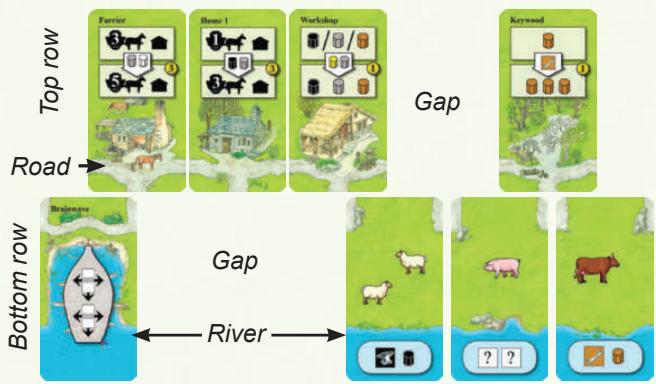
If the village card contains a round ended panel at the bottom (above the river), the player immediately receives the skill tiles and/or resources shown. (If the skill tile is a specific type, then take one of the double sided skill tiles of that type. This is the only occasion the double-sided skill tiles are taken. On all other occasions when taking a skill tile the tile taken should be from the face down pile.) Resources are placed onto the village card that generated the resource. Skill tiles are kept in front of the player. Single sided skill tiles may be kept face down.

, Resources are placed onto the village card that generated the resource.
Skill tiles are kept in front of the player.
Keyples on the Keyple cards are sent to work in the player's village or an immediate neighbour's village. Note that in ey Flow players will only interact with their immediate neighbours. This means that with four or more players there will be villages that a player cannot play in.
Each keyple card has a number of features:
Coloured keyples. The colour of the keyple depends on the season: green in spring, yellow in summer, red in autumn and blue in winter.
The number of keyples shows whether keyples can work in a location. Šingle keyple cards can only work in empty buildings. Two keyple cards can work in empty buildings and buildings where one card has already been placed. Three keyple cards can work where up to two cards have been previously been placed.
When played, a keyple card is placed above a card in the top row of the player's village and on top of any keyple card(s) already played, so as to leave visible the small keyple icon at the bottom of the overlaid keyple cards.
A two keyple card can work where one card has already been placed.

Note that it is the number of cards that have previously been played that is counted. The number of keyples on those cards is irrelevant.
Note also that the number of keyples on a keyple card can be increased (to a maximum of three keyples) by placing a keyple token onto the card being played (see keyple tokens, page 6).

Keyple token placed on the card to increase the number of keyples to 2 or 3 as required.

2. Playing the cards continued
Direction arrows indicate in which villages the keyples can work. A down arrow indicates that the keyple(s) can work in the player's own village.

In the 3 to 6 player game, an arrow pointing left indicates that the keyple(s) can work in the village owned by the player to the player's left and an arrow pointing right indicates that the keyple(s) can work in the village owned by the player to the player's right.

In a 2-player game the arrows pointing left allow the player to play on their opponent's home card and any cards to the left side of that card (from the view point of the player playing the card). The right arrows allow the player to play on their opponent's home card and any cards to the right side of that card.

Opponent's village

Animals have no effect when the card is played, but may be scored at the end of the game by the player in whose village the card was placed.
Animals are scored at the end of the game.
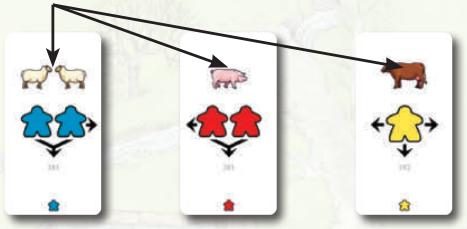
Keyple token icons indicate that the player who played the keyple card can take a keyple token (irrespective of which village the card was played into).

A player may play a keyple token received immediately onto the keyple card from which they have just gained the token, if applicable, in order to increase the number of keyples on that card to a maximum of three.
The light grey keyple card number is only relevant for the competition rules (see competition rules in grey text page 3).
Available action. As mentioned (see page 4), a keyple card is placed above a village card that the player wants to use in the top row of a village. The action available is shown in the top most panel on the card that is not covered by an upgrade token. (The available actions are described in Village cards – detail pages 7 to 11.)

Simultaneous play. As mentioned (on page 3), players play their cards simultaneously. Note that when a keyple card is played the actions available are based on the state of the game before card was played. This means that:
A player cannot use a village card that was placed this turn.
A player cannot take advantage of any upgrades that were built this turn.
When checking as to whether a player can place a keyple card above a building, only consider the keyple cards that were played in a previous turn. (This may occasionally result in buildings receiving more than three keyple cards.)
A player may discard any card they have chosen and take a keyple token instead. The discarded card is returned unseen to the box.

3. Keyple tokens

In addition to supplementing the number of keyples on a keyple card (see Playing the cards on page 4), keyple tokens can be used to take additional actions in the player's own village, after all the cards for a season have been played. ve been played.
Explanation:
-
It takes one keyple token to take an action on a village card that has not been previously used, or only used once previously (by either a card or keyple token).
-
It takes two keyple tokens to take an action on a village card that has already beęn used twice (by either cards and/or keyple tokens).
-
If a card has already been activated three or more times it cannot be used again.
-
This means that if a player has an empty building, the player can use it up to three times; the first two uses cost one keyple token each, and the third use costs two keyple tokens.

4. Remove keyple cards and tokens
After players have played all the keyple tokens they wish to play, all used keyple tokens are removed and placed back into the supply.
All the keyple cards for the season just ended are also removed and are placed under the player's store card for use in the end of the game scoring.
Players may look at the cards under their store cards at the end of each season (after all cards and keyple tokens have been played), but not during a season.
5. End of autumn
At the end of autumn, winter is coming. All players look at their winter village cards and choose one. Players then simultaneously reveal their chosen card and place it into their village.
Shuffle the winter village cards that were not chosen with the numbered winter cards to form the winter deck.
6. End of game scoring
At the end of winter each player counts how many points they have. Players get points in the following ways:
Autumn location cards
The 4 autumn location cards: barn, blacksmith, stone yard and timber yard, score points for resources which have been transported onto those cards during the game. Resources which are scored in this way cannot be scored by any other card.

Panels and upgrades
Score the points shown on the highest panel not covered by an upgrade tile. For example, if the Keythedral has been upgraded once it scores 12 points. Neither the 5 nor the 20 points apply.
Double-upgrades

Each double-upgrade scores 1 point. (See Upgrade, page 7.)

Winter cards
Some cards score points for animals, boats, keyples, resources, tiles, tokens and transport the player has gained during the game. A player can allocate items to these cards regardless of their location. However each card with printed items on can only be allocated to one scoring card.
Example:
A player scores the keyple card showing 2 red keyples and a cow at the harvest festival (the red keyple scoring card). The player also scores the red keyple scoring card in the farmyard (for its pig). The player cannot score the cow from the 2 red keyple and cow card in the farmyard, because the card has already been allocated to the harvest festival (for the red keyples).

Gold
Each gold not scored elsewhere scores 1 point.
The winner
The player with most points wins. In the case of a tie, the tied player with the most sheep wins. If there is still a tie then the tied player with the most pigs wins and if still a tie then the tied player with the most cows wins.

Home and spring village cards
The home and spring village cards can all be activated using a keyple card.
Transport and upgrades
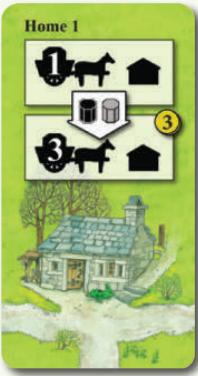
The home 1 to 6, builder and stable cards allow a player to transport resources and upgrade buildings in their own village.
A player may transport up to the number of resources indicated by the number on the cart and upgrade up to the number of buildings indicated by the number of upgrade icons (one or two).
Each unit of transport shown on the cart allows one resource to be transported (along the roads or the
river) to an adjacent card. This transport allowance can be allocated between one or more resources. For example: two points of transport could move one resource two cards, or could move two resources (which could be on the same or different cards) one card each.
Upgrade
Each upgrade iconallows a player to choose to upgrade a building with multiple uncovered panels.
The player pays the cost of the upgrade as shown on the upgrade arrow between the panels.
An upgrade tile (showing the side of the tile without a point icon) is placed on the upper uncovered panel.
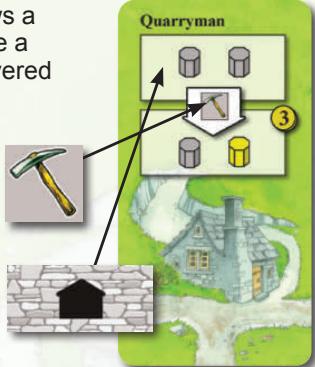
Any resources required for the upgrade must be on the village card when the upgrade is performed. Remember that gold can be used in place of any of the above types of resource and a white resources icon can be satisfied by any type of resource. The used resources are placed back in the supplies.
Any skill tiles required for the upgrade are taken from the tiles in front of the player. Remember that a white skill tile icon can be satisfied by any type of skill tile. Used single sided skill tiles are shuffled back into the pile of face down skill tiles. Used double sided skill tiles are kept separately as per the Set up.

The upgrade icon action alternatively allows a player to flip, at no further cost, an upgrade tile to the side showing a point icon.
These points are scored at the end of the game.
Resource generating cards
Gold mine, Key mine, Keystone quarry, Keywood, miner, quarryman, woodcutter and workshop.
These cards generate the type of resource(s) shown on the card. Resources are placed on the card generating the resource if the card it is in the player's own village. Resources are placed on the player's home card if the card generating the resources is in a neighbour's village.
Examples:

The woodcutter
generates 2 wood resources, or 1 wood resource and 1 gold resource if it has been upgraded.
The workshop
generates an iron, a stone or a wood. If the workshop has been upgraded then it generates an iron, a stone and a wood.

Skill tile and keyple token generating cards
These cards generate skill tiles and keyple tokens as shown on the tile. Skill tiles and keyple tokens are kept in front of the player, not on the cards generating them. Single sided skill tiles may be kept face down.
Explanations:

The alehouse
generates a keyple token or a skill tile (drawn at random from the face down pile) or a keyple token and a skill tile if the card has been upgraded.
The apprentice hall generates a skill tile (drawn at random from the face down

pile) or 2 skill tiles if the card has been upgraded.

Summer village cards
Transport and upgrade cards
See Transport and upgrades under spring cards on page 7 for an explanation of the artisan and the farrier cards.
Resource conversion cards
The brewer, carpenter, hiring fair, mason and smelter cards can be activated using a keyple card in order to convert a skill tile into other types of resources. The resources generated are placed on the card generating the resource if the card it is in the player's own village. Resources are placed on the player's home card if the card generating the resources is in a neighbour's village. The skill tile gets shuffled back into the pile of face down skill tiles. Usēd double sided skill tiles are kept separately as per the Set up.
Examples:

The hiring fair converts 1 skill tile of any type
The brewer converts 1 skill tile of any type into 1 gold and a keyple token or into 2 gold and a keyple token if the card has been upgraded.
The carpenter converts 1 saw skill tile into 4 wood or into 3 gold if the card has been upgraded.


into 2 skill tiles (drawn at random from the face down pile) or into 3 skill tiles (drawn at random from the face down pile) if the card has been upgraded.
Summer boat cards
The Brainwave, Flipper, Keyflower, Keymelequin and Mansfield Ark boat cards cannot be activated by a keyple card as they are placed in the lower row of cards. However each summer boat card gives the player owning the boat a unique skill after it has been played.
Explanations:

The Brainwave boat allows the owner to play any keyple card that depicts 1 keyple and a keyple token or depicts 2 keyples as if it had three direction arrows. This allows these keyple cards to be played in the player's own village
or eitner or their neighbour's villages. (Note that all the single keyple only cards already have all 3 direction arrows).
The Flipper boat allows its owner to gain a gold each time they flip an upgrade tile to the 1 point icon side. The gold is immediately placed on the card on which the upgrade tile was flipped.


The Keyflower boat allows the owner to use any type of resource in substitution for gold, iron, stone or wood when upgrading.
Keymelequin boat allows green keyples to be scored as a yellow keyples or vice versa.

Autumn village cards
Skill tile and keyple token generating card
The Inn generates a keyple token and a skill tile (drawn at random from the face down pile). If the card has been upgraded it additionally scores 5 points at the end of the game.


Transport and upgrade cards
See Transport and upgrade tiles under Spring cards on page 7 for an explanation of the wainwright card.
The peddler card allows the player to transport up to 2 resources or up to 4 resources if the card has been upgraded. Additionally the card generates a keyple token.
Autumn storage cards
The barn, blacksmith, stone yard and timber yard cards cannot be activated by a keyple card as they are placed in the lower row of cards. However each card generates points if the resources depicted have been transported to the card before the end of the game.
Examples:

The barn scores 1 point for each resource (including gold which is already worth 1 point) of any type that has been transported onto the card before the end of the game. If the card has been upgraded then each resource that has been transported onto the card scores 2 points.
The blacksmith scores 5 points for each pair of iron and gold resources that have been transported onto the card before the end of the game. If the card has been upgraded then each pair of iron and wood resources that have been transported onto the card scores 5 points. Remember

that gold can always be used in place of any of the other types of resource so upgrading the card does not prevent existing pairs of resources being scored.
Double upgrade cards
The forge, goldsmith, sawmill, sculptor and well cards cannot be activated by a keyple card. However each card generates points if they have been upgraded and additional points if they are upgraded for a second time.
Examples:

The forge scores 3 points, or 10 points if it has been upgraded once or 20 points if it has been upgraded for a second time.
The goldsmith scores 7 points if it has been upgraded once or 15 points if it has been upgraded for a second time.


The well scores 3 points, or 10 points if it has been upgraded once or 20 points if it has been upgraded for a second time.

Winter village cards
The winter cards all give rise to different ways to score points. This is achieved in most cases by allocating resources, skill tiles, keyple tokens, keyple cards and/or village cards to them.
A player can allocate items regardless of their location, however each item can only be allocated to one scoring card. Notably, keyple cards which show animals can only be scored for either their keyples or their animals. It is not possible to score a keyple card for both its keyples and its animals. A gold resource can be treated as an iron, stone or wood resource when allocating. Each unallocated gold resource scores 1 point.
None of the winter cards can be activated by keyple cards.
Double upgrade card

The Keythedral scores 5 points, or 12 points if it has been upgraded once or 20 points if it has been upgraded for a second time.
Winter boat cards
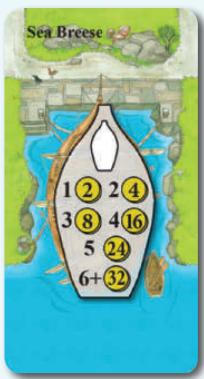
The Sea Breese boat gives points for the number of boat cards the player allocates to the Sea Breese. For example, if the player allocates 4 boat cards, including the Sea Breese card, the player scores 16 points.
The Carried Away, lanvincible and Sea Bastion boats give points for the number of the type of animal shown on the card that the player allocates to these cards.
Example:

10 points if the player has allocated 3 or 4 cows from their other cards, or 20 points if they have allocated 5 or more cows. Note that the cow icon in the Carried Away boat cannot be allocated for scoring purposes.
Animal scoring cards
The dairy, farmyard, ranch, storm shelter, truffle orchard and weaver cards score points for animals or animals with other resources, tiles or tokens.
Only animals ‘icons' count for scoring Animals in the information panels and in the background do not count for scoring purposes.
Examples:
The dairy scores 5 points for each pair of a cow and a keyple token which the player has allocated to the dairy. (This may include the cow on the dairy card. The keyple token must be unused, as used keyple tokens are returned to the stock.)


The farmyard scores 1 point for each sheep, pig and cow that the player has allocated to the farmyard.
The storm shelter scores 3 points for each pair of a pig and a sheep that the player has allocated to the storm shelter.

Transport and boat scoring card

The traveller's lodge card scores 1 point for each of the player's transport capacity allocated to the traveller's lodge. For example, if the player has upgraded their home card, that would be worth 3 points. The card also scores 2 points for each boat the player has allocated. Note that the player cannot score the same boats with both the Sea Breese and the traveller's lodge.


Winter village cards continued
Keyple scoring cards
The craftsmen's guild, emporium, harvest festival, Key market, summer fete, village hall and winter fair cards all give points for the keyples allocated to them from the player's keyple cards.
Examples:
The craftsmen's guild card gives 3 points for each set of red, yellow and blue keyples the player has allocated to the craftsmen's guild.

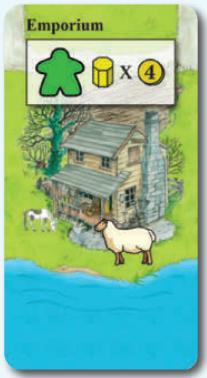
The emporium scores 4 points for each pair of a green keyple and a gold resource which the player has allocated to the emporium.
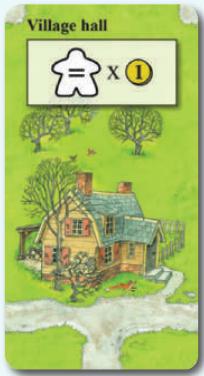
The village hall card scores 1 point for each keyple of one colour chosen by the player which
they have allocated to the village hall.
Example:
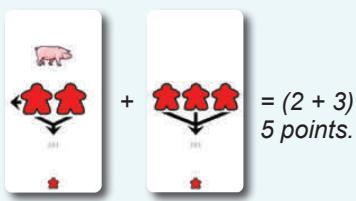
Keyple card and token scoring cards
The apothecary, healer and Key guild cards give points for keyple cards and tokens.
Examples:

The healer gives 2 points for each keyple card that the player has allocated to the healer which features 2 keyples. Note that the keyples cannot also be allocated to another card, for example a card that scores points for a particular colour of keyple.
The Key guild scores 5 points for each pair of a keyple token, and a keyple card depicting a keyple token which the
player has allocated to the Key guild. (The keyple token must be unused, as used keyple tokens are returned to the stock.)

Resource scoring cards
The jeweller, mercer's guild and windmill cards score points for resources anywhere in the player's village. The resources do not need to be transported onto the card. Note that resources scored on these cards cannot also be allocated to other cards for scoring purposes. E.g. the autumn location cards.
Explanations:

The jeweller card scores 2 points for each gold resource allocated to the jeweller (instead of the 1 point that gold is worth without this card).
The mercer's guild card scores 5 points for each set of iron, stone and wood resources a player has allocated to the mercer's guild.

Remember that gold can always be used in place of any of the other types of resource.
The windmill scores 5 points for 5 resources of any type that the player allocates to the windmill, or 7 points for 5 resources of any type allocated if the card has been upgraded.
Resource and skill tile scoring cards
The merchant, store and trader cards score points both for one type of resource and for one type of skilí tile.
Example:
The merchant scores 3 points for every pair of wood resources allocated to the merchant plus 3 points for every saw skill tile a player has allocated to the merchant.

Skill tile scoring cards
Explanations:
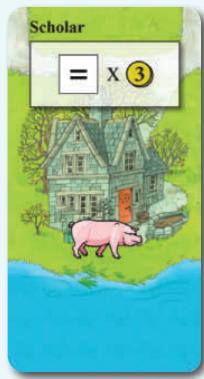
The scholar scores 3 points for every skill tile the player has allocated to the scholar of one type of tile as chosen by the player.
The scribe scores 7 points for each set of anvil, pick axe and saw skill tiles that the player has allocated to the scribe.

Acknowledgements
Game design Sebastian Bleasdale, Richard Breese and lan Vincent.
Lead illustrator Vicki Dalton.
Keyflower legacy illustrations and y Fw logo design Juliet Breese.
Graphics Sebastian Bleasdale and Richard Breese.
Realisation Richard Breese.
German translation by Ferdinand Köther.
The designers would like to thank the following playtesters and contributors for their assistance: Mark Adams, Ralph Anderson, Josh Baldwin, Lynwen Barkham, Michael Baskal, Ben Bateson, Jon Benjamin, Caroline Bleasdale, Tony Boydell, Jenny Bradbury, David Brain, Jonathan Breese, Mark Breese, Śtuart Breese, Paul Bryant, Robert Canner, Dominic Capuchettes, Mark Chessher, Vicki Dalton, Tom DeMarco, Will DeMorris, Jeroen Douen, Exeter Board Games Club, Martha Garaan-Murillo, Penny Gray, Paul Grogan, Andrew Harding, Peter Hazlewood, Mikko Heikelā, Alan How, Anthony Howgego, Joe Huber, Tanya Ironmonger, Paul Jefferies, Andrew Kerrison, Ron Krantz, Wendy Lefevre, Paul Mansfield, lan Markey, Paul Marsh, John Mitchell, Kris Moulton, Simon Neale, Alan Paull, Charlie Paull, Nikolay Pegasov, Benjamin Pfob, John Plant, Tony Ross, Frank Sandstom, Jennifer Schlickbernd, Fran Snook, Graham Staplehurst, Jago Staplehurst, Tom Staplehurst, Britta Stöckmann, Swiggers Games Club (London), Bianca van Duyl, Rick van Horn, Simon Weisberg, Janet Welch, Craig Wheatley, Ian Wilson and Stephen Wright. Special thanks to Hans im Glück who again kindly gave their permission to use their popular Carcassonne meeple shape to represent their distant descendants, the keyples, in the series of Key games.
Game manufactured and collated by Ludo Fact GmbH.
Published in 2018 by:

Co-publisher:
HUCH
R&D Games,
6 Denne Close,
Stratford upon Avon, CV37 6XL,
UK.
Hutter Trade GmbH + Co KG
Bgm.-Landmann-Platz 1-5
89312 Günzburg
GERMANY
rqbreese@gmail.com
www.hutter-trade.com
North American distribution:
Game Salute LLC,
34 Londonderry Road, Londonderry, NH 03053, USA
www.GameSalute.com
Missing pieces
Whilst the manufacturers make every effort to ensure that your copy of Key Flow is complete and in good condition, the large volume of units and components means that occasionally errors will arise. In these circumstances please contact:
www.starling.games/replacements if you acquired your copy of the game in North America.
rqbreese@gmail.com if you acquired the game directly from R&D Games at the Spiel, Essen.
info@hutter-trade.com or visit www.hutter-trade.com if you acquired the game elsewhere in the world.

简繁检索对照.md
253446_252446_key-flow — 简体/繁体检索对照
本游戏的规则书是繁体中文原文。用户用简体提问时,把关键词按下面这张表转成繁体再去 grep 原文,命中率最高。
回答时用简体或繁体都可以,但引用的原文保持繁体。
简体 → 繁体 对照(按该游戏原文出现频率排序,共 60 字)
| 简体 | 繁体 | 原文出现次数 |
|---|---|---|
| 张 | 張 | 95 |
| 动 | 動 | 85 |
| 计 | 計 | 62 |
| 庄 | 莊 | 57 |
| 时 | 時 | 57 |
| 个 | 個 | 52 |
| 这 | 這 | 45 |
| 块 | 塊 | 40 |
| 数 | 數 | 39 |
| 资 | 資 | 36 |
| 级 | 級 | 35 |
| 游 | 遊 | 33 |
| 戏 | 戲 | 33 |
| 对 | 對 | 29 |
| 获 | 獲 | 23 |
| 执 | 執 | 22 |
| 后 | 後 | 21 |
| 头 | 頭 | 20 |
| 给 | 給 | 19 |
| 结 | 結 | 19 |
| 运 | 運 | 17 |
| 当 | 當 | 17 |
| 图 | 圖 | 17 |
| 会 | 會 | 15 |
| 号 | 號 | 15 |
| 来 | 來 | 14 |
| 园 | 園 | 14 |
| 选 | 選 | 13 |
| 输 | 輸 | 13 |
| 节 | 節 | 12 |
| 库 | 庫 | 12 |
| 边 | 邊 | 12 |
| 并 | 並 | 12 |
| 种 | 種 | 12 |
| 为 | 為 | 11 |
| 开 | 開 | 11 |
| 轮 | 輪 | 10 |
| 显 | 顯 | 10 |
| 黄 | 黃 | 10 |
| 两 | 兩 | 10 |
| 择 | 擇 | 9 |
| 传 | 傳 | 9 |
| 从 | 從 | 9 |
| 单 | 單 | 9 |
| 样 | 樣 | 9 |
| 则 | 則 | 9 |
| 须 | 須 | 9 |
| 应 | 應 | 8 |
| 发 | 發 | 8 |
| 无 | 無 | 8 |
| 没 | 沒 | 8 |
| 颜 | 顏 | 8 |
| 设 | 設 | 7 |
| 余 | 餘 | 6 |
| 铁 | 鐵 | 6 |
| 猪 | 豬 | 6 |
| 仓 | 倉 | 6 |
| 区 | 區 | 6 |
| 顺 | 順 | 6 |
| 费 | 費 | 6 |