rules_zh_第一类接触_9532.md
第一類 接 FIRST 觸 CONTACT
翻譯:陳浩仁
監修:何仲焜
美術:Machai
在第一類接觸中,玩家分成地球人和外星人兩隊。地球人會進貢各項物品,務求博得天外來客的眷顧。外星人則嘗試用自己的語言向地球人解釋自己想要什麼。玩家會跟同隊的其他玩家較量,而每隊當中只有一位玩家能勝出。當任何外星人獲得足夠物品時,遊戲結束。
遊戲配件
-
16塊 外星語言板塊(15塊有符號 + 1塊沒有符號)
*有關沒有符號的外星語言板塊,詳見p.6 自選符號。 -
12張 外星人需求牌(雙面)
-
3塊 外星人繪畫板
-
75枚 分數標記(紅、藍、綠各25枚)
-
1張 外星人屏風
-
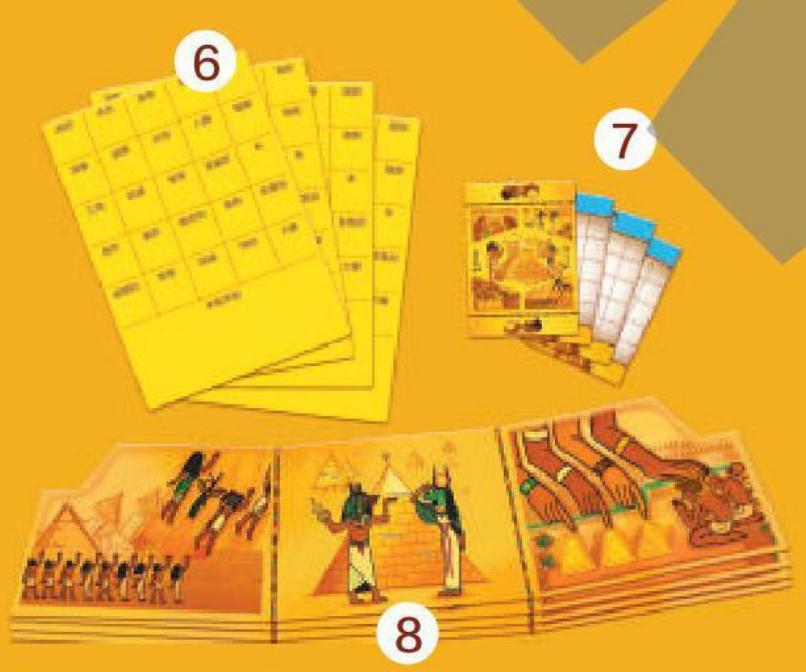
4塊 地球人筆記板
-
4塊 地球人進貢板塊

-
4張 地球人屏風
-
7支 白板筆
-
80張 物品牌(雙面)
-
遊戲說明書(中文/英文)
-
需求牌底座
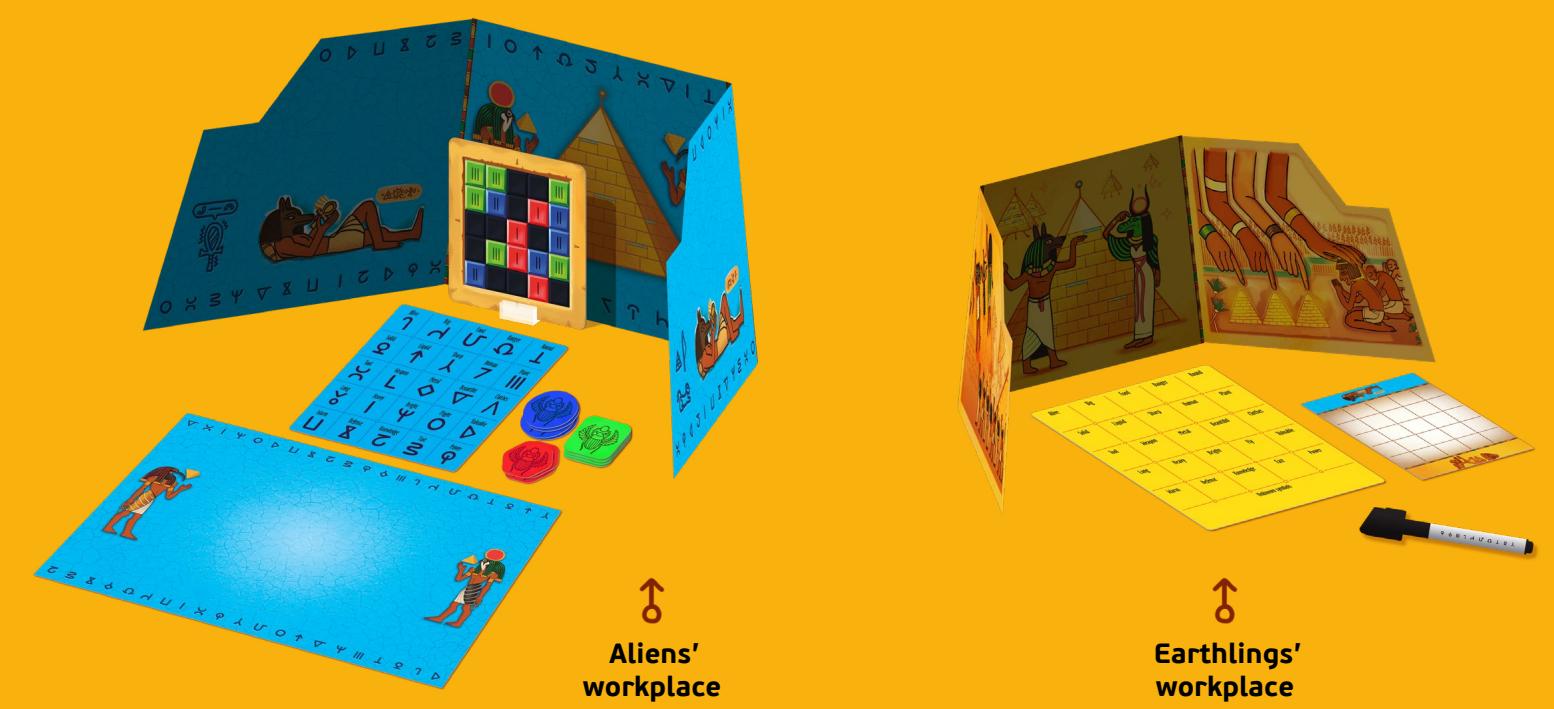
4-7人遊戲設置
-
玩家分成外星人和地球人兩隊。
注意:外星人最多3位,地球人最多4位。 -
分隊後兩隊坐在對面。
-
洗勻全部物品牌,隨機抽出25張,把它們以任何一面朝上放到桌子中央,組成5×5長方形。注意:40張物品牌其中一面是東方物品,給遊戲帶來更大變化,但對規則沒有影響。

- 每位外星人拿取1塊外星人繪畫板及1支白板筆。
外星人隊伍拿取:1塊隨機的外星語言板塊、1張外星人需求牌、和外星人屏風,並選擇要遊玩簡單遊戲(A面)還是困難遊戲(B面)。以上配件按下圖配置:
需求牌上的方塊顏色,分別代表扮演該顏色外星人所想要的物品,並對應到25個物品牌的位置上。
-
每位外星人玩家選擇自己的顏色,拿取該顏色的全部分數標記。
重要:紅色 玩家總是首先行動,然後輪到 藍色 玩家,最後輪到 綠色。 -
每位地球人玩家拿取:1塊筆記板、1塊進貢板塊、1張屏風、和1支白板筆。
-
懂最多語言的地球人在地球人階段總是首先行動;選了紅色的外星人在外星人階段總是首先行動。
-
若有玩家第一次游玩,我們建議游玩第零回合(詳見下述)。
-
可以開始遊戲了!
第零回合(4-7人遊戲)
若有玩家第一次遊玩,或只有2位地球人,我們建議遊玩第零回合,令遊戲容易一些。開始遊戲前,每位地球人逐一詢問1個特性,讓外星人畫出對應的符號。例如第一位地球人詢問「工具」的符號、第二位詢問「活的」、第三位詢問「珍貴的」,而外星人便逐一畫出這三個特性的符號給全部地球人查看,讓地球人在遊戲開始時已經知道某些符號對應什麼。
遊戲目的
外星人與地球人各有勝利條件。
遊戲結束時,每隊各有勝出的玩家——外星人隊伍中,首先獲得自己想要的 3件(簡單遊戲)或 5件(困難遊戲)物品那位玩家勝出。
地球人隊伍中,獲得最多分數標記的玩家勝出(即向外星人進貢過最多他們想要的物品)。
簡單遊戲中,若任何外星人獲得3件自己需要的物品,遊戲立即結束;困難遊戲則是5件。
遊戲難度
遊戲分為簡單和困難兩個難度,兩者有不同的遊戲時間——簡單遊戲中,若任何外星人獲得3件自己需要的物品,遊戲立即結束;困難遊戲則是5件。此外,遊戲設置時,簡單遊戲使用外星人需求牌的A面,困難遊戲則使用B面。
進行遊戲

一局遊戲會進行多輪,每輪有地球人階段和外星人階段。
地球人階段
從起始的地球人玩家開始,每位地球人在這個階段會按順時針方向輪流學習外星語言。輪到你的回合時,默默在心中決定要詢問地球人筆記板上哪一個特性,然後把桌上你認為與該特性有關的1-5張物品牌旋轉90度。
地球人旋轉物品牌後,外星人隊伍嘗試理解他想詢問的特性,然後在繪畫板畫出他們認為該地球人想知道的特性的符號。以上步驟以及外星人隊伍畫出的符號,都是公開給全部玩家看的。(外星人之間應先討論看看能否找到共識,若彼此意見一致,則只需由任何一位外星人負責畫出)
重要!玩家之間可以溝通,但不可提及特性。以下是不允許的對話:「我認為他在問『大的』」,或是「我想從外星人知道『圓的』的符號」。

↑
地球人約翰想知道外星人語言中的「大的」,因此他旋轉桌上符合那特性的全部牌,包括金字塔、馬、河馬、房屋、和大象。

↑
外星人畫出了這個符號,公開給全部玩家看,所以不單約翰,每位地球人都可猜想外星人想表達的特性,把這符號寫在自己的筆記板上。
不只剛提問的玩家,所有地球人玩家都可把外星人畫出的全部符號抄在自己的筆記板上。此外,若玩家尚不曉得某個符號所對應的特性,可先把它抄在筆記板上「未知符號」的位置,直到弄清它的意思才抄到該特性的格子裏面。
我們建議外星人在外星人繪畫板上紀錄下畫過給地球人的符號,例如在那符號旁打勾。這資訊會幫助你們在外星人階段索取貢品。
重要!地球人必須把自己的筆記板隱藏在屏風後,不讓其他玩家看到。
若外星人之間意見分歧,決定不了要畫什麼符號給地球人
那麼每位外星人按順時針方向輪流在自己的繪畫板上畫出自己
認為對的符號。

外星人階段
從起始外星人玩家(紅色)開始,每位外星人在這個階段會按既定順序輪流在繪畫板畫出符號,向地球人表達一次自己想要什麼物品。
範例:邁克希望地球人向自己進貢「錘子」,所以在繪畫板畫出「工具」、「危險」、和「金屬」的符號。也許目前地球人還不明白某些符號,但當遊戲一直進行,這些資訊會累積下去,有助玩家了解對方的想法。
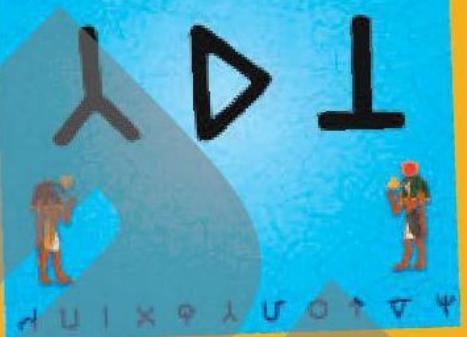
重要!外星人進行回合的順序始終不變,首先是紅色玩家,接著是藍色玩家;若有三位外星人,則最後是綠色玩家。


輪到你的回合時,默默在心中決定想要從地球人獲得的貢品,畫出與之相關的特性的符號。即使是地球人尚未明白意思的符號,外星人也可以使用,讓地球人先記下這些符號,之後再猜想學習。最後,每位地球人於各自屏風後秘密在進貢板塊其中一格作記號(例如:畫叉叉),標示要向這位外星人進貢該物品。
全部地球人都準備好之後,一同把自己的進貢板塊放到屏風前。若任何地球人進貢了這位外星人想要的物品,這位外星人便給他/她1枚分數標記,同時在對應的物品牌上放置1枚分數標記,此後不會再獲得那物品。若多位地球人同時選了這位外星人想要的物品,每位猜對的地球人都會獲得1枚分數標記。若某地球人進貢了別的外星人想要的物品,沒事發生,因為地球人必須向當前回合的外星人進貢,而其他外星人完全不屑一顧。若地球人進貢了另一件也屬於當前回合的外星人在需求牌上表示出來的物品,這位外星人依然會給那些地球人各1枚分數標記,同時在對應的物品牌上放置1枚,此後不會再獲得那物品,意即外星人可能在同一回合獲得多件物品——儘管有些地球人不明白你在說什麼,但終究給了你想要的,何不接受這好意呢?
每位外星人都完成這階段後,一輪結束,再開始下一輪:地球人階段。如此類推,直到任何外星人獲得了自己需要的3件或5件物品(因難度而異)。
遊戲結束
若任何外星人獲得了自己需要的3件或5件物品(因難度而異),遊戲結束。該外星人成為外星人隊伍當中的勝利者,然後擁有最多分數標記的地球人成為地球人隊伍當中的勝利者。若最多標記遇平手,他們當中最了解外星人語言的地球人勝出——所有最高分的地球人各有一分鐘,重新檢查自己筆記板上的符號,並擦掉任何覺得不對的符號。一分鐘過去後,他們一起拿起自己的屏風,對比外星語言板塊,答對最多格子的玩家勝出遊戲;若再遇平手,則他們共享勝利。
反義詞規則
有時候你們需要表達「相反」的意思,那麼在符號上面畫一條橫線。例如外星人約翰想向地球人解釋自己要的是「法老」,他要使用「力量」的符號,但它同時也適用於「金字塔」,不幸的是地球人尚未懂得「人類」的符號,但他們已經得知「大的」的符號,所以約翰決定畫出「大的」的符號,並在「大的」符號上畫一條橫線(右圖例),然後再畫出「力量」的符號,表示「不大且有力量」。
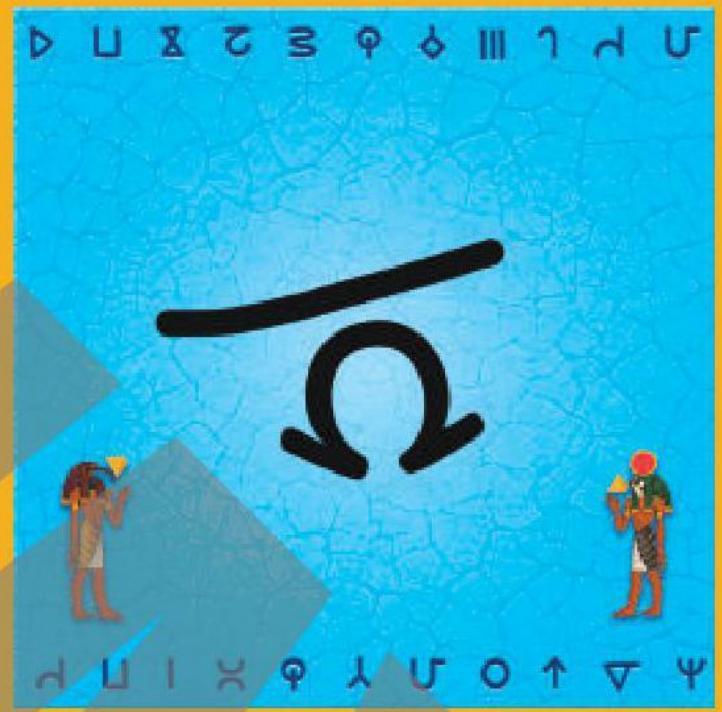
自選符號
遊戲設置時,玩家可以不抽取隨機的外星語言板塊,改為從下表隨機選取25個符號,填在沒有符號那塊外星語言板塊的每個格子上(除了不要填在未知符號那格)。
∞ D ≠ × # ii w 王 开 △
± l ☆ ∞ : △ × ☑ A
∞ ∧ ↘ ⊕ ×
2-3人遊戲
2- 3人遊戲2- 3人遊戲有特別規則。在2人遊戲,一位玩家是地球人,另一位玩家是外星人。在3人遊戲,兩位玩家是地球人,另一位玩家是外星人。
遊戲設置
遊戲設置大致跟基本規則一樣,只是有以下改變:
-
外星人使用外星人需求牌的B面。
-
外星人拿取9枚紅色分數標記,在自己前面排成一線。
-
外星人拿取全部綠色,用來放到地球人正確進貢的物品牌,再拿取全部藍色標記,用來給正確進貢的地球人(若還是不夠,便拿取餘下的紅色標記)。
玩家目標
地球人的目標還是一樣——獲得最多分數標記。在3人遊戲中,兩位地球人如常競逐分數標記,最多者勝。
外星人的目的是在紅色分數標記棄光之前,獲得需求牌上8個綠色格子的物品。每一輪外星人都會棄掉1枚紅色分數標記,在外星人階段中,地球人每進貢一件黑色格子的物品會讓外星人額外棄掉1枚紅色分數標記。
進行遊戲
如同基本規則進行遊戲,但在2人遊戲有以下例外:地球人每回合可以進貢兩次,但跟基本規則一樣,每次選擇進貢1件物品。但是記得進貢了黑色格子會使遊戲更快失敗,所以地球人可選擇不執行第二次進貢,以免選擇了錯誤的物品。
遊戲結束
滿足以下任何一個條件時,遊戲結束:
-
外星人獲得了8件所需物品。
-
當外星人必須棄掉紅色標記,但已經沒有紅色標記可棄。
參照下頁的表格以評價你們的成績:
你倆尚未能夠互相理解,難道是來自不同的宇宙嗎?
快努力縮短彼此的距離嗎!
你倆的交流技巧未如理想,也許彼此的專長在溝通以外的地方!
結果不錯,大致能互相溝通了。但是有些時候犯的錯誤仍有待改進。
厲害!你倆真是心有靈犀一點通!儘管樣貌不一樣,你們能打從心底了解對方!
嗚謝
Sergey Pritula, Igor Skluev, Ekaterina Gorn, Andrey Grigoryev, Ivan Lashin, Timofey Nikulin, Ekaterina Zemtsova, Sergey Usimsky, Tasha Telezhkina, ‘Two Cats’ 桌遊俱樂部。我個人還要感謝 Yulia Vorobyova。
遊戲測試
Konstantin Malygin, Ilya Stepanov, Yulia Ilyinskaya, Igor Ganzha, Viktoria Drobotova, Mariya 和 Vladislav Nechaev, Aleksandr Eremin

台灣總代

2Plus桌遊設計工作室
2plusgame@gmail.com
COSMO
DRØME
GAMES
www.cosmodrome.games
B f /cosmodrome.games
cosmodromegames

栢龍玩具有限公司
Broadway Toys Limited
http://www.broadwaygames.com.hk
domestic@longshore.com.hk
Tel: +852 23631998

FC Rules 2019_eng.md

CONTACT
Rulebook
Little do modern researchers know that extraterrestrials have already made First Contact with humans! Travel back to the days of the Pharaohs and help the earthlings and aliens learn to communicate with each other.
First Contact involves two teams: the earthlings and the aliens. The main goal of both teams is to understand each other. The problem is that they speak different languages! How can they make contact?
The earthlings offer various items to the aliens, hoping to get into the good graces of their Celestial Kingdom masters, while the aliens try to explain what they need.
But, the players within each team compete against each other: in the end, each team will have its own winner! The game is over when one of the aliens obtains all of the items they need.

cosmorules #cosmodrome
Components
Alien language boards — 12 pcs.
Showing 25 basic words and the alien symbols used to represent them.
B Alien assignment cards — 12 pcs. These diagrams show which items from the field each alien needs.
Alien drawing board —1 pc. The aliens will write their symbols here.
Alien benevolence tokens—75 pcs, 3 colors. An award given by the aliens to earthlings that provide the items they need.
E Alien screen—1 pc.
Earthling note boards — 4 pcs.
Showing the 25 basic words, but without alien symbols.
The earthlings will use these to take notes during the game.
Earthling offering boards — 4 pcs. Showing the layout of the field. Earthlings use them to show which item from the field they want to offer the aliens.
H Earthling screens4 pcs.
① Markers — 5 pcs.
JItem cards — 60 pcs.
Representing items found on Earth, they are used to create the “field," measuring 5x5 cards. The field is the main game element: the aliens need some of the items in the field, and the earthlings must study the alien language by showing them items in the field that share a common feature.

Preparing for a 4- to 7-Player Game (for games with a smaller number of players, see "- or 3-Player Games")
Divide the players into 2 teams: aliens and earthlings.
Note: The maximum number of players on the alien team is three, and on the earthling team, four.



The teams sit down opposite each other.
Shuffle the item card deck J and place 25 cards in a 5 card x 5 card rectangle in the middle of the table. From now on, we will call this the “field".
4 Each alien chooses a color and takes the benevolence tokens D of their chosen color. Note: The Red player always takes the first turn during the alien phase, the Ble player takes the second turn, and the Green player takes the third turn.
5 The alien team takes 1 random alien assignment card B, inserts it into the card stand and chooses which side to play: easy (“A") or hard (“B"). The alien team also takes one random alien language board A, the alien drawing board C, the alien screen E and one marker 1.
6Each player on the earthling team takes an earthling note board F, an earthling offering board G, an earthling screen H, and a marker 1
1 The earthling team member who knows the most languages always takes the first turn in the earthling phase (if there are several such players, who plays first is up to the game owner).
The player on the alien team who has chosen the Rd pieces will always take the first turn during the alien phase.
8 If this is the first time you are playing the game, we recommend that you take the «Zero Turn» described below. The Zero Turn is optional.
9The game is ready!
Zero turn
To simplify the game process or if there are only two earthlings, each earthling gets to choose one word from their earthling note board and read it to the aliens before the game starts. For example, the first earthling might ask them to show how to write “Tool," the second, "Alive," and the third, “Valuable.' In response, the aliens check their language board and draw the symbols that match these words. These starting symbols are now known to all players.

Goal of the game
The players' goal depends on whether they are earthlings or aliens. Each team will have only one winner.
On the alien team, the winner is the first alien to obtain the three items they need from the earthlings (or five items, if the players have chosen the “hard" side of the alien assignment card).
For the earthling team, the winner is the player who has collected the most benevolence tokens, which are granted by the aliens in exchange for items they need.
The game is over as soon as one of the aliens has collected all of the items they need (depending on the game mode).

Game modes
The game has two modes: easy and hard. The difference is the length of the game: in easy mode, the game is over as soon as one of the aliens obtains three items they require; in hard mode, as soon as one of the aliens gathers five items. Depending on the selected mode, turn the alien assignment card: side A for easy mode or side B for hard mode.
Playing the Game

The game is played over several rounds, each divided into two phases: the earthling phase and the alien phase.
The Earthling Phase
The earthlings take turns trying to learn the alien language, starting with the first player and going clockwise.
On their turn, each earthling chooses a number of item cards that they believe are related to each other by a common word or characteristic listed on their earthling note board, and rotates these cards to the side (without changing their position). The earthling can rotate from 1 to 5 cards.
After the earthling has rotated the card(s), the aliens try to figure out which word or characteristic the earthling is thinking of and draw the symbol for it on the alien drawing board in response. All players can see the cards selected and the symbol drawn.
If the aliens cannot agree on which symbol to use, they take turns drawing their guesses and showing them to the earthlings.
Important! Players can communicate with each other, but they cannot mention the characteristics out loud. For example, saying, «l believe he is pointing to large items,» or «l hope I explained 'round' correctly,» is not allowed.
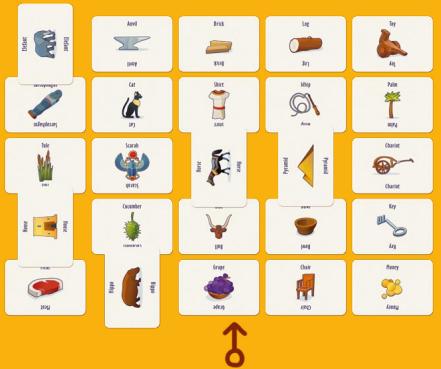
The earthling John wants to know how to say “Big" in the alien language. For this, he rotates all the cards on the field that he thinks show this characteristic: "Pyramid," "House," "Hipo," "Horse," and "Elephant"

The aliens hold counsel and draw a symbol for John on the alien drawing board: now he can write the symbol for “Big" on his earthling note board
To help them remember the alien symbols, each earthling has a note board to write down the symbols drawn by the aliens, with a space for each symbol. In addition, their note boards have a line named «Unknown Symbols» If an earthling is not completely sure of the meaning of a symbol, they can write it down in that line until the meaning becomes more clear.
Important! The earthlings must never show their note boards to anyone, but must hide them behind their screens so that other players cannot see it.
Playing Hint: We recommend that the aliens mark the symbols on their language board that they have already explained to the earthlings. This information will definitely come in handy during the alien phase.

The Alien Phase
Starting with the Rd player, the aliens take turns explaining to the earthlings which item they need, using symbols from the alien language board.
To do so, the alien draws one or several symbols denoting the characteristics they believe the required item has. They can describe only one item at a time, but they can use multiple symbols to describe it. The aliens may use symbols that the earthlings have not learned yet, which the earthlings can write down on their note boards in the “Unknown Symbols" line.
For example, Mike the alien wants the earthlings
to bring him a “Hammer." On the board, he drawsthe symbols for “Tool", “Danger" and “Metal". The earthlings may be unaware of some of those
symbols, but this information may be useful to them in the long run.

Then, all the earthlings secretly (hiding behind their screens) mark the box on their offering boards that matches the part of the field where they believe the required item is located.
Please note that the offering board must always be oriented correctly, with the blue end pointed towards the aliens and the yellow end towards the earthlings.
For example, the alien Theodore made a request using two symbols: «Heavy» and «Metal". Earthling Nick wants to offer the «Hammer» from the field. For this, he marks the location in the field occupied by that item on his offering board with an “X".


When everyone is ready, the earthlings lay their offering boards down in front of their screens with the marks showing.
There are several possible results:
If any earthling has offered the required item, the alien gives them a benevolence token and covers that item in the field with another token to show that this item has been received.
2 If several earthlings have offered the required item, the alien gives a benevolence token to each of them and covers the item in the field with another token.
3 If one of the earthlings unintentionally offers an item needed by another alien, nothing happens: they must offer the item during the turn of the alien that requires it. The other aliens are not interested in it.
Earthlings also receive benevolence tokens if they offer an item that the alien requested in an earlier round or if they accidentally stumble upon an item that the alien needs but has not asked for yet—Obviously, this was not the result of successful communication, but the earthlings have offered a needed item anyway, so why refuse this piece of good fortune?
5If nobody offers the required item to the alien, nothing happens.
In this way, an alien can receive several useful items from the earthlings in the same turn. The alien covers each item they receive with a token of their color and expresses their gratitude by granting benevolence tokens to the earthlings.
Important! The aliens always take turns in the same order: the Red alien always has the first turn, followed by the Blue one, then the Green one. If there are only two aliens in the game, one of them is always Red, and the other is Blue.
The End of the Game
The game is over as soon as one of the aliens collects the three items they require (or five items in hard mode). This alien is the winner of the alien team!
Now, the earthlings count how many benevolence tokens (of any color) each one of them received during the game. The player who has collected the largest number of benevolence tokens is the earthling winner!
If several earthlings have accumulated the same number of tokens, you need to find out which one has best learned the alien language to determine the winner. The earthlings have a minute to decide if they are sure of all the symbols on their note boards: each space must contain only one symbol, and any other symbols must be erased. When the time is up, all players lift up their screens and compare their note boards to the alien language board, counting how many symbols they got right. The earthling who has more correct words than the others knows the alien language better and wins the draw. If several earthlings have the same number of correct words, they share the victory.


The left one have 4 correct symbols and a couple of wrong ones, and the right one have 6 correct symbols and one incorrect symbol.

Antonym Rule
You may feel that you need to use the word «not» in the game. To add this concept to a characteristic, draw a horizontal line above the symbol. For example, alien John wants to use the characteristic «Small» to explain the word «Needle», but there is no such characteristic in the game. So, he draws the symbol for «Big» and draws a line above it, which makes it «NOT Big».

2- or 3-player Games
There is a special cooperative mode for two- and three-player games. If two players play the game, one of them is an earthling and the other one is an alien. If three players play the game, two players become earthlings, and the third one is an alien.
Preparing for the Game
Prepare for the game just like the basic rules with these exceptions:
The alien takes an assignment card and places it with the "B" side up.
2 The alien arranges 9 red benevolence tokens in one line in front of them. This shows that the game will only last 9 rounds. Return the extra red tokens to the box.
3 The alien takes all the blue and green tokens. They will use the green ones to cover the items they receive in the field, and the blue ones to reward the earthlings.
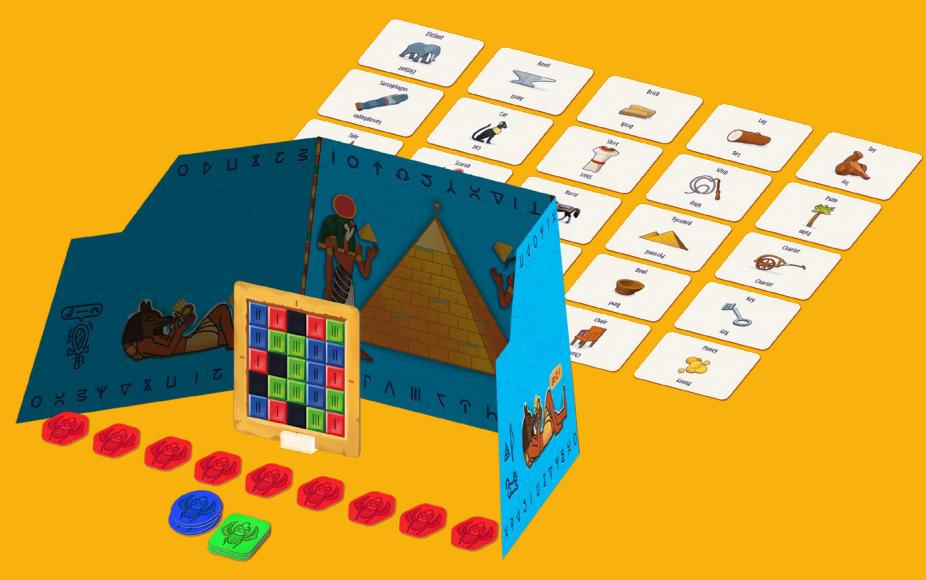
Goal of the Game
The goal of the earthlings is the same as in the regular mode: to obtain as many benevolence tokens as possible by correctly guessing items. If there are two earthlings (in a three-player game), the one with the most benevolence tokens wins.
The alien's goal is to collect the 8 items marked in green on the assignment card before they run out of red benevolence tokens. Each round, the alien must discard one token from the line in front of them. Also, if the earthlings offer the alien an item marked in black on the assignment card during the alien phase, the alien has to discard an additional red token.
Gameplay
The game follows the normal rules with one exception: in a two-player game, the earthling will make two attempts to guess what the alien requested instead of just one. The earthling can find an item requested during a previous turn or try to guess a required item without hints. The earthling does not have to make the second attempt if they do not wish to—remember the black items: each of them brings the game closer to the end. If you are not absolutely sure, you can decline the second guess.
The End of the Game
The game is over when either of these two things happens:
The alien has collected all 8 required items; or
2 The alien has to discard a red token but they have none available.
Check the table below to see how well you did
| Number of items collected | Result |
| 0-3 | You seem to come not just from different planets, but from entirelydifferent universes, this is how badly you understand each other! |
| 4-5 | Well, what can I say... You seem to use gestures for communication.Perhaps, your races are good at something else. |
| 6-7 | You almost did it. You managed to come to an understanding,however, you still make annoying errors sometimes. |
| 8 | Amazing! You managed to understand each other quite well!Despite a colossal difference in appearance, it is clear that youare kindred minds. |
Acknowledgements
Sergey Pritula, Igor Skluev, Ekaterina Gorn, Andrey Grigoryev, Ivan Lashin, Timofey Nikulin, Ekaterina Zemtsova, Sergey Usimsky, Tasha Telezhkina, board game club «Two Cats» and personally Yulia Vorobyova.
Game tested by
Konstantin Malygin, Ilya Stepanov, Yulia Ilyinskaya, Igor Ganzha, Viktoria Drobotova, Mariya and Vladislav Nechaev, Aleksandr Eremin.

COSMODROMEGΛMES
www.cosmodrome.games
B/cosmodrome.games #cosmodromegames

简繁检索对照.md
259309_258309_first-contact — 简体/繁体检索对照
本游戏的规则书是繁体中文原文。用户用简体提问时,把关键词按下面这张表转成繁体再去 grep 原文,命中率最高。
回答时用简体或繁体都可以,但引用的原文保持繁体。
简体 → 繁体 对照(按该游戏原文出现频率排序,共 60 字)
| 简体 | 繁体 | 原文出现次数 |
|---|---|---|
| 游 | 遊 | 68 |
| 戏 | 戲 | 63 |
| 号 | 號 | 41 |
| 记 | 記 | 30 |
| 进 | 進 | 28 |
| 画 | 畫 | 25 |
| 标 | 標 | 23 |
| 块 | 塊 | 22 |
| 贡 | 貢 | 21 |
| 后 | 後 | 18 |
| 时 | 時 | 17 |
| 对 | 對 | 16 |
| 获 | 獲 | 15 |
| 这 | 這 | 15 |
| 队 | 隊 | 14 |
| 会 | 會 | 14 |
| 则 | 則 | 14 |
| 数 | 數 | 14 |
| 们 | 們 | 14 |
| 个 | 個 | 14 |
| 阶 | 階 | 14 |
| 结 | 結 | 12 |
| 红 | 紅 | 12 |
| 难 | 難 | 12 |
| 轮 | 輪 | 12 |
| 语 | 語 | 11 |
| 胜 | 勝 | 11 |
| 选 | 選 | 11 |
| 笔 | 筆 | 11 |
| 给 | 給 | 10 |
| 当 | 當 | 9 |
| 张 | 張 | 9 |
| 为 | 為 | 9 |
| 两 | 兩 | 8 |
| 风 | 風 | 8 |
| 设 | 設 | 8 |
| 开 | 開 | 8 |
| 问 | 問 | 8 |
| 么 | 麼 | 7 |
| 绘 | 繪 | 7 |
| 规 | 規 | 7 |
| 单 | 單 | 7 |
| 该 | 該 | 7 |
| 应 | 應 | 7 |
| 类 | 類 | 6 |
| 来 | 來 | 6 |
| 没 | 沒 | 6 |
| 简 | 簡 | 6 |
| 询 | 詢 | 6 |
| 从 | 從 | 6 |
| 试 | 試 | 5 |
| 绿 | 綠 | 5 |
| 择 | 擇 | 5 |
| 还 | 還 | 5 |
| 让 | 讓 | 5 |
| 样 | 樣 | 5 |
| 弃 | 棄 | 5 |
| 触 | 觸 | 4 |
| 见 | 見 | 4 |
| 蓝 | 藍 | 4 |