DC100_English_Instructions_WOe03.md
FUNKOVERSE INSTRUCTIONS
DC
WATCH THE HOW TO PLAY VIDEO! go.Funko.com/DCComicsFunkoverseHowToPlay
Funko GAMES
COMPONENTS


4 CHARACTERS
2 COOLDOWN TRACKS
4 CHARACTER BASES

2 BASIC CHARACTERS


2 BASIC CHARACTER CARDS
2 BATGIRL STATUS CARDS
4 CHARACTER CARDS
8 ABILITY TOKENS

DOUBLE-SIDED MAP


2 DOUBLE-SIDED FLAG/LEADER MARKERS


3 CONTROL MARKERS


BATARANG
BATARANG ITEM CARD
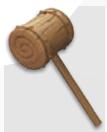

MALLET ITEM CARD
MALLET

6 EXHAUSTED MARKERS


FIRST PLAYER MARKER
6 DICE

4 THE JOKER MYSTERY BOX TOKENS

4 POINT MARKERS

21 POINTS

2 DOUBLE-SIDED SCENARIO CARDS


UNDERSTANDING COMPONENTS
CHARACTER CARDS
ABILITIESABILITY COST

NAME
This is your character’s name.
ABILITY COST
This shows the type of ability token required to use an ability and where you place it on the cooldown track.
ABILITIES
Choose from these abilities when your character does an ability action.
BASIC CHARACTERS
Basic characters are simplified characters you can use until your DC Comics Funkoverse™ collection grows. They follow the rules for characters, but they do not have abilities or traits, and they cannot hold items. When a basic character is knocked down, flip it over in its square so that the “knocked down” side is face-up.
DEFENSE
The number inside the shield shows how many dice you roll when your character is challenged.
TRAIT
This is a rule unique to your character.
ABILITY DOTS
The colored dots indicate which ability tokens you take into your pool during setup.


Basic Characters standing
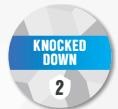

Basic Characters knocked down
COOLDOWN TRACKS
Each player has a cooldown track. You’ll use it to keep track of when things, such as spent ability tokens and knocked-out characters, return to play after being removed.
At the end of each round, both players shift everything on their cooldown tracks down one number. Things that shift of the 1 return to play. When shifting of of the cooldown track, characters return to your starting area, ability tokens return to your ability token pool, and item cards return to the characters holding those items. This will be explained in more detail in other sections of these instructions.

YOUR FIRST GAME
Welcome to DC Comics Funkoverse! For your first game, jump in as quickly as possible. To help with this, these instructions are organized so you don’t need to read everything to get started. Once you get to Stop Reading and Play! (page 7), you’ll know enough of the basics to start playing!
FIRST-GAME OBJECTIVE
Knock down an opponent’s character, and then knock out that character to win.
SETUP
Set aside the points, Batarang, Mallet, item cards, and scenario cards. You won’t use 1. them in your first game; you’ll learn how to use them in The Full Experience (page 8).
Play with two players. To play with three or four players, see More Players (page 9).2.
Place the map with Gotham City Streets face up.3.
Both players will use the dice. Place them beside the map.4.
Each player takes a cooldown track and three exhausted markers.5.
6 One player takes the dark character bases and the Henchman basic character that matches their base color. The other player takes the light character bases and the Police Oficer basic character that matches their base color.
NIR Move up to 3 squarEach player chooses two characters and puts them . A GRAPPLIN3G challenge them, rollinon their bases. Your three characters are allies. Your MA equal opponent’s three characters are your rivals.

BAEach player takes the cards 8. 2for their characters and basic character.
Batman can do thdown. Stand Batm2 allies n Intel status cYour character cards have colored dots in their bottom9. right corners. Take one ability token for each colored dot. If Batgirl is standing, she may move 1 square at the start of her tCombine all your ability tokens into your ability token pool.
The player controlling Batgirl takes the two Batgirl status cards. 10. You’ll use these when Batgirl does her Gather Intel ability.

Flip the First Player marker to see who 11. goes first. If your base color matches the color that lands face up, take the First Player marker. You’ll start the game.
Gotham City Streets starting areas are marked with base colors on the next page.12. The player with the First Player marker places their characters on squares in their starting area. Then, the other player places their characters in their starting area.

THE JOKER AND HARLEY QUINN PLAYER
EXAMPLE FIRST-GAME SETUP

Mystery Box Tokens
Henchman Card


Harley Quinn Card

Ability Token Pool

Cooldown Track


Exhausted Markers

Dice


Exhausted Markers
First Player Marker
Cooldown Track

Ability Token Pool

Batgirl Card


Batman Card

Batgirl Status Cards
Police Oficer Card
BATMAN AND BATGIRL PLAYER
PLAYING THE GAME
Each round, players take turns choosing a character to do actions. When all characters have gone, the round ends, and a new round begins.
TAKING A TURN
CHOOSE A CHARACTER1.
Choose one of your characters without an exhausted marker. (No characters have exhausted markers at the start of the round.)
DO TWO ACTIONS2.
Do up to two actions with your chosen character. Actions can be basic or special, and a character may do the same action twice.
BASIC ACTIONS
| characters can do these actions. | All characters except basic characters can do these actions. |
| MOVE | |
| Move up to 2 squares in any direction. | ABILITY Spend an ability token to use |
| an ability by placing it on your | |
| BASIC CHALLENGE | cooldown track on the number |
| Roll 2 dice to challenge an adjacent rival. | shown in the ability cost. |
ASSIST
Stand up an adjacent ally that has been knocked down.
INTERACT
This action is not used in your first game. You’ll use it in scenarios.
SPECIAL ACTIONS
USE ITEM
This action is not used in your first game. Some items require an action to use their rules.
3. RALLY
If the character you’ve chosen to act is knocked down, the character cannot do the actions above. Instead, the character can stand up by using both actions.
4. EXHAUST YOUR CHARACTER
Place an exhausted marker on the character card of the character you chose. This character cannot take another turn this round. Once you exhaust a character, it’s the other player’s turn.
5. NEXT PLAYER TAKES A TURN
The next player follows the steps listed above, beginning with Choose a Character.
ENDING A ROUND
When both players have exhausted all their characters, the round ends.
COOLDOWN
The player with the First Player marker shifts everything on their cooldown track down one number. Then the other player does the same. Things that shift of the 1 return to play. When shifting of of the cooldown track, characters return to your starting area, ability tokens return to your ability token pool, and item cards return to the characters holding those items.
REFRESH
Remove the exhausted markers from all character cards.
NEW FIRST PLAYER
Pass the First Player marker to the other player. That player starts the next round by taking a turn with one of their characters.
DOING A MOVE
When you move a character, you may move it straight into the next square or diagonally. However, you cannot move through standing rivals or obstructions. See Moving (page 12) for the complete move rules.
DOING A CHALLENGE
Challenges allow you to knock down and knock out rivals. Remember that every character may do a basic challenge against adjacent rivals.
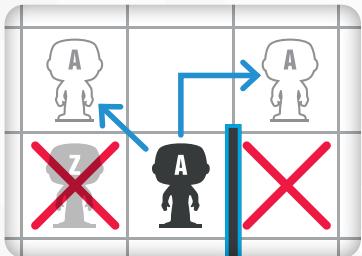
A and Z are rivals.
When you challenge a rival with a basic challenge, roll 2 dice. When using an ability to challenge, you roll an amount of dice equal to the number that follows “challenge.” Your opponent then rolls a number of dice equal to their defense.
You want to get more successes than your opponent.
• As the challenger, you get 1 success for each and 3 successes for each .
• Your rival gets 1 success for each and 3 successes for each .

If you have more successes than your rival, your character wins the challenge, and your rival loses. If you do not, your character loses the challenge. Unless otherwise specified by an ability, nothing happens if there is a tie or if the challenger loses the challenge.
When a standing rival is challenged and loses the challenge, the rival is knocked down. Tip the character over in the square where the character stood. If a rival that is knocked down is challenged and loses, the rival is knocked out. Remove the character from the map and place the character on the 1 of that player’s cooldown track. See Challenges (page 14) for the complete challenge, knocked down, and knocked out rules.
DOING AN ABILITY
When a character does an ability action, follow these steps:
Choose an ability from that character’s card.1.
TSpend an ability token of the appropriate type from your pool to pay the2. ability’s cost, placing it on your cooldown track on the number shown in the ability’s icon. If you do not have the appropriate ability token available in your pool, you cannot use the ability.
Follow the rules of the ability in the order written on the card. See3. Abilities (page 16) for the complete ability rules.

STOP READING AND PLAY!
The above rules cover what you need to know to start playing your first game! When you try to do something you have not done before, or you have a question about how something works, refer back to these instructions or read the detailed sections that follow.
WINNING YOUR FIRST GAME
For your first game, play until one player has knocked out one of their rivals. After that, keep reading to learn how to play the full DC Comics Funkoverse experience by using scenario cards, items, and mixing games!
THE FULL EXPERIENCE
Now that you’ve played your first game, you’re ready for the full DC Comics Funkoverse experience by using scenarios! You can also take it to the next level by using items, mixing DC Comics Funkoverse games, or playing against a friend who has their own DC Comics Funkoverse game!
SCENARIOS: WHERE THE OBJECTIVES GET INTERESTING!
Each DC Comics Funkoverse game comes with a double-sided map and two doublesided scenario cards. Scenarios are associated with specific maps, and each combination provides a unique way to play the game and new strategies to explore!
When you play a scenario, use the Playing the Game (page 6) rules. Instead of winning by knock out, you play to gain points. Each scenario describes diferent ways players can gain points.
SCENARIO SETUP
Play with two players. To play with three or four players, see More Players (page 9).1.
Agree on a map and one of its associated scenarios. Place the point markers on the2. setup squares, as shown on the scenario card.
Both players will use dice and points. Place them beside the map.3.
Each player takes a cooldown track.4.
Flip the First Player marker to see who goes first. The starting player picks a base5. color. Your base color determines your starting area.
Each player chooses two characters and takes the basic character matching their6. base. (If you are mixing DC Comics Funkoverse games or are playing against a friend who has their own DC Comics Funkoverse game, replace basic characters with other characters.) Next, each player chooses one item, per Item Setup (page 9). If both players have DC Comics Funkoverse collections, choose characters and items in secret.
Take the character cards, status cards, and tokens associated with your characters.7. Each player takes one exhausted marker for each of their characters.
Your character cards have colored dots in their bottom right corners. Take one ability8. token for each colored dot. Combine all your ability tokens into your ability token pool.
Check the scenario card for additional setup rules.9.
Your starting area is marked with your base color on the map on the scenario card.10. The starting player places their characters first. The player with the First Player marker places their characters on squares in their starting area. Then, the other player places their characters in their starting area.
GAIN EXTRA POINTS
In addition to the ways to gain points described by scenarios, players may always gain extra points from point markers. When a character is adjacent to a point marker on the map or in its square, the character may do the interact action to gain a point. Place the point marker, letter-side up, on the 4 of their cooldown track. When a point marker shifts of a cooldown track, place it back on the map in the corresponding letter’s setup square.
WINNING A SCENARIO
Determine the winner according to the scenario’s rules by counting the points each player has at the end of a round. If there is a tie, play more rounds until one player has more points. If you run out of points to take, use something else to keep track of the points each player gains.
PLAY WITH ITEMS
This game contains two items, Batarang and a Mallet, that you can use when mixing DC Comics Funkoverse games or playing against a friend who has their own DC Comics Funkoverse game. Items give characters extra abilities or traits. Try using items with diferent characters and with diferent combinations of characters on your side to discover new strategies. When playing with items, both players use the same number of items.
ITEM SETUP
Each player chooses one item and gives it to a character by putting it in that character’s hand before starting the game. Place the item card near that character’s card to remind you of the rules. Basic characters cannot be given items.
ITEM RULES
When a character has an item, the character gains a new option for an action or a new trait as described on the item card. Read the rules as you would for an ability. An item remains with the same character for the whole game.
While an item is on the cooldown track, it cannot be used. When a round ends, shift all item cards down the cooldown track as you would with ability tokens. When an item card shifts of the 1, it returns to the character holding the item, and may be used again.
DOING THE USE-ITEM ACTION
If the item has the # icon, the character holding the item must do the use-item action to use its rules. After your character uses the item, place the corresponding item card on the cooldown track at the number indicated in the # .

If the item does not have the # icon, the item functions Ranged 2 challas a character trait and does not require an action to use.
adjaITEMS THAT HAVE CHALLENGE ACTIONS
Some items provide a way to challenge targets, but doing the useitem action is only considered a challenge action if it has a after the item name. Otherwise, it is considered a non-challenge action.
MORE PLAYERS
Play the game with one to two players per side and with each player controlling at least one character. Each side works like a single player as described in the rules. Players of the same side decide which of their characters takes a turn when it is their side’s turn. Characters on the same side are allies just as if they were all controlled by a single player. Players of the same side use the same cooldown track and ability token pool.
MIXING GAMES
Choose characters, items, and scenarios from any DC Comics Funkoverse game and mix them up to discover powerful character combinations and to devise new strategies. Pit your collection against your friend’s collection to see who can make the best combinations.
If you and your opponent have the same game, everyone can play with their favorite characters. If you play with more than one DC Comics Funkoverse game of the same type, characters with the same name cannot be allies. (Batgirl cannot ally with another Batgirl.)
A recommended game of DC Comics Funkoverse uses three characters and one item per side, but you can experiment with more items or more characters as your collection grows!
USING THE MAP
The map that comes with this game has Gotham City Streets on one side and The Joker’s Carnival Chaos on the other. Each map is unique and the position of obstructions changes how games are played.
OBSTRUCTIONS
Obstructions on each side share the same appearance. Other objects on the map are not obstructions. If an area of the map is fully surrounded by an obstruction, it cannot be entered for any reason.

EXAMPLE
An obstruction on the Gotham City Streets map is a thick black line paired with a blue outer line.

EXAMPLE
An obstruction on The Joker’s Carnival Chaos map is a thick black line paired with a blue outer line. Characters cannot enter the enclosed area.
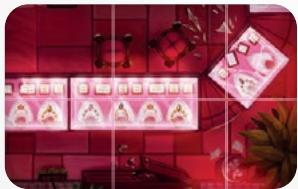
EXAMPLE
These jewelry cases are not bordered by the lines in the other examples. They are not obstructions.
WHAT YOUR CHARACTER CAN SEE
When determining if your character can see a square, draw an imaginary line from the center of your character’s square to the center of the square in question. Then, use the following rules.
If an obstruction interrupts this line, your character cannot see that square.RULE 1:
If the line passes through any part of a square occupied by a standing rival youRULE 2: can see, your character cannot see past that rival’s square.
If the line passes through any part of a square occupied by an ally, your characterRULE 3: can see past that ally’s square.
If the line passes through where four corners meet, and an opponent’s characterRULE 4: occupies one or two of those squares, your character can still see past that corner.
ADJACENCY
In DC Comics Funkoverse a square is adjacent if it is straight beside or diagonal to your character. However, your character must also be able to see the square.
OBSTRUCTIONS AND ADJACENCY
If an obstruction is between your character and another square, your character cannot see that square and is therefore not considered adjacent. This includes obstructions on the corner of squares blocking diagonal adjacency.

ADJACENCY EXAMPLE
Ally A is adjacent to rival Z, but it is not adjacent to rival Y or the rival Basic Character.
EXAMPLES OF WHAT YOUR CHARACTER CAN SEE

Ally A and rival Z cannot see each other (rule 1).

Ally A can see rival Z but not rival Y (rule 1).

Ally A cannot see ally B because a rival, the rival Basic Character, is blocking its view (rule 2).

Ally A can see past its rivals, Y and Z, because they do not block the sight line that passes through where corners meet (rule 4).

Rival Z is knocked down, so ally A can see ally B. Ally A cannot see the rival Basic Character because rival Y is blocking its view (rule 2).

Ally A can see rival Z through the square occupied by ally B (rule 3).

Ally A can see the rival Basic Character. Rival Z would normally block its view of that square, but in this example it does not because ally A cannot see rival Z (rules 1 and 2).
MOVING
When you move something (such as a character or a token), you may move it straight into the next square or diagonally.
BASIC MOVES
If a character moves by doing a basic action, the character can move up to 2 squares.
SPECIAL MOVES
If something moves because of an ability, trait, or item, it is a special move. You can move it up to the number of squares specified by the ability, trait, or item.
HOW TO MOVE SOMETHING
When moving something, use the following rules.
You cannot move things through obstructions.RULE 1:
You can move something into a square partially occupied by RULE 2: an obstruction but only if the obstruction does not occupy the center of the square.
If an obstruction is on a corner of a square, you cannot moveRULE 3: something diagonally through that corner.
You can move something through aRULE 4: square occupied by one of your allies.
You cannot move something through a RULE 5: square occupied by a standing rival.
You cannot end something’s move in a RULE 6: square occupied by an ally or rival.

EXAMPLE
Ally A can move through ally B, but not through rival Z (rules 1, 4, and 5).

EXAMPLE
Ally A is in a square that is partially occupied by an obstruction. However, Ally A cannot move through the obstruction (rules 1 and 2).
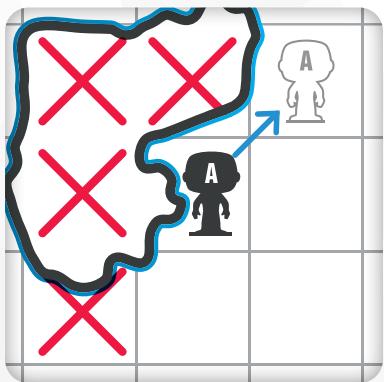
EXAMPLE
Ally A is in a square that is partially occupied by an obstruction. Ally A cannot move diagonally through the obstructed corner (rules 2 and 3).
STRAIGHT MOVES

Ally A can move 1 or 2 squares, but not to squares occupied by another character or blocked by an obstruction (rules 1 and 6).
CANNOT MOVE

Ally A cannot move because it is blocked by rival Z, the rival Basic Character, and an obstruction (rules 1 and 5).
DIAGONAL MOVES

Ally A can move diagonally to squares not occupied by another character or blocked by an obstruction (rules 3 and 6).
MOVING BETWEEN RIVALS

Ally A cannot move diagonally through the corner that is obstructed, but may move between rivals Y and Z, as the corner is not obstructed (rule 3).
COMBINING STRAIGHT AND DIAGONAL MOVES

Ally A can move through squares occupied by ally B (rule 4).

Ally A cannot move through an obstruction. Ally A uses two basic move actions to go around it (rule 1).
CHALLENGES
The rules provide many ways to challenge targets. Usually your target is a rival, but you might target other things, such as tokens. Unless a rule says otherwise, you challenge only one target at a time. You cannot challenge an ally.
BASIC CHALLENGE
A character doing a basic challenge rolls 2 dice, and must be adjacent to their target.
CHALLENGE (NUMBER)
The word “challenge” followed by a number means you challenge an adjacent target, and you roll an amount of dice equal to the number that follows “challenge.”
RANGED (NUMBER) CHALLENGE (NUMBER)
The word “ranged” followed by a number means the target must be within that number of squares. The challenger must be able to see the target. Roll an amount of dice equal to the number that follows “challenge.”
DEFENSE
The number inside the shield on the target character’s card shows how many dice the defender rolls when that target is challenged. Tokens that you can challenge show their defense on the token.
RESOLVING A CHALLENGE
Declare your target and roll a number of dice as specified by the rules for your challenge. Your opponent then rolls a number of dice equal to the target’s defense.
• You want to get more successes than your opponent.
• As the challenger, you get 1 success for each and 3 successes for each .
• Your rival gets 1 success for each and 3 successes for each .

If you have more successes than the defender, your character wins the challenge. If you do not, your character loses the challenge. When you challenge and lose, nothing happens.
KNOCKED DOWN
If a character that is standing is challenged and loses, the character that was challenged is knocked down. Tip the character over in the square where the character stood. (When a basic character is knocked down, flip it over in its square so that the “knocked down” side is faceup.) A character that is knocked down cannot use actions except to rally. However, another character can do the assist action to stand that character up. See Assist (page 6).
KNOCKED OUT
If a character that is knocked down is challenged and loses, the character that was challenged is knocked out. Remove the character from the map and place the character on the 1 of their player’s cooldown track. A character that has been knocked out and is on the cooldown track can still be chosen to take a turn and become exhausted; however, they may not do any actions. In some instances, it might be beneficial to delay taking a turn with a character in play; choosing to take a turn and exhaust a knocked-out character allows you to do this.
MULTIPLE CHALLENGES
Some abilities allow a character to challenge more than one target. Declare and resolve each challenge one at a time. Make separate challenge rolls for each target, whether you are challenging multiple targets or a single target more than once. The defender rolls dice to defend for each challenge as it is declared and made.
A BASIC CHALLENGE

Ally A challenges rival Z1. as a basic action. Rival Z has a defense of 2, so each character rolls two dice.


Ally A, the challenger, gets 3 successes:2. Rival Z, the defender, gets 2 successes: Ally A wins the challenge. Rival Z is knocked down.
KNOCKING OUT A TARGET

Ally A challenges rival Z1. with a challenge 3 ability. Ally A rolls 3 dice. Rival Z has a defense of 2, so it rolls 2 dice.


Ally A, the challenger,2. gets 2 successes:

Rival Z, the defender, gets 1 success:

Ally A wins the challenge. Rival Z is knocked down.
Ally B challenges the rival 3. 4Z, who is already knocked down. Ally B gets more successes and wins. Rival Z is knocked out and moves to the 1 of their 2cooldown track.

A RANGED CHALLENGE
Ally A uses a ranged 3 challenge 2 1. ability, and challenges rival Z, who can be seen and is within 3 squares.
Ally A rolls 2 dice to challenge. Rival Z2. has a defense of 2, so it rolls 2 dice.
NOTE: Rival Y is also in range but cannot be challenged because an obstruction blocks ally A from seeing them.

ABILITIES
When you choose to have a character do the ability action, do the following steps:
Choose an ability from that character’s card.1.
Spend an ability token of the appropriate type from your pool to pay the ability’s cost,2. placing it on your cooldown track on the number shown in the ability’s icon. If you do not have the appropriate ability token available in your pool, you cannot use the ability.
Follow the rules of the ability as written on the card.3.
If the ability has multiple rules, follow the rules in sequence. When ability rules conflict with the rules written in the instructions, the ability rules take precedent.
ABILITY TYPES
There are a variety of types of abilities in DC Comics Funkoverse. The characters in this game use three of the ability types ( ). Other games have characters that use diferent combinations of ability types. Each ability type is associated with various qualities:

Characters with these abilities exhibit finesse, agility, and coordination. Such abilities often provide ways for characters to be faster or more flexible.

Characters with these abilities exhibit forcefulness, strength, and fortitude. Such abilities often provide ways for characters to be mighty or more resilient.

Characters with these abilities exhibit cunning, ingenuity, and deception. Such abilities often provide ways for characters to trick or inhibit rivals.

Characters with these abilities exhibit leadership, charisma, and willpower. Such abilities often provide ways to bolster allies or give them actions.
ABILITIES THAT ARE CHALLENGE ACTIONS
Many abilities let you challenge targets, but doing the ability action is only considered a challenge action if it has a after the ability name. Otherwise, it is considered a nonchallenge action. If there is no possible target, you cannot do a challenge action.
TRAITS
The rules explained for abilities also apply to traits. However, you do not need to spend an ability token to use a character’s trait. Instead, it applies all the time. Unless the trait says otherwise, a trait’s rules also work when a character is knocked down or knocked out.
GLOSSARY OF ABILITY TERMS
This glossary includes terms used throughout all DC Comics Funkoverse games. Some terms do not apply to characters in this game (DC 100). Terms not used in this game are marked with an asterisk (*).
*ADDING RANGE: When a rule adds range, the squares you count for a ranged challenge increase by the stated amount. If you add range to a challenge that is not ranged, it becomes a ranged challenge with a range equal to the number stated plus 1.
ALLY: The characters and minion tokens you control are allies. If you play with three or four players, characters and minion tokens controlled by players of the same side are allies to each other.
CHALLENGE ACTIONS: An action is considered a challenge action if it is a basic challenge or it has a after the ability or item name. If there is no possible target, you cannot do a challenge action.
*CONTROLLING A RIVAL: A rule might specify that you control a rival. When you have that rival do actions, treat the rival as allied to your characters rather than your opponent’s character when doing moves, challenges, and determining what the rival can see.
COST: When a character does an ability, the cost is the number in the ability icon next to that ability’s name that shows where on the cooldown track to place the matching ability token.
DECREASING AN ABILITY COST: A rule might decrease the cost of an ability. When that happens, place the ability token on the number of the cooldown track that corresponds with the new number. If the cost is decreased below 1, an ability token is no longer required to use the ability.
DISCARD A STATUS CARD: When you discard a status card, it is taken from the character it was given to and becomes available to play again.
*INCREASING AN ABILITY COST: A rule might increase the cost of an ability. When that happens, place the ability token on the number of the cooldown track that corresponds with the new number. If the cost is increased above 4, place the token on the 4 instead.
INCREASING DEFENSE: A rule might increase a target’s defense.
The target rolls more dice when defending against a challenge.
*MAKING A RIVAL CHALLENGE: If a rule allows you to make a rival do a challenge, the rival can challenge your opponent’s characters. If the ability does not specify that you control the rival, that rival is not considered your ally.
MAKING A RIVAL MOVE: If a rule allows you to make a rival move but does not specify that you control the rival, the rival follows the rules for Moving (page 12), but that rival is not considered your ally.
MARKERS: A rule might place square markers on the map. If all the markers of that type are in play, you cannot place that marker on the map. Unless otherwise stated, markers do not block what a character can see, characters can occupy the same squares as markers, and characters cannot move or target markers. Markers follow the same rules for adjacency as characters; characters must be able to see squares containing the markers in order to be considered adjacent. See the source of the marker for more rules.
GLOSSARY OF ABILITY TERMS (CONT.)
*MINION TOKEN: Minions are special tokens that follow many of the rules for characters. Rules that call for the placement of minion tokens on the map will explain how the minion moves, and challenges, as well as any traits or abilities. You cannot place a minion token in a square occupied by an ally or rival. A minion token follows the same rules for adjacency, movement, and what the token can see as characters. A minion token you place is considered your characters’ ally.
Minion tokens can be challenged, but a minion token is never knocked down or knocked out. Instead, remove the token from the map when you challenge the token and win. Minion tokens do not award points when they are removed.
For the purposes of gaining points, when a minion token knocks out a rival, credit the knock out to the character who put that minion into play.
NEARER: A rule might specify choosing something that is nearer or nearest to a square (typically the square of a character doing the ability action). Something that cannot be seen from the square does not count when determining what is near. If two things are equally near, the player responsible for this rule coming into play chooses the target. A rule might specify placing something nearer. In this case, ignore what the thing in question can see.
NON-CHALLENGE ACTIONS: Actions you take that do not have a after their name are not challenge actions, even if they involve making a challenge against a target.
OPPONENT: The player you play against is your opponent. If you’re playing a threeplayer or four-player game, all of the players on the other side are your opponents.
PLACING SOMETHING: Placing something is diferent from moving something, and ignores the rules for moving. When a rule says that you place something on a square, neither your character nor the thing being placed needs to be able to see the square unless the ability says so or says it has to be in an adjacent square.
PULL: See Toward (page 19).
RANGED: The word “ranged” indicates that a challenge can be made when the target is not adjacent. See Challenges (page 14).
RIVAL: Characters and minion tokens controlled by your opponent(s) are rivals of your characters.
ROLL AND COUNT SUCCESSES: A rule might tell you to roll dice and count successes. Roll the number of dice specified. You get 1 success for each , and you get 3 successes for each . Your opponent does not roll dice to defend when you roll and count successes.
STATUS CARDS: Some characters have abilities that give status cards to other characters. When this happens, find the status card and put it near the afected character’s character card as a reminder that this character follows that status card’s rules. If all the status cards for your character are in play, you cannot give that status card to a character. When a character gets knocked out, the character keeps its status cards. For the purposes of gaining points, when a status knocks out a rival, credit the knock out to the character who put that status card into play.
TOKENS: A rule might place round tokens on the map. If all your tokens are in play, you cannot place that token on the map. Unless otherwise stated, tokens do not block what a character can see, characters can occupy the same squares as tokens, and characters cannot move tokens. Tokens follow the same rules for adjacency as characters; they must be able to “see” squares they are next to in order to be considered adjacent. See the source of the token for more rules. For the purposes of gaining points, when a token knocks out a rival, credit the knock out to the character who put that token into play.
A token might have rules that allow it to be challenged, and if so, the rules that put the token into play will describe what happens if you challenge it.
These rules do not apply to minion tokens. See Minion Token (page 18) for the rules that apply to them.
TOWARD: Some abilities specify moving something toward something else (sometimes written as “pull”). When moving something toward something else, your character must be able to see the thing and each square into which you are moving the thing.
When moving something toward another thing, you move it up to the stated number of squares according to the Moving rules (page 12), except that each square to which you move it must be nearer.
WITHIN A NUMBER OF SQUARES: To know what is within a number of squares, count squares as you would for movement, but ignore obstructions and any characters and tokens that would block what can be seen.
PLAY AS A STAND-ALONE GAME OR MIX WITH OTHER DC COMICS FUNKOVERSE GAMES!
TWO EXCITING NEW LOCATIONS TO EXPLORE: ARKHAM ASYLUM AND CATWOMAN’S PENTHOUSE.

米

INCLUDES 2 EXCLUSIVE DC COMICS FUNKOVERSE POP! GAME FIGURES! CATWOMAN
ROBIN

Game by
BATMAN and all related characters and elements © & ™ DC Comics. WB SHIELD: © & ™ WBE (s19)
MANUFACTURED FOR

FUNKO, LLC. 2019 2802 WETMORE AVE EVERETT, WA 98201 (425) 783-3616
POP!® is a trademark of Funko, LLC.

/OriginalFunko


@OriginalFunko
@OriginalFunko
CONTENTS:
1 Double-Sided Map, 12 Game Tokens, 15 Game Markers, 6 Dice, 21 Points, 1 First Player Marker,
下载 Markdown