Cryptid Cafe Retail Rulebook Web.md
RULEBOOK

WELCOME TO CRYPTID CAFE!
The game's goal is to complete as many customer orders as possible and earn the most tips by the end of the night. Sound simple? Well, with each passing round, your unserved customers will get frustrated waiting for their food and become unhappy with your service. And in turn, they'll give you smaller tips when you do serve them. Continue to ignore them, and they will walk out of the cafe, and at the end of the game, you'll have to give some of your tips to the owner. And if that wasn't enough, you'll be competing against other players for those much-needed menu items.
However, with a smidge of strategy, a dash of tactics, and a pinch of luck, you could be crowned the most legendary server!
COMPONENTS
12 – Sasquatch server meeples
4 – Customer decks (15 cards in each deck)
24 – Event cards
4 – Manager cards
4 – Change My Order cards
1 – Kraken Chef game board
4 – Server boards
26 – Al-bone-digas tokens
26 – Hexpresso tokens
26 – Hot Apple Spider tokens
50 – 1-value coin tokens
1 –First player card
30 – 5-value coin tokens
1 –Round tracking card
1 –Round tracking cube
1 -AI Die
26 – BLTE tokens
2 -AI Decks (5 cards in each deck)
26 – Cinnamonster Roll tokens
1 –Rule book
GAME SETUP
A. Place the Kraken Chef game board on the table within reach of all the players.
B. Separate the food and coin tokens and place them close to the game board.
G. Give each player one of the four customer decks, three server meeples, a player server board, a Manager card, a Change My Order card, and finally, five 1-value coins.
D. Each player randomly draws two event cards and adds them to their customer deck. The unused event cards are placed back into the box.
E. Each player shuffles their customer deck and places it face down to the left of their server board.
F. Each player draws two customer cards from their deck and places them in the green locations of the Customer Satisfaction Tracker, located at the top of their player boards.
G. Place the Round Tracking card in view of all the players and place the Round Tracking cube on the first round space.
H. The game begins with the person who most recently went out to eat. Give that person the Slime and Pepper First Player card.


The serving tray on the player board is where you store your food and tips.
COMPONENT BREAKDOWN
INGREDIENTS OF THE PLAYER BOARD
Along the top of the player board is the Customer Satisfaction Tracker. The satisfaction level moves from left to right, with green being the most satisfied and red being the least satisfied.
Served customers will go here on the left side of the player board below the area marked “Served."
Customers who have walked out will go here on the right side of the player board below the area marked “Walkouts."
UNDERSTANDING THE FOOD STATION GAME BOARD
There are five food stations: Hexpresso, Cinnamonster Roll, Hot Apple Spider, BLTE Sandwich, and Al-bone-digas Soup.

Each food station has three positions where players take turns placing their servers. The positions are labeled “3," “2," and “1” to indicate how much food your server might receive when placed at a particular position. The position marked with “3” represents the front of the line, and the “1” position represents the end of the line.
ANATOMY OF CUSTOMER CARDS
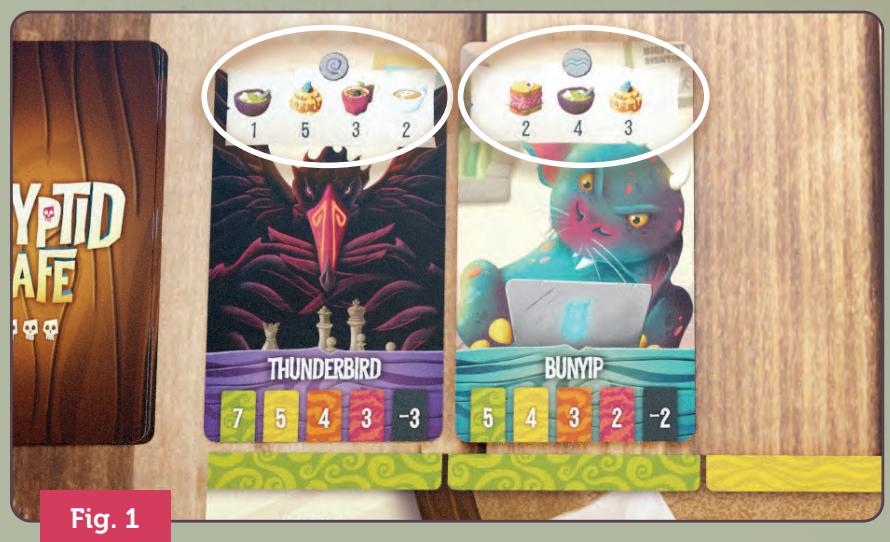
The top of the Customer card displays their food order. These are the amounts of each food item you'll need to serve the customer. It also displays the Cryptid Type icon. See pg. 10 for Cryptid Type explanation and bonuses.

The bottom of a Customer card displays the tip amount the customer will leave based on their satisfaction level and their Walkout value. The colored wood pattern at the bottom of a Customer card also identifies the Cryptid Type.
GAME OVERVIEW & PHASE 1: SENDING OUT THE SERVERS
GAME OVERVIEW
Each round has four phases:
-
Sending out the servers.
-
Sharing tips and collecting the food.
-
Serving your cryptid customers.
-
End of round clean up.
If you are playing a solo or 2-player game, after learning about the four phases, see pg. 11 for additional rules.
Number of rounds:
• Solo, 2-player, and 3-player games are played over 9 rounds.
• A 4-player game is played over eight rounds.
PHASE 1: SENDING OUT THE SERVERS
The first player places a server at a food station of their choice and at a position of their choice, either “3," "2," or “1” (Fig 1). However, they do not collect the food at this time; this happens in Phase 2: Sharing Tips and Collecting Food. The player to the left of the starting player then places a server. Play continues in clockwise order until each player has placed their three servers (Fig 2).
Players should note that you cannot place a server at a station where you already have a server (Fig 3).
In the rare case that a player cannot legally place a server at a location, that player may choose one food token from a type that is not blocked by an event card, nor is a location where they currently have placed a server.
Once all the servers are placed, move onto Phase 2: Sharing Tips and Collecting Food.


PHASE 2: SHARING TIPS AND COLECTING THE FOOD
Now that all the servers are placed, it is time to share tips and collect the food. Starting with the Hexpresso station, resolve stations left to right, ending with the Al-bone-digas Soup. Resolve a station by doing the following two steps:
1. Sharing tips
2. Collecting food
SHARING TIPS
To share a tip with the Kraken chef, you must be the last server in line at a food station location (not necessarily in the last position) (Fig 1). For each position you want to move your server up in line, you need to give the chef one coin by returning it to the supply. For example, to move your server from Position 1 to Position 3, you need to share two coins (Fig. 2). You can only move your server up in line at one station per round, even if your servers are last in line at multiple food stations. Also, you can only move your server up in line if there is another server in front of you (Fig. 3).
If a tip is shared, the server last in line moves up in line and pushes all the other servers in line back one position (Fig. 2). Servers who are moved to the back of the line do not get the opportunity to change positions.
GOLECTING FOOD
Once the tipping process has been completed (or if it skipped or not possible), each server earns food based on their line position. Players receive a number of food tokens equal to the number where their server is located (Fig. 4).
Once the first station is resolved, continue onto the next station and repeat the same steps. When all the food is awarded, it is time for Phase 3: Serving the Customers.


PHASE 3: SERVING YOUR CRYPTID CUSTOMERS
Players now serve their customers using the food acquired in Phase 2: Sharing Tips and Collecting Food.
The cryptid customers have food orders along the tops of their cards (Fig 1). To complete an order, return to the supply the correct amounts and types of food that match the customer's order. When a customer's order is successfully completed, you receive a tip from that customer based on their position on the Customer Satisfaction Tracker.
For example, this Yeti customer is at the orange level of the Customer Satisfaction Tracker. Therefore, the player is awarded 5 coins, the orange level tip on the Yeti card (Fig 2).
Served customers are removed from the tracker and placed below the 'Served' area of the player board (Fig 3).
Players can serve more than one customer per round if they have enough food resources. Any unused food tokens carry over from round to round.
If a player or players use the Change My Order card resolve those cards before proceeding with serving customers (pg. 9).
When all the players have completed serving their customers, it is now time for Phase 4: End of Round Clean Up.


PHASE 4: END OF ROUND CLEAN UP
Once all players have served their customers, preparations begin for the next round. First, all remaining customers are moved to the right along the Customer Satisfaction Track. Players must choose to move AllL of their customer cards either one space or ALL of their customer cards two spaces (Fig 1.).
Why would you want to move your customers two spaces? Moving two spaces makes room for more customers; however your current customers won't be as happy.
Customers move at the end of every round, even the last one. Do not fill in any gaps between customers that may have occurred during the serving phase.
Customers that would move past the last space on the satisfaction track are now Walkouts! Move any customers that walk out to the Walkout area of the player board (Fig. 2). These customers will cost you some tips at the end of the game, affecting your total score (See End Game Scoring, pg. 10).
It's now time to add more customers. To do this, each player draws new customers from the customer deck equal to the number of empty green spaces on their Customer Satisfaction Track (Fig. 3). If an event card is revealed it is active for the next round (See Event Cards, pg. 9).
Finally, move the round marker to the next round. Discard any event card that may have been active (pg. 9). Players keep any unused food tokens. Pass the First Player card to the next player in clockwise order and repeat phases one through four. The game ends when all 8- or 9-rounds are completed, previously determined by the number of players (pg. 5).
Once all the rounds are complete, it's time to find out who the most legendary server is! Proceed to End Game Scoring.


EVENT & SPECIALTY CARDS

EVENT CARDS
There are two types of event cards.
-
A food station is closed and that particular menu item is not available that round for your servers.
-
All customers must move 2 spaces to the right on the Customer Satisfaction Tracker at the end of the next round.
Event cards appear randomly when adding new customers to the player boards during Phase 4: End of Round Clean Up. A revealed event card is active for the next round. If multiple event cards are revealed, only the revealed card closest to the first player in turn order will take effect. The other revealed event cards are discarded, leaving only one event card active for the next round.
For example Player 2 and Player 4 both reveal an event card. Player 2's event card would take effect and Player 4's card is discarded. Not all rounds will have event cards.
During the last round of a game, all event cards are ignored and discarded.
SPECIALTY CARDS
Each player begins the game with the same two specialty cards. These can be used at certain points in the game to help players better meet the needs of their customers. These cards can only be used once per game.
Manager Card - Allows a player to swap the positions of two of their Customer cards and can be played at any time.
Change My Order Card - Allows a player to change one of their customer's orders to copy the order of another player's unserved customer. They can then serve their customer and score tips based on the value and position of the other player's customer (Fig 1). This does not change the customer type for end game bonus scoring (pg. 10). This card is played at the beginning of Phase 3 and should be announced before players serve their customers. If more than one player plays their Change My Order card, resolve them in normal turn order. Once all Change My Order cards are resolved, then continue to serve customers as normal, even the players who used a Change My Order card.

Player 1 decides to change their Bunyip order to copy Player 2's Mothman order. Player 1 servers their Bunyip the Mothman's order, 5 Hot Apple Spiders, scoring a tip based the Mothman's value and position on Player 2's board. In this case, the Mothman is in the green position, so Player 1 scores 3 coins. Player 1 then moves their Bunyip card to the “Served” area of their player board.

BONUSES & END GAME SCORING
BONUSES
Customers come in three Cryptid Types. They are identified by the element icon at the top of a customer card, as well as by the colored wood pattern at the bottom of a customer card.
They are:
Air cryptids
Land cryptids
Water cryptids
At the end of the game you can earn bonus tips for serving sets of these Cryptid Types. A set is at least three served customers of the same Cryptid Type. For each set, a player earns three bonus coins plus one extra coin for each additional customer of the same Cryptid Type.
For example, Player 1 served four land cryptids, two air cryptids, and three water cryptids. They would score seven bonus coins at the end of the game: four for the land set, and three for the water set.

END GAME SCORING
Congratulations, you've made it to the end of your shift at the Cryptid Cafe! Now let's find out which player has the most tips and can be crowned The Most Legendary Server.
-
Add up all the tips youve earned over the course of the game.
-
For the customers that walked out, add up the Walkout values and subtract the total amount from your tips.
-
Subtract 1 coin from your tips for every 2 (rounded down) unused food tokens. For example, if you have 5 food tokens left, you would subtract 2 coins (rounded down from 2.5) from your tips..
-
Finally, add coins based on your cryptid set bonuses.
Compare final tip totals for all players, and the player with the most tips is declared...THE MOST LEGENDARY SERVER!
UH OH, WE TIED!
In case of a tie, use these tiebreakers, in order, to determine the winner:
-
Player with the fewest Walkouts (not value) wins.
-
Player with the least amount of wasted food wins.
-
Player to serve the most Customers wins.
SOLO & 2-PLAYER RULES
Solo and 2-player modes follow the same four phases as a multiplayer game with a few key differences.
SOLO SETUP ONLY
Setup as normal (pg. 2), but with these key differences:
A. Add all six of your event cards to your customer deck.

B. Shuffle the two AI Decks
separately, “Player 2” (red deck) and “Player 3” (green deck), and set them aside face down.
2-PLAYER SETUP
Setup as normal (pg. 2), but with one key difference:
A. Shuffle the “Player 3” AI placement deck and set it aside face down.
PHASE 1:
Instead of other live players taking turns placing servers, two AI players will simulate the live players. You'll be competing against “Player 2” (red deck).
In a 2-player game, only “Player 3” AI is used and is not scored.
You will go first, then follow these steps for an AI player's turn:
-
Draw one card from the red Player 2 deck to reveal which food station Player 2 will place their server.
-
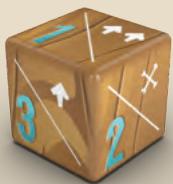
Next, roll the AI die to determine which position their server will occupy at the drawn station. If the space is already occupied, place the server at the next highest position value.
- Continue to take your turns and AI turns until you and the AI players have placed all of your servers.
PHASE 2: SHARING TIPS AND COLECTING THE FOOD
After all servers have been placed, resolve each food station as normal (pg. 6). If an AI player is last in line, roll the AI die to determine how many spaces the server will move up.


The AI players do not have to pay the Kraken chef to move up. If an AI player is last in line at multiple stations, they can move up in line at each station. The AI players will not collect food.
If you move up in line, the coins that would typically go to the Kraken are instead given to AI Player 2. These will count towards Player 2's total at the end of the game.Skip this for 2-player rules.
PHASE 3: SERVING YOUR CRYPTID CUSTOMERS
Follow this phase as you would a normal game (pg. 7). The AI players don't have customers, so skip this phase for them.
PHASE 4: END OF ROUND CLEAN UP
Follow this phase as you would a normal game (pg. 8). If you have a customer walk out, give Player 2 the green tip value of the Walkout in coins from the supply, not your coins.
END OF GAME SCORING
Finally, solo and 2-player games are played over 9-rounds. Tally your score as usual; see pg. 10, with one exception. Solo scoring of your wasted food is more expensive and given to AI Player 2.
Easy - Subtract 3 coins from your tips for every 2 (rounded down) unused food tokens.
Hard - Subtract 4 coins from your tips for every 2 (rounded down) unused food tokens.
Epic - Subtract 5 coins from your tips for every 2 (rounded down) unused food tokens.
Solo Player 2 Scoring:
• Add tips received from sharing tips, walkouts, and wasted food.
If you have more tips than Player 2, You WIN; if not...try again.
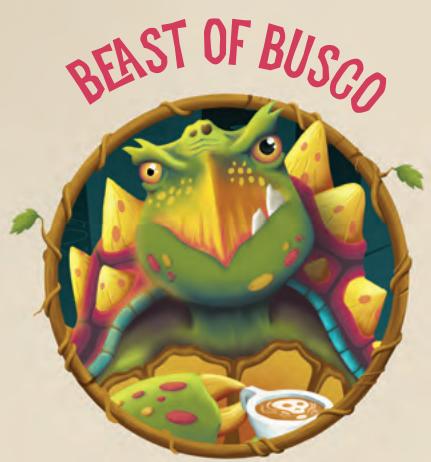
The Beast of Busco is a legend in
Churubusco, Indiana, about an enormous (weighing an estimated 500 pounds)
snapping turtle that townsfolk claimed to
have seen as recently as 1949. However, it was first spotted by a farmer in 1898. The Flatwoods Monster is our only extraterrestrial customer. Its eyes are
glowing portholes, and its body is made of
metallic armor. It was said to be discovered
in 1953 by a search party in Flatwoods, West
Virginia, shortly after three young boys saw a bright object flying across the sky.

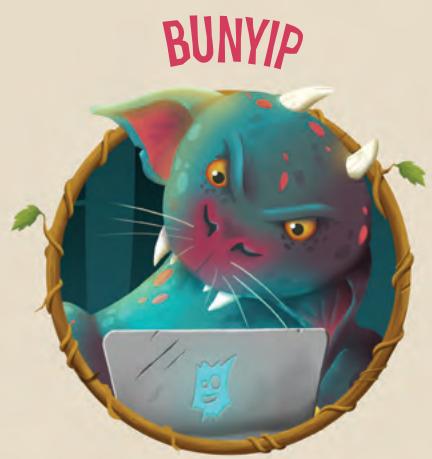
The Bunyip hails from Australia, living in swamps, riverbeds, and waterholes. The creature's characteristics are described in many different ways, but all agree that it is a water cryptid. An early record of the Bunyip dates back to 1818. Avoid getting a hug from the Bunyip, as that is how it kills its prey.

The Grafton Monster is a massive
humanoid cryptid spotted around 1964,
living in the woodlands around Grafton,
West Virginia. Legend says the monster is a
bipedal creature with smooth, seal-like skin,
and it's uncertain whether it has no head or
if it has a head that's near to its chest. The Spanish name translates to The
Goatsucker for its affinity to eat goats, farm
animals, and pets. El Chupacabra was first
sighted in 1995 in Puerto Rico and is often
linked to Mexico and the Southwestern U.S.
It is usually described as reptilian, but has also been described as canine-like.

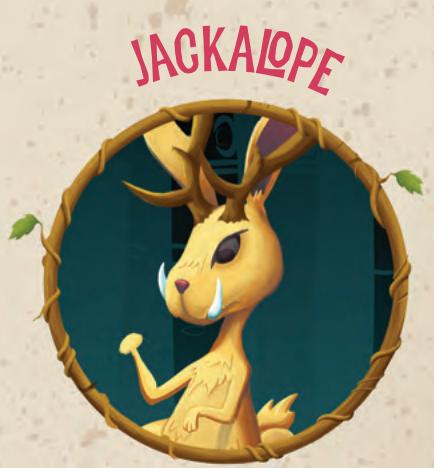
A mythical creature, also known as the warrior rabbit, is described as having antelope horns atop its head, giving way to its name, a combination of Jackrabbit and Antelope. The Jackalope was first spotted in 1829 in Douglas, Wyoming, the Jackalope capital of America.

First sightings of the Jersey Devil date
back to the 1700s in the New Jersey area.
It's described as being humanoid with the
head of a horse, bat wings, and a snake tail.
This creature also glows and spits fire like a
dragon. A popular cryptid, the Jersey Devil is the namesake of the NHL New Jersey Devils hockey team.
The Mothman, discovered in 1966, is one
of the most well-known cryptids. It visits
the cafe from Point Pleasant, West Virginia.
Another humanoid creature, the Mothman also resembles an owl with a wingspan of more than ten feet. It's said the Mothman's glowing red eyes cast an
overwhelming sense of evil to anyone that gazes upon them.


The Loch Ness Monster, also known by the nickname Nessie, is often described as a twenty-foot long monster with smooth, rubbery blackish-gray skin. Nessie's body is serpentine, with humps running the length of it and one or more pairs of paddles, as is typical of sea serpents and lake monsters. The first sighting of Nessie dates as far back as 565 AD!

Described as a 40-50 foot sea serpent,
the Ogopogo comes to us from Lake
Okanagan in British Columbia, Canada. The
Ogopogo is classified as a many-humped
serpent possibly related to the prehistoric
Basilosaurus. There have been many
sightings of the Ogopogo, including some
events captured on film and video. The
most recent sighting was in 2011.

Clermont County, Ohio, is home to the Loveland frogmen. The frogmen appear to be physically capable of using sticks as tools and have the capacity to utilize those sticks as a wand to produce sparks.

The Sasquatch earned its more popular name, Bigfoot, from its ginormous feet, reported to measure up to 24 inches in length. It is an ape-like or hairy humanoid creature that calls North America home. Like it's cousin, the Yeti, the Sasquatch stands eight to eleven feet tall, walks upright, and has a furry coat.

A monstrous creature, the Snallygaster was sighted in the early 1730s around the Washington, D.C., and Maryland areas by German immigrants. The Snallygaster is described as a reptilian half-bird beast with octopus tentacles writhing from its beak.

The Yeti, also known as the Abominable Snowman, can be found in the Himalayas. The first sighting dates as far back as the 6th century. The Yeti is described as an ape-like creature standing eight to ten and a half feet tall that walks upright. It has a furry coat that is brown, black, reddish, or white in color.

An enormous bird of prey, so large that
legend says when they flap their wings,
sounds of thunder could be heard. It's
unknown when the first sighting occurred,
other than it dates back to antiquity.
Sightings of the Thunderbird cover an area
from Alaska to Central America. The Wendigo is an almost zombie-like humanoid creature, a legend of Native
Americans residing in the northern U.S. and
Canadian regions. The zombie description
derives from its sunken eyes, its death-like
scent, and its decaying gray skin that reveals
its bones. Some sightings also attribute the stag skull and horns to the Wendigo.


Thank you to our family, friends, and backers for your support. Your faith in us has made this game a reality, and we genuinely hope you enjoy it.
– The Squatchy Games team

WWW.SQUATCHYGAMES.COM WWW.25THCENTURYGAMES.COM
© 2021 Squatchy Games LLC., Cryptid
Cafe and all related marks are ™M and ©
Squatchy Games LLC. All rights reserved. Squatchy Games LLC., P.O. Box 2722, Monument, CO 80132 info@squatchygames.com
PO Box 160170, Atlanta, GA 30316
下载 Markdown