Keystone NA-Rulebook Final.md
KEYSTONE NORTH AMERICA
WELCOME TO
KEYSTONE: NORTH AMERICA
Keystone: North America is a card placement game inspired by a passion for wildlife and conservation biology. 1-4 players each take the role of a biologist, working to build an interconnected ecosystem through the careful placement of species. Those that are better connected will score more points, and the biologist who scores the most points wins!

COMPONENTS
(Note: Deluxe edition component information is on page 12.)

4 Player Boards
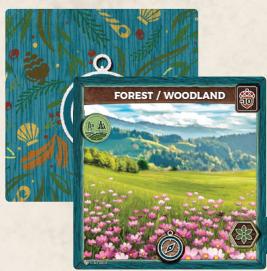
8 Wild cards
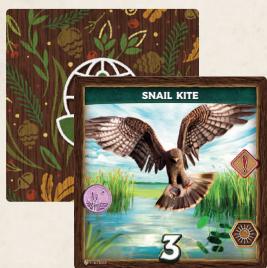
154 Species cards (2 of each Species)


10 Skill tokens

1 Rulebook


66 Research/ Story tokens
80 Synergy tokens

6 Sealed envelopes
1 First Player token

10 Secret Objective cards
1 Time Track and Marker
1. Card Name


1 pad of Scoresheets
1 Field Journal (Solo play pg. 11)

SPECIES CARD ANATOMY

2. Forest/ Woodland habitat
Note: Half of the cards have these three pips in the lower right and are used only in games with 3 or more players.
-
Desert/Grassland habitat
-
Wetland / River habitat
-
Arctic / Alpine habitat
-
Artist's Name
-
Keystone species icon
-
Endangered species icon
-
Tag icon

10. Sequence number

11. Season icon. There are four:
Spring

Summer

Fall

Winter
SETUP (2-4 PLAYERS)

-
Give each player a player board.
-
If playing a 1 or 2-player game, return to the box any Species cards with the 3+ symbol in the lower right 3+ symbo corner. Shuffle the remaining Species cards and place the newly formed deck face down near the middle of the table.

-
Drawing from the top of the Species deck, place 6 cards face up in a horizontal row next to the deck. These 6 cards are known as the Field.
-
Randomly choose 5 Skill tokens and place them on the table, active (white) side up. Place the rest of the Skill tokens back in the box.
-
Sort the Wild cards by habitat, forming 4 face up stacks of cards. Place these stacks in easy reach of all players.
-
Shuffle the Secret Objective cards and deal 1 to each player. Return all extra secret objective cards face down to the box.
-
Create a supply of Synergy tokens and Research tokens in easy reach of all players.
-
Place the time marker on the following space depending on the number of players:
● 1 Player = Space 4
● 3 Players = Space 6
• 2 Players = Space 5
• 4 Players = Space 7
-
Choose a first player using any method of your choice and give them the First Player token.
-
Starting with the first player and going clockwise, give each player a number of Synergy tokens according to the chart below:
1st Player = 5 Synergy tokens
3rd Player = 7 Synergy tokens
2nd Player = 6 Synergy tokens
4th Player = 8 Synergy tokens
You are now ready to begin! The first player will take the first turn.

GAME OVERVIEW
Keystone: North America is played over a series of rounds during which each player takes one turn. Your goal is to place cards on your player board to form ecosystems and complete your secret objective. In brief, an ecosystem is a sequence of two or more cards with matching

Research token

Keystone species icon
habitats that are in a straight line and in consecutive numerical order. Ecosystems can be enhanced by Research tokens and Keystone species, identified by the Keystone species icon. Your Secret Objective is completed by matching sets of cards on your player board to the patterns on your Secret Objective card.
Designer's Note: "A keystone species—which can be any organism, from animals and plants to bacteria and fungi—is the glue that holds a habitat together. It may not be the largest or most plentiful species in an ecological community, but if a keystone is removed, it sets off a chain of events that turns the structure and biodiversity of its habitat into something very different. Although all of an ecosystem's many components are intricately linked, these are the living things that play a pivotal role in how their ecosystem functions."
TURN OVERVIEW
On your turn, you can do one of 2 actions:
Introduce action: Do each of the following:
Take one Species card from the Field. THEN
Place that Species card on your player board.
• Use Skill action: Choose one of the following:
Resolve the effect of a Skill token on its active side, then flip it over to its exhausted side.
OR
Resolve the effects of all Skill tokens on their exhausted side, flip all Skill tokens to their active side, and then advance the time marker.
After you complete your action, refill the Field with new Species cards, and the player to your left begins their turn.
INTRODUCE ACTION
To use the Introduce action:
1. TAKE ONE SPECIES CARDFROM THE FIELD:


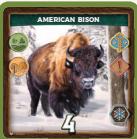


A. Choose any Species card in the Field (the 6 face up Species cards). In this example, Kiara chooses the American Bison Species card.
B. Pay for the chosen card by placing one of your Synergy tokens on each card to its right, if any. In this example, to pay for the chosen American Bison Species card Kiara places 1 Synergy token on the Snowshoe Hare, Snail Kite, and Saguaro Cactus Species cards.


C. Take the chosen Species card and place it on any empty space on your player board (as shown on next page).
If the chosen card had Synergy tokens already on it, add them to your personal pool. In this example, there were no Synergy tokens on the American Bison Species card Kiara had taken.

2. PLACE THAT SPECIES CARD ON YOUR PLAYER BOARD:
Any time you place a card on your player board, gain 1 Synergy token for each shared habitat symbol on an adjacent Species or Wild card.

In this example, Kiara just placed the American Bison Species card on an empty space on her player board (a).
She takes 4 Synergy tokens after placing this card:
2 for the matching Forest/Woodland and Desert/ Grassland habitat symbols on the adjacent Coyote card (b).
2 for the matching Forest/Woodland and Desert/ Grassland habitat symbols on the adjacent Red Wolf card (c).

Total Synergy gained
Despite being adjacent, the Arctic/Alpine Wild card has no matching habitat symbols (d) with the American Bison, so Kiara gains no Synergy tokens from that card. The other cards are not adjacent.
Note: See "Wild Cards" on page 6 for more information about Wild Cards.
USE SKILL ACTION
The Use Skill action lets you use the effects of the five Skill tokens on the table.
When using Skill tokens, you can either choose one active skill (white) or all of the exhausted skills (yellow):
Active (white): Resolve the effect of 1 Skill token on its active side, and then flip it over to its exhausted side.
Exhausted (yellow): Resolve the effects of all skills on their exhausted side in the order of your choice. Resolve each, then flip all skills to their active side. Then reduce the time marker by 1 space.

Preview panel
The panel at the bottom of the Skill tokens is a preview of the token effects on the opposite side of that token. The token effects in this panel are not to be resolved.
- Kiara decides to do the Use Skill action. She chooses to resolve the effects of all the exhausted skills, so she does the following:

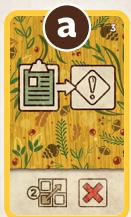


a. She places a research token on an unresearched Species card with an Endangered icon on her player board. Unresearched cards are those without any research tokens on them.
b. She places a research token on an unresearched Wild card on her player board.
c. She gains 2 Synergy tokens.
- She then flips all the exhausted Skill tokens back to their active side.


- Finally, she reduces the time marker 1 space on the time track.
Note: Skill token effects are described on the back of this rulebook. Research tokens can only be placed on unresearched cards, and all effects are optional except for the discard (X) effects.
WILD CARDS
Once per turn, you may discard 10 Synergy tokens (a) to take a Wild card and place it on any empty space on your player board. This special action can be done before or after your Introduce/Use Skill action.
A Wild card has a set habitat (b) and season (c), but can be any Sequence number (d) from 1-5 when scoring the game.

When placing the Wild card on your player board, gain a Synergy token for each matching adjacent habitat, as usual.
When scoring, Wild cards can represent one number when scoring a row, and then another number when scoring a column.
END OF TURN & REFILLING THE FIELD


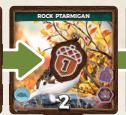


At the end of your turn, slide all remaining Species cards in the Field to the right as shown above.


Then, draw and place cards from the Species deck (a) to bring the total number of cards in the Field back to 6, starting with the rightmost empty slot. In this example, the Snail Kite Species card (b) is placed first, followed by the Swallow-Tailed Kite (c).
If the Species card deck runs out of cards to draw, shuffle any cards in the discard pile to form a new deck and continue drawing as normal.
END OF GAME & SCORING
When any player has filled every space on their player board or the time track marker has reached 0, you are now in the final round of the game. All players who have yet to go that round should take their turn, and then the game ends.
At the end of the game, score each ecosystem and each completed Secret Objective on your player board, then add 1 point for every three of your Synergy tokens.
1. ECOSYSTEMS (SEQUENCES)
An ecosystem is created when two or more cards with matching habitats have been arranged in ascending or descending consecutive numerical order. Gain 1 point for each card in the ecosystem.
CORRECT ECOSYSTEM:

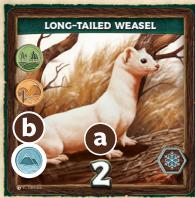


In this row, all the Sequence numbers (a) on the cards are in ascending consecutive numerical order and have a matching habitat (b), making the whole row a single ecosystem.
INCORRECT ECOSYSTEM:


In this row, no ecosystems are formed. Even though all the Sequence numbers (c) on the cards are in numerical order, adjacent cards with consecutive numbers do not share the same habitat (d), and the adjacent cards that share the same habitat are not consecutive (e). A single card is never an ecosystem.
SCORE ONLY ONE ECOSYSTEM PER ROW / COLUMN:
You can only score one ecosystem for each row or column on your player board, so make sure to choose the most valuable one.
.b.


In the row above, two ecosystems are formed. Even though they all share a habitat (a), only two cards at any point are in consecutive order (b & c). Only one ecosystem can be scored so you would choose the ecosystem with the Keystone species icon (d) since that is worth more points, as explained in the next column.


b
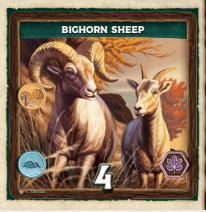
This row also has two ecosystems (a & b). The cards are in ascending consecutive order, but they do not all share the same habitat. The longer ecosystem with the Desert / Grasslands habitat icons (b) is worth more points.
2. RESEARCH TOKENS
Add 1 additional point for each research token on cards in a scored ecosystem.


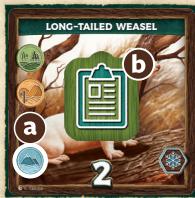

In this row, four cards are in an ecosystem with Arctic/Alpine habitat icons (a) for 4 points, and two of these cards have Research tokens (b) for an additional 2 points, so this row is worth 6 points.

3. KEYSTONE SPECIES ICON
If you have a Keystone species in a scored ecosystem, score that ecosystem again. Do this for each Keystone icon in that ecosystem.


There are three cards in this ecosystem (a) and one Research token (b), so it is worth 4 points. However, because there are two Keystone icons (c), the ecosystem is scored two more times for a total of 12 points!
4. WILD CARDS
If an ecosystem has a Wild card in it, that card can be any number from 1-5. The same Wild card can be a different Sequence number when scoring its row vs. its column. For example, the same Wild card can be a 2 when determining the best ecosystem in its row but a 3 when determining the best ecosystem in its column.


In this row, the Wild card (a) fills in as a Sequence number 2, making this a 4 card ecosystem. This ecosystem is worth 12 points, as it is scored two additional times because of the Keystone species icons (b).
5. COMMON MISTAKES
Watch out for these common ecosystem mistakes!
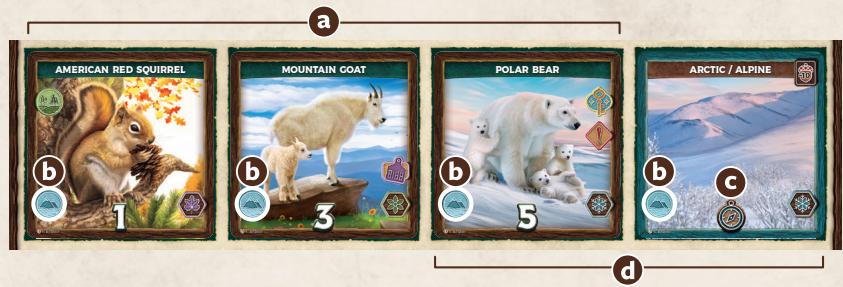
Although the first three cards (a) are in ascending order and have matching Arctic / Alpine habitat icons (b), none of them are in consecutive order because of the missing 2 and 4. Therefore, there is no ecosystem sequence created.
Also, Wild cards can only represent the numbers 1-5, so the last two cards (d) could not be 5 and 6. However, the Wild card can be a 4 (c), making this a two card descending ecosystem. This ecosystem is worth 2 points.
6. SYNERGY TOKENS
Gain 1 point for every three Synergy tokens you have at the end of the game.

SCORESHEETS
| PLAYERS | ||||
| C1 | ||||
| C2 | ||||
| C3 | ||||
| C4 | ||||
| R1 | ||||
| R2 | ||||
| R3 | ||||
| R4 | ||||
| 66SECRETOBJ. | ||||
| SYNERGYTOKENS | ||||
| TOTAL |
A great way to add up everyone's score is by utilizing the scoresheet. The scoresheet allows for each row and column to betracked separately, as well as a section to track Secret Objective and Synergy token scoring.
If you ever run out of scoresheets, you can download and print more for free on our website at
www.rosegauntlet.com.
7. SECRET OBJECTIVES
Completing your Secret Objective can lead to big points at the end of the game. Secret Objectives are composed of 4 goals (a, b, c, and d). Each goal has a pattern that you are trying to achieve with the cards you place on your player board. See the "Secret Objectives Goals Guide" at the bottom of page 9 for more information about these patterns. For each goal completed you gain more and more

Secret Objective Card
points (e) giving you another pathway to claim victory.
Note: Patterns on Secret Objectives may be rotated in any direction and each goal can only be completed once.

In the above example, Thomas would score 24 points (e) for his Secret Objective because he was able to accomplish all 4 goals on his player board:
a. He formed an “L" formation of 3 cards with the Summer season icon. Remember, rotating the pattern still counts.
b. He had 2 cards with the Endangered Species icon diagonally touching each other.
c. He formed a line of 3 cards with the Tag icon.
d. He ended the game with at least 4 cards with the Fall season icon on his player board.
SCORING EXAMPLE
Sally and Jim have just finished a game of Keystone: North America. To the right is a breakdown of the points that Sally was able to gain, and how they are placed on the scoresheet shown below. In total, Sally scored 87 points, giving her the victory since Jim was only able to score 78 points.
Note: See page 10 for an expanded breakdown of this scoring example.
| PLAYERS | Sally | Tim | ||
| 中 C1 | 3 | 10 | ||
| C2 | 12 | 3 | ||
| C3 | 0 | 9 | ||
| C4 | 15 | 6 | ||
| R1 | 9 | 10 | ||
| R2 | 10 | 6 | ||
| R3 | 9 | 12 | ||
| R4 | 3 | 9 | ||
| SECRETOBJ. | 24 | 10 | ||
| SYNERGYTOKENS | 2 | 3 | ||
| TOTAL | 87 | 78 |
HANDLING TIES
If there is a tie, the player (of those who tied) who completed the most goals of their secret objective wins the game. If there is still a tie, the player with the most synergy tokens wins. If there is still a tie, congratulations, you're all great. All players that tied win the game!

SECRET OBJECTIVE GOALS GUIDE

L Shaped: End the game with 3 cards that have the assigned symbol, placed as shown in the formation, on your player board.
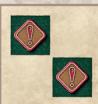
Diagonal: End the game with 2 cards that have the assigned symbol placed diagonally (as shown) on your player board.


2 in a Line: End the game with 2 cards that have the assigned symbol in the shown formation on your player board.
3 in a Line: End the game with 3cards that have the assigned symbol in the shown formation on your player board.


3 of a Type: End the game with 3 or more cards that have the assigned symbol on your player board.
4 of a Type: End the game with 4 or more cards that have the assigned symbol on your player board.
EXPANDED SCORING EXAMPLE
Using the scoring example on page 9 as reference, this is a more complete breakdown to better explain how each item was scored.
PLAYER BOARD
COLUMNS
Column 1: The Montezuma Bald Cypress, Piping Plover, and Swallow-Tailed Kite create a Wetland / River ecosystem to score 3 points.
Column 2: The Red Mangrove, Cottontail Rabbit, and Coyote create a Wetland / River ecosystem to score 3 points. The Research token on the Cottontail Rabbit adds 1 point, bringing the point total for this ecosystem to 4. Both the Red Mangrove and the Coyote have a Keystone Species icon, so this ecosystem is scored two additional times to add 8 points, bringing the final total for this column to 12 points.
Column 3: There are no complete ecosystems in this column, so 0 points are scored.
Column 4: The Sidewinder Rattlesnake, Mule Deer, Peregrine Falcon, and Mountain Lion form a Desert/ Grassland ecosystem to score 4 points. The Research token on the Mountain Lion adds 1 point, bringing the point total for this ecosystem to 5. Both the Mountain Lion and the Peregrine Falcon have a Keystone Species icon, so this ecosystem is scored two additional times to add 10 points, bringing the final total for this column to 15 points.
ROWS
Row 1: The American Bison and Mountain Lion create a Desert/ Grassland ecosystem to score 2 points. The Research token on the Mountain Lion adds 1 point, bringing the point total for this ecosystem to 3. Both the American Bison and the Mountain Lion have a Keystone Species icon, so this ecosystem is score two additional times to add 6 points, bringing the final total for this row to 9 points. Note that in this row the Red Mangrove also has a Keystone Species icon. However, because that Species card is not a part of the ecosystem in this row, that card is ignored.
Row 2: The Montezuma Bald Cypress, Cottontail Rabbit, Snail Kite, and Peregrine Falcon create a Wetland / River ecosystem to score 4 points. The Research token on the Cottontail Rabbit adds 1 point, bringing the point total of this ecosystem to 5. The Peregrine Falcon has a Keystone Species icon, so this ecosystem is scored again to add 5 points, bringing the final total for this row to 10 points.
Row 3: There are three complete ecosystems in this row. The Piping Plover and Coyote for a Wetland/River ecosystem, the
Coyote and Desert Tortoise for a Desert/Grassland ecosystem, and
the Desert Tortoise and Mule Deer for a different Desert/Grassland
ecosystem. Sally chooses to score the Coyote and Desert Tortoise
with the Desert/Grassland ecosystem because both species have the
Keystone symbol and gives her the highest possible score for this row.
The Coyote and Desert Tortoise with the Desert/Grassland ecosystem scores 2 points. The Research token adds 1 point, bringing the point total for this ecosystem to 3. The Coyote and the Desert Tortoise both have the Keystone Species icon, so the ecosystem is scored twice more, adding 6 points and bringing the final total for this row to 9 points.
Row 4: The Mountain Goat and Musk Ox form a complete Arctic / Alpine ecosystem to score 2 points. The Research token on the Musk Ox adds 1 point, bringing the final total for this row to 3 points.
SECRET OBJECTIVES
Sally has Secret Objective card 1(shown right). She completes all four goals on the card as follows to score a total of 24 points:
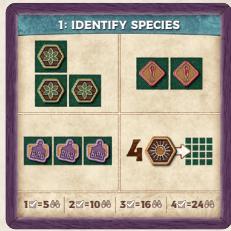
L Shaped Goal: The Coyote, Mountain Goat, and 1=58 Musk Ox each have the Spring Season icon and are placed in the 'L' formation shown on the Secret Objective.
2 in a Line: The Snail Kite and Desert Tortoise each have the Endangered Species icon and are placed in the formation shown on the Secret Objective.
3 in a Line: The Swallow-Tailed Kite, Mountain Goat and Musk Ox each have the Tag icon and are placed in the formation shown on the Secret Objective.
4 of a Type: The American Black Bear, Montezuma Bald Cypress, Snail Kite, and Mule Deer all have the Summer Season icon and are placed on Sally's player board.
SYNERGY TOKENS
Sally ends the game with a total of 7 Synergy tokens. Every three Synergy tokens score 1 point. So Sally scores a total of 2 points.
FINAL SCORE
Adding everything together, Sally's final total score is 87 points.
SOLO MODE WITH THE FIELD JOURNAL
Keystone: North America's solo mode offers unique challenges paired with a story that lets a player take on the role of a new wildlife biologist in the first year of their career. This adventure is detailed in the Field Journal.
For the best experience with the Field Journal's 20 challenges we suggest they be played in order, in the form of a campaign that increases in difficulty. We also suggest this so that players can unlock the sealed envelope species in the order we intended for the game.

Field Journal

Sealed Envelopes
Once a player is familiar with the format, however, they may choose to open all the envelopes and skip around to the challenges they find most interesting. Once a sealed envelope species is opened, you can mix them with the general supply of species cards and play with them as if they were always there. Alternatively, if the game is going to be played by others, you can return
the species to their envelopes by following the instructions found in the back of the Field Journal.
Setup for solo mode is essentially the same as the multiplayer game, but each scenario will provide additional setup instructions (a) as well as special rules (b) to offer unique challenges and new ways to approach the game.
If a Field Journal assignment's special rules (b) ever contradict the normal rules, the special rules in the Field Journal take precedence.


SOLO CO-OP VARIANT
Keystone's co-op mode is an extension of the solo mode. Co-op mode is for players who want to enjoy the solo campaign and challenges with a partner!
Players will follow all of the same rules and setup as the solo mode with the following exceptions.
-
Players will share the same player board and one supply of synergy tokens.
-
Determine a player to take the first turn. That player may discuss the turn with their partner but is in charge of managing all tokens, rules, and final decisions.
-
Play will then continue with players working together and alternating turns. Players are encouraged to discuss their options and work as a team!
STORY TOKENS
Found on the back of Research tokens, these represent a wide variety of themes in the solo & co-op version of the game. How they function is dependent on the assignment you are completing in the Field Journal, and they have no function in the multiplayer version of the game.

Story Token
DELUXE EDITION GAME COMPONENTS

If you've purchased the deluxe edition of Keystone: North America, as indicated by the "Deluxe Edition" badge on the box (shown above), these deluxe edition components are included with your game.
Note: These deluxe edition player boards replace those included in the standard edition.
PLAYER BOARDS

These 4 double-sided foldable player boards have colorful seasonal art on one side and the standard green grid on the other. These boards do not require the assembly shown above. Players may choose either side to use as the art has no effect on gameplay.
NEOPRENE CENTER MAT

This center mat serves as a space to help with game setup and gameplay. Unroll the mat and place it within reach of all players. The areas on the board are designed for the following:
1: Synergy tokens
- Time track
2: Wild cards
6: Species deck
3: Research tokens
7: Field
4: Skill tokens
8: Discard pile


PLAYTESTERS
A special thank you to all our amazing playtesters!
Diana Hayden, Kristine Birkelo, Gabriel Meyer,
Andrew Enriquez, Brooks Boyd, Timothy Meyer,
Brandon Geier, Eric Yorkston, Brook Davis, Zawadi Berg Svela,
Ben Kanelos, Jacob Trithart, Tylor Murray, Phil Gross,
Amanda Panda Wong, Joseph Piro, Ryan Horricks,
Christopher James Garcia, Dorianne Bernier, Kenrick Carlson
Keh, Gordon Helle, Sergio Garcia, Robin Adelmann,
Beth Johnson, Jon Merkle, TenPH, Andrew Hiener,
Jim Bottomley, Jason Bierema, Julius Besser, Emily Baudot,
Tom Sheen, Cole Nevins, Gary Stitely, Alexa Chaplin,
Lauren Zammit, J-Ann Gonzales, Delton Brack,
Anne Kucharski, Ilya Ushakov, Jeffrey Berman, Daniel Wynter,
Abram Towle, Daniel Schaublin, lan McBride Smith,
Alex DeRadke, Miguel Albornoz, Greg Medhurst,
Charlie Sheridan, Ted Brown, Henri Whitehead, Scott Cowan,
Dade Murphy, Tim Latshaw, John Tucker, Brian Chandler,
Dennis Ventola, Maggie Scudder, Shane Hendrickson,
Kevin White, Kevin Pham, Lance Stack, Chris Stewart,
Daniel Stephens, Codie B Hogbin, Daniel S Chenin,
Justin Bird, Paki Villota, Kevin Lewis
Dedicated to my family who is always there for me, supporting me, rooting for me, and willing to play board games any time of the day!
A special thanks to my many friends and mentors in the industry, including but not limited to:
Rose Gauntlet Entertainment, our amazing playtesters,
the Plaid Hat Games family, Frank Balog, Adam Tarr, Gordon Helle and the Meyers Boys.
Jeffrey Joyce
CREDITS
GAME DESIGN
Jeffrey Joyce
Isaac Vega
ILLUSTRATIONS
Irem Erbilir
Yan Tamba
Alyssa Menold
Patricia Casarrubios
ART DIRECTION
Isaac Vega
Sam Vega
Irem Erbilir
GRAPHIC DESIGN
David Richards
Sasha Litvinenko
Dimitry Litvinenko
WRITING Lindsey Rode
EDITING Jonathan Liu
WILDLIFE RESEARCH Jeffrey Joyce Joe Lamb
MARKETING Danny Quach
Isaac Vega
Lindsey Rode
SPECIES CARD DATABASE
| # | PIC | SPECIESNAME | 雅 | 福 | BIBB | ||
| 1 | 家 | American RedSquirrel | 小 | ||||
| 1 | Aspen | 教 | C | ||||
| 1 | Bearberry | 8188 | |||||
| 1 | Black-TailedPrairie Dog | C | |||||
| 1 | Black Willow | 8188 | |||||
| 1 | C | Brown Lemming | 18188 | ||||
| 1 | Bumble Bee | 社 | |||||
| 1 | 心 | DesertKangaroo Rat | C | ||||
| 1 | Giant Sequoia | 在 | 8188 | ||||
| 1 | MonarchButterfly | 在 | |||||
| 1 | MontezumaBald Cypress | 8188 | |||||
| 1 | NorthernFlying Squirrel | 本 | 8188 | ||||
| 1 | NorthernGreen Frog | 8188 | |||||
| 1 | Prairie FringedOrchid |

| # | PIC | SPECIESNAME | |||||
| 1 | Red Mangrove | ||||||
| 1 | Saguaro Cactus | ||||||
| 1 | Spruce-FirMoss Spider | 2 | |||||
| 1 | Sugar Maple | 米 | |||||
| 1 | VancouverIsland Marmot | R | |||||
| 2 | Black-FootedFerret | 2 | |||||
| 2 | Black-TailedJackrabbit | 米 | |||||
| 2 | CottontailRabbit | ||||||
| 2 | Desert Tortoise | ||||||
| 2 | Dusky Grouse | ||||||
| 2 | Emperor Goose | ||||||
| 2 | Long-TailedWeasel | ||||||
| 2 | MangroveTree Crab | ||||||
| 2 | 6 | North AmericanBeaver | 市 | ||||
| 2 | NorthernRaccoon | ||||||
| 2 | Piping Plover | ||||||
| 2 | Ringed Seal | ||||||
| 2 | RockPtarmigan | ||||||
| 2 | SidewinderRattlesnake | ||||||
| 2 | SnowshoeHare | 4 | |||||
| 2 | VirginiaOpossum | ||||||
| 2 | Wood Duck | 米 | |||||
| 3 | AlligatorSnapping Turtle | 米 | |||||
| 3 | Arctic Fox |
SPECIES CARD DATABASE
| # | PIC | SPECIESNAME | T | 福 | |||
| 3 | Atlantic SaltMarsh Snake | ||||||
| 3 | Burrowing Owl | ||||||
| 3 | Coyote | ||||||
| 3 | Dall Sheep | ||||||
| 3 | EasternHellbender | Q | |||||
| 3 | Mountain Goat | ||||||
| 3 | m | Mule Deer | E | ||||
| 3 | North AmericanRiver Otter | ||||||
| 3 | PronghornAntelope | ||||||
| 3 | Red Fox | ||||||
| 3 | E | Ringtail Cat | |||||
| 3 | RockyMountain Elk | ||||||
| 3 | Sandhill Crane | ||||||
| 3 | Snail Kite | ||||||
| 3 | X | Swallow-TailedKite | |||||
| 3 | Whitetail Deer | ||||||
| 3 | WoodlandCaribou | ||||||
| 4 | American Bison | ||||||
| 4 | AmericanBlack Bear | ||||||
| 4 | Bald Eagle | ||||||
| 4 | Bighorn Sheep | 米 | |||||
| 4 | CaliforniaCondor | R | |||||
| 4 | Canada Lynx | ||||||
| 4 | MexicanSpotted Owl | Q |
| # | PIC | SPECIESNAME | 福 | ||||
| 4 | Musk Ox | 8188 | |||||
| 4 | PeregrineFalcon | ||||||
| 4 | Snowy Owl | 8188 | |||||
| Turkey Vulture | |||||||
| 5 | AmericanAlligator | ||||||
| 5 | AmericanCrocodile | ||||||
| 5 | Arctic Wolf | ||||||
| 5 | Golden Eagle | ||||||
| 5 | Grizzly Bear | R | |||||
| 5 | MexicanGray Wolf | R | |||||
| 5 | Mountain Lion | ||||||
| 5 | NorthwesternGray Wolf | ||||||
| 5 | Polar Bear | ||||||
| 5 | Red Wolf | ||||||
| 5 | Wolverine |

SKILL TOKEN ICON GUIDE

You may place 1 Research token on an unresearched card with the Spring season icon on your player board.

You may place 1 Research token on an unresearched card with the Summer season icon on your player board.

You may place 1 Research token on an unresearched card with the Fall season icon on your player board.

You may place 1 Research token on an unresearched card with the Winter season icon on your player board.

You may place 1 Research token on an unresearched card with the Tag icon on your player board.

You may place 1 Research token on an unresearched card with the Endangered Species icon on your player board.

You may place 2 Research tokens on an unresearched card with the Endangered Species icon on your player board.
Note: Unresearched cards are those without any Research tokens on them.

You may place 1 Research token on an unresearched Wild card on your player board.

You may draw the top 3 cards of the Species deck. If you do, you may place 1 on an empty space on your player board. Discard any unplaced cards in any order to a face up discard pile.
Gain Synergy tokens as normal for placement.

Look at the top 3 cards of the discard pile. If you do, you may place 1 on an empty space on your player board. Return any unplaced cards in any order to the top of the discard pile.
Gain Synergy as normal for placement. If there were fewer than 3 cards in the discard pile, look at them all.

Gain up to the numbered amount of Synergy tokens.

You may move a card on your player board to an empty space. Gain Synergy tokens as normal for placement.

You may move a card on your player board to an empty space. Then you may again move a card on your player board to an empty space. You can move the same card twice, or different cards.
Gain Synergy tokens as normal for each placement.

You MusT discard the specified number of cards of your choice from the Field in any order to a face up discard pile.
Reminder: Remove any tokens on discarded cards and return them to the supply. Refill the Field at the end of your turn.
下载 Markdown