rules_zh_多巴哥岛_3910.md

规则书
一次令人激动的探险 10岁以上、2-4人的探宝游戏
“啊哈\~!”…经过多年的寻找,你们终于发现了她:多巴哥岛,一个被人遗忘的金银岛。你的手中拿着残破地肌肤无法辨认的羊皮卷,并用你剩下的唯一的铁铲打赌,这就是传说中的藏宝图的一部分。
但是如何才能解读呢?其他丢失的部分在谁的手上呢?只有收集等多的线索才能帮你找到失落的宝藏。驾驶你的越野车穿越茂密的热带雨林,攀登岩石高山,趟过汹涌的河水。但是当你达到藏宝地点的那一刻,凶恶且贪婪的对手正打算从你手中分一杯羹。不要惊动那些长眠在某些财宝上的岛屿咒语。

而一枚不起眼的护身符将是你对抗可怕咒语的唯一力量...
游戏目的
你必须收集线索并拼成完成的藏宝图,不论单独探索亦或与他人合作,直到找到精确的藏宝地点。然后,你要尽可能第一个达到藏宝地点并开启宝藏,并且和提供线索的伙伴分享财宝。通过收集护身符并恰当使用,你可以获得优势(并让你免受诅咒)。在游戏结束时,获得最多金币的玩家获胜。
在阅读规则前,请先看一下附表,上面有关于2、3、4人游戏的准备,以及如何使用相关的游


A) 打出线索牌
从你手中选择一张线索牌并面朝上放在财宝地图的前一张线索牌的下方。然后在这张线索牌上放上你自己的罗盘标志
灰色
财宝区
棕色财宝区
黑色
财宝区
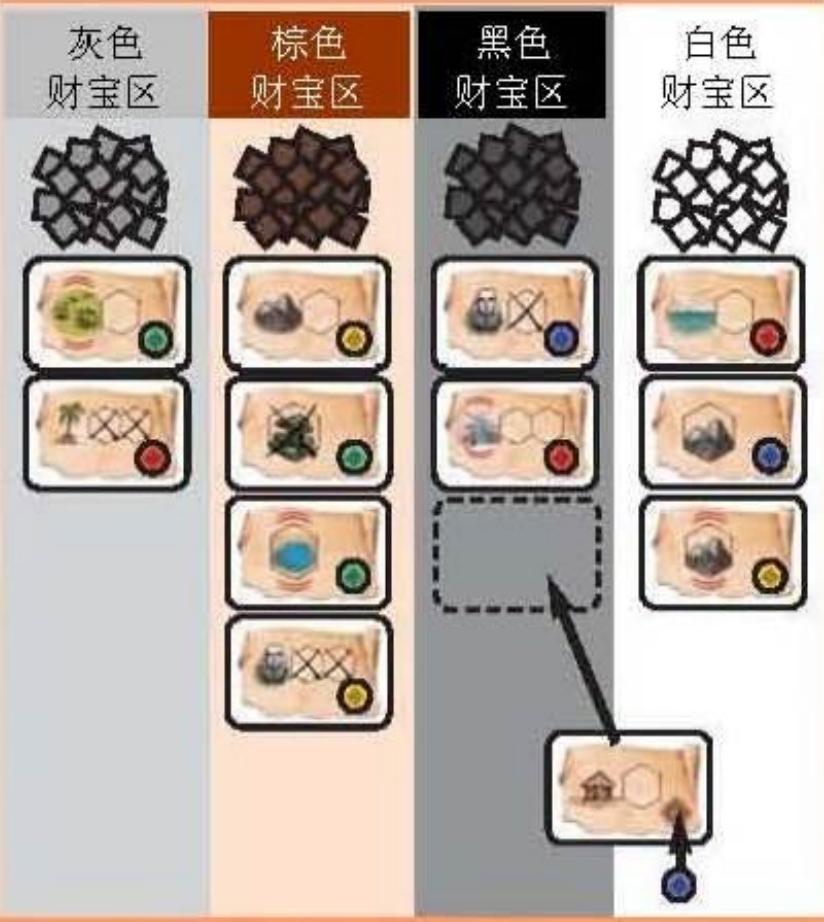
白色
财宝区
新打出的线索牌总是紧接着前一张线索牌的下方。一个财宝区的下方可以包含任来自不同玩家任意数量的线索牌。
然后从线索卡的牌堆中抽取一张新的线索卡。你的手中必须始终保持4张卡牌(2人游戏时每人6张)。
如果线索牌堆耗尽,就把废弃的线索牌重新洗好,组成新的牌堆。
(你可以在附表上找到线索牌的内容说明)
如果你对手中的线索牌不满意,可以使用一个护身符,线索牌堆上交换相等数量、新的线索牌。(见第6页:护身符功能:交换你的线索牌)
每个宝藏地图关联一个藏宝地点。每个藏宝线索排除一个或者多个岛上的地点。剩下地点就是可能的藏宝处。玩家应该尽快的用对应颜色的位置标志物,标记所有可能的藏宝地点。(通常会用许多标志物来标记这些地方)然后,随着新线索牌的打出,把被排除的藏宝地上的标志物及时清除。如此,藏宝地的位置会很快随着标志物的减少而被确定下来。当只剩下一个位置标志物时,这就是藏宝地点。只有在此时,曾能开始发掘保藏。
在游戏中,不同宝藏地图的标标志物,有可能会分布在同一个地点上。
玩家们按照顺时针方向进行回合轮流,从当前去过岛上最多地方的玩家开始。在你的回合中,你可以选择执行下面两个行动的其中之一:
每个线索将可能的藏宝处排除出来


不在树林中


在最大的树林里面

在石像的旁边

在村庄的旁边
在树林里面


安娜 在白色藏宝区域增加了一条线索“在树林中”。根据这个线索,藏宝处应该是在村庄的旁边、且是在树林里面。所这就排除了图片中红色圆圈中的地方(村庄旁边但不在树林中)。
围绕每个村庄,所有不在树林里的白色标志物都被移除了。
左图是四个村庄中的一个的举例。


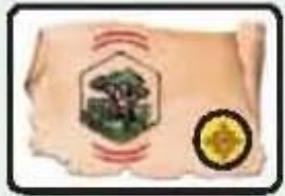


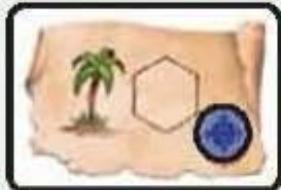

现在,波比在白色藏宝区也增加了一条线索“在椰子树旁边”。这时,地图中只有一个地方能够满足在村庄和椰子树旁边,且在树林里面。这就是宝藏埋藏的地方。
在波比打出这张线索牌后,所有白色藏宝区中不在椰子树旁边的标志物都被移除了
戏配件。
A) 打出一张线索牌 或
B) 移动你的越野车

在你回合中的任何时候,如果可能,你可以发掘宝藏和/或打出一个或多个护身符。(见第4页和第6页)
线索牌追加规则
在追加线索牌时,必须符合以下规则...
- 不能和当前已经打出的线索牌冲突

安娜 不能把线索牌“在树林中”追加到灰色宝藏区域已有的线索牌下面,因为当前的线索牌已经排除了宝藏在树林中的可能- 必须至少能够减少一个当前已经被放置到地图上的位置标记
棕色宝藏的位置已经被初步确认在最大的树林中。所以安娜不能把线索牌“在树林中”追加到棕色宝藏区域已有的线索牌下面,因为不能减少地图上已经放置的位置标志
- 必须确保至少有一个埋藏宝藏的地点,因为宝藏不能从小岛上“不翼而飞”了
黑色宝藏的位置被确定在雕像旁边。如果雕像的周围没有树林(如下所示),安娜也就不能将这张线索牌放在这里。
B) 移动越野车
每回合中,你可以分3段行程来移动你的越野车。
下面是关于每段行程的说明:
1) 在同一种地形中行驶
在同一种地形中行驶时,都被视为一段行程,不论其距离有多远

2) 在行驶中改变地形
在行程中,进入邻接的地域,且与当前
地形不同。(如右图:从当前的树林驶入邻接的湖中)


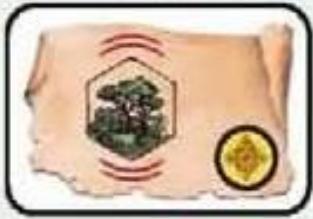


最后,安娜 把线索牌“在树林中”放在了白色宝藏的线索牌区域,所以把被排除地点的位置标志拿走了。在先前的14个位置中,现在只剩下了6个(如下图)。


看一下左图的例子,为什么安娜不能把线索牌“在树林中”放在黑色宝藏的线索牌区域内:因为没有树林紧挨着雕像。
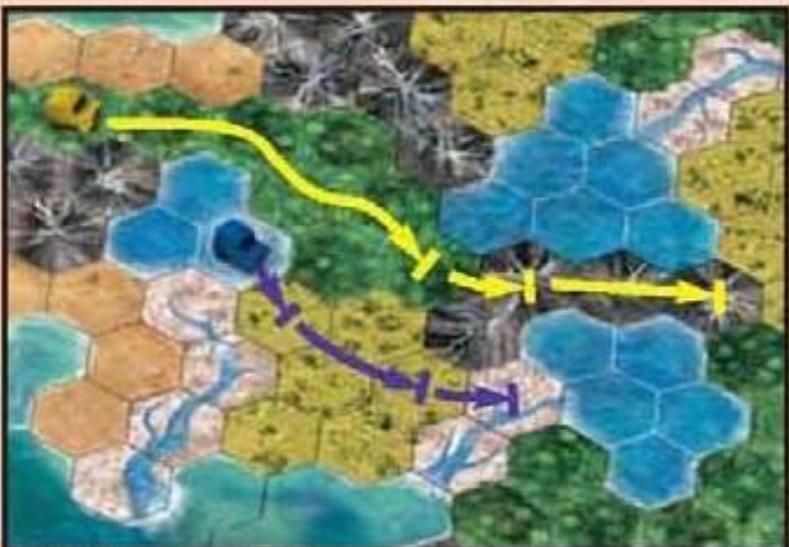
以下是如何使用3段行程的例子:
劳拉 使用第一段行程,来到了树林的边缘。然后使用第二段行程来到了树林边的山区。再使用第三段行程来到了山区的边缘。
波比 使用第一段行程从湖中来到了邻接的灌木丛区域,并用第二段行程穿越了灌木丛。然后用第三段行程到达了河流区域。
特例:
- 在移动结束后再开始发掘宝藏(不论你使用了几段行程)——> 见第4页
在移动结束后自动收集护身符。——> 见第5页
越野车可以到达岛上的任何一个地点,即使该地形格内包含了椰子树、村庄、雕像或其他玩家的越野车。
越野车不能进入环绕小岛的海洋。
发掘一处宝藏
在满足了下面两个条件后,你就可以发掘一处宝藏:
1) 宝藏的确切地点已经确定,比如,在地图上,一处宝藏的位置标志只剩下了唯一的一个。
2) 本轮是你的当前轮,并且你的越野车达到了位置标志物指定的藏宝地点(或者已经到达)。
当发掘宝藏时,在对应颜色宝藏的最后一张线索牌下面放上自己的罗盘。然后,将地图上的位置标志物放回原处。
现在,按照玩家们在此种颜色宝藏下摆放的罗盘数量,收取相应数量的财宝卡。玩家们各自看过财宝卡后,将卡牌全部面朝下,放在挖宝人的面前,由他来分配财宝。


Anna has raised the treasure. She draws two treasure cards, as she has two compass roses on the treasure map. Roger and Bobby draw one card each.
注意:
千万不要泄露你看到的财宝种类,尤其在你抽到一张诅咒卡时。如果只有你了解当前财宝的内容,那在进入挖宝人分财宝时,你就能赢得优势。
分配财宝
在不能查看财宝卡内容的情况下,挖宝人从财宝卡牌堆上再抽取一张财宝卡,放到来自各位玩家的财宝卡牌堆中。在完全洗匀这些财宝卡后,将最上面的一张翻开来,按照线索牌上玩家们罗盘的顺序-从下往上(从发掘宝藏的绑架开始)-询问是否想要这张财宝卡。
1) 挖宝人从最下面的罗盘拥有人开始,询问是否想要这张财宝卡。如果他不要,挖宝人再问第二位玩家(即使已经被问过)是否想要。以此类推。
2)如果哪位玩家想要的话,那当前的这张财宝卡就给谁,挖宝人就把财宝卡面朝下放在他面前。此时,该玩家从对应的财宝类型区拿回对应使用过的自己的罗盘。没有人要的财宝卡放到财宝卡废牌区。
3) 然后, 挖宝人再翻开下一张财宝卡, 按照上面的方法询问大家是否想要。直到所有的财宝卡分配完毕, 或者玩家们的罗盘全部被收回, 才停止财宝分配。把剩余的财宝卡全部废弃。

被诅咒的财宝

在分配财宝过程中如果翻到诅咒牌,则表示剩下的财宝都收到了诅咒。
诅咒带来以下两个结果:
1)当前剩余的财宝卡将不能再分配。
2) 如果在剩余的线索牌上还有剩余罗盘的玩家, 必须马上丢弃一个护身符。如果玩家没有护身符, 就必须丢弃其手中价值对大的一张财宝卡。
然后,将诅咒牌移出游戏。将玩家丢弃的财宝卡和为分配的财宝卡一起废弃。如果在弃掉的牌中还有诅咒牌,把它从游戏中去除,它们将不再有效。把剩下的罗盘从宝藏区域拿回。
开始新一轮的探宝行动
把所有已经发掘的宝藏下面的剩余线索牌全部废弃掉,并和废弃的财宝牌分开摆放。从上轮中分配到最后一张财宝卡的玩家开始,从其手中打出一张新的线索牌,放在新的宝藏区域的下面。玩家在线索牌上放置一个自己的罗盘,并抽取一张新的线索牌,将手牌补充到4张。(2人游戏时是6张)
特例:如果在财宝分配阶段,翻开的第一张财宝卡就是诅咒卡时,那就从发掘宝藏的玩家可是新一轮的探宝。
护身符的秘密
每当玩家们开启一处宝藏时,就会出现一种来自雕像的神秘力量。在他们目光凝视的方向,沉睡的护身符就会隐现在海岸上:
从供应处拿取三个护身符,并放在每座雕像视线方向最远处的海岸上。如果已有就不用放置。
然后,雕像就会发出沉重的转动声,把目光投向下一个护身符出现的地方。按顺时针方向转动每个雕像60度,直到它面对六边形的另一个临边。
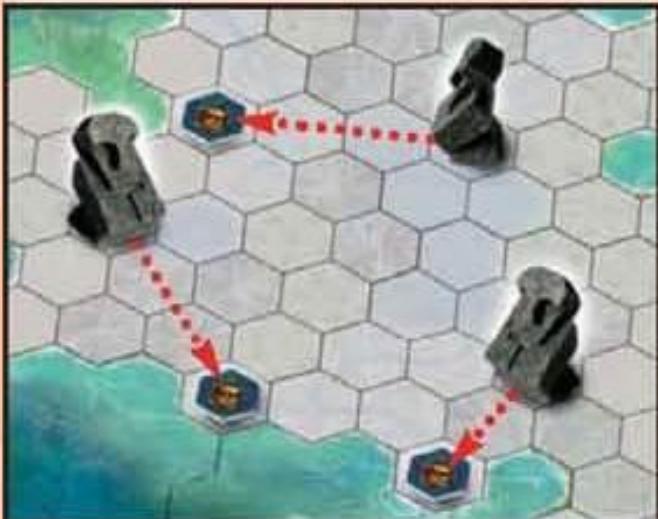
在雕像注视方向的海边放上一个护身符。

然后转动所有的雕像。
你只能在你的回合中收集护身符。总共有两种方法:
1)当你回合开始时,在你越野车所在的地方内就有一个护身符。你就可以把护身符收集起来。这不算你的一次行动。
2)移动你的越野车(行动B,详见第3页)到达一个有护身符的空格。你可以拾起护身符,当你必须在三段行程中的一段中完成。在行动过程中,收集到多个护身符是有可能的。
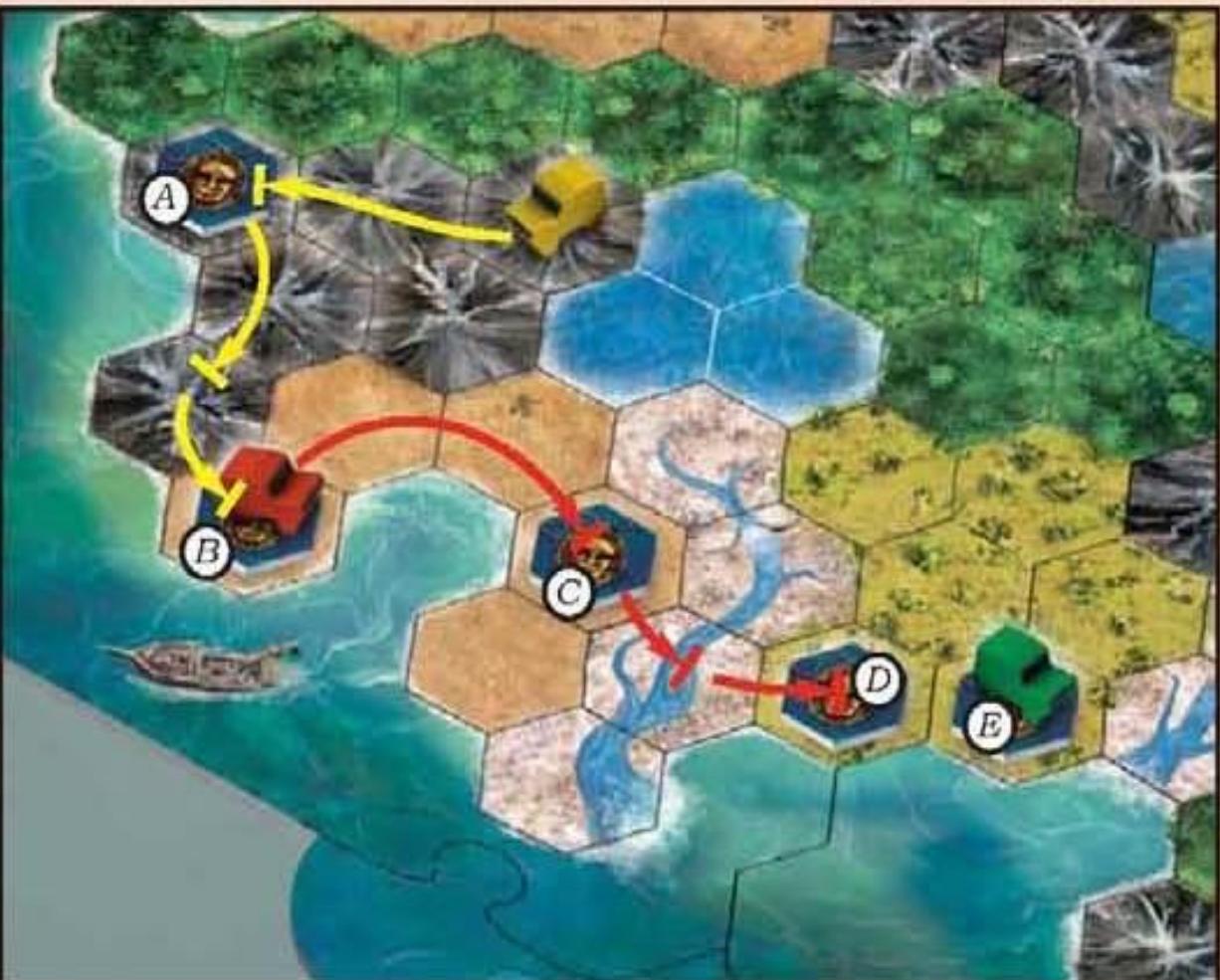
劳拉 使用第一段行程到达了一个有护身符的地方 A。在那里她停下来拾起护身符,并使用了第二段行程到达了山的尽头。她使用第三段行程来到了沙滩,并从罗杰的越野车下面 B 拾起了护身符。
现在轮到罗杰了。他很讨厌劳拉这么做,本来可以不移动越野车就能拿到护身符B的。罗杰决定去收集护身符C和D。他先开车驶过沙滩,然后驶过两个不同的地形区。罗杰不能到达护身符E所在的灌木区。因为如果玩家使用一个护身符来延长一段行程的话,在本行程中,就不能收集新的护身符。
专家建议:如果罗杰在回合一开始就有一枚护身符的话,他是可以拿到安娜车下E的护身符的:首先他先使用一枚护身符获得一点额外的行程到达C位的护身符处,他不能拾起这枚护身符,因为是使用了护身符的功能才到达此处的。然后他开始正常的行程。他使用了两段行程拿到了护身符D,并在第三段行程中拿到了护身符E。
护身符的力量
在你的回合中,你可以使用任意数量的护身符(即便你是刚刚得到)。使用每一个护身符,都可以得到下面的一种力量:
○ 移除一个位置标志
从地图上任意拿走一个位置标志物并放回原处。这可以从岛上可能的埋宝处中,排除一个位置。因此当地图上的某种位置标志物只剩下一个时,你就不能移除它。
○ 打出一张线索牌
你可以额外的多打出一张线索牌(见行动A,第2页)。
○ 移动你的越野车
你可以额外的多一段行程(见行动B,第3页)。注意!在你使用这个功能时,不能收集护身符。
○ 保护你免受诅咒
在你收到诅咒时使用一个护身符,可以避免失去你手中价值最大的财宝卡。
○ 交换你的线索牌
你可以废弃手中所有的线索牌,然后从线索牌堆抽取相同数量的牌。(你也可以不使用护身符来交换手中的线索牌,但你必须放弃一个回合的行动权。)
使用过的护身符放回到护身符供应处。
举例:
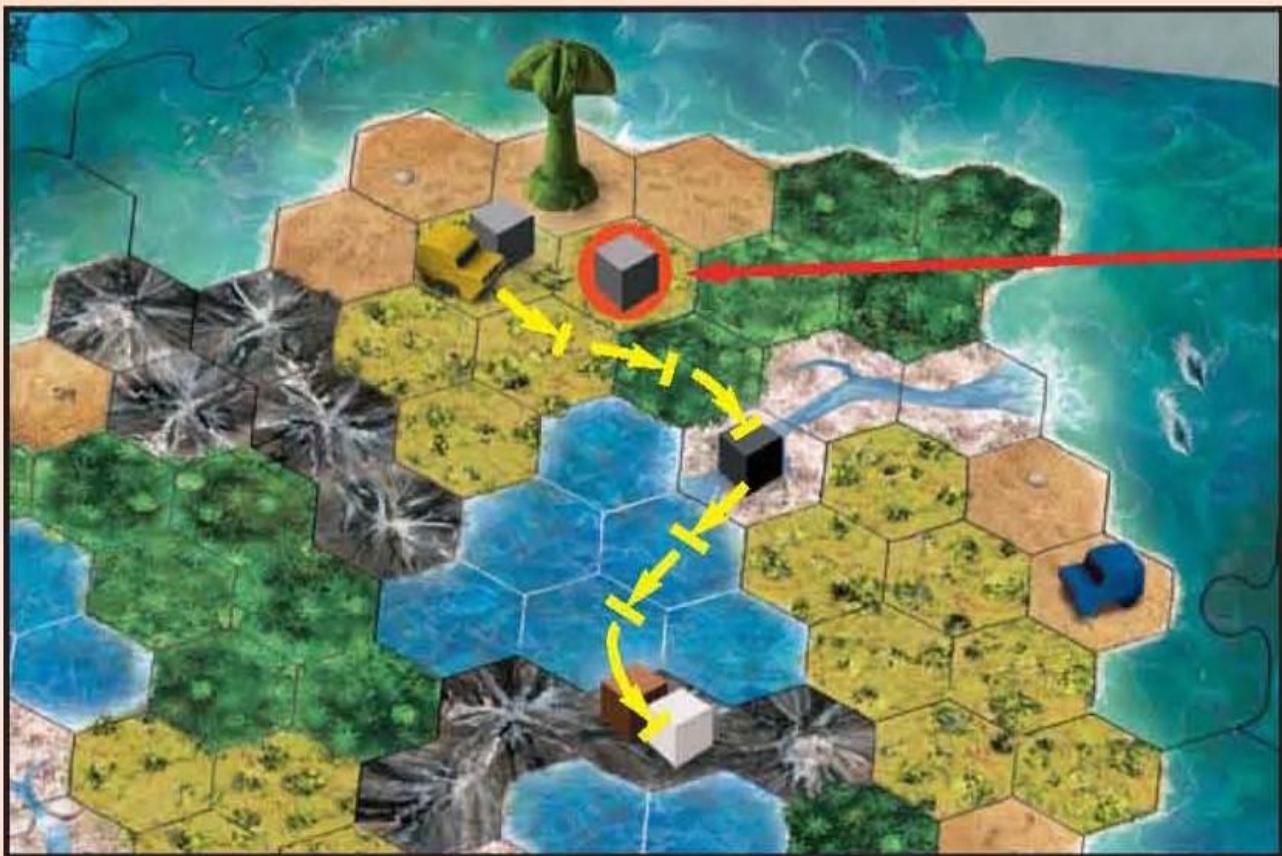
劳拉 无法发掘灰色的宝藏,因为还有两个灰色的位置标志物在地图上。因此她使用了一个护身符排除了其中一个。这样就使她的越野车停在了唯一的一个位置标志物。现在,劳拉 就可以开始发掘灰色宝藏了。然后她有来到了黑色宝藏的藏宝处开始发掘。现在 劳拉 有使用了一个护身符并获得了一段额外的行程,并来到了 棕色 和白色 宝藏的藏宝处。最后他就可以按照任意顺序开始分配财宝了。
在游戏中,有经验的玩家们可以加入以下护身符功能。在使用这些功能时,每种功能需要使用一个护身符。这些功能只能在藏宝地点还没有被完全确认时,才能够发挥作用。
○ 双倍权利
- 在你刚打出的线索派上,放置两个罗盘
在已经放好的线索牌上,再放上一个你的罗盘。每个罗盘都可以让你在分配财宝时,获得一份财宝。
○ 交换罗盘的位置
将换两个一对一、或者二对二的罗盘的位置。
游戏结束
当财宝卡牌堆用光后游戏结束,但必须在完成财宝分配后。如果在抽财宝卡时还有剩余的罗盘,就把废弃的财宝卡再次洗好并急需分配财宝。当财宝分配完毕后,游戏立刻结束。
现在,玩家们计算手中财宝卡上的金币数量。金币数量最多的玩家获胜。
© 2009 Zoch GmbH - Autor: Bruce Allen - Illustration & Layout: Victor Boden - Translation: Bruce Allen / David Zook
Vertrieb Schweiz: CARLETTO AG - Moosacherstraße 14, Postfach - CH-8820 Wädenswil - www.carletto.ch
TOBAGO-Regel-En-neu.md

Game Rules
An Exciting Adventure for 2 to 4 Treasure Hunters Ages 10 and up by Bruce Allen
"Land ahoy!”.. After years of searching you have finally found her: Tobago, the island of forgotten treasures. Your hands hold several scraps of parchment almost too weathered to read, and you would bet your last shovel that these are pieces of a treasure map. But how do they fit? And who has the missing pieces? Only by gathering more
clues will you track down the treasures. Behind the wheel of your ATV you will cross dense
jungles, scale rocky heights, and ford raging torrents. But, the moment you arrive
at a treasure site, fierce and greedy competitors may lay claim to part of the findings. Not to mention the curse of the island that rests on some

amulet is the only protection against the curse's golddevouring power...

Object of The Game
You reconstruct treasure maps by combining clues, either alone or
with the help of other players, until the location of a treasure is
determined. Then, you try to be the first at the location to raise
the treasure. For that, and for contributing clues, shares of the treasure are awarded. By picking up amulets – and using them wisely – you will gain an advantage (and protection from the curses, too). At the end of the game, the player with the most gold coins wins.
Before reading these rules, please take a look at the supplementary sheet. It shows how to set up the game for 2, 3, or 4 players and provides an overview of what the components are for.

Game Play:
A) Play a clue card
Choose a clue card from your hand and place it face-up below the last clue card of one of the treasure maps. Then, mark the clue card just played with one of your compass roses
You take turns in a clockwise direction, starting with the player who has visited island most recently. During your turn, you may perform one of the following two

New clue cards are always placed below the other cards of a treasure map. A treasure map may contain any number of clue cards from any number of players. Then, draw a replacement card from the clue card deck. Your hand should always contain 4 cards (6 cards in a two-player game).
If the clue card deck is depleted, shuffle the discarded clue cards to form a new deck. (You can find explanations of the clue cards on the supplementary sheet.)
Each treasure map leads to one treasure site. Each clue of the treasure map eliminates one or more spaces on the island. The remaining spaces are the ones where the treasure can still be hidden. Mark these spaces with the correspondingly coloured site markers as soon as it is possible to cover every space with the available site markers. (Often, it will take several clues to reach this point.) Afterwards, for each new clue added to the treasure map, remove the site markers from the spaces the clue eliminated. The location of the treasure is determined as soon as only one site marker of its colour remains on the island. Only then, can the treasure be raised.
Treasures may also be located on spaces with palm trees, statues, and huts.
It is possible for site markers belonging to different treasure maps to share the same space on the island.
Each clue eliminates spaces as possible treasure locations


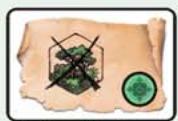
Not in the jungle

In the largest jungle
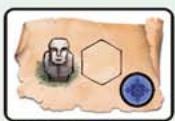
Next to a statue

Next to a hut

In the jungle

Anna adds the clue “In the jungle” to the treasure map in the white treasure area. Accordingly, the white treasure is located next to a hut and in the jungle. This eliminates all spaces which, though next to a hut, are not part of a jungle.
Around each of the four huts, all white site markers not located in the jungle are removed.
The example to the left shows the situation at one of the four huts.




Now, Bobby also adds the clue “Next to a palm tree” to the treasure map in the white treasure area. Therefore, only spaces that are next to a hut, and next to a palm tree, and in the jungle still qualify as possible locations for this treasure.
After Bobby has played his clue, all white site markers not located next to a palm tree are removed.
Rules for adding clues
When adding a clue to a treasure map the clue ...
must not contradict any clue already present in the treasure map.

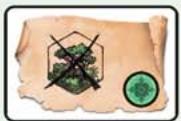
Anna cannot add the clue "In the jungle” to the treasure map in the grey treasure area, as the first clue already rules out the jungle.
- must reduce the possible sites where the treasure could be hidden by at least one space.
The brown treasure is located in the largest jungle. Anna cannot add the clue "In the jungle” to this treasure map either, as it does not reduce the possible sites for the treasure's location - Must allow at least one site where the treasure could still be hidden, a treasure cannot simply "vanish from the island".
The black treasure is located next to a statue. If none of the spaces next to the statues is in the jungle (as in the example below), Anna cannot add this clue here either.
B) Move your ATV
You can move your ATV up to 3 legs. The following counts as one leg:
1) Moving within a terrain
Any movement within the same terrain type, no matter how far.

2) Changing the terrain
Moving into an adjacent space of a different terrain type (e.g. from the jungle to the adjacent lake space).

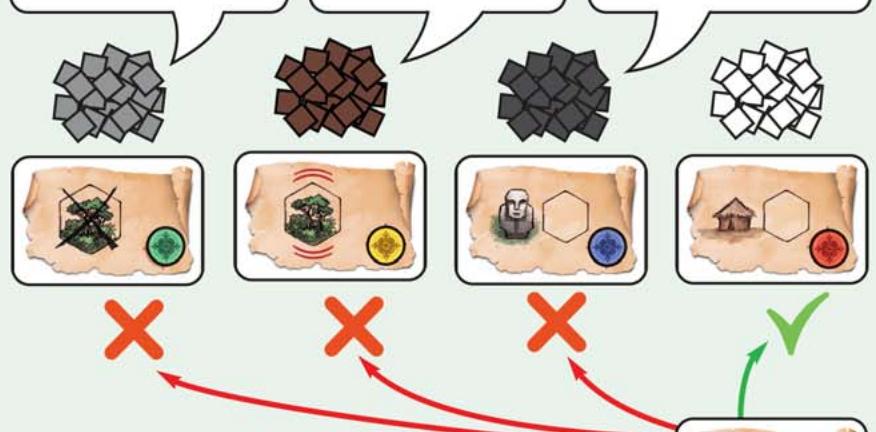
Anna finally adds the clue “In the jungle” to the white treasure map, hereby reducing the possible spaces for the treasure's location. Of the former 14 sites, only 6 remain (see example).


Looking at the situation in this example reveals why Anna cannot add the clue "In the jungle” to the black treasure map: None of the jungle spaces lies next to a statue .

Two examples of how you can drive the 3 legs: Lola uses the first leg to drive to the end of the jungle. Changing to the mountains uses up her second leg. With the third leg she can, at most, reach the end of the mountains.
Bobby first leg takes him from the lake to the adjacent scrubland space. He crosses the scrubland in the second leg. Then, he reaches the adjacent river space in the third leg.
Special Cases:
- When raising a treasure ( Page 4), any unused legs of your movement (towards the treasure) expire. In case your ATV is already located at the exact treasure location at the beginning of your turn, you may raise the treasure and afterwards decide if you would like to perform Action A) or Action B).
- Collecting an amulet automatically ends a leg. → Page 5
ATVs can enter any space on the island, even if it contains a palm tree, a hut, a statue, or other ATVs. ATVs cannot enter the ocean.


I. The Treasures
α) Raising a Treasure
You can raise a treasure if these two conditions are met:
1) The exact location of the treasure is defined, i.e. only one site marker of the treasure remains on the game board.
2) It is your turn and your ATV reaches (or already occupies) the space containing the remaining site marker.


To raise the treasure, place one of your compass roses below the last clue card of the corresponding treasure map. Then, remove the site marker and put it back on its pile.


Now, each of you draws as many treasure cards as you have compass roses lying on (or below) the treasure map. After secretly looking àt them, hand the treasure cards face down to the player who will distribute the treasure cards.
Anna has raised the treasure. She draws two treasure cards, as she has two compass roses on the treasure map. Roger and Bobby draw one card each.
Caution! Don't give away what kind of treasure card you have seen. Especially not if you have drawn a curse card. If only you possess certain information about the contents of the treasure, this will give you an advantage when it comes to the distribution of the treasure.
b) Distributing a Treasure
Without looking at it, the player distributing the treasure draws an additional card from the treasure deck and adds it to the cards received from the other players. After the cards have been shuffled thoroughly, the topmost treasure card is displayed face-up, and all players with compass roses on the treasure map are asked in the sequence of the compass roses – from bottom to top (beginning with the player who raised the treasure) – whether they want to claim the treasure card or not.
1) The owner of the lowest compass rose on or below the treasure map is asked first, whether she wants the treasure card. If she declines, the owner of the next higher compass rose is asked (even if the player has been asked before), and so on.
2) Whoever claims a treasure card takes the card and places it face down in front of him, and is given back the compass rose that he used to claim the treasure card. Treasure cards nobody claimed are placed on the treasure card discard pile.
3) Then, the player distributing the treasure cards turns over the next card and offers it as described above. This is repeated until all the treasure cards for this treasure have been offered or no compass rose remains on the treasure map. If a treasure card is left over, it is discarded.

c) Cursed Treasures

Turning up a curse card during distribution means the treasure is cursed. The curse has two consequences:
1) The remaining treasure cards of this treasure are not distributed.
2) Anyone with one or more compass roses still on or below the treasure map must discard an amulet. If a player does not hâve an amulet, he loses his most valuable treasure card.
Afterwards, the curse card is removed from the game. The lost treasure cards are discarded together with the ones not distributed. If the second curse card is among these discards, remove it – without it taking effect – from the game, too. Take back your compass roses still on the treasure map.
d) Starting a New Treasure Hunt
All clue cards belonging to a raised treasure are placed on the clue card discard pile, which is kept separate from the treasure card discards. The player who claimed the last treasure card during the distribution starts a new treasure map by playing a clue card face up from her hand in the now empty treasure area. The card is marked with one of the player's compass roses and the player draws a new clue card to replenish her hand to four clue cards (6 clue cards in a two-player game).
Special case: If'the first card turned up ín the distribution happened to be a curse card and no treasure cards were distributed, then the player who raised the treasure starts the new treasure map.
The order of play is not affected: After the player who raised the treasure has ended his turn, the game continues with his left neighbour.
II. The Amulets
α) The Mysterious Appearance of the Amulets
A mysterious force emanates from the statues each time a treasure is raised.

Where their unrelenting gaze strikes the coast, amulets surface in the ocean and are swept ashore:
Take three amulets from the amulet pile and place one each on the coast in the last island space lying in the direction of view of each stat-ue, unless this space is already occupied by an amulet. Then, with a grind-ing noise, the statues turn to face where the next amulets will surface: rotate each stat-ue 60° in a clockwise direction, until it faces the next adjacent space.

Place an amulet next to the ocean in the viewing direction of each statue.

Then rotate all statues
b) Picking up Amulets
You can only pick up amulets when it is your turn. There are two ways to do this:
1) At the beginning of your turn, your ATV already occupies a space that contains an amulet. Take the amulet. This does not count as an action.
2) You move your ATV (Action B, Page 3) into a space containing an amulet. To pick up the amulet, you must complete one of your legs in that space.
It is possible to collect more than one amulet during an action.

Lola takes the first leg to drive to amulet A. As she has to stop there to pick it up, she needs another leg to reach the end of the mountains. She uses the third leg to cross over to the beach, where she picks up amulet B from underneath Roger's ATV.
Now it's Roger's turn. He is annoyed by Lola's play, as otherwise he could have taken amulet B without having to move his ATV. Roger decides to pick up amulets C and D. To do that, he drives along the beach first, and then changes terrain twice. Roger cannot reach amulet E in the scrubland-not even if he discards an amulet to take an extra “Move your ATV” action, as picking up amulets is not allowed on an action granted by an amulet. ( Box “Amulet Powers: Move your ATV", Page 6)
A hint for experts: If Roger has an amulet at the start of his turn he could snatch amulet E from underneath Anna's ATV: First, he discards the amulet and takes an extra “Move your ATV” action to drive to the space containing amulet C. He cannot pick it up, as he reached it using the amulet's extra “Move your ATV” power. Then, he starts his regular action. It takes him two legs to pick up amulet D, and on the third leg he takes amulet E.
Amulet Powers:
You can play as many amulets as you like at any time during your turn, (even amulets you just picked up in the same turn). For any used amulet you perform any one of the following additional actions:
• Remove a site marker
Take any site marker off the game board and place it back on its site marker pile. Removing a site marker eliminates the space it came from as a possible location for the corresponding treasure. Hence, you are not allowed to remove the last remaining site marker of a given colour from the game board.
● Play a clue card
You can take an extra “Play a clue card” action (see Action A, Page 2).
● Move your ATV
You move your ATV up to 3 legs (see Action B, → Page 3). Caution! You are not allowed to pick up amulets while you are using this power.
• Protection against a curse
Discarding an amulet when you are hit by a curse prevents you from losing your most valuable treasure card.
• Exchange your clue cards
You can discard all your clue cards and then redraw the same number from the clue card deck. (You may exchange your clue cards in the same manner even if you do not possess an amulet, if you forgo your entire turn instead.)
Amulets that were played or discarded are returned to the common amulet pile.

An example:
Lola cannot raise the grey treasure, as there are still two grey site markers remaining on the game board. Therefore, she uses an amulet to remove

one of the site markers. This leaves the location of the treasure in the exact space where her ATV is already standing. Now, Lola raises this treasure before taking her regular action, in which she moves
her ATV to the black site marker and then raises the black treasure, too. Now, Lola uses another amulet to take an extra move with her ATV, moving it to the space containing both the last brown and the last white site markers. Finally, she raises both treasures separately, in any order she wishes.

“CURSED!" – Some Tactical Advice:
If you would like to avoid unpleasant surprises you should preferably distribute your clue cards among different treasure sites. Thereby, you can minimize the danger that the curses just strike at a site where you are strongly involved. Especially, after you have invested many of your game turns in a certain treasure and it (almost) completely “belongs” to yoù, there is always the risk that you end up with “cursed”, empty hands after raising it. 'Consider that this can decide the game.
Possible Curse Variations:
If you would like to find out how TOBAGO works with “weaker” or “stronger” curses you can try out the following variations:
The curses become weaker if you ...
a) .. continue distributing the treasure after a curse card turned up (as usual, a player with no amulet must discard his most valuable treasure card).
b) ... after a curse card turned up, distribute the treasure cards among the players who are able to discard an amulet (players with no amulets just take back their compass roses and must discard their most valuable treasure cards, as usual)
The curses become stronger if after dealing with the first “cursed" treasure you shuffle the curse card back into the pile of remaining gold cards.
c) ... only play with 1 curse card.
d) ... leave them out completely.
Furthermore, you may shuffle the curse(s) with the lower 21 of the treasure cards instead of the lower 27 cards. That will make the curses more calculable.
Thereby, you can now always play your own most favourite variation of TOBAGO. Have fun!
Ending The Game:
The game ends after the treasure card deck runs out, but not before the treasure has been distributed. If there are still compass roses left while drawing the treasure cards, shuffle the discarded treasure cards and continue with the distribution as usual. After the distribution is complete, the game ends immediately.
Now, each of you counts the number of gold coins on the treasure cards gathered. Whoever has collected the most gold coins wins the game.
© 2009 Zoch GmbH - Autor: Bruce Allen - Illustration & Layout: Victor Boden - Translation: Bruce Allen / David Zook Vertrieb Schweiz: CARLETTO AG - Moosacherstraße 14, Postfach - CH-8820 Wädenswil - www.carletto.ch
Game Setup and Components:
Assemble the variable game board showing the island (it consists of 3 game board sections and 3 clamps).
The game board sections are double-sided. The 3 front sides (a, b, c) show fewer island spaces than their reverse sides (A, B, C). You can combine these sides in any way you wish, e.g.:
Interlock the jagged edges of the 3 game board sections without leaving a hole in the middle. To complete the game board, fasten the three game board sections with the three clamps.


Flip the clamps if you arranged the sections according to the second possibility.

You can set up the game board to show 32 different islands, providing variety and a new challenge with each game of TOBAGO.
Place the ·TTTBRB lm trees and statues
on the island following the rules below:
- Each space can contain only one object.
- All similar objects (e.g. two palm trees) must be placed at least four spaces apart.
- Statues may not be placed adjacent to the ocean. Each statue must directly face one of its 6 surrounding spaces.


Pile the 20 amulets on the corresponding symbol located on one of the clamps.

Use the 39 treasure cards + 2 curse cards
to form the treasure card deck. Shuffle the two curse cards (also face down) with the lower 27 of the treasure cards.
Each of you takes the ATV (All-Terrain Vehicle) of your colour and places it on any space of the island.
12 treasure cards


60 compass roses, each of you takes the 15 of your colour.
The island is made up of hexagonal spaces, each space belonging to one of the six terrain types:
There will always be exactly one largest area of each terrain type no matter which scenario you have chosen. The largest area is the one which contains the most spaces of that terrain type, e.g.: Largest Lake

Therefore, you may not enter a sea space. A treasure can never be located on a sea space, and there is no sight across a (foggy) sea space.
Clamp with deposit area for cards
Create four treasure map areas next to the game board by sorting the 68 site markers by colour into four piles.

White sure Area
This example shows the setup for a game with three players. Therefore, three clue cards have been placed, initially. The treasure map for the fourth treasure area can be started anytime during the game as there are always four possible treasure sites available, regardless of the number of players.
Each of you draws one of the 52 clue cards and places it face up on an empty treasure map (below the pile of site markers). Mark the clue card you placed with one of your compass roses.
Clamp with the deposit area for the amulets

Shuffle the clue cards and deal each player 4 clues face down (in a twoplayer game, deal 6 clues each).
The remaining clue cards form the clue card deck.

How To Read the Clues
Each clue shows the landmark the clue refers to:

Scrubland

Jungle

River


Lake

Beach
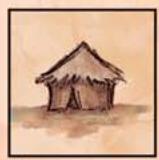
Hut

Palm Tree
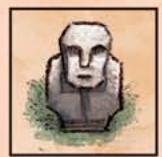
Statue

Ocean
Sometimes the clue refers to the largest area.
This is shown by the following symbol:

for example:

largest beach

largest river

largest mountain
The hexagons show where the location of the treasure is in relation to the landmark. There are six different types of clue cards:
Card Type 1: WITHIN the landmark
(Picture on the card: Landmark within the hexagon) Some examples:

In the river
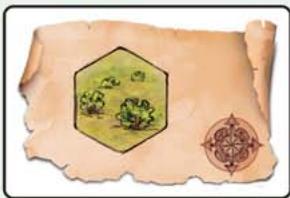
In the scrubland

In the largest jungle
Card Type 2: NEXT TO the landmark

(Picture on the card: Landmark beside the hexagon) Some examples:
Next to the scrubland
(Picture on the card: Landmark within the crossed out hexagon) Some examples:

(Picture on the card: Landmark beside two hexagons) Some examples:
Next to a palm tree
Card Type 4: NOT WITHIN the landmark
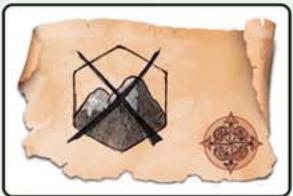


Not in the mountains
In sight of the ocean


Next to the largest mountain
In sight of a hut

Card Type 3: "In Sight of the landmark": EXACTLY 1 OR 2 SPACES from the landmark


The spaces can either be located in a straight or a bended line 2 spaces away from the mentioned landmark.
In sight of the largest lake
Not in the largest lake
Not on the beach
(Picture on the card: Landmark beside the crossed out hexagon) Some examples:
Card Type 5: NOT NEXT TO the landmark


Not next to the ocean
Not next to a statue
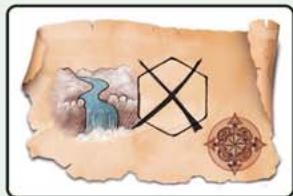
Not next to a river
Card Type 6: "Not in Sight of the landmark": NOT WITHIN 1 OR 2 SPACES of the landmark, i.e. FARTHER THAN 2 SPACES AWAY from the landmark or DIRECTLY ON it
(Picture on the card: Landmark beside two crossed out hexagons) Some examples:
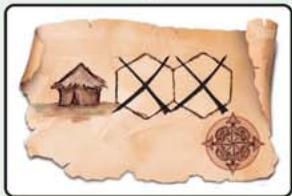
Not in sight of a hut
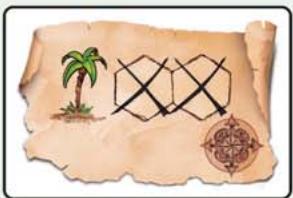
Not in sight of a palm tree

Not in sight of a statue
With Card Types 5 and 6, the treasure can be located within the landmark, e.g. the card “Not next to a statue” still allows the treasure to be located in the spaces where a statue stands. (Exception: Treasure cannot be located in the ocean as the ocean is not part of the island.)
下载 Markdown