rules_zh_林业2025_46870.md
《林业》 中文翻译 & 排版:陈斌华
全球变暖的主要原因是温室气体二氧化碳(CO2)。人类尚未找到比植物更有效的从大气中吸收二氧化碳的方法。通过光合作用,植物将其转化为碳水化合物,而碳水化合物是树木木材的构成基础。树木因此生长并形成木材。木材是一种非常耐用的可再生材料。如果得到妥善照料,它可以持续数百年。这一点在中世纪的城堡、宫殿和城镇房屋中显而易见,那里的木结构一直保存至今。
木材如此自然地融入我们的生活,以至于我们常常没有注意到它。日常用品、家具,甚至整个建筑都是由木材制成的。我们还可以用它来制造玻璃、衣物,甚至是高耸的摩天大楼。当我们为你制作这款游戏时,我们坐在木椅上,在木桌旁玩耍。事实上,整个游戏都是由木材制成的!每一块木材都在某个地方生长过。它真的是因为太阳才得以存在,将二氧化碳和水转化为碳水化合物,同时释放氧气。
而这正是《林业》这款游戏的主题。它关乎树木和木材。在这个游戏中,1 到 4 名玩家尝试完成木材产品的订单,同时维持森林的生态平衡,以服务于森林中所有的生物以及后代人类。
《林业》这款游戏的规则还融入了布拉格捷克生命科学大学林业与木材科学学院专家的文本。绿色边栏包含有关现代林业的有趣信息。如果你想深入了解游戏的主题,可以阅读它们,在了解游戏规则的同时学到额外的知识!

未来森林
这款游戏将带你进入欧洲的森林,让你更接近林业的世界。森林面临着气候变化带来的挑战,如干旱和树皮甲虫灾害,这些灾害尤其威胁单一树种的林分。因此,未来属于多龄级、多树种的混交林。这样的森林更能抵御变化,保持生态稳定以及木材生产。每位护林员根据自己所在地区的环境特点进行护理,以确保森林能够充分发挥其在自然和社会中的作用。
木材作为材料
木材是一种独特的生态资源,其碳足迹低,能取代不可再生材料,并且在其生长过程中吸收温室气体。对木材进行本地加工,使用欧洲本土树种而非进口木材,可以减少对环境的影响。砍伐异国木材常常会破坏热带雨林,增加排放。木材可回收,能够自然降解,还可以作为能源来源。它对健康、情绪以及我们生活的环境有着积极的影响。作为一种天然、耐用且可持续的材料,木材在现在和未来都发挥着重要的作用。
森林功能


配件

1 游戏版图


4 玩家版图

40 木头指示物
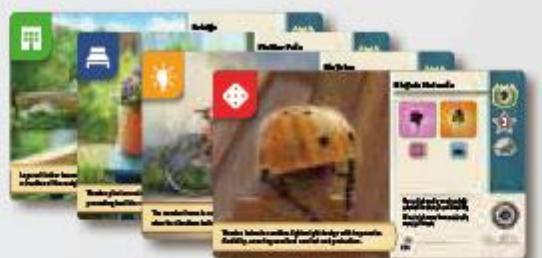
40 合同卡

(5x8 件: 松木、桦木、云杉、橡木、山毛榉)
4 起始合同卡

8 河流指示物

9 空地指示物

10 游戏轮次指示物

2 参考板块
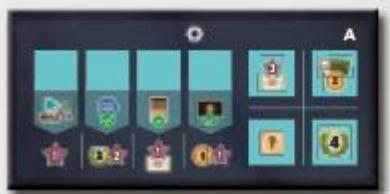
4 科技板块

49 任务卡

30 木材调整指示物 (3x10 件: 酸洗、烘干、刨削)

15收获指示物
45 护林员指示物 (3x15 件:油漆保护、支持砍伐树木和疏伐)


9 总部板块 (2/3/4 玩家可使用 3x3 板块)
15 张衍生卡


15收获指示物

8 水利设施指示物 (4x 河湾, 4x 带桥水库)

9 锯木厂建筑板块
20x 建筑材料)

(36x1, 19x2, 8x5)


1 锯木厂
经理指示物
9 方块

1 行动指示物


1 星星指示物
6 建筑指示物


1 计分指示物
1 收割机指示物

3 存储扩展板块


1 树洞版图

15 生命指示物

15 数据指示物


5奖励指示物


1 护林员版图

14 护林员板块

18 护林员卡牌

3 进阶
护林员卡牌
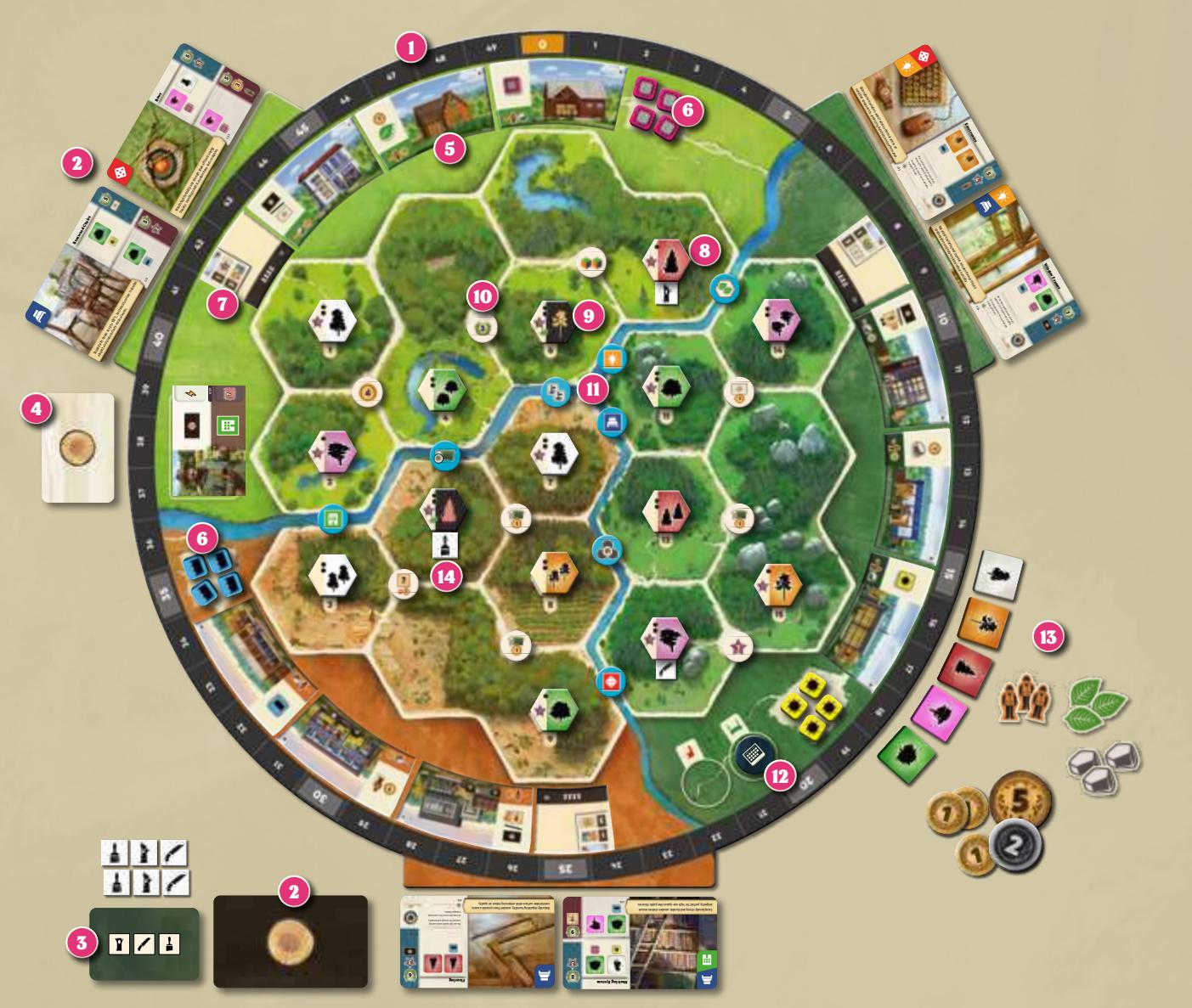
游戏设置
-
将游戏版图放在桌子中央。
-
洗混合同卡牌牌组,并在三个区域(橙色、深绿色和浅绿色)中每个区域各放置两张卡牌,正面朝上。然后将牌组背面朝下放置在游戏版图旁边。
-
洗混繁殖卡牌牌组,并将其背面朝下放置在游戏版图旁边。将护林员指示物放置在其旁边。
-
洗混任务卡牌牌组,并将其背面朝下放置在游戏版图旁边。翻开一张卡牌,并将其放置在牌组旁边。
-
将锯木厂建筑板块放置在游戏版图的橙色、浅绿色或深绿色区域中与之完全匹配的位置上。
在 3 人游戏中,翻开繁殖卡牌,直到你揭示出编号为 1-9 的一张。翻开编号为该数字的锯木厂建筑板块,使其升级面朝上。将一套未使用玩家配件中的建筑指示物放置在升级图标上。
在 2 人游戏中,按照相同程序操作两个锯木厂建筑板块。 -
将相应的木材调整指示物放置在三个锯木厂建筑旁,与之匹配的木材调整符号相对应。
-
根据玩家人数,选择相应的三块总部板块,任意一面朝上,并将其随机放置在游戏版图上指定的区域内。
-
在游戏版图上放置 15 个收割指示物,以匹配游戏版图上预先打印的区域。
-
翻开繁殖卡牌牌组的最上面三张卡牌。然后,将游戏版图上与这些卡牌上的数字相匹配的收割指示物翻转为背面朝上。
-
随机将 9 个空地指示物正面朝上放置在连接六边形区域的编号区域上。
在 3 人游戏中,翻开繁殖卡牌,直到你揭示出编号为 1-9 的一张。移除该编号的空地指示物,并放置一个来自未使用玩家配件的建筑指示物。
在 2 人游戏中,按照这个程序操作两个空地指示物。 -
随机将河流指示物正面朝上放置在六边形区域之间的河流区域上。
在 3 人游戏中,翻开繁殖卡牌,直到你揭示出编号为 1-8 的一张。在那个区域上放置一个来自未使用玩家配件的河湾指示物,而不是空地指示物。
在 2 人游戏中,按照相同的程序操作两个河流指示物。而不是第二个河湾指示物,放置一个来自未使用玩家配件的桥梁指示物。 -
随机顺序将 10 个游戏回合指示物面朝下叠成一堆,并将其放置在带有绿色开始图标的游戏回合槽中。在玩高级游戏时(见第 23 页),只使用 9 个游戏回合指示物。
-
创建一个通用供应,包括钱币、建筑材料、临时工人、树苗和五种类型的木材指示物。
-
洗混繁殖卡牌牌组。翻开繁殖卡牌牌组最上面的三张卡牌,并在相应编号的区域上放置每种类型的护林员指示物。注意:如果在设置过程中(或在游戏中)繁殖卡牌用完了,将所有繁殖卡牌洗混并创建一个新的牌组。


玩家设置
-
每位玩家拿取一块玩家版图和一套一种颜色的配件。使用指示物为A的玩家版图面。
-
将行动指示物放在行动轨道上编号为 3 的区域上。
-
将六个建筑指示物放置在你的玩家版图左下角指定的区域上。
-
将你颜色的一个方块放置在以下区域。
4a: 发展轨道上
4b: 奖励轨道上带有资源作为奖励的区域
4c: 水利设施轨道的最底部区域
-
将剩余的 6 个方块放置在你的玩家版图旁边。
-
在你的玩家版图指定的区域上放置一个科技板块。你可以选择或随机决定使用板块的 A 面或 B 面,但所有玩家必须使用相同的一面。注意:如果你正在玩教学游戏(第 23 页),则跳过这一步。
-
将你的存储扩展板块按Ⅰ、Ⅱ、Ⅲ的顺序放置在你的玩家版图右侧存储的最后三个区域上。
-
将你的星形指示物放置在奖励轨道的第 2 个区域上。
-
在玩家版图上放置两个水利设施指示物。将河湾指示物放在顶部区域,将带有桥梁指示物的水库指示物放在底部区域。
-
将参考板块放置在你的玩家版图旁边。
注意:游戏中有两块参考板块 — 在游戏中与其他玩家共享。
-
将计分指示物放置在游戏版图边缘得分为 0 的区域上。
-
随机抽取一张起始合同卡,并将其放置在玩家版图的右侧。
-
将你的锯木厂经理指示物放置在与你的起始合同颜色相匹配的三个总部板块之一上。
-
将你的起始合同卡上指示的木材指示物放置在你空闲的存储区域之一上。
-
最近触摸过树的玩家先开始,并将起始玩家指示物放置在其玩家版图上。游戏按顺时针方向进行。
-
每位玩家从公共供应中拿取一个树苗。钱币的数量取决于玩家的顺序。起始玩家拿 3 元钱币,第二名和第三名玩家拿 4 元钱币,第四名玩家拿 5 元钱币。
-
起始玩家翻开游戏回合指示物堆的最上面一张,并应用其效果。所有玩家都将获得该指示物的奖励。只有在起始玩家的回合才翻开游戏回合指示物。
-
从最后一名玩家开始,逆时针方向,每位玩家将他的收割机指示物放置在他选择的六边形区域上。每个区域或双区域一次只能有一个收割机。
提示:你可以把资源和钱币放在玩家版图上你角色的图像上。
每个起始合同的右下角都有一个总部(HQ)符号,显示了你在游戏开始时必须放置你的锯木厂经理的颜色。
游戏流程
《林业》游戏进行 10 轮(高级游戏为 9 轮)。在每轮开始时,翻开最上面的游戏回合指示物,玩家们评估其效果。根据符号,所有玩家可能会获得一个小奖励,或者森林中可能会发生一些小变化。游戏回合指示物的列表见第 21 页。
每位玩家在游戏开始时有 3 个行动点,这些行动点在玩家版图的左侧进行记录。

在他的回合中,玩家支付行动点来执行一个行动。在执行行动时,他将行动指示物沿着行动轨道向下移动行动所要求的格数。只要拥有足够的行动点,玩家可以以任意顺序使用他的收割机或经理来执行行动。
域所示)。
在一名玩家的回合中,可以购买多达2个额外的行动点。每个额外的行动点支付4元钱币(如行动轨道顶部区
在整个游戏过程中,可以通过使用发展轨道来增加可用的行动点数量。
在一名玩家支付了他所有的行动点——包括额外的行动点——之后,他的回合结束。游戏按顺时针方向传递给下一名玩家。
一旦所有玩家都进行了他的回合,起始玩家翻开新的游戏回合指示物。这个指示物总是在起始玩家的回合之前翻开并评估。玩家的顺序在整个游戏中保持不变。在最后一个游戏回合指示物被翻开之后,每位玩家在游戏结束(见第20页)之前再进行最后一个回合。

在执行任何行动后,将行动指示物向下移动 1 格或 2 格,以查看在你的回合结束前你还剩下多少行动点。
提示:每个行动的费用都列在参考板块上。把你的板块放在附近!
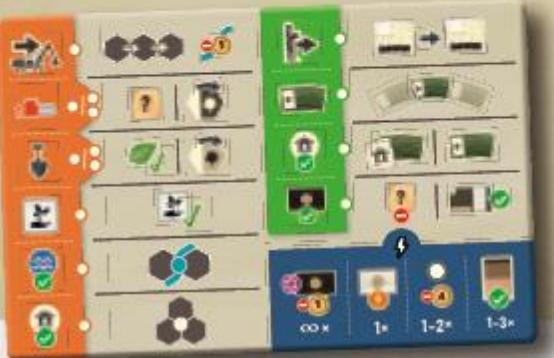
玩家版图概述
在底部是建筑轨道,用于放置玩家的建筑指示物。
玩家版图的右半部分代表林业活动和森林护理。在右上角是林业表格,玩家将在这里逐步放置通过护理森林获得的护林员指示物,这些指示物提供各种奖励。
下面是造林表格,玩家将在这里放置树苗,并作为奖励在奖励轨道上前进。
右侧是水利设施轨道。一旦建成,水利设施将为所有玩家修改游戏版图。它们还允许玩家在游戏结束时获得额外的分数。
在底部是建筑轨道,用于放置玩家的建筑指示物。
玩家版图的右半部分代表林业活动和森林护理。在右上角是林业表格,玩家将在这里逐步放置通过护理森林获得的护林员指示物,这些指示物提供各种奖励。
下面是造林表格,玩家将在这里放置树苗,并作为奖励在奖励轨道上前进。
右侧是水利设施轨道。一旦建成,水利设施将为所有玩家修改游戏版图。它们还允许玩家在游戏结束时获得额外的分数。

游戏版图概述
游戏版图被划分为锯木厂区域和森林区域。
锯木厂区域位于游戏版图的外圈。它设有总部(HQ)板块,每个玩家的锯木厂经理指示物都放置在这里,还有锯木厂建筑板块。
森林区域包含 15 个六边形区域(其中 4 个是双区域)。每种类型树木的区域在游戏版图上预先印制。相应的收割指示物在游戏设置期间放置在版图上。收割机指示物在森林区域内移动。
木材是游戏中最重要的资源。每种类型的树木分布在三个六边形上,但总是有不同的收割难度和不同的额外奖励。
地图被河流划分为三个区域(浅绿色、深绿色和橙色)。在整个游戏过程中,关注玩家在哪个区域执行行动是有益的,例如种植树木、建造建筑,甚至在游戏结束时获得分数。

游戏中的树种
欧洲森林中有大约 400 种木本植物树种。这些树种包括乔木和灌木。多样性不仅对生物多样性很重要,而且对森林的韧性也很重要。在这个游戏中,我们选择了五种在欧洲森林中常见的、由护林员管理的木材类型。

松树
松木质地柔软但耐用,具有明显的纹理和温暖的色调,尤其受到乡村风格家具和室内装饰元素的青睐。由于其含有高量的树脂,松木适合用于户外,如围栏和露台,因为它能够抵御恶劣的天气条件。

桦树
桦木坚硬且呈浅色。它被用于制造家具、地板和胶合板。由于其光滑的质地和易于加工的特性,桦木在装饰物品和小型木制器具的制造商中也很受欢迎。在造纸工业中,桦木被用来生产高质量的白纸。

云杉
云杉木轻、软且易于加工,这使得它在建筑行业中被广泛使用。例如,它被用于框架、镶板和屋面条。由于其良好的声学特性,云杉也是制造乐器(如小提琴和吉他)的热门材料。云杉在造纸工业中也很重要,其木材浆料被加工成纸张。

山毛榉
山毛榉木坚硬、密度高,具有均匀的结构,使其适合用于家具、地板和厨房器具。它因其易于加工和浅色外观而受到青睐,这使其成为室内装饰元素的理想选择。山毛榉也常用于生产胶合板和薄木片。其强度使得山毛榉适合用于工具和运动器材,如手柄和棍棒。
橡树
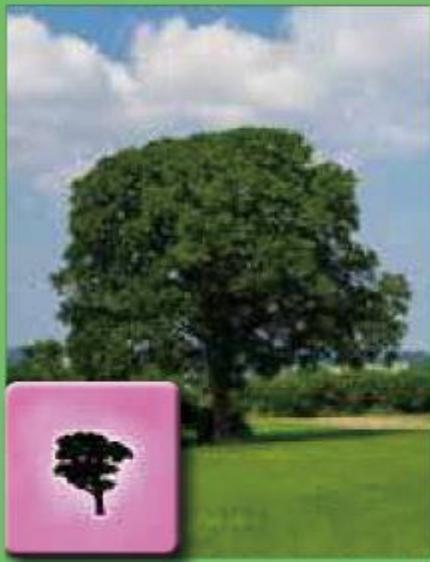
橡木非常坚硬且具有抗腐性,使其成为制造家具、地板和葡萄酒或威士忌酒桶的理想材料。其美丽的纹理和长寿命在木工和建筑中受到重视,例如在桥梁和户外结构中。橡木还以其耐候性而闻名,常用于高档木质表面。
重要游戏概念
星星
在游戏中, 玩家可以从不同来源获得不同价值的星星。当玩家获得星星时, 他将他的星形指示物在他的玩家版图的奖励轨道上顺时针移动指定的步数。
一旦玩家完成一个周期(累积7颗星星),他将他轨道中间的方块移动到两个可见奖励中的一个。他在完成当前行动后立即获得该奖励。玩家不能连续两次获得相同的奖励,因为奖励轨道上的方块必须总是移动才能获得奖励。当获得星星时,玩家总是将他的星形指示物移动指示的格数。他不需要落在(或停在)顶部区域。或者,玩家可以选择获得3个胜利点数,而不是移动他的奖励轨道的方块。
奖励:
·在发展轨道上前进
- 抽取一张任务卡(从牌组顶部揭示一张或随机抽取一张),获得任意2个资源指示物,并获得1个胜利点数
- 获得 4 元钱币,并将任意木材调整应用到一个存储区域
发展轨道进阶

如果玩家作为奖励在发展轨道上获得一次提升,他将自己轨道上的方块向右移动一格。每当玩家在他的发展轨道上提升时,他要么获得一项技术升级,要么增加在他的回合中可用的行动点数量。获得的行动点可以在本轮中立即使用。

如果玩家获得了一项技术升级,他将取出一个未使用的方块,并将其放置在他的科技板块上的任意区域上。如果在使用玩家版图预先印制的科技板块进行教学游戏时,玩家每次升级都会获得三种即时奖励中的一种。
如果玩标准游戏,玩家可以在永久升级(板块的左侧)和即时奖励(板块的右侧)之间进行选择。关于科技板块的更多详细信息可以在第23页的概述中找到。
资源
游戏中有三种类型的资源指示物:建筑材料、树苗和临时工人。玩家使用建筑材料和临时工人以各种组合来升级锯木厂建筑板块、建造森林建筑和水利设施。在收割后,需要树苗来更新森林(造林)。除了这三种资源外,还有钱币,用于购买各种升级。例如,要首次扩展玩家版图的存储区域,玩家必须支付5元钱币。
每个资源指示物可以当作1元钱币使用,但钱币不能替代资源指示物!


示例:玩家获得了 4 颗星星。他将星形指示物顺时针移动了 4 格。由于他完成了一个周期,所以在完成当前行动后,玩家可以选择将方块移动到两个可见奖励中的一个。

玩家在发展轨道上的第一次提升不会获得额外的行动点。相反,他可以在他的科技板块上激活一个升级。

这是教学游戏的预印科技板块。

这是完整游戏的科技板块。

建筑材料

播种

临时
工

1 钱币

钱币
在任何时候,玩家都可以支付他的资源,而不是(或除了)支付钱币。然而,资源比钱币更稀缺、更有价值!

收割行动
移动
对于一个行动点,玩家可以将他的收割机指示物移动最多2个区域。
他可以穿过被另一个收割机占据的区域,但不能在共享区域结束他的移动。
收割机必须在执行另一个行动之前结束其移动。不能使用一个移动行动先移动一个区域,执行一个行动,然后再移动到第二个区域。
- 地图上的双区域被视为一个连通的区域。
- 任何时候,一个区域上最多只能有一个收割机。
· 每次玩家穿过一条河流,他必须向公共供应支付 1 元钱币。注意:在标准游戏或高级游戏中,收割机指示物的移动可以通过科技板块进行改进(见第 23 页)。
森林道路
森林道路在林业中发挥着重要作用。它们使护林员能够开展与森林护理相关的所有活动(如造林、监测森林健康、伐木、运输木材、管理野生动物等)。然而,森林道路不仅用于森林管理,还为紧急服务提供了进入森林的通道。森林游客的车辆阻碍救援人员或消防员的通行,可能会在拯救生命和扑灭森林火灾方面造成严重的问题。
一棵新砍伐的、体积为 1 立方米的橡树的重量大约为 1000 公斤。如此重量的木材可能会损坏用于从森林运输木材的森林道路。修复这些道路的费用非常高昂。只有在该地区的计划伐木全部完成后,才会进行此类修复。森林道路的修复和加固包括平整路面、添加碎石,或空地排水沟和涵洞中的杂物。
收割机
在伐木过程中,采用轻柔技术以尽量减少对森林和道路的损害。传统上,人们使用油锯进行伐木,但现代伐木机的使用越来越普遍。这种机器不仅能砍倒树木,还能去除树枝,并直接在森林中将木材加工到所需的尺寸。如果使用得当,它能保护森林环境,比使用油锯更安全。
在树皮甲虫灾害期间,伐木机的使用量增加,因为它们在一班次内能比油锯砍伐更多的木材。只有在考虑了地形的坡度和土壤表面的承载能力后,才会使用伐木机。

粉红色玩家支付了 1 个行动点将他的收割机指示物移动了 2 个区域。他穿过了一个有蓝色玩家收割机指示物的区域,并且穿过了一条河流。另一个收割机指示物不妨碍他的移动,但他必须支付 1 元钱币来过河。


收割行动
收割
?
在收割行动中,玩家从他的收割机指示物所在的当前位置将木材指示物添加到他的存储中。要使用这个行动,该区域的收获指示物必须是彩色面朝上。
收获时,玩家按照以下步骤操作:
-
支付 1 个或 2 个行动点。所需数量由每个收获指示物左侧的点数表示。
-
从供应中添加相应的木材指示物到玩家存储中的任意空闲区域。
-
如果收获指示物上有星号符号,玩家将他的星号指示物在其奖励轨道上向前移动指示的格数。
-
将收获指示物翻转到其深色背面。
每种树种都有三种类型的收获指示物:

支付:1个行动点获得:1个木材指示物和1颗星

支付:2个行动点获得:1个木材指示物和3颗星

支付:2个行动点获得:2个木材指示物
注意:如果你的木材存储已满,你可以丢弃任何你已有的木材指示物,以为新的木材指示物腾出区域。即使你通过非收割的方式获得木材,也可以这样做。在所有情况下,这都是低效的利用方式。
收割
林业是国家经济的重要组成部分,它在农村地区提供就业机会,并支持木材加工和建筑行业。森林为它们的所有者带来了经济利益。木材采伐是管理型森林中的关键活动。
为了获得优质木材,必须在最佳轮伐年龄采伐树木。如果树木过于老化,木材的质量就会下降。这会导致害虫和腐烂造成的损害风险增加。老树的木材通常只用作燃料。
伐木还能保持管理型森林的健康,因为疏伐可以促进树木生长,增强森林的稳定性,并提高其对环境变化的适应能力。护林员确保森林在长期内提供优质木材,同时履行其他生态功能,如保护土壤和确保生物多样性。
木材是一种可再生材料,由水、阳光、二氧化碳和矿物质的结合产生,是一种天然且可持续的材料。因此,管理良好的森林不仅提供宝贵的材料,还支持自然界的平衡。

粉红色玩家想要使用他的收割机指示物来收割这些松树。首先,他支付2个行动点。

接下来,他从公共供应中取出1个松木指示物,并将其放置在他玩家版图上的任意一个空闲存储区域中。

粉红色玩家还会获得3颗星。他将他的星号指示物顺时针移动3个区域,在他的玩家版图上的奖励轨道上。
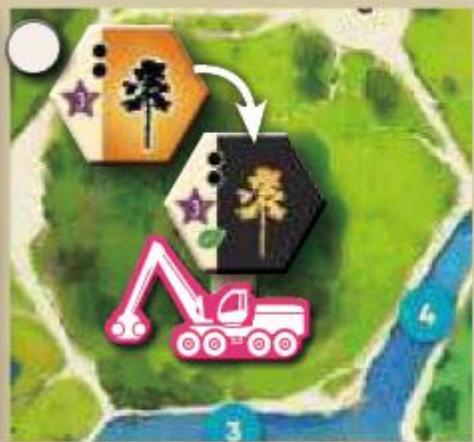
最后,玩家将收割指示物翻转到其深色背面。

收割行动
造林

造林行动允许玩家种植树苗并恢复森林。玩家的收割机指示物必须在正在造林的区域上,且该区域的收割指示物必须是深色面朝上。
造林时,玩家按照以下步骤操作:
-
支付 1 个或 2 个行动点。所需数量由每个收割指示物左侧的点数表示。
-
如果收割指示物上有星号符号,玩家将他的星号指示物向前移动指示的格数,在他的奖励轨道上。
-
支付 1 个或 2 个树苗。所需数量由每个收割指示物左侧的数字表示。然后,玩家将用过的树苗指示物放在他的造林表格上。玩家将他的星号指示物向前移动,在他的奖励轨道上移动的格数由造林表格上被他的树苗覆盖的格数指示。
-
将收割指示物翻转到其彩色面。

造林表格
树苗指示物永远不会返回到公共供应中。
- 每次玩家进行造林时,他会将用过的树苗指示物放在他造林表格中相应森林区域的列中。树苗指示物总是从顶部区域开始放置。
- 玩家随后会获得由覆盖的区域指示的星星数量。这些星星是除了从收割指示物获得的星星之外的额外奖励。
· 如果玩家填满了造林表格的一整行,他会获得右侧指示的额外奖励。
· 如果玩家造林了一个区域,但已经在他的造林表格中填满了该区域的列,玩家会将他的树苗指示物放在表格下方的空闲部分。他将立即获得 2 个胜利点。
林业循环
林业周期包括森林生态系统的恢复、生长和护理。这支持木材生产、土壤保护、生物多样性、气候调节以及休闲活动的区域。其关键阶段是造林、保护和培育。
造林是第一步,通过种植或播种在森林中建立新的生长,强调物种多样性。恢复可以是自然的——使用母林的种子——或者如果是自然更新不可能或只能有限地进行,则是人工的。
保护侧重于防止由害虫、疾病或气候影响造成的损害。护林员通过化学保护、围栏或监测来实现这一点。
培育涉及诸如修剪和疏伐之类的干预措施,以促进健康的树木生长。这增加了它们的适应能力,并确保了未来优质木材的生产。这些步骤保持了森林的健康、稳定和可持续管理。
注意:在游戏中,林业周期通过翻转收割指示物来体现。一旦你在某个区域收割了木材,你必须造林,才能继续收割。在现实世界中,收割后也有造林的义务,护林员为此有特定的时间框架。

蓝色玩家想要使用他的收割机指示物来造林这个区域的松树。首先,他支付2个行动点。


造林这个收割指示物需要1个树苗。玩家将其放置在他造林表格的浅绿色列中,并获得2颗星。
他还从收割指示物上获得了3颗星,这使他通过了奖励轨道的最高区域!蓝色玩家移动他的方块,并获得一个可用的奖励。

最后,玩家将收割指示物翻转到其彩色正面。这片森林区域再次变得健康了!

收割行动
照料森林

在游戏版图上通常有三个白色护林员指示物。这些代表需要在森林中执行的行动,以使森林茁壮成长。护林员指示物有三种类型。
玩家的收割机指示物必须在他正在照料的区域上。照料森林时,玩家按照以下步骤操作:
1. 支付 1 个行动点。
-
取走该区域的护林员指示物,并将其放置在玩家的林业表格上。护林员指示物可以放在任何列的最上方空闲区域中。护林员指示物可以放在任何一列,但每一列只能有一种类型的指示物。如果愿意,玩家可以在多列中收集同一种类型的护林员指示物。
-
获得被护林员指示物覆盖的表格上的奖励。
如果玩家在他的林业表格上完成了一行,他将获得表格右侧指示的额外奖励。
当林业表格的一列完全填满时,玩家可以选择将该类型的额外护林员指示物放在下方的空闲区域中,并立即获得2个胜利点。

在每个回合开始时,玩家总是要检查游戏版图上恰好有3个护林员指示物。如果缺少任何护林员指示物,翻开繁殖牌堆的顶牌,并将缺失类型的护林员指示物放置在相应编号的区域上。
如果那个区域已经有护林员指示物,或者被玩家的收割机指示物占据,则将新的指示物放置在按升序排列的下一个区域上。

10 6 2
在游戏结束时,获得最多护林员指示物的玩家将获得额外的分数。
护林员
护林员是森林方面的专家,他必须对森林有全面的了解。他的工作既耗时又体力要求高,但他将其视为自己的使命。多亏了护林员的照料,森林仍然是重要的自然资源,并且是木材的持久来源。
如今的技术使护林员能够寻求最佳解决方案,以使我们的森林适应气候变化。他还使用创新方法来缓解诸如树皮甲虫等威胁。这使他能够培育出未来的森林,各种树种在那里相互生长。保留不同树干粗细和年龄的树木有助于森林抵御变化的自然条件,如降水——从暴雨到极端干旱——以及昆虫、真菌和其他害虫。
在护林员的帮助下,这些森林尽可能多地保留水分,确保在极度干旱期间有足够的水分。健康的森林保证了即使某一特定树种因条件变化而挣扎,另一种树种将取代它,该地区的森林不会消失。这防止了社会面临我们今天目睹的那种灾难。
这种形式的森林确保了生态稳定性、生物多样性以及森林的经济和社会功能,为子孙后代服务。

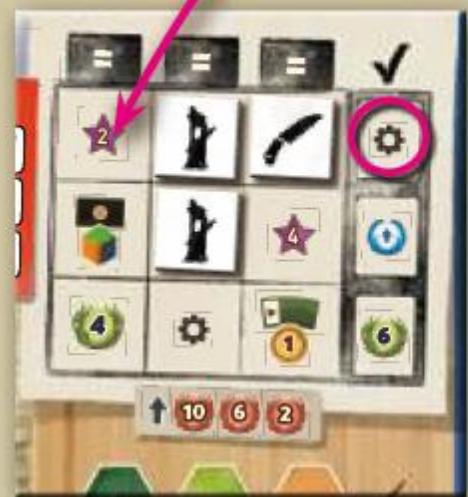
粉红色玩家想要照料森林。首先,他支付1个行动点。接下来,他取走护林员指示物,并将其放置在他的林业表格上。由于他已经在中间和右边的列中有了不同类型的护林员指示物,玩家必须将他的新指示物放在左边的列中。
玩家因将护林员指示物放置在这个区域上而获得了2颗星。因为他完成了这一整行,玩家还激活了他科技板块上的一个升级!

疏伐

支持保留树

涂漆保护树苗免受动物侵害
照料森林有助于森林茁壮成长。获得一个指示物意味着玩家已经完成了护林员分配的任务。

如果你想了解林业中使用的新技术以及未来的森林应该是这样的,看看这部 YouTube 纪录片吧!
收割行动
森林建筑

每位玩家的建筑轨道包含6个建筑指示物,可用于在游戏版图的空地指示物上建造一座建筑。每个空地指示物都有一个奖励,如果玩家在那里放置一个森林建筑,他将立即获得这个奖励。
玩家可以在收割机所在区域相邻的任何空地指示物上建造建筑。有些区域只与一个空地相邻,而其他区域则与多个空地相邻。
在森林区域建造建筑需要 1 个建筑材料和 1 个临时工人。这个成本在建筑轨道的左侧有指示。
要建造建筑,玩家需按照以下步骤操作:
-
支付 1 个行动点。
-
从自己的供应中支付 1 个建筑材料和 1 个临时工人。
-
移除空地指示物,并用玩家最左边的建筑指示物替换它。
- 获得空地指示物所指示的奖励,并将其放回盒子。空地永远不会被替换。
随着每座建筑的建成,玩家在游戏结束时可获得的分数也会增加。
注意: 玩家还使用他的建筑指示物来升级锯木厂建筑板块。谨慎选择建造地点。一旦所有六个指示物都被使用,玩家就无法再建造更多的建筑了!

粉红色玩家想要建造一个森林建筑。他可以选择收割机指示物所在区域相邻的任意一个空地指示物。
首先,玩家支付 1 个行动点、1 个建筑材料和 1 个临时工人。如果他想要获得空地指示物的可选奖励,他还必须额外支付 2 元钱币,因为空地指示物的符号(见第 21 页)。
接下来,他移除空地指示物,并用他最左边的建筑指示物替换它。
最后,因为他支付了这个空地指示物的可选费用,玩家获得了空地指示物的奖励,获得了1个他选择的木材指示物。
森林中的建筑物和设施
森林建筑和设施在森林管理和公共休闲中都发挥着重要作用。护林员建造它们以支持经济活动、自然保护和森林的可持续利用。
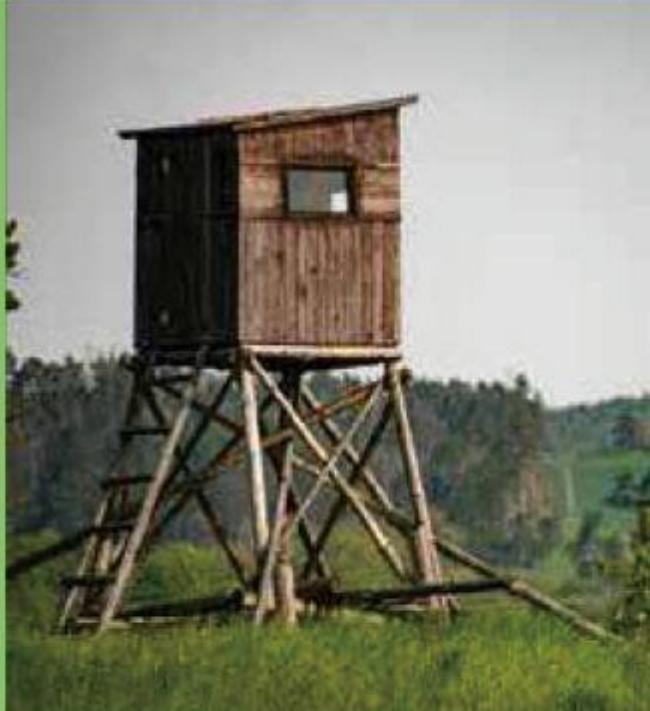
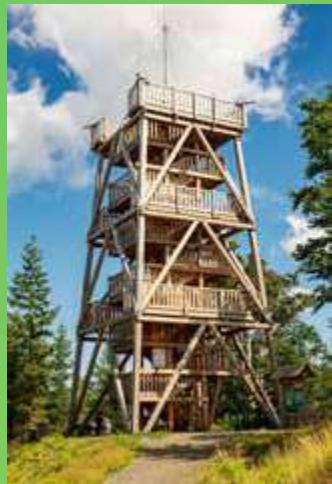
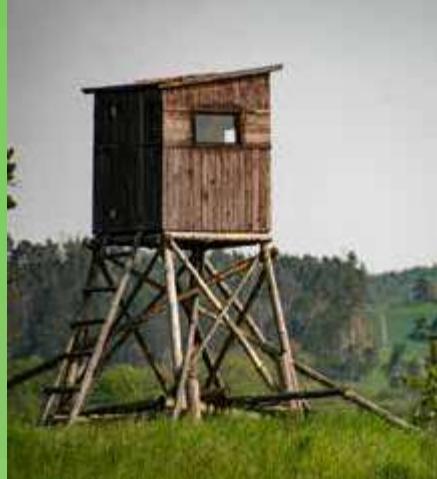
狩猎和观察设施包括狩猎掩体和投食台,这些设施用于监测和调节野生动物的数量。它们有助于维持生态系统的平衡,并在艰难时期为野生动物提供食物。
保护性围栏可以保护幼苗免受野生动物的损害,确保成功的造林。通常使用木材或铁丝网等材料来建造这些围栏。
蓄水池、池塘和湿地有助于保护森林免受火灾的侵害,改善水分平衡,并支持生物多样性。
教育步道和信息板通过向公众介绍森林和林业知识,促进环境教育。
休息区,如长椅和凉亭,允许森林游客休息并增强他对自然的体验。
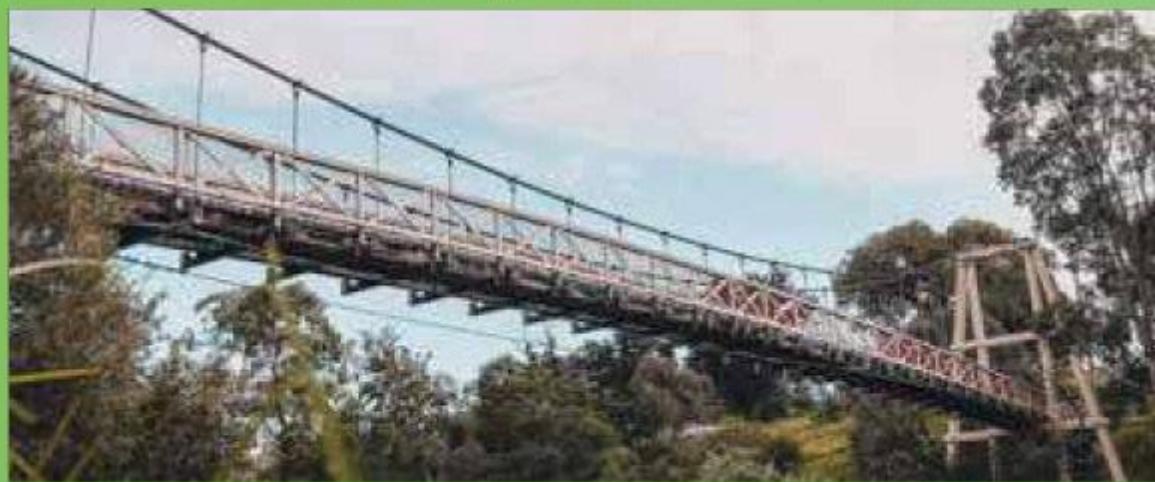
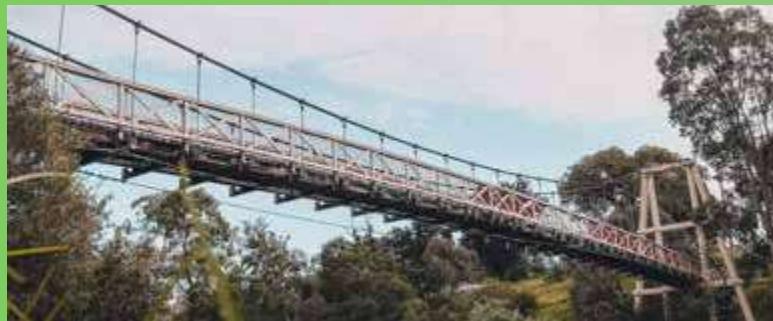
桥梁和木板路允许人们安全地穿越溪流、湿地和敏感区域,防止土壤侵蚀和栖息地干扰,同时提高工人和游客的可达性。

收割行动
水利

每位玩家在游戏开始时拥有 2 个水利设施指示物。如果他在游戏版图上建造了这些设施之一,他将有机会在游戏结束时获得额外的胜利点。玩家可以在收割机指示物所在区域相邻的任何河流指示物上建造水利设施。
要建造水利设施,玩家需按照以下步骤操作:
-
支付 1 个行动点,并支付 3 个建筑材料或 3 个临时工人,具体取决于玩家版图上的指示。
-
移除河流指示物,并用选定的水利设施指示物替换它。保留河流指示物,以便在游戏结束时获得胜利点(见第20页)。

水利设施会改变收割机在游戏版图上的移动方式。水库与桥梁:所有玩家现在都可以通过这个指示物过河,而无需支付1元钱币的费用。

河湾: 由于该地区的土壤因保留的水分而更加肥沃, 所有玩家每次经过一个河湾时都会获得 1 个树苗指示物——但每次移动行动只能获得一次。然而, 经过河湾仍然需要支付 1 元钱币。
水利设施轨道
玩家版图的右侧追踪玩家的河流指示物得分乘数。在游戏

开始时,玩家将一个方块放在 1x 的区域上。在游戏过程中,玩家可以通过完成以下任意一项来增加这个乘数:
- 填满他的林业表格的第二行。
·填满他的造林表格的第二行。
- 购买他存储的第五个区域。
· 在森林或锯木厂区域建造他的第五座建筑。
水和森林野火
气候变化带来了更烘干和更温暖的条件,这对传统上水资源丰富的地区,如阿尔卑斯山周边地区,也是一个问题。研究表明,针叶树比阔叶树更能抵御干旱和高温。像山毛榉和橡树这样的树木更能承受气候变化。
干旱和高温增加了森林火灾的风险,这种火灾在欧洲将变得更加频繁。护林员已经在实施预防措施,如改变树种组成、培育林分和确保消防人员的可达性。这些措施的一个重要部分是建造水体,如湿地和池塘。这些结构在景观中保留水分,缓解干旱的影响,并有助于维持生态系统的稳定性。它们还在火灾期间作为水源,增加了及时危机管理的可能性。

粉红色玩家想要在两个相邻的河流指示物之一建造一个带桥梁的水库。他选择了带有绿色房子符号的河流指示物。
首先,他支付 1 个行动点和 3 个建筑材料,正如他玩家版图上的桥梁指示物下方所指示的那样。
接下来,他用他的带桥梁的水库指示物替换河流指示物(确保保留河流指示物,以便稍后获得胜利点)。

现在可以通过这条河而无需支付费用了!由于获得了那个河流指示物上的绿色房子符号,粉红色玩家也可能在其已完成的合同卡上获得一些额外的分数。

锯木厂经理行动
锯木厂经理在锯木厂区域内移动,该区域包含三个综合体,用于处理收割的木材、提供资源,并帮助玩家获取新的合同卡。
玩家的锯木厂经理指示物在他执行个别行动的区域之间移动。锯木厂经理不会进入建筑物本身,而是始终停留在锯木厂区域的总部板块上。
移动

玩家可以支付 1 个行动点,将他的锯木厂经理指示物移动到不同的总部(HQ)板块上。在游戏中,根据玩家的数量,有三组总部板块。每个总部板块进入时提供不同的奖励。
每次锯木厂经理移动到一个总部板块上时,玩家可以获得一个奖励。总部板块的可能奖励取决于已经在这个板块上的锯木厂经理指示物的数量。
在两人玩的林业游戏中,每个总部板块有一个可用的奖励。在三或四个玩家的游戏中,总部板块有两个可用的奖励。

玩家移动后的奖励取决于移动后总部板块上的锯木厂经理指示物的数量。他获得该总部板块上指示物总数对应的奖励。如果移动后总部板块上的锯木厂经理指示物比奖励多,那么不会获得奖励。
如果玩家移动到一个没有锯木厂经理的总部板块,他可以选择第二个奖励而不是第一个,如果他愿意的话。
木材加工和使用
现代技术使得木材的加工既高效又可持续。从欧洲森林中采伐的木材在欧洲直接加工是很重要的。如果木材在采伐的国家或地区进行加工和使用,那就更好了。这增加了木材的价值,而不是仅仅将其作为一种原材料出口到国外。
木材被广泛用于各种产品,从乐器和家具到地板、纸张、包装和装饰品。由于其抗菌特性,木材也适用于厨房设备。木材器具可以杀死细菌,而塑料在清洗后仍然会受到污染。
木材的使用创新还包括现代产品,如木质眼镜框、手表、领带夹和手机壳。如今,木材还被用于建筑、航空和汽车行业,用于建造轻巧且耐用的结构。木材的使用几乎没有什么限制,从通过热处理或化学过程改变木材的结构,到将其转化为纤维素和木质素以供进一步化学加工。木材作为一种建筑材料具有优势,有助于建筑行业的脱碳。
注意:在《林业》游戏中,玩家被激励分配工作并使用所有可用的锯木厂建筑。他会在总部板块上获得相应的奖励。相反,如果所有锯木厂经理都在一个总部板块上,他将不会获得任何额外的奖励。
合同卡包含了目前用木材制成的各种产品。

粉红色玩家支付 1 个行动点来移动他的锯木厂经理指示物。他可以将其从刨削(粉红色)锯木厂区域移动到酸洗(蓝色)或烘干(黄色)锯木厂区域的总部板块上。

移动到烘干锯木厂区域后,玩家评估总部板块的奖励。不幸的是,蓝色玩家的指示物已经在那儿了!粉红色玩家只获得一元钱币。


锯木厂经理行动
锯木厂行动
在每个锯木厂区域,有三个锯木厂建筑。每个锯木厂建筑板块都有其自身的功能,玩家可以支付1个行动点来使用。玩家的锯木厂经理指示物始终站在三个总部(HQ)板块之一上。如果一个玩家想在同一个锯木厂区域使用多个建筑,他不需要移动他的锯木厂经理指示物。只要玩家有足够的行动点,他可以在每个回合使用多个建筑(或者一个建筑多次)。
一些奖励允许玩家在任何区域使用一个锯木厂建筑。他的经理指示物不需要在那个区域的总部板块上。
在每个锯木厂区域,有三种建筑类型:
- 木材调整:玩家将指示的木材调整指示物放在一个存储区域的木材指示物下方。注意:每个木材指示物下方最多有 2 个调整指示物。

·资源:玩家获得1元钱币和1个树苗、1个建筑材料或1个临时工人,具体取决于板块上的指示。
- 合同:玩家获得一张新的合同卡或任务卡,或者可以按照板块上的指示用木材指示物换取硬币。
粉红色玩家支付 3 个行动点使用锯木厂建筑。他执行以下三个行动,每个行动支付 1 个行动点:
1. 首先,他使用中间的建筑来获得 1 元钱币和 1 个树苗,并将它们放在他的玩家版图上。
2. 接下来,他从左边的建筑中拿取一张合同卡。他立即从牌组中用一张新的合同卡补充这张卡。
3. 最后,他从同一个建筑中拿取一张任务卡(从牌组或展示区中任选)。
所有九个锯木厂建筑板块的详细说明可以在下面找到。在森林生态学家的巢穴树板的背面也有所有建筑的列表。

·要么抽取一张合同卡,要么抽取一张任务卡(展示区的一张或从牌组顶部随机抽取一张)。

获得 1 元钱币和 1 个树苗指示物。将它们放在玩家版图上的供应区。

获得 1 个刨削(粉红色)木材调整指示物,并将其添加到一个存储区域中的木材上。

要么抽取一张合同卡,要么用你存储中的1个木材指示物交换另一种类型的木材指示物(丢弃原始木材上的任何调整指示物),并获得1元钱币。

获得 1 元钱币和 1 个建筑材料指示物。将它们放在玩家版图上的供应区。

获得 1 个烘干(黄色)木材调整指示物,并将其添加到一个存储区域中的木材上。

要么抽取一张合同卡,要么支付4元钱币来获得任意类型的1个木材指示物。

获得1元钱币和1个临时工人指示物。将它们放在玩家版图上的供应区。

获得 1 个酸洗(蓝色)木材调整指示物,并将其添加到一个存储区域中的木材上。
锯木厂经理行动
锯木厂升级

玩家可以使用他的建筑指示物来升级与他的锯木厂经理指示物在同一区域的锯木厂建筑指示物。升级后的指示物提供更强的效果,任何玩家都可以使用。在升级锯木厂建筑后,玩家也会立即激活其增强功能。
要升级锯木厂建筑指示物,玩家需按照以下步骤操作:
-
支付 1 个行动点和指示物左下角所指示的升级费用。
-
将建筑指示物翻转至升级面,并将玩家版图最左侧区域的建筑指示物放置在其左下角。如果这是第五个指示物,请记得推进水利设施轨道!
-
立即使用升级后的锯木厂建筑。
在 3 人或 4 人的游戏中,每当对手使用升级后的锯木厂建筑时,玩家将从公共供应中获得 1 元钱币。

这也适用于对手通过此图标的行动触发建筑的情况。
在 2 人游戏中,无论哪位玩家使用升级后的锯木厂建筑,玩家都将从公共供应中获得 1 元钱币。
所有九种升级后的锯木厂建筑指示物的详细说明可以在下面找到。

粉红色玩家想要升级那个提供树苗指示物的锯木厂建筑。
-
他支付 1 个行动点、1 个临时工人和 3 元钱币,正如指示物左下角所指示的那样。
-
然后,他将指示物翻转到另一面,放置他的建筑指示物,并立即激活升级后的建筑。
-
玩家从升级后的建筑中获得 2 个树苗指示物。


二选一:抽取一张合同卡并获得1元钱币;抽取一张任务卡(可以选择翻开的卡或者从牌堆顶部随机抽取一张)并获得1元钱币

获得 2 个树苗指示物,将它们放置在玩家版图的供应区。

从以下选项中以任意组合获得两个:1个刨削(粉色)木材调整指示物;1颗星

抽取一张合同卡并获得 1 元钱币,或者用你存储中的 1 个木材指示物换取另一种类型的木材指示物(丢弃原始木材上的任何调整指示物)并获得 2 元钱币。

获得 2 个建筑材料指示物,将它们放置在玩家版图的供应区。

从以下选项中以任意组合获得两个:1个烘干(黄色)木材调整指示物;1颗星。

抽取一张合同卡并获得 1 元钱币,或者支付 3 元钱币以获得 1 个任意类型的木材指示物。

获得 2 个临时工人指示物,将它们放置在玩家版图的供应区。

从以下选项中以任意组合获得两个:1个酸洗(蓝色)木材调整指示物;1颗星。
锯木厂经理行动
履行合同

林业管理的重要组成部分是履行合同。游戏开始时,每位玩家都拥有一个初始合同。在游戏过程中,玩家可以获取更多的合同,并尽可能多地履行它们。每个合同都需要一定数量的木材,并且需要进行特定的调整才能完成。

从锯木厂建筑指示物中可以获得三种不同的木材调整指示物。每种调整都在不同的锯木厂区域进行。
要获得这些调整指示物,玩家必须首先在他的存储中有木材指示物,以便将调整应用于木材指示物。调整指示物不能提前获得。一旦木材指示物有了调整指示物,该调整指示物就不能被替换或移除。
游戏中的合同卡分为简单合同和双合同。如果玩家在其存储中有所需的木材指示物(如果有指定的调整)以及相应的调整指示物,他就可以履行合同卡。

玩家必须完全满足简单合同的要求。当合同被履行时,玩家将获得卡牌右侧所示的所有奖励。

双合同可以部分履行或完全履行。上半部分必须始终履行,但玩家不需要履行下半部分。如果玩家只履行上半部分,他将获得卡牌右上角对应的奖励。如果玩家也履行了下半部分,他还将获得卡牌右下角的奖励。玩家不能只履行双合同的下半部分。
履行合同的步骤
-
支付 1 个行动点。
-
将合同所需的木材指示物和调整指示物归还到公共供应中。
-
获得合同卡牌右侧所示的奖励。
-
将履行的合同卡牌放置在玩家版图的左侧下方,保持卡牌左上角的类别符号可见。

一些合同,包括初始合同,属于两个类别。

为了履行一份合同,玩家需要在其玩家版图的存储区拥有所有所需的木材,包括调整指示物。

粉红色玩家准备履行一张双合同卡。首先,他支付1个行动点。接着,他将1个带有烘干(黄色)和刨削(粉色)调整的云杉(红色)木材指示物,以及1个带有酸洗(蓝色)调整的橡木(粉色)木材指示物归还到公共供应中。
由于玩家履行了这张双合同的上下两部分,他获得了合同卡的上半部分和下半部分的奖励。总计,他获得了10个胜利点数、2元钱币、4颗星,并且还可以从游戏版图的任何地方抽取一张新的合同卡。对于1个行动点来说,这相当不错!

最后,玩家将这张卡牌滑到他其他的合同卡牌下面,放置在玩家版图的左侧。他保持类别符号可见,以便能够策略性地规划如何在游戏结束时获得额外的胜利点数。

建筑


家具
创新
配件
每张合同卡都属于四个木材产品类别中的一个或两个,这些类别由卡牌左上角的符号表示。如果玩家拥有与符号匹配的合同卡、任务卡和河流指示物,他可以在游戏结束时获得额外的胜利点数(详见第20页)。

如果合同卡上有两个符号,玩家必须在游戏结束时选择该卡属于哪个类别。在所有计分目的中,该卡都属于所选类别,包括水利设施指示物和任务卡。
自由行动
在他的回合中,玩家可以执行四种不同的自由行动:
-
任意次数:支付 1 元钱币来刷新你锯木厂经理所在区域的合同卡。将当前的一对合同卡放在合同卡牌组的底部。然后抽取两张新的,并将它们放在空闲的插槽上。
-
每回合一次:评估一张任务卡的即时效果,并将其放回任务牌组的底部。
-
每回合最多两次:支付 4 元钱币购买 1 个行动点。将你的行动点指示物在行动轨道上向上移动 1 格。
-
每回合最多三次:建造存储区的一个新部分。支付玩家版图上最左侧锁定存储区域所指示的硬币数量。然后,获得存储扩展指示物上的奖励。将该指示物放回盒子。
一个大型存储允许玩家在他的玩家版图上一次性拥有更多的木材。存储区域必须按从左到右的顺序解锁。它们提供以下奖励:
-
获得 1 个建筑材料、临时工人或树苗指示物,由玩家选择。
-
获得任意类型的 1 个木材指示物或从供应中获得任意林业工人指示物。
-
将他的水利设施轨道向前推进 1 格。

自由行动的列表,包括它们可以使用的频率,可以在参考资料瓦片的背面找到。

解锁一个存储区域需要支付硬币,但它为收获的木材提供了新的区域。玩家还将获得瓦片上指示的奖励。
任务卡牌
玩家可以通过各种行动或奖励获得任务卡。与其他大多数林业元素不同,玩家的任务卡对其他玩家是隐藏的。
每张任务卡分为上下两部分:
上半部分:每回合一次,玩家可以将任务卡作为自由行动丢弃以评估任务卡的效果。之后,将卡牌放回任务牌组的底部。
下半部分:游戏结束时,如果玩家满足卡牌下半部分所示的要求,玩家将获得任务卡的胜利点数。
每位玩家可以拥有无限数量的任务卡。然而,玩家每回合只能使用一张卡的即时效果一次。
游戏结束时,如果玩家满足以下条件之一,玩家将获得任务卡的胜利点数:他履行的合同卡的木材产品类别、他造林表特定列中的指示物、他获得的林业工人指示物、他升级的锯木厂建筑、他建造的森林建筑,或者他获得的河流指示物(见第22页)。
游戏结束时,玩家将根据他的任务卡获得积分(见第20页)。

如果玩家保留这张任务卡直到游戏结束,并且履行了一张配件合同卡,他就可以完成这张任务卡。或者,玩家可以在他的回合中丢弃它并使用即时效果。这张任务卡允许他将存储中的1个木材指示物交换成任意类型的1个木材指示物。

如果玩家还将这张任务卡保留到游戏结束,他将需要第二个完成的配件合同来为两张任务卡都获得胜利点数。或者,玩家可以在他的回合中丢弃它来获得任意类型的1个木材调整指示物。
游戏结束和计分
当起始玩家翻开最后一张游戏回合指示物时,每位玩家都将进行最后一次行动。当最后一名玩家用完他所有的行动点时,游戏结束!
按照参考资料瓦片背面的计分清单,根据以下每个类别的得分,沿着计分轨道移动计分指示物:

-
建筑物:每位玩家获得其建筑轨道最右侧未被覆盖的区域下方所指示的胜利点数。仅计算最高数字,而不是每个使用的建筑指示物。
-
水利设施:首先,每位玩家在其水利设施轨道上确定他的倍数。接下来,将与玩家的河流指示物相匹配的合同卡、建筑物、林业工人或树苗指示物的数量相加。最后,将匹配符号的数量乘以水利设施轨道的倍数,以计算总共获得的胜利点数。
-
任务卡:每位玩家尝试将其剩余的任务卡与所描绘的要求相匹配。玩家根据参考资料瓦片背面的第三行,为每张完成的任务卡获得胜利点数。
-
林业表: 拥有最多林业工人指示物的玩家获得 10 分, 第二名获得 6 分, 第三名获得 2 分。如果出现平局, 将平局名次的分数相加, 然后将总数平均分配给平局的玩家 (向下取整)。
-
未使用的资源:所有玩家将他剩余的建筑材料指示物、树苗指示物、临时工人指示物、硬币和未完成的任务卡加起来。玩家每拥有一组完整的三种资源,获得 1 个胜利点数。
-
木材指示物:所有玩家每在他的存储中有一个木材指示物,获得 1 个胜利点数。
拥有最高胜利点数的玩家赢得游戏。
如果出现平局,以下标准将决定胜者:
- 种植的树苗数量
· 履行的合同数量
· 完成的任务卡数量

如果你的得分超过 50 分,将你的计分指示物翻转到另一面,显示 50+ 的值,并继续在游戏版图上移动它。

-
粉红色玩家建造了五座建筑。他获得7个胜利点数。对于第五座建筑,他推进了水利设施轨道,这将在下一类别中为他赢得分数。
-
玩家建造了两座水利设施,并且在他的水利设施轨道上有一个 4x 的倍数。他推进了轨道三次:一次是完成了存储区,一次是第五座建筑,一次是完成了林业表的第二行。
他的上部河流指示物带有家具符号。玩家履行了1张家具合同卡,并选择了另外两张属于家具类别。他获得 $(4\times3)=12$ 个胜利点数。他的下部河流指示物带有锯木厂符号。玩家使用了两个建筑指示物来升级锯木厂建筑指示物。他获得 $(4\times2)=8$ 个胜利点数。
- 游戏结束时,玩家有 7 张未使用任务卡。他匹配了 5 张带有家具符号的任务卡、一个疏伐林业工人指示物、一个升级的浅绿色锯木厂、河流指示物,以及他造林表深绿色列中的两个树苗。
不幸的是,他没有完成最后两张任务卡。根据参考资料瓦片,他为完成的任务卡获得11个胜利点数。
-
玩家获得了 8 个林业工人指示物(七个在林业工人表中,第八个在造林表下方)。他拥有第二高的数量,获得 6 个胜利点数。
-
粉红色玩家的未使用资源是 1 个临时工人指示物、7 元钱币和 2 张未完成的任务卡。他有 10 个未使用的资源,因此他获得 $(10 \div 3) = 3$ 个胜利点数。
-
玩家的存储中还有 1 个木材指示物,因此他获得 1 个胜利点数。
与游戏中获得的 45 个胜利点数一起,他现在总共有 93 个胜利点数。

河流指示物
每个河流指示物的符号表示一个目标,玩家在游戏结束时因达成这些目标而获得额外的胜利点数。

完成的配件合同卡

完成的家具合同卡在林业表上有 2 个林业工人指示物(任意类型)

完成的创新合同卡

升级的锯木厂建筑指示物在造林表上有2个树苗指示物


完成的家具合同卡

建造的森林建筑
空地指示物
每个空地指示物的符号表示在那里建造森林建筑的玩家所获得的奖励。

获得4钱币

获得3胜利点数


获得任意类型的2资源
获得3星星


获得任意类型的1个木材调整指示物和1元钱币。
获得一张任务卡和1钱币

立即在任意锯木厂区域使用一个建筑并获得1元钱币。
获得任意可用的合同卡并获得1元钱币。

可选:支付 2 元钱币并获得任意类型的 1 个木材指示物。
游戏轮次指示物
在开始他的回合之前,每轮起始玩家翻开并评估一个新的游戏回合指示物。所有玩家同时获得所指示的奖励。

获得1建筑材料指示物
获得1临时工人指示物


获得1播种指示物如果可能的话,翻开一张白桦收获指示物并获得1元钱币。
如果可能的话,翻开一张松树收获指示物并获得1元钱币。

如果可能的话,翻开一张橡树收获指示物并获得1元钱币。

从牌库随机抓取一张任务卡。

如果可能的话,翻开一张山毛榉收获指示物并获得1元钱币。

如果可能的话,翻开一张云杉收获指示物并获得1元钱币。

获得2元钱币
绿色的游戏回合指示物要求第一个玩家从彩色面翻转一张收获指示物到暗色面。游戏回合指示物总是指示必须翻转的树种。翻转的收获指示物按以下顺序选择:

任务卡列表
顶部:自由行动
任务卡的顶部描述了它如何在玩家的回合中作为自由行动使用。

支付3元钱币并从供应中获得任意类型的1个林业工人指示物。

支付 2 元钱币并将收割机指示物移动到任意未被占据的区域。

获得任意类型的1个木材调整指示物。

支付3元钱币并获得任意类型的1个木材指示物。

支付2元钱币并立即在任意锯木厂区域使用一个建筑。


获得指定资源指示物

获得 2 星星

获得3元钱币

抓取一张可用合同卡


底部:任务

任务卡的底部描述了该卡在游戏结束时为获得胜利点数必须匹配的目标。


完成的合同卡带有匹配的木材产品符号。


在造林表的指定列中有两个树苗指示物。无法两次完成相同的区域条件。


匹配类型的林业工人指示物。


在指定锯木厂区域的升级锯木厂建筑指示物。


在指定收获指示物旁边的建造的森林建筑。



河流指示物
总部板块指示物


这些总部指示物的第一个奖励允许你 1 元钱币购买一个木材调整指示物、任务卡或任何资源。


Rulebook_Forestry_ENG_V22 smallest_compressed.md
Forestry
RULEBOOK
GAME THEME
The main contributor to global warming is the greenhouse gas CO, (carbon dioxide). Humanity has not yet found a more effective method for capturing it from the atmosphere than plants. Through photosynthesis, they convert it into carbohydrates, which are the building blocks of a tree's wood. Trees grow and form wood as a result. Wood is a very durable renewable material. If well cared for, it can last for centuries. This is evident in medieval castles, palaces, and townhouses, where wooden structures have survived to this day.
Wood is such a natural part of our lives that we often don't even notice it. Everyday items, furniture, and even entire buildings are made from wood. We can also make glass, clothing, and tall skyscrapers from it. When we were creating this game for you, we sat on wooden chairs and played at a wooden table. In fact, this entire game is made from wood! Each piece of wood has grown somewhere. It literally came into being thanks to the Sun, transforming CO, and water into carbohydrates while releasing oxygen.
And that is what the game Forestry is about. It's about trees and wood. In this game, 1 to 4 players try to fulfill orders for wooden products while maintaining the ecological balance of the forest to serve all its inhabitants and people in future generations.
The rules of the game Forestry are enriched with texts from experts at the Faculty of Forestry and Wood Sciences of the Czech University of Life Sciences in Prague. Green-colored sidebars contain interesting information about modern forestry. If you want to delve deeper into the topic of the game, read them and learn something extra alongside the game's rules!

FORESTS OF THE FUTURE
This game takes you into European forests and brings you closer to the world of forestry. Forests face the challenges of climate change, such as drought and bark beetle calamities, which especially threaten monoculture stands. Therefore, the future belongs to mixed age-diverse and species-diverse forests. Such forests are better able to withstand changes and maintain ecological stability as well as wood production. Each forester tailors their care to the local environment to ensure that forests will fulfill their role for nature and society.
WOOD AS A MATERIAL
Wood is a unique ecological resource with a low carbon footprint that replaces non-renewable materials and absorbs greenhouse gases as it grows. Local processing of wood and harvesting European species instead of importing wood reduces environmental impact. Logging exotic wood often destroys rainforests and increases emissions. Wood is recyclable, naturally decomposes, and can also be used as a source of energy. It has a positive impact on health, mood, and the environment we live in. As a natural, durable, and sustainable material, wood plays a significant role in both the present and the future.


8 river tokens
COMPONENTS

4 player boards
1 game board

40 wood tokens

40 contract cards

(5×8 pieces: pine, birch, spruce, oak, beech)

4 starting contract cards

9 clearing tokens


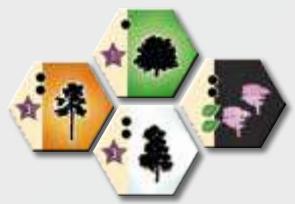
15 harvest tokens
10 game round tokens

30 wood adjustment tokens (3×10 pieces: pickling, drying, and planing)

2 reference tiles

4 technology tiles
1 first player token


45 forester tokens (3×15 pieces: paint protection, support of den trees, and thinning)
49 task cards


8 water structure tokens
(4× meander, 4× reservoir with bridge)
9 HQ tiles (3×3 tiles for 2/3/4 players)

15 spawn cards


9 sawmill building tiles
75 resource tokens
(20× temp worker, 35× seedling, and 20× construction material)

63 coin tokens
(36×1, 19×2, 8×5)


manager token

9 cubes

1 action token

1 star token

6 building tokens


1 scoring token
1 harvester token

3 storage extension tiles
Components

1 den tree board

15 life tokens

15 data tokens


5 reward tokens
Components
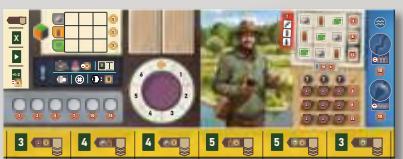
1 forester board
14 forester tiles


18 forester cards

3 advanced forester cards
GAME SETUP
-
Place the game board in the middle of the table.
-
Shuffle the contract cards deck and place two cards face-up in each of the three areas (orange, dark green and light green). Then place the deck face-down next to the game board.
-
Shuffle the spawn cards deck and place it face-down next to the game board. Place the forester tokens next to it.
-
Shuffle the task cards deck and place it face-down next to the game board. Reveal one card and place it next to the deck.
-
Place the sawmill building tiles on the exactly matching spots in orange, light green, or dark green area of the game board.
In a 3-player game, flip the spawn cards until you reveal one numbered from 1-9. Flip over the sawmill building tile with that number, so that the upgraded side is face-up. Place a building token from the unused set of player components on the upgrade icon.
In a 2-player game, follow the same procedure with two sawmill building tiles.
-
Place the appropriate wood adjustment tokens next to the three sawmill buildings with the matching wood adjustment symbol.
-
Depending on the number of players, choose the corresponding set of three HQ tiles with any side facing up and place them randomly on the designated spaces on the game board.
-
Place 15 harvest tokens on the game board to match the preprinted spaces on the game board.
-
Flip the top three cards of the spawn cards deck. Then, flip face-down the harvest tokens on the game board which match the numbers on those cards.
-
Randomly place the 9 clearing tokens face-up on the numbered spaces connecting the hexagonal fields.
In a 3-player game, flip the spawn cards until you reveal one numbered from 1–9. Remove that number's clearing token, and place a building token from the unused set of player components.
In a 2-player game, follow this procedure with two clearing tokens.
- Randomly place the river tokens face-up on the river spaces between the hexagonal fields.
In a 3-player game, flip the spawn cards until you reveal one numbered from 1–8. Place a meander token from the unused set of player components on that space instead.
In a 2-player game, follow the same procedure with two river tokens. Instead of a second meander token, place a bridge token from the unused player components.
- Create a stack of 10 game round tokens in random order facedown and place it on the round slot with a green start icon.
When playing the advanced game (see page 23), use only 9 game round tokens.
-
Create a general supply of coins, construction materials, temp workers, seedlings and the five types of wood tokens.
-
Shuffle the spawn cards deck. Flip the top three cards of the spawn card deck and place one of each type of forester token on the space with the corresponding number.
Note: If the spawn cards run out during setup (or during the game), shuffle all the spawn cards and create a new deck.

PLAYER SETUP
-
Each player takes a player board and all components of one color. Use the player board side marked .
-
Put the action token on the space with the number 3 on the action track.
-
Place six building tokens on the designated spaces in the bottomleft of your player board.
-
Place one cube of your color on the following spaces. 4a: the development track 4b: the space with resources as reward on the reward track 4c: the bottom space of the water structure track
-
Place the remaining 6 cubes next to your player board.
-
Place a technology tile on the designated space on your player board. You may choose or select randomly whether to play with the tile's A or B side, but all players must play with the same side. Note: Skip this step if you are playing a tutorial game (page 23).
-
Place your storage extension tiles on your player board in the order of I, II, II on the last three spaces of storage to the right.
-
Place your star token on space 2 of the reward track.
-
Place two water structure tokens on the player board. Put the meander token on the top space and the reservoir with a bridge token on the bottom space.
-
Place the reference tile next to the player board.
Note: There are two reference tiles in the game — share them with the other players during the game.
-
Place the scoring token on the space with a score value of 0 on the edge of the game board.
-
Take a random starting contract card and place it to the right of the player board.
-
Place your sawmill manager token on one of the three HQ tiles which matches the color of your starting contract.
-
Place a wood token indicated indicated by your starting contract card on one of your free storage spaces.
-
The player who most recently touched a tree goes first and puts the first player token on their player board. Play proceeds clockwise.
-
Each player takes one seedling from the general supply. The number of coins depends on player order. The first player takes 3 coins, the second and third players take 4 coins, and the fourth player takes 5 coins.
-
The first player reveals the top game round token from the stack and then applies the effect. All players receive the token's bonus. Flip a game round token only on the first player's turn.
-
Starting with the last player and moving counter-clockwise, each player places their harvester token on a hexagonal field of their choice. Only one harvester can occupy a field or double field at a time.
GAMEPLAY
Forestry is played over 10 rounds (9 for the advanced game). At the beginning of each round, the top game round token is revealed, and the players evaluate its effect. Depending on the symbol, all of the players may receive a small bonus, or there may be a little change in the forest. See the list of game round tokens on page 21.
Each player starts the game with 3 action points, which are tracked on the left side of the player board.

On their turn, a player spends action points to perform an action. When performing an action, they move the action token the number of spaces down the action track required by the action. Players may perform actions with their harvester or manager in any sequence, so long as they have enough action points.
During a player's turn, it is possible to purchase up to 2 bonus action points. Each bonus action point costs 4 coins (as indicated in the top section of the action track).
Throughout the game, it is possible to increase the number of action points available by using the development track.
After a player spends all of their action points—including bonus action points—their turn ends. Play passes clockwise to the next player.
Once all players have taken their turn, the first player reveals the new game round token. This token is always revealed and evaluated before the turn of the first player. The order of players remains the same throughout the game. After the last game round token is revealed, each player takes one final turn before the End of the Game (see page 20).

After performing any action, move the action token down 1 or 2 spaces to see how many action points you have left until the end of your turn.
Tip: Each action's cost is listed on the reference tiles. Keep your tile nearby!

PLAYER BOARD OVERVIEW
Throughout the game, players use their player board to track actions, resources, and other game elements. It is divided into several sections, each having its own purpose.
In the top-left corner is the storage, where players store and process their wood tokens. These wood tokens are used to fulfill the player's contract cards. The storage begins with 2 open spaces, and new spaces can be purchased during the player's turn.
In the middle of the left part can be found the heart of the entire game. The development track determines the number of action points, along with the active technologies highlighted on the technology tile. Nearby is the circular reward track, which players progress throughout the game.
At the bottom is the buildings track, holding the player's building tokens.
The right half of the player board represents forestry activities and forest care. At the top-right is the forestry table, where the player will gradually place forester tokens earned by caring for the forest, providing various bonuses.
Below is the reforestation table, where the player will place seedlings and advance on the reward track as a bonus.
To the right is the water structure track. When built, water structures modify the game board for all players. They also allow the player to score additional points at the end of the game.

GAME BOARD OVERVIEW
The game board is divided into the sawmill area and the forest area.
The sawmill area is located on the outer ring of the game board. It features HQ tiles where each player's sawmill manager token is placed, as well as the sawmill building tiles.
The forest area contains 15 hexagonal spaces (of which 4 are double spaces). Each space's type of tree is pre-printed on the game board. The corresponding harvest token is placed on the board during game setup. The harvester tokens move within the forest area.
Wood is the most important resource in the game. Each type of tree is found on three hexes, but always with a different harvesting difficulty and varying additional rewards.
The map is divided by rivers into three areas (light green, dark green, and orange). Throughout the game, it is beneficial to pay attention to which area players are performing actions in, such as planting trees, constructing buildings, or even gaining points at the end of the game.

TREE SPECIES IN THE GAME
There are approximately 400 tree species of wood plants in European forests. These species include both trees and shrubs. Diversity is important not only for biodiversity, but also for the resilience of forests. In this game, we have selected five different types of wood that are common in European forests and managed by foresters.

Pine
Pine is soft but durable, with a distinct grain and warm color which is particularly valued in rustic furniture and interior elements. Due to its high resin content, pine is suitable for outdoor use, such as for fences and terraces, as it withstands weather conditions.

Birch
Birch is hard and light-colored. It is used to make furniture, flooring, and plywood. Due to its smooth texture and ease to work, birch is also popular among manufacturers of decorative items and small wooden utensils. In the paper industry, birch is used to produce quality white paper.

Spruce
Spruce is light, soft, and easy to work with, which makes it commonly used in construction. For example, it is used in framing, paneling, and roofing batten. Due to its acoustic properties, it is also a sought-after material for making musical instruments, such as violins and guitars. Spruce is also important in the paper industry, where its wood pulp is processed into paper.

Beech
Beech is hard, dense, and has a uniform structure, making it suitable for furniture, flooring, and kitchen utensils. It is favored for its easy workability and light appearance, which makes it ideal for interior elements. Beech is also often used to produce plywood and veneers. Its strength makes beech suitable for tools and sporting equipment, such as handles and sticks.

Oak
Oak is exceptionally hard and resistant to rot, making it an ideal material for furniture, flooring, and barrels for wine or whiskey. Its beautiful grain and long lifespan are valued in carpentry and construction, for example, in bridges and outdoor structures. Oak is also known for its resistance to weather, and is often used for luxury wooden surfaces.
IMPORTANT GAME CONCEPTS
STARS
Players earn stars of various values from different sources throughout the game. When a player earns stars, they move their star token clockwise by the specified number of steps on their player board's reward track.
Once a player completes a cycle (accumulating 7 stars), they move the cube in middle of their track to one of the two visible rewards. They gain that reward immediately after completing their current action. It is not possible to receive the same reward twice in a row, as the reward track's cube must always move in order to get a reward. When earning stars, the player always moves their star token the indicated number of spaces. They don't need to land on (or stop at) the top space. Alternatively, the player may gain 3 victory points instead of moving their reward track's cube.
Rewards:
• Advance on the development track
Draw a task card (revealed one or random from top of the deck), gain any 2 resource tokens, and gain 1 victory point
• Gain 4 coins and apply any wood adjustment to a storage space
DEVELOPMENT TRACK ADVANCMENT

If a player receives an advancement on the development track as a reward, they advance the cube on their track one space to the right. Each time the player advances on their development track, they either acquire a technology upgrade or an increase in the number of action points available during their turn. The acquired action point can be used right away during this turn.

If a player receives a technology upgrade, they take one of their unused cubes and place it on any space on their technology tile. If playing a tutorial game with the player board's pre-printed technology tiles, players receive one of three immediate rewards for each upgrade.
If playing the standard game, the player can choose between permanent upgrades (on the tile's left side) or an immediate reward (on the tile's right side). More details about the technology tiles can be found in the overview on page 23.
RESOURCES
There are three types of resource tokens in the game: construction materials, seedlings, and temp workers. Players use construction materials and temp workers in various combinations to upgrade sawmill building tiles, construct forest buildings and construct water structures. Seedlings are needed after harvesting to renew the forest (reforestation). In addition to these three resources, there are also coins which are used to purchase various upgrades. For example, to extend the player board's storage for the first time, the player must spend 5 coins.
Each resource token can be used as 1 coin, but coins can't replace resource tokens!


Example: The player earned 4 stars. They moved their star token 4 spaces clockwise. Since they completed a cycle, after completing their current action the player may move their cube to one of the two visible rewards.

Players do not gain an additional action point for their first advancement on the development track. Instead, they can activate one upgrade on their technology tile.

Pre-printed technology tile for the tutorial game.

Technology tile for the full game.


Construction material
Seedling

Temp worker

1 coin

Coins
At any time, a player can spend their resources instead of (or in addition to) spending coins. However, resources are scarcer and more valuable than coins!
HARVESTER ACTIONS
MOVEMENT

For one action point, a player can move their harvester token up to 2 spaces. They can pass through spaces occupied by another harvester, but can't end their movement in a shared space.
The harvester must end its movement before performing another action. It is not possible to use one movement action to travel one space, perform an action, then travel to a second space.
• Double spaces on the map are considered as one connected space.
• No more than one harvester may ever occupy a single space.
Each time a player crosses a river, they must pay 1 coin into the common supply.
Note: The harvester token's movement can be improved with the technology tile during a standard or advanced game (see page 23).
FOREST ROADS
Forest roads play an important role in forestry. They allow foresters to perform all activities related to forest care (reforestation, monitoring forest health, logging, transporting timber, managing wildlife, and more).
However, forest roads are not only used for forest management, but also provide access to the forest for emergency services. Obstructing the passage of rescuers or firefighters by a parked car belonging to forest visitors can cause serious complications in saving lives and extinguishing forest fires.
The weight of a freshly cut oak with a volume of 1 cubic meter is approximately 1000 kilograms. The weight of such wood can damage the forest roads designated for transporting timber from the forest. Repairing them is very is costly. Such repairs are only undertaken after all planned logging in the area has been completed. Forest roads are repaired and reinforced by leveling the surface, adding gravel, or clearing debris from drainage ditches and culverts.
HARVESTERS
Gentle technologies are used for logging that minimize damage to the forest and roads. Traditionally, chainsaws are used, but modern harvesters are becoming increasingly common. This machine not only cuts down trees but also removes branches and prepares the wood to the desired dimensions directly in the forest. When used properly, it conserves the forest environment and is safer than a chainsaw.
The use of harvesters increased during the bark beetle calamity, as they were able to harvest significantly more timber in one shift compared to chainsaws. Harvesters are used only after considering the slope of the terrain and the load-bearing capacity of the soil surface.

The pink player spent 1 action point to move their harvester token 2 spaces. They passed through a space with the blue player's harvester token, and crossed a river once. The other harvester token doesn't impede their movement, but they must pay 1 coin to cross the river.


HARVESTER ACTIONS
HARVEST

During the harvest action, the player adds wood tokens to their storage from their harvester token's current space. To use this action, the space's harvest token must have the colorful side face-up.
When harvesting, the player follows these steps:
-
Pay 1 or 2 action points. The amount required is indicated by the dots on the left side of each harvest token.
-
Add the corresponding wood token(s) from the supply to any of the free spaces in the player's storage.
-
If the harvest token has a star symbol, the player moves their star token forward the indicated number of spaces on their reward track.
-
Turn the harvest token over to its dark back side.
Each tree species is represented by three types of harvest token:

Cost: 1 action point Gain: 1 wood token and 1 star

Cost: 2 action points Gain: 1 wood token and 3 stars

Cost: 2 action points Gain: 2 wood tokens
Note: If your wood storage is full, you may discard any wood token you already have to make space for a new one. You may do this even if you gain wood in ways other than harvesting. In all cases, this is an inefficient use.
HARVESTING
Forestry is an important part of a nation's economy, providing employment in rural areas and supporting the woodworking and construction industries. Forests serve the economic interests of their owners. Wood harvesting is a key activity in managed forests.
To obtain quality wood, it is essential to harvest trees at the optimal rotation age. If trees become too old, the quality of the wood declines. This leads to a higher risk of damage from pests and decay. Timber from old trees is usually only used as fuel.
Logging also keeps managed forests healthy, since thinning promotes tree growth, the stability of the forest stand, and increases its resilience to environmental changes. Foresters ensure forests provide quality wood in the long term while also fulfilling other ecological functions, such as soil protection and ensuring biodiversity.
Wood is a renewable material that results from the combination of water, sunlight, CO,, and minerals, making it a natural and sustainable material. Properly managed forests therefore not only provide valuable materials, but also support balance in nature.

The pink player wants to use their harvester token to harvest these pines. First, they pay 2 action points.

Next, they take 1 pine wood token from the general supply, and place it in any empty storage space on their player board.

The pink player also receives 3 stars. They move their star token 3 spaces clockwise around the reward track on their player board.

Finally, the player flips the harvest token over to its dark back side.

HARVESTER ACTIONS
REFORESTATION

The reforestation action allows a player to plant seedlings and restore the forest. The player's harvester token must be on the space being reforested, and the space's harvest token must have the dark side facing up.
When reforesting, the player follows these steps:
-
Pay 1 or 2 action points. This value is indicated by the dots on the left side of each harvest token.
-
If the harvest token has a star symbol, the player moves their star token forward the indicated number of spaces on their reward track.
-
Pay 1 or 2 seedlings. The number required is indicated on the left side of each harvest token. The player then places the spent seedling tokens on their reforestation table. The player moves their star token forward on their reward track the number of space(s) indicated by the spaces covered with their seedlings on the reforestation table.
-
Turn the harvest token over to its colorful side.

Reforestation Table
Seedling tokens are never returned to the general supply. Each time a player reforests, they place their spent seedling tokens in the corresponding forest area's column of their reforestation table. Seedling tokens are always placed from the top space. The player then gains a number of stars indicated by the covered spaces. These stars are in addition to any stars gained from the harvest token.
If a player fills a horizontal row on the reforestation table, they gain the additional reward indicated to the right.
If a player reforests a space, but has already filled that area's column on their reforestation table, the player places their seedling token in the empty section below the table. They immediately gain 2 victory points.
THE FORESTRY CYCLE
The forestry cycle includes restoration, growth, and care for the forest ecosystem. This supports wood production, soil protection, biodiversity, climate regulation, and space for recreational activities. Its key phases are reforestation, protection, and cultivation.
Reforestation is the first step, where new growth is established in the forest through planting or seeding, emphasizing species diversity. Restoration can be natural—using seeds from the parent stand—or artificial if natural regeneration is not possible or only possible in a limited way.
Protection focuses on preventing damage caused by pests, diseases, or climatic influences. Foresters do so with chemical protection, fencing, or monitoring.
Cultivation involves interventions such as pruning and thinning that promote healthy tree growth. This increases their resilience, and ensures quality future wood production. These steps keep the forest healthy, stable, and sustainably managed.
Note: In the game, the forestry cycle is illustrated by flipping harvest tokens. Once you harvest wood on a space, you must reforest it for harvesting to continue. In the real world, there is also an obligation to reforest an area after harvesting, for which foresters have a specific time frame.

The blue player wants to use their harvester token to reforest this space's pines. First, they pay 2 action points.


Reforesting this harvest token requires 1 seedling. The player places it in the light green column of their reforestation table and gains 2 stars.
They also gain 3 stars from the harvest token, passing the reward track's top space! The blue player moves their cube and gains one of the available rewards.

Finally, the player flips the harvest token over to its colorful front side. This forest space is healthy once again!

HARVESTER ACTIONS
TENDING THE FOREST

On the game board there are usually three white forester tokens. These represent actions that need to be performed in the forest for it to thrive. There are three types of forester tokens.
The player's harvester token must be on the space they are tending.
When tending the forest, the player follows these steps:
1. Pay 1 action point.
-
Take the space's forester token and place it on the player's forestry table. The forester token may be placed in the topmost free space of any column. Forester tokens can be placed in any column, but each column can have only one type of token. If they wish, the player may collect the same type of forester token in multiple columns.
-
Gain the reward on the table covered by the forester token.
If the player completed a row on their forestry table, they receive the additional bonus indicated to the right of the table.
When one of the forestry table's columns are completely filled, the player may instead place additional forester tokens of that type in the empty space beneath and immediately gain 2 victory points.

At the beginning of each turn, the player always checks that there are exactly 3 forester tokens on the game board. If any forester tokens are missing, flip the top card of the spawn deck and place the missing type of forester token on the space with the corresponding number.
If that space already has a forester token or is occupied by a player's harvester token, instead place the new token on the next space in ascending order.

The players who gained the most forester tokens will gain additional points at the end of the game.
THE FORESTER
The forester is an expert who must have a thorough knowledge of their forest. Their work is both time-consuming and physically demanding, but the forester sees it as their mission. Thanks to the care of foresters, forests remain significant natural resources and a lasting source of wood.
Today's technologies allow foresters to seek optimal solutions for adapting our forests to climate change. They also use innovative methods to mitigate threats like bark beetles. This enables them to cultivate the forests of the future, where various tree species grow alongside each other. Conserving diverse tree thicknesses and ages helps forests withstand changing natural conditions such as precipitation—from torrential rain to extreme drought—as well as insects, fungi, and other pests.
These forests help, with the assistance of foresters, retain water to the greatest extent possible, ensuring there is enough during extremely dry periods. Healthy forests guarantee that even if a particular tree species struggles due to changing conditions, another species will replace it, and the forest in that area will not disappear. This prevents society from facing a calamity of the extent we are witnessing today.
Forests in this form ensure ecological stability, biodiversity, and the forest's economic and social functions for future generations.


The pink player wants to tend the forest. First, they pay 1 action point. Next, they take the forester token and place it on their forestry table. Since they already have different forester tokens in the middle and right columns, the player must place their new token in the left column.
The player gains 2 stars for placing the forester token on this space. Because they completed this entire row, the player also activates an upgrade on their technology tile!

Thinning

Supporting den trees

Painting to protect seedlings from animals
Tending helps the forest forest thrive. Gaining a token means that a player has performed the action assigned by the forester.

If you want to learn about new technologies used in forestry and what the forests of the future should look like, watch this YouTube documentary!

HARVESTER ACTIONS
FOREST BUILDINGS
Each player's building track contains 6 building tokens which can be used to construct a building on one of the game board's clearing tokens. Each clearing token has a reward that a player will immediately receive if they place a forest building there.
Players may construct buildings on any clearing token adjacent to the space where their harvester stands. Some spaces are adjacent to only one clearing, while others are adjacent to multiple clearings.
Building in the forest area costs 1 construction material and 1 temp worker.
This cost is indicated on the left side of the building track.
To construct a building, the player follows these steps:
-
Pay 1 action point.
-
Pay 1 construction material and 1 temp worker from their supply.
-
Remove the clearing token and replace it with the player's leftmost building token.
-
Gain the clearing token's indicated reward, and return it to the box. Clearings are never replaced.
With each building constructed, the number of points a player can earn at the end of the game increases.
Note: Players also use their building tokens to upgrade the sawmill building tiles. Choose carefully where to build. Once all six tokens are used, the player can't construct more buildings!
BUILDINGS AND STRUCTURES IN THE FOREST
Forest buildings and structures play an important role in both forest management and public recreation. Foresters build them to support economic activities, nature protection, and sustainable use of the forest.
Hunting and observation facilities include hunting blinds and feeding tables, which are used to monitor and regulate game. They help maintain the balance of the ecosystem and provide food for wildlife during difficult periods.
Protective fencing safeguards young saplings from damage by game and ensures successful reforestation. Wooden or wire materials are typically used for this purpose.
Water reservoirs, ponds, and wetlands help protect the forest from fires, improve water balance, and support biodiversity.
Educational trails and informational boards promote environmental education by informing the public about forests and forestry.
Rest areas, such as benches and gazebos, allow forest visitors to rest and enhance their experience of nature.
Bridges and boardwalks allow safe passage across streams, wetlands, and sensitive areas, preventing soil erosion and habitat disturbance while improving accessibility for both workers and visitors.

The pink player wants to construct a forest building. They can choose either of the clearing tokens adjacent to their harvester token's space.
First, the player pays 1 action point, 1 construction material, and 1 temp worker. If they want to gain the optional reward from the clearing token, they must also pay 2 additional coins due to the clearing token's symbols (see page 21).
Next, they remove the clearing token and replace it with their leftmost building token.
Finally, because they paid this clearing token's optional cost, the player gains the clearing token's reward, gaining 1 wood token of their choice.
HARVESTER ACTIONS
WATER STRUCTURES

Each player begins the game with 2 water structure tokens. If they build one of these structures on the game board, they gain the opportunity to score additional victory points at the end of the game. Players may construct water structures on any river token adjacent to their harvester token's space.
To construct a water structure, the player follows these steps:
-
Pay 1 action point and either 3 construction materials or 3 temp workers, as indicated on the player board.
-
Remove the river token and replace it with the selected water structure token. Keep the river token to score victory points at the end of the game (see page 20).
Water structures change how harvesters move on the game board.

Reservoir with Bridge: All players can now cross the river on this token without paying a fee of 1 coin.

Meander: Because the soil in this area is more fertile due to the retained water, all players gain 1 seedling token each time they cross a meander-but only once per each move action. However, crossing a meander still costs 1 coin.
Water Structures Track
The right side of the player board tracks a player's score multiplier for their river tokens. At the beginning of the game, the player places a cube on the 1× space. During play, the player can increase this multiplier by completing any of the following:

• Filling the second row of their forestry table.
• Filling the second row of their reforestation table.
•Purchasing the fifth space in their storage.
•Constructing their fifth building in a forest or sawmill area.
WATER AND FOREST WILDFIRES
Climate change brings drier and warmer conditions, which are a problem even for traditionally water-rich regions, such as areas around the Alps. Research shows that conifers are less resilient to drought and high temperatures than deciduous trees. Trees like beech and oak are better able to withstand climate change.
Drought and high temperatures increase the risk of forest fires, which will become more frequent in Europe. Foresters are already implementing preventive measures such as changing species composition, cultivating stands, and ensuring accessibility for firefighters. An important part of these measures is the construction of water bodies, such as wetlands and ponds. These structures retain water in the landscape, mitigate the effects of drought, and help maintain ecosystem stability. They also serve as water sources during fires, increasing the chances of timely crisis management.

The pink player wants to construct a reservoir with bridge on one of the two adjacent river tokens. They choose the river token with a green house symbol.
First, they pay 1 action point and 3 construction materials, as indicated under the bridge token on their player board.
Next, they exchange the river token with their reservoir with bridge token (making sure to keep the river token so they'll score victory points later).

It is now possible to cross this river without paying a fee! The pink player also might score some additional points on their completed contract cards due to acquiring that river token's green house symbol.

SAWMILL MANAGER ACTIONS
Sawmill managers move around the sawmill area, which contains three complexes that process harvested wood, provide resources, and help players acquire new contract cards.
A player's sawmill manager token moves between areas where they perform individual actions. Sawmill managers do not enter the buildings themselves, but always remain on the HQ tile of a sawmill area.
MOVEMENT

A player can pay 1 action point to move their sawmill manager token to a different HQ tile. There are three sets of HQ tiles in the game, depending on the number of players. Each HQ tile provides different rewards for entering it.
Each time the sawmill manager moves onto a HQ tile, the player may gain a reward. The HQ tiles' possible rewards depend on the number of sawmill manager tokens which are already on the tile.
In a two-player game of Forestry, each HQ tile has one available reward. In games with three or four players, the HQ tiles have two available rewards.

A player's reward for moving depends on the number of sawmill manager tokens on the HQ tile after they move. They gain the reward for the total number of tokens on that HQ tile. If after moving there are more sawmill manager tokens on the HQ tile than rewards, no reward is gained.
If the player moves to a HQ tile with no sawmill manager, they may choose the second reward instead of the first, if they wish.
WOOD PROCESSING AND USE
Modern technologies enable efficient and sustainable processing of timber. It is important that wood harvested from European forests is processed directly in Europe. It is even better if the wood is harvested in the country or region where it is also processed and used. This adds value rather than leaving it as just a raw material exported abroad.
Wood is used in a wide range of products, from musical instruments and furniture to flooring, paper, packaging, and decorations. Due to its antibacterial properties, it is also ideal for kitchen equipment. Wood utensils can destroy bacteria, unlike plastic, which remains contaminated after washing.
Innovations in the use of wood also include modern products like wooden glasses frames, watches, bow ties, and phone cases. Today, wood is also used in construction, aviation, and the automotive industry, where it is applied to build lightweight and durable structures. The possibilities are nearly limitless, from changing the structure of wood through thermal or chemical processes to its conversion into cellulose and lignin for further chemical processing. Wood is advantageous to use as a building material, thus contributing to the decarbonization of the construction industry.
Note: In Forestry, players are incentivized to distribute work and use all available sawmill buildings. They receive rewards for this on the HQ tiles. Conversely, if all sawmill managers are on one HQ tile, they will not receive any additional rewards.

The pink player pays 1 action point to move their sawmill manager token. They can move it from the planing (pink) sawmill area onto the HQ tile in either the pickling (blue) or the drying (yellow) sawmill areas.

After moving to the drying sawmill area, the player evaluates the HQ tile's rewards. Unfortunately, the blue player's token is already there! The pink player only receives one coin.


SAWMILL MANAGER ACTIONS
SAWMILL ACTIONS

In each sawmill area, there are three sawmill buildings. Each sawmill building tile has its own function, which a player can pay 1 action point to use.
A player's sawmill manager token always stands on one of the three HQ tiles. If a player wants to use multiple buildings in the same sawmill area, they do not need to move their sawmill manager token. So long as the player has sufficient action points, they can use multiple buildings (or one building multiple times) each turn.
Some rewards allow the player to use a sawmill building in any area. Their manager token does not need to be on that area's HQ tile.
In each sawmill area, there are three building types:
Wood adjustment: The player places the indicated wood adjustment token beneath the wood token in one storage space. Note: Each wood token has a maximum of 2 adjustment tokens below it.
Resources: The player gains 1 coin and either 1 seedling, 1 construction material, or 1 temp worker, as indicated on the tile.
Contracts: The player gains a new contract card or task card, or may exchange wood tokens for coins as indicated on the tile.
An explanation of all nine sawmill building tiles can be found below.
There is also a list of all buildings on the back side of the forest ecologist's den tree board.

The pink player spends 3 action points using sawmill buildings. They perform these three actions, each for 1 action point:
-
First, they use the middle building to gain 1 coin and 1 seedling and place them on their player board.
-
Next, they take a contract card from the building on the left. They immediately replenish it with a new contract card from the deck.
-
Finally, from the same building, they take one task card (either from the deck or from the display).

Either draw a contract card or a task card (revealed one or random one from the top of the deck).

Gain 1 coin and 1 seedling token. Place them in the supply on the player board.

Gain 1 planing (pink) wood adjustment token, and add it to the wood in one storage space.

Either draw a contract card, or exchange 1 wood token in your storage for another of any type (discard any adjustment tokens on the original wood) and gain 1 coin.

Gain 1 coin and 1 construction material token. Place them in the supply on the player board.

Gain 1 drying (yellow) wood adjustment token, and add it to the wood in one storage space.

Either draw a contract card, or pay 4 coins to gain 1 wood token of any type.

Gain 1 coin and 1 temp worker token. Place them in the supply on the player board.

Gain 1 pickling (blue) wood adjustment token, and add it to the wood in one storage space.
SAWMILL MANAGER ACTIONS
SAWMILL UPGRADE

A player can use their building tokens to upgrade a sawmill building tile in the same area as their sawmill manager token. Upgraded tiles provide stronger effects which any player can use. After upgrading a sawmill building, the player also immediately activates its enhanced function.
To upgrade a sawmill building tile, the player follows these steps:
-
Pay 1 action point and the upgrade cost indicated in the bottom-left corner of the tile.
-
Flip the building tile to upgraded side and place the building token from the leftmost space on the player board in its bottom-left corner. If this was the fifth token, remember to advance the water structure track!
3. Immediately use the upgraded sawmill building.
In a game with 3 or 4 players, the player receives 1 coin from the general supply whenever any of their opponents use the upgraded sawmill building.

This also applies, when an opponent triggers the building through this icon's action.
In a 2-player game, the player receives 1 coin from the general supply whenever either player uses the upgraded sawmill building.
An explanation of all nine upgraded sawmill building tiles can be found below.

The pink player wants to upgrade the sawmill building that provides seedling tokens.
-
They pay 1 action point, 1 temp worker, and 3 coins, as is indicated in the bottom-left of the tile.
-
They then flip the tile to the other side, place their building token, and immediately activate the upgraded building.
-
The player gains 2 seedling tokens from the upgraded building.


Either draw a contract card and gain 1 coin or a task card (revealed one or random one from the top of the deck) and gain 1 coin.

Gain 2 seedling tokens. Place them in the supply on the player board.

Gain two of the following in any combination: 1 planing (pink) wood adjustment token, 1 star.
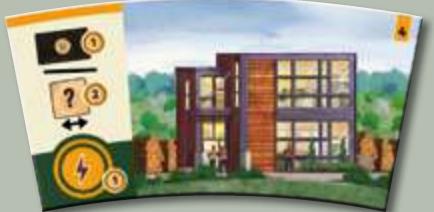
Either draw a contract card and gain 1 coin, or exchange 1 wood token in your storage for another of any type (discard any adjustment tokens on the original wood) and gain 2 coins.

Gain 2 construction material tokens. Place them in the supply on the player board.

Gain two of the following in any combination: 1 drying (yellow) wood adjustment token, 1 star.

Either draw a contract card and gain 1 coin, or pay 3 coins to gain 1 wood token of any type.

Gain 2 temp worker tokens. Place them in the supply on the player board.

Gain two of the following in any combination: 1 pickling (blue) wood adjustment token, 1 star.
SAWMILL MANAGER ACTIONS
CONTRACT FULFILLMENT

An important part of Forestry is fulfilling contracts. Each player starts with one starting contract at the beginning of the game. Throughout the game, players can acquire additional contracts and fulfill as many as they are able. Each contract requires a different amount of wood with specific adjustments to complete.


Pickling
Drying

Planing
Three different wood adjustment tokens are available from the sawmill building tiles. Each adjustment is performed in a different sawmill area.
To gain these tokens, the player must first have a wood token in their storage to which the adjustment will be applied. Adjustment tokens cannot be obtained beforehand. Once a wood token has an adjustment token, that adjustment token can't be replaced or removed.
The game's contract cards are divided into simple and double contracts. A player can fulfill a contract card if they have the required wood tokens with the specified adjustments (if any) in their storage.

A simple contract must be fulfilled completely. When fulfilled, the player gains all rewards indicated on the card's right side.

A double contract can be fulfilled either partially or completely. The upper half must always be fulfilled, but the player is not required to fulfill the lower half. If the player fulfills only the upper half, they receive the corresponding rewards on the card's upper-right side. If they also fulfill the lower half, the player also receives the card's lower-right rewards. Players cannot fulfill only the lower part of a double contract card.
To fulfill a contract, the player follows these steps:
-
Pay 1 action point.
-
Return the contract's wood tokens and adjustment tokens to the general supply.
-
Receive the rewards on the contract card's right side.
-
Place the fulfilled contract card beneath the left side of the player board. Keep the card's upper-left category symbol visible.

Some contracts, including the starting ones, belong to two categories.

To fulfill a contract, the player needs to have all of the required wood, including adjustment tokens, in storage on their player board.

The pink player is prepared to fulfill a double contract card. First, they pay 1 action point. Next, they return 1 spruce (red) wood token with the drying (yellow) and planing (pink) adjustments, and 1 oak (pink) wood token with the pickling (blue) adjustment to the general supply.
Since the player fulfilled both halves of this double contract, they receive the contract card's upper and lower rewards. In total, they gain 10 victory points, 2 coins, 4 stars, and can also draw a new contract card from anywhere on the game board. Not bad for 1 action point!

Finally, the player slides this card beneath their other contract cards to the left of their player board. They keep the category symbol visible so they can strategize how to score bonus victory points at the end of the game.


Buildings

Furniture

Innovations
Accessories
Each contract card belongs to one or two of four categories of wood products indicated by a symbol in the card's upper-left corner. If a player has fullfilled contract cards, task cards, and river tokens with matching symbols, they can gain additional victory points at the end of the game (see page 20).

If there are two symbols, the player must choose to which category the card belongs at the end of the game. The card belongs to one category for all the scoring purposes, including water structure tokens and task cards.
FREE ACTIONS
During their turn, a player can perform four different free actions:
-
Any number of times: Pay 1 coin to refresh the contract cards at the area with your sawmill manager. Put the pair of current contracts on the bottom of the contract card deck. Then draw two new ones and place them on the free slots.
-
Once per turn: Evaluate the immediate effect of a task card and return it to the bottom of the task deck.
-
Up to twice per turn: Purchase 1 action point for 4 coins. Move your action point indicator on the action track up by 1 space.
-
Up to 3 times per turn: Build a new section of the storage. Pay the number of coins indicated on the left-most locked storage space on the player board. Then, gain the reward from the storage extension tile. Return that tile to the box.
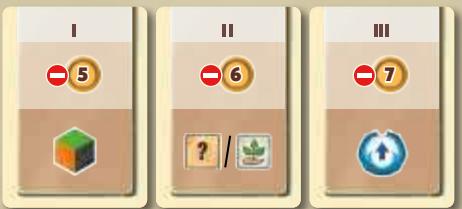
A large storage allows a player to have more wood on their player board at one time. Storage spaces must be unlocked in order from left to right. They provide the following rewards:
-
Gain 1 construction material, temp worker, or seedling token of the player's choice.
-
Gain 1 wood token of any type or any forester token from the supply.
-
Advance their water structure track by 1 space.
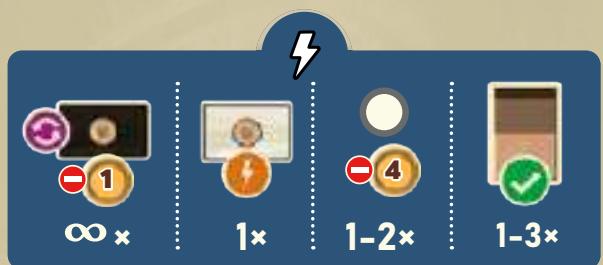
A list of free actions, including how often they can be used, can be found on the back of the reference tile.
Unlocking a storage space costs coins, but offers new space for harvested wood. The player also gains a reward indicated on the tile.
TASK CARDS
A player can gain task cards by various actions or rewards. Unlike most elements in Forestry, a player's task cards are hidden from other players. Each task card is divided into an upper and lower half:
Upper Half: Once per turn, the player can discard the task card as a free action to evaluate the task card's effect. Afterward, return the card to the bottom of the task deck.
Lower Half: At the end of the game, the player gains the task card's victory points if they fulfill the requirement shown in the lower part of the card.
Each player may have an unlimited number of task cards. However, a player can use the immediate effect of a card only once per turn.
At the end of the game, the player gains the task card's victory points if they match one of the following: the wood product category of their fulfilled contract card, tokens in a specific column of their reforestation table, forester tokens they gained, sawmill buildings they upgraded, forest buildings they constructed, or a river token they gained (see page 22).
At the end of the game, player will receive points for their task cards (see page 20).

If a player keeps this task card until the end of the game and has fulfilled an accessories contract card, they can fulfill this task card. Alternatively, the player can discard it during their turn and use the immediate effect. This task card allows them to exchange 1 wood token in their storage for 1 wood token of any type.

If the player also keeps this task card until the end of the game, they will need a second fulfilled accessory contract to gain victory points for both task cards. Alternatively, the player can discard it during their turn to gain 1 wood adjustment token of any type.
END OF THE GAME AND SCORING
When the first player flips over the last game round token, each player takes one final turn. When the last player uses all of their action points, the game is over!
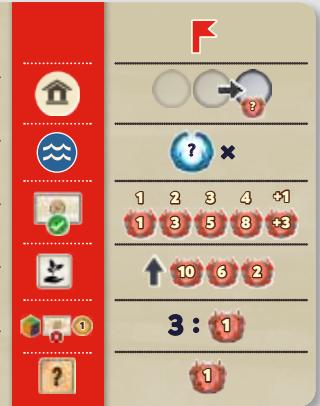
Follow the scoring list on the back of the reference tile, and move the scoring token along the scoring track based on points gained for each of the following categories:
-
Buildings: Each player gains the victory points indicated beneath the right-most uncovered space on their building track. Score only for the highest number—not for each building token used.
-
Water structures: First, each player determines their multiplier on the water structures track.
Next, add up the instances of contract cards, buildings, forester or seedling tokens which match the player's river tokens.
Finally, multiply the number of matching symbols by the water structure track's multiplier to calculate the total victory points gained.
-
Task cards: Each player attempts to match their remaining task cards with the depicted requirement. Players gain victory points for each fulfilled task card, based on the third row of the reference tile's back side.
-
Forestry table: The player with the most forester tokens gains 10 points, the second gains 6 points and the third gains 2 points. In case of a tie, add the points for the tied ranks and divide the total equally among the tied players (rounded down).
-
Unused resources: All players add up their remaining construction material tokens, seedling tokens, temp worker tokens, coins, and unfulfilled task cards. Players gain 1 victory point for each complete triplet of resources.
-
Wood tokens: All players gain 1 victory point for each wood token in their storage.
The player with the highest victory points wins the game. In case of a tie, the following criteria determine the winner:
•Number of planted seedlings
• Number of fulfilled contracts
• Number of fulfilled task cards

If you exceed 50 points, flip your score token to the other side with the value of 50+ and continue moving it around the game board.
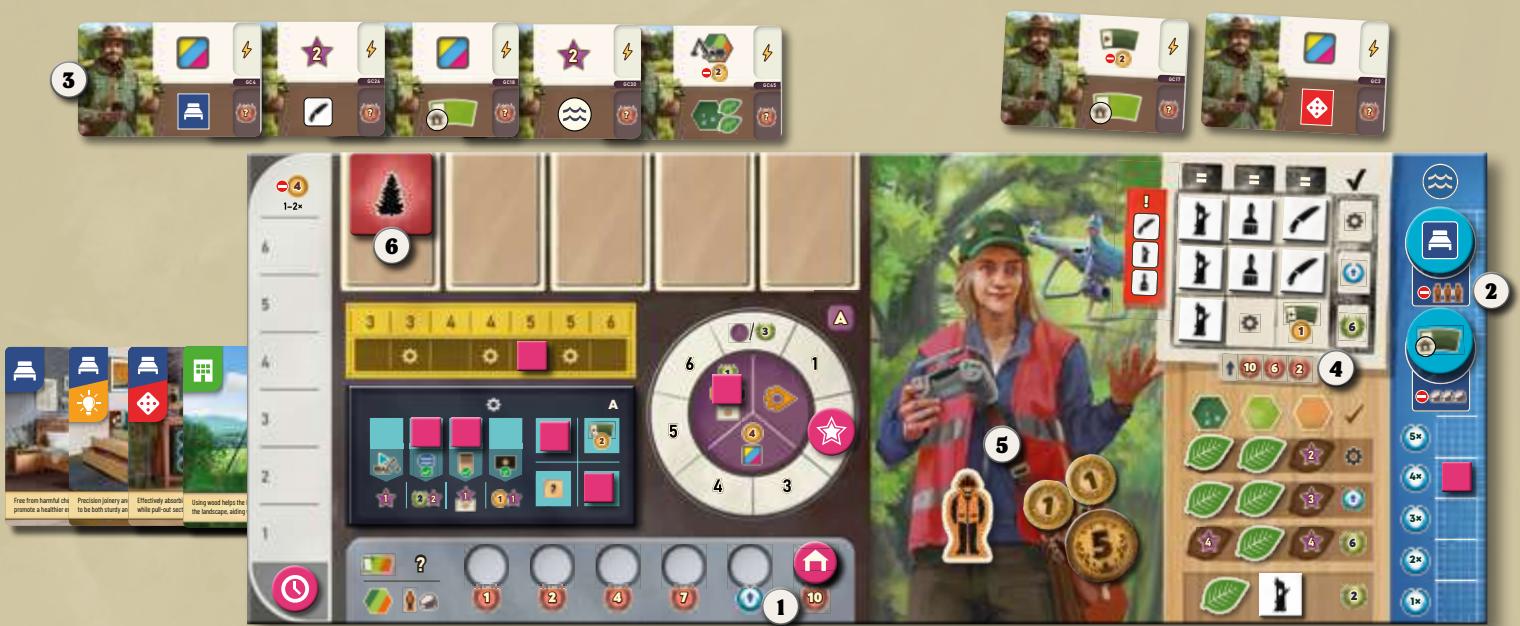
-
The pink player built five buildings. They earn 7 victory points. For the fifth building, they advanced their water structures track, which will earn them points in the next category.
-
The player constructed both water structures and has a 4× multiplier on their water structure track. They advanced the track three times: once for completing the storage, once for their fifth building, and once for completing the second row on their forestry table.
Their upper river token has the furniture symbol. The player fulfilled 1 furniture contract card and chose another two to belong to the furniture category. They gain (4×3)=12 victory points. Their lower river token has the sawmill symbol. The player used two of their building tokens to upgrade sawmill building tiles. They gain (4×2)=8 victory points.
- At the end of the game, the player has 7 unused task cards. They match 5 task cards with a furniture symbol, a thinning forester token, an upgraded light green sawmill, river token, and two seedlings in the dark green column of their reforestation table.
Unfortunately, they didn't fulfill their last two task cards. Based on the reference tile, they earn 11 victory points for the fulfilled task cards.
-
The player gained 8 forester tokens (seven are in the forester table, and the eighth is below the reforestation table). They have secondhighest number and gain 6 victory points.
-
The pink player's unused resources are 1 temp worker token, 7 coins, and 2 unfulfilled task cards. They have 10 unused resources, so they gain (10÷3)=3 victory points.
-
The player has 1 wood token still in their storage, so they gain 1 victory point.
Together with the 45 victory points earned during the game, they now have a total of 93 victory points.
RIVER TOKENS
Each river token's symbol indicates an objective for which the player gains additional victory points at the end of the game.

Fulfilled accessory contract cards

Fulfilled innovations contract cards
Fulfilled structures contract cards

Fulfilled furniture contract cards

Upgraded sawmill building tiles


Constructed forest buildings
2 forester tokens (any types) on the forestry table

2 seedling tokens on the reforestation table
CLEARING TOKENS
Each clearing token's symbol indicates a reward for the player who constructs a forest building there.

Gain 4 coins
Gain 3 victory points


Gain 3 stars

Gain 2 resources of any type
Gain 1 wood adjustment token of any type and 1 coin


Gain any contract card available and gain 1 coin

Gain a task card and gain 1 coin

Immediately use a building in any sawmill area and gain 1 coin

Optional: Pay 2 coins and gain 1 wood token of any type
GAME ROUND TOKENS
Before beginning their turn, each round the first player flips over and evaluates a new game round token. All players simultaneously receive the indicated reward.

Gain 1 construction material token
Gain 1 temp worker token


Gain 1 seedling token
Flip one birch harvest token if possible. and gain 1 coin


Flip one pine harvest token if possible and gain 1 coin


Flip one oak harvest token if possible and gain 1 coin
Draw a random task card from the deck
Flip one beech harvest token if possible and gain 1 coin

Flip one spruce harvest token if possible and gain 1 coin

Gain 2 coins
Green game round tokens require the first player to flip one harvest token from the colorful side to the dark side. The game round token always indicates which tree species must be flipped. The harvest token to be flipped is selected in this order:

TOP: FREE ACTIONS
The top of a task card describes how it can be used as a free action during the player's turn.
Pay 3 coins and gain 1 forester token of any type from the supply

Pay 2 coins and move the harvester token to any unoccupied space

Gain 1 wood adjustment token of any type

Pay 3 coins and gain 1 wood token of any type

Pay 2 coins and immediately use a building in any sawmill area


Gain the indicated resource


Gain 2 stars

Gain 3 coins

Draw an available contract card

Exchange 1 wood token in the player's storage with 1 wood token of any type in the general supply (discard any adjustment tokens on the original wood)
BOTTOM: TASKS
The bottom of a task card describes the objective that card must be matched with to score victory points at the end of the game.


Fulfilled contract card with a matching wood product symbol




Two seedling tokens in the indicated column of the reforestation table. It is not possible to complete the same area condition twice.


Forester token of a matching type


Upgraded sawmill building tile in the indicated sawmill area



Constructed forest building adjacent to the indicated harvest token



River token
HQ TILES ICONS


The first reward of these HQ tokens allows you to buy a wood adjustment, task card, or any resource for 1 coin.


TUTORIAL VERSION
The tutorial game of Forestry uses the technology table pre-printed onto each player board. This technology table provides a one-time reward each time a player earns a technology upgrade. Using this variant simplifies Forestry because players do not need to focus on the permanent upgrades acquired from the standard game's technology tiles.

When a player gains a technology upgrade, they place a cube on any space of their choice on the technology area of their player board. There are three rewards:
• Immediately use any building in the sawmill areas
• Gain 1 wood token of any type
• Gain a task card and 2 coins
After placing a cube on the technology tile's third or fifth space, the player may choose which of the two adjacent rewards to receive.
ADVANCED GAME
If you want to spice up Forestry with new strategic options, incorporate character abilities into the game. Each character has a specific role and play style, allowing the player to utilize new options and gain rewards.
During game setup, choose the characters randomly or decide in any way which characters to play. Use the player board side marked B. Some players will also need specific components that the characters require to use their abilities.
The advanced game lasts nine rounds instead of the usual ten. A list of all character abilities, along with the additional rules and components, can be found on the following two pages.
It is also okay to combine the advanced game with the tutorial technology table!

The pink player just received a technology upgrade for advancing their development track. They place their cube in the fifth space, and can choose to receive 1 wood token or to gain a task card and 2 coins. This space's flexibility gains them another wood token, but also reduces how many times they can gain a task card and 2 coins as a technology reward.

Each character in the game has a specific role and special abilities suitable to various workers in the forest or at the sawmill. Their abilities have varying complexity. We recommend trying out several to find the one that is right for you!
TECHNOLOGY TILES
Technology tiles provide players with various permanent benefits. Before the game, all players must agree whether to play with the “A side” or the “B side” of these double-sided tiles. No mixing and matching!
Whenever a player earns a technology upgrade, they place a cube in one space of their choice. The right side of the technology tile provides one-time rewards, while the left side provides permanent upgrades to various game actions. The latter are described below:

• After moving the harvester token, gain 1 star.
• After building a water structure, gain 2 stars and 2 victory points.
• After unlocking a storage space, gain 1 star and draw 1 task card.
• After fulfilling a contract card, gain 1 coin and 1 star.
The player may move their harvester token up to three spaces. They also don't need to pay for crossing a river.
•After advancing the water structure track, immediately use any sawmill building.
After moving the sawmill manager token, evaluate the HQ tile's rewards as though only the player's token is present.
After constructing a forest building or upgrading a sawmill building tile, gain 1 coin and 1 star.
CHARACTER ABILITIES
TRADE SPECIALIST

FOREST ECOLOGIST

The trade specialist's task is to harvest as many types of wood as possible and send them to the right customers. Each type of wood they use to fulfill a contract card provides the trade specialist with a reward.
Game Setup: Place five reward tokens in random order at the bottom of the trade specialist's portrait, ensuring that there is one reward token for each type of wood.
Ability: Whenever the trade specialist fulfills a contract card, they receive bonus rewards. After evaluating the contract card, the trade specialist additionally receives the bonus indicated on their reward token(s) for each type of wood required by that contract card. The bright side of the reward token must be face up. After receiving a reward token's bonus, the trade specialist flips the token to its dark side.
Once per turn as a free action, the trade specialist can flip all of their dark reward tokens back to the bright side. If they do, the trade specialist gains victory points based on the number of reward tokens flipped. The number of victory points is indicated above the trade specialist's reward tokens.

The trade specialist fulfilled a contract card which required a spruce and an oak. They collect the reward from the card. They also gain 2 stars and a resource due to their ability. Then, they flip those reward tokens face-down.
Note: If you fulfill a contract with two trees of the same type, you only gain the reward from the flipped trade specialist token once!

Gain 2 coins

Gain a task card

Gain 2 stars

Gain a resource

Gain 2 victory points
The forest ecologist studies organisms in the forest and observes life in den trees—such as insects, birds, and other animals. They evaluate the impact of various measures on biodiversity.
Game Setup: Place the den tree board next to the forest ecologist's player board. Place the life tokens face-down nearby, then shuffle them. The forest ecologist has 15 life tokens, with 5 of each color (blue, yellow, and red).

Ability: Each time the forest ecologist constructs a building, reforests, advances their water structure track, or passes space 3 on the reward track, they flip over one life token. After completing the current action, the ecologist has to place the life token on their den tree board.
The first token the forest ecologist gains can be placed anywhere on the den tree board. Each additional token, however, must be connected by lines on the den tree board to the previously placed tokens. The forest ecologist always receives the indicated reward when they place a life token on a colorless space. If they place a life token on a colored space, the forest ecologist receives the indicated reward only if the life token matches the color.
If the token does not match, the player scores one victory point instead of the reward covered and places the token face-down.
The forest ecologist gained a life token from the reward track. They flipped over a yellow token. After finishing their action, the forest ecologist places the yellow token on the space to the upper-left of their red token, and gains a temp worker.

CHARACTER ABILITIES
LOGISTICS MANAGER

MONITORING SPECIALIST

The logistics manager's task is to make the most efficient use of space in their storage.
The better organized their wood is, the more rewards they will receive.
Game Setup: Place the logistics manager's storage extension tiles in the storage section on the three spaces farthest to the right as usual.
Ability: Whenever the logistics manager adds a wood token or an adjustment token to their storage, they earn the reward covered by that token. Keep tokens where they were placed in the storage. After removing a token through other game actions (such as fulfilling a contract card), the logistics manager can once again earn rewards for filling their open storage spaces.
As usual, the logistics manager must unlock their rightmost storage spaces to earn any rewards for filling them with wood tokens or adjustment tokens.
Note: An action which exchanges a wood token in storage for any wood token in the general supply does not earn a reward. The logistics manager only earns rewards for gaining new wood tokens.

The monitoring specialist's task is to map the condition of the entire forest. They do this by using drones, which they send to individual spaces to collect important data.
Game Setup: Place 1 data token on each space on the game board. When the monitoring specialist places their harvester token on their initial forest space, they gain that space's data token. Place it on their player board.
Ability: Whenever the monitoring specialist's harvester token enters a space which has a data token, they gain that token and place it on their player board.
As a free action once per turn, the monitoring ecologist may return up to 5 data tokens from their player board to the box. Then, they gain the reward indicated on the computer picture.

The monitoring specialist's harvester went through two hexes. They collected a data token from each space, and placed them on their player board. Now they can spend 3 data tokens to activate any sawmill building and gain 1 coin.
SOLO GAME
SOLO GAME SETUP
Prepare the game board and common components as for a two-player game. Take the components of a non-playing player in a different color than the one you used to set up the game board.
-
Place the forester board within reach next to your own.
-
Shuffle the deck of 18 forester cards and place it to the left of the forester board. When playing an advanced game, also shuffle the three cards marked with the yellow corners into the forester deck.
-
Place six building tokens at the bottom of the building track.
-
Place a star token on the reward track on the space with the development symbol.
-
Place one of the forester's cubes on the square space in the bottomleft corner of the forester board.
-
Select 6 random forester tiles and place them in random order under the six designated sections at the bottom of the forester board. For the first game, keep all of these tiles with side A face-up. For a bigger challenge you can use the B sides to increase difficulty (see page 30)
-
Place your cube to the left of the row of tiles.
-
Place the meander and reservoir with bridge tokens on the water structures spaces on the blue bar on the right.
-
Place 1 seedling onto the leftmost space of the third line of the resource table.
-
Place 4 coins on the forester board.
-
Give the forester a random starting contract.
The forester does not receive wood according to his starting contract!
-
Place the sawmill manager token on the HQ tile of the appropriate area.
-
Place the forester's harvester token on a space with an available harvest token needed to fulfill his starting contract. Choose the space according to the scheme below. Then place your own harvester, and start the game.
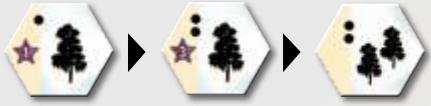

GAMEPLAY
In solo play, the player competes against against an opponent—the forester. Solo play is conducted over 10 rounds (9 rounds for an advanced game). The game starts with the player and alternates with the forester until the final round. The forester will thus finish the game, and scoring follows as usual.
The forester's actions are controlled by their deck of forester cards. On each of their turns, reveal a number of cards indicated by the value on their yellow development track and evaluate them one by one. After exhausting all of their cards, shuffle the forester cards to create a new deck. Draw from the new deck during the forester's subsequent turns.
Like the standard game, the player's goal is to earn more points than the forester. The forester performs almost all actions like a real player, but in a simplified manner.


The token on the forester's development track indicates how many actions they will perform on their turn. For each of these actions, draw one card from their deck and evaluate it during their turn. The number of the forester's actions will increase throughout the game, just like the number of the player's actions.

CARD EVALUATION
From each of the forester's cards, evaluate exactly one row. When evaluating, proceed from top to bottom. As soon as it is possible to evaluate a row, perform that action. Once you have evaluated all the cards that the forester is entitled to according to their development track, move the cards to the right next to forester's board.
These cards are double-sided. Whenever possible, always evaluate the back side first. If neither action is possible, flip the card over and start from the top on the first available action.
The advanced cards are evaluated the same way. They give more valuable outcomes to the forester in the same way a player benefits from their character's special ability in the advanced game.
CARD ACTIONS

Fulfill a contract: The forester must have the correct type and amount of wood tokens in their storage, along with the required adjustments. If they have everything, return the wood and adjustment tokens from their storage to the supply. The forester gains all the rewards from the contract card they just fulfilled.
The forester always has only one contract card at a time.
When gaining rewards for fulfilling a contract, proceed in the following order:
• Move their star token on the reward track.
Move their scoring token on the scoring track.
• Place coins and resources on their board.
• Place task cards face-down next to the forester board.

Wood adjustment: If the forester has wood in storage that requires adjustment, place the required wood adjustment token next to it. If they need multiple adjustments, it does not matter which is applied first.

Get a new contract: The forester performs this action only when they do not have a contract card.
The forester chooses from all the contracts on the game board and chooses the one worth the highest amount of points.
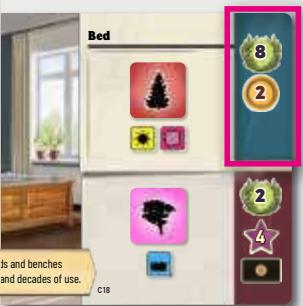
If a double contract is available, the forester chooses by the amount of points in the upper half of the card. The forester always fulfills only the top half of a double contract.
If there are multiple contract cards worth the same amount of victory points, the player chooses which contract the forester takes.
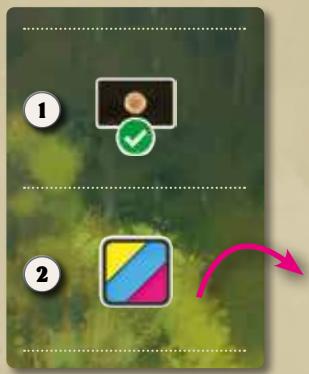

The back side of all the cards identical. If possible, evaluate one of these actions first. If not, flip to the unique front side and evaluate one of the three actions.


To fulfill their initial contract, the forester needs a spruce token with a pickling adjustment. If they have everything prepared in their storage, their next action will be to fulfill this contract. The forester
returns the wood and adjustment tokens to the supply and receives the rewards for completing the contract. They move their star token forward 4 spaces, gain 4 victory points, and also receive 2 coins.


The forester wants to fulfill this contract. His next two actions will be wood adjustments. His third action will be fulfilling the contract.


The forester draws a new contract card. Since both contract cards are worth 8 points, the player chooses which one the forester takes.
SOLO GAME

Harvest: This action can only be performed if the forester has a contract for which they need to acquire a new wood token, and there is at least one space with such a tree available.
The forester harvests wood sequentially, moving from left to right across the first row of the contract card, as indicated on the right side of the action on the card's harvest action. If a particular type of wood cannot be harvested, the forester proceeds to the next one in order.
If necessary, move the forester's harvester to the nearest space with the requisite type of wood. Flip the harvest token to its dark side and place the token of the corresponding wood type into a free storage space on the forester's player board.
Important Rules Exceptions for the Forester:
The forester never pays for movement, whether for actions or coins to cross the river. It does not matter how far the space is that they need to reach.
The forester always harvests only one wood token, even in spaces that allow players to harvest two with one action.
• Harvesting always costs the forester only 1 action.
The forester does not earn stars from harvest tokens during any actions.
If there are multiple objects of interest to the forester that are equidistant, the player chooses which one they will go to.

Reforestation: This action can only be performed if the forester has a seedling in their supply and there is at least one space on the game board with a harvest token showing its dark side.
The forester prioritizes reforesting harvest tokens needed for their current contract card. If all such spaces are reforested, they reforest the nearest available space.
If necessary, move the forester's harvester to the nearest suitable space. If there are multiple equidistant tokens, choose where to place the harvester. Flip the harvest token to its colorful side and place the seedling on their reforestation table. Place seedlings in rows from left to right.
The forester earns 2 stars each time they reforest. It does not matter in which area the forester is planting.

Tend the forest: The forester performs this action if their forestry table has an open space.
There are four such actions on the forester cards. One allows the forester to gain the nearest forester token and can be evaluated at any time. The other three require a specific forester token and can only be evaluated when that token is present in the forest.
If necessary, move the harvester to the nearest space with the corresponding forester token and place it on the forestry table. Place forester tokens in rows from left to right. The forester receives the covered reward.

When evaluating this advanced card's action, the forester takes the nearest two tokens. He moves his Harvester to the nearest token and takes it, then repeats the process. The type of forester token doesn't matter.

When evaluating the front of this card, the forester doesn't have enough resources to build a water structure. Therefore, they proceed to the card's middle row—harvesting. Their current contract requires a beech. Their harvester's space was already harvested, so it moves to an available space with an beech. The space with one beech is 1 space farther than the space with two beeches, so their harvester moves to the closer space. The forester doesn't pay for the move action or a coin to cross the river. They flip the harvest token to its dark side and gain 1 beech token for their storage.

The first possible action on the forester card is reforestation. They have 2 seedlings in their supply, so they can perform the action. To fulfill their contract, the forester needs a birch. They move to the nearest dark birch harvest token. They flip the harvest token to its colorful side and place the seedling on their reforestation table, for which the forester earns 2 stars.

The first possible action on the forester card is tending the forest. The forester moves their harvester to the nearest space with a thinning token and places it on the first available spot of their forestry table. By covering the seedling icon, the forester gains 1 seedling token.
SOLO GAME

Build a water structure: The forester performs this action only when they have 3 temp workers or 3 construction materials as needed to build one of their water structures.
If necessary, move the forester's harvester to the nearest space with a river token. Pay the required resources, place the meander or reservoir with bridge on the game board, and put the river token in the newly vacated spot on forester's board.
The forester does not multiply river tokens. For each acquired token, they gain 10 victory points at the end of the game. If the forester has resources for both types of water structures during the action, choose one and place it.

Build in the forest: The forester performs this action only when they have a temp worker and a construction material.
If necessary, move the forester's harvester to the nearest space adjacent to a clearing token. Pay both resources, remove the clearing token from the game board, and place a building token in its place from the leftmost space on the forester board.
The forester does not receive rewards from clearing tokens. They gain victory points at the end of the game based on how many buildings theyve constructed.

Upgrade a sawmill building: The forester performs this action only when it is possible to upgrade at least one sawmill building in the colored area indicated on the forester card, and when they have enough resources or coins to do so.
If necessary, move the forester's sawmill manager to the area of the corresponding color. Follow the priority numbers indicated with the action. The forester upgrades buildings in ascending order.
Pay the required resources, flip the sawmill building tile to its upgraded side, and place the building token from the leftmost space on the forester's board in its bottom-left corner.
If you use the sawmill building upgraded by the forester, they gain 1 coin.
• The forester does not activate the building after it has been upgraded.


Gain resources: The forester gains the indicated combination of resources, stars, coins, or task cards (the forester always takes the revealed task card next to the deck). All of these resources are stored on their board and used when performing actions.

Player bonus: Whenever the forester activates a sawmill building and the player has upgraded the specified building, they gain 1 coin.

Resource table: Each time the forester gains a resource token (temp workers, construction materials, or seedlings), put it on the resource table above the forester's rules reminder. They have three slots for each resource. If the forester would gain a fourth resource of one type, they gain a coin instead.

The forester has 3 temp workers, so they can build a meander. Three river tokens are each 1 space away from their harvester, so the player chooses where they will go. Then, exchange the forester's meander token with the river token.
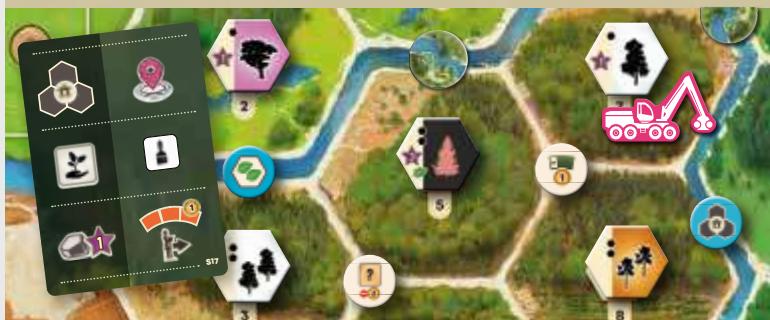
The forester has a temp worker and a construction material, allowing them to build a forest building. Their harvester does not move because the space it occupies is adjacent to a free clearing. They pay both resources and place the first available building token. However, the forester does not receive the clearing token's indicated reward.
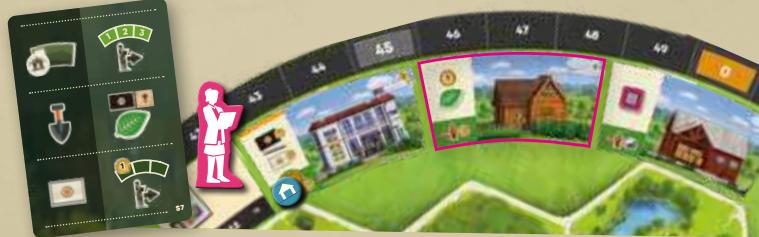
The forester card states that the forester will go to the light green area and upgrade a sawmill building. They have enough resources, so they move their sawmill manager from the dark green area to the light green area. The first building is already upgraded, so the forester upgrades the next one in order. They flip the sawmill building tile and place their leftmost building token in its bottom-left corner, but they do not activate the building.


The forester evaluates third line of this card. They gain 1 temp worker and 1 star. Since the forester already has 3 temp workers, they gain 1 coin instead of another temp worker.
Then the forester moves their sawmill manager to the light green HQ tile. The leftmost building there was upgraded by the player, so the player gains 1 coin.
FORESTER DEVELOPMENT

The forester does not have any technologies. They still gain stars and progress along their reward track. Whenever they reach the space of the reward track with the development symbol, they move their token on the yellow development track one section to the right. This increases the number of drawn cards and thus the number of actions the forester performs each turn.
If advancing the development track during the forester's turn increases their number of drawn cards, they immediately draw one extra card and evaluate it.
FORESTER TILES
The tiles under the forester board provide the player with objectives to fulfill. Doing so prevents the forester from receiving additional rewards. In each section on the forester's development track, there is an additional bonus on a dark background. The forester gains this at the start of their turn if the player's cube is not directly under that section.
The player advances their cube by completing the objectives on the forester tiles. These tiles contain various objectives, such as harvesting or reforesting in a space with a specific type of wood, constructing forest buildings, or upgrading certain sawmill buildings. A list of these tiles can be found on page 31.
FORESTER'S TURN OVERVIEW
-
Check whether the player is in the same section or further than the forester's cube on the development track. If so, the forester does not gain anything. If the player's cube is behind, the forester receives the reward in the dark bar.
-
The forester draws the specified number of cards from their deck.
-
The forester plays all the drawn cards.
-
After playing all of the cards, the forester may spend 4 coins to buy one additional card.
The forester may purchase up to two cards during their turn, never more.
If possible, they always choose to buy an extra card.
DIFFICULTY SETTING
To increase the difficulty of the solo game, flip some of the forester tiles to the B side during setup. The B sides have two objectives under each section instead of just one. Set the difficulty according to this table:
| 1 | Newbie | ||||||
| A | A | A | A | A | |||
| A | |||||||
| 2 | Apprentice | $\mathbb { A }$ | A | B | A | B | A |
| 3 | Watchman | A | B | B | A | A | B |
| 4 | Lumberjack | $\mathbb { A }$ | B | B | A | B | B |
| 5 | Forester | A | B | B | B | B | B |
| 6 | Master | B | B | B | B | B | B |

The forester's development track is divided into six sections. At the beginning of the game, their cube is located in the first section. It indicates the forester will draw and evaluate three cards during their turn.

When the player completes a task on the next forester tile, move the cube to the marked spot. If the player's cube is not equal or ahead of the forester's cube, the forester gains the bonus indicated in the dark bar at the beginning of each turn. The player harvested a spruce during their turn, so they moved their cube one tile to the right. At the beginning of their turn, the forester is ahead. They gain 1 construction material token and 3 coins.
An overview of the forester's turn can be found in the top-left corner of their board. Below their storage is a reminder of the rule exceptions that apply to the forester.


The player is trying to play at a higher difficulty level. During their turn, the player gained a forester token and constructed a forest building, meeting the forester tile's first two requirements. Unfortunately, the player was unable to reforest a space with two trees. At the beginning of the forester's turn, he gains 1 temp worker token and 1 construction material token.

END OF THE GAME AND SCORING
At the end of the game, the player tallies their points as usual. The forester earns points for the following items:
-
10 points for each river token.
-
Points for their task cards (consider all as fulfilled).
-
Points for their rightmost uncovered the building token space.
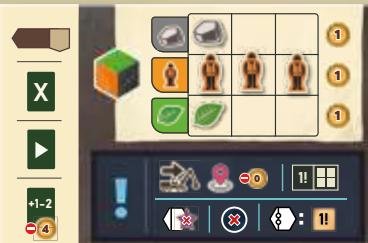


The forester gained 43 points during the game, to which they add:
-
10 points acquiring one river token.
-
17 points for 7 acquired task cards.
-
4 points for three constructed building tokens.
-
4 points for 1 filled row on the forestry table.
-
Points for filled rows on the forestry table.
-
Points for most or second most forester tokens.
-
Points for filled rows on the reforestation table.
-
1 point for each wood token in storage.
-
1 point for every triplet of remaining coins and resources.


-
10 points because the forester gained the most forester tokens.
-
8 points for 2 filled rows on the reforestation table.
-
1 point for 1 wood token in storage.
-
2 points for 3 coins, 3 temp workers, a construction material, and a seedling.
The forester has a total of 99 points, which is enough to defeat the player.
FORESTER TILES LIST AND OBJECTIVES

Get a forester token.

Construct a forest building.

Fulfill a contract.

Upgrade a sawmill building.

Harvest a space with 2 trees.


Build a forest building, then reforest the space with the specified tree.
Reforest a space with two trees.


Fulfill a contract, then harvest a space with two trees.
Harvest the specified type of wood.

Upgrade a sawmill building, then harvest the specified type of tree.




EXPLANATION OF THE FORESTER'S RULES ON THEIR BOARD:
• They choose goals at the shortest distance and do not pay coins for movement.
• The forester always has only one contract card to fulfill.
•The forester does not gain stars from harvest tokens.
• The forester does not receive rewards from game round tokens or clearing tokens.
• When harvesting on a hex with two trees, forester only gain 1 wood token.


Gain 1 coin
Pay 4 coins
Payment symbol
Temp worker
Construction material
Seedling
Any resource
Any wood token
Exchange a wood token in your storage with one from the supply.
Development symbol (advance the development track)
Technology (cube placement)
Gain a forester token
1 victory point (immediate)
2 victory points (at the end of the game)
Water structure victory point multiplier
2 stars
(advance the reward
track)
Gain a task card (revealed or top deck)
Gain a contract card
Contract fulfillment
Build a new storage section


ICONS
Apply any wood adjustment (does not trigger a building)
Pickling
Drying
Planing
Contract type: Furniture
Contract type: Innovations
Contract type: Buildings
Contract type: Accessories
Water structure
Build a water structure
Any forest area
Move the harvester to any space
Harvester movement
Sawmill manager movement
Construct a forest building or upgrade a sawmill building
Building token
Sawmill building
Activate any sawmill building (players still gain a coin if upgraded)
Author: Michal Peichl
Ilustrations: Michal Řezníček
Game Development: Michal Peichl,
Tomáš Holek, Milan Zborník, Petr Plášil,
Štěpán Peterka, Lucie Hrivňáková
Graphic Design: Michal Peichl
Editor: Austin Conrad
Solo Game Design: Tomáš Holek
Solo Game Testing: Ruda Malý
Lead Expert Guidance & playtesting:
Radim Löwe, Anna Dolníčková

The game was created in cooperation with experts from the Faculty of Forestry and Wood Sciences of the Czech University of Life Sciences in Prague. The following experts participated in game testing, professional advice, consultation on foresting, and writing expert texts: Lucie Dinterová, Nikola Řeháková, Monika Löwe, Adéla Višová, Marcela Šipanová, Oto Nakládal, Adam Sikora and Vítězslava Pešková.
Special Thanks to Monika Vavřinová for all the help and support at the start of the project, Milan Zborník, Tomáš Holek, Petr Plášil for believing in this game and for all the support during the development.
Playtesters:
Thanks to Monika Vavřinová, Zdeňka Peichl Kyselová, Tomáš Holek, Milan Zborník, Petr Plášil, Robert Tuharský, Jindřich Pavlásek, Petr Vojtěch, David Navrátil, Štěpán Peterka, Lucie Hrivňáková, Adam Španěl, Jakub Uhlíř, Vlád'a Chvátil, Vlád'a Suchý, Kateřina Suchá, Radek Malý, Bolek Žemlík, Jan Cízner, Tereza Pádecká, Marek Jaroš, Kateřina Mrázková, Ján Novodomský, Antonín Kandrik, Eda Šípek, Zuzka Šípková, Jakub Vávra, Filip Veselý, Gianfranco Zen, Jindřich Volák, Petr Mojžíš, Viktor Dobrovolný, Michal Švec, Vítek Štika, Jeník Hykš, CGE for thorough feedback and intensive playtesting, Barbora Žáková, Vojta Urbánek, Michal L., Zony, Pavel Škréta, Lukáš Měkota, Monika Findejsová, Martin Freudenfeld, Jan Archman, Eva Marková, Tomáš Krauz, Josef Koštíř, Netopejr, Ilča, Karolína Holerová, Lenka Kuttlerová, Martin Kurc, Martin Sedmera, Jiří Sekera, Jiří Veselý and many others.
