Pinguin-Party Rules.md
Pinguith-Party

Spieler: 2 – 6 Alter: ab 6 Jahren Dauer: ca. 15 Minuten

Spielmaterial
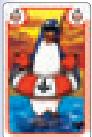


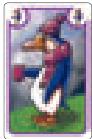

36 Pinguinkarten in fünf Farben, jeweils 7x Rot, Blau, Gelb, Violett und 8 x Grün.

36 Punktechips (24 x Wert 1, 12 x Wert 5)
Spielidee
Party bei den Pinguinen. Mit coolen Drinks, frischem Fisch und der großen Pinguin-Pyramide geht die Post ab. Möglichst viele Pinguine müssen in der Pyramide Platz finden, je höher desto besser. Ziel der Spieler ist es, mit ihren Pinguinkarten auf der Hand gemeinsam eine Pyramide zu bilden. Dabei sollte jeder Spieler möglichst viele Karten in die Pyramide ausspielen. Wer zum Ende eines Spiels noch Karten besitzt, kassiert Punktechips. Wer es schafft alle seine Pinguine in der Pyramide unterzubringen, kann Chips abgeben. Gewinner ist nach mehreren Spielen der Spieler mit den wenigsten Punkten.
Spielvorbereitung
Die Pinguinkarten werden gemischt und gleichmäßig an die Spieler verteilt. Bei fünf Spielern wird die nicht verteilte Pinguinkarte offen in die Tischmitte gelegt. Dieser Pinguin ist die erste Karte in der untersten Reihe der Pinguin-Pyramide.
Die Punktechips werden nach Wert geordnet und ebenfalls in die Tischmitte gelegt. Sie bilden einen Pool, aus dem die Spieler im Laufe des Spiels Chips erhalten oder wieder zurücklegen. Der Spieler, der zuletzt einen echten Pinguin gesehen hat, beginnt. Dann kommen die anderen Spieler jeweils im Uhrzeigersinn an die Reihe.
Spielablauf
Wer an der Reihe ist, wählt aus seiner Hand einen Pinguin aus und legt ihn offen in die Tischmitte. Pinguine werden immer offen ausgespielt.

Erste Reihe
Im Laufe des Spiels entsteht eine Pinguin-Pyramide aus acht Reihen. Die unterste Reihe besteht aus acht Pinguinkarten nebeneinander. Jede Reihe nach oben hat jeweils eine Pinguinkarte weniger, bis zur achten Reihe, die aus einem Pinguin besteht. Die Abbildung zeigt ein Beispiel für eine vollständig aufgebaute Pyramide. Allerdings endet ein Spiel nicht immer mit einer vollständigen Pyramide, da oft nicht alle Karten ausgespielt werden können.
Der erste Pinguin des ersten Spielers markiert die unterste Reihe. (Ausnahme: Bei fünf Spielern markiert die nicht ausgeteilte Karte die unterste Reihe.) Der erste Pinguin des nachfolgenden Spielers wird direkt daneben gelegt. Welche Farbe diese Pinguine haben, spielt keine Rolle. Für die weiteren Pinguine gibt es zwei Möglichkeiten:
1) Der Pinguin kann in die unterste Reihe gelegt werden, sofern dort weniger als acht Pinguine liegen. Der neue Pinguin wird immer rechts oder links neben einem schon gelegten Pinguin angelegt.
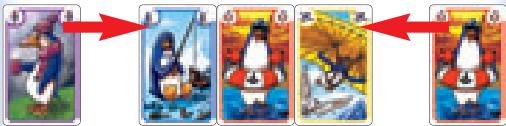
2) Der Pinguin kann in eine jeweils höhere Reihe gelegt werden, wenn direkt darunter schon zwei andere Pinguine liegen.

Die Farbe des neuen Pinguins muss mit der Farbe eines Pinguins übereinstimmen, der direkt darunter liegt.
Richtig
Unter dem gelben Pinguin liegt ein gelber Pinguin. Unter dem blauen Pinguin liegen zwei blaue Pinguinkarten.
Falsch
Unter dem roten Pinguin liegen ein gelber und ein grüner Pinguin. Unter dem grünen Pinguin liegt nur eine Pinguinkarte.
Die Punktechips
Wer an der Reihe ist und keinen Pinguin ausspielen kann, scheidet aus und erhält so viele silberne Chips (Wert 1), wie er noch Pinguine auf der Hand hält. Dann legt dieser Spieler seine verbliebenen Karten verdeckt vor sich ab.
Beispiel: Markus ist an der Reihe. Er kann keinen Pinguin in die Pyramide legen. Da er zwei Karten auf der Hand hat, muss er zwei silberne Chips aus dem Pool nehmen und vor sich ablegen.
Wer seinen letzten Pinguin aus der Hand spielen kann, darf zwei seiner Punktechips (Wert 1) wieder abgeben. Chips unterschiedlicher Werte können jederzeit gewechselt werden. Wer in dem Moment keine Punktechips besitzt, hat ein wenig Pech, weil er keine Chips abgeben kann.
Beispiel: Barbara besitzt fünf silberne Chips. Sie legt ihren letzten Pinguin in die Pyramide. Als Belohnung darf sie zwei ihrer Chips in den Pool legen. Sie besitzt nun noch drei Chips. Giulia ist an der Reihe. Sie legt auch
ihre letzte Karte in die Pyramide. Auch sie darf zwei Chips wieder abgeben. Da sie aber nur einen Chip besitzt, kann sie nur diesen einen abgeben.
Spielende
Ein Spiel ist beendet, wenn kein Spieler mehr eine Karte ausspielen kann. Z. B. weil die Spieler ausgeschieden sind oder keine Karten mehr auf der Hand haben. Es kann der Fall eintreten, dass ein letzter Spieler noch mehrere Pinguine nach einander ausspielen kann, weil alle anderen Spieler ausgeschieden sind. Auch der letzte Spieler erhält noch Chips, wenn er nicht alle Karten in die Pyramide legen kann.
Für ein weiteres Spiel werden alle Karten wieder gemischt und wie zu Beginn ausgeteilt. Erhaltene Chips bleiben vor den Spielern liegen. Es werden so viele Spiele gespielt, wie Spieler teilnehmen, wobei jeder Spieler ein Mal Startspieler ist. Wer am Ende des letzten Spieles den geringsten Wert an Punktechips besitzt, ist der Gesamtgewinner. Bei einem Gleichstand unter den Spielern mit dem geringsten Wert gibt es mehrere Gewinner oder es wird so lange weitergespielt, bis ein Gewinner feststeht.
Sonderregeln für Zwei Spieler
Alle 36 Pinguinkarten werden gemischt. Jeder Spieler erhält 14 Karten auf die Hand. Die restlichen Karten werden verdeckt beiseite gelegt und werden für dieses Spiel nicht benötigt. Die unterste Reihe der Pyramide besteht nur aus sieben Pinguinkarten. Alle anderen Regeln bleiben gleich.
Pingvit-Party

For 2 – 6 players
Ages 6 and up
Duration approx. 15 minutes

Contents
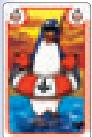


36 penguin cards in five colours: 7 each of

red, blue, yellow and purple and 8 of green,
36 penalty chips (24 worth 1 point each, 12 worth 5 points)
Idea of the game:
There's a party at the Penguin's place! They're having a whale of a time, with icy-cool drinks, fresh fish and, best of all, the great penguin pyramid! The more penguins fit into the pyramid, and the higher it gets, the better. Together, players build a pyramid out of their cards. Each player tries to fit as many of the cards from their hand in the pyramid as possible. Players still holding cards at the end of the game must take penalty chips. If a player manages to put all cards from their hand in the pyramid, they return their chips. After several rounds, the player with the lowest number of penalty chips wins the game.

Preparation:
Shuffle the penguin cards and deal them out evenly to each player. If five people are playing, the last remaining card is placed in the centre of the table face up. This penguin is the first card in the lowest tier of the penguin pyramid.
Penalty chips are sorted by value and placed in the centre of the table as well. This is the pool from which players take their chips or to which they are returned.
The player who has last seen a real penguin begins. Turns are taken clockwise.

Playing the game:
The player whose turn it is chooses a penguin card from their hand and places it in the centre of the table. Penguin cards are always played face up. As the game progresses, players build an eight-tiered penguin pyramid. The lowest tier consists of eight penguin cards lying side by side. The tier above this one con-

Bottom tier
sists of seven cards, the one above that of six, and so on, until the top tier, consisting of one single penguin card, is reached.
The illustration shows a complete eight-tiered pyramid. However, the pyramid is not necessarily complete at the end of the game, as very often it is impossible to play all the cards.
The first penguin card played in the round marks the bottom tier (except when there are five players, when the bottom tier is marked by the card left over after dealing). The next player must place a penguin card next to the first one. The penguins' colours are irrelevant.
There are two possibilities for playing the next penguin cards:
1) If there are fewer than eight penguins in the bottom tier, the card can be placed next to them on the left or right side.

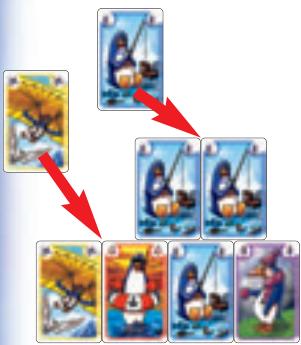
2) Penguins can be placed in a tier higher up whenever two penguins are already in place immediately below. However, the new penguin's colour has to match the colour of at least one of the penguins below.

Correct
The yellow penguin is placed on top another yellow penguin. The blue penguin is put on top of two blue penguin cards.
Incorrect
The red penguin is placed on top of a yellow and
a green penguin. There is only one penguin card in place underneath the green pen
guin.
Penalty chips:
If it is a player's turn and they cannot play a card from their hand, they are eliminated from the game and have to take one silver chip (worth one penalty point) for each penguin card remaining in their hand. The cards are then put face-down on the table in front of the player.
Example:
It's Markus's turn. He cannot place a penguin on the pyramid. He now has to take two silver chips from the pool, because he has two cards remaining in his hand. He then places the cards face-down on the table.
If a player can play the last card from their hand, they can return two of their penalty chips (worth 1 penalty point each) to the pool. Chips of different values may be exchanged for each other at any time. If the player in question has no penalty chips, they cannot return any to the pool.
Example:
Barbara has five silver chips. She manages to place her last penguin on the pyramid. Her reward is that she can put two of her penalty chips back in the pool. Now she has only three penalty chips left. Then it's Giulia's turn. She also manages to place her last card on the pyramid and is allowed to return two of her chips to the pool. However, she only has one chip, so she only puts this one back in the pool.
EEnd of the game:
The game is over when no player can play a card anymore. This can be because they have all dropped out of the game or because they have played all the cards in their hands. It is possible that the last player can play several cards in a row, because all other players have dropped out of the game. The last player also has to take penalty chips if they cannot play all their cards.
The cards are then reshuffled for the next round and dealt just like at the start of the first round. Players keep their chips in front of them. The game consists of as many rounds as there are players. Each player gets to be starting player once. The player with the lowest value in chips at the end of the last round wins the game. If there is a tie, all players with the lowest score win or playing is continued until a winner is determined.
Two-player Variant:
Shuffle all 36 penguin cards. Each player is dealt 14 cards. The remaining cards are put aside face down. They will not be needed for the game. The bottom tier of the pyramid consists of only seven penguin cards. All other rules remain the same.

Pinguith-Party
Joueurs: 2-6 Age: dès 6 ans Durée: env. 15 mn


Matériel


36 cartes Pingouin de 5 couleurs, respectivement 7 x rouge, bleu, jaune, violet et 8 x vert

36 jetons (24 x valeur 1, 12 x valeur 5)
But du jeu
C’est la fête chez les pingouins. Grâce à des boissons rafraîchissantes, à du poisson frais et à la grande pyramide des pingouins, il y a de l’ambiance. Le plus grand nombre de pingouins doit prendre place dans la pyramide et plus elle sera haute, mieux cela vaudra. Le but du jeu est de construire une pyramide avec les cartes de pingouins que vous avez dans les mains. Chaque joueur doit poser le plus de cartes possible dans la pyramide. Celui qui possède encore des cartes Pingouin à la fin de la partie, encaisse des jetons. Celui qui parvient à placer toutes ses cartes Pingouin dans la pyramide, peut se débarrasser de ses jetons. Le gagnant est celui qui a obtenu le moins de points après plusieurs parties.

Préparation du jeu
Les cartes Pingouin sont mélangées et distribuées uniformément à tous les joueurs. S’il y a cing joueurs, la carte Pingouin restante est posée face visible au milieu de la table. Cette carte est alors la première de la rangée infé- rieure dans la pyramide des pingouins.
Les jetons sont triés selon leur valeur et également placés au milieu de la table. Ils constituent la pioche où les joueurs prendront ou déposeront des jetons tout au long de la partie.
Le joueur qui a vu en dernier un véritable pingouin, commence la partie.

Ensuite, le jeu se poursuit dans le sens des aiguilles d’une montre.
Déroulement du jeu
Le joueur dont c’est le tour, choisit une de ses cartes et la pose, face visible, au milieu de la table. Les pingouins doivent toujours être vus. Au cours du jeu se forme une pyramide de pingouins composée de huit rangées. La rangée du bas contient huit cartes de pingouins côte à côte. Ensuite, chaque rangée vers le haut a chacune une carte de pingouin en moins, jusqu'à la huitième rangée qui se compose d’une seule carte de pingouin. L’illustration montre un exemple de pyramide complètement construite. Toutefois, une partie ne se termine pas forcément par une pyramide complète, car souvent, les cartes ne peuvent pas toutes être posées.

Première rangée
Le premier pingouin du premier joueur marque la rangée du bas. (Exception : à cinq joueurs, c’est la carte non distribuée qui marque la rangée du bas). Le premier pingouin du joueur suivant est posé directement à côté. La couleur de ces pingouins ne joue aucun rôle. Deux possibilités existent pour les pingouins suivants :
1) Le pingouin peut être placé dans la rangée du bas pour autant qu’elle comporte moins de huit pingouins. Le nouveau pingouin est toujours posé à droite ou à gauche d’un pingouin déjà en place.

2) Le pingouin peut chaque fois être placé dans une rangée plus haut, à condition que deux autres pingouins soient déjà posés directement en dessous.

La couleur du nouveau pingouin doit, dans ce cas, être absolument semblable à celle d’un des pingouins placés en dessous.
Juste
Sous le pingouin jaune se trouve un autre pingouin jaune. Sous le pingouin bleu se trouvent deux cartes de pingouins bleus.
Faux
Sous le pingouin rouge se trouvent un pingouin jaune et un pingouin vert. Sous le pingouin vert, il n’y a qu’une carte Pingouin.
Les jetons
Si un joueur ne peut placer aucun pingouin dans la pyramide, il est éliminé et reçoit autant de jetons argentés (valeur 1) que de pingouins qu’il a encore en sa possession. Ce joueur pose ensuite ses cartes restantes devant lui en les tournant à l’envers.
Exemple : c’est le tour de Marc. Il ne peut poser aucune de ses cartes dans la pyramide. Comme il lui reste deux cartes, il doit prendre deux jetons argentés dans la pioche et les garder devant lui.
Celui qui a la possibilité de jouer sa dernière carte de pingouin, a le droit de remettre deux de ses jetons (valeur 1) dans la pioche. Les jetons de valeur différente peuvent à tout moment être échangés. Le joueur ne possédant plus de jetons à ce moment-là, n’a pas de chance, car il ne peut rien déposer.
Exemple : Barbara possède cinq jetons argentés. Elle place son dernier pingouin dans la pyramide. En récompense, elle peut remettre deux de ses jetons dans la pioche. Il lui en
reste encore trois. C’est le tour de Julia, elle place aussi sa dernière carte dans la pyramide et peut se débarrasser de deux jetons. Mais comme il ne lui reste qu’un jeton, elle ne peut déposer que celui-là dans la pioche.
EFin du jeu
Le jeu est terminé quand aucun joueur ne peut plus poser de carte. Par exemple, si les joueurs sont éliminés ou qu’ils n’ont plus de cartes dans les mains. Il peut arriver qu’un dernier joueur puisse placer plusieurs cartes à la suite parce que les autres joueurs ont été éliminés. Ce joueur reçoit également des jetons s'il ne peut pas placer toutes ses cartes dans la pyramide.
Pour la partie suivante, toutes les cartes sont de nouveau mélangées et distribuées uniformément. Les jetons obtenus précédemment par les joueurs, restent devant eux. On joue autant de parties qu’il y a de joueurs, pour que chaque joueur puisse commencer une fois la partie. Le gagnant est celui qui possède le moins de jetons à la fin de la dernière partie. En cas d’égalité des points entre les joueurs, soit il y plusieurs gagnants, soit on continue de jouer jusqu'à ce qu'un gagnant soit proclamé.
Règle spéciale pour deux joveurs
Les 36 cartes Pingouin sont mélangées. Chaque joueur reçoit 14 cartes. Les cartes restantes sont mises de côté, face cachée, car elles ne seront pas utilisées. La première rangée de la pyramide n’est composée que de sept cartes. Les autres règles restent identiques.
Pinguith-Party

Giocatori: 2 – 6 Età: a partire da 6 anni Durata: ca 15 minuti

Materiale di gioco



36 carte-pinguino in cinque colori, rispettivamente 7 rosse, blu, gialle, viola e 8 verdi;

36 gettoni-punti (24 con valore 1 e 12 con valore 5) Idea del gioco
Party dai pinguini. Fantastici drinks, pesce fresco ed una grande piramide di pinguini: diamo il via al gioco! Tanti pinguini devono trovare posto sulla piramide, il più in alto possibile. Obiettivo del gioco è riuscire a costruire insieme una piramide, usando le proprie carte-pinguino. Per questo ogni giocatore deve sistemare sulla piramide il maggior numero possibile di carte. Il giocatore che alla fine di un gioco possiede ancora delle carte, riscuote dei gettoni-punti. Vince chi alla fine di più giochi ottiene il minor numero di punti.
Preparazione al gioco
Le carte-pinguino vengono mischiate e distribuite in ugual numero ai giocatori. Se i giocatori sono cinque, la carta rimanente viene messa scoperta in mezzo al tavolo. Questo pinguino corrisponde alla prima carta della fila che si trova alla base della piramide dei pinguini.
I gettoni-punti vengono ordinati a seconda del loro valore e pure posti al centro del tavolo, in modo da formare un pool dal quale i giocatori riceveranno oppure riporranno dei gettoni, durante il gioco.
Inizia il giocatore che è stato l’ultimo a vedere un vero pinguino.
Il gioco continua quindi in senso orario.
Svolgimento del gioco
Chi è di turno sceglie un pinguino dalle carte che tiene in mano e lo depone scoperto al centro del tavolo.
I pinguini vengono sempre giocati scoperti.
Durante il gioco si designa una piramide di pinguini formata da otto file. La fila più in basso, alla base della piramide, è composta da otto

carte messe una accanto all’altra, fianco a fianco. Proseguendo verso l’alto, ogni fila è composta da una carta-pinguino in meno rispetto alla precedente, fino ad arrivare all'ottava fila, composta quindi da un’unica carta. L'illustrazione mostra un esempio di una piramide costruita completamente. Non sempre però il gioco permette la costruzione
Prima fila in basso, base della piramide
completa della piramide; spesso succede che non tutte le carte possono venir giocate.
Il primo pinguino del primo giocatore determina la fila più in basso, alla base della piramide (eccezione: se i giocatori sono cinque, la carta rimanente determina la fila più in basso). Il primo pinguino del seguente giocatore viene deposto direttamente a fianco della prima carta. Il colore dei pinguini non è importante. Per i prossimi pinguini vi sono due possibilità:
1) Il pinguino può venir messo nella fila più in basso, purché vi si trovino meno di otto pinguini. Il nuovo pinguino deve venir messo sempre a destra o a sinistra a fianco di un pinguino già piazzato.

2) Il pinguino può venir messo in una fila superiore, quando direttamente sotto ci sono già due altri pinguini.
Il colore del nuovo pinguino deve coincidere con il colore di un pinguino che si trova direttamente sotto.

Corretto
Sotto il pinguino giallo si trova un pinguino giallo. Sotto al pinguino blu si trovano due carte-pinguino blu.
Errato
Sotto il pinguino rosso si trovano un pinguino giallo ed uno verde. Sotto il pinguino verde si trova solamente una carta-pinguino.
I gettoni-punti
Il giocatore che è di turno e non può scartare nessuna carta viene eliminato e riceve tanti gettoni d’argento (valore 1) quanti sono i pinguini che ancora tiene in mano. A questo punto depone le sue carte rimanenti coperte davanti a sé.
Esempio: tocca a Marco giocare. Non può aggiungere nessuna carta alla piramide. Dato che ha ancora due carte in mano, deve prendere due gettoni d’argento dal pool e deporli davanti a sé.
Il giocatore che può scartare il suo ultimo pinguino, può ritornare due dei suoi gettoni-punti (valore 1). Sfortunato chi in questo momento non possiede alcun gettone-punto, perchè non approfitta della possibilità di poterlo ritornare. Gettoni con valori differenti possono venir scambiati in ogni momento.
Esempio: Barbara possiede cinque gettoni d’argento. Scarta il suo ultimo pinguino e lo piazza sulla piramide. Quale premio può ritornare nel pool due dei suoi gettoni. Ne possiede ora ancora tre. Tocca a Giulia giocare. Lei pure scarta la sua ultima carta piazzandola sulla piramide. Possedendo però solamente un gettone, può ritornare solamente quest’ultimo.

Fihe del gioco
Il gioco termina quando nessun giocatore può più scartare una carta. Ad esempio quando i giocatori sono stati eliminati oppure non possiedono più alcuna carta in mano. Può succedere che un ultimo giocatore può ancora scartare parecchi pinguini uno dopo l’altro, in quanto i suoi concorrenti sono usciti dal gioco. Anche l’ultimo giocatore riceve ancora gettoni, se non riesce a piazzare tutte le sue carte sulla piramide.
Per la prossima mano di gioco tutte le carte vengono nuovamente mischiate e distribuite come all’inizio. I gettoni ricevuti rimangono davanti ai giocatori. Si giocano tante mani quanti sono i giocatori, facendo attenzione che ogni giocatore inizi una volta il gioco.
Chi alla fine dell’ultima mano possiede il minor numero di punti sui gettoni, è il vincitore. In caso di un pareggio tra i giocatori con il minor numero di punti, vi sono più vincitori oppure si gioca fino ad ottenere un vincitore.
Regole supplementari per due giocatori
Tutte le 36 carte-pinguino vengono mischiate. Ogni giocatore riceve 14 carte in mano. Le carte rimanenti vengono riposte coperte e non vengono usate. La fila più in basso alla base della piramide è composta da sole sette carte-pinguino. Tutte le altre regole rimangono invariate.
下载 Markdown