
Mansions of Madness: Second Edition
At a glance
Rules, cards and Q&A (Chinese)
The rules, card data and player questions for this game are written in Chinese. Open the Chinese page to read them.
Where to find full rules
Full rules and card lookup are available in the cunlema app at cunlema.cn — pick this game and ask about any rule, card or turn you are unsure about.
Related games
Rulebook text (Markdown)
This game has 10 rulebook Markdown file(s) in our library; 3 rendered inline below — expand to read or download.
rules_zh_疯狂诡宅_第二版_1352.md62.8 KB
使用本參考手冊
本手冊旨為闡明規則疑義。與遊戲規則書不同,本手冊並不教授玩家如何進行遊戲。玩家們需先通讀遊戲規則書,再於遊戲中作為參考查閱之用。
目錄
參考手冊分為六部分:
初始遊戲設定…第3页該部分詳述了如何進行《瘋狂詭宅》的遊戲設置。
特殊用語… ..第4頁本手冊包含了遊戲中可能會出現的各種特殊用語。該部分詳細列出了《瘋狂詭宅》所有規則,並按拼音首字母順序排序。
遊戲APP界面詳解…第20页該部分詳細介紹APP內的玩家界面。
怪物模型参照……第22页該部分展示了怪物指示物和怪物模型之間的對應關係。
索引…第23页
該部分綜合羅列了玩家們在遊戲中可能需要查找的特殊用語及其所在頁碼。若玩家們在特殊用語中找不到特定詞彙,應至索引處查閱。
快速參放.. …….第24頁
本手冊的封底以易於查閱的形式列出了遊戲的各階段和調查員的各
行動。
配件上限
線索、黑暗和火焰的數量沒有上限。若該類指示物用完了玩家可在紙上記錄,或用硬幣等進行代替。
其他所有配件的上限為遊戲盒中初始數量。
金科玉津
所有規則和效果均受下述法則制約。
本參考手冊的解釋具有權威性。若本手冊與遊戲規則書產生衝突,則以本手冊為準。
若卡牌或遊戲APP等配件的效果與本手冊產生衝突,則以本手冊為準。
若一個效果帶有“不能”字眼,則該效果是絕對的,除非有另一個效果明確抵消它。
在遊戲中,玩家們被視為他們所操控的“調查員”。玩家替自己所控制的調查員做一切決定,並操作其所擁有的遊戲配件。
術語解釋
《瘋狂詭宅》中的效果在特定情況下會带有“能”和“可以”字眼。
帶有“能”描述的效果給予調查員一個選擇,他能在遊戲的正常流程中選擇其並執行。
比如:“調查員能執行攻擊行動,去攻擊與他在同一格子或範圍的一頭怪物”這一效果,給予該調查員一個選擇,他可選擇執行這個攻擊行動作為他這輪的兩個行動之一。
帶有“可以”描述的效果允許一名調查員在選擇其發生時,立刻進行結算。带有“可以”描述的效果是選擇性的。
比如:“你可以移動一格進入已探素過的區域”這一效果,允許該調查員立即進行移動,該移動視為效果的一部分。若他不選擇該效果,則效果結束,他不能再執行那国移動,除非有另一個效果又給予了他一次機會。
沖突
遊戲中的一些效果可能導致遊戲內的或調查員間的衝突。
一個遊戲效果可能會引出多個結果。若如此,則由調查員們共同決定該效果的結果。
多個效果可能同時發生。若發生此類情況,則由調查員們共同決定結算效果的先後順序。
調查員們可能持有不同的遊戲勝利條件。若因此妨礙到一項團隊決策,則隨機選擇一名調查員做決定。
遊戲初始設置
每局遊戲開始前,按如下步驟進行佈置。
1.創建牌堆
將調查員卡挑出,在之後的設置步驟才會用到它們。然後將其他卡牌按各自類別擺放成堆。
將傷害卡和恐怖卡分別洗混,面朝下放在遊戲區中央。
將普通道具卡、特殊道具卡、法術卡、狀態卡堆中的卡按拼音首字母順序面朝上疊放,放在玩家們拿得到的地方。當玩家們需要某張卡時將便於查找。
- 整理地圖板塊
按照尺寸將其分類。當需要某塊時將便於查找。
3.整理怪物
確保每頭怪物的基座内都有對應的怪物指示物。
4.創建指示物供應堆
將所有的非怪物指示物分類堆放。
5.更新收藏
運行《瘋狂诡宅》APP。在主菜單點擊“更多”,之後選擇“我的收藏”。確保玩家們想玩的產品和擴展都處於激活狀態。要激活一個產品或擴展,玩家需選擇指定產品,並點擊“未激活”。點擊“激活”將不再取消所選中的產品。
6.选择劇本
在主菜單選擇“新遊戲”。玩家們共同決定要玩的故事,並在APP中輸入選擇。
另外,玩家們還可以通過在主界面選擇“繼續”,來繼續未結束的遊戲。若如此,APP將對最新保存的遊戲進行讀檔。參見第16頁的保存與退出”。
7.選擇調查員
每位玩家選擇一名調查員,拿取對應的調查員卡和模型,然後在APP中輸入。此後,將用“調查員”指代玩家。
如果是單人遊戲,則玩家選擇並操控兩名調查員。
將沒有用到的調查員卡和模型放回盒子中。
8. 獲得起始物品
按照APP中的顯示,調查員們作為一個團隊,獲得特定的普通道具、法術或其他物品。
調查員們決定如何分配這些物品。
9.閱读開場白並佈置起始場景
按照APP的指示完成設置的剩下步骤。
A. 大聲朗讀APP上顯示的劇本開場白。序言可能會提示將會發生什麽。
B. 根據APP提示放置地圖板塊和調查員模型。
C. 根據APP提示放置搜索、探索以及其他指示物。
D. 根據APP提示完成其他步骤。

特殊用語
特殊用語部分詳細描述了《瘋狂詭宅》的所有規則、階段、行動和術語,並按照話題拼音首字母排序。詞條首先描述了話題的基本規則,之後是關於該話題的詳解和例外。最後,還列出了與該話題相關的一系列話題。
行動
在一名調查員的輪次中,他至多執行兩個行動。
調查員可在每回合重複執行同一行動。
調查員可執行卡牌或指示物的配件行動。
·卡牌的配件行動前註有加粗的“行動”字眼。調查員能執行他卡牌上的配件行動。
·指示物的配件行動介紹在相應的規則中。
相關話題:攻擊行動,配件行動,探索行動,互動行動,調查階段,移動行動,推動行動,搜索行動,點火行動,偷竊行動,交易行動,輪次
行動圖標
調查員必須花費一個行動以選擇APP裡帶有行動圖標()的選項。
調查員不用花費行動去選擇APP裡不帶有行動圖標的選項。
相關話題:行動,遊戲APP
相鄰
若兩個格子共用一條邊界、一扇門、一條無法通過的邊界、或堵牆壁,則視為相鄰。
若兩個房間共用一條邊界、一扇門、一條無法通過的邊界、或一堵牆壁,則視為相鄰。
門總是與將其作為邊緣的格子相鄰。
相關話題:邊界,門,無法通過的邊界,房間,格子,牆壁
遊戲APP
《瘋狂詭宅》遊戲APP扮演守密人一角,作為幕後的黑手,它將引導調查員們體驗各劇本。APP的職責包括生成劇本地圖、製造神秘事件、激活怪物,以及判斷調查員們勝利與否。
參見第20頁的“遊戲APP界面詳解”
相關話題:行動圖標,收藏管理,配件行動,遊戲內菜單,背包,
消息記錄,怪物匣,神秘階段,目標,謎題,保存與退出
攻擊行動
調查員能通過執行攻擊行動,攻擊同一格內或範圍內的一頭怪物。具體步驟如下:
- 選擇攻擊類型:調查員選擇其所擁有的一樣帶有近戰圖標,或範圍圖標的道具或法術。
·調查員可以選擇徒手攻擊(不使用道具或法術)。
2.选择一隻怪物:调查员选擇对從怪物匣中選擇一隻怪物進行攻擊。
·若他選擇的道具或法術上帶有近戰圖標,抑或選擇了徒手攻擊,必須選擇位於同一格內的怪物。
·若他選擇的道具或法術上帶有遠程圖標,則可選擇範圍內任 意一隻怪物。
- 確認與結算攻擊:調查員按下“攻擊”按鈕。之後,他通過選擇對應攻擊類型的選項以進行確認。
·確認按鈕上帶有行動圖標()。也就是說,一名調查員必須花費一個行動,以確定並結算這次攻擊。
·由這次確認所造成的效果均視為該調查員攻擊行動的一部分。他按照APP指示結算本次攻擊。
一般來說,結算攻擊包括結算一項檢定,以及對怪物造成傷害。
·怪物受到傷害時,調查員使用APP裡的“+”和“-”按鈕進行記錄。
·若怪物受到的傷害等於其生命值,將其棄除。怪物將自動從怪物匣中消失。
相關話題:行動,行動圖標,遊戲APP,棄除,怪物,怪物匣,範圍,檢定,性質
離開
當一個配件要“朝遠離.….….的方向移動時”,該配件移動的每一格都必須增加與目標間的距離。
相關話題:移動,格子,靠近
屏障
屏障是一種特殊的道具或特徵指示物,可用來堵門。
調查員可執行一個行動,用同一格内的屏障堵住門或暗道,也可使同一格内的屏障離開被堵住的門或暗道。
·調查員不能將屏障移動至另一個格子,除非有效果允許他那麼做。
調查員不能穿過被堵住的門或暗道。
調查員可執行一個行動,嘗試推開被屏障物堵住的門或暗道。要執行該行動,調查員必須處在與屏障所在格相鄰,但是不同房間的格子中。
調查員進行力量()檢定。若得到至少2個成功結果(),他推開了被堵住的門。而後,該名調查員可以朝這扇門或暗道的方向移動一格。
當一頭怪物試圖推開被堵住的門或暗道時,它可以通過下列步驟摧毁屏障:
- 確定骰子數量:確定這頭怪物將要投擲的骰子數。
·初始骰子數為,怪物指示物背面右下角的紅色力量值。
·根據具體效果對骰子數進行加減,比如怪物的能力。
- 投擲骰子:一名調查員代表怪物投擲骰子。
調查員不能使用效果重擲骰子或轉變結果,除非有某個效果明確表明能影響這次投擲結果。
3.判斷結果:若有至少2個成功結果(),棄除該屏障,怪物正常移動。否則,立刻停止怪物的移動行動。
相關話題:配件行動,特徵指示物,怪物。
邊界
邊界由格子周圍白色或黃色實線表示。每條邊界都將多個格子隔開。
兩個共用一條邊界的格子視為相鄰。
黃色邊界線將相鄰的房間隔開。
調查員和怪物能穿過邊界。
相關話題:相鄰,無法通過的邊界,地圖板塊,移動,房間,格子
版圖
調查員們擺放的所有地圖板塊拼湊成版圖。
相關話題:地圖板塊,從版圖上移除
方位
APP中的一些文本使用東、南、西、北四個方位作為參考。
北面指螢幕上方。南面指螢幕下方。
東面指螢幕右方。西面指螢幕左方。
相關話題:遊戲APP
清空版圖
當調查員們得到“清空版圖”這一指令時,將版圖上的所有指示物和怪物,以及組成版圖的地圖板塊棄除。
調查員從版圖上移除各自的模型。
相關話題:從版圖上移除
線索
調查員們能通過多個遊戲效果獲得線索標記。
當一名調查員獲得一條線索時,他取得一個線索標記,並將其置於自己的遊戲區。
線索不是調查員的隨身物品。所以不能棄除或交易,除非有效果允許他那麼做。
當調查員結算檢定時,可花費任意數量的線索,每個線索標記將結果中一個調查結果()轉變為一個成功結果()。
當調查員嘗試解謎時,他可花費任意數量的線索,以增加對應數量的額外謎題步驟。
當調查員花費或棄除一條線索時,將其放回線索供應池。
相關話題:謎題,檢定
密碼謎題
密碼謎題需要調查員確定密碼內容,密碼由3個或以上的數字或符文組成。
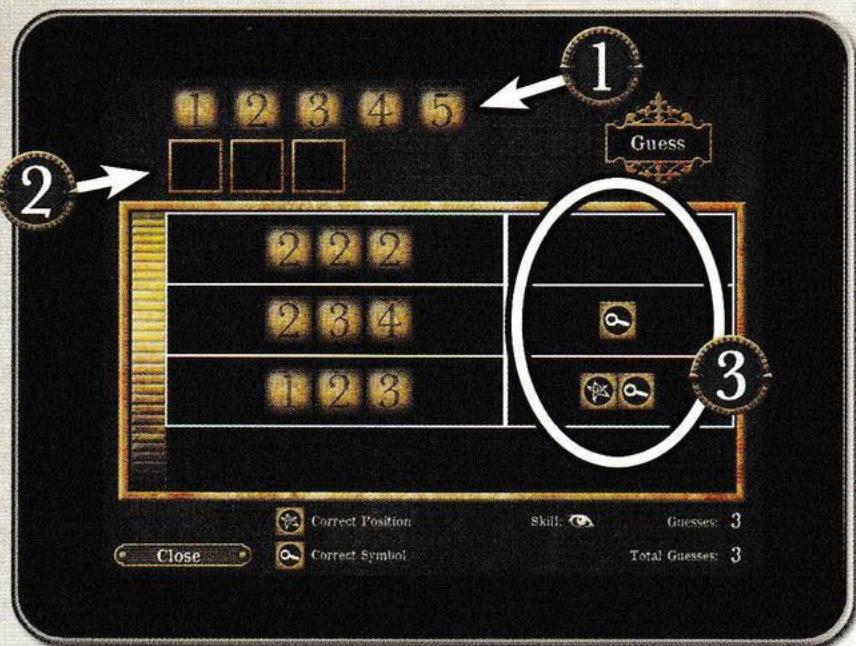
每份密碼都有兩個特性:長度,密碼中字符的數量;範圍,密碼中字符的可選擇範圍。
·能構成密碼的可選字符被展示在螢幕頂端(1)。每個字符都能使用任意次數。
調查員可以花費一個謎題步驟猜一次密碼。通過將字符拖拽入當前猜测框(2),然後點擊“猜测”。
猜測正確即可解開謎題。
若猜測不正確,調查員會收到猜測信息(3)。每个不正確的猜測都會在APP中以一定數量的成功結果(☆)和調查結果()標記。
·每個都說明某個正確的字符位於正確的位置。
·每個都說明某個正確的字符位於錯誤的位置。
收藏管理
玩家可在收藏管理中增加或移除《瘋狂詭宅》的產品和擴展。玩家通過在主界面選擇“更多”,然後點擊“我的收藏”進入收藏管
每局遊戲開始前,玩家應該確定收藏管理中所有想玩的產品和擴展都處於激活狀態。
·玩家能通過點擊特定產品的“激活/未激活”按鈕,切換該產品的狀態。
APP將不會用到未激活的產品或擴展中的配件。
普通道具
普通道具代表了調查員們在調查過程中遇到的許多物品和工具。
當調查員獲得普通道具時,他面朝上獲得該卡(插畫面朝上)。
普通道具是隨身物品。因此,能夠棄除、拾起或交易。
一些被稱為武器的普通道具卡帶有攻擊圖標和傷害值。這些卡能用來攻擊怪物。
一些普通道具卡是雙面的。這些卡的正反面都有信息。
·調查員能隨時查看普通道具卡的卡背,除非有效果禁止他那麽做。
·當普通道具卡翻面時,卡背上的名字,效果,攻擊圖標,和傷害值取代其正面信息。
當調查員棄除普通道具卡時,將其放回普通道具牌堆。
為便於遊戲中使用,普通道具牌堆應按拼音首字母順序排序。
相關話題:攻擊行動,雙面卡,物品,交易行動,性質
配件行動
調查員能通過一些配件或效果執行配件行動。詳細的配件行動規則在相應配件或效果上有所敘述。
卡牌上的配件行動前註有加粗的“行動”字樣,持有該卡牌的調查員能執行其上行動。
調查員能用一些特殊配件執行特定行動,具體詳見相應話題。
調查員能通過APP執行一些物品的配件行動。
·調查員通過在背包裡選擇物品,並點擊帶有行動圖標()的選項執行該物品行動。
·調查員必須花費一個行動以選擇帶有行動圖標的選項,由這次選擇所造成的效果,均視為該配件行動的一部分。
相關話題:行動,行動圖標,遊戲APP,特徵指示物,背包,物品。
狀態
許多遊戲效果會導致調查員獲取狀態卡。導致調查員獲取狀態卡的效果帶有“進入.……狀態”字眼。
當調查員獲取狀態卡時,他得到該類狀態中的一張卡,並將其面朝上(插畫面朝上)置於自己的遊戲區。
·調查員不能獲取多張同類狀態卡。
·若狀態卡是一張雙面卡,則調查員隨機獲得一張。
一些狀態卡是雙面卡。這些卡的正反面都帶有信息。
·調查員不能查看狀態卡背面,除非有效果允許他那麼做。
·調查員可以查看瘋狂狀態卡的背面,但是他不能向其餘調查員展示。
當調查員棄除一張狀態卡時,將其放回狀態牌堆。
調查員不能查看狀態牌堆中卡牌的背面。
相關話題:雙面卡
傷害與恐怖
許多遊戲效果會導致調查員受到傷害或恐怖。當效果導致調查員受到傷害或恐怖時,他獲得傷害牌堆或恐怖牌堆頂部的卡。
調查員面朝上拿取傷害卡和恐怖卡,除非有效果指明面朝下拿取。
當效果要求調查員將傷害卡或恐怖卡翻至正面時,他從所有面朝下的傷害或恐怖卡中隨機進行選擇。
每張傷害卡或恐怖卡都有一種性質:立刻結算或面朝上放置。
·當調查員拿取帶有立即結算特質的傷害或恐怖卡,或是將一張卡翻至正面,他立即結算卡牌效果,通常包含將卡牌翻至背面。
·面朝上放置的傷害卡或恐怖卡,只要其還是正面朝上就持續生效。
調查員不能查看面朝下的傷害或恐怖卡的正面,除非有效果允許他這麼做。
當有效果允許調查員棄除一張傷害或恐怖卡時,他可以選擇棄除一張面朝上的卡,或是隨機選擇一張面朝下的卡。
·當調查員棄除傷害或恐怖卡時,他將其放入對應牌堆並洗混。
傷害牌堆和恐怖牌堆均為面朝下放置。調查員不能查看傷害牌堆或恐怖牌堆的内容,除非有效果允許他這麼做。
傷害与恐怖(續)
受傷狀態
若調查員受到的傷害卡——無論傷害卡是面朝上還是面朝下——大於等於他的生命值時,他就會進入受傷狀態。
調查員立刻獲得一張受傷狀態卡,然後棄除所有面朝下的傷害卡。
·若某種效果使得調查員受到超過生命值的傷害,在得到受傷狀態卡前,他先獲得所有的傷害卡,最後棄除所有面朝下的傷害卡。
當一名處於受傷狀態的調查員受到大於等於生命值的傷害,則立 刻被消滅。
瘋狂
若調查員獲得的恐怖卡——無論恐怖卡是面朝上還是面朝下——大於等於他的神智值時,他就會進入瘋狂狀態。
調查員立刻獲得一張瘋狂狀態卡,然後棄除所有面朝下的恐怖卡。
·若某種效果使得調查員受到超過神智值的恐怖,在得到瘋狂狀態卡前,他先獲得所有的恐怖卡,最後棄除所有面朝下的恐怖卡。
·每張瘋狂狀態卡都對調查員人數有所要求,印在卡背的右下角。若當前調查員人數沒有達到瘋狂狀態卡要求人數,調查員棄除該卡,然後抽取新的瘋狂狀態。
·調查員不能將瘋狂狀態卡的背面(無插畫一面)展示給其餘調查員,除非有效果允許他這麼做。
·調查員的瘋狂狀態會改變該玩家的勝利條件。這樣,調查員就會做出不合常理的行動。參見第24頁“不常用行動”。
若發瘋的調查員直面等同於其神智值的恐怖,則被消滅。
相關話題:調查員被消滅,調查員,性質
黑暗
黑暗是妨礙調查員進行檢定的一種特徵。
調查員處於有黑暗標記的格子時,不能用線索來轉變骰子結果也不能執行額外的謎題步骤。
如果調查員位於或相鄰於有火或光源的格子,則無視黑暗效果。
·若格子裡的調查員持有光源,或是格子裡有放置或棄除於此的光源,均視為該格子有光源。
一個格子只能有一個黑暗指示物。
相關話題:特徵指示物,火焰,謎題,檢定,性質
骰子
調查員使用骰子進行檢定和結算效果。
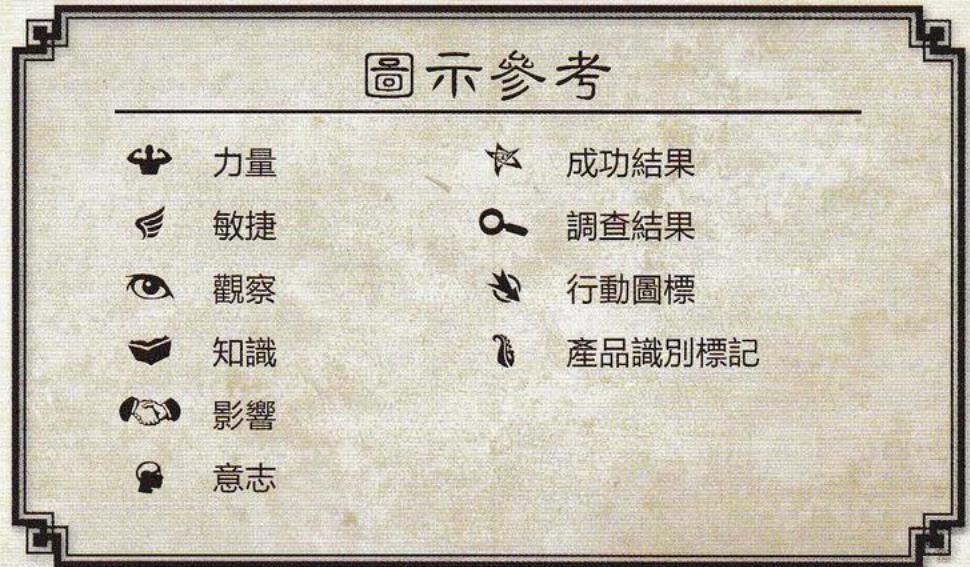
《瘋狂詭宅》的骰子有八個面。三面為成功結果(☆),兩面為調查結果(),剩餘三面為空白(無圖標)。
相關話題:檢定
棄除
當普通道具卡,特殊道具卡,法術卡,或狀態卡被棄除時,將其放回對應牌堆。
當棄除傷害卡或恐怖卡時,將其放回對應牌堆並洗混。
當棄除標記或指示物時,將其放回對應供應堆。
相關話題:花費
門
格子邊緣牆壁上的長方形開口即為門。門將兩個格子隔開。
兩個共用一扇門的格子視為相鄰。
門將相鄰的房間隔開。
調查員和怪物可以通過門,除非這扇門被屏障堵住了,或是其上有探索指示物。
地圖板塊的牆上,如果存在門標記,也視為有門。
相關話題:相鄰,地圖板塊,移動,房間,格子,牆壁
雙面卡
遊戲中有一些雙面卡。這些卡在正反兩面都有信息。調查員可以在任意時刻查看雙面卡的背面,除非有效果禁止他這麼做。
調查員不能查看法術卡的背面,除非有效果導致其翻面。
調查員不能將瘋狂狀態卡的背面展示給其餘調查員,除非有效果允許他這麼做。
丢棄
當調查員丟棄道具時,他將配件放置在他所位於的格子裡。
調查員在交易時,還可以於其丟棄任意數量的隨身物品。
相關話題:拾起,交易行動
調查員被消滅
當調查員被消滅時,他必須丟棄所有隨身物品,之後從版圖上移除自己的模型。
被消滅的調查員立刻結束其回合,且不能在調查階段執行行動。
當調查完成時,被消滅的調查員不算贏得遊戲,除非有效果允許他獲得勝利。
當有任意調查員被消滅時,剩餘調查員在下一個調查階段結束時輸掉遊戲。
·若所有調查員均被消滅,遊戲立即結束,所有調查員都輸掉遊戲。
相關話題:傷害與恐怖,贏與輸
躲避檢定
如果一名調查員要離開有怪物的格子,或要執行移動行動和攻擊行動之外的行動,那麼這名調查員必須先躲避怪物。步驟如下:
- 確定怪物:調查員只須對同一格子裡警覺度最高的怪物進行躲避檢定,警覺度為怪物指示物右上角的綠色數字。
·若與調查員在一起的數隻怪物警覺度相同,則由調查員選擇一隻進行躲避檢定。
- 結算躲避檢定:調查員從怪物匣中選擇一頭怪物。之後點擊“躲避”,並按照APP指示結算效果。
·由這次選擇所造成的所有效果,均視為調查員躲避檢定的部分。
·躲避檢定可能會導致調查員的行動立刻停止。
調查員由於其他效果導致離開怪物所在格時,不用進行躲避檢定。
相關話題:廢棄,怪物,移動
事件步驟
神秘階段要結算的第一個步驟是事件步驟。
事件步驟中,APP將生成需要調查員們解決的神秘事件。
在所有神秘事件被解決後,APP將自動進入到怪物步驟。
相關話題:遊戲APP,恐怖步驟,怪物步驟,神秘事件,神秘階段
探索行動
調查員能通過執行探索行動揭示相鄰的房間。要執行這一行動,他要選擇遊戲APP裡的探索指示物選項,選擇帶有行動圖標()的探索選項。
調查員需位於探索標記所在的格子,或與有調查指示物的門相鄰時,他才能對該探索標記進行探索行動。
調查員必須花費一個行動以選擇帶有的選项。
·由這次選擇所造成的所有效果,均視為調查員探索行動的一部分。
通常,結算探索行動包括放置地圖板塊以及指示物。
·在放置好所有地圖板塊和指示物後,APP可能會允許調查員穿過被探索過的門,進入被探索過的房間。
相關話題:行動,行動圖標,遊戲APP,探索圖標,地圖板塊,放置,房間
探索標記
將探索標記按照其在APP中的位置,在版圖上進行擺放。
探索指示物通常放置在門上。
調查員需位於探索標記所在的格子,或相鄰於有探索標記的門時,他才能對該探索標記進行探索行動。
探索標記和景象標記是同一個指示物的兩面。
相關話題:門,探索行動
最遠
最遠意味著“最遠的格數”,這其中包括那些因效果而出現的格子。
相關話题:最近,格子
特徵指示物
特徵,或特徵指示物是正方形指示物的通稱。
調查員能與特徵指示物互動,具體詳見相應指示物規則。
與特徵指示物產生互動時,不需要使用APP。
相關話題:屏障,黑暗,火焰,暗道
火焰
火焰是一種會對調查員和怪物造成傷害的特徵指示物。
無論何時,當調查員進入有火焰的格子時,他都會受到一點面朝下的傷害。
當調查員在著火的格子中執行了非移動行動後,他受到一點面朝下的傷害。
·即使調查員的行動因為效果被強制結束,也會因為火焰而受到1點面朝下的傷害。
調查員可以花費一個行動來試著撲滅火焰,這需要進行一次敏捷檢定()。每個成功結果()可以棄除一個所在個的火焰指示物,他也可選擇棄除自己該回合内稍後所要進入的格子内的火焰。
·因該效果被棄除的火焰不會使調查員受到傷害。
當一隻怪物在有火焰的格子激活,或移動到有火焰的格子時,受到一點傷害。
神秘階段開始時,火焰先行蔓延,之後再結算神秘事件。
·如果有至少一格著火,則在每個火焰的一個相鄰格子放置一個火焰指示物。
·APP將提醒玩家該效果。當經點火行動或是卡牌效果放置火焰時,調查員應選擇遊戲內菜單的“點火”選項。
調查員能通過執行點火行動在自己格子或相鄰格子放置火焰。
一個格子内只能有一個火焰指示物。
相關話題:配件行動,特徵指示物,點火行動,檢定
翻面
一些效果會導致卡牌翻面。卡牌保持面朝上或朝下狀態,直到有效果讓其翻面。
當調查員將法術卡翻面時,他立即結算卡背上的效果。
當調查員將傷害卡或恐怖卡翻至正面朝上時,若其性質是立即結算,他立即結算卡牌效果。
相關話題:傷害與恐怖,雙面卡,法術
行動強制結束
一些效果(通常是躲避檢定)會導致調查員強制結束其行動。
當調查員的行動被強制結束時,他失去該行動,且不結算效果。
若調查員的移動行動被強制結束,他失去剩餘的移動步數,並且停留在當前格子裡。
相關話題:行動,躲避檢定
獲得
當調查員獲得一張普通道具卡、特殊道具卡、或狀態卡時,他獲得那張卡,並將其面朝下放置在自己的遊戲區。
當調查員獲得一張法術卡時,他隨機得到該法術卡中的一張,並面朝上(插畫面朝上)放置在自己的遊戲區。
當調查員獲得線索時,他得到一個線索指示物,並放置在自己的遊戲區。
生命值與神智值
調查員的生命值與神智值印在調查員卡上。
生命值與神智值的數值是不變的。當調查員受到傷害或恐怖時,他的生命值和神智值不會下降。
相關話題:傷害與恐怖。
恐怖
参見第七頁的“傷害和恐怖”。
恐怖檢定
在神秘階段的恐怖步驟中,每名調查員結算範圍內的一頭怪物的恐怖檢定。步驟如下:
- 確定怪物:調查員必須結算範圍内恐怖等級最高的怪物的恐怖檢定,恐怖等級是怪物指示物正面右下角的數字。
·若範圍內多頭怪物的恐怖等級均為最高,則調查員選擇一頭進行檢定。
- 結算恐怖檢定:調查員從怪物匣中選擇對應的怪物,按APP指示結算效果。
·由這次選擇所造成的所有效果,均視為調查員恐怖檢定的一部分
·恐怖檢定通常會令調查員受到恐怖。
相關話題:恐怖步骤,怪物
恐怖步驟
恐怖步骤是神秘階段的第三步驟,也是最後步驟。
在恐怖步驟中,每個調查員選擇怪物匣中一頭範圍內的怪物,進行一次恐怖檢定並結算APP生成的效果。
·如果其範圍內有多頭怪物,則結算恐怖等級最高的那隻。
·如果範圍内沒有怪物,則不用結算。
·如果多個調查員結算同一頭怪物,那麼他們都結算相同的恐怖檢定。
在所有調查員做完恐怖檢定後,點擊螢幕右下角的階段結束按鈕,神秘階段結束,新一回合的調查階段開始。
·如果沒有怪物,APP會自動結束神秘階段並直接進入新的回合。
相關話題:遊戲APP,事件步驟,恐怖檢定,怪物匣,怪物步骤,神秘事件,神秘階段
無法通過的邊界
黃色或白色的虛線邊界線是無法通過的。每條無法通過的邊界都隔開多個格子。
調查員和怪物不能通過該種邊界,除非效果允許其這麼做。
兩個共用一條該種邊界的格子視為相鄰。
該種黃色邊界隔開相鄰的房間。
相關話題:相鄰,邊界,地圖板塊,移動,房間,格子
遊戲內菜單
遊戲內菜單包含了許多玩家可以在遊戲中選擇的選項。
調查員可以點選螢幕左下角的菜單按鈕來進入遊戲內菜單。
·玩家可以隨時進入該菜單。
相關話題:遊戲APP,消息記錄,目標,保存與退出,贏與輸
室内
房間分為室內和室外兩類。房間內的所有格子都共享該屬性。
有屋頂的房間即為室內。
·比如休息室、餐廳、大廳、臥室。
· 在第二版遊戲中,室內房間的名字是紅色金邊的。
背包
調查員在劇本中搜集到的物品放置於APP中的背包內。
調查員可以點擊螢幕左下角的背包按鈕來打開背包。
背包內只有調查員可以通過電子應用來檢視的道具。
相關話題:遊戲APP,物品
互動行動
調查員可以執行互動行動來和人物或物體互動。他通過選擇APP內含行動圖標()的人物或互動標記的選項,以進行互動。
調查員只有處於和相應標記同格時,才能執行相關人物或互動標記的互動行動。
调查員必须花費一個行動以選擇帶的選项。
·由這次選擇所造成的所有效果,均視為調查員互動行動的一部分。
互動行動通常包括技能檢定以及得到物品或線索。
相關話題:行動,行動圖標,遊戲APP,互動標記,人物,檢定
互動標記
版圖上的互動標記對應於APP內的互動標記
調查員只有處於和相應標記同一格時,才能執行該標記的互動行動。
搜索標記和互動標記是同一個指示物的兩面。
相關話題:互動行動
調查員
“調查員”一詞用於指代一個角色,以及該角色相關的卡片、模型、控制該角色的玩家。
2 “當前調查員”指的是該回合中的調查員或是正在執行行動的調查員。
每個調查員的卡上都印有一項能力,這個能力會在遊戲中對其有所裨益。
每張調查員卡片都標出了其生命值和神智值,以及其六項技能一力量(),敏捷(),觀察(),知識(❤),影響(),意志()。
調查員卡片的背面則是角色背景故事。
相關話題:生命值與神智值,技能
調查階段
調查階段是每輪的第一個階段。
在調查階段,每個調查員執行一個回合,回合順序由調查員內部決定。
在一個調查員的回合,他可以做至多兩個行動。
所有調查員完成其回合後,點擊螢幕右下角的階段結束按鈕來結束調查階段,然後進入神秘階段。
相關話題:行動,遊戲APP,神秘階段,回合,輪
道具
“道具”一詞用於指代普通道具和特殊道具。
相關話題:普通道具,特殊道具
解鎖謎題
在解鎖謎題中,調查員要試圖通過移動鎖塊將目標滑塊移出格子棋

在解鎖謎題中,每個鎖塊都有兩個特徵:長度,一般是其寬度的2-3倍;方向,垂直或水平。·目標鎖塊在外觀上和其他鎖塊不同。
花費一個謎題步驟,調查員可以拖動任意一個鎖塊。
·鎖塊只能以其方向移動——垂直或水平(1)。
·鎖塊之間不能覆蓋也不能穿越。
如果目標鎖塊被移至格子棋盤的最右邊,則謎題被解開(2)。
遊戲失敗
詳見第十九頁“赢與輸”。
地圖板塊
每個地圖板塊都有一個或多個房間。在遊戲中,調查員根據APP指示放置板塊。
地圖板塊不會被移除,直到某個效果指示將其移除。
·如果一個板塊被移除,則將其放回到可用的地圖板塊堆。
相關話題:房間
消息記錄
遊戲中,APP顯示的消息與調查員所做的選擇,都會保留在消息記錄中。調查員可點選遊戲內菜單的“消息記錄”來打開消息記錄。
玩家可以隨時打開消息記錄。
消息記錄被分為多頁。每回合的消息都獨立成頁。
相關話題:遊戲APP,遊戲内菜單
怪物
“怪物”一詞用於指代怪物的指示物,及其模型和其對應的身份指示物(如果有的話),以及APP中的数字化形象
當一個效果產生了怪物,根據效果指示放置一隻怪物。
·如果場上已經有了另一隻同種怪物,那麼APP會說明附帶的身份指示物。將身份指示物安放在該怪物基座上。
怪物會在神秘階段的怪物步驟激活。怪物激活的過程中,其會向調查員移動並進行攻擊。
有些怪物的指示物背面寫有能力——比如水棲或飛行。
在神秘階段的恐怖步驟,每個調查員必須結算其範圍內一頭怪物的恐怖檢定。
·如果範圍内有多頭怪物,則結算恐怖等級最高的,恐怖等級為指示物正面右下角的藍色數值。
調查員可以執行攻擊行動來攻擊怪物。
如果與怪物同格內的調查員,想主動離開或執行除移動或攻擊以外的行動,其必須結算針對於同格怪物的一次躲避檢定。
·如果有多頭怪物在同一格,那麼只結算最高警覺度的怪物,警覺度為指示物正面右上角的綠色數值。
很多效果會提到怪物的力量值,力量值為指示物反面右下角的紅色數值。
如果一頭怪物受到等同於其生命值的傷害(怪物菜單頂部角落的數值)那怪物被消滅並被棄除。
·當一頭怪物被棄除後,將其置於一旁,直到有效果用到它。
相關話題:遊戲APP,攻擊行動,躲避檢定,恐怖檢定,恐怖步骤,怪物匣,怪物步骤,移動
怪物匣
在某個劇本中出現的怪物都可以在遊戲APP中的怪物匣找到。
調查員可以點擊螢幕左下角的怪物匣按鈕來打開怪物匣。
相關話題:遊戲APP,怪物
怪物步驟
怪物步驟是神秘階段三個步驟中的第二個。
在怪物步驟中,APP會生成一系列指示,來激活需要調查員結算的怪物。
所有怪物被激活後,APP會自動進入恐怖步驟。
相關話題:遊戲APP,事件步驟,恐怖步驟,怪物,神秘事件,神秘階段
移動
遊戲過程中,調查員、怪物、指示物可以在版圖上移動。
當調查員或怪物要移動多個格子時,他們一次移動一格,從一個格子移動到另一個相鄰的格子。
·調查員或怪物不能穿過牆壁或無法通過的邊界,除非有效果允許它這麼做。
·調查員或怪物不能穿過被屏障堵住的門,除非有效果允許它穿牆。
如果調查員、怪物或指示物被移至指定的格子,那就先將其移出版圖,然後放到那個格子。這次移動不經過起點與終點間的任何格子。
·移動到指定格子可以無視無法通過的邊界、牆壁、堵住的門。
假如效果描述用到“可以”或“最多”之類的短語,那就是指主動移動。例如:“你可以移動一格到這個探索過的區域。
·與怪物同格的調查員如果主動移動,那就必須結算同格怪物的躲避檢定。
假如效果描述沒有用到“可以”或“至多”之類的短語,那就是指被動移動。例如:“朝遠離鬼魂的方向移動兩格。
·與怪物同格的調查員如果被動移動,那就不用結算同格怪物的恐怖檢定。
相關話題:相鄰,離開,屏障,邊界,門,躲避檢定,無法通過的邊界,移動行動,推動行動,格子,靠近
移動行動
調查員能執行移動行動來移動至多兩個格子。
調查員可以暫時打斷移動行動,插入另外一個行動。他做完中途插入的行動後,繼續完成其移動行動。
如果調查員的移動行動中包括移出一個有怪物的格子,那就必須結算同格怪物的躲避檢定。
相關話題:行動,躲避檢定,移動
神秘事件
在神秘階段的事件步驟,APP會生成需要調查員結算的神秘事件。
每個神秘事件都詳細說明了其效果,其通常會讓調查員結算一次檢定,並受到傷害或恐怖。
相關話題:遊戲APP,事件階段
神秘階段
每輪的第二個階段是神秘階段
神秘階段有三個步驟:事件步驟、怪物步驟、恐怖步驟。
神秘階段的每個步驟中,APP都會生成一系列需要調查員執行的指令。
神秘階段的所有效果結算後,調查員點擊螢幕右下角的階段結束按鈕,神秘階段結束,新一輪的調查階段開始。
相關話題:遊戲APP,事件步驟,恐怖步驟,調查階段,怪物步驟,輪
最近
最近是指“距離最少格子”,這其中包括那些因效果而出現的格子。
相關話題:最遠,格子
消除
一項技能檢定說明中,如果技能圖標後跟著“消除”這個詞,那說明該檢定可以防止傷害或恐怖。
調查員可用每個成功結果(),防止一點傷害或一點恐怖,具體由其選擇。
相關話題:傷害與恐怖,檢定
遊戲目標
遊戲中,調查員可以打開遊戲內菜單查看他們的目標。
目標說明了調查員應該做什麼以及如何獲勝。
遊戲APP只會記載調查員為了完成劇本而要完成的基本目標。調查員最好記錄遊戲内的發現。
相關話題:遊戲APP,遊戲內菜單
室外
房間分為室內和室外兩類。房間內的所有格子都共享該屬性。
沒有屋頂的房間即為室外。
·例如:小巷、街道、庭院、碼頭。
·在第二版遊戲中,室外房間的名字是被紅色觸手包住的銀字。
人物
版圖上的人物指示物對應APP中的人物標記。
調查員只有和人物處於同格時,才可以和其互動。
每個人物指示物的美工都是不同的,這樣便於區分。
一共兩種人物指示物——普通人物指示物和特殊人物指示物。
·普通人物指示物只是一個身形輪廓。這些指示物是雙面的,代表那些小角色。
·特殊人物指示物則是全彩畫像。這些指示物代表了有名有姓的不同人物,名字在指示物的背面。
相關話題:互動行動
拾起
調查員拾起一件物品時,他得到該物品,並正面朝上放在自己遊戲區
作為交易行動的一部分,調查員可以拾起其格子中的物品。
相關話題:丟棄,物品,交易行動
放置
一些效果會指示調查員在版圖上放配件。
當放置一塊地圖板塊時,將其放在如APP指示的中央遊戲區域。
當放置其他配件時,將其放在如效果指示的版圖上。
相關話題:版圖
隨身物品
隨身物品是配件的一種,它們可以被棄除,拾起、交易或執行效果。
普通道具、特殊道具、法術是物品。
所有其他的配件則不是物品。
相關話題:普通道具,法術,交易行動,特殊道具
推動行動
調查員能執行推動行動來推一頭怪物或另一名調查員。步驟如下:
-
選擇目標和目的地:當前調查員選擇一個同格的怪物或調查員作為目標,並選擇一個相鄰格作為目的地。
-
決定意願:如果是推另一名調查員,則被推的調查員要選擇自願移動或者拒絕移動。如果他選擇自願移動,則進入第五步結算移動”。
-
決定檢定難度:如果是推怪物,則檢定難度等於怪物的力量值。如果是推調查員,則那個調查員檢定力量()。檢定難度等於檢定結果加一。
-
結算检定:当前调查員執行一次力量检定()。
·如果結果大於等於檢定難度,則進入第五步。
•反之則立刻結束行動,不用結算。
- 結算移動:怪物或選定的調查員向目標格移動一格。然後當前調查員可以向目標格移動一格。
調查員只有和目標怪物或調查員同格時,才能執行該行動。
相關話題:行動,移動,檢定
謎題
APP內的某些效果會讓調查員嘗試解開一個謎題;這種效果會說明調查員用什麼技能來嘗試解開謎題。當調查員嘗試解開謎題時,步驟如下:
- 判定謎題步驟:調查員判定他能執行的最多解謎步驟數,數量等同於其卡片上指定的技能數值。
·有些效果讓調查員可以執行額外的謎題行動。
- 執行謎題步驟:調查員執行謎題步驟,不能超過允許的最多步驟數。
· 每花一個線索可額外執行一個謎題步驟。
- 確定結果:是否解開謎題取決於生成這個謎題的效果。
·APP會自動檢測是否解決了謎題。
·如果謎題沒有被解決,調查員點擊“關閉”按鈕,這樣就終止了這次嘗試。
·謎題進程會由APP保存。
不同類型的謎題有自己的規則,其中包括調查員可以執行的謎題步驟的種類。
相關話題:遊戲APP,密碼謎題,解鎖謎題,謎題步驟,技能,滑塊謎題
謎題步骤
謎題步驟是破解謎題的一個進程單元。
謎題步驟的種類由謎題本身決定。
遊戲APP會記錄調查員破解謎題過程中的謎題步驟。
隨機
一些效果會產生隨機結果。用到“隨機”描述的效果,其結果完全由幾率決定。所有可能結果的概率都相等。
例如:
要隨機決定一名調查員,調查員們可以通過投擲骰子,每面都代表不同的調查員。他們也可以通過剪刀石頭布來決定。
如果某個效果導致調查員隨機棄除一件道具,他可以投擲一顆骰子,每面對應一個不同的道具。也可以洗混卡片然後讓另一個玩家隨機抽取一張。
範圍
某些效果的範圍會用到短語“在範圍內”,這範圍至多三個格子遠。
範圍計算不能穿過牆壁或門,除非有效果允許如此計算。
範圍計算可以穿過無法通過的邊界。
相關話題:邊界,門,無法通過的邊界,格子,牆壁
從版圖上移除
某些效果指示玩家從版圖上移除配件。
當一個配件被移除後,玩家將其放在一邊。
移除的配件不佔據格子或房間。
相關話題:版圖
房間
房間是指一組格子,房間和房間之間以牆壁、門、黃色邊界、黃色無法通過的邊界或地圖板塊的邊緣隔開。
每個房間都有自己的名字,指代該房間內所有的格子。
房間分為室內和室外兩類,房間內所有的格子都共享該屬性。
相關話題:邊界,門,無法通過的邊界,室內,地圖板塊,室外格子,牆壁
輪
《瘋狂詭宅》遊戲由數輪組成,每輪有兩個階段:調查階段和神秘階段。
每輪的神秘階段結束後,調查員開始新一輪的調查階段。如此循環,直到玩家獲勝或失敗。
相關話題:調查階段,神秘階段,贏與輸
神智值
詳見第十頁“生命值與神智值”。
保存並退出
玩家可以保存當前劇本進度然後返回主菜單。他們可以下次繼續遊戲。
玩家可以點選遊戲內菜單裡的選項來保存並退出。
如果玩家打算之後繼續遊戲,那麼他們要記下各自的物品,傷害與恐怖,調查員模型的位置,怪物和版圖上的物品。
•地圖板塊和版圖上的指示物由APP記錄。
玩家可以在遊戲設置時點選主菜單的“繼續”按鈕來繼續之前保存的遊戲。
APP一次只能記錄一局保存的遊戲。
· 如果開新局則會覆蓋之前保存的遊戲數據。
相關話題:遊戲APP,遊戲內菜單
搜索行動
調查員可以執行搜索行動來搜索其所處的格子。他通過點選APP內帶行動圖標()的搜索標記來執行行動。
調查員只有和搜索指示物同格时,才可以執行搜索行动。
玩家必須選擇花費一個行動來選擇帶有()標記的選項。
·由這次選擇所造成的所有效果,均視為調查員搜索行動的一部分。
結算一個搜索行動通常包括結算一次檢定和獲得線索或物品。
相關話題:行動、行動圖標、APP、搜索指示物、檢定
搜索標記
版圖上的搜索標記對應APP中的搜索標記。
調查員只有和搜索標記同格時,才能執行搜索行動。
搜索標記和互動標記是同個指示物的兩面。
相關話題:搜索行動
暗道
暗道是特徵指示物的一種,它連接多個格子。
有暗道的格子視為相鄰。
不能通過暗道計算範圍。
如果暗道被屏障堵住,調查員和怪物就不能通過。
相關話題:相鄰,屏障,特徵指示物,範圍,格子
點火行動
調查員可以執行點火行動,在自己的格子或相鄰的格子放置火焰。
調查員只有擁有光源才可以執行該行動。
一個格子内只能有一個火焰指示物。
當調查員執行點火行動的時候,如果版圖上沒有現成的火焰,他應該選擇遊戲內菜單的“點火”選項。
相關話題:行動,火焰,性質
景象標記
版圖上的景象標記對應遊戲APP中的景象標記。
景象標記通常放在格子的邊緣。
調查員可以檢視景象標記,並根據APP指示結算效果。這不需要花費行動。
探索標記和景象標記是同個指示物的兩面。
技能
調查員擁有六項獨特的技能,分別代表他們的力量、弱點以及天賦。六項技能如下:
力量()代表了調查員的物理戰力和耐力。高的調查員很適合使用重型武器來攻擊,也不太會受到物理創傷帶來的傷害。
敏捷()代表了調查員的物理速度以及協調性。高的調查員很適合使用銳器或者槍械攻擊,而且更容易躲避怪物。
觀察()代表了調查員的觀察入微和空間認知。高的調查員很適合搜索信息和開鎖。
知識()代表了調查員的理論知識和奥術知識。高的調查員很適合施法以及整合大量信息。
影響()代表了調查員的魅力和社交情商。高的調查員很適合與人物互動。
意志()代表了調查員的自制力和精力。高的調查員不太容易受到恐怖或遭受精神和社交創傷。
技能數值(從2到5)代表了調查員在做該項檢定時投擲的骰子數。
相關話題:調查員,檢定
玩家需要通過滑動拼圖來解決滑塊謎題,通常會有六片或更多的拼圖。
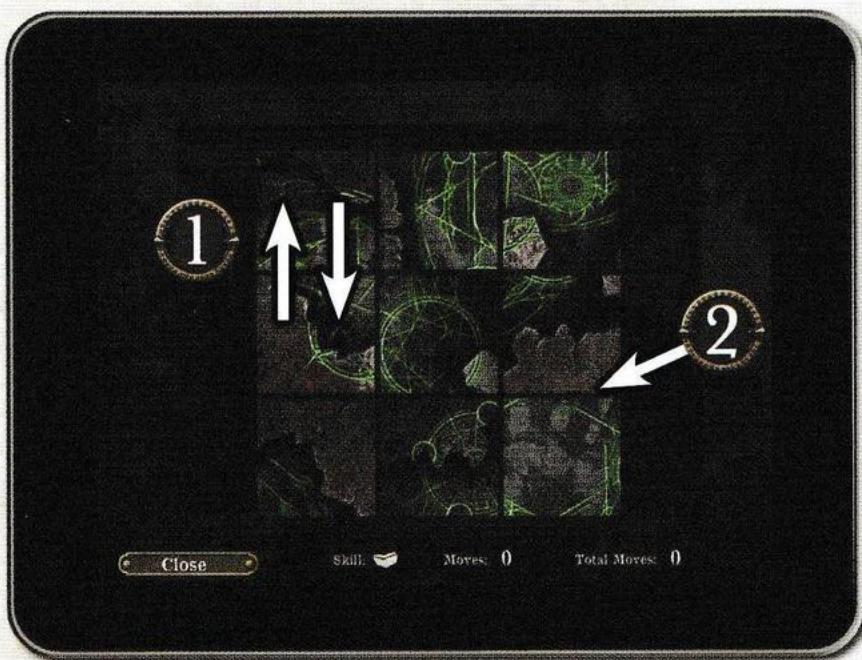
滑塊謎題的拼圖呈格子狀隨機分佈。
調查員可以花費一個謎題步驟,將一個滑塊拖動覆蓋另一個,以交換相鄰兩滑塊。
·兩個共用一邊的滑塊視為相鄰。
當所有圖片滑塊都處於正確格子後,完整的謎題圖像將顯示,謎題被解開。
格子
格子是地圖板塊上的一個區域,格子之間用邊界、無法通過的邊界、牆壁或門隔開。
調查員、怪物、指示物位於格子中。
相關話題:相鄰,邊界,門,無法通過的邊界,室內,地圖板塊,室外,房間,牆壁II

法術是指那些書本或捲軸,這些東西裡記載了足以駕馭可怕力量的知識。
如果調查員得到一個法術,則隨機抽取一張該法術的卡片,並面朝上放置(插畫面)。
法術是物品。所以可以像其他物品一樣丟棄、拾起或交易。
法術卡是雙面的,這種卡兩面都有信息。
·調查員不能查看法術卡背面,除非有效果允許他這麼做。
·當一個調查員將一張法術卡翻面,他立即結算背面的效果。效果通常包括棄掉本卡,然後再從該法術牌堆抽取一張新卡。
有些法術被稱作攻擊法術,這些法術有一個攻擊圖標和傷害值。這些法術可以用來攻擊怪物。
當調查員棄除法術卡時,則將其放回對應法術牌堆。
調查員不能查看法術牌堆中的卡牌的背面。
相關話題:攻擊行動,雙面卡,物品,交易行動
花費
有些效果會讓調查員花費線索或其他配件來作為使用該效果的代價。
當調查員花費配件時,他將其棄除作為結算效果的線索或其他配件。
調查員不能花費他沒有的配件。
所有花費配件的效果都是可選的。
相關話題:棄除
偷竊行動
調查員可以執行偷竊行動來盜取同格中其他調查員的物品。步驟如下:
-
選擇目標:當前調查員選擇同格的另一名調查員。
-
敵对检定:当前调查員在力量(),敏捷(),觀察()中選擇一項。然後兩個調查員都進行該項檢定。
-
結算盜竊:當前調查員投擲得到的成功結果(☆)如果超過被盜的調查員,則每多一個就偷竊一件物品。
·如果檢定結果沒超過被盜的調查員,則立刻結束該行動,不偷取任何物品。
相關話題:行動,調查員,物品,檢定
檢定
技能圖標會出現在簡述後的括號中。這是一項檢定說明;表明調查員必須檢定某項特定的技能。結算檢定時,步驟如下:
- 確定骰子數:調查員決定要投擲的骰子數量。
·初始數量為調查員該項檢定技能的數值。
·数量會進行修正。修正是指在效果的技能圖标後,標有“+”或“-”的數字。
·他還要加上或減去受其他效果影響的骰子數,比如道具和狀態
- 投擲骰子:調查員投擲所獲得的骰子。
·如果骰子數量少於1,則至少投擲一顆骰子。
·如果玩家需要投擲的骰子的數量超過配件中的骰子總量,那麼先全部投擲完,記錄結果。然後繼續投擲,直到擲過的骰子數等於需要投擲的骰子數。
- 重擲與轉變骰子:調查員可以使用效果來重擲骰子或改變骰子結果,這包括花費線索來將調查結果()轉變為成功結果(☆)。
4.決定結果:總的數就是檢定結果。成功或失敗的後果由進行該項檢定的效果決定。
·檢定說明可能包含一個與技能圖標用分號隔開的數值。這就是檢定難度。檢定難度說明了通過檢定所需的檢定結果。如果檢定結果低於檢定難度,則失敗。
·檢定說明如果其技能圖標後面跟了“消除”,那說明該項檢定可以防止傷害或恐怖。每個防止一點傷害或恐怖。
檢定效果前面的“如果檢定成功”或“如果檢定失敗”。該句中的效果只有調查員通過或失敗才會對應發生。這之後的段落或新的段落中的效果與其無關。
相關話題:遊戲APP,線索,骰子,技能
靠近
當一樣配件要靠近另一樣配件或一個格子時,它的每一步都必須縮短與目的地之間的距離。
相關話題:離開,移動,格子
交易行動
調查員可以執行交易行動,這樣他可以讓自己和同格的每調查員交換任意數量物品;拾起同格中任意數量的物品,或丟棄任意數量的物品於當前格子。
這些效果可以以任意順序多次結算。
相關話題:行動,丟棄,拾起,物品
性質
性質——比如槍械、光源、證據——會出現在道具、傷害、恐怖以及其他卡片上。
性質在文本中以手寫體表示。
性質本身沒有效果。
有些效果會提到卡牌的性質。比如“你有光源才可以探索。”
在調查階段,調查員們自己決定回合順序,並執行行動。
在一個調查員的回合中,他可以執行至多兩個所選行動。
相關話題:行動,調查階段
特殊道具
特殊道具代表了調查員在調查過程中遇到的許多物品和工具。
當調查員拿到特殊道具後,將其面朝上放置(插畫面朝上)。
特殊道具是物品,所以可以像其他物品一樣被丟棄、拾起或交易。
某些特殊道具被叫做武器,它們有攻擊圖標和傷害值。可以用來攻擊怪物。
有些特殊道具是雙面的,這些卡片的正反面都有信息。
·調查員可以隨時查看卡片背面,除非有效果不允許他這麼做。
·當一張特殊道具被翻面,那背面的數據將取代正面。
當調查員棄除特殊道具卡後,將卡片放回特殊道具牌堆。
特殊道具牌堆最好按拼音首字母排序,以便於查找。
相關話題:攻擊行動,配件行動,雙面卡,物品,交易行動
牆壁
格子邊緣的棕色實線代表牆壁。每面牆壁隔開多個格子。
調查員和怪物不能穿過牆壁,除非效果允許他這麼做。
兩個共用一面牆壁的格子視為相鄰。
牆壁隔開相鄰的房間。
計算範圍的時候不能穿過牆壁,除非效果允許如此計算。
影響相鄰格子的效果不能跨越牆壁,除非效果指明能夠影響。
地圖板塊上的門如果被牆壁指示物覆蓋,那麼視其為牆壁。
相關話題:相鄰,門,地圖板塊,移動,房間,格子
贏與輸
在遊戲設定中,玩家們選擇的劇本將決定調查員的遊戲目標和勝利條件。然而,這個勝利條件是隱藏信息。
遊戲過程中,調查員要解開謎團並發現終極目標。玩家們要仔細傾聽劇本開場白,詳細檢查在調查過程發現的每條提示。
當調查進行到一定程度後,目標自然會明了,這便是調查員們最後要完成的任務。調查完成後,調查員獲得遊戲勝利。
伴隨著調查進程,目標可能會改變從而變得更加困難。如果調查者花了過長時間,遊戲會在調查還沒完成前就結束。一名調查員要讀出劇本收場白。調查員失敗。
當一名調查員被消滅後,遊戲便會在下個調查階段結束後結束。在該調查階段結束後,如果調查沒有完成,那麼調查員點擊遊戲內菜單的“調查員被消滅”按鈕,然後讀出收場白。調查員失敗。
有些遊戲效果,主要是瘋狂狀態,會改變某個調查員贏與輸的條件。這個效果會清楚地說明該條件。
·如果因為某張卡牌效果遊戲結束,那麼調查員點擊遊戲內菜單的“遊戲結束”按鈕。
相關話題:遊戲APP,消滅,遊戲內菜單,瘋狂,目標
遊戲APP界面詳解
遊戲内界面
遊戲中,玩家主要是和遊戲内的玩家界面互動

-
地圖:地圖是界面的主要部分。玩家探索劇本地點並揭露地圖的更多部分後,那些板塊和板塊上的標記會在界面的中央顯示。地圖上只會顯示互動性的標記。
-
遊戲內菜單按鈕:玩家可以隨時點擊這個按鈕來打開遊戲內菜單。在該菜單中,玩家可以查看消息記錄,或保存劇本進度以便下次玩。
-
怪物匣按鈕:玩家可以在遊戲中點擊該按鈕來打開或關閉怪物匣。可在怪物匣中選擇怪物來打開怪物菜單。
-
背包按鈕:玩家可以在遊戲中點擊該按鈕來打開或關閉背包。當調查員找到可以通過APP互動的道具時,這些道具就會出現在背包中。
5.怪物匣/背包:當怪物匣和背包打開界面後,會在界面底部顯示。
- 階段結束按鈕:玩家可以點擊該按鈕來結束當前階段,然後開始下個階段或新回合。
7.菜單設置按鈕:玩家可以隨時點擊該按鈕來打開菜單設置。
遊戲APP界面詳解
怪物功能表界面
從怪物匣中選擇怪物可以打開該怪物的怪物菜單。玩家可以在遊戲中使用該菜單來和怪物互動。

-
名字和圖像:名字和圖像標明了選中的怪物。怪物菜單中的所有信息都關於被選中的怪物。
-
生命值:怪物的最大生命值出現在界面的左上角。
3.身份圖標:怪物的身份圖標(如果有的話)出現在怪物圖像的邊上。這個身份圖標對應怪物基座上的身份指示物。
4.傷害:怪物承受的傷害量在其名字下面显示。玩家可以用“+”、“-”按鈕来增加或去除傷害。
-
攻擊按鈕:玩家可以點擊攻擊按鈕攻擊該怪物。
-
躲避按鈕:當調查員要躲避怪物的時候,玩家點擊該按鈕來生成躲避檢定。
-
效果框:和怪物有關的效果出現在右邊的方框裡。每當玩家攻擊怪物,躲避怪物或怪物激活的時候,遊戲效果便在此出現。
8.怪物匣:玩家可以點擊怪物匣中怪物的圖像來選擇怪物。點擊當前選中的怪物的圖像則可關閉該怪物菜單。
怪物模型參照
怪物模型組裝
將模型的下部支柱插入合適的基座中來組裝怪物模型。將星之眷族插入大型基座中,追獵恐魔和暴徒插入中型基座,其他所有模型插入小型基座。
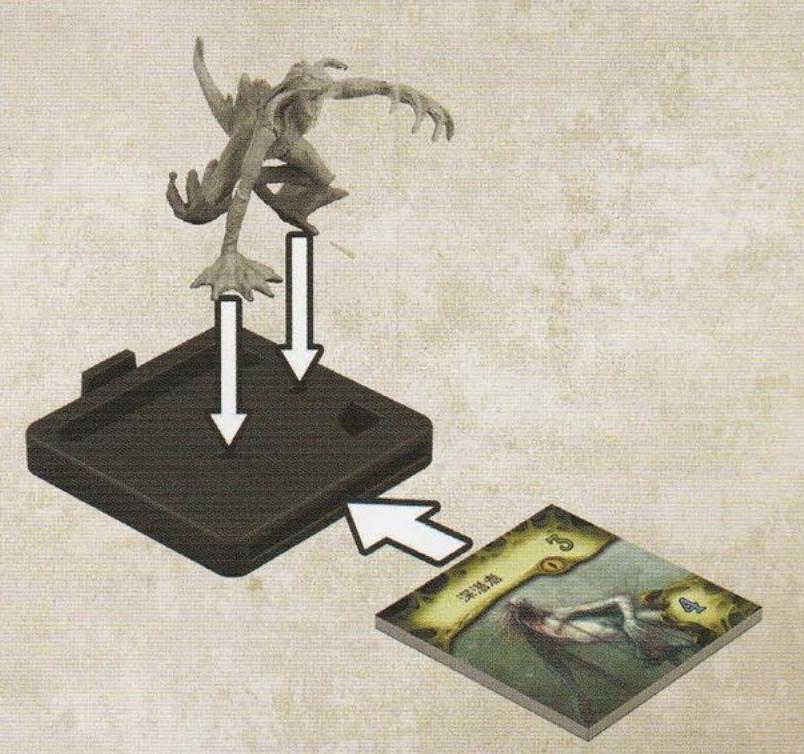
所有模型插入基座後,將相應的怪物指示物塞入基座底部。基座被設計成不用拿出怪物指示物,就可以看到怪物的相關信息。
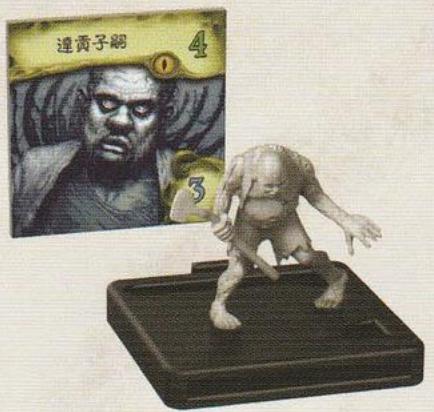

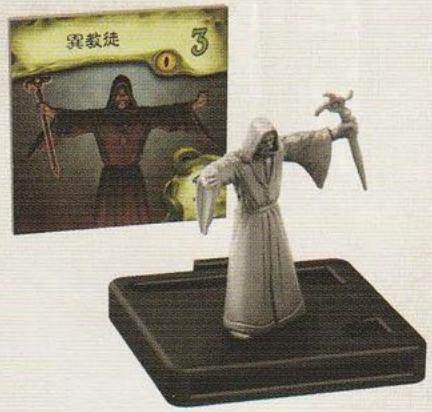
異教徒模型
達貢子嗣模型

深潛者模型

混血深潛者模型
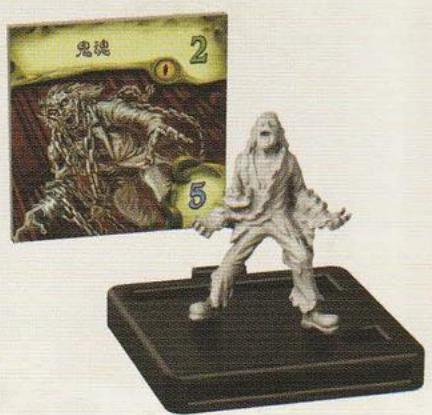
鬼魂模型

達貢祭師模型
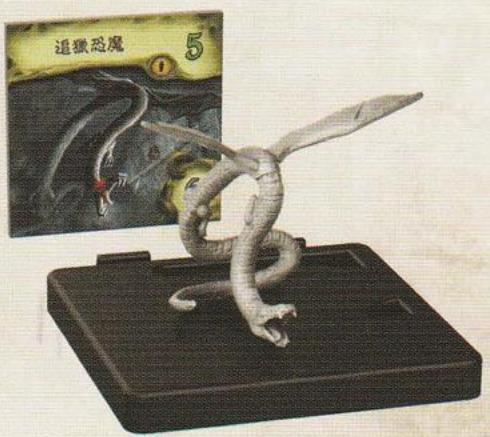
追獵恐魔模型
星之眷族模型

暴徒模型
索引
A
16
B
版圖 5
保存並退出.... 16
北——詳見“方位”
背包 ..11
被動移動——詳見“移動” 13
邊界 5
不能——詳見“金科玉律”
C
衝突
D
道具.
地圖板塊
點火行動 ...16
調查員....
調查階段 .11
丢棄.
東——詳見“方位” 5
躲避檢定.
F
法術. ..17
範圍…
方位.. ....5
放置... ...14
瘋狂——詳見“傷害與恐怖”
G
格子.
攻擊行動
怪物…… ....12
怪物步驟 .... 13
怪物功能表界面 ..21
怪物模型參照...
怪物匣...
光源——詳見“性質” 18
H
黑暗… 7
互動標記
互動行動 ....11
花費…
滑塊謎題……… 17
2
回合…… 18
獲得.. 10
火焰
擊昏 一詳見“狀熊”
L
技能. ...16
集中——詳見“狀態”
檢定……
檢定結果——詳見“檢定”
交易行動 ..18
解鎖謎題 .12
警覺度— 一詳見“怪物” 12
景象標記 16
K
靠近. 18
可以 詳見“術語解釋” .2
恐怖 -詳見“傷害與恐怖”
恐怖步驟
恐怖等級 一詳見“怪物”
恐怖檢定 ...10
離開 5
力量值——詳見“怪物” 12
輪 15
M
門. ...8
密碼謎題 ..6
謎題 ...15
謎題步驟 15
N南 -詳見“方位”
能 一詳見“術語解釋”
P
配件上限 2
配件行動 6
屏障... 5
普通道具 6
Q
棄除. 8
牆壁 19
清空版圖 5
R
人物. 14
S
傷害與恐怖
神秘階段 13
神秘事件 13
神智值
詳見“生命值和神智值” 10
生命值與神智值……… 10
事件步骤…… 8
室内……
室外
拾起 14
使用本參考手冊 2
收藏管理
受傷——詳見“傷害與恐怖”
雙面卡..
搜索標記 16
搜索行動 .16
隨機… 15
隨身物品.
T
探索標記 9
探索行動
特殊道具 19
特徵指示物 .9
偷竊行動.. 17
骰子……
骰子數——詳見“檢定” 18
退出一 一詳見“保存並退出” 16
推動行動.... 14
W
玩家界面——詳見“遊戲APP”
無法通過的邊界 10
武器——詳見“普通道具”
X
西一 一詳見“方位” 5
線索... 5
相鄰. 4
消除. 13
消息記錄 12
消滅.....
行動
行動圖標… 4
行動強制結束. 10
性質 18
眩暈一 一詳見“狀態”
Y
移動. 13
移動行動.. 13
抑制 “狀態” 7
贏與輸. 19
遊戲初始設置.
遊戲目標… 14
遊戲内菜單 10
遊戲内界面. 20
遊戲失敗一 一詳見“贏與輸” 19
遊戲APP 4
遊戲APP界面詳解.
Z
證據 詳見“性質” 18
爭執 詳見“衝突” 2
主動移動——詳見“移動” 13
狀態
最近
最遠

快速流程
局《瘋狂詭宅》遊戲有好幾輪。每輪由兩個階段組成,即調查階段和神秘階段。
調查階段
在調查階段,每名調查員按照商定的回合順序進行行動。在一名調查員的回合中,他可以至多執行兩個行動。
常用行動
移動行動:移動至多兩格。移動中可以穿插其他行動。
搜索行動:通過APP調查同一格的搜索標記。
探索行動:通過APP調查同一格的探索標記。
互動行動:通過APP和一個同格的人物或互動標記互動。
攻擊行動:通過APP,使用近戰武器攻擊同格的怪物或用遠程武器攻擊範圍内的怪物。
交易行動:和同格的其他調查員交換物品。拾起同格的物品或棄除物品到該格。
不常用行動
推動行動:推開一個怪物或帶上其他調查員。詳見第十四頁的“推動行動”。
點火行動:在你的格子或相鄰的格子中點火。詳見第十六頁的“點火行動”。
偷竊行動:從另一名調查員那兒偷取物品。詳見第十七頁的“偷竊行動”。
配件行動
某些配件或效果可以讓調查員執行配件行動。該行動會由相應的配件或效果說明。
堵門:堵住門可以阻止怪物或調查員通過。
詳見第五頁“屏障”。
滅火:在你的回合棄除你格子中的和你進入的格子中的火焰。詳見第九頁的“火焰”。
神秘階段
神秘階段分為三個步驟——事件步驟、怪物步驟、恐怖步驟。在神秘階段的每個步驟中,APP都會生成調查員需要執行的指令。
事件步驟
在事件步驟中,遊戲APP會生成一個或更多需要調查員結算的事件。
怪物步驟
在怪物步驟中,APP會生成一系列指令,以激活每一頭怪物來讓調查員結算。
怪物激活的過程中會以特定的方式移動或攻擊。一般會用到如下術語:
·靠近:怪物移動的每一格都要縮短和目的地的距離。
·離開:怪物移動的每一格都要遠離指定的配件或格子。
· 最近:距離格子數最少。
• 最遠:距離格子數最多。
恐怖步驟
在恐怖步驟中,每名調查員結算一頭範圍內怪物的恐怖檢定。
每名調查員只結算範圍內恐怖等級最高的。
如果範圍內沒有怪物則不需結算。
每回合的神秘階段之後,調查員開始新回合的調查階段。玩家持續進行遊戲輪次直到贏或輸。
MansionsofMadness2ndEd_v2.md46.0 KB

DOWNLOAD THE ULTIMATE TABLETOP GAME RULEBOOK APP AT TABLETOPCODEX COM

ORDEROFGAMERS.COM

ello! I’m Peter (‘Universal Head’), and for more than 10 years I’ve been entertaining, informative videos about tabletop gaming.
This PDF took a lot of time and hard work to create, so if you find it improves your game experience, please consider a donation so I can continue to make them for you. Even better, regularly support the EOG on Patreon. There’s even a special EOG community on Discord – go to the website and click the link to join!
FOLLOW EOG updates ON ALL THESE PLATFORMS All the links are at www.orderofgamers.com


DONATE orderofgamers.com/shop/singleofering
Jun 2025
Game: MANSIONS OF MADNESS 2ND EDITION
Publisher: Fantasy Flight Games (2017)
Page 1: Rules summary front
Page 2: Rules summary back
Page 3: Play reference x2 front
Page 4: Play reference x2 back
Page 5: Rules summary Expansions
For best results, print at 100% (on double-sided paper), laminate and trim to size.

Setup
Separate the investigator cards into decks by type. Shufle the damage and horror decks separately and place them facedown. Organise the cards in the common item, unique item, spell, and condition decks alphabetically and place them faceup.
Organise the map tiles by size. Organise the monsters with their matching tokens. Separate all tokens into pools by type.
Run the app, ensure that all expansions you wish to play with are enabled, and select NEW GAME. As a group, decide which story to play and select it. Alternatively, resume a saved game by selecting CONTINUE.
Each player chooses an investigator and takes its card and figure. Then input the chosen investigators into the app. If playing solo, choose 2 investigators.
Players take the specific possessions as instructed by the app and distribute them among the investigators as they choose.
Read aloud the scenario’s prologue, place the starting map tile, Investigator figures, and other tokens as instructed, and perform any other steps required by the app.

At any time, players may access a record of all messages displayed by the app by selecting MESSAGE LOG from the in-game menu.
Players can save the progress of the current scenario, quit, and resume playing during another session. If players intend to resume the game later, they should record their possessions, damage and horror, and the positions of their figures, monsters, and possessions on the board. Map tiles and tokens on the board are recorded by the app. The app records only a single saved game at a time: starting a new game overwrites any previously saved game.
Playing the game
Investigator phase
Investigators take turns in the order of their choice. On an investigator’s turn, he performs up to 2 actions of his choice.
You may perform the same action more than once per round.
You may tap any token in the app to inspect it (this does not require an action and the token does not have to be in your space). You cannot select an action preceded by unless you expend an action.
Move action
Move your investigator figure up to 2 spaces, one space at a time, from one space to an adjacent space.
You cannot move through walls (solid brown lines) or impassable borders (dashed white or yellow lines) unless an efect specifically allows it.
You may interrupt your move action to perform another action. After you have finished performing that action, you may finish performing your move action.
If you attempt to move out of a space that contains a monster, you must first resolve an evade check.
Explore action
Use the app to reveal an adjacent room. You must occupy the same space as the explore token, or a space adjacent to the door the token is on. Tap the explore token corresponding to the area you want to explore, then confirm the action by selecting EXPLORE.
Resolve the efects as instructed by the app. After all tiles and tokens have been placed, you may move into the explored area as instructed by the app.
Search action
Use the app to search in your space. Tap a search token in your space, then confirm the action by selecting SEARCH. Resolve the efect as instructed by the app.
Trade action
You may give any number of possessions (common items, unique items, or spells) to each other investigator in your space and allow those investigators to give you any number of their possessions. Additionally, you may pick up or drop any number of possessions in your space.
Interact action
Use the app to interact with a person or object in your space. Tap a person or interact token in your space, then confirm the action by selecting an action preceded by . Resolve the efect as instructed by the app.
Component actions
Component actions are described by the component or efect that allows you to perform that action. Those on cards are preceded by the word Action and can be performed by the investigator who has that card.

Some items allow you to perform a component action by using the app. Open the inventory by pressing the INVENTORY button in the bottom-left corner of the screen and select the item.
Then confirm your action by selecting an option preceded by action. Resolve the efect as instructed by the app.
Attack action

Use the app to attack a monster. Select the monster you want to attack from the monster drawer, then press the ATTACK button.
Confirm your action by selecting the option that corresponds to your chosen attack type:
Attack with a Heavy weapon;
Attack with a Bladed weapon;
Attack with a Firearm;
Attack with a spell, or
Attack unarmed.

If you are using a weapon or spell with the melee icon you can only attack a monster in your space.

If you are using a weapon or spell with the ranged icon you can attack any monster within 3 spaces.
Range cannot be counted through walls or doors unless an efect specifically allows it, but can be counted through impassable borders.
Then resolve the efect as instructed by the app.
Use the + and – buttons in the monster menu to record the damage the monster sufers.
End of Investigator phase

After all investigators have taken a turn, one of them presses the END PHASE button in the bottomright corner of the screen to end the Investigator phase and proceed to the Mythos phase.
Mythos phase
There are 3 types of efects the app can generate in the Mythos phase:
Mythos events
The app generates Mythos events: resolve the efects as instructed by the app.
After all Mythos events for the round have been resolved, the app generates instructions for activating monsters.
If there are no monsters on the board, the Mythos phase ends automatically instead.
Monster activations
The app generates instructions for activating each monster, one at a time; describing how to move each monster and how each monster attacks.
Resolve the efects as instructed by the app.
After all monsters have activated for the round, the app instructs investigators to resolve horror checks.
Horror checks
The app instructs each investigator to resolve a horror check against a single monster within range with the highest horror rating (choose one if there are several).
If you are not within range of any monsters, you do not resolve a horror check.
Select the monster from the monster drawer and resolve the efect as instructed by the app.
End of Mythos phase

After all investigators have resolved horror checks, one of them presses the END PHASE button to end the Mythos phase and begin the next round.
Damage & horror
When an efect causes you to sufer damage or horror, draw the top card of the damage or horror deck, respectively. Claim the card faceup unless the efect specifies otherwise.
When you claim a faceup card with the Resolve Immediately trait, immediately resolve its efect (this usually includes flipping the card facedown).
A card with the Keep Faceup trait has a lasting efect for as long as the card remains faceup.
When an efect instructs you to flip one or more damage or horror faceup, select them at random from among all of your facedown damage or horror cards.
When an efect allows you discard a damage or horror, you may discard a faceup card of your choice or a random facedown card. Shufle it into the appropriate deck.
Wounded
When you sufer damage (faceup or facedown) equal to or exceeding your health, you become wounded. Gain a wounded condition and discard all of your facedown damage cards.
While wounded, you cannot perform the move action more than once each round.
A wounded investigator that sufers damage equal to or exceeding his health is eliminated.
Insane
When you sufer horror (faceup or facedown) equal to or exceeding your sanity, you become insane. Gain an insane condition and discard all of your facedown horror cards.
Read the back of your insane condition (you cannot reveal the back of the card to the other investigators).
Your insane condition might alter how you win and lose the game. In such a case, you may want to perform one or more of the rarely used actions (push, set fire, or steal).
Each insane condition has a required number of investigators on the bottom-right corner on the card back. When you gain an insane condition, if the number of investigators is less than the required number of investigators, discard that card and gain a diferent copy of the insane condition.
An insane investigator that sufers horror equal to or exceeding his SANITY is eliminated.
Eliminated
When you are eliminated, drop all your possessions in your space and remove your figure from the board.
The remaining investigators have a single additional Investigator phase to attempt to complete their investigation.
At the end of that Investigator phase, if the investigators did not complete the investigation, they lose the game.
A player then selects the INVESTIGATOR ELIMINATED option from the in-game menu to end the game.
Rarely used actions
Push action
To push a monster or another investigator, choose an adjacent space and either a monster or another investigator in your space.
If a chosen investigator chooses to move willingly, resolve the movement.
If pushing a monster, the test dificulty is equal to the monster’s BRAWN. If pushing another investigator, that investigator tests STRENGTH ; the test dificulty is equal to the test result plus 1.
Test your STRENGTH: if the result equals or exceeds the test dificulty, resolve the movement. If the result is less than the test dificulty, then you forfeit this action without resolution.
When moved, the monster or chosen investigator moves 1 space toward the chosen space. Then you may move 1 space toward the chosen space.
Set fire action
You can perform this action only if you have a light source. If there is not already fire on the board, select the SET FIRE option from the in-game menu.
Steal action
To take possessions from another investigator, choose another investigator in your space and choose STRENGTH , AGILITY , or OBSERVATION .
Then both investigators test that skill.
You may take 1 possession from the chosen investigator for each you roll in excess of the chosen investigator’s result.
If the chosen investigator’s result equals or exceeds your result, you forfeit this action without taking any possessions.
Skill tests
When you are resolving an efect that includes a skill icon in the text, you must immediately test that skill.
Roll a number of dice equal to your value in the indicated skill (+/- any modifiers). Roll a minimum of 1 die.
After rolling, you may spend a clue to convert a single investigation result to a success result . You may do so multiple times as long as you spend a clue for each result you convert. Determine your test result after resolving all conversions.
The number of success results rolled is the test result.
Skill test dificulty
Skill tests may include a test dificulty in parentheses separated from the skill icon by a semicolon. This number indicates the number of success results required to pass the test. If you do not roll enough , you fail the test.
Negating damage & horror
Some efects cause you to sufer multiple damage or horror at the same time but allow you to resolve a skill test to negate some or all of it. To do so, test the indicated skill. You prevent 1 damage or 1 horror for each rolled.
Skill tests in the app
Some skill tests in app instructions require you to input your test result (the number of success results required to pass is unknown). Even if you fail the test, the app remembers how many were previously rolled. Future attempts to pass the test will require fewer .
Monsters
When an efect spawns a monster, place a copy of that monster as indicated. Each monster token includes the following information:
AWARENESS (top right-hand corner): Referenced when an investigator resolves an evade check in a space that contains multiple monsters.
HORROR RATING (bottom right-hand corner): Referenced when an investigator resolves a horror check within range of multiple monsters.
BRAWN (bottom right-hand corner on reverse): A monster’s physical prowess; referenced by various efects.
Use the ID tokens to mark unique monsters and to diferentiate monsters from others of the same type. The app may indicate one of the ID tokens to be assigned to a newly spawned monster; place the specified ID token in the figure’s base. A monster retains its ID token for as long as it remains in play.
Evading monsters
If you are in a space containing a monster and attempt to leave your space or perform an action other than the attack or move actions, you must first evade the monster.
If there are multiple monsters in your space, you must evade only the monster with the highest AWARENESS (choose one if there are several).
Select the monster from the monster drawer, then press the EVADE button and resolve the efect as instructed by the app.
After evading a monster, perform your action as normal unless the efect states that your action is forfeit. If you forfeit your action, you lose your action without resolving any part of its efect. If you forfeit your action while moving, you lose any remaining movement and do not leave your space.
If you move out of a monster’s space involuntarily you do not resolve an evade check.
Items, spells, conditions
When you discard a common item, unique item, spell, or condition, return it to its respective deck.
Items and spells are possessions and may be dropped, picked up and traded.
Items
When you gain a common or unique item, claim the card (art side faceup). If the item has a unique back, you may read the back at any time unless an efect states you cannot.
Spells
When you gain a spell, claim a random copy of that spell (art side faceup). You cannot look at the back of a spell until an efect causes the spell to flip.
Whenever you cast a spell, its efect instructs you to flip the card. When you flip the card, immediately resolve the efect on its back.
Conditions
Occasionally, an efect will cause you to gain a condition. When you gains a condition, claims a copy of that card (art side up). You cannot gain multiple copies of the same condition.
Some conditions are double-sided (if so, claim a random copy of that condition). You cannot look at the back of a condition unless an efect allows you to do so.
Features
All features are square tokens. Interacting with a feature does not require the app.
Barricades

As an action, an investigator in a space containing a barricade may move the barricade against a door/secret passage or move the barricade away from the door/secret passage it blocks.
You cannot move a barricade to another space unless an efect specifically allows it.
Investigators cannot move through blocked doors/secret passages.
You may try to move a barricade on the other side of a door/ secret passage by testing STRENGTH . If you roll 2 or more , move the barricade away, then move 1 space through the door/secret passage.
If a monster attempts to move through a blocked door/ secret passage, it rolls a number of dice equal to its BRAWN (+/- any modifiers). If it rolls 2 or more , the barricade is discarded and the monster moves as normal. Otherwise, the monster forfeits its movement.
Darkness

An investigator in a space containing darkness cannot spend clues to convert dice results or perform additional puzzle steps.
Each investigator in or adjacent to a space containing a light source or fire ignores the efects of darkness.
Darkness cannot be placed in a space that contains darkness.
Fire

Whenever an investigator moves into a space containing fire, performs an action other than the Move action or forfeits an action in a space containing fire, he sufers 1 facedown damage.
Whenever a monster starts its activation in a space containing fire or moves into a space containing fire, it sufers 1 damage.
As an action, you may attempt to extinguish fire by testing your AGILITY . For each you roll, you may discard 1 fire token from your space or a space you move into later during the round. Fire discarded this way does not damage you.
At the beginning of each Mythos phase, fire spreads. If one or more spaces contain fire, place 1 fire token in a space adjacent to a space that contains fire.
Fire cannot be placed in a space that contains fire.
Secret passages

An investigator or monster in a space containing a secret passage can move to any other space containing a secret passage as if those spaces were adjacent (unless it is blocked by a barricade).
Range cannot be counted through a secret passage.
Puzzles
Puzzles are resolved entirely using the app. A puzzle step is a single unit of progress toward solving a puzzle; the types of puzzle steps you can perform are defined by the type of puzzle.
When you attempt a puzzle, perform a number of puzzle steps equal to your value in the skill indicated by that efect.
While attempting a puzzle, you may spend any number of your clues to perform 1 additional puzzle step for each clue spent.
After you have has performed all of your allotted puzzle steps, if the puzzle is not solved, press the CLOSE button. Your progress will be saved so that you or another investigator can continue solving the puzzle at a later time.
The app automatically detects when a puzzle is solved. At which point, the investigator who solved the puzzle continues resolving his action as instructed by the app.
Slide puzzle
Attempt to assemble an image that has been split into 6 or more pieces. The pieces of a slide puzzle are displayed in a grid and randomized.
As a puzzle step, you can swap any 2 adjacent pieces by dragging one of them over the other.
The puzzle is solved when all pieces of the puzzle are in the correct position and the puzzle’s image is properly displayed.
Code puzzle
Attempt to determine a code made of 3 or more pieces (numbers or runes). The pieces that can make up the code are displayed at the top of the screen, and each can be used any number of times.
As a puzzle step, you can guess the code by dragging one piece into each of the current guess brackets and selecting GUESS.
If the guess is incorrect, you receive information about your guess. The app marks each incorrect guess with a number of success and investigation results. Each indicates that a single piece of the guess is the correct piece and is correctly positioned within the code. Each indicates that the guess contains a single correct piece, but that piece is not in the correct position.
The puzzle is solved when you guess the correct code.
Lock puzzle
Attempt to maneuver pieces in a grid to allow the visually unique goal piece to be removed.
As a puzzle step, you can move any piece by dragging it in the direction of its orientation—vertically or horizontally. No 2 pieces can occupy the same space of the grid, and a piece cannot be moved through other pieces.
The puzzle is solved when the goal piece is moved to the far right side of the grid.
Winning the game
The scenario determines what the investigators need to do to win the game, but this objective is hidden from the investigators. The investigators must unravel the mystery and discover their ultimate goal.
After the investigation has progressed enough, the objective will be revealed, giving the investigators one final task to complete the investigation. When the investigation is complete, investigators win the game.
If the investigators take too long to complete the investigation, the scenario’s objective might change or become more dificult to accomplish. If the investigators continue to take too long, investigators lose the game.
When an investigator is eliminated, the game ends at the end of the next investigator phase. At the end of that investigator phase, if the investigation is not complete, investigators lose the game.

Investigator phase
Investigators take turns in the order of their choice. On your turn, perform up to 2 actions:
Move action
Move your investigator up to 2 spaces. You may interrupt your move action to perform another action.
If you attempt to move out of a space that contains a monster, you must first resolve an evade check.
Explore action
Reveal an adjacent room. Tap an explore token in your space, or one on a door adjacent to your space. Then select EXPLORE.
Search action
Search in your space. Tap a search token in your space, then select SEARCH.
Trade action
Give any possessions (common items, unique items, or spells) to each other investigator in your space and allow them to give you any number of theirs. You may also pick up or drop any possessions in your space.
Interact action
Interact with a person or object. Tap a person or interact token in your space, then select an action .
Component actions
Component actions on your cards (preceded by Action).

Some items allow you to perform a component action with the app. Press INVENTORY and select the item, then select an action .
Attack action

Attack a monster. Select the monster from the monster drawer, then press the ATTACK button. Select the attack type:
Attack with a Heavy weapon;
Attack with a Bladed weapon;
Attack with a Firearm;
Attack with a spell, or
Attack unarmed.

Melee: only attack a monster in your space.
Ranged: attack any monster within 3 spaces.
Range cannot usually be counted through walls or doors, but can be counted through impassable borders.
End of Investigator phase

After all investigators have taken a turn, press the END PHASE button to end the Investigator phase and proceed to the Mythos phase.
Mythos phase
Mythos events
Resolve the efects as instructed by the app. Then follow the instructions for activating monsters.
Monster activations
Follow the instructions for activating each monster.
Then resolve horror checks.
Horror checks
Each investigator must resolve a horror check against a single monster within range with the highest horror rating (choose one if there are several). Select the monster from the monster drawer and resolve the efects as instructed.
End of Mythos phase

After all investigators have resolved horror checks, press the END PHASE button to end the Mythos phase and begin the next round.
Rarely used actions
Push action
Pushing a monster: test dificulty = monster’s BRAWN.
An investigator that is pushed willingly moves.
Pushing an unwilling investigator: that investigator tests STRENGTH ; the test dificulty = the test result plus 1.
Test your STRENGTH: if the result equals or exceeds the test dificulty, resolve the movement. If it is less than the test dificulty, you forfeit this action without resolution.
The pushed monster or investigator moves 1 space toward an adjacent space of your choice; then you may move 1 space toward that space.
Set fire action
You need a light source to perform this action. If there is not already fire on the board, select the SET FIRE option from the app menu.
Steal action
Choose another investigator in your space and choose STRENGTH , AGILITY , or OBSERVATION . Both investigators test that skill.
You may take 1 possession from the chosen investigator for each you roll in excess of their result. If his result equals or exceeds your result, forfeit this action without taking any possessions.
Investigator phase
Investigators take turns in the order of their choice. On your turn, perform up to 2 actions:
Move action
Move your investigator up to 2 spaces. You may interrupt your move action to perform another action.
If you attempt to move out of a space that contains a monster, you must first resolve an evade check.
Explore action
Reveal an adjacent room. Tap an explore token in your space, or one on a door adjacent to your space. Then select EXPLORE.
Search action
Search in your space. Tap a search token in your space, then select SEARCH.
Trade action
Give any possessions (common items, unique items, or spells) to each other investigator in your space and allow them to give you any number of theirs. You may also pick up or drop any possessions in your space.
Interact action
Interact with a person or object. Tap a person or interact token in your space, then select an action .
Component actions
Component actions on your cards (preceded by Action).

Some items allow you to perform a component action with the app. Press INVENTORY and select the item, then select an action .
Attack action

Attack a monster. Select the monster from the monster drawer, then press the ATTACK button. Select the attack type:
Attack with a Heavy weapon;
Attack with a Bladed weapon;
Attack with a Firearm;
Attack with a spell, or

Attack unarmed.
Melee: only attack a monster in your space.
Ranged: attack any monster within 3 spaces.
Range cannot usually be counted through walls or doors, but can be counted through impassable borders.
End of Investigator phase

After all investigators have taken a turn, press the END PHASE button to end the Investigator phase and proceed to the Mythos phase.
Mythos phase
Mythos events
Resolve the efects as instructed by the app. Then follow the instructions for activating monsters.
Monster activations
Follow the instructions for activating each monster.
Then resolve horror checks.
Horror checks
Each investigator must resolve a horror check against a single monster within range with the highest horror rating (choose one if there are several). Select the monster from the monster drawer and resolve the efects as instructed.
End of Mythos phase

After all investigators have resolved horror checks, press the END PHASE button to end the Mythos phase and begin the next round.
Rarely used actions
Push action
Pushing a monster: test dificulty = monster’s BRAWN.
An investigator that is pushed willingly moves.
Pushing an unwilling investigator: that investigator tests STRENGTH ; the test dificulty = the test result plus 1.
Test your STRENGTH: if the result equals or exceeds the test dificulty, resolve the movement. If it is less than the test dificulty, you forfeit this action without resolution.
The pushed monster or investigator moves 1 space toward an adjacent space of your choice; then you may move 1 space toward that space.
Set fire action
You need a light source to perform this action. If there is not already fire on the board, select the SET FIRE option from the app menu.
Steal action
Choose another investigator in your space and choose STRENGTH , AGILITY , or OBSERVATION . Both investigators test that skill.
You may take 1 possession from the chosen investigator for each you roll in excess of their result. If his result equals or exceeds your result, forfeit this action without taking any possessions.
Evading monsters
If you are in a space containing a monster and attempt to leave your space or perform an action other than the attack or move actions, you must first evade the monster.
If there are multiple monsters, you must evade only the monster with the highest AWARENESS.
Select the monster from the monster drawer, press EVADE and resolve the efect as instructed.
Skill tests
Roll dice equal to your value in the indicated skill (+/- modifiers). Roll a minimum of 1 die.
After rolling, you may spend a clue to convert a single investigation result to a success result . You may do so multiple times.
The number of success results is the test result.
If there is a test dificulty (in parentheses), this is the number of success results required to pass the test.
If you are allowed to resolve a skill test to negate some or all damage or horror, test the indicated skill: you prevent 1 damage or 1 horror for each rolled.
Puzzles
When you attempt a puzzle, perform a number of puzzle steps equal to your value in the indicated skill.
You may spend any number of your clues to perform 1 additional puzzle step for each clue spent.
Features

Barricades: If you are in a space with a barricade you may, as an action, move it against a door/ secret passage or away from the door/secret passage it blocks.
You cannot move through blocked doors/secret passages.
You may try to move a barricade on the other side of a door/secret passage: test STRENGTH . On 2 or more , move the barricade away, then move 1 space through the door/secret passage.
If a monster attempts to move through a blocked door/ secret passage, it rolls dice equal to its BRAWN. On 2 or more , the barricade is discarded and the monster moves as normal. Otherwise, it forfeits its movement.

Darkness: If you are in a space containing darkness you cannot spend clues to convert dice results or perform additional puzzle steps.
If you are in or adjacent to a space containing a light source or fire, you ignore the efects of darkness.

Fire: Whenever you move into a space containing fire, perform an action other than move or forfeit an action in a space containing fire, you sufer 1 facedown damage.
Whenever a monster starts its activation in a space containing fire or moves into a space containing fire, it sufers 1 damage.
As an action, try to extinguish fire by testing your AGILITY . For each you roll, you may discard 1 fire token from your space or a space you move into later during the round. This discarded fire does not damage you.
At the beginning of each Mythos phase, fire spreads.

Secret passages: An investigator/monster in a space containing a secret passage can move to any other space containing a secret passage as if adjacent (unless blocked by a barricade).
Range cannot be counted through a secret passage.
Eliminated
When you are eliminated, drop all your possessions in your space and remove your figure from the board.
The remaining investigators have a single additional Investigator phase: at the end of that phase, if they did not complete the investigation, they lose the game. Select INVESTIGATOR ELIMINATED from the in-game menu to end the game.
Evading monsters
If you are in a space containing a monster and attempt to leave your space or perform an action other than the attack or move actions, you must first evade the monster.
If there are multiple monsters, you must evade only the monster with the highest AWARENESS.
Select the monster from the monster drawer, press EVADE and resolve the efect as instructed.
Skill tests
Roll dice equal to your value in the indicated skill (+/- modifiers). Roll a minimum of 1 die.
After rolling, you may spend a clue to convert a single investigation result to a success result . You may do so multiple times.
The number of success results is the test result.
If there is a test dificulty (in parentheses), this is the number of success results required to pass the test.
If you are allowed to resolve a skill test to negate some or all damage or horror, test the indicated skill: you prevent 1 damage or 1 horror for each rolled.
Puzzles
When you attempt a puzzle, perform a number of puzzle steps equal to your value in the indicated skill.
You may spend any number of your clues to perform 1 additional puzzle step for each clue spent.
Features
Barricades: If you are in a space with a barricade you may, as an action, move it against a door/ secret passage or away from the door/secret passage it blocks.

You cannot move through blocked doors/secret passages.
You may try to move a barricade on the other side of a door/secret passage: test STRENGTH . On 2 or more , move the barricade away, then move 1 space through the door/secret passage.
If a monster attempts to move through a blocked door/ secret passage, it rolls dice equal to its BRAWN. On 2 or more , the barricade is discarded and the monster moves as normal. Otherwise, it forfeits its movement.

Darkness: If you are in a space containing darkness you cannot spend clues to convert dice results or perform additional puzzle steps.
If you are in or adjacent to a space containing a light source or fire, you ignore the efects of darkness.

Fire: Whenever you move into a space containing fire, perform an action other than move or forfeit an action in a space containing fire, you sufer 1 facedown damage.
Whenever a monster starts its activation in a space containing fire or moves into a space containing fire, it sufers 1 damage.
As an action, try to extinguish fire by testing your AGILITY . For each you roll, you may discard 1 fire token from your space or a space you move into later during the round. This discarded fire does not damage you.
At the beginning of each Mythos phase, fire spreads.

Secret passages: An investigator/monster in a space containing a secret passage can move to any other space containing a secret passage as if adjacent (unless blocked by a barricade).
Range cannot be counted through a secret passage.
Eliminated
The remaining investigators have a single additiona Investigator phase: at the end of that phase, if they did not complete the investigation, they lose the game. Select INVESTIGATOR ELIMINATED from the in-game menu to end the game.
When you are eliminated, drop all your possessions in your space and remove your figure from the board.

Beyond the Threshold
Setup
Add the key tokens to the general token pool. Add all other expansion components to their decks/pools.
Go into the collection manager in the app to add this expansion to your collection.
Additional rules
Moving tiles
During the game, tiles can move about the board. When a tile is moved, it is removed from its current position on the board and replaced in the central play area as indicated by the app. All figures, tokens, and cards on that tile maintain their positions on it.
Key token
Some efects instruct players to place key tokens on specific items. An item with a key token gains the Key and Evidence traits.
An item with a key token cannot be discarded. If an investigator is instructed to discard an item at random, discarding an item with a key token is not one of the possible outcomes.
Streets of Arkham
Setup
Shufle the elixir deck and place it faceup in the central play area. Add the improvement tokens to the general token pool. Add all other expansion components to their decks/ pools.
Go into the collection manager in the app to add this expansion to your collection.
Additional rules
Elixirs
When you gain an elixir, claim a random copy of that card faceup (art side up). You cannot look at the back of an elixir unless an efect specifically causes you to flip that card.
When you flip an elixir, immediately resolve the efects on the back of the card. This sometimes includes discarding the card. When you discard an elixir, return the card to the elixir deck.
Investigators cannot look at the back of any card in the elixir deck.
Faceup elixirs are possessions and can be dropped, picked up, or traded using the trade action. Facedown elixirs are not possessions and cannot be dropped, picked up, or traded using the trade action.
Improvements
Efects that cause investigators to gain improvements use the word improve. When you are instructed to improve a skill, claim the associated token, placing it in your play area. If you are instructed to improve a skill of your choice, choose which token to claim.
When you have an improvement in your play area, increase the printed value of the corresponding skill by 1. A skill cannot be improved more than once.
Improvements are not possessions and cannot be dropped or traded unless an efect specifically allows it.
When your discard an improvement, return the token to the improvement pool.
Tower puzzle
A tower puzzle is a type of puzzle in which an investigator attempts to assemble a tower or image that has been split across 3 columns.
The pieces of a tower puzzle are displayed in 3 columns and randomized. As a puzzle step, you can move the top piece in any of the 3 columns by dragging it to another column. Pieces are always added to the topmost spot of a column.
The puzzle is solved when each piece of the puzzle is in the correct position in a single column and the tower or image is properly displayed (the pieces are arranged largest at the bottom to smallest at the top).
Sanctum of Twilight
Setup
Add the restraint tokens to the general token pool. Add all other expansion components to their decks/pools.
Go into the collection manager in the app to add this expansion to your collection.
Additional rules
Overlapping tiles
During the game, tiles can be placed in such a way that they overlap other tiles. When an overlapping tile is placed, all figures, tokens, and cards maintain their positions on the board unless an efect specifically instructs otherwise.
Overlapping tiles cannot cover an entire space on the board. If a figure or card is on the part of a space that would be covered by another tile, investigators choose as a group where to move those components within that space so they are not covered by the overlapping tile.
Any part of a tile underneath another tile is no longer part of the board.
Investigators follow the normal rules of movement when moving into or out of spaces on overlapping tiles.
Restraint
Various efects cause investigators to place restraints.
A monster in a space that contains a restraint does not need to be evaded.
Spaces can contain multiple Restraints.
When a monster activates, investigators as a group may choose to discard a restraint from the monster’s space. If they do, the monster forfeits its movement.
When investigators discard a restraint, return it to the restraint pool.
Restraints are not possessions and cannot be picked up, dropped, or traded.
Horrific Journeys
Setup
Add the rift / water tokens to the general token pool.
If playing the Hidden Depths scenario with 3 or more players, shufle the agenda deck and place it faceup in the central play area. Otherwise, return all agendas to the box.
Add all other expansion components to their decks/pools. Go into the collection manager in the app to add this expansion to your collection.
Additional rules
Agendas
Agendas are only used when playing Hidden Depths with 3 or more investigators.
When you gain an agenda, claim the card faceup (art side up). Each agenda has a required number of players, indicated on the bottom-right corner on the back of the card. If the number of players is less than the required number of players, discard that card and gain a diferent agenda.
You cannot look at the back of any card in the agenda deck unless an efect specifically allows it.
Rift
After an investigator in a space containing a rift performs an action other than the move action, if there is a rift in their space, they become Lost in Time and Space (a new condition in this expansion).
Whenever an investigator forfeits an action while in a space containing a rift, they become Lost in Time and Space.
As an action, you may attempt to close a rift by testing your LORE . For each success, you may discard a rift from your space or a space you move into later during the round. Rifts discarded by this efect do not cause an investigator to become Lost in Time and Space.
A rift cannot be placed in a space that contains a rift.
Water
Whenever an investigator or monster moves into a space containing water, they immediately forfeit any remaining movement. Aquatic, flying, and phasing monsters do not forfeit their remaining movement.
When water is placed in a space that contains fire, discard fire from that space. Fire and water cannot be placed in a space that contains water.
Line puzzle
A line puzzle is a type of puzzle in which an investigator attempts to connect the left side of the puzzle to the right side of the puzzle.
The pieces of a line puzzle are displayed in a grid and randomized. As a puzzle step, you can swap any 2 adjacent pieces by dragging one of them over the other, or can rotate any single piece 90º by selecting it, then tapping the arrow in the direction you wish the piece to rotate.
A piece is adjacent to another piece if it is directly above, below, to the left, or to the right of that piece.
The puzzle is solved when a continuous line is created from the left side of the puzzle to the right side of the puzzle.
Path of the Serpent
Setup
Add the overgrowth / rubble tokens to the general token pool.
Add all other expansion components to their decks/pools.
Go into the collection manager in the app to add this expansion to your collection.
Additional rules
Overgrowth
When you would move out of a space containing overgrowth, you must test your OBSERVATION . The dificulty of the test is equal to the number of overgrowth tokens in your space. If you pass, move out of the space with no additional efect. If you fail, drop 1 random item, then move out of the space.
When an investigator with a Bladed weapon moves into a space containing overgrowth, they may discard 1 overgrowth token from that space.
As an action, an investigator with a Bladed weapon may discard all overgrowth tokens from their space.
When fire is placed in a space that contains overgrowth, discard all overgrowth tokens from that space. Overgrowth cannot be placed in a space containing fire.
Rubble
An investigator in a space containing rubble cannot perform the search, explore, or interact actions.
When an investigator with a Heavy weapon moves into a space containing rubble, they may discard 1 rubble token from that space.
As an action, an investigator may attempt to remove rubble by testing their STRENGTH . For each success result rolled, they may discard 1 rubble token from their space. If that investigator has a Heavy weapon, they may instead discard all rubble tokens from their space, regardless of their test result.
Ring puzzle
A ring puzzle is a type of puzzle in which an investigator attempts to align matching symbols across four concentric rings.
There are 3 outer rings and 1 inner ring. Each ring has 6 sections that contain 1 symbol. Each ring contains the same symbols in the same order, but some of the symbols are hidden. The identities of hidden symbols must be deduced by the player. Each symbol may be used any number of times.
As a puzzle step, you can rotate any of the 3 outer rings by selecting that ring, then tapping the arrow on the right hand of the screen in the direction you would like the piece to rotate. A ring rotates one section at a time. The inner ring cannot be rotated.
The puzzle is solved when the outer rings are in the same position as the inner ring, so that each matching symbol, hidden or not, is aligned.
Download Markdownmansions-of-madness-second-edition-horrific-journeys-expansion-rulebook-english.md10.4 KB
Mansions of Madness: Second Edition – Horrific Journeys: Expansion
®
Horrific Journeys
The soft, repetitive clink of Agnes’ metal necklace caught Jim’s attention.
She was fidgeting again. “Not much longer now,” his voice echoed. He
barely made out the forms of Agnes and Trish where they crouched in the
shipping crate.
“Thanks, Jim,” Agnes whispered, her clammy hand taking his in the dark.
“I am not used to traveling, especially like this. We are pretty far from
Velma’s, y’know.”
“Seems so,” Jim answered. Outside the crate, the heavy footsteps of a
passerby grew louder, until they stopped just outside. Trish drew her gun.
A large crack broke the silence as the front of the crate fell away. Trish
leapt forward, shoving her gun between the ribs of whoever had discovered
them. “Whoa, now,” came a rough, familiar voice.
Jim dropped Agnes’ hand, scrambling forward. “Trish! Trish, that’s Silas.
He’s the sailor I told you about. The one we were waiting for.”
“You’re eight minutes late.” Trish did not lower her gun. “Now, what
exactly are we here to see?”
Behind Silas, a grotesque hand appeared from nowhere. It lowered
through the air, leaving a portal to a strange place in its wake. The wider
the rift became, the clearer Jim saw the creature shambling toward them.
It had a chitinous, humanoid body, and it stank like an hours-old corpse.
Trish redirected her gun and fired two shots in quick succession.
The figure fell back into the alien landscape, and Silas sighed. “Another
one. Come on, there isn’t much time. We need to get to the bridge.”
Expansion Overview
Horrific Journeys is an expansion for Mansions of Madness Second
Edition in which the investigators find themselves far from home
facing increasingly dangerous threats. Reality deteriorates along the
idyllic rails of the New England countryside. In the skies far above
the Atlantic, a dangerous ritual has begun aboard a dirigible. On a
luxury ocean liner, a sudden explosion throws everything into
question. Wherever they find themselves when evil emerges, the
investigators will not finish their journeys unchanged.
This expansion unlocks three new scenarios, many new mythos events,
and a new puzzle. It introduces a new type of card, Agendas, and a
new type of feature token, Rift / Water. The expansion also includes
new tiles, monsters, investigators, and cards to further
expand your investigations.
Expansion Icon
Each card and tile in this expansion is marked
with the Horrific Journeys expansion icon to
distinguish these components from the cards
and tiles in Mansions of Madness Second Edition.
Look at the back of this
card but do not reveal it to
the other investigators.
Components
The Horrific Journeys expansion contains these components:
• 18 Map Tiles
• 4 Investigator Cards and Matching Figures
• 7 Monster Tokens and Matching Figures
• 6 Agenda Cards
• 13 Common Item Cards
• 7 Unique Item Cards
• 15 Spell Cards
• 8 Condition Cards
• 4 Damage Cards
• 4 Horror Cards
• 6 Person Tokens
• 43 Rift / Water Tokens
• 4 Door Tokens
Assembling Monsters
To assemble the monster figures, attach the Formless Spawn to the
large base and all other figures to the small bases. The Formless Spawn
figure included in Horrific Journeys requires additional assembly.
Players must use glue to attach the Formless Spawn figure to its base.
We recommend super glue to assemble this figure quickly. Players
should read all safety instructions included with any glue or other
hobby materials they choose to use for assembly.
Using This Expansion
When playing with the Horrific Journeys expansion, add Rift / Water
tokens to the general token pool. If playing the “Hidden Depths”
scenario with three or more players, shuffle the Agenda deck and place
it faceup in the central play area. Otherwise, return all Agendas to the
box. Add all other expansion components to their respective decks or
pools of Mansions of Madness Second Edition components. Remember
to update your app and go into your collection manager to add this
product to your collection.
Additional Rules
Agendas
Agendas represent the hidden allegiances
of players in the “Hidden Depths” scenario.
Agendas are only used when playing
“Hidden Depths.”
^ When playing “Hidden Depths” with
two investigators, do not use Agendas.
^ When an investigator gains an Agenda,
they claim the card faceup (art side up).
• Each Agenda has a required number
of players, which is indicated on the
bottom-right corner on the back of
the card. When an investigator gains an
Agenda, if the number of players is less
than the required number of players, they discard that card and
gain a different Agenda.
^ Investigators cannot look at the back of any card in the Agenda
deck unless an effect specifically allows it.
Rift
A Rift is a feature that represents a weakness in the
barriers of reality.
^ After an investigator in a space containing a Rift
performs an action other than the move action,
if there is a Rift in their space, they become Lost in
Time and Space (a new condition included in
this expansion).
• Whenever an investigator forfeits an action while in a space
containing a Rift, they become Lost in Time and Space.
^ As an action, an investigator may attempt to close a Rift by testing
their lore (). For each success, they may discard a Rift from
their space or a space they move into later during the round.
• Rifts discarded by this effect do not cause an investigator to
become Lost in Time and Space.
^ A Rift cannot be placed in a space that contains a Rift.
Water
Water is a feature that slows down investigators and
monsters.
^ Whenever an investigator or monster moves into a
space containing Water, that investigator or monster
immediately forfeits any remaining movement.
• Aquatic, flying, and phasing monsters do
not forfeit their remaining movement.
• When Water is placed in a space that contains Fire, discard Fire
from that space.
^ Fire and Water cannot be placed in a space that contains Water.
Agenda card face
Rift token
Water token
Line Puzzle
A line puzzle is a type of puzzle in which an investigator attempts to
connect the left side of the puzzle to the right side of the puzzle.
^ The pieces of a line puzzle are displayed in a grid and randomized.
^ As a puzzle step, an investigator can swap any two adjacent pieces
by dragging one of them over the other (1) or can rotate any single
piece ninety degrees by selecting it, then tapping the arrow in the
direction they would like the piece to rotate (2).
• A piece is adjacent to another piece if it is directly above,
below, to the left, or to the right of that piece.
^ The puzzle is solved when a continuous line is created from the left
side of the puzzle to the right side of the puzzle (4).
Moving Tiles
During the game, tiles can move about the board.
^ When a tile is moved, it is removed from its current position
on the board and placed in the central play area as indicated by the
app.
• When a tile is moved, all figures, tokens, and cards on that tile
maintain their positions on that tile.
Frequently Asked
Questions
Q. Can anything affect an investigator while they are Lost in Time and
Space?
A. An investigator that is Lost in Time and Space is not affected by
any other game effects unless that effect specifically allows it.
Q. Can an investigator that is Lost in Time and Space win the game?
A. Yes.
Q. Does anything automatically happen when I enter a space containing
a Rift?
A. No.
© 2018 Fantasy Flight Games. Fantasy Flight Supply is a TM of Fantasy Flight Games.
Fantasy Flight Games, Mansions of Madness, Arkham Horror, and the FFG logo are ®
of Fantasy Flight Games. Fantasy Flight Games is located at 1995 West County Road B2,
Roseville, Minnesota, 55113, USA, 651-639-1905. Actual components may vary from
those shown. Made in China. THIS PRODUCT IS NOT A TOY. NOT INTENDED
FOR USE BY PERSONS 13 YEARS OF AGE OR YOUNGER.
www.FantasyFlightGames.com
Credits
Expansion Design and Development: Kara Centell-Dunk with Jim
Cartwright, Alex Schlee, and Yu-Chi Wang
Proofreading: Allan Kennedy
Board Game Manager: Andrew Fischer
Arkham Horror Story Review: Dane Beltrami, Matthew Newman,
and Nikki Valens
Story Manager: Katrina Ostrander
Expansion Graphic Design: Chris Beck
Graphic Design Manager: Christopher Hosch
Cover Art: Jokubas Uogintas
Map Tile Art: Yoann Boissonnet
Interior Art: Justin Adams, Tiziano Baracchi, Dmitri Bielak, Grzegorz
Bobrowski, Joshua Cairos, John Cheeseman-Meyer, Alexandre
Dainche, Derek Edge II, Gerardo Garza, John Goodenough, John
Gravato, Mark Harchar, James Ives, Ian Kirkpatrick, Jesse Mead,
Brynn Metheney, Reiko Murakami, John Pacer, Carlos Palma
Cruchaga, Shane Pierce, Borja Pindado, Ramon Puasa, Chris Rallis,
Jordan Saia, Tadas Sidlauskas, Stephen Somers, Angela Sung, and
Magali Villeneuve
Art Direction: Jeff Lee Johnson
Managing Art Director: Melissa Shetler
Sculpting: Bhushan Arekar, David Ferreira, and Rowena Frenzel with
Robert Brantseg and Adam Martin
Sculpting Lead: Cory DeVore
Sculpting Manager: Derrick Fuchs
Software Development: Mark Jones, Paul Klecker, and
Gary Storkamp
Software Executive Producer: Keith Hurley
Quality Assurance Coordinator: Zach Tewalthomas
Production Management: Jason Beaudoin and Megan Duehn
Visual Creative Director: Brian Schomburg
Senior Project Manager: John Franz-Wichlacz
Senior Manager of Product Development: Chris Gerber
Executive Game Designer: Corey Konieczka
Publisher: Andrew Navaro
Playtesters
T.J. Allred, Alex Anderson, Maren Anderson, Dane Bicott,
Gardner Brenneisen, Sara Cavazos, Caterina D’Agostini, Andrea
Dell’Agnese, Joseph Eckert, Julia Faeta, George Fisher, Stephen
Graham, Alene Horner, Jason Horner, Julien Horner, Colin Howe,
Kira JD, Kayla Jindrich, Amy Kuller, Tony Maravola, Kestrel
McCarthy, Michelle McCarthy, Thomas McPhee, Erik Miller, Lacey
Miller, David Morris, Hannah Morris, Al Peffers, Angelic Phelps,
Rebekah Phelps, Joe Phelps, Jeremy Rainbow, Kendra Rainbow,
Amy Reuhl, Tom Reuhl, Chad Reverman, Eric Roos, Shawn
Sandhu, Jerry Santos, Becca Scarlett, David Spencer, Brett Szudy,
and Sally Szudy
Texts are community-compiled or publicly released by publishers; copyright remains with the original authors. For personal reference only.