
Spyfall
At a glance
Rules, cards and Q&A (Chinese)
The rules, card data and player questions for this game are written in Chinese. Open the Chinese page to read them.
Where to find full rules
Full rules and card lookup are available in the cunlema app at cunlema.cn — pick this game and ask about any rule, card or turn you are unsure about.
Related games
Rulebook text (Markdown)
This game has 2 rulebook Markdown file(s) in our library; 2 rendered inline below — expand to read or download.
rules_zh_间谍危机_729.md11.4 KB
“言多必失”是一句可以追溯到二战时期的谚语。它同时也阐述了一条重要的战争原则。有许多东西会泄露间谍的身份—文件上的不锈钢书钉、靴底的方头钉,以及更多……本游戏让每位玩家能够体验成为身份陷入危机的间谍,或者追踪间谍的特工们。
游戏配件
·240张卡牌(30套,每套8张)
·30个拉链袋
·本规则书
游戏中需要记录时间,请准备一个计时器玩家也可以使用手机上的秒表。
游戏概述
《间谍危机》的游戏是由若干个简短的回合组成。每个回合的玩家们会身处特定的地点并扮演不同的角色。其中有一位玩家是间谍,并且并不知道大家的所在地点。间谍的任务是诱导其他玩家交谈、猜出地点并保护自己不被发现。每位非间谍玩家则必须向其他非间谍玩家给出模糊的提示,表明自己知道具体的地点,以此证明自己并非间谍。观察、专心、冷静以及狡诈你需要这一切才能赢得游戏。请全神贯注!
游戏目标
间谍的目标是在回合结束前避免暴露,或者猜出当前的地点。
非间谍玩家的目标是共同找出间谍并揭露他/她的身份。
第一回合准备
第一回合开始前,将所有卡牌分类组成对应的地点牌组。每套牌组应该包含七张画面完全相同的卡牌以及一张间谍卡牌。将每套牌组分别放入拉链袋中。所有卡牌必须牌面朝下,且间谍卡牌位于牌组顶端。
本规则书的中页是所有地点的图示。我们建议玩家们在第一回合开始前仔细阅读。这样可以让“未来的间谍”了解在游戏中会出现的地点类型。我们强烈建议间谍在游戏中不要查看此页这将彻底暴露自己。
回合开始
每次游戏均是一系列的回合,其回合数量由玩家们在游戏开始前共同决定。我们推荐在第一次游戏时进行五个回合(这将持续大约一小时)。
每回合请选择一位新的发牌者。发牌者本身也是参与游戏的普通玩家。在第一回合,选择看上去形貌最可疑的玩家作为发牌者。该玩家将所有拉链袋从盒中取出,面朝下洗混,然后随机选择一个拉链袋。然后发牌者从选择的拉链袋中小心地将卡牌取出,请注意不让它们翻转成牌面朝上。
地点卡牌
地点
角色

间谍卡牌


发牌者从牌组顶端拿取若干卡牌,其数量等于玩家数,洗混后,发给每位玩家一张。如果有五位玩家,便应该使用五张卡牌。剩余的卡牌请勿翻转,而是小心地放在旁边这些卡牌将不会使用。每位玩家查看自己的卡牌,不要让其他玩家看到,然后将它牌面朝下放置在自己面前。
每个回合的发牌者均为上回合的间谍玩家该玩家将选择一套新的牌组并如上述分发卡牌。
游戏流程
发牌者用计时器开始计时8分钟,游戏便开始。发牌者向任意一位玩家提出一个问题通常以名字作为开头:“约翰,请问……”问题通常与卡牌上的地点相关。这样是比较稳妥的问法,但也并非只能如此。你每次只能提出一个问题;不能连续提问。而对此问题的回答可以采用任何形式。接下来,回答问题的玩家继续向另一位玩家提出一个自己的问题,但不能向刚刚询问自己的人提问(所以你不能用问题去回答另一个问题。提问的对象由玩家们自行决定,通常玩家会向自己怀疑的对象提问。


注意:如果你不是间谍,你的卡牌同时也会标明你在该地区的角色。在游戏开始前,玩家们应该决定是否要扮演卡牌上的角色。为了提高游戏的乐趣,我们推荐玩家这么做。例如,如果你是大学教授并且有人询问你为何错过学院聚会,你可以抱怨一下你的年龄和关节问题;而如果你是学生,你也许可以表示一下居然没有高年级学长邀请你的怨
角色的名称可能显得你似乎在扮演男性角色,但实际上所有角色都可以是男性或女性。因此飞机上的空乘员也可以指空姐,或者演员可以是男演员,也可以是女演员。
回合示例
安妮、胡安、玛利亚和艾萨克发现自己位于十字军军团。不过,安妮不知道这点,因为她拿到了间谍卡牌。胡安拿到了骑士卡牌玛利亚是侍从,而艾萨克是弓手。他们都在扮演自己的角色并尝试找出间谍。安妮的目标是在暴露之前猜出地点。
侍从玛利亚提出第一个问题:“艾萨克,你记得昨天我们去哪片海洋游泳了吗?”弓手艾萨克自然地提到了地中海,于是间谍安妮思考:地点应该是海滩或者是海盗船。艾萨克不能向玛利亚提问,于是他询问胡安,“胡安,我们每月什么时候发薪水一是月初,还是月末?”所有其他玩家立刻警惕起来,因为这个问题似乎表明艾萨克是个间谍。不过,艾萨克只是在试探自己的同伴而已。由于胡安是位骑士并且并非间谍,他很轻松地回答这个问题:“谁知道?等司令官觉得想付我们钱的时候呗”。间谍安妮这下完全迷惑了—现在她怀疑地点可能是军事基地或者潜水艇。胡安向她询问下一个问题:“嘿,安妮,昨晚他们给我们做的晚饭是什么?我想不起来了”。
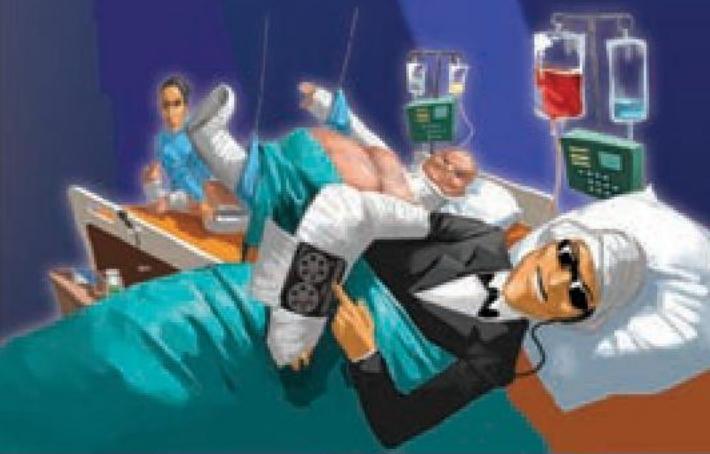
安妮闪烁其辞:“哦,你知道,就是通常的那些—土豆之类,没什么特别的”。这里其他玩家们便开始怀疑她是间谍—作为十字军战士,他们确信哥伦布是在三百多年后才从新大陆带回这种植物。
回合结束
以下三种情况之一发生时,回合结束。
A.时间到达八分钟;
当时间耗尽时,玩家们必须声明自己怀疑谁是间谍。发牌者让每位玩家投票,投票从发牌者按顺时针进行。如果有必要,玩家们可以针对自己的怀疑进行讨论然后再投票。如果出现除间谍外的所有人均投票给间谍,则间谍输掉游戏。反之间谍获胜。
注意:玩家们可以决定使用不同的回合时长。请在游戏开始前决定时长为多少。新手玩家可能需要时间较长的回合—比如,12至15分钟。
B.一位玩家受到一致怀疑;
任何玩家都可以随时中断游戏(但每人每回合只有一次机会)以宣告某位玩家是嫌疑人,并且要求其他玩家投票。如果所有嫌疑人以外的玩家均同意该玩家的指认本回合立刻结束(即使被投票的嫌疑人并非真正的间谍)。玩家们可以根据自身考量来决定是否中断游戏。如果被指认的玩家并非真正的间谍,则间谍获胜。反之如果间谍在这种情况下被发现,则发起投票的玩家会获得额外的一分。不过,间谍也会用此来指认其他玩家,进而洗清自己的嫌疑。
如果发起投票的玩家最后没能获得所有玩家的支持,则游戏回合从之前中断的地方继续进行。
注意:我们建议玩家们避免在投票中讨论间谍的具体疑点(例如,“我认为他是间谍因为这些人的睡衣是粉红色,但其实应该是绿色!”)玩家们“支持”或“反对”间谍疑点的争论,可能会在无意中让间谍得知地点的信息。
C.间谍声明;
间谍可以在任何时候展示自己的间谍卡牌,以中断游戏。然后间谍可以查看本规则书中页的地点列表以确定当前的地点。间谍如果成功猜出当前地点则获胜。反之其他玩家获胜。(例外情况是,如果已有玩家要求其他人为嫌疑人投票,间谍此时不能猜测地点)
注意:一旦游戏因为某位玩家指控间谍而中断时,间谍便不能尝试猜测地点。间谍已经失去这样做的时机。如果其他玩家均投票给间谍,则他便输掉了本回合。反之他以后还将有机会猜测地点。
一旦回合结束,所有卡牌便交还给发牌者并且不能在本次游戏中再使用。装有本套牌组的拉链袋则放回游戏盒中。
目标与策略
非间谍玩家的目标是找出间谍并且避免泄露他们的地点。因此,非间谍玩家应该避免使用过于明显的问题:(例如,银行柜员询问保安:“昨天的劫匪抢走了多少钱?”间谍便立刻明白地点是银行)。但是,当玩家的问题和回答过于模糊时,可能会有其他玩家开始怀疑他们为间谍,从而导致真正的间谍获胜。

间谍的目标是尽可能仔细聆听其他玩家的言辞,并且避免身份泄露,同时尝试在八分钟内猜出地点。间谍如果等待到回合结束则会具有风险——很有可能会在其他玩家的讨论和投票后被发现。
计分
每个回合结束时,根据结果为每位玩家计分。
如果间谍玩家获胜
·间谍获得2分。
·间谍主动中断游戏并成功猜出地点,间谍额外获得2分。
·所有玩家指认同一位无辜的玩家为间谍,间谍额外获得2分。
致谢名单

如果非间谍玩家获胜
·每位非间谍玩家获得1分。
·B情况中,指认成功(回合结束之前),中断游戏并且发起指认的玩家额外获得1
游戏结束
在事先决定好的回合数结束后,累计总分数最高的玩家获得胜利。
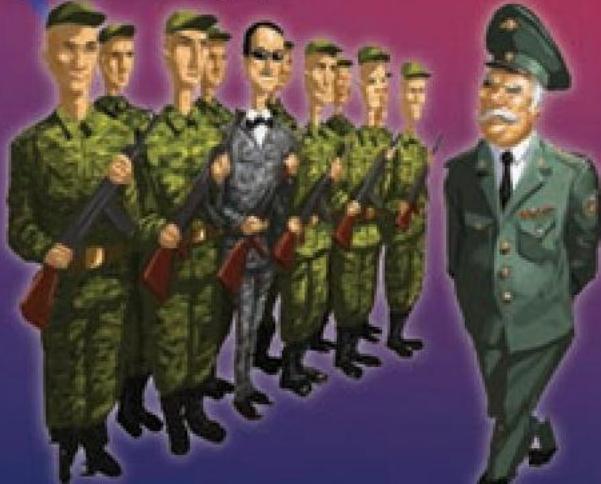
游戏开发:Hobby World- 美术:Uildrim 和 Sergey Dulin -
工管:Mikhail AkL.lov 利Ivan Popov-主编:Vladimir Sergeyev-规则书编辑:Alexander Kiselev 和ValentinMatyusha-设计排版:lvan Sukhovey-校对:Olga Portugalova-发行商联系人:Nikolay Pegasov (nikolay@hobbyworld.'u)。特别感谢llya Karpinsky。

中国发行:济南蒲蓝蒲蕾智力玩具有限公司中国山东省济南市历下区甸柳小区2区11号楼2单元401室www.bgplanplay.com info@bgplanplay.com

臺灣經銷:2Plus桌遊設計工作室台北市北平東路16號12樓之1www.2plus.com.tw

中国代理:智研家文化发展(北京)有限公司北京市朝阳区芍药居甲2号院17号楼18号底商www.zhiyanjia.com durian_zyj@foxmail.com

香港經銷:Smoothie LimitedFlat H, 13/F, Hung Cheung IndCtr., Phase 1, 12 Tsing YeungCircuit, Tuen Mun, N.T., Hon Kongwww.smoothiegames.net
本规则书、游戏配件及对应的美术内容中的任意部分,未经授权均不得拷贝或出版:© 2014 Hobby World LLC. All rights reserved.

Spyfall1_Rules_compressed.md12.0 KB

“Loose lips sink ships” is a saying that dates back to the days of WWII. It also represents
a vital wartime principle. There were lots of things that could give spies away: rust-free staples
in their documents, square-headed nails in the soles of their boots, and so on. This game offers everyone an opportunity to walk a mile in the shoes of both a spy who’s close to having their cover blown and the special agent who’s hot on the spy’s heels!
Contents
• 240 Location Cards (30 Decks of 8 Cards each)
• 30 Resealable Bags
• This Rulebook
You will also need to keep track of time during the game, so make sure you have a timer handy. One of the players probably has one on their cell phone.
Overview
A game of Spyfall is made up of several short rounds. In each round, the players find themselves in a certain Location with a specific role assigned to each player. One player is always a spy who doesn’t know where they are. The spy’s mission is to make the other players talk, identify the location, and keep from blowing their cover. Each non-spy must give a vague hint to the other non-spies suggesting that they know what the Location is, thus proving they’re not the spy. Observation, concentration, nonchalance, and cunning — you’ll need all of them in this game. Stay on your toes!

Objective
The spy’s objective is to avoid exposure until the end of a given round or to identify the current Location.
The non-spies’ objective is to agree on the identity of the spy and expose them.
Preparing for Round One
Before the first round begins, sort all the cards into Location decks. Each deck should have seven cards with identical illustrations and one spy card. Each deck goes in a separate resealable bag. All cards should be face down, with the spy card on the bottom.
All the Locations are shown in the middle spread of this rulebook. The players are advised to study it well before the first round begins. This should give the “potential spies” an idea of the kinds of Locations they will have to choose from during the game. We strongly advise the spies not to study the middle spread during the game — that’s a dead giveaway.

Beginning of the Round
Each game is a series of short rounds, the number of which is agreed upon by the players before the beginning of the game. We recommend playing five rounds for your first session (this should take about an hour).
A new dealer is chosen for each round. The dealer participates in the game as a regular player. The most suspicious-looking player is the dealer in the first round. This player takes all the resealable bags out of the box, turns them face down, shuffles them, and chooses a random bag. The dealer then removes the Location cards from the selected bag very carefully to avoid turning them over.
Location Card
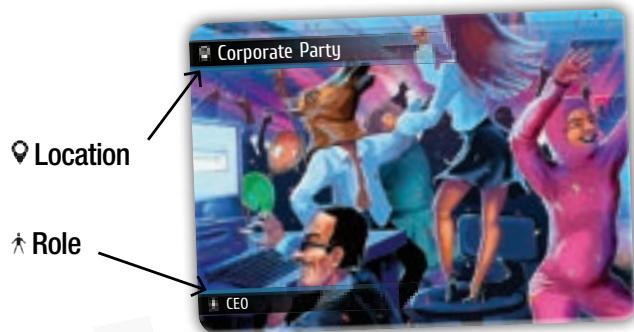
Spy Card


The dealer takes a number of cards that corresponds to the number of players from the bottom of the deck, shuffles them, and gives a card to each player. So, if there are five players, the five bottom cards are dealt. The remaining cards are not turned over. Put them aside carefully — you won’t be needing them. Each player looks at their card without letting the others see it, then places it face down in front of themself.
The dealer for the each successive round is the player who was the spy in the previous one. That player selects a new deck and deals the cards as described above.
Game Flow
The dealer starts the timer, and the game begins. The dealer then asks one of the players a question, calling them by name: “Tell me, John...” The questions usually pertain to the current Location. This is prudent, but not mandatory. Questions are asked once; no follow-up questions are allowed. Answers can take any form. Then the player who just answered a question proceeds to ask any other player a question of their own, but they cannot ask a question of the player who just asked them one. The order in which the questions are asked is established by the players themselves and based on the suspicions they have after hearing the questions and answers.


Note: If you are not the spy, your card will also specify your role in the given Location. Before the beginning of the game, the players should agree on whether they will play their corresponding roles or not. We strongly recommend doing so in order to make the game more fun. For example, if you’re a college professor and somebody asks you why you missed the faculty party, you can complain about your age and arthritis; if you’re a student, you might want to express your outrage at not having been invited by the faculty.
The name of the roles might seem to suggest that you’re playing a male character, but all characters can be either male or female. So, for example, the actor could also be an actress, and the flight attendant could be any gender.
Sample Round
Anne, Juan, Maria, and Isaac find themselves in the Crusader Army. However, Anne isn’t aware of this because she got the spy card. Juan gets the knight, Maria the squire, and Isaac the archer. They all play their roles and try to identify the spy. Anne’s goal is to identify the Location without blowing her cover.

Maria the squire asks the first question: “Isaac, do you remember which sea we took a dip in yesterday?” Isaac the archer naturally names the Mediterranean, and Anne the spy takes notice: The Location could be the Beach or the Pirate Ship. Isaac can’t ask Maria, so he asks Juan, “Juan, when do we get paid — is it at the beginning of the month, or the end?” All the other players are on alert, since the question might identify Isaac as the spy. However, Isaac is just feeling out his fellow players. Since Juan is a knight and not a spy, he answers the question easily: “Who knows? We’ll get paid whenever the commander feels like paying us.” Anna the spy is thoroughly confused — now she suspects the Location might be the Military Base or the Submarine. Juan asks her next question: “Hey Anne, what did they serve for dinner yesterday? I couldn’t make it.” Anne is evasive: “Oh, you know, the usual stuff — potatoes, nothing special.” This is where other players start to suspect her of being the spy — as Crusaders, they’re well aware that Columbus won’t be bringing that particular plant back from the New World for another three hundred years or so!
End of Round
A round ends when one of the following three things happen:
1. Eight Minutes Have Passed
When time runs out, the players must declare their suspicions as to the spy’s identity. The dealer asks each player to vote, starting with themself and proceeding clockwise. If need be, the players can discuss their suspicions before voting. If everybody but the suspect correctly votes for the spy, the non-spies win. If a non-spy player is voted as the spy or if the vote in not unanimous (the suspect does not get to vote), the spy wins.
Note: The players can agree on a different round length. Make sure you decide how long you want rounds to be before you start the game. First-time players might want to play longer rounds — say, 12-15 minutes.
2. When a Player Gets Suspicious
Any player can stop the game at any time (but only once per round) to declare one of the players a suspect and ask the others to vote. If all players vote for the same suspect, the round ends (even if it turns out that the suspect they’ve voted for isn’t the actual spy). It’s in the players’ best interest to stop the game. If the spy is caught this way, the player who initiated the vote gets an extra point. However, it might also benefit the spy to accuse another player in order to divert suspicion from themself.
If the initiator of the vote fails to receive the support of all the players (except the suspect, who doesn’t vote), the round continues as usual from the point at which the game was stopped.
IMPORTANT: We recommend players abstain from discussing the spy’s identity during voting (e.g., “I think this player is the spy because their pajamas are pink, but they should be green!”). The players’ arguments “for” and “against” the spy’s identity could inadvertently reveal the Location to the spy.
3. At the Spy’s Request
The spy can stop the game at any time by revealing their spy card to the other players. The spy is then allowed to consult the middle spread of this Rulebook and declare the current Location. The spy wins if they identify the Location correctly. Otherwise, the other players win.
IMPORTANT: When the game is stopped by one of the other players in order to accuse the spy, the spy cannot try to guess the Location. The spy has missed their chance. If the other players vote for them, the spy loses the round. Once the round is over, the cards are returned to the dealer and can no longer be played in the current game. The resealable bag with this deck is returned to the box.
Objectives and Strategies
The objectives of the non-spy players are to identify the spy and avoid revealing their Location. Therefore, the non-spies should refrain from being too explicit in their questions (for example, if a player asks, “How much cash did the robbers steal yesterday?” then the spy will instantly identify the Location as the Bank). However, when a player’s questions and answers are too vague, other players might start suspecting them of being the spy, enabling the real spy to win.

The spy’s objective is to listen as carefully as possible to what the other players say and do their best to avoid blowing their cover while also trying to identify the Location before eight minutes have passed. A spy who waits until the end of the round is taking a risk — it is entirely possible that the other players will identify them after discussion and voting.
Scoring
Tally up the points earned by the players at the end of the round based on the results.
If the Spy Wins
• Victory: The spy earns 2 points.
• The spy stops the game and identifies the Location correctly: The spy earns an extra 2 points.
• All the players accuse a non-spy player: The spy earns an extra 2 points.
If the Non-Spies Win
• Victory: Each non-spy player earns 1 point.
• A player stops the round and initiates a successful vote that reveals the spy: That player earns an extra 1 point.
End of the Game
Whoever scores the most points after the agreed-upon number of rounds wins the game.
Publisher: Hobby World LLC

Created by: Alexander Ushan
Game development: Hobby World • Art: Uildrim and Sergey Dulin
Directors: Mikhail Akulov and Ivan Popov • Editor-in-Chief: Vladimir Sergeyev
Rulebook copy and editing: Alexander Kiselev and Valentin Matyusha • Design and layout: Ivan Sukhovey
Special thanks to Ilya Karpinsky.
international@hobbyworld.ru • hobbyworldint.ru • @HobbyWorldInt
No part of the rulebook, game contents, or corresponding artwork may be copied or published without the consent of the copyright holder.
Cryptozoic Entertainment CEO & Founder | John Sepenuk Founders | Cory Jones & John Nee Graphic Design | John Vineyard (Lead), Shane Smith VP, Marketing | Jamie Kiskis Product Manager, Games | Dekan Wheeler Editing | Shahriar Fouladi
Download MarkdownTexts are community-compiled or publicly released by publishers; copyright remains with the original authors. For personal reference only.