
马戏星探SCOUT
一句话概览
马戏星探 是一款已收录于村了吗规则库的桌游,支持 2–5 人,原名 SCOUT。
本页内容:一句话概览 · 游戏概述 · 1. 游戏组件 · 2. 游戏设置 · 3. 游戏流程与回合设置 · 4. 行动阶段 · 5. 轮次结束 · 6. 计分 · 7. 游戏结束 · 8. 双人规则 · 关键规则与常见问题 · 常见问题
马戏星探 规则速览
以下规则速览由本站整理,与官方规则书表述不同,仅供快速上手参考。
游戏概述
玩家扮演马戏团团长,通过打出比对手更强的连续牌组(Show)或从场上活跃牌组中偷取卡牌(Scout)来积累分数。每张牌都有上下两个数字,巧妙利用牌的方向和组合是取胜关键。进行与玩家人数相同的回合数后,总分最高者获胜。
核心机制: 手牌管理、牌组强度比较、卡牌窃取与方向操控
1. 游戏组件
| 组件 | 数量/说明 |
|---|---|
| 卡牌 | 45 张(每张正反面各有一个数字) |
| 侦察标记(Scout Chip) | 23 个 |
| 侦察与演出标记(Scout & Show Chip) | 5 个 |
| 起始玩家标记 | 1 个 |
2. 游戏设置
2.1 起始玩家
确定起始玩家,起始玩家拿取起始玩家标记。
2.2 调整牌组
根据玩家人数移除部分卡牌:
- 3 人 / 4 人游戏: 将标有 "10" 的卡牌(共 9 张)放回收纳盒
- 5 人游戏: 使用全部卡牌,不移除
2.3 准备标记
- 取出与玩家人数相同数量的侦察与演出标记,每人发 1 个,多余放回收纳盒
- 所有侦察标记放在桌子中央
3. 游戏流程与回合设置
每局游戏进行若干轮(等于玩家人数),每轮按以下步骤设置:
- 准备标记: 侦察标记全部放在桌子中央,每人拿回自己的侦察与演出标记
- 洗牌与发牌: 洗匀牌组(注意同时洗乱牌的位置和朝向),将所有牌发给玩家
- 发牌数量:
| 玩家人数 | 每人手牌数 |
|---|---|
| 3 人 | 12 张 |
| 4 人 | 11 张 |
| 5 人 | 9 张 |
- 整理手牌: 所有牌发完后才能拿起,手牌只对自己可见。以左上角大数字为正面,之后不得左右调换手牌顺序,也不得单独翻转某张牌的朝向
- 统一翻转(仅限轮次开始时): 拿起手牌后可选择将所有牌同时翻转 180°,之后本轮内不再允许翻转
4. 行动阶段
从起始玩家开始顺时针轮流。轮到你时,必须从以下行动中选择一个执行:
4.1 演出(Show)
从手牌中选一组牌面朝上打出放在自己面前。需遵守两条规则:
规则一:牌组构成
- 若只打 1 张牌,可选择手牌中任意一张
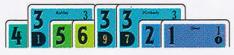
- 若打 2 张及以上,必须是手牌中相邻的牌,且构成以下两种之一:
- 连续数: 数字连续递增或递减(如 3-4-5 或 7-6-5)
- 相同数: 数字完全相同(如 4-4 或 8-8-8)
- 打出牌组的数量无上限
规则二:必须强于活跃牌组
上一位玩家打出的牌组称为"活跃牌组"。若当前无活跃牌组(回合开始时),可打出任意牌组。若有活跃牌组,你打出的牌组必须更强。强弱判定按以下顺序:
- 数量优先: 牌数更多则更强,可直接打出;牌数更少则不能打出
- 类型比较(数量相同时): 相同数组 > 连续数。若活跃牌组是相同数,你不能用连续数组对抗
- 数值比较(类型也相同时): 比较两组中最小的数字,你的数字必须更高才能打出;数字相同或更低则不能打出
演出成功后: 将当前活跃牌组翻面放在自己面前作为计分牌,你打出的牌组成为新的活跃牌组,你成为该活跃牌组的"拥有者"。
4.2 侦察(Scout)
从活跃牌组中取走 1 张牌(若活跃牌组多于 1 张,只能从两端取),将该牌插入手中任意位置,可选择是否翻转该牌的朝向。
效果: 活跃牌组的拥有者从中央拿取 1 个侦察标记放在自己面前。
- 若取走后活跃牌组仍有剩余牌,该牌组继续作为活跃牌组,拥有者不变
- 若取走后活跃牌组剩余 0 张牌,下一位玩家可打出任意牌组
4.3 侦察与演出(Scout & Show)
将你的侦察与演出标记放到桌子中央,然后同时执行侦察和演出两个动作(从活跃牌组取 1 张牌插入手中,再打出一组牌)。
- 每轮限制: 每位玩家每轮只能使用 1 次侦察与演出标记
5. 轮次结束
满足以下任一条件时,轮次立即结束:
- 手牌耗尽: 某玩家演出后手牌数为 0
- 无人能演: 某玩家演出后,其余所有玩家都无法(或选择不)演出,只进行了侦察
6. 计分
轮次结束后计算每位玩家的得分:
| 计分项目 | 分值 |
|---|---|
| 每张翻面的计分牌 | +1 分 |
| 每个侦察标记 | +1 分 |
| 手中剩余每张牌 | -1 分 |
例外: 满足轮次结束条件 2(无人能演)的玩家不扣除手牌剩余分。
不计入计分: 侦察与演出标记和当前活跃牌组不计入得分。
7. 游戏结束
轮次结束后:
- 起始玩家标记左传给下一位玩家
- 侦察标记归还中央,每人拿回侦察与演出标记
- 回到"回合设置"步骤开始新的一轮
进行与玩家人数相同的轮数后,游戏结束。总分最高者获胜。平局则共享胜利。
8. 双人规则
双人游戏有以下特殊规则:
8.1 设置调整
- 每人拿取 3 个侦察标记(不使用侦察与演出标记)
- 每人发 11 张牌。第一轮发牌后剩余 22 张牌放在一旁,第二轮使用
8.2 行动限制
- 只能选择演出或侦察,不能使用侦察与演出
- 侦察时必须从自己的侦察标记中拿出 1 个放在中央。若无侦察标记可用,则不能侦察
- 侦察后继续你的回合(可以连续多次侦察)
8.3 轮次结束条件
满足以下任一条件时轮次结束:
- 某玩家演出后手牌数为 0
- 某玩家演出后,另一玩家既不能演出也不能侦察
8.4 第二轮
更换起始玩家,回到回合设置。第二轮每人重新拿取 3 个侦察标记,然后发第一轮剩余的牌。
关键规则与常见问题
易错规则
- 手牌不得左右调换顺序,也不得单独翻转某张牌
- 只有轮次开始时可选择将所有牌同时翻转,之后不允许
- 打 2 张及以上时必须是手牌中相邻的牌,不能跳着选
- 相同数组 > 连续数:不能用连续数组打相同数的活跃牌组
- 侦察只能从活跃牌组的两端取牌,不能从中间取
- 侦察标记归活跃牌组的拥有者,不是执行侦察的玩家
- 每轮只能使用 1 次侦察与演出标记
- 满足"无人能演"条件的玩家不扣手牌剩余分
- 双人游戏中侦察需要消耗自己的侦察标记,标记用完则不能侦察
常见问题
-
Q:手牌中没有能打过活跃牌组的牌怎么办?
A:可以选择侦察(从活跃牌组取牌)或使用侦察与演出标记。 -
Q:活跃牌组被打光了怎么办?
A:下一位玩家可以打出任意牌组,不受限制。 -
Q:连续数可以递减吗?
A:可以,递增或递减都算连续数。 -
Q:侦察时取来的牌可以放在手牌任意位置吗?
A:可以,放在最左、最右或中间都行,且可以选择是否翻转朝向。 -
Q:轮次结束条件 2 中,"无法演出"是指什么?
A:指其余所有玩家在轮到自己时,既没有选择演出(可能因为手牌打不出更强的牌组),也没有选择侦察(可能因为活跃牌组只剩 0 张)。 -
Q:双人游戏中两个侦察标记都用完了怎么办?
A:无法再侦察,只能在有活跃牌组且手牌能打出更强牌组时演出,否则跳过。
常见问题(FAQ)
以下 1 条问答来自站内玩家的真实提问,答复由本站依据规则资料作答;答复内容保持原样,仅对提问做了去口语化的轻微整理。
马戏星探两人怎么设置?三人怎么设置?
结论
- 3 人: 按基础规则正常设置,每人发 12 张牌。
- 2 人: 有专门的双人规则——每人拿 3 个侦察标记、「侦察与演出」标记不用,每人发 11 张牌,剩余 22 张留到第二轮。
基础设置流程(所有人数通用部分)
- 把所有侦察标记(Scout chips)放到桌面中央。
- 每位玩家各拿 1 个「侦察与演出」标记。
- 洗牌后把所有牌发给玩家:3 人每人 12 张、4 人 11 张、5 人 9 张。洗牌时要既打乱牌堆中的位置,也打乱牌的上下朝向。
- 等所有牌发完后再拿在手里,别让其他玩家看到数字;按左上角大数字朝向来持牌。
- 一轮中不允许把手中牌左右重排,也不允许改变牌的上下朝向;但每轮开始时(刚看完手牌时)可以同时改变自己所有牌的朝向。
2 人专门设置
- 设置阶段:每人拿 3 个侦察标记;「侦察与演出」标记不使用。
- 每人发 11 张牌。第一轮发完后剩下 22 张,先放一边,留到第二轮发。
- 回合中只能选择「演出(Show)」或「侦察(Scout)」,不能「侦察与演出」。侦察时必须把 1 个侦察标记放到桌面中央;没有侦察标记可放就不能侦察。侦察后你将继续获得额外回合。
- 本轮立即结束的条件:① 某玩家在一次演出后打光手牌;② 一次演出后,另一名玩家既不能演出也不能侦察。
- 之后更换起始玩家,回到「本轮设置」重来;第二轮时每人再拿 3 个侦察标记,然后发之前放一边的牌。
例外/衔接
- 只有 2 人使用上面的改动,4 人、5 人按基础规则的人数配牌执行。
- 常规规则下,一轮结束后由当前起始玩家左边的玩家拿起始玩家标记成为新起始玩家,侦察标记放回中央,「侦察与演出」标记各自收回,再重新设置下一轮。
规则原文里没有提到 3 人是否有任何特殊设置改动,因此 3 人按基础规则处理。
本内容仅供参考,如有冲突以说明书和身边大佬为准。
去哪查完整规则
想核对具体规则细节、卡牌效果或某个回合的结算方式,可以在村了吗里选中这款游戏后直接提问。
同类桌游
规则原文(Markdown)
本站收录这款游戏的规则原文 2 个文件,此处内联渲染 2 个,可直接展开阅读或下载。
new_edition_scout_rules_eng.md13.0 KB

SCOUT
Game Instructions
You have suddenly been appointed as the leader of a circus. Using the members of your circus you must put together a show that will beat out your rivals. Everyone on your team has a specific role. To fill in the gaps on your team, try to scout members away from other circus groups! Will you battle with your current members? Or will you wait it out and try to recruit different ones? You will feel amazing when you make the right choices in this speedy card game!
Contents
©45 Cards

© Game Manual
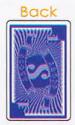
© 23 Scout Chips
(This booklet)

© 5 Scout & Show Chips


Starting Player Marker

1. Objective
Try to put together and play a stronger set of cards than the other players in order to earn points. Cards that are lined up consecutively are stronger, but you cannot reorder the cards in your hand. Skillfully "Scout" new cards and put on a "Show" while you create a strong hand to try and earn many points. Play as many rounds as there are players; the player with the most total points at the end is the winner!
▼ Decide on a starting player. This player takes the Starting Player Marker.
*For example, at the start of a round, the starting player could be the player that is holding the card with both 1 and 2 shown on it.
▼ Depending on the number of players, return the cards shown below back to the box.

Cards with "10" written on them (9 cards)

When playing with 5 players, all cards will be used. Do not return any cards to the box.
▼ Take out Scout & Show chips equal to the amount of players. Return any extra chips to the box.
3. Setting Up the Round



Scout Chips


▼ Place all of the Scout chips in the center of the table.
▼ Give all players 1 Scout & Show chip each.
▼ Shuffle the cards well and deal all of them to the players. For 3 players, each player receives 12 cards, for 4 players, 11 cards, and for 5 players, 9 cards. (When shuffling the cards, make sure to shuffle the position of the cards in the deck as well as the orientation of the top and bottom of the cards.)
Do.not put the cards in your hand until all the cards have been dealt.
▼ Once all the cards have been dealt, place them in your hand so that the other players cannot see the numbers.
▼ Hold the cards in your hand so that you can see the large number in the top left. From this point on, these numbers in the top left will be referred to as your hand.
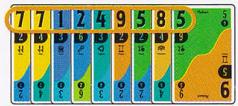
During a round, you are not allowed to rearrange the cards in your hand to the left or right or change the orientation of the top and bottom of the cards.
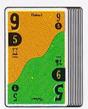
▼ However, only at the start of a round (immediately after checking your hand) you may change the orientation of all your cards at the same time.

1. Collect your
2. Rotate them around

- Spread out your hand
4. Your Turn
▼ Take turns going clockwise from the starting player. During your turn, you must choose and take one of the following actions.


A. Show
Choose a set of cards from your hand and place it on the table in front of you. This action is called "Show". If you will "Show", you must follow the next 2 rules.
Rule 1
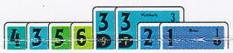
If you will only Show 1 card, you may choose any card from your hand. If you will Show more than 1 card, you must only play consecutive cards from your hand.
What are consecutive cards?
When playing more than 1
"consecutive numbers" or "matching numbers". When playing consecutive
numbers, the numbers can either be in ascending or descending order. (There is no limit to how many cards you can play as one set.)
Rule 2

2 consecutively numbered cards

2 cards with the same number
2 consecutively numbered cards

3 consecutively numbered cards
X Non-consecutive cards

X Non-consecutive cards
The set that was shown immediately before your turn is called the "Active Set". If there is no Active Set, then you can play any set you want. (At the start of a round, there is no Active Set.) If there is an Active Set, you must Show a set that is stronger than the Active Set.
What is a stronger set?
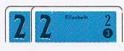
The set with more cards is the stronger set. If your set has more cards than the Active Set, you may Show them. However, if your set has fewer cards than the Active Set, you cannot Show that set.


Next, check the type of set.


If the amount of cards in both sets is the same, a set with matching cards is stronaer than a set with consecutive


Your Hand


Your Hand


of matching cards. However, on the other hand, if the Active Set is a set of matching cards, you cannot Show a set of consecutive cards.
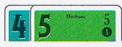
Finally, check the numbers in the set.
the type of set are the same, compare the smallest number card in each set. If your card is higher you may Show your set. If your card is lower, or if the cards have the same number, you cannot Show your set.
Your Hand



Active Set


▼ If you are able to Show your cards, turn over the current Active Set and place them near you to be used as a score counter.

▼The cards that you just Showed now become the new Active Set and you are the "owner" of the set.
B. Scout
Take one card from the Active Set (if there is more than 1 card, take a card from either end of the set), and place it anywhere in your hand. You may also change the orientation of the top and bottom of the card. This action is called "Scout".
Active Set


You can oniy take a card from either end.
▼ The owner of the Active Set, takes a Scout Chip from the center of the table and places it near them. (Imagine that there is an infinite amount of Scout Chips available. If you run out of Scout Chips, please use your own coins as a replacement.)
▼ After Scouting, as long as there is at least 1 card remaining in the Active Set, it will continue to be the Active Set. The owner does not change. If the Active Set now has 0 cards, the next player may Show any cards that they want.
C. Scout & Show
▼ By using your Scout & Show chip and placing it in the middle of the tab n ekauaratinmadiatal. \~flae-adi tha A at

▼ Each player can only use their Scout & Show chip once per round.
5. Ending the Round
▼ If any player achieves any of the below conditions, the round ends immediately.
i. Run out of cards after a Show.
ii. After a Show, all the other players could not (or did not) Show their own cards and only Scouted.
6. Calculating the Score
∇Calculate the score and players take their score chips.

- Each card that was collected and turned over and each Scout chip is worth 1 point.

- Lose 1 point for each card remaining in your hand. However, the player that met condition "ii." does not lose any points.
Players that could achieve round ending condition ""
- The Scout & Show chip and the Active Set are not counted towards your score.
Players that could achieve round ending condition "ii"

7. Ending the Game
▼ The player to the left of the current Starting Player takes the Starting Player marker and becomes the next Starting Player. Return the Scout chips to the center of the table, return each player's Scout & Show chips, and go back to Setting Up the Round.
▼ After playing as many rounds as there are players, the player with the most points at the end is the winner. If there is a tie, share the taste of victory!
2-Player Rules
▼ In step 3, "Setting Up the Round", each player takes 3 Scout chips. The Scout & Show chips will not be used.
▼ Deal 11 cards to each player. After dealing the cards for the first round there will be 22 cards remaining. Set these cards aside to be dealt during the second round.
During your turn, you can either Show or Scout. You will not Scout & Show. When you Scout, you must place 1 of your Scout chips in the center of the table. If you are not able to place a Scout chip, you cannot Scout. If you Scout, you will continue to take more turns.
▼ If any player achieves any of the below conditions, the round ends immediately.
i. Run out of cards after a Show.
ii. After a Show, the other player could not Show or Scout.
▼ Change the Starting Player and return to Setting Up the Round. (For round 2, each player once again takes 3 Scout chips and then deals the cards that were set aside previously.)

Author: Kei Kajino
ver.1.1
Gink Games
Cooperation: Jonathan Apilado, Laura Grundmann, Hiroko Izumida, Yoshihiro Ura, Fumihiro Kanaya, Yoshihiro Shindo, Tomoaki Tsuchie, Hisanori Hiraoka, Dan Yamamoto
© 2021 Oink Games Inc.
Made in China 2220820222
下载 Markdownrules_en_scout_291453_ocr.md9.9 KB
来源类型:OCR 文本(非 PDF 源,早期 OCR 产物)
说明:原文未改动,仅调整存放位置与文件名;非 PDF 扫描件,无对应原书 PDF
[第1页]
‘O. FA
@
2A
Game Instructions
You have suddenly been appointed as the leader of a circus. Using the
members of your circus you must put together a show that will beat out
your rivals. Everyone on your team has a specific role. To fill in the gaps on
your team, try to scout members away from other circus groups! Will you
battle with your current members? Or will you wait it out and try to recruit
different ones? You will feel amazing when you make the right choices in
this soeedy card game!
i Contents
© 45 Cards © 23 Scout Chips © 30 Score Chips
Front Back Front 4p ww x P08 i}
7 as 2 — Back » VY rs
y or 10 5 5§ 5 5
D <y/\ © 5 Scout & Show Chips © Starting Player Marker
© Game Manual (This booklet) oe rs a
1. Objective
Try to put together and play a stronger set of cards than the other players in order to
earn points. Cards that are lined up consecutively are stronger, but you cannot
reorder the cards in your hand. Skillfully "Scout" new cards and put on a "Show' while
you create a strong hand to try and earn many points. Play as many rounds as there
are players; the player with the most total points at the end is the winner!
2 S tti U th G When playing with 2 players, please
. se Ing p e ame check the 2-player rules on the back,
VW Decide on a starting player. This player takes the Starting Player Marker.
*For example, at the start of a round, the starting player could be the player that is holding the card
with both 1 and 2 shown on it.
VW Depending on the number of players, return the cards shown below back to the box.
3 players 2 or 4 players 5 players
Cards with "10" Card with both "9" When playing with 5 players,
ae ||\ eed! §=\Written on them em) = ond "10" written on it. all cards will be used. Do not
0 (9 cards) (1 card) return any cards to the box.
W Take out Scout & Show chips equal to the amount of players. Return any extra
chips to the box.
3. Setting Up the Round
. 6S ln —. —
|| he | | a
om We” =:
| Scout Chips VA =
t= —
| CA: 1) 23 Score Chips
oe wey Cards ain
W Place all of the Scout chips in the center of the table.
VW Give all players 1 Scout & Show chip each.
W Shuffle the cards well and deal all of them to the players. For 3 players, each
player receives 12 cards, for 4 players, 11 cards, and for 5 players, 9 cards. (When
shuffling the cards, make sure to shuffle the position of the cards in the deck as well
as the orientation of the top and bottom of the cards.)
WV Once all the cards have been dealt, place themin your =,
hand so that the other players cannot see the numbers. , Pe
W Hold the cards in your hand so that you can see the
large number in the top left. From this point on, these
numbers in the top left will be referred to as your hand.
A During a round, you are not allowed to rearrange the cards in your hand to
the left or right or change the orientation of the top and bottom of the cards.
W However, only at the start
of a round (immediately
after checking your hand)
you may change the
orientation of all your cards ~~ oO ee
1. Collect 2. Rotate th 3. Spread out hand
at the same time. aac qouna em pread out your han
4. Your Turn
W Take turns going clockwise from the starting player. During your turn, you must
choose and take one of the following actions.
C. Scout & Show
A. Show | BScout (Only once per player per round)
A. Show
Choose a set of cards from your hand and place it on the table in front of you. This
action is called "Show". If you will "Show", you must follow the next 2 rules.
If you will only Show 1 card, you may choose any card from your hand. If you will
Show more than 1 card, you must only play consecutive cards from your hand.
What are consecutive cards?
wrenvpevno roc)! Gio) saeellse
card from your nand, ihe | =
cards must either be 2 consecutively numbered cards 2 cards with the same number
“consecutive numbers" or
playing consecutive ib ie
numbers, the numbers can 2 consecutively numbered cards & Non-consecutive cards
either be in ascending or
no limit to how many cards is
you can play as one set.) 3 consecutively numbered cards XX Non-consecutive cards
The set that was shown immediately before your turn is called the "Active Set". If
: there is no Active Set, then you can play any set you want. (At the start of a
«round, there is no Active Set.) If there is an Active Set, you must Show a set that is :
stronger than the Active Set. :
[第2页]
: Whatis a stronger set? :
. ; Your Hand Active Set :
. First, check how many cards there are. OK ;
The set with more cards is the stronger 23s , (gig 6]
set. If your set has more cards than the NO
Active Set, you may Show them. ha ——> | | |
However, if your set has fewer cards than 8 au
the Active Set, you cannot Show that set.
Next, check the type of set. Your Hand Active Set
If the amount of cards in both sets is the Z , g |
same, a set with matching cards is is Buea
stronger than a set with consecutive NO
cards. If the Active Set is a set of bose a Res
~ consecutive cards, you may Show a set
of matching cards. However, on the other hand, if the Active Set is a set of
~ |) matching cards, you cannot Show a set of consecutive cards.
Finally, check the numbers in the set. Your Hand OK pstiveset
If both the number of cards in the set and Beo~ 3: ——: Seg
the type of set are the same, compare the NO
smallest number card in each set. If your
card is higher you may Show your set. If 58 L Sas
your card is lower, or if fhe cards have the a | NO ry |
same number, you cannot Show your set. ie aetter | | see
¥ If you are able to Show your cards, turn over the current Active ————
Set and place them near you to be used as a score counter. EAN ie =
Vv The cards that you just Showed now become the new Active SN >» S&S
Set and you are the "owner" of the set. See:
Active Set Your Hand
B. Scout | —
Take one card from the Active Set (if O bags | Ae Ge
there ismore than! card,takeaq — Ses lanes AN :
card from either end of the set), and |
place it anywhere in your hand. You O Eee 2
may also change the orientation of
the top and bottom of the card. This sbeem You can only take a card
action is called "Scout". x ES from either end.
Vv The owner of the Active Set, takes a Scout Chip from the center of the table and
~ places it near them. (Imagine that there is an infinite amount of Scout Chips
availaole. If you run out of Scout Chips, please use your own coins as a
replacement.)
¥ After Scouting, as long as there is at least 1 card remaining in the Active Set, it will
continue to be the Active Set. The owner does not change. If the Active Set now
has 0 cards, the next player may Show any cards that they want.
C. Scout & Show .
W By using your Scout & Show chip and placing it in the middle of the
table, you can Show your set immediately. after Scouting the Active Set. oe
W Each player can only use their Scout & Show chip once per round. |
5. Ending the Round
W If any player achieves any of the below conditions, the round ends immediately.
i. Run out of cards after a Show.
ii. After a Show, all the other players could not (or did not) Show their own cards and
only Scouted.
6. Calculating the Score
VWCalculate the score and players take their score chips.
OneStat OEE a0 Players that could not achieve any round ending conditions
- Each card that was collected and Colected You, Say
turned over and each Scout chip is Cards es foes SS.
NOTA point - ming need epee reaper eee peern one aeeoa naar aOe - -
=\lo aa lp oint for each card Players that om ecieve eure ending condition "i" 3
remaining in your hand. However, Fe EE
the player that met condition “ii.” 3 + 2 =O = §
Goes melee any Pee Players that could achieve round ending condition "ii"
- The Scout & Show chip and the 3 SEER
Active Set are not counted towards =
2 ~ Boe ON SZ
your score.
7. Ending the Game
WV The player to the left of the current Starting Player takes the Starting Player marker
and becomes the next Starting Player. Return the Scout chips to the center of the
table, return each player's Scout & Show chips, and go back to Setting Up the Round.
W After playing as many rounds as there are players, the player with the most points
at the end is the winner. If there is a tie, share the taste of victory!
2-Player Rules
¥ In step 3, "Setting Up the Round", each player takes 3 Scout chips. The Scout &
Show chips will not be used.
} W Deal 11 cards to each player. After dealing the cards for the first round there will
be 22 cards remaining. Set these cards aside to be dealt during the second round.
~ W During your turn, you can either Show or Scout. You will not Scout & Show. When
you Scout, you must place 1 of your Scout chips in the center of the table. If you are
not able to place a Scout chip, you cannot Scout. If you Scout, you will continue to
take more turns.
¥ If any player achieves any of the below conditions, the round ends immediately.
i. Run out of cards after a Show.
ii, After a Show, the other player could not Show or Scout.
Vv Change the Starting Player and return to Setting Up the Round. (For round 2,
each player once again takes 3 Scout chips and then deals the cards that were set
aside previously.)
/ ver.1.1
fee) Author: Kei Kajino
Artwork: Jun Sasaki, Rie Komatsuzaki
; VE G Production assistance: Keiko Inagaki
© oe SAE ES. ’ English translation: Nick Poggi, Yuto Fujikawa
Cooperation: Jonathan Apilado, Laura Grundmann, Hiroko Izumida, Yoshihiro Ura,
Fumihiro Kanaya, Yoshihiro Shindo, Tomoaki Tsuchie, Hisanori Hiraoka, Dan Yamamoto
Publisher: Oink Games Inc.
, oinkgames.com
© 2021 Oink Games Inc. Made in China 2220820222
/\ Warnings (Please Read) |
W This product presents an accidental ingestion hazard. Not for children under 3 years of age.
WV Do not leave in high-temperature, high-humidity environments. This may result in damage to
the product.
VW Keep away from flames. This can cause warping or fires.
原文为社区整理/出版社公开资料,版权归原作者,仅供个人学习查阅。