
通路Tsuro
一句话概览
通路 是一款已收录于村了吗规则库的桌游,支持 2–8 人,原名 Tsuro。
本页内容:一句话概览 · 游戏概述 · 1. 游戏组件 · 2. 游戏设置 · 3. 游戏流程 / 回合结构 · 4. 龙板块规则 · 5. 胜利条件 · 关键规则与常见问题 · 常见问题
通路 规则速览
以下规则速览由本站整理,与官方规则书表述不同,仅供快速上手参考。
游戏概述
在龙与凤的守护下,玩家在交织的命运之路中追寻智慧。每位玩家在棋盘边缘放置标记,通过打出路径板块延伸自己的路,目标是尽可能久地留在棋盘上——若路径通向棋盘边缘,你便出局。最终留在棋盘上的最后一位玩家获胜。
核心机制: 板块放置、路径构建、连锁反应、淘汰生存
1. 游戏组件
| 组件 | 数量 | 说明 |
|---|---|---|
| 游戏板 | 1块 | 边缘有起始标记(短白色刻度),构成6×6的放置网格 |
| 标记 | 8个 | 每位玩家1个,代表各玩家在路径上的位置 |
| 龙板块 | 1块 | 用于追踪摸牌优先顺序,不能作为路径板块打出 |
| 路径板块 | 35块 | 每块印有4条路径、形成8个边缘连接点,每块图案各不相同 |
路径板块说明: 每块路径板块上有4条线(即4条路径),在板块边缘共形成8个连接点。每条路径连接板块边缘上的两个点。虽然板块上的路径可能相互交叉,但每条路径都是连续且独立的——交叉处不互通。放置板块时,连接点必须与相邻板块的连接点对齐,从而将各板块上的路径串联起来。
2. 游戏设置
- 展开游戏板。
- 每位玩家选择1个标记。
- 将龙板块找出,放在一旁备用。
- 将35块路径板块洗匀,每位玩家面朝下发3块作为手牌(可随时查看自己的手牌)。
- 剩余路径板块面朝下叠放,形成摸牌堆。
- 年龄最大的玩家先手。
- 先手玩家将自己的标记放在棋盘边缘的任意一个空闲起始标记上(短白色刻度处)。随后按顺时针方向,每位玩家依次选择一个空闲起始标记并放置自己的标记。
3. 游戏流程 / 回合结构
每位玩家的回合分为三个阶段,按顺序执行:
阶段一:打出路径板块(Play a Tile)
- 当前行动玩家(主动玩家)从手牌中选择1块路径板块,放在自己标记旁边的任意空格上。
- 放置方向自由——板块可以旋转到任何方向。
- 板块一旦放下,本局游戏中不得再移动。
阶段二:移动标记(Move the Markers)
- 当前行动玩家将自己的标记移动到新打出板块上自身路径的另一端(开放端)。
- 棋盘上所有与新板块相邻的其他标记,也要各自沿其路径移动到新的开放端。
- 淘汰判定: 若某玩家路径的开放端连接到棋盘边缘,该玩家立即被淘汰。
- 禁止自杀: 玩家不得故意将自己的路径连接到棋盘边缘(即自我淘汰),除非没有其他可行的放置位置。
- 相互淘汰: 若两名玩家的路径相互连接(跑入对方路径),两名玩家同时被淘汰。
被淘汰玩家的所有手牌洗入摸牌堆(若摸牌堆已不存在,则用被淘汰玩家的手牌重新组成摸牌堆)。若被淘汰玩家持有龙板块,将龙板块放在一旁。
阶段三:所有玩家摸牌(All Players Draw Tiles)
- 游戏初期: 仅当回合行动玩家摸1块路径板块,补回打出的那块。
- 摸牌堆耗尽后: 当摸牌堆为空且有玩家手牌不足3块时,所有手牌不足3块的玩家(无论是否轮到自己)都可以摸牌。
- 从当回合行动玩家开始,按顺时针方向,每位手牌少于3块的玩家依次摸1块,直到所有玩家都持有3块或摸牌堆再次耗尽。
- 补牌完成后,按顺时针方向继续下一回合。
4. 龙板块规则
龙板块用于追踪摸牌顺序,本身不是路径板块。
- 当摸牌堆耗尽时,第一个需要摸牌却无牌可摸的玩家获得龙板块。
- 持有龙板块的玩家一直保留它,直到有新路径板块可用(来自被淘汰玩家的手牌)。
- 当新板块出现时,持有龙板块的玩家将龙板块放在一旁,并第一个开始摸取新路径板块。
- 摸取完成后,按正常顺时针顺序继续。
5. 胜利条件
| 情形 | 结果 |
|---|---|
| 棋盘上只剩1个标记 | 该玩家获胜 |
| 所有路径板块打出后仍有2个或以上标记在棋盘上 | 剩余玩家平局 |
| 同一步行动中所有剩余玩家同时被淘汰 | 被淘汰的玩家平局 |
关键规则与常见问题
易错规则
- 放置方向自由: 路径板块可以旋转到任意方向再放置,不受板块原始朝向限制。
- 连锁移动: 放置新板块后,不仅当前玩家的标记要移动,所有与新板块相邻的其他玩家标记也要同时沿新路径移动。
- 禁止自我淘汰: 除非完全没有其他放置位置,否则不得将自己的路径连接到棋盘边缘。
- 互相淘汰: 两名玩家的路径跑入对方时,两人同时出局,不是只有主动放板块的人出局。
- 被淘汰后手牌处理: 被淘汰玩家的手牌洗入摸牌堆(而非直接弃掉),可供其他玩家后续摸取。
- 龙板块持有者优先摸牌: 当新板块出现时,持有龙板块的玩家先摸,摸完后才按正常顺时针顺序继续。
- 摸牌阶段覆盖所有人: 摸牌堆耗尽后,所有手牌不足3块的玩家都能摸牌,不限于当前行动玩家。
常见问题
-
Q:板块放置后可以移动或旋转吗?
A:不可以。板块一旦放下,本局游戏内不得移动。 -
Q:如果摸牌堆和所有玩家的手牌都耗尽了怎么办?
A:当所有路径板块都已打出,棋盘上剩余的标记所属玩家平局。 -
Q:被淘汰玩家的标记怎么处理?
A:标记从棋盘上移除,该玩家退出游戏。 -
Q:龙板块可以作为路径板块打出吗?
A:不可以。龙板块仅用于追踪摸牌顺序,不能打出。 -
Q:多人游戏时先后手顺序是什么?
A:年龄最大的玩家先手,之后按顺时针方向轮流。 -
Q:棋盘边缘的短白色刻度是什么?
A:起始标记位置。游戏开始时每位玩家选择一个空闲的起始标记放置自己的标记。 -
Q:一局游戏可以容纳多少人?
A:2至8人。组件包含8个标记,理论上支持最多8人同时游戏。
常见问题(FAQ)
以下 1 条问答中 0 条来自站内玩家的真实提问,其余 1 条为本站整理的常见疑问;答复内容保持原样。
通路支持几个人玩?
2–8 人。
去哪查完整规则
想核对具体规则细节、卡牌效果或某个回合的结算方式,可以在村了吗里选中这款游戏后直接提问。
同类桌游
规则原文(Markdown)
本站收录这款游戏的规则原文 1 个文件,此处内联渲染 1 个,可直接展开阅读或下载。
Tsuro Rules.md5.9 KB
TSURO Game Rules
The Dragon and the Phoenix stand as legendary guardians over and guides to the intertwining paths of life, maintaining the careful balance between the twin forces of luck and destiny. Together, these two powerful beings share the noble task of overseeing the many roads that lead to divine wisdom.
Through its masterful blend of strategy and chance, Tsuro represents the classic quest for enlightenment.
RULES
Tsuro is a board game for two to eight players. Each player places tiles on the hoard to build a path that begins at the edge of the hoard and travels around the interior.
The object of the game is to stay on the path and avoid ending your journey at the edge of the game board.
CONTENTS
1 game board
8 markers
1 dragon tile
35 path tiles
THE TILES
Each path tile is printed with four lines, or paths, that create eight points on the tiles edges. Each point lines up with the points on any other tile to create the paths.
Though the paths on each tile might cross each other, they each proceed uninterrupted and independent of the others.
For example, the paths on the following tile connect only the two points marked A, the two points marked B, and so on. Each tile is unique.
C

The dragon tile is used to keep track of which player draws first when the draw pile is reshuffled.
SETUP
Lay out the game board.
Each player chooses a marker.
Find the dragon tile and set it aside.
Shuffle the path tiles, and deal three face down to each player.
These tiles create your hand. You may look at the tiles in your hand at any time.
Stack the remaining path tiles face down. This stack is the draw pile.
The oldest player plays first.
The first player places his or her marker on one of the start marks on the outside edge of the game board (the short white marks on the outside of the board). Continue clockwise around the board until each player has chosen a start mark and placed his or her marker.
PLAYING THE GAME
Each turn has three parts:
A) Play a path tile
B) Move the markers
C) All players draw tiles
The player currently taking his or her turn is called the active player.
A) PLAY A TILE
- The active player chooses one of the path tiles from his or her hand and places it on an open square next to his or her marker. The player may place the tile in any direction. Once a tile has been placed, it cannot be moved for the rest of the game.
B) MOVE THE MARKERS
-
The active player moves his marker to the open end of the path.
-
All other markers adjacent to the new tile are moved to the ends of their new paths.
A player is eliminated from the game if the open end of his or her path connects to the edge of the board. All path tiles from eliminated players' hands are shuffled into the draw pile, (if there is no draw pile, form a new one using eliminated players' path tiles), if an eliminated player has the Dragon Tile, set it aside.
A player may not willingly connect his or her own path to the edge of the board (thereby forcing himself or herself out of the game) unless no other move is possible.
C) ALL PLAYERS DRAW TILES
At the beginning of the game, only the active player will draw a path tile, replacing the one he or she played this turn.
Later in the game when the draw pile is empty and players have less than three path tiles in their hands, all players will have the chance to draw tiles, even if it is not their turn.
Starting with the active player and moving clockwise, each player with fewer than three path tiles draws a tile, continuing around the board until all players have three path tiles or the draw pile is empty. This rule changes slightly if a player has the dragon tile (See Below).
The Dragon Tile
As the game goes on, the draw pile may run out of tiles and players may have less than three tiles in their hand.
Once the draw pile is empty, the first player who is supposed to draw a path tile and cannot takes the dragon tile instead.
The player with the dragon tile keeps it until more tiles become available (from eliminated players).
When the new tiles become available, the player with the dragon tile sets it aside and is the first player to draw path tiles.
- Once all players have three path tiles or the draw pile is empty, play continues clockwise around the board.
WINNING THE GAME
When only one marker remains on the board, that player wins the game.
If all path tiles have been played and two or more markers remain on the board, the remaining players tie for the win.
If all remaining players are eliminated on the same move, those players tie for the win.
If the paths of two players become connected (run into each other), both players are eliminated from the game.
EXAMPLE OF PLAY
The following illustrations show the first three turns of a three-player Tsuro game.

Figure 1: Players 1, 2, and 3 each choose an unoccupied start mark on the edge of the board and place one tile. Player 2 extends his path across the first tile played by Player 1.
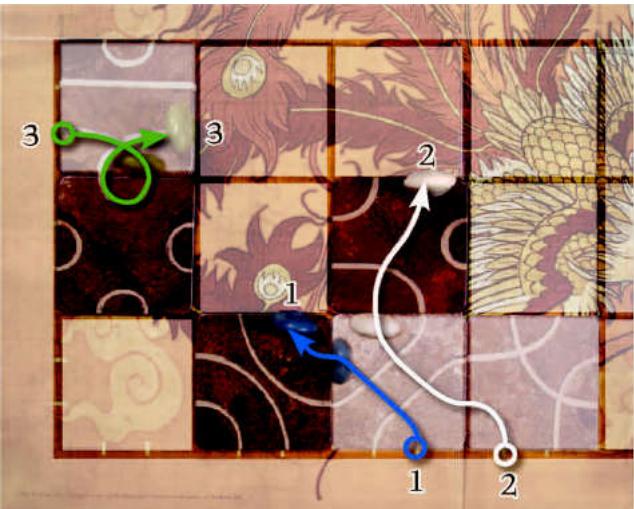
Figure 2: Players place their second tiles. Note that tiles can no longer be placed in the square in the lower left corner.

Figure 3: Players place their third tiles.
Player 2's third tile pushes Player 1's path toward Player 3.
Player 3 places his third tile in a way that connects Player 1's path with the edge of the game board. Player 1 is eliminated from the game, and Player 3 may now look at and exchange any of the tiles in his hand with any tiles in Player 1's hand.
CREDITS
Game Design: Tom McMurchie Product Development: Jim Long, Jon Leitheusser Art Direction: Shane Small Graphic Design: Cathy Brigg Artwork: Shane Small Photography: Jennifer Clark Special Thanks to Dawne Weisman
下载 Markdown原文为社区整理/出版社公开资料,版权归原作者,仅供个人学习查阅。