
孤勇英豪Unstoppable
一句话概览
孤勇英豪 是一款已收录于村了吗规则库的桌游,支持 1–2 人,原名 Unstoppable。
本页内容:一句话概览 · 游戏概述 · 1. 游戏组件 · 2. 游戏设置 · 3. 游戏流程 / 回合结构 · 4. 升级 · 5. 等级与训练 · 6. 效果图标详解 · 7. 阵营关键字 · 8. 威胁关键字 · 9. 双人模式 · 10. 头目与危险轨道 · 关键规则与常见问题 · 常见问题
孤勇英豪 规则速览
以下规则速览由本站整理,与官方规则书表述不同,仅供快速上手参考。
游戏概述
在瑟瑞斯二号、维伦诺斯、密斯拉斯三颗星球上,玩家扮演命运眷顾的英雄,通过击败威胁、升级能力、招募盟友、购置强化,逐步变强以迎击最终头目。这是一款可单人或双人合作的牌库构建(deckbuilding)卡牌游戏,核心为"牌套内双面卡牌"的卡牌打造系统。
核心机制: 牌库构建、卡牌打造(升级嵌入牌套)、资源管理(行动点/信用币)、威胁对抗、等级成长
1. 游戏组件
| 组件 | 数量 |
|---|---|
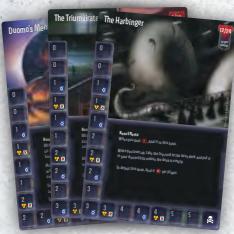
| 角色肖像卡 | 4张 |
| 角色卡 | 12张 |
| 起始核心卡 | 14张 |
| 起始威胁卡 | 26张 |
| 威胁卡 | 39张 |
| 核心卡 | 100张 |
| 升级卡 | 36张 |
| 头目卡 | 46张 |
| 玩家面板 | 2块 |
| 伤害指示物 | 30个 |
| 信用币 | 16枚 |
| 护甲与生命标记 | 各2个 |
| 危险标记 | 1个 |
| 行动点骰 | 12个 |
| 等级骰 | 4个 |
| 头目面板 | 3块 |
| 牌套 | 121个 |
| 卡牌分隔片 | 20张 |
| 参考卡 | 1张 |
| 故事书 | 1本 |
2. 游戏设置
2.1 牌套准备(首次游戏前)
牌套是本游戏的核心机制——每张牌套正面放核心卡,背面放威胁卡,中间可嵌入升级卡。
| 类型 | 核心面 | 威胁面 | 数量 |
|---|---|---|---|
| 起始卡 | 打击(Strike) | 瑟瑞斯窃贼(Ceresan Thief) | 12张 |
| 起始卡 | 备用信用币(Spare Credits) | 维伦鹿(Virenian Doe) | 2张 |
| 角色卡(等级0) | 角色卡A | 后巷剑客(Backalley Blademaster) | 4张 |
| 角色卡(等级0) | 角色卡B | 孢子灵(Sporeling) | 4张 |
| 角色卡(等级0) | 角色卡C | 垃圾骑手(Junker Cyclist) | 4张 |
| 威胁卡 | 无 | 瑟瑞斯威胁 | 13张 |
| 威胁卡 | 无 | 维伦诺斯威胁 | 13张 |
| 威胁卡 | 无 | 密斯拉斯威胁 | 13张 |
| 头目卡 | 无 | 头目卡 #00-22 | 23张 |
| 头目卡 | 无 | 秩序侍僧(Order Acolyte) | 5张 |
| 头目卡 | 无 | 秩序档案员(Order Archivist) | 5张 |
| 头目卡 | 无 | 三合会线人(Triumvirate Informant) | 4张 |
| 头目卡 | 无 | 三合会据点(Triumvirate Stronghold) | 3张 |
| 头目卡 | 无 | 杜欧摩爪牙(Duomo's Minion) | 3张 |
| 头目卡 | 无 | 杜欧摩暴徒(Duomo's Thug) | 3张 |
> 威胁卡和头目卡只套威胁面;核心卡会在游戏过程中加入另一面。
2.2 通用设置
- 核心牌堆: 将100张未套牌套的核心卡按等级(1-6)分成6堆,各自洗匀,面朝上从左到右按升序排列。
- 升级牌堆: 将36张升级卡洗成一叠面朝下放置,翻开顶上6张面朝上排列成市场。两种缺口的升级卡混在一起洗。
- 指示物供应: 将信用币和伤害指示物分类放置作为公共供应。
2.3 玩家设置
- 玩家面板: 选好颜色,放置面板,生命标记放在"10",护甲标记放在"0"。
- 角色肖像: 从4个角色中选1个,将肖像卡放入面板肖像区。
- 角色牌堆: 构建10张牌套卡组(每张牌套含2张起始/角色卡背靠背放入),洗匀后威胁面朝上放在面板牌堆区。
- 6× 打击/瑟瑞斯窃贼
- 1× 备用信用币/维伦鹿
- 1× 角色卡A/后巷剑客
- 1× 角色卡B/孢子灵
- 1× 角色卡C/垃圾骑手 - 起始手牌: 从牌堆抽3张,核心面朝向自己持有。
- 战场: 从牌堆取3张,威胁面朝上放在牌堆旁一行,作为活跃威胁。
- 起始信用币: 从供应拿取总值3信用币的指示物放在面板信用区。
- 行动点骰: 取该颜色6个行动点骰,3个放在面板行动点区,3个暂置一旁。
- 等级骰: 取该颜色2个等级骰叠放在等级1核心牌堆上方。
2.4 头目设置
- 头目面板: 从3个头目中选1个(推荐首次游戏选先驱者 Harbinger),拿出对应头目面板。
- 头目牌堆: 按头目面板背面说明构建头目牌堆。
- 威胁牌堆: 按头目面板背面说明构建威胁牌堆,放在核心牌堆旁,威胁面朝下。
- 危险标记: 放在头目面板危险轨道第一个"0"位置。
- 难度选择: 普通/困难/专家——决定危险标记推进速度。
3. 游戏流程 / 回合结构
游戏按回合进行,每个回合分5个阶段依次执行:
A. 维持阶段 → B. 选秀阶段 → C. 主要阶段 → D. 威胁阶段 → E. 清理阶段
重复此流程直至胜利或失败。
3.1 维持阶段
- 放置3个行动点骰到面板行动点区(可用行动点)。
- 将所有已横置的盟友卡竖回(刷新),使其可再次使用。
- 结算所有在维持阶段触发的持续效果。
3.2 选秀阶段
- 找到小等级骰所在的核心牌堆。
- 翻开该牌堆顶上3张,保留1张,其余2张放回同一牌堆底部。
- 从威胁牌堆顶取1张(不看威胁面),将选中的核心卡放入同一牌套。
- 将新选秀的卡核心面朝自己加入手牌。
- 将小等级骰重置回大等级骰所在位置叠放。
> 注意:升级时两个等级骰永久右移;训练时仅小等级骰临时前进。
3.3 主要阶段
可任意次数、任意顺序执行以下行动,直到不能或不愿继续为止。每个行动必须完全结算后才能执行下一个。
打出卡牌
- 支付等于卡牌费用的行动点(移除对应数量的行动点骰)。
- 将卡牌核心面朝上放在面前,结算效果(可按任意顺序结算卡牌本身与升级附加效果,无法或不愿结算的效果放弃)。
战术卡: 一次性效果,打出后留在场上直到本回合清理阶段弃置。
盟友卡: 可重复使用的效果,打出后留在场上直到下次升级时弃置。盟友可被横置(顺时针旋转90°)来使用耗竭效果;多个耗竭图标时只能选其中一个。横置的盟友在下个清理阶段才能刷新。同一卡牌同一回合第4次结算同一效果时,必须将该卡移出游戏。
购买升级
- 支付等于升级卡费用的信用币。
- 将升级卡滑入手牌或场上任意战术卡/盟友卡的牌套中间(核心与威胁之间)。
- 每张卡最多嵌入2张升级卡(顶部1张、底部1张)。
- 部分升级卡有类型要求(战术或盟友)。
- 购买后从升级牌堆翻新卡补满市场空位。
击败威胁
- 对威胁造成的伤害跨回合累积(用伤害指示物追踪)。
- 威胁生命值 = 攻击值 + 防御值。伤害达到或超过生命值即击败。
- 击败后:将该卡翻面并旋转,核心面朝自己加入手牌(这是本游戏主要的抽牌方式)。
- 许多威胁击败时有强制奖励效果(资源、训练、伤害等),立即结算。
3.4 威胁阶段
战场上所有威胁卡为"活跃威胁"(牌堆顶的为"候补威胁",不在此阶段造成伤害)。
- 每个活跃威胁对你造成等于其攻击值的伤害(升级卡威胁面的攻击值也计入)。
- 伤害先扣护甲,护甲归零后扣生命。生命归零则立即失败!
> 注意:威胁受到的伤害不影响它对你造成的伤害。
3.5 清理阶段
- 弃置场上所有战术卡到弃牌堆。
- 移除面板上所有剩余行动点骰(不可保留)。
- 护甲标记重置为0。
- 补充战场至3个活跃威胁(从牌堆顶依次移到战场)。若牌堆因此耗尽,立即升级,然后继续补充。
- 危险标记在头目面板危险轨道上前进1格。到达终点则立即失败!
4. 升级
每次牌堆耗尽时触发升级,作为"事件"暂停游戏流程。
升级步骤:
1. 两个等级骰各向右移1格(即使位于不同牌堆上方)。
2. 弃置场上所有战术卡和盟友卡,并弃牌至手牌仅剩3张。
3. 可选择消除手牌、弃牌堆或场上任意1张卡(移出游戏,本局不再使用)。
4. 结算头目面板上注明的升级触发效果(如有)。
5. 将弃牌堆全部洗匀,放回面板牌堆区,威胁面朝上。
主要阶段中升级: 牌堆耗尽且无活跃威胁时触发;效果结算中途触发则中断效果执行升级,然后恢复(即使原卡已不在场)。
清理阶段中升级: 牌堆耗尽且需补充威胁时触发;升级完成后继续补充至3个活跃威胁。
5. 等级与训练
- 等级骰 位置决定你从哪个核心牌堆选秀。等级越高,选秀的核心卡越强。
- 训练: 某些卡牌效果可令小等级骰临时前进1级,下次选秀时从更高等级牌堆选卡。小等级骰已到6级时训练无效。
- 升级: 两个等级骰永久前进,小等级骰重置回大等级骰位置。
6. 效果图标详解
核心图标
| 图标 | 效果 |
|---|---|
| 造成X伤害 | 对一个活跃威胁或候补威胁造成X伤害。同一次图标的伤害必须全部分配给同一个威胁,不可拆分。未击败时用伤害指示物追踪。 |
| 获得X信用币 | 从供应取X信用币放到面板信用区。 |
| 获得X行动点 | 放置X个行动点骰,上限6个。已达上限时无效。 |
| 获得X生命 | 生命标记上移X格,上限10。已达上限时无效。 |
| 获得X护甲 | 护甲标记上移X格,上限10。已达上限时无效。 |
| 训练1级 | 小等级骰前进1级,到6级时无效。 |
| 消除1张卡 | 选择手牌、弃牌堆或场上1张卡移出游戏。 |
| 等级X以上… | 仅当大等级骰在X级或以上时才结算该效果。 |
威胁图标
| 图标 | 效果 |
|---|---|
| 攻击值 | 活跃时在威胁阶段对你造成的伤害值。 |
| 防御值 | 需额外造成的伤害值。威胁生命 = 攻击 + 防御。 |
| 危险等级 | 部分威胁的防御值等于当前危险等级数值。 |
7. 阵营关键字
4个阵营:议会(Council)、拾荒者(Junker)、银辉(Silver)、维伦(Viren)。无阵营卡(如起始卡)不参与阵营关键字计算,且无阵营卡无法获得阵营类型。
| 关键字 | 效果 |
|---|---|
| 议价(Bargain) | 可选效果,后跟数字X。花费X信用币使用,每张手牌/场上同阵营卡(含自身)减少1点费用,最低减到0。 |
| 密谋(Conspire) | 强制效果。手牌或场上至少有1张其他同阵营卡时触发,不随数量增加而增强。 |
| 聚焦(Focus) | 强制效果。X = 手牌/场上同阵营卡数量(含自身),最低1。 |
| 联合(Unite) | 强制效果。X = 手牌/场上出现的不同阵营数(含自身),最低1。 |
> 无阵营卡获得带阵营的升级卡时,卡牌不获得阵营类型。但阵营关键字效果仍可能部分生效:议价照算但无法减免费用;密谋和聚焦无法结算;联合仍根据其他卡结算。
8. 威胁关键字
| 关键字 | 效果 |
|---|---|
| 狂暴(Crazed X) | 该威胁被翻开时(任何原因),若你当前生命值 ≤ X,该威胁对自己造成2点伤害。 |
| 迅捷(Fast) | 不计入3个活跃威胁的上限。清理阶段需继续补充直到有3个非迅捷活跃威胁且牌堆顶为非迅捷威胁。 |
| 愤怒(Rage) | 威胁阶段中,战场上每个愤怒威胁各迫使你弃掉1张场上盟友卡到弃牌堆(可用或已横置的均可)。 |
| 嘲讽(Taunt) | 有嘲讽威胁在场时,你必须优先攻击嘲讽威胁,不可直接攻击其他活跃威胁或候补威胁。 |
> 同一关键字可由升级卡叠加到同一威胁上:狂暴、愤怒、恐怖每层各触发一次;迅捷和嘲讽叠加无额外效果。
9. 双人模式
两位玩家各控制一个角色合作对抗头目(通常难度翻倍)。
设置: 通用设置和头目设置不变,玩家各自执行玩家设置。
胜利/失败条件: 击败头目获胜;任一玩家生命归零或危险等级到达终点则失败。
回合调整:
- 维持阶段:同时执行
- 选秀阶段:同时执行;同牌堆选秀时自行商定顺序,可讨论策略
- 主要阶段:任意顺序行动,每行动必须完全结算后另一玩家才可行动
- 威胁阶段:同时执行;每人只受自己战场上的威胁伤害
- 清理阶段:同时执行;危险标记只前进1格(共用)
关键规则:
- 双方可攻击对方战场上的活跃威胁和候补威胁,帮助对方抽牌。
- 被击败的威胁加入其所在战场玩家的手牌(谁的战场归谁)。
- 击败奖励归造成最后一击的玩家。
- 嘲讽关键字只限制有嘲讽威胁的那个战场:若玩家A场上有嘲讽威胁,则双方都只能先打A场上的嘲讽威胁,但B场上的威胁不受限制。
- 生命、护甲、信用币、行动点等只影响玩家自身。
10. 头目与危险轨道
头目伤害: 部分头目需要造成特定数量的头目伤害才能击败,造成方式见头目面板和头目卡。
危险轨道:
- 普通难度:跳过所有绿色边框格
- 困难难度:跳过所有黄色边框格
- 专家难度:跳过所有红色边框格
- 被跳过的格子效果不触发
轨道特殊格效果:
- 消除格: 花费1信用币消除手牌、弃牌堆或场上1张卡(移出游戏)。
- 市场循环格: 将市场中任意数量的升级卡移到牌堆底部,然后补充市场。
关键规则与常见问题
易错规则
- 同一卡牌同一回合第4次结算同一效果时,必须将该卡移出游戏
- 击败威胁是主要抽牌方式——击败后卡牌翻面加入手牌
- 战术卡只留场到本回合清理阶段即弃置;盟友卡留场到下次升级才弃置
- 盟友耗竭是独立于打出的动作,横置后需等到清理阶段才能刷新
- 多个耗竭图标的盟友只能选其中一个使用
- 造成伤害不可拆分给多个威胁(同一次图标伤害必须给同一目标)
- 威胁受到的伤害不影响它对你造成的攻击值
- 信用币上限无明确限制但行动点上限为6,生命/护甲上限各为10
- 无阵营卡永远不获得阵营类型,但升级附带的阵营关键字可能部分生效
- 双人模式中被击败的威胁加入战场所属玩家手牌,奖励归击杀者
- 迅捷威胁不计入3个活跃威胁上限,嘲讽限制只影响有嘲讽的那个战场
常见问题
-
Q:选秀时可以看威胁面吗?
A:不可以。选秀时从威胁牌堆取卡不看威胁面,直接将核心卡放入同一牌套。 -
Q:升级时手牌保留几张?
A:弃牌至手牌仅剩3张。 -
Q:训练和升级有什么区别?
A:训练是临时前进小等级骰1级;升级是两个等级骰永久各前进1级,小等级骰重置回大等级骰位置。 -
Q:同一效果结算4次后卡牌去哪?
A:移出游戏放回盒子,本局不再使用。 -
Q:护甲每回合都会重置吗?
A:是的,清理阶段护甲标记重置为0。 -
Q:双人模式中可以帮队友打威胁吗?
A:可以,双方均可攻击对方战场上的威胁。击败奖励归击杀者,卡牌归战场所属玩家。
常见问题(FAQ)
以下 1 条问答中 0 条来自站内玩家的真实提问,其余 1 条为本站整理的常见疑问;答复内容保持原样。
孤勇英豪支持几个人玩?
1–2 人。
去哪查完整规则
想核对具体规则细节、卡牌效果或某个回合的结算方式,可以在村了吗里选中这款游戏后直接提问。
同类桌游
规则原文(Markdown)
本站收录这款游戏的规则原文 1 个文件,此处内联渲染 1 个,可直接展开阅读或下载。
unstoppable-rulebook.md41.8 KB
UNSTGPPABLE
RULEBOOK
INTRODUCTION
On the city-planet of Ceres Il, every alleyway invites a quick and quiet death. In the lush forests of Virenos, a single misstep could land you in the belly of a beast. And the harsh wasteland of Mithras holds both grave danger and great treasure for those who search its stacks of discarded rubbish.
Amidst this chaos, you find yourself thriving, learning, growing. Touched by fate, discovering a new power within. But a new danger shadows the future of all three worlds, and few can see how precarious the situation truly is. Gather your allies and sharpen your skills, for the darkest days are yet to come...
There's a world-ending menace that you must defeat to protect the star system and its people. You'll need to level up your abilities to have a shred of hope. Train, upgrade, and become Unstoppable.
COMPONENTS
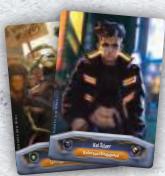
4x Portrait Cards

12x Character Cards

14x Starting Core Cards
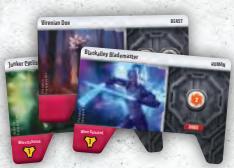
26x Starting Threat Cards
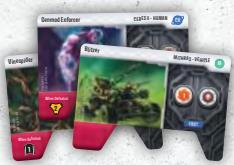
39x Threat Cards

100x Core Cards

36x Upgrade Cards
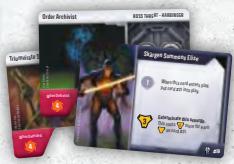
46x Boss Cards

2x Player Mats


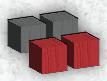

30x Damage Tokens
16x Credit Tokens
2x Armor and 2x Health Markers

1x Danger Marker

12x Action Point Dises
4x Level Dises
3x Boss Mats

121x Card Sleeves

20x Card Dividers
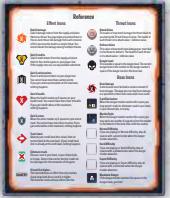
1x Reference Sheet
1x Storybook
SLEEVING GUIDE
Before your first play, you'll need to do some initial preparation by putting cards into the provided sleeves.
These sleeves streamline the gameplay and enable the game's unique card-crafting system.
The tables in the following sections will guide you. Some cards begin each game in sleeves by themselves, while others are sleeved in pairs. Pairs of cards should always be sleeved back to back, so that their fronts face outward.
The only cards that should not be sleeved during this process are the 100 non-starting core cards and the 36 upgrade cards:
| TYPE | CORE SIDE | THREAT SIDE | QUANTITY |
| Starting Cards | Strike | Ceresan Thief | 12x |
| Spare Credits | Virenian Doe | 2x | |
| Character Cards(level 0 in bottomright corner) | [Charaeter Card A] | Backalley Blademaster | 4x |
| [Character Card B] | Sporeling | 4x | |
| [Character Card 0] | Junker Cyelist | 4x | |
| Threat Cards* | N/A | Ceres I Theats | 13x |
| N/A | Virenos ThreatsV | 13x | |
| N/A | Mithras ThreatsM | 13x | |
| Boss Cards | N/A | Boss Cards #00-22 | 23X |
| N/A | Order Acolyte | 5x | |
| N/A | Order Arehivist | 5x | |
| N/A | Triumvirate Informant | 4x | |
| N/A | Triumvirate Stronghold | 3x | |
| N/A | Triumvirate Enforcer | 3X |
These sleeves begin with the threat card only. A core card will be added to the other side of the sleeve during gameplay.
GAME SETUP
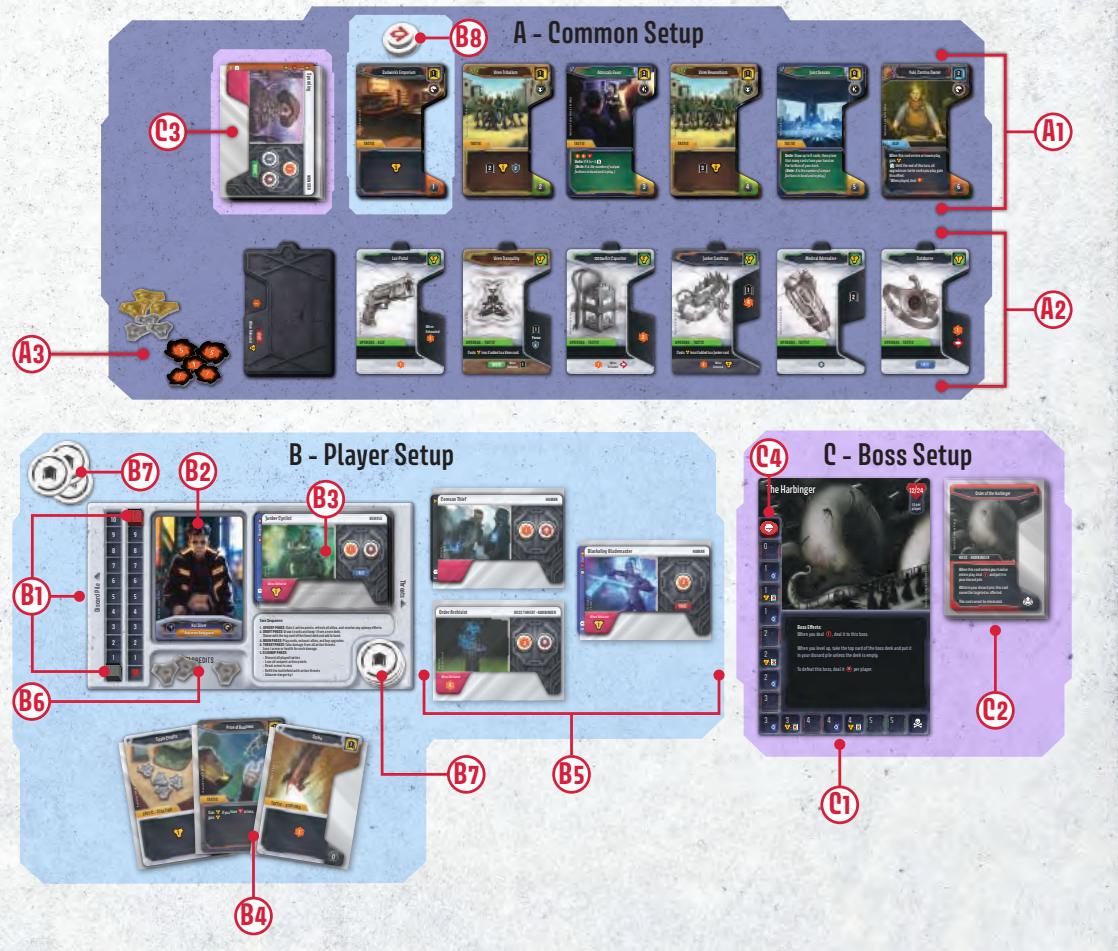
A - Common Setup
-
Core Decks: Divide the 100 unsleeved core cards into 6 decks by level number. Shuffle each deck individually. Place these decks in a face-up row on the table, arranged left to right in ascending order.
-
Upgrade Deck: Shuffle the 36 unsleeved upgrade cards into a single deck. Place this deck face down on the table. Reveal the top 6 cards of the deck and place them in a face-up row next to the deck. Note: These cards have 2 different cutouts, but they should still be shuffled together.
-
Token Supply: Create a supply with the eredit tokens and damage tokens, sorted by type and denomination.
B- Player Setup
-
Player Mat: Find the player mat, health marker, and armor marker of your chosen player color. Place the player mat in front of you. Set the markers at "10" on the health track and "0" on the armor track.
-
Character Portrait: Choose 1 of the 4 characters available. Find their portrait card and place it in. the portrait space on your player mat.
-
Character Deek: Construct your 10-card character deck. Each card consists of a sleeve with 2 starting cards, sleeved back to back. Your character cards are listed on the back of your portrait card. Shuffle the constructed deck and place it in the deck space on your player mat, threat side up.
• 6x Strike / Ceresan Thief
• 1x Spare Credits / Virenian Doe
· 1x Character Card A / Backalley Blademaster
· 1x Character Card B / Sporeling
· 1x Character Card C / Junker Cyelist
-
Starting Hand: Draw 3 cards from your deek. Hold these cards in your hand so that you are viewing the core side, not the threat side.
-
Battlefield: Take 3 cards from your deck. Place these cards in a row next to your deck, threat side up.
-
Starting Credits: Take credit tokens with a total value of 3 credits from the supply. Place them in the credits space on your player mat.
-
Action Point Dises: Find the 6 action point dises of your chosen player color. Place 3 of them in the action points space on your player mat. Set the other 3 aside for now.
-
Level Dises: Find the 2 level dises of your chosen player color and stack them together above the level-1 core deck.
C - Boss Setup
-
Boss Mat: Choose 1 of the 3 available bosses. Find the boss mat that matches the chosen boss and put it in play. Note: The recommended boss for your first play is the Harbinger.
-
Boss Deek: Find the boss cards that match the chosen boss. Construct the boss deck according to the setup steps listed on the back side of the boss mat.
-
Threat Deck: Construct the threat deck according to the setup steps listed on the back side of the boss mat. Place the shuffled threat deck next to the core decks, threat side down.
-
Danger Marker: Find the danger marker and place it on the first "0" space of the danger track on the boss mat.
-
Diffieulty Level: Choose a difficulty level: NORMAL, HARD, or EXPERT. This will determine how quickly the danger marker advances during play
CARD ANATOMY
Core Cards (126x)
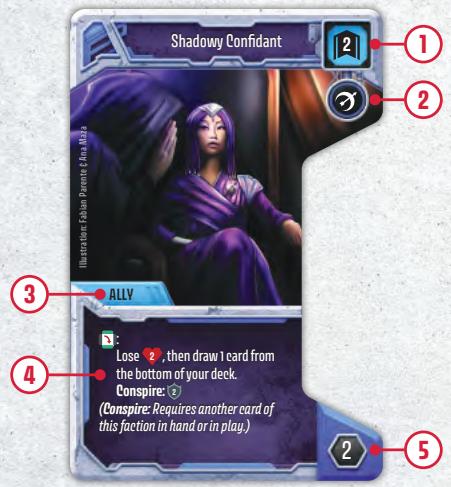
Cores make up the front side of sleeved cards. They represent the powers, resources, and support available to you
Threat Cards(111x)

Threats make up the back side of sleeved cards. They represent the strange monsters and deadly foes that you will face on the field of battle.
There are 3 different card types: cores, threats, and upgrades. Each sleeved "card" consists of1 core, 1 threat, and up to 2 upgrades.
-
Cost: This value indicates the number of action points required to play the card. Remove that many action point dises from your player mat.
-
Faction: This indicates which faction the card belongs to. Many game effects and keywords are linked to these faction types.
-
Type: This label indicates whether the card is a tactic or an ally. Tacties are discarded after use, while allies remain in play.
-
Effeets: This is where the card's effects appear. Some cards have a single effect, while some have multiple effects.
-
Level: This value indicates which core deck the card comes from (1-6). Character cards and starting cards are level-0 core cards.
-
Attack: This value indicates how much damage the threat will deal to you each turn when in play.
-
Defense: This value is added to the attack value to determine the total health of the threat. You must deal damage to a threat equal to its health to defeat it.
-
Bonus: This text indicates a bonus that you gain when you defeat the threat. Not all threats have a bonus.
-
Keyword: This text indicates a keyword that applies to the threat. Not all threats have a keyword.
Upgrade Cards (36x)

Upgrades are sleeved between cores and threats. They add modifiers to the core side and the threat side.
-
Cost: This value indicates the amount of credits required to buy the upgrade. Return that many credits to the supply.
-
Modifiers: The modifiers in effect for the card that this upgrade is added to. Each card ean have 1 matching upgrade per cutout.
2a. Modifier added to the core side.
2b. Modifier added to the threat side.
3.Requirement: This indicates which type of card this upgrade can be added to. Some upgrades require a tactic or an ally, while others can be added to a card of either type.
- Discount: This indicates a discount to the upgrade cost that applies when it is added to a card of a specific faction.
Faction leons

Council

Junker

Silver

Viren
GAME OBJECTIVE
The goal of Unstoppable is to defeat the boss, a world-ending menace that threatens the very way of life in your star system.
Even as a heroic figure with cosmic potential, you won't be capable of such a monumental task at the start. And there are many other smaller threats that you must keep at bay in the meantime. So train your powers, use your resources, and recruit new allies to your side.
· You win the game if.. you defeat the boss.
. You lose the game if... your health is reduced to zero.
. You lose the game f... the danger level reaches
TURN SEQUENCE
The game takes place over a series of turns.
Each turn is broken into 5 phases that are performed in order:
A. Upkeep Phase B. Draft Phase C. Main Phase D. Threat Phase E. Cleanup Phase
This sequence repeats until you win or lose.
A. Upkeep Phase
The Upkeep Phase is when you carry out various upkeep steps:
-
Place 3 action point dises in the action points space on your player mat. Those action points are available to be spent in the Main Phase.
-
Refresh all exhausted ally cards in play by rotating them back upright. Those ally cards are available to be exhausted in the Main Phase.
-
Resolve all active effects that trigger during the Upkeep Phase.
B. Draft Phase
The Draft Phase is when you draft a new card and add it to your hand based on the current position of your level dises:
-
Find the core deek where your small level disc is located.
-
Draw the top 3 cards of that core deck. Keep 1 of those cards and return the other 2 to the bottom of the same deck.
-
Take the top card of the threat deck, without viewing the threat side, and put your chosen core card into the same sleeve.
-
Add the newly drafted card to your hand with the core side facing you.
-
Reset your small level dise back to where your large level dise is located and stack them together again.
Note: Both level dises advance permanently when you level up, and your small level disc advances temporarily when you train.
C. Main Phase
The Main Phase is when you can play cards, exhaust allies, and buy upgrades.
You may take these actions any number of times, and in any order, as long as you have the cards, credits, and action points required to do so. The phase ends when you cannot, or choose not to, take any more actions.
Each action must be resolved fully before you can take another.
Repeatable Effects
Some interactions allow you to repeat certain card effects. However, if you resolve the same effect of the same card for the 4th time in a single turn, you must then eliminate that card. Return that card to the box.
Playing Cards
To play a card from hand, you must spend action points equal to its cost. Remove that many action point dises from your player mat.
When you play a card, put it in front of you, core side up, and resolve its effects. Some cards have a single effect, while others have multiple.
If the card has any upgrades, those may add further effeets that trigger when played.
You may resolve the effects, including those from upgrades, in any order. Effects that you cannot resolve, or choose not to, are forfeited.
Tactic Cards

Tacties are cards with one-time effects. Once played, a tactic card remains in play until the Cleanup Phase of the same turn and is then discarded.
Ally Cards

Allies are cards with repeatable effects. Once played, an ally card remains in play until the next time you level up and is then discarded.
Exhausting Allies
To exhaust an ally in play, rotate the card 90 degrees clockwise. Exhausting an ally is separate from playing it. You may only exhaust allies that are in play.

When you exhaust an ally, resolve the effects that follow the exhaust icon. Most allies have only 1 exhaust icon, but some have multiple. For an ally with multiple exhaust icons, you must choose only 1 to use for its effects.
If the card has any upgrades, those may add further effects that trigger when exhausted.
You may resolve the effects, including those from upgrades, in any order. Effects that you cannot resolve, or choose not to, are forfeited.
Once an ally has been exhausted (rotated sideways), it cannot be exhausted again until it is refreshed (rotated upright) during the next Cleanup Phase.
Buying Upgrades
To buy an upgrade, you must spend credits equal to its cost. Return that amount of credits from your player mat to the supply.
Then add the upgrade to any tactic card or ally card in your hand or in play by sliding it into the center of the sleeve between core and threat. Each card can have up to 2 upgrades: 1 top and 1 bottom.
Some upgrades have a requirement of either a tactic card or ally card.
Once you have sleeved the upgrade, refill the empty slot in the market with another upgrade revealed from the upgrade deck.
Defeating Threats
Damage dealt to threats persists between turns and can be tracked with damage tokens (see p. 12). When a threat has taken damage equal to or greater than its health, you have defeated it. The health of each threat is the sum of its attack and defense values
Before resolving any bonus, draw the defeated threat and add it to your hand. Flip the card over and rotate it so that you are viewing the core side. Defeating threats is the primary way to draw cards in Unstoppable!
Many threats have a bonus that triggers when defeated. These bonuses are mandatory and resolve immediately.
They can provide resources (e.g., credits, action points, health, armor) or other effects (e.g., training, damage).
D. Threat Phase
The Threat Phase is when you take damage from the active threats.
All threat cards currently on the battlefield in front of you are "active threats." This does not include the top card of your deck, which is the "on-deck threat. It is possible for there to be no active threats.
The amount of damage dealt by each active threat is equal to its attack value. If the card has upgrades on it, any attack value present on the threat side of those upgrades is added to the threat's attack value.
For each damage you are dealt, move the armor marker down 1 space on your armor track. If the armor marker reaches zero, move the health marker down 1 space on your health track for each remaining damage.
If the health marker reaches zero, you lose immediately!
Resolving Events
An event is a mandatory game effect. Events are usually triggered by attacking or defeating a threat. When triggered, an event must be resolved immediately, even if it interrupts the resolution of another effect. After resolving the event, continue with the resolution of the effect that triggered it. Events include...
triggering keywords
•defeating threats
leveling up
Note: Each active threat always deals damage equal to its attack value. The damage it has taken does not affect the damage it deals to you.
E. Cleanup Phase
The Cleanup Phase is when you carry out various cleanup steps:
-
Discard all tactic cards from play. Put them in your discard pile.
-
Remove all remaining action point dises from your player mat. Unspent action points cannot be saved for later.
-
Reset the armor marker to zero on the armor track on your player mat.
-
Add new threats to the battlefield until it is refilled to 3 active threats.
· To add a new threat to the battlefield, move the threat from the top of your deck to the battlefield. The threat that is now revealed on top of your deek becomes the new on-deck threat.
If adding new threats empties your deck, level up immediately (see p. 11), then resume adding new threats until there are 3 active threats.
- Advance the danger marker 1 space on the danger track on the boss mat. If the danger marker reaches thespace, you lose immediately!
Skipped Spaces
Some spaces must be skipped based on the difficulty level you chose during game setup:
NORMAL: Skip all spaces with a green border.
HARD: Skip all spaces with a
yellow border.
EXPERT: Skip all spaces with a red border.
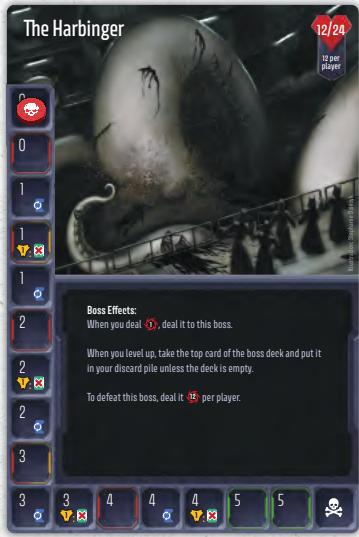
Optional Effects
Some spaces have optional effects that trigger when the danger marker reaches them:
TX: Spend 1 eredit to eliminate 1 card in your hand, in your discard pile, or in play. Return that card to the box; it will not be used again for the remainder of the game.
: Move any number of upgrades from the market to the bottom of the deck, then refill the market.
Note: When an effect space on the danger track is skipped due to diffieulty level, the effect does not trigger.
LEVELING UP
You get to level up each time your deek is empty. Leveling up is an "event, so the game pauses temporarily while you complete the process.
When you level up, resolve these 5 steps in order:
-
Advance both level dises 1 space to the right above the row of core decks. Each disc advances 1 space even if they are above different decks.
-
Discard all tactic cards and ally cards from play and discard down to 3 cards in hand. Put the discarded cards in your discard pile.
-
Optionally eliminate any 1 card in your hand, in your discard pile, or in play. Return that card to the box; it will not be used again for the remainder of the game.
-
Resolve any boss-specific effects that trigger when you level up. These effects, if any, are printed on the boss mat.
-
Reshuffle all cards in your discard pile. Place the shuffled cards in the deck space on your player mat, threat side up.
Leveling Up in the Main Phase
You level up if your deck is empty and there are no active threats. When this occurs mid-effect, interrupt the effect to level up, then resume the effect even if its card is no longer in play.
Leveling Up in the Cleanup Phase
You level up if your deck is empty and a new threat must be added. Complete the process of leveling up, then resume adding new threats until the battlefield is refilled to 3 active threats.
EFFECT ICONS
Many cards use effect icons as shorthand for important game effects. These effect icons are explained in detail below.
Core leons


Deal X damage.
If this damage does not defeat the target threat, take X damage tokens from the supply and place them on the threat to track it. You may target any active threat or the on-deck threat. All damage from each instance of this icon must be dealt to a single threat; you cannot divide the damage among multiple threats.
Gain X eredits.
Take X eredit tokens from the supply and place them in the credits space on your player mat. If the supply runs out, use any suitable substitute.
Example: Five Meters Under is a Silver tactic card that deals 2 separate instances of damage when played. You can deal 3 damage to 1 threat and 2 damage to another, or 5 total damage to the same threat.
Example: Gadwick Goldenhand is a Junker ally card with an effect that lets you gain 2 credits from the supply when exhausted.



Level X+
Threat leons


| Gain X action points.Place X action point dises on your player mat.You cannot have more than 6 action points.If you gain action points when at the maximum,nothing happens. | Example: Viren Solidarity is a Viren tacticcard with an effect that lets you gain 2action points and 1 credit when played. |
| Gain X health.Move the health marker up X spaces on your healthtrack. You cannot have more than 10 health. If yougain health when at the maximum, nothing happens. | Example: Medical Nanites is a Counciltactic card with an effect that lets yougain 2 health when played. |
| Gain X armor.Move the armor marker up X spaces on your armortrack. You cannot have more than 10 armor. If yougain armor when at the maximum, nothing happens. | Example: Aid From the Resistance is aViren tactic card with an effect that letsyou gain 6 armor when played. |
| Train 1 level.Advance your small level dise 1 level, from itscurrent level to the next level. If your small leveldise is already at the 6th level, nothing happens. | Example: Exceed Your Limits is a Silvertactic card with an effect that lets youtrain 1 level when played. |
| Eliminate 1 eard.Choose 1 card in your hand, in your discard pile, or inplay. Return that card to the box; it will not be usedagain for the remainder of the game. | Example: Regional Target is a Counciltactic card with an effect that lets youeliminate 1 card when played. |
| If Level X or higher...This text indicates an effect that only resolves ifyour large level dise is Level X or higher.The character cards all have effects like this. | Example: Guard Squadron is a Silver allycard with an effect that lets you gain 2health when exhausted if you are Level2 or higher. |

| Attack ValueThis value is how much damage the threat dealsto you during the Threat Phase if active. The healthof each threat is its attack value + defense value. | Example: Deadwood Stalker is a Bugthreat from Virenos that deals you 3damage during the Threat Phase if active. |
| Defense ValueThis value is how much extra damage you mustdeal to the threat to defeat it. The health of eachthreat is its attack value + defense value. | Example: Fugitive Gunslinger is a Virenthreat from Mithras with 2 attack and 1defense for a total of 3 health. |
| Danger LevelThis icon represents the current danger level.The danger level is the number in the dangermarker's space of the danger track on the boss mat. | Example: Commhacker is a Humanthreat from Ceres Il with defense.If the current danger level is 2, then ithas 2 defense. |
Boss leons
 | Boss DamageSome bosses must be dealt a certain amount ofboss damage. The ways you can deal boss damageare specified on their boss mat and/or boss cards. | Example: The Harbinger can be dealt 1 bossdamage when an Order Acolyte or OrderArchivist enters your hand upon defeat. |
 | Card EliminationWhen the danger marker reaches this space,you may spend 1 credit to eliminate 1 card inyour hand, in your discard pile, or in play. | Example: The Triumvirate has an optionalcard elimination effect when the dangermarker reaches the first "2" space. |
 | Market CyeleWhen the danger marker reaches this space, youmay move any number of upgrades from the marketto the bottom of the deck, then refill the market. | Example: Duomo's Menace has an optionalmarket cycle effect when the dangermarker reaches the first "1" space. |
 | Normal DifficultyIf you are playing on Normal diffieulty, skip allspaces with a green border when the dangermarker advances. | Example: The Harbinger has 2 green-borderedspaces that you skip on Normal difficulty. |
 | Hard DifficultyIf you are playing on Hard difficulty, skip allspaces with a yellow border when the dangermarker advances. | Example: The Triumvirate has 3yellow-bordered spaces that you skipon Hard difficulty. |
 | Expert DifficultyIf you are playing on Expert difficulty, skip all spaceswith a red border when the danger marker advances. | Example: Duomo's Menace has 4 red-borderedspaces that you skip on Expert difficulty. |
 | Maximum DangerIf the danger marker reaches this space on thedanger track, you lose! | Example: All bosses have this icon on thedanger track. |
FACTION KEYWORDS
Many ceards have effects that are represented by faction keywords.
These faction keywords have conditions or variables that are linked to the faction types of the cards in your hand and/or in play. Consider all cards in your hand and in your play area when evaluating a faction keyword.
A faction keyword is displayed on a card in bolded text followed by a colon and the remainder of the effect (e.g., "Conspire: Refresh 1 ally").
| Bargain | Bargain effects, which are optional, are alwaysfollowed by a number. This is how many creditsyou must spend to use it. The cost is reduced by1 for each card of the same faction as this cardin your hand and/or in play (including itself).Costs cannot be reduced below zero. | Example: Hired Guns is a Junker tacticcard with a "Bargain 3"effect. By default,the cost of this effect is reduced by 1credit. But if you have at least 2 otherJunker cards in your hand and/or in play,the cost is reduced to zero. |
| Conspire | Conspire effects, which are mandatory, triggerif there is at least 1 other card of the same factionas this card in your hand or in play. These effectsdo not scale upward with the number of othercards of the same faction. | Example: Royal Armorer is a Silver allycard with a Conspire effect to gain 2health. This effect only triggers if youhave at least 1 other Silver card in yourhand or in play. |
| Focus | Focus effects, which are mandatory, refer to an"X" value. The value of X is equal to the numberof cards of the same faction as this card in yourhand and/or in play (including itself). X is alwaysat least 1 for any eard that has a faction type. | Example: Viren Strategy is a Virentactic card with a Focus effect to deal Xdamage. If you have 4 other Viren cardsin your hand and/or in play, this effectdeals 5 damage. |
| Unite | Unite effects, which are mandatory, refer to an "X"value. The value of X is equal to the number of uniquefactions present among the cards in your hand and/or in play (including itself). X is always at least 1 forany card that has a faction type. There are 4 factionsnow, but future releases could introduce more. | Example: Admiral Worley is a Councilally card with a Unite effect to deal Xinstances of 2 damage. If you have amix of Council, Junker, and Silver cardsin your hand and/or in play, this effectdeals 3 separate instances of 2 damage. |
Some faetionless cards,like the starting cards, have no faction type. These cards are ignored by faction keywords.
If a factionless card receives an upgrade with a faction type, the card does not gain the faction type.
Factionless cards cannot have a faction type.
If a factionless card receives an upgrade with a faction keyword, the linked effeet of the faction keyword might still resolve.
· Bargain: The effect still resolves but the cost cannot be reduced.
· Conspire: The effect cannot resolve because the card is factionless.
· Focus: The effect cannot resolve because the card is factionless.
• Unite: The effect still resolves based on your other cards.
THREAT KEYWORDS
Many cards have effects that are represented by threat keywords.
Some threat keywords are passive effects that apply at all times while the threat is active, while others are effects that trigger in specific circumstances.
A threat keyword is color coded and displayed on the card in ALL CAPS bolded text within a color-coded stamp.
| CRAZEDX | Crazed threats become reckless when theysense desperation. When a Crazed threat isrevealed for any reason, compare your currenthealth value to the Crazed "X" value. If yourcurrent health value is equal to or lower than X,the Crazed threat deals itself 2 damage. | Example: Virenian Stag has the Crazed 5keyword. You defeat the current on-deckthreat, revealing a Virenian Stag on top ofyour deck. If you only have 4 health whenthis occurs, it deals itself 2 damage. |
| FAST | Fast threats overrun the battlefield with theirspeed. Fast threats do not count toward thelimit of 3 active threats. During the CleanupPhase, you must continue adding threats untilthere are 3 non-Fast threats on the battlefieldand a non-Fast threat on top of your deek.There can be any number of Fast threats on thebattlefield in addition to the 3 non-Fast threats. | Example: There are only 2 active threatsbefore you refill. The next threat, JunkerCyelist, has the Fast keyword. After addingit, you must also add the next threat,Ceresan Thief. Neither the Ceresan Thief northe Commhacker revealed after that areFast threats, so the refill is complete. |
| RAGE | Rage threats wreak havoc on your allies. During theThreat Phase, for each Rage threat on the battlefield,you must discard 1 ally from play and put it in yourdiscard pile. Both available allies and exhaustedallies can be discarded this way by Rage threats. | Example: Backalley Blademaster has theRage keyword. During the Threat Phase, ifthis threat is on the battlefield, you mustdiscard 1 ally from play. If this threat is ontop of your deck, you are unaffected. |
| TAUNT | Taunt threats command your attention. When atleast 1 Taunt threat is on the battlefield or on topof your deck, you must target a Taunt threat withany damage effect unless stated otherwise. Thisrestriction does not apply to non-damage effects. | Example: Sporeling is a threat with theTaunt keyword. While it is visible, you cannotdamage other threats. Serap Hunter, however,is a Junker ally with a damage effect thattells you to ignore the Taunt keyword. |
| TERROR | Terror threats drain your steely resolve. Whenyou target a Terror threat with an effect thatdeals damage, you lose l action point. If youhave no action points left, the effect stillresolves but the loss is ignored. This restrictiondoes not apply to non-damage effects. | Example: Vinespider is a threat with the Terrorkeyword. Dealing damage to the Vinespiderwill lose you 1 action point. You can hit theVinespider without penalty if you do so whenyou have no action points left. |
Some upgrade cards have threat keywords on the threat side. Multiple instances of the same keyword can stack on a single threat.
For the Crazed, Rage, and Terror keywords, the effect resolves once for each instance when triggered.
For the Fast and Taunt keywords, multiple instances have no effect.
2-PLAYER MODE
In the 2-player mode, each player controls a separate character, and they must work together to defeat the boss. For the most part, players play as they would in a solo game, however, players share the ability to damage threats in either player's battlefield, meaning players can help each other draw cards. Syncing up with your ally on when to kill threats and how to efficiently allocate your damage will be key.
Game Setup
Common setup and boss setup remain the same, but each player performs player setup individually for their chosen character and color.

Game Objective
The players still must defeat the boss, who is usually twice as difficult. The players lose if either player's health is reduced to zero or if the danger level reaches.
Turn Sequence
Observe the following changes to the turn sequence:
. Upkeep Phase: The players complete this phase simultaneously.
• Draft Phase: The players complete this phase simultaneously. If they are drafting from the same core deck, they decide together who drafts first. They may diseuss which card each player should draft.
Main Phase: The players may take actions in any order, as long as each action is resolved fully before either player takes another. It might be useful for the players to take alternating actions, but this is not required.
Threat Phase: The players complete this phase simultaneously. Each player is only dealt damage by the threats on their own battlefield.
. Cleanup Phase: The players complete this phase simultaneously. The danger marker only advances 1 space total.
Clarifications
The players may target each other's threats with damage and other effects that target threats.
This applies to active threats and on-deck threats.
The Taunt keyword only applies to the battlefield with the Taunt threat. If Player A has a Taunt threat on their battlefield and Player B does not, neither player can target any of Player A's threats except the Taunt threat, but both players can target Player B's threats without restriction.
A defeated threat is added to the hand of the player whose battlefield it came from. If Player A defeats one of Player B's threats, Player B adds the card to their hand, even though they did not defeat it.
Any "when defeated" bonus of a threat goes to the player who defeats the threat. Even if Player A takes a threat down to 1 health, Player B gets the bonus if they deal the killing blow.
• Players may still only affect themselves with health, armor, credits, action points, and any other effects that affect players.
CREDITS
UNSTOPPABLE
Game Designer: John D. Clair
Developers: John Brieger and Jordan M. A. Johnson
Senior Producer, Board Card Games: Dan Bojanowski
Art Director: Anita Osburn
Box Cover Illustrator: Jacopo Shiavo
Illustrators: Jacopo Sehiavo, Cold Castle Studios, Stephanie Dziezyk,
Bryant Grizzle, Giuseppe De lure, Damien Mammoliti, Fabian Parente
with Ana Maza, Darko Stojanovic, Gunship Revolution: Kriss Sison,
Rafael Cal-Ortiz, Arvin Albo, Jenno Diaz, Luisa Odulio
Graphic Designer: Cold Castle Studios
Narrative and Worldbuilding Author: Banana Chan
Short Story Author: Banana Chan
Additional Writer: John Brieger
Editor: Dustin Sehwartz
Production Artist: Noelle Lopez
Playtesters: Leon Blight, Rhys Green, Christopher Buckley, John
Zinser, Dwight Stone, Erik Lima, Mike Elliot, Avery Sakamoto,
Glen Armor, Neil Kimball, Graham Nichols, Golden Gate Gamemakers, many more..
Designer Thanks: As ever, the many good folks who playtested Unstoppable deserve noteworthy thanks. Their time, feedback, and patience through the good and bad versions along the way is an essential part of making good games. Thanks is due also to the good and smart folks of Renegade Game Studios, Brieger Creative, and all the contributing artists, writers, and contractors who played a part in enhancing and actualizing my original design. Finally, I always like to call out some of the crucial game designs upon whose shoulders this particular design stands: As with any deckbuilder, Dominion deserves its recognition. In addition, heuristics from Magic: The Gathering, Shards of Infinity, and my own prior card-crafting designs such as Mystic V/ale and Dead Reckoning all bear influence on Unstoppable, as well as, and maybe most importantly, Slay the Spire.
RENEGADE GAME STUDIOS
President Publisher: Seott Gaeta
Finance Controller: Robyn Gaeta
Lead Developer, World of Darkness: Juhana Pettersson
Vice President of Operations: Leisha Cummins
Playtest Coordinator: Marcus E. Burchers
Vice President Sales: Andrew Lupp
Marketing Manager: Jordan Gaeta
Senior Producer, Board Card Games: Dan Bojanowski
E-Commerce Manager: Nick Medinger
Producer, RPGs: Kevin Sehluter
Event Manager: Sara Eriekson
Associate Producer, Board Card Games: Kane Klenko
Organized Play Manager: Trevor MeGregor
Associate Producer, Heroscape: Lee Houff
Project Manager: Rachel Del Rio
Associate Producer, RPGs: Ben Heisler
Customer Service Manager: Jenni Janikowski
Finance Sales Coordinator: Madeline Minervini
Director of Visual Design: Anita Osburn
Creative Production: Noelle Lopez & Gordon Tucker
Creative Director, Games: Jeanne Torres
Customer Service: Bethany Bauthues
Creative Direetor, RPGs: Sarah Robinson
Marketing Assistant: Anais Morgan
Senior Game Designer: Matt Hyra
Game Designers: Dan Blanchett, Christopher Chung, Sarah Rowan
Sales Assistant: Sophia Gambill

RENEGADE GAME STUDIOS
For additional information or support, please visit us online: www.renegadegames.com
X@PlayRenegade /RenegadeGameStudios
下载 Markdown原文为社区整理/出版社公开资料,版权归原作者,仅供个人学习查阅。