
A La Carte
At a glance
Rules, cards and Q&A (Chinese)
The rules, card data and player questions for this game are written in Chinese. Open the Chinese page to read them.
Where to find full rules
Full rules and card lookup are available in the cunlema app at cunlema.cn — pick this game and ask about any rule, card or turn you are unsure about.
Related games
Rulebook text (Markdown)
This game has 1 rulebook Markdown file(s) in our library; 1 rendered inline below — expand to read or download.
A_La_Carte_Rules_ENG.md18.8 KB
Rules
Content
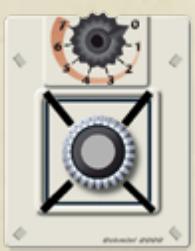
4 stoves (each consisting of: 1 plate, 4 pedestals, 1 adjusting knob, and 2 plastic rivets)


80 condiments in 4 colors (20 lemon,
20 pepper, 20 paprika, 20 herbs)

25 salt crystals
20 artfully weird dishes

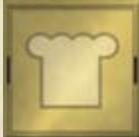

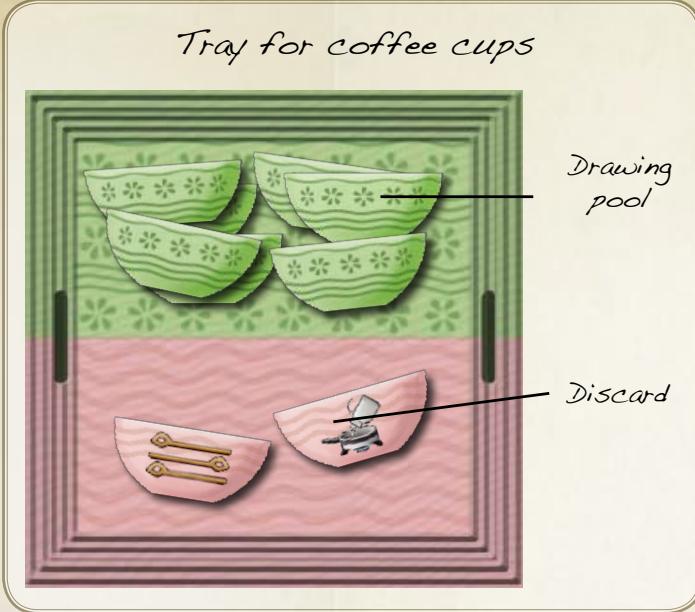
1 coffee tray for the cups
4 trays for finished dishes
4 pans

4 delicious crêpes

1 trash can
2 sinks
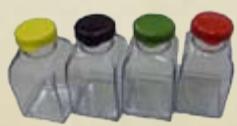
4 condiment dispensers with colored lids
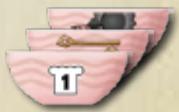
13 coffee cups for the coffee breaks

3 cooking spoons

9 star tokens
1 heating die
1 rule book

At first
Punch all components gently out of the boards. The 4 stoves are constructed according to the illustration, because every player should have their own Schmiel 2009. The plastic rivets for the adjusting knob are inserted from both sides (turn one rivet by 90 degrees and use pliers to get a firm connection of both rivets). Turn the knob several times until it moves smoothly.

Short overview
In “A la carte” the players try to be chefs cooking several dishes. They have to heat their stoves and must “skillfully" season their dishes. Finished dishes score stars and/ or victory points, burnt or over-seasoned dishes go into the bin and do not score anything. The first chef acquiring 3 stars or the most victory points is the winner.
Preparation
Each player receives:
- 1 stove (the heating knob has to be on “zero")
- 1 pan (is put on the stove)
1 coffee cup (randomly drawn) placed face-up (pink side must be up)
- 1 tray for Finished Dishes
- 1 crêpe
Put in the middle of the table:
the 20 dishes (sorted by colors, side with recipe up)
the 4 dispensers (each filled with 15 condiments of one color plus 5 white salt crystals – use the lid colors as an aid), all superfluous condiments are just spare material
- a sink
the coffee tray, covered with all remaining coffee cups (green side up)
- the heating die
- the trash can
- the 9 cooking stars
Nominate a First Player. The First Player chooses a dish and puts it in his or her pan (side with recipe up). All other players do the same in order. The First Player receives the three cooking spoons and starts the game. Play commences in clockwise order.
Course of the game
The active player always has three regular actions. For these actions he or she may choose between two options:
1. Heating of the stove (roll dice)
2. Seasoning of the dish
He or she may combine the actions in any order, e.g. three times seasoning, or three times heating, or any combination of heating and seasoning. After each action the player to the left takes one spoon from the active player. When all three actions are used up, it is the next player's turn. He or she now is the owner of the three spoons.

Note: The spoons are used to count the used actions of the active player. So the next player in order is guarding the correct use of the active player's three actions. You may also use the spoons to beat on the table in an irritating manner to remind the active player to speed up play.
Any player may choose to take a coffee break in his or her turn by using one of his or her coffee cups. This does not cost one of the three regular actions (see also point 3,“coffee breaks”).
1. Heating of the stove
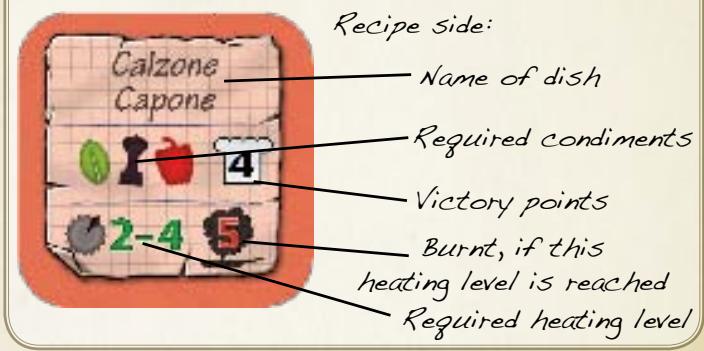
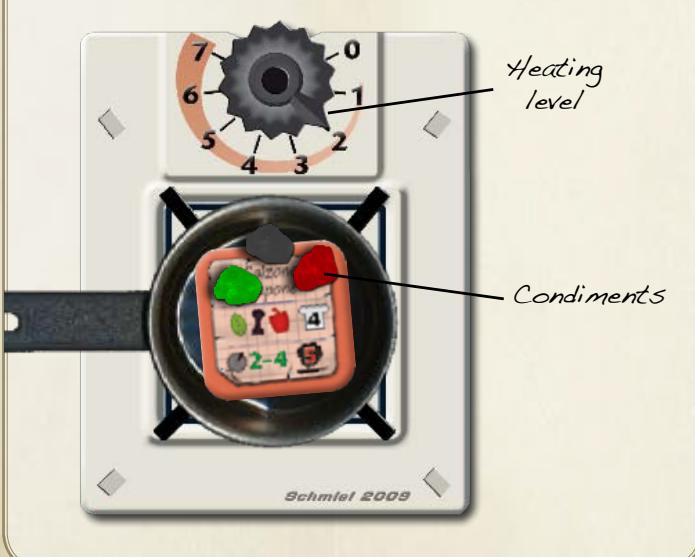
To finish ă dish, the player has to heat his or her stove up to a certain level of heat (exception: dishes served cold). The required heating levels are printed in green on the recipes. As long as the stove is within the scope of the green numbers, the dish is cooked in the correct way. As soon as the player reaches the heating level written in red, the dish is burned.
To heat, the player rolls the heating die. If a number is rolled, the player has to heat up his or her stove for as much levels as the rolled number.
Additionally there are three special symbols on the die:

all players heat up their stove for one level.

1-3 the player may choose to heat up his or her stove → by 1, 2, or 3 levels.
SSS the player draws a coffee cup from the tray and places it face-up before him or her. If the drawing pool is depleted, he steals one cup from
another player (it is not allowed to steal cups picturing
victory points, though).
The stove never can be heated higher than level “7" (any surplus numbers rolled on the die are ignored in this case).
2. Seasoning of the dish
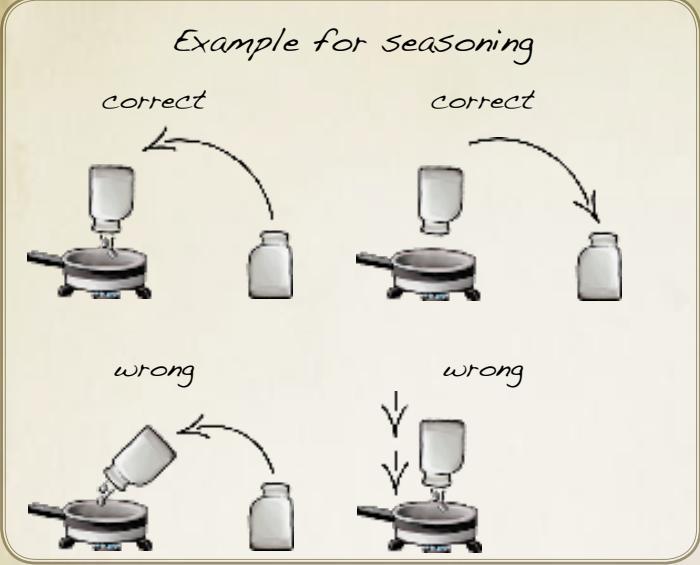
To finish a dish, the player has to season it in his or her pan. The required condiments are pictured on the recipe side. The player has to season his or her dish with at least the number of the pictured condiments. He or she may have more condiments than pictured. However, as soon as the player has three or more condiments of the same color in his or her pan, the dish is over-seasoned and unusable. Also 3 salt crystals (white condiment) in a pan over-season a dish.
To season a dish, the player takes the dispenser of an appropriate color and tries to get the condiments into his or her pan. While seasoning, the dispenser has to be placed over the pan in a single movement with its opening down and then returned back again. The speed of the movement does not matter. All condiments falling out of the dispenser in this movement, are placed in the pan (even those which missed the pan). It is allowed to pause over the pan for a short moment. The player may shake the dispenser before the movement. It is not allowed to shake or tap the dispenser while seasoning. If the seasoning was not successful, a new attempt may be started with another action.
3. Coffee break
Once in his or her turn the player may take a coffee break and use one of his or her coffee cups. The player carries out the appropriate operation and discards the cup to the coffee tray face-up. The coffee break does not cost an action (no spoon is taken). There are the following possibilities:
1 Victory point (3 times in the game): the player immediately places this token on his or her Finished Dishes tray. This token can not be taken away from this player and it is worth 1 victory point at the end of the game.
Exchange stoves (3 times in the game): The player exchanges his or her stove including pan and dish with another player of his or her choice. Both players then continue the play with their new stoves. Burnt or over-seasoned dishes and stoves with crêpes may not be exchanged.
3 Spoons (2 times in the game): The active player receives three additional actions. He takes back the three spoons and continues with his or her turn. However, the player is not allowed to use another coffee cup in the remainder of the turn.
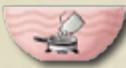
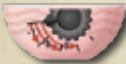
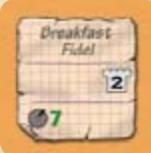
Re-season (3 times in the game): The active player may season the dish of another player of his or her choice once. It is allowed to use any condiment, even one not on the recipe or a condiment from which two pieces are already in the pan. As usual, a dish is considered as overseasoned, as soon as three or more pieces of a single color are in the pan. Dishes without any condiments (Breakfast Fidel, Eau pour le café à la Bocuse, Crêpe) may not be seasoned at all.
Decrease heating level (2 times in the game): The player may reduce his or her heating level by 1, 2, or 3 levels. This is also allowed, if his or her dish already was burnt (even at level “7’).

- A dish is finished
A dish is considered finished, if two requirements are met:
- the stove has reached the required heating level (range of numbers in green) and
- the required number of condiments lies in the pan.
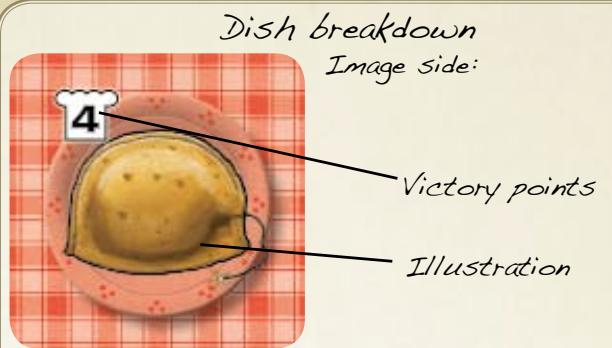
The player takes the dish out of the pan and puts it on his or her Finished Dishes tray, illustration side up. At the end of the game the dish scores the victory points printed on the token. The condiments (if any) are put into the sink. The player chooses a new dish. He or she must choose a dish color which he or she did not finish before. If this is not possible, the player may choose any color. The heating knob is reset to zero. Note: taking of a new dish does not require an action.
Example of inished dish
2. The Cooking stars
If a player manages to finish a dish perfectly, he or she receives a star. A dish is considered perfect, when the player man-

aged to season it with the exact number of condiments without any salt. Naturally, also the heating level has to be correct, as usual.
The player places the star to his or her finished dishes. A player does never receive stars for dishes which are not seasoned at all (Breakfast Fidel, Eau pour le café à la Bocuse, Crêpe).
3. A dish is burnt or over-seasoned
Whenever a dish was spoiled, it has to be removed from the stove. However, this does happen within the turn of the appropriate player only. So, whenever a dish was over-seasoned by an “attentive" opponent, the dish stays in the pan of the player until it is his or her turn again. The same goes for burnt dishes.
The spoiled dish is placed on the trash bin card, the condiments (if any) come into the sink. The player chooses a new dish. He or she must choose a dish color which he or she did not finish before. If this is not possible, the player may choose any color. The heating knob is reset to zero. Again, taking of a new dish does not require an action.
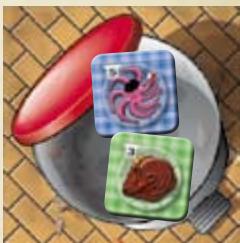
4. Refi// dispenSers
A condiment dispenser has to be refilled, as soon as it is empty or if
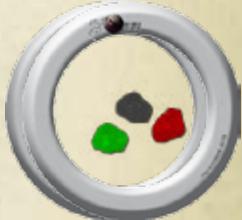
only salt crystals remain inside. All condiments of the dispenser's color are taken from the sink are put back into the dispenser bottle. The number of salt crystals should be 5 again - only if there is not enough left in the sink to refill, it may be less salt.

5. Prepare a Crêpe
The active player may decide to put a crêpe into his or her pan instead of a regular dish.
Notes: Preparation of a crêpe is a demanding task, so it is not possible to take any coffee breaks as long as a crêpe is inside the pan.
Each player may finish (or burn) only one crêpe per game.
Preparation of a crêpe
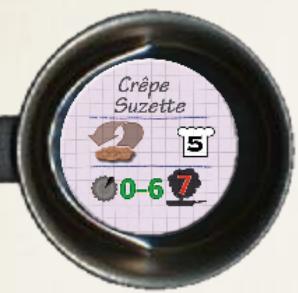
Recipe side (not turned-over)
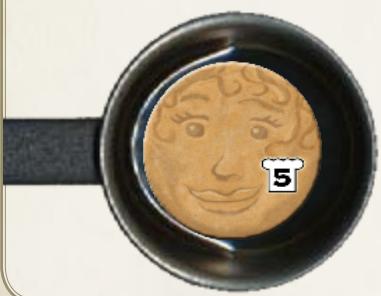
Picture side (turned-over)
The following special rules apply for the preparation of a crêpe:
O The player places his or her crêpe with its recipe side up into the pan.
- This ends the turn of the player immediately.
All remaining spoons go to the next player in order.
All his or her remaining actions in this turn are lost.
As soon as it is the player's turn again, he or she will try to prepare the crêpe.
Before the try the player has to roll the heating die (the first action). The adjusting knob is then turned up according to the die result. If a coffee cup is rolled, the player takes one cup as usual, but is not allowed to use it.
Then the player has up to two attempts to turn over the crêpe (action 2 and 3). Turning means: the player takes the pan, flicks the crêpe up and tries to catch it again with the pan so that the image side of the crêpe is facing up.
O After each attempt one of three situations will occur:
The crêpe lands with its image side up and is therefore finished. The heating level does not matter, as long as the “7” was not reached yet (thus, even “0” is valid!). The player places the crêpe to his or her other Finished Dishes and chooses a new dish for the pan. The player's turn ends immediately and the next player's turn starts.
The turning of the crêpe does not work twice (the crêpe lands beside the pan or with the recipe side up. The player‘s turn ends and the next player's turn starts. In his or her next turn, the player will heat and then try to turn over the crêpe again.
Heating level “7” was reached, thus the crêpe is burnt and spoiled. It goes to the trash bin and the player chooses a new dish for the pan. The player's turn ends immediately and the next player's turn starts.
End of game
“A la carte” ends, when:
a player is unable to place a new dish in his or her pan or
a player has finished 5 dishes (crêpes do count as dishes) or
- a player has collected 3 stars*.
The players count their victory points. The player with the most victory points wins. In case of a tie, all tied players win. Placements of the other players are also calculated by their victory points.
*If a player was able to collect 3 stars, he or she is the sole winner. This player's victory points do not matter in this case, but the victory points of the other players are used to calculate their placements.
Credits
Designer: Karl-Heinz Schmiel
Illustration and Graphic: Christof Tisch
Cover Illustration: Jochen Eeuwyk
Editor and additional Layout: Heiko Eller
With the collaboration of: Selami Ileman, Harald Bilz, Oliver Erhardt, Christoph Lipsky, Petra Becker, Michael Kröhnert
Special thanks to: Family Trieb, the Spielekreis Spielmilben, the kids from Kinderhaus Harthof, the participants of the “Gathering of Friends”
Dish overview
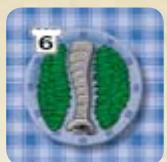
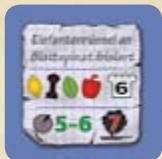
Elephant Trunk Dressed with Spinach Leaves
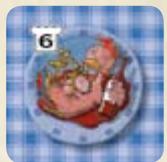
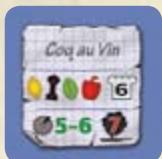
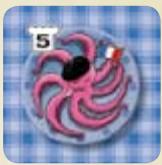
Rooster in Wine Sauce
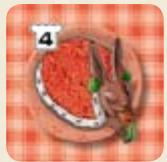
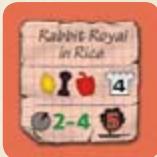
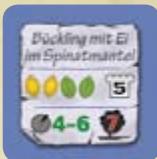
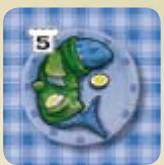
Kipper with Egg in Spinach Coat
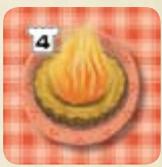
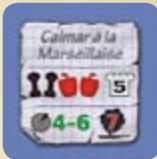

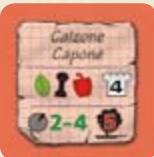
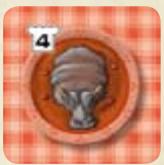


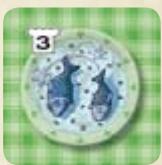
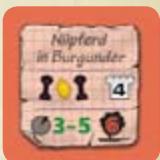
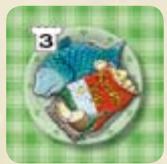
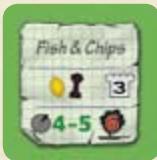

Hippo in Burgundy Wine
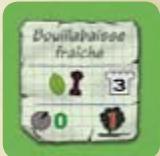
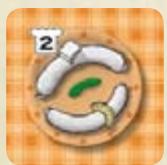
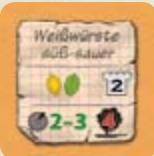

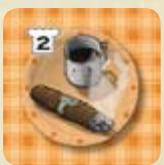
Bavarian Veal Sausage Sweet-and-Sour
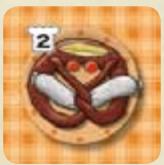
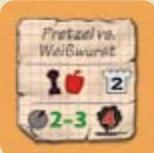
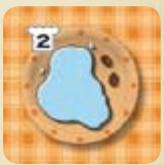

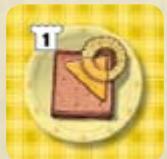
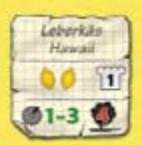
Bavarian Spam Hawaiian-Style

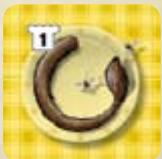

Sour Ends in Cream Sauce

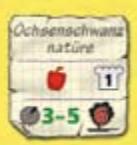
Oxtail Au Naturel
Texts are community-compiled or publicly released by publishers; copyright remains with the original authors. For personal reference only.