
Bandu
At a glance
Rules, cards and Q&A (Chinese)
The rules, card data and player questions for this game are written in Chinese. Open the Chinese page to read them.
Where to find full rules
Full rules and card lookup are available in the cunlema app at cunlema.cn — pick this game and ask about any rule, card or turn you are unsure about.
Related games
Rulebook text (Markdown)
This game has 1 rulebook Markdown file(s) in our library; 1 rendered inline below — expand to read or download.
bausach_english.md11.4 KB
BAUSACK
THE CLASSIC FROM ZOCH GAMES A GAME BY KLAUS ZOCH
BAUSACK/SAC NOIR is a whole range of games. Countless building possibilities guarantee that each construction is unique; in choosing building parts, no limits are set on your imagination. There are four game variations:
• Knock Out
• Pile It High
• Building Chain
• Tower of Babel
The games Tower of Babel“ and Building Chain“ are especially suited for playing with younger children. Knock Ou and the games following involve auctioneering and are better for older players.
CONTENTS
66 wooden building blocks
1 sack of “diamonds” (play money)
PREPARATION
All the pieces are taken out of the bag and spread out in the middle of the table where everyone can see them. It's best to play on an even surface, for example a steady table without a tablecloth.
MATERIAL
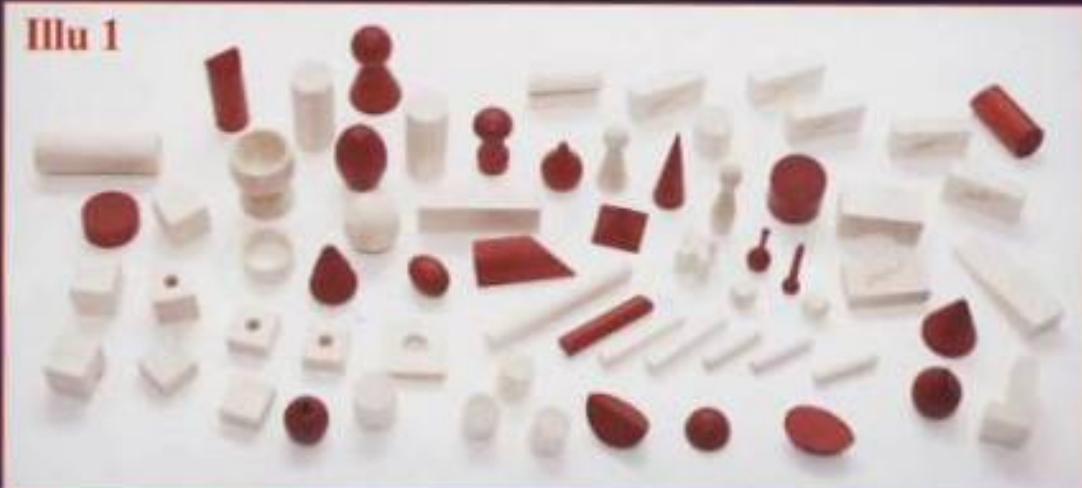
FORALL GAMES
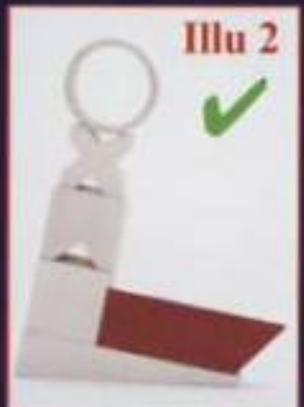
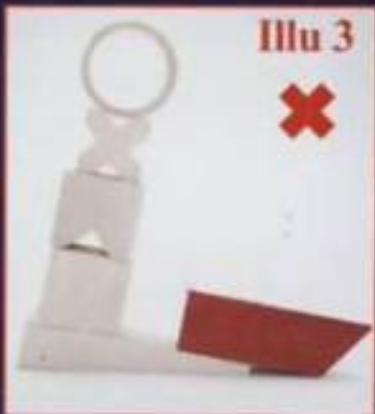
Fairness is the first rule. No jogging the table! The first block used by a player is the foundation. This means that all other pieces must somehow be placed on top of this one (lllu 2). They may not come in contact with the table (lllu 3).
You must not touch the towers themselves. That means you can't hold the tower steady or touch any of the pieces of the tower to move it around. Already
played pieces may only be moved by using the piece you are building with. Players should also be careful not to build their towers too close to one another, so that when one falls, the others' constructions don't come crashing down with it!
In the auctioneering games (Knock Out, Pile It High, 3x Red Wins) each player gets ten diamonds as play money. Sper diamonds get returned to the sack
(Ages 12 and up, 2-6 players Game duration 30-45 minutes)
The favourite of the fans of the Bausack games. A game for the steady hands
Aim of the game: Each player builds his own tower. The goal is to build the most stable tower possible out of the auctioned pieces. The winner is the one with the last tower standing.
Diamond capital: At the beginning of the game each player is given ten diamonds as money. The players have to get by with this capital for purchasing the pieces of their choice.
Play: The youngest player begins and chooses a piece offered for auction. The first piece a builder takes automatically becomes his foundation, on which all other pieces must be placed. Once a piece is auctioned, it is built with and the person to the left is the new auctioneer.
The auctioneer can choose between two auctioning styles: 1. Highest bidder: The auctioneer says Highest bidder! This piece is now auctioned to the highest bidder, with the auctioneer himself making the opening bid. The bidding then passes from one player to the other around the circle, and the players either raise the bid or exempt themselves from the auction. Only the player who made the highest bid pays the amount to the till (sack) and gets the piece. If no offer at all is made, the auctioneer gets the piece for free. 2. By refusal: The second style of auction is unusual: Here the auctioneer offers a dangerous piece“ of his choice, and then the players have to pay beans in order to avoid taking it. The auctioneer call out By refusal!“. He himself makes the offer of ,nothing“ and passes the piece on to his left neighbour. This player must either take it or stake one diamond in order to be able to pass the piece to his left neighbour. The next one must raise the stakes to two diamonds in order not to take the difficult piece. The next one must raise the stakes to three, the fourth to four etc.. Whoever refuses to raise gets the piece for nothing. The other players must then pay their last bid to the till. The players lay the diamonds they have bid in front of them until the refusal round is over. Only then is the money paid. If the piece comes all the way back to the auctioneer, he too must bid to avoid it.
WARNING: If a piece comes to you and you don't have enough diamonds, you have to take the piece and build with it. Anyone who runs out of beans keeps on playing. Of course, this player gets all the pieces auctioned By Refusal. He can still choose between auctioning styles. If he chooses Highest Bidder, he can only bid nothing and hope that no other player makes a bid, so he can get the piece for free.
Each builder is free to decide how to build on his foundation, whether to place the pieces on top or beside one another, on end or laying flat.
Game end and winner: If a tower falls, its builder is out of the game. All pieces from his tower are again available for auction. The winner is the player whose tower is the last one standing
TIP: The more often you choose to bid By Refusal, the sooner you will win. Remember that your tower gets less stable with each piece. Let your opponents do the building!
EXAMPLE 1: Roger offers Jacques an egg with the right to decline. Jacques bids one diamond and passes the egg to Bea. She proposes two diamonds. The egg moves over to Manuela; she offers three diamonds in order not to get the unwieldy item. As the egg comes back to Roger, he is happy with it and easily incorporates it into his egg cup. Jacques, Bea, and Manuela now have to pay for the diamonds they proposed.
EXAMPLE 2: Assume that Roger, in example 1, had no egg cup in his tower and also didn‘t want the egg he started circulating. So, after Jacques, Bea, and Manuela have passed on the egg, Roger also refuses to take it, offering four diamonds for this. Then Jacques, who definitely does not want to take the egg, now needs to bid five diamonds. So he adds four diamonds to the gem he has already offered. That seems too expensive for Bea: she incorporates the egg into her tower. Roger, Jacques, and Manuela have to pay...
Variant: KNOCK-OUT – FOR SURE“
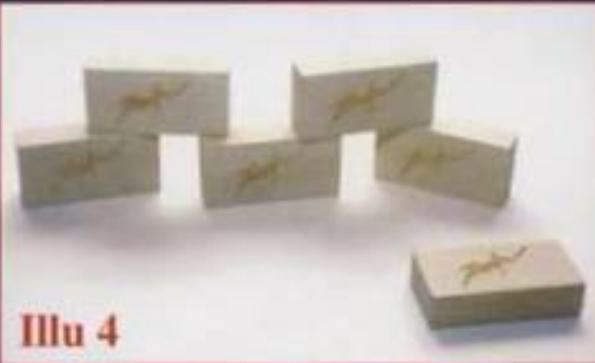
In this variant, each player has a game piece to protect himself against clearly unwanted gifts“ from his opponents. The game rules of KNOCK-OUT apply as described above; but
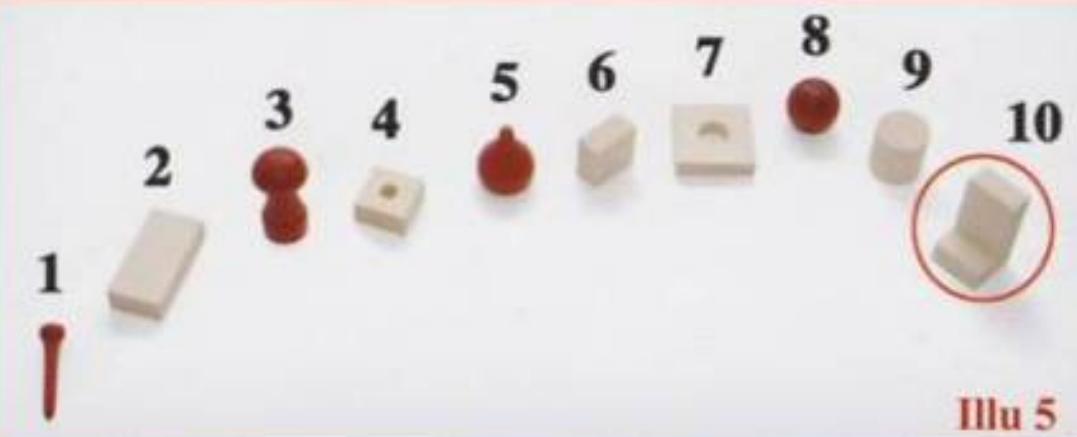
• In the beginning of the game, each player gets one Zoch piece“ (Illu 4.). •This Zoch piece“ may NOT be used as a base. • If you are offered a game piece with the right to decline that you cant or dont want to refuse (since you are short of resources), pass this piece to your left neighbor, incorporate your ,Zoch piece“ into his tower, and end your participation in the current auction. You don't have to pay diamonds in this round!
(Ages 8 and up, 2-6 players Game duration 30 minutes)
Look how wonderfully it all collapses!
Aim of the Game: Each player builds his own tower. The goal is to buil the highest tower. With each move the tower must increase in height.
Bean capital: Here too each player gets 10 diamonds, and as in Knock Out, the players have to try to get by with this amount.
Play: As in Knock Out, there are two auctioning styles. Highest Bidder works the same way as in Knock Out. The second style is called Give Away“,
which is bid on just as in Highst Bidder, However, the person who successfully bids on the piece can decide which player must build it into his tower. By forcing him to use irregular building pieces a player can cause his opponent's tower to become unstable and to make further building very risky.
If a player successfully bids for Giveaway and offers it to an opponent of his choice there are two possibilit 1. The player accepts the piece and builds it in at his own risk,
- He does not dare to build with it. He says to the giver Add this piece to my tower yourself, please“. Of course, the giver will try to place the piece in an awkward way, to hinder any further building. However, if the tower falls as this is done, the round is over for the giver (he can't build his tower any higher and is judged at that height). The opponent can rebuild his tower to the same height and keep playing.
CAREFUL: Whoever gives an opponent an obviously impossible piece runs the risk of losing the game for himself.
If a tower falls, the round is ended for that player. Only the standing remains of the tower are counted at the end. If player doesn't dare to build his tower any higher, he can end his round. His tower is then measured and recorded for the final evaluation. The player may keep on participating in the auctions and offer pieces for Giveaway and bid himself.
Game end: Play continues until no one dares to build any higher, or all the towers except one have collapsed. The winner is the one who has built the highest tower.
EXAMPLE 3: Lisa purchases the fir tree at auction for two diamonds. She passes it to Timmi to incorporate into his tower. Timmi doesnt have the courage. He challenges Lisa to incorporate the fir free into his tower. Lisa succeeds. If the tower had collapsed, the round would have ended for Lisa, whereas Timmi would have rebuilt his (old) tower and continued playing.
BUILDING CHAIN (Ages 6 und up, 2-6 players, Game duration 30 minutes)
Aim of the game: Each player builds his on tower. The goal use as many pieces as possible in it. All players use the Zoch piece“ (Illu. 4) as their foundat
Choosing pieces for building the chain: The youngest builder begins, choosing a piece from the pile in the middle and placing it in front of him/her. Each player follows suit in turn the table until no piece is left (Exeption: If only two players play, they both take 20 pieces). These pieces must be arranged in exactly the order that they were chosen - it's best the players build their chains off to the right, away from the first piece. The remaining pieces aren't needed any more and go back in their sack.
Play: The youngest begins again. He can take the first piece from the beginning of his own or any of the other chains and use it to build on his foundation. The other players do the same in turn. Each player therefore has as many pieces to choose from as there are chains.
If a chain is completely used up in building, then pieces can only be taken from the remaining chains. If a tower falls, that layer is out of the game and can only give advice. The pieces f his tower are taken out of the game, but those remaining in his chain are still available to the other players.
Game end: The winner is the player whose tower stands the longest. If all of the pieces get used and more than one tower is standing, the player with the highest tower wins.
TIP:We recommend playing several rounds. The overall winner must win at least two rounds. e first person exclud from round 1 begins round 2, and the first loser from round 2 begins round 3 etc.
TOWER OF BABEL (Ages 8 and up, 2-6 players Game duration 20-30 minutes)
Aim of the game: All players work together on the tower. The youngest begins by laying a single piece which will be the foundation. The next player chooses a piece and sets it on the foundation. Each of the others do the same in turn until the tower eventually falls down. The player who placed the piece before the one who caused the tower to fall gets one diamond, and a new tower is begun.
Tower of Babel is played in several rounds. The winner is the first one to get five diamonds
Variation: The pieces are not spread out on the table but are drawn blind“ from their sack.
© 1987, Zoch Verlags-GmbH © 2007, Zoch GmbH
Download MarkdownTexts are community-compiled or publicly released by publishers; copyright remains with the original authors. For personal reference only.