
Brazil Imperial
At a glance
Rules, cards and Q&A (Chinese)
The rules, card data and player questions for this game are written in Chinese. Open the Chinese page to read them.
Where to find full rules
Full rules and card lookup are available in the cunlema app at cunlema.cn — pick this game and ask about any rule, card or turn you are unsure about.
Related games
Rulebook text (Markdown)
This game has 3 rulebook Markdown file(s) in our library; 3 rendered inline below — expand to read or download.
rules_zh_巴西帝国_25192.md71.6 KB
墨西哥國
BRAZIL IMPERIAL
Zé Mendes
meeplebr
MUNDIUS
BG ROOKIE CM ON
規則車巴西
帝国

巴西,曾經有過許多不同的名稱:棕櫚之地、真十字架之島、特拉諾瓦,以及聖十字架之島等等,這些僅是眾多名稱中的幾個。1931年的葡萄牙語正寫法規範中,正式將巴西定名為使用字母S的Brasil;在遊戲發生的時代,巴西則被命名為使用字母Z的巴西Brazil。這其實沒什麼不同,然而玩家真正面對的挑戰是:在廣闊富饒的土地上,建立一個史上最繁榮的帝國,並成為最偉大的領導者。
signature 的字典来源.
遊戲中出現的許多插圖,靈感來自於以下的作品:
Oscar Pereira da Silva: Desembarque de Pedro Álvares Cabral em Porto Seguro em 1500, 1900 and Retrato de José Bonifácio de Andrada and Silva, 1922. Delfim da Câmara: Retrato de Dom Pedro II, 1875. Victor Meirelles: Batalha dos Guararapes, 1879, A Primeira Missa no Brasil, 1861 and Combate Naval do Riachuelo, 1865. Joaquim da Rocha Fragoso: Retrato do Duque de Caxias, 1875. Jean-Baptiste Debret: Carga de Cavalaria Guaicuru, 1822, O Vendedor de Arruda and O Sinal de Combate - Coroados (Bororo), 1839. Albert Eckhout: Índia Tupi, 1641. Joseph Kreutzinger: Retrato da Arquiduquesa Maria Leopoldina, 1815. Benedito Calixto: Retrato do Padre José de Anchieta, 1902, Pátio do Colégio, 1902, and Fundação de São Vicente, 1900. Édouard Viénot: Retrato da Princesa Isabel, 1868, Retrato de Gastão de Orleans O Conde D'Eu, 1870 and Retrato do Visconde de Mauá, 1868. Chaves Pinheiro: Figura Alegórica do Império Brasileiro, 1872. Simplício Rodrigues de Sá: Retrato de Dom Pedro I, 1830. Luis de Madrazo y Kuntz: Rainha Isabel I de Castilha, 1848. Franz Xaver Winterhalter: Rainha Victoria, 1843. Ernest Crofts: La Belle Alliance, 1815. Michiel Jansz van Mierevelt: Retrato de Jean-Maurice of Nassau-Siegen, 1637. François-René Moreaux: A Proclamação da Independência, 1844. Václav Brozík: Jitro (1851-1901) Georgina de Albuquerque: Sessão do Conselho de Estado que decidiu a Independência, 1922. Pedro Américo: Dom Pedro II na abertura da Assembléia Geral, 1872. Aurélio de Figueiredo: A Redenção dos Amazonas, 1888. Gabriel Duperré: Arredores da fazenda mandioca, 1838. Félix-Émile Taunay: La Barre - Rio de Janeiro, 1840.
遊戲設計及美術指導:Zé Mendes
開發商:Michael Alves and Diego Bianchini
出版商:MEEPLE BR
平面設計:MUNDUS Jogos
校對:Ron Halliday
美術:Carlos E. Justino, Vinícius Menezes, Victor Sales, Isaias Junior, Ryan Teo, Arthur Parisi, Tom Ventre, Adalberto Junio and Girleyne Costa
中文翻譯:Roger Matthews
中文編輯:AG、歐瘦瘦、K1、樹豆工作室
中文美術:Kate Li
遊戲測試者及鳴謝:Isabela Ferreira, Antonio da Videira, Ricardo Magana, Clóvis Corrêa, Roberto Ritter, Eduardo Felipe Tavares,
Francys Johns and Weverson "Nego" Ferreira, Marina Mendes, Túlio Barros, Fred Andrade, Johannes Natterer, Orgutal Jogos: Luiz Cláudio, Márcio Botelho, laggo Piffero, Jorge Nascimento, Maiko Carvalho, Tarik Khalil, Icaro Souza, Marcelo Shaid, Silas Tinoco, Liliane Nunes and Giuliano Penatti, Andy Strauss, Marcius Fabiani, Pedro, João and Tiago Miranda, Luciano Toledo, Ney Alencar, Vanessa Piasa, Wagner Almeida, BGGII: Paladino Monge, Edson Antunes, Daniel Vasconcelos, Jogada Histórica, Covil dos Jogos: Paulo, Jean e Pikachu, Igor Knop, Meeple Maniacs: Jack e Zombie, E aí Tem Jogo?: Carlos Couto,
Duque BG, After Match: Fabricio Ferreira, Bota na Mesa: Paulo Rezende, Thiago Boaventura, Romir Play House, Rafael Pinheiral, Emivaldo "Zinho", Tábula Quadrada: Renato Lopes, Canal Gong: Marcus Martins, Igor Campos, Maurílio Salgado, Thiago Vieira, Engrenagem Lúdica: Giovanni LOok, Empreende Nerd Mesa Secreta, Ludoteca: Charlon Portugal, RED Jogos, Além do Muro and Game of Boards.
给玩家们的一封信
致最尊貴的玩家们,我祈禱這封信能讓您身心靈都愉悅。毫無疑問地,您已經聽到意外發現新世界的聲明了,也正因為這個熱門的話題,我覺得有必要寫下這封信告訴您,以便您能參與這歷史性的一刻。我知道的是,這將是一場多達四位玩家的策略競賽,其中贏得最多勝利點數的參與者,將被授與這未知大地的統治之冠。
您已經擁有目前我們所提供最精確的六角形地形資訊,在到達新世界後,最重要的事情是立即在地圖上放置建築來擴張您的領土,同時透過製造新產品來改善您未來的行動效益。尊貴的玩家們,請記得地圖上無數未被探索的區域,將會為有能力的勇者帶來巨大的好處;另外,您也需要一支強大的部隊,避免開闢道路時受到未知的衝突。
您將透過建立新城市與建造大量建築物來征服新領土,這些建築會為您的落腳處提供各種資源與黃金——有些甚至可以增進您的科學認知,這是一種最有用的資產。時刻保持謹慎的態度,因為其他對手可能會趁機搶走您的辛苦成果,並迅速地將您從青史中除名。
玩家間的競爭,將會橫跨三個時代——每個時代都提供了最新的科技,同時也增加了挑戰的難度。若至少有一位玩家完成挑戰,則遊戲將會往前推進至下一個時代。
我應該不必提醒您,一個偉大的文明是建立在偉大的思想上,單只有黃金是不夠的。出於這個原因,聖十字架之地最偉大的英雄們對您的支持以及他們提供給您的智慧、知識與建議同樣不可或缺。另外,親愛的玩家們,如果我可以給予您一點建議的話:在您有疑慮時,永遠不要忘記,真正對您的勝利有意義的是那些勝利點數。願睿智引領您的行動與抉擇!去吧,建立您的強盛帝國,成為偉大的君王。
「願上帝賜予我這最後的願望——巴西的繁榮與和平」佩德羅二世。
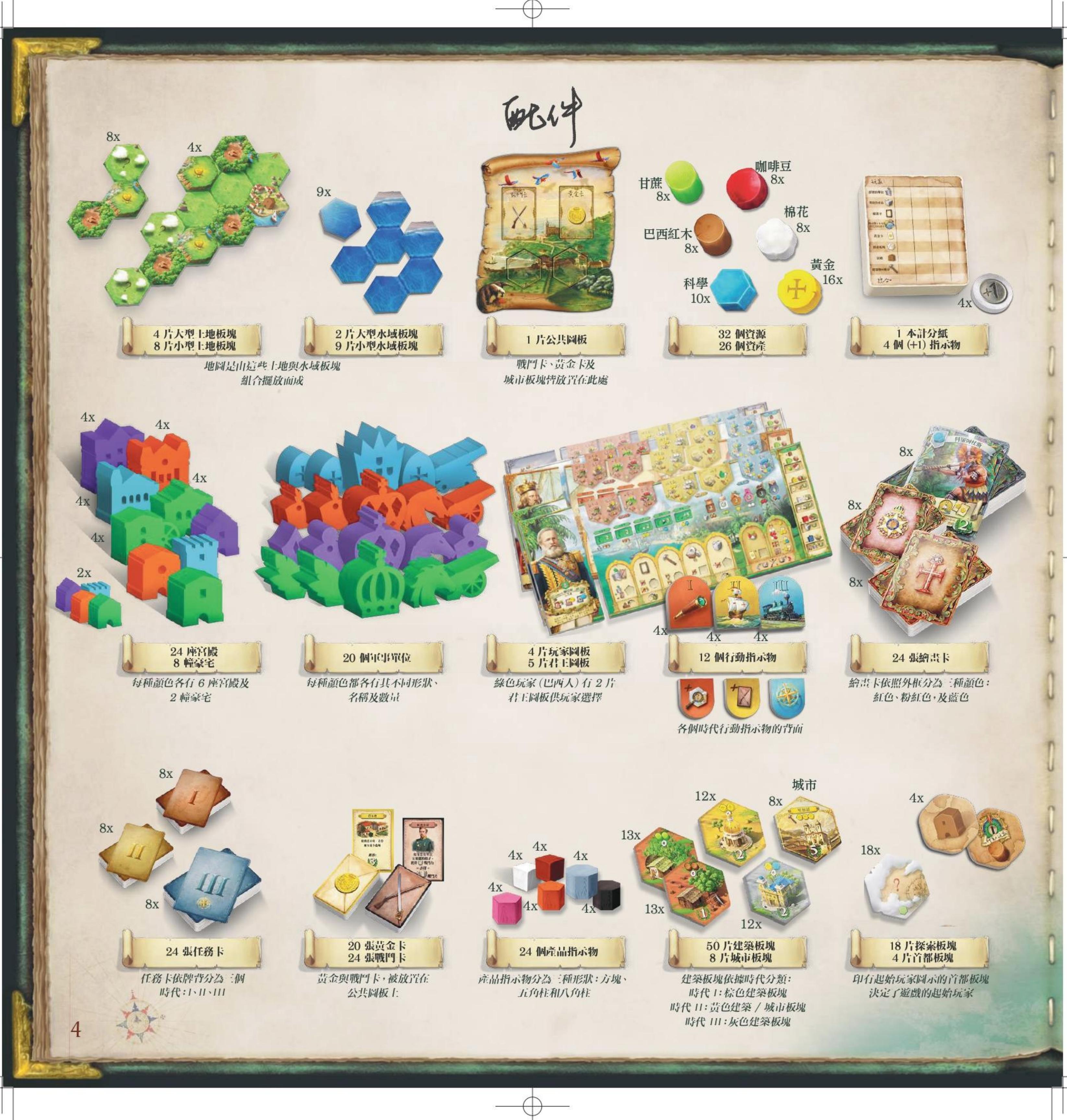
遊戲目標
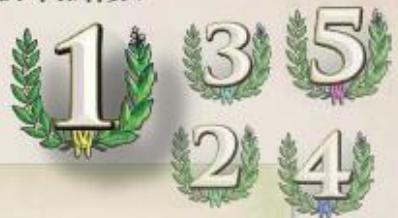
在遊戲中,玩家們發展各自的帝國並累積勝利點數(VP),這些勝利點數(由價值1-5的帝國桂冠表示)將會在遊戲結束時計算於計分紙上。
遊戲由時代 I 開始,並進行三個時代,一位玩家必須宣布完成其任務卡上的任務,以便進入下一個時代;當一位玩家在第三時代宣布完成其任務後,在該輪結束時,遊戲同時結束。印在時代 III 任務上的星號圖示用來提醒玩家,完成該任務將會觸發遊戲結束。
在時代 III 結束時,計算勝利點數,擁有最多勝利點數的玩家獲勝!
規則摘要
一位玩家的回合,分為兩個階段:一個行動階段,接著是一個移動階段。
(A) 行動階段: 玩家經由放置其行動指示物在玩家圖板上可用的拱門行動格上來執行一個行動。如果這個行動需要支付成本, 玩家可使用科學來替代任何黃金或資源; 而黃金可以用來替代任何資源。
(B) 移動階段: 玩家可以執行一次免費移動, 以及一次所選的拱門行動格下方允許的額外移動, 將其一個已經放置在地圖上的軍事單位移動到相鄰的六角形區域。當一位玩家將其一個軍事單位移動到其他玩家的城市、建築物或軍事單位的六角形區域時, 戰鬥將被啟動。
一旦玩家完成其移動階段,按照順時針方向,下一位玩家開始其回合。
當有任何玩家宣告(並展示)已完成遊戲當前時代的任務時,所有玩家必須進入到下一個時代。首先,每位玩家將其行動指示物正面朝下,放置在其所選的拱門行動格下方,該指示物顯示的獎勵將在之後的遊戲中加入這個拱門行動中,接著所有玩家依據新的時代獲得一個新的行動指示物。
請留意:儘管輪到玩家進行其回合時的步驟很簡單,但玩家仍需要在許多選擇中考量其輕重緩急。若這段規則摘要讓您有任何不清楚的地方,別擔心,所有規則細節將在後續說明中解釋。
遊戲設置
-
依據規則書第 22-24 頁,選擇一個適合玩家人數的地圖設置,在桌面中央進行遊戲地圖場景 A 的拼裝。將首都板塊 B 正面朝下,隨機放置在指定的六角格上,並確保印有 1st O 的起始玩家板塊有包含在其中。將探索板塊 C 正面朝下,隨機放置在地圖上所有被雲覆蓋且印有「?」的六角格上,將剩餘未用到的探索板塊正面朝下,放回遊戲盒中。
-
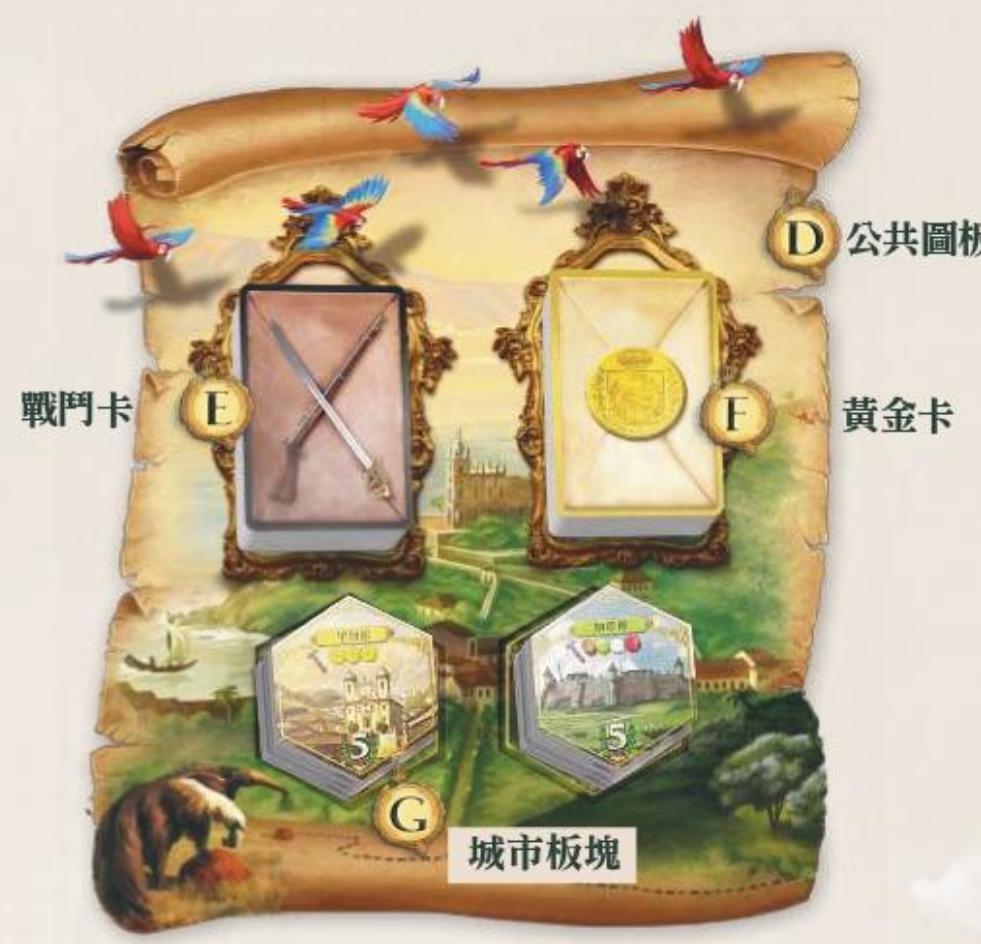
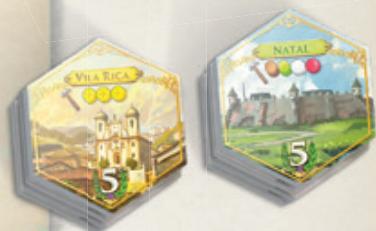
將公共圖板 D 放置在靠近地圖旁的空位上,並將戰鬥卡與黃金卡 E F 正面朝下分別混洗,放置在指定的格子上。將所有城市板塊 G 混洗後,疊成 2 叠數量相等的板塊堆,正面朝上放置在指定的格子上。
-
依據繪畫卡 ⑪ 的牌背外框顏色,將它們分成三疊,正面朝下混洗後,從每疊各抽取頂部 2 張卡牌,將卡牌正面朝上依序放置,形成一個有 6 張繪畫卡的展示區。
-
每位玩家拿取一片玩家圖板 ①、君王圖板(綠色玩家拿取 2 塊對應顏色的君王圖版)以及對應玩家圖板顏色的:5 個軍事單位 ①、5 座宮殿 ①,2 幢豪宅,以及 6 個產品指示物 K(每種類型各一個)。玩家將這些產品指示物、軍事單位及宮殿放置在玩家圖板上指定的位置。
-
每位玩家拿取行動指示物及每個時代 (I、II 及 III) 各 2 張隨機的任務卡 M,玩家必須從每個時代的 2 張任務卡中選擇 1 張保留,並將另外 1 張放回對應牌庫底部。然後玩家拿取自己的君王圖版 I,將所選君王那面朝上放置在其玩家圖板的左側。
-
將所有首都板塊 B 都翻開至正面朝上,接著決定一位玩家優先挑選一片首都板塊,這位玩家選擇了一片首都板塊後,拿取該板塊所顯示的資源,並將其放到玩家的個人供應區中。接著,這位玩家將該首都板塊從地圖上移除,並將自己的宮殿 I N 放到所移除板塊的六角格上。玩家們依順時針方向進行,直到所有玩家都選擇了一個首都地點做為起始地。
-
選擇印有1st 玩家圖示 首都板塊的玩家成為這場遊戲的起始玩家! 玩家保留這片板塊作為遊戲起始玩家的提醒, 其他首都板塊則可以放回遊戲盒子裡。遊戲中, 玩家依順時針方向順序進行遊戲 (下一位玩家是坐在當前玩家的左手邊那位)。




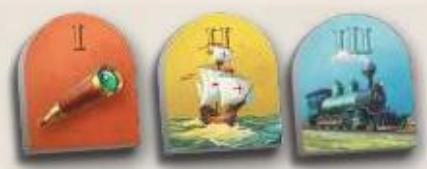
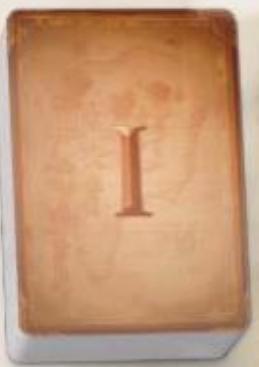
君王圖板、玩家圖板及行動指示物


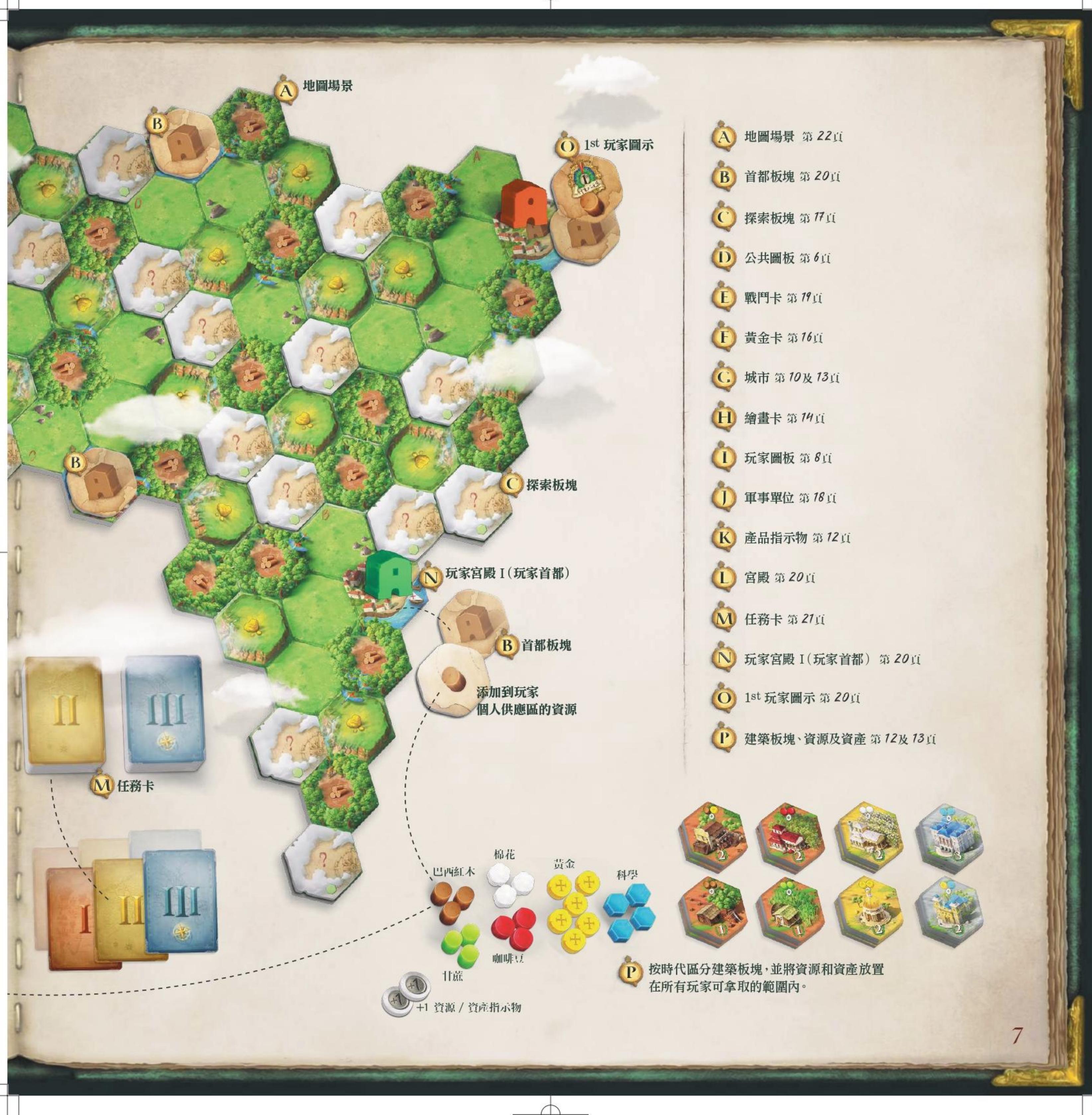
地圖場景 第22頁
首都板塊第20頁
探索板塊第17頁
公共圖板第6頁
戰鬥卡 第19頁
黃金卡第16頁
城市第10及13頁
繪畫卡 第14頁
玩家圖板第8頁
軍事單位 第18頁
產品指示物 第12頁
宮殿第20頁
玩家宫殿I(玩家首都)第20页
1st 玩家圖示 第 20頁
任務卡 第21頁
建築板塊、資源及資產第12及13頁
按時代區分建築板塊,並將資源和資產放置在所有玩家可拿取的範圍內。
玩家圈板

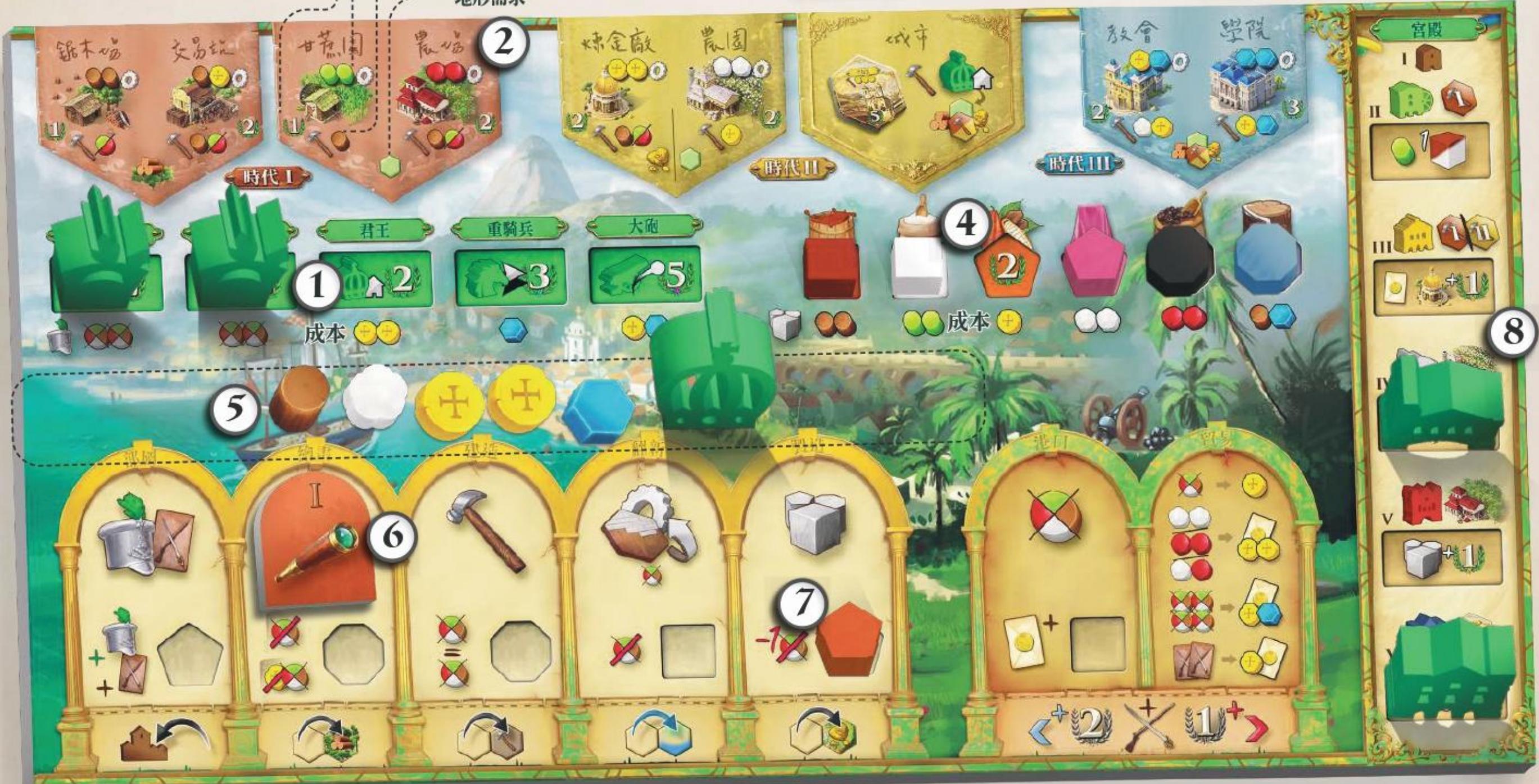
玩家圖板可以幫助玩家們選擇想要的行動,以及儲存資源與資產,在設置階段時,每位玩家選擇1片玩家圖板,或隨機分配1片玩家圖板。每片玩家圖板皆有至少兩名與其顏色相同的君王可供玩家選擇,玩家選擇其中1位君王在這場遊戲中使用。每位玩家拿到的6個產品指示物、5個軍事單位以及5座宮殿,將被放置在圖板上特定的位置。繪畫卡將以正面朝上放置在玩家圖板旁,而任務卡、戰鬥卡以及黃金卡則是持續持有在玩家手中。
軍事單位
將您的 5 個軍事單位,分別放置在圖板中指定的位置,其獨特能力與勝利點數顯示在每個單位所覆蓋的位置上,下方則是玩家第一次部署該單位所需的成本。

建築板塊概述
每個時代可使用的建築物,其重要的資訊列於此處。
可獲得的勝利點數
· 可獲得的生產物
· · · · 建造時的花費
· · · · · 地形需求
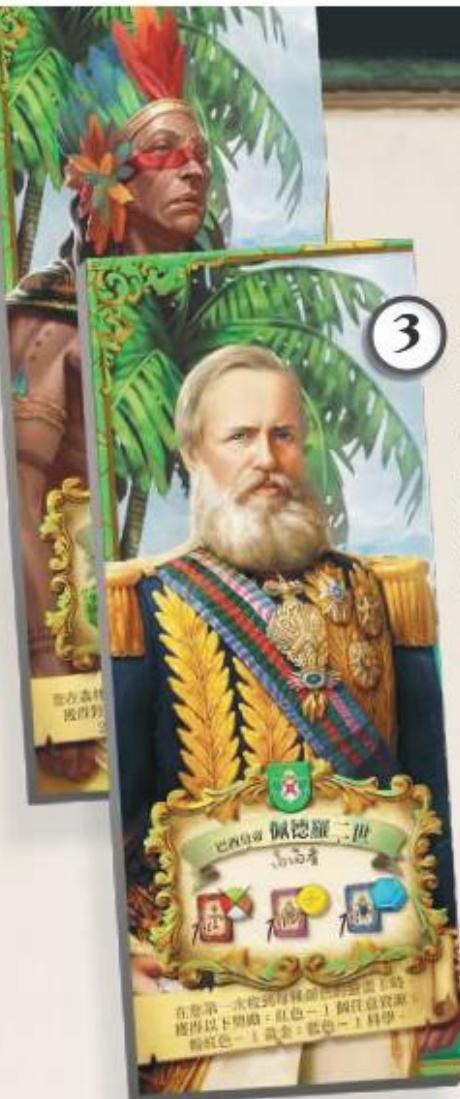
君王
君王圖板是雙面的,每面各1位,分別具備提供玩家獨特能力與獎勵的特質(詳見第17頁),每位玩家選擇其中一面君王,並將該面朝上放置在其玩家圖板左側。

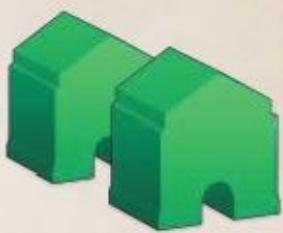
豪宅
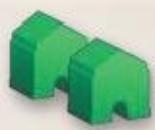
每位玩家都擁有符合其顏色的2幢豪宅,豪宅用於識別地圖中屬於玩家的城市。
產品指示物
將 6 個產品指示物依照形狀及顏色,分別放置在圖板上對應的位置上,每個指示物覆蓋的位置上印有勝利點數,下方則是製造它們的成本。

個人供應區
玩家圖板的中央區域被用來做為儲存區,玩家可存放總共5個資源和/或資產。玩家戰敗的軍事單位也同樣被保留在此區域,但它們不佔用任何格子。


拱門行動格
玩家必須放置1個行動指示物在其中1個行動格上,才能執行該行動格所示的行動。


升級拱門行動格
玩家可以將所製造的產品,放在其中1個格子上,來升級該拱門行動格(詳見第12頁)。
行動指示物
每位玩家,都擁有3個行動指示物,每個時代1個,還不能使用的行動指示物,將被放在玩家圖板旁。

經濟時期宮殿
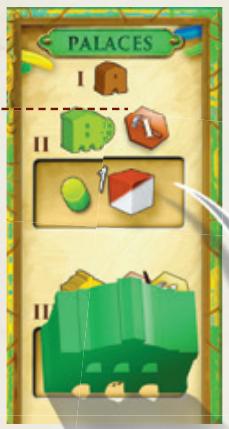
將 5 座宮殿 II 到 VI,依據其形狀依序放置在對應的格子上。當玩家完成了 1 個任務,該玩家可以將其中 1 座宮殿放置在其建築板塊上,並解鎖該獎勵(詳見第 20 頁)。
行動指示物
行動指示物是遊戲中非常重要的部分:玩家將它放置在1個未被佔用的拱門行動格中(詳見第10頁)來執行所選擇的行動。每位玩家有3個行動指示物,每個時代1個(I、II及III)。
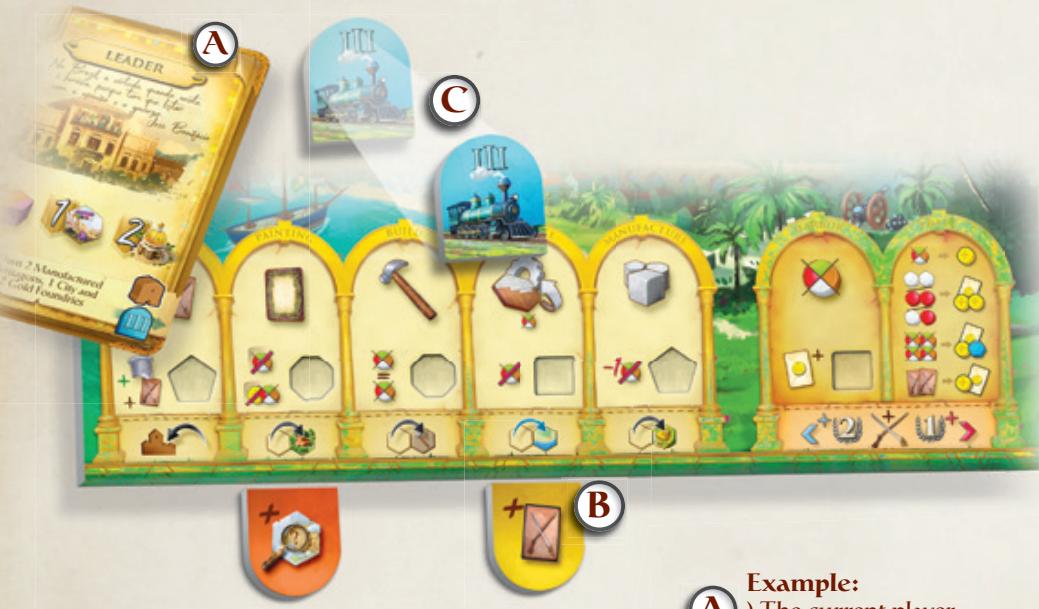
玩家不能在連續 2 回合內使用相同的行動指示物,執行相同的行動(詳見下方敘述)。
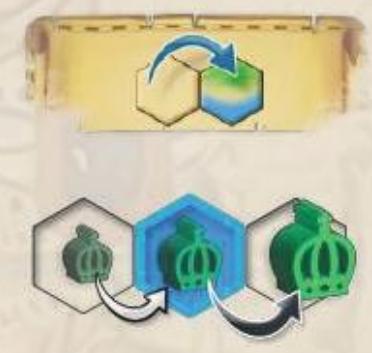
當一個新時代開始時,玩家將其前一時代的行動指示物,正面朝下放置在1個可用的(還沒被放過行動指示物)拱門行動格下方。這樣一來,玩家會在其移動階段時增加該拱門行動的獎勵。
請注意,所有玩家永遠都會處於同一個時代,因此所有人永遠都會使用同一種行動指示物。在每個時代的第一個行動,可以是任意一種行動,因為前一個時代的指示物不會覆蓋任何1個拱門行動格。


範例:
) 當前玩家執行了 1 個行動,進而成為第一位宣告完成當前時代 (II) 任務卡的玩家。

時代1行動指示物

玩家可以在不翻開 1 片探索板塊的情況下,拿起它並檢視它的內容後,接著正面朝下放回該板塊。這片板塊仍然必須被 1 個車車單位探索後,才能獲得它的獎勵(詳見第 17 頁)。

玩家可以抽取 1 張戰鬥卡。

時代II行動指示物
)所有玩家必須將其時代口行動指示物,正面朝下放到一個所選的拱門行動格下
方,從現在開始,玩家在移動階段執行該行動時,會獲得所描述的獎勵。

)遊戲立刻進入時代III,所有玩家使用時代III的行動指示物。
玩家回合
玩家必須在執行移動前完成其行動階段。輪到玩家時的 2 個階段必須按照下列順序執行:

A) 行動階段
放置您的行動指示物在1個未被佔用的拱門行動格中並執行該行動。您必須將您的行動指示物移動到另1個不同的拱門行動格上,這也代表您不能在連續2回合內執行相同的行動。
範例:假如您想要獲得 1 張繪畫卡,將您的行動指示物放置在繪畫行動的拱門上。
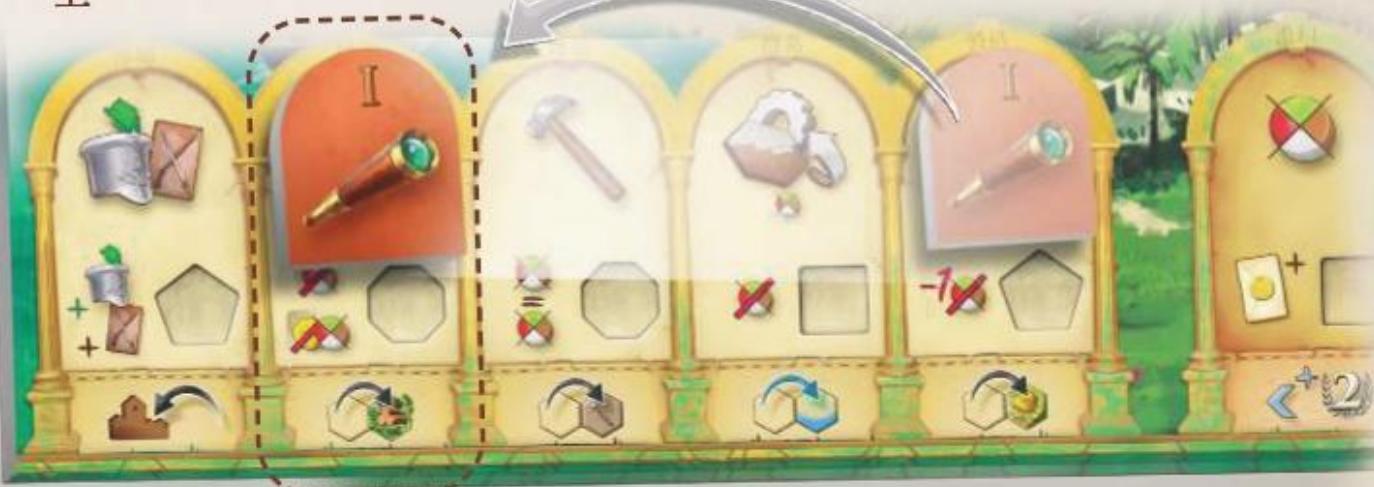

B) 移動階段
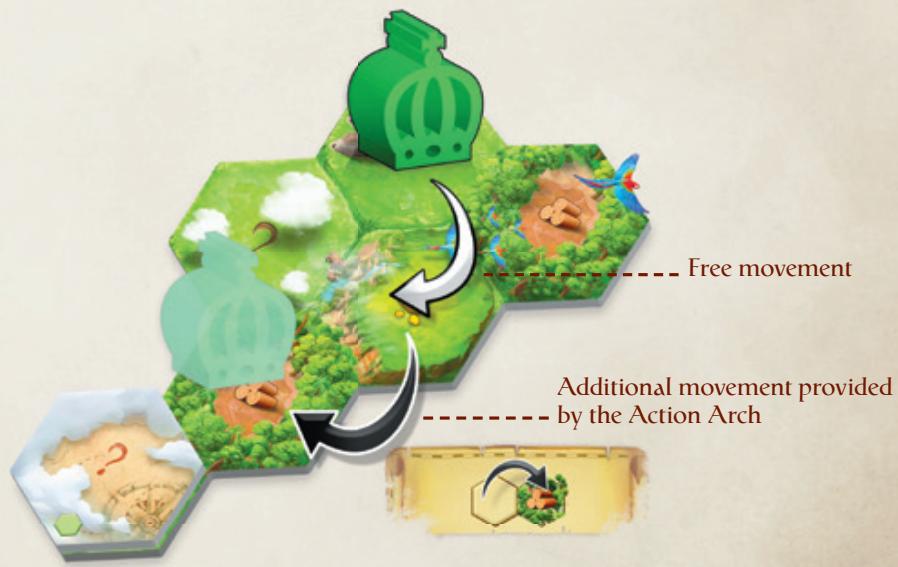
在完成您的行動後,如果您想要的話,您可以執行1個免費移動,將您地圖上1個軍事單位移動到相鄰的格子上。假如您所選的拱門行動格中提供了1個額外移動,您可以再次移動相同的單位,或者移動不同的單位。
記住有哪些種類的額外移動是非常重要的,而且它們可以在您的免費移動之前或之後執行(詳見第11頁)。
範例:透過選擇繪畫拱門行動,您將擁有1個免費移動,以及拱門行動格所賦予的額外移動(移動到相鄰的森林)。

由拱門行動提供的額外移動

拱门行勤格
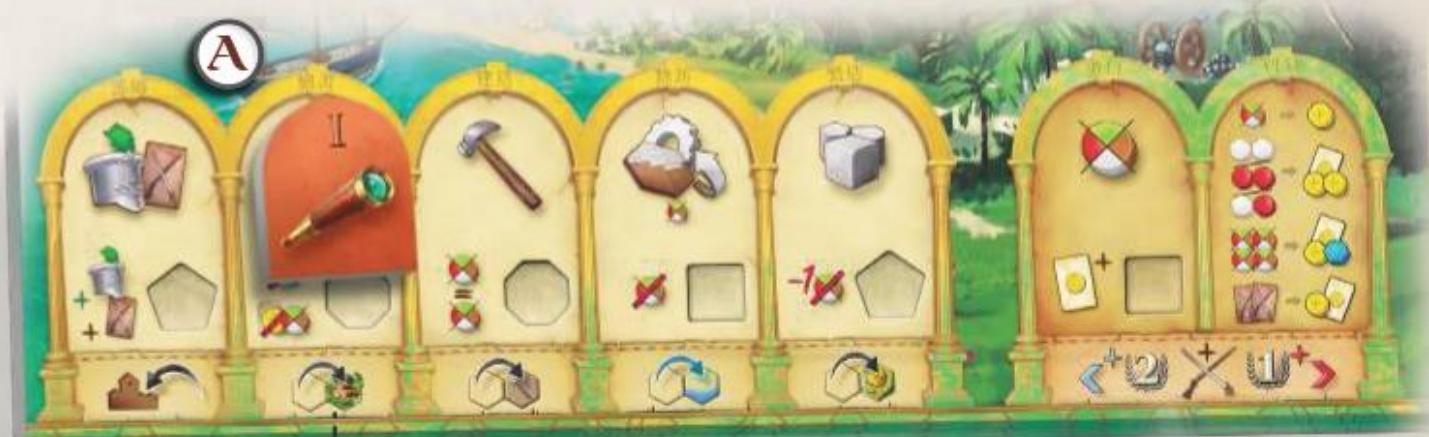
玩家圖板上有許多拱門行動格,玩家透過擺放行動指示物在這些行動格上來執行行動。前 5 個行動格提供各種物品及勝利點數;最後 2 個行動格的港口與貿易,則提供資源、資產及黃金卡。請記得,玩家不能在連續 2 回合內使用相同的行動指示物來執行相同的行動。
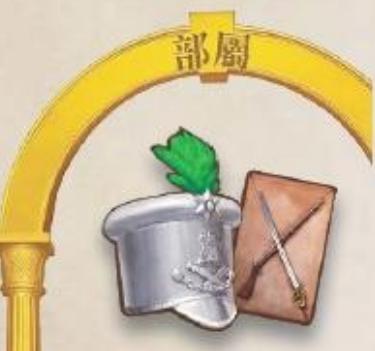
部署: 支付玩家想要部署的軍事單位下方顯示的成本, 將該軍事單位放置到地圖上, 然後抽取 1 張戰鬥卡。如果您願意, 您也可以只抽取 1 張戰鬥卡, 而不部署任何單位在地圖上。部署 1 個軍事單位時, 將它從您的圖板上移動到您的其中 1 片城市或首都板塊上。如果這是您在這場遊戲中第一次部署這個軍事單位, 則圖板上這個軍事單位的勝利點數便會揭示, 您將在遊戲結束時獲得這些勝利點數。
一旦 1 個軍事單位被部署後,它將不會再回到圖板上遊戲設置時的地方。1 個戰敗的軍事單位(它已被放置到您的個人供應區)可以再次被部署到地圖上,無需支付任何成本。

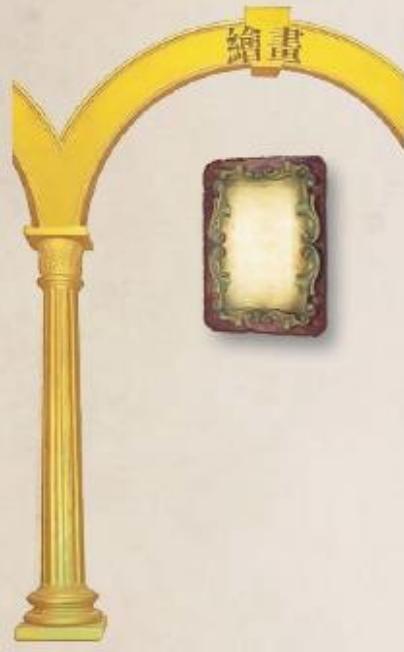
繪畫:獲得繪畫卡牌區的 1 張繪畫卡,支付其可能需要的成本。將您新購買的繪畫卡正面朝上,放置到您的玩家圖板旁,您可以在接下來的遊戲中使用這張繪畫卡的能力。
更多關於繪畫卡的能力與購買成本,詳見第14頁。

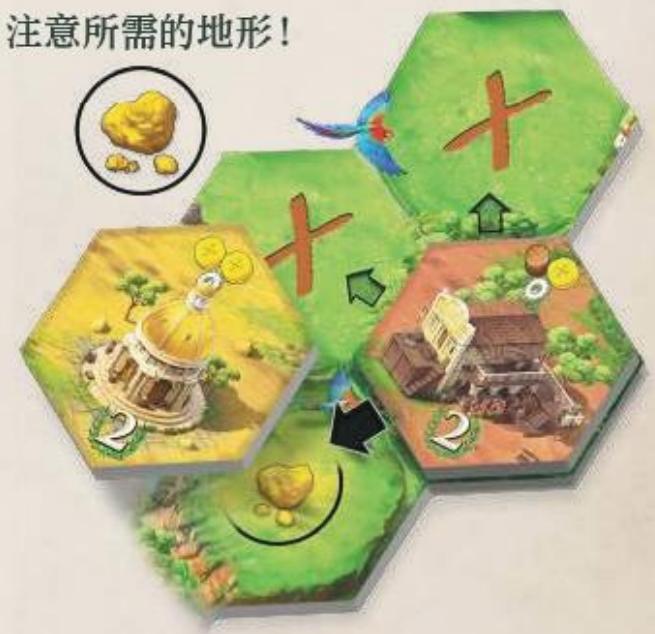
建造:將建築物或城市,添加到您的帝國之中,您需要先支付其所需的成本,並確認它的地形需求。
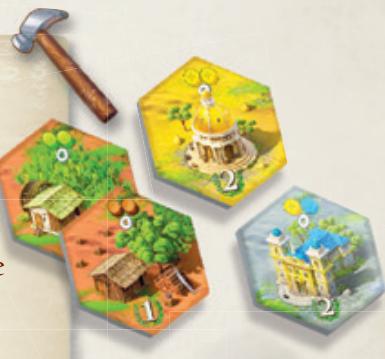
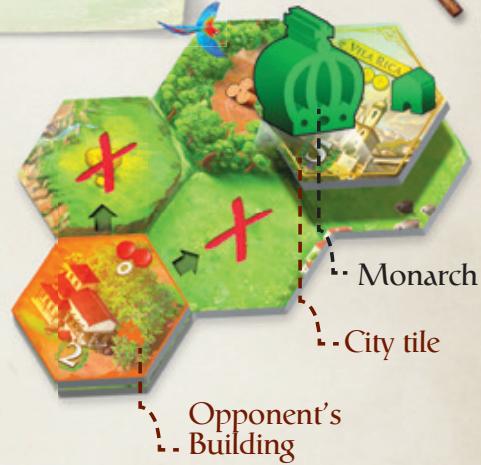
選擇桌上的 1 片建築板塊以您想要的那面朝上,放置到您的首都、城市或建築板塊相鄰的六角格,且這個六角格不可以與任何敵人的板塊相鄰,並依據板塊上白色齒輪圖示旁指定的產品,立即將對應的產品指示物放置在該板塊上。若是要建造 1 座城市,從公共圖板上的 2 片正面朝上城市板塊中選擇 1 片,將它放置在您的君王軍事單位所在的位
置,建造城市不需要與您的任何板塊相鄰,但城市板塊也不能與任何對手的板塊相鄰,您也不能放置1片板塊在任何敵人的軍事單位所在位置上。
生產是遊戲中重要概念之一,玩家們可以使用建築物來生產資源和資產並用來支付或貿易,但這些建築物將不會再次生產貨物,除非玩家執行翻新動作,或者透過其他方式獲得貨物(詳見第12頁)。
請留意,建築板塊有時代之分。舉例來說,當遊戲處於時代 II 時,玩家只能建造城市,以及時代 I 與時代 II 的建築物;只有當遊戲進入時代 III 時,才能建造時代 III 的建築物。玩家圖板的上方,標示了每種建築物的建造細節,如地形需求等資訊。
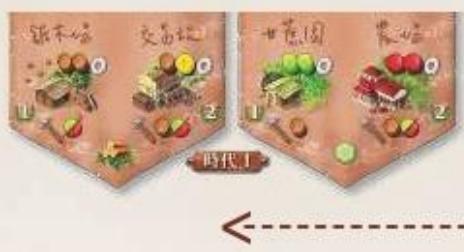

建造行動快速參考指南
-
選擇 1 片符合當前時代或先前時代的建築或城市板塊,選擇其中一面來建造,並支付成本。
-
將建築板塊放置於符合地形需求的六角格上,且需與您的某個建築物、城市或首都的格子相鄰,建造的板塊不能與對手的任何建築物、城市或首都相鄰。

- 城市只能被放置在您的君王軍事單位所在位置,且您的城市也不能與對手的建築物、城市或首都相鄰。
- 依據板塊上白色齒輪 📄 圖示旁指定的資源和 / 或資產,將對應的生產物放置在該板塊上。
建築物立即開始生產:
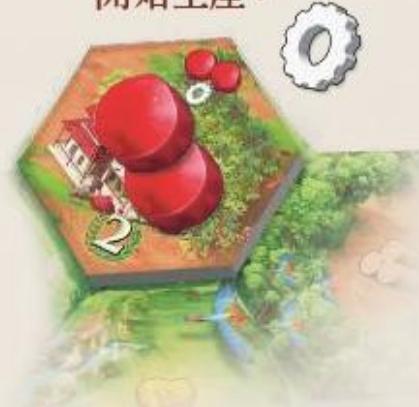
如板塊所示,建造農場時會生產2咖啡豆,將2個咖啡豆指示物放在板塊上,玩家可以在未來的交易中使用這些資源。
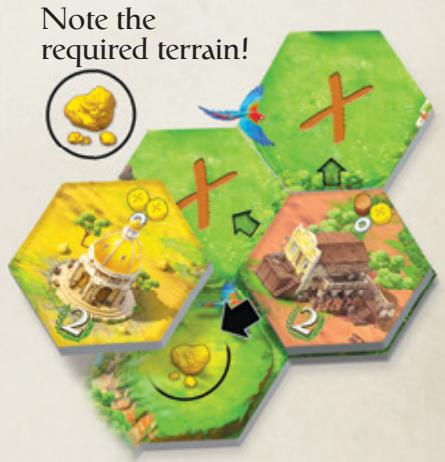
建造1座城市
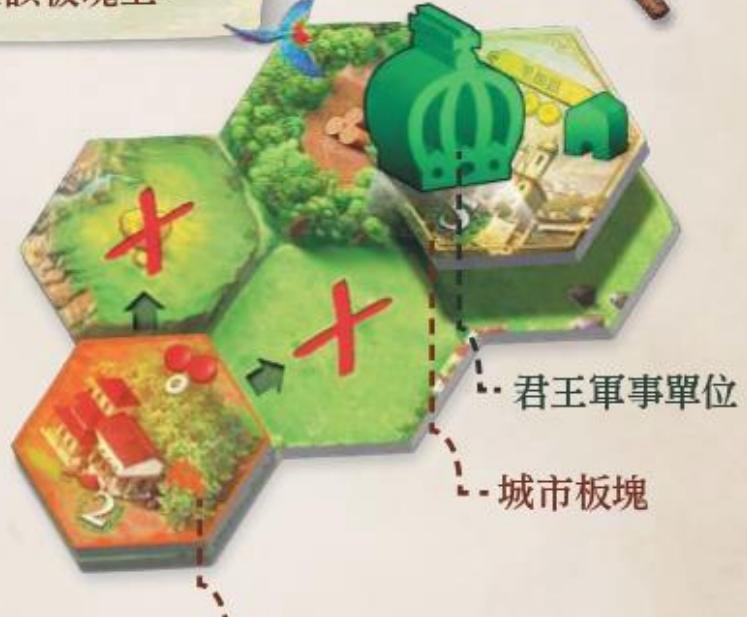
- 君王軍事單位
- 城市板塊
- 對手的建築物
注意所需的地形!
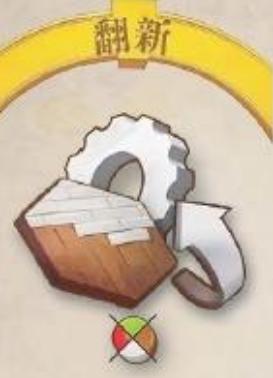
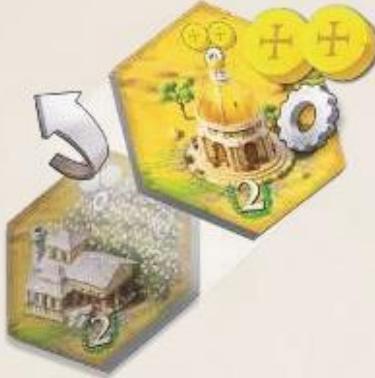
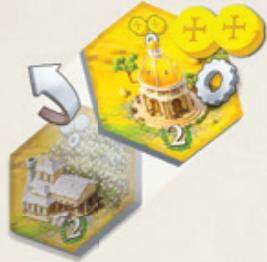
翻新:玩家可以執行翻新行動,重新讓1片沒有任何資源或資產的建築板塊再次生產貨物。支付任意種類的1個資源,選擇以下2種選項之一:
A) 補充該建築物白色齒輪圖示 ☐ 所指定的資源或資產,或者是
B) 將板塊翻面並依據白色齒輪圖示所指定的資源或資產進行補充,在執行翻新動作而翻面時忽略它的地形需求。
您不能使用將要翻新的板塊上所放置的資源,來支付翻新的花費,另外目標板塊上有資源時也不能翻新。

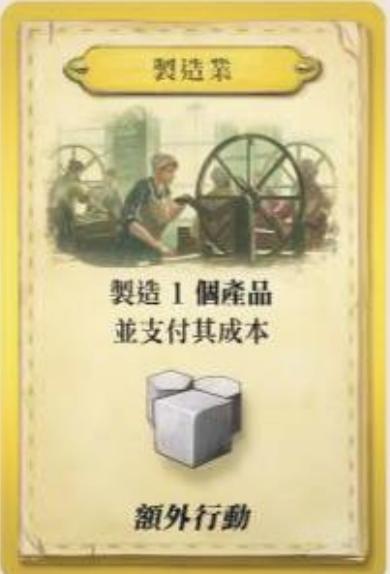
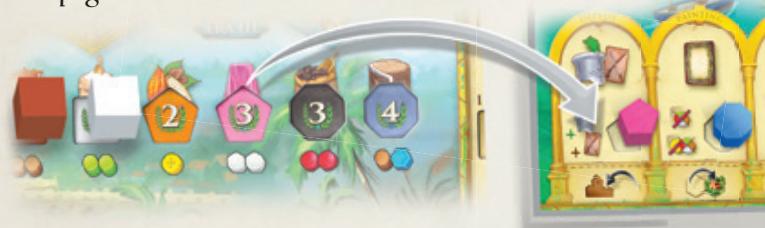
製造: 在您的玩家圖板上選擇 1 個可製造的產品, 並支付下方所示的成本, 將所選的產品指示物放置在拱門行動格中形狀相同的升級槽中。現在開始, 當您將行動指示物放到這個拱門行動格時, 您將同時獲得所標示的獎勵 (詳見第 12 頁)。

港口: 從一般供應區中拿取 1 個資源, 放置到您的個人供應區中。請記得您的供應區只能存放最多 5 個貨物 (資源和 / 或資產)。
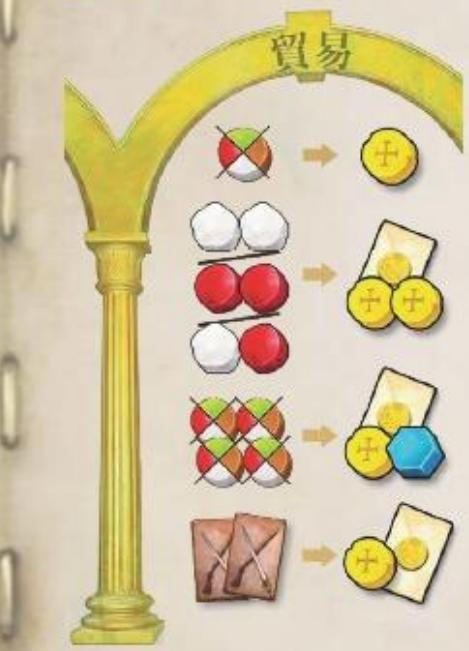
貿易:玩家可以在此處使用資源或戰鬥卡,來交換資產指示物及黃金卡。您可以選擇進行任意次數的貿易,但請牢記您的儲存容量!(註:本行動為交換動作而非支付成本,因此無法使用黃金或科學來替代其他資源。)
- 以任意種類的 1 個資源,交換成 1 黃金
- 以 2 棉花、2 咖啡豆, 或者兩種各 1, 交換成 2 黃金及 1 張黃金卡
- 以 4 個任意種類資源,交換成 1 科學、1 黃金及 1 張黃金卡
- 以 2 張戰鬥卡,交換成 1 黃金及 1 張黃金卡
當交換資源時,您可以從您的個人供應區中拿取,或者使用地圖上您所控制的任意建築物所生產的貨物;任何您貿易所獲得的資產必須放置在您的個人供應區中。您可以存放最多5個資源和/或資產,而且您手上只能擁有最多3張黃金卡。如果您在任何貿易後擁有超過規定的數量,您必須先歸還超過的部分(由您選擇)至一般供應區後,才能進行其他貿易,或者進入移動階段。
额外移動
根據行動階段所選擇的拱門行動格(下方提供的額外效果),您可以有機會在移動階段時,進行1個額外移動。這個移動可以在您的免費移動之前或之後執行,也可以由您的任一軍事單位(包含剛剛參與戰鬥的單位)進行。
如果您放置了您的行動指示物在:
部署:

您可以將您的 1 個軍事單位移動到您的首都,或移動到 1 座您建造並控制的城市(無論距離有多遠)。
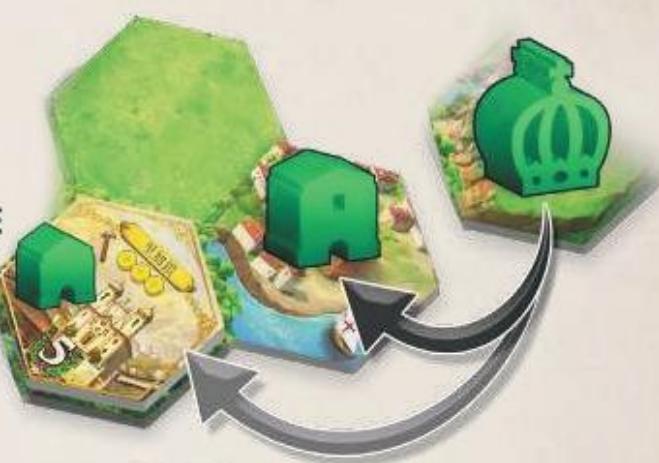
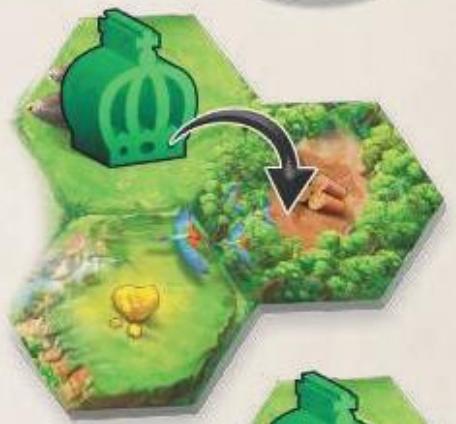
繪畫:
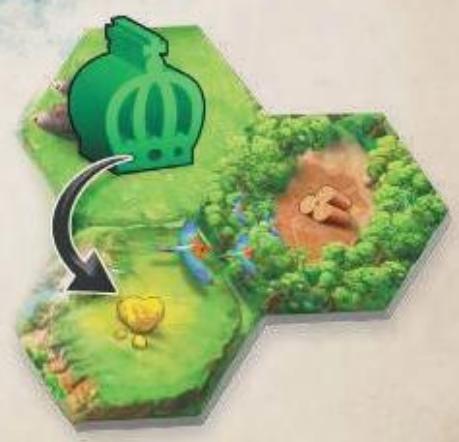
您可以移動您的1個單位到1個相鄰的森林地形六角格上。
建造:

您可以移動您的 1 個單位到 1 片你的相鄰建築或城市板塊上。
翻新:

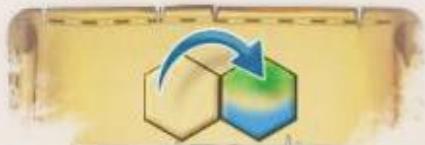
您可以移動您的 1 個單位到相鄰的 1 個地圖邊界格上,或者,進入 / 離開 1 個水域地形六角格。

製造:
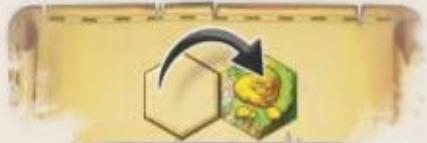
您可以移動您的1個單位到相鄰的金礦地形六角格上。
港口或貿易:

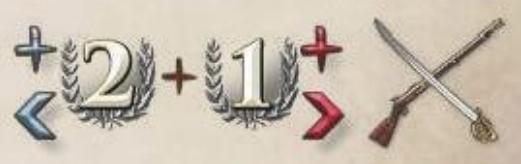
當您的行動指示物在這 2 個拱門行動格之一時,您在戰鬥中獲得以下戰略優勢:當您為防守方,+2 戰鬥力(CS);當您為攻擊方,+1 戰鬥力(CS)(詳見第 18 頁)。CS 為戰鬥力(Combat Strength)的簡稱
產品與換門行動格升級

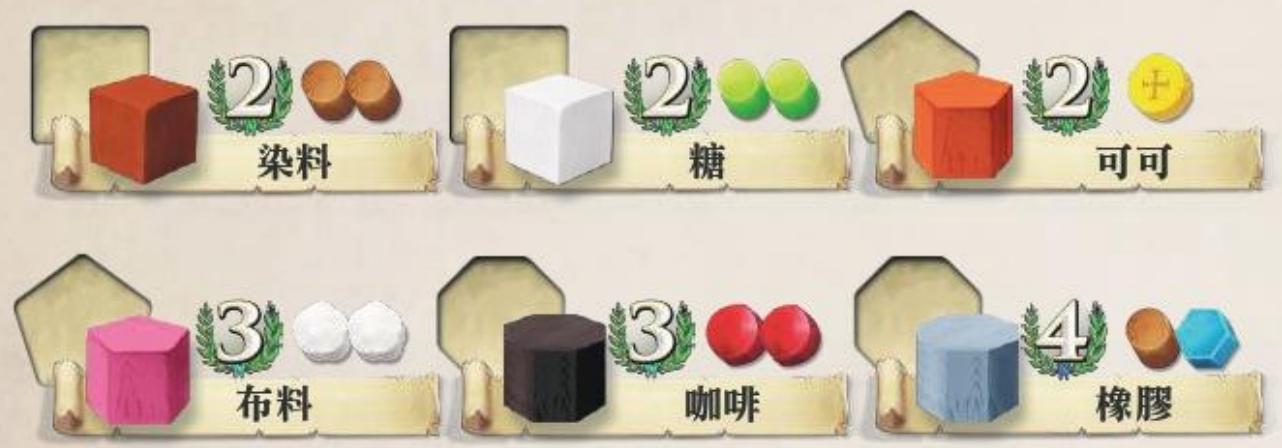
每位玩家都有 6 個產品,依據外型分為:方塊、五角柱、八角柱。玩家可以透過執行製造的拱門行動格來獲得產品,每個產品的相關製造成本,都標示於玩家圖板對應產品指示物的下方。
製造出 1 個產品,將會揭示帶有數字的桂冠符號,其為玩家可以在遊戲結束時獲得的勝利點數。玩家製造 1 個產品後,立即將其放置到拱門行動格中形狀相同的可用升級槽中,為該拱門行動進行升級。這些拱門行動格的升級是:
部署
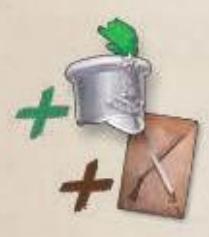
部署 1 個額外的軍事單位,並抽取 1 張額外的戰鬥卡。(假如您是第 1 次部署該軍事單位,則需支付相關成本。)


繪畫
支付 1 資源來獲得印有 1 黃金成本的繪畫卡;或者免費獲得印有 1 資源成本的 1 張繪畫卡。

建造
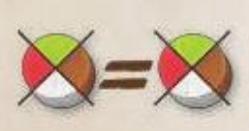
任何資源皆可以用來支付原本建造所需的特定資源。

翻新
免費翻新建築物。

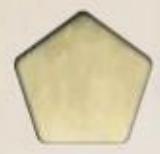
製造
減少製造產品所需成本中的 1 個資源。
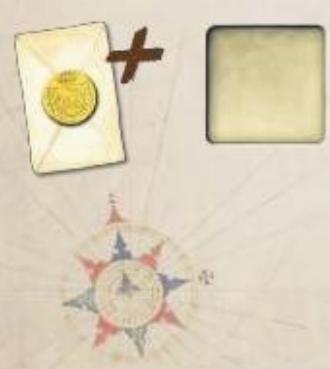
港口
從黃金卡牌庫中,抽取1張黃金卡(除了該拱門行動格正常提供的資源以外)。
資產和資源。
遊戲中,有 2 種資產及 4 種資源,資源和資產是無限的,若不敷使用可另尋其他指示物使用。最有價值的是科學,當進行交易時,科學可以用來替代任何 1 個資源或黃金,而黃金可以拿來替代任何資源。
科學
資產:
可由學院及教會產出。
(可以當作黃金或任何 1 個資源使用)
+
黄金
可由交易站、煉金廠及教會產出。
(可以當作任何 1 個資源使用)

甘蔗
由甘蔗田産出


資源:
咖啡豆
由農場產出
巴西缸木

由交易站與鋸木廠產出
棉花
這個圖示表示可以使用任一資源。
由農園產出
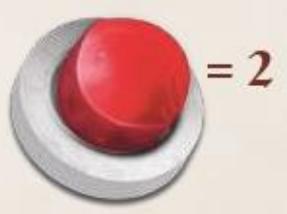
這是 +1 指示物;
假如一般供應區中的某一種資源或資產不足時,將這個指示物放在該資源或資產的下方,來表示數量上的增加。

這個圖示表示可以使用甘蔗或咖啡豆。

您將需要強大的經濟來維持您不斷發展的帝國。建築物在建造或翻新,以及獲得某些繪畫卡與揭開某些探索板塊時會生產貨物。建築物會依據板塊上的白色齒輪圖示 指定的資產和 / 或資源進行生產,這些資產或資源可以用於支付整個遊戲中各種類型的行動。
建築板塊上的資產和資源無法移動到您的個人供應區,反之亦然。
有些獎勵會立即對特定建築物增加產量,這個改良適用於您已建造在地圖上的建築物,或者是未來建造或翻新的任何建築物。
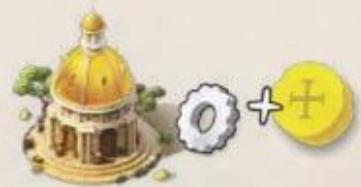
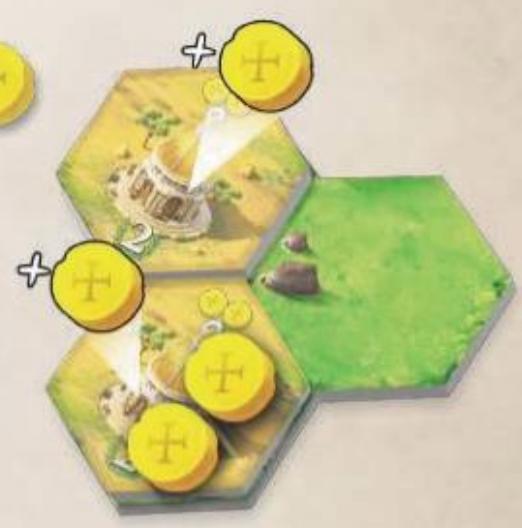
範例:您所有的煉金廠產量已永久改良。
建築物與城市
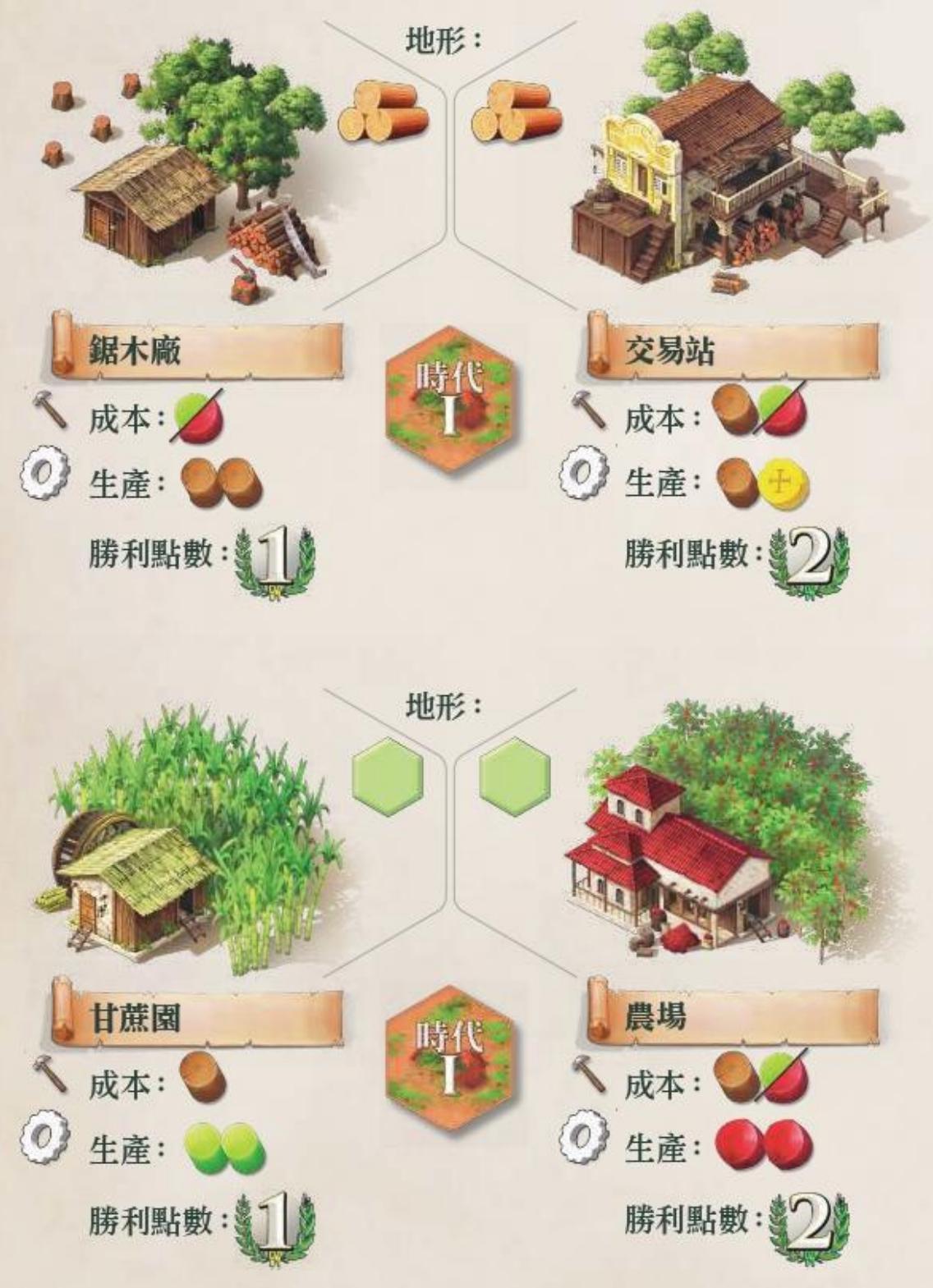
玩家可以透過支付相關成本來建造 8 種類型的建築物與 8 種不同的城市,然而,在遊戲過程中,玩家只能建造屬於當前時代或先前時代的那些。例如,在遊戲開始時只有時代 I 的建築物可用。
城市板塊只有 1 面,而一般建築板塊則有 2 面,其中每一面印有不同類型、建造成本、生產貨物及地形需求的建築物。如果您願意,可以執行翻新行動將地圖上已有的建築板塊翻面,來獲得另一面建築物的生產;城市無法翻新,它不能生產貨物也沒有 2 面可選。
以下是 5 個建築板塊上重要的屬性:
時代:最早可以被建造的時代。
地形:可以放置板塊的地形需求。當板塊建造完成時,該六角格地形類型則變成建築物。
成本:建造行動所需花費的資產/資源。
生產:建築物生產的資產/資源。
勝利點數:遊戲結束時,獲得的勝利點數(VP);這個數值還可以作為戰鬥力(CS)使用。
在玩家圖板上方的彩色橫幅,將建築物和城市板塊依據每個時代區分出來,關於同一板塊兩面的相關資訊也一併表示。

所有地形:
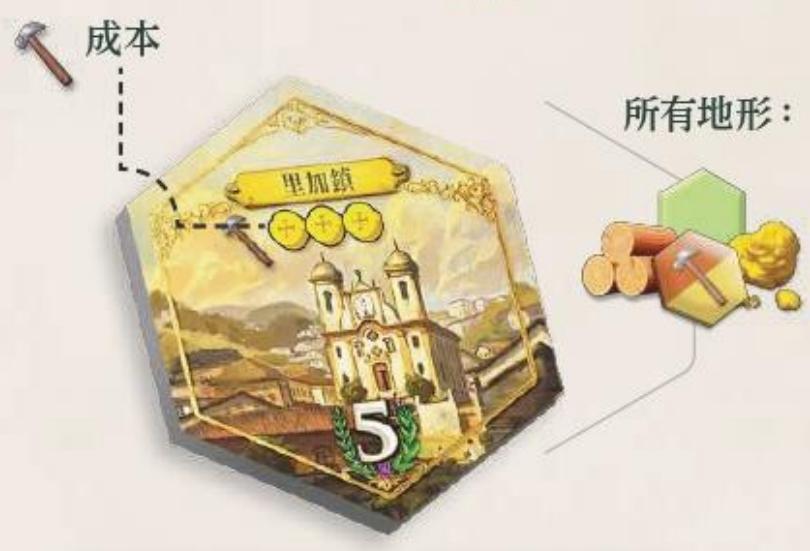
城市 (8)
每座城市都有自己的建造成本,您可以從公共圖板上的2片城市板塊中擇一建造
所有地形:
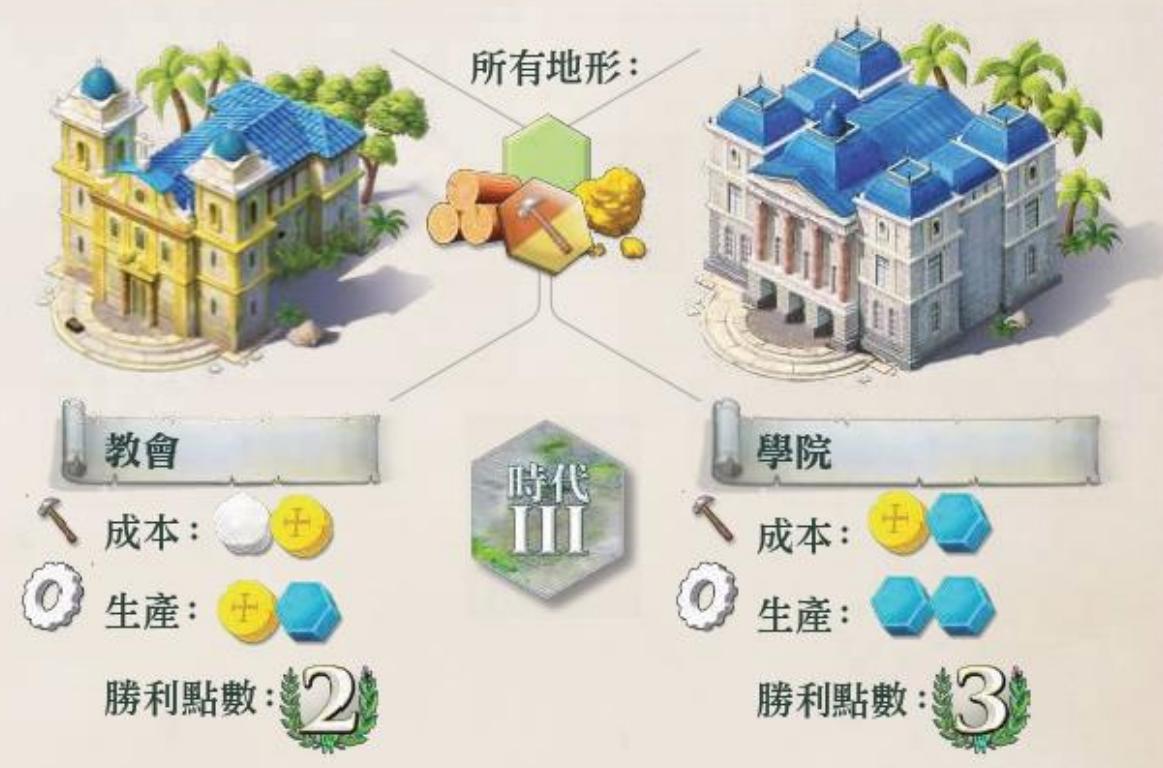
地形
地圖上的六邊形格子,屬於3種地形類型之一,以限制可在上面建造的建築。當玩家執行建造行動將建築物或城市加入其帝國時,該空間將變為建築物地形。城市和時代III的建築物,可以建造在時代I和時代II的建築板塊之上。
每種類型的地形都由不同的符號或背景表示:
時代Ⅰ/Ⅱ建築物
繪畫長
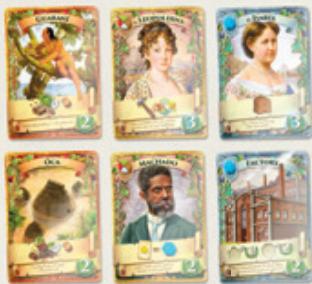
遊戲中有 24 張繪畫卡,印有許多歷史人物,在遊戲中,它會給予持有的玩家特殊能力及勝利點數。玩家可以使用繪畫拱門行動格,支付相關成本(如果有需要的話)來獲得想要的繪畫卡。一旦玩家獲得繪畫卡後,將該卡牌放置在其圖板旁保留至遊戲結束。有些繪畫卡在遊戲中僅有一次性能力,有些則可以被啟動許多次。玩家可以依據需求收集任意數量的繪畫卡。
在遊戲過程中,玩家購買繪畫卡時都有6張卡牌以供選擇。繪畫卡由顏色區分成3種帝國勳章:紅色、粉紅色及藍色。當1張繪畫卡被購買時,從相同勳章牌庫中,抽取1張補充在同樣的位置;如果該勳章牌庫已用光時,從另外一個勳章牌庫中抽取1張補齊。

6 張已翻開的繪畫卡,將依據此圖例被排列在桌上。
產量①,這個改良適用於您當前在地圖上所有的該類型建築物,以及您之後在遊戲中建造或翻新的該類型建築物。當您獲得此類獎勵的繪畫卡時,您所有升級的建築物都會立即生產這些被指定的額外資產或資源。
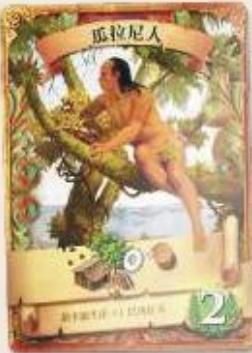
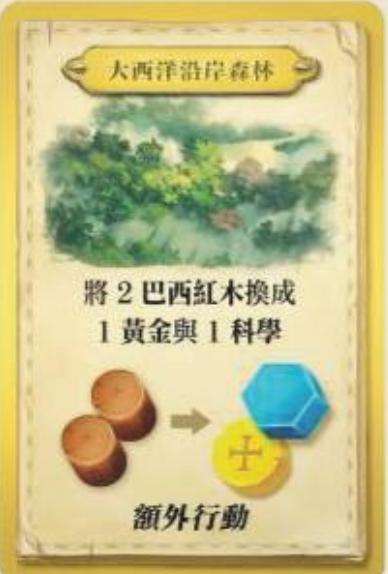
舉例來說,假如您獲得了瓜拉尼人繪畫卡,您目前所有的鋸木廠會立即生產1巴西紅木,在之後您建造或翻新鋸木廠時,您也會額外生產1巴西紅木。
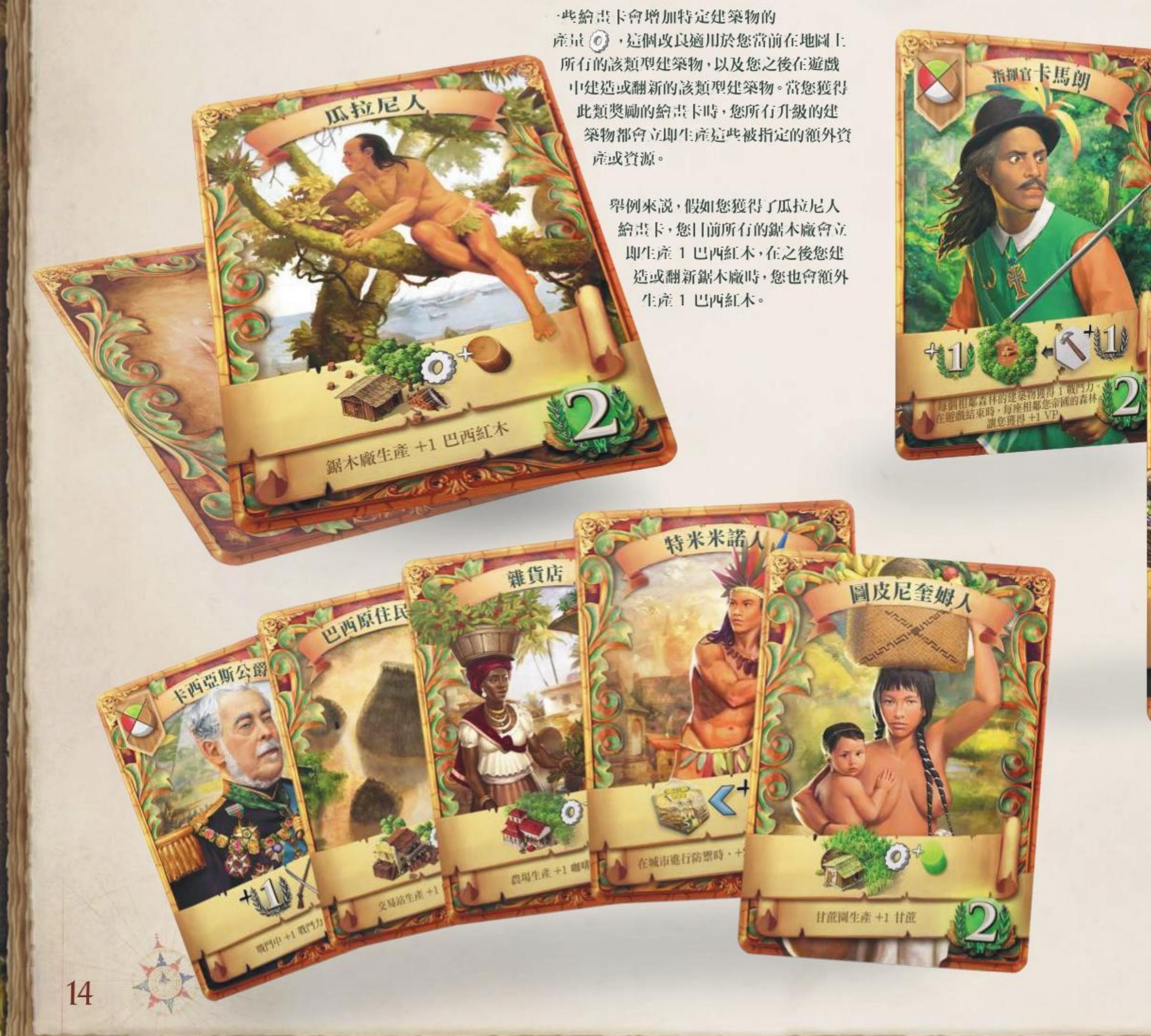
指揮官卡馬朗繪畫卡將使您所有與森林相鄰的建築物都增加1戰鬥力,在遊戲結束時,每有1座與您的帝國相鄰的森林,都會讓您獲得1勝利點數。
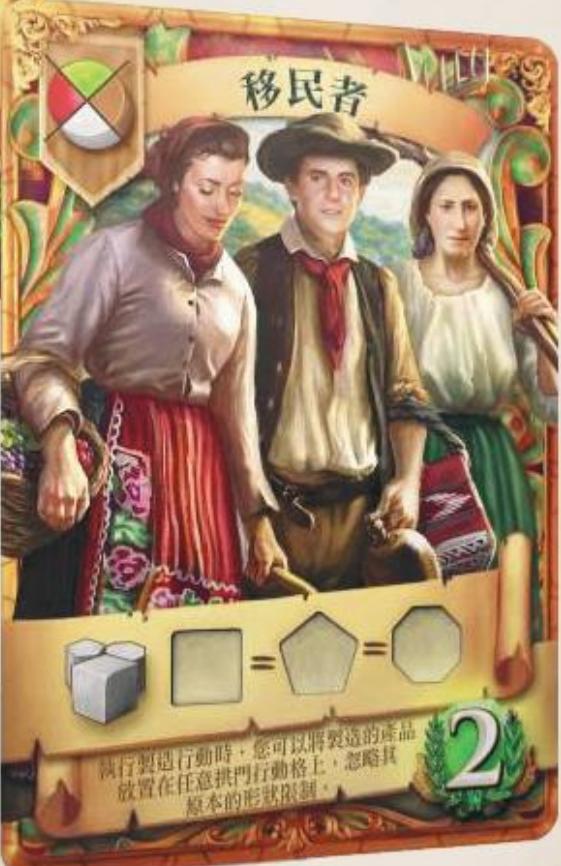
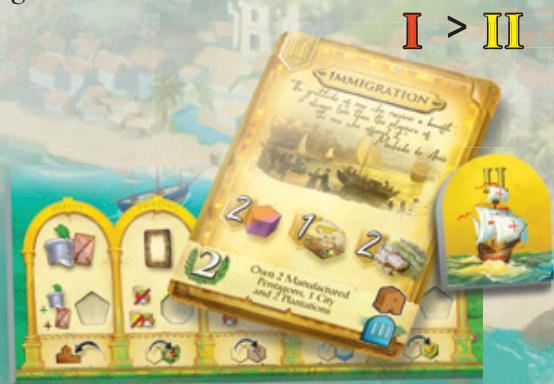
移民者繪畫卡允許您將製造的產品指示物放置在任意拱門行動格上,忽略其原本的形狀限制。
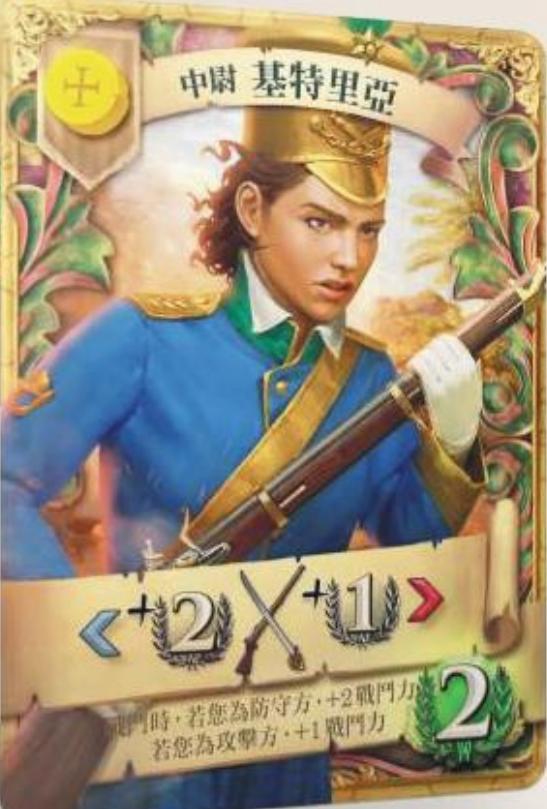
這是瑪莉亞·基特里亞的繪畫卡,她讓您在所有戰鬥中增加您的戰鬥力(CS):當您為防守方,+2戰鬥力(CS);當您為攻擊方,+1戰鬥力(CS)

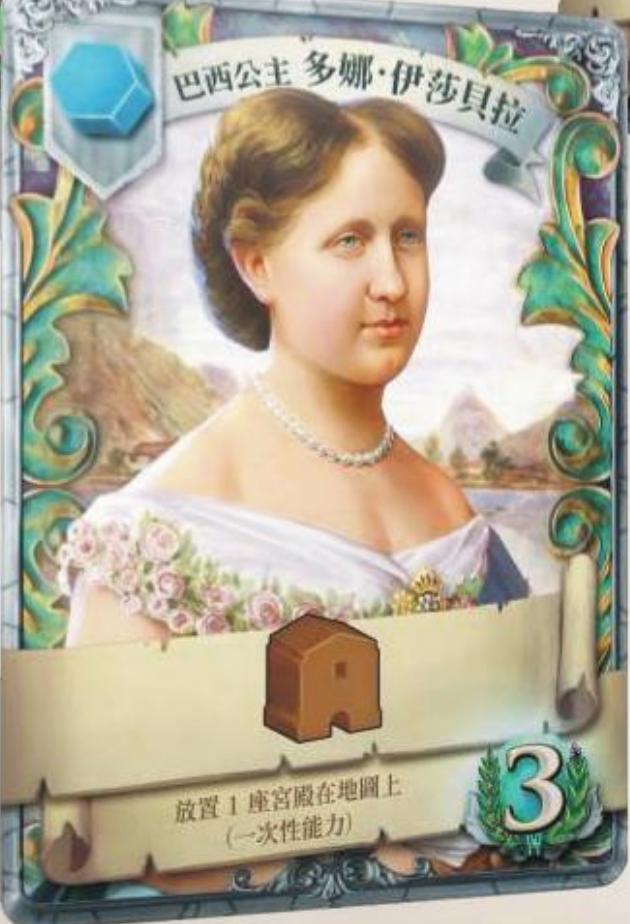
巴西公主,多娜·伊莎只拉,讓您可以在遊戲過程中隨時將玩家圖板上的1座宮殿,放置在符合條件要求的建築板塊上,依照規則書第20頁敘述的相同規則執行。此獎勵只能啟動1次。
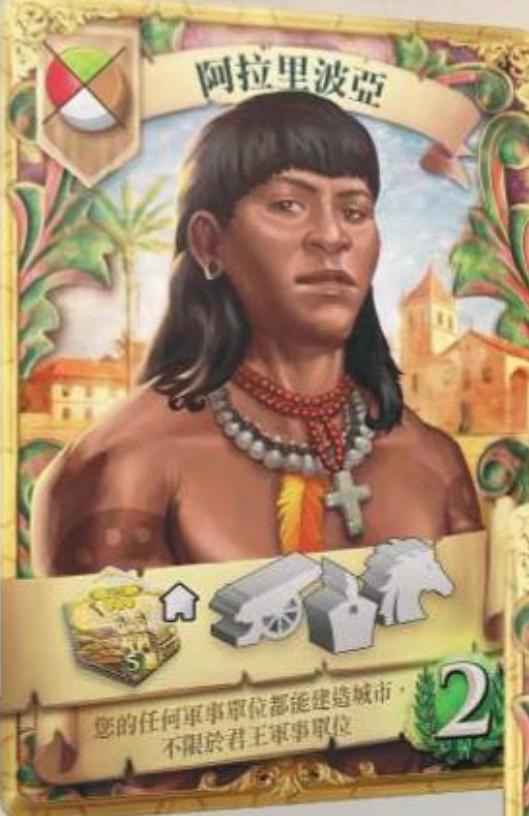
阿拉里波亞繪畫卡允許您在任何1個您的軍事單位所在位置建造城市,而不僅僅是您的君王軍事單位。
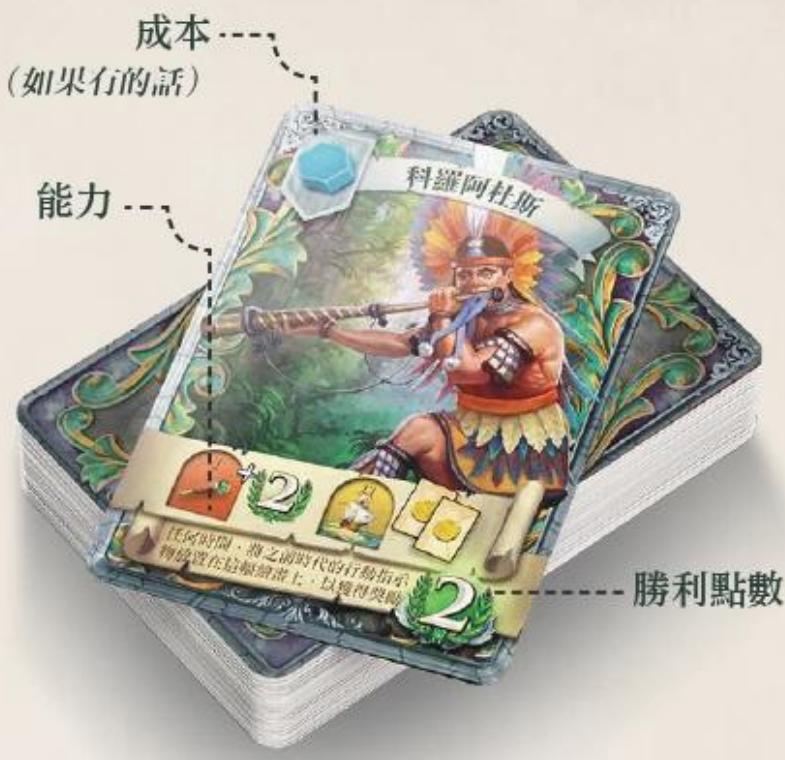
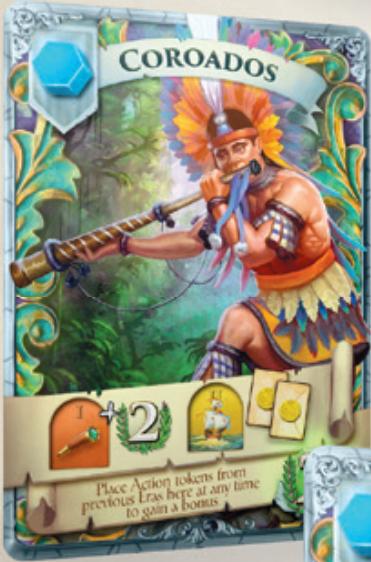
科羅阿杜斯允許在輸到您的任何時刻,將您之前的時代行動指示物放在這幅繪畫上以獲得獎勵。時代1指示物:遊戲結束時+2VP。時代11指示物:抽取2張黃金卡。一旦將行動指示物放置在這張繪畫卡,它會一直被保留在卡牌上直到遊戲結束。

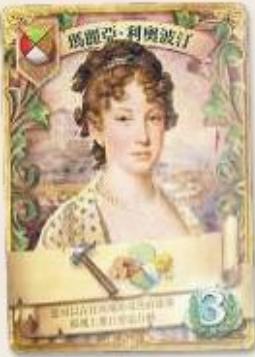
瑪麗亞·利奧波汀繪畫卡允許您在建造時忽略建築物的地形需求。您甚至可以在任何時代的現有建築物之上放置新建築物;將被覆蓋的建築板塊從遊戲中移除。
毛亞男爵繪畫卡允許您在使用建造拱門行動格時建造2次。這樣做時,除了2座建築物的成本之外,您還必須支付任意種類的1個資源。

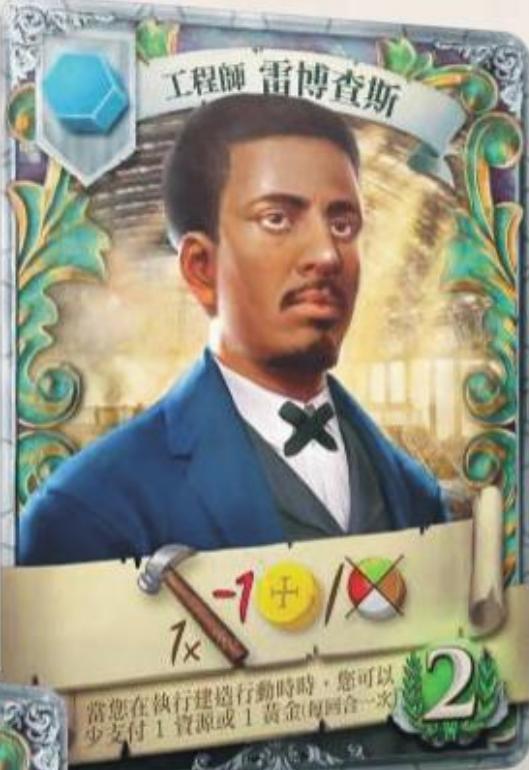
每回合1次,當您在建造時,雷博查斯允許您可以少支付1資源或1黃金。

在遊戲結束時(您的最後回合行動之後),您可以將製造的產品放置到工廠繪畫卡上來獲得勝利點數。
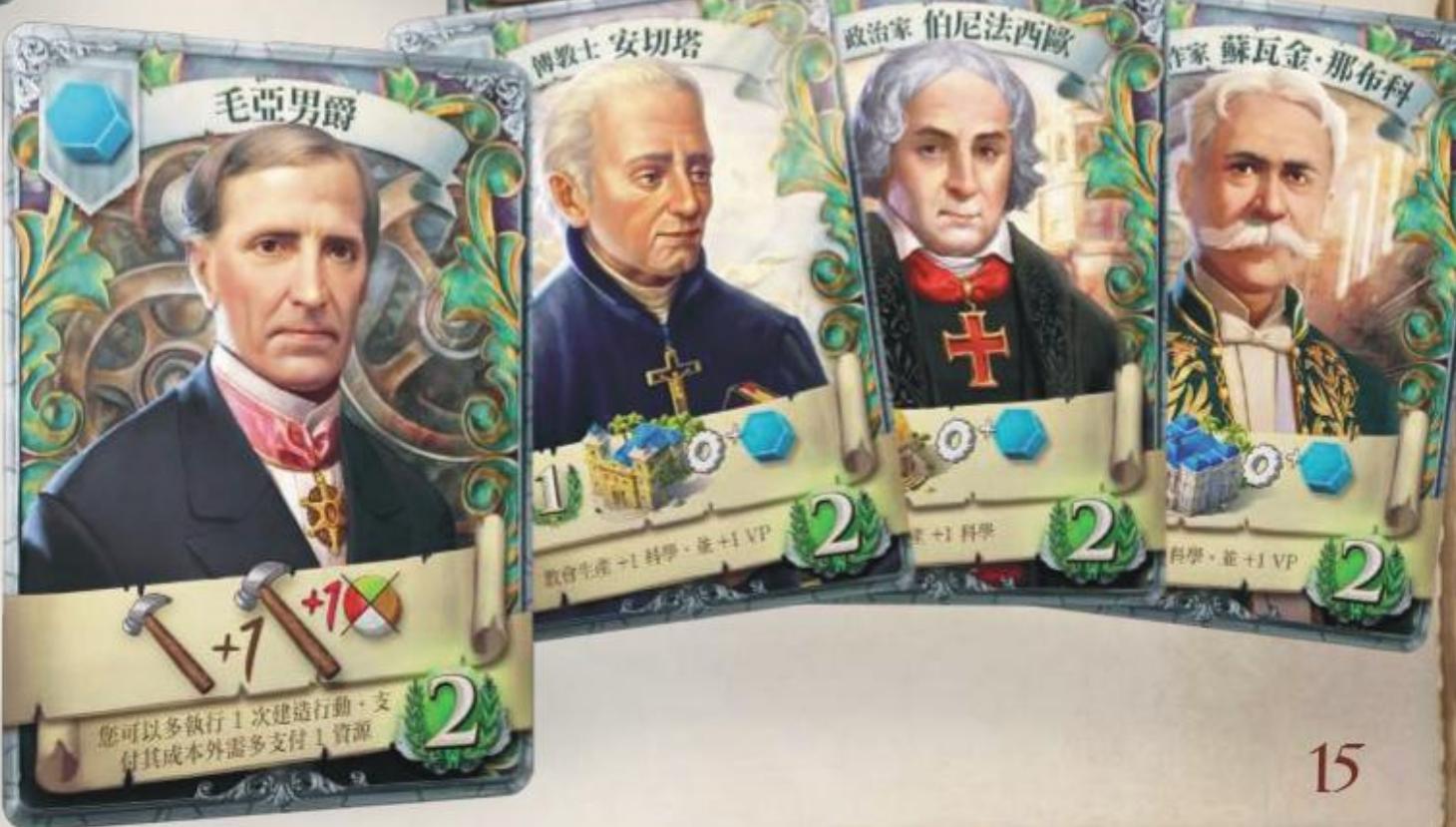




黃金長
遊戲中共有20張黃金卡。玩家可以透過3種主要方式獲得:某些貿易行動、已升級的港口行動,以及在宮殿III被放置在地圖上時。許多黃金卡為玩家在輪到其回合時提供了一個額外行動。
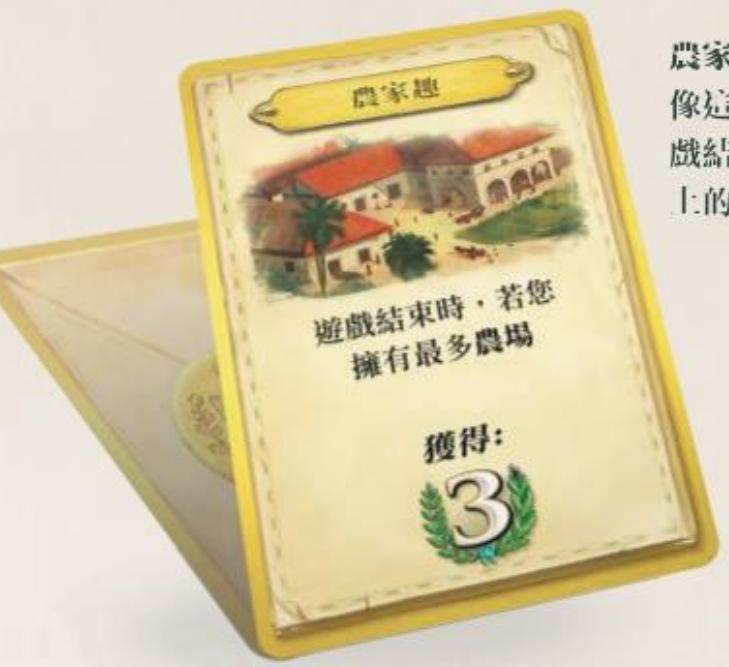
農家趣:
像這類的黃金卡需要玩家在遊戲結束時持有它,並完成卡牌上的要求才能獲得勝利點數。
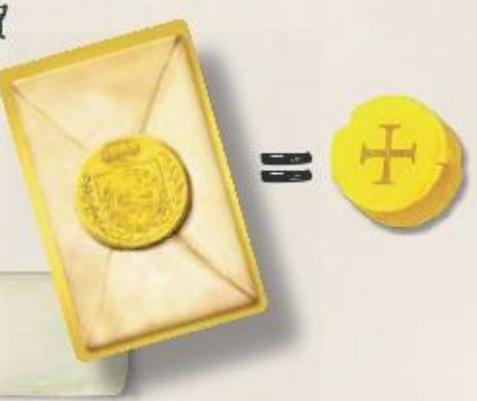
1 張黃金卡與 1 黃金價值相同,可用於支付任何需要黃金或資源的費用。
當黃金卡被當作黃金使用後,或者當玩家使用它來執行額外行動後,將該黃金卡棄掉。在公共圖板旁放置棄掉的黃金卡來作為棄牌堆,假如黃金卡牌庫耗盡,將棄牌堆洗回牌庫補充。
玩家在遊戲中可以擁有許多不同的黃金卡,但同時最多只能持有3張。當玩家手上的黃金卡總數超過3張時,該玩家必須立即選擇保留3張黃金卡,棄掉多餘的卡牌維持數量在持有上限之內,而且不會從棄掉的黃金卡中獲得任何好處。
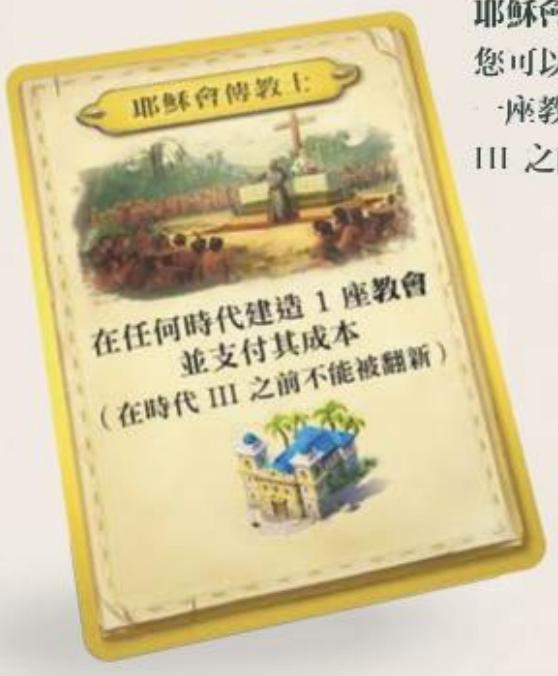
耶穌會傳教上:
您可以在任何時代建造一座教會(儘管它在時代 III 之前不能被翻新)。

在任何時代建造1座教會並支付其成本
(在時代 III 之前不能被翻新)
遊戲結束時,若您擁有最多教會部屬您的君王軍事單位並支付其成本
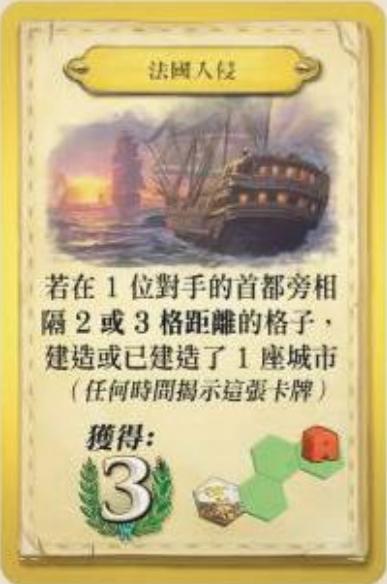
查看1位對手的所有卡牌戰爭:
在發起一場戰鬥並獲勝後,立刻翻開此卡牌來獲得獎勵。




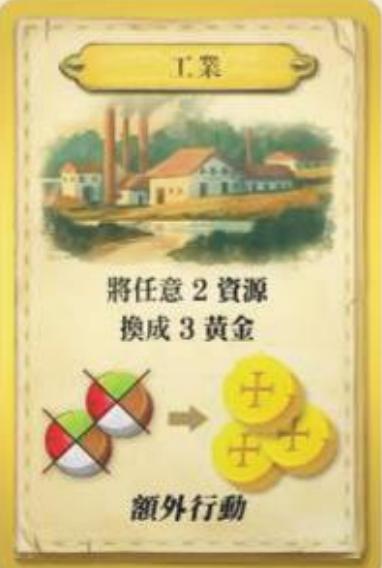
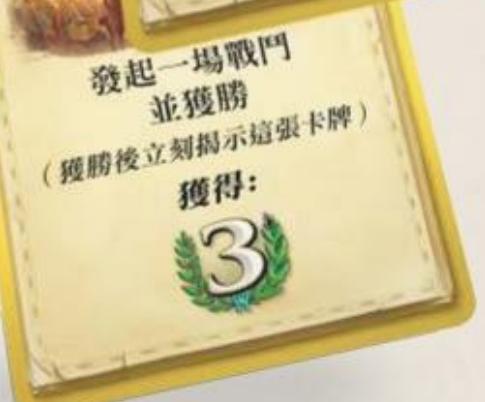
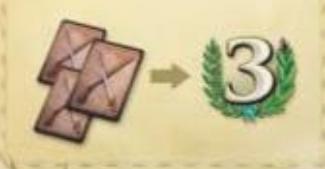


探索板塊
在遊戲設置過程中,將探索板塊正面朝下隨機混洗,放置在地圖上被雲覆蓋且印有「?」符號的六角格。當1個軍事單位第一次移動到一個含有探索板塊的格子上時,將這片探索板塊翻開(翻成正面朝上)。
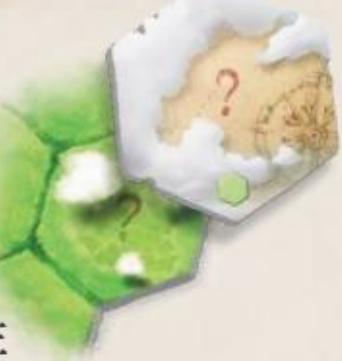

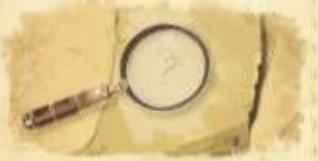
時代 I 的行動指示物的獎勵能力是允許玩家可以秘密查看探索板塊內容而不翻開它,然而,探索板塊的獎勵都是翻開後才能獲得。在判定建造地形時,未探索的探索板塊和被雲覆蓋的六角格都視為平原地形。
若您想要在 1 片未探索的板塊上進行建造行動,這片探索板塊必須被棄掉,且不能翻開也不會獲得獎勵。
一些探索板塊為翻開它們的玩家提供了1個立即性的獎勵,而其他的探索板塊則是需要在滿足特定條件下才能獲得獎勵。在這2種情況下,這些探索板塊都會在玩家收到獎勵時從地圖上移除。
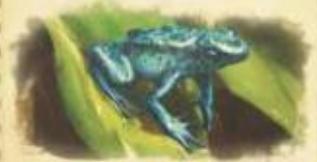
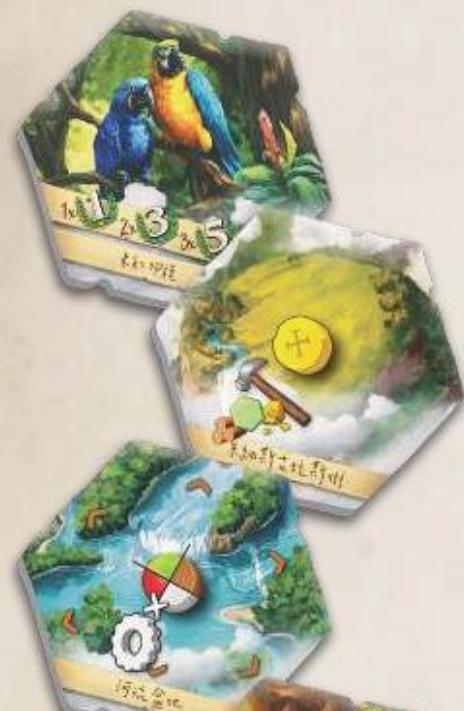
未知物種: 玩家在遊戲結束時, 擁有 1 / 2 / 3 片這些板塊, 則獲得 1 / 3 / 5 VP, 這些板塊將會由翻開它們的玩家保留。
米納斯吉拉斯州:翻開後,將這片探索板塊放在同一個六角格上。第一個在此地執行建造的玩家,可以獲得1黃金。此地於移動/建造時,視為符合所有地形需求。
河流盆地:翻開時,在之後的遊戲中將它放在這個六角格上。河流盆地板塊使所有相鄰的建築物多增加1個相同類型資源的產出(甘蔗、棉花、巴西紅木或咖啡豆)。這效果適用於地圖上已建造的相鄰河流盆地的所有建築物,以及稍後在河流盆地旁建造或翻新的任何相鄰建築物。此地形上不能建造任何建築物。
奎羅布: 玩家可以從任一時代中抽取 1 張任務卡並加入手中, 然後棄掉這片板塊。

文化:翻開後,將這片探索板塊放在同一個六角格上。第一個在此地執行建造的玩家,遊戲結束時可以獲得2VP。此板塊由第一位在這片探索板塊上建造的玩家持有。此地於移動/建造時,視為符合所有地形需求。
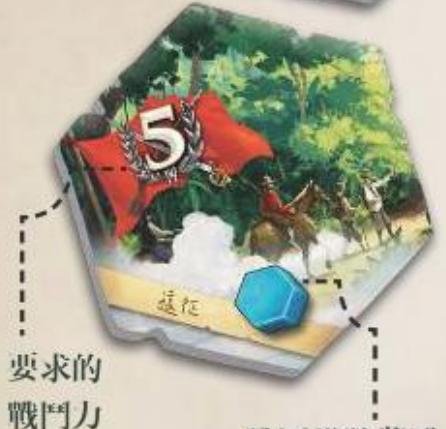
木薯: 立刻獲得 1 個資源,然後棄掉這片板塊。
遠征:翻開時,將這片探索板塊放在同一個六角格上。這些板塊有最低戰鬥力要求,玩家必須滿足該要求才能獲得獎勵。要發起戰鬥,將1個軍事單位移動到這片板塊上,或者花費1個已經在該板塊上的單位的免費移動。與正常戰鬥一樣,玩家可以使用繪畫卡、拱門行動格的獎勵和戰鬥卡,來增加其總戰鬥力(CS),唯一的差別是您必須等同或超過板塊上的總戰鬥力(CS)值。如果玩家獲勝,他們將會獲得對應的獎勵(如果是VP,則玩家保留這片板塊)。如果玩家輸了,什麼都不會發生。無論結果如何,任何使用過的戰鬥卡都必須丟棄。
君王
遊戲中提供了 10 位歷史上的君王讓玩家選擇,每位君王都有特殊能力,讓玩家能在整場遊戲中獲得一些策略優勢。玩家選擇的君王,必須與其玩家圖板顏色符合,綠色玩家圖板(代表著巴西人)有 4 位君王可供選擇,其他顏色的君王則為 2 位。
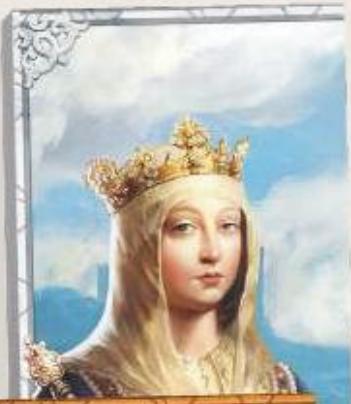
阿方索一世
每回合 1 次,在支付時,您可以將 1 張戰鬥卡當作 1 黃金使用、2 張戰鬥卡當作任意 2 個資源使用,或者 3 張戰鬥卡當作 1 科學和 1 黃金使用,在佈署時取得的戰鬥卡不能在同回合換黃金來佈署新兵力。
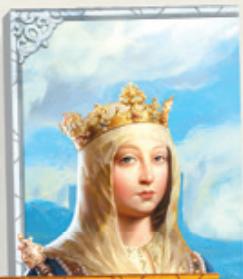
伊莎貝拉一世
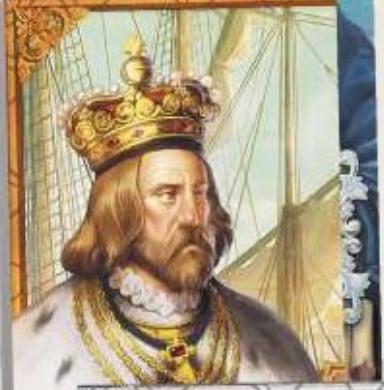
您建造或翻新的前 3 座交易站,每座價值 3 勝利點數,而且改為生產 1 巴西紅木及 2 黃金。
曼紐一世
您建造或翻新的前 3 座鋸木廠,每座價值 2 勝利點數,而且改為生產 2 巴西紅木和 1 黃金。
拿索的約翰·莫里斯
您建造或翻新的前 3 個甘蔗田,每個價值 3 勝利點數,而且改為生產 3 甘蔗。
拿破崙
在您第一次部署行動後,額外抽取1張戰鬥卡。在進行支付時,戰鬥卡可以作為資源使用,2張戰鬥卡可以作為1科學使用。在佈署時取得的戰鬥卡不能在同回合換黃金來佈署新兵力。
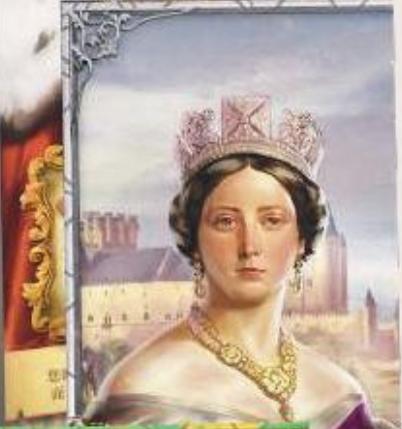
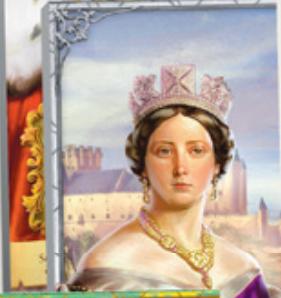
維多利亞女王
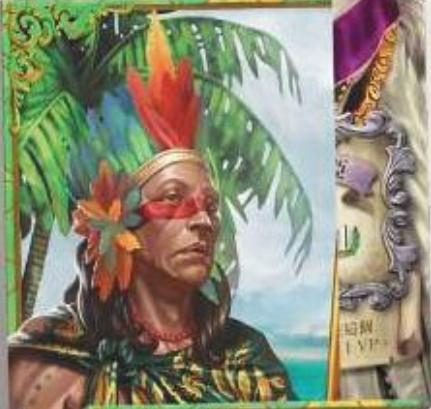
當您製造 1 個產品時,您可以將它放在您的女王圖板上來立即拿取 1 科學,您最多可以執行 3 次。遊戲結束時,女王圖板上的每個產品,讓您獲得 1 VP。
提比里察
您在森林地形上建造的前 3 座建築物或城市,獲得對應獎勵: $1^{\mathrm{st}} - 1$ 個任意種類資源; $2^{\mathrm{nd}} - 1$ 黃金; $3^{\mathrm{rd}} - 1$ 科學。
佩德羅一世
每個軍事單位在您第一次部署時,獲得以下獎勵,弓箭手與大砲:任意種類資源1個;君王與重騎兵:1黃金卡。

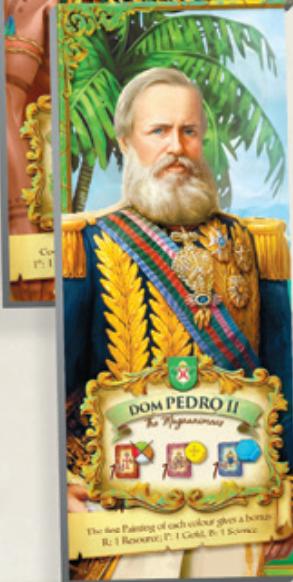
佩德羅二世
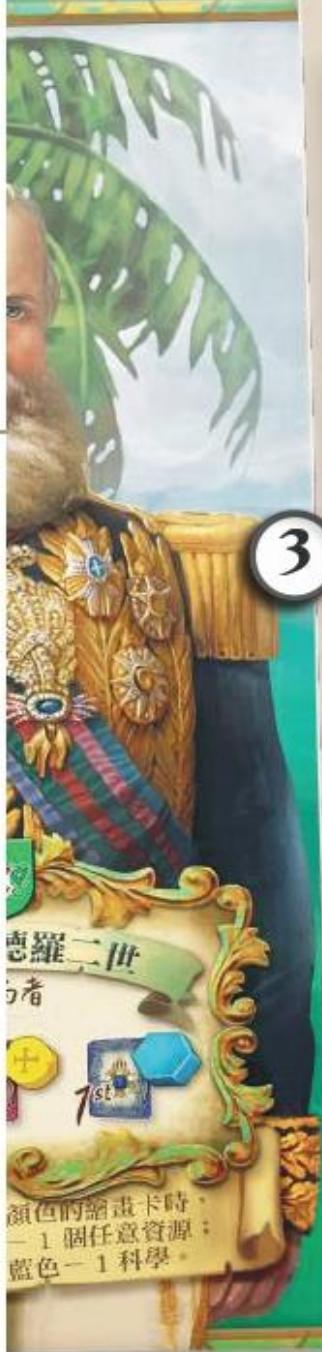
在您第一次收到每種顏色的繪畫卡時,獲得以下獎勵:紅色-1個任意資源;粉紅色-1黃金;藍色-1科學。
多姆奥巴二世
完成第 1 個和第 2 個任務時,各拿取 1 科學。遊戲結束時,這 2 張任務卡分別都價值 +1 勝利點數。
戰鬥力(CS) = 11
军事单位
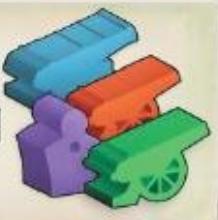
軍事單位用於移動階段時,在地圖上進行探索以及參與戰鬥。在遊戲設置階段時,每位玩家會拿取5個屬於其顏色的軍事單位,並且將這些單位放置在玩家圖板上的指定位置(每片圖板上軍事單位的形狀、名稱與數量都不相同)。每個軍事單位擺放格子下方皆印有成本,玩家在第一次部署該單位時,必須支付其成本將該單位放在玩家的首都、或其中一片城市板塊上。
每個軍事單位都有所屬的勝利點數(VP)值,這個數值也能用來當作戰鬥力(CS),而且在某些情況下還具有特殊能力。
特殊能力由以下符號表示:
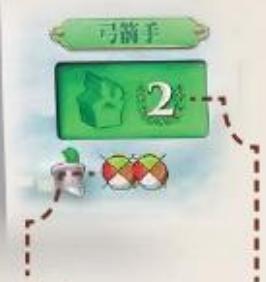
成本

城市板塊僅能建造在您的君王軍事單位所在的六角格上。
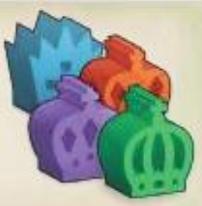


這個單位可以攜帶多個其他軍事單位一起移動。

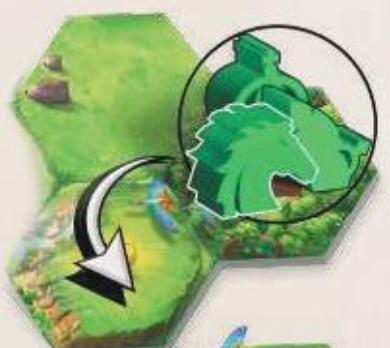

這個單位可以使用免費移動來攻擊1個相鄰的格子。
遊戲結束時,所有已被部署的軍事單位——不論是在地圖或在玩家圖板上——都會獲得勝利點數。
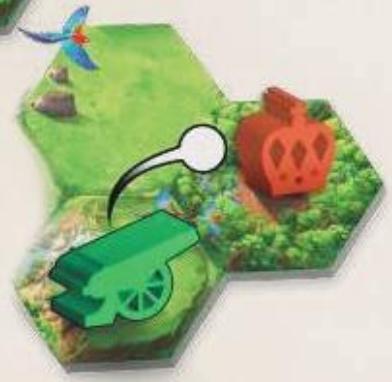
大砲和手榴彈兵單位可以透過花費一個免費移動來對相鄰的格子發起戰鬥。2個格子中的所有軍事單位以及這2位玩家建造的建築物和城市都包含在戰鬥中。
戰鬥
戰鬥只在移動階段發生。
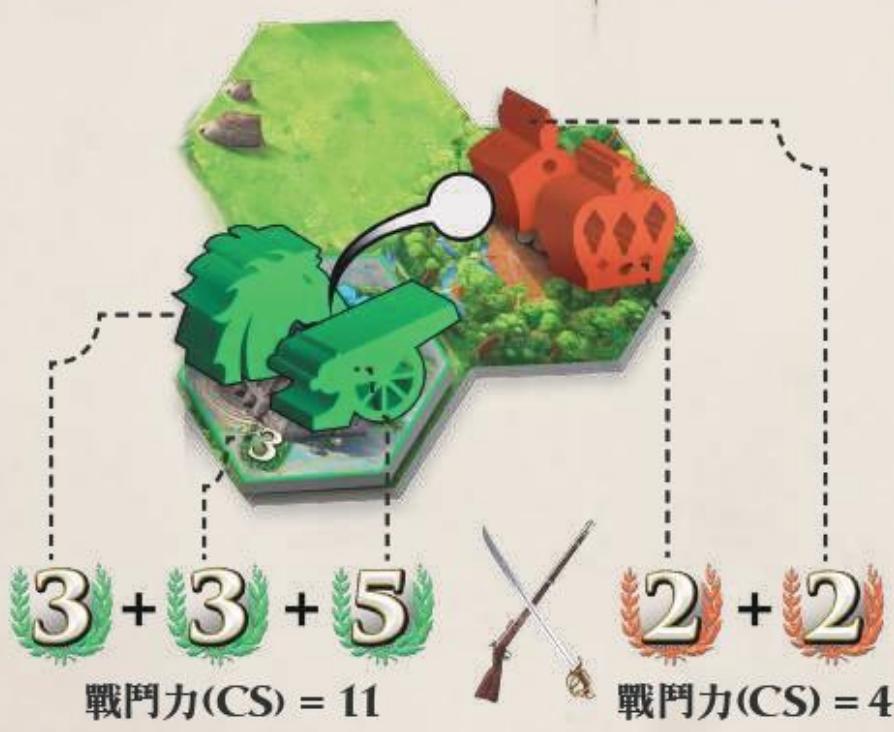
一旦 1 個或多個軍事單位進入一個有敵方軍事單位、建築物或城市的格子,戰鬥就會開始。戰鬥是透過比較攻擊方的總戰鬥力 (CS) 與發生戰鬥的格子中防守方的總戰鬥力 (CS) 的高低來決定勝負的。
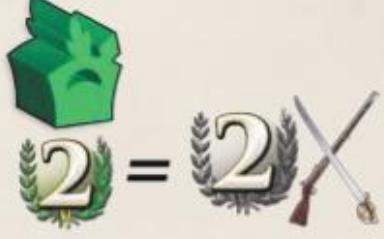
軍事單位、建築物或城市的戰鬥力 (CS) 等於它們的桂冠上顯示的勝利點數 (VP)。玩家還可以透過使用繪畫卡、戰鬥卡、君王能力和拱門行動格的獎勵來增加其戰鬥力。總戰鬥力最高的玩家成為這場戰鬥的勝利者。
戰鬥過程必須遵守以下事件的順序:
-
攻擊方盡可能地使用想打出的繪畫卡,以及港口 / 交易拱門行動格的獎勵(如果有的話),所有效果都會立即結算。
-
攻擊方可以從手中打出最多 3 張戰鬥卡,將它們正面朝下放置到桌上。
-
防守方執行與上述 2 個步驟一樣的動作。
-
翻開所有正面朝下的戰鬥卡,並且結算它們的效果,以及結算來自繪畫卡的效果。攻擊方首先使用其所有卡牌的效果。無論勝負如何,雙方玩家都必須丟掉所有這些打出的戰鬥卡。
-
總戰鬥力最高的玩家贏得這場戰鬥!在平手的情況下,防守方具有優勢並獲勝。
-
戰敗的玩家將所有被擊敗的軍事單位放到其個人供應區中。被擊敗的軍事單位永遠不會回到它們在玩家圖板上的起始設置位置。獲勝的玩家也可能在戰鬥中失去軍事單位,但至少他的一個單位將存活下來(詳見下頁敘述)。
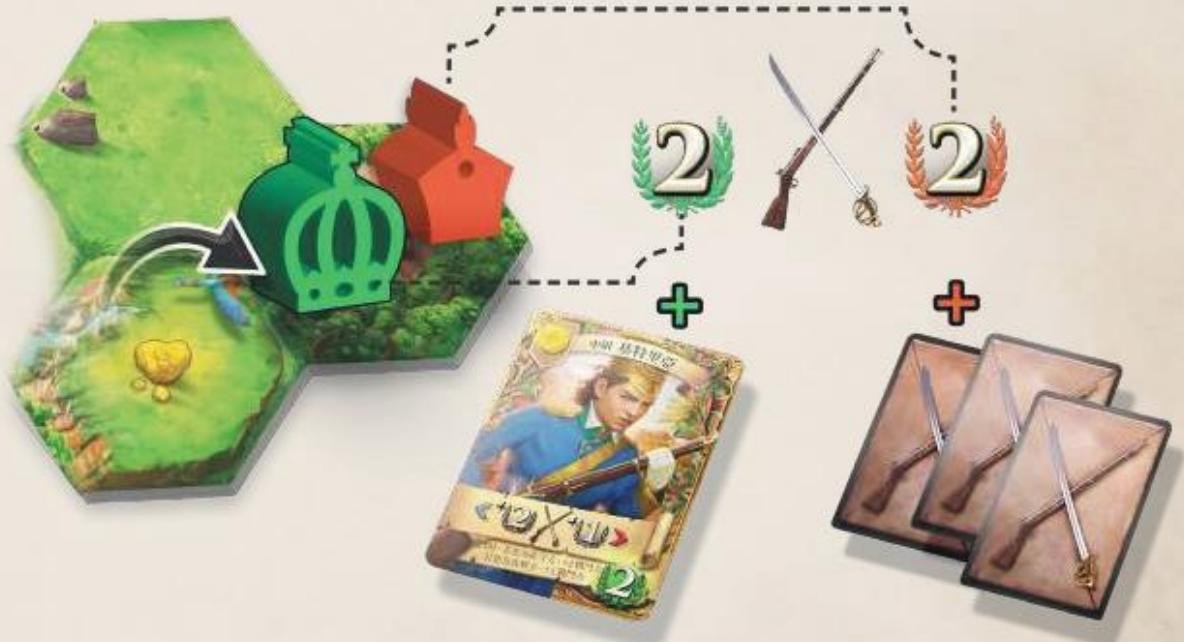
範例:1個綠色的軍司單位移動到1個橘色軍司單位所在的六角格上,2位玩家的戰鬥發生。每位玩家透過打出有效的繪畫卡、戰鬥卡和拱鬥行動格獎勵來增加其戰鬥力。當雙方玩家準備好戰鬥時,玩家會按照上述事件的順序進行。
戰鬥結果與佔領板塊
戰鬥結束後,所有戰敗的軍事單位都會被放到該玩家的個人供應區中,而不是回到它們在玩家圖板上的起始設置位置。玩家個人供應區中的軍事單位在重新部署時無須支付費用,並且無論是否被重新部署,玩家都能在遊戲結束時獲得它們的勝利點數。
如果攻擊方玩家在對手的建築物或城市上贏得戰鬥,該玩家就會佔領並奪取該板塊的控制權。只要該玩家在這個板塊上維持至少1個軍事單位,它就會一直處於該玩家的控制之下,在這段期間內,該玩家可以使用其上的資源進行支付或完成任務,但不能使用該建築板塊進行翻新行動。被佔領的建築板塊在其他玩家控制時不算戰力。請注意,您不能在您佔領的板塊附近進行建造行動,因為它仍被視為對手帝國中的一部分。另外,玩家的首都不能被攻擊或佔領!
如果所有敵方軍事單位從佔領的建築物中移除,則原始擁有者(建造它的玩家)會立即重新獲得控制權。但是,如果原始擁有者(或其他玩家)決定在此板塊上發起戰鬥以試圖奪取得它的控制權,則任何玩家都不會獲得板塊上顯示的戰鬥力。
大砲與手榴彈兵的特殊能力是允許它們利用玩家的免費移動與相鄰的格子發生戰鬥。如果它們被擊敗,則該六角格的所有軍事單位都會如常規一樣,回到所屬玩家的個人供應區中。但是,如果它們獲得勝利了,它們也無法控制對手的建築物(如果還留下至少1個單位的話),因為它們並不在這個發生攻擊行動的板塊上。
綠色玩家對相鄰的橘色玩家發動了一場戰鬥,而橘色玩家輸了。然而,橘色玩家使用了塞俐·蒂亞拉朱戰鬥卡,它擊敗了綠色玩家的1個軍事單位
被擊敗的軍事單位,都會回到所屬該玩家的個人供應區中。


綠色玩家贏得了戰鬥,但橘色玩家依然擁有鋸木廠的控制權,因為上面沒有綠色軍事單位。
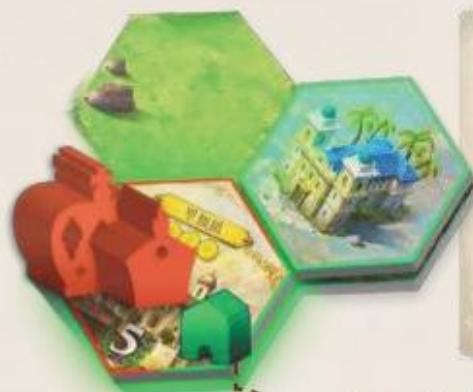
佔領建築物與城市
當對手玩家在建築物或城市板塊上戰鬥獲勝時,只要該玩家的1個軍事單位還留在那裡,該玩家就會佔領這片板塊。然而,如果沒有敵方軍事單位存在,建造它的玩家會立即重新獲得對這個板塊的控制權。
使用您的2個豪宅指示物來識別城市板塊,它們可以用來表示您是城市的原始擁有者。
戰鬥卡
遊戲有 24 張戰鬥卡,它們可以透過 2 種方式獲得:執行部署行動(即使沒有部署一個軍事單位)和透過在地圖上放置宮殿 VI。
玩家在遊戲過程中可以擁有不同的戰鬥卡,但同時最多只能持有3張。當玩家手上的戰鬥卡總數超過3張時,該玩家必須立即選擇
保留 3 張戰鬥卡,棄掉多餘的卡牌維持數量在持有上限之內,而且不會從棄掉的戰鬥卡中獲得任何好處。
戰鬥卡在戰鬥中會是正面朝下打出,首先由攻擊方打出,然後由防守方打出。每個玩家最多可以打出3張戰鬥卡,並且必須在戰鬥結束後將它們全部棄掉。
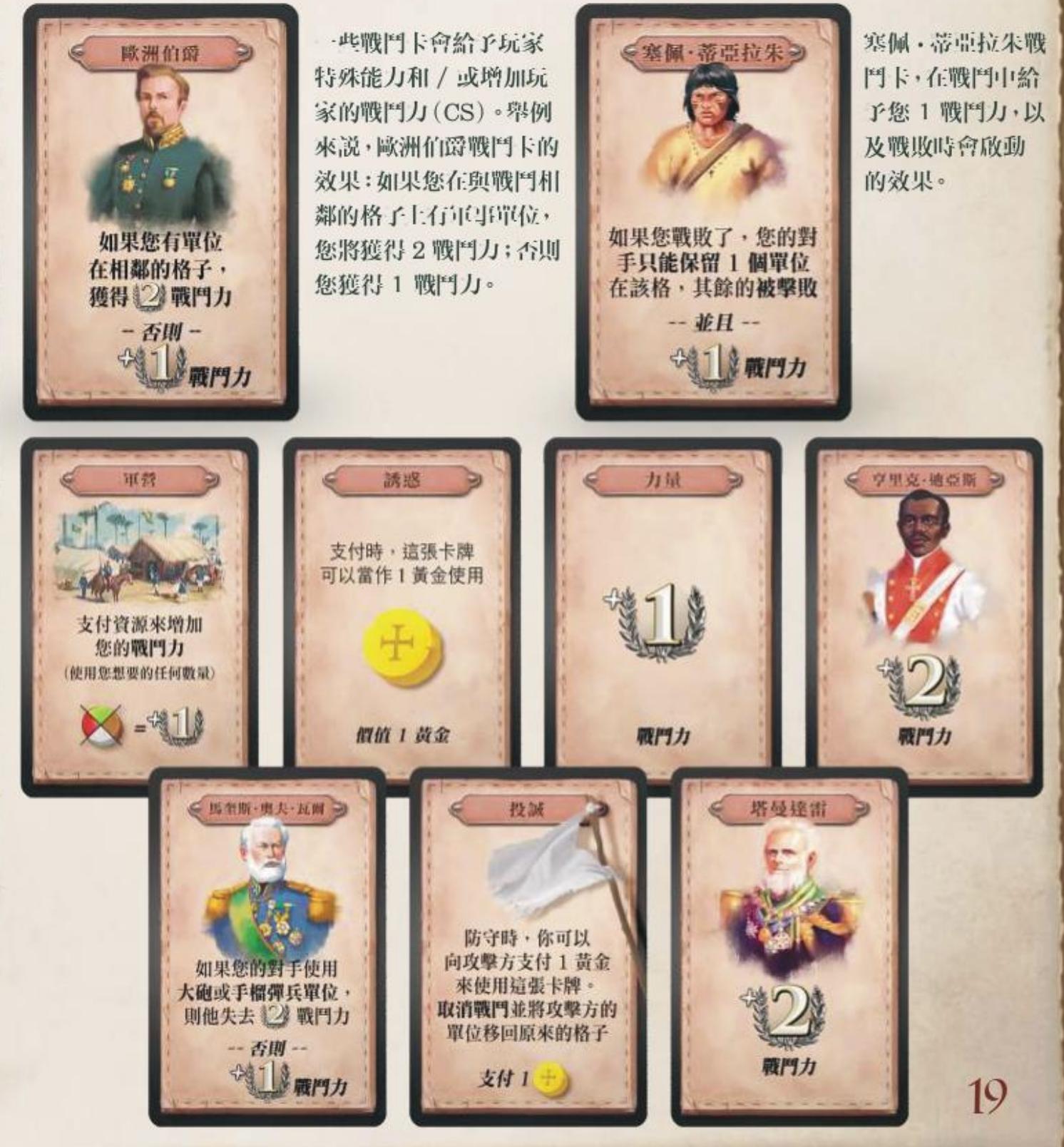
一些戰鬥卡會給予玩家特殊能力和 / 或增加玩家的戰鬥力 (CS)。舉例來說,歐洲伯爵戰鬥卡的效果:如果您在與戰鬥相鄰的格子上有軍事單位,您將獲得 2 戰鬥力;否則您獲得 1 戰鬥力。
如果您戰敗了,您的對手只能保留1個單位在該格,其餘的被擊敗
-- 並且 --
+1 戰鬥力塞佩·蒂亞拉朱戰鬥卡,在戰鬥中給予您1戰鬥力,以及戰敗時會啟動的效果。

宫殿

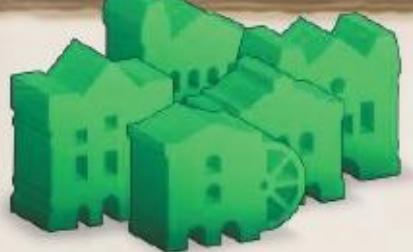
所有玩家在遊戲開始時都擁有一個屬於經濟時期 I 的宮殿,簡稱為宮殿 I,並且玩家們的圖板上還有 5 個可以解鎖特殊獎勵的宮殿,宮殿 I 在地圖上標記玩家首都的位置。每當有玩家展示已完成的任務卡時,該玩家可以在自己帝國中的建築物或城市上放置一個新的宮殿。
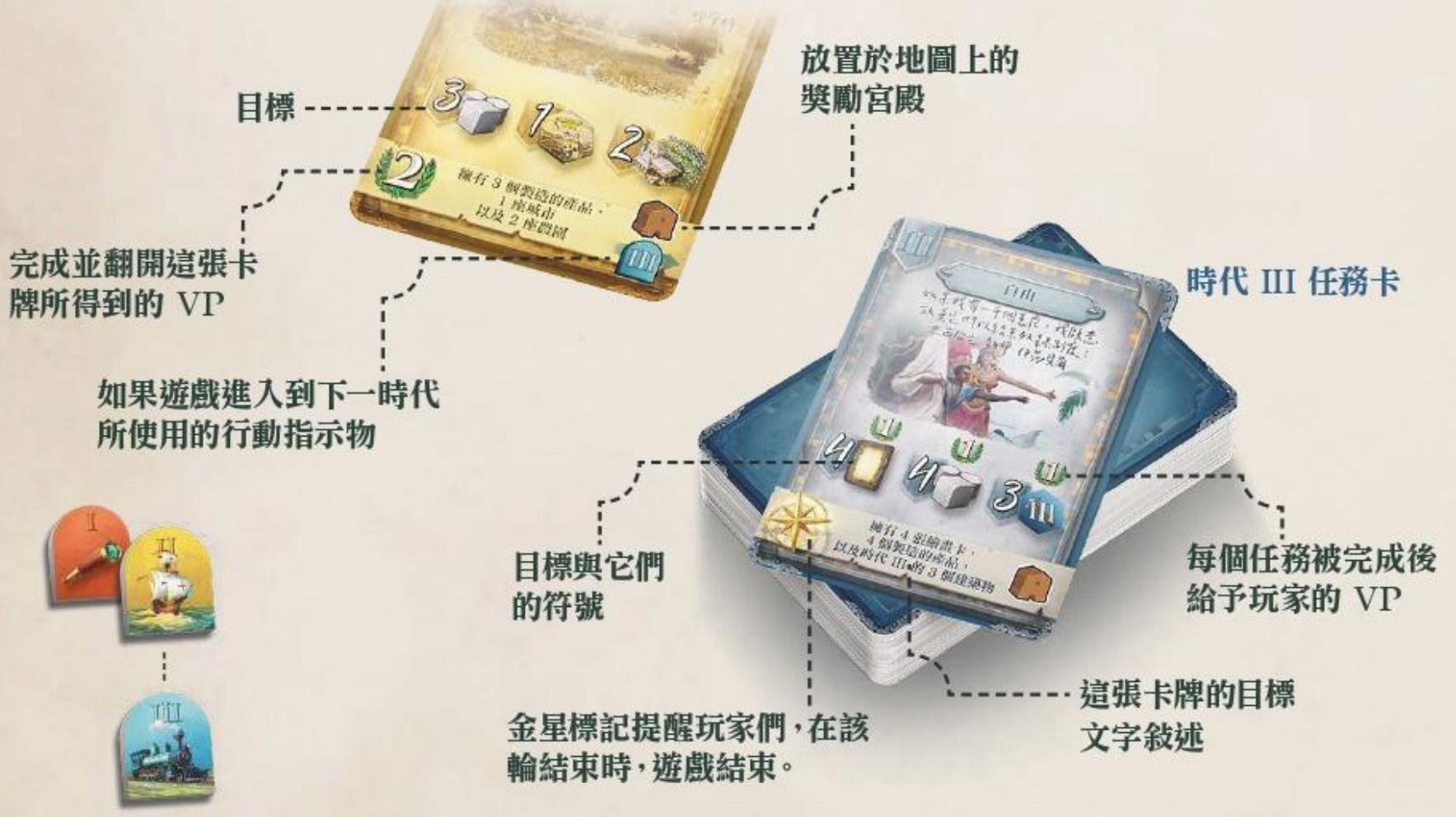
當您完成 1 張任務卡時,卡牌上的宮殿符號您執行以下步驟:

提醒
-
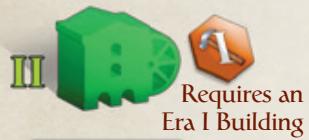
在您的玩家圖板上選擇任何滿足放置條件的宮殿,每座宮殿必須放置在特定類型的建築物上,並且每片板塊只能有1座宮殿。例如,宮殿II必須放置在可用的時代I建築板塊上。
-
當您從玩家圖板中移除選定的宮殿時,下方的獎勵將被揭示,立即領取該獎勵物品;顯示的勝利點數將在遊戲結束時計算。
-
上面有宮殿的建築板塊不能使用翻新行動翻面。然而,玩家可以對它執行翻新行動,補充該建築物的產品。

II


需要1個時代1建築物
宮殿 II — 廿蔗時期:
獲得 1 廿蔗,然後免費製造 1 個方塊形狀的產品(染料或糖)並放置它。
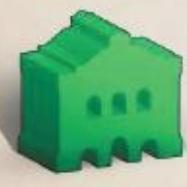

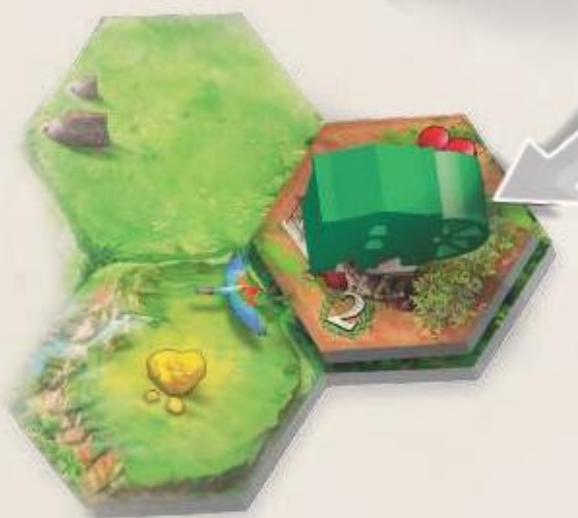
需要 1 個時代 1 或
時代 II 建築物 / 城市需要1座農園

+1
宮殿 III — 黃金時期:
獲得 1 張黃金卡。遊戲結束時,每一座您建造並仍由您控制的煉金廠都會 +1 VP,遊戲中該煉金廠 +1 CS
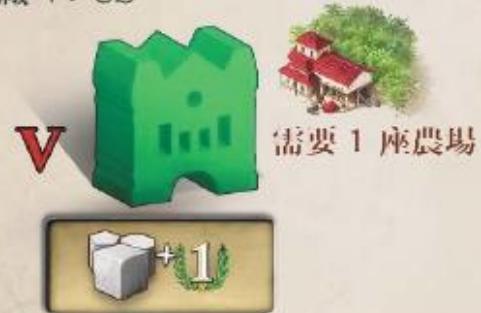
宮殿 IV — 棉花時期:
獲得 1 棉花。遊戲結束時,每一座您建造並仍由您控制的農園都會 +2 VP,遊戲中該農園都會 +2 CS
宮殿 V — 咖啡時期:
遊戲結束時,每個製造出來的產品讓您
+1 VP。

宮殿 VI — 橡膠時期:
獲得 1 張戰鬥卡。遊戲結束時,每個已被部署過的軍事單位讓您 +1 VP,但在遊戲中不因此增加 CS。
首都
The image contains no text or symbols. It is a graphical representation of five 3D-rendered colored blocks (green, blue, orange, purple) and a brown block on a textured surface. Therefore, no OCR output is generated.
設置遊戲時,首都板塊被隨機放置在地圖上的指定六角格上,每位玩家1片——請記住將起始玩家板塊設置於其中。翻開板塊後,每位玩家必須選擇不同的板塊作為各自的起始位置將其宮殿I放在那個六角格上,並拿取板塊上指定的資源。被選擇的六角格,將是該玩家在整個遊戲中的首都。首都也被視為1座城市,但戰鬥除外:首都不能被攻擊。

放置並翻開首都板塊,然後將您的宮殿1放在其中一片板塊上。拿取指定的資源並將其放人您的個人供應區中。如果您選擇了印有起始玩家的板塊,請將其保留在手邊,其他的首都板塊,放回遊戲盒中。
範例:
玩家完成了任務卡,並選擇將宮殿IV(棉花時期)加進其帝國中。宮殿IV必須放置在其農園上。
玩家會立即獲得1棉花資源,並將為其農園贏得更多勝利點數。
這片板塊不能再被翻面,但農園可以繼續翻新以生產更多棉花。

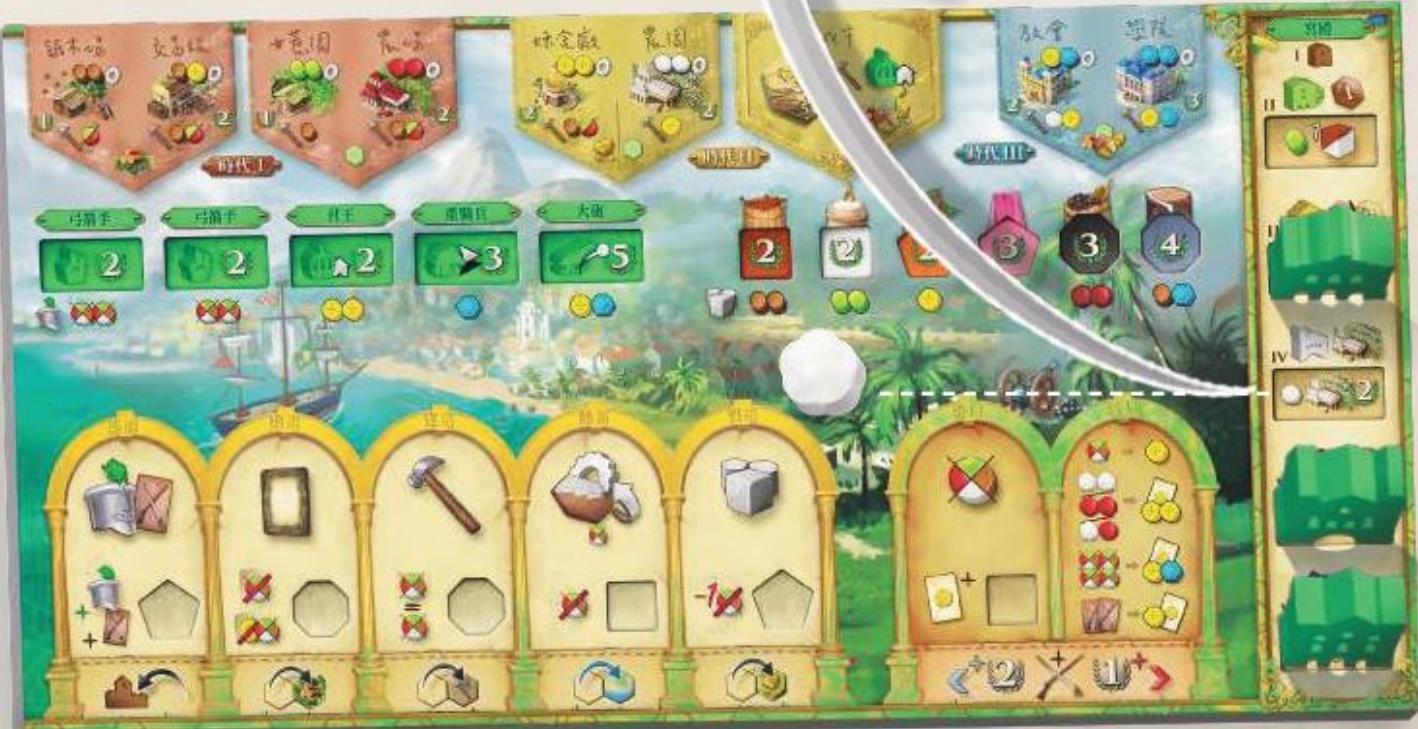
任務長與時代
遊戲分為 3 個時代,每個時代都會影響可以建造的建築物和當前使用的行動指示物。這些時代是:
1: 探索時代
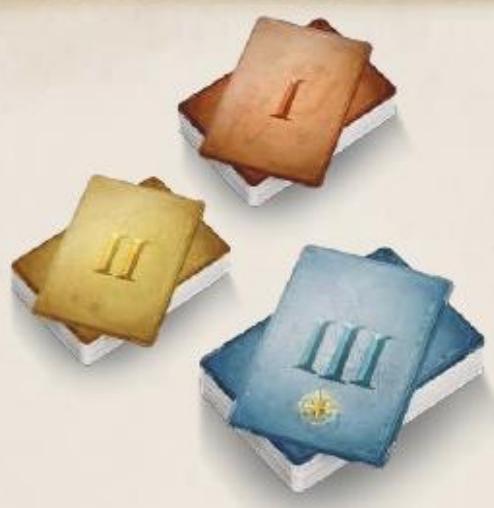
II: 航海時代
III: 鐵路時代
每個時代都有一疊對應的任務卡。玩家透過完成這些任務,讓遊戲進入下一個時代。
當有玩家完成了一張當前時代任務卡上的所有目標,其可以選擇在自己的回合中展示這張任務卡,並將遊戲推進至下一個時代。
當 1 位玩家成為第一位完成當前時代任務卡的玩家時會發生什麼事情?
1) 這位玩家展示該任務卡,將它放置在桌子上,並獲得卡牌上顯示的勝利點數。
2) 這位玩家將五個經濟時期 (II-VI) 之一的宮殿 📄,放到地圖上作為完成任務的獎賞,並拿取該宮殿的獎勵。
3)遊戲進入下一個時代。玩家們將上一個時代所使用的行動指示物翻面並放置在其所選擇的拱門行動格下方。從現在開始,玩家在執行該拱門行動格的行動時,會收到所指定的獎勵(詳見第9頁)。
4) 所有玩家都會收到新的行動指示物,可使用於新的時代。在一個時代開始時,所有拱門行動格都是可以選擇的。
舊時代的任務卡仍然可以完成!在這種情況下,只有前述的第1)和第2)項會被執行。玩家可以完成盡可能多的任務卡!
時代 III 任務卡獎勵的勝利點數與之前的時代不同: 遊戲結束時, 玩家成功完成 3 個目標中的 1 個或多個, 都將獲得各自目標給予的 VP。
遊戲結束與計分
在遊戲過程中,玩家透過擴張與發展其帝國來累積勝利點數-
由價值 1-5 的帝國桂冠表示勝利點數。
觸發遊戲結束
金星標記代表著遊戲結束,當有玩家完成一張時代 III 任務卡的所有目標並展示該卡牌時即會觸發遊戲結束條件。該輪成為本局遊戲的最後一輪,遊戲會在該輪結束時結束!

在遊戲過程中,所有玩家將進行相同數量的回合:以擁有起始玩家板塊的玩家為準,當其右手邊玩家完成移動階段時,最後一輪結束。
計分
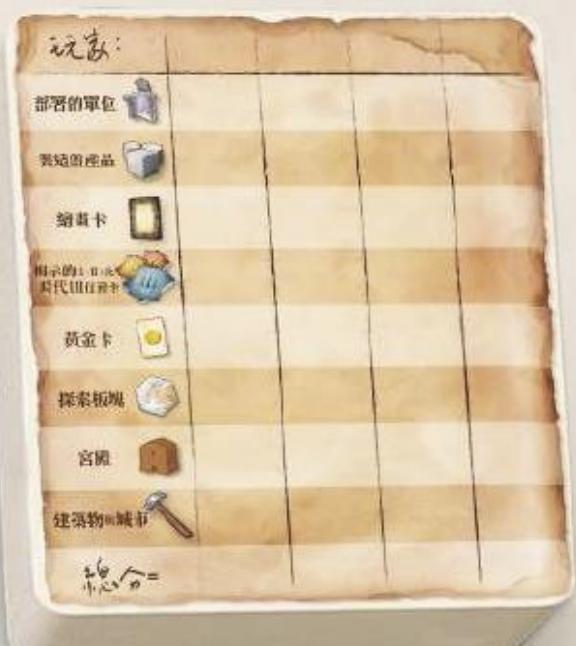
現在是開始計算玩家各自獲得的勝利點數的時候了!您可以使用遊戲所提供的計分紙來幫助計算。
獲得勝利點數的行動和物品是:
已部署的軍隊
製造的產品
獲得的繪畫卡
已展示的時代Ⅰ與時代Ⅱ任務卡+時代Ⅲ所完成的目標
黄金卡
獲得的探索板塊
地圖上已放置的宮殿 II 到宮殿 VI
您控制的建築 / 城市板塊(包含您佔領的板塊)
獲得最多勝利點數的玩家贏得遊戲,成為巴西皇帝或女王!在平手的情況下,在地圖上擁有最多科學產品指示物的玩家勝出。
如裝地圖場景
依照玩家人數,選擇所設計的以下場景之一,並如圖所示組裝其地圖。所需的大型土地板塊用字母標識:一面為 A 到 D;另一面是 W 到 Z。地圖場景中的小型土地板塊有許多不同的顏色,它們僅為方便辨識使用,組裝時不用刻意挑選顏色相符的板塊。
瓜拉拉佩斯之戰
荷蘭人想成為製糖業的霸主,但帝國已計劃解決進犯伯南布哥州的入侵者……
要獲得勝利,您必須在第 20 回合結束前完成以下 3 個目標:
完成時代 I 和時代 II 的任務卡,讓遊戲進入時代 III;
在地圖上部署所有 5 個軍事單位;以及
佔領荷蘭首都(在這個挑戰中您可以攻擊敵人的首都)。
使用綠色玩家圖板、相應的指示物和君主。如下圖所示組裝地圖,將綠色宮殿Ⅰ、橘色宮殿Ⅰ和橘色軍事單位放置在地圖上指定的位置。然後像常規一樣完成其餘的設置(詳見第6頁)。
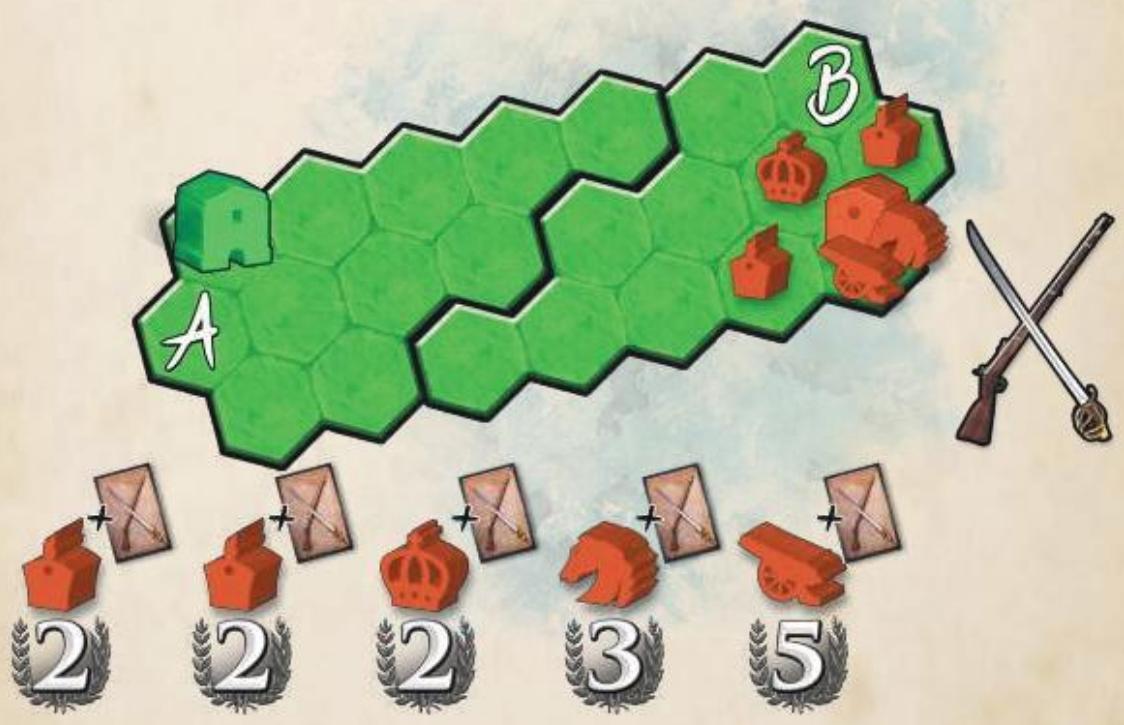
單人模式使用與多人遊戲相同的規則,但敵方的軍事單位不會攻擊。敵方將使用其戰鬥力,加上該六角格上每個橘色軍事單位各1張戰鬥卡,成為總防守力來保護自己免受您的攻擊。玩家按照第18頁所述的順序來抽取、展示和使用各自的戰鬥卡。
提示:您可以使用 1 張紙記錄回合數,或使用 1 顆 20 面骰來記錄回合數。
里約熱內盧, 1567

里約熱內盧的瓜納巴拉灣是爭奪新世界控制權的重要戰場。要進入或離開水域地形,您必須花費1個免費移動或使用翻新拱門行動格所提供的額外移動。
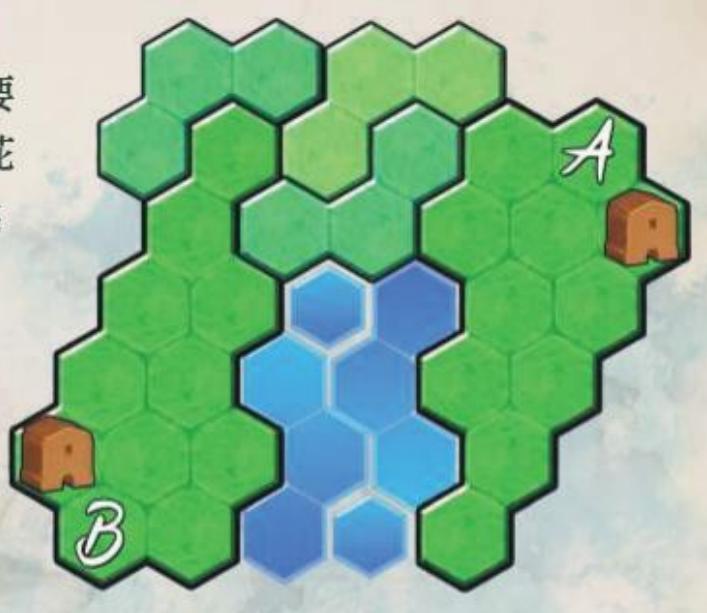
* 地圖上的藍色六角格皆為水域地形。

西斯普拉蒂納州
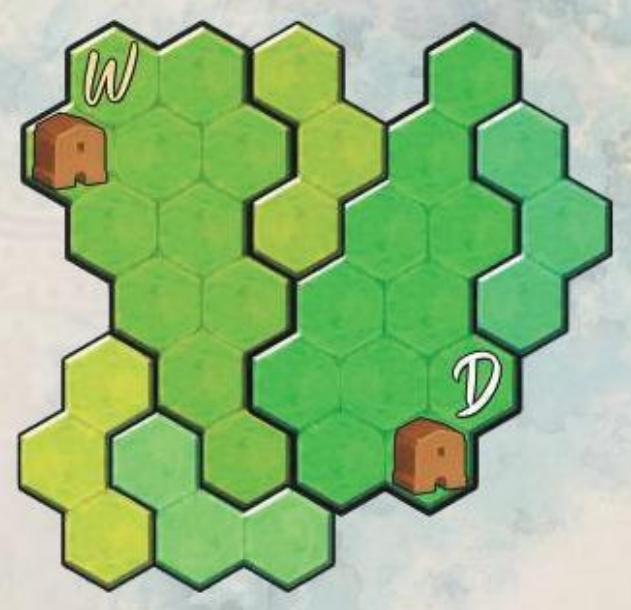

亞馬遜州
在這個地圖中,亞馬遜河將各個帝國分隔開來了。要進入或離開水域地形,您必須花費1個免費移動或使用翻新拱門行動格所提供的額外移動。
* 圖上的藍色六角格皆為水域地形。
鉑金戰爭
整個海洋將您們四個帝國分隔開來!要進入或離開水域地形,您必須花費1個免費移動或使用翻新拱門行動格所提供的額外移動。
巴西帝國
* 圖上的藍色六角格皆為水域地形。
横越大西洋
聖法蘭西斯科

偉大的聖法蘭西斯科河從這張地圖中間傾洩而下。要進入或離開水域地形,您必須花費1個免費移動或使用翻新拱門行動格所提供的額外移動。

托德西利亞斯條約
* 圖上的藍色六角格皆為水域地形。
巴西土地對我們3人來說不夠大!要進入或離開水域地形,您必須花費1個免費移動或使用翻新拱門行動格所提供的額外移動。


www.cmon.com

尋求更多的場景嗎?拜訪我們的社群媒體來尋求更多
歷史上的地圖與挑戰
@meeplebr @brazilmundus
http://www.facebook.com/bgrookie/

Meeple Br - Rua Manoel Pires de Moraes
Pedroso, 18, Jardim Brasil, Embu Guaçu/SP -
CEP 06.900-000 - Brasil
www.meeplebr.com
www.mundusjogos.com.br

bgrookie.seemore.tw

煉金廠
大砲
1黃金
交易站
2 弓箭手

1 巴西紅木
里約熱內盧市
君王單位
鋸木廠
2巴西紅木
豪宅
法國 南極
教會
1 科學
豪宅
法蘭西王國想要躍升成為一個帝國,但它必須先征服這新世界的一隅。您必須在第22回合結束時完成這三個目標:
→ 推進並完成時代Ⅲ任務卡;
→ 在地圖上部署您所有軍事單位;
征服里約熱內盧市。
使用紫色玩家圖板,以及相關配件與拿破崙君王。依照下方場景組裝地圖並在地圖上指定位置,放置紫色宮殿Ⅰ、綠色軍事單位、建築板塊、里約熱內盧市,以及特定資源。
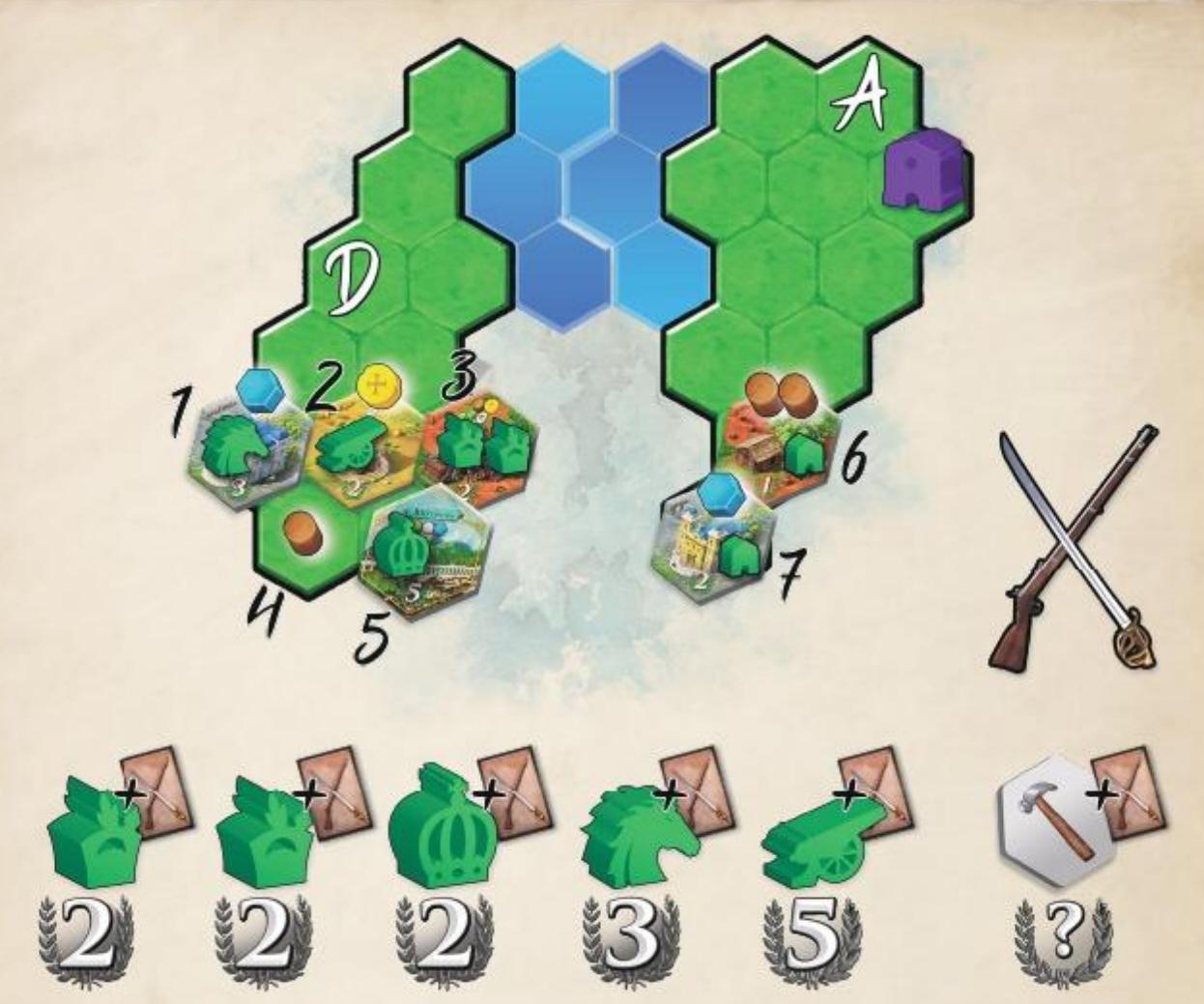
其餘設置如同一般遊戲設置(詳見第6頁)。
單人模式與多人模式的規則相同,但敵方軍事單位不會攻擊您,敵方會透過其CS總和,加上等同於該六角格上的綠色軍事單位及建築板塊數量相同的戰鬥卡來進行防禦。敵方依照規則書第18頁所述戰鬥順序執行並抽出且展示這些戰鬥卡。只要您佔領了放有資源的地圖格或建築時,您可已使用這些資源來支付或交易。請記得,不要在敵人帝國的相鄰格上執行建造行動。
征服:您必須在里約熱內盧市進行並贏得戰鬥,且至少保留1個軍事單位在這個城市中,才能征服它。
完成您的時代Ⅰ、Ⅱ、Ⅲ任務卡。然而,要贏得單人模式勝利,您必須在22或更少的回合中完成上述3個目標。
提示:在一張紙上記錄回合數、寫下您在遊戲結束時獲得的分數,與其他玩家比較您的個人紀錄。

帕拉納普昂

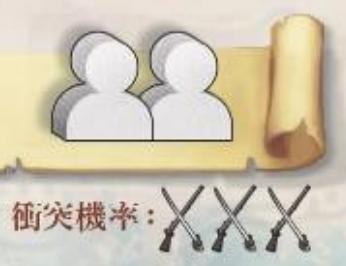
衝突機率:X
您這一側的海濱並沒有太多空間,但瓜納巴拉灣中央卻有一座非常吸引人的島嶼,看起來是個建造新建築物的理想地方。
在遊戲設置時,拿取1片『1文化』與1片『2米納斯吉拉斯州』,以及正面朝下隨機挑選2片探索板塊。將這4片板塊正面朝下混洗,放置在下列場景地圖上所示位置
進入或離開一個六角格水域地形時,您必須花費1個免費移動或使用翻新拱門行動格所提供的額外移動。
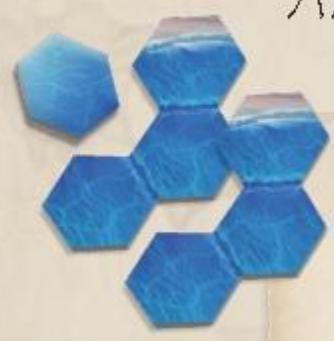
* 地圖上的水域地形板塊為六角形藍色板塊格


www.CMON.com

BRAZIL 2021 Rule book ENGLISH.md69.3 KB
IMPERIA
Ze Mendes
meeplebr MUNDUS
MALDITO GAMES
Rule Book

Brazil has been known by many other names in the past: Pindorama, Island of the True Cross, Terra Nova and Land of the Holy Cross are but a few. In modern
Portuguese, Brasil has been officially spelled with an S since
the 1931 Orthographic Agreement with Portugal; during the time period of this game, Brazil was spelled with a Z. What hasn't changed, however, is the challenge it presents: a vast, rich land requires great leaders capable of building the most prosperous Empire to have ever existed.
Historical Art Credits
Several illustrations present in the game were inspired by the works of: Oscar Pereira da Silva: Desembarque de Pedro Álvares Cabral em Porto Seguro em 1500, 1900 and Retrato de José Bonifácio de Andrada e Silva, 1922. Delfim da Câmara: Retrato de Dom Pedro Il, 1875. Victor Meirelles: Batalha dos Guararapes, 1879, A Primeira Missa no Brasil, 1861 and Combate Naval do Riachuelo, 1865. Joaquim da Rocha Fragoso: Retrato do Duque de Caxias, 1875. Jean-Baptiste Debret:Carga de Cavalaria Guaicuru, 1822, O Vendedor de Arruda and O Sinal de Combate - Coroados (Bororo), 1839. Albert Eckhout: Índia Tupi, 1641. Joseph Kreutzinger: Retrato da Arquiduquesa Maria Leopoldina, 1815. Benedito Calixto: Retrato do Padre José de Anchieta, 1902, Pátio do Colégio, 1902, and Fundação de São Vicente, 1900. Édouard Viénot: Retrato da Princesa Isabel, 1868, Retrato de Gastão de Orleans O Conde D'Eu, 1870 and Retrato do Visconde de Mauá, 1868. Chaves Pinheiro: Figura Alegórica do Império Brasileiro, 1872.Simplício Rodrigues de Sá: Retrato de Dom Pedro l, 1830. Luis de Madrazo y Kuntz: Rainha Isabel l de Castilha, 1848. Franz Xaver Winterhalter: Rainha Victoria, 1843. Ernest Crofts: La Belle Alliance, 1815. Michiel Jansz van Mierevelt: Retrato de Jean-Maurice of Nassau-Siegen, 1637. François-René Moreaux: A Proclamação da Independência, 1844. Václav Brozík: Jitro (1851-1901) Georgina de Albuquerque: Sessão do Conselho de Estado que decidiu a Independência, 1922. Pedro Américo: Dom Pedro Il na abertura da Assembléia Geral, 1872. Aurélio de Figueiredo: A Redenção dosAmazonas, 1888. Gabriel Duperré: Arredores da fazenda mandioca, 1838. Félix-Émile Taunay: La Barre - Rio de Janeiro, 1840.

Game Design and Art Direction: Zé Mendes
Developers: Michael Alves and Diego Bianchini
Publisher: MEEPLE BR and MALDITO GAMES Graphic Design: MUNDUS Jogos Proofreading: Ron Halliday
Illustrations: Carlos E. Justino, Vinícius Menezes, Victor Sales, Isaias Junior, Ryan Teo, Arthur Parisi, Tom Ventre, Ádalberto Junio and Girleyne Costa
Playtesters and Acknowledgements: Isabela Ferreira, Antonio da Videira, Ricardo Magana, Clóvis Corrêa, Roberto Ritter, Eduardo Felipe Tavares, Francys Johns and Weverson "Nego" Ferreira, Marina Mendes, Túlio Barros, Fred Andrade, Johannes Natterer, Orgutal Jogos: Luiz Cláudio, Márcio Botelho, laggo Piffero, Jorge Nascimento, Maiko Carvalho, Tarik Khalil, Icaro Souza, Marcelo Shaid, Silas Tinoco, Liliane Nunes and Giulliano Penatti, Andy Strauss, Marcius Fabiani, Pedro, João and Tiago Miranda, Luciano Toledo, Ney Alencar, Vanessa Piasa, Wagner Almeida, BGGll: Paladino Monge, Edson Antunes, Daniel Vasconcelos, Jogada Histórica, Covil dos Jogos: Paulo, Jean e Pikachu, lgor Knop, Meeple Maniacs: Jack e Zombie, E aí Tem Jogo?: Carlos Couto, Duque BG, After Match: Fabricio Ferreira, Bota na Mesa: Paulo Rezende, Thiago Boaventura, Romir Play House, Rafael Pinheiral, Emivaldo “Zinho", Tábula Quadrada: Renato Lopes, Canal Gong: Marcus Martins, Igor Campos, Maurílio Salgado, Thiago Vieira, Engrenagem Lúdica: Giovani LOok, Empreende Nerd Mesa Secreta, Ludoteca: Charlon Portugal, RED Jogos, Além do Muro and Game of Boards.
Missive to the Players
Salutations, Most Noble Players. I pray that this letter finds you well in both body and spirit. No doubt you have heard the announcement regarding the unexpected discovery of a New World. It is in regard to this very topic that I felt compelled to pen this correspondence, so that you may play a part in this historic episode. I have been told that this shall be a strategic contest for as many as four Players, in which the participant who secures the greatest quantity of Victory Points shall be given the Emperor's crown of this as yet terra incognita.
Upon arrival in Terra Brasilis, it is paramount that you immediately expand your Territory by placing constructions on the maps included within – you have been provided with our most accurate and detailed hexagons – while concurrently improving your forthcoming Actions through the manufacture of new Products. Bear in mind, noble Players, that the myriad unexplored areas on the map will be of great benefit to the brave adventurers willing – and able! – to forge a path to them: such acts of courage may require a sizable army to protect these forays into the unknown.
Your conquest of new Territories shall be primarily achieved by the foundation of new Cities and by the construction of numerous Buildings. Said edifices will provide your settlements with all manner of Resources and Gold – some can even advance your understanding of Science, a most useful Asset. As always, remain prudent: foreign adversaries will, in all probability, attempt to snatch away much of what you have worked tirelessly to accomplish – effectively wiping your name off the map, and from history.
The Players'rivalry shall traverse three historical Eras – each, with the passage of time, offering more freedom and the latest advances in technology. Each Era presents increasingly arduous challenges that must be overcome by at least one Player; completion of any challenge shall advance the contest to the Era subsequent.
I should not have to remind you that great civilizations are built by great minds: Gold alone does not suffice. For this reason, you must make avail of the wisdom, knowledge and advice given to you by the greatest heroes of Terra de Santa Cruz, who have offered to stand at your side. And, dear Players, if I may leave you with a piece of my own advice: When in doubt, never forget that what truly counts toward your victory are those selfsame Victory Points. May wisdom guide your actions and decisions. Go forth, be an Emperor and build your mighty Empire!
"May God grant me these last wishes – peace and prosperity for Brazil." Dom Pedro Il
24 Painting cards
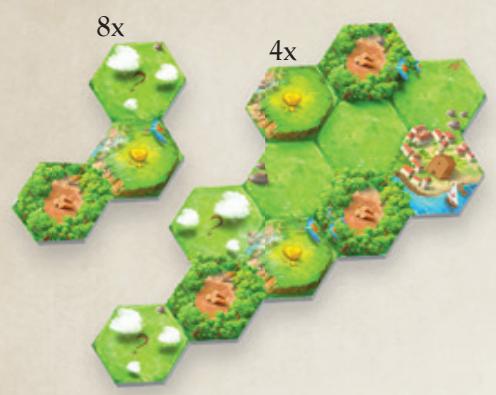
4 large Land tiles 8 small Land tiles
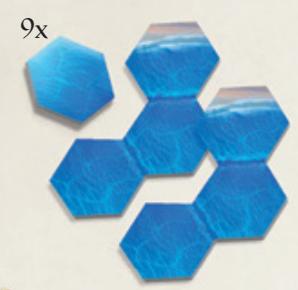
Maps are put together using combinàtions of Land and Water tiles
2 large Water tiles 9 small Water tiles
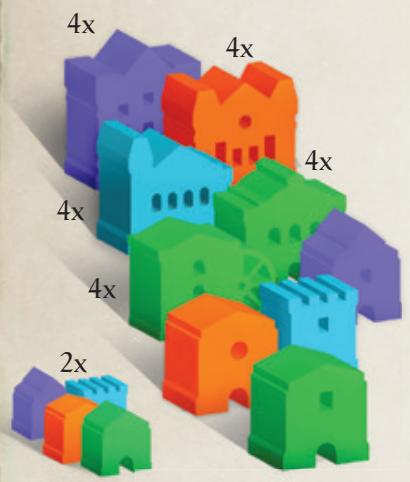
24 Palaces 8 Mansions
Each color has 6 Palaces and 2 Mansions
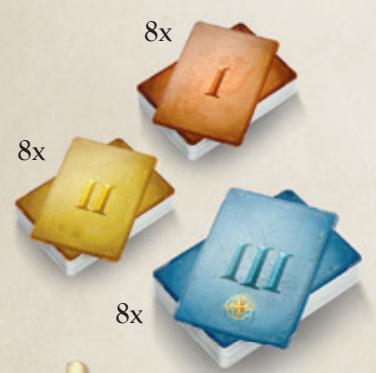
24 Mission cards
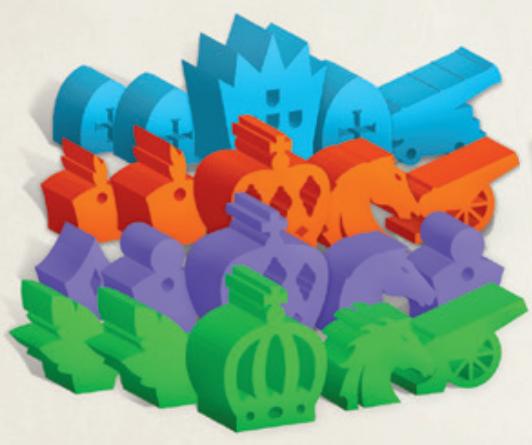
Each color has different shapes, names and quantities
Missions are separated into 3 Eras: I, II and III
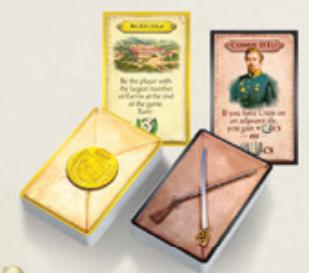
20 Gold cards 24 Combat cards
Gold and Combat cards are placed on the Common board
Combat cards, Gold cards and City tiles are placed here
The green player (the Brazilians) hs two Monarch boards to choose from
Contents

1 Common board
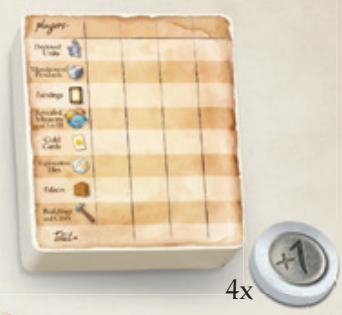
1 Scorepad 4 (+1) tokens
4 Player boards 5 Monarch boards
12 Action tokens

The reverse side of each Era's Action token
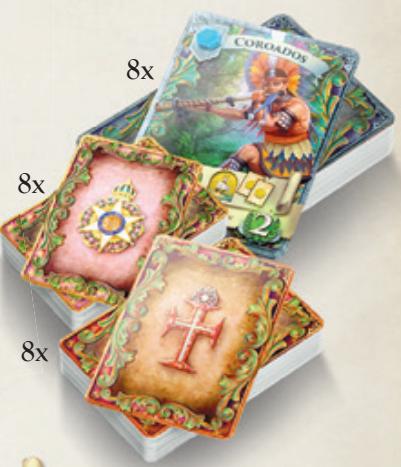
Paintings come in three different frame colors: red, pink and blue
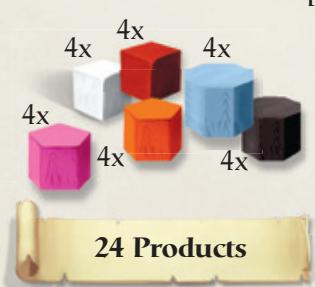
Product bases come in three shapes: Squares, Pentagons, and Óctagons
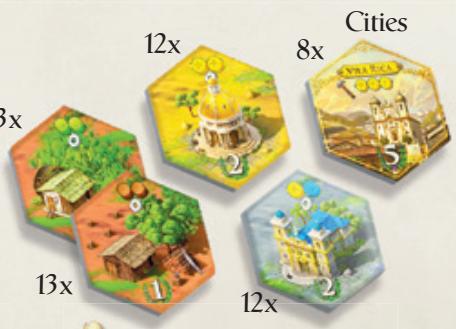
50 Building tiles 8 City tiles
Buildings are separated by Era: Era I – brown Buildingtiles Era II – yellow Building/City tiles Era İIl – gray Buildng tiles
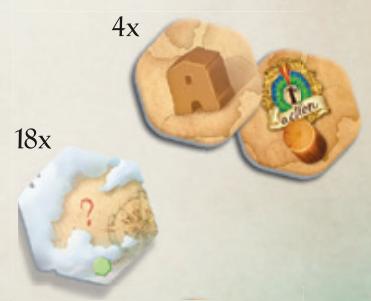
18 Exploration tiles 4 Čapital tiles
The Capital tile with the 1st Player icon determines the game's starting player
Goal of the Game
During the game, each player will accumulate Victory Points (VP) as they develop their Empire. These points – represented by Imperial Laurels ranging in value from 1 to 5 – are tallied at the end of the game using the provided scorepad.
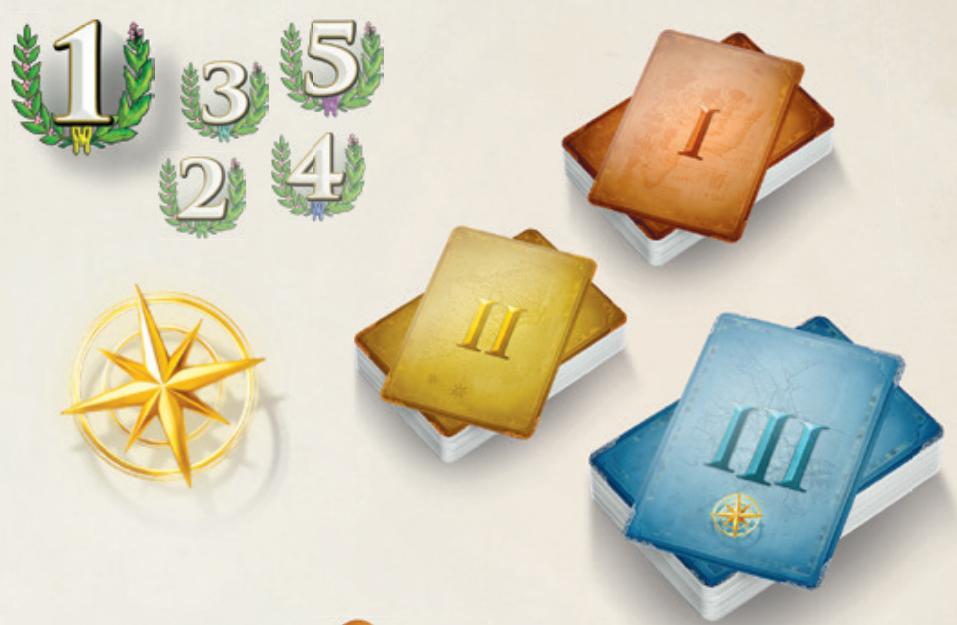
The game takes place over three Eras, starting with Era I. For the game to advance to the next Era, a player must announce completion of their current Mission Card. When a player announces completion of their Mission in the third Era, the current round is played out and the game ends. The Golden Star symbol present on Era Ill Mission cards serves as a reminder that they trigger the end of the game.
Victory points are tallied at the end of Era Ill, and the player with the most is declared the winner!
Rules Summary
A player's turn consists of two phases: an Action Phase followed by a Movement Phase.
Action Phase: The player may perform one Action by placing their Action token onto an available Action Arch on their player board. If payment is required for this action, Science can be used in lieu of Gold or Resources, and Gold can be used in lieu of any Resource.
Movement Phase: The player may perform 1 free movement by moving one of their Military Units already on the map to an adjacent hexagon, or hex. They may also perform 1 additional movement if their selected Action Arch permits. When a player moves a Military Unit onto a hex that is occupied by an opponent's City, Building or Military Unit, combat will be initiated.
Upon completing their Movement Phase, the current player's turn ends and the next player's turn begins. Turns are taken in clockwise order.
As soon as a player announces (and shows) that they have completed their Mission for the current Era, the game – and all players – must advance to the next Era. First, each player places their Action token face down below an Action Arch of their choosing, adding the bonus depicted to the benefits of that Arch for the rest of the game. Then all players receive a new Action token, corresponding to the new Era.
Note: Despite the simplicity of the player's turn, there are still many options for players to weigh. Don't be concerned if everything isn't clear after this introduction: the rules will be explained in more detail in the coming pages.

Setup
-
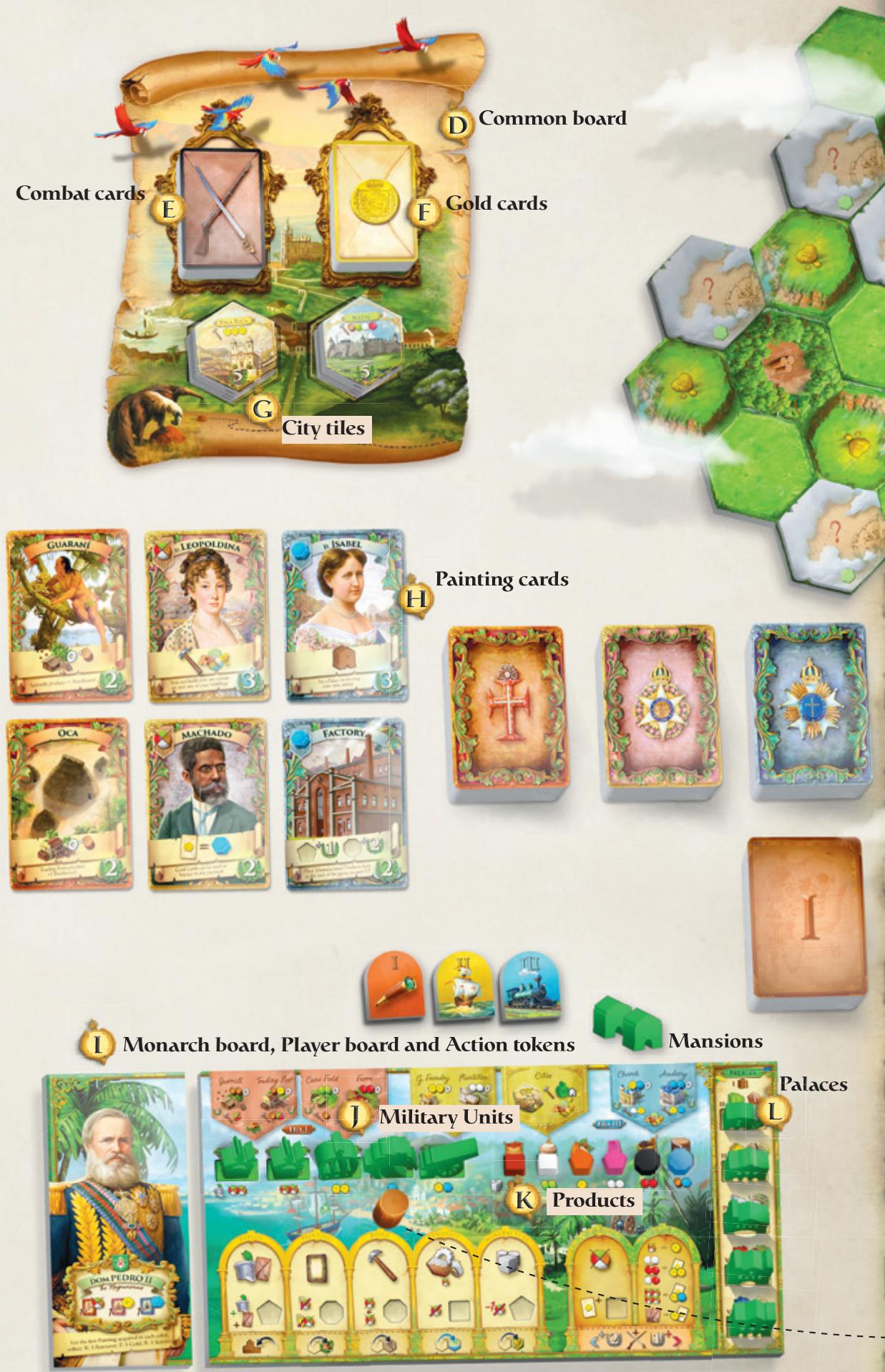
Choose a Map Scenario A from pages 22-24 for the correct number of players and assemble its map in the center of the table. Randomly place Capital tiles B face down on the indicated hexes, ensuring that the 1st Player tile O is included among them. Randomly place Exploration tiles face down on all cloud-covered hexes marked by a "?" and return the rest to the box.
-
Place the Common board D near the map. Shuffle and place the Combat cards and Gold cards EF onto their designated spaces. Shuffle all the City tiles G), and place them face up in two equal stacks.
-
Shuffle and separate the Painting cards H into three decks according to their frame color. Create a gallery of six Paintings by drawing the top two cards from each deck and placing them face up next to one another.
-
Each player receives the Player board Monarch board(s), 5 Military Units 5 Palaces 1 and 2 Mansions of one color, as well as 6 Products K (one of each type). Place the Products, Military Units and Palaces onto their indicated positions on the Player board.
-
Each player receives the Action tokens and 2 random Mission cards for each Era (l, ll and Ill). Players must keep one Mission card from each Era and place the other at the bottom of its respective deck. Players then pick their Monarch 1,placing that side of the board face up just to the left of their Player board.
-
Reveal all the Capital tiles B) by flipping them over, then decide which player will pick one first. This player chooses a Capital, adding the Resource depicted on the tile to their personal supply. They then remove the tile from the map, placing their Palace I on the same hex. Proceed in clockwise order until all players have chosen a location for their Capital.
-
The player who selected the Capital tile with the 1st Player icon starts the game! This player should keep the tile as a reminder of who started the game; all other Capital tiles can be returned to the box. Players take turns in clockwise order (the next player is the person sitting to the left of the current player).
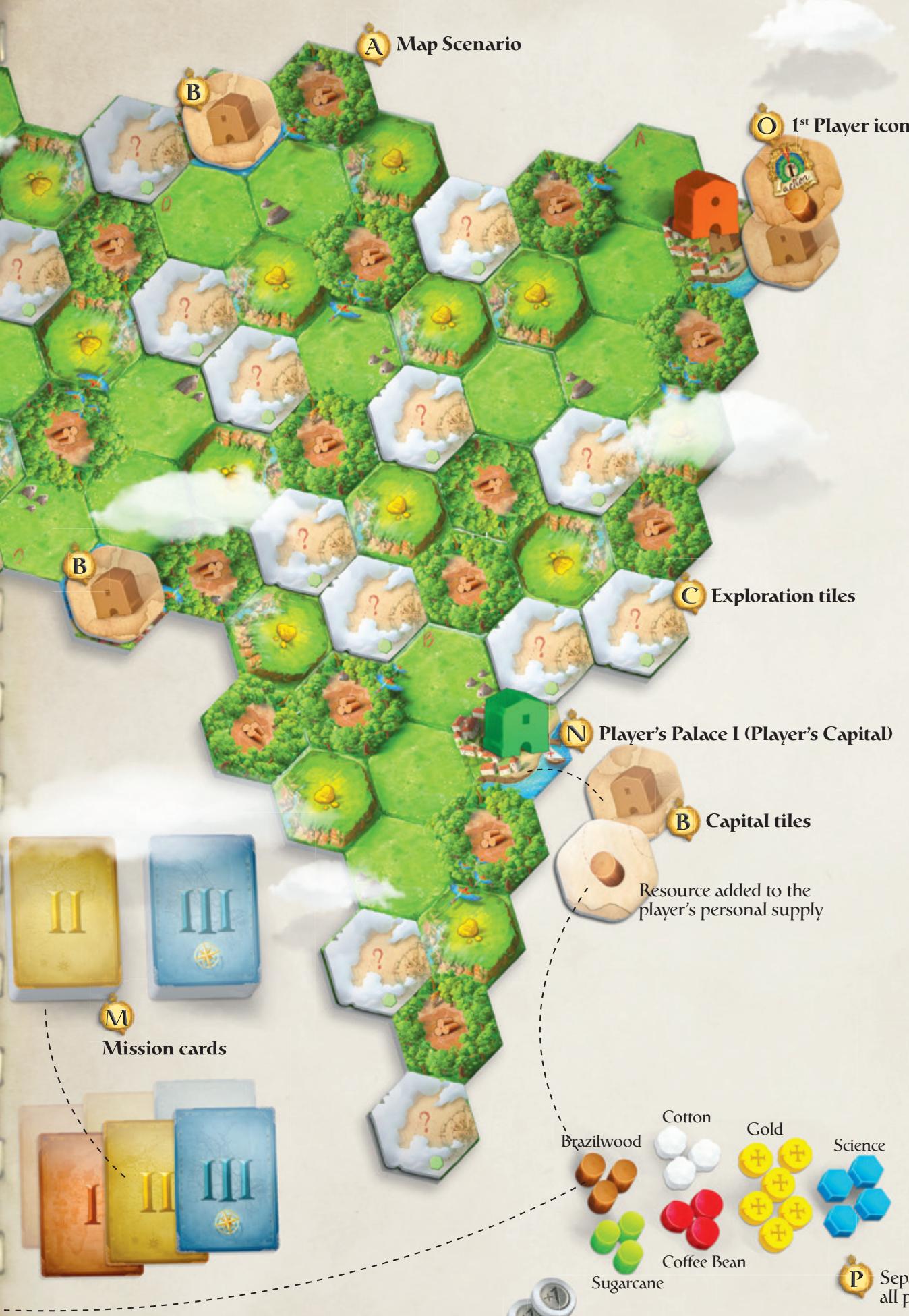

Map Scenario page 22

Capital Tiles page 20

Exploration Tiles page 17

Common Board page 6

Combat Cards page 19

Gold Cards page 16

Cities pages 10 and 13

Painting Cards page 14

Player Board page 8

Military Units page 18
Products page 12

Palaces page 20

Mission Cards page 21

Player's Palace I (Player's Capital) page 20

1st Player Icon page 20

Buildings, Resources and Assets pages 12 and 13
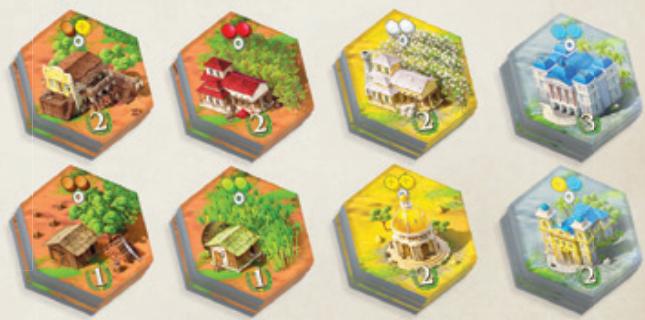
Separate Building tiles by Era. Place Resources and Assets within all players' reach.
Player Board
The Player board helps players choose their actions and store Resources and Assets. During setup, each player chooses a Player board or is dealt one at random. Every board comes with at least two Monarchs of the same color; players will choose one of these Monarchs to use during the game. Each player's 6 products, 5 Military Units and 5 Palaces are placed on their indicated spots. Painting cards are kept face up next to the Player board, while Mission, Combat and Gold cards can be kept in the player's hand.

① Military Units
Place your five Military Units on the spaces indicated. Their unique abilities and Victory Points are shown under each, and the cost to Deploy them for the first time is shown below.

Building Overview
Key information about the buildings available during each of the three Eras is shown here.
· Production acquired -- Cost to build --Terrain requirement

Monarchs
Monarch boards come with a pair of monarchs – one on each side – with personality traits that confer unique skills or bonuses to their player (see page 17). Each player places their chosen Monarch to the left of their Player board.

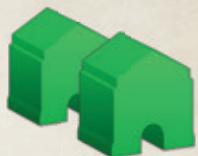
Mansions Each player has two Mansions of their color which are used to identify their Cities on the map.
Products
Place the six Products on the spaces indicted by their shape and color. Victory Points are shown under each, and the cost to Manufacture them is shown below.


Personal Supply
The central area of the Player board is used as storage, and can hold at most 5 Resources and/or Assets. Defeated Military Units are also kept here, but they do not take up any space.


Action Arches
A player must place an Action token onto one of these spaces in order to perform the action depicted.
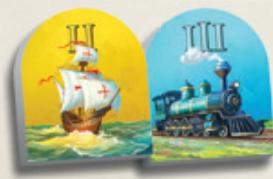

Action Arch Upgrade A player can place a Manufactured Product onto one of these spaces to upgrade an Action Arch (see page 12).
Action Tokens
Each player has three Action tokens, one for each Era. Àction tokens not yet in play should be kept next to the Player board.

Economic Period Palaces Place the five Palaces Il to VI on the spaces indicated by their shape. When a player completes a Mission, they may put one of these Palaces onto one of their Building tiles in order to unlock its bonus (see page 20).

Action Tokens
Action tokens are an integral part of the game: they allow players to choose an action by placing one on an unoccupied Action Arch (see page 10). Each player has three Action tokens, one for each Era (l, Il and IIl).
A player cannot perform the same action two turns in a row with the same Action token (see below).
When a new Era begins, players place their Action token from the previous Era face down below an available Action Arch. In doing, they add a bonus to that Arch's action during their Movement Phase.
Note that Eras always advance for all players at the same time, so everyone should always be using the same Action token. The first action of an Era can be any action, since the previous Era's token is no longer covering an Action Arch.


Era I Action Token
) The current player performed an action, ànd as a result was the first to announce completion of a Mission card from the current Era (II).


The player can look at an Exploration tile without revealing it to anyone else, then return it face down. This tile must still be explored by a Military Unit to gain its bonus (see page ¥7).

) All players must place their Era Il Action token face down below an Action Arch of their choice, and from now on will receive the depicted bonus whenever they perform that action during their Movement Phase.
Era II Action Token
The player may draw a Combat card.


) The game immediately advančes to Era III, and Action token Ill is provided to all players.
Player Turn
A player must complete the Action Phase before they can make a movement on the map. The two phases of the player turn must be played out in this order:
A) Action Phase Place your current Action token onto an unoccupied Action Arch and take that action. You must move your Action token to a different Arch, meaning that you cannot perform the same action two turns in a row.
Example: If you would like to acquire a Painting, place your Action token onto the Painting Action Arch.


B) Movement Phase After completing your action, you may perform – if you wish – one free movement to an adjacent space with a Military Unit already on the map. If your chosen Action Arch provides one additional movement, you may move the same unit or a different one. It is vital to remember that there are several types of additional movements, and that they can all be performed either before or after your free movement (see page 11).
Example: By choosing the Painting Action Arch, you will have one free movement as well as its indicated additional movement (a movement into an adjacent forest).
Building a City:
Action Arches
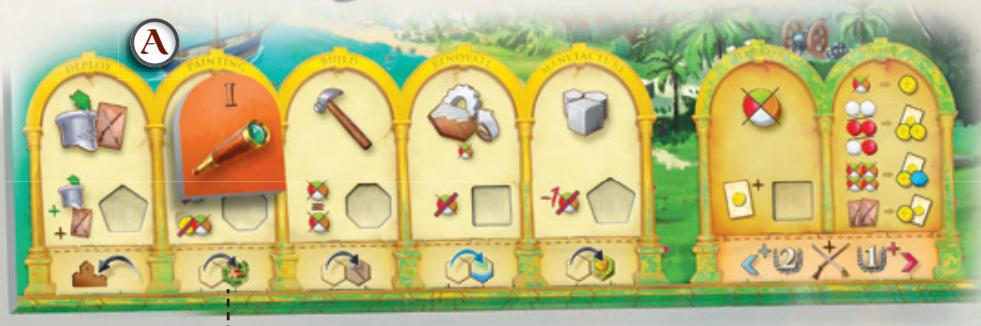
Action Aches are the spaces on the Player board used to select and perform actions by placing Action Tokens onto them. The first five Arches can provide various items and Victory Points; the last two, Harbor and Trade, provide Resources, Assets and Gold cards. And remember, a player cannot perform the same action two turns in a row with the same Action token.
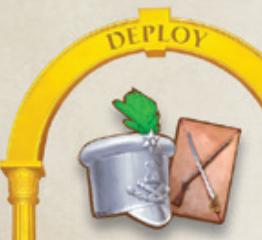
Deploy: Pay the cost shown below a Military Unit to deploy it onto the map, then draw a Combat card. If you wish, you can simply draw a Combat card for free without deploying a Unit. To deploy a Military Unit, move it from your Player board and place it on one of your Cities or Capital on the map. An Imperial Laurel will be revealed when deploying a Military Unit for the first time, indicating how many Victory Points you will earn at the end of the game.
Once deployed, never return a Military Unit to its original spot on the Player board. A defeated Military Unit (one that has been returned to your personal supply) can be redeployed using the Deploy Action Arch at no cost.


Painting: Acquire one of the available Painting cards, paying its cost if present. Place your newly purchased card face up next to your Player board. This Painting's abilities are yours to use for the rest of the game.
For more details on the abilities and prices of Paintings, see page 14.

Build: Add an available Building or City to your Empire by paying its required cost. Verify its terrain requirements.
Choose one Building tile from the table. Place the desired side face up on a hex adjacent to your Capital, Cities or Buildings that is not adjacent to any enemy tiles. Immediately put its Production on it, indicated by the white gear. To build a City, choose one of the two City tiles from the Common board. Place it face up
on the hex where your Monarch Unit is located. It does not need to be adjacent to any of your tiles, but it cannot be adjacent to an opponent's. You cannot place a tile on a hex occupied by an enemy Military Unit!
Production is one of the main concepts to understand in this game. Players can use the Resources and Assets produced by their constructions to make payments and trades, but these constructions will not produce goods again unless the player performs a Renovate Action or obtains another way to do so (see page 12).
Be aware that constructions are divided into Eras. When the game is in Era Il, for example, players can only build Cities, Era I Buildings and Era Il Buildings. Buildings of Era Ill can only be constructed when the game progresses to Era Ill. Details such as the terrain(s) on which each type of Building can be built are shown at the top of the Player board.

Building Quick Reference
-
Select a Building or City tile matching the current or any previous Era, choose a side to build and pay its cost.
-
Place the tile on a hex with the correct type of terrain (as shown on the Player board) adjacent to any of your Buildings, Cities or the Capital. It cannot be placed adjacent to an enemy Building, City or Capital.
- Cities can only be placed on the hex where your Monarch Unit is currently located. It cannot be placed adjacent to an enemy Building, City or Capital.
- Place the Resourçes and/or Assets indicated by the white gear0on this tile.
A building begins Production immediately:
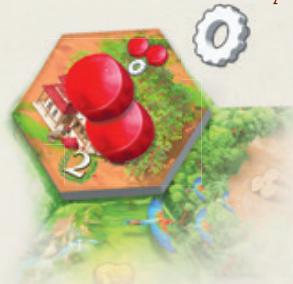
When built, this Farm produces 2 Coffee Beans as indicated. Place those Resources onto the tile. The player can now use these Resources in future transactions.
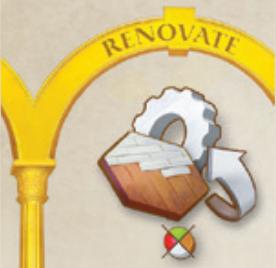
Renovate: Renovate a Building that does not have Resources or Assets on it. Pay one Resource of any kind, then choose one of the following two options:
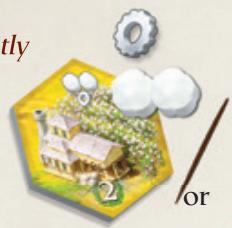
A) Replenish its current Resources or Assets, indicated by OR

B) Flip the tile over and replenish the new Resources or Assets, indicated by. lgnore the terrain type during a Renovate Action.
You cannot use a Resource currently on a Building to renovate it.
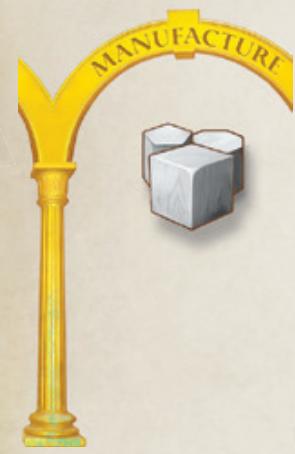
Manufacture: Choose one of the Products available on your Player board and pay the cost printed below it. Place the chosen Product on a similarly shaped upgrade slot of an Action Arch. Now when you place your Action token on that Arch, you will also receive the indicated bonus (see page 12).
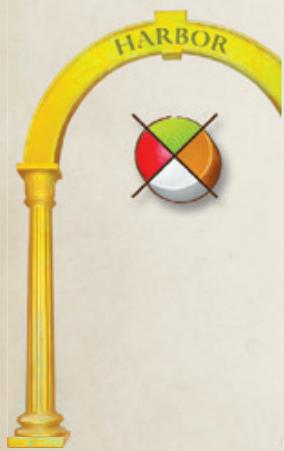
Harbor: Take one Resource from the general supply and place it into your personal supply. Remember that your supply only has space for up to 5 items (Resources and/or Assets).
Trade: Here a player can exchange Resources and Combat cards for Assets and Gold cards. You may choose and repeat as many trades as desired, but keep your storage capacity in mind!
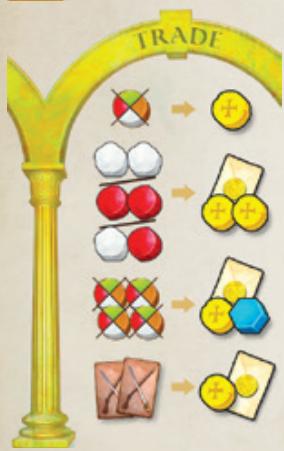
• Exchange 1 Resource of any kind for 1 Gold;
Exchange 2 Cottons, 2 Coffee Beans, or 1 of each for 2 Gold and 1 Gold card;
Exchange 4 Resources of any kind for 1 Science, 1 Gold and 1 Gold card;
• Exchange 2 Combat cards for 1 Gold and 1 Gold card.
When exchanging Resources, you can take them from your personal supply or from the production of any Building on the map under your control; any Assets that you get in return must be placed in your personal supply. Your supply can hold up to five Resources and/or Assets, and you can hold up to three Gold cards in your hand. If, after any trade, you have too many of either, return some of your choice to the general supply before completing another trade or advancing to the Movement Phase.
Additional Movements
Depending on the Action Arch chosen during the Action Phase, you may be able to make an additional movement during the Movement Phase. This movement can be made before or after your free movement, and by any Military Unit (including those just used in combat).
If you placed your Action token on:
Deploy:

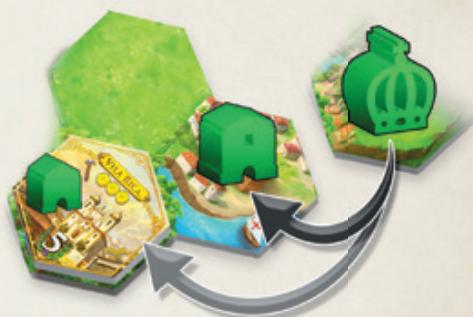
You can move a Military Unit to your Capital, or to a City that you built that is under your control (regardless of distance).
Painting:
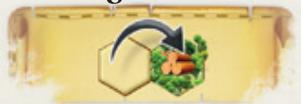
You can move a unit onto an adjacent Forest hex.

Build:
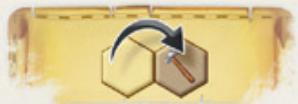
You can move a unit onto one of your adjacent Building or City tiles.
Renovate:

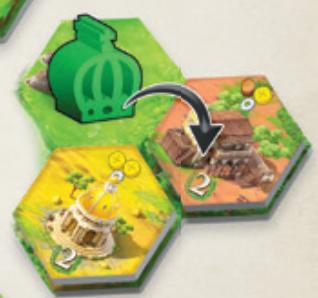
You can move a unit onto an adjacent space that borders the edge of the map, OR on / off a Water hex.
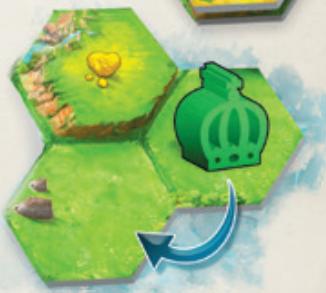
Manufacture:
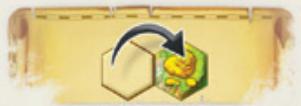
You can move a unit onto an adjacent Gold Mine hex.
Harbor or Trade:


You gain a tactical advantage in combat while your Action token is on either of these Arches: +2 CS when defending and +1 CS when attacking (see page 18).
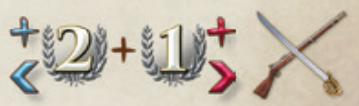



Products and Arch Upgrades

Every player has 6 Products, represented by prisms with three distinct bases: square, pentagonal, and octagonal. Products are obtained by using the Manufacture Action Arch and the associated cost is shown on the Player board below each one.


Manufacturing a Product will reveal an Imperial Laurel, indicating the quantity of Victory Points earned for it at the end of the game. After manufacturing a Product, immediately place it on an available Action Arch with a matching shape to upgrade the Arch. The upgrades for Action Arches are:
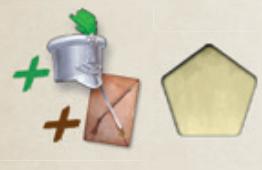
DEPLOY
Deploy an additional Military Unit and draw an additional Combat card. (lf you are deploying this unit for the first time, pay the associated cost.)

PAINTING
Acquire Paintings with a printed cost of 1 Gold for 1 Resource; acquire Paintings with a printed cost of 1 Resource for free.


BUILD
Any Resource can be used to pay construction costs that normally require specific Resources.

RENOVATE
Renovate buildings for free.

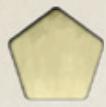
MANUFACTURE
Reduce the cost of manufacturing a Product by one Resource.
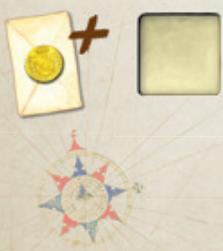
HARBOR
Draw a card from the Gold card deck (in addition to the Resource provided by this Arch).
Assets and Resources
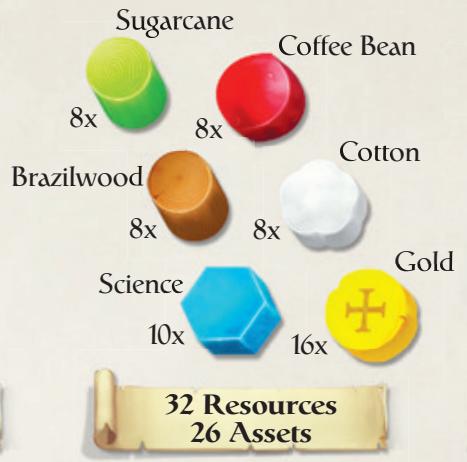
There are 2 Assets and 4 Resources in the game. The most valuable is Science, as during transactions it can be used in place of any Resource or Gold, which in turn can be used in place of any Resource.
Produced by Academies and Churches. (can be used as Gold or any Resource)
Produced by Trading Posts, Gold Foundries and Churches. (can be used as any Resource)
SUGARCANE Crop produced by Cane Fields

COFFEE BEAN Crop produced by Farms


BRAZILWOOD Produced by Trading Posts and Sawmills.
COTTON
Produced by Plantations.
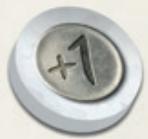
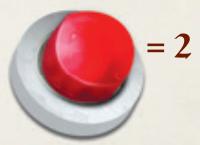
This icon
means that any Resource can be used. This is a
+1 token;
place it under
a Resource or
Asset if there
aren't any of that type remaining in the general supply.
This icon means that either a
Sugarcane or a
Coffee Bean can be used.

You will need a strong economy to sustain your growing Empire. A Building will produce goods when it is Built or Renovated, and upon acquiring certain Paintings and revealing certain Exploration tiles. A Building produces the Assets and/or Resources shown next to its white gear icon; these can be used to pay for many types of Actions throughout the game. Assets and Resources on Building tiles cannot be moved to your personal supply or vice-versa.
Some bonuses
immediately increase
Production at specific
Buildings. This
improvement is granted to the Buildings that you already have on the map and any that you Build or Renovate in the future.

Example: The Production at all your Gold Foundries has permanently improved.

Buildings and Cities
There are 8 types of Buildings and 8 different Cities that players can construct by paying their associated costs. During any stage in the game, however, only those belonging to the current or a previous Era can be built. At the start of the game, for example, only Era I Buildings are available.
While City tiles have only one side, regular Building tiles have two. Each side has a different type with its own cost, production and terrain requirements. And you can, if you wish, flip a Building tile already on the map using the Renovate action in order to gain the other side's Production. Cities cannot be renovated; they have no Production nor two sides.
These are the five key attributes found on Building tiles:
ERA: The earliest Era in which it can be built.
Terrain: The terrain type(s) that the tile can be placed on. Once built, this hex's terrain type becomes Building.
Cost: The Assets/Resources required for the Build action.
Production: The Assets/Resources that the Building produces. Victory Points: The amount of VP earned at the end of the game for this Building. This value also doubles as its Combat Strength (CS).
Building and City tiles are grouped at the top of the Player board on colored banners representing each Era. Information about both sides of the same tile is also shown.
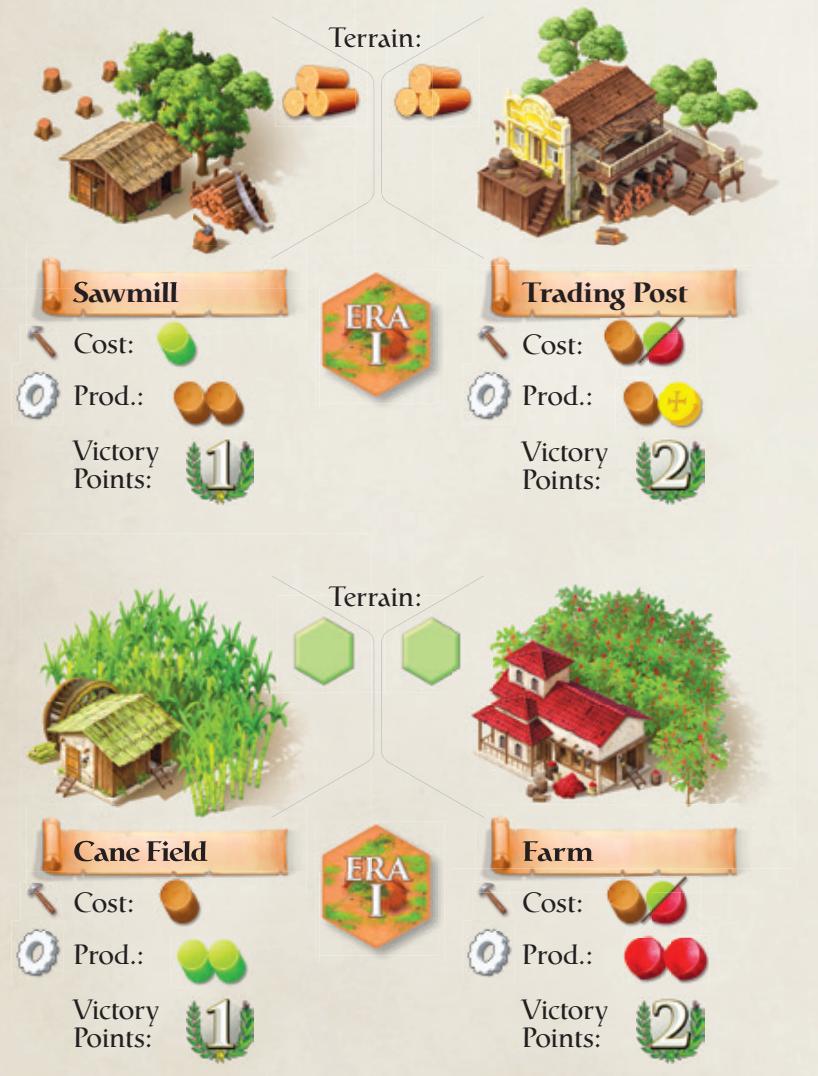
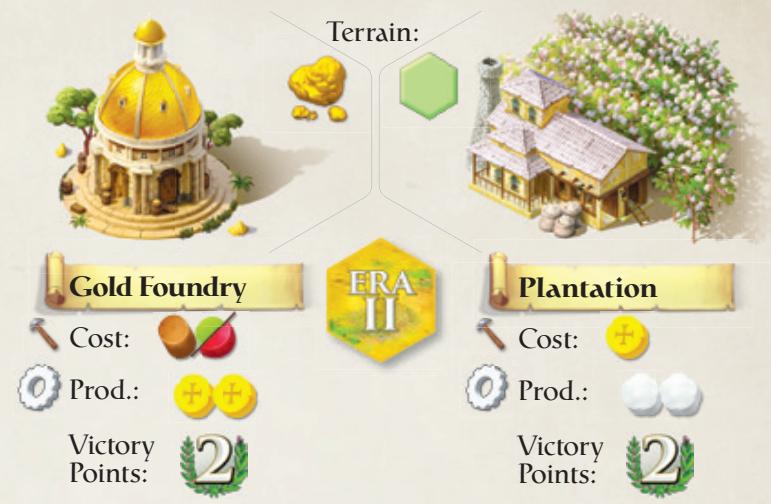
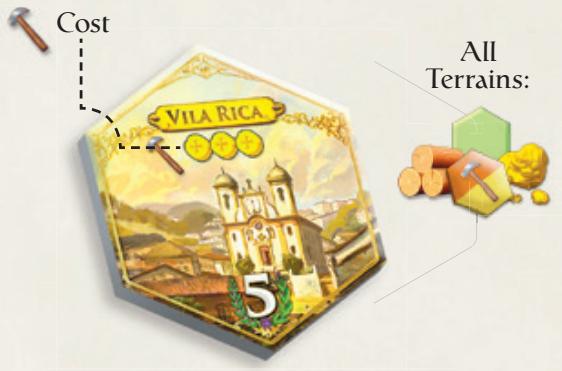
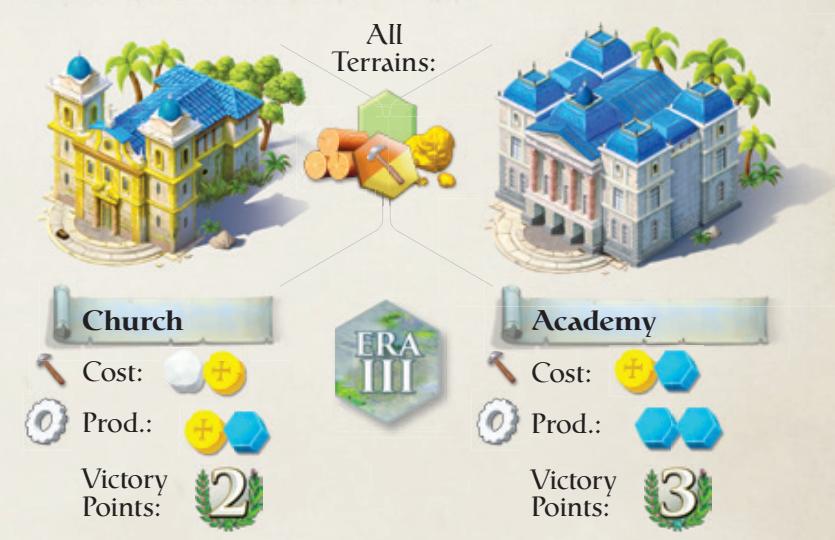
Terrains
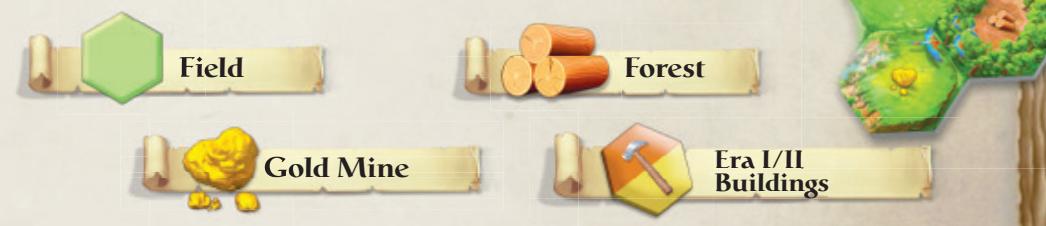
The hexagonal spaces on the map (hexes) belong to one of three terrain types, defining and limiting what can be constructed on them. When a player uses the Build Action to add a Building or City to their Empire, that space changes to a Building terrain. Cities and Era Ill Buildings can also be built on top of Building tiles from Era I and Era Il. Each type of terrain is represented by a different symbol or background:
Paintings
There are 24 Painting cards in the game. Many portray historical figures who will confer special abilities and Victory Points to their owner. They can be obtained by using the Painting Action Archand paying their cost, if present. Once acquired, you will keep the Painting for the rest of the game, placed face up to one side of your Player board. While some Paintings have a one-time effect, others can be activated multiple times during the game. Players may collect as many Paintings as they desire.
During the game, six Painting cards are available for purchase at any given time. Paintings belong to one of three Imperial Orders, identified by color: red, pink or blue. When a Painting is purchased, reveal another from the same Order. If there are no more cards remaining in that Order, reveal a card from another one.

The six revealed Painting cards should be organized on the table like this.
The painting Camarão increases the Combat Strength of all your Buildings adjacent to Forest hexes by 1. And at the end of the game, each Forest hex adjacent to your Empire earns you 1 Victory Point.

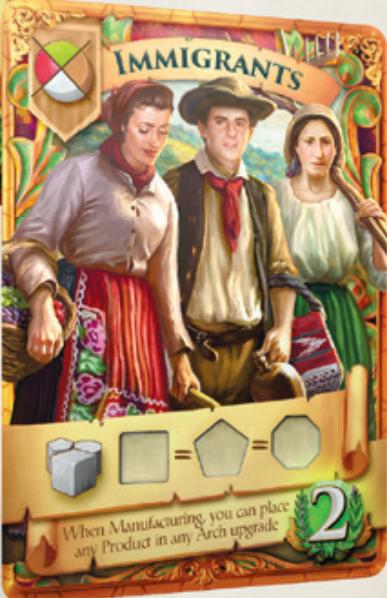
The Immigrants painting alows you to place Manufactured Products on any Action Arch, regardless of the shape of its base.
This is the painting of Maria Quitéria, who increases your Combat Strength (CS) in all your battles: +2 CS when defending, and +1 CS when attacking.
The Princess of Brazil, Dona Isabel lets you place a Palace from your Player board onto a compatible Building tile at any moment during the game. Follow the same rules as outlined on page 20. This bonus can only be activated once.
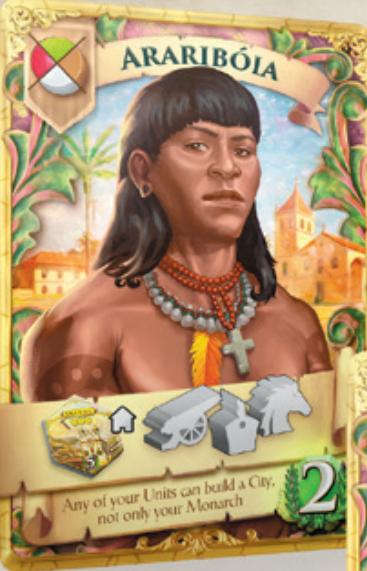
The painting Araribóia allows you to Build a City where any of your Military Units are located, not only your Monarch.

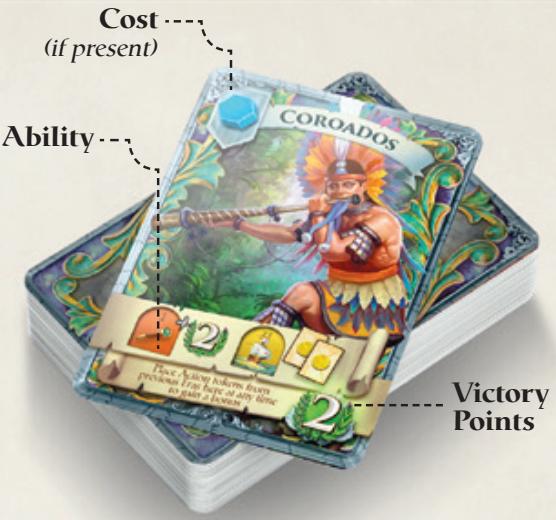
Coroados allows you, at any moment during your turn, to place your Action tokens from previous Eras on this Painting to earn a bonus. Era I token: +2 VP at the end of the game. Era Il token: Draw 2 Gold cards. Once an Action token is placed here, it stays on the card for the rest of the game.

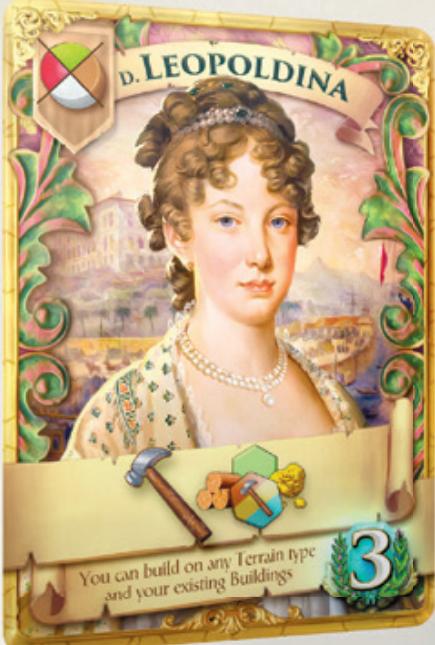
Dona Leopoldina allows you to ignore Buildings' terrain requirements when constructing. You may even place new Buildings on top of existing Buildings from any Era; the bottom Building is removed from the game.
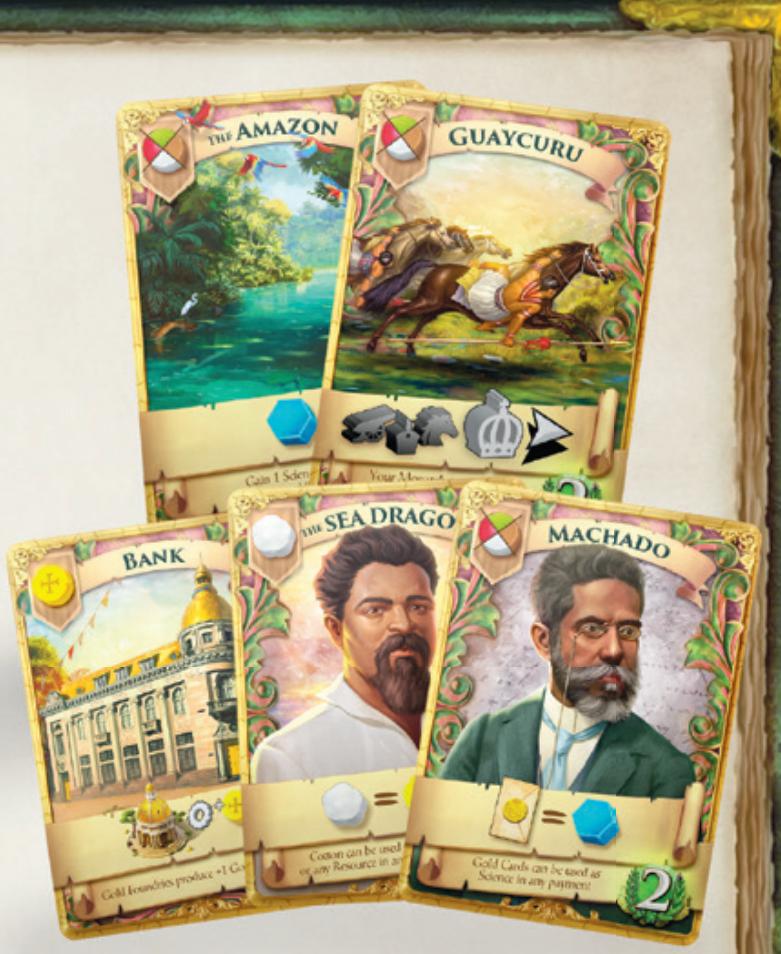

The painting Mauá allows you to build twice when using the Build Action Arch. When doing so, you must pay one Resource of any type in addition to the total cost of both buildings.
Once per turn, when Building, Rebouças allows you to pay one less Resource or Gold than the printed cost of a Build Action.

You can place Manufactured Products on the Factory painting at the end of the game (after your final turn) to earn Victory Points.

extra action
extra action
At the end of the game, exchange 3 Combat Cards for 3 Victory Points.
Gold Cards
There are a total of 20 Gold cards in the game. They can be obtained in three main ways: during certain Trade Actions, during upgraded Harbor Actions, and once when Palace IIl is placed on the map. Many Gold cards provide an Extra Action for the player to take during their turn.
A Gold card has the same value as 1 Gold, and can be used to pay for anything that requires Gold or Resources.
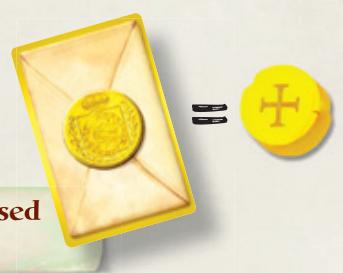
Gold cards are discarded when used as Gold or when their extra action is taken. Create a discard pile near the Common board: if the Gold card deck runs out of cards, use the discard pile to replenish it.
Players can have many different Gold cards during the course of the game, but may only hold up to 3 in their hand at one time. Whenever a player has more than 3 Gold cards in their hand they must immediately discard down to this amount, without earning any benefits from the discarded cards.
Be the player with the most Trading Posts at the end





Build & Farm, paying its cost.
extra action


Build, or have built, a City 2 or 3 spaces away from an opponent's Capital. (Reveal this card at any time)
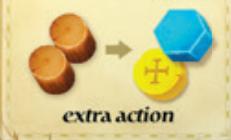
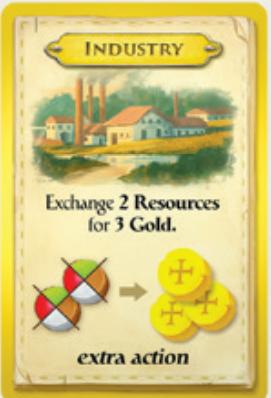
Exchange 2Brazilwood for 1 Gold and 1 Science.

Gold cards like this one require that you have it in your possession at the end of the game – and fulfill its requirements – to earn Victory Points.
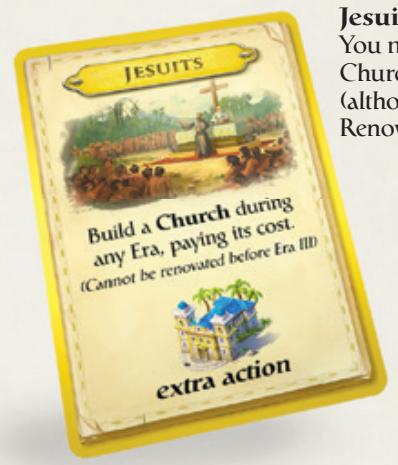
Jesuits: You may build a Church during any Era (although it cannot be Renovated until Era III).

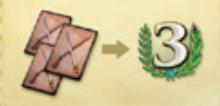
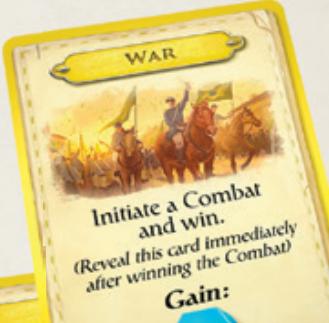

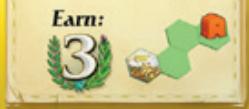
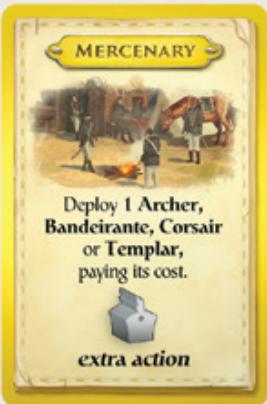
War: Reveal this card immediately after winning a combat to earn its bonus.


Exploration Tiles
During setup, Exploration tiles are shuffled and randomly placed face down on cloud-covered hexes identified by “?" symbols. An Exploration tile must be revealed (turned face up) when a Military Unit moves onto it for the first time.
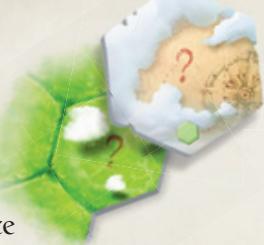

The bonus ability of the Era I Action token allows players to peek at an Exploration tile without revealing it. The tile's bonus, however, can only be awarded once it has been revealed. For construction purposes, unexplored Exploration tiles and cloud-covered hexes are both Field terrains. Should you choose to build on an unexplored Exploration tile, it must be discarded without being revealed or awarding its bonus.
Some Exploration tiles provide an immediate bonus to the player who reveals them, while others have a requirement that must be met in order to earn their reward. In both cases, these tiles are removed from the map when it is received.
Unknown Species: Players earn 1/3/5 VPs at the end of the game for having 1/2/3 of these tiles in their possession. These tiles are taken off the map and kept by the player who revealed them.
Minas Gerais: When revealed, leave it on top of the same hex. The first player to Build something here earns 1 Gold. All terrain types are permitted.
River Basin: When revealed, leave it on top of this hex for the remainder of the game. This tile increases the Production of all adjacent Buildings by 1 Resource of the same type (Sugarcane, Cotton, Brazilwood or Coffee Bean). This applies to all adjacent Buildings already on the map as well as any Buildings that are later Built or Renovated adjacent to this tile.

Quilombo: The player may draw a Mission card from any Era and add it their hand. The tile is then discarded.
Culture: When revealed, leave it on top of the same hex. The first player to Build something here earns 2 VP at the end of the game. This tile is taken off the map and kept by the player who builds on this hex. All terrain types are permitted.
Mandioca: Immediately gain 1 Resource. The tile is then discarded.

Combat Strength required
Bonus for winning this Combat
Expedition: When revealed, leave it on top of the same hex. These tiles have a minimum Combat Strength requirement that must be met for a player to receive its bonus. To initiate combat with the tile, move a Military Unit onto it or spend the free movement of a Unit already on the tile. As in normal combat, players can use Paintings, Action Arch bonuses and Combat cards to increase their total CS, with the only difference being that you must equal or surpass the total CS number on the tile. If the player wins, they receive the depicted bonus (if it's VP, they keep the tile). If they lose, nothing happens. Regardless of the outcome, any Combat cards used must be discarded.
The Monarchs
Ten Monarchs from history are available for players to choose from, and each has special abilities that can be used to gain a strategic advantage throughout the game. The color of the player's chosen Monarch board must match that of their Player board. The green Player board (representing the Brazilians) has four Monarchs to choose from; all other colors have two.
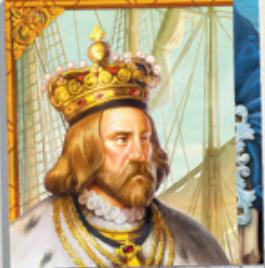

Dom Afonso Henriques
Once per turn when making a payment you may use either 1 Combat card as 1 Gold, 2 Combat cards as any 2 Resources, or 3 Combat cards as 1 Science and 1 Gold. You cannot mix it.
Dona Isabella I of Castile Your first three Trading Posts are worth 3 Victory Points and produce 1 Brazilwood and 2 Gold.
Dom Manuel I Your first three Sawmills are worth 2 Victory Points and produce 2 Brazilwoods and 1 Gold.
Maurice of Nassau
Your first three Cane Fields are worth 3 Victory Points and produce 3 Sugarcane.
Napoleon
Draw an additional Combat card after your first Deploy Action. When making payments, Combat cards can be used as Resources and 2 Combat cards can be used as 1 Science.
Queen Victoria
When you Manufacture a Product, you may place it on your Monarch board to immediately collect 1 Science. You may do this up to three times. Àt the end of the game, earn 1 VP for each Product placed here.
Tibiriçá
The first 3 Buildings or Cities that you construct on Forest hexes provide bonuses: 1st – 1 of any Resource; 2nd – 1 Gold; 3rd – 1 Science.
Dom Pedro I
Immediately after your first deployment of Archer and Cannon units, collect 1 of any Resource for each. After your first deployment of Monarch and Dragoon units, collect 1 Gold card for each.
Dom Pedro II
You receive a bonus for the first Painting acquired in each color: Red – 1 of any Resource; Pink – 1 Gold; Blue – 1 Science.
Dom Obá II Collect 1 Science upon completion of your first and second Missions. Each of these cards is worth +1 Victory Point at the end of the game.
Military Units

Military Units are used to explore the map and engage in combat during the Movement Phase. Each player receives five of their color, which are placed on their indicated positions on the Player board during game setup (shapes, names and quantities differ on each board). Each Military Unit has a cost printed below its space that must be paid when a player Deploys them. When deployed, Military Units are placed on the player's Capital or one of their Cities.
Each Military Unit has a specific Victory Point (VP) value – which also serves as its Combat Strength (CS) value – and, in some cases, a special power.
Their special powers are represented by the following symbols:


Cities can only be built on the hex where your Monarch is located.



This unit can bring along other units when moving.

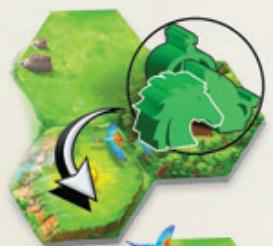

This unit can use a free movement to attack an adjacent space.


At the end of the game, all Military Units deployed – whether on the map or in the player's personal supply – earn Victory Points.
Cannon and Grenadier units can
initiate combat with an adjacent space by
spending a free movement. All Military Units on both spaces are included in the Combat, as well as the Buildings and Cities built by these two players.
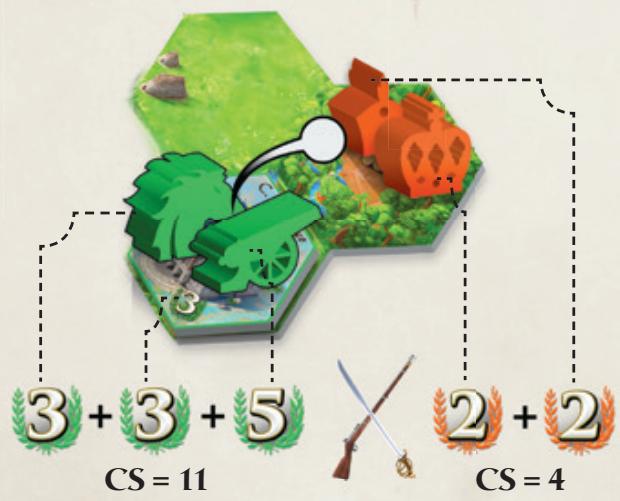
Combat happens only during the Movement Phase.
As soon as one or more Military Units enters a space with an enemy Military Unit, Building or City, combat is initiated. Combat is resolved by comparing the total Combat Strength (CS) of the attacker with that of the defender in the space(s) where the Combat is taking place.
The Combat Strength of a Military Unit, Building or City is equal to the number of Victory Points shown on its Imperial Laurel. Players can also add modifiers to their Combat Strength by using Paintings, Combat cards and Action Arches. The player with the highest total Combat Strength is declared the winner of the combat.

Combat must abide by the following order of events:
-
The Attacker uses as many applicable Painting cards as they wish, and the Harbor/Trade Arch bonus if present. Any and al effects are applied immediately.
-
The Attacker may use up to 3 Combat cards from their hand, placing them .. face down on the table.
-
The Defender performs the same two steps described above.
-
All face down Combat cards are revealed, and their effects – as well as ones from Painting cards – are resolved. The attacker applies the effects of all their cards first. Winning or losing, both players must discard all these Combat cards.
-
The player with the highest total Combat Strength wins the combat! In the case of a tie, the Defender has the advantage and wins.
-
The losing player moves all their defeated Military Units into their personal supply. Defeated units are never placed back onto their initial spots on the Player board. The winning player can also lose Military Units during combat, but at least one of their units will always survive (see the following page).
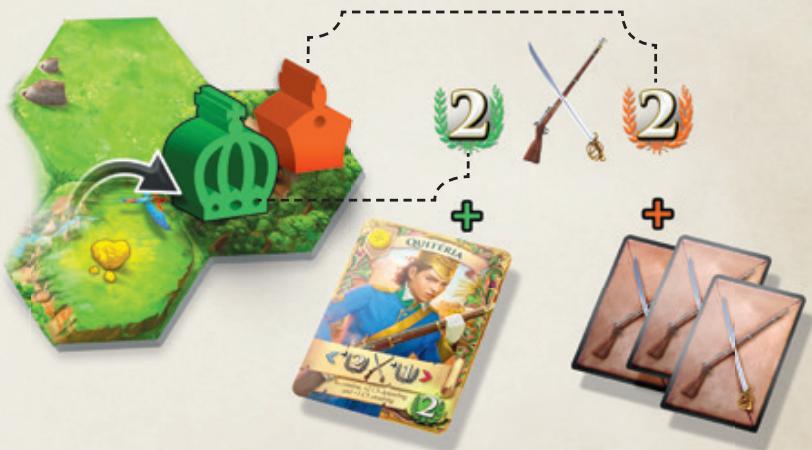
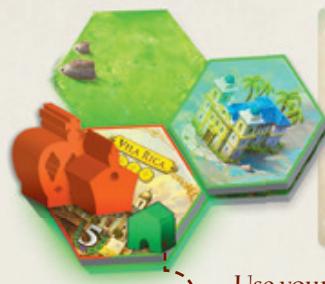
Example: A green Military Unit has moved into a hex with an orange Military Unit, initiating Combat between those two players. Each player increases their Combat Strength by adding valid Painting cards, Combat cards and Action Arch bonuses. When both players are ready for combat, they follow the order of events outlined above.
Combat Aftermath and Seized Tiles
After combat, all Military Units defeated in combat are placed into the personal supply of their owners, not back onto their initial spots on the Player board. Military Units in a player's personal supply can be redeployed at no cost, and their Victory Points are already assured.
If an attacking player wins a combat on an opponent's Building or City, they seize control of it. It will remain under their control for as long as they maintain at least one Military Unit on the tile, during which time they can use its Production to make payments and to complete Missions. Note that you cannot Build adjacent to a tile that you have seized because it is still considered part of the opponent's Empire. A player's Capital cannot be attacked or seized!
If all enemy Military Units are removed from a seized building, its original owner (the player who built it) immediately regains control. However, if the original owner (or another player) decides to initiate Combat with this construction in an attempt to claim it, neither player gains the Combat Strength shown on the tile.
The special ability of Cannons and Grenadiers allows them to use the player's free movement to initiate combat with an adjacent space. If they are defeated, all Military Units on that space are placed in the personal supply of their owner, as usual. If they win, however, they cannot take control of the opponent's building (if one exists) because they are not positioned on its tile.
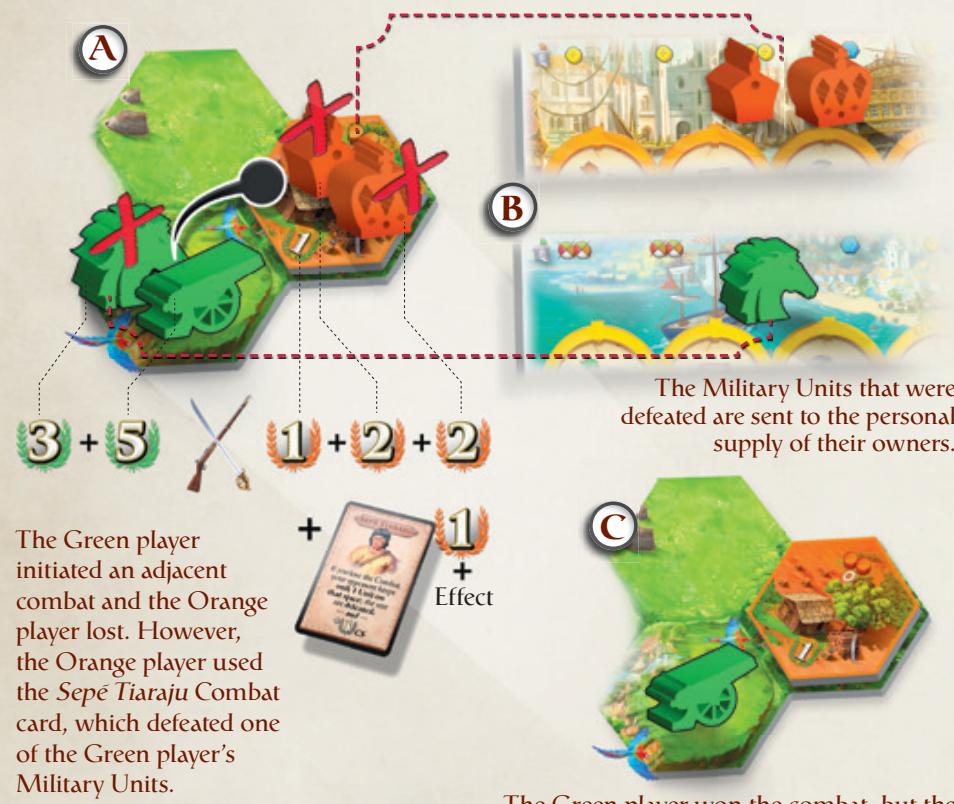
The Green player won the combat, but the Orange player maintains control of the Sawmill because there is no Green Military Unit on it.
Seized Buildings and Cities
When an adversary wins a Combat on a Building or City tile, they seize it for as long as one of their Military Units remains there. If no adversary Military Units are present, however, the player who built it immediately regains control of the tile.
Use your two Mansions to identify City tiles. They help identify you as their original owner.
Combat Cards
There are 24 Combat cards in the game, and they can be obtained in two ways: During the Deploy Action (even if a Military Unit isn't deployed) and by placing Palace VI on the map.
Players can have different Combat cards in their possession during the game, but may only hold up to three in their hand at one time. Whenever a player has more than 3 Combat cards in their hand they must immediately discard down to that amount, without earning any benefits from the discarded cards.
Combat cards are placed face down during Combat, first by the attacker, then by the defender. Each player can select up to three cards, and must discard all of them once Combat is over.
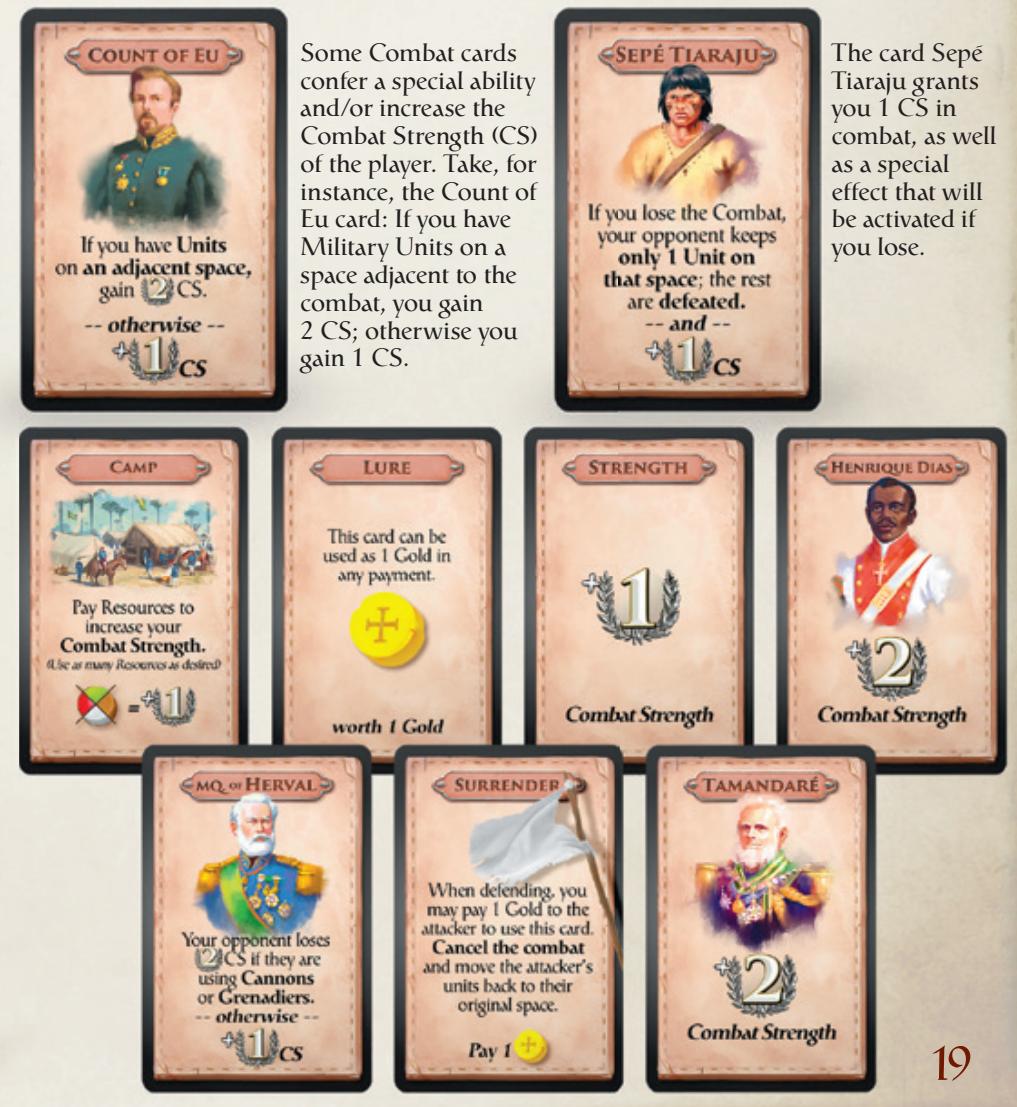
Palaces
All players start the game with a Palace belonging to Economic Period I – simply called Palace I – and five more Palaces on their Player board that can unlock special bonuses. Palace I marks the location of a player's Capital on the map. Every time that someone reveals a successfully completed Mission card, they may place a new Palace on a Building or City in their Empire.
When you complete a Mission, the Palace symbol depicted on the card reminds you to follow these steps:

-
Choose any Palace on your Player board for which you have met the required placement prerequisites. Each Palace must be placed on a specific type of Building, and there can only be one Palace per tile. For example, Palace Ill must be placed on an available Era I Building.
-
Bonuses will be revealed when you remove the selected Palace from your Player board. Collect the bonus item(s) immediately; the Victory Points revealed will be tallied at the end of the game.
-
Building tiles with Palaces on them cannot be flipped over using the Renovate action. They can, however, be Renovated to replenish the Building's production.

| 简体 | 繁体 | 原文出现次数 |
|---|---|---|
| 个 | 個 | 224 |
| 时 | 時 | 217 |
| 动 | 動 | 209 |
| 块 | 塊 | 137 |
| 战 | 戰 | 125 |
| 将 | 將 | 124 |
| 图 | 圖 | 122 |
| 斗 | 鬥 | 108 |
| 游 | 遊 | 102 |
| 戏 | 戲 | 102 |
| 这 | 這 | 101 |
| 资 | 資 | 99 |
| 单 | 單 | 98 |
| 筑 | 築 | 93 |
| 产 | 產 | 91 |
| 获 | 獲 | 74 |
| 会 | 會 | 73 |
| 军 | 軍 | 72 |
| 来 | 來 | 70 |
| 为 | 為 | 63 |
| 该 | 該 | 63 |
| 与 | 與 | 61 |
| 数 | 數 | 58 |
| 张 | 張 | 58 |
| 并 | 並 | 57 |
| 黄 | 黃 | 56 |
| 当 | 當 | 52 |
| 门 | 門 | 50 |
| 胜 | 勝 | 50 |
| 选 | 選 | 49 |
| 绘 | 繪 | 49 |
| 画 | 畫 | 49 |
| 结 | 結 | 47 |
| 进 | 進 | 46 |
| 后 | 後 | 45 |
| 开 | 開 | 41 |
| 宫 | 宮 | 40 |
| 择 | 擇 | 39 |
| 须 | 須 | 39 |
| 点 | 點 | 38 |
| 们 | 們 | 36 |
| 务 | 務 | 36 |
| 执 | 執 | 35 |
| 过 | 過 | 34 |
| 奖 | 獎 | 34 |
| 励 | 勵 | 33 |
| 页 | 頁 | 33 |
| 对 | 對 | 32 |
| 则 | 則 | 31 |
| 种 | 種 | 31 |
| 费 | 費 | 31 |
| 应 | 應 | 30 |
| 于 | 於 | 29 |
| 区 | 區 | 28 |
| 国 | 國 | 25 |
| 邻 | 鄰 | 25 |
| 从 | 從 | 23 |
| 阶 | 階 | 23 |
| 发 | 發 | 22 |
| 击 | 擊 | 22 |
Texts are community-compiled or publicly released by publishers; copyright remains with the original authors. For personal reference only.