
Calimala
At a glance
Rules, cards and Q&A (Chinese)
The rules, card data and player questions for this game are written in Chinese. Open the Chinese page to read them.
Where to find full rules
Full rules and card lookup are available in the cunlema app at cunlema.cn — pick this game and ask about any rule, card or turn you are unsure about.
Related games
Rulebook text (Markdown)
This game has 2 rulebook Markdown file(s) in our library; 2 rendered inline below — expand to read or download.
rules_zh_卡里马拉_1181.md25.9 KB
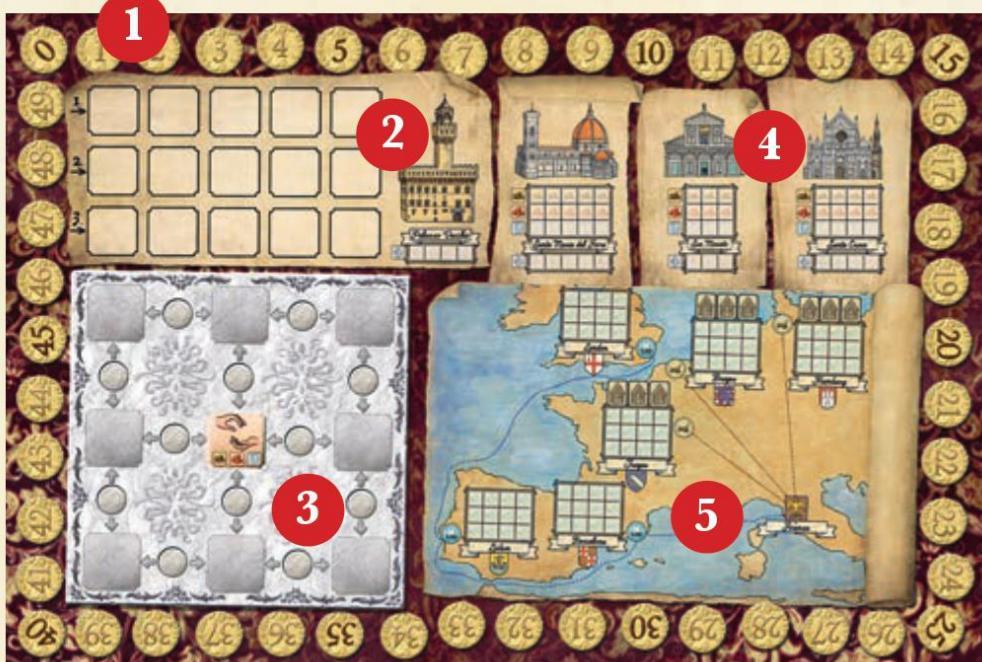
The Game Board, Action Tiles and Scoring Tiles plus Trade Houses
游戏版图包括4个主要区域:
(1) 周围一圈的得分轨(2) 版图的左上部分是维奇奥宫, 佛罗伦萨市议会
---- 有着15个得分板块区域以及4个玩家艺术品赞助空格。这个区域在得分阶段触发。

Back side

Back side
(3) 版图的左下部分是城市网格。
---- 有着8个行动板块区域。街道连接着2个行动板块区域。
每个街道都包含一个轮次行动区域,当玩家行动的时候可以将他的圆片放在街道上。
(4) 版图的右上部分是三个教堂, 建筑下面是三个建筑的建造区域:
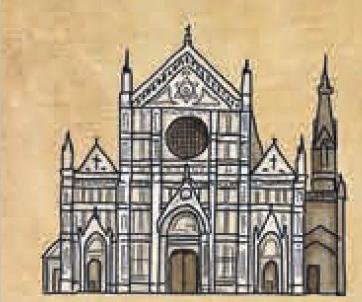
圣母百花大教堂有15个空格,圣米尼亚托教堂有着9个空格,圣十字教堂有着12个空格。

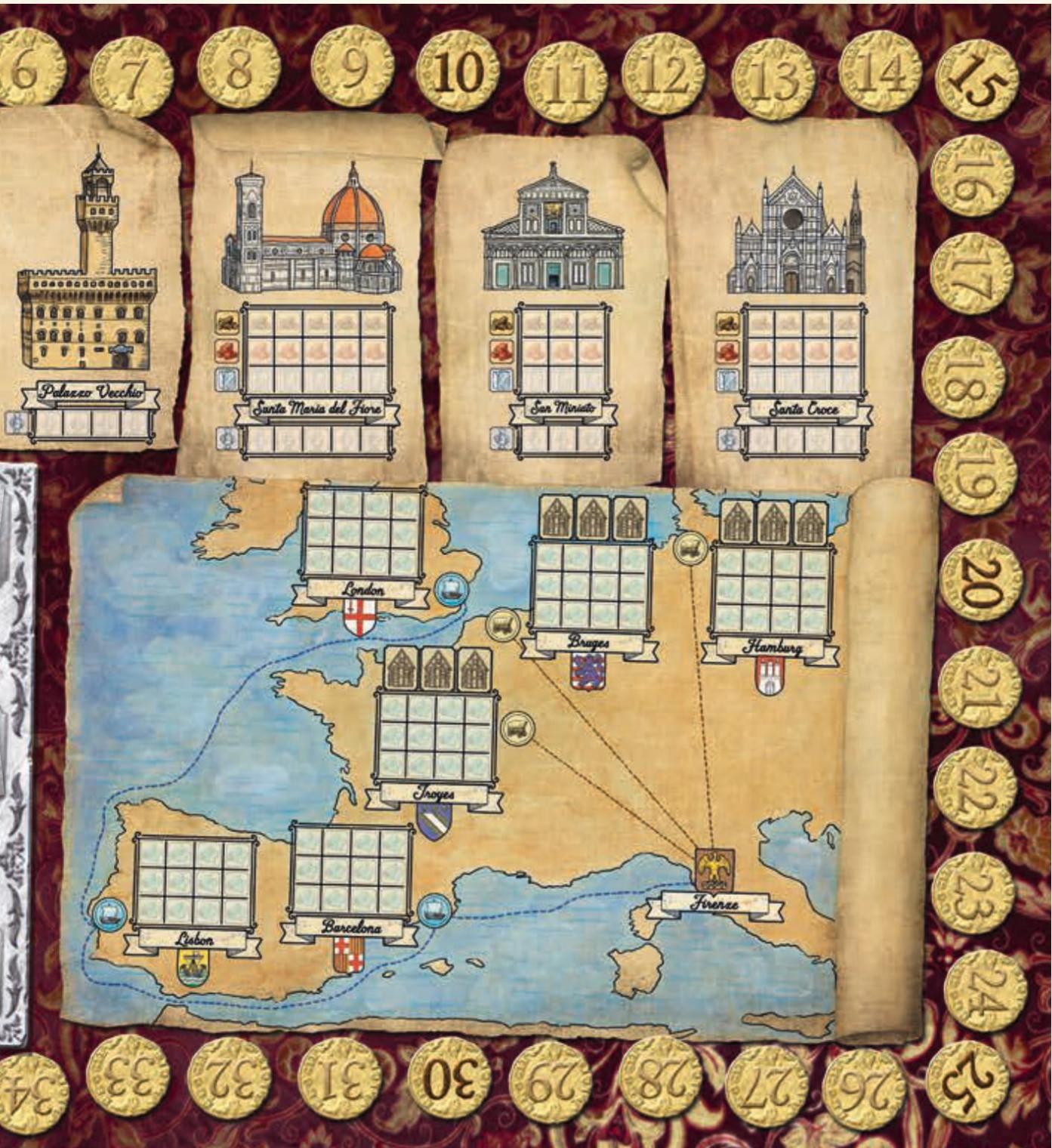
(5) 版图的右下部分是欧洲部分地图, 上面显示着六个城市, 三个贸易城市 (特鲁瓦, 布鲁日以及汉堡) 每个城市有12格贸易站空格, 三个港口城市 (巴塞罗那, 里斯本以及伦敦), 每个城市有12个服饰交付空格。
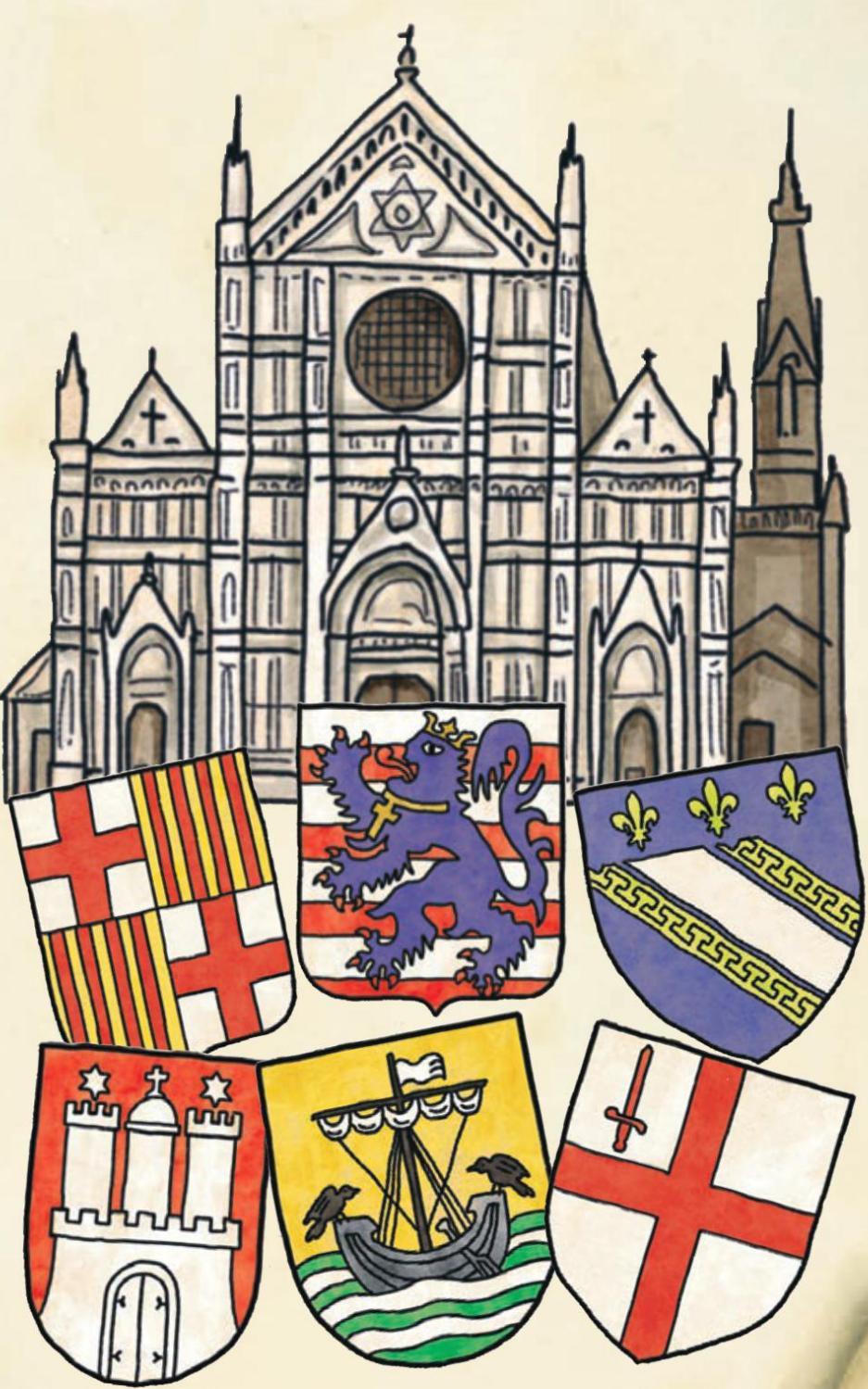
每个城市显示了简化的城市纹章,我们稍微调整色彩以便于玩家可以获得更好的视觉感官。
The Player Mats, Ships
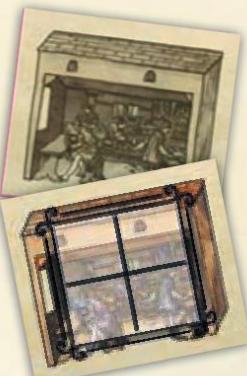
and Workshop Tiles
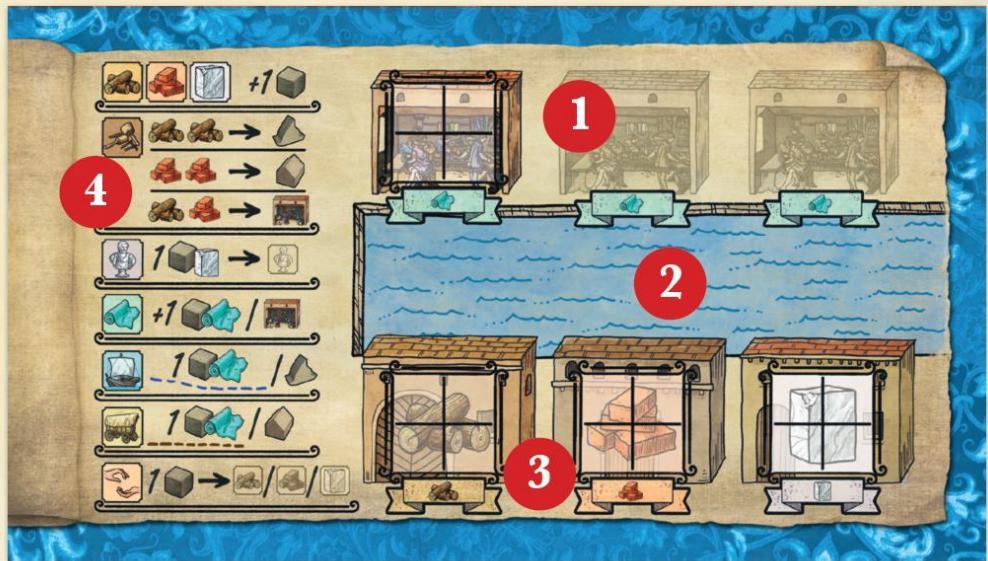
玩家版图主要有4个区域:
(1) 版图右上区域的工坊。每个玩家一开始有一个工坊,在之后的游戏可以建造2个额外的工坊,也就是将工坊板块放在空的工坊格子里。工坊可以生产服饰,每个工坊最多储存4个服饰。
(2) 版图中间区域是用来建造船舶。
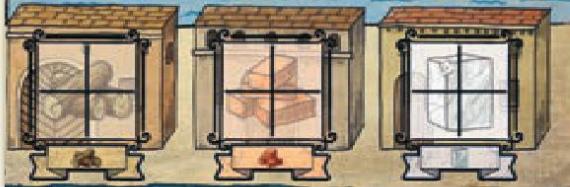
(3) 版图下方区域是仓库,每一个仓库只能存储一种资源(木头,红砖以及大理石)。每当获得资源的时候都摆放在相应的仓库中。每个仓库的容量最大是4.
(4) 版图的左边区域显示着玩家的各种行动。
The Action Cards and Scoring Cards
除了在城市网格上触发行动之外,玩家可以使用行动牌来增加行动。
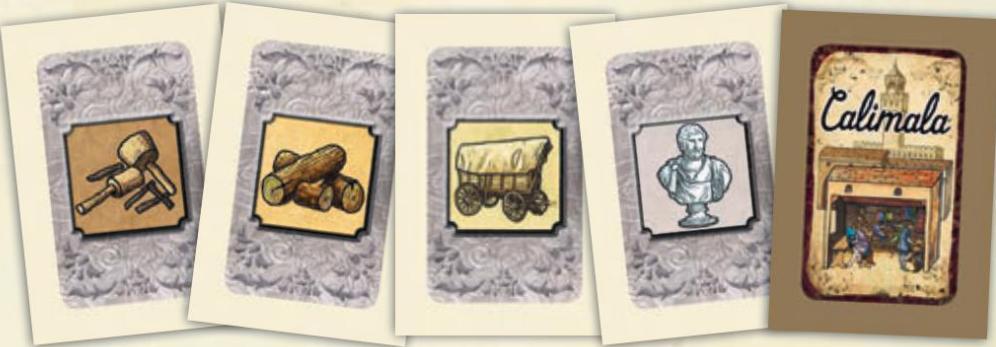
Back side
游戏结束的时候得分牌会给玩家带来额外的得分。
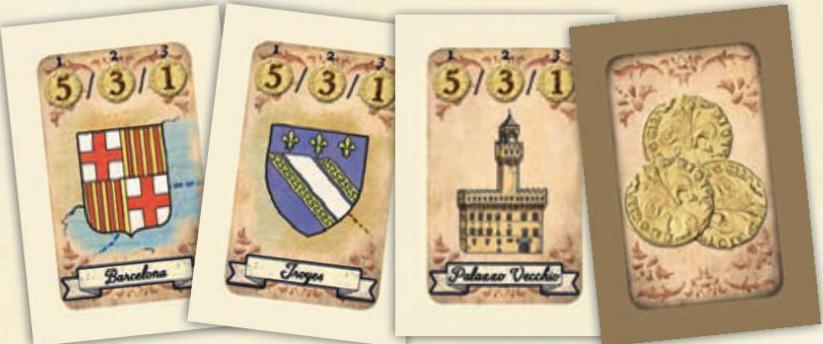
Back side
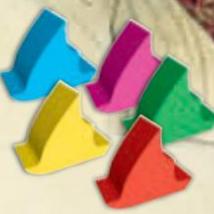
The Wooden Cubes and Active Player Token
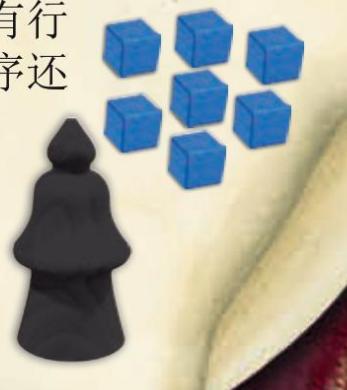
除了船舶和贸易站,玩家还拥有各自颜色的小方块,这些小方块可以用来放在玩家版图的工坊以及仓库,主板图的建筑槽上用来指示相对应位置。每
一轮的得分阶段当轮玩家还是持有行动玩家标志,所以得分阶段的顺序还是相同的。
3 Game Preparations
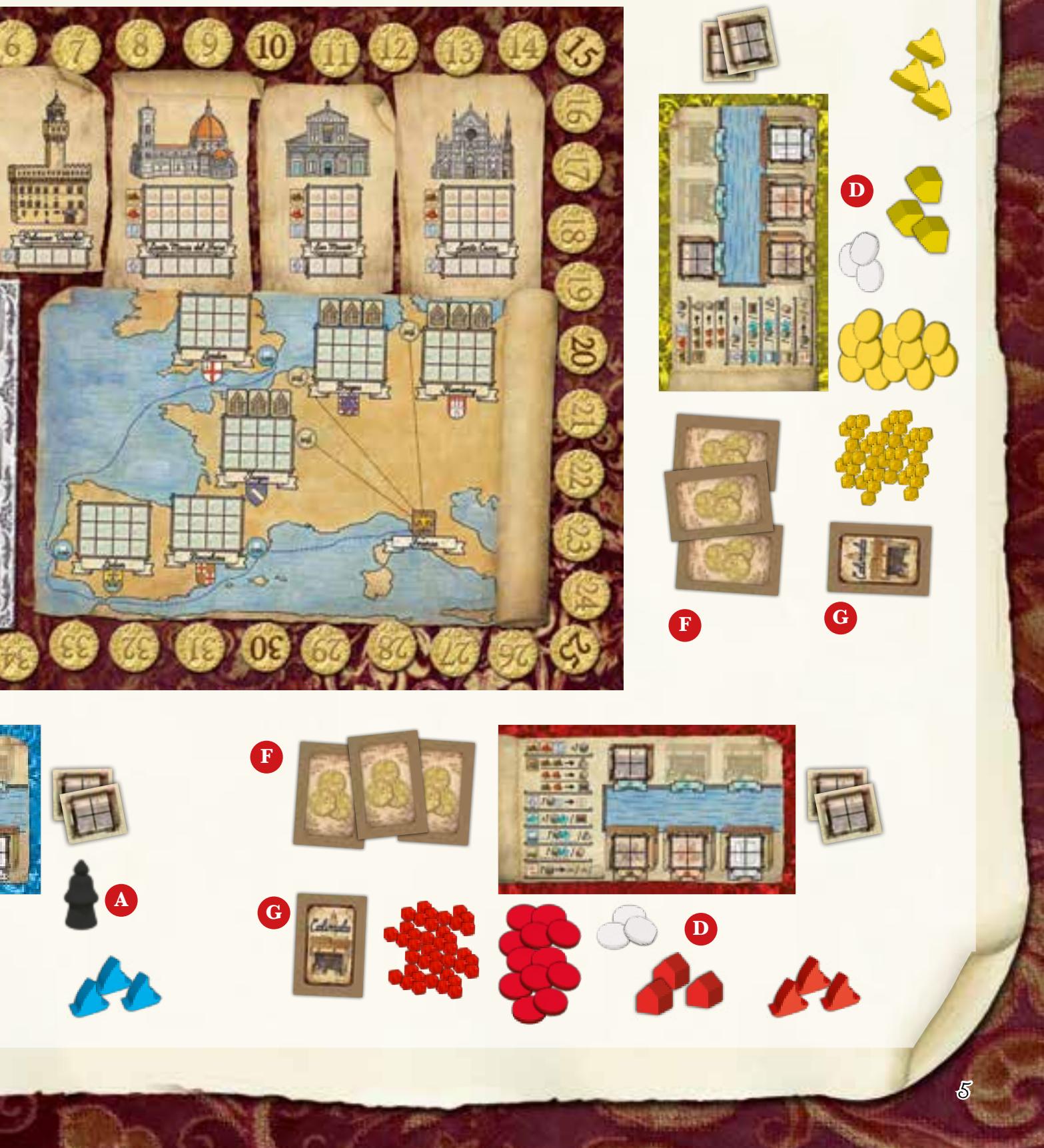
A 最年轻的玩家为起始玩家,他将行动玩家标记摆放在自己面前。
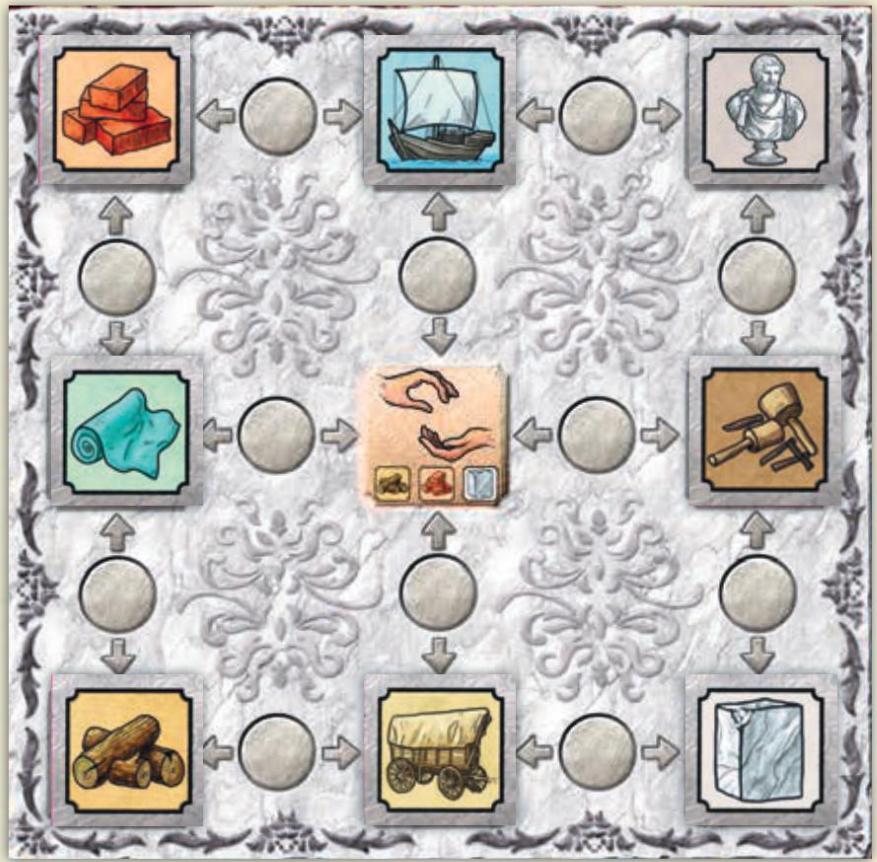
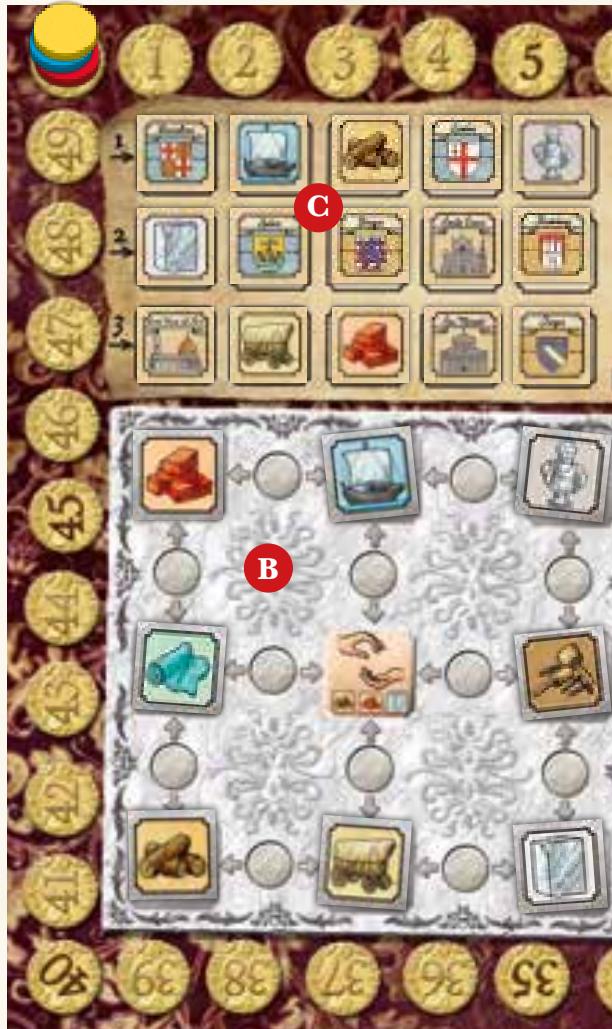
B 洗混8个行动板块,正面朝上随机摆放在城市网格的8个区域。
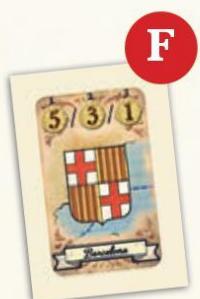
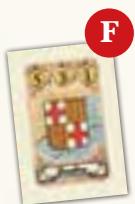
F 洗混得分牌然后按照以下规则分配:
第一次游戏:行动板块如下放置。
3人游戏:每个玩家获得3张牌,剩余的牌正面朝上放在主板图旁。
4人游戏:每个玩家获得2张牌,剩余的牌中一张正面朝上放在主板图旁,其他的放回盒子中,本局游戏将不再用到。
5人游戏:每个玩家获得2张牌,剩余的牌全部放回盒子中,本局游戏将不再用到。
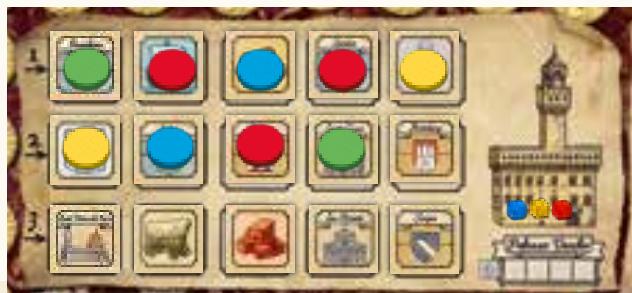
C 洗混15个得分板块,正面朝上随机摆放在维奇奥宫的相应区域。依照从左往右,从上往下的顺序一一摆放。

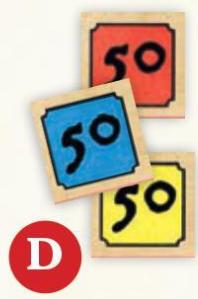
D 每一个玩家得到对应颜色的40个小方块,3个船舶标记,3个贸易站,2个工坊板块。然后将各自的50VP板块放在得分轨的一侧。
接来下,不同人数的游戏将获得不同数量的圆片:
3人游戏:12个玩家颜色圆片,以及3个白色圆片。
4人游戏:10个玩家颜色圆片,以及2个白色圆片。
5人游戏:8个玩家颜色圆片,以及2个白色圆片。
E 然后将一个额外的对应颜色的圆片放在得分轨0的位置。把剩余的圆片放回盒子中本局游戏中将不再用到。
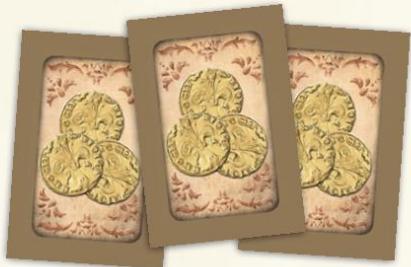
每一个玩家选择其中的一张得分卡牌留下。只有这些的得分牌会在游戏结束阶段被所有玩家结算(3人游戏,有两张面朝下的牌,4人游戏有一张面朝下的牌)。没有被使用的牌会被秘密地放回盒子里,本局游戏不会被使用。这些得分牌的细节请在P11查看。
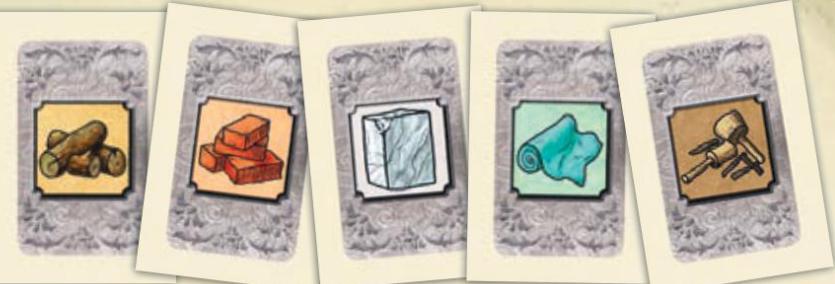
玩家取5种动作牌每一张牌,木头,砖头,大理石,编织,建造。从起始玩家右手边的玩家开始,逆时针拿取一张卡牌。将剩余的卡堆正面朝下放在版图一旁(游戏人数少于5人时包括这些没有被选择的牌)。

4 Sequence of Play
本游戏按照顺时针进行。
玩家每回合选择行动空间并激活行动。根据当前行动玩家的选择其余玩家可以选择激活相同的行动。玩家的回合会在得分阶段被打断。在这个阶段,玩家会获得胜利点。在所有玩家行动了相同的回合后,游戏在得分结束后结束。
Choosing an action space
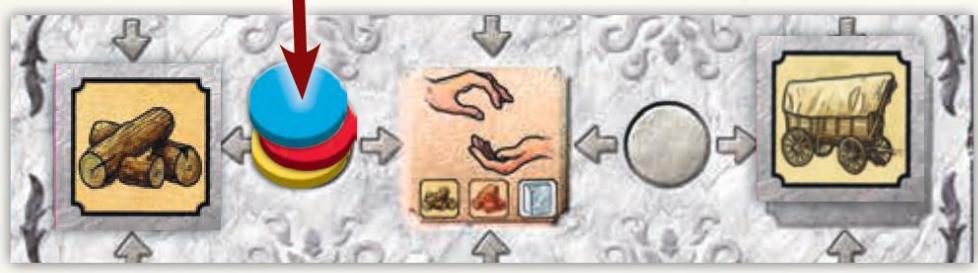
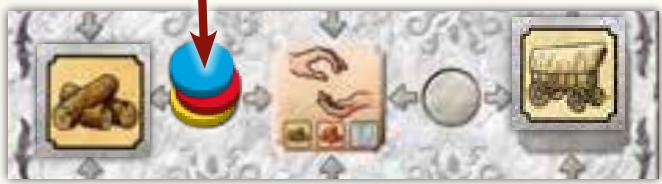
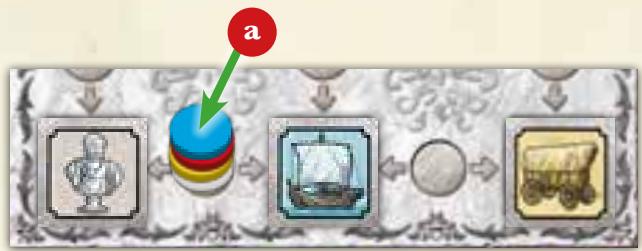
在每一个玩家的回合,当前行动玩家摆放他的圆片在城市网格的行动区域中。以便于他能够执行两个相邻的行动。他可以摆放一个有颜色的圆片或者白色圆片。如果当前玩家选择的行动区域已经存在一个或者多个圆片,行动玩家将圆片放在顶上形成一个圆片堆。一个圆片堆最多只能存在4个圆片;激活行动区域请参看P8。
例如:蓝色玩家将圆片放在红色玩家与黄色玩家已存在的行动区域的顶上,因此他能激活与这个行动相关的两个行动。
行动细节
包括城市网格的行动区域以及行动牌的行动一共有以下9种行动:
+1
木、砖、大理石行动:玩家获得一个木头,一个红砖,一个大理石。
玩家将他颜色的小方块放在玩家版图相应以表示他获得了相应的资源。
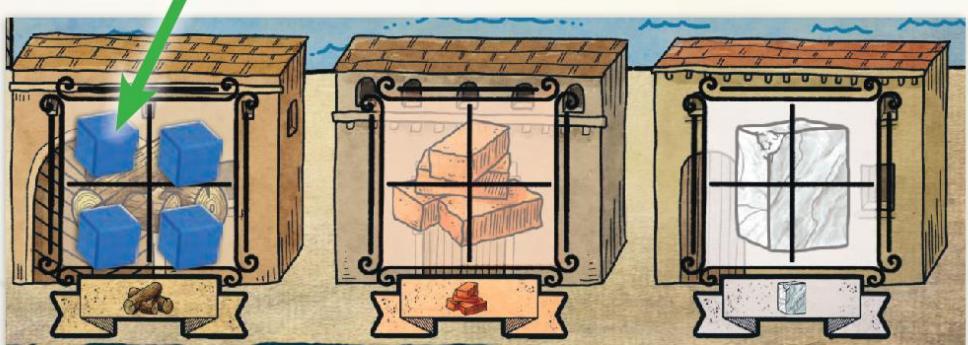
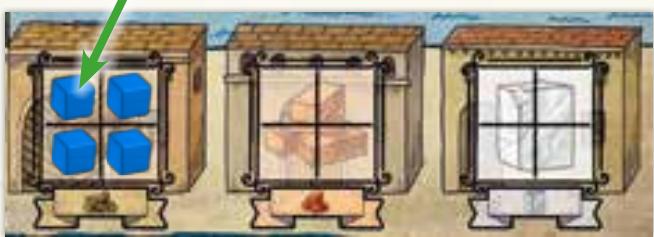
只有当所有的4个区域都已经被填满的时候,玩家抽取一张行动牌。
例如:蓝色玩家执行了木头行动,然后他将的方块放在木头仓库里。现在他的木头仓库里已经被填满了,所以他无法获得这个木头,而是抽取一张行动牌。
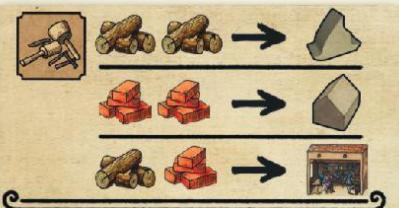
建造行动:玩家建造一个船舶,一个交易站,一个工坊。
- 建造船舶需要消耗2木头,也就是将两个小方块从木头仓库移除放回供应堆。然后将一个船舶标记放在玩家版图的对应区域。
例如:蓝色玩家消耗了2木头,然后将船舶放在玩家版图的对应区域。
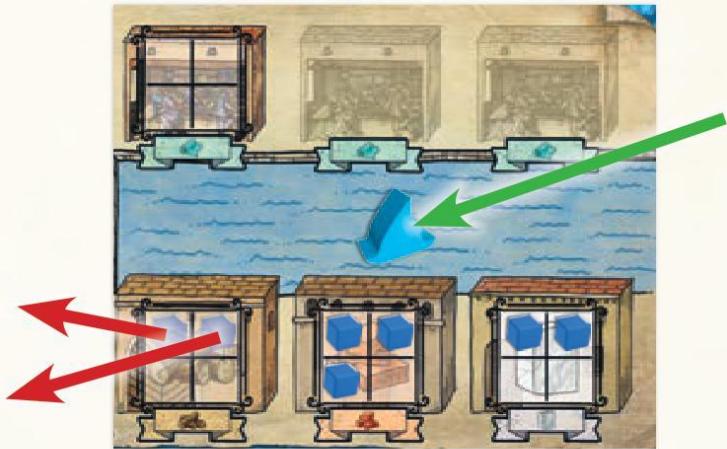
- 建造交易站需要消耗2红砖,也就是将两个小方块从红砖仓库移除放回供应堆。然后将一个交易站放在三个贸易城市的空格上。每一个玩家在一个贸易城市可能没有贸易站。
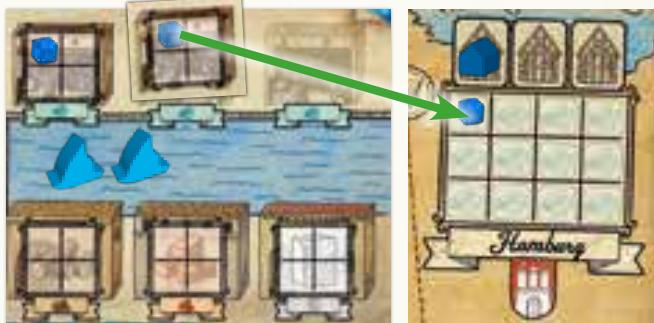
例如:蓝色玩家消耗了2红砖,然后将交易站放在了汉堡的一个空格上。
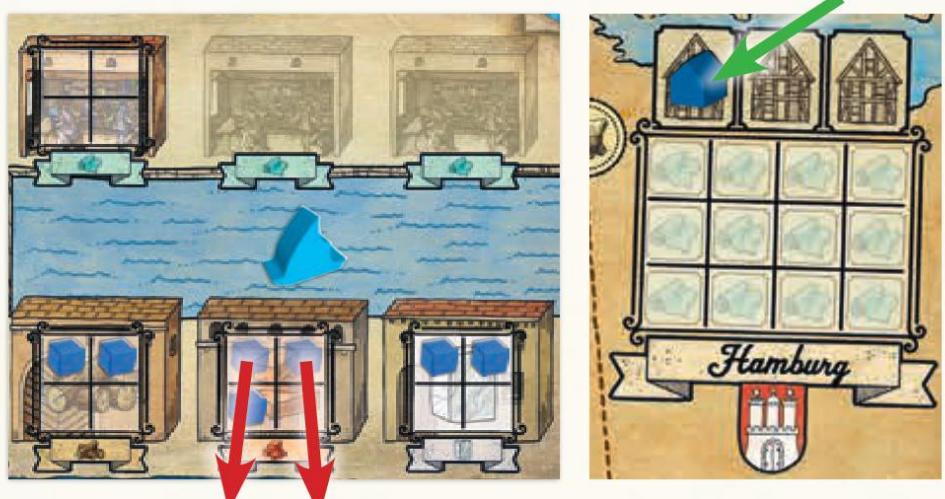
- 建造一个工坊需要消耗1红砖1木头,也就是将一个小方块从红砖仓库以及一个小方块从木头仓库移除放回供应堆。
例如:蓝色玩家消耗1木头1红砖,然后将一个工坊板块放在玩家版图上。
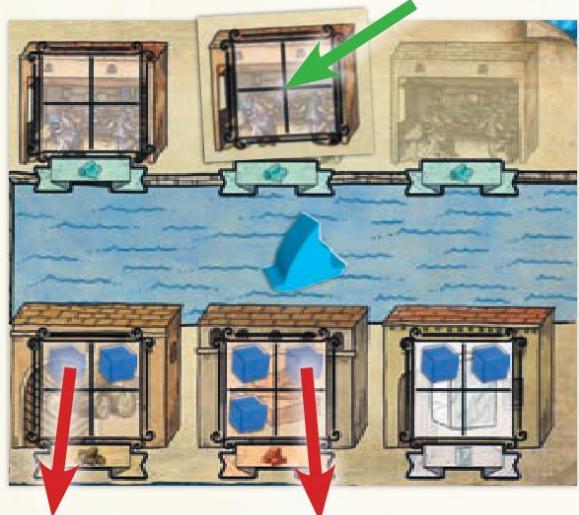
除非一个玩家不能建造上述三种,因为他已经建造了他能够建造的标记以及板块,或者说他没有相对应的资源,他不执行这个行动,而是可以选择抽一张行动牌。
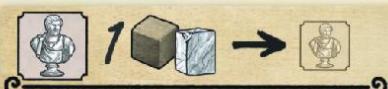
艺术行动:玩家为四个建筑创造一件艺术品。
玩家从他大理石仓库移动一个小方块到一个佛罗伦萨议会旁的维奇奥宫以及其他三个建筑空着的艺术品空格上。
除非他没有大理石,或者建筑物的空格被填满,他不用执行此行动而是抽取一张行动牌。
例如:蓝色玩家移动他玩家版图上的一个大理石方块,然后摆放到建筑物的相对应位置。

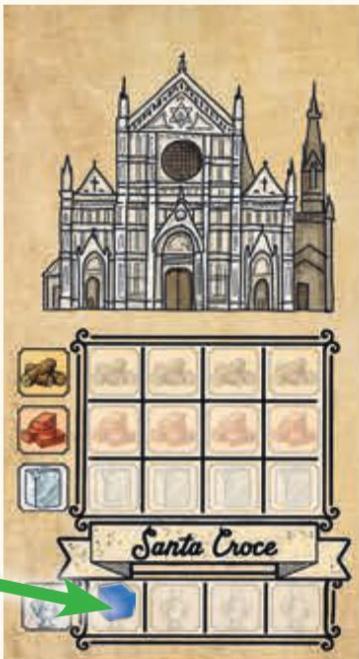

编织行动:玩家在他的工坊里生产一个服饰。
玩家将一个小方块放在他玩家版图上每一个作坊的空格里。这意味着他获得了1服饰。也就是说一旦玩家版图上有两个或者三个工坊板块,通过这个行动能够或者2、3服饰。
除非他工坊已经没有空格了,他可以不执行此行动,而是抽取一张行动牌。
例如:蓝色玩家已经拥有第二个工坊,因此他能获得2服饰,摆放一个小方块在每一个工坊的空格里。
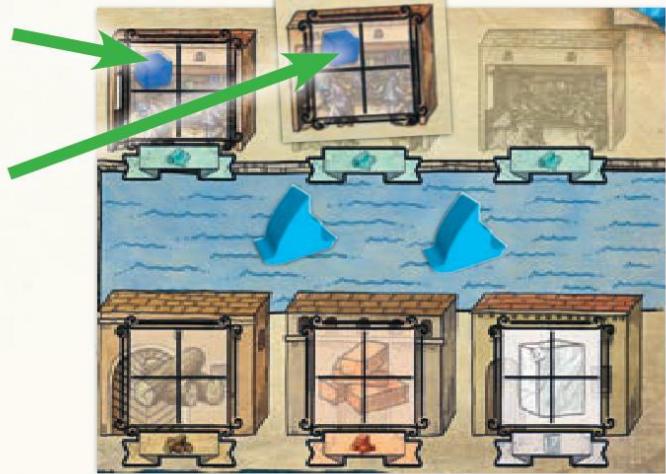
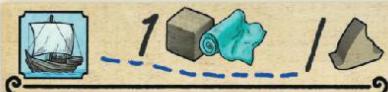
航运行动:玩家运输服饰到港口城市。
玩家根据他拥有几个船舶运输相应数量的服饰到一个港口城市。
-如果港口城市有空格,并且玩家有一定数量的船舶以及有对应数量的服饰,那么玩家可以决定用1、2或3艘船舶来运输服饰。可以送到相同的目的地,也可以不同。运送的服饰数量可以少于船舶数量。
只有当三个港口城市的空格全部被填满,那么玩家可以不执行此行动,而是抽取一张行动牌。
例如:蓝色玩家拥有2艘船舶,他也有相应数量的服饰。因此,他执行此行动将2服饰运送到里斯本。


贸易行动:玩家将服饰运送到贸易城市进行贸易行动。
玩家为每一个他的交易站,从工坊运送1服饰到交易站所在的贸易城市。同样,玩家必须拥有对应数量的服饰,而且可以不全部运送。
只有当三个贸易城市的空格全部被填满,那么玩家可以不执行此行动,而是抽取一张行动牌。
例如:蓝色玩家在汉堡有一所交易站,他决定将1服饰运送到汉堡,因此他从工坊里移动一个小方块到汉堡的空格里。


赞助行动: 玩家为三个建筑赞助物资。(右上部分三座教堂)
玩家从他的仓库移动相对应的物资到三个建筑匹配资源行的空格里,每座建筑都有相对应的木头、红砖以及大理石空格。
只有当所有建筑的空格被填满或者玩家没有相对应的资源时候,他可以不执行此行动,而是抽取一张行动牌。
例如:蓝色玩家赞助圣十字教堂一个木头,他移动他玩家版图木头仓库里的一个方块到此建筑木头行的空格里。


Activating an action space
在摆放圆片到行动区域之后,当前行动玩家可以执行相连两个行动区的行动。他必须执行两个行动中至少一个行动,必要时也可以打出行动牌来执行额外的行动。(玩家不允许摆放一个圆片来抽取两张行动牌;请参考本页右上角)摆放的圆片是圆片堆的最顶部,从上到下最多三个圆片可以执行行动。
- 当前行动玩家执行两个行动。他可以按照任意顺序来执行。
例如:在摆放圆片之后,蓝色玩家选择木头行动以及赞助行动。

- 如果当前行动玩家摆放了一个白色的圆片,那么他可以执行相连接的两个行动区的行动2次,可以按照任意顺序来执行也就是说可以是:AABB或者ABAB或者ABBA等皆可。
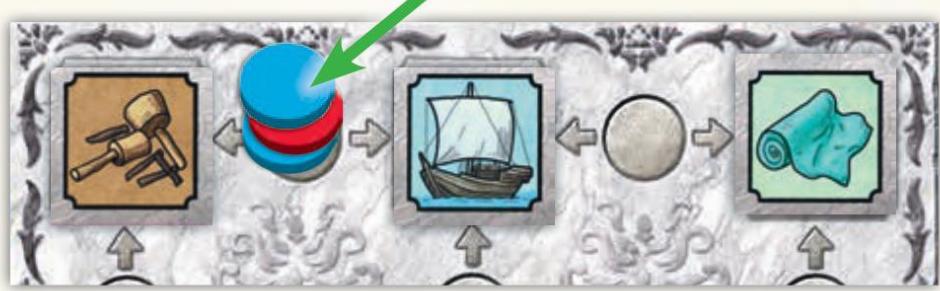
例如:蓝色玩家摆放了一个白色圆片到行动区域,那么他可以执行相连的两个行动区的两个行动两次。首先,他执行了两次木头行动,然后他执行2次赞助行动,将2木头赞助给圣米尼亚托教堂。
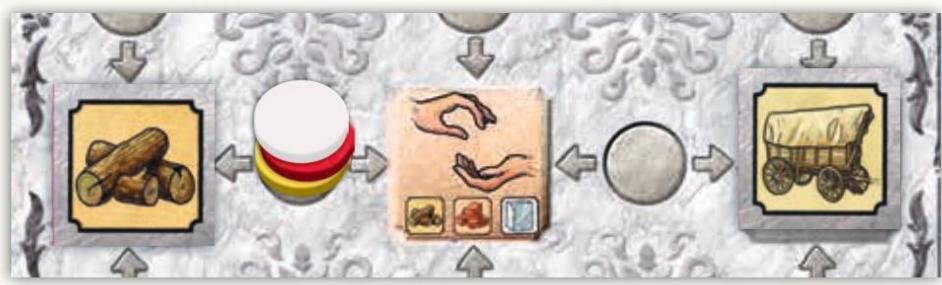
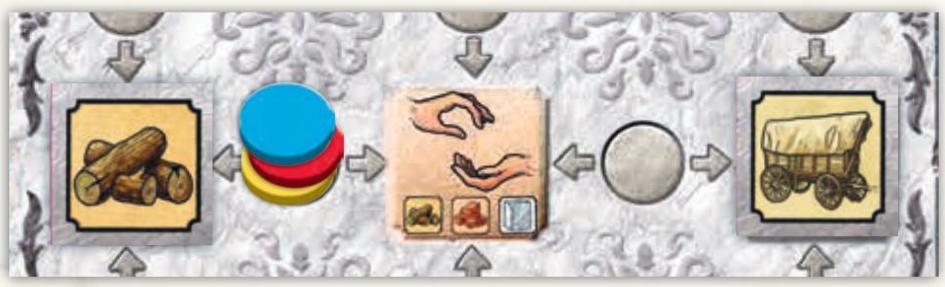
·之后,在当前玩家摆放的圆片堆,第二个和第三个圆片是哪一个玩家的,那么这两个圆片的玩家依次激活行动。行动的规则与当前玩家相同。白色圆片不属于任何玩家。
注意:玩家颜色的圆片一旦摆放下去,那就意味着这个圆片可以被激活3次,也就是说使用得当可以给玩家带来6个行动。而白色圆片只会一次性个玩家带来4次个行动。
例如:在蓝色玩家执行了2个行动之后,下面那个圆片是红色玩家的,所以他激活行动,选择执行一次木头行动以及一次赞助行动。
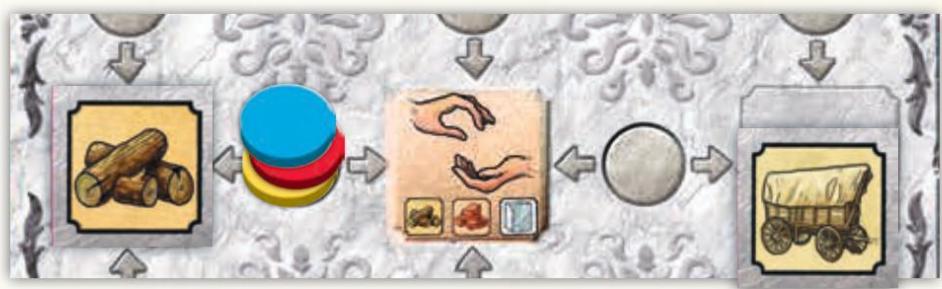
- 只有当玩家完全不能执行任何动作时,他才会抽取一张行动牌作为补偿。如果拥有第二张或第三张圆片的玩家不能同时执行这两项行动,那么是可以抽取两张行动牌的。
如果玩家决定自愿跳过激活的动作,或者部分执行动作,那么不会抽取行动牌。玩家的行动牌对其他玩家不公开,只有他们手中的行动牌数是公开的。
例如:现在不是当前玩家的红色玩家执行行动,而且没有任何资源,但是他决定先选择赞助行动(他不能执行此行动,所以只能抽取一张行动牌),然后再选择木头行动,获得1木头。
例如:蓝色玩家摆放他的一个圆片到一个行动区域。但是他没有大理石因此不能执行艺术行动,因此他抽取一张行动牌然后再执行红砖行动,得到1红砖。

·在执行激活行动的时候,玩家也可打出一定数量的行动牌,可以在执行行动的之前或者之后。打出的行动牌要求玩家至少能够执行它。如果不能执行行动牌上的行动,那么不能打出这张行动牌。玩家不能丢弃或者替换他不能使用的行动牌。已经使用过的行动牌会被丢弃,正面朝上形成一个弃牌堆。如果行动牌堆最后一张牌被抽出,那么立即洗混弃牌堆,形成新的行动牌堆。
此例子太长,翻译糊涂。大致意思就是能够打出行动牌来使得COMBO更好的进行,因为蓝色玩家可以在这个行动轮行动两次。
- 在圆片堆三个圆片的行动都执行完之后,当前玩家将行动玩家标记交给下一个玩家。
例外:当行动圆片堆有第4个圆片的时候,此回合会被得分阶段打断,详情请见下文。
Scoring Phases
本游戏一共有15个得分阶段以及加上游戏结束时的1个得分阶段。
当激活行动圆片堆有4个圆片的时候,在3个圆片的行动结束之后,游戏进入得分阶段。
第四个圆片不执行行动。这个圆片的持有者将这个圆片移动到佛罗伦萨市议会一个格子里,并触发得分。这个玩家的圆片在市议会里被称之为市议会座位。
例如:在三个圆片行动之后,蓝色玩家将他的圆片移动到市议会。

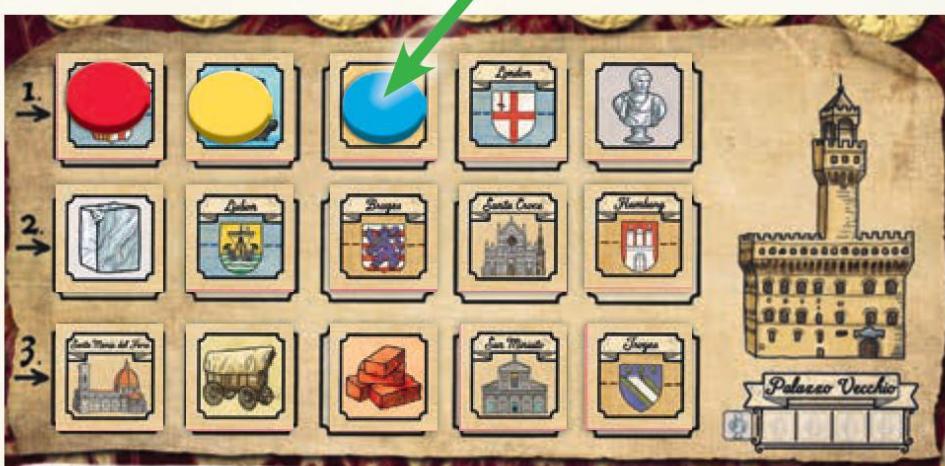
市议会顺序:玩家将他的圆片按照顺序放在市议会的得分板块上。从左到右,从上到下摆放。也就是,左上角是第一个,右下角是最后一个。
例如:蓝色玩家将他的圆片移动到市议会。在这之前红色和黄色玩家都已经移动过了,蓝色玩家将他的圆片放在第三列的第一格,然后触发得分。
如果第四个圆片是白色圆片,那么当前行动玩家将他储备区的一个圆片与其交换。他将他的圆片移动到市议会,然后将白色圆片放入他的储备区。如果他已经用完了他储备区所有他颜色的圆片,那么他可以从别的行动区域将一个他颜色的圆片移动到市议会的得分板块上。之后,将这个白色圆片放在哪个圆片堆的顶部以保证圆片堆的数量不会发生改变。
在得分阶段结束后,当前行动玩家将行动玩家标记传递给下一个玩家。
得分板块的细节
对于不同类别的得分板块,玩家分别统计他们的方块。

城市:玩家统计对应城市玩家服饰方块的数量。

建造中的建筑:玩家统计对应建筑中木头、红砖、大理石以及艺术品方块的数量。

艺术品:玩家统计三个建造中建筑以及维奇奥宫里艺术品方块的数量。
港口城市:玩家统计三个港口城市(巴塞罗那、里斯本以及伦敦)的服饰数量。
贸易城市:玩家统计三个贸易城市(特鲁瓦、布鲁日以及汉堡)的服饰数量。
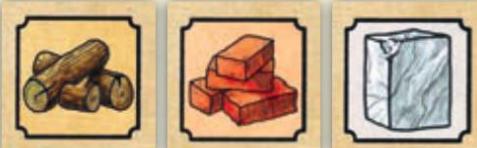
赞助:玩家统计三个建造中建筑里相对应类别的资源的数量。
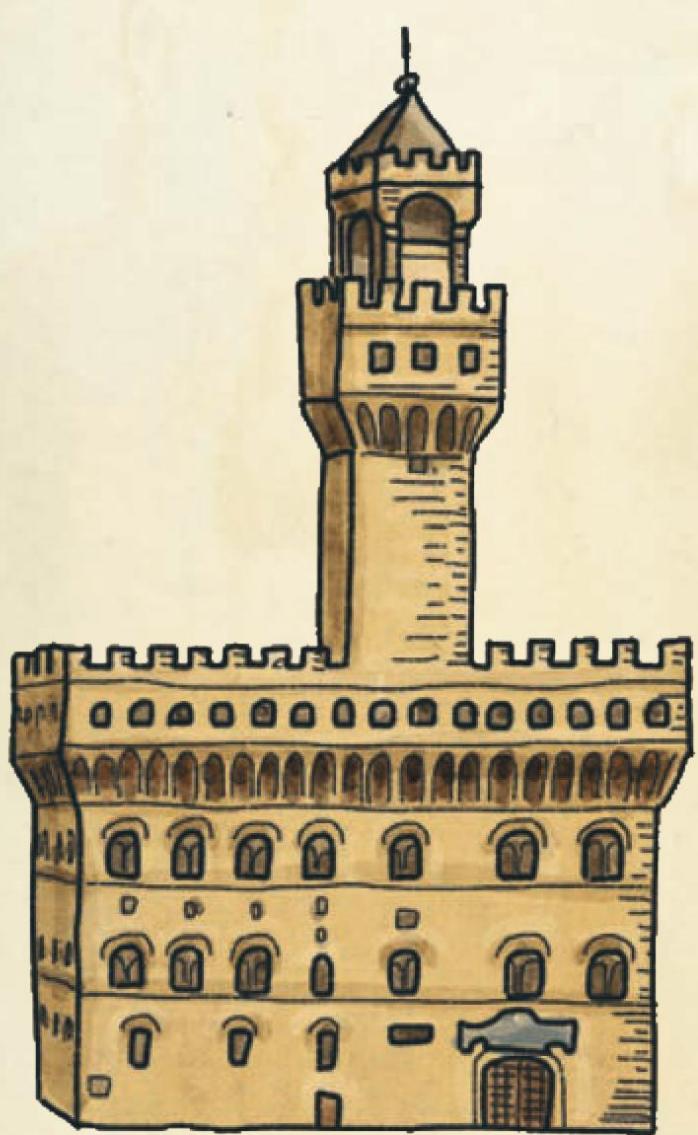
统计方块数量最多的前三名玩家将获得VP奖励:
- 最多的玩家获得3VP。
- 第二多的玩家获得2VP。
- 第三多的玩家获得1VP。
·统计中没有小方块数量的玩家不会获得任何奖励。
- 如果数量相同的情况下,平手的的玩家统计他们在市议会的座位数量以及维奇奥宫艺术品的数量。
o 维奇奥宫艺术品数量以及市议会座位数量相加多的玩家是胜者。
在数量相同的情况下,市议会座位数量多的玩家取胜。
如果座位数量也是相同,那么位置先的玩家获胜。
o 如果玩家在市议会都没有座位,那么先赞助艺术品的玩家获胜。
o 如果玩家都没有赞助艺术品,那么他们均分VP(余数舍去)。
例如:红色玩家有3个座位,然后在维奇奥宫捐献了一个艺术品,所以他在平手中胜出。
黄色玩家也赢了蓝色玩家,因为他的座位在蓝色玩家之前。
绿色玩家是第四名,他座位与艺术品相加的数量是最少的。

如果玩家的得分超过了50VP,那么玩家获得一张50VP的牌放在玩家版图旁。

5. Game End & Final Scoring
当发生下列情况的一种游戏结束:
- 玩家将他所有的圆片摆放到城市网格中,包括玩家颜色的圆片以及白色圆片。在这种情况下玩家结算市议会剩下的所有得分板块。(不添加座位)
·玩家激活了所有15个得分板块。在这种情况下,结束当前游戏轮次(每个人都行动过叫一轮),直到所有的玩家摆放下相同数量的圆片。由于市议会已经没有座位了,所以这个轮次中第四个圆片都会从游戏中被移除。
在这之后,所有玩家显示他们的得分牌,并进行相对应的得分。(3人4人游戏时,还要结算主板图旁已展示了的得分牌)
·每张得分牌显示六个城市(特鲁瓦、布鲁日、汉堡、巴塞罗拉、里斯本以及伦敦)中的一个或者四个建筑(维奇奥宫、圣母百花大教堂、圣米尼亚托教堂以及圣十字教堂)中的一个。
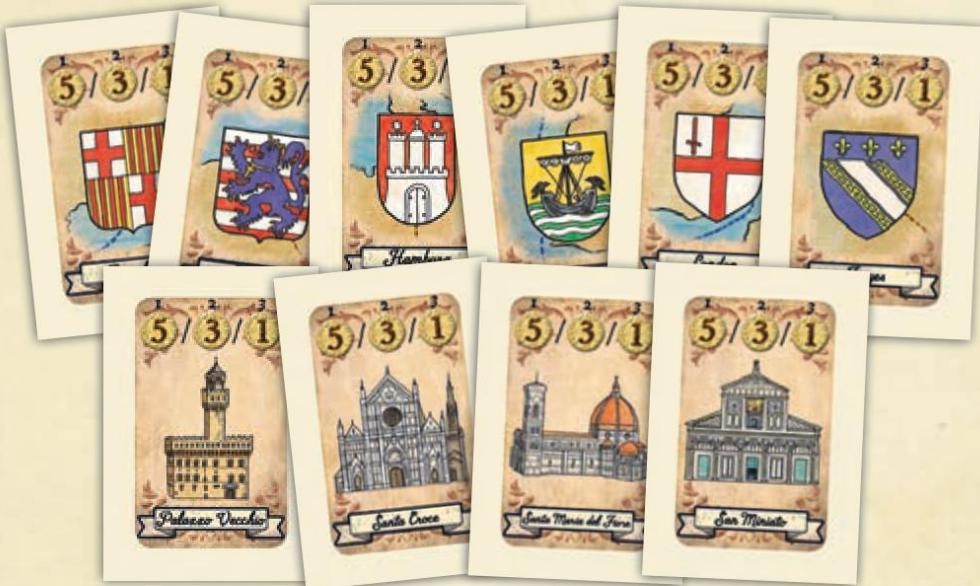
玩家统计相应城市或者建筑中方块的数量。对于维奇奥宫的得分统计,需要统计的是市议会座位的数量以及维奇奥宫中艺术品数量相加。
o 数量最多的玩家获得5VP。
o 数量第二多的玩家获得3VP。
o 数量第三多的玩家获得1VP。
- 关于平手的判定详情请见P10。
在所有得分牌结算完之后,得分最高的玩家获得游戏的胜利。如果平手,那么维奇奥宫以及佛罗伦萨市议会平局判定的获胜者是胜利者。
An extended example of a player turn:
CHOOSING AND ACTIVATING AN ACTION SPACE
Marion begins her turn by placing one of her blue discs on top of the stack on the action sspace connected to the Artwork and Ship action (a).

Marion has one cloth cube in each of her two workshops, two marble cubes in the warehouse and two ships in her port. She has an artwork action card and a wood action card in her hand.
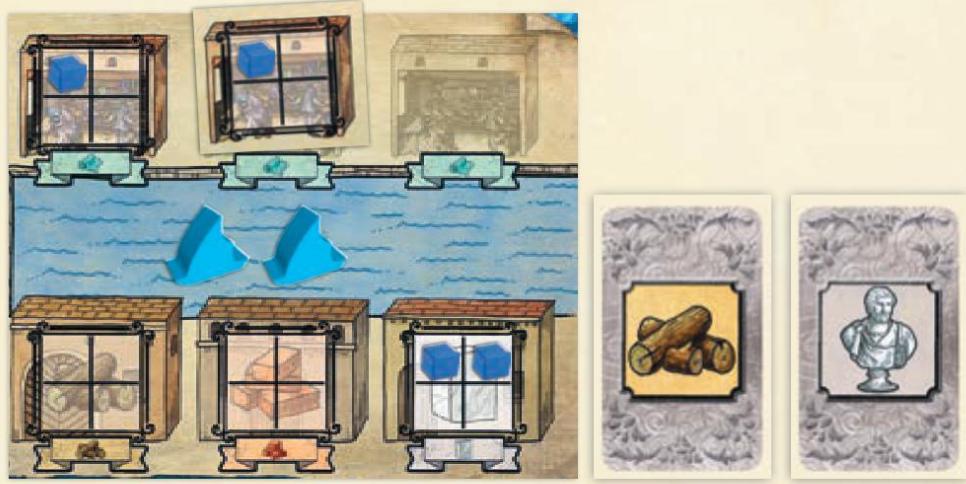
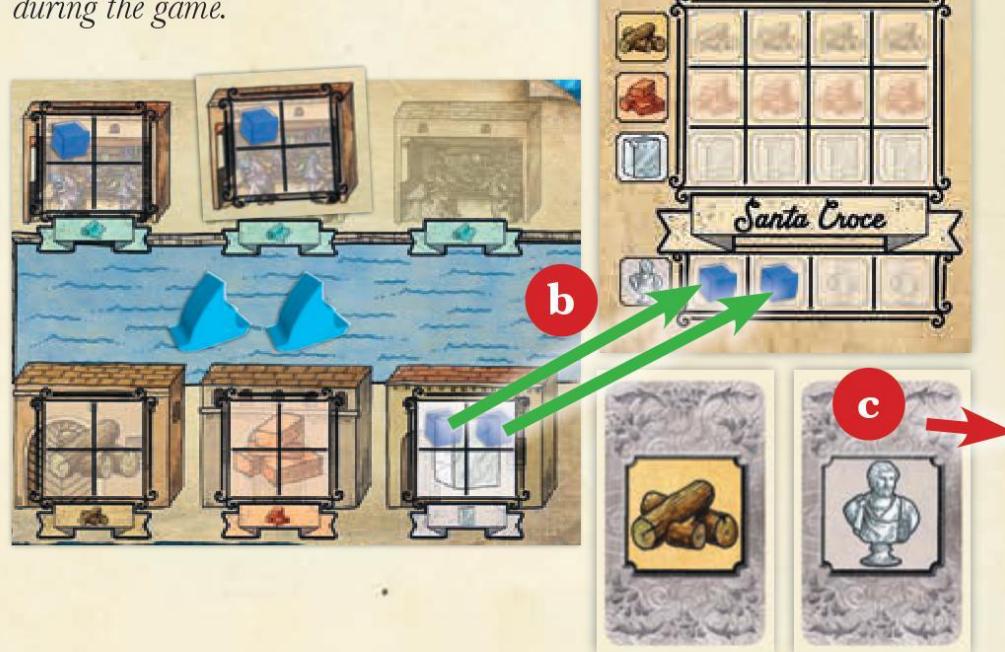
First, Marion conducts the Artwork action. She takes one marble cube from her warehouse and moves it to the matching row at Santa Croce (b).
Afterwards, Marion plays the Artwork action card from her hand and moves the second marble cube to Santa Croce, too (c). Both Santa Croce and all artworks will be scored later during the game.
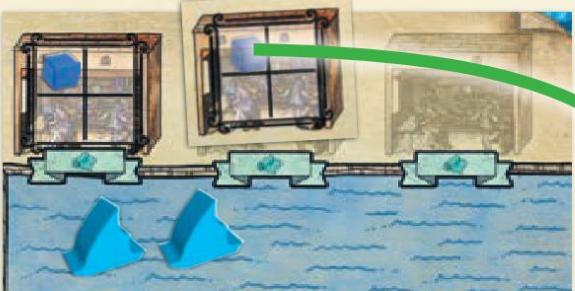
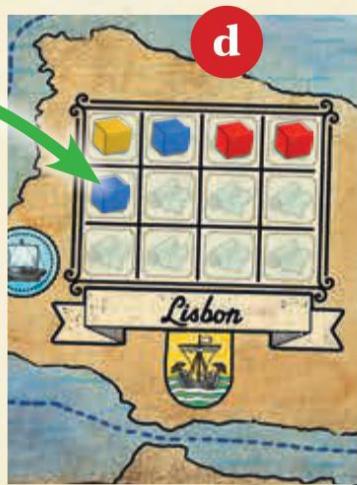
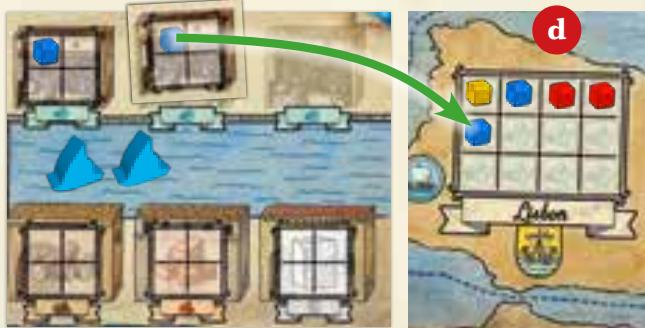
Finally, Marion conducts the Ship action. With two ships and two cloth cubes she may do up to two deliveries to any port cities. She decides to only deliver one cloth cube to Lisbon (d), so that there are now one yellow, two blue and two red cloth cubes.
Now, Angelika activates her red disc in the stack. She has a workshop, two ships in the port, one marble and one stone cube in her warehouses, a Build action card and a trade house in Troyes.
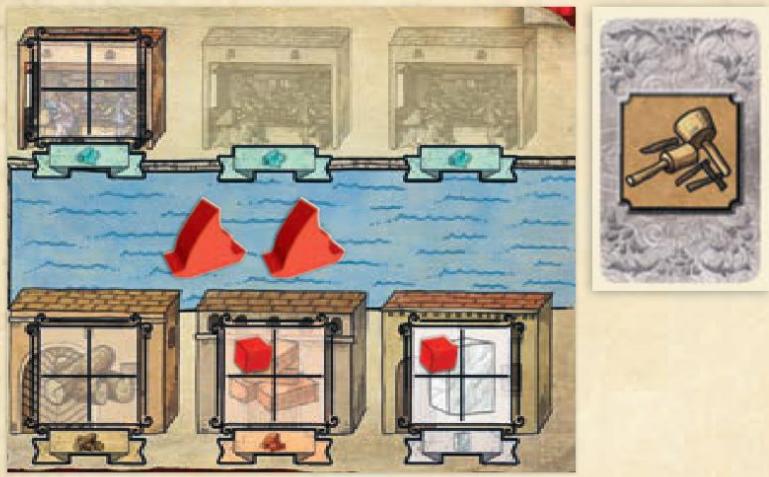
First, Angelika conducts the Artwork action and moves a marble cube from her warehouse to San Miniato.
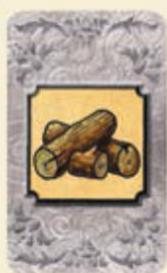
Angelika does not have any cloth cubes in her workshop, so she cannot conduct the Ship action. Instead she draws an action card and gets a Wood action.
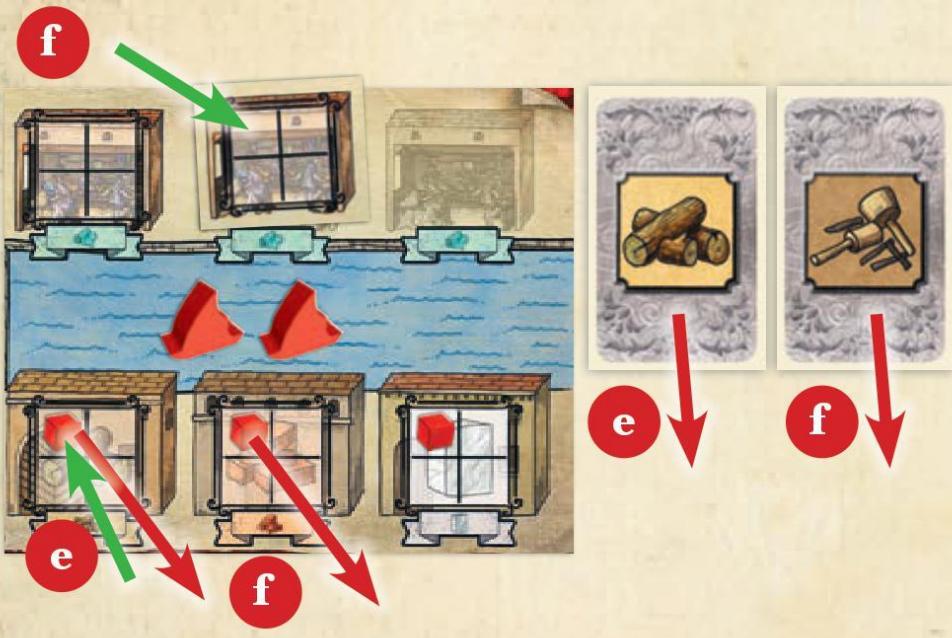
Angelika immediately plays this Wood action card (e) and now has a wood and stone cube in her warehouses. She plays her Build action card and places both cubes back into her reserve to build a workshop (f).
Finally, Tanja activates her disc in the stack. She has no marble or cloth cubes and cannot conduct both actions. Instead, she draws two action cards, which she saves for a later turn.
SCORING PHASE
There are four discs in the stack on the action space. Thus, the players interrupt the player turn for a scoring phase, after activating the top three discs of the stack.
There is a white disc at the bottom of the stack. White discs may never be transferred to the city council. Therefore Marion exchanges that disc for one of the blue discs from her reserve (g) and places it on the scoring tile for Lisbon (h).

Now, the players score Lisbon!
Angelika and Marion both delivered two cloth cubes to Lisbon, Tanja delivered one cloth cube. Marion has more seats in the city council, so she wins the scoring and receives 3 victory points, while Angelika receives 2 and Tanja 1 victory point. All players adjust their points with their discs on the scoring track.
Calimala Merchants of Florence

Copyright 2017 ADC Blackfire Entertainment GmbH, Weidenweg 69, D-47059 Duisburg
AUTHOR: Fabio Lopiano
DEVELOPMENT: Henning Kröpke, Uli Blennemann
GRAPHICS: Harald Lieske
LAYOUT: Filip Stránský
Download MarkdownSH Games Calimala_Rules small 2018 1.md32.6 KB
A game by Fabio Lopiano
Calimala
Merchants of Florence

Rulebook

Calimala
Merchants of Florence
A game by Fabio Lopiano
Content
- INTRODUCTION.
- COMPONENTS .
- GAME PREPARATIONS .
- SEQUENCE OF PLAY
- GAME END & FINAL SCORING.. . .. 10
1Introduction
The Arte di Calimala, the guild of cloth finishers and merchants in foreign cloth, was one of the greater guilds of Florence, who arrogated to themselves the civic power of the Republic of Florence during the Late Middle Ages.
The woolen cloth trade was the engine that drove the city's economy and the members of the Calimala were the elite of Florence.
Throughout its long history, the Arte di Calimala supervised the execution of artistic and architectural works. Most Florentine guilds performed such activities, but the Calimala distinguished itself from other guilds through the number and prestige of the projects and the sites administered, including the construction and decoration of some of the major churches of the city.
In this game, the players act as members of the guild, produce and trade cloth, and gain prestige by delivering their goods to foreign markets, contributing to the construction of buildings and sponsoring art works around the city.
The players assign their trusted employees to various streets within the city to carry out actions. Employees stay at their assigned locations for a while, carrying out their actions whenever the street is activated again by other employees, and eventually are promoted into the city council, triggering a scoring phase.
2 Components
Each copy of Calimala contains the following components.
1 game board
8 action tiles
15 scoring tiles
55 cards (45 action cards, 10 final scoring cards
5 player mats
65 wooden discs (13 each in five players colors)
e 200 wooden cubes (40 each in five player colors)
HgJ 15 wooden ships (3 each in five player colors)
15 wooden trade houses (3 each in five player colors)
10 workshop tiles
XLm 1 active player token
10 white wooden discs
5“50” victory points tiles
n 1 rulebook
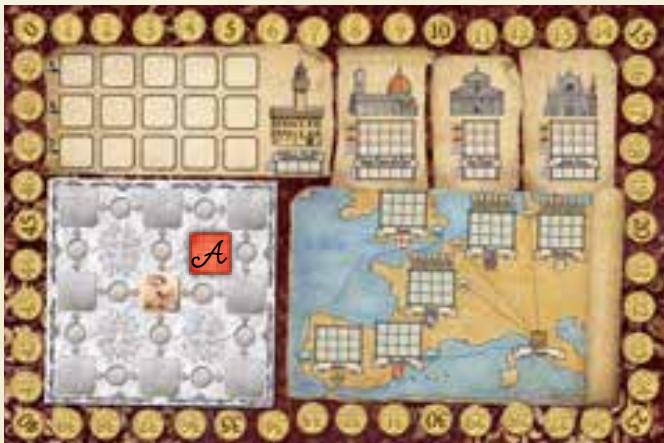

The Game Board, Action Tiles, and Scoring Tiles plus Trade Houses
The game board (see below) contains four main areas plus a scoring track (1) around it.
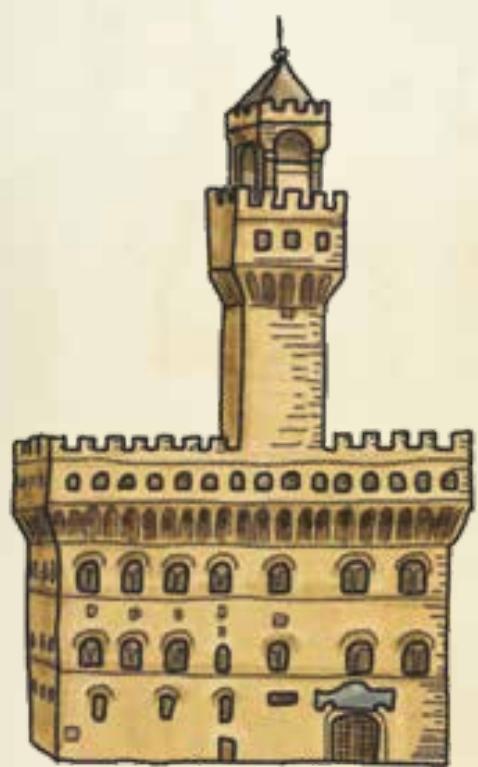
On the top left side of the board is the Palazzo Vecchio (2) − the city council of Florence. It has 15 slots for the scoring tiles and four slots for artworks sponsored by the players. This area triggers the scoring phases and breaks any ties between the players.
Back side

Back side
On the bottom left of the board is the city grid (3) with the 8 slots for the action tiles. Streets always “connect" two action slots, and each street contains a round action
space where the players will place their wooden discs when taking actions.
On the top right side of the board are three buildings under construction (4) showing slots for contributions: the cathedral of Santa Maria del Fiore with 15 slots, the church of San Miniato with 9 slots, and the church of Santa Croce with 12 slots. Each building also has several slots for artwork (respectively five, three, and four slots).

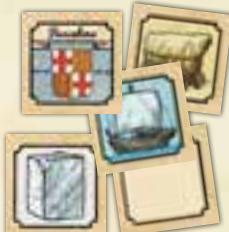
On the bottom right side of the board is a map with parts of Europe showing six cities (5): three trade cities with slots for trade houses (Troyes, Bruges, and Hamburg) and three port cities (Barcelona, Lisbon, and London). Each
city has 12 slots for the delivery of cloth (cubes). The cities show simplified “city coat of arms". We slightly adjusted the historical color schemes for a better visualization during play.
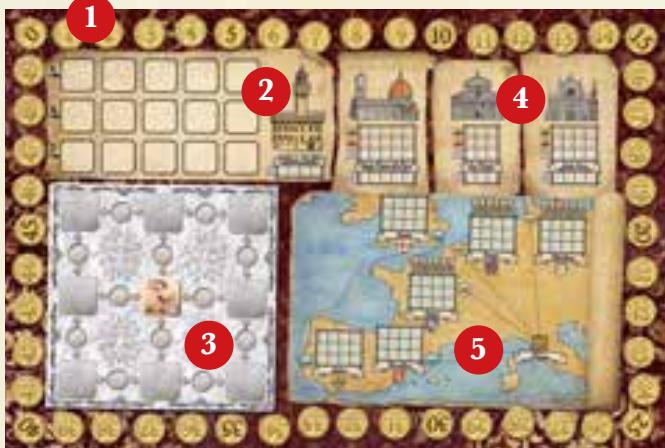
The Player Mats, Ships, and Workshop Tiles
The player mats consist of four main areas:
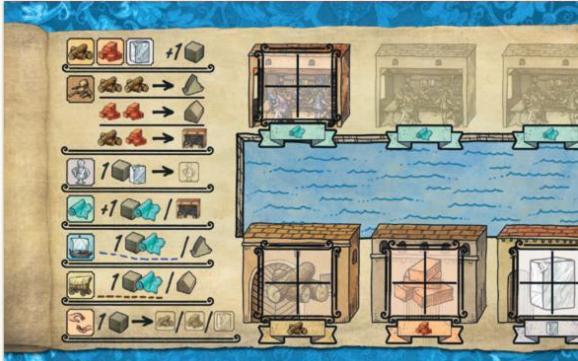
Workshops (1) are in the top right. Each player starts with one workshop and can build up to two additional ones by placing the workshop tiles on the empty slots. Workshops produce cloth cubes and each one stores up to four cloth cubes.
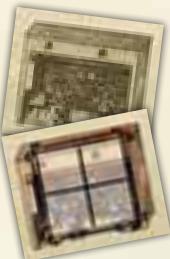
The port (2) is in the center of the mat. Here the players may build ships.
Three warehouses (3) are at the bottom right, each can store one resource type (wood, bricks, and marble). When acquiring these resources, cubes in the player's color are placed in an available slot of the corresponding warehouse. Each warehouse may hold a maximum of four cubes.
On the left side of the mat, the player aid (4) briefly lists the available types of action.

The Action Cards and Scoring Cards
The players will use action cards during the game in addition to the actions triggered on the city grid.

Back side
At the end of the game, the players score additional points for the scoring cards

Back side
The Wooden Cubes and Active Player Token
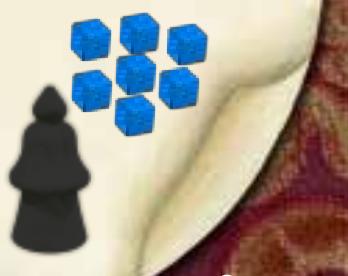
Besides ships and trade houses, the players also have wooden cubes in their player colors. They use them to mark different resources and cloths of the warehouses and workshops on
their player mats and the slots of the
During the game, the player taking his turn always has the active player token, so players do not lose track of the player order when they carry out the scoring phases.

O3 Game Preparations
The youngest player will be the starting player. He takes the active player token and places it in front of himself.
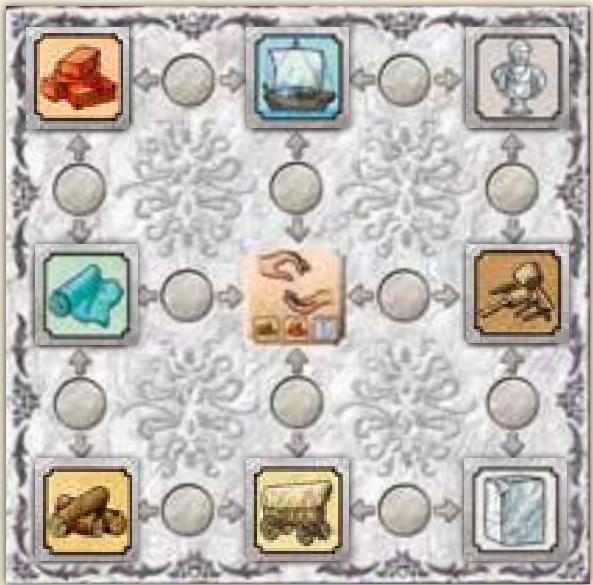
One player shuffles the 8 action tiles and places them B randomly, face up, on the corresponding slots of the city grid.
First game: A player arranges the action tiles in this way:
F A player shuffles the scoring cards and deals them as follows:
• 3 players: Each player receives 3 cards, the remaining card is placed face up next to the board.
• 4 players: Each player receives 2 cards, one of the remaining cards is placed face up next to the board, the other is placed face down back into the game box.
• 5 players: Each player receives 2 cards. No card is placed face up next to the board.
One player shuffles the 15 scoring tiles and places them randomly, face up, on the corresponding slots of the city council (Palazzo Vecchio). He starts to place them in the top row and in each row from left to right.
Each player takes a player mat and the following
D components in the player color of his choice: 40 cubes,
3 ships, 3 trade houses, and 2 neutral workshop tiles. He
places the “50” victory points tile next to the scoring track.
Depending on the number of players, each player also takes:
• 3 players: 12 discs in the player color of his choice and 3 white discs
• 4 players: 10 discs in the player color of his choice and 2 white discs
• 5 players: 8 discs in the player color of his choice and 2 white discs
E Each player places an extra colored disc on space “0” of the scoring track. The players put surplus discs back into the game box.

E


Each player secretly picks (and keeps) one scoring card. Only these cards (and, with 3 or 4 players, the face up scoring card next to the board) will be scored at the end of the game for all players. The cards that have not been picked are placed back face down in the box, without being revealed. For details on the scoring cards please check page 11.
The players place one copy each of the following 5 action cards face up on the table: Wood, Brick,
Marble, Weave, and Build. Each player, starting with
the player sitting to the right of the starting player and
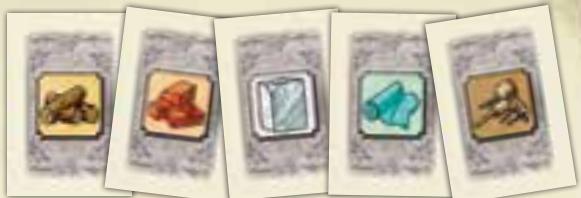
continuing in counterclockwise order, takes one of these cards in his hand. Each player begins with one action card. The players shuffle the deck of remaining action cards (in games with less than 5 players include the action cards not chosen) and place it face down next to the game board.
4 Sequence of Play
Calimala is played via player turns in clockwise order.
The players take turns by choosing and activating different action spaces. Depending on the choice of the active player, the other players may activate the same actions, too. During the game, player turns are interrupted by scoring phases. At that time, the players receive victory points. The game ends with a final scoring after all players have taken the same number of turns.
Choosing an action space
In each player turn, the active player places one of his discs on an action space of the city grid, so that he is able to conduct the two “connected" adjacent actions. He may choose to place a colored disc or one of his white discs. If there are already one or more discs on the chosen action space, the active player places the new disc on top, forming a stack. A stack of discs may consist of a maximum of four discs; see Activating an action space on page 8.
Example: Marion places one of her blue discs on the action space on top of Angelika's red and Tanja's yellow disc, so she can conduct the two actions connected to this action space.
THE ACTIONS IN DETAIL
Both the actions on the city grid and the action cards offer the following nine actions:
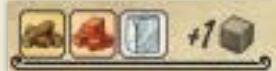
Wood, Brick, Marble: The player receives one wood, one brick, or one marble.
The player places one of his cubes from his reserve onto an empty slot of the corresponding warehouse on his player mat. Each cube in a warehouse is considered to be that matching resource.
If all four slots of the matching warehouse are filled, a player instead draws an action card.
Example: Marion activates the wood action space and places one of her cubes in the wood warehouse. Now all four slots are filled; next time she is supposed to receive wood, Marion would draw an action card.
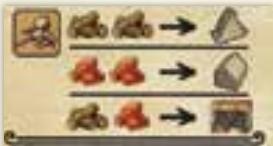
Build: The player either builds one ship, one trade house, or one workshop.
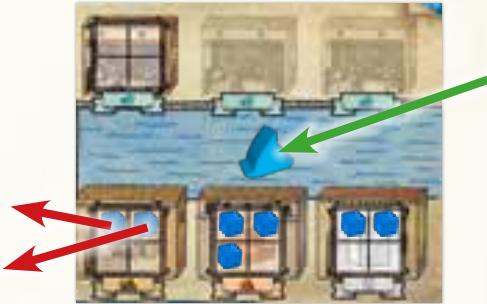
• To build a ship, he places two cubes from his wood warehouse back into his reserve. Then he places one of his ships onto the port on his player mat.
Example: Marion spends two wood cubes then places a ship on the port of her player mat.
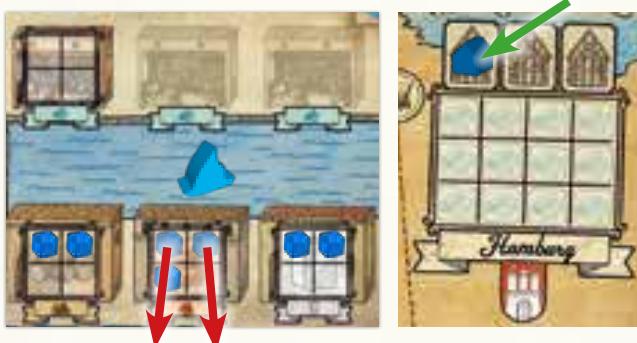
• To build a trade house, the player places two cubes from his bricks warehouse back into his reserve. Then he places one of his wooden trade houses onto an empty slot in one of the three trade cities. Each player can have a maximum of one trade house in each trade city.
Example: Marion spends two brick cubes and places a trade house onto one of the slots in Hamburg
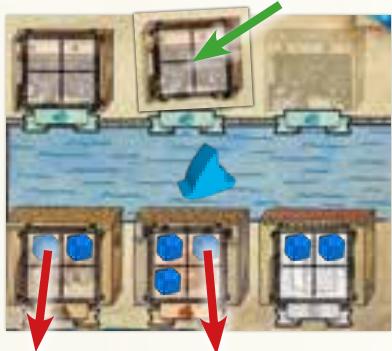
• To build a workshop, the player places one cube each from his wood and brick warehouses back into his reserve. He takes one of his workshop tiles and places it onto the leftmost empty slot of his player mat.
Example: Marion spends a wood cube and a brick cube then places a workshop onto her player mat.
If a player cannot build any of these three items, either because he has already placed all his available tokens and tiles, or does not have the matching resources, he instead draws an action card.
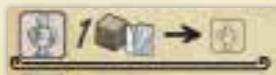
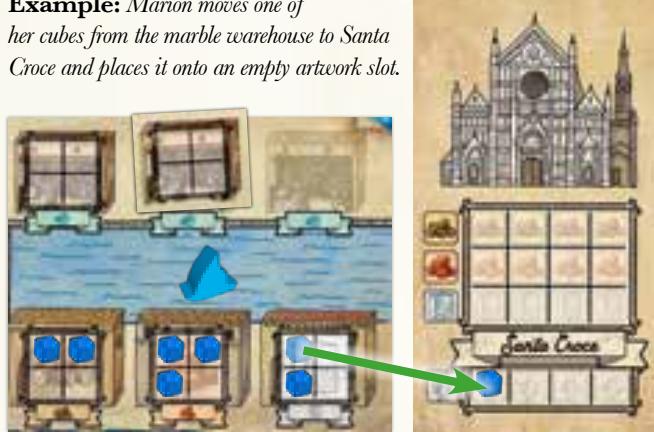
Artwork: The player creates artwork for one of the four buildings.
He moves one cube from his marble warehouse onto an empty artwork slot next to one of the three buildings under construction or to the city council.
If a player does not have any marble, or when all slots of all buildings are filled, he instead draws an action card.
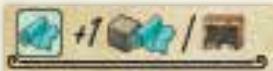
Weave: The player produces cloth in his workshops.
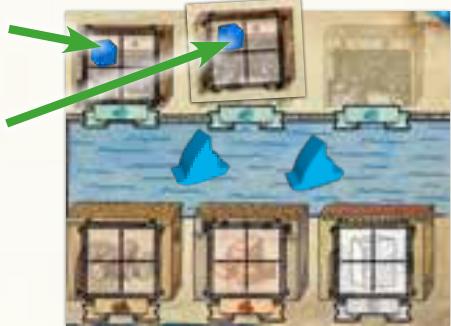
The player places one of his cubes from his reserve onto an empty slot of each of his workshops. The cubes are considered to be cloth. This means, if the player activates this action once and already built the second or third workshop, he receives two or even three cubes at the same time. If all slots in all warehouses are filled, the player instead draws an action card.
Example: Marion already has two workshops, therefore she places two of her cubes onto empty slots of her workshops, one per workshop.
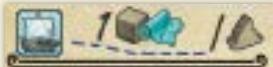
Example: Marion has two ships and enough cloth cubes in her workshops. She delivers two cloth cubes to Lisbon.
Ship: The player ships cloth to the port cities.
The player transports one cloth cube with each of his ships from his workshops to a port city – if that city has an empty slot. Thus if the player activates this action once and already has two or three ships and enough cloth cubes in his workshops, he may decide to deliver cloth cubes with one, two, or all three ships. For each ship, he may choose the same or a different city as destination.
A player may decide to ship less cloth cubes than the possible maximum. If all slots in all three port cities are filled, or if the player does not have any cloth cubes and/or no ships, he instead draws an action card.

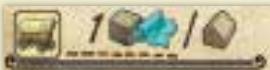
1010 Transport: The player transports cloth to the trade cities.
The player transports one cloth cube from his workshops to each of his trade houses in the three trade cities, but at most one cube per trade house. Thus, if the player activates this action once and already has two or three trade houses and enough cloth cubes in his workshops, he may decide to deliver cloth cubes to one, two, or all three trade cities
If all slots in all trade cities are filled, or if the player does not have cloth cubes and/or no trade houses, he instead draws an action card.
Example: Marion has a trade house in Hamburg and several cloth cubes in her workshops. She delivers one cloth cube to Hamburg
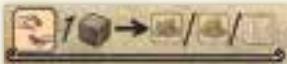
Contribute: The player contributes resources to the three buildings under construction: the
cathedral of Santa Maria del Fiore, the church of San Miniato, and the church of Santa Croce.
The player moves one cube of his choice from one of his warehouses to a matching empty slot at a resource row at one of the three buildings. Each building has slots for wood, bricks and marble.
If all slots at all buildings are filled, or if the player
has no matching resource cubes in his warehouses, he instead draws an action card.
Example: Marion contributes a wood cube to Santa Croce. She moves that cube from her wood warehouse to the wood row of the cathedral.
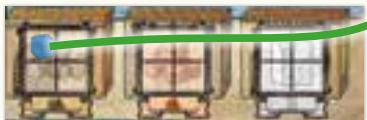

Activating an action space
After placing the disc on the action space, the active player activates that space and the connected two actions. He has to conduct at least one of the two connected actions, if necessary by playing one or more additonal action cards. (Therefore a player is not permitted to place a disc to draw two action cards; see the top right column on this page.) If he placed his disc on top of one or more discs, a total of up to three discs of the stack are activated, from top to bottom:
• The active player carries out both actions. He may do this in the order of his choice.
Example: After placing her disc, Marion conducts a wood action and a contribute action in the order of her choice.

• If the active player placed a white disc, he may carry out each of the two actions connected to that action space twice. The player may conduct these actions in any order of his choice: Either A, A, B, B, or A, B, A, B, or A, B, B, A etc.
Example: Marion places one of her white discs on the action space and conducts these actions twice. First, she decides to take wood twice in a row before she conducts the contribute action twice, giving the wood to San Miniato.
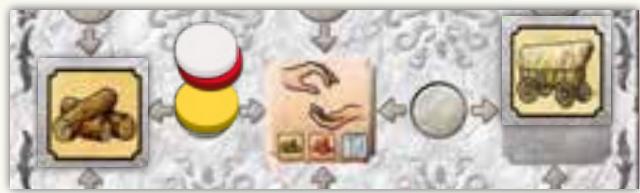
• Afterwards, the player(s) owning the second and third activated colored disc from top to bottom may perform the two actions linked to the action space, too. Again, each player can choose the order of these two actions, when activating his disc. Other white discs in the stack are not activated.
Note: Colored discs, if played early in the game, will be activated up to three times and will generate up to six actions, either by using the action tiles, or by drawing action cards, see below. White discs generate four actions right away, but are not reactivated later.
Example: After Marion conducted the two actions, first Angelika and then Tanja have a chance to perform the wood action and contribute action in the order of their choice, too.
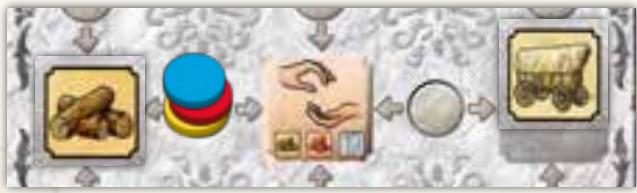
• If a player cannot carry out an action at all, he draws an action card as compensation and takes it into his hand. If the players owning the second or third activated disc cannot perform both actions, they may draw 2 action cards.
If a player voluntarily decides to skip an activated action, or carries out an action partially, he does not draw an action card. The players keep action cards hidden from the other players, only the number of action cards in their hands is public information.
Example: Now, Angelika activates her red disc. As she does not have any resources in her warehouses, she chooses to conduct the contribute action first and the wood action second. Thus, she draws an action card and gains a wood.

Example: Marion places one of her discs on the action space. She has no marble in her warehouse and cannot conduct the artwork action. Instead, she draws an action card as compensation. Then she conducts the brick action and takes one brick in her warehouse.

• While carrying out the activated actions, a player may also play any number of action cards from his hand, either bęfore or fter each of the two actions. The player must be able to conduct this action at least partially. If he cannot conduct the action, he cannot play the card. The player cannot discard and replace an action card which he cannot use. Afterwards, he discards the played action cards onto a face up discard pile. If the players draw the last action card from the deck, they immediately reshuffle the discard pile and place it face down as the new action deck.
Example: Marion places one of her discs on the action space. As she now has two discs in that stack, she will activate both her discs in this turn, while Angelika activates her disc in between.
While activating her topmost disc, Marion is missing a wood to build a ship. Thus, she plays a wood action card from her hand and places one of her blue cubes on the wood warehouse. Then, she conducts the build action. She places the two wood cubes back into her reserve then places a second ship in her port. Now she conducts the ship action and, thanks to her two boats, delivers two cloth cubes from her workshops to Lisbon.
Next, Angelika takes her turn. She builds a second workshop, removes one cube each from the wood and bricks warehouses then places a workshop tile on her player mat. As she does not have any ships in her port, instead of conducting the ship action she draws an action card.
Now, Marion activates her second blue disc at the bottom of the stack. She does not have enough material to build, and instead draws an action card. She is lucky and gets a weave action card, which she immediately plays to place one cloth cube each in her two workshops. She conducts the ship action and delivers two cloth cubes, one each to Barcelona and London.

• After activating up to three discs on the chosen action space the active player passes the active player token to the next player in clockwise order.
Exception: Player turns may be interrupted by a scoring phase, if temporarily there is a fourth disc at the bottom of the stack. Please check the next section.
Scoring Phases
There are 15 scoring phases in Calimala plus a final scoring round at the end of the game.
When there is a fourth disc at the bottom of the action stack, the player turn is interrupted by a scoring phase after activation of the three topmost discs.
That fourth disc is not activated! Instead the owner of that disc moves it onto one of the scoring tiles of the city council (see below) and triggers a scoring. The player's disc in the city council is considered to be a seat.
Example: After the topmost three discs were activated, Marion moves her bottommost fourth disc to the city council.

City council order: The players place their discs on the scoring tiles starting in the top row and in each row from left to right. The top-left tile is the first to be scored, the bottom right one the last.
Example: Marion moves her first disc to the city council. As both Angelika and Tanja already each moved one of their discs, Marion places her disc on the third scoring tile of the top row, and triggers a scoring.
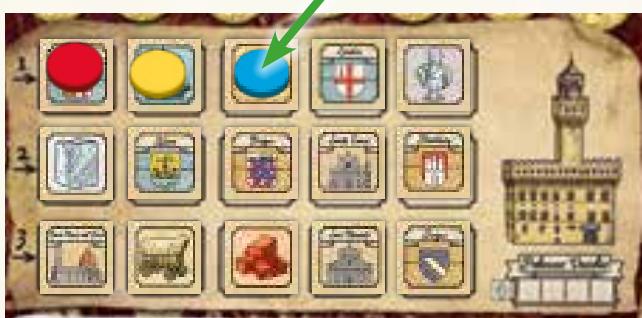
If the fourth disc of the stack is white, the active player exchanges it with one of his discs from his reserve. He places his colored disc on the scoring tile and the white disc into his reserve.
If he has already placed all his colored discs on action spaces, he instead takes one of his colored discs from any other action space and places it on the scoring tile. In that case, he places the white disc on top of that stack, so that the number of discs in that stack does not change.
Note: The order in which the scorings are triggered is very important. Players should keep an eye on the upcoming three or four scorings.
After finishing the scoring, the active player passes the active player token to the next player in clockwise order.

THE SCORING CATEGORIES IN DETAIL
For each scoring, the players add up their cubes in the specific category.

City: The players add up their cloth cubes delivered to the corresponding city.
Building under
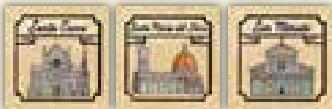
construction: The players add up their number of contributed wood, brick,
marble, and artwork cubes in the corresponding building.

Artwork: The players add up all their contributed artworks at all the four buildings (the three churches and the city council).

Port Cities: The players add up all their cloth cubes delivered to the three port cities Barcelona, Lisbon, and London.
Trade Cities: The players add up all their cloth cubes delivered to the three trade cities Troyes, Bruges, and Hamburg.
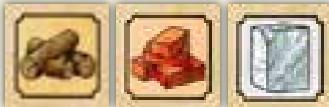
category at all three buildings under construction.
Contribute: Depending on which category is scored, the players add up all their contributed cubes in that
The first three players score the following victory points in a specific category:
• The player with the most cubes will gain 3 victory points.
• The player with the second most cubes will gain 2 victory points.
• The player with the third most cubes will gain 1 victory point. No points are scored for players that do not have any cubes in the scoring category.
• In case of a tie, the tied players add up their seats and their contributed artworks in the city council.
o The tied player with the highest sum of seats and contributed artwork wins the tie.
o If two or more players have the same sum, the tied player with more seats wins the tie.
o If the number of seats is the same, the tied player who first gained that number of seats wins the tie.
o If the tied players do not have any seats, the tied player who contributed the first artwork wins the tie.
o If the tied players did not contribute any artwork, they evenly split the victory points (rounded down).
Example: Angelika (red) has three seats and contributed one artwork, so she wins all ties.
Tanja (yellow) wins ties against Marion (blue), because she gained her second seat before Marion.
Nicole (green) is fourth, as her sum of seats and artworks is the lowest
The players track their victory points by moving their discs on the scoring track around the game board. If a player has 50 or more victory points, he takes his “50” victory points tile and places it next to his player mat.
5. Game End & Final Scoring
The game ends when one of the following conditions occurs:
• The players have placed all action discs on the city grid, both their own colored discs and their white discs. In this case, the players score any remaining scoring tiles in the city council without getting additional seats.
• The players have triggered all 15 scoring tiles. In this case, they finish the current “player round” until each player has placed the same total number of discs.
The players do not get additional seats in the city council. Therefore they remove the fourth discs in stacks of any activated action spaces from the game.
Afterwards, all players reveal their scoring cards and proceed with the corresponding scoring (with 3 or 4 players including the face up scoring card next to the board):
• Each scoring card either shows one of the six cities (Barcelona, Bruges, Hamburg, Lisbon, London, Troyes) or one of the four buildings (Palazzo Vecchio, Santa Croce, Santa Maria del Fiore, San Miniato)

The players add up all their cubes in the corresponding area. For the Palazzo Vecchio scoring, each player adds their seats and the contributed artwork cubes.
o The player with the most cubes gains 5 victory points.
o The player with the second most cubes gains 3 victory points.
o The player with the third most cubes gains 1 victory point.
All ties are resolved as described in the Scoring Phases chapter on page 10.
After all scoring cards are resolved, the player with the most points wins the game! In case of a tie, the player with more seats and contributed artworks in the city council is the winner.
An extended example of a player turn:
CHOOSING AND ACTIVATING AN ACTION SPACE
Marion begins her turn by placing one of her blue discs on top of the stack on the action space connected to the Artwork and Ship actions (a).
Marion has one cloth cube in each of her two workshops, two marble cubes in the warehouse, and two ships in her port. She has an artwork action card and a wood action card in her hand.
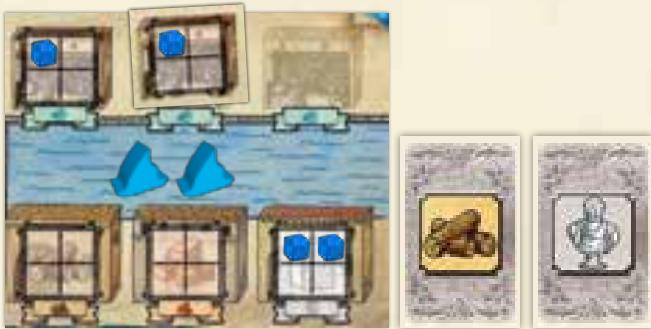
First, Marion conducts the Artwork action. She takes one marble cube from her warehouse and moves it to the matching row at Santa Croce (b).
Afterwards, Marion plays the Artwork action card from her hand and moves the second marble cube to Santa Croce, too (c). Both Santa Croce and all artworks will be scored later during the game.
Finally, Marion conducts the Ship action. With two ships and two cloth cubes she may do up to two deliveries to any port cities. She decides to only deliver one cloth cube to Lisbon (d), so that there are now one yellow, two blue, and two red cloth cubes.
Now, Angelika activates her red disc in the stack. She has a workshop, two ships in the port, one marble and one stone cube in her warehouses, a Build action card, and a trade house in Troyes.
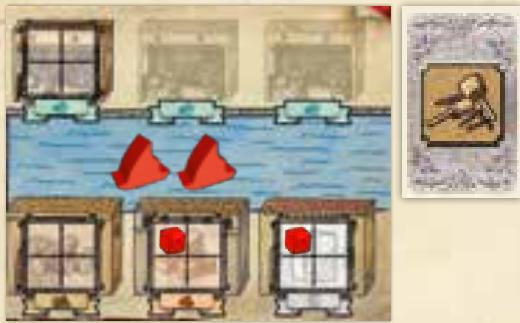
First, Angelika conducts the Artwork action and moves a marble cube from her warehouse to San Miniato.

Angelika does not have any cloth cubes in her workshop, so she cannot conduct the Ship action. Instead she draws an action card and gets a Wood action.
Angelika immediately plays this Wood action card (e) and now has a wood and stone cube in her warehouses. She plays her Build action card and places both cubes back into her reserve to build a workshop (f).
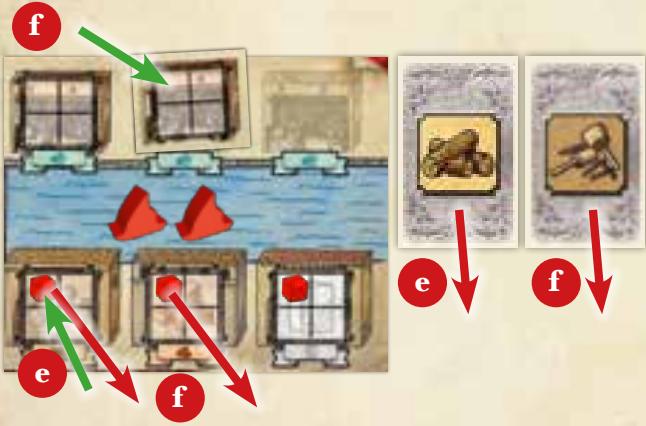
Finally, Tanja activates her disc in the stack. She has no marble or cloth cubes and cannot conduct either action. Instead, she draws two action cards, which she saves for a later turn.
SCORING PHASE
There are four discs in the stack on the action space. Thus, the players interrupt the player turn for a scoring phase, after activating the top three discs of the stack.
There is a white disc at the bottom of the stack. White discs may never be transferred to the city council. Therefore Marion exchanges that disc for one of the blue discs from her reserve (g) and places it on the scoring tile for Lisbon (h).
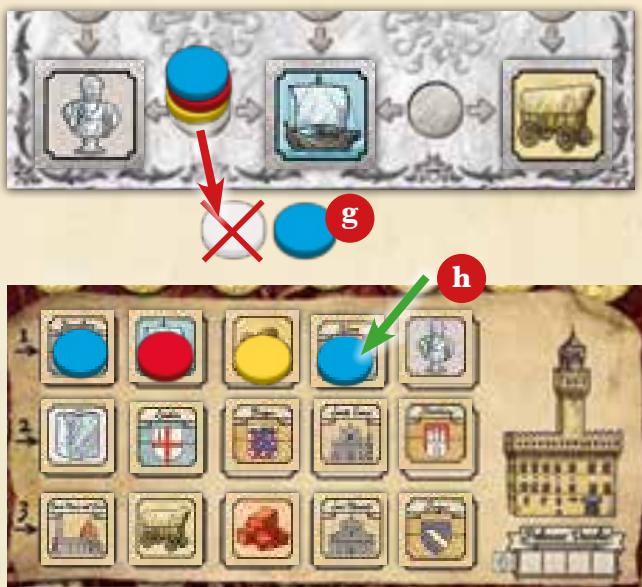
Now, the players score Lisbon!
Angelika and Marion both delivered two cloth cubes to Lisbon, Tanja delivered one cloth cube. Marion has more seats in the city council, so she wins the scoring and receives 3 victory points, while Angelika receives 2 and Tanja 1 victory point. All players adjust their points with their discs on the scoring track.
Calimala Merchants of Florence
AUTHOR: Fabio Lopiano
DEVELOPMENT: Henning Kröpke, Uli Blennemann
LOCALIZATION: T.R. Knight
GRAPHICS: Harald Lieske
LAYOUT: Filip Stránský

ADC Blackfire Entertainment GmbH, Weidenweg 69, D-47059 Duisburg
Stronghold Games LLC Mailing address:
7964 Emerald Winds Drive
Boynton Beach, FL 33473
Email: info@StrongholdGames.com
And visit our website at: StrongholdGames.com
© 2018 Stronghold Games, All Rights Reserved Under license from Blackfire Entertainment
STRONGHOLDGAMES
Texts are community-compiled or publicly released by publishers; copyright remains with the original authors. For personal reference only.