
Compounded
At a glance
Rules, cards and Q&A (Chinese)
The rules, card data and player questions for this game are written in Chinese. Open the Chinese page to read them.
Where to find full rules
Full rules and card lookup are available in the cunlema app at cunlema.cn — pick this game and ask about any rule, card or turn you are unsure about.
Related games
Rulebook text (Markdown)
This game has 4 rulebook Markdown file(s) in our library; 3 rendered inline below — expand to read or download.
rules_zh_compounded_580.md34.2 KB
化合物 规则(集石文档 580)
逐页 VLM 转写(qwen3-vl-plus),源:集石文档 580,未翻译。
化合物大戰:化學教科書
目錄
- 實驗室配備 P.3
- 實驗室設置 P.4
- 勝利條件 P.5
- 遊戲流程 P.6
- 階段 1:發現 P.6
- 階段 2:學習 P.7
- 階段 3:研究 P.7
- 階段 4:實驗室 P.8
- 工作台 P.10
- 實驗室工具 P.11
- 化學反應 P.13
- 兩人遊戲 P.14
- 變體 P.15
[图: UNPUB 圆形徽章,红边蓝底,文字“PLAYTESTED + ENJOYED”,中心大字“UNPUB”,下方网址“www.unpub.net”]
For more advanced variants, strategy notes, downloadable rules and a video tutorial, visit dicehatemegames.com/compounded.
[图: 两个骰子图案,下方为“DICE HATE ME GAMES”标志,含引文“‘Dice Hate Me,’ ‘Better Gaming Through Chemistry,’ Compounded”]
logo and all art contained within are ©2013 Dice Hate Me Games.
課程介紹
歡迎來到實驗室!在化合物大戰遊戲中,你及你的同伴將會接手實驗室管理者的任務,要快速的比其他玩家完成更多的化合物—或者可能在一場爆炸中成果瞬間化為烏有。運作一個成功的實驗室有點運氣,但是謹慎的管理你自己的工作台、密切關注開放的化合物,並且和你的同伴打好關係,絕對是你迎向勝利的不二法則。
銘謝
Game Design: Darrell Louder
Graphic Design: Darrell Louder, Chris Kirkman
Development: Darrell Louder, Chris Kirkman, Cherilyn Joy Lee Kirkman
Publisher: Dice Hate Me Games
Platinum Playtesters: Lesley Louder; John Moller; T.C. Petty III, Shawn Purtell, Jacki Purtell, Jeff Staab, Luke Winters, and the players of the Unpub program.
Special Thanks: Darrell would like to thank Lesley Louder for being his muse, Ethan Louder for being his son, John Moller for starting the Unpub Program, T.C. Petty III for keeping him interested, Chris & Cherilyn for rolling the dice on the little guys, Science for existing and being awesome, Bakka for injecting his youth with curiosity and the urge to constantly discover, Jeff Staab & Jackie Purtel for urging him to put purple into the game, Lisa Scodari & Amberle Browne for your scientific eyes, Apple for everything you do, the Kickstarter backers for their support and faith, Teachers for putting up with politics and still trying to make the world a better place, KickTraq for making him addicted to data collection, Mom & Dad for being supportive to the black sheep, and you for taking the time to read the bylines.
Chris & Cherilyn would like to thank all the Kickstarter supporters for their wonderful enthusiasm and generosity. None of this would have been possible without all of you.
This game is dedicated to Ethan Robert Louder: May your excitement, sense of discovery, and smile never fade.
Compounded • 2
實驗室配備
- [图: 木框裝飾的「COMPOUNDED」週期表遊戲板,右側有鑰匙孔與菱形凹槽]
- 計分軌
- [图: 橙色鑰匙形狀的「實驗室鑰匙(起始玩家標記)」]
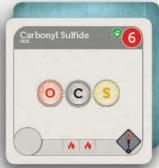
- [图: 三張化合物卡:Hydrogen Oxide(3點)、Carbonyl Sulfide(6點)、LAB FIRE(火焰圖案)]
- 9 張起始化合物
- 5 4 張化合物卡
- 5 張實驗室大火卡
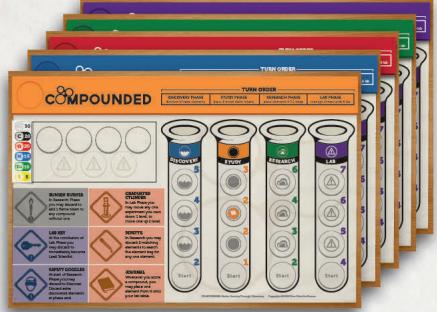
- [图: 五個疊放的工作台板,每張有五個試管插槽與標籤區]
- 5 個工作台
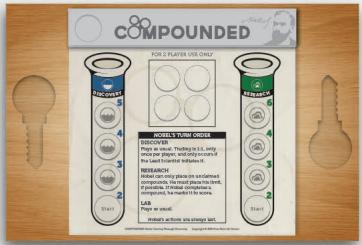
- [图: 一個諾貝爾工作台板,含四支試管插槽、鑰匙孔與說明文字]
- 1 個諾貝爾工作台(兩人遊戲用)見第 1 4 頁
- [图: 五個紅色滅火器模型]
- 5 個滅火器
- [图: 五個元素指示物:問號、三角警示、圓圈等圖示]
- 5 張百搭元素指示物
- [图: 一個紫色三角警示標記]
- 1 5 個存放標記
- [图: 六種黃色菱形標記:量筒、日誌、移液管、護目鏡、實驗室鑰匙、本生燈、火焰]
- 4 個量筒
- 4 個日誌
- 4 個移液管
- 4 個護目鏡
- 2 個實驗室鑰匙
- 4 個本生燈
- 1 5 個火焰指示物
- [图: 六種晶體模型:透明、黑色、紅色、藍色、綠色、黃色]
- 1 0 0 個元素晶體 6 種;1 個元素袋
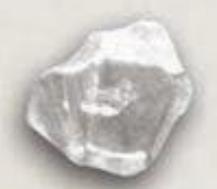
- 3 0 個氫
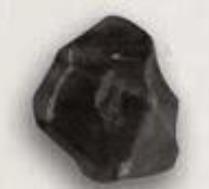
- 2 0 個碳
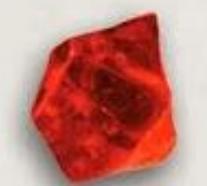
- 2 0 個氧
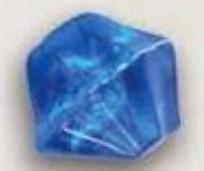
- 1 5 個氮
- 1 0 個鈣
- 5 個硫
- [图: 五疊彩色圓盤(藍、紅、綠、紫、橙),旁註「40個玩家圓盤5色;貼紙」]
- 4 0 個玩家圓盤 5 色;貼紙
- [图: 三組橙色圓盤與符號組合,箭頭向下指向「獲取指示物(每個玩家3個)」、「計分指示物」、「發現指示物」、「學習指示物」、「研究指示物」、「實驗室指示物」]
- 獲取指示物(每個玩家 3 個)
- 計分指示物
- 發現指示物
- 學習指示物
- 研究指示物
- 實驗室指示物
Compounded · 3
實驗室設置(3 位科學家以上的設置)
把計分軌攤開,並如下圖所示放到遊戲區域。給所有科學家一個他們所選顏色的工作台、3 個對應顏色的獲取指示物、1 個計分指示物,以及 4 個實驗室指示物。把所有的元素晶體都放到元素袋中,把整個袋子都攪動一下讓晶體隨機分布。這是 3 到 5 位科學家的設置,請見第 1 4 頁瞭解 2 位科學家的設置。
-
科學家把他們的計分指示物放到計分軌上。
[图: 計分軌與工作台旁的計分指示物位置示意] -
創建研究區。
隨機把 9 張起始化合物卡(有黃色邊框)正面朝上放置到一個 4 × 4 大小的矩陣中。洗混化合物牌庫並從化合物牌庫抽牌把矩陣中剩餘的空位補滿。
[图: 4×4 矩陣中放置的 9 張起始化合物卡與其餘補滿的卡牌] -
把 2 個獲取指示物放到獲取儲備區。把 1 個獲取指示物放到學習實驗室—現行的獲取指示物區域.
[图: 獲取儲備區與學習實驗室區域的獲取指示物擺放位置] -
每個科學家從元素袋隨機抽 4 個元素,並把他們放到元素存放區。
[图: 四種顏色的元素晶體(透明、紅、藍、綠)放在元素存放區] -
擺放實驗室工具。
-
量筒、移液管,以及日誌的數量應該會比玩家人數少一。例如,三人遊戲時,每種實驗室工具都只會有兩個。
[图: 三種實驗室工具(量筒、移液管、日誌)的圖示與數量標示] -
設置化合物牌庫並把它擺到研究區旁。化合物牌庫的詳細設置請見下一頁.
[图: 化合物牌庫堆疊於研究區旁] -
給每個科學家一個百搭元素指示物。
[图: 百搭元素指示物圖示(帶問號的圓形標記)] -
給每個科學家一個個人滅火器。
[图: 個人滅火器圖示(紅色長方形裝置內含三個圓點與字母 C)] -
把存放標記放到實驗室試管中。
[图: 實驗室試管區域與各試管中的存放標記位置]
設置(接上一頁)
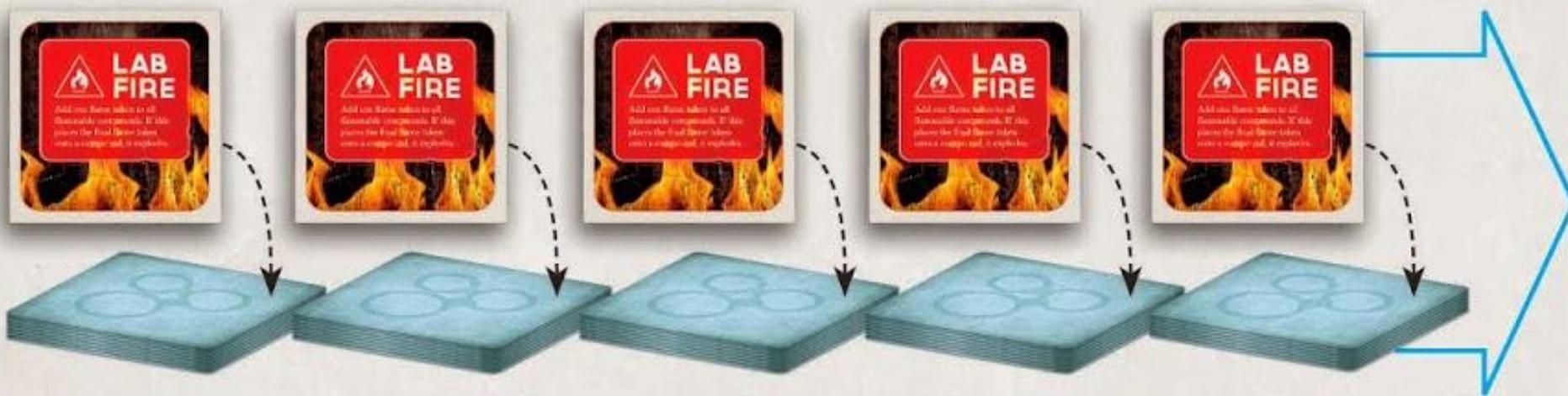
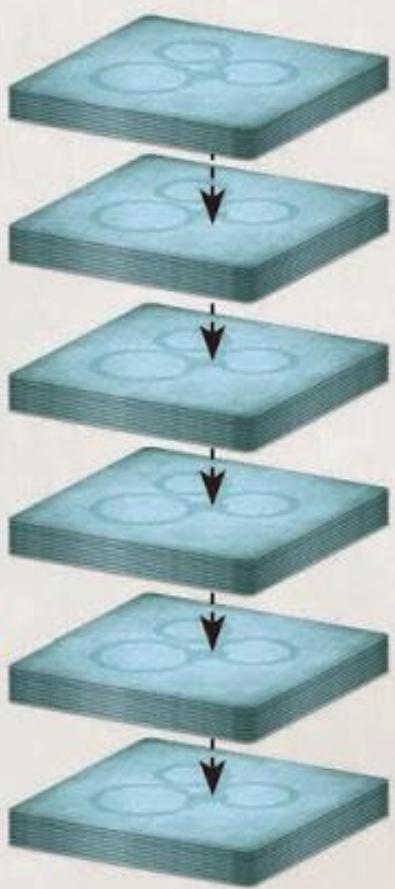
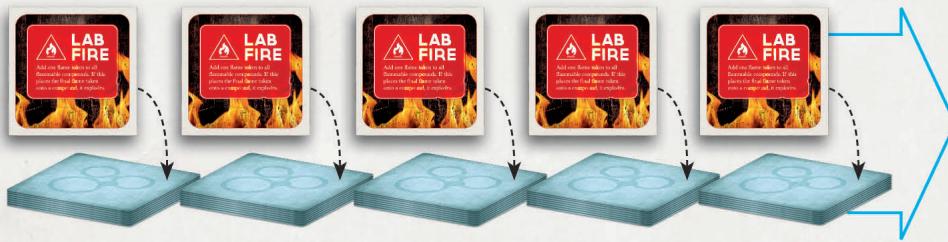
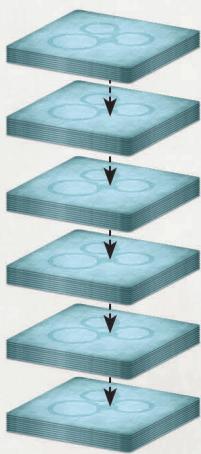
把化合物牌庫分成六疊(其中五疊 8 張卡片,其中一疊 7 張卡片)。把 8 張卡片的其中一疊放到一旁。剩餘的五疊每疊上面都放一張實驗室大火卡放到每疊卡片上面,然後彼此交疊形成牌庫。最後把剛剛放到一旁那疊放到牌庫最上方。化合物變體設置方式請見第 1 5 頁。
[图: 五张标有“LAB FIRE”的卡片分别置于五叠蓝色卡片之上,虚线箭头指示其向下放置;右侧为六叠蓝色卡片垂直堆叠,箭头指示堆叠顺序]
百搭元素的註記
玩家可以在研究階段時棄掉一個百搭指示物從元素袋拿取任何一個元素(除了硫以外),並立刻放到研究區的一個化合物上,或放在滅火器上。採取一般的擺放規則。擺放規則請見第 7 頁,階段 3:研究。
遊戲結束及獲勝方式
當以下任何一個條件觸發時遊戲結束:
A)有科學家到達 50 原子分數(AP)。
B)有科學家在他的工作台完成 4 個實驗的其中 3 個。
C)研究區無法填滿。
當條件 A 或 B 觸發時,遊戲還會再進行額外一回合。
當條件 C 觸發時—研究區無法填滿—遊戲立刻結束。
遊戲結束時,科學家所拿取任何一張尚未完成的化合物,上面的每個元素 1 分。在他工作台上的元素,每 2 個 1 分。
遊戲結束時,如果科學家有一個已完成但是沒有使用的滅火器,可以獲得 4 分。
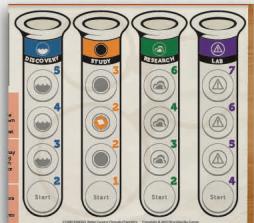
[图: 四个试管状实验装置,分别标有不同颜色与符号,下方标注“4 個實驗室的實驗”]
[图: 一个红色灭火器图标]
科學家每個擁有的百搭元素都值 2 分。
[图: 一个带问号的彩色球体图标]
擁有最高原子分數的科學家獲勝。
Compounded · 5
遊戲流程
每一輪分成 4 個階段。
- 發現:科學家獲得元素以及初始交易。
- 學習:科學家在研究區獲取化合物。
- 研究:科學家放置元素到化合物上。
- 實驗室:完成的化合物計分、管理工作台、補充研究區。可能會發生實驗室大火。
遊戲一開始,工作台上有最稀有元素的科學家為領導科學家,給他木製實驗室鑰匙。如果平手的話,最年輕的科學家為領導科學家。領導科學家為每個階段第一個執行行動的玩家。每輪結束後,實驗室鑰匙會傳給領導科學家的左手邊玩家,該玩家為新的領導科學家。
階段 1:發現
由領導科學家開始,每個科學家從元素袋抽取一定數量的元素(根據發現實驗,見右圖)。這些元素接著放到工作台的元素存放區。在所有科學家都抽取元素後,交易開始。注意:遊戲的第一輪跳過發現階段。
[图: 一个标有 "DISCOVERY" 的试管状图示,内有5个圆圈槽位,从下往上编号2至5,其中2号槽为橙色圆形,3、4、5号槽为灰色波浪形图案]
科學家遊戲一開始每一輪只會發現兩個元素,但是提升這個實驗可以發現更多元素。見第 8 頁,階段 4:實驗室。
科學家可以自由的交易元素、獲取實驗室工具、滅火器,百搭元素,或甚至是從其他科學家或科學家團隊任何未來的物件。然而,只能期待科學家能夠守信——有關未來交易,協議是不具有約束力的!科學家彼此不能用原子分數或是實驗等級做交換。
這個階段結束時,在所有交易都完成後,如果有科學家超過他的元素存放區的元素上限,他把多的元素放回元素袋。
元素稀有度的排行見左表,氫是最常見的,而硫是最稀有的。
[图: 左侧竖排五个元素图标:H 30(灰)、C 20(黑)、O 20(红)、N 15(蓝)、Ca 10(绿)、S 5(黄)]
公開交易
雖然元素、工具以及實體的配件交易只能在發現階段完成,但是口頭協議可以在遊戲中的任何時候完成。科學家被鼓勵去協議、威脅,並且有時候透過詐騙獲得領先的一步。請記住,口頭協議是不具有約束力的!
Compounded • 6
階段 2:學習
由領導科學家開始,並按照順時針方向,每個科學家可以從他的工作台(不是獲取儲備區)拿取一個獲取指示物,並放到還沒有被人認領的化合物上,或者跳過。持續進行直到每個科學家已經放完所有可以放置的獲取指示物(可以放置的數量根據他們的學習實驗而定),或者所有人都跳過為止。一旦跳過後,該科學家這一輪就再也不能放置獲取指示物。
在獲取指示物都放置好後,由領導科學家開始,每個科學家可以把前一輪放置的一個獲取指示物——也只能一個,移動到一個還沒有被認領的化合物上。
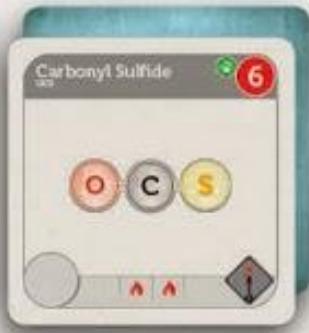
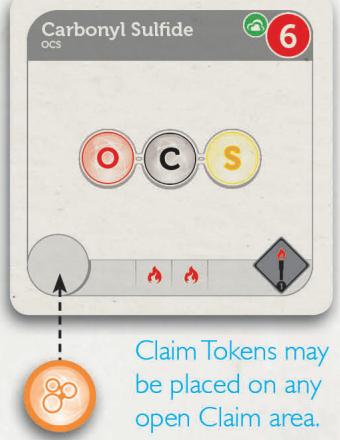
[图: Carbonyl Sulfide 化合物卡,右上角标有数字6与绿色OCS标记;卡面显示三个元素符号圈:O(红)、C(灰)、S(黄);下方有灰色圆点、三个火焰图标、一个菱形危险标志;左侧箭头指向橙色圆形获取代指示物,旁注“獲取指示物可以放到任何一個開放的獲取區域。”]
階段 3:研究
由領導科學家開始,每個科學家移動一個特定數量的元素(根據研究實驗等級而定)到研究區上。科學家可以把他的元素放到任何已經被認領或是還沒有人認領的化合物上(以及他的個人滅火器上)。
已經被認領的化合物
只有獲取這個化合物的玩家才會獲得分數並從完成這個化合物當中獲得好處。科學家可以放置元素到其他科學家認領的化合物,但是這麼做並不會獲得分數。
還沒有人認領的化合物
當科學家放置最後一個元素到沒有人認領的化合物時,他從他的獲取儲備區拿取一個獲取指示物——把暫時獲取符號朝上——放到這張化合物上做標記,在實驗室階段時會計分。獲取指示物數量是有限的;如果玩家的獲取儲備區沒有獲取指示物,他不能進行認領也不能因為完成一個尚未完成的化合物獲得分數。還沒有人認領的化合物如果放有之前放置的元素,可以讓科學家在學習階段時認領,如果該科學家還有可用的獲取指示物。
[图: 四张化合物卡呈2×2排列:Nitric Acid(6)、Acetylene(5)、Calcium Cyanamide(6)、Calcium Sulfite(8);每张卡含元素符号圈与底部区域;虚线箭头从下方三个不同颜色/形状的元素代币分别指向对应卡的开放元素区域;旁注“元素可以放到任何一張化合物卡上開放的元素區域。”]
滅火器
科學家可以把元素放到他們的個人滅火器上,就如同把元素擺到研究區一樣。
注意:在這個階段時,科學家也可以用工作台中三個相同種類的元素換任何一個元素喪屍的元素。
[图: 红色灭火器箱嵌入墙中,内有红色灭火器;旁注“滅火器一旦完成後,實驗室階段時翻到啟用那一面,而且可以在未來的回合裏使用。更多關於滅火器的細節,請見第 9 頁。”]
Compounded • 7
階段 4:實驗室
在這個階段,科學家為他們完成的化合物(有的話)計分,根據獲得的原子分數調整計分軌、獲得實驗室工具(有的話)、提升他們的實驗等級,並且引發化學反應。
一個化合物計分
從領導科學家開始,並按照順時針方向,完成的化合物計分。當化合物上所有開放的元素區域都被填滿時,這張化合物視爲完成。
- ) 從研究區移除這張化合物卡,並放到獲得這張卡片分數的科學家的工作台旁邊。
- ) 科學家的計分指示物根據這張化合物的原子數量在計分軌上移動多步。
- ) 獲取指示物還給科學家;如果這個獲取指示物是暫時獲取那面朝上,則放回玩家的獲取儲備區。否則,放到學習試管的上方,供下一輪使用。
- ) 所有在這張化合物卡上的元素都放回元素袋(除非有使用日誌,見第 1 1 頁的實驗室工具)。
獲得實驗室工具
有些化合物卡含有一個特定的實驗室工具符號。當這種化合物完成時,獲得這張化合物的玩家拿取對應的實驗室工具,並放到他的工作台上。這個工具可以在接下來的輪次裏使用,或者用來交易。注意:科學家在他的工作台上已經有該種工具,他不能拿取這個工具。見第 1 1 頁有關實驗室工具的細節。
提升實驗等級
每個化合物都有一個物理狀態,對應每個科學家工作台特定的實驗。在化合物完成並計分後,獲得這張化合物的玩家,提升特定實驗一個等級。科學家可以選擇提升他的實驗室實驗等級,取代提升發現、學習或研究實驗的等級。有關實驗等級,請見第 1 0 頁的工作台。
引發化學反應
有些化合物卡有一個化學反應符號。在這些化合物完成並計分後,立刻發生化學反應。見第 1 3 頁的化學反應。
[图: 一張標示「Carbonyl Sulfide」的化合物卡,左上角有「OC」標記,右上角紅圈內數字「6」,下方有三顆球體(紅、黑、黃)與三個火焰圖示及一個菱形警告符號;下方文字「一個完成的化合物。」]
[图: 一張化合物卡局部,顯示 Ca(20)、Sc(21)、Ti(22)三格元素,左側有橙色圓形符號;虛線箭頭指向右側一張藍灰底、帶微笑臉與數字「3」的圓形計分指示物;左側文字「計分指示物 根據化合物的原子數量 在計分軌上 移動一定數量的格數。」]
[图: 一張黃色菱形符號,內有溫度計圖案;下方文字「當完成一張有工具符號的化合物卡時,科學家獲得實驗室工具。」]
[图: 三張圓形工具符號:藍色「DISCOVERY」、橙色「STUDY」、綠色「RESEARCH」;下方文字「每種化合物的三種物理狀態:液體、固體,以及氣體。」]
[图: 一張紅底白火焰圖案的圓形符號;下方文字「化學反應的符號範例。」]
Compounded • 8
階段 4:實驗室(接上一頁)
在所有完成的化合物都計分後,領導科學家抽新的化合物卡,依序從左到右、從上到下填滿研究區。接著,領導科學家把實驗室鑰匙傳給他的左手邊科學家,然後新的一輪從發現階段開始。
翻開一張實驗室大火
當填滿研究區時翻開一張實驗室大火,把這張實驗室大火放到一旁,並且繼續填滿研究區。接著,棄掉這張實驗室大火並在每張具有可燃性的化合物上放置火焰指示物。
[图: 一個帶有火焰圖示與箭頭的流程圖,顯示火焰指示物被放置到化合物卡上]
這個化合物有兩個火焰指示物的限制,當這個化合物累積兩個火焰指示物時就會爆炸。
任何化合物到達他們的火焰指示物限制,就會爆炸並從研究區移除棄掉。任何在爆炸的化合物上面的元素,都會四散到相鄰的化合物上(包含斜對角的化合物)。如果爆炸的化合物有被認領,那麼在這張化合物上有放置獲取指示物的科學家選擇元素要放到哪裡。如果相鄰的化合物有可以放置的區域,那麼一定要放在那裏。任何無法放置的元素都棄掉。如果爆炸的化合物還沒有人認領,那麼領導科學家選擇這些元素(有的話)要散到哪裡。接著從化合物牌庫抽一張牌填滿研究區裏任何的空缺。
兩張實驗室大火不會在同一個回合發生。
如果第二張(或者更多)實驗室大火卡在實驗室階段翻開,把它們棄掉,並持續翻新的牌填滿研究區。
注意:一場因為揮發性化學反應所引發的實驗室大火可能會在同一輪發生。這是只會有 1 場實驗室大火的例外。見第 1 3 頁的化學反應。
使用一個滅火器
如果有科學家已經完成他的個人滅火器(或者換來一個完成的滅火器),他可以棄掉這個滅火器以避免一個火焰指示物放到任何一個化合物上(無論是有沒有人認領的)。
[图: 一張標有「LAB FIRE」的紅色警示卡,背景為火焰,下方有英文說明文字]
記住同一輪不會發生兩次實驗室大火很重要。
[图: 六張化合物卡排列成 2×3 網格,其中一張中央卡被標示為爆炸點,紅色箭頭指向周圍三張卡,表示元素散佈路徑]
在這個範例中,乙炔(Acetylene)已經爆炸了,在這張卡片上的氫會散到硝酸(Nitric Acid)或是疊氮酸(Hydrazoic Acid)上。碳只會散到硫化羰(Carbonyl Sulfide)上,因為氰氧化鈣(Calcium Cyanamide)的碳元素區域已經滿了。
Compounded · 9
管理你的工作台
每个科學家都有自己的工作台要管理與控制。當有科學家完成一個化合物時,他會在實驗室階段時管理這個區域。
元素存放區
遊戲開始時,科學家在他的工作台有 4 個可用的元素存放區。可以藉由提升實驗室實驗等級提高存放量,最高可以存放 7 個。
[图: 一个长方形区域,内含四个空圆圈,下方对应四个带三角形警告符号的圆圈]
元素圖例
元素圖例在每個工作台的元素存放區左邊。這個圖例說明了元素的顏色、縮寫字,以及每種元素在遊戲中的數量。
[图: 一列五个彩色圆形标记,分别标有 H 30(灰)、C 20(红)、O 20(橙)、N 15(蓝)、Ca 10(绿)、S 5(黄)——注:原文图中显示为六项,但文字描述为“元素圖例”,此处按图示如实转写;实际图中可见六行:H, C, O, N, Ca, S]
發現實驗
發現實驗的每個等級可以讓科學家在發現階段時,發現(從元素袋裡抽)一定數量的元素,這個數量視發現的等級而定。
[图: 一个蓝色烧杯状图标,标有“DISCOVERY”字样]
學習實驗
學習實驗的每個等級可以讓科學家獲取和等級開放數量相等的化合物。
[图: 一个橙色烧杯状图标,标有“STUDY”字样]
研究實驗
研究實驗可以讓科學家放置和等級開放數量相等的元素到研究區。
[图: 一个绿色烧杯状图标,标有“RESEARCH”字样]
實驗室實驗
當化合物計分時,科學家可以選擇提升他的實驗室實驗,取代提升其他實驗的等級。當提升這個實驗後,科學家從試管移除存放標記,並把它放到工作台上元素存放區所指示的位置。每個以此方式獲得的元素區域指示物,可以讓科學家多存放一個元素到他們的工作台。
[图: 一个紫色烧杯状图标,标有“LAB”字样]
成就解鎖了!存放標記增加了科學家可以放在工作台上的元素總數。
[图: 一个带三角形警告符号的紫色圆形标记,以虚线箭头指向一个元素存放区示意图:四个空圆圈,下方四个带三角形警告符号的圆圈,其中最左侧的三角形符号被箭头指向,表示新增位置]
Compounded • 10
如何安全的操作實驗室工具
有些化合物卡標有一個實驗室工具符號。當這個化合物計分時,認領這個化合物的科學家獲得一個工具板塊(如果還有的話),並放到他的工作台上。除非這個工具已經棄掉或是交易出去了,該科學家在遊戲的剩餘時間裏都可使用這個工具的能力。
安全護目鏡
在研究階段一開始棄掉安全護目鏡,然後在這一輪進行第二次的發現。這些元素應該要和任何目前在元素存放區的元素分開放置。該科學家可以把這些元素和他工作台上的元素放到研究區,但放置的數量視他的研究實驗等級而定。任何因為安全護目鏡所獲得的剩餘元素必須放回元素袋中。科學家不能用 3 比 1 交換使用安全護目鏡抽出的元素,也不能用移液管交換安全護目鏡抽出的元素。
[图: 蓝色菱形图标,内有戴护目镜人头轮廓,下方标数字“1”]
藍色及灰色的工具是一次性的效果。使用後就會從遊戲移除。
實驗室鑰匙
在實驗室階段結束時棄掉這個工具來獲取木製實驗室鑰匙,並成為下一輪開始的領導科學家。
[图: 蓝色菱形图标,内有钥匙图案,下方标数字“1”]
移液管
研究階段時,科學家可以用兩個相同種類的元素交換元素袋中的任何一個元素。科學家每輪只能執行這個交易一次,也不能在使用 3 比 1 交換的同一回合使用這個效果。
[图: 橙色菱形图标,内有滴管图案]
日誌
這個工具會在科學家提升他的學習實驗等級時獲得。有了這個日誌,在實驗室階段時,每當科學家為他完成的化合物計分時,科學家可以從其中一個計分的化合物,把一個元素放到他工作台上開放的元素存放區。這個能力會在科學家獲得這個工具的回合之後才會產生效果。
[图: 橙色菱形图标,内有闭合书本图案]
[图: 一个试管状装置,顶部标“STUDY”,底部标“Start”,中间有四个圆圈按钮,从下往上编号1至4;第2号按钮被橙色圆圈高亮并带箭头指向,旁注“日誌會在科學家的學習實驗到達這個等級後獲得。”]
Compounded • 11
實驗室工具(接上一頁)
量筒
實驗室階段時,科學家可以把任何一個實驗的等級往下調一個等級,然後把另一個實驗的等級往上調一個等級。每一輪只能執行一次。如果調整後導致學習實驗的等級下降,而該科學家在研究區裡的獲取指示物超過調整後的等級所指示的數量上限,他必須立刻從一個認領的化合物移除一個他自己的獲取指示物。如果科學家選擇減少實驗室實驗的等級,他必須把一個存放標記放回實驗室實驗中,並從他的工作台棄掉任何超過存放數量限制的元素。
[图: 四個試管圖示,分別標示 DISCOVERY、STUDY、RESEARCH、LAB,各帶有數字與符號,其中橙色圓圈標示可操作位置]
範例:把研究實驗往下調一個等級,然後把發現等級往上調一個等級。
本生燈
在研究階段的任何時候棄掉本生燈,可以把一個火焰指示物放到任何還沒有火焰指示物在上面的化合物。如同一場實驗室大火,科學家可以棄掉他的滅火器來阻止這個火焰指示物的放置。如果使用了滅火器,棄掉本生燈,本生燈不會有任何效果。
如果火焰指示物放到一個不可燃的化合物上,該化合物從現在起視為可燃。一個不可燃的化合物的火焰指示物數量上限為二。
[图: 一個長條形容器內有一個圓形物體,上方箭頭指向其右側空位,下方紅色火焰圖示標註「火焰指示物放在一個不可燃的化合物上的位置。」]
本生燈也可以用來把一個火焰指示物,放置到一個火焰指示物數量上限為一的化合物。這會導致該化合物立刻爆炸。見第 9 頁翻開一張實驗室大火來了解化合物爆炸。
Compounded • 12
化學反應
有些化合物會標示一個化學反應的符號。當有科學家計分這個化合物時,化學反應的效果會立刻發生。
授予
當這個化學反應被引發了,科學家必須選擇另一個科學家,以及他們其中一個實驗,該實驗提升一個等級。科學家必須選擇一個等級還沒到頂的實驗。如果他們所有的實驗都到頂了,在這張化合物上的原子分數會平分給另一個選定的玩家。如果分數無法均等的平分,多的分數捨去。例如有張化合物計 7 分,每個科學家會獲得 3 分。
[图: 绿色圆圈内白色加号]
易揮發的
當這個化學反應被引發了,它的效果就如同一張實驗室大火從化合物牌庫翻開時。按照一場實驗室大火的規則進行。這可能會立刻導致化合物爆炸。見第 9 頁翻開一張實驗室大火。
注意:雖然同一回合不能有兩張實驗室大火發生效果,但是易揮發的化學反應和這個規則不牴觸。科學有時是很危險的!
接下來的化學反應會出現在實驗室夥伴變體中。見第 11 頁瞭解更多有關實驗室夥伴的變體。
[图: 红色圆圈内白色火焰]
危險牽引
當這個化合物計分時,每個科學家從這個化合物上拿取元素並放到研究區裡的另一個化合物上。在這張化合物卡上擁有放在左邊的獲取指示物的科學家先選。
[图: 紫色圆圈内原子结构图案,中心有向上箭头]
腐蝕性化合物
當這個化合物計分時,兩個計分的科學家各自把學習實驗往下調一個等級(如果可以調的話)。
[图: 白色圆圈内黑色手接住从试管滴下的液体]
爆炸元素
當這個化合物計分時,所有至少有一個火焰指示物在上面的化合物立刻爆炸。這不會放置火焰指示物到化合物上(所以滅火器無效)。
[图: 红色圆圈内爆炸图案]
Compounded • 13
兩位科學家的遊戲設置
化合物這款遊戲比較傾向給三或三位以上的科學家進行;然而,如果有兩位科學家想要玩,第三位科學家已經包含進盒子中了—他的名字是諾貝爾。他在遊戲能做的事有點受限,但是別低估了他老謀深算的科學腦袋。
遊戲設置
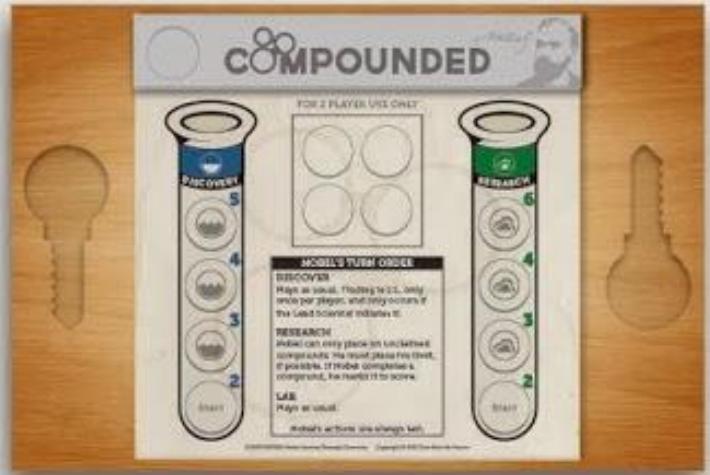
把諾貝爾工作台放到兩個科學家之間。把一個相同顏色的發現及研究指示物放到發現及研究實驗的起始區域。把同顏色的的計分指示物放到計分軌上。抽四個元素並把它們放到諾貝爾的工作台上的存放區。使用每種起始化合物各兩張創建研究區,如左圖所示。剩餘的空位從化合物牌庫抽兩張牌填滿。
[图: 《Compounded》雙人版遊戲板,中央為「NOBEL'S TURN ORDER」說明區,左右各有一支試管狀玩家軌道(左藍色標「DISCOVERY」、右綠色標「RESEARCH」),每支試管有5格圓形槽位與底部紅色按鈕;板面頂部印有「COMPOUNDED」標題與愛因斯坦肖像;板子置於木紋桌面上,左右各有一枚鑰匙形狀的木製配件插在孔中]
遊戲設置時,諾貝爾應該要放到兩個科學家之間。實驗室鑰匙可以放到這兩個區域,用以指示哪個科學家這一輪控制諾貝爾的行動。
玩的像諾貝爾一樣
在這款遊戲中,諾貝爾總是由領導科學家控制,而且諾貝爾的行動總是在兩個科學家都完成他們行動後的階段結束時發生。
發現階段:領導科學家從元素袋抽取和諾貝爾當前發現實驗等級相等數量的的元素,並放到諾貝爾工作台上的元素存放區。在所有元素都抽取後,領導科學家可以選擇和諾貝爾交易。這個交易只能從領導科學家的工作台上拿一個元素換諾貝爾工作台上的一個元素。如果領導科學家選擇交易,那麼另一個玩家也可以以此方式和諾貝爾交易;否則,兩位科學家都不能和諾貝爾交易。發現階段結束時,如果諾貝爾在他的工作台上擁有超過四個元素,領導科學家幫他選擇要棄掉哪些多的元素,並把這些元素放回布袋中。
研究階段:在兩個科學家都放置好他們的元素後,領導科學家必須按照諾貝爾當前的研究等級,從工作台上拿取對應等級數量的元素到一個或一個以上還沒有人認領的化合物上。如果放置元素到化合物上讓諾貝爾完成了一個化合物,則把一個屬於諾貝爾顏色的獲取指示物放到這個化合物上。
實驗室階段:有諾貝爾獲取指示物在上面的化合物放到諾貝爾工作台的旁邊,並依據獲得的分數調整諾貝爾在計分軌上的計分指示物。任何因計分而獲取的工具不會放在諾貝爾工作台上,但是化學反應會發生。如果完成的化合物是液體或氣體,那麼諾貝爾發現或研究實驗等級會往上調一個等級。而且當然的,諾貝爾可能會贏得這場遊戲。
Compounded • 14
實驗室變體
實驗室夥伴
實驗室夥伴化合物卡片擴展了化合物大戰這款遊戲的體驗,這個變體有著較大的化合物以及更多科學家一起工作的機會。實驗室夥伴變體只推薦給 3 位或 3 位以上的科學家進行。
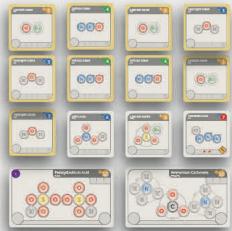
[图: 左侧为12张化合物卡与2张实验室伙伴卡的排列示意图;右侧为一张标有“Peroxydisulfuric Acid H₂S₂O₈”及原子结构图(含H、S、O原子)的实验室伙伴卡]
遊戲設置:遊戲的設置照常,但研究區例外,研究區會以 1 2 張一般化合物卡以及 2 張實驗室夥伴卡組成。如圖所示,洗混實驗室夥伴卡牌庫,並把 2 張實驗室夥伴卡並排放到矩陣下方。
遊戲進行:實驗室夥伴化合物卡的進行規則和基本遊戲中的化合物卡相同,但是有一個例外:如果一張實驗室夥伴化合物卡放有兩個獲取指示物的話,這張化合物卡在實驗階段時才會計分。這些獲取指示物一般來說會從兩個不同的科學家而來,但也可能會從同一個科學家而來。當實驗室夥伴化合物卡爆炸時,任何這張實驗室夥伴化合物卡上的元素會四散到兩個和這張實驗室夥伴化合物卡相鄰的化合物卡上,然後是同列的下兩張化合物卡,依此類推。當一般放在實驗室夥伴化合物卡旁的化合物卡爆炸時,元素可能會散到實驗室夥伴化合物卡上。見右圖來了解。
[图: 两张并排的实验室伙伴卡,每张上方有红色向上箭头,下方有红色弯曲箭头指向相邻及同列下方的化合物卡位置]
實驗室階段:當一個完成的實驗室夥伴化合物卡計分時,每個在這張化合物卡上放有獲取指示物的科學家都會獲得原子分數,並且據此調整他們的實驗等級。如果一張實驗室夥伴化合物卡上的兩個獲取區域都被同一個科學家的獲取指示物占據了,該科學家不會獲得兩倍的原子分數,也不會讓實驗上升兩個等級。當一張實驗室夥伴化合物卡計分時,從實驗室夥伴化合物卡上抽一張卡片填滿研究區。如果無法填滿實驗室夥伴化合物卡的研究區,遊戲立刻結束。
化合物牌庫變體設置
A)當設置化合物卡牌庫時,把五疊卡片各洗進一張實驗室大火好讓遊戲的進行更難預測。這強烈推薦給有過經驗的科學家進行。
B)為了要模擬一個更真實且無法預測的遊戲,忽略一般的化合物卡牌庫設置,把所有的化合物卡和實驗室大火卡都洗在一起。祝實驗室好運!
有限的資源
A)在一場 3 人遊戲中,研究區只設置 4 X 3 的舉陣大小,不要設置最後一排的四張化合物。
B)從遊戲中移除個人的滅火器以及百搭元素指示物。
Compounded · 15
Download Markdownrules_zh_化合物_5138.md32.8 KB
化合物大戰:化學教科書
目錄
實驗室配備 P.3
實驗室設置 P.4
勝利條件 P.5
遊戲流程 P.6
階段 1:發現 P.6
階段 2:學習 P.7
階段 3:研究 P.7
階段 4:實驗室 P.8
工作台 P.10
實驗室工具 P.11
化學反應 P.13
兩人遊戲 P.14
變體 P.15

For more advanced variants, strategy notes, downloadable rules and a video tutorial, visit dicehatemegames.com/compounded.

"Dice Hate
Me,""Better
Gaming
Through
Chemistry,"
Compounded
logo and all art contained
within are ©2013
Dice Hate Me Games.
課程介紹
歡迎來到實驗室!在化合物大戰遊戲中,你及你的同伴將會接手實驗室管理者的任務,要快速的比其他玩家完成更多的化合物—或者可能在一場爆炸中成果瞬間化為烏有。運作一個成功的實驗室有點運氣,但是謹慎的管理你自己的工作台、密切關注開放的化合物,並且和你的同伴打好關係,絕對是你迎向勝利的不二法則。
銘謝
Game Design: Darrell Louder
Graphic Design: Darrell Louder, Chris Kirkman
Development: Darrell Louder, Chris Kirkman, Cherilyn Joy
Lee Kirkman
Publisher: Dice Hate Me Games
Platinum Playtesters: Lesley Louder, John Moller, T.C. Petty III, Shawn Purtell, Jacki Purtell, Jeff Staab, Luke Winters, and the players of the Unpub program.
Special Thanks: Darrell would like to thank Lesley Louder for being his muse, Ethan Louder for being his son, John Moller for starting the Unpub Program, T.C. Petty III for keeping him interested, Chris & Cherilyn for rolling the dice on the little guys, Science for existing and being awesome, Bakka for injecting his youth with curiosity and the urge to constantly discover, Jeff Staab & Jackie Purtel for urging him to put purple into the game, Lisa Scodari & Amberle Browne for your scientific eyes, Apple for everything you do, the KickStarter backers for their support and faith, Teachers for putting up with politics and still trying to make the world a better place, KickTraq for making him addicted to data collection, Mom & Dad for being supportive to the black sheep, and you for taking the time to read the bylines.
Chris & Cherilyn would like to thank all the Kickstarter supporters for their wonderful enthusiasm and generosity. None of this would have been possible without all of you.
This game is dedicated to Ethan Robert Louder. May your excitement, sense of discovery, and smile never fade.
(起始玩家
實驗室配備
COMPOUNDED BETTER GAMING THROUGH CHEMISTRY

計分軌


9張

起始化合物
54張

實驗室鑰匙
標記)

5張
1 個諾貝爾工作台
(兩人遊戲用)
化合物卡

實驗室大火卡
5個滅火器

5 張百搭
元素指示物
5個工作台

15個存
4個量筒

見第14頁
4個日誌
4 個移液管

4個護目鏡

2個實驗室
鑰匙

4個本生燈
放標記

1 5個火
焰指示物
100個元
素晶體6種
;1個元素
袋
30個氫
20個碳
20個氧
15個氮
10個鈣
5個硫
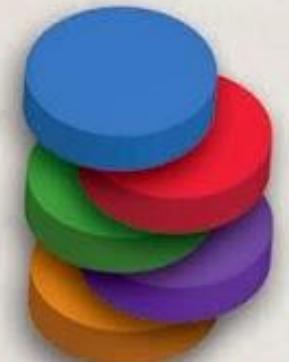
40個玩家圓
盤5色;貼紙
Compounded
獲取
指示物
(每個
玩家3
個)


發現
指示物
指示物
學習
指示物

研究
指示物

實驗室
指示物
實驗室設置(3位科學家以上的設置)
把計分軌攤開,並如下圖所示放到遊戲區域。給所有科學家一個他們所選顏色的工作台、3個對應顏色的獲取指示物、1個計分指示物,以及4個實驗室指示物。把所有的元素晶體都放到元素袋中,把整個袋子都攪動一下讓晶體隨機分布。這是3到5位科學家的設置,請見第14頁瞭解2位科學家的設置。
科學家把他們的計分指示物放到計分軌上。

創建研究區。
隨機把9張起始化合物卡(有黃色邊框)正面朝上放置到一個4×4大小的矩陣中。洗混化合物牌庫並從化合物牌庫抽牌把矩陣中剩餘的空位補滿。

把 2 個獲取指示物放到獲取儲備區。把 1 個獲取指示物放到學習實驗室—現行的獲取指示物區域。
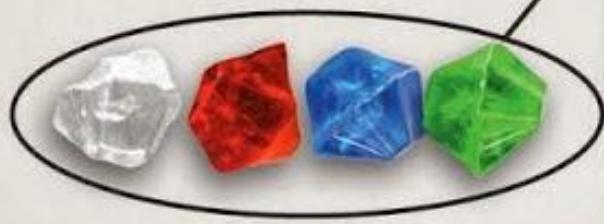
每個科學家從元素袋隨機抽4個元素,並把他們放到元素存放區。
把存放標配放到實驗室試管中。
擺放實驗室工具。量筒、移液管,以及日誌的數量應該會比玩家人數少一。例如,三人遊戲時,每種實驗室工具都只會有兩個。

設置化合物牌庫並把它擺到研究區旁。化合物牌庫的詳細設置請見下一頁。
給每個科學家一個百搭元素指示物。
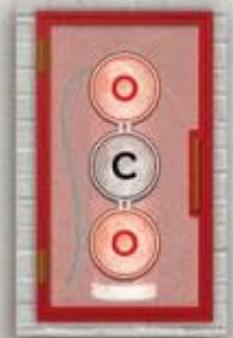
給每個科學家一個個人滅火器。
設置(接上一頁)
把化合物牌庫分成六疊(其中五疊8張卡片,其中一疊7張卡片)。把8張卡片的其中一疊放到一旁。剩餘的五疊每疊上面都放一張實驗室大火卡放到每疊卡片上面,然後彼此交疊形成牌庫。最後把剛剛放到一旁那疊放到牌庫最上方。化合物變體設置方式請見第15頁。
百搭元素的註記

玩家可以在研究階段時棄掉一個百搭指示物從元素袋拿取任何一個元素(除了硫以外),並立刻放到研究區的一個化合物上,或放在滅火器上。採取一般的擺放規則。擺放規則請見第7頁,階段3:研究。
遊戲結束及獲勝方式
當以下任何一個條件觸發時遊戲結束:
A) 有科學家到達 50 原子分數 (AP)。
B) 有科學家在他的工作台完成 4 個實驗的其中 3 個。
C) 研究區無法填滿。
當條件A或B觸發時,遊戲還會再進行額外一回合。
當條件C觸發時—研究區無法填滿—遊戲立刻結束。
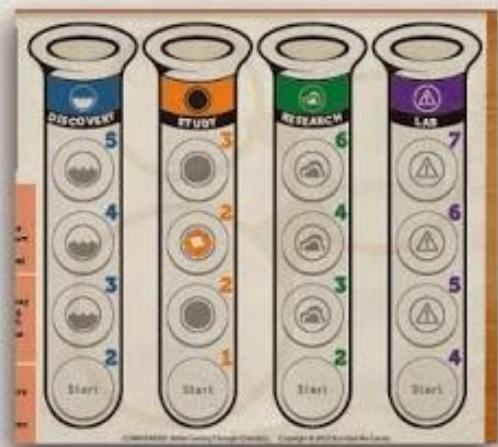
4個實驗室的實驗
遊戲結束時,科學家所拿取任何一張尚未完成的化合物,上面的每個元素1分。在他工作台上的元素,每2個1分。
遊戲結束時,如果科學家有一個已完成但是沒有使用的滅火器,可以獲得4分。
科學家每個擁有的百搭元素都值2分。

擁有最高原子分數的科學家獲勝。
遊戲流程
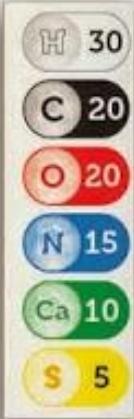
元素稀有度的排行見左表,氫是最常見的,而硫是最稀有的。
公開交易
雖然元素、工具以及實體的配件交易只能在發現階段完成,但是口頭協議可以在遊戲中的任何時候完成。科學家被鼓勵去協議、威脅,並且有時候透過詐騙獲得領先的一步。請記住,口頭協議是不具有約束力的!
每一輪分成4個階段。
發現:科學家獲得元素以及初始交易。
學習:科學家在研究區獲取化合物。
研究:科學家放置元素到化合物上。
實驗室:完成的化合物計分、管理工作台、補充研究區。可能會發生實驗室大火。
遊戲一開始,工作台上有最稀有元素的科學家為領導科學家,給他木製實驗室鑰匙。如果平手的話,最年輕的科學家為領導科學家。領導科學家為每個階段第一個執行行動的玩家。每輪結束後,實驗室鑰匙會傳給領導科學家的左手邊玩家,該玩家為新的領導科學家。
階段 1:發現
由領導科學家開始,每個科學家從元素袋抽取一定數量的元素(根據發現實驗,見右圖)。這些元素接著放到工作台的元素存放區。在所有科學家都抽取元素後,交易開始。注意:遊戲的第一輪跳過發現階段。
科學家可以自由的交易元素、獲取實驗室工具、滅火器,百搭元素,或甚至是從其他科學家或科學家團隊任何未來的物件。然而,只能期待科學家能夠守信—有科學家遊戲一開始每一輪只會發現兩個元素,但是提升這個實驗可以發現更多元素。見第8頁,階段4:實驗室。

關未來交易,協議是不具有約束力的!科學家彼此不能用原子分數或是實驗等級做交換。
這個階段結束時,在所有交易都完成後,如果有科學家超過他的元素存放區的元素上限,他把多的元素放回元素袋。

階段 2:學習
由領導科學家開始,並按照順時針方向,每個科學家可以從他的工作台(不是獲取儲備區)拿取一個獲取指示物,並放到還沒有被人認領的化合物上,或者跳過。持續進行直到每個科學家已經放完所有可以放置的獲取指示物(可以放置的數量根據他們的學習實驗而定),或者所有人都跳過為止。一旦跳過後,該科學家這一輪就再也不能放置獲取指示物。
在獲取指示物都放置好後,由領導科學家開始,每個科學家可以把前一輪放置的一個獲取指示物—也只能一個,移動到一個還沒有被認領的化合物上。
階段 3:研究
由領導科學家開始,每個科學家移動一個特定數量的元素(根據研究實驗等級而定)到研究區上。科學家可以把他的元素放到任何已經被認領或是還沒有人認領的化合物上(以及他的個人滅火器上)。
已经被認領的化合物
只有獲取這個化合物的玩家才會獲得分數並從完成這個化合物當中獲得好處。科學家可以放置元素到其他科學家認領的化合物,但是這麼做並不會獲得分數。
還沒有人認領的化合物
當科學家放置最後一個元素到沒有人認領的化合物時,他從他的獲取儲備區拿取一個獲取指示物一把暫時獲取符號朝上—放到這張化合物上做標記,在

暫時獲取
實驗室階段時會計分。獲取指示物數量是有限的;如果玩家的獲取儲備區沒有獲取指示物,他不能進行認領也不能因為完成一個尚未完成的化合物獲得分數。還沒有人認領的化合物如果放有之前放置的元素,可以讓科學家在學習階段時認領,如果該科學家還有可用的獲取指示物。
滅火器
科學家可以把元素放到他們的個人滅火器上,就如同把元素擺到研究區一樣。
注意:在這個階段時,科學家也可以用工作台中三個相同種類的元素換任何一個元素袋裏的元素。
Carbonyl Sulfide
ocs

獲取指示物可以放到任何一個開放的獲取區域。
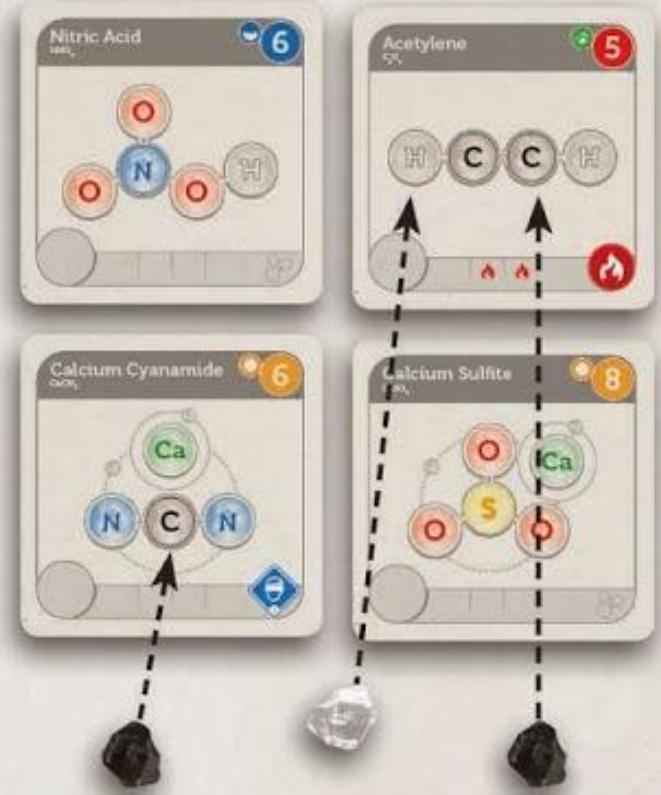
元素可以放到任何一張化合物卡上開放的元素區域。
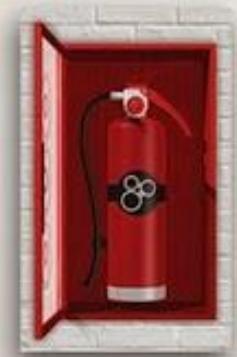
滅火器一旦完成後,實驗室階段時翻到啟用那一面,而且可以在未來的回合裏使用。更多關於滅火器的細節,請見第9頁。
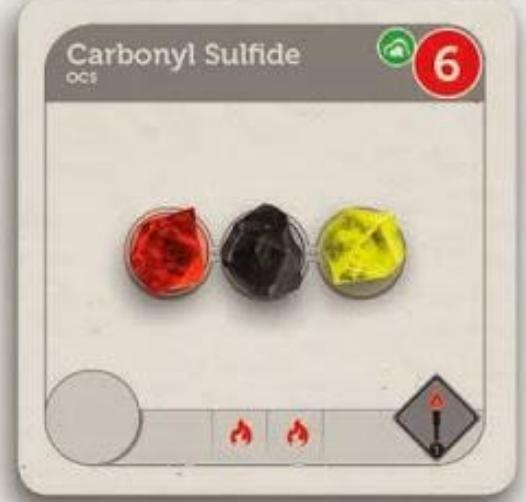
一個完成的化合物。
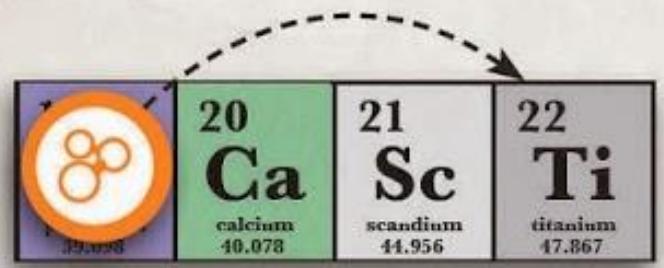
計分指示物根據化合物的原子數量在計分軌上移動一定數量的格數。

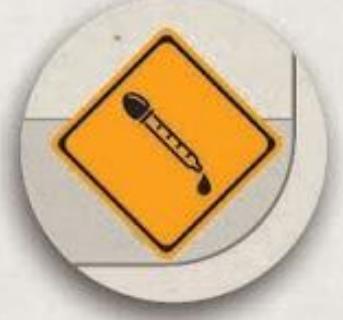
當完成一張有工具符號的化合物卡時,科學家獲得實驗室工具。



每種化合物的三種物理狀態:液體、固體,以及氣體。
化學反應的符號範例。

階段 4:實驗室
在這個階段,科學家為他們完成的化合物(有的話)計分,根據獲得的原子分數調整計分軌、獲得實驗室工具(有的話)、提升他們的實驗等級,並且引發化學反應。
一個化合物計分
從領導科學家開始,並按照順時針方向,完成的化合物計分。當化合物上所有開放的元素區域都被填滿時,這張化合物視為完成。
1) 從研究區移除這張化合物卡,並放到獲得這張卡片分數的科學家的工作台旁邊。
2) 科學家的計分指示物根據這張化合物的原子數量在計分軌上移動多步。
3) 獲取指示物還給科學家;如果這個獲取指示物是暫時獲取那面朝上,則放回玩家的獲取儲備區。否則,放到學習試管的上方,供下一輪使用。
4) 所有在這張化合物卡上的元素都放回元素袋(除非有使用日誌,見第11頁的實驗室工具)。
獲得實驗室工具
有些化合物卡含有一個特定的實驗室工具符號。當這種化合物完成時,獲得這張化合物的玩家拿取對應的實驗室工具,並放到他的工作台上。這個工具可以在接下來的輪次裏使用,或者用來交易。注意:科學家在他的工作台上已經有該種工具,他不能拿取這個工具。見第11頁有關實驗室工具的細節。
提升實驗等級
每個化合物都有一個物理狀態,對應每個科學家工作台特定的實驗。在化合物完成並計分後,獲得這張化合物的玩家,提升特定實驗一個等級。科學家可以選擇提升他的實驗室實驗等級,取代提升發現、學習或研究實驗的等級。有關實驗等級,請見第10頁的工作台。
引發化學反應
有些化合物卡有一個化學反應符號。在這些化合物完成並計分後,立刻發生化學反應。見第13頁的化學反應。
階段 4:實驗室(接上一頁)
在所有完成的化合物都計分後,領導科學家抽新的化合物卡,依序從左到右、從上到下填滿研究區。接著,領導科學家把實驗室鑰匙傳給他的左手邊科學家,然後新的一輪從發現階段開始。
翻開一張實驗室大火
當填滿研究區時翻開一張實驗室大火,把這張實驗室大火放到一旁,並且繼續填滿研究區。接著,棄掉這張實驗室大火並在每張具有可燃性的化合物上放置火焰指示物。
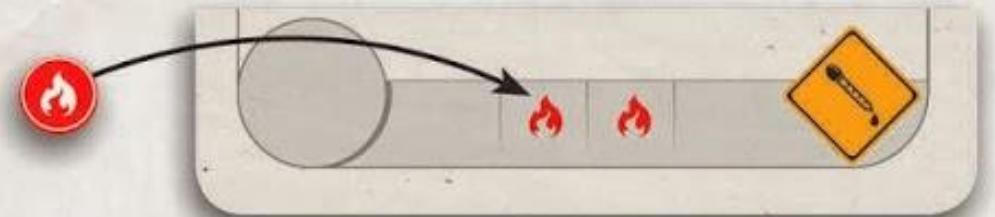
這個化合物有兩個火焰指示物的限制,當這個化合物累積兩個火焰指示物時就會爆炸。
任何化合物到達他們的火焰指示物限制,就會爆炸並從研究區移除棄掉。任何在爆炸的化合物上面的元素,都會四散到相鄰的化合物上(包含斜對角的化合物)。如果爆炸的化合物有被認領,那麼在這張化合物上有放置獲取指示物的科學家選擇元素要放到哪裡。如果相鄰的化合物有可以放置的區域,那麼一定要放在那裏。任何無法放置的元素都棄掉。如果爆炸的化合物還沒有人認領,那麼領導科學家選擇這些元素(有的話)要散到哪裡。接著從化合物牌庫抽一張牌填滿研究區裏任何的空缺。
兩張實驗室大火不會在同一個回合發生。
如果第二張(或者更多)實驗室大火卡在實驗室階段翻開,把它們棄掉,並持續翻新的牌填滿研究區。
注意:一場因為揮發性化學反應所引發的實驗室大火可能會在同一輪發生。這是只會有1場實驗室大火的例外。見第13頁的化學反應。
使用一個滅火器
如果有科學家已經完成他的個人滅火器(或者換來一個完成的滅火器),他可以棄掉這個滅火器以避免一個火焰指示物放到任何一個化合物上(無論是有沒有人認領的)。

記住同一輪不會發生兩次實驗室大火很重要。
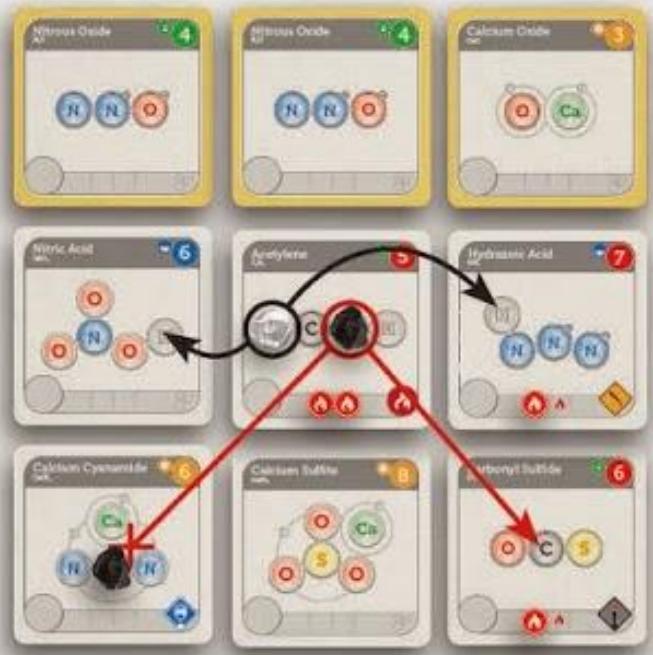
在這個範例中,乙炔(Acetylene)已經爆炸了,在這張卡片上的氫會散到硝酸(Nitric Acid)或是疊氮酸(Hydr-azoic Acid)上。碳只會散到硫化羰(Carbonyl Sulfide)上,因為氰氨化鈣(Calcium Cyanamide)的碳元素區域已經滿了。
管理你的工作台


每個科學家都有自己的工作台要管理與控制。當有科學家完成一個化合物時,他會在實驗室階段時管理這個區域。
元素存放區
遊戲開始時,科學家在他的工作台有 4 個可用的元素存放區。可以藉由提升實驗室實驗等級提高存放量,最高可以存放 7 個。
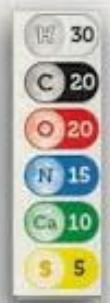
元素图例
元素圖例在每個工作台的元素存放區左邊。這個圖例說明了元素的顏色、縮寫字,以及每種元素在遊戲中的數量。
發現實驗
發現實驗的每個等級可以讓科學家在發現階段時,發現(從元素袋裡抽)一定數量的元素,這個數量視發現的等級而定。
學習實驗

學習實驗的每個等級可以讓科學家獲取和等級開放數量相等的化合物。
研究實驗
研究實驗可以讓科學家放置和等級開放數量相等的元素到研究區。
實驗室實驗
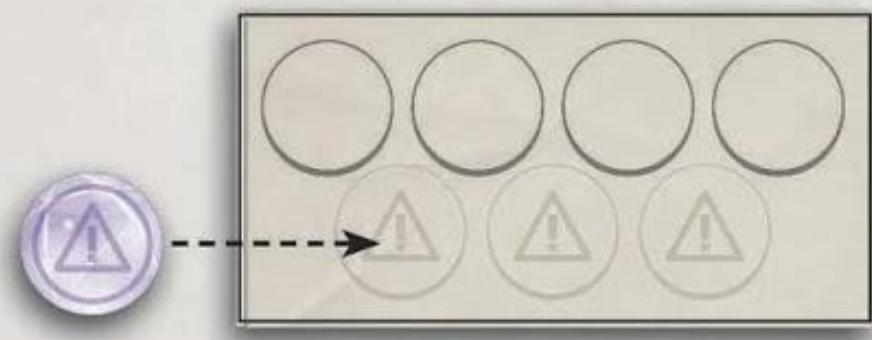
當化合物計分時,科學家可以選擇提升他的實驗室實驗,取代提升其他實驗的等級。當提升這個實驗後,科學家從試管移除存放標記,並把它放到工作台上元素存放區所指示的位置。每個以此方式獲得的元素區域指示物,可以讓科學家多存放一個元素到他們的工作台。
成就解鎖了!存放標記增加了科學家可以放在工作台上的元素總數。
如何安全的操作實驗室工具
有些化合物卡標有一個實驗室工具符號。當這個化合物計分時,認領這個化合物的科學家獲得一個工具板塊(如果還有的話),並放到他的工作台上。除非這個工具已經棄掉或是交易出去了,該科學家在遊戲的剩餘時間裏都可使用這個工具的能力。
安全護目鏡
在研究階段一開始棄掉安全護目鏡,然後在這一輪進行第二次的發現。這些元素應該要和任何目前在元素存放區的元素分開放置。該科學家可以把這些元素和他工作台上的元素放到研究區,但放置的數量視他的研究實驗等級而定。任何因為安全護目鏡所獲得的剩餘元素必須放回元素袋中。科學家不能用3比1交換使用安全護目鏡抽出的元素,也不能用移液管交換安全護目鏡抽出的元素。
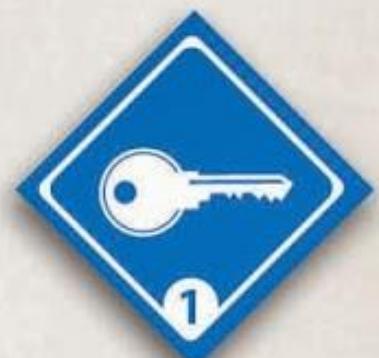
實驗室鑰匙
在實驗室階段結束時棄掉這個工具來獲取木製實驗室鑰匙,並成為下一輪開始的領導科學家。

藍色及灰色的工具是一次性的效果。使用後就會從遊戲移除。
移液管
研究階段時,科學家可以用兩個相同種類的元素交換元素袋中的任何一個元素。科學家每輪只能執行這個交易一次,也不能在使用3比1交換的同一回合使用這個效果。

日誌
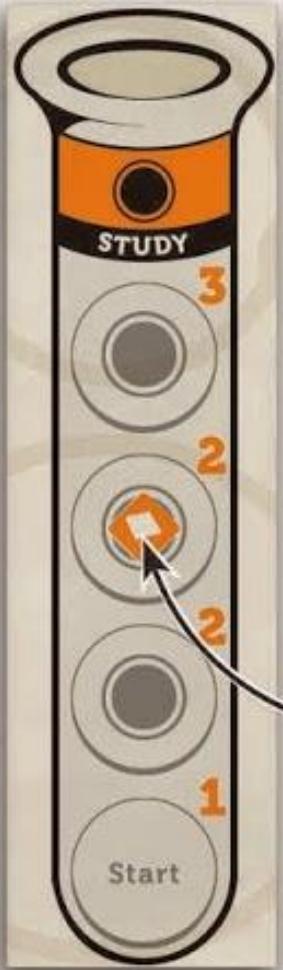
這個工具會在科學家提升他的學習實驗等級時獲得。有了這個日誌,在實驗室階段時,每當科學家為他完成的化合物計分時,科學家可以從其中一個計分的化合物,把一個元素放到他工作台上開放的元素存放區。這個能力會在科學家獲得這個工具的回合之後才會產生效果。

日誌會在科學家的學習實驗到達這個等級後獲得。
實驗室工具(接上一頁)
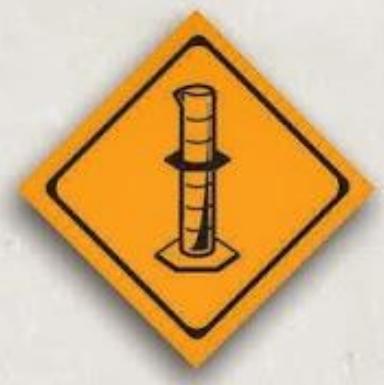
量筒
實驗室階段時,科學家可以把任何一個實驗的等級往下調一個等級,然後把另一個實驗的等級往上調一個等級。每一輪只能執行一次。如果調整後導致學習實驗的等級下降,而該科學家在研究區裡的獲取指示物超過調整後的等級所指示的數量上限,他必須立刻從一個認領的化合物移除一個他自己的獲取指示物。如果科學家選擇減少實驗室實驗的等級,他必須把一個存
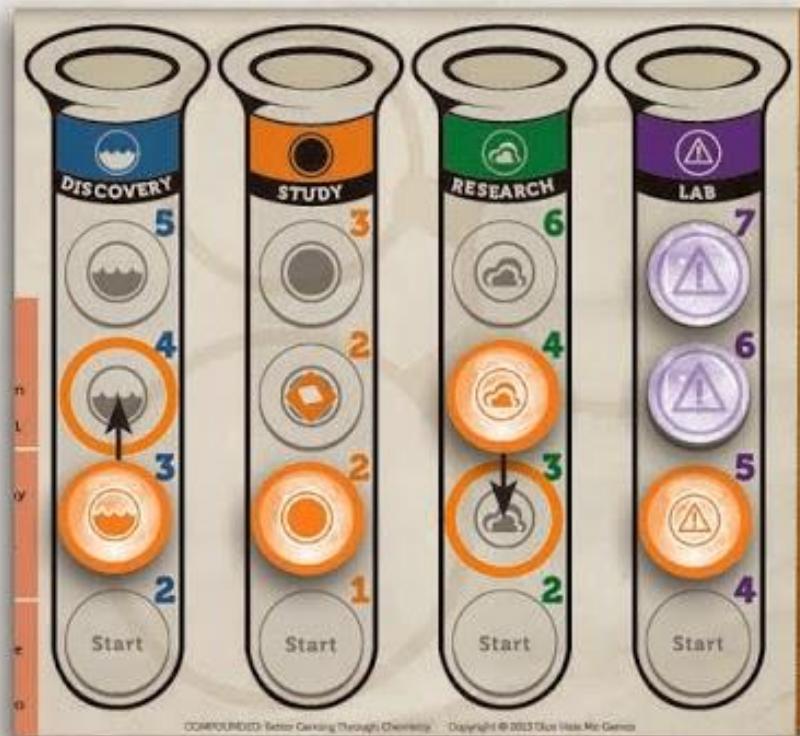
放標記放回實驗室實驗中,並從他的工作台棄掉任何超過存放數量限制的元素。
範例:把研究實驗往下調一個等級,然後把發現等級往上調一個等級。
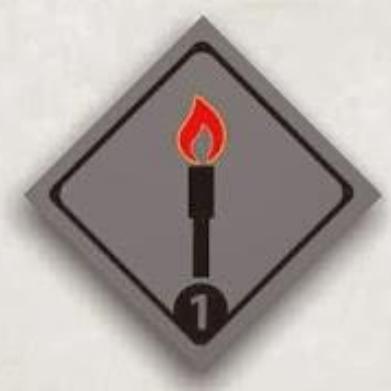
本生燈
在研究階段的任何時候棄掉本生燈,可以把一個火焰指示物放到任何還沒有火焰指示物在上面的化合物。如同一場實驗室大火,科學家可以棄掉他的滅火器來阻止這個火焰指示物的放置。如果使用了滅火器,棄掉本生燈,本生燈不會有任何效果。
如果火焰指示物放到一個不可燃的化合物上,該化合物從現在起視為可燃。一個不可燃的化合物的火焰指示物數量上限為二。
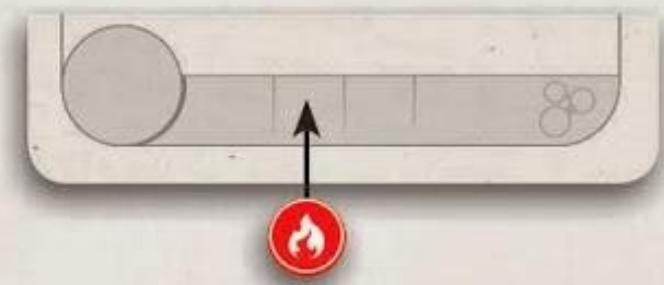
火焰指示物放在一個不可燃的化合物上的位置。
本生燈也可以用來把一個火焰指示物,放置到一個火焰指示物數量上限為一的化合物。這會導致該化合物立刻爆炸。見第9頁翻開一張實驗室大火來了解化合物爆炸。
化學反應
有些化合物會標示一個化學反應的符號。當有科學家計分這個化合物時,化學反應的效果會立刻發生。
授予
當這個化學反應被引發了,科學家必須選擇另一個科學家,以及他們其中一個實驗,該實驗提升一個等級。科學家必須選擇一個等級還沒到頂的實驗。如果他們所有的實驗都到頂了,在這張化合物上的原子分數會平分給另一個選定的玩家。如果分數無法均等的平分,多的分數捨去。例如有張化合物計7分,每個科學家會獲得3分。
易揮發的
當這個化學反應被引發了,它的效果就如同一張實驗室大火從化合物牌庫翻開時。按照一場實驗室大火的規則進行。這可能會立刻導致化合物爆炸。見第9頁翻開一張實驗室大火。
注意:雖然同一回合不能有兩張實驗室大火發生效果,但是易揮發的化學反應和這個規則不牴觸。科學有時是很危險的!
接下來的化學反應會出現在實驗室夥伴變體中。見第11頁瞭解更多有關實驗室夥伴的變體。
危險牽引
當這個化合物計分時,每個科學家從這個化合物上拿取元素並放到研究區裡的另一個化合物上。在這張化合物卡上擁有放在左邊的獲取指示物的科學家先選。
腐蝕性化合物
當這個化合物計分時,兩個計分的科學家各自把學習實驗往下調一個等級(如果可以調的話)。
爆炸元素
當這個化合物計分時,所有至少有一個火焰指示物在上面的化合物立刻爆炸。這不會放置火焰指示物到化合物上(所以滅火器無效)。



兩位科學家的遊戲設置
化合物這款遊戲比較傾向給三或三位以上的科學家進行;然而,如果有兩位科學家想要玩,第三位科學家已經包含進盒子中了一他的名字是諾貝爾。他在遊戲能做的事有點受限,但是別低估了他老謀深算的科學腦袋。
遊戲設置
把諾貝爾工作台放到兩個科學家之間。把一個相同顏色的發現及研究指示物放到發現及研究實驗的起始區域。把同顏色的的計分指示物放到計分軌上。抽四個元素並把它們放到諾貝爾的工作台上的存放區。使用每種起

始化合物各兩張創建
研究區,如左圖所示

遊戲設置時,諾貝爾應該要放到兩個科學家之間。實驗室鑰匙可以放到這兩個區域,用以指示哪個科學家這一輪控制諾貝爾的行動。
剩餘的空位從化合物牌庫抽兩張牌填滿。
玩的像諾貝爾一樣
在這款遊戲中,諾貝爾總是由領導科學家控制,而且諾貝爾的行動總是在兩個科學家都完成他們行動後的階段結束時發生。
發現階段:領導科學家從元素袋抽取和諾貝爾當前發現實驗等級相等數量的的元素,並放到諾貝爾工作台上的元素存放區。在所有元素都抽取後,領導科學家可以選擇和諾貝爾交易。這個交易只能從領導科學家的工作台上拿一個元素換諾貝爾工作台上的一個元素。如果領導科學家選擇交易,那麼另一個玩家也可以以此方式和諾貝爾交易;否則,兩位科學家都不能和諾貝爾交易。發現階段結束時,如果諾貝爾在他的工作台上擁有超過四個元素,領導科學家幫他選擇要棄掉哪些多的元素,並把這些元素放回布袋中。
研究階段:在兩個科學家都放置好他們的元素後,領導科學家必須按照諾貝爾當前的研究等級,從工作台上拿取對應等級數量的元素到一個或一個以上還沒有人認領的化合物上。如果放置元素到化合物上讓諾貝爾完成了一個化合物,則把一個屬於諾貝爾顏色的獲取指示物放到這個化合物上。
實驗室階段:有諾貝爾獲取指示物在上面的化合物放到諾貝爾工作台的旁邊,並依據獲得的分數調整諾貝爾在計分軌上的計分指示物。任何因計分而獲取的工具不會放在諾貝爾工作台上,但是化學反應會發生。如果完成的化合物是液體或氣體,那麼諾貝爾發現或研究實驗等級會往上調一個等級。而且當然的,諾貝爾可能會贏得這場遊戲。
實驗室變體
實驗室夥伴
實驗室夥伴化合物卡片擴展了化合物大戰這款遊戲的體驗,這個變體有著較大的化合物以及更多科學家一起工作的機會。實驗室夥伴變體只推薦給3位或3位以上的科學家進行。

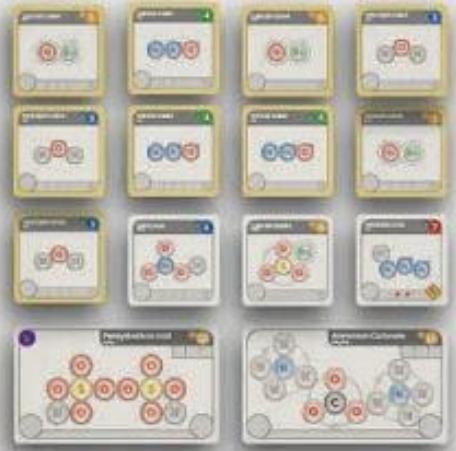
遊戲設置:遊戲的設置照常,但研究區例外,研究區會以12張一般化合物卡以及2張實驗室夥伴卡組
成。如圖所示,洗混實驗室夥伴卡牌庫,並把2張實驗室夥伴卡並排放到矩陣下方。
遊戲進行:實驗室夥伴化合物卡的進行規則和基本遊戲中的化合物卡相同,但是有一個例外:如果一張實驗室夥伴化合物卡放有兩個獲取指示物的話,這張化合物卡在實驗階段時才會計分。這些獲取指示物一般來說會從兩個不同的科學家而來,但也可能會從同一個科學家而來。當實驗室夥伴化合物卡爆炸時,任何這張實驗室夥伴化合物卡上的元素會四散到兩個和這張實驗室夥伴化合物卡相鄰的化合物卡上,然後是同列的下兩張化合物卡,依此類推。當一般放在實驗室夥伴化合物卡旁的化合物卡爆炸時,元素可能會散到實驗室夥伴化合物卡上。見右圖來了解。

實驗室階段:當一個完成的實驗室夥伴化合物卡計分時,每個在這張化合物卡上放有獲取指示物的科學家都會獲得原子分數,並且據此調整他們的實驗等級。如果一張實驗室夥伴化合物卡上的兩個獲取區域都被同一個科學家的獲取指示物占據了,該科學家不會獲得兩倍的原子分數,也不會讓實驗上升兩個等級。當一張實驗室夥伴化合物卡計分時,從實驗室夥伴化合物卡上抽一張卡片填滿研究區。如果無法填滿實驗室夥伴化合物卡的研究區,遊戲立刻結束。
化合物牌庫變體設置
A) 當設置化合物卡牌庫時,把五疊卡片各洗進一張實驗室大火好讓遊戲的進行更難預測。這強烈推薦給有過經驗的科學家進行。
B) 為了要模擬一個更真實且無法預測的遊戲,忽略一般的化合物卡牌庫設置,把所有的化合物卡和實驗室大火卡都洗在一起。祝實驗室好運!
有限的資源
A) 在一場 3 人遊戲中,研究區只設置 4 × 3 的舉陣大小,不要設置最後一排的四張化合物。
B) 從遊戲中移除個人的滅火器以及百搭元素指示物。
Download MarkdownCompoundedRules_web.md34.7 KB
COMPOUNDED Chemistry Textbook
COMPOUNDED: CHEMISTRYTEXTBOOK
Table of Contents
Lab Equipment 3
Lab Set Up..4
Winning5
Sequence of Play....6
Phase I: Discovery...6
Phase 2: Study…..7
Phase 3: Research.....7
Phase 4: Lab.8
Work Bench….10
Lab Tools…II
Chemical Reactions ....13
Play for Two Players ....14
Variants15

For more advanced variants, strategy notes, downloadable rules and a video tutorial, visit dicehatemegames. com/compounded.

"Dice Hate
Me,"“Better Gaming
Through
Chemistry,"
Compounded
logo and all art contained within are ©2013 Dice Hate Me Games.
Course Introduction
Welcome to the lab! In Compounded, you and your fellow scientists will be taking on the task of lab managers, hastily competing to complete the most Compounds before they are completed by others – or destroyed in an explosion.There is a bit of luck in running a successful lab, but careful management of your personal Work Bench, paying close attention to available Compounds, and striking the best deals with your fellow lab mates may just provide you with the formula for victory.
Credits & Acknowledgements
Game Design: Darrell Louder
Graphic Design: Darrell Louder, Chris Kirkman
Development: Darrell Louder, Chris Kirkman, Cherilyn Joy Lee Kirkman
Publisher: Dice Hate Me Games
Platinum Playtesters: Lesley Louder, John Moller,T.C. Petty Ill, Shawn Purtell, Jacki Purtell, Jeff Staab, Luke Winters, and the players of the Unpub program.
Special Thanks: Darrell would like to thank Lesley Louder for being his muse, Ethan Louder for being his son, John Moller for starting the Unpub Program, T.C. Petty IIl for keeping him interested, Chris & Cherilyn for rolling the dice on the little guys, Science for existing and being awesome, Bakka for injecting his youth with curiosity and the urge to constantly discover, Jeff Staab & Jackie Purtel for urging him to put purple into the game, Lisa Scodari & Amberle Browne for your scientific eyes, Apple for everything you do, the KickStarter backers for their support and faith, Teachers for putting up with politics and still trying to make the world a better place, KickTraq for making him addicted to data collection, Mom & Dad for being supportive to the black sheep, and you for taking the time to read the bylines.
Chris & Cherilyn would like to thank all the Kickstarter supporters for their wonderful enthusiasm and generosity. None of this would have been possible without all of you.
This game is dedicated to Ethan Robert Louder. May your excitement, sense of discovery, and smile never fade.

| H | |
| 汽国 | Be |
| Mg | |
| 1 | 元 |
| 微 | 清工 |
| Cs1 | 防 |
| BF | Ra |

COMPOUNDED
LABORATORY EQUIPMENT
| 型 | 234 | Mn | 20 | zCo | 水N | 2CuH | s n品 | ||
| 39Y一 | 世 | N41 | o | T | 微 | 1P d | 47Ag | fcd1 | |
| 72Hf福 | 73Ta | FETWE | Re群 | 7051 | ir | Pt | 7u | 80Hg5 | |
| 104Rf | 105Db | 106Sg | 107Bh | 108Hs | 109Mt | 110Ds | 111Rg |

Score Track
Lab Key start player marker
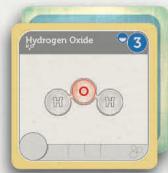
9 Starting Compounds
54 Compound cards

5 Lab Fire cards
5 Work Benches
I Nobel Work Bench (for games with two players) see page 14

5 Fire Extinguishers

5Wild Element Tokens

15 Storage Markers
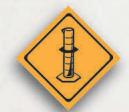
4 Graduated Cylinders

4 Journals
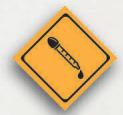
4 Pipets

4 Safety Goggles

2 Lab Keys

4 Bunsen Burners

15 Flame Tokens
100 Element Crystals in Element Bag
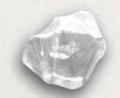
30 Hydrogen
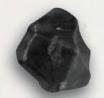
20 Carbon
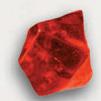
20 Oxygen
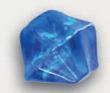
15 Nitrogen

10 Calcium

5 Sulfur
40 player discs in 5 colors; sticker sheet


Compounded • 3


Claim Tokens (3 per player)
Scoring Token
Discovery Token

Study Token

Research Token
Lab Token
SETTING UP THE LAB (3+ scientists)
Unfold the Score Track and place it on the playing area as shown below. Give all scientists a Work Bench in their desired color, along with their 3 Claim Tokens, I Scoring Token, and all 4 of their Experiment Tokens. Place all Element crystals in the Elements Bag and shake gently to randomize the crystals. This is Lab set up for 3 to 5 scientists.To learn how to set up the Lab for 2 scientists, see page 14.
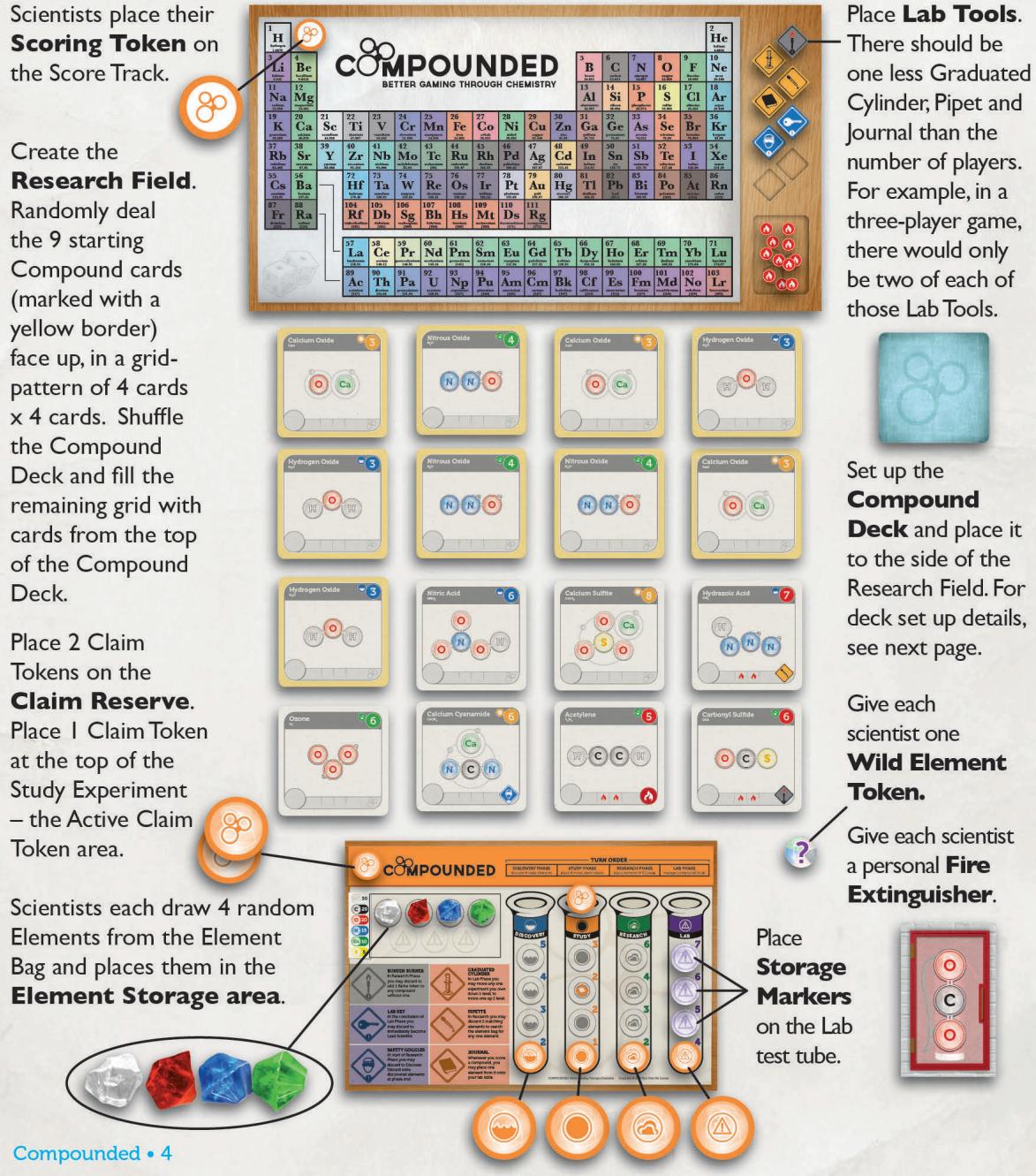
Set up (continued)
Divide the Compound Deck into six stacks (five stacks of eight cards, one stack of seven cards). Set one stack of eight cards aside. Place a Lab Fire card on top of each of the five remaining stacks, then place those stacks on top of each other. Place the stack that was set aside on top of this stack to form the final Compound Deck. For variant Compound Deck set-ups, see page 15.
A Note on Wild Elements

A player may discard a Wild Element Token during the Research Phase to take any Element (except Sulfur) from the Element Bag and immediately place it onto a Compound in the Research Field or a Fire Extinguisher. Normal placement rules apply. For placement rules see Phase 3: Research, page 7.
WINNING COMPOUNDED
When any one of the below factors occur, the end game is triggered:
A) A scientist reaches 50 Atomic Points (AP).
B) A scientist completes 3 of the 4 Experiments on his Work Bench.
C)The Research Field is unable to be filled to capacity.
When condition A or B occurs there is one additional turn of game play.
The 4 Lab Experiments
When condition C occurs - the Research Field can not be filled - the game ends immediately.
At the end of the game, a scientist scores I AP for each Element that is on any uncompleted Compounds he has claimed. Each scientist scores I AP for every 2 elements on his Work Bench.
If a scientist has a completed and unused Fire Extinguisher at game end, it is worth 4 AP.

Each Wild Element in a scientist's possession at game end is worth 2 AP.

THE SCIENTIST WITH THE MOST ATOMIC POINTS WINS.
Compounded • 5
H 30 Element rarity is 20 ranked at left, with 20 Hydrogen being
N15 the most common, 10 and Sulfur being the 5 most rare.
OPENTRADING
Although trading of Elements,Tools, and physical components may only be done during the Discovery Phase, verbal agreements can be made at any time during the game. Scientists are encouraged to bargain, coerce and, sometimes, swindle to get a step ahead. Remember, though, that no verbal deal is binding!
Each round of Compounded is broken up into 4 phases.
DISCOVERY Scientists gain Elements and initiate trades.
STUDY Scientists claim Compounds in Research Field.
RESEARCH Scientists place Elements onto Compounds.
LAB Completed Compounds are scored,Work Benches are managed, Research Field is replenished. Lab Fires may occur.
At the start of the game, the scientist with the rarest Elements on his Work Bench is the Lead Scientist and is given the wooden Lab Key. In the case of a tie, the youngest scientist is Lead Scientist. The Lead Scientist is the first player to take actions in each Phase.At the end of each round, the Lab Key is passed to the scientist on the start player's left.That player is now the Lead Scientist.
PHASE 1: Discovery
Beginning with the Lead Scientist, each scientist draws a number of Elements (as shown on the Discovery Experiment, as seen at right) from the Element Bag. These Elements are then placed on the scientist's Work Bench in the Element Storage area. After all scientists have drawn Elements, trading begins. NOTE: The Discovery Phase is skipped in the first round of the game.
A scientist may freely trade Elements, acquired Lab Tools, a Fire
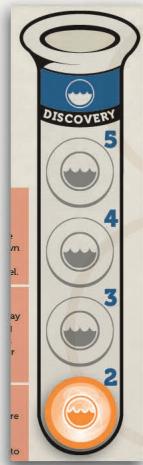
Scientists only Discover two Elements
each round at the beginning of the game, but Discover more by
improving this Experiment.
See Phase 4: Lab on
page 8.
Extinguisher, Wild Elements, or even future favors for anything from any other scientist or group of scientists.Traded favors, however, are only as good as the scientist's word - no deal for favors is binding! Scientists may not trade Atomic Points or Experiment levels.
At the end of the Phase, after all trading is complete, if a scientist has more Elements than available spaces in his Element Storage area, he returns those Elements to the Element Bag.
PHASE 2: Study
Beginning with Lead Scientist and proceeding clockwise around the lab, each scientist may place one Claim Token from his Work Bench that is not in his Claim Reserve onto an unclaimed Compound, or pass.This continues until each scientist has placed all available Claim Tokens (determined by the number on their Study Experiment) or all have passed. Once a scientist has passed, he may not place Claim Tokens again this round.
After Claim Tokens have been placed, beginning with Lead Scientist, each scientist with a Claim Token that was placed in a previous round may move one – and only one – of those Claim Tokens to an unclaimed Compound.
PHASE 3: Research
Beginning with Lead Scientist, each scientist moves a number of Elements (shown by the Research Experiment level) onto the Research Field. A scientist may place his elements on any claimed or unclaimed Compound (and his personal Fire Extinguisher).
CLAIMED COMPOUND
Only scientists who claim a Compound can score and benefit from completion. Scientists may place Elements on other scientists' claimed Compounds, but cannot score by doing so.
UNCLAIMED COMPOUND
When a scientist places the final Element on an unclaimed Compound he places a Claim Token from his Claim Reserve – temporary claim icon side-up – onto the card to mark the Compound for scoring in the Lab Phase. Claim Tokens are limited; if a player does

Temporary Claim side
not have a Claim Token in Claim Reserve he may not claim nor score from finishing an uncompleted Compound. Unclaimed Compounds containing previously-placed Elements can be claimed by a scientist in the Study Phase if that scientist has an available Claim Token.
FIRE EXTINGUISHER
Scientists may place Elements onto their personal Fire Extinguisher just as placing Elements into the Research Field.
NOTE: Once during this Phase, scientists may also trade three of the same type of Element from their Work Bench for any Element in the Element Bag.
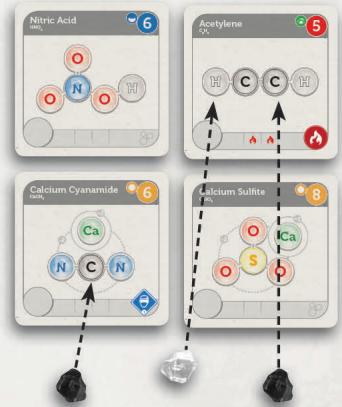
Elements are placed on an open Element space on any Compound card.
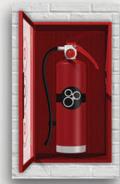
The Fire Extinguisher is flipped to the activated side in the Lab Phase once completed
and may be used in future rounds. For more on the Extinguisher, see page 9.
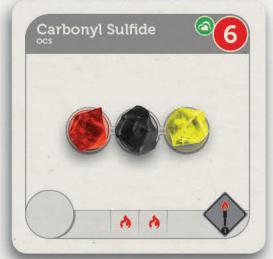
A completed Compound.

ScoringTokens
are advanced
a number of 3 spaces on the
Score Track
equal to the Compound's Atomic Number.
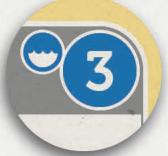
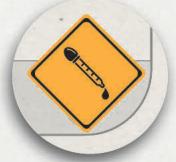
Scientists gain Lab Tools when Compound cards have a Tool icon.

The three physical states of every Compound: Liquid, Solid and Gas.
Example of a Chemical Reaction icon.

PHASE 4: Lab
During this phase, scientists score their completed Compounds (if any), move up the appropriate number of Atomic Points on the Score Track, gain Lab Tools (if available), raise the level of their Experiments, and trigger Chemical Reactions.
SCORING A COMPOUND
Beginning with the Lead Scientist and proceeding clockwise, completed Compounds are scored. Compounds are considered complete when all open Element spaces on the card are filled.
I) The Compound card is removed from the Research Field and placed next to the Work Bench of the scoring scientist.
2) The scientist's Scoring Token is advanced a number of spaces on the Score Track equal to the Compound's Atomic Number.
3) The Claim Token is returned to the scientist; if the Claim Token has the temporary claim side up, it is returned to the player's Claim Reserve. Otherwise, it is placed on top of the Study test tube and may be used next round.
4) All elements on the Compound are returned to the Element Bag (unless the Journal is used, see Lab Tools on page I 1).
GAINING LAB TOOLS
Some Compound cards contain a specific Lab Tool icon.When that Compound is completed, the claiming scientist takes the appropriate Lab Tool and places it on his Work Bench.The Tool may be used in subsequent rounds, or traded. NOTE: If a scientist already has that type of tool on his Work Bench, he cannot take the tool. For more on Lab Tools, see page I I.
RAISING EXPERIMENT LEVELS
Each Compound has a chemical state that corresponds to a certain Experiment on each scientist's Work Bench. After a Compound is completed and scored, the claiming scientist may improve that particular Experiment by moving that token upwards one level. Instead of improving Discovery, Study or Research Experiments, a scientist may choose to improve his Lab Experiment. For Experiment levels, see Work Bench on page 10.
TRIGGERING CHEMICAL REACTIONS
Some Compound cards have a Chemical Reaction icon.After these Compounds are completed and scored, the Chemical Reaction immediately takes effect. See Chemical Reactions, page 13.
PHASE 4: Lab (continued)
After all completed Compounds have been scored, the Lead Scientist draws new Compounds to fill the empty spaces in the Research Field from left to right, top to bottom. The Lead Scientist then passes the Lab Key to the scientist to his left and a new round begins with the Discovery Phase.
REVEALING A LAB FIRE
When a Lab Fire is revealed while filling the Research Field, set the Lab Fire aside and finish filling the Field.Then, discard the Lab Fire and place a Flame Token on all flammable Compounds.
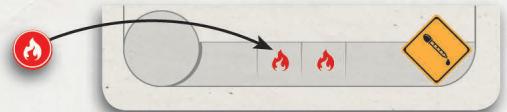
This Compound has a two-Flame Token limit. It will explode when there are two Flame Tokens on the Compound.
Any Compounds that reach their Flame Token limit explode and are taken out of the Research Field and discarded. Any Elements on the exploding Compounds will scatter to Compounds that are horizontally, vertically and diagonally adjacent. If the exploding Compound is claimed, then the scientist whose Claim Token is on the Compound chooses where to place the Elements. If there is a space for the Element on an adjacent Compound, the Element must be placed. All Elements that are not able to be placed are discarded. If the exploding Compound is unclaimed, then the Lead Scientist chooses where those Elements (if any) scatter. Any gaps in the Research Field grid are then filled with cards from the top of the Compound Deck.
Two Lab Fires cannot occur during the same turn. If a second (or more) Lab Fire cards are revealed during the same Lab Phase, discard them and continue refilling the Research Field.
NOTE: A Lab Fire can occur in the same round that the Volatile Chemical Reaction has been triggered.This is the only exception to the I Lab Fire limit. See page 13 for Chemical Reactions.
USING A FIRE EXTINGUISHER
If a scientist has completed his personal Fire Extinguisher (or traded to acquire a completed Extinguisher), he may discard it to prevent the placement of a Flame Token on any one Compound (even an unclaimed Compound or a Compound claimed by another scientist).
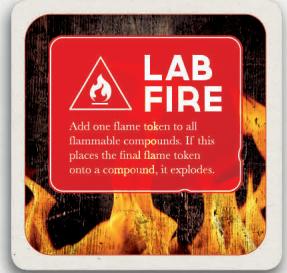
It's important to remember that there cannot be two Lab Fires in the same round.

In this example, Acetylene has exploded.The one Hydrogen on the Compound could scatter to Nitric Acid or Hydrozoic Acid.The Carbon can only scatter to Carbonyl Sulfide since Calcium Cyanamide's Carbon Element space is already filled.
MANAGING YOUR WORK BENCH
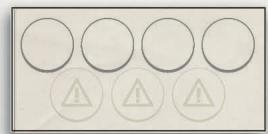
Each scientist is given his own tableau, orWork Bench, to manage and control. When a scientist completes a Compound, he will manage this space during the Lab Phase.
ELEMENT STORAGE SPACES
At the start of a game, scientists have 4 available Element Storage spaces on their Work Bench. This number can be increased by moving up the Lab Experiment level, to a maximum of 7.

ELEMENT KEY
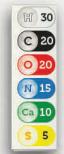
The element key is located to the left of the Element Storage on each Work Bench. This key defines the Element colors, abbreviations, and the number of each Element in the game.
DISCOVERY EXPERIMENT
For each level of the Discovery Experiment, that scientist is able to Discover (pull from the Element Bag) a number of Elements during the Discovery phase equal to the level number.
STUDY EXPERIMENT
For each level of the Study Experiment, that scientist is now able to claim a maximum number of Compounds equal to the level number.

RESEARCH EXPERIMENT

For each level of the Research Experiment, that scientist is able to place a number of Elements into the Research Field equal to the level number.
LAB EXPERIMENT
A scientist may opt to raise his Lab Experiment instead of another Experiment's level when scoring a Compound. When this Experiment is increased, the scientist removes the Storage Marker from the test tube and places it on one of the designated places in the Element Storage area of the Work Bench. For each Element Space Token gained in this way, a scientist can store one additional Element on their Work Bench.
Achievement unlocked! Storage Markers increase the amount of Elements a scientist can hold on his Work Bench.

HOW TO SAFELY OPERATE LAB TOOLS
Some Compound Cards are marked with a Lab Tool icon. Once this Compound is scored, the scientist gains a tool tile (if available) to add to his Work Bench.The scientist now has access to that ability for the remainder of the game, unless the Tool is discarded or traded away.
SAFETY GOGGLES
Discard Safety Goggles at the start of the Research Phase to Discover a second time this round.These Elements should be kept separate from any Elements that are currently in Element Storage.The scientist may place these Elements in the Research Field along with Elements from his Work Bench, but can only place as many as his Research Experiment level allows. When the scientist has completed placing Elements, any Elements remaining from the Safety Goggles should be placed back into the Element Bag. Scientists may not trade any of the Safety Goggles Elements using the 3-for-I trade or through the use of the Pipet Tool.
LAB KEY
Discard this Tool at the end of the Lab Phase to claim the wooden Lab Key and be Lead Scientist at the start of the next turn.
PIPET
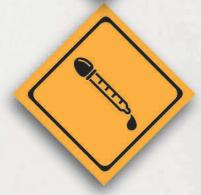
During the Research Phase the scientist may now trade two of the same type of Element for any one Element in the Element Bag.The scientist may only perform this trade once per round and cannot be used the same turn as a 3-for-I trade.
JOURNAL
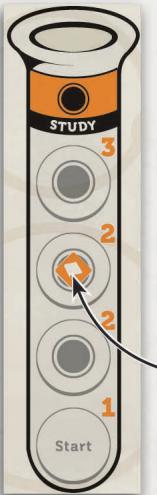
This Tool is acquired when a scientist improves his Study Experiment.With the Journal, once during the Lab Phase whenever a scientist scores his completed Compounds, the scientist may place one Element from one of those Compounds onto an open Element Storage space on his Work Bench. This ability takes effect the turn after the scientist gains this tool.
The Journal is acquired when a scientist's Study Experiment reaches this level.

Blue and Gray Tools are onetime use.They are discarded from the game after their action is activated.


Lab Tools (continued)

GRADUATED CYLINDER
During the Lab Phase the scientist may move any one Experiment down one level to move another Experiment up one level. This can only be done once per round. If this movement results in a Study Experiment being reduced and there are more of that scientist's Claim Tokens in the Research Field than the new level number would allow, the scientist must immediately remove one of his Claim Tokens from a claimed Compound. If

the scientist reduces the Lab Experiment, the scientist must return a Storage Marker to the Lab Experiment and discard any Elements from his Work Bench that are in excess of his limit.
Example: Moving Research down one level to move Discovery up one level

BUNSEN BURNER
Discard Bunsen Burner any time during the Research Phase to add one Flame Token to any Compound that does not currently have a Flame Token. As in a Lab Fire, a scientist may discard his Fire Extinguisher to prevent placement of the Flame Token. If a Fire Extinguisher is used, Bunsen Burner is discarded with no effect.
If a Flame Token is placed on a non-flammable Compound, that Compound is now treated as flammable. A non-flammable Compound's Flame Token limit is two.
Bunsen Burner may also be used to place a Flame Token on a
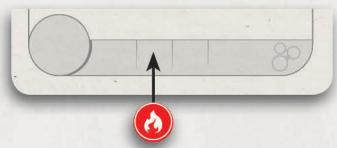
Flame Tokens are placed here when added to non-flammable Compounds.
Compound with a Flame Token limit of one. This will result in that Compound blowing up immediately. See Revealing a Lab Fire on page 9 for more on exploding Compounds.

CHEMICAL REACTIONS AND YOU
Some Compound Cards are marked with a Chemical Reaction icon.When a scientist scores this Compound, the effects of the Chemical Reaction immediately take place.
GRANT
When this Chemical Reaction triggers, the scientist must choose another scientist and one of their Experiments.That Experiment moves up one level. The scientist must choose an Experiment that is not at its maximum level. If all Experiments are at their maximum levels, the AP on the Compound are shared between the two scientists. If the AP cannot be divided equally, the point difference is not counted for either scientist. For example, if a Compound scores 7 AP, each scientist would receive 3 AP.
VOLATILE
When this Chemical Reaction triggers, it acts as if a Lab Fire was just revealed from the Compound Deck. Follow the same rules as those of a Lab Fire.This can result in Compounds exploding immediately. See Revealing a Lab Fire on page 9.
NOTE: Although there cannot be two Lab Fires in a single turn, there may be both a Lab Fire and a Volatile Reaction. Science can sometimes be dangerous!
The following Chemical Reactions are featured in the Lab Partners variant. For more information on Lab Partners, please see page 15.
HAZARDOUS HAULING
When this Compound is scored, each scientist moves one Element from this Compound onto any other Compound in the Research Field. The scientist who owns the Claim Token that is in the left Claim location on the Compound card chooses first.
CORROSIVE COMPOUND
When this Compound is scored, the two scoring scientists each move down one level on their Study Experiment (if possible).
EXPLOSIVE ELEMENTS
When this Compound is scored, all Compounds which have at least one flame token on them immediately explode. This does not add Flame Tokens to Compounds (so a Fire Extinguisher does not prevent this).



SET UP AND PLAY FOR TWO SCIENTISTS
Compounded is intended for three or more scientists; however, if two scientists wish to play, a third scientist has been included in the box - his name is Nobel. He is a bit more limited in what he can do in the game, but do not underestimate his wily scientific mind.
SET UP
Place Nobel's Work Bench within reach of both scientists. Place a Research Marker of the same color on the start spaces of the Discovery and Research Experiments. Place a Scoring Token in that same color on the Score Track. Draw four Elements and place them in the Storage area on Nobel's Work
Bench. Create the Research Field

Nobel should be placed between the two scientists during set up. The Lab Key may be placed in these spots to indicate which scientist controls Nobel's actions for the round.
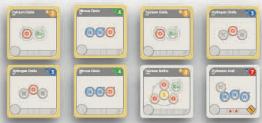
using two of each Starting Compounds as shown at left.The rest of the grid is filled with two Compounds from the top of the Compound Deck.
PLAYING AS NOBEL
During the game, Nobel will always be controlled by the Lead Scientist and Nobel's actions will always take place at the end of a phase after both scientists have completed their actions.
DISCOVERY PHASE: The Lead Scientist draws the amount of elements from the bag equal to Nobel's current Discovery level and places them in the Element Storage area of Nobel's Work Bench. After all Elements have been drawn, the Lead Scientist may choose to trade with Nobel.This trade may only be one Element from the Lead Scientist's Work Bench for one Element from Nobel's Work Bench. If the Lead Scientist chooses to trade, then the second scientist may also choose to trade in the same manner; otherwise, neither scientist may trade with Nobel. At the end of the Discovery Phase, if Nobel has more than four Elements on his lab table, the Lead Scientist chooses which Elements to discard and places them back into the Element Bag.
RESEARCH PHASE: After both scientists have placed their Elements, the Lead Scientist must place a number of Elements from Nobel's Work Bench equal to Nobel's current Research level (if available) onto one or more unclaimed Compounds. If the placement of Elements on Compounds by Nobel completes a Compound, a Claim Token in Nobel's chosen color is placed on the Compound.
LAB PHASE: Completed Compounds with Nobel's Claim Tokens are placed next to Nobel's Work Bench and Nobel's Scoring Token is adjusted on the Score Track.Any Tools acquired are not placed on Nobel's Work Bench, but Chemical Reactions do occur. If the completed Compound was a Liquid or Gas, then Nobel's Discovery or Research Experiment levels are adjusted and the new levels taken into account during subsequent Discovery and Research Phases.And, yes, Nobel may win the game.
LAB VARIANTS
LAB PARTNERS
The Lab Partners Compound cards expand the playing experience of Compounded with larger Compounds and more chances for scientists to work together. Lab Partners is only recommended for games with 3 or more scientists.
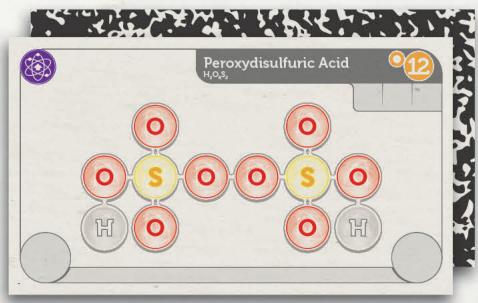
SET UP: Game set up is as normal, except that the Research Field will be made up of 12 regular Compound Cards and 2 Lab
Partners cards.After setting up the Research Field as shown at right, shuffle the Lab Partners Deck and place 2 Lab Partners cards side by side at the bottom of the grid.
GAME PLAY: Lab Partners Compound cards play with all the same rules as the base game Compound cards, with one exception: A Lab Partners Compound cannot be scored in the Lab Phase unless there are two Claim Tokens on the Compound. These Claim Tokens will normally be from two different scientists, but can be from the same scientist, as well (daring, but it can be done).When Lab Partners Compounds explode, any Elements on the Compound will scatter first to the two regular Compounds next to the Lab Partners Compound and then to the next two Compounds in the row above

and so on.When Regular Compounds explode next to a Lab Partners Compound, Elements may scatter onto the Lab Partners Compound. See the scatter chart at right for more detail.
LAB PHASE: When a completed Lab Partners Compound is scored, each scientist with a Claim Token on the Compound will receive the noted AP, as well as adjust their Experiments accordingly. If a scientist's Claim Token occupies both Claim spaces on the Lab Partners Compound, that scientist does not receive twice the amount of AP, nor does he gain more than one level when adjusting an Experiment. When a Lab Partners Compound is scored, replace it with the top card from the Lab Partners Deck. If an empty Lab Partners space is unable to be replenished, the game ends immediately.
VARIABLE COMPOUND DECK SET UP
A) When setting up the Compound Deck, shuffle one Lab Fire into each of the five card stacks to create a more unpredictable game.This is highly recommended for advanced scientists.
B) For a truly unpredictable game, ignore the normal Compound Deck set up and shuffle all Compound cards and Lab Fires together. Best of luck in the lab!
RESTRICTED RESOURCES
A) In a 3-player game, do not add the final row of four Compound cards to the Research Field.
B) Remove the personal Fire Extinguishers and Wild Element Tokens from the game.
DICE HATEME GAMES
Download MarkdownTexts are community-compiled or publicly released by publishers; copyright remains with the original authors. For personal reference only.