
Cytosis
At a glance
Rules, cards and Q&A (Chinese)
The rules, card data and player questions for this game are written in Chinese. Open the Chinese page to read them.
Where to find full rules
Full rules and card lookup are available in the cunlema app at cunlema.cn — pick this game and ask about any rule, card or turn you are unsure about.
Related games
Rulebook text (Markdown)
This game has 2 rulebook Markdown file(s) in our library; 2 rendered inline below — expand to read or download.
rules_zh_细胞工厂_3572.md37.5 KB
细胞
本文翻译:小巷
CYTOSIS
A Cell Biology Game
RULEBOOK
CYTOSIS: A CELL BIOLOGY GAME
A game that takes place inside a human cell for 2 - 5 players
游戏简介
Cytosis是发生在一个人体细胞内的工人放置游戏。玩家们以一些瓶子标示起手,轮到时,玩家可将他的其中一个瓶子放置在任何该细胞内可放置的位置。一些位置会提供玩家资源而另一些提供行动。资源可被利用于生产提供健康值的生物酶,荷尔蒙,和/或接受体。游戏结束时,最高健康值玩家获得游戏胜利!
组件- 基础游戏
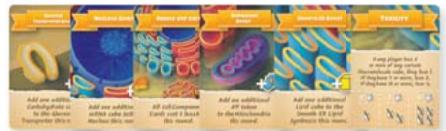
43张细胞成分卡
· 10张生物酶卡
·6张蛋白质荷尔蒙卡
·6张英固醇荷尔蒙卡
· 5张类固醇荷尔蒙接受体卡
· 5张蛋白质荷尔蒙接受体卡
· 4张额外的资源卡
·7张排毒卡
5张目标卡
12张事件卡

组件-病毒扩充
6张细胞成分卡
·2张流感病毒攻击卡
·2张鼻病毒攻击卡
·2张埃博拉病毒攻击卡

2张目标卡

3张事件卡

1个起始玩家标示

玩家部分

· 10个囊泡
(5种颜色,每种2个)
· 20个瓶子
(5种颜色,每种4个)
2个中立瓶子

5张玩家垫
5颗抗体骰

15个抗体标记
(褐色)

30个ATP标记

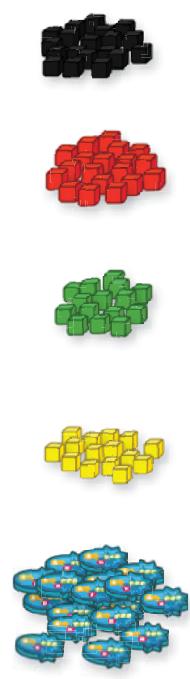
66个高分子资源块
· 18个信使RNA资源(黑色)
· 18个蛋白质资源(红色)
· 15个碳水化合物资源(绿色)
· 15个脂质资源(黄色)

7张表观遗传修饰卡

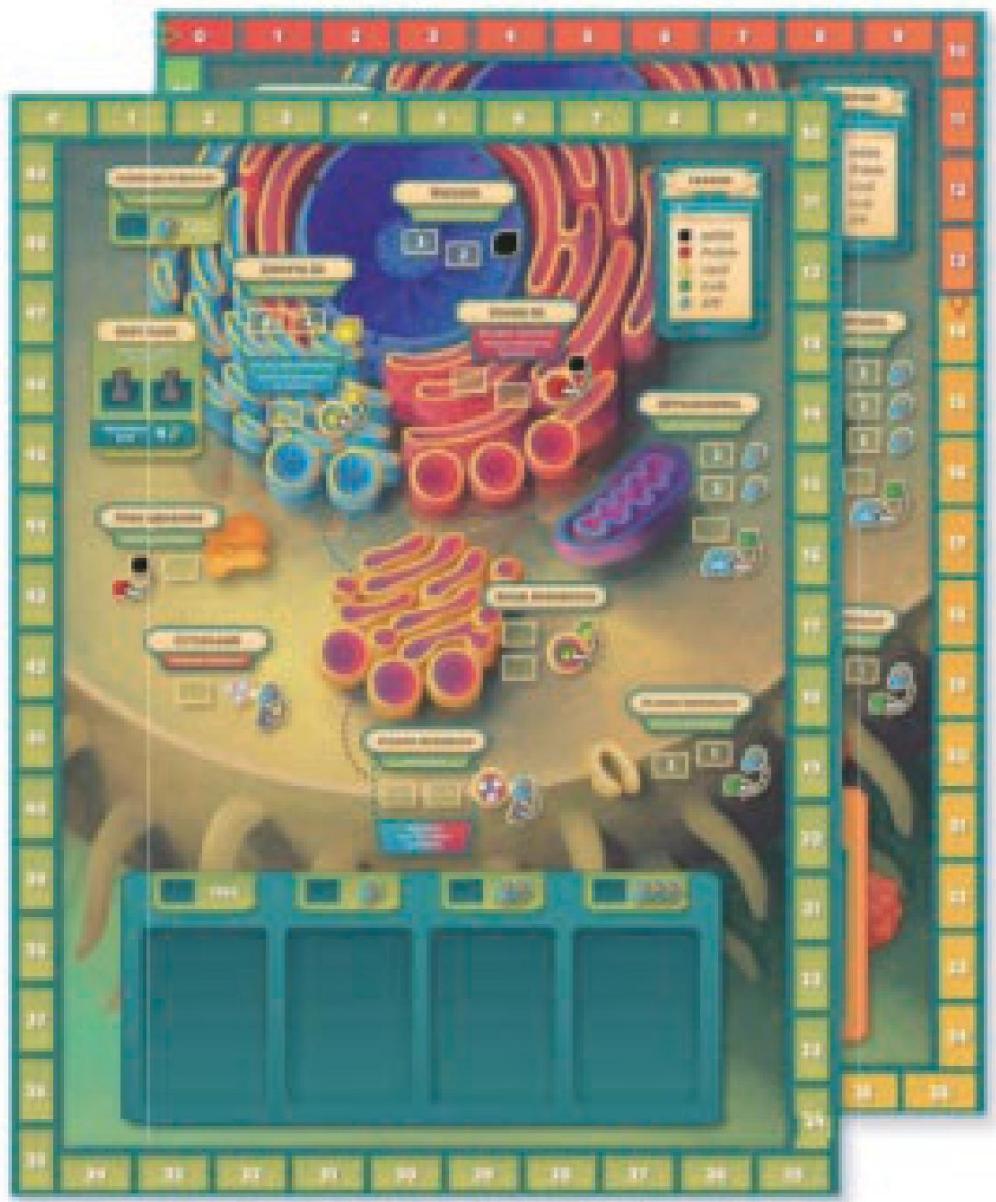
1块游戏版图(双面)
游戏设置
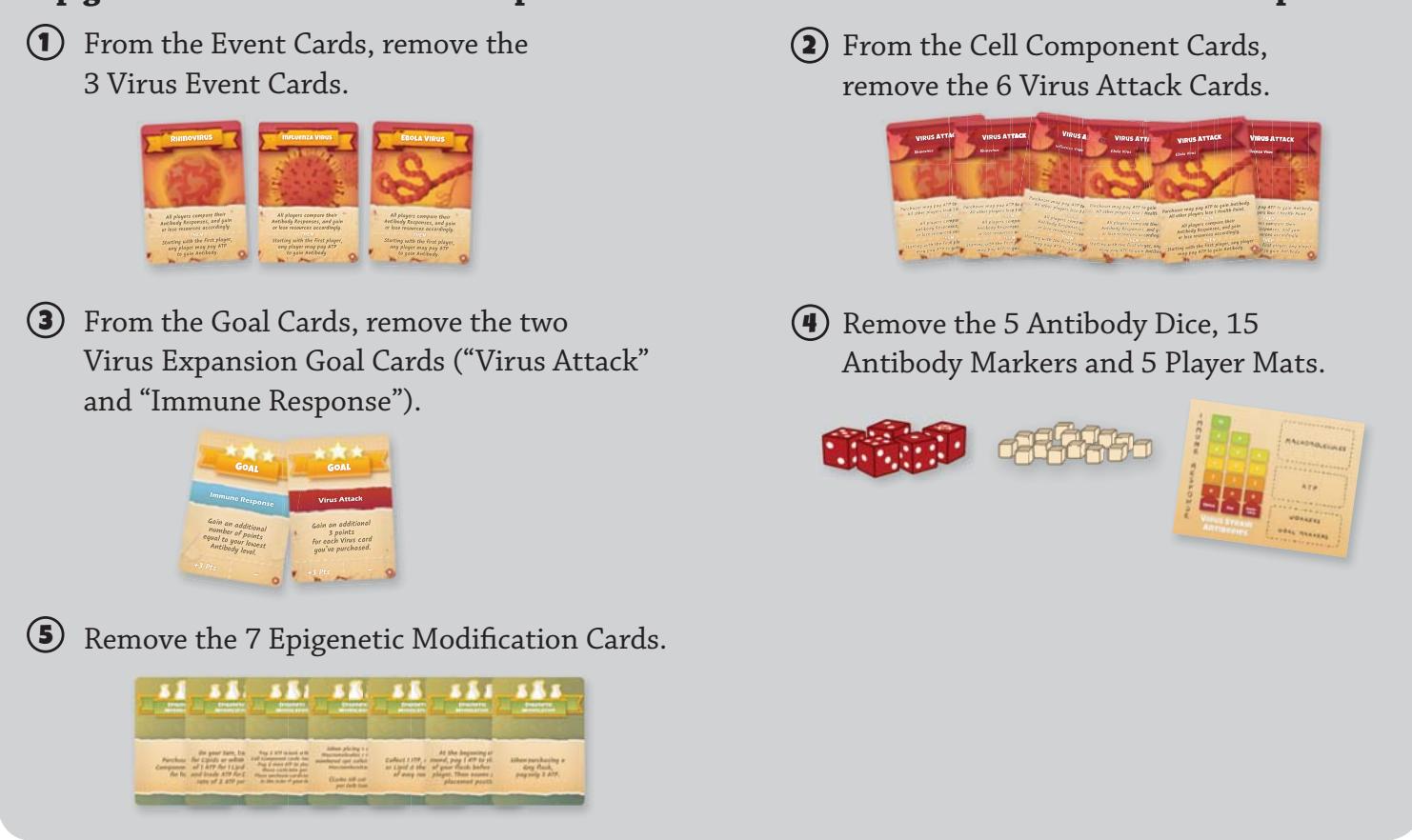
如果你只进行基础游戏,移除所有病毒扩充的组件和7张表观遗传修饰卡,将它们放回盒中,你不会使用到这些组件。
① 从事件卡中,移除3张病毒事件卡。
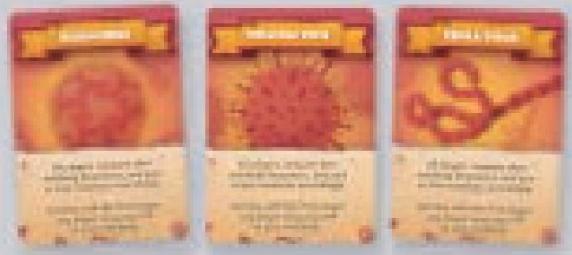
③ 从目标卡中,移除2张病毒扩充目标卡(“病毒攻击”和“免疫回应”)
② 从细胞成分卡中,移除6张病毒攻击卡。

④ 移除5个抗体骰子,15个抗体标记和5张玩家垫。

⑤ 移除7张表观遗传修饰卡
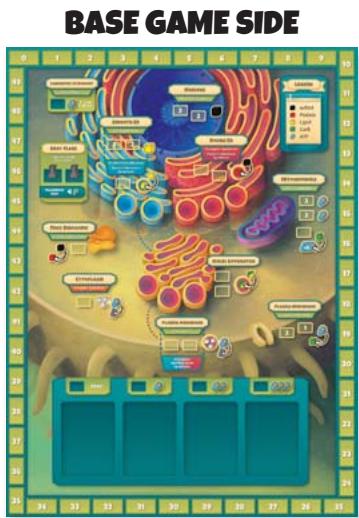
1 将版图翻到基础游戏面,放置于游戏区域中央。然后,将高分子资源按颜色进行分类,把它们堆在版图附近。现在,把ATP标记也堆在版图附近。这些高分子资源和ATP标记将组成常规资源库存。把2枚中立瓶子放在版图灰色瓶子区。
2 将3种类型的卡:事件卡,目标卡和细胞成分卡分开。洗混12张事件卡。如果进行2或3人游戏,随机移除2张事件卡将它们放回盒中。如果进行4人游戏,随机移除1张事件卡。如果进行5人游戏不进行移除。现在,把剩余的卡面朝下放置在游戏版图旁形成牌堆。
BASE GAME SIDE

3 洗混目标卡,将它们按游戏人数+1的数量面朝上放置在游戏版图上方(例外:5人游戏启用所有除了病毒扩充之外的5张目标卡),把另外不使用的目标卡放回盒中。
洗混细胞成分卡,翻出4张,放置在版图细胞成分卡放置区。
5 分给每位玩家3张细胞成分卡。每位玩家秘密地选择两张保存,并把另一张洗进剩余牌堆。将剩余的细胞成分卡面朝下放在细胞成分卡放置区右侧的版图外。
6 根据下表,给每位玩家他们的部件。每位玩家应该使用同一颜色。
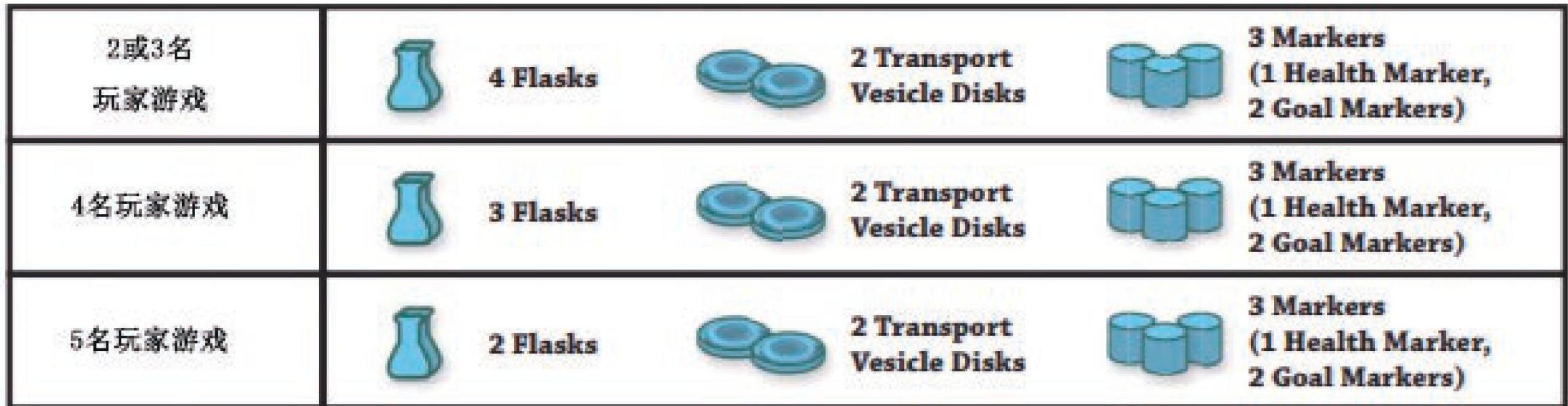
7 每位玩家都把他们其中一枚玩家标记放在健康值轨(围绕着版图的数字轨)上数字0的位置。这是用于记录玩家健康分值的健康标记。
- 最近生过病的玩家获得起始玩家标示和2个ATP。该玩家左手边玩家获得3个ATP,再接下来的玩家获得4个ATP,然后直到所有玩家都获得ATP。这是每个玩家的起始个人资源。
每个玩家选择2个额外的资源(从ATP,信使RNA或脂质中选)放到个人资源区。
现在,开始玩吧!
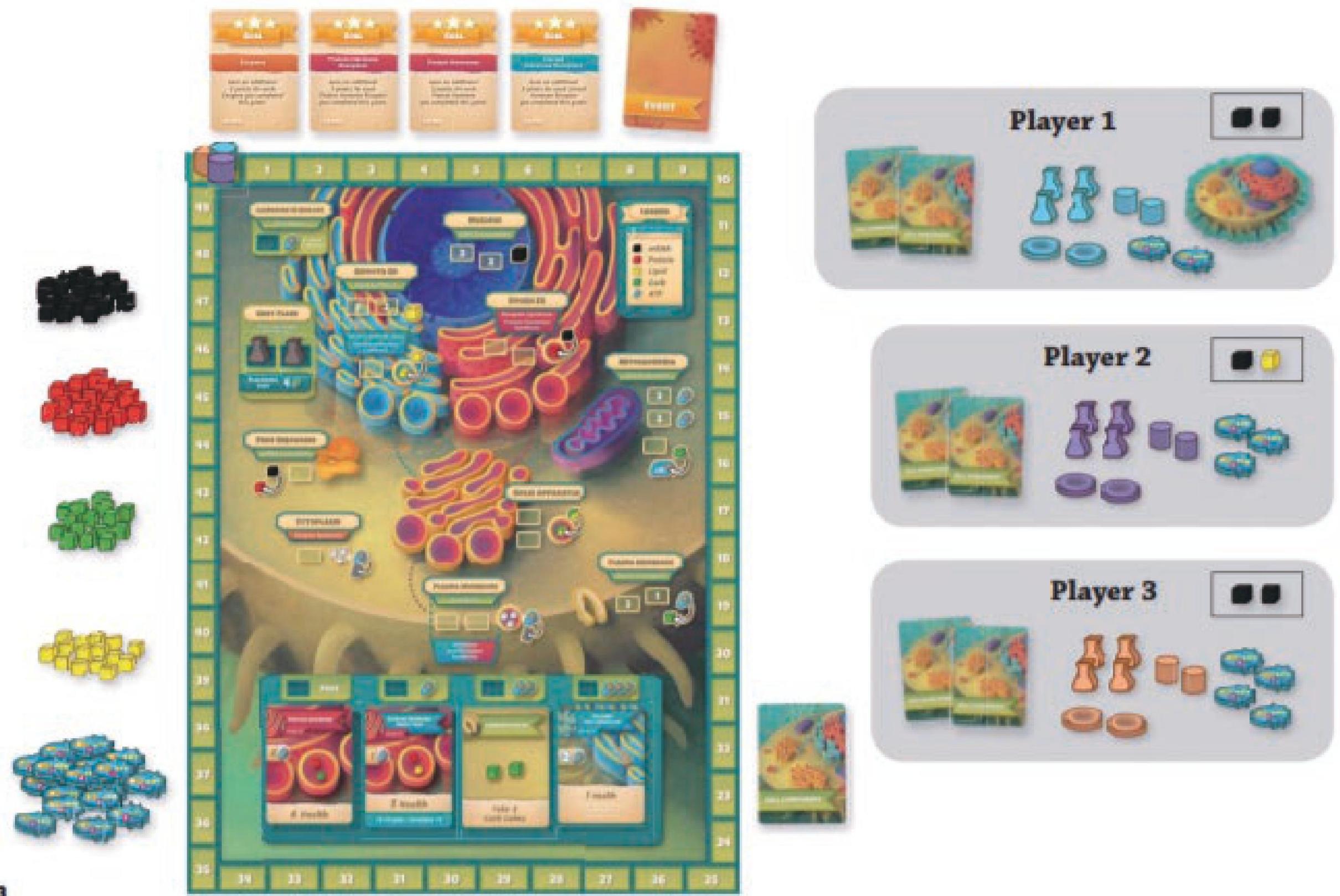
三人游戏的游戏设置如此布置
游戏游玩
游戏概要
Cytosis游戏按回合进行,每个回合可分为两个阶段。在阶段1,玩家放置他们的瓶子来收集资源或做完成细胞成分卡的行动以获得健康值。一旦所有玩家都完成放置了所有的瓶子,阶段1结束,阶段2开始。在阶段2,一张事件卡会被翻开,版图区刷新。
这个过程会继续直到最后一张事件卡被翻开,这之后再进行一回合,然后玩家们开始合计他们最终的健康值得分。
阶段1:放置瓶子
每一回合,起始玩家会被轮到,然后顺时针方向继续轮。
在他们轮到的时候,玩家必须只放置一个他们的瓶子到任何一个版图上可放置的地点,然后必须立刻收集资源或进行相应行动。然后,轮到这位玩家左手边玩家行动。这个瓶子放置的过程会顺时针轮流,一次一次,直到所有玩家都完成放置他们所有的瓶子。代替放置一个瓶子的行为,玩家也可以选择收集单独1个信使RNA,脂质,或ATP,但要消耗一个他的瓶子,被消耗的瓶子这回合不可以被放置。
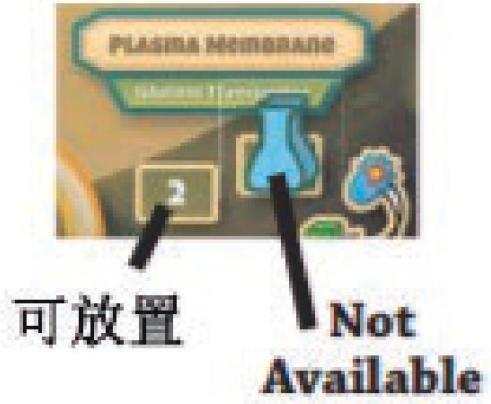
每个地点只能放置一个瓶子,如果一个地点被占据,这回合它将不再可被放置。
在基础游戏中,有四种主要类型的放置地点:
-
收集资源(加到你的资源库存中)
-
购买细胞成分卡(加到你手上)
-
完成细胞成分卡(这些牌是在多次回合中完成的)
-
拿取起始玩家标示(然后可以放置一枚玩家标记或拿走1个ATP)
阶段2:事件卡被翻出,版图刷新
-
所有玩家应该拿回他们在阶段1放置的瓶子,把中立瓶子放回版图原处。(版图上的运输囊泡和所有资源依旧保持在版图上)
-
现在,翻开事件卡堆第一张卡并介绍它。这个新的事件卡会是唯一奏效的事件卡。而之前所有回合的事件
卡效果都会变成不启用。
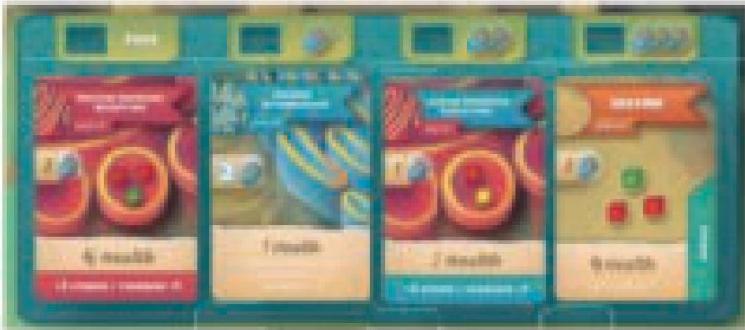
- 移除版图细胞成分卡区域最左边的那张卡,把它放入弃牌堆。现在,不要改变卡片的排列顺序,向左平移所有剩余的细胞成分卡。然后从细胞成分卡卡堆翻出新的牌来填充所有空位。
DISCARD
LEFT-MOST
CARD

如果细胞成分卡卡堆没有余留卡牌了,洗混弃牌堆把他们面朝下放置在细胞成分卡卡堆。
游戏结束
最后揭开的事件卡使游戏进入最后一回合。最后进行完阶段1后,不进入阶段2,而直接开始计分。
瓶子放置地点
游戏版图包括了一系列玩家可放置他们瓶子的地点
收集资源
(增加到你的资源库存区)
细胞核(DNA复制)
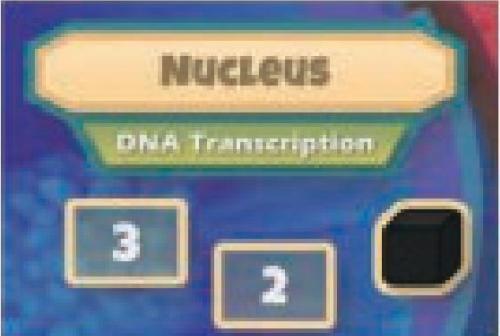
如果玩家放置瓶子到标记着“3”的位置,他获得3个黑色的信使RNA资源。如果玩家放置瓶子到标记着“2”的位置,他获得2个黑色的信使RNA资源。玩家应该把这些黑色资源放到他们个人的资源库存。
PLASMA HEMBRANE
Glucose Transporter

细胞膜(葡糖糖运输)
如果玩家放置瓶子在标记着“2”的位置,他可以支付2个ATP来获得2个绿色的碳水化合物资源。如果玩家放置瓶子在标记着“1”的位置,他可以支付1个ATP来获得1个绿色的碳水化合物资源。玩家应该把这些绿色资源放到他们个人的资源库存。
MITOCHONDRIA
ATP Production
线粒体(ATP生产)
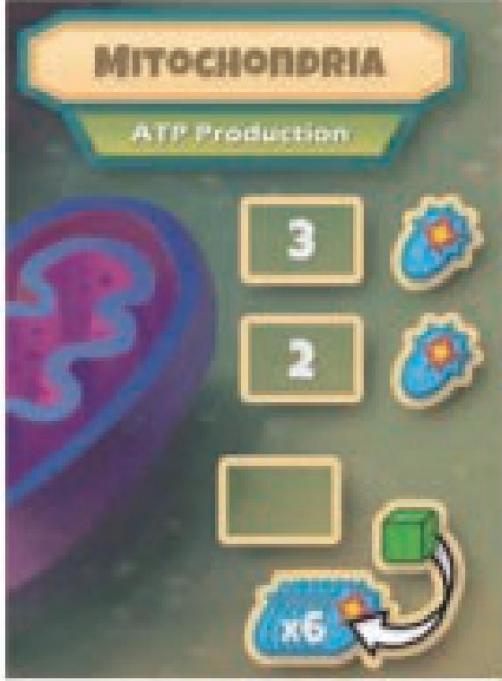
如果玩家放置瓶子在标记着“2”或“3”的位置,他们获得2或3个ATP,有所不同的,如果玩家放置在最底下的那个位置,他必须支付1个绿色的碳水化合物资源来获得6个ATP。(如果6个ATP不足以被获得,他只能拿到少于6个的ATP)。玩家应该把这些ATP资源放到他们个人的资源库存。
光面内质网(脂质合成)
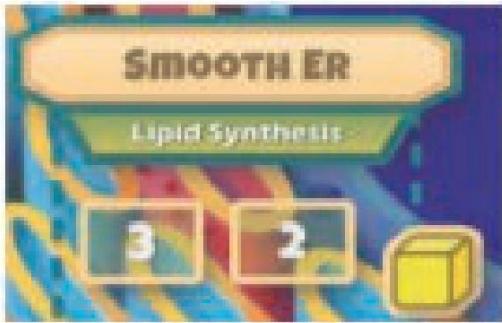
如果玩家放置瓶子在标记着“3”的位置,他获得3个黄色的脂质资源。如果玩家放置瓶子到标记着“2”的位置,他获得2个黄色的脂质资源。玩家应该把这些黄色资源放到他们个人的资源库存。
mRNA Translation
自由核糖体(信使RNA运输)
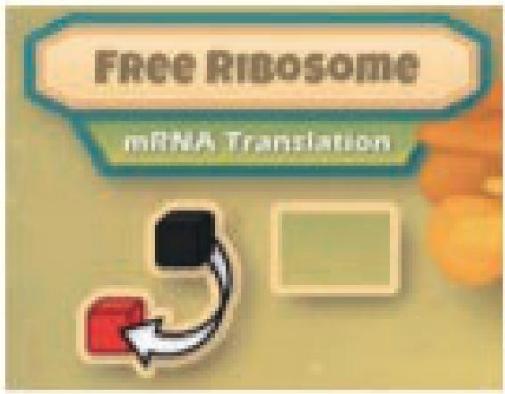
如果玩家放置瓶子在信使RNA运输之地,他必须把他资源区所有黑色的信使RNA资源转化成同等数量的红色的蛋白质资源。玩家应该把这些红色资源放到他们个人的资源库存。
事件卡中的额外的资源
如果一张事件卡增加任意1个资源到版图的一个区域,这个资源会奖励给第一个放置在该区域中任何地点的玩家。(详见事件卡)
购买细胞成分卡(加到你手上)
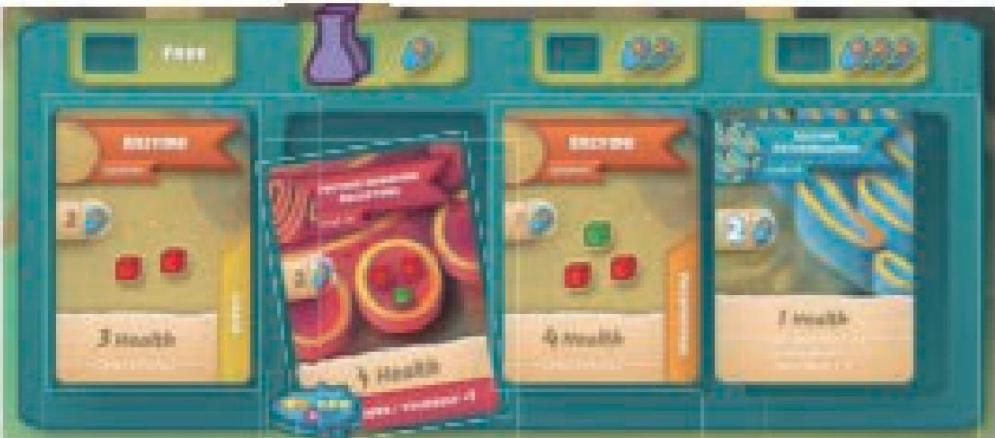
如果玩家放置瓶子到细胞成分卡区域任意地点,他必须支付对应ATP(在放置的瓶子右边有指示),然后收获瓶子下方的卡牌到手上。
完成细胞成分卡 (这些牌是在多次回合中完成的)
玩家必须至少拥有细胞成分卡上要求的同等数量高分子资源在他的运输囊泡上,当然也可以超过要求的数量。
Budding Transport
Vesicle Location
光面内质网
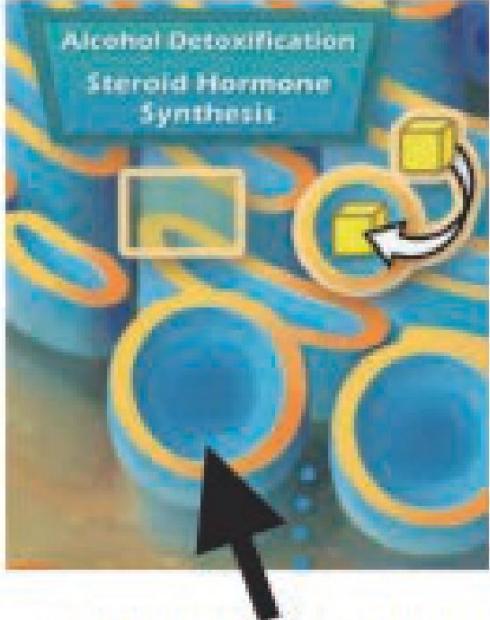
如果玩家放置瓶子到光面内质网中更低的那个位置(酒精排毒和类固醇荷尔蒙合成)他必须从二个行动中选择一个执行:
选项1:酒精排毒
如果玩家放置瓶子来完成一张酒精解毒卡,他必须支付卡中要求的同等数量的ATP,然后立刻获得1点健康值。
选项2:类固醇荷尔蒙合成
完成类固醇荷尔蒙卡的过程由放置瓶子到光面内质网中的类固醇荷尔蒙合成区域开始。玩家放置瓶子在这个地点,他们必须:
-
放置1个运输囊泡到光面内质网中闲置的运输囊泡区(黄色圆形框)。
-
放置脂质资源(只能放置脂质资源,碳水化合物资源必须在高尔基体中的运输囊泡内才能被放置)到运输囊泡。
粗面内质网(蛋白质荷尔蒙合成/接受体合成)
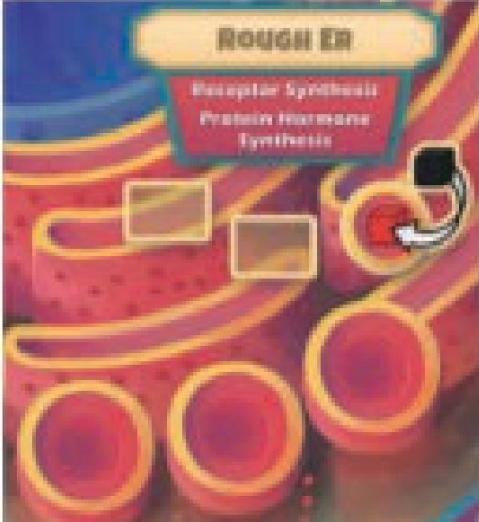
完成蛋白质荷尔蒙,蛋白质荷尔蒙接受体和类固醇荷尔蒙接受体的合成由放置瓶子到粗面内质网开始。如果玩家放置瓶子到粗面内质网的任意地点,他必须:
-
放置1个运输囊泡到粗面内质网中闲置的运输囊泡区(黄色圆形框)。
-
把从个人库存的信使RNA资源(根据尝试完成的这张细胞成分卡)转变为从公共资源区拿区的同等数量的蛋白质资源。然后,把这些蛋白质资源放入上述第一步中的运输囊泡中。
你必须从信使RNA资源开始。你不能直接从个人库存拿取蛋白质资源放置在这里。
高尔基体
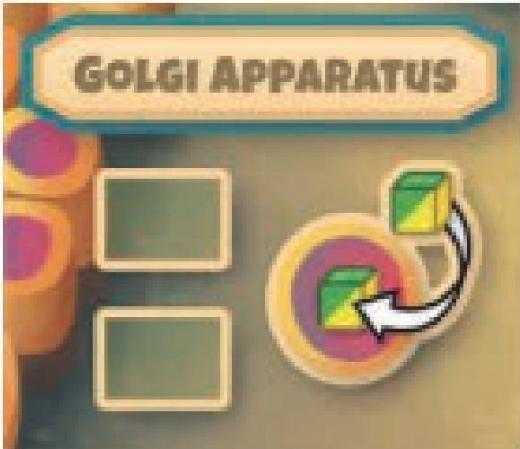
高尔基体是完成蛋白质荷尔蒙,类固醇荷尔蒙,蛋白质荷尔蒙接受体或类固醇荷尔蒙接受体卡的第二步。如果玩家放置瓶子在这两个地点之一,他必须:
-
从光面内质网或粗面内质网移动一个运输囊泡到高尔基体囊泡区闲置位置。
-
从个人库存拿取并放置1个碳水化合物资源或1个脂质资源到运输囊泡。(这个地点不允许玩家把碳水化合物转化为脂质,反之亦然。)
如果当前玩家放置瓶子到光面内质网,粗面内质网或高尔基体但该地区的运输囊泡区没有空闲的位置,该玩家选择一个运输囊泡(和上面的所有资源),把它从版图移回拥有者手中。然后当前玩家必须把他的运输囊泡与合适的资源放置(或移动)到这个新的空闲位置。
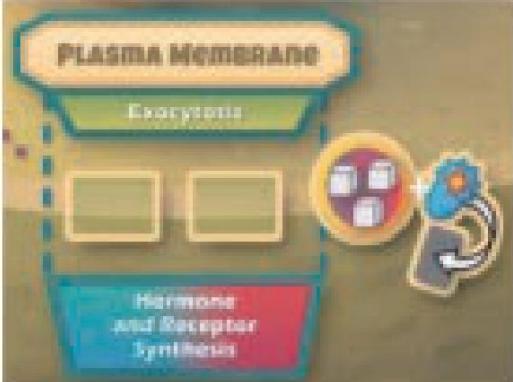
细胞膜(胞外分泌)
细胞膜的胞外分泌是完成蛋白质荷尔蒙,类固醇荷尔蒙,蛋白质荷尔蒙接受体或类固醇荷尔蒙接受体卡的最后一步。如果玩家放置瓶子在胞外分泌区的任何一个地点,他必须:
-
打出完成的那张细胞成分卡。
-
将运输囊泡从高尔基体移出,穿过细胞膜,移出这个细胞。
-
立刻支付此细胞成分卡上的ATP。
-
把运输囊泡上的所有高分子资源移回公共资源堆。同时此运输囊泡也返回至拥有者手上。
-
根据完成的细胞成分卡上提示获得相应健康值。
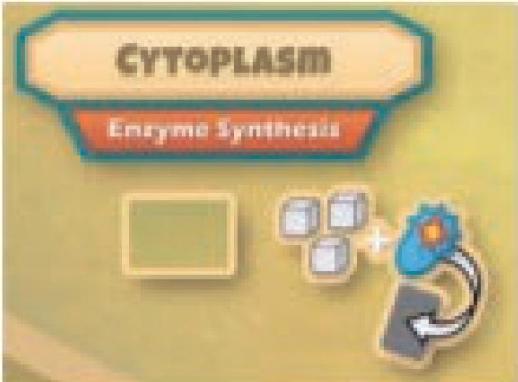
细胞质(生物酶合成)
细胞质是完成生物酶卡的最后一步(一旦玩家从自由核糖体换得了红色的蛋白质资源)。玩家放置瓶子在标签着生物酶合成的细胞质,他必须:
-
打出完成的那张生物酶卡。
-
立刻支付此生物酶卡上的ATP。
-
按此生物酶卡上提示的支付一定数量的蛋白质资源(和1个碳水化合物资源,如果有要求的话)。
-
根据完成的生物酶卡上提示获得相应健康值。
拿取起始玩家标示 (然后可以放置一枚玩家标记或拿走1个ATP)
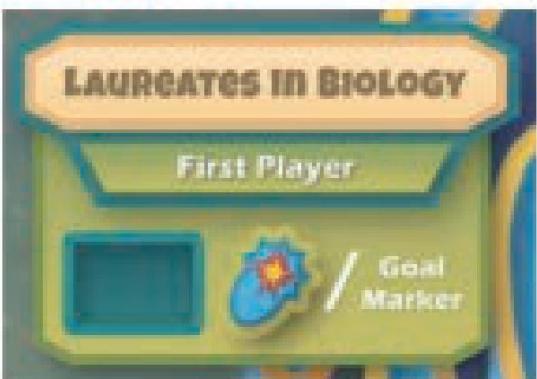
生物学奖得主
如果玩家放置瓶子在生物学奖得主这个地方,他必须拿取起始玩家标示(一直保存它直至起始玩家标示被别的玩家拿取),然后他们可以从下列行动中选择一项执行:
-
拿取1个ATP到个人库存,或
-
放置一个他的玩家标记到版图上方的目标卡任意一个空闲位置。(一旦玩家标记被放置,不可以再被移除)
第一个放置玩家标记到目标卡上的玩家会被奖励3健康值。(详见目标卡)
细胞成分卡
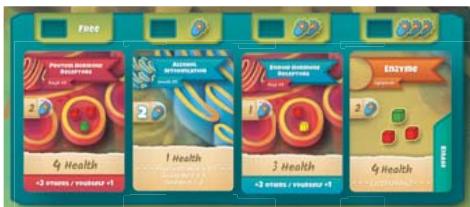
基础游戏中有五种细胞成分卡:(1)荷尔蒙卡。(2)荷尔蒙受体卡。(3)生物酶卡。(4)酒精排毒卡。(5)额外资源卡。
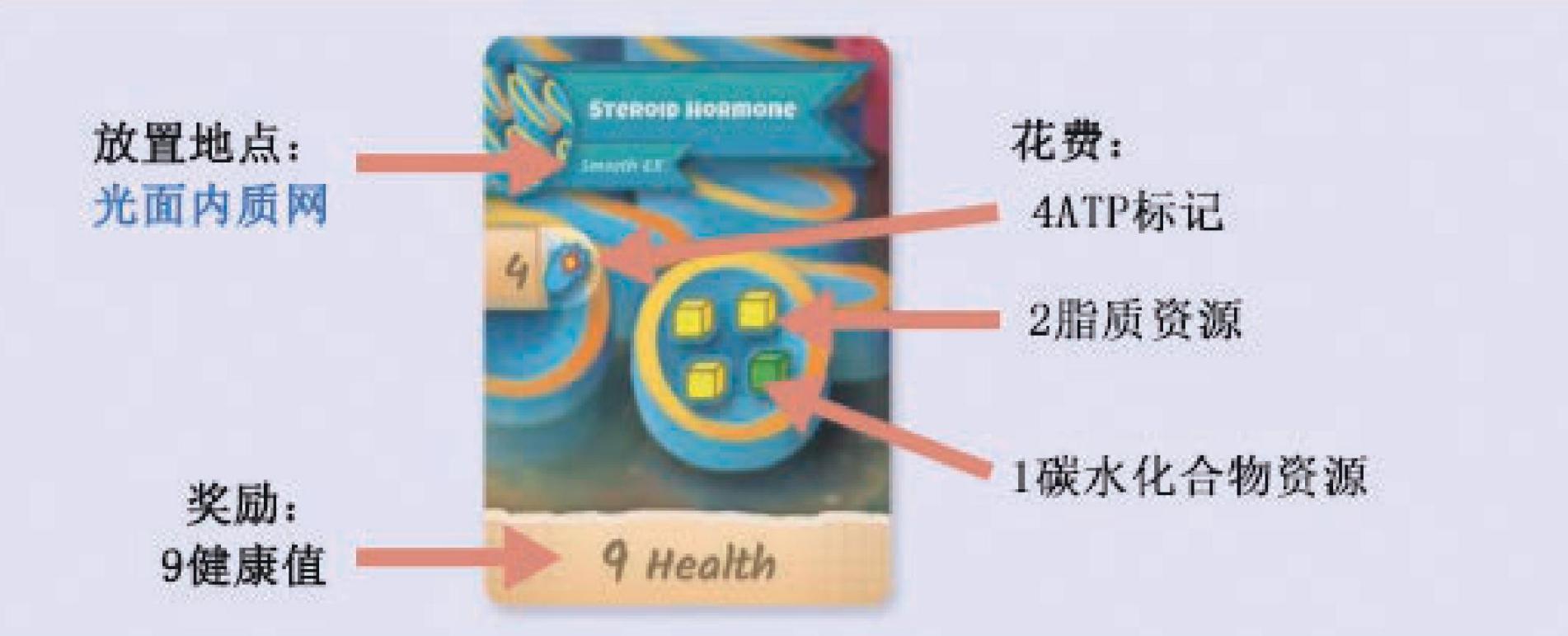
除了会给玩家简单地提供资源的额外资源卡,每张卡上都会有指示开始的放置地点,完成这张卡需要支付的资源(高分子资源和ATP)和完成后会立刻获得的健康值数值。
荷尔蒙受体卡会使玩家在游戏中额外得分(详见荷尔蒙受体卡),而生物酶卡或酒精排毒卡会使玩家在游戏结束时额外得分。关于这些额外得分方式的快速参考被标示在每张卡的底部。
每位玩家的手牌会被秘密地保存直到它被完成,当卡牌被完成玩家应该将其面朝上保持在玩家面前。完成的卡在游戏结束时还会被用到。
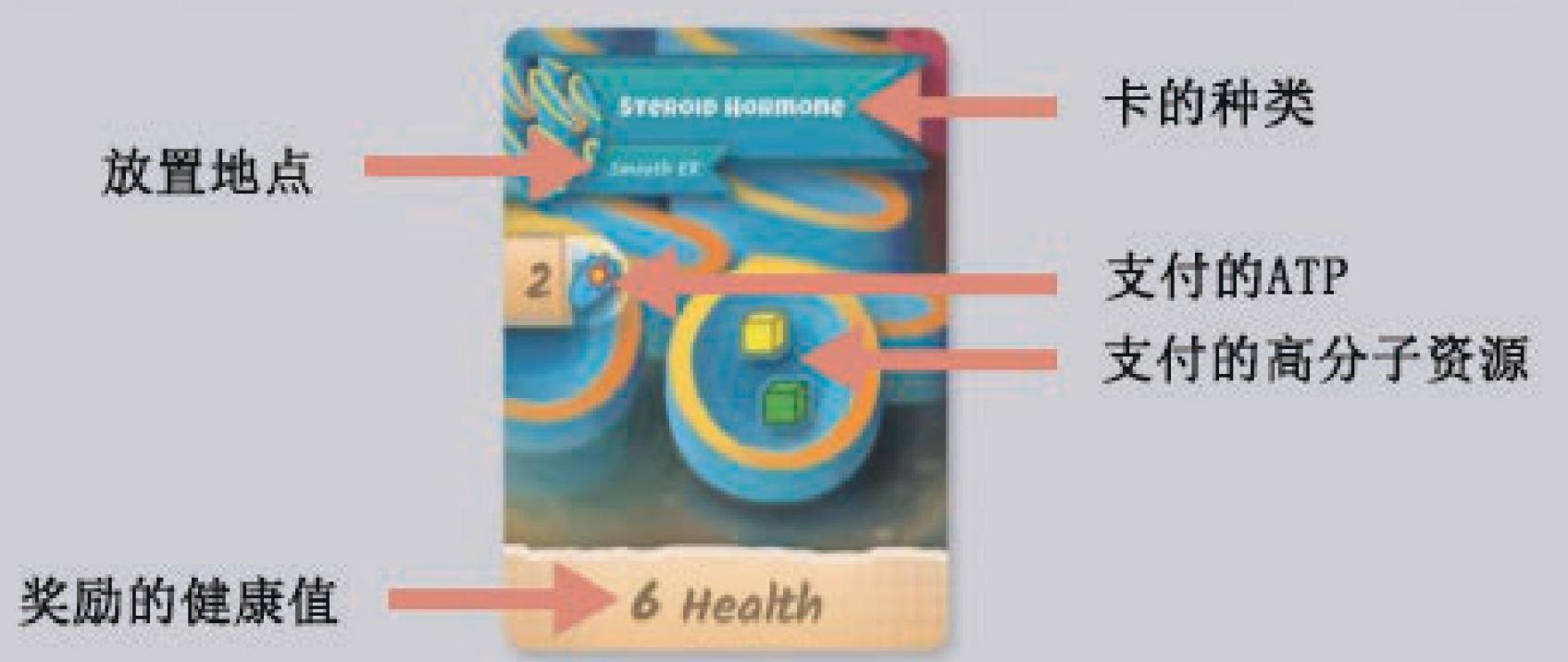
荷尔蒙卡
荷尔蒙卡有两种类型:蛋白质荷尔蒙(红色背景)和类固醇荷尔蒙(蓝色背景)。完成荷尔蒙卡(与大多数卡一样)需要经过一系列回合,放置瓶子到要求的位置。首先是在内质网(光面内质网或粗面内质网),然后在高尔基体,最后是在细胞质(胞外分泌)。
首先,玩家需要放置瓶子在内质网(类固醇荷尔蒙在光面内质网或蛋白质荷尔蒙在粗面内质网),在这里允许玩家立刻放置他的一个运输囊泡,同时放置要求的蛋白质或脂质资源。(详见完成细胞成分卡中的光面内质网和粗面内质网部分)
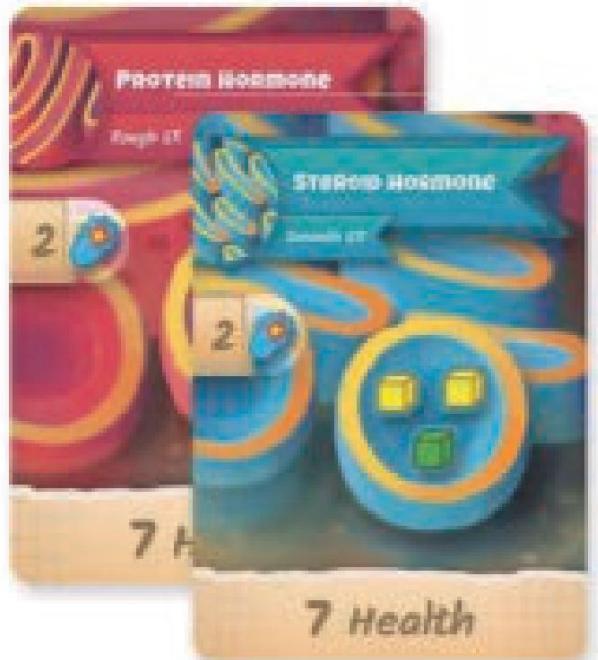
接下来,玩家必须放置瓶子在高尔基体,从内质网推走他的运输囊泡(以及在上面的所有资源)并增加额外的碳水化合物上去。
最后,玩家必须放置瓶子在细胞膜的胞外分泌区域,支付需要的ATP,然后玩家获得完成的那张卡上所显示的健康值。
所有荷尔蒙卡上显示的高分子资源必须被放置在运输囊泡上。

这个例子假设玩家已经提前收集了信使RNA资源和碳水化合物资源,也拥有足够的ATP。
首先放置瓶子在光面内质网,然后做以下的所有过程:
-
放置你的运输囊泡在运输囊泡区空闲位置。
-
匹配尝试完成的蛋白质荷尔蒙卡上要求的数量,从你的个人资源库拿取2个信使RNA资源转化2个蛋白质资源。
-
放置蛋白质资源到运输囊泡。
第二步放置瓶子在高尔基体,然后做以下的所有过程:
-
移动你的运输囊泡从光面内质网到高尔基体中闲置的运输囊泡位。
-
然后从你的个人资源库拿取并放置碳水化合物资源到运输囊泡上。
第三步放置瓶子到细胞膜的胞外分泌区,然后做以下的所有过程:
-
打出这张你正在完成的蛋白质荷尔蒙。
-
移动你的运输囊泡从高尔基体穿过细胞膜,移出至细胞外。
-
立刻支付蛋白质荷尔蒙上指示的2个ATP。
-
把运输囊泡上的高分子资源放回公共资源堆。运输囊泡回到你的手上!获得你完成的这张蛋白质荷尔蒙卡上写着的7点健康值。
恭喜,你完成了一张蛋白质荷尔蒙卡!

荷尔蒙受体卡
荷尔蒙受体卡有两种类型:类固醇荷尔蒙受体卡和蛋白质荷尔蒙受体卡。这两种类型的荷尔蒙受体卡完成方式与荷尔蒙卡相同,但有两个例外。首先,荷尔蒙受体卡都开始于光面内质网。第二,类固醇荷尔蒙受体在高尔基体中会接收一份脂质(而不是一份碳水化合物)。(详见荷尔蒙卡中如何完成荷尔蒙受体卡)
荷尔蒙受体卡的主要好处是已经完成它们的玩家会在其他玩家完成荷尔蒙卡时获得健康值。当其他玩家完成一张蛋白质荷尔蒙卡时,所有其他完成了蛋白质荷尔蒙受体卡的玩家每有完成一张便获得2点健康值。
当其它玩家完成一张类固醇荷尔蒙卡,所有其他完成了类固醇荷尔蒙受体卡的玩家每有完成一张便获得2点健康值。
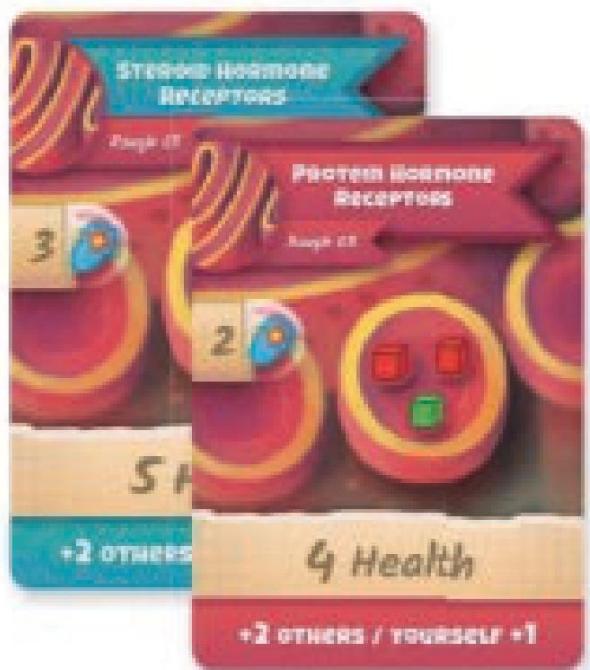
举个栗子,如果一位玩家拥有两张完成了的类固醇荷尔蒙受体卡,每当其它玩家完成一张类固醇荷尔蒙卡,他会获得4分。同样的,如果一位玩家拥有三张完成了的类固醇荷尔蒙受体卡,每当其它完成一张类固醇荷尔蒙卡,他会获得6分。
玩家1:
完成一张
类固醇荷
尔蒙卡

玩家2:获得6健康值
而且,当玩家自己完成一张蛋白质荷尔蒙卡,他每拥有一张已经完成了的蛋白质荷尔蒙受体卡,也可以获得额外的1点健康值。同样的,任何时候玩家自己完成一张类固醇荷尔蒙卡,他每拥有一张已经完成了的类固醇荷尔蒙受体卡,也可以获得额外的1点健康值。
生物酶卡
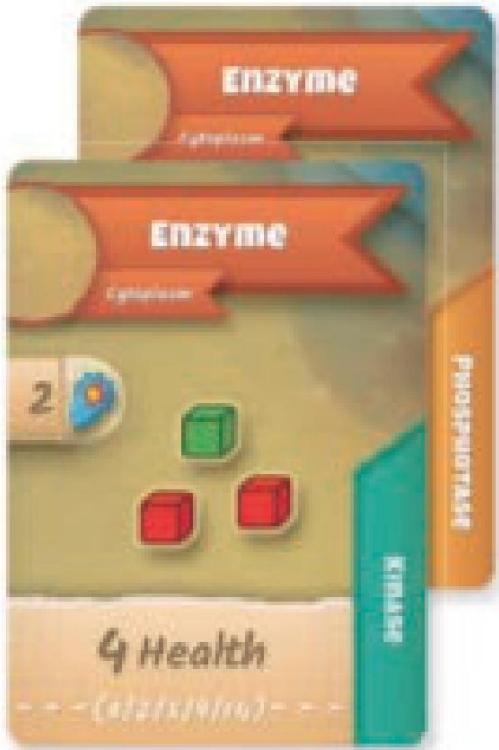
生物酶卡(在游戏中)不要求使用运输囊泡。取而代之的,完成它们的第一步是放置瓶子在自由核糖体地点把黑色的信使RNA资源转化为蛋白质资源,然后放置瓶子在细胞质。玩家打出一张他要完成的生物酶卡,从他的个人资源库拿取并支付要求的蛋白质资源(和碳水化合物资源如果生物酶卡上要求的话),同时支付生物酶上指示数量的ATP,然后获得生物酶卡上显示的健康值。
完成的生物酶卡应该被叠在一起并向外展示以至于所有玩家都能看到他们。组套的生物酶卡会提供额外的得分在游戏结束时,正如在每张生物酶卡底下显示的一样(详见得分)
酒精排毒卡
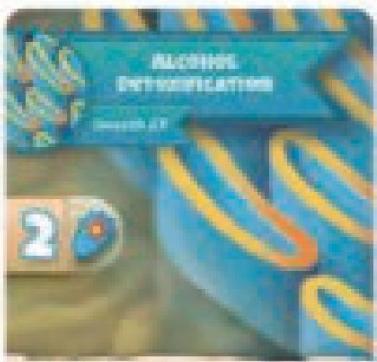
放置瓶子在酒精排毒之地并支付卡上指示的ATP数可以完成酒精排毒卡(在光面内质网之中)。玩家完成一张酒精排毒卡之后会获得1点健康值。
在游戏结束时,拥有最多的酒精排毒卡的玩家可以获得额外得分(详见游戏结束时酒精排毒卡计分)
额外的资源卡
额外资源卡可以被保存在玩家的手上,玩家可以随时打出只要是该玩家的回合。一旦该卡被打出,玩家应该立刻拿取卡上展示的相应数量的资源,然后把该卡放入细胞成分卡弃牌堆。
目标卡

玩家放置瓶子到生物学奖得主之地之后,他可以选择去放置一个玩家标记在一张目标卡上的任意空闲位置。一旦玩家标记被放置,该玩家不可放置自己的两个玩家标记在同一张目标卡上。玩家的两个玩家标记最多一张卡放置一个。
目标卡会在两种情况下计分:
-
游戏中:第一个放置玩家标记在每张目标卡上的玩家会被奖励3健康值。(第二个放置玩家标记在目标卡上的玩家不得分)
-
游戏结束计分时:游戏结束时,如果玩家有放置玩家标记在一张目标卡上,玩家完成的目标卡上指示种类的细胞成分卡每有完成一张,根据目标卡上的描述给予分数。
事件卡
事件卡的目的是改变游戏的每一轮。在每一轮的阶段2,一张时间卡会被翻开,会在某方面影响游戏。
基础游戏中事件卡有三种类型(如果包括病毒扩充的话有四种):
(1) 促进
(2) 减少ATP的花费
(3) 毒性

Add more additional ATP transporter to the attachment to my wound.

All Cell Compensates
dents and First AP
the need
I Health
CLIMETHOSUNI
Take 2
Carb Cubes

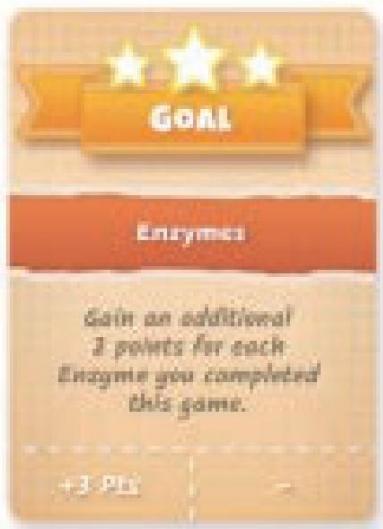
Gain an additional 2 points for each Enzyme you completed this game.


促进
一张促进的事件卡会给版图上某个特殊的地区增加1个资源。这个资源会被免费奖励给第一个放置在该地区任何地点的玩家。资源会被增加到版图上某个地区直到它被作为奖励。
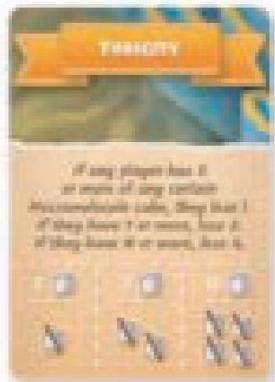
毒性
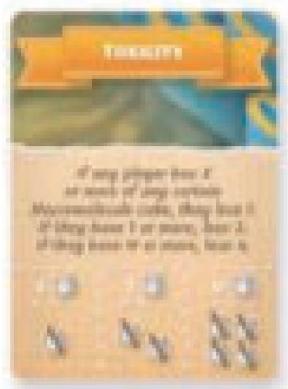
一张毒性的事件卡迫使玩家将高分子资源从个人库存归还至公共资源区。如果任何一个玩家拥有超过5个或更多任何某种高分子资源,他将失去1个。如果任何一个玩家拥有超过7个或更多任何某种高分子资源,他将失去2个。如果任何一个玩家拥有超过10个或更多任何某种高分子资源,他将失去4个。

减少ATP的花费
一张减少ATP花费的事件卡会在这一回合减少每张细胞成分卡1ATP的消耗。如果玩家在这张卡奏效时放置瓶子到免费的地点,他可以从公共资源区拿取1个ATP。
灰色瓶子
在一个玩家他的回合放置他们的瓶子之前,他可以支付4个ATP来先放置一个灰色瓶子。(在正常放置瓶子之外)。支付4个ATP之后,玩家可以从版图灰色瓶子区拿取一个闲置的灰色瓶子来放置在任何一个地点(闲置或已被占领),然后进行该地点的行动
限制:玩家每轮只可以付钱放置一个灰色瓶子,并且必须执行该地点的行动。只有灰瓶区的灰色瓶子可执行该行动。

ENDING THE GAME
当最后一张事件卡被翻开标志着这是最后一回合。玩家最后一次完成阶段1,然后直接跳到计分阶段。
计分
在游戏结束时,玩家们会计算游戏结束时的额外得分,包括仍然在个人资源库存的高分子资源,完成的酒精排毒卡,完成的生物酶卡,和在游戏中他们放置了玩家标记的目标卡。玩家应该根据所有游戏所得的得分在健康轨上移动他们的健康值计分标记。
高分子资源的游戏结束计分
在高分子资源计分之前,玩家可以收集版图上所有在运输囊泡上的高分子资源,加到他们的个人资源库。
在玩家个人资源库存的高分子资源(蛋白质,脂质,信使RNA和碳水化合物),每4个信使RNA或4个脂质为玩家提供1分,每3个蛋白质提供1分,每2个碳水化合物提供1分。
酒精排毒卡的游戏结束计分
最多酒精排毒值的玩家获得额外8点健康值,第二多的玩家获得额外5点健康值,第三多的玩家获得额外2点健康值。最多的酒精排毒值是由玩家已完成的酒精排毒卡上ATP相加之和决定的(仍然在玩家手中的酒精排毒卡不计入总值)。如果玩家没有完成酒精排毒卡,他们在酒精排毒卡的得分自动计为0分。
举个栗子,完成了3张要求2个ATP的酒精排毒卡的玩家与完成了2张要求3个ATP的酒精排毒卡的玩家的酒精排毒值相同。
在打平的情况下,拥有更多完成了的酒精排毒卡的玩家胜出。如果仍然打平,这两名玩家取这个等级与次一个等级之和的分数,把这些得分在他们之间平均分配,向下舍入到最接近的整数。当有三名玩家于这种情况打平,这三名玩家取这个等级与次于这个等级的所有等级之和的分数,把这些得分在他们之间平均分配,同样向下舍入到最接近的整数。
在两人游戏中,获得最高酒精排毒值的玩家会获得6点健康值,拥有第二酒精排毒值的玩家会获得3点健康值。
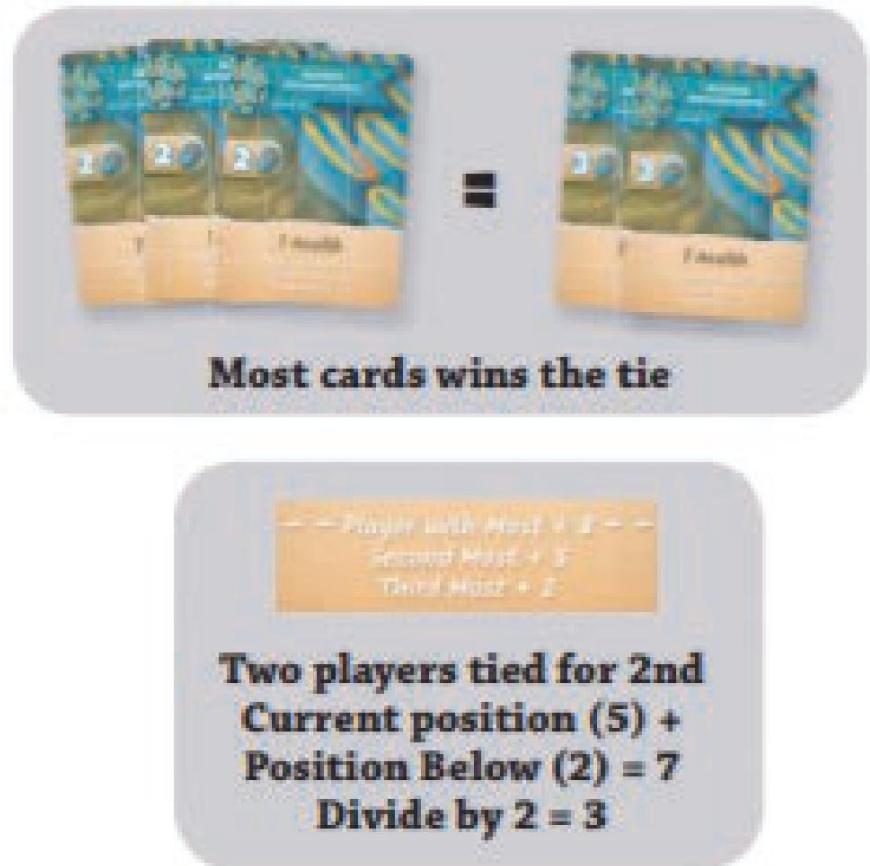
- - - - - - - - - - - - - - - - - - - - - - - - - - - - - - - - - - - - - - - - - - - - - - - - - - - - - - - - - - - - - - - - - - - - - - - - - - - - - - - - - - - - - - - - - - - - - - - - - - - - - 2
Two players tied for 2nd Current position (5) + Position Below (2) = 7 Divide by 2 = 3
生物酶组套的游戏结束计分
组套的生物酶由不同的颜色组成。玩家在游戏中完成的所有组套的生物酶卡都会根据下表进行最终游戏计分:

Two Enzyme Cards of the same color may not belong to the same set; however a player may score points for two sets.
目标卡的游戏结束计分
如果玩家放置了玩家标记在一张目标卡上,该玩家完成的目标卡上指示种类的细胞成分卡每有完成一张,根据目标卡上的描述给予分数。详细得分每名玩家可以参考他们放置了玩家标记的目标卡。
最后得分
获得最高健康值的那位玩家赢得了这个游戏!
如果打平,拥有最多的完成了的细胞成分卡的玩家胜出(只计算酒精排毒卡,生物酶卡,荷尔蒙卡和荷尔蒙受体卡总和)。如果仍然打平,当前顺位靠前的玩家胜出!
2人游戏变体规则
游戏设置
-
在发给每位玩家3张细胞成分卡之前,从细胞成分卡卡堆中随机移除3张酒精排毒卡。
-
从放置在版图旁的事件卡卡堆中随机移除2张事件卡。
游戏进行
每个地点只能放置1个瓶子
在两人游戏中,每个回合,版图中的每个区域只允许放置最多1个瓶子。每个有一个明显的褐色边框与灰色文本算作不同的区域,例如细胞核,光面内质网和线粒体。
Nucleus
ROUGH ER
但有三个例外:线粒体,光面内质网和细胞成分卡区域。
例外:
在细胞成分卡区域,所有四个地点都可以被占据,如同3-5人游戏一样。因此,对于细胞成分卡区域来说,并没有不同之处。
在线粒体,总共三个地点中可以被占据两个。
在光面内质网,两个地点可以被占据-脂质合成中最高值的那个和酒精排毒/类固醇荷尔蒙合成的那个。
举个栗子,如果一个瓶子占据了细胞核中[3]这个地点,第二个瓶子在这一回合中便不可以占据细胞核中[2]这个地点,因为他们同样位于细胞核区域。而且,如果一个瓶子被放置在粗面内置网,高尔基体或细胞膜中两个之一的区域,第二个瓶子在这个回合中便不可以被放置在这些对应的区域中。
玩家仍然可以购买并放置灰色瓶子在任何被占据或没被占据
的地点,甚至已经有另外的瓶子被放置在这个区域或这个地点。
Placement Spot Restrictions

移除2张最左边的细胞成分卡
在阶段2的第三步中,代替从细胞成分卡区移除1张最左边的细胞成分卡,丢弃最左边的2张卡。
两人游戏中的计分阶段
酒精排毒卡的游戏结束计分
在两人游戏中,获得最高酒精排毒值的玩家会获得6点健康值,拥有第二酒精排毒值的玩家会获得3点健康值。
病毒扩充规则适合2-5玩家
游戏设置-基础游戏的变化之处
并入以下布置到基础游戏中
版图:在游戏设置的第一步,把版图翻到病毒扩充那一面(分数条颜色渐变的那面)。
事件卡堆:在游戏设置的第二步,洗混12张事件卡如往常,但是如果2或3人的游戏请随机移除5张事件卡,如果4人游戏请移除3张事件卡,5人游戏移除1张事件卡。将这些移除的卡放回盒子中并不允许查看。然后,将3张病毒事件卡洗入准备好的事件卡堆。
目标卡堆:在游戏设置的第三步,将1张Immune Response和1张Virus Attack目标卡与其他5张基础目标卡一同洗混。然后继续将玩家人数+1的目标卡面朝上放置在版图上方,其余的卡放回盒不用。
在2或3人游戏中,如果两张病毒扩充目标卡都出现在版图上方,将其中一张取缔为别的基础目标卡。
任务卡堆:在游戏设置的第五步,在你给每个玩家发完3张事件卡之后,将6张病毒攻击卡洗混到任务卡堆。
现在,设置这额外两步。
额外设置1:给每位玩家一张玩家垫和3个抗体标记(棕褐色资源)。每位玩家把其抗体标记放置在玩家垫应变列的底部三个标记为“0”的位置(Ebola,Influenza,Rhinovirus)。
在2人游戏中,在版图附近设置一个额外玩家垫(根据“额外设置1”)作为一个虚拟玩家。
额外设置2:将5颗抗体骰子放置在版图上方。
事件卡
病毒扩充含有3张(种)不同的事件卡,每种代表不同的病毒应变:Ebola,Influenza,Rhinovirus。
当一张病毒事件卡被翻到,它会变得活跃,所有玩家们参考“当病毒攻击”行事。
目标卡
病毒扩充含有2张(种)不同的目标卡,1张Immune Response和1张Virus Attack目标卡。病毒扩充的目标卡规则与基础游戏的目标卡相同。

细胞成分卡
病毒扩充含有6张细胞成分卡:2张Ebola,2张Influenza,2张Rhinovirus病毒应变卡。当一名玩家从任务卡区买了一张病毒攻击卡,这张卡立即生效,所有玩家们参考“当病毒攻击”行事。
玩家垫
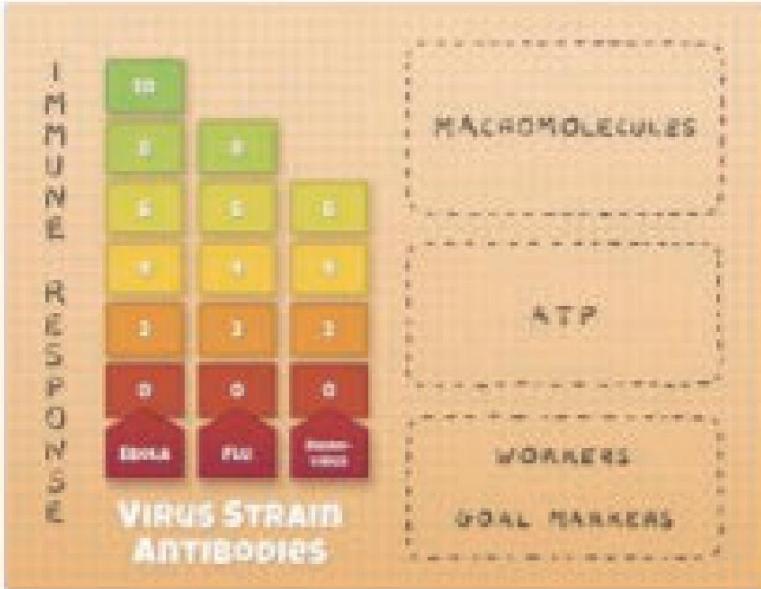
每个玩家垫分为两个主要部分:免疫应答区和资源区。
免疫应答区:这个部分有三列标记分别是Ebola,Influenza,Rhinovirus。列内的标记表示抗体的数量,它使玩家足以与这一种类的病毒战斗。(详见“当病毒攻击”)
资源区:这个部分指示在哪儿玩家可以储存他们未被使用的瓶子(就是工人)和目标标记(小圆片),和他们个人的资源库存(各类方块和ATP)

当病毒攻击
当一张病毒事件卡被翻出或当一张病毒攻击卡被人购置,病毒卡立即变得活跃,所有玩家应该立即按以下步骤操作。
当一张病毒事件卡被翻出:
-
所有玩家分别根据健康条(分数条)抛一定数量的抗体骰。如果他们的分数位于红色区,骰1粒骰子;如果他们的分数位于黄色区,骰2粒骰子;如果他们的分数位于绿色区,骰3粒骰子。
-
根据他们的投掷,每位玩家从他们玩家垫的对应列增加对应点数结果的抗体。这个总和是每个玩家的抗体反应。
3.所有玩家比较他们的抗体反应与相应的资源。(详见“抗体反应资源分配”)
- 在所有玩家都完成1-3步骤之后,每名玩家都有一次机会支付ATP来获得对应病毒的抗体,该行动从起始玩家开始,按行动顺序执行。
每支付一个ATP,玩家可以提升对应抗体一个等级。(2抗体)
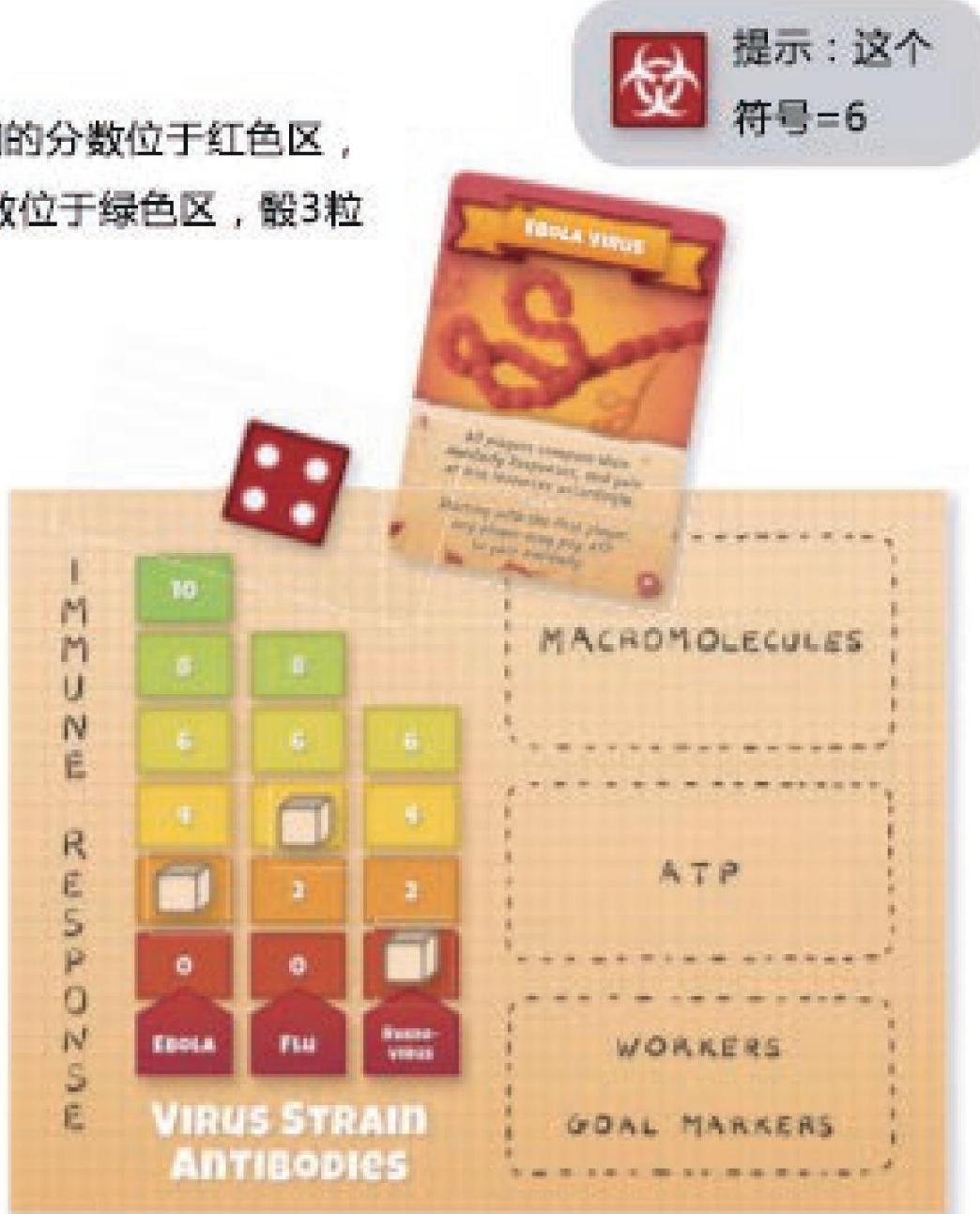
+2 Ebola 抗体 = 6 抗体反应
在2人游戏中,虚拟玩家根据当前最低分玩家所在的健康条区域投掷抗体骰,并提升其玩家垫对应病毒的抗体反应。
虚拟玩家的所有资源获得或失去皆视为不获得或不失去。
在所有玩家完成步骤4之后,把虚拟玩家的的玩家垫对应病毒的抗体反应提升一个等级(2抗体)
当一张病毒攻击卡被购置:
-
只有购买病毒攻击卡的玩家可以支付额外的ATP来提升对应抗体反应(每支付1ATP提升一个等级)
-
所有其他玩家必须失去1健康值(分数)。(玩家分数可为负)
-
现在根据 “当一张病毒事件卡被翻出” 中的步骤1-4来进行。
抗体反应资源分配
玩家获得的资源可从ATP,mRNA(黑色)和脂质(黄色)中选择。玩家失去的资源可以是任意一种资源储存区现有的资源或者失去1健康值(分数)代替之。
在2-3人游戏中
| 最高免疫反应抗体玩家 | 获得3资源 |
| 第二高免疫反应抗体玩家 | 获得1资源 |
| 最低免疫反应抗体玩家 | 失去1资源或1健康值 |
在4人游戏中
| 最高免疫反应抗体玩家 | 获得3资源 |
| 第二高免疫反应抗体玩家 | 获得2资源 |
| 第三高免疫反应抗体玩家 | 获得1资源 |
| 最低免疫反应抗体玩家 | 失去1资源或1健康值 |
在5人游戏中
| 最高免疫反应抗体玩家 | 获得4资源 |
| 第二高免疫反应抗体玩家 | 获得3资源 |
| 第三高免疫反应抗体玩家 | 获得2资源 |
| 第四高免疫反应抗体玩家 | 获得1资源 |
| 最低免疫反应抗体玩家 | 失去0资源 |
如果打平,先手玩家或最接近先手的胜。在2人游戏中,如果玩家与虚拟玩家打平,虚拟玩家胜。
Download MarkdownCytosis - Rulebook - Final Panda Print.md54.4 KB



CYTOSIS: A CELL BIOLOGY GAME
A game that takes place inside a human cell for 2 - 5 players
GAME SUMMARY
Cytosis is a worker placement game that takes place inside a human cell. Players start out with a number of flasks and on their turn, they place one of their flasks on any available location within that cell. Some locations provide players with resources (e.g., mRNA, ATP) and some with actions (e.g., convert resources, collect cards). Resources are used to build enzymes, hormones, and/or receptors, which score Health Points. The player with the most Health Points at the end of the game wins!
COMPONENTS - BASE GAME
43 CELL COMPONENT CARDS
1 FIRST PLAYER MARKER
• 10 Enzyme Cards
• 6 Protein Hormone Cards
• 6 Steroid Hormone Cards
• 5 Steroid Hormone Receptor Cards
• 5 Protein Hormone Receptor Cards
• 4 Additional Resource Cards
• 7 Detoxification Cards
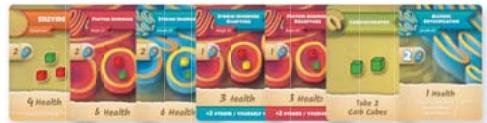
5 GOAL CARDS


I peiets far each

2 saints for esch


2 saints for esch Sharoid Morese
12 EVENT CARDS
PLAYER PIECES
• 20 Flasks (4 of each in 5 diferent colors)
• 10 Transport Vesicle Disks (2 of each in 5 diferent colors)
• 15 Player Markers (3 of each in 5 diferent colors)


2 GREY FLASKS
66 MACROMOLECULE RESOURCES
• 15 Carbohydrate Resources (Green)


30 ATP TOKENS

• 15 Lipid Resources (Yellow)


7 EPIGENETIC MODIFICATION CARDS

• 18 mRNA Resources (Black)
1 GAME BOARD (DOUBLE-SIDED)
• 18 Protein Resources (Red)
COMPONENTS - VIRUS EXPANSION
6 CELL COMPONENT CARDS
• 2 Influenza Virus Attack
• 2 Ebola Virus Attack


• 2 Rhinovirus Virus Attack
5 PLAYER MATS


2 GOAL CARDS

5 ANTIBODY DICE


3 EVENT CARDS


15 ANTIBODY MARKERS


GAME SETUP
If you’re playing the Base Game, remove all the components from the Virus Expansion and the 7 Epigenetic Modification Cards and place them back into the box. You won’t use these components.
1 Place the board in the center of the play area with the Base Game side of the board face up. Then, separate the macromolecule resources into like colors, placing them in piles near the board. Now, place the ATP Tokens in a pile near the board. These macromolecule resources and ATP Token piles make up the general resource stock. Place the 2 Grey Flasks on the Grey Flask area of the board.
Separate the three types of cards: Event Cards, Goal Cards, and Cell2 Component Cards. Shufle the 12 Event Cards. If playing a 2 or 3 player game, randomly remove 2 Event Cards and place them back into the box. If playing a 4 player game, randomly remove 1 Event Card, and if playing a 5 player game remove none. Now, place the remaining Event Cards face down as a deck near the game board.
Shufle the Goal Cards and place a number of them face up above the game board, equal to the number3 of players plus 1 (Exception: In a 5 player game without the Virus Expansion, use all five Goal Cards.) Place any unused Goal Cards back into the box.
Shufle the Cell Component Cards and flip four of these cards face up into the four available spots4 of the Cell Component Card Area of the board.
Deal each player three Cell Component Cards. Each player should secretly choose two of the three to5 keep and shufle the one unchosen Cell Component Card in with the remaining Cell Component Cards. Place the remaining Cell Component Cards face down as a deck to the right of the Cell Component Cards Area just of the board.
Give each player their Player Pieces according to the chart below. Each player’s pieces should all be of6 the same color.

Each player should place one of their Markers on the number 0 on the Health Track (the numeric track7 surrounding the game board). This is a player’s Health Marker, which tracks that player’s score along the Health Track.
Whoever was sick most recently receives the First Player Marker and 2 ATP. The player to their left8 receives 3 ATP, the next player 4 ATP, and so on until all players have ATP. This is each player’s starting personal resource stock.
Each player chooses 2 additional resources (any combination of ATP, mRNA or Lipids) to add to their9 personal resource stock.
You are now ready to play!
Here’s what setup for a 3 player game looks like


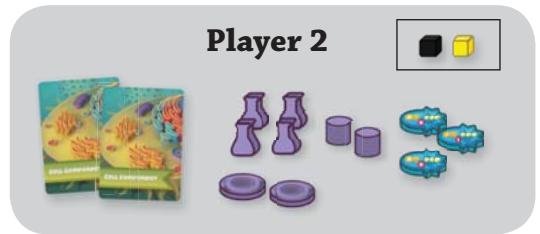
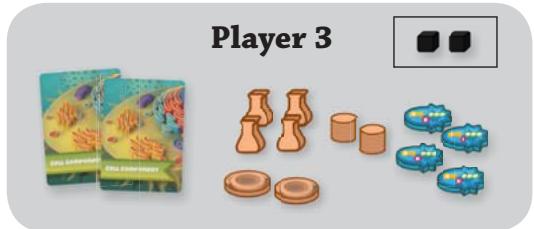
GAMEPLAY
GAME SUMMARY
Cytosis is played in rounds and each round is divided into two phases. During Phase 1, players will place their flasks in order to collect resources and take actions with the goal of completing Cell Component Cards and thus scoring Health Points. Once all players have placed all their flasks, Phase 1 is over and Phase 2 begins. During Phase 2, an Event Card will be revealed and the board will be refreshed.
This process continues until the last Event Card is revealed, after which one more round is played and then players will add up their final number of Health Points.
PHASE 1: FLASK PLACEMENT
Every round, the player holding the First Player Marker will be the first player to take their turn, then play continues clockwise.
On their turn, a player must place exactly one of their flasks on any available spot on the board and then must also immediately collect the resources or take the action associated with that spot. Then, the player to their left (i.e. clockwise) now takes their turn. This flask placement process continues clockwise with each player placing flasks in this fashion, one at a time, until all players have placed all of their flasks.
Instead of placing a flask, a player may choose to collect a single mRNA, Lipid, or ATP, exhausting one of their flasks. Any exhausted flasks may not be placed again that round.
Only one flask may be placed on each spot. If a spot is occupied, it is not available again during that round.
There are four main types of flask placement spots in the base game:
Collecting Resources (to add to your personal resource stock),1

Purchasing Cell Component Cards (to add to your hand),2
Completing Cell Component Cards (these cards are completed over multiple turns),3
Taking the First Player Marker (and Placing a Goal Marker or Taking 1 ATP)4
PHASE 2: EVENT CARD REVEALED AND BOARD REFRESHED
All players should retrieve the flasks they placed during Phase 1 and return the Grey Flasks to the Grey1 Flask Area of the game board. (Transport Vesicle Disks and any resources on them should stay on the board.)
Now, reveal the top Event Card from the Event deck and follow the instructions on that card.2
This new Event Card is the only active Event Card. Any Event Cards from previous rounds become inactive.
DISCARD LEFT-MOST CARD
Remove the left-most Cell Component Card from the Cell Component3 Card Area and place it in the Cell Component Card discard pile. Now, without changing the order of the cards, slide any remaining face up Cell Component Cards to the left-most open space(s). Then fill any newly opened spots with Cell Component Cards from the top of the Cell Component Card deck.
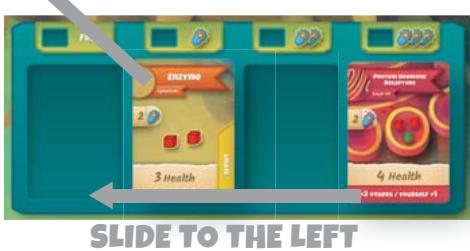
If there are no cards remaining in the Cell Component Card deck, shufle the Cell Component Card discard pile and place it face down as the Cell Component Card deck.
ENDING THE GAME:
Revealing the last Event Card marks the last round of the game. Play through Phase 1 one last time and instead of going through Phase 2, skip directly to Scoring.
FLASK PLACEMENT SPOTS
The game board contains a number of spots on which players can place their flasks.
COLLECTING RESOURCES(TO ADD TO YOUR PERSONAL RESOURCE STOCK)
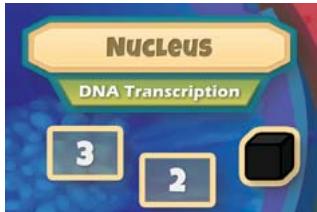
NUCLEUS (DNA Transcription)
If a player places a flask on the spot marked with a 3, they receive 3 black mRNA resources. If a player places on the spot marked with a 2, they receive 2 black mRNA resources. Players should add these black resources to their personal resource stock.
PLASMA MeMBRAne
Glucose Transporter
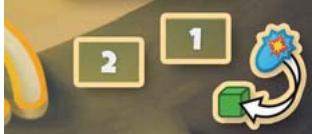
PLASMA MEMBRANE (Glucose Transporter)
If a player places a flask on the spot marked with a 2, they pay 2 ATP from their personal resource stock and receive 2 green Carbohydrate resources. If a player places on the spot marked with a 1, they pay 1 ATP from their personal resource stock and receive 1 green Carbohydrate resource. Players should add these green resources to their personal resource stock.
MITOCHONDRIA
ATP Production

MITOCHONDRIA (ATP Production)
If a player places a flask on either of the spots marked with a 2 or 3, they receive 2 or 3 ATP Tokens, respectively. If a player places on the bottom-most spot, they must pay 1 green Carbohydrate resource from their personal resource stock, and receive 6 ATP. (If 6 ATP are not available, they may take less than 6 ATP). Players should add these ATP Tokens to their personal resource stock.
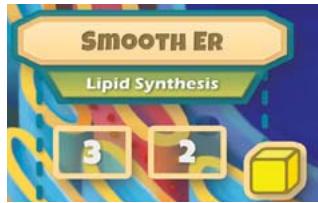
SMOOTH ER (Lipid Synthesis)
If a player places a flask on the spot marked with a 3, they receive 3 yellow Lipid resources. If a player places on the spot marked with a 2, they receive 2 yellow Lipid resources. Players should add these yellow resources to their personal resource stock.
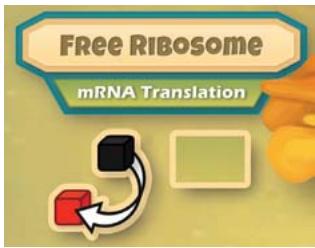
FREE RIBOSOME (mRNA Translation)
If a player places a flask on the mRNA Translation spot, they must trade any number of black mRNA resources from their personal resource stock for the same number of red Protein resources. Players should then add these red resources to their personal resource stock.
EXTRA RESOURCES ADDED BY EVENT CARDS
If an Event Card adds a resource of any type to a location on the Board, that resource is awarded to the first player to place on any spot within that location on the board at no additional cost. (See Event Cards for more details.)
PURCHASING CELL COMPONENT CARDS (TO ADD TO YOUR HAND)
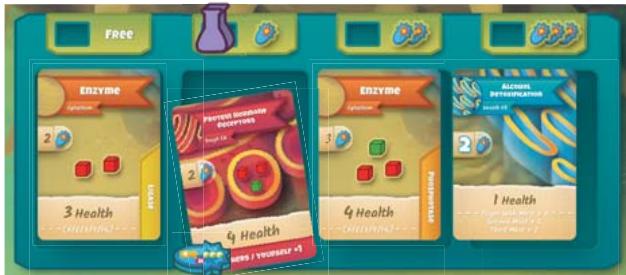
If a player places a flask on any of the spots within the Cell Component Card area, they must pay the ATP cost (indicated to the right of their flask) and collect the card just below their flask, placing that card into their hand.
COMPLETING CELL COMPONENT CARDS(THESE CARDS ARE COMPLETED OVER MULTIPLE TURNS)
A player must have at least the number of macromolecule resources required by the Cell Component Card they are completing on their Transport Vesicle Disk, but may have more.

Budding Transport Vesicle Location
SMOOTH ER
If a player places a flask on the lower portion of the Smooth ER (Alcohol Detoxification or Steroid Hormone Synthesis) they must do one of two things:
OPTION 1: ALCOHOL DETOXIFICATION
If a player places a flask to complete an Alcohol Detoxification Card, they must pay the amount of ATP shown on the card and then immediately gain 1 Health Point.
OPTION 2: STEROID HORMONE SYNTHESIS
The process of completing Steroid Hormone Cards starts by placing a flask in the Steroid Hormone Synthesis area of the Smooth ER. If a player places a flask in this spot, they must:
-
Place one of their Transport Vesicle Disks on any one of the available Budding Transport Vesicle Locations (yellow rimmed circles) in the Smooth ER.
-
Place a number of Lipid resources (just Lipid resources, Carbohydrate resources must be placed on their Transport Vesicle Disk in the Golgi Apparatus) from their personal resource stock onto that Transport Vesicle Disk according to the quantity required by the Steroid Hormone Card that player is trying to complete.
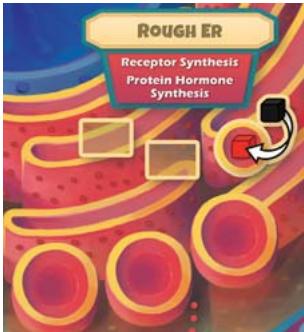
ROUGH ER (Protein Hormone Synthesis / Receptor Synthesis)
The process of completing a Protein Hormone, Protein Hormone Receptor or a Steroid Hormone Receptor Card starts by first placing a flask in the Rough ER. If a player places a flask on any of the spots within the Rough ER they must:
-
Place one of their Transport Vesicle Disks on any one of the available budding Transport Vesicle locations (yellow rimmed circles) in the Rough ER.
-
Trade the number of mRNA resources from their personal resource stock (according the Cell Component Card they are trying to complete) for the same number of Protein resources from the general resource stock. Then, place those Protein resources onto that Transport Vesicle Disk placed in Step 1 above.
You must start with mRNA resources. You may not place Protein resources from your personal resource stock here.
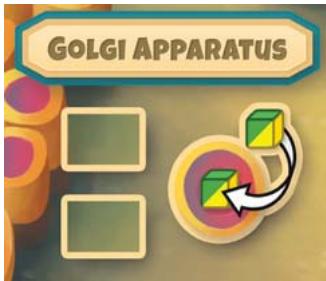
GOLGI APPARATUS
The Golgi Apparatus is the second step in the process of completing a Protein Hormone, Steroid Hormone, Protein Hormone Receptor, or Steroid Hormone Receptor Card. If a player places a flask on either of the spots within the Golgi Apparatus, they must:
-
Move one of their Transport Vesicle Disks (and all resources on it) from either the Smooth ER or the Rough ER, onto an available budding Transport Vesicle location in the Golgi Apparatus.
-
Place one Carbohydrate resource or one Lipid resource from their personal resource stock onto that Transport Vesicle Disk, according to the Cell Component Card they are trying to complete. (This spot does NOT allow a player to trade a Carbohydrate resource for a Lipid resource or vice versa.)
If the active player places a flask on a spot in the Smooth ER, Rough ER or Golgi Apparatus, and no budding Transport Vesicle locations for that area are available, that player chooses one Transport Vesicle Disk (and all resources on it) to remove from the board and return to the player who owns it. The active player must now place (or move) their Transport Vesicle Disk and appropriate resources onto the newly opened Transport Vesicle location.
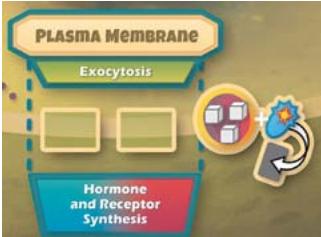
PLASMA MEMBRANE (Exocytosis)
The exocytosis of the Plasma Membrane is the final step in completing a Protein Hormone, Steroid Hormone, Protein Hormone Receptor, or Steroid Hormone Receptor Card. If a player places a flask on any of the spots within the Plasma Membrane, labeled Exocytosis, they must:
-
Reveal the Cell Component Card they are completing.
-
Move one of their Transport Vesicle Disks from the Golgi Apparatus, through the Plasma Membrane, and out of the cell.
-
Immediately pay the ATP cost indicated on that Cell Component Card.
-
Place all the macromolecule resources from the Transport Vesicle Disk back into the general resource stock. The Transport Vesicle Disk should go back to the player who owns it.
-
Gain Health Points according to the number indicated on the Cell Component Card just completed.

CYTOPLASM (Enzyme Synthesis)
The Cytoplasm is the final step in completing an Enzyme Card (once a player has red Protein resources from the Free Ribosome). If a player places a flask on the spot within the Cytoplasm labeled Enzyme Synthesis, they must:
-
Reveal the Enzyme Card they are completing.
-
Immediately pay the ATP cost indicated on that Enzyme Card.
-
Pay a number of Protein resources (and a Carbohydrate resource if required) from their personal resource stock, as indicated on that Enzyme Card.
-
Gain Health Points according to the number indicated on the Enzyme just completed.
TAKING THE FIRST PLAYER MARKER(AND PLACING A GOAL MARKER OR TAKING 1 ATP)

LAUREATES IN BIOLOGY
If a player places a flask on the spot in the Laureates in Biology area, they must take the First Player Marker (and keep it for all subsequent rounds until the First Player Marker is claimed by another player) and they may choose to do one of the following:
-
Take 1 ATP and add it to their personal resource stock, or
-
Place one of their two Goal Markers on one of the available Goal Cards above the game board. (Once a Goal Marker has been placed, it may never be moved.)
The first Goal Marker placed on each Goal Card immediately awards that player 3 Health Points. (See Goal Cards for details.)
CELL COMPONENT CARDS
There are five types of Cell Component Cards in the base game: (1) Hormone Cards, (2) Hormone Receptor Cards, (3) Enzyme Cards, (4) Alcohol Detoxification Cards, and (5) Additional Resource Cards.
With the exception of the Additional Resource Cards, which simply give players additional resources, each card indicates the placement spot to begin that card, the resource cost (macromolecule resources and ATP) needed to complete that card, as well as the number of Health Points it will immediately score once it is completed.
The Hormone Receptor Cards may score a player additional points throughout the game (see Hormone Receptor Cards for details) while Enzyme Cards or Alcohol Detoxification Cards may score a player additional End Game points. (See Enzyme Cards and Alcohol Detoxification Cards for details.) A quick reference for these additional points is shown at the bottom of each card.
Cards in a player’s hand are kept secret from other players until completed, while completed cards should be kept face up in front of the player who completed them. Completed cards will be useful in tracking End Game points.

HORMONE Cards
There are two diferent types of Hormone Cards: Protein Hormones (red background) and Steroid Hormones (blue background).
Hormone Cards (as with most cards) are completed over a series of turns by placing flasks in the required spots, first in the ER (either the Smooth ER or the Rough ER), then in the Golgi Apparatus, and finally in the Plasma Membrane (Exocytosis).
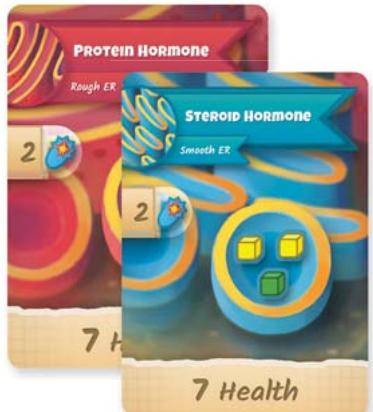
First, a player must place a flask in the ER (either Smooth ER for Steroid Hormone Cards or Rough ER for Protein Hormone Cards), which allows that player to immediately place one of their Transport Vesicle Disks in the ER, along with the required Protein or Lipid resources. (See Smooth ER and Rough ER sections under Completing Cell Component Cards for details.)
Next, a player must place in the Golgi Apparatus, pulling their Transport Vesicle Disk (and all resources on it) from the ER and adding the additional Carbohydrate resource.
Finally, a player must place in the Exocytosis area of the Plasma Membrane and pay the ATP cost.
That player then gains the number of Health Points shown on the card just completed.
All macromolecule resources shown on a Hormone Card must have been placed on a Transport Vesicle Disk in the process just outlined to complete a Hormone Card.
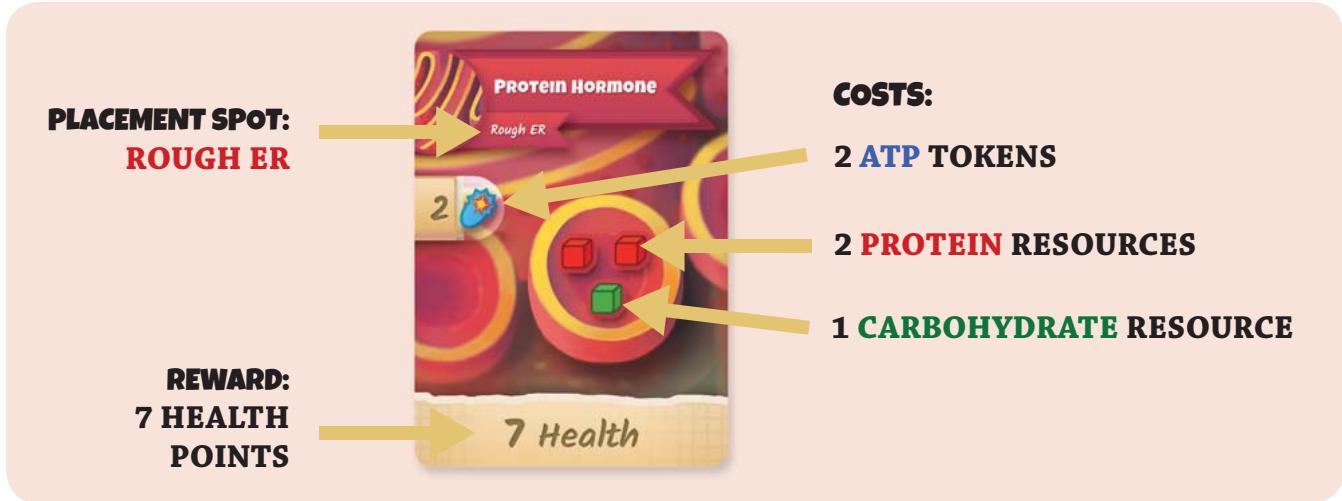
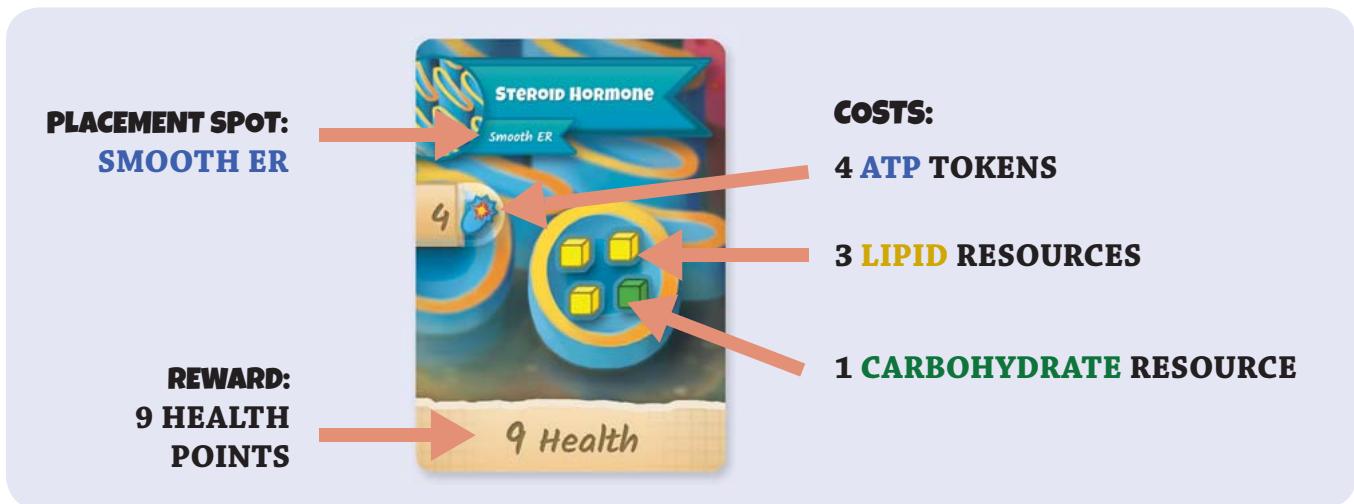
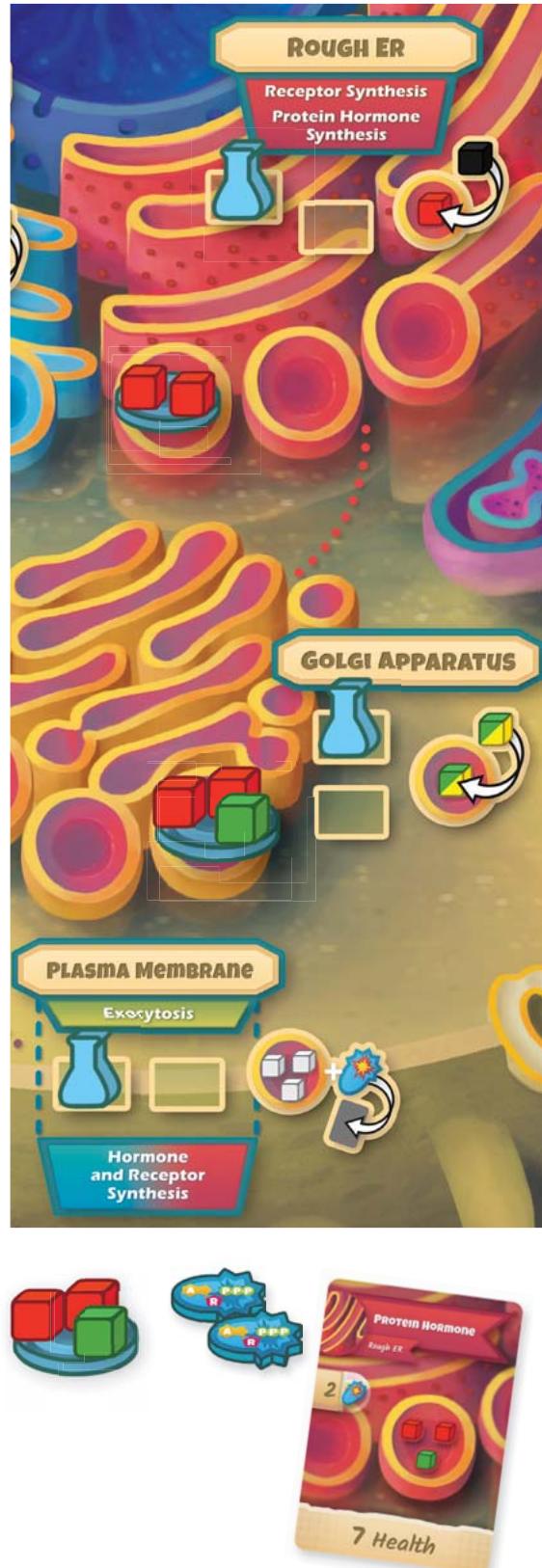
A Detailed Example of How to Complete a Protein Hormone Card
This example assumes the player has already collected mRNA resources previous to their first placement, a Carbohydrate resource previous to their second placement, and enough ATP previous to their third and last placement.
For the first flask placement, place a flask in the Rough ER, and do all of the following:
-
Place your Transport Vesicle Disk on one of the available budding Transport Vesicle locations.
-
Trade two mRNA resources from your personal resource stock for two Protein resources to match the quantity required by the Protein Hormone Card that you are trying to complete.
-
Place those Protein resources onto that Transport Vesicle Disk.
For the second flask placement, place a flask in the Golgi Apparatus, and do all of the following:
-
Move your Transport Vesicle Disk (and all resources on it) from the Rough ER, into an available budding Transport Vesicle location in the Golgi Apparatus.
-
Then place one Carbohydrate resource from your personal resource stock onto that Transport Vesicle Disk.
For the third flask placement, place a flask in the Exocytosis area of the Plasma Membrane, and do all of the following:
-
Reveal the Protein Hormone Card you are completing.
-
Move your Transport Vesicle Disk (and all resources on it) from the Golgi Apparatus, through the Plasma Membrane, and out of the cell.
-
Immediately pay the 2 ATP indicated on that Protein Hormone Card.
-
Place the macromolecule resources from that Transport Vesicle Disk back into the general resource stock. The Transport Vesicle Disk goes back to you! Gain the 7 Health Points shown on the Protein Hormone Card you’ve just completed.
CONGRATULATIONS, YOU’VE JUST COMPLETED A PROTEIN HORMONE CARD!
HORMONE RECEPTOR CARDS
There are two types of Hormone Receptor Cards: Steroid Hormone Receptor Cards and Protein Hormone Receptor Cards. Both types of Hormone Receptor Cards are completed in the same way as the Hormone Cards, with two exceptions. First, BOTH Hormone Receptor Cards begin in the Rough ER. Second, Steroid Hormone Receptor Cards will receive a Lipid resource (rather than a Carbohydrate resource) in the Golgi Apparatus. (See Hormone Cards for more details on how to complete Hormone Receptor Cards.)
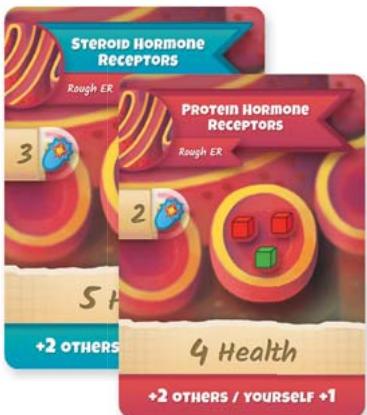
The major benefit of Hormone Receptor Cards is that players who have completed them will score Health Points when opposing players complete Hormone Cards. Any time an opposing player completes a Protein Hormone Card, all players with a completed Protein Hormone Receptor Card will gain 2 Health Points for each Protein Hormone Receptor Card they’ve completed.
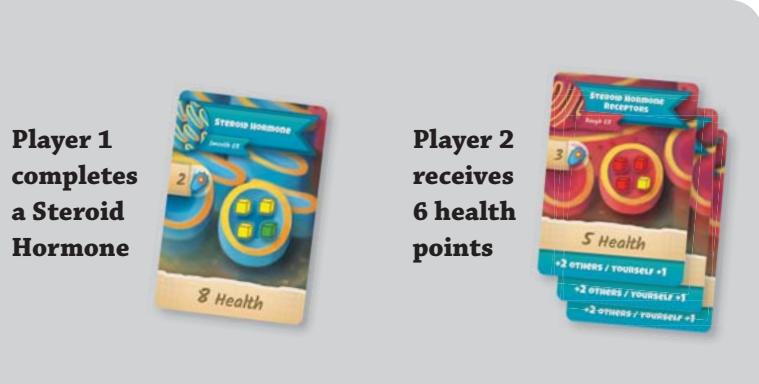
Any time an opposing player completes a Steroid Hormone Card, all players with a completed Steroid Hormone Receptor Card will gain 2 Health Points for each Steroid Hormone Receptor Card they’ve completed.
For example, if a player has two completed Steroid Hormone Receptor Cards, they will move up 4 Health Points each time an opposing player completes a Steroid Hormone Card. In the same way, if a player has three completed Steroid Hormone Receptor Cards, they will move up 6 Health Points each time an opposing player completes a Steroid Hormone Card.
Also, any time a player personally completes a Protein Hormone Card, they will score 1 additional Health Point for each Protein Hormone Receptor Card they have already completed. Likewise, any time a player personally completes a Steroid Hormone Card, they will score 1 additional Health Point for each Steroid Hormone Receptor Card they have already completed.
ENZYME CARDS
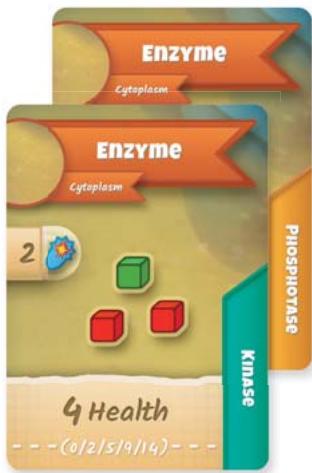
Enzyme Cards (in this game) do NOT require the use of a Transport Vesicle Disk. Rather, they are completed by first placing a flask in the Free Ribosome spot to trade black mRNA resources for red Protein resources, and then by placing a flask in the Cytoplasm spot. A player will then reveal the Enzyme Card they are completing, pay the required Protein resources (and Carbohydrate resource if required by that Enzyme Card) from their personal resource stock, pay the ATP indicated on that Enzyme Card and then gain the Health Points shown on that completed Enzyme Card.
Completed Enzyme Cards should be overlapped and flared so all other players can see them. Sets of Enzyme Cards will score additional points at the end of the game, as shown on the bottom of each Enzyme Card (see Scoring for details).
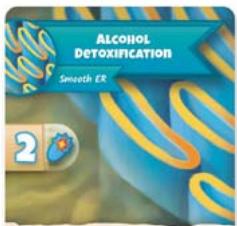
ALCOHOL DETOXIFICATION CARDS
Alcohol Detoxification Cards are completed by placing a flask in the Alcohol Detoxification spot (within the Smooth ER) and paying the ATP cost indicated on that card. After completing an Alcohol Detoxification Card, a player will gain one Health Point.
At the end of the game, the players with the most Alcohol Detox will gain additional points (see End Game Points from Alcohol Detoxification Cards for more details).
ADDITIONAL RESOURCE CARDS
Additional Resource Cards may be kept in a player’s hand and played at any time during a player’s turn. Once the card is played, that player should immediately take the number of resources shown on the card and place that card in the Cell Component Card discard pile.
GOAL CARDS

After a player places a flask on the spot in Laureates in Biology, they may choose to place a single Goal Marker on any available Goal Card. Once a Goal Marker has been placed, it may never be moved, and a player may never place both of their Goal Markers on the same Goal Card. A maximum of two Goal Markers may be placed on each Goal Card.
Goal Cards may score a player points in two ways:
-
During the Game: The first Goal Marker placed on each Goal Card immediately awards that player 3 Health Points. (The second Goal Marker placed on a Goal Card receives no immediate Health Points.)
-
During End Game Scoring: If a player has placed a Goal Marker on a Goal Card, and that player has completed any number of Cell Component Cards indicated on that Goal Card, they will score End Game points according to the description on that Goal Card.
EVENT CARDS
The purpose of the Event Cards is to change up the game each round. During Phase 2 of each round, 1 Event card will be flipped face up and will afect the game in some way.
There are three types of Event Cards in the Base Game (4 types of Event Cards if including the Virus Expansion):
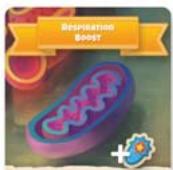
(1) Boost,
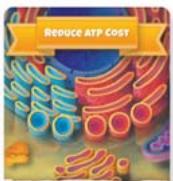
(2) Reduce ATP Cost, and
(3) Toxicity



Enzymes
Gain an additional
2 points for each
Enzyme you completed
this game.
Boost
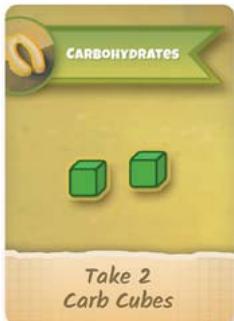
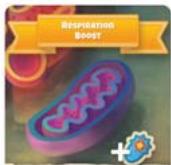
A Boost Event Card adds 1 resource to a specific area of the board. That resource is awarded for free to the first player to place on any spot within that location, in addition to the resources that spot usually awards. Any resources added to a specific area of the board remain in that area until awarded.
Toxicity
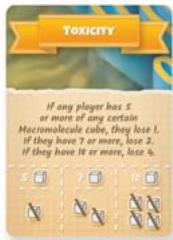
A Toxicity Event Card forces players to return macromolecule resources from their personal resource stock to the general resource stock. If any player has 5 or more of any certain macromolecule, they lose 1. If they have 7 or more, they lose 2. If they have 10 or more, they lose 4.

REDUCE ATP COST
A Reduce ATP Cost Event Card reduces the cost of each Cell Component Card purchased that round by 1 ATP. If a player places on the Free Spot when this Event Card is active, they may also take 1 ATP from the general resource stock.
GREY FLASKS
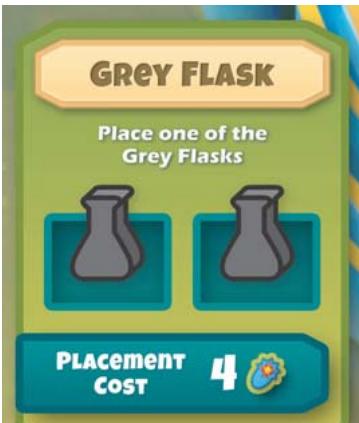
Before a player places their flask during their turn, they may pay 4 ATP to place a Grey Flask first. (This is in addition to their normal flask placement). After paying 4 ATP, a player may take an available Grey Flask from the Grey Flask Area of the board and place that Grey Flask in any flask placement spot (available or unavailable), and then take the action associated with that spot.
Restrictions: A player may pay to place only one Grey Flask per turn and must be able to take the action associated with that spot. Only Grey Flasks in the Grey Flask area are available for this action.
ENDING THE GAME
The last round is signaled when the last Event Card is flipped face-up. Players should play through Phase 1 one last time and then skip directly to Scoring.
SCORING
At the end of the game, players will score additional End Game points for macromolecule resources still in their personal resource stock, Alcohol Detoxification Cards completed, Enzyme Cards completed, as well as any Goal Cards on which they’ve placed any of their Goal Markers during the game. Players should move their Health Marker along the Health Track for all End Game Points earned.
END GAME POINTS FROM MACROMOLECULE RESOURCES
Before scoring macromolecules resources, a player may collect all macromolecule resources remaining on any of their Transport Vesicle Disks still on the board, and add these to their personal resource stock.
Macromolecule resources (Protein, Lipid, mRNA, and Carbohydrate) in a player’s personal resource stock earn that player 1 point for every 4 mRNA or 4 Lipids, 1 point for every 3 Proteins and 1 point for every 2 Carbohydrates.
END GAME POINTS FROM ALCOHOL DETOXIFICATION CARDS
The player with the most Alcohol Detox gains an additional 8 Health Points, the player with the second most gains an additional 5 Health Points, and the player with the third most gains an additional 2 Health Points. The most Alcohol Detox is determined by adding together the number of ATP on all of the Alcohol Detoxification Cards completed by that player (Alcohol Detoxification Cards still in a player’s hand do not add to this total). If a player has completed no Alcohol Detoxification Cards, they automatically score no points for Alcohol Detoxification Cards.
For example, a player who built three separate Alcohol Detoxification Cards requiring 2 ATP would have an equal amount of Alcohol Detox as the player who built two Alcohol Detoxification Cards both requiring 3 ATP.
In case of a tie, the tying player with the most completed Alcohol Detoxification Cards wins. If there is still a tie, tying players should add the points allotted to the position of those two tying players and the position directly below it and divide those points equally between them, rounding down to the nearest whole number. In case of a three way tie, add the position of those tying players and all positions below it, and divide those points equally among the tying players, again rounding down.

In a 2 player game, the player with the most Alcohol Detox will gain 6 Health Points, and the player with the second most Alcohol Detox will gain 3 Health Points.
Two players tied for 2nd Current position (5) + Position Below (2) = 7 Divide by 2 = 3
END GAME POINTS FROM ENZYME SETS
Sets consist of Enzyme Cards of diferent colors. Any sets of Enzyme Cards a player has completed during the game earn End Game points according to the table below:
 | 5 | |||
| HEALTH POINTS EARNED | 2 | 5 | 9 | 14 |
Two Enzyme Cards of the same color may not belong to the same set; however a player may score points for two sets.
END GAME POINTS FROM GOAL CARDS
If a player has placed a Goal Marker on a Goal Card, and that player has completed any number of the Cell Component Cards indicated on that Goal Card, they will score End Game points according to the description on that Goal Card. Each player should reference the Goal Card(s) on which they have placed their Goal Marker(s) for details on points scored.
FINAL SCORING
Whoever has the most total Health Points wins the game!
If there is a tie, the player with the most completed Cell Component Cards wins (only Alcohol Detoxification Cards, Enzyme Cards, Hormone Cards, and Hormone Receptor Cards count). And if there is still a tie, the tying player in the last position from the player holding the First Player Marker wins the tie!
2 PLAYER RULE MODIFICATIONS
GAME SETUP DIFFERENCES
Remove 3 Alcohol Detoxification Cards at random from the Cell Component Card deck,1 before dealing 3 to each player or filling the Cell Component Card Area with cards.
Remove 2 Event Cards at random from the Event Deck before placing it near the game board.2
GAMEPLAY DIFFERENCES
1 FLASK IN EACH PLACEMENT SPOT
In a 2 player game, a maximum of 1 flask is allowed in each placement area on the board, each round. Each area has a distinct tan border with grey text, e.g. Nucleus, Rough ER, and Mitochondria are diferent areas.
NucLeUs
ROUGH ER
There are three exceptions to this: the Mitochondria, the Smooth ER and the Cell Component Card Area. Exceptions:
• In the Cell Component Card Area, all four spots may be occupied, just like in a 3-5 player game. Thus, there is no diference in the way the Cell Component Card Area functions.
• In the Mitochondria, any two out of the three total spots may be occupied.
• In the Smooth ER, two spots may be occupied - a maximum of one in the Lipid Synthesis location and one in Alcohol Detoxification/Steroid Hormone Synthesis.
For example, if one flask has been placed in the [3] spot of the Nucleus, a second flask may not be placed in the [2] spot of the Nucleus that round, because they are both in the same Nucleus area. Or, if a flask has been placed in the Rough ER, Golgi Apparatus, or either of the Plasma Membrane areas, a second flask may not be placed in any of those areas that round.
A player may still purchase and place a Grey Flask in ANY occupied or unoccupied spot, even if another flask has already been placed in that placement area or placement spot.
Placement Spot Restrictions

REMOVE THE 2 LEFT-MOST CELL COMPONENT CARDS
In Step 3 of Phase 2, instead of discarding the one left-most Cell Component Card from the Cell Component Card Area, discard the two left-most cards.
SCORING DIFFERENCES FOR 2 PLAYERS END GAME POINTS FROM ALCOHOL DETOX CARDS
In a 2 player game, the player with the most Alcohol Detox will gain 6 Health Points, and the player with the second most Alcohol Detox will gain 3 Health Points.
VIRUS EXPANSION RULES
For 2 - 5 players
GAME SETUP - MODIFICATIONS TO THE BASE GAME
INCORPORATE THE FOLLOWING STEPS INTO THE BASE GAME SETUP
Board: In Step 1 of Base Game Setup, place the board with the Virus Expansion side face up.
Event Deck: In Step 2 of Base Game Setup, shufle the 12 Event Cards like normal, but if playing a 2 or 3 player game randomly remove 5 Event Cards, if playing a 4 player game remove 3 Event Cards, and if playing a 5 player game remove 1 Event Card. Return these removed Event Cards to the box without looking at them. Then, shufle the 3 Virus Event Cards into the remaining Event Deck and continue setup as usual.
Goal Cards: In Step 3 of Base Game Setup, shufle the 1 Immune Response and the 1 Virus Attack Goal Cards in with the other five Goal Cards from the Base Game. Then continue setup by placing a number of these Goal Cards face up above the game board, equal to the number of players plus 1.
In a 2 or 3 player game, if both Virus Expansion Goal Cards come up, replace one at random with a diferent Goal Card.
Cell Component Deck: In Step 5 of Base Game Setup, after you have dealt each player 3 Cell Component Cards, shufle the 6 Virus Attack Cards in with the Cell Component Card deck. Continue set up as usual.
NOW, PERFORM THESE TWO ADDITIONAL STEPS:
Expansion Step 1: Give each player one Player Mat and 3 Antibody Markers (tan resources). Each player should place one of these Antibody Markers on each of the three spots marked “0” on the bottom of each of their Virus strain columns (Ebola, Influenza and Rhinovirus).
In a 2 Player game, set up one additional Player Mat (according to Expansion Step 1) near the game board to act as a third “dummy” player.
Expansion Step 2: Place the 5 Antibody Dice somewhere near the top of the game board.
EVENT CARDS
There are three diferent Event Cards in the Virus Expansion, each representing a diferent Virus strain: Ebola, Influenza and Rhinovirus.
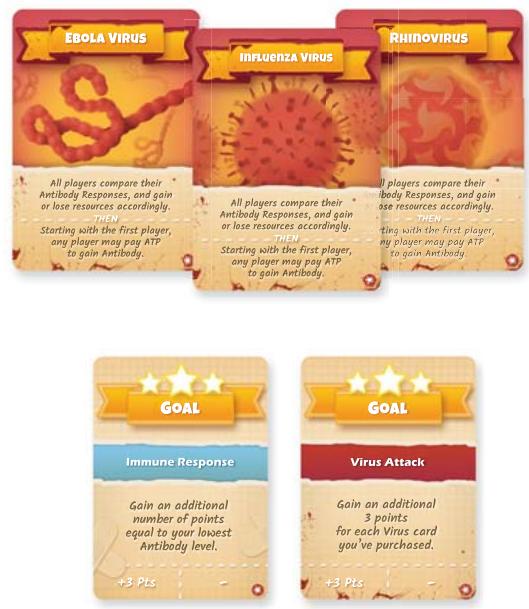
When a Virus Event Card is flipped face up from the Event Deck, it becomes active and players should follow the instructions explained in the When Viruses Attack section.
GOAL CARDS
There are two diferent Goal Cards in the Virus Expansion: 1 Immune Response Goal Card and 1 Virus Attack Goal Card. Rules for the Virus Expansion Goal Cards are the same as for the Base Game Goal Cards.
CELL COMPONENT CARDS
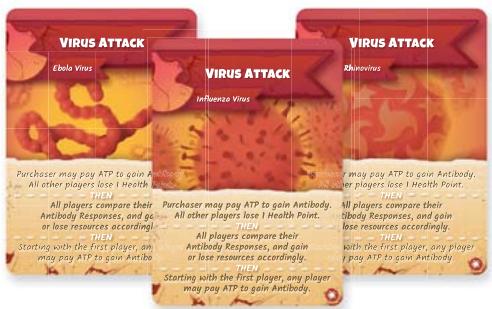
There are six Virus Attack Cell Component Cards: 2 Ebola, 2 Influenza and 2 Rhinovirus Virus Strain Cards. When a player purchases a Virus Attack Card from the Cell Component Card Area, that card immediately takes efect and players should follow the instructions explained in the When Viruses Attack section.
PLAYER MATS
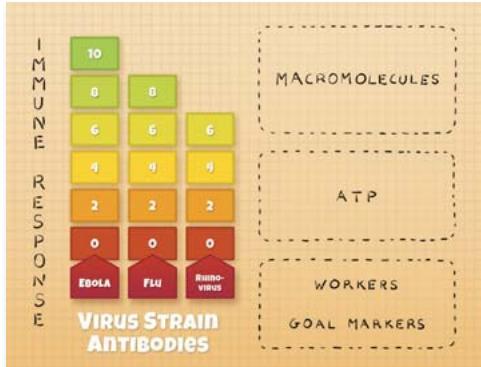
Each player mat features two main sections: The Immune Response Area and the Resource Area.
Immune Response Area: This section has three columns marked at the bottom with Ebola, Influenza or Rhinovirus. The position of a player’s Antibody Marker within a column indicates the number of antibodies that player has built up to combat a virus of that strain’s type. (See When Viruses Attack section for details.)
Resource Area: This section has areas indicating where a player may store their Flasks and Goal Markers not in use, and their personal resource stock (macromolecule resources and ATP).
WHEN VIRUSES ATTACK
When a Virus Event Card is flipped face up from the Event Deck, or when a Virus Attack Card is purchased from the Cell Component Card Area, that Virus Card becomes active immediately and all players should immediately follow the steps below.
WHEN A VIRUS EVENT CARD IS FLIPPED DURING THE EVENT PHASE:
1 All players roll a number of Antibody Dice according to their current position on the Health Track. If their Health Marker is in the red section, they will roll one die. If their Health Marker is in the yellow section, they will roll 2 dice, and if their Health Marker is in the green section, they will roll 3 dice.
To their roll, each player adds the number of antibodies2 from the column of their Player Mat that matches the attacking Virus strain. This sum is each player’s Antibody Response.
All players compare their Antibody Response and3 gain or lose resources accordingly. (See the Antibody Response Resource Allocation section for details)
After all players have completed Steps 1-3, each player4 will have the option to pay ATP from their personal resource stock to gain antibody matching that attacking Virus strain, starting with the player holding the First Player Marker and moving in player order.
For each ATP paid, a player moves their Antibody Marker up that strain’s column by one level (2 antibodies).
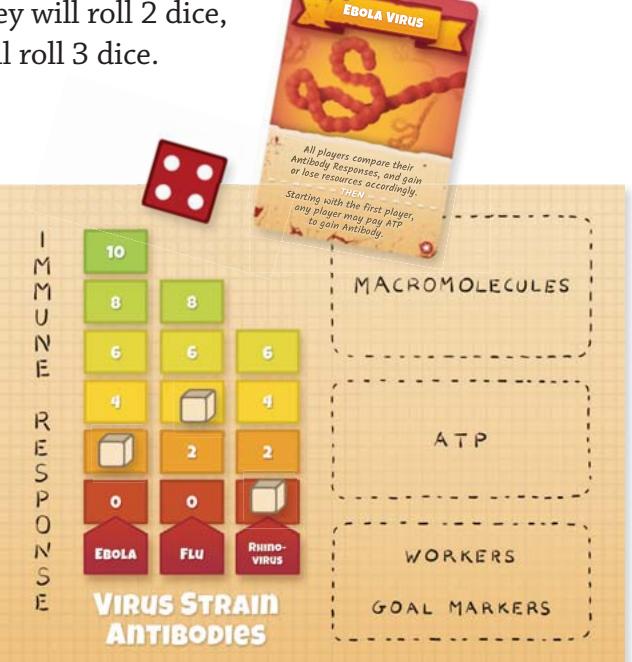
+ 2 Ebola Antibodies = Antibody Response of 6
In a 2 Player game, the third “dummy” player rolls a number of Antibody Dice according to the current position of the player lowest on the Health Track, and adds the number of antibodies from the column of their player mat just like all other players.
After all players have added up their Antibody Response, reference the Antibody Response Resource Allocation chart for 2-3 players. Any resources gained or lost by the “dummy” player remain in the general resource stock.
After all players have completed Step 4, move the Antibody Marker on the “dummy” Player Mat up one level (2 antibodies) on the column that matches the attacking Virus strain.
WHEN A VIRUS ATTACK CARD IS PURCHASED FROM THE CELL COMPONENT CARD AREA:
Only the player who purchased the Virus Attack Card may pay additional ATP to move their Antibody1 Marker up the column matching that attacking Virus strain (at a rate of 1 ATP per 2 antibody).
All other players must lose 1 Health Point on the Health Track. (Players can go negative on the Health Track.)2
Now follow Steps 1-4 of “When A Virus Event Card is Flipped During the Event Phase” to determine how3 many resources a player will gain or lose.
ANTIBODY RESPONSE RESOURCE ALLOCATION
A player gaining resources may choose any combination of ATP, mRNA, and Lipids from the general resource stock. A player losing a resource may choose to lose any resource from their personal resource stock or lose 1 Health Point.
In a 2-3 player game:
| Player with Highest Antibody Response | Gain 3 resources |
| Player with Second Highest Antibody Response | Gain 1 resource |
| Player with Lowest Antibody Response | Lose 1 resource or 1 Health Point |
In a 4 player game:
| Player with Highest Antibody Response | Gain 3 resources |
| Player with Second Highest Antibody Response | Gain 2 resources |
| Player with Third Highest Antibody Response | Gain 1 resource |
| Player with Lowest Antibody Response | Lose 1 resource or 1 Health Point |
In a 5 player game:
| Player with Highest Antibody Response | Gain 4 resources |
| Player with Second Highest Antibody Response | Gain 3 resources |
| Player with Third Highest Antibody Response | Gain 2 resources |
| Player with Fourth Highest Antibody Response | Gain 1 resource |
| Player with Lowest Antibody Response | Lose 0 resources |
If there is a tie for Antibody Response, the first player, or the player closest to the First Player wins the tie. In a 2 player game, if a player ties with the “dummy” player, the “dummy” player wins.
PLAYER 1 ROLLS 2 DICE
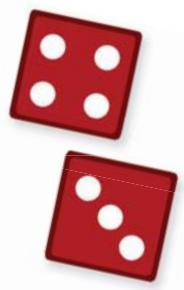
4 + 3 + 4 = ANTIBODY RESPONSE OF 11
Example: Player 1 purchases a Virus Attack Card (Influenza Strain) from the Cellular Component Card Area, then decides to pay 2 additional ATP to move his Antibody Marker up 4 (a total of 2 levels) on the Influenza column of his Player Mat.
All other players lose 1 Health Point on the Health Track.
Each player now rolls a number of Antibody Dice according to their current position on the Health Track.
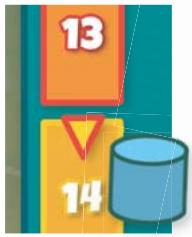
Player 1 currently has 14 Health Points, and is thus in the yellow section of the Health Track, so he rolls 2 Antibody Dice. He rolls a 4 and 3 on his Antibody Dice, and simply adds the 4 from his Influenza antibodies on his Player Mat, giving him an Antibody Response of 11.
Player 2’s Antibody Response is 12, and Player 3’s Antibody Response is 9.
Player 2 has the highest Antibody Response, so she gains 3 resources from the general resource stock. Player 1 has the second highest Antibody Response, so he gains 1 resource. Player 3 has the lowest Antibody Response, so she loses 1 resource from her personal resource stock.
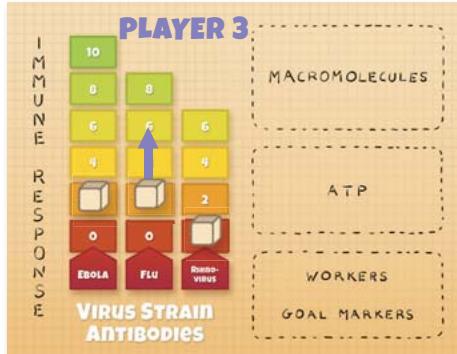
Now all players have the option to pay ATP from their personal resource stock to gain antibody on the Influenza column of their Player Mat. Player 1 and Player 2 decide not to pay any ATP. Then Player 3 decides to pay 2 ATP to move up 4 more antibodies on her Influenza column.
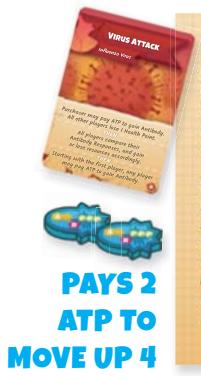

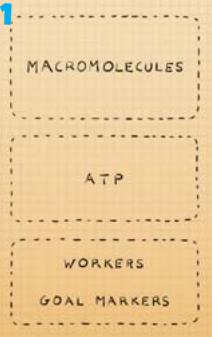
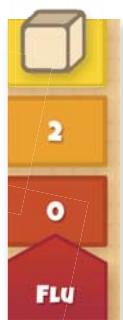
PLAYER 2’S ANTIBODY RESPONSE = 12 PLAYER 1’S ANTIBODY RESPONSE = 11 PLAYER 3’S ANTIBODY RESPONSE = 9
PLAYER 2 GAINS 3 RESOURCES

PLAYER 1 GAINS 1 RESOURCE

PLAYER 3 LOSES 1 RESOURCE


RULES FOR THE EPIGENETIC MODIFICATION CARDS
Each Epigenetic Modification Card gives a player a unique ability that they may use throughout the game. We recommend you don’t use the Epigenetic Modification Cards until players have played Cytosis and are already familiar with the game. The Epigenetic Modification Cards may be used with the Base Game of Cytosis or combined with the Virus Expansion.
GAME SET UP – MODIFICATIONS TO THE BASE GAME
When setting up the Base Game with Epigenetic Modification Cards, determine the First Player before Step 4, instead of waiting until Step 8. Then, shufle the seven Epigenetic Modification Cards and deal three to the First Player. That player should secretly read the three cards and choose one of them to keep. Next, that player must replace the chosen card by adding another Epigenetic Modification Card, at random, to the two remaining, then pass these three cards to the player on their left.
This player should secretly choose one of the three, then follow the same process of replacing the chosen card with a new card, and passing to the player on their left, until all players have chosen one Epigenetic Modification Card. Remaining Epigenetic Modification Cards should be placed back in the box.
Players should now place their chosen Epigenetic Modification Card face up in front of them for all players to see.
Game Setup now continues as usual with Step 4 of Base Game Setup. (See Page 2.)
EPIGENETIC MODIFICATION CARDS
Each player will keep their chosen Epigenetic Modification Card for the entire game. A player may only use their unique ability on their turn, UNLESS their Epigenetic Modification Card indicates otherwise.

On your turn, trade ATP for Lipids or mRNA at a rate of 1 ATP for I Lipid / mRNA, and trade ATP for Carbs at a rate of 2 ATP per I Carb.
The player holding this card may trade ATP for Lipids or mRNA at a rate of 1 ATP for 1 Lipid or 1 mRNA, and trade ATP for Carbohydrates at a rate of 2 ATP per 1 Carbohydrate. This card does NOT allow a player to trade macromolecules for ATP. This ability may be used as many times per turn as a player wishes, provided they have the ATP to trade.
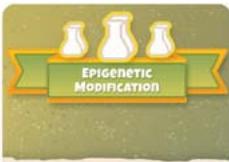
Poy 2 ATP to look ot the top 3 Poy 2 more ATP to ploce one of
The player holding this card may pay 2 ATP to secretly look at the top 3 Cell Component Cards from the deck. In addition, they MAY pay 2 more ATP in order to place one of these cards in their hand. This player must then place the unchosen cards back on top of the Cell Component Card deck in any order they choose. This ability may be performed only ONCE per turn.
Note: If playing with the Virus Expansion and a Virus Attack Card is chosen, the chosen Virus Attack Card must be played immediately, following the Virus Expansion Rules.
When placing to collect Mocromolecules or ATP on a numbered spot collect 1 addional
The player holding this card may collect 1 additional macromolecule or ATP every time they place on a numbered resource collection spot on the board. For example, if a player places on a [3] spot, they may collect 4 of that resource, and if a player places on a [2] spot, they may collect 3 of that resource. (Carbohydrates still cost 1 ATP for each Carbohydrate taken.)

At the beginning of the round, pay I ATP to place one of your flasks before the Ist
The player holding this card may pay 3 ATP to place a Grey Flask, rather than paying the usual 4 ATP. Rules for placing the Grey Flask are the same as in the Base Game.
Collect I ATP, mRNA or Lipid at the start

Component Cards
Before the First Player places their first Flask at the beginning of a round, the player holding this card should be given the choice to pay 1 ATP in order to place one of their Flasks before the First Player places their first Flask. Normal placement position then resumes, starting with the player holding the First Player Marker. This ability may be used only once per round.
For example, if the player with this Epigenetic Modification Card is currently the First Player, they may pay 1 ATP to place their first Flask, and then take their normal placement as first player (by placing a second Flask) before the second player places their first Flask.
At the beginning of every round, the player holding this card may collect 1 ATP, 1 mRNA OR 1 Lipid from the general resource stock and place this resource into their personal resource stock.
The player holding this card purchases their Cell Component Card for free every time they place a Flask in the Cell Component Card Area.
GAME DESIGN
John J. Coveyou
ART AND GRAPHIC DESIGN
Tomasz Bogusz
Danny Cooper, PhD
SCIENCE ADVISORS
Elizabeth Gurnack
KEY PLAYTESTERS
Danny Cooper, PhD
Bharath Kishore
Courtney Falk
Jonathan Leggo
Edward Brian Rader
Jonathan Grothe
Preston Lingle
Sarah Lafser
Edward Brian Rader
SPECIAL THANKS
Mike Bialecki
Gábor Géza Kiss
Susan Rice Sunny Singh John Walker
Danny Cooper, PhD
Jonathan Leggo
Upkar Gata-Aura
Iñigo Maestro
Dr. Jörn Peuser
Edmond Gravel
Oglik Naes
Kenneth Stuart
Petar Perisin
SCIENCE CONTENT COMPILATION
RULEBOOK DESIGN
Jonas Thierry
Nicole M. Milkovic, PhD
Stephen J. Bush, PhD
Wyverns Rose
Dr. Karl Jenkinson, PhD
Jennifer C. Schroeder, PhD
GAME DEVELOPMENT
SCIENCE CONTENT EDITORS
John J. Coveyou Shelley Spence
Dr. Michael Bialecki, PhD
Gábor Géza Kiss
Dr. Bryan G. White
Mike Christensen
Aitan Magence
Sarita Menon, PhD
John J. Coveyou
Christopher Olivera, PhD
Myra Nati, MPH
Erin Syverson, MGC, CGC
Dr. Duong T. Nguyen
Zach Grimes
Annalisa VanHook, PhD
L.A. Johnson PhD, DSc
Dr. Jonathan Chi Man Wong
Dr. Fabian Yu, PhD
Download MarkdownTexts are community-compiled or publicly released by publishers; copyright remains with the original authors. For personal reference only.