
Days Of Ire Budapest 1956
At a glance
Rules, cards and Q&A (Chinese)
The rules, card data and player questions for this game are written in Chinese. Open the Chinese page to read them.
Where to find full rules
Full rules and card lookup are available in the cunlema app at cunlema.cn — pick this game and ask about any rule, card or turn you are unsure about.
Related games
Rulebook text (Markdown)
This game has 1 rulebook Markdown file(s) in our library; 1 rendered inline below — expand to read or download.
Days-of-Ire-rules-start-updated.md67.1 KB

TABLE OF CONTENTS
Introduction .....
Learning this game ......
Overvie and eoel . he gam..
Components ...........
Setup....
Setting up the board ...
Setting up the Revolutionary side .......
Setting up the Soviet side....
Starting the game..........
Promo component rules ..
AK-47 ....
Last Stand ....
Alternative starting events ....
Player powers ....
History of the revolution ....
Appendix .......
Appendix A: Headline cards .........
Appendix B: Event cards ....
Appendix C: Fighters and revolutionary tanks .... 18
Appendix D: General Zhukov cards ........19
Credits.....
INTRODUCTION
Days of Ire: Budapest 1956 is a game for 1-4 players inspired by the real-life history of the 1956 October Hungarian Revolution. The game begins as the revolution first sparks to life on the evening of October 23rd.

It's 1956. Stalin has been dead for 3 years now, and his regime of terror and propaganda has softened just a tiny bit. The people of Hungary-the smallest country east of the Iron Curtain-are boiling with discontent and tired from the years of fear and poverty. Massive protests for change begin in the wholecountrywithout permission of the authorities. The stationing Soviet Army and the Hungarian State Protection Authority stand side by side, opposing the crowds. Then, the first shot is fired...
The game comes with 2 rulesets:
The Zhukov ruleset is a cooperative or solo game for 1-4 players, who play as the boys (and girls) of Budapest — Revolutionary ringleaders organizing protests side by side against the Soviet oppressors. The players galvanize the people and utilize the resources of the Hungarian capital to bring their cause to success while containing the chaos that might leave their home city in rubble. This ruleset is recommended when playing for the first time.
The Conflict ruleset is a one-versus-many game for 2-4 players, where in addition to the Revolutionary team, one player takes on the role of the Soviet commander stationed in Budapest. The commander coordinates the moves of the Red Army and relays the events at large, both in Budapest and on the world stage.
LEARNING THIS GAME
When you play the game for the first time, start with this booklet. In this booklet, you will find everything you need to know before the game starts, but nothing about what you need during play. Don't worry, you only need to get to the end of the Setup section on page 6,— after that you will find the Appendix, which you only need to read if you are interested in a specific card or the history of the Hungarian revolution. When you have set the game up, just continue by reading either the booklet labeled "Zhukov ruleset" or "Conflict ruleset", depending on which mode you have chosen to play.
OVERVIEW AND GOAL OF THE GAME
The game plays through the first seven days of the revolution. The Revolutionaries have to resolve the notable events of the revolution on the city map, fight with the tanks of the Soviet Army and units of the State Protection Authority of Hungary. The Revolutionaries win the game if all of them survive and no more than 4 events remain unresolved by the end of the week. They can also win if they are able to drive out the opposing forces from the city, but they lose if their morale falls too much. If the Revolutionaries achieve victory, the Soviet forces agree on a ceasefire on the 30th of October and leave the country — as they did in history for almost a week. But, if one ringleader falls, the fighters' morale plummets, or the city is left in the rubble by the time the fighting is finished, history takes a darker turn. The regime extinguishes this candle of freedom before it gleams bright enough for the world to see.

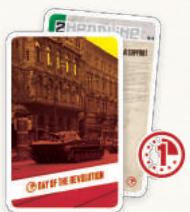
1 - Day of the Revolution
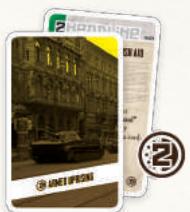
2 - Armed Uprising
Cards
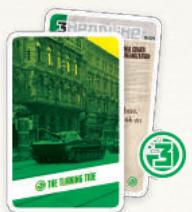
3 - The Turning Tide
Eye, cads
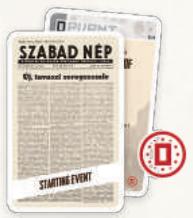
Starting
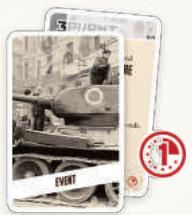
1 - Day of the Revolution

SPA card
2 - Armed Uprising

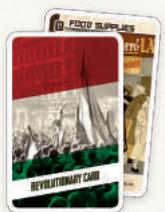

Revolutionary card
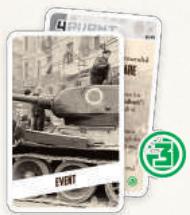
3 - The Turning Tide
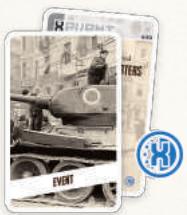
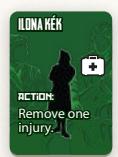
Fighter tile
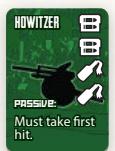
Revolutionary tank tile
Tokens
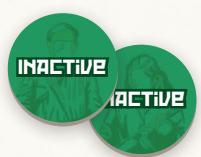
Inactive fighter marker
S s

Militia token

Sniper token
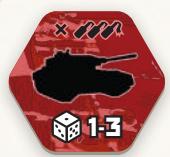
Soviet tank token
Barricade token

Resolution marker
Injury token
Action marker
Free movement marker

Player tokens
COMPONENTS
· 1x Game board (620x480 mm)
• 3x Marker for Day, Morale, and Support (transparent)
• 2x Die (6-sided)
3x Booklets
• Starting rulebook & Appendix (210x285 mm)
• Conflict rules (210x285 mm)
• Zhukov rules (210x285 mm)
135x Cards (57x89 mm)
• 42x Headline cards
• 33x Event cards
• 8x State Protection Authority cards
• 38x Revolutionary cards
• 14x General Zhukov cards
101x Cardboard tiles, markers & tokens
• 22x Fighter tiles (human silhouette)
• 3x Revolutionary tank tiles (tank silhouettes)
• 11x Inactive fighter markesr (dark teal circle)
• 14x Militia tokens (triangle)
• 5x Sniper tokens (square)
• 8x Soviet tank tokens (hexagon)
• 2x Barricade tokens (octagon)
• 9x Resolution markers (rectangle)
• 13x Injury markers (red circle)
• 5x Action markers (teal circle)
• 5x Free movement markers (orange circle)
• 1x Blue player token
• 1x Yellow player token
• 1x Red player token
• 1x Green player token
SETUP
Before setting up the game, decide if you want to play with the Conflict ruleset for 2-4 players or the Zhukov ruleset for 1-4 players.
Conflict ruleset: Select one of you to play as the Soviet commander - a player can demand to do so by banging their shoe on the table. The rest of you will be the team of the Revolutionary players.
Zhukov ruleset: All players are in the Revolutionary team.
SETTING UP THE BOARD
-
Place the board on the middle of the table, with the Revolutionary players sitting on the bottom side and the Soviet commander sitting on the top side.
-
Place the day marker on the "October 23rd" space of the calendar on the board.
-
Place the morale marker on the underlined 2 space of the morale track on the board.
-
Place the support marker on the underlined 4 space of the support track on the board.
-
Take the 3 revolutionary tank tiles and place them next to the board.
-
Take the 22 fighter tiles and randomly place 2 on the right side of each location on top of each other, face down. Then, flip the top one face up in each location and place an inactive marker on all 11 of them.
-
Place the following tokens on the right side of the locations listed below:
a) Kossuth Square: 1 sniper , 1 Soviet tank
b) Radio: 1 sniper , 1 Soviet tank
c) HWPP Headquarters: 1 sniper
d) Stalin Square: 2 militia ▲ ▲
e) Csepel: 1 militia ▲
f) Széna Square: 1 militia ▲
- Place the 3 starting event cards on the left side of the following locations on the board:
a) Students' demands at University of Technology
b) Petófi Circle organizes protest at Bem Statue
c) Civilians Armed in Corvin Passage
The game board is a map of Budapest, the capital of Hungary. The photos represent the 11 locations that were most important during the revolution.
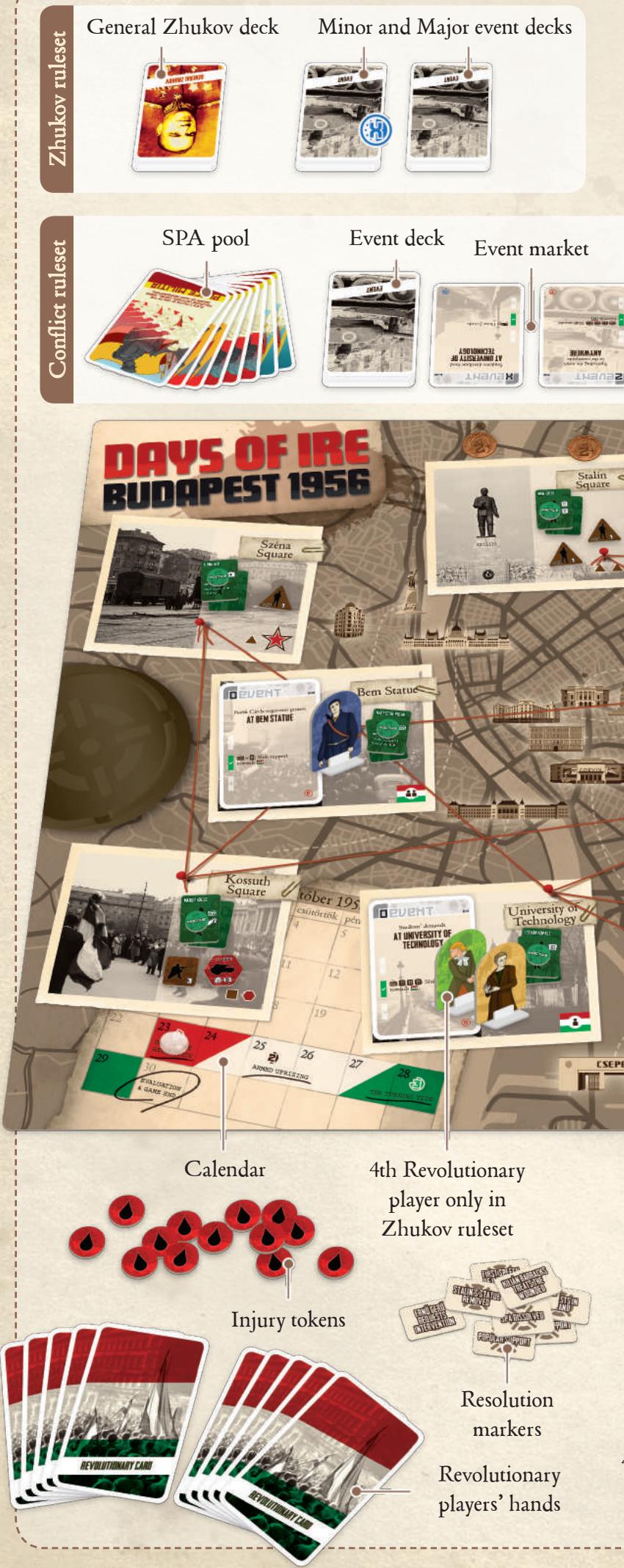
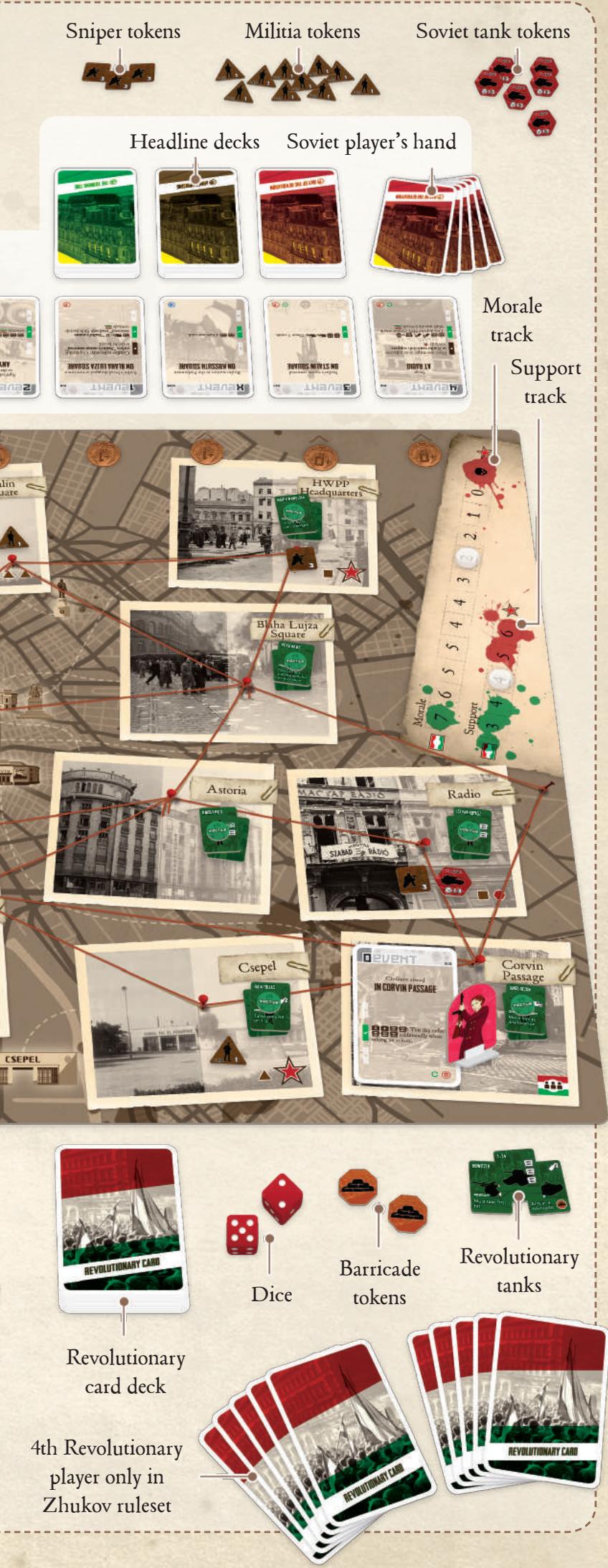
The calendar shows the 7 days in October 1956 when actual firefights took place. The sides agreed to a ceasefire on the 30th which also marks the end of the game.
SETTING UP THE REVOLUTIONARY SIDE
-
Form a draw deck from the revolutionary cards, place it next to the board and deal 5 cards to each Revolutionary player.
-
Each player may pick a player token in one of the available colors (red, blue, yellow, green) and place it in the plastic standee.
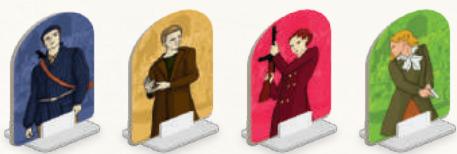
- The Revolutionary players, as a group, decide on which locations each of them will start. Place the player tokens on the right side of the chosen location. Depending on the number of the Revolutionary players, they start in the following locations:
a) 1 Revolutionary player: University of Technology
b) 2 Revolutionary players: University of Technology (1 player) Bem Statue (1 player)
c) 3 Revolutionary players: University of Technology (1 player) Bem Statue (1 player) Corvin Passage (1 player)
d) 4 Revolutionary players (Zhukov ruleset only): University of Technology (2 players) Bem Statue (1 player) Corvin Passage (1 player)
- Place all remaining tokens, markers and tiles (10x militia, 2x sniper, 6x Soviet tank, 2x barricade, 13x injury, 9x resolution) and 2 dice next to the board.
SETTING UP THE SOVIET SIDE
This part of the setup is different for the Conflict ruleset and the Zhukov ruleset.
Playing with the Conflict ruleset
-
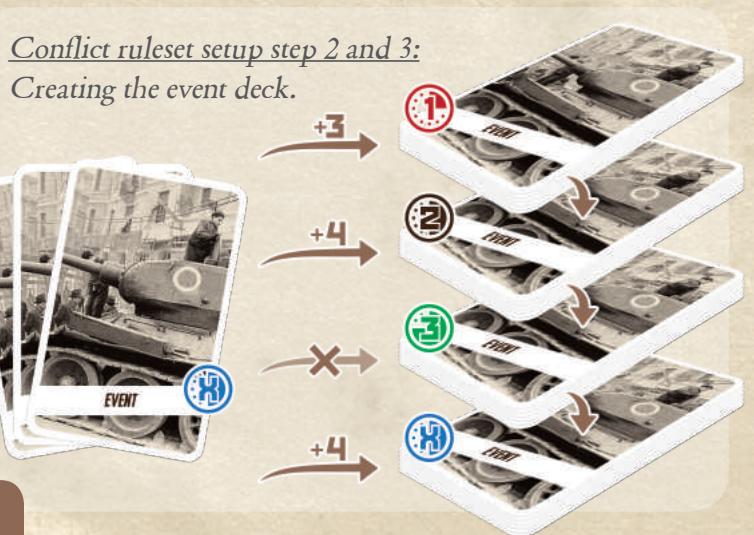
Separate the event cards into 4 decks by the 4 timing icons on the bottom right corner on their front. The icons are: ①,②, 3, #. Note: ignore the big numbers in the top left corner, they serve no purpose during setup.
-
Take the deck of 11 cards marked . Shuffle 3 of them randomly into the event deck marked with 4 into the event deck marked with . Put none into the deck marked . This will leave the deck marked 3 with 4 cards in it.
-
Put the 4 newly formed decks face down on top of each other (x on the bottom,3 over it, over it, ① on the top), forming the event deck.
-
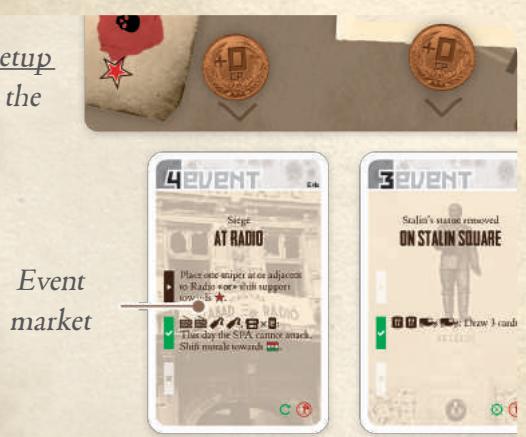
Fill up the 6 slots of the event market on the top of the game board starting from the (+0 CP) slots. Place one event card drawn from the top of the event deck in each slot, face up.
-
Separate the headline cards by their backs, shuffle and place them next to the play area:
a) ① - Day of the Revolution
b) ② - Armed Uprising
c) - The Turning Tide
-
Deal 4 headline cards to the Soviet commander from the deck "Day of the Revolution".
-
Give all 8 State Protection Authority cards to the Soviet commander and form the SPA pool by placing them all face up next to his area.
The General Zhukov cards will not be needed in this game mode. Put them back in the game box.
Playing with Zhukov ruleset
-
Separate event cards into 4 decks by the 4 timing icons on the bottom right corner on their front. The icons are: ,②, 3, \$. Note: ignore the big numbers in the top left corner, they serve no purpose during setup.
-
Shuffle the decks marked , and. Stack them next to the board on top of each other (on the bottom, ② over it, ① on top) forming the major event deck.
-
Shuffle the remaining event cards marked ® and place them face down next to the board forming the minor event deck.
-
Shuffle the General Zhukov cards and place them next to the play area.
The State Protection Authority cards and the 3 types of headline cards will not be needed in this game mode.
STARTING THE GAME
Congratulations, you have set up the game!
Now it is time to learn the rules of play for the game mode you have chosen. The rules of the Zhukov ruleset and the Conflict ruleset can be found in the booklet with the same title. If you feel ready, take it in your hand and start reading!
If you have any Promo components, continue with the next section where you can find out how to set them up and use them.
If you wish to learn more about the history of the 1956 revolution of Hungary, keep reading this book! You will find plenty of interesting information and stories.
Whenever you have questions about a card in the game, you can find it in the Appendix section at the end of this booklet.
Conflict ruleset setup step 4: Filling up the market row.
Fill up the market in this order.
PROMO COMPONENT RULES
You might have 9 additional promo cards not listed in the Components section, which provide additional strategic options and replayability. The game is fully playable using none, some or all of these cards.
AK-47
"AK-47” is an extra Revolutionary card that adds more variety to the weapons arsenal.

Setup
Shuffle the “AK-47" card into the Revolutionary card deck.
Rules
This card counts as both an and aresource when discarded for collecting icons.
When using the ability, remove 3 militia from your current location. After doing so, no card is drawn as a reward as in "Action 3: Attack militia". However discarding the card for the resource when performing "Action 3: Attack militia"the reward is collected as normal. If there are only 2 or one militia present, remove them all. Snipers may not be removed. Using the ability is not an action.
LAST STAND
"Last Stand" is an extra Revolutionary card with powerful “once per game" effect.
Setup
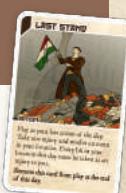
Shuffle the “Last Stand" card into the Revolutionary card deck.
Rules
When using the ability, immediately resolve an event in your current location in the same manner as outlined in "Action 2: Resolve an event" ignoring the event's resource requirements. No revolutionary card needs to be discarded for their icons, and the reward section's text effect is executed. This ability is an action, and can only be used if you have exactly one action remaining. If the reward of the action generates an additional action (see E#19, E#22 in the appendix) it is lost and may not be used. Once played, keep the card in front of you as a reminder. If until the end of the day a hit is dealt to your location (even after using the "Transportation" card), you cannot choose to distribute it on anything else than injuring you.
Remove this card from play at the end of the day.
ALTERNATIVE STARTING EVENTS
The promo pack comes with 3 new starting events marked with . The players may swap out the 3 default starting
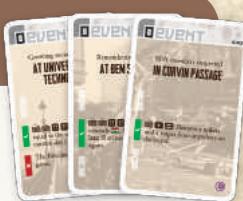
events for the 3 new ones. We don't recommend mixing and matching.
The alternative events mostly provide morale and cards for the Revolutionaries: thereby raising the Revolutionary players' effectiveness without reducing their opponent's, thus providing a much more “explosive" game.
Note: one of the 3 events contains an event penalty. If that event is still on the board at the end of the game the Revolutionaries automatically lose the game.
Setup
Remove the 3 starting events from the board and place the 3 alternative starting events on their respective locations
a) Growing social discontent at University of Technology
b) Remembering Poznańí at Bem Statue
c) SPA members suspected in Corvin Passage
PLAYER POWERS
The promo pack comes with 4 cards, matching the 4 player standees in the game. The powers are compatible with both Zhukov

and Conflict rulesets, but some of them might be quite challenging when used against a live Soviet commander.
Setup
Give each card to the player with the matching standee before drawing starting cards. Then, each player (after discussing together) may elect to use the side of their card with a power printed on them. It is possible for some players to use the powers and for some not to. Mix and match as you please.
Difficulty settings
Each player power has a benefit and a disadvantage. By default, both must be applied. Optionally, they can be used to adjust the difficulty:
• Neglecting one or more disadvantages favors the revolutionary players
• Neglecting one or more benefits favors the Soviet commander (or General Zhukov)
A BRIEF HISTORY OF THE REVOLUTION
After WWII, Hungary became a part of the Soviet sphere of influence with a permanent presence of the Red Army troops. Since 1945, Moscow had been sending Hungarian Communists to Hungary who were to be in charge of transforming the country into a Communist state. This also meant that key decisions would be made in Moscow; The Hungarian Communists would have mainly been acting as proxies to fulfil the Soviet agenda.
The whole process happened slower than expected: the Hungarian Communist Party failed to grab the power in the general elections of 1945 and 1947. Despite all of this, the Communists were getting more and more powerful. Due to the presence of the Soviet troops and the pressure they had exercised, key ministries (e.g. the Ministry of Interior) fell into the hands of the Communists. Those politicians who raised their voices against the creeping Communist takeover were either removed from their parties, forced to leave the country, or taken to the Soviet Union by force.
In 1948, the Hungarian Communist Party and the Social Democratic Party merged and the Hungarian Working People's Party (HWPP) was created. This marked the beginning of a one-party system, an era of blossoming personal cult and central planning in industry and agriculture. The new rulers were ruthless not only towards those who were treated as enemies of the system but sometimes towards their own comrades as well.
Following the Soviet example, a secret police (overseen by the Party) was created whose sole role was to ensure the Party is in power. The secret police was made up of a few former members of the secret service of the Hungarian Fascist government, and many penniless peasants. Secret forced labor camps were established on Hungarian soil; their inmates being political prisoners and/or enemies of the Communist state (including members of the intelligentsia, the clergy, and former owners of larger farmlands). History turned to be unbelievably cruel for some: amongst those imprisoned in the camps were people who had barely escaped the horrors of Nazi concentration camps. Between 1950 and 1953, the terror continued.
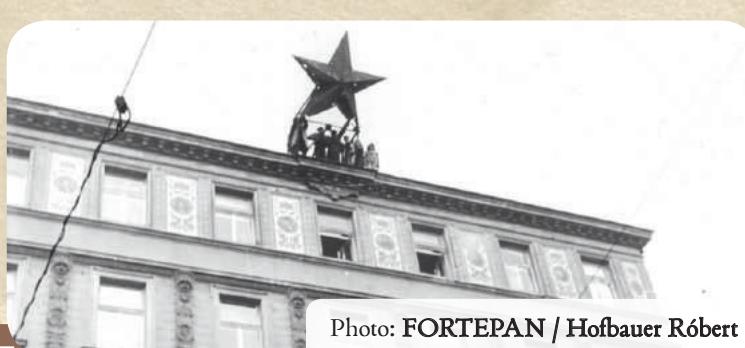

In 1953, Stalin died and the labor camps were closed. The regime began to soften as key Party members who played a central role in the past years were being replaced. There was, however, a continuous internal struggle in the ranks of the Party for influence and power. In general, the Hungarian society was not in a good state, as poverty became an everyday experience due to central planning, wages were hitting a new low and frequent food shortages started to occur.
A possible conflict was not evident but some had heard of the 1953 Berlin uprising and had learned of the bloody few days of June 1956 in Poznań. The latter played an important role for Hungarians who, getting fed up with the living standards and the regime in general, took to the street on October 23rd, 1956. By chance, the weather was exceptionally beautiful on that day compared to mid-autumn Hungary. Countrywide, the need for change slowly built up in the groups of society
The Party was cornered from both sides: they needed to calm down the masses by fulfilling some of their demands but the leaders wanted to remain in power. In the midst of this, the Soviet troops stationed near Budapest were ordered to enter the capital. From the evening of October 23rd, sporadic fire fights broke out between locals and units of the hated State Protection Authority (SPA), who were soon becoming more widespread through the whole city.
Anger, fueled by the death of many unarmed civilians (shot by Soviet or SPA troops), turned the city and the country upside down: people were getting rid of symbols of the hated regime (e.g. red stars, statue of Stalin etc.) and were fighting against the oppressors with Molotov cocktails and "borrowed" weaponry (pistols, SMGs, Howitzers). Throughout the country, authorities were opening fire on the crowd. Until October 30th, these shootings had happened in 52 different locations not including Budapest.
The new government led by the moderate Communist Imre Nagy failed to regain control over the events and for days was swimming with the stream. Some important decisions were made which could have been good steps towards a regime in peace; The SPA was dissolved, political prisoners were released and preparations were done for a multi-party political system. Even though a ceasefire was reached by the end of October, a military intervention called Operation Whirlwind erased everything on November 4th.
The Soviet-backed new regime led by János Kádár got its revenge: till mid-December, civilians kept getting shot by authorities; in 1958, key figures of the revolution were executed (such as Imre Nagy, who was buried in an unmarked grave in the outskirts of Budapest). For the average citizen, participating in the revolution often meant getting a harsh sentence, sometimes even death penalty. Kádár remained in power for more than 30 years.
On June 16th 1989, nearing the downfall of the Soviet Union, Nagy was reburied with a big state celebration. Two and a half weeks later, Kádár died.
The international recognition of the event was tremendous. United Nations (UN) meetings were called for discussion on the rising tension between the SU and the Western countries. Danish UN diplomat Povl Bang-Jensen, secretary of the special committee investigating the events refused to release the names of witnesses testifying in front of the committee, to protect their identity from the Soviets. His 1959 death still remains a mystery. The "Hungarian freedom fighter" was Person of the Year 1956 on Time magazine. Ironically, the next year, Nikita Khrushchev won the title, the man who crushed the revolution in November.
The story of the 1956 Hungarian revolution is about a great web of joint interactions between fighters, locals of Budapest, and citizens living outside of the capital. Students distributed food in districts of the city, locals offered their motorbikes to transport the wounded to hospitals, tons of food was sent to Budapest on a daily basis. The revolution also spread to the countryside; information was distributed to the citizens mostly with the help of the personnel of the Hungarian State-Owned Railway Company.
The heaviest fights were happening in districts where mostly blue-collar workers (approximately 60% of those killed during the revolution) lived and worked: District Csepel and Corvin Passage were two of the strongholds. The fights being local also helped, as a petrol station was nearby, fighters of Corvin Passage had an easy access to gasoline, the key component of Molotov cocktails. During the October fights, many Hungarian Roma also paid with their lives for the short freedom of the country.
According to sources, more than 1900 (mostly blue-collar workers, trainees etc.) died during the fights in Budapest, and 2700 in all of Hungary—of them, more than 670 were younger than 25, more than 150 were between the ages of 19–20, more than 30 between the ages of 14–15. About 40% of all dead were under 24.
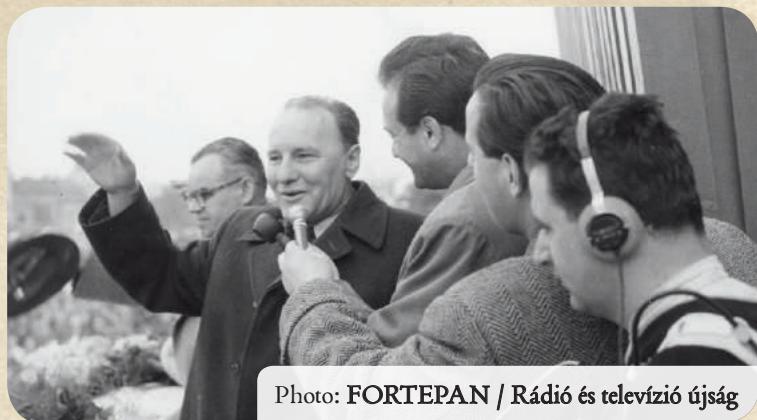
Doctors who either treated the wounded or issued death certificates for the deceased often wrote different symptoms on these papers to protect the wounded or the family of the deceased (e.g. "pneumonia" instead of "pierced lung"). History, after the revolution was crushed proved them right, as the newly-installed regime tried to take revenge even on the families, forcing approximately 150-200,000 people to exile.
The most vulnerable group to both sides' fire were the medics and ambulance personnel—SPA members were caught using ambulance cars to transport weapons. This, on the side of the revolutionaries lead to the assumption that all ambulances were being used this way. The shots fired at the cars left medics paralyzed, dead and heavily injured. It is notable to mention that medics and doctors treated the wounded of all sides, not only revolutionaries but Soviet soldiers and SPA personnel as well.
Between October 23rd and December 31st, approximately 20000 wounded were treated (83% of them got injured in Budapest), with an 8% mortality rate. An enormous contribution was coming from the International Red Cross and its country branches. It is estimated that about 1/3—1/4 of all aid (blood, food, bandages etc.) were arriving from Poland—people there remembered the help Hungary gave to them during WWII, and besides the efforts of the Polish Red Cross, cities like Warsaw, Cracow, Wrocław and Poznań all organized collection and transport of aid to Hungary, the first arriving on October 26th.
The significance of the Hungarian revolution, in a nutshell is threefold. First, it was the first major armed conflict to show the true, inhuman face of the Soviet Union and the rigidness of world Politics at the time. There was no real chance for Hungary to obtain her freedom in 1956, the political deals between the US and the SU did not allow that to happen. Secondly, after the revolution was crushed, Western European left-wing intelligentsia (e.g. Sartre, Albert Camus) started questioning their attitudes towards Communism as a philosophy. Finally, from a pure military standpoint, the method of besieging a city was changed forever.
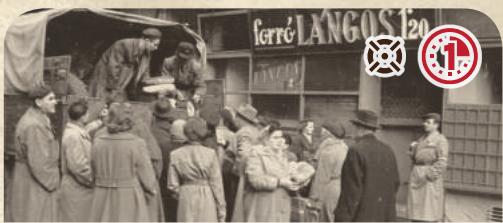
Photo: FORTEPAN / Nagy Gyula

Photo: Europeana
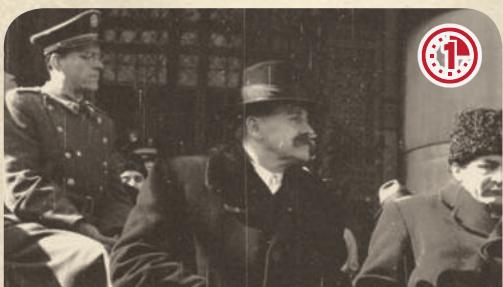
Photo: FORTEPAN / Berkó Pál

Photo: FORTEPAN / Nagy Gyula
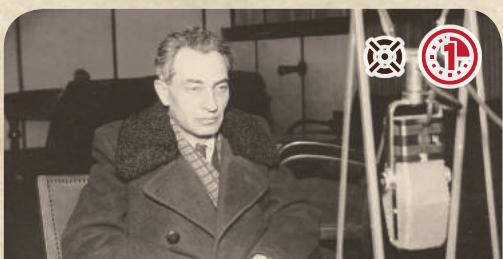
Photo: FORTEPAN/Rádió és televízió újság
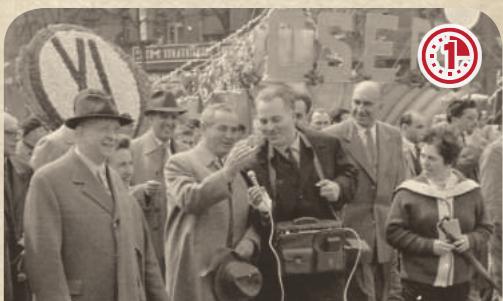
Photo: FORTEPAN / Magyar rendór
APPENDIX A: HEADLINE CARDS
H#1 Popular support
Modifies H#28 text effect. Note: There are 2 "Popular support" headline cards in the game. This card is unmodified by H#5.
From the first days, locals of Budapest and people from the countryside actively helped fighters; on a daily basis they gathered and sent tons of bread, meat, milk and dairy to the capital.
H#2 National Song read at Bem Statue
If there is no inactive fighter at either Bem Statue, Kossuth Square or Stalin Square, do nothing.
The Song is the most famous poem of Sándor Petőfi, a 19th Century patriot. It was used as an oath to fight for freedom during both the revolution of 1848 as well as in 1956, to evoke the spirit of the past. Petőfi himself was a cadet under Polish General Józef Bem, a symbol of the Polish-Hungarian friendship, who fought for Hungary in 1848.
H#3 Péter Veres [pe:ter verε]] reads Manifesto
All players may choose to stay in place. Revolutionary tanks may also be moved.
Veres was the Minister of Defense between 1947 and 1948. He paid a lot of attention to Hungarian social issues (distribution of land, farmers' living conditions etc.), which made him one of the most popular politicians until the 1949 Communist takeover. As president of the Hungarian Writers' Association he supported the youth's demands from the very beginning, in fact, in the Manifesto, the restoration of Imre Nagy into position is mentioned.
H#4 Authorities open fire on the crowd
The card takes effect even if there is a barricade token on the chosen location.
The State Protection Authority, police, troops of the Hungarian Army and Red Army all opened fire on people during the revolution, first outside of Budapest then in different locations. The cause differed from case to case: From misreading the intentions of the crowd to revenge.
H#5 Ernő Gerő [εrnø: gerø:] requests intervention
If there is a barricade token in the chosen location, the Soviet tanks still fire.
Modifies H#29 and H#30 text effects.
Gerő was a hard-liner Party leader (one of the most hated ones still in power in 1956). His evening Radio speech of October 23rd fueled up the people, escalating the conflict and the outbreak of the armed uprising, leading to the siege of the Radio (however, the speech was recorded and aired elsewhere).
H#6 Antal Apró [pntpl ppro:] orders arrest of the "fascist mob"
Events on the market row are not considered to be on the board.
Apró was a key hard-liner Communist leader. The word "fascist" underpinned the necessity of a Soviet or Communist intervention, as they feared the restoration of the fascist regime which governed Hungary before and during WWII.
H#7 Imre Nagy [imrε npj] appointed
If all revolutionaries have 9 or 10 cards in hand, do nothing.
Nagy was a moderate Party member and former Prime Minister who enjoyed considerable support of Hungarian citizens. The masses demanded his return to politics as PM. At the beginning of the revolution he was outside of Budapest, hastily returning to the city after being informed that he's needed to calm down the crowd.
H#8 Protests in Poland
If drawing a card would put the player above hand limit, that card cannot be drawn. Modifies H#21 and H#35 text effects.
The first protest supporting the revolution happened on October 24th in Warsaw. Protests continued after the November 4th Soviet intervention in different Polish cities. A notable example: In December 1956, the agitated crowd broke into the Consulate General of the USSR in Szczecin and broke the furniture. The Consul General hid in the wine cellar and was found a few days later, alive.
H#9 Georgy Zhukov orders entry into Budapest
Modifies H#16 and H#26 text effects.
The Soviet Minister of Defense ordered the entry of battle tanks and other units belonging to special Soviet corps stationed about a hundred kilometers west from Budapest to the capital. He ordered the occupation of key strategic locations (key buildings, main junctions, etc.).
H#10 First speech of Imre Nagy [imrε npJ]
Modifies H#12 and H#17 text effects.
In front of the Parliament, hundreds of thousands were waiting for hours to hear the speech of Imre Nagy. The crowd was agitated as lights were shut down on the square; Nagy appeared late and started his pre-written speech with the word "Comrades", causing dissatisfaction in the audience - "We're not Comrades!".
H#11 Crowd burns propaganda
If support is at , do nothing.
A symbolic act: People, being fed up with the sheer amount and the contents of propaganda, got their revenge by burning books written by Stalin and Lenin, portraits of Party leaders, Soviet newspapers, etc. in different locations of Budapest.
H#12 Curfew
H#10 : Shift morale towards.
As one of the first measures taken, the newly-appointed Nagy government ordered a curfew and banned all public gatherings on 24th October in order to regain control on the streets. The effort failed.
H#13 News blockade in Romania
The Soviet commander is not a "player with no injuries".
University students in Romania organized several protests reacting to broadcasts of the Hungarian Radio. The Central Committee of the Romanian Working People's Party introduced censorship of Hungarian news, fearing that similar events would take place in their country. Student movements in bigger university centers were quickly suppressed by Soviet troops.
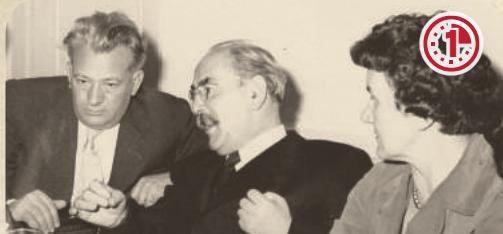
Photo: FORTEPAN / Jánosi Katalin
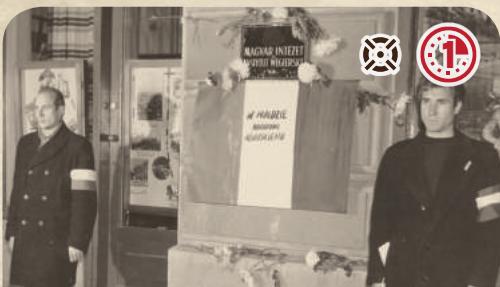
Photo: Europeana
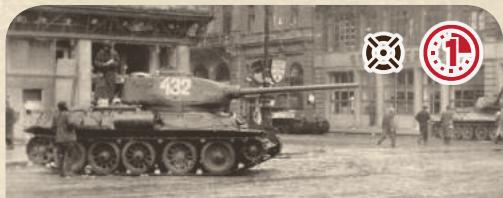
Photo: FORTEPAN / Kurutz Márton
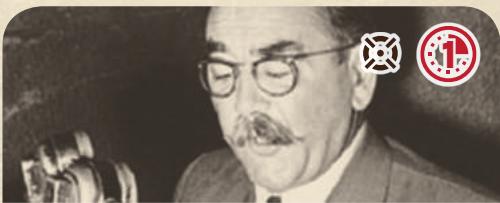
Photo: MTI
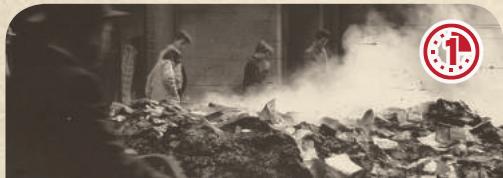
Photo: FORTEPAN / Nagy Gyula

Photo: FORTEPAN / Nagy Gyula
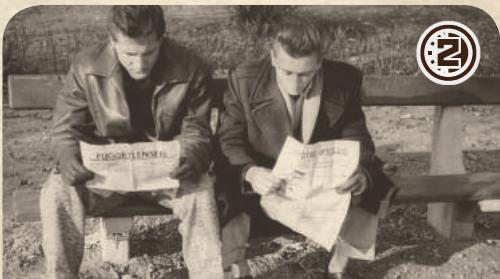
Photo: FORTEPAN / Nagy Gyula
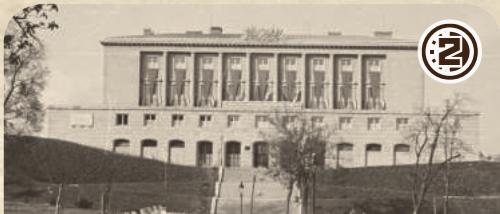
Photo: FORTEPAN / Nagy Gyula
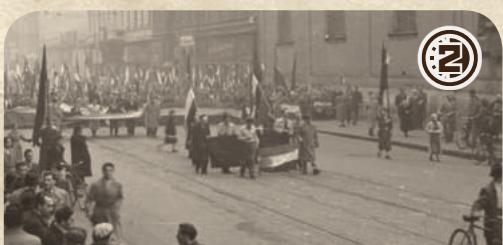
Photo: FORTEPAN / Nagy Gyula
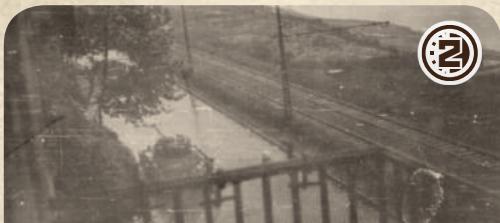
Photo: ABTL
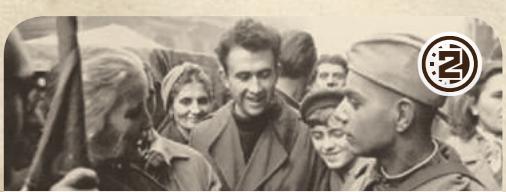
Photo: MTI
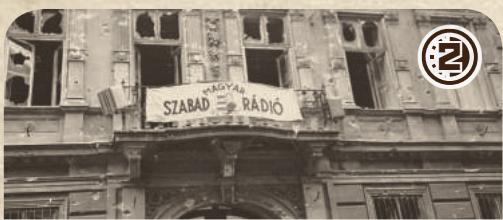
Photo: FORTEPAN / Nagy Gyula
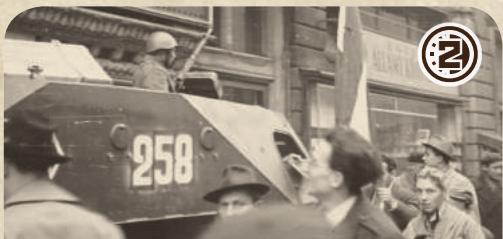
Photo: FORTEPAN / Nagy Gyula
Photo: FORTEPAN / Nagy Gyula
H#14 Organizing Worker's Militia
Events on the market row are not considered to be on the board.
In order to organize armed defense, two district Party committees gathered the names of faithful reserve officers from military units. The actual deployment only started on October 29th. This was an attempt to save their power and influence after revolution had ended.
H#15 March of the Bloodied Flag
Revolutionary tanks are considered active fighters.
Reacting to the bloodbath on Kossuth Square, the crowd organized a march in the evening of the 25th, holding a bloodied flag in memory of the hundreds of civilians who have gathered for a peaceful protest in front of the Parliament and have fallen from Soviet tanks and supposedly SPA aggressors. The so-called "Bloody Thursday" was a very violent day and had affected the course of the revolution.
H#16 Soviets stationed at the Parliament
H#9 : Another Soviet tank may be placed on Csepel, Széna Square or HWPP Headquarters.
The main task of the Soviet Army was to defend the Party buildings with the support of the State Protection Authority from the revolutionaries. The Hungarian Army was tasked to defend miscellaneous facilities throughout Budapest.
H#17 Sympathetic Soviets
Remove up to one Soviet tank anywhere. H#10 : This card cannot be discarded.
One notable act of sympathy took place near Astoria on October 25th, when Hungarian locals were allowed to climb up a Soviet tank and set a Hungarian flag on top of it.
H#18 Retake the Radio
The card takes effect even if there is a barricade token on the chosen location. If there is no target to hit at the Radio, the Soviet tanks do not fire.
On the dawn of October 25th, Soviet forces took the Hungarian Radio back from the revolutionaries. The building was so badly damaged that a studio was set up in the building of the Parliament to provide further broadcasts.
H#19 Soviet units confused
Only one militia is removed from locations with multiple Soviet tanks.
On the first days of the revolution, Soviet troops were often approached by the locals of Budapest without showing any aggression. This greatly surprised the soldiers. However, these troops had been stationed in the country for years and after November 4th, were replaced by others who had no previous experience with Hungarians.
H#20 Pál Maléter [pa:1 mple:tεr] expels civilians from Kilián Barracks
The card takes effect even if there is a barricade token on Corvin Passage. Do not remove inactive fighters, revolutionary tanks and barricade tokens from Corvin Passage.
General Maléter superseded the revolutionary forces from Kilián Barracks on October 26th. This lead to discourse between the Hungarian Army and the revolutionaries in Corvin Passage.
H#21 Polish Aid
H#8 : One revolutionary may remove an injury or draw a card.
Remembering the Hungarian help received during WWII, Polish society started collecting blood, money, food, building materials, toys, etc. which were then sent to Budapest. Four cities (Warsaw, Kraków, Wrocław and Poznań) organised the transport on their own, the rest was sent with the help of the Polish Red Cross. The aid was distributed to several hospitals.
H#22 John Dulles calls UN Security Council
On October 28th, the UN held a Security Council session that was initiated at the joint request of the USA, France and Great Britain. A decision could not be reached on the matter of the "Hungarian problem" as the Soviet Union had a power of veto in that body. Prior agreements also prevented movement between the two blocks, which obstructed negotiations between the UN and Hungary on the independence of the country.
H#23 Authorities open fire on the crowd
The card takes effect even if there is a barricade token on the chosen location.
On October 27th, in Kecskemét, a quiet mid-sized town in Central Hungary, the local commander of the highest rank Lajos Gyurkó, a narrow-minded Communist, ordered MiG-15 fighter planes to take nose-dives and fire heavy rounds into the crowd (most of the dead are Roma). In December 1956, reportedly, Gyurkó himself did shoot on the crowd in a different location.
H#24 Offer of amnesty
«or» means that all effects either before it or after it in the sentence may be chosen. Revolutionary tanks are considered active fighters.
On October 26th, after 5PM the Radio aired the statute of the Presidential Committee: Anyone who capitulates before 10PM will be exempt of any punishment for their crimes committed.
H#25 Local Party leader shot
The icon must be chosen before the revolutionary players reveal their hand.
There are 6 resource icons that can be chosen: ,,, ,,.
Another worker stronghold was the industrial district of Csepel. In the first days, fights broke out between revolutionaries and Party-led groups. During these days, lynching occurred.
H#26 Radio Free Europe
Revolutionary tanks are considered active fighters. H#9 : This card cannot be discarded.
Radio Free Europe was established by the USA in 1949 to aid Eastern-European countries under Soviet reign. The Hungarian broadcast started in 1950, and was a year later banned and jammed by the Hungarian authorities. The radio encouraged the armed uprising and was later criticized for increasing the casualties this way.
H#27 Fighters with heavy weaponry
The effect applies for both "Resolve an event" and "Destroy a tank" actions.
Occasionally revolutionaries obtained heavy weaponry from the advancing Soviet troops (for example, a 122mm howitzer in Corvin Passage). According to memoirs, students of the University of Technology hijacked a few tanks that were parked on campus.
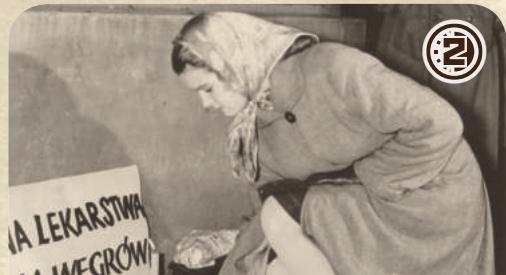
Photo: Europeana
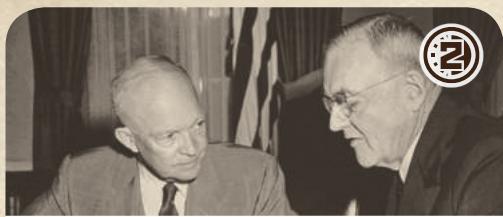
Photo: Wikimedia commons

Photo: FORTEPAN / Nagy Gyula
Miér vanakilt et kato3
Azért, hogy ne legyenek itt a csendőrök és fasiszták.
Photo: OSZK

Photo: FORTEPAN / Nagy Gyula
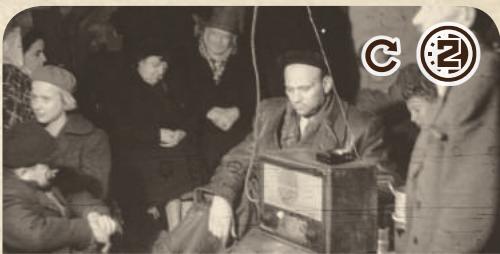
Photo: FORTEPAN / Nagy Gyula

Photo: FORTEPAN / Madarász Géza
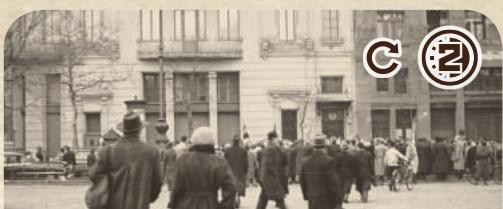
Photo: FORTEPAN / Nagy Gyula

Photo: FORTEPAN / Nagy Gyula
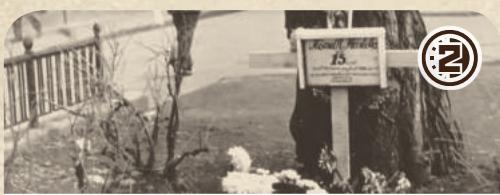
Photo: FORTEPAN / Pesti Srác2
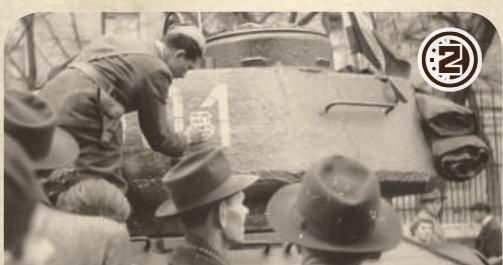
Photo: FORTEPAN / Kurutz Márton

Photo: Mihály Vincze
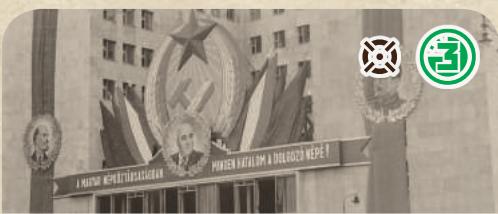
Photo: FORTEPAN / Magyar rendőr
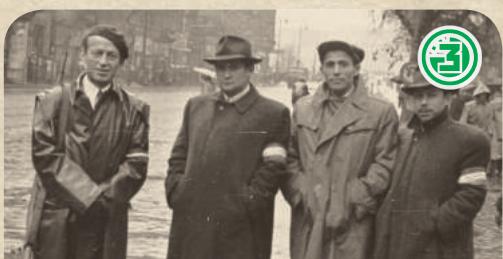
Photo: FORTEPAN / Nagy Gyula
H#28 CIA asset in Budapest
H#1 : Shift support towards. H#29 : Shift support towards.
An informant of CIA was working in Budapest between 1952 and 1957. His main task was to establish a network of informants. The outbreak of the revolution surprised the Agency.
H#29 Popular support
Modifies H#28 text effect. H#5 : This card cannot be discarded.
The attitude of the locals of Budapest proved to be a fascinating breeding ground for anecdotes of the era. A granny once complained about her grandson smoking while holding a gun. Another time a few youngsters asked an elderly tenant really politely if they can shoot out of her window.
H#30 Bloodbath in the countryside
H#5 : The Soviet commander removes one active fighter or revolutionary tank from any location.
In a West-Hungarian town (Mosonmagyaróvár), more than 50 people were killed by border. The youngest victim was 15 years old. Bullet wounds recorded: Back, stomach, head, lungs and more.
H#31 Hungarian Army units join
The revolutionary tank is chosen randomly from the available tokens. If there are 4 active fighters in Corvin Passage, the tank may not be placed. All revolutionary tanks on the board (including the new one in Corvin Passage) count towards the 5 active fighters.
In some cases, units of the Hungarian Army were not given live rounds or were ordered not to shoot if attacked. Some units joined the fight and/or engaged in exchanging fire with SPA troops.
H#32 Political prisoners released
A revolutionary tank may not be chosen to be placed on the board, even if it was removed from the board earlier. Fighters removed by "President Eisenhower refuses to help" (H#41) may be chosen.
The term "political criminal" was the official label of anyone who was disliked by a Party leader. Hundreds fell to this fate in Hungary, sometimes even sent to labor camps or executed.
H#33 SPA dissolved
Snipers and militia may not be moved from locations with a barricade token on them. Modifies E#13 placement text effect.
A majority of members in the SPA were originally extremely poor workers, given a chance to reach elite ranks by joining the organization. Another group were paramilitary soldiers who had served in the fascist Arrow Cross Party during WWII which was eerily similar to the SPA in their methods of terror.
H#34 National Guard begins organization
The revolutionary tank is chosen randomly from the available tokens. If there are 4 active fighters in Kossuth Square, the tank may not be placed.
The main (unofficial) task of the National Guard was to disarm all civilians after the victory of the revolution, for safety measures. It has started organizing during the uprising, and was officially formed on October 31th, approved by Imre Nagy.
H#35 Polish fact-finding mission
H#8 : On the current day all “Aid" cards are considered to have icons on them when played for “Resolve event" action.
The Polish Working People's Party and the new government of Imre Nagy in Hungary both represented the non-Stalinist branch of Communism. On October 28th the Polish Party sent a delegation to Hungary to offer an informal alliance.
H#36 Pál Maléter [pa:1 mple:tεr] aids the revolution
The revolutionary tank is chosen randomly from the available tokens. If there are 4 active fighters in Corvin Passage, the tank may not be placed.
General Maléter slowly began to sympathize with the fighting groups he was ordered to contain in Corvin Passage. It was a delicate situation - he communicated to the Party that there were no real enemy to oppose while he maintained his position as a general of the Hungarian Army.
H#37 Party leaders flee the country
The new headline card must be drawn from the "The Turning Tide" headline deck, if possible. If that deck is empty, the other headline decks may be chosen.
Soviet-friendly Party members Ernő Gerő and János Kádár fled to Moscow. After November 4th, Kádár participated in the Soviet retribution and became the leader of Hungary, while Gerő became an outcast for the rest of his life.
H#38 News from Suez
Retrieved SPA cards are placed into the SPA pool from the SPA discard queue.
When Soviet-friendly Egypt nationalized the strategically important Suez Canal on July 26th, it immediately sparked a conflict between them and Israel, resulting in the Israeli invasion of the Egyptian Sinai on October 29th. Both the Soviet Union and the Western world became directly involved in the conflict. This distracted attention from the events in Hungary.
H#39 Truce betrayed
Soviet tanks can move to an adjacent location. On barricaded locations the Soviet tank may not move out, but it may fire there. Events on the market row are not considered to be on the board. Revolutionary tanks are considered active fighters.
Ceasefire negotiations started on the last days of October, but that did not prevent sporadic firefights on the following days. On the 31st, First Secretary Khrushchev ordered a full-scale Soviet assault. Operation Whirlwind was executed on November 4th, by General Zhukov.
H#40 Discord in revolutionary groups
Do not execute the text effect in the reward section (√) of the event card when removing it. The player with one less action may be left with zero actions. That player still takes a turn and may play cards and active fighter abilities that do not say “Action:", but may not move.
Revolutionaries and their groups had different political beliefs. The fighters of Corvin Passage were not exempt from this; here the discord was also about politics.
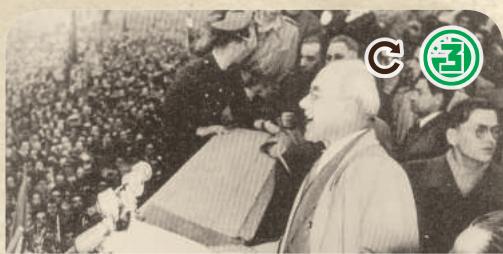
Photo: Wikimedia commons

Photo: Gathena
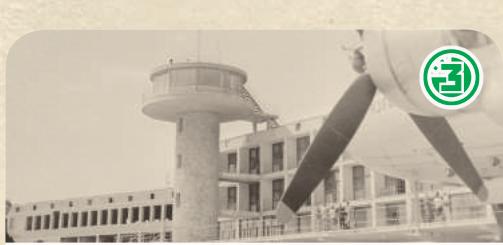
Photo: FORTEPAN / UVATERV
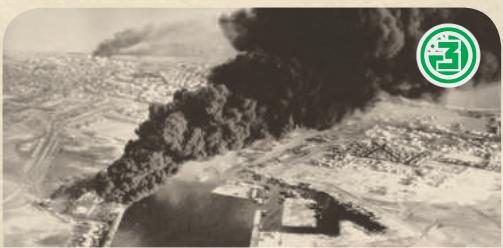
Photo: Wikimedia commons
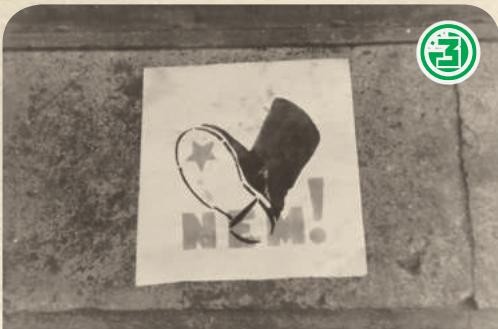
Photo: Europeana
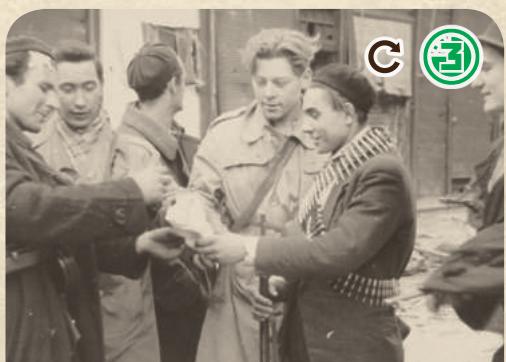
Photo: Europeana
Photo: FORTEPAN / Pesti Srác2
H#41 President Eisenhower refuses to help
Remove both face up and face down inactive fighters.
During the revolution it was commonly believed (mainly due to the broadcasts of Radio Free Europe) that the USA will eventually provide military support. Though these plans indeed existed on paper, President Dwight D. Eisenhower did not approve of the idea of breaking the pact with the Soviet Union.
Photo: FORTEPAN / Nagy Gyula
H#42 Authorities open fire on the crowd
The card takes effect even if there is a barricade token on the chosen location.
Shootings continued even after the downfall of the revolution: There were at least 8 incidents in December 1956, even in towns of heavy industry workers (Salgótarján, 131 dead).
APPENDIX B: EVENT CARDS
E#1 Students' demands (University of Technology)
Sixteen political and societal demands were made, for example against poverty and the presence of Soviet troops.
E#2 Petőfi Circle organizes protest (Bem Statue)
The Circle was an intellectual movement which provided alternative, non-Stalinist Communism.
E#3 Civilians armed (Corvin Passage)
Reward: Both "Resolve an event" and "Attack militia" actions are affected. The icons are collected even if there were no cards and no fighters withicons were used in the action.
The area around Corvin Passage was inhabited by blue-collar workers, and was a nest of firefights.
E#4 Stalin's statue removed (Stalin Square)
Modifies E#5 placement and reward effect.
The gigantic statue of Stalin was the symbol of an era of hatred and personal cult in Hungarian history. After being torn down in a spontaneous act by the crowd, only the boots remained.
E#5 Stalin's head dragged across town (Blaha Lujza Square)
Placement: When playing with the Zhukov ruleset, ignore the placement effect and place the card on the board. Reward: H#10 : The reward is gained, otherwise ignore the reward effect.
Later decorated with the text, "W.C.", the statue itself was dismembered to shards, some which were hidden and kept as relics.
1 E#6 Siege (Radio)
Placement: «or» means that all effects before it or after it in the sentence may be chosen. Reward: When playing with the Zhukov ruleset skip the Attack step of the SPA phase. When playing with the Conflict ruleset, the Soviet commander may play no "Attack!" card during the SPA phase.
After Ernő Gerő called the revolution “a fascist movement" in a broadcast, the angry crowd protested and stormed the Hungarian Radio, demanding to read in the sixteen demands. The revolutionaries took the building in a firefight, but the station was already disabled by officials.
1 E#7 Fire in the National Museum (Astoria)
Reward: If the revolutionary discard pile is empty, no cards can be drawn.
Exhibitions, parts of the library and the entire mineral collection perished.
1E#8 Spreading the news to the countryside (Anywhere)
The Party propaganda spread misinformation about the Budapest events to antagonize the people against the revolution. The state rail company personnel helped spread the truth.
1 E#9 Government building occupied (Anywhere)
Police stations and district Party Headquarters provided ample weapons and fortification.
E#10 Bloodbath (Kossuth Square)
Reward: «or» means that all effects before it or after it in the sentence may be chosen. Morale is shifted towards 2 times in either case. Note: The placement effect of the event "Multi-party government demanded" (E#19) is modified if it replaces this event.
Soviet tanks fired into the protesting crowd in front of the Parliament on October 25th with machine-gun bursts.
E#11 Fighter group organized (Széna Square)
Reward: If the revolutionary discard pile is empty, no cards can be drawn.
In one of the chokepoints in the Western part of the city, train wagons were used as barricades.
E#12 Aid from Warsaw distributed (Anywhere)
Reward: If the revolutionary discard pile is empty, no cards can be drawn.
The first plane with supplies arrived from Poland on October 26th. On the same day, the Polish Radio aired an announcement encouraging the Polish people to donate blood for the Hungarian fighters in need.
E#13 SPA units disguised as policemen (Anywhere)
Placement: H#33 : Place one sniper anywhere. Note: When playing with the Zhukov ruleset, "SPA dissolved" will never happen. Reward: Militia may not be moved from locations with a barricade token on them.
Hard-liner members remained in operation in disguise even after the dissolution of the SPA.
E#14 Kilián [kilia:n] Barracks treats the wounded (Corvin Passage)
Placement: the hit may be distributed to any valid target in the chosen player's location. Modifies E#21 reward effect.
According to memoirs, fighters of Corvin Passage were treated by the Army in Kilián Barracks.
E#15 Weapons confiscated (Anywhere)
To prevent further fights and regain control in the city, armed forces took weapons back from civilians.
E#16 Red star removed from buildings (Anywhere)
On several occasions people climbed up onto official buildings to remove the main symbol of Communism and the Soviet Union, the five-point red star.
E#17 SPA resupplies (Anywhere with a sniper)
Placement: This card cannot be placed if there is no sniper on the board. Reward: When playing with the Zhukov ruleset skip the Move snipers step of the SPA phase. When playing with the Conflict ruleset, the Soviet commander may play no "Move sniper" card during the SPA phase.
Although occasionally sharing supplies, the State Protection Authority was not wellcoordinated with the occupational Soviet forces.
E#18 Defense of the Iron Works (Csepel)
Placement: Militia may not be moved from locations with a barricade token on them. Reward: When playing with the Zhukov ruleset skip the Move militia step of the SPA phase. When playing with the Conflict ruleset, the Soviet commander may play no "Move militia" card during the SPA phase.
The Iron Works, located in Csepel, a southern district, was one of the largest factories in Budapest,. A group of workers fought for the complex against the State Protection Authority and the Hungarian Army.
E#19 Multi-party government demanded (Kossuth Square)
Placement: A location with a barricade token can be chosen. The hit is distributed by the Revolutionary players. "Replaced" means that the event "Bloodbath" is removed from the board because this event is placed on Kossuth Square. All revolutionaries must discard 2 cards each. Reward: «or» means that all effects before it or after it in the sentence may be chosen. The first option may not be chosen when playing with the Zhukov ruleset. Penalty: The Revolutionary team loses the game if there are 3 more events on the board along with this one.
Radical voices were not content with reformcommunism and demanded a full-fledged democracy.
3E#20 International Red Cross supplies (Anywhere)
Placement: If tied, choose from the tied players. Reward: If the revolutionary discard pile is empty, no cards can be drawn.
Till January 1957, the Polish Red Cross transported 331 tons of food to Hungary. German and Austrian branches were also involved.
3 E#21 Ambulance under fire (Anywhere)
Placement: If tied, choose from the tied players. Reward: E#14 : Remove one other injury from yourself.
After busting the SPA for smuggling weapons in an ambulance car, revolutionaries became suspicious, leading to medical staff becoming a target of both sides.
3 E#22 Battle (HWPP Headquarters)
Reward: Only the player resolving the event may take the extra action. Penalty: When playing with the Zhukov ruleset, execute the Attack step of the SPA phase. When playing with the Conflict ruleset the Soviet commander may execute the effect of an "Attack!" card choosing any location, regardless of how many "Attack!" cards were played in the last day and on which locations. One of the last standing fortresses in the control of SPA was sieged on October 30th.
E#23 Secret prisons suspected (HWPP Headquarters)
SPA was reportedly breaking in homes and snatching people overnight. These victims were suspected to be kept in underground prisons.
E#24 Tanks in sight (Astoria)
The Soviet tanks were spread out in the whole city, even in the heart of downtown, Astoria.
E#25 Medic gravely injured (Széna Square)
Civilian medical staff treated all fighting fractions (SPA, revolutionaries, Soviet and
Hungarian Army) even during firefights, putting their own lives on the line.
E#26 Fake anti-tank mines (Corvin Passage)
Porcelain plates were brought from the nearby school canteen and scattered around burnt-out Soviet equipment.
E#27 Barricades built from trams (Blaha Lujza Square)
Busy public transportation centers like Blaha Lujza Square offered a few extra means to slow down the advancing Soviet troops.
X E#28 Crowd surrounding SPA prison (Bem Statue)
The prison just a few blocks away from Bem Statue was earlier used by the Gestapo, the Nazi secret police.
E#29 Looting Party district HQ (Csepel)
District Party documents fell into the hands of revolutionaries.
E#30 SPA smuggling weapons (Radio)
An ambulance was caught transporting weapons through revolutionary forces into the Radio.
E#31 Péterfy Hospital treats the wounded (Stalin
Several hospitals took in wounded revolutionaries, even though this was frowned upon by authorities. Locals were transporting the wounded with their own vehicles.
E#32 Students distribute food (University of Technology)
A nice gesture that proved the close relationship between revolutionaries and their supporters.
E#33 Radio station in the Parliament (Kossuth Square)
The Party was airing their broadcasts from this new location after the Radio building had been destroyed.
APPENDIX C: FIGHTERS AND REVOLUTIONARY TANKS
Fighters with text abilities
· Zoltán Bizsu [zolta:n bizu]
Péter Hajas [pe:ter hpjp∫]: He only cancels the retaliation of Soviet tanks. If a text effect causes a Soviet tank to fire it is not cancelled. The ability is in effect even if there is no player in his location.
Sándor Jampec [fa:ndor jpmpets]: You can remove the injury from yourself or from another player in the same location as him. The player using the ability discards the card, regardless of whose injury was removed.
: József Kormányos [jo:3εf korma:no∫]: You get an extra free movement if you start your movement from a location with him and you bring him along.
Márton Kalapos, dr. [ma:rton kplppo∫]: The -3 applies to the total strength of the units. The ability affects both attack rolls and threatening. The effect still applies if there are no players in his location.
Ilona Kék [ilonp ke:k]: You can remove the injury from yourself or from another player in the same location as Ilona.
: Ottó Lakatos [otto: lpkpto∫]
· Krzysztof Polak [kziştof pəlak]
• János Rézon [ja:no∫ re:zon]: The ability allows János to be moved to any other location.
Anna Syrenka [anna s irenka]: Discard 1, 2 or 3 revolutionary cards and draw the same amount from the draw deck.
Júlia Tollas [ju:lip tollpʃ]: Applies for all Soviet tank rolls, both retaliation and text effect that allows Soviet tanks to fire.
Marta Wawelska [marta vavεlska]: The -1 applies to the total strength of the units The ability affects both attack rolls and threatening. The ability is in effect even if there are no players
Content is long; only the first part is inlined. Download the file or open the rules page for the full text.
Download MarkdownTexts are community-compiled or publicly released by publishers; copyright remains with the original authors. For personal reference only.