
Helios
At a glance
Rules, cards and Q&A (Chinese)
The rules, card data and player questions for this game are written in Chinese. Open the Chinese page to read them.
Where to find full rules
Full rules and card lookup are available in the cunlema app at cunlema.cn — pick this game and ask about any rule, card or turn you are unsure about.
Related games
Rulebook text (Markdown)
This game has 2 rulebook Markdown file(s) in our library; 2 rendered inline below — expand to read or download.
rules_zh_赫利俄斯_8534.md39.9 KB
游戏配件和设置
配件:
48 行动板块(3种样式每样有16块,4种不一样的颜色)
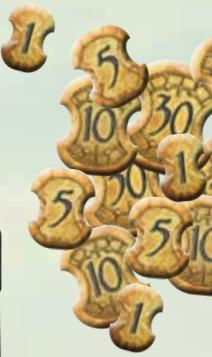
104 分数指示物(32个1VP,28个5VP,32个10VP,12个30VP)
70 木块原材料指示物(每样14个,有蓝,棕色,灰色,绿色和黑色)
30 红色魔法石头
35 白色木头神庙/城市建筑
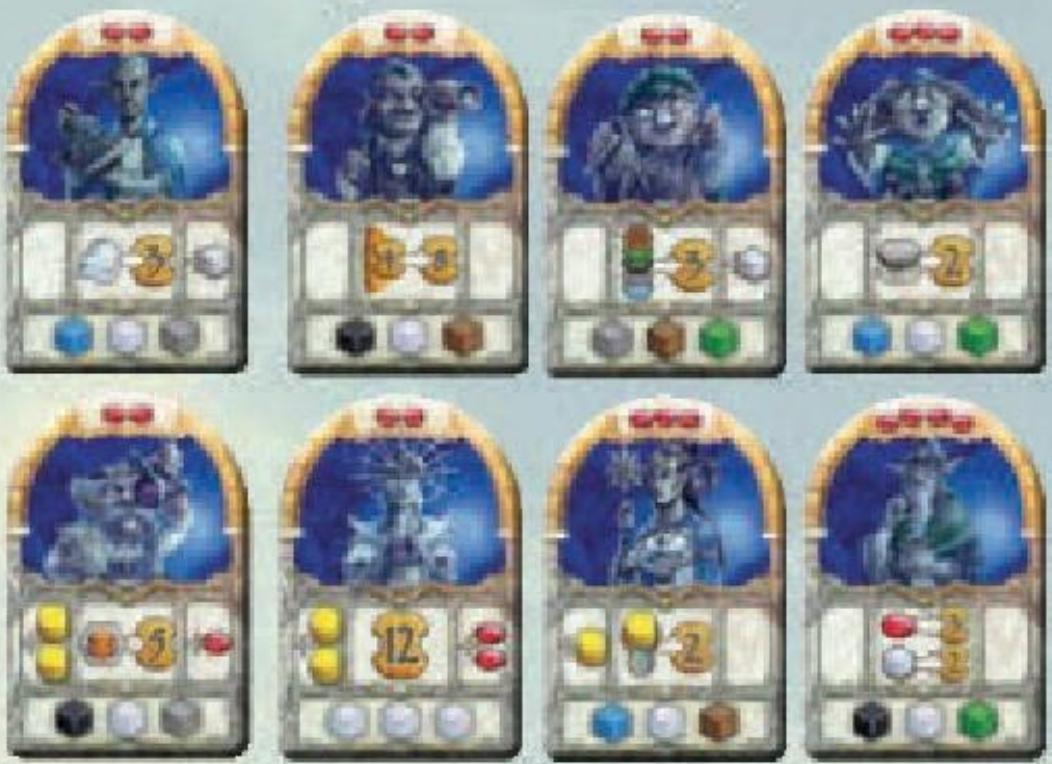
8 角色板块
4 玩家版图
4 城市版图
4 总结卡
4 黄色太阳工人
4 黄色太阳圆饼
4 有印记的袋子
2 起始玩家龙(只有一个必需)
36 地形板块(棕色,灰色,绿色每样8个,蓝色和黑色每样6个)
8 特殊板块(4种类型每样2个)
第8步,第3,4名玩家(从起始玩家算起顺时针方向)选择1个额外的原材料指示物放到他们玩家版图上某个初始原材料的上面。摆放的规则不能跟原来材料相同。这两位玩家在他们初始地形板块有2个原材料,其他玩家不享受此奖励。现在游戏可以开始了\~\~\~
第7步,把8个特殊板块按他们类型分好,跟地形板块邻近。特殊板块有4种类型每样2个。
初始游戏设置不管几个人都一样。
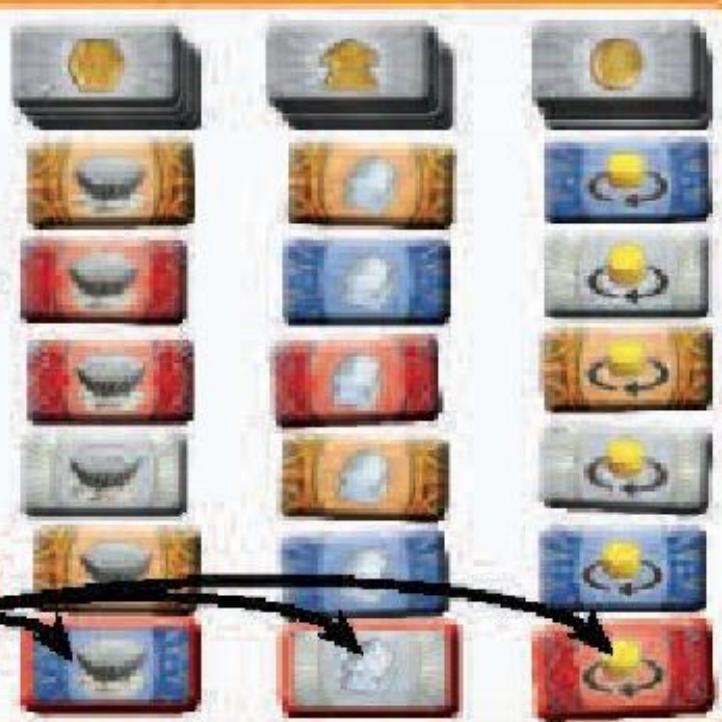
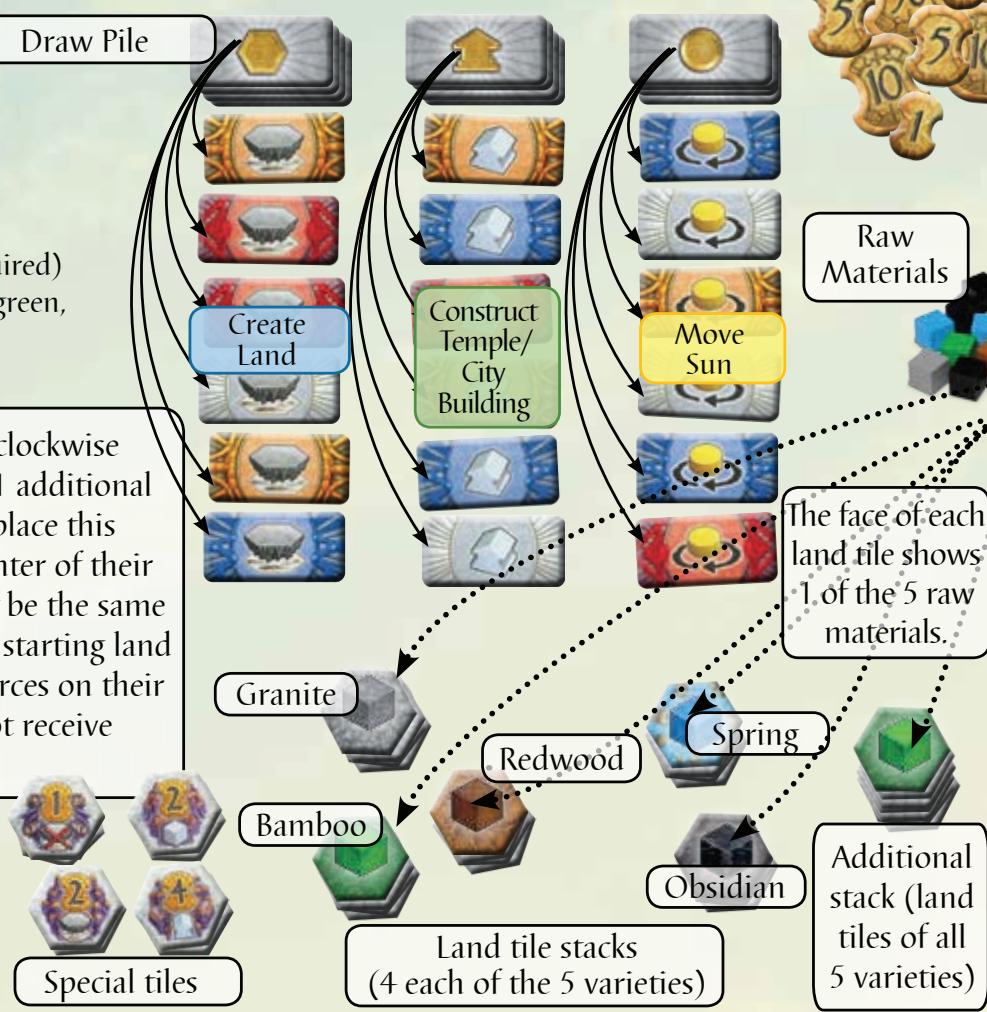
第1步,48个行动板块按照背面图案分成3堆,洗混然后面朝下分成3堆,之后一位玩家从每一堆的上面拿6个行动板块放在这堆面前组成3列。在初始游戏时总共18个行动板块可用。
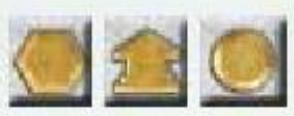
抓板块堆


特殊板块
地形板块堆
(5种地形每样4个)

原材料指示物
额外一地形堆(5种地形都有)
第6步,按照颜色分类地形板块,从起始玩家开始,每位玩家选择1个地形板块。
可以是以下几种:棕色(红杉),灰色(花岗岩),或绿色(竹子)。
每位玩家可以选任意的地形,即使是选择相同的都行。


黑色(黑曜石)在游戏初始时不能被选择。
之后,每位玩家把他们选择的地形板块放到每个人自己的玩家版图上,然后拿相对应的原始材料放在地形板块上。
然后,5种地形板块每样4个面朝下放着各自一堆,把其他面朝上的地形板块洗混面朝下放着(视为额外一堆,第6堆)。
这6堆地形板块,只翻开顶上那块地形,相对应颜色的材料放在面朝上的那块地形上。
第2步,分数指示物,原始材料指示物,神庙或城市建筑放在桌子上大家都能拿到的地方。
分数指示物
第3步,角色板块都放在桌子上,全都以夜晚那一面朝上放置。
魔法石头
神庙/城市建筑
起始玩家龙
第5步,所有玩家中谁旅行最多大陆板块为起始玩家,然后得到起始玩家龙。(注意:总共有2条龙,另一条龙是为了装饰用的。)
玩家版图

角色板块
第4步,每位玩家获得:
1个角色版图,1个城市版图,和1个总结卡,所有东西都放在他面前。
1个太阳工人表示太阳的移动轨迹。太阳工人放在“2”角色版图最上面那个地方。
1个太阳圆饼放在角色版图有个太阳标记的地方,这个圆饼表示太阳。
1个魔法石头放在角色版图的法术力池中。
1个袋子,用来装每位玩家各自获得的分数指示物。
城市版图


介绍
谷歌翻译:在一个遥远的世界高原,精彩的比赛正在进行。其中居住世界的进展其文化发展最快,获得名声和在历史书的地方?球员需要在这个世界的大祭司的角色,将他们的土地少,拓展城市,建造寺庙,祈求阿哈胡,太阳神,他可能是他们的仁慈,你们中间谁能最好的发挥你的世界在短的时间内,有文化?
游戏玩法
太阳神赫利欧斯是按照顺时针方向玩的,游戏中的回合数等同于玩家的数量,说明书写的是4个人,就只有4个回合。每个回合有3个阶段。2人游戏或人3游戏规则变动,请查看14页。
一个回合的阶段
每个回合分为以下3个阶段
· 阶段1:4个行动
·阶段2:角色板块
页数:4- 11
· 阶段3: 补给和奖励原始材料
页数:11-12
页数:12-13
阶段1:4个行动
在每个4行动阶段,每位玩家可以拿一个行动板块到自己玩家版图下放置。
从起始玩家开始,每位玩家从行动板块中拿一个3列中最低的板块的一块。
注意:如果有一列已经没有板块了,那种行动这回合就不能做了
玩家拿到他选择的板块后放在他自己玩家版图的下面,对应相同的颜色
在这个例子里,玩家可以选这3个板块。
因为这些板块是在他们那列里最低的,玩家只能选其中一个。
每列最低板块
这个例子,玩家决定拿蓝色的行动板块。
他放在他自己角色版图下面蓝色的位置。
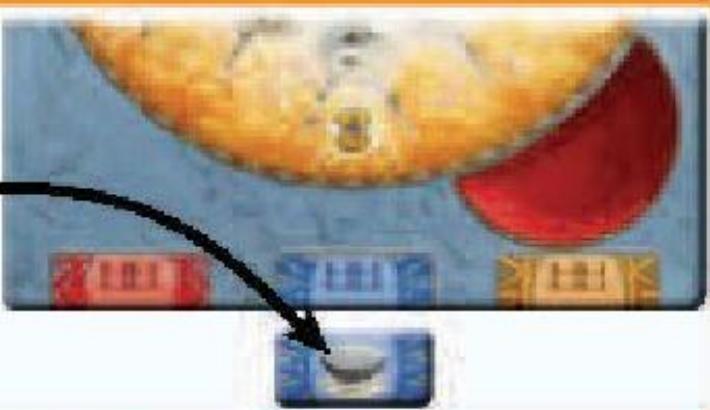
总之,蓝色放蓝色下面,红色放红色下面,黄色放黄色下面。
注意:这里没有设计出可供灰色行动板块放置的地方,如果玩家拿了灰色板块,他可以随意放在这3种颜色任意一格地方。
行动板块储存在玩家版图这里是为了获得奖励行动,请看页数10- 11,
在放置了行动板块到玩家的版图后,他开始做对应的行动。

这些不同的行动板块意味着什么然后他们都能做啥?
-
玩家创造一块耕地。
-
玩家建造一座神庙或城市建筑。
-
玩家移动太阳。
1. 玩家创造一块耕地。
页数6-8
“创造一块耕地”意味着玩家可以拿任意一块面朝上的地形板块(顺便附加上面的原始材料)或面朝上的一块特殊板块。

页数8- 10
玩家选好任意一块面朝上的地形板块(附加上面的原始材料)或特殊板块放到他角色版图的地面。
页数 5
放置地形板块和特殊板块的规则是什么?
· 玩家只能放在中间有白光的区域,不能放置在旁边有橘黄色的区域。
· 玩家不能放置板块把太阳围死在里面。
注意:太阳所在那个板块不能放置板块。
· 当玩家拿地形板块时,此时不要翻开那堆最上面的板块。
· 一块地形板块或特殊板块只可以被放置在空地上而且要跟原有的地形板块或特殊板块相邻。玩家绝不能在没有连接板块的地方放置板块。
特殊板块总是面朝上的,所以不用管。

红线里围住的是可以放置地形板块和特殊板块的正确位置。
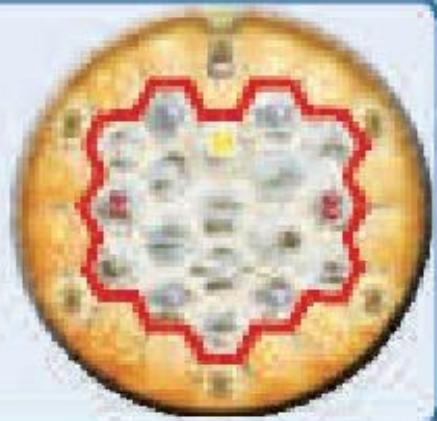
玩家可以放置地形板块或特殊板块到红色线框所在位置,其他地方未放置板块,所以不能放置板块。太阳所在位置不能放置板块。
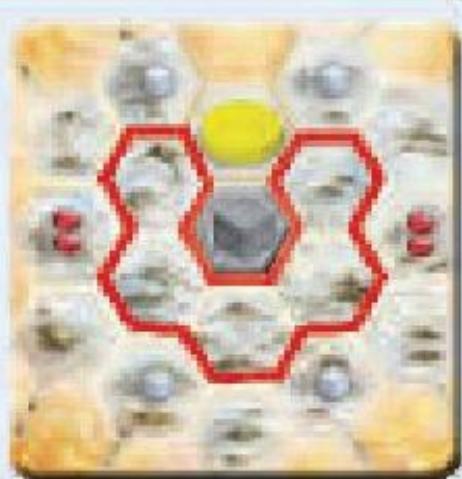
这个板块不能放置在这里,这会导致太阳被围死在各种地形板块或特殊板块里。

例子1:
玩家拿了蓝色“泉水”地形板块,顺便附加对应颜色的指示物在上面,然后放到他的个人角色版图上。
例子2:
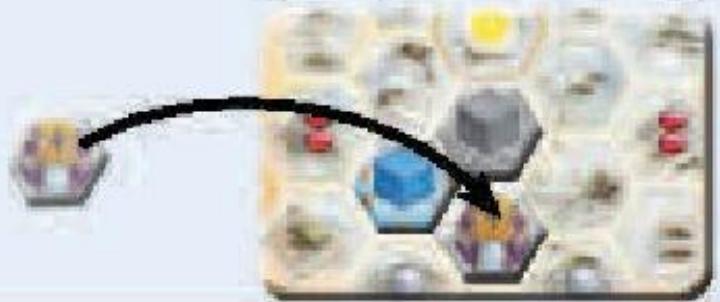
接下来的回合,又轮到这位玩家,他把“神庙”特殊板块放置在他的个人角色版图上。

- 玩家建造一座神庙或一座城市建筑。
“建造一座神庙或一座城市建筑”意味着玩家可以拿一个白色木头建筑。可以建造在下面任意一个地方:一座神庙(A.)放在他的角色版图一座城市建筑(B.)放在他的城市版图。
对于每次建筑,不管神庙类型,玩家必须支付相对应的材料(相对应描述)
这些材料必须从地形板块或特殊板块拿去(在玩家版图上)放回到材料堆里。
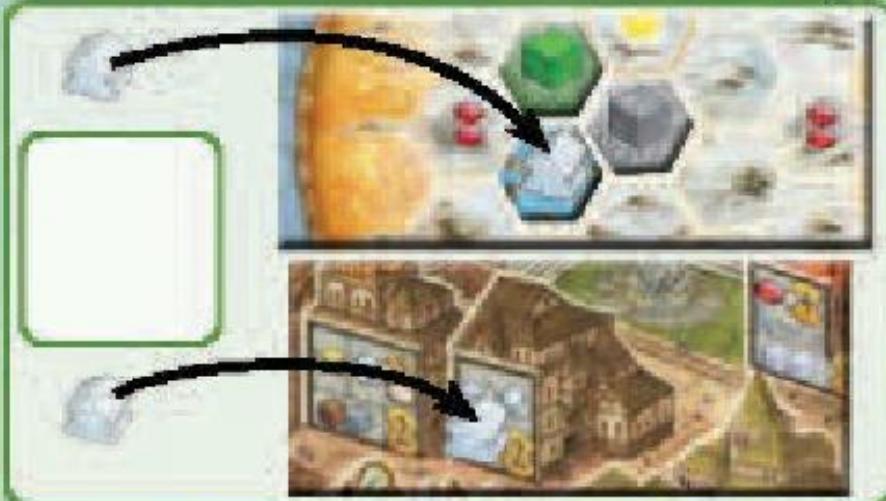
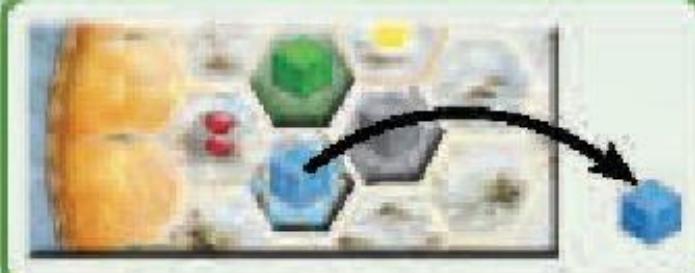
A. 建造一座神庙在玩家版图:
玩家可以使用这种行动在玩家版图的地形板块或特殊板块上建造一座神庙,支付任意颜色的材料,数量是玩家版图上已经有的神庙数量+1.
· 第一座神庙建造花费了1个任意颜色的原始材料。
玩家建造他的第一座神庙,这必须花费1个材料。他决定使用灰色的“花岗岩”,之后他把一个材料放回补给堆。
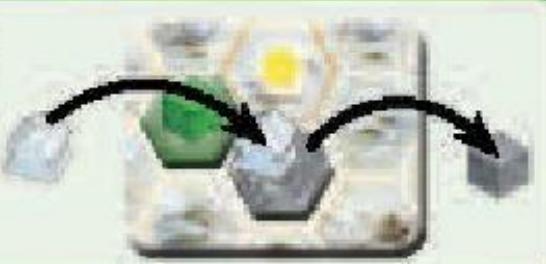
· 第二座神庙建造花费了2个任意颜色的原始材料。
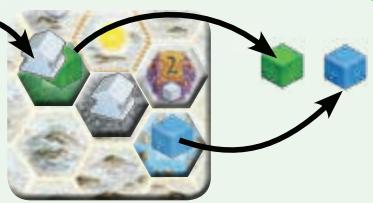
玩家建造他的第二座神庙,这要花费他2个任意颜色的材料,他决定用绿色的“竹子”和蓝色的“泉水”,之后他把这两个材料放回补给堆。
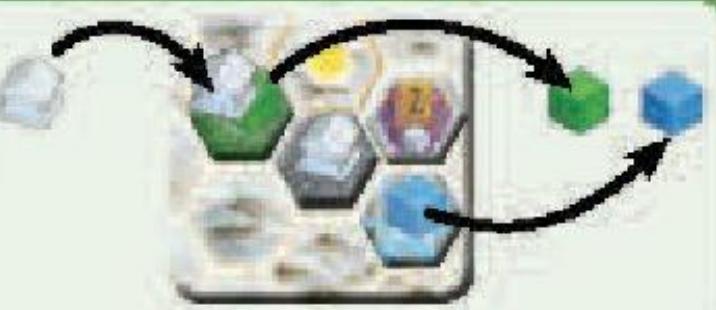
· 第三座神庙建造花费3个任意颜色的原始材料。
玩家建造他的第三座神庙,这会花费他的3个任意颜色原始材料。
如果玩家不够材料的话,他是不能够建造神庙的。
在玩家支付了相对应的材料费用后,他把一个白色木头建筑标记从补给堆拿来放到他的玩家版图的一个地形板块或特殊板块上。
注意:神庙和材料不能同时在一个地形或特殊板块上,如果你想在已经有材料的地形或特殊板块上建造神庙,请先把那个材料作为费用支付掉,然后再建造,要么就在别处建造(如果可以的话)
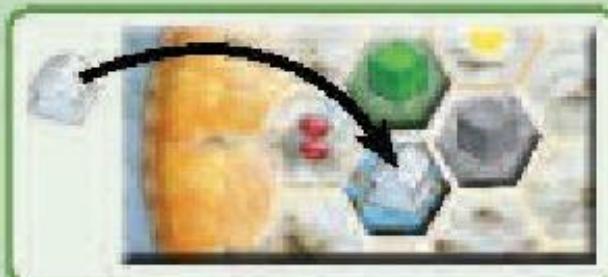
一个地形或特殊板块上只能建造一座神庙,神庙可以在任意地形或特殊板块建造,可以(不必一定要)跟其他神庙邻近。
当玩家建造神庙时有什么东西可以获得?
无论何时当玩家建造一座神庙在他的玩家版图,他可以获得1个魔法石头(红色)。玩家从补给堆拿一个魔法石头放到他自己玩家版图下面的法术力池中。

玩家能获得魔法石头的数量取决于他当前玩家版图里神庙的数量。
第一座神庙获得1个魔法石头
第二座神庙获得2个魔法石头

第三座神庙获得3个魔法石头

当太阳“照耀”效果发生时,神庙会获得胜利分数,请看“3.玩家移动太阳”在第8页.
B. 建造一座城市建筑在城市版图:
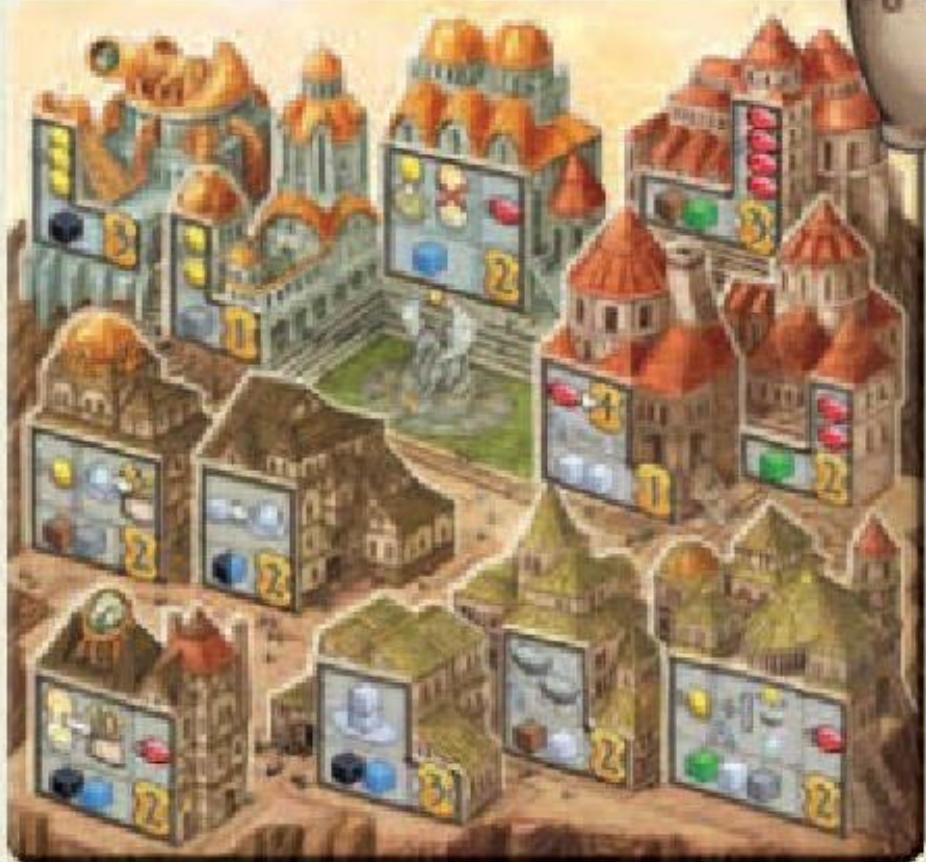
通过这个行动,玩家可以在城市版图建造一座城市建造。
如何建造一座城市建造?
建造后的作用
增加太阳移动力
建造费用
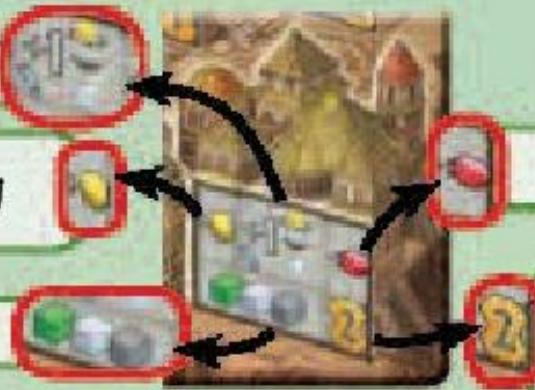
获得魔法石头
游戏最后会获得的胜利分数。
每个城市建筑提供各种好处(例如增加太阳移动力或获得魔法石头),特殊作用以及游戏最后会获得的胜利分数,并不是所有城市建筑都提供所有类型好处。要建造一座城市建筑,玩家必须花费城市建筑下面所示的建造材料费用。
注意:白色材料费用表示你可以用任意颜色的一个材料代替。如果玩家缺少某种材料的话,可以拿两个任意颜色的材料作为一个任意材料来替代使用。
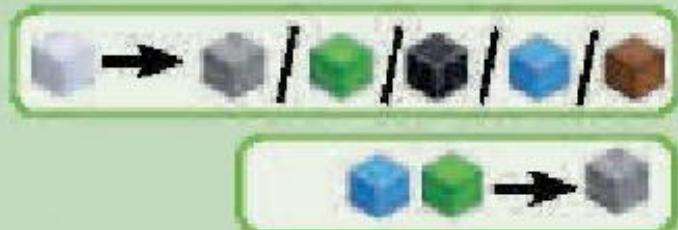
如果玩家没有城市建造下面对应颜色且足够数量的材料,他是不能建造的。
当城市建筑所需材料被支付后,玩家拿一个白色小房子放到他的城市版图上,覆盖在他刚支付材料费用的地方,标记这个建筑已经被建造好了。然后玩家获得这所建造的好处这个例子中要建造这座建筑,玩家必须支付1个绿色,1个灰色和一个任意颜色材料。
他打算支付2个绿色和1个灰色
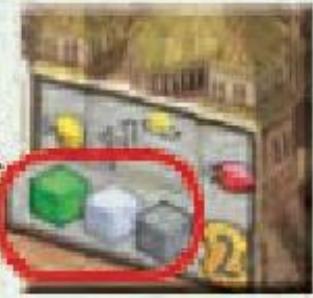

玩家立即移动他的太阳工人加相对应的移动力(如果可以的话),同时一次性拿相对应数量的魔法石头放到他玩家版图的法术力池中(如果可以的话)
建造城市建造后,玩家移动他的太阳工人加相对应的移动力,同时拿1个魔法石头放到他玩家版图的法术力池中。
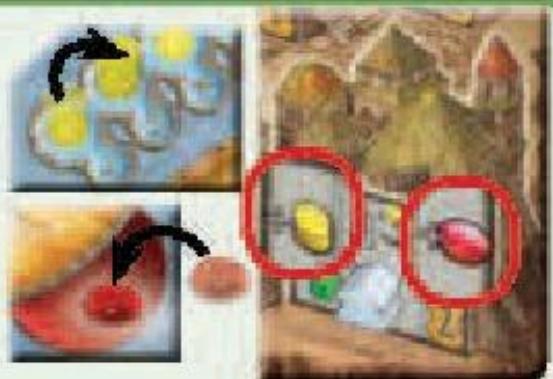
某些城市建筑只有一次性的作用
(标记着),某些建筑可能会有永久性作用,或完全没作用。所有城市建筑的好处和作用在16页有详细描述。胜利分数则看下面。比如这个建筑(增加 2 )在游戏结束时会一起计分。

举例:
玩家决定建造“仓库”城市建筑。
他把一个蓝色的 和一个黑色
给堆,他放一个白色建筑标记
材料从他玩家版图放回补

到他的城市版图所对应
的建筑费用那里标记这个建筑被建造好了,之后他可以拿到关

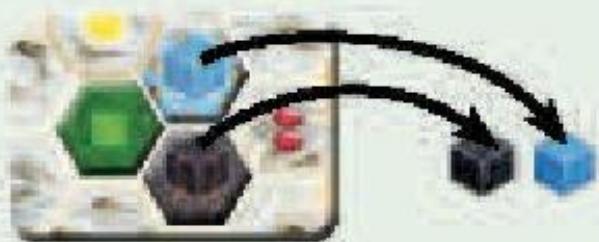
于“仓库”这个建筑的好处和作用(详细请看16页)
3. 玩家移动太阳。

“移动太阳”意味着玩家要拿移动太阳的板块放到他玩家版图下面,移动太阳照耀他的地形版图和神庙。
太阳移动的规则是怎么样的?
太阳顺时针绕着玩家版图移动,而且必须在空白的区域移动(就是没有板块),还要跟地形或特殊板块邻近。就是说,太阳必须挨着地形或特殊板块移动。而且太阳能把玩家版图的地形边缘(橘黄色区域)作为轨迹来移动,只要那边有地形或特殊板块邻近。
太阳顺时针绕着玩家版图移动,总是跟地形和特殊板块邻近。
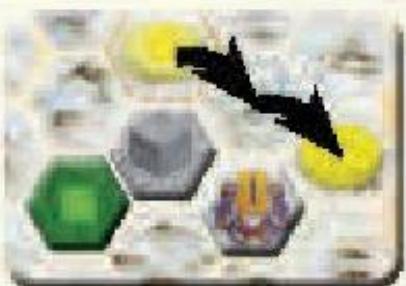
友情提示:任何地形或特殊板块都不能放置在玩家版图的地形边缘(橘黄色区域)
太阳也可以从橘黄色的边缘挨着地形板块移动
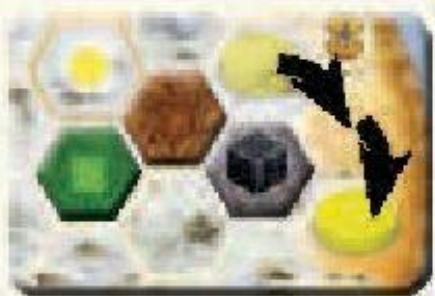
太阳轨迹
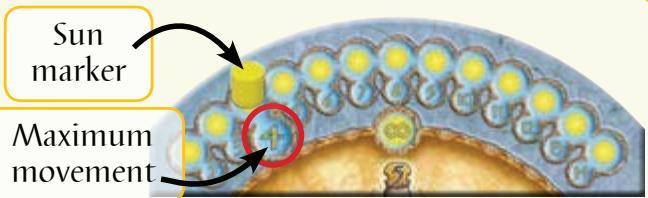
太阳工人所在的玩家版图表示太阳最大的移动力。游戏一开始时,每位玩家的太阳移动力最大是2,不过要提升太阳移动力可以通过建造城市建筑来获得。
注意:当使用“移动太阳”行动时,太阳移动的时候最少要移动一格。
太阳工人
最大移动力

移动太阳后玩家可以获得什么?
当太阳移动结束后,它会“照耀”所有跟它邻近的地形和特殊板块,然后被“照耀”的地形和神庙会反馈给玩家好处。
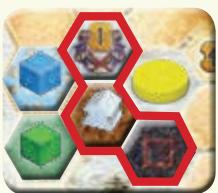
太阳“照耀”邻近的红色线框内的地形和特殊板块以及神庙
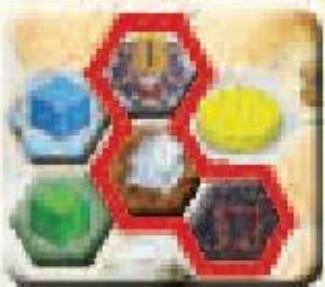
注意:太阳只会“照耀”它结束移动停留在那里邻近的地形和神庙,所以说地形和神庙每回合只能获得一次好处。
“照耀”地形板块
对于每个上面没有材料的地形板块,被太阳“照耀”后,玩家拿取相对应颜色的每个材料放到上面。
如果上面本来就有材料了,“照耀”不会再获得材料(除非你有“仓库”
,详情见16页)或地形板块上面有神庙,也不会再获得材料。
因为太阳“照耀”黑色的“黑曜石”地形板块,玩家可以从补给堆拿一个黑色材料放到他地形板块上
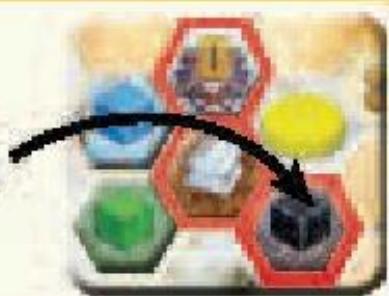
“照耀”神庙
对于每个被“照耀”的神庙而言,玩家会获得胜利分数。每个建造在地形或特殊板块上的神庙会获得1分,此外,每个围绕在神庙的地形或特殊板块会获得1分。
太阳“照耀”神庙,玩家总共获得5分(其中1分是神庙获得的,额外的4分是因为围绕在神庙有4个地形或特殊板块。)

不论是神庙建造在地形板块还是特殊板块,或是围绕神庙的板块上面是否有材料。都可以获得分数。因此,一个“照耀”神庙可以获得1至6分。
玩家可以从补给堆拿取分数放到自己的袋子里。
“照耀”特殊板块
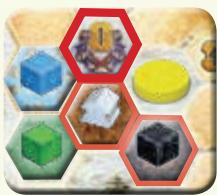
当太阳“照耀”特殊板块不会有任何收获(不管是材料还是分数),特殊板块只在游戏结束时计算分数,见15页太阳“照耀”特殊板块(红色线框内),玩家没有获得任何好处。

举例
玩家的太阳移动力最大是6,但他只想移动3步。
太阳“照耀”空白蓝色“泉水”地形板块,然后玩家获得一个蓝色材料
太阳也“照耀”到绿色“竹子”地形,因为本来就有材料了,不会再增加一个。太阳“照耀”两座神庙,1号神庙获得3分,2号神庙获得4分,玩家从补给堆总共拿7分放到他的袋子里。
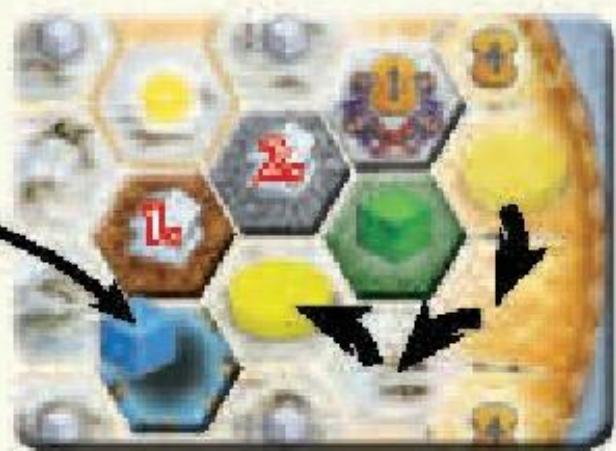
当移动太阳时的额外规则和特征
太阳完全轨道
当太阳围绕地形和特殊板块走完一个完全的轨道后,玩家会获得5分。通常一个回合不会出现。
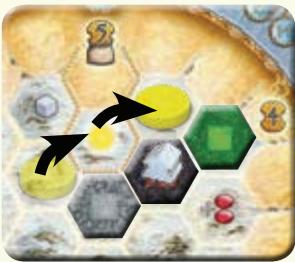
换言之,如果太阳围绕地形和特殊板块走了一圈,继续前进或穿过黄金地域(如图),称之为“完全轨道”然后,之后玩家可以拿5分放到他的袋子里这个例子里,玩家移动太阳穿过黄金地域获得5分,而且会停留在绿色“竹子”板块和一座神庙旁边“照耀”从而又获得分数和材料。
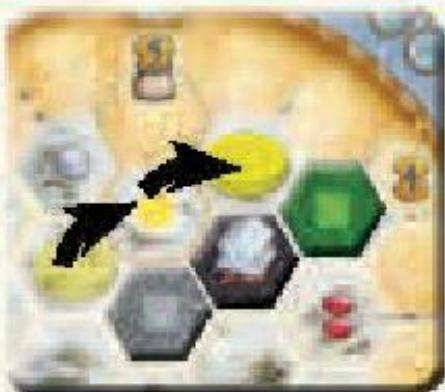
移动太阳完成“完全轨道”获得分数一回合只能拿一次。就算玩家可以在一回合移动太阳穿过黄金地域,两次(比较难发生),他还是只能拿到5分而已。玩家只能在下一回合完成一次“完全轨道”才能拿到下一个5分。
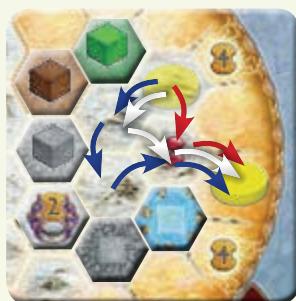
| 捷径移动太阳时要想通过地形和特殊板块,玩家可以创造“捷径”,通过捷径,玩家可以快速移动太阳。 | 举例:玩家决定移动太阳,他要么选蓝色箭头(很远)路线,要么选红色(捷径)箭头路线。第三种白色箭头路线也行。玩家可以随便选择路线,不过红色和白色路线比较科学,因为太阳移动时始终挨着地形或特殊板块的一边。 |  |
| 死胡同你可以创造一个“死胡同”的地形,就是一个地方6个边之中的5个边都被地形或特殊板块毗邻,这样,这个区域只有一个出口可以让太阳移动,但这不能再继续了。 |  | |
| 太阳不能进入一个死胡同,就是说如果玩家创造了一个死胡同,太阳必须要绕过它。这可能要花好几个回合。 | 太阳必须绕过死胡同! | 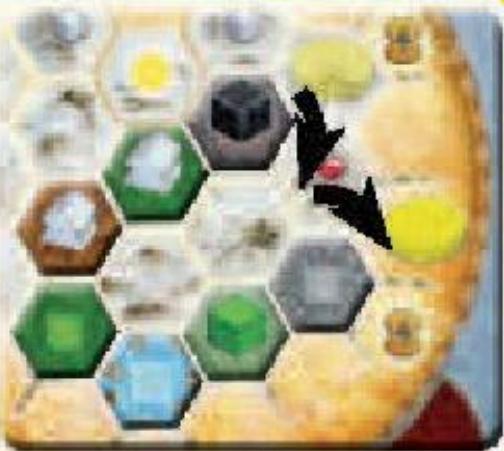 |
| 特殊情况:当玩家建造地形或特殊板块时会造一个死胡同把太阳围住,这种情况下,玩家“移动太阳”的行动必须把太阳从死胡同里出去,这可能要花数个回合。而且太阳再也不能进死胡同里。 | 在建造特殊板块之后一个死胡同把太阳围住了。玩家必须在选“移动太阳”时把太阳往外面走出这个死胡同,太阳穿过了黄金地域,玩家拿5分放到他的袋子里。 |  |
| 对于“4行动回合”阶段的额外规则 | ||
| 玩家一回合只能做一个行动了吗? | ||
| 如果玩家不想动,可以在他的回合不做行动(跳过),或是没有任何意义的行动。他可以继续拿行动板块,放到他的玩家版图下面。 | ||
| 额外行动 |  | |
| 玩家有两种方式可以获得额外行动(见11页)。拿“额外行动”意味着玩家可以选择三种行动之一立即执行(耕地,建造神庙或城市建筑,移动太阳),他可以选择抓板块堆没有的行动。玩家做完额外行动后不拿取行动板块。注意:玩家必须立即执行额外行动,他不能保存晚点再用。不管任何原因,他可以跳过这个额外行动。 | ||
玩家有两种方式获得额外行动奖励:
-
放置四个行动板块到玩家版的一个颜色下面。每当玩家放置第四块行动板块到玩家版的一个颜色下面时,他获得一个额外行动(注意:不管行动是哪一种,只要求颜色一样)(白色是百搭)玩家在执行完所拿板块的正常行动后立即执行额外行动。做完额外行动后,玩家把这4个相同颜色的行动板块弃到弃置堆。
-
通过建造“宫殿”城市建筑(见16页)
当玩家建造“宫殿”这个城市建筑后,他首先立即增加太阳移动力1格和那一个魔法石头,然后“宫殿”发生它的作用,立即增加一个额外行动,仅限一次。(标示为闪电)

结束阶段1:4行动回合

当每位玩家都拿到4块行动板块后阶段1结束。4人游戏的话,就是有16个行动板块会被拿走。
剩下的2个行动板块弃掉进弃置堆,已经拿过的行动板块依旧留在玩家版图下面。然后阶段2开始了。2人游戏或3人游戏规则有所变动,见14页。
阶段2: 角色板块
在这个阶段,玩家可以购买和/或激活角色板块,这只能在阶段2使用。角色板块的那些图标都表示什么?

这个阶段是从拥有最多魔法石头的玩家开始的(如果有几个人同样多,则最靠近起始玩家先动,顺时针方向)每位玩家在他们的回合可以:
- 购买并放置一个角色板块;或
· 激活任意数量他们拥有的角色板块获得好处。
这些行动玩家可以随便选。比如玩家A先激活一个角色板块,然后购买另一个角色板块立即激活他。顺时针方向轮流进行。
玩家如何购买角色板块?
每个角色板块上面有购买所需魔法石头数量,2至4个。玩家弃相对应数量的魔法石头就能拿某个角色板块了。
(夜晚面朝上),之后放在角色版图旁。
玩家可以拿曾经拿过的角色板块。
注意:玩家激活角色板块后只能拿一次奖励。
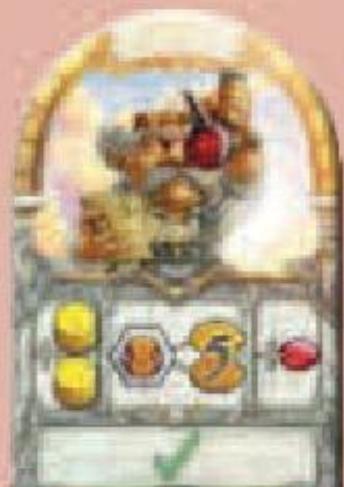


如何激活角色板块? 先要购买角色板块,才能激活。
把夜晚角色板块下面的材料弃掉就能激活,每个角色板块下面都有3个材料费用。
为了激活角色板块,玩家弃掉1个黑色一个灰色,一个白色(任意)的材料。材料全返回补给堆注意:白色表示可以用任意颜色的材料,两个任意颜色材料可以当作任意颜色的一个材料使用。)

最后玩家把角色板块“夜晚”翻到“白天”这代表已经激活。玩家立即增加太阳移动力和获得魔法石头。最后游戏结束会根据相应条件获得分数,见15页玩家激活“发明家”角色板块,从“夜晚”翻到白天,增加太阳移动力2格和获得1魔法石头,最后游戏结束会根据特殊板块获得分数,见15页。

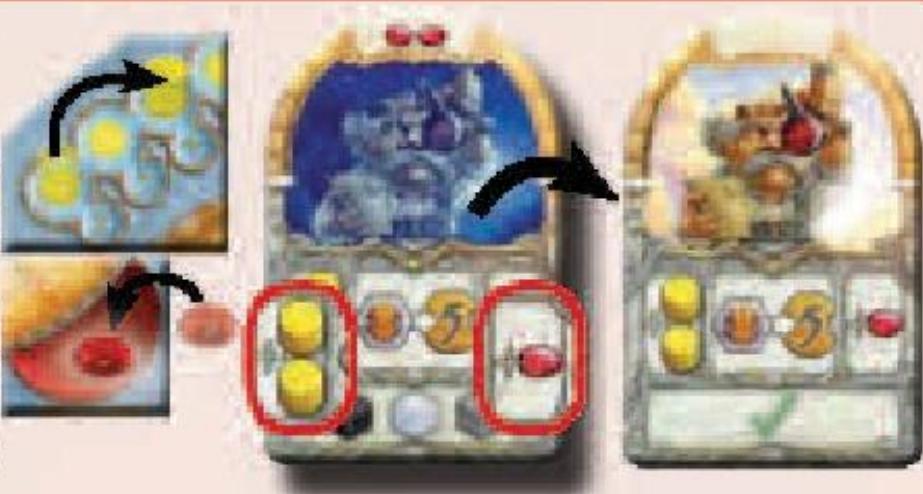
注意:每回合玩家只可以购买1块角色板块,但可以激活很多角色板块。只有当某个玩家回合开始时,他才能购买另一块角色板块和/或激活很多角色板块。
玩家们轮流购买和/或激活角色板块,直到所有人都不想做为止。这个阶段2里玩家可以购买和/或激活很多角色板块,当所有玩家都不想做的时候,阶段2结束,阶段3开始。
阶段3:补给和额外奖励材料
所有玩家完成购买/激活角色板块后,进入阶段3.
各种游戏组件下回合如何补给?
·最上面没被拿走的地形板块弃掉。每一堆重新翻开一块地形板块。这样下回合就又有6堆地形板块(有一堆是额外的,5种地形都有),每个面朝上的地形板块上放置对应颜色的一个材料。
每回合,5种地形只有一块可用。还有一个额外随机的地形堆上面有一块可用。

特殊板块依旧不变,整场游戏总共只有8块特殊板块。

· 跟以前一样,3列,每列翻开6块行动板块,一共18块(看游戏初始设置见第2页),如果不够数量,弃置堆洗回去。
注意:2人游戏规则变动见14页。
每列6块新的行动板块,一共个18块。
起始玩家龙顺时针传给下一个。然后从第3,4名玩家(从起始玩家算起的第3,4名)拿一个任意颜色的奖励材料放到他们某个地形或特殊板块上(不管有没有材料都行),此时他们的一个地形或特殊板块能放2个材料。其他玩家不享受此奖励。
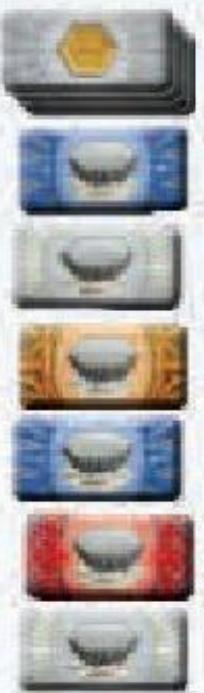
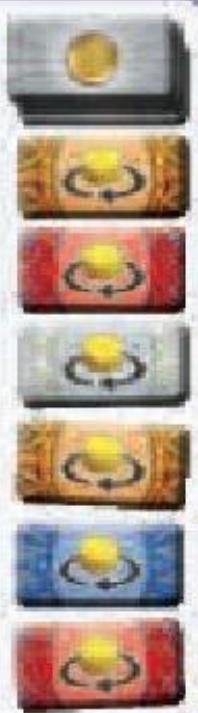
下回合的阶段1又开始了第3,4名玩家获得1个任意颜色材料(比如蓝色)放到地形或特殊板块上。

玩家版图的特殊奖励
玩家版图上材料奖励

当玩家把地形或特殊板块放到这里时,他会获得一个任意颜色的材料
但是这个奖励的额外材料必须跟原来你放置这个地形板块不一样。然后你可以放置在这块新的地形板块材料的上面。
额外魔法石头奖励

当你在此区域放置地形或特殊板块时,可以从补给堆拿两个魔法石头到你的法术力池中.
共有4个地方
玩家放一个板块到这个奖励材料的区域。
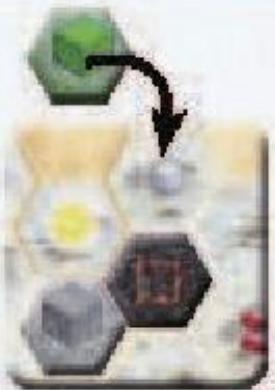
玩家版图有2个地方
玩家放一块地形板块到奖励魔法石头的区域.
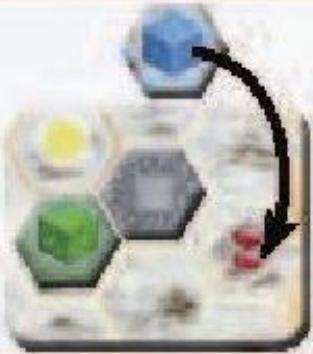
边缘区域奖励

玩家获得
2个魔法
石头放到
自己玩家
玩家版图有5个地方
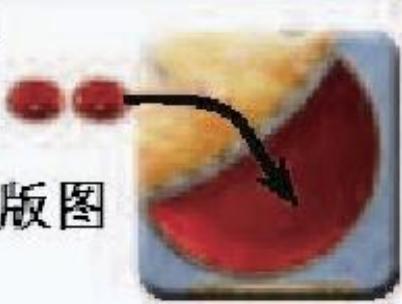
玩家放一块特殊板块到边缘区域邻近的地方.
当玩家放置地形或特殊板块到邻近边缘区域奖励的地方时,游戏最后结算分数会加4分.
玩家得到一个不同于放置板块颜色的材料放到原本材料的上面。
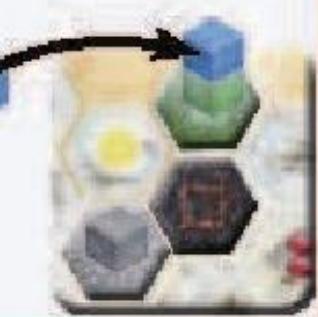
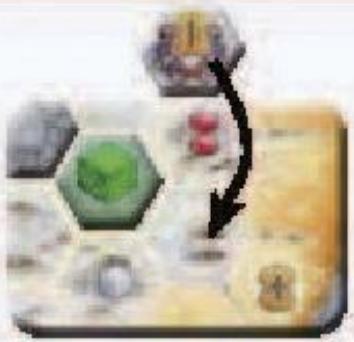
游戏最后加4分.
游戏结束最后计分
4人游戏,有4个回合。最后一回合,阶段3(补给和奖励额外材料)改为计算分数。每位玩家遵循以下步骤计算分数:
- 每个边缘区域有板块邻近加4VP(如果有“探险家”另计,见15页)
- 每个建造好的特殊板块计算对应的分数(见15页)
- 每个已经建造好的城市建筑计算对应的分数(上面有印分数)
- 每个被激活的角色板块计算对应的分数(见15页)
- 每个魔法石头加1VP(如果有“会计”另计,见15页)
- 任何材料不加任何分数(如果有“会计”另计,见15页)
玩家把自己袋子里的分数拿出来统计最后分数,分数最多者获胜(平分看下面)
举例:最后计分,这位玩家分数统计如下:
- 2个边缘区域邻近: 8 + 8 = 5 1 1 1 (4+4=8VP)
- 2个特殊板块 :5个空地区x1VP= 5 (5x1VP=5VP)
(3+1+2+2+2+2=12VP)
- “皇后”角色激活:
- 2个魔法石头还在角色版图: $\text{[IMAGE] (1+1=2VP)}$ 玩家还剩下了好多材料,但得不到任何分数。在游戏过程中,这位玩家在袋子里放了47分。
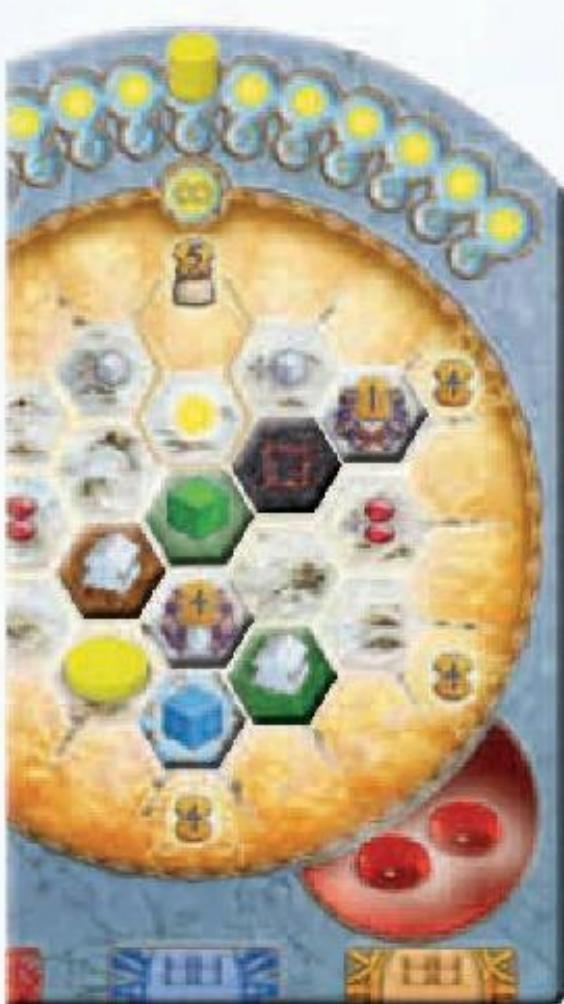
所以到最后,这位玩家的总分是: $8+5+8+12+16+2+47=98\ \text{VP}$
分数都一样多怎么算?
如果好几个人平分,则看谁的地形或特殊板块上材料比较多谁赢。还是一样则共享胜利。
2人游戏或3人游戏规则变动
3人游戏只有3个回合。每位玩家做一次起始玩家。(类似4人游戏)。每个回合的阶段1,每位玩家拿6块行动板块而不是拿4块。18块板块都会被拿光一块也不留。2人游戏有4个回合,每位玩家做两次起始玩家。每个回合阶段1,每位玩家拿4块行动板块(类似4人游戏),但有些额外变动:第一回合的阶段3,留下10个行动板块,第二回合的时候,这些板块不用弃掉继续用,但只有这10个了。第二回合阶段3的时候,弃掉剩下的2个行动板块然后补满18块。之后第三回合的阶段3,跟第一回合一样留10个不弃继续用,其他同上。
提示
推荐(虽然不是必需的)每位玩家起始的时候选择不一样的地形板块。
蓝色的 ☐ 和黑色的 ☐ 材料比其他的更稀少。能选这两种材料就尽量选。
记得购买角色板块后,要激活他们才能获得分数。
参考页面
特殊板块参考(VP=胜利分数)
特殊板块除了自己会加对应的分数,还会跟邻近的板块加分

空白区域加分
最后计分时,这块特殊板块周围有几个空区域就加几分。
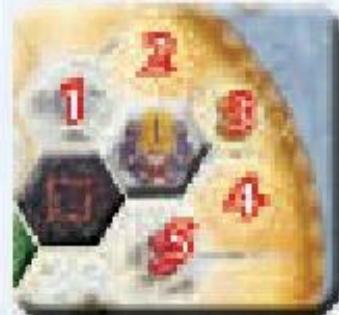
这个特殊板块自己不视同为一个空区域。
这里有5个空区域跟这个特殊板块邻近,所以,玩家会得到:
创造板块加分
5x1VP=5VP
最后计分时,包含这块特殊板块在内,每个与它邻近的板块都会加2分。


这里一共有5块能计分的地形和特殊板块(特殊板块自己和4块与它邻近的板块),所以玩家会得到:

材料加分
5x2VP=10VP

最后计分时,包含这块特殊板块在内,每个与它邻近的板块上面每个材料都加2分。

神庙加分
这里特殊板块以及邻近的板块上面一共有6个材料,所以玩家会得到最后计分时,包含这块特殊板块在内,每个与它邻近的板块上面的每座神庙加4分。
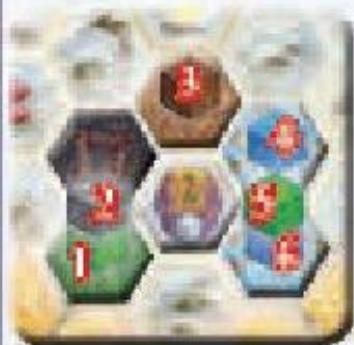
6x2VP=12VP


这个特殊板块以及邻近的板块一共有3座神庙,所以玩家会得到:
3x4VP=12VP

角色板块参考(VP=胜利分数)
建筑师(购买费用:2魔法石)

激活费用:1蓝色,1灰色和1个任意颜色激活好处:拿一个额外奖励的材料放到你的地形或特殊板块上。
游戏结束VP:每个建造好的神庙或城市建筑都加3分。
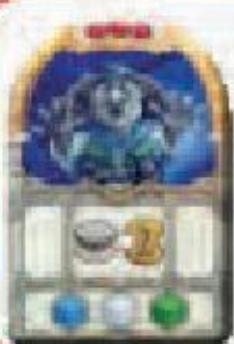
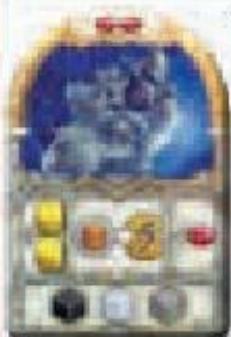
发明家(购买费用:2魔法石)
女先知(购买费用:s魔法石)
激活费用:1蓝色,1绿色和一个任意颜色
激活好处:无
游戏结束VP:每个地形或特殊板块加2分
激活费用:1黑色,1灰色和1个任意颜色
激活好处:加2点太阳移动力和1魔法石
游戏结束VP:每个特殊板块加5分。
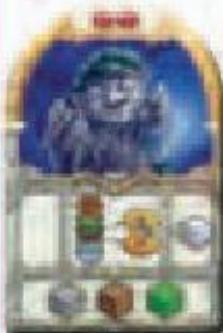
地理学家(购买费用:2魔法石)
激活费用:1灰色,1棕色和1个绿色
激活好处:拿一个额外奖励的材料放到你的地形或特殊板块上。
游戏结束VP:每种不一样颜色的地形就加3分,最大15分。
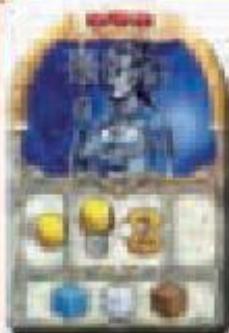
公主(购买费用:3魔法石)
激活费用:1蓝色,1棕色和1个任意颜色
激活好处:加1太阳移动力
游戏结束VP: 2VP X 太阳工人所站的轨迹格数
注意:如果玩家建造了“能量植物”是不计分的。
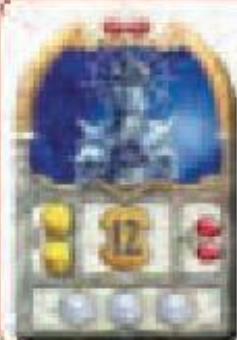
探险家(购买费用:2魔法石)
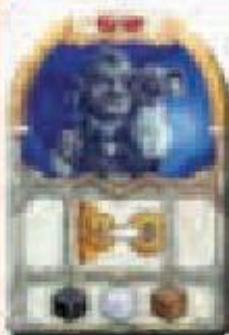
女祭师(购买费用:2魔法石)
激活费用:1黑色,1棕色和1个任意颜色激活好处:无。
激活费用:3个任意颜色
激活好处:加2太阳移动力,加2魔法石
游戏结束VP:12VP
游戏结束VP:每个边缘区域被板块邻近,加8VP而不是加4VP。(见13页)
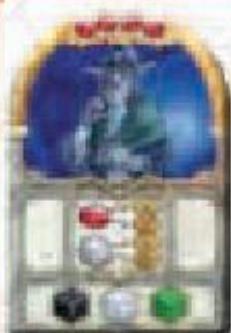
会计(购买费用:4魔法石)
激活费用:1黑色,1绿色和1个任意颜色激活好处:无。
游戏结束VP:每个建造好的神庙或城市建筑都加3分。每个留下来未用的材料加2分,每个留下来未用的魔法时候加3分而不是1分。
城市建筑参考(VP=胜利分数)
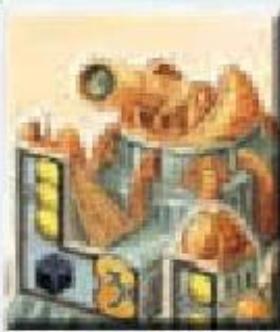
天文台
花费:1黑色材料
好处:加3太阳移动力
作用:无
游戏结束分数:3 VP

太阳能小屋
花费:1灰色材料
好处:加2太阳移动力
作用:无
游戏结束分数:1 VP

能量植物
花费:1蓝色材料
好处:加2魔法石
作用:玩家把太阳工人放到∞,
当移动太阳时,可以任意移动,但是不能获得完全轨道的分数。
游戏结束分数:2 VP
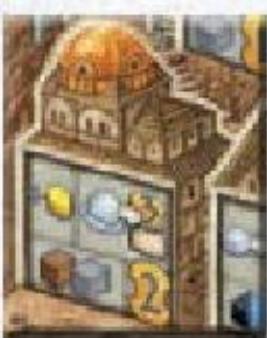
太阳能小屋
太阳能车座
花费:1灰色材料
好处:加2太阳移动力
作用:无
游戏结束分数:1 VP
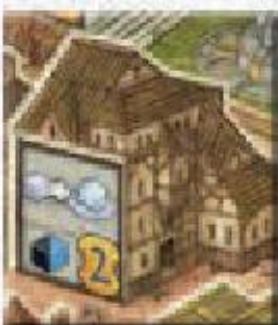
要塞
花费:1蓝色或黑色材料
好处:无
作用:建造神庙的材料费用不管是第
几座都只需1个任意材料。建造完神庙
后获得的魔法石数量依旧不变。
游戏结束分数:2 VP
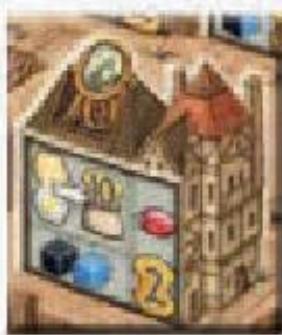
瞭望塔
花费:1黑色和1蓝色材料
好处:加1魔法石
作用:太阳走一次完全轨道拿10VP而不是拿5VP,见第9页。
游戏结束分数:2 VP
Rules editing: Hanna & Alex Weiss

© 2014 Hans im Glück Verlags-GmbH
Suggestions, questions, or comments?
Please write to us at our E-mail address:
info@hans-im-glueck.de or
Hans im Glück Verlag
Birnauer Str. 15, 80809 München
www.hans-im-glueck.de
www.curadco.de
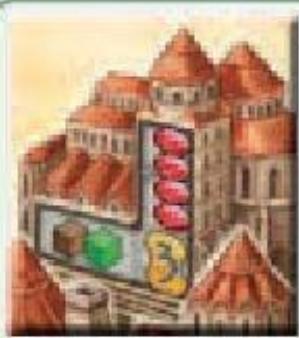
避难所
花费:1棕色和绿色材料
好处:加4魔法石
作用:无
游戏结束分数:3 VP
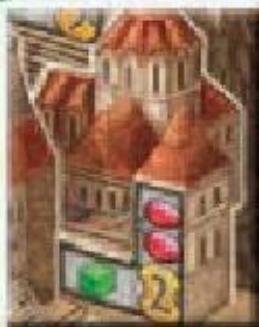
宗教祭坛
花费:1绿色材料
好处:加2魔法石
作用:无
游戏结束分数:2 VP
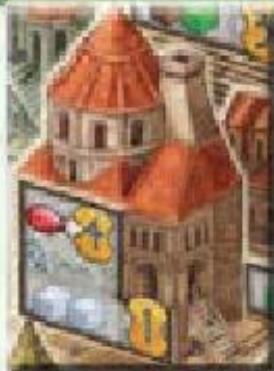
交易市场
花费:2任意材料
好处:无
作用:立即结算一次:加至多3魔法石且每个魔法石可以换4VP(最大12VP)
游戏结束分数:1 VP
仓库
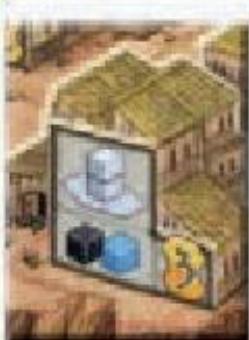
花费:1黑色和1蓝色材料
好处:无
作用:当玩家的地形板块被“照耀”时,如果本来有1个材料,会再加一个该地形所对应颜色材料。一块地形最多有2个材料。
游戏结束分数:3 VP
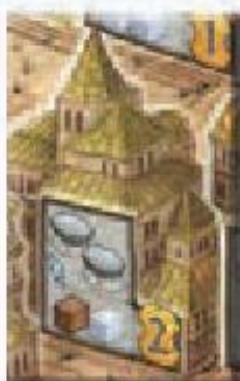
国土局
花费:1棕色和1任意颜色材料
好处:无
作用:立即执行一次:从额外地形板块堆最下面拿2块地形板块放到自己玩家版图上。
游戏结束分数:2 VP
宫殿
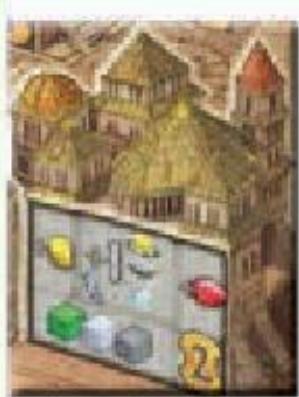
花费:1绿色,1灰色和1任意颜色材料
好处:加1太阳移动力和1魔法石
作用:立即执行一次:1次额外行动
,见第10,11页
游戏结束分数:2 VP
The publisher and authors wish to thank the many test players from St. Wendel, Saarbrücken and Lieberhausen. In particular,
Pascal Kloos, Jochen Scherer, Martin Braun, Maxi Brown, Inka & Markus Brand, Jörn Koch and all the members of the Legendary Gamer's Club. Special thanks to Ramona and Anne for their relentless, honest feedback and their mental advice through the years. And as always, we especially thank Dieter Hornung.
Download MarkdownHelios Rules (English translation) v3.md50.4 KB
MARTIN KALLENBORN MATTHIAS PRINZ
Game Components and Setup
Components
48 Action Tiles (16 of each of 3 symbols, in 4 different colors)
104 Victory Points Tokens (32x 1 VP,
28x 5 VP, 32x 10 VP, 12x 30 VP)
70 wooden Raw Materials cubes (14 each in blue, brown, gray, green and black)
30 red Mana Stones
35 white wooden Temples/ City Buildings
8 Character Tiles
4 Player Boards
4 City Boards
4 Summary Cards
4 yellow Sun Markers
4 yellow Sun Discs
4 imprinted Bags
2 Starting Player Dragons (only one required)
36 Land Tiles (8 each in brown, gray and green, 6 each in blue and black)
8 Special Tiles (2x 4 different varieties)
The players in 3rd and 4th position (clockwise from the starting player) now select 1 additional raw materials cube of their choice, and place this cube on their starting land tile in the center of their player board. This bonus cube must not be the same color as the cube already present on the starting land tile. These two players now have 2 resources on their starting land tile. All other players do not receive this bonus. The game can now begin.
Sort the 8 special tiles by their type and place them face up in 4
stacks, next to the land tiles. There are
2 of each of the 4 types in the game.
lnitial game setup is the same for any number of players,
(not by color). The three stacks are 48 acuon ues are sorted py symboi 全 mixed separately and placed in 3 face down stacks. Then, one of the players draws the top 6 action tiles from each of the stacks, and places them face up in 3 columns below each stack. In total, there are 18 available action tiles at the start of the game.

Since each player may choose any tile type, it is possible that several players start with the same type of land tile.
Note; The

black (obsidian) land tiles can not be chosen at the start of the game.
After choosing their starting land tile, each player places it on the center space of his player board, and then places a raw materials cube of the same color on top of it.
Next, 4 land tiles of each type are placed face down in 5 separate stacks. All of the remaining land tiles are mixed together and placed face down in another stack (known as the additional stack).
From each of the now 6 stacks of land tiles, the top tile is turned face up on the stack, and a raw materials cube of the corresponding color is placed on each of the face up tiles.
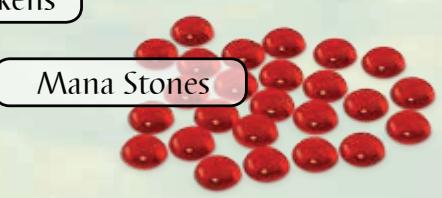
The victory point tokens, raw materials, mana stones and temples/city buildings are alí placed on the table as a general supply, accessible to all.
Victory Point Tokens
The character tiles are all laid out on the table, within easy reach of all players, with the “Night” side facing up.
Temples/City Buildings
Starting Player Dragon
The player who has traveled to the most continents is the first player, and receives the starting player dragon. (Note; There are 2 dragons included with the game; one is a spare and can be used as an awesome shelf decoration!)
Player Board
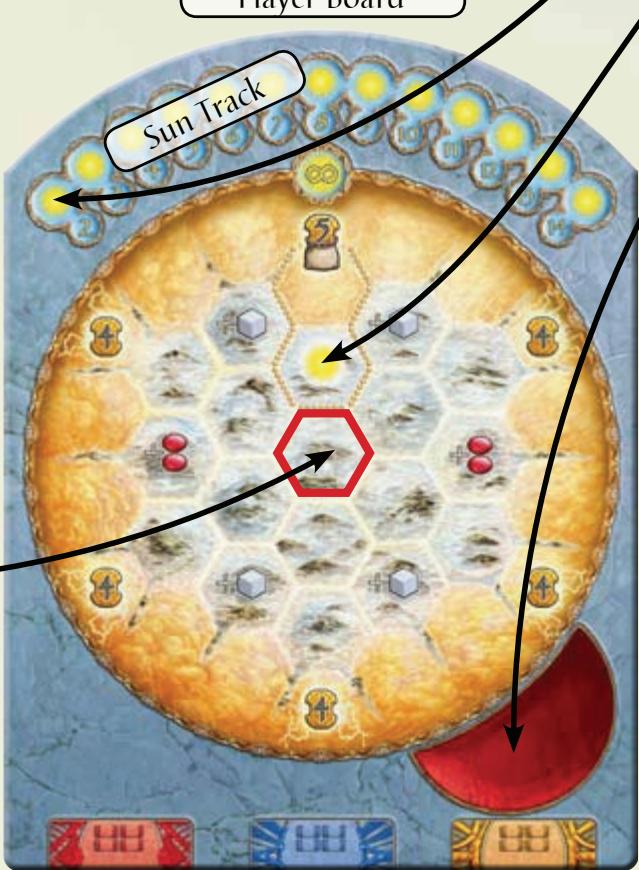
Character Tiles

4 Each player recives:
• 1 player board, 1 city board, and 1 summary card, all of which he places in front of him.
1 sun marker to track the movement of the sun. The sun marker is placed on the “2” space on the sun track at the top edge of the player board.
1 sun disc, which is placed on the land space with a sun symbol on it. From now on, this disc is referred to as the Sun.
1 mana stone, which is placed in the mana storage area of the player board.
• 1 bag, which is used to store victory point tokens collected during the game.
City Board
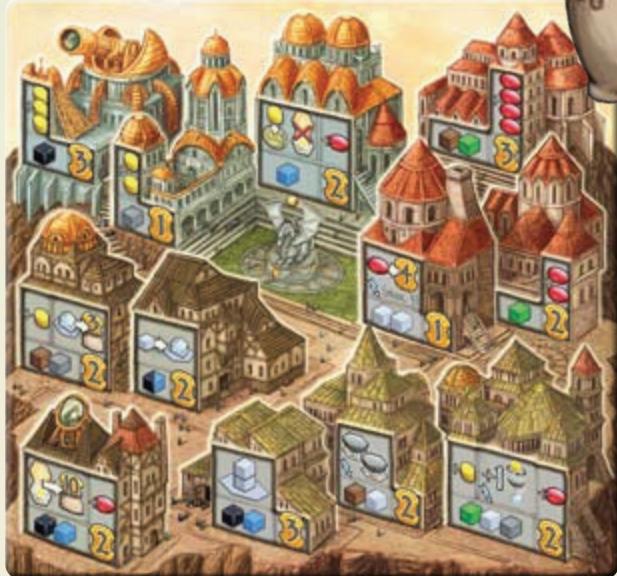
Introduction
On the plateau of a distant world, an exciting competition is underway: Which inhabitant of this world can advance its culture forward the fastest, gaining fame and a place in the history books? Players take on the roles of high priests in this world, and will build up their lands little by little, expand their city, build temples, and pray to Ahau, the Sun God, that he may be merciful to them. Who among you can best develop your world's culture in the short time that is available?
Game Play
Helios is played in a clockwise direction. The game consists of a number of rounds, depending on the number of players. The examples in this rule book will present a 4-player game, in which 4 rounds are played. Each round is made up of 3 phases. For rules changes in a 2- or 3-player game, see page 14.
Phases of a Round
Each round is made up of the following 3 phases:
• Phase 1; The 4 action turns
• Phase 2; The character tiles
Pages 4-11
Pages 11-12
• Phase 3; Replenishment and bonus raw materials Pages 12–13
Phase 1: The 4 action turns
In each of the 4 action turns, each player, in player order, takes 1 of the available action tiles and performs the associated action on it.
Beginning with the starting player, each player begins his action turn by taking one of the face up action tiles on display. However, he may only choose from the tiles that are the lowest in each of the 3 columns.
Note: lf any column has no action tiles remaining in it, this action is no longer available in the current phase.
The player places his selected action tile below his player board underneath the designated space with the matching color. The symbol itself on the action tile does not matter for tile placement.

In this example, the player decides to take the blue action tile
He places it below the blue space on his player board.
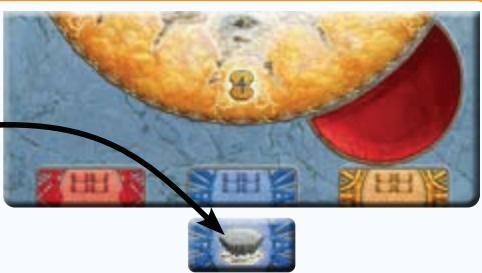
In other words, the red action tiles are placed below the red space on the player board, the blue tiles are placed below the blue space, and the yellow tiles are placed belowthe yellow space.
Note: There is no designated space on the player board for the gray action tiles. Therefore, if a player takes one of the gray action tiles, he may place it below any of the 3 colored spaces on the board.
The action tiles are stored below a player's board with the objective of earning bonus actions. See pages 10 and 11.
After placing the action tile below his board, the player performs the action shown on it.
What do the different action tiles mean and how are they played?
1, The player creates one land,
-
The player constructs one temple or one city building.
-
The player moves the sun,
What are the rules for placing a land or special tile?
• The player may place a land or special tile on any of the light gray hex fields on the player board. He may not place them on the orange hex fields around the edge of the land area.
“Create one land” means that the player may take either any one of the face up land tiles (along with the raw materials cube on top of it), or any of the face up special tiles. He may choose between any of the available face-up land tiles or special tiles. He then places the selected land tile (and raw materials cube) or special tile on his player board in the land area.
1.The player creates one land,
• A land or special tile may only be placed on an empty hex field that is adjacent to a field which already contains a land or special tile. The player may never place a land or special tile on a hex field that is not connected a to field with a tile.

Page 5
Note: ln addition, a tile may never be placed on a hex field containing the sun. A field with the sun on it is off limits!
• The player may not place a land or special tile such that the sun is enclosed (completely surrounded by land or special tiles).
• When a player takes a land tile, he does not reveal a new tile from the stack at this time. Special tiles, however, are always displayed face up.
Pages 6–8

Pages 8–10



The area outlined in red to the right shows the hex fields on the land area where land and special tiles may be placed.

The player may place a land or special tile on any one of the hex fields outlined in red. None of the other hex fields are adjacent to an already-placed tile, and therefore, no tiles may be placed on them yet.
This tile may not be placed here, as that would cause the sun to be enclosed by land and special tiles.
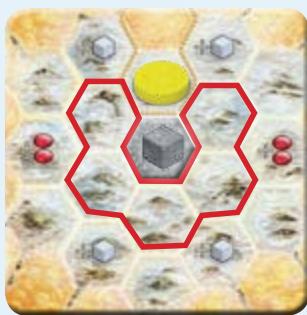
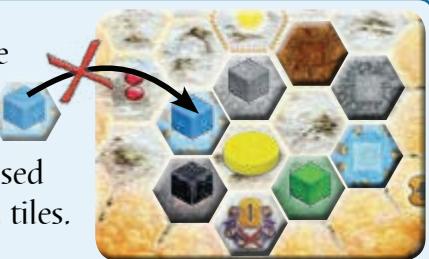
Example 1;
The player takes a blue “spring” land tile, along with the raw material cube on it, from the display and places it on his player board.
Example 2;
On a later turn, the player takes the “temple” special tile from the display and places it on his player board.
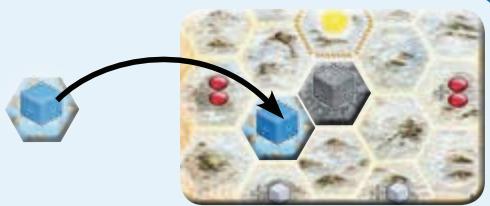

2. The player constructs one temple or one city building.
“Construct one temple or one city building” means that the player takes one of the white wooden building pieces from the general supply.
This can be constructed as either:
A Temple (A,), which is placed on his player board
or
A City Building (B.), which is placed on his city board.
For each construction, no matter which type, the player must pay a certain amount of raw materials cubes (as described below). These raw materials cubes must be taken from land or special tiles (on the player board) that contain them. The player returns any such raw materials cubes used for construction back to the general supply.
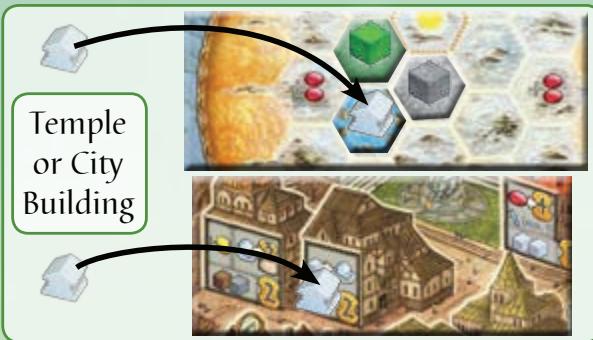

A, Constructing a temple on the player board;
By taking this action, the player can construct exactly one temple on one of his land or special tiles. To pay the construction cost for à temple, any raw materials cubes may be used. The number of raw materials cubes needed depends on the number of temples already present on the player board:
• The first temple constructed costs 1 of any raw materials cube;
The player constructs his first temple. This costs him 1 raw materials cube. He decides to use the gray “granite” raw materials cube and returns it to the general supply.
• The second temple constructed costs 2 of any raw materials cubes;
The player constructs his second temple. This costs him any 2 raw materials cubes. He decides to use the green “bamboo” and the blue “spring” raw materials cubes and returns them to the general supply.
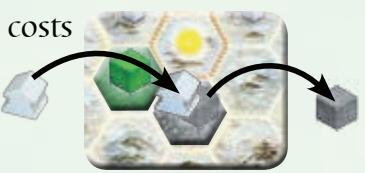
• The third temple constructed costs 3 of any raw materials cubes; etc.
The player constructs his third temple. This will cost him any 3 raw materials cubes.
If a player does not enough raw materials cubes available, he cannot construct a temple.
After the player has paid the required raw materials cubes, he takes a white wooden building piece from the general supply and places it as a temple on one of his land or special tiles on his player board.
Note: There can never be both a temple and a raw materials cube on the same land or special tile. lf there is already a raw materials cube residing on a tile
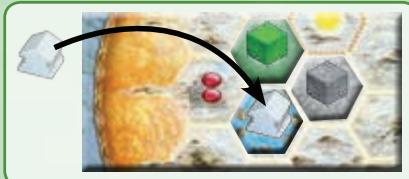
on which a temple is to be built, the player must put the raw matèrials cube back into the general supply first. Therefore, it is wise to spend this raw material cúbe before deciding to construct a temple on that tile, or to construct the temple on another tile (if possible).
Only one temple may be constructed on a land or special tile. A temple may be constructed on any tile, and may be (but do not have to be) constructed adjacent to each other.
What does a player gain when constructing a temple?
Whenever a player constructs a temple on his player board, he receives 1 mana stone. The player takes the mana stone from the general supply and places it in the mana storage area on his player board.
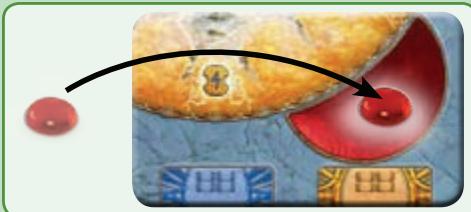
The amount of mana stones the player receives depends on the number of temples already present on the player board:
The first temple earns 1 mana stone
The second temple earns 2 mana stones

The third temple earns 3 mana stones

, etc.
When the sun's “illumination” effect occurs, the temples also earn victory points. Refer to the section “3, The player moves the sun”, on page 8.
B. Constructing a city building on the city board;
By taking this action, the player can construct exactly one city building on his city board.
How is a city building constructed?
Building function
Increase movement of the sun marker
Cost of the building

Mana stones earned
Vicțory poințs earned at the end of the game
Each constructed city building provides various benefits (in the form of incresaed movement of the sun marker or earned mana stones), special functions, and victory points at the end of the game. Not every city building provides all types of benefits and/or functions, however.
To construct a city building, the player must pay the raw materials cubes shown in the lower corner of the building.

If a player does not own a raw materials cube in a specified color, he may pay for that cube by substituting two cubes of any other color(s).

If a player does not have the specified raw materials cubes available, he cannot construct a city building.
After the required raw materials cubes are paid, the player takes a white wooden building piece from the general supply and places it on his city board, covering the pictured raw materials cubes just paid, indicating that this building
In order to construct the city building in this example, the player must pay 1 green 1 gray , and 1 neutral (any) raw materials cubes.
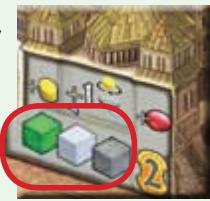
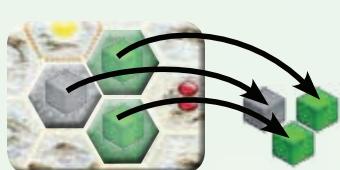
He returns 2 green and 1 gray cubes back into the general supply.
has been constructed. From now on, the player gains all the benefits and/or functions of the city building.
The player immediately moves the sun marker on his sun track forward by the number of spaces shown on the city building space (if applicable). He also takes the number of mana stones shown on the space (if applicable) once from the general supply, and places them on the mana storage area of of his player board.
After the construction of this city building, the player moves his sun marker one space forward on his sun track. ln addition, he takes 1 mana stone from the general supply and places it on
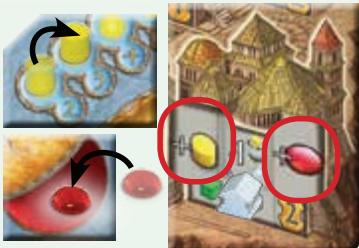
the mana storage area on his player board.
The function of this city building is described on page 16.
Some city buildings have a one-time function
(indicated by), while other city buildings may have a permanent function, or no function at all. All of the benefits and functions o the city buildings are described on page 16. Victory points earned by the city buildings (indicated by2) are awarded to the player the end of the game, during the final scoring.
Example;
The player decides to construct the “Warehouse” city building. He returns 1 blue and 1 black raw materials cube from his player board to the general supply. He then places a white wooden building piece2
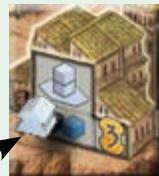
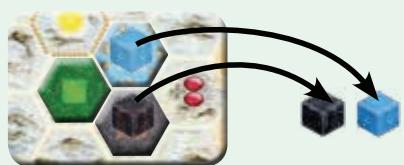
on the cost area of the building on his city board to indicate that the building has been constructed. The player then has access to all the benefits and/or functions of the “Warehouse” building (for a full description, see p. 16).
3, The player moves the sun,

"Moving the sun" means that the player moves his sun disc across his player board in order to earn various “illumination” rewards for his land tiles and his temples.
What are the rules for moving the sun?
The sun is moved clockwise around the player board. The sun must always move over empty hex fields (ields without tiles) that are adjacent to fields that contain either land or special tiles. That is, the sun must always touch a land or special tile on at least one side as it moves. The sun can move along the edges of the land area (through the orange hex fields) if any land or special tiles lie at the outer edge of the light gray hex fields. (The sun can use that area for its orbit.)
Reminder: No land or special tiles may be placed in the orange hex fields around the edge of the land area.
The sun track
The sun marker's position on the sun track of the player board indicates the maximum number of spaces that the sun can be moved. At the beginning of the game, each player's sun has a maximum movement of 2 spaces, but this amount may be increased through the benefits of certain city buildings.
Note: The sun must always be moved at least one space when taking the “moving the sun” action.
What does a player gain when moving the sun?
When the sun ends its movement, it “illuminates” all land and special tiles that are adjacent to its resting space. The “illuminated” land tiles and temples then earn rewards for the player.
The sun moves clockwise around the player board, always adjacent to any land and special tiles.
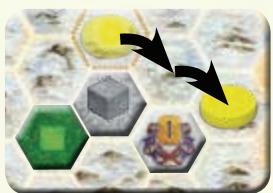
The sun may also move through the orange hex fields along the edges of the land area.

The sun has “illuminated” the adjacent land and special tiles outlined in red, along with the temple.
Note: The sun only “illuminates” the tiles and temples that are adjacent to it where it ends its movement.
Therefore, any one land tile or temple will only gain its “illumination” reward once per turn.
“Illuminated” land tiles
For each empty land tile that is "illuminated" by the sun, the player receives one raw materials cube of the corresponding color. The cube is taken from the general supply and placed on the tile.
Since the sun has “illuminated” the black “obsidian” land tile, the player takes a black raw materials cube from the general supply and places it on the land tile.

The player does not receive a raw materials cube if the “illuminated” land tile already contains one (with the exception of the “Warehouse” city building, see page 16), or if a temple has been constructed on the land tile.
“Illuminated” temples
For each temple that is “illuminated” by the sun, the player receives victory points. 1 victory point is earned for the land or special tile on which the temple is constructed, and in addition, 1 victory point is earned for each land or special tile that surrounds the temple.
lt does not matter if the “illuminated” temple is built on a land or a special tile, or whether the
The sun has “illuminated” the temple. The player receives a total of 5 victory points (1 point for the land tile on which the temple is located, and 4 additional points for the land and special tiles surrounding the temple.

surrounding land or special tiles are empty or contain any raw materials cubes; victory points are earned in any case. Therefore, an "illuminated" temple may earn between 1–6 victory points.
The player takes the appropriate amount of victory point tokens from the general supply and stores them in his bag.
“Illuminated” special tiles
No rewards (neither raw materials cubes nor victory points) are earned when the sun “illuminates” a special tile. Special tiles only earn victory points during the final scoring at the end of the game. See page 15.
The sun has “illuminated” the special tile (outlined in red), but the player earns no rewards for this.
Example;
The player's sun has a maximum movement of 6 spaces, but he decides to only move it 3 spaces to maximize his earnings.
The sun has “illuminated” the empty blue “spring” land tile. The player receives a blue raw materials cubefor this.
The sun has also “illuminated” the green “bamboo” land tile, but since that tile already contains a raw materials cube, he does not receive another one. Lastly, the sun has “illuminated” two temples. The player receives 3 victory point for temple 1, and 4 victory points for temple 2. He takes a total of 7 victory point tokensfrom the general supply and puts thém in his bag. 7 victorv noint tokens' from the general sunnlv and muts them in hi

Additional rules and special features when moving the sun
Full orbit of the sun
The player receives 5 victory points once the sun has moved one complete orbit around the land and specia tiles on the land area. This most likely will not happen in a single turn.
ln other words, if the sun has circled all of the land and special tiles on the player board once, and is moved on or through the gold-outlined fields (shown here), this is considered a “full orbit”, and the player takes 5 victory point tokėns and puts them in his bag.
In this example, the player receives 5 victory points for moving his sun through the gold-outlined fields. This is in addition to the green (bamboo) raw materials cube and the victory points earned by the sun “illuminating” the land tiles and temple adjacent to where its movement ends.
The victory points for a full orbit of the sun may only be earned once per turn. Even if the player is able to move the sun on or through the gold-outlined fields twice in a turn (a rare occurrence), he still earns only 5 victory points . The player only earns another 5 victory points the next time his sun makes a full orbit (on a future turn).
Shortcuts
Through clever placement of land and special tiles, the player can create “shortcuts” for the sun to use when performing the “moving the sun” action. By using these shortcuts, the player can move the sun more quickly to the desired hex fields.
Example: The player decides to move his sun. He may choose to either take the blue (long) route or the red (short) route. A third option, the whe route, is also possible. The player can use any of these paths to move the sun to his desired resting space. The red and whit® routes are both legal, because the sun is always adjacent to at least one side of a land or special tile.
Dead ends
lt is possible to create a “dead end” in the land area. A hex field is considered a dead end if 5 of the 6 sides of that field are adjacent to land or special tiles. Thus, the field has only one open side and if the sun were to move there, it would not be able to continue on.

Any 1-field-wide path of empty hex fields that leads to a field with only one open side, is also considered a dead end. Therefore a “dead end” can span across several fields.
The sun must never be moved into a dead end! That is, if the player has created a dead end, the sun must pass by it! lt make take more than one turn to avoid a dead end.
The sun must pass by the dead end!

Special case: A situation can occur where the player, over the course of the game, constructs land and special tiles in a way that creates a dead end around the sun. ln this case, the next time the player performs a “move the sun action, he must move the sun out of the dead end. He can split this “move the sun” action over multiple turns, if necessary. In this situation, the sun's movement may not lead back into the dead end on a later turn.
With the recently constructed special tile a dead end has been created around the sun. The player must now perform the “move the sun” action to lead the sun out of the dead end. Since the sun's path moves

through the gold-outlined fields, the player earns 5 victory points for completing a full orbit. He puts the victory point tokens into his bag.
Additional Rules for the “4 Action Turns” Phase
Must the player always perform an action on his turn?
The player may decide not to take an action on his turn (by passing) if he doesn't wish to, or if no meaningful action is possible. He may still take an action tile, however, and place it below his player board with the others.
Bonus Actions
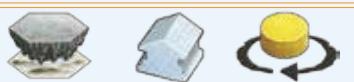
A player may earn bonus actions during the game, in two ways (see page 11). Taking a “bonus action” means that the player may choose any one of the three main actions (create one land, construct one temple or one city building, or move the sun), and perform it immediately. He may choose an action even when no face up action tiles of that type are available below the draw pile of action tiles. The player does not take an action tile when performing a bonus action.
Note: The player mušt immediately perform the bonus action. He cannot save it for a later time. He may pass on performing the bonus action, however, if he wishes to for any reason.

A player can earn bonus actions in two ways:
1, By placing four action tiles of one color below his player board,
Once a player has placed the 4th action tile of one color (gray tiles are “wild”) below his player board, he receives a bonus
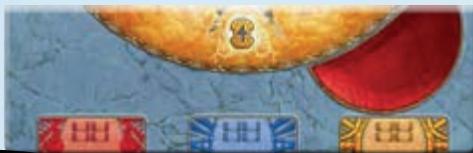

action. (Note: The symbol on the action tile does not matter here, only the color.)
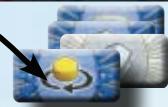
This bonus action is performed immediately after the player has performed his
regular action for the turn. After performing the bonus action, the player places the four action tiles used to
gain the bonus action in a discard pile near the action tile draw piles.
- By constructing the “Palace” city building (see page 16),
Once a player has constructed the “Palace” city building, he first increases his sun movement by 1 space and takes 1 mana stone from the general supply, as shown on the city building. Then, the function of the “Palace” allows the player to perform a bonus action immediately, one time only (as indicated by).
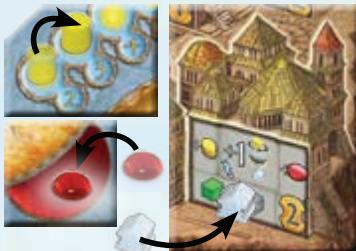
End of Phase 1: The 4 action turns
Phase 1 of the game is ended once each player has taken a total of 4 action turns. ln a 4-player game, this means that 16 action tiles will have been taken from the display of tiles below the draw piles.
The 2 remaining action tiles are then added to the discard pile. Any action tiles still below a player's board will remain there. At this point, Phase 2 of the round begins. For rules changes in a 2- or 3-player game, see page 14.
Phase 2: The character tiles
ln this phase, players can purchase and/or activate character tiles. This can only happen in Phase 2. What do the icons on the character tiles mean?
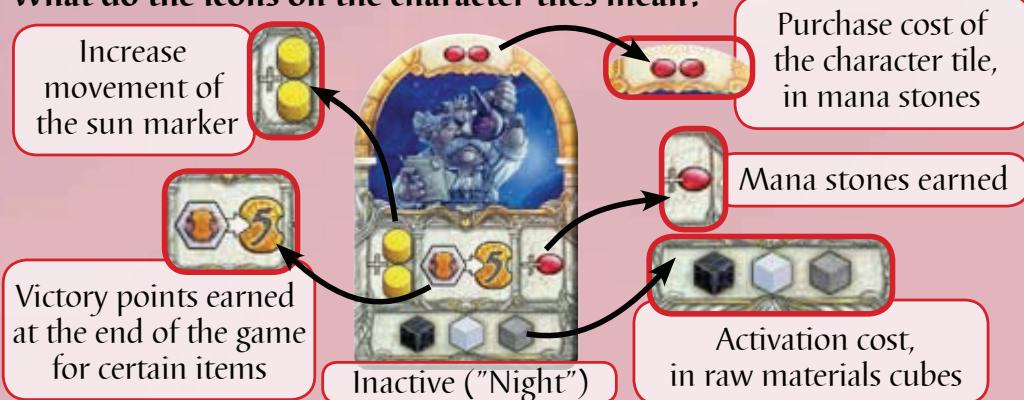

Active ("Day")
The phase begins with the player having the most mana stones (in a tie, the player who sits closer to the starting player, in clockwise order, begins) On their turn, each player may:
• Purchase and place 1 character tile; or
• Activate the benefits of any number of owned characters.
The order in which these actions are performed are chosen by the player. He may, for example, activate one character, then purchase another character tile and immediately activate that one. Play proceeds in clockwise order.
How does a player purchase a character tile?
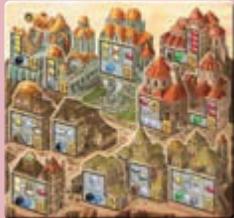
The purchase cost for each character tile is shown at the top of the tile. This varies from 2–4 mana stones. The player returns the appropriate number of mana stones to the general supply, takes the character tile, and places it (“Night” side facing up!) near his player and city boards. The player may purchase any character tiles still in the display. Note: The player only receives the characters' benefits once they have been activated!
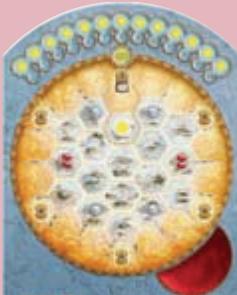

How is a character tile activated?
To activate a character, the player must have already purchased it and placed it in his play area.
The activation cost of a character tile is shown along the bottom of the “Night” side of the tile. Each of the character tiles has an activation cost of 3 raw materials cubes. The player must pay the appropriate raw materials cubes to the general supply.
ln order to activate the character tile in this example, the player must pay 1 black 1 grayY, and 1 neutral (any) raw materials cubes.

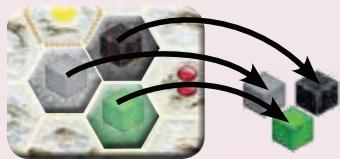
He returns 1 black, 1 gray and 1 green cube to the general supply.
Note: A white raw materials cube in the activation cost section of a character tile represents a neutral raw material, and can be paid for with any color cube. 1f a player does not own a raw materials cube in a specified color, he may pay for that cube by substituting two cubes of any other color(s).

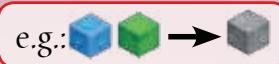
Finally, the player turns the tile from the “Night” side to the “Day” side. This indicates that the character tile is now active.
The player immediately moves the sun marker on his sun track forward by the number of spaces shown on the character tile. He also takes the number of mana stones shown on the tile once from the general supply, and
The player turns the “Inventor tile shown here onto its “Day” side, so that it is now active. He moves his sun marker two spaces forward on his sun track. He also takes 1 mana stone from
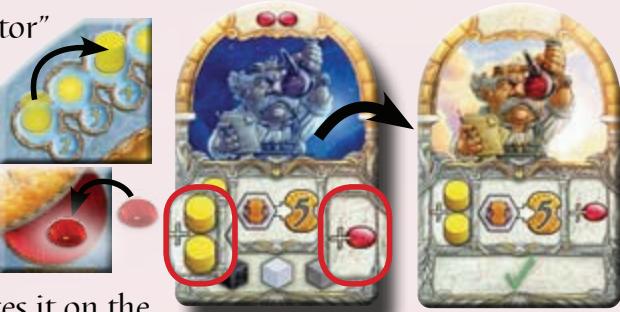
the general supply and places it on the
mana storage area on his player board. He will receive victory points at the end of the game for each special tile on his player board. See page 15.
places them on the mana storage area of of his player board. The activated characters also earn victory points for the player at the end of the game, for certain items. See page 15 for further explanation.
Note: A player may only purchase 1 character tile, but may activate multiple tiles, per turn. Only when it is the player's turn again, can he purchase another character tile and/or activate multiple tiles.
Players take turns puchasing and/or activating character tiles, until all players either cannot or do not wish to continue. In this way, it is possible for a player to purchase and/or activate more than 1 character tile in Phase 2. After all players have decided not to continue with Phase 2, Phase 3 of the round begins.
Phase 3: Replenishment and Bonus Raw Materials
After all players have finished purchasing and/or activating character tiles, the round moves to Phase 3.
How are the various game components replenished for the next round?
• Any land tiles that were not taken in the previous round are discarded from the game. One of the players now reveals 1 new land tile face up on the top of each stack, so that 6 tiles (1 for each of the 5 land types, plus 1 random tile from the additional stack) are available again for the next round. A raw materials cube of the appropriate color is placed on each face up land tile.
In each round, only 1 land tile of each of the 5 types, along with 1 random tile from the additional stack, are available.

• The special tiles remain as they are. There are only ever a total of 8 special tiles available throughout the entire game.
• New action tiles are now revealed for the next round. From each of the three draw piles, one of the players reveals 6 action tiles and places them face up in 3 columns as before. A total of 18 new action tiles are laid out. (See also the Game Setup section, on page 2.) lf there are not enough action tiles available in any of the three draw piles, the discarded action tiles of the corresponding type are shuffled to create a new draw pile. Note: Changes to this procedure for a 2-player game are shown on page 14.
6 new action tiles are revealed from the draw piles of each tile type. A total of 18 action tiles are once again available for the next round.
The starting player dragon is passed to the next player in clockwise order. The players in 3rd and 4th position (clockwise from the new starting player) now select 1 bonus raw materials cube of their choice. This raw materials cube is placed on any existing land or special tile. lt does not matter whether the selected tile already contains a raw materials cube or not. However, a land or special tile can never contain more than 2 raw materials cubes at a time. All other players do not receive this bonus.
The next round now begins at Phase 1.
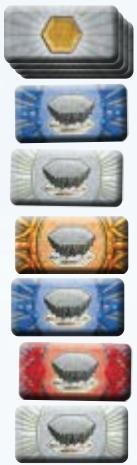
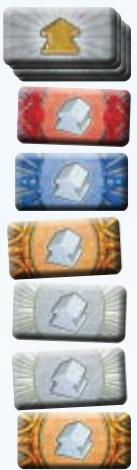

The players at the 3rd and 4th position receive one raw materials cube of their choice (blue, for example), and place it on any existing land or special tile.

Specíal Bonus Symbols on the Player Board
Bonus raw materials field

When a player places a land or special
tiles on a bonus raw materials field,
he immediately receives 1 of any raw
materials cube
from the general supply and places it
on the newly-placed land or special
tile. The bonus raw materials cube
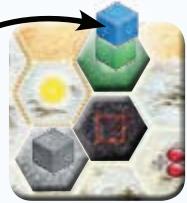
selected cannot match the color of the selected cannot match the color of the newly-placed land tile.
(Appears 4 times on the player board)
The player places a land tile on a bonus raw materials field.

Bonus mana stones field

When a player places a land or special tiles on a bonus mana stones field, he receives 2 mana stones from the general supply, and places them in the mana storage area of his player board.
(Appears 2 times on the player board)
The player places a land tile on a bonus mana stones field.

The player takes 2 mana stones and places them in his mana storage area.

Bonus edge field

(Appears 5 times on the player board)
When a player places a land or special tiles adjacent to a bonus edge field, he will receive 4 victory points at the end of the game (during the final scoring).
The player places a special tile adjacent to a bonus edge field.

points for the bonus edge field at the end of the game.

Game End and Fínal Scoríng
ln a 4-player game, 4 rounds are played. In the final round, Phase 3 (Replenishment and bonus raw materials) is replaced by the final scoring. To calculate his final score, each player counts his Victory Points (VP) as follows:
• Each bonus edge field the player achieves is worth 4 VP (exception: having the “Explorer” character tile, see page 15).
• Each special tile placed on the player board is worth various VP (see page 15).
• Each city building that has been constructed on a player's city board is worth various VP (its printed value).
• Each character tile, if it has been activated, is worth various VP (see page 15).
• Each remaining mana stone is worth 1 VP (exception: having the “Treasurer” character tile, see page 15).
• Any remaining raw materials cubes are worth no VP! (exception: having the “Treasurer” character tile, see page 15). The player takes victory point tokens in the amount of the final scoring total, and adds them to those accumulated in his bag during the game, to get his final score. The player with the most victory points wins the game (see “Tied scores” below).
Example; In the final scoring, this player's victory points (VP) are calculated as follows:
• 2 bonus edge fields achieved: (4+4=8 VP)
• 2 special tiles placed: 5 empty filds ×1 VP= (5×1 VP=5 VP)
:2 tmples×4 VP=(2×4 VP=8 VP)
• 6 city buildings earning V a sho: (3+1+2+2+2+2=12 VP)
• “Princess” character tile activated: ×2 VP= (8×2 VP=16 VP)
• 2 mana stones remaining on the player board: =(1+1=2 VP)
For his remaining raw materials cubes, the player gets no victory points.
During the game, the player has also accumulated 47 victory points in his bag:
(30+10+5+1+1=47 VP)
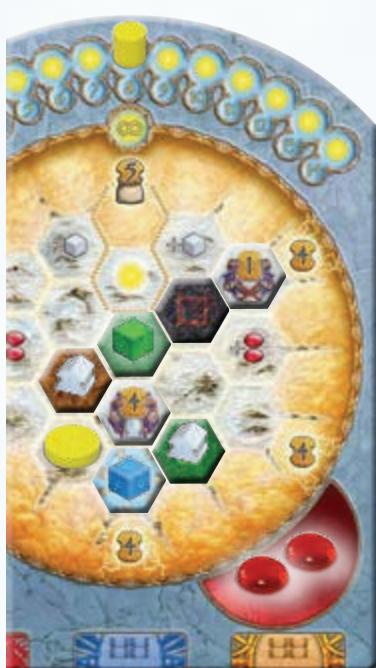
Therefore, his grand total for the game is: 8+5+8+12+16+2+47=98 VP Total
Tied scores
In case of a tie among players, the winner is the one who has more raw materials cubes. If there is still a tie, the tied players share the victory.
Rules Changes for a 2- or 3-Player Game
ln a 3-player game, 3 rounds are played. Each player is the starting player exactly once (as in a 4-player game). ln Phase 1 of each round, each player takes 6 action turns, instead of 4. Therefore, all 18 of the face up action tiles will be taken from the display at the end of the phase, and none will need to be discarded.
ln a 2-player game, 4 rounds are played, and each player is the starting player twice. ln Phase 1 of each round, both of the players take 4 action turns (as in a 4-player game). However, the following additional changes are made: ln Phase 3 of Round 1, there will still be 10 face up action tiles remaining in the display. When replenishing for Round 2, these tiles are not discarded, and no additional ones are added to the display. Instead, Round 2 will played with only those 10 tiles remaining from Round 1. In Phase 3 of Round 2, replenishing is done following the normal rules (discard the 2 remaining tiles, draw 18 new tiles). Finally, in Phase 3 of Round 3, follow the 2-player replenishing rules as in Round 1, described above.
Típs
• ls is recommended (although not necessary) that each player selects a different color for his starting land tile.
Blueand blackraw materials cubes are less common than the others. Therefore, it is often useful to choose one of these colors as a bonus raw materials cube whenever possible.
• lt is to your advantage to purchase character tiles. Reminder: They must be activated in order to earn victory points.
Reference Section
Special tiles reference (VP = Victory Points)
For each of the special tiles, the VP earned are based on the special tile itself, along with any tiles that are adjacent to it.

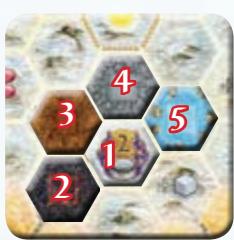
Empty Fields
In the final scoring, the player receives 1 VP for all empty fields adjacent to the special tile.
The special tile itself is not considered an empty field.


There àrè 5 empty fields adjacent to the special tile. Thus, the player receives:
5×1 VP=5 VP


Raw Materials Cubes
In the final scoring, the player receives 2 VP for each raw materials cube on the special tile itself, and all adjacent land and special tiles.

There are a total of 6 raw materials cubes on the special tile, and all of the adjacent land and special tiles. Thus, the player receives:
6×2 VP=12 VP



Temples
Created Land or Special Tiles In the final scoring, the player receives 2 VP for the special tile itself, and for all adjacent
Character tiles reference (MS = Mana Stones, VP = Victory Points)
In the final scoring, the player receives 4 VP for each temple on the special tile itself, and

3×4 VP=12 VP
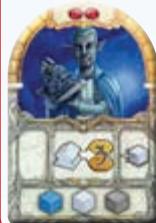
Architect (Purchase Cost; 2 MS)

There are a total of 3 temples for this scoring. Thus, the player receives:
Activation Cost: 1 blue, 1 gray and 1 of any raw materials cubes.
all adjacent land and special tiles.

Activation Benefit: 1 bonus raw materials cube, placed on a land or special tile.
VP at Game End: 3 VP for each constructed temple and city building.
There are a total of 5 land and special tiles for this scoring (the special tile itself, and the 4 that are adjacent to it). Thus, the player receives:
5×2 VP=10 VP
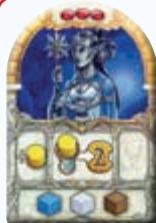
Inventor (Purchase Cost; 2 MS)
land and special tiles.
Activation Cost: 1 black, 1 gray and 1 of any raw materials cubes.
VP are earned if player has also constructed the Power Plant.
Activation Benefit: +2 on the sun track, +1 MS.
VP at Game End: 5 VP for each created special tile.
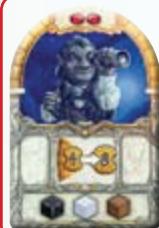
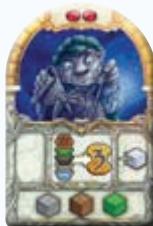
Princess (Purchase Cost; 3 MS)
Activation Benefit: +1 on the sun track.
VP at Game End: 8 VP for each bonus edge field achieved, instead of 4 VP (see page 13).
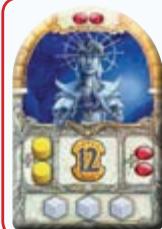
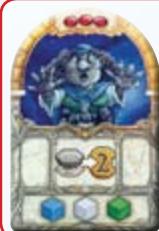
Explorer (Purchase Cost; 2 MS) Activation Cost: 1 black, 1 brown and 1 of any raw materials cubes. Activation Benefit: None.

Prophetess (Purchase Cost; 3 MS)
Activation Cost: 1 blue, 1 green and 1 of any raw materials cubes. Activation Benefit: None.
VP at Game End: 2 VP for each created land and special tile.
Cartographer (Purchase Cost; 2 MS) Activation Cost: 1 gray, 1 brown and 1 green raw materials cubes.
Activation Benefit: 1 bonus raw materials cube, placed on a land or special tile. VP at Game End: 3 VP for each created
land tile of a different color (up to a maximum of 15 VP).
Priestess (Purchase Cost; 2 MS)
Activation Cost: 3 of any raw materials cubes.
Activation Benefit: +2 on the sun track, +2 MS.
VP at Game End: 12 VP.
Treasurer (Purchase Cost; 4 MS)
Activation Cost: 1 black, 1 green and 1 of any raw materials cubes. Activation Benefit: None.
VP at Game End: 2 VP per remaining raw materials cube, and 3 VP (instead of 1 VP) for each remaining mana stone.
City buildings reference (MS = Mana Stones, VP = Victory Points)
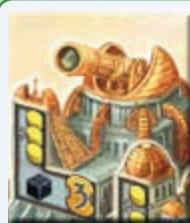
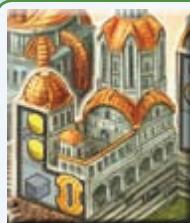
Observatory
Cost: 1 black raw materials cube Benefit: +3 on the sun track Function: None VP at Game End: 3 VP
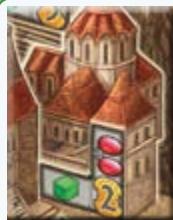
Solar Lodge
Cost: 1 gray raw materials cube Benefit: +2 on the sun track Function: None VP at Game End: 1 VP

Power Plant
Cost: 1 blue raw materials cube Benefit: +1 MS
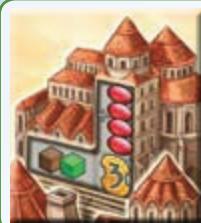
Function: The player places his sun marker on thefield. From now on, when taking the “move the sun” action, he can move his sun disc any number of
spaces, anywhere on the land area. However, he now no longer receives the “full orbit” VP bonus. VP at Game End: 2 VP

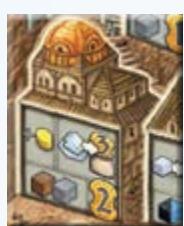
City Council
Cost: 1 brown and 1 gray raw materials cube
Benefit: +1 on the sun track Function: Gain an additional 3 VP for each temple when it is “illuminated”. VP at Game End: 2 VP
Citadel

Cost: Either 1 black or 1 blue raw materials cube
Benefit: None
Function: The cost for constructing any number of temples is now only 1 of any raw materials cube. The number of
mana stones earned for each temple remains unchanged. VP at Game End: 2 VP
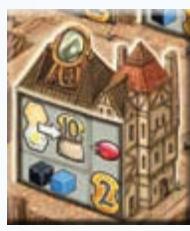
Watch Tower
Cost: 1 black and 1 blue raw materials cube
Benefit: +1 MS
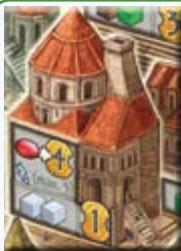
Function: 10 VP instead of 5 VP for a “full orbit” of the sun. See page 9. VP at Game End: 2 VP
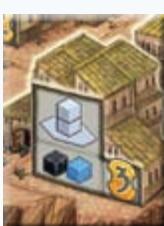
Rules editing: Hanna & Alex Weiss
© 2014 Hans im Glück Verlags-GmbH
Suggestions, questions, or comments?
Please write to us at our E-mail address:
info@hans-im-glueck.de or
Hans im Glück Verlag
Birnauer Str. 15, 80809 München
www.hans-im-glueck.de
www.cundco.de

Sanctuary
Sacred Grove
Cost: 1 brown and 1 green raw
materials cube
Benefit: +4 MS
Function: None
VP at Game End: 3 VP
Cost: 1 green raw materials cube
Benefit: +2 MS
Function: None
VP at Game End: 2 VP
Exchange Bazaar
Cost: 2 of any raw materials cubes Benefit: None
Function:
Up to 3 mana stones may be exchanged for 4 VP each. (Maximum 12 VP) VP at Game End: 1 VP
Warehouse
Cost: 1 black and 1 blue raw materials cube
Benefit: None
Function: When a player's land tile is “illuminated”, if it already contains a raw materials cube, a second one may be
placed on it as well. No more than two cubes may ever lie on a land tile.
VP at Game End: 3 VP
Land Management

Cost: 1 brown and 1 of any raw materials cube
Benefit: None
Function:lmmediately and once: The player draws 2 land tiles from the bottom of the additional stack, along with raw materials cubes of the appropriate
colors, and places them both on his player board. VP at Game End: 2 VP
Palace
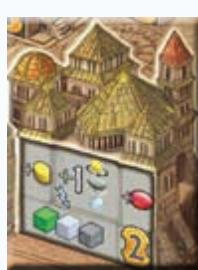
Cost: 1 green, 1 gray, and 1 of any raw materials cube
Benefit: +1 on the sun track and +1 MS Function:Immediately and once: 1 bonus action. See pages 10 and 11. VP at Game End: 2 VP
The publisher and authors wish to thank the many test players from St. Wendel, Saarbrücken and Lieberhausen. In particular,
Pascal Kloos, Jochen Scherer, Martin Braun, Maxi Brown, lnka & Markus Brand, Jörn Koch and all the members of the
Legendary Gamer's Club. Special thanks to Ramona and Anne for
their relentless, honest feedback and their mental advice through the years. And as always, we especially thank Dieter Hornung.
Texts are community-compiled or publicly released by publishers; copyright remains with the original authors. For personal reference only.