
La Granja
At a glance
Rules, cards and Q&A (Chinese)
The rules, card data and player questions for this game are written in Chinese. Open the Chinese page to read them.
Where to find full rules
Full rules and card lookup are available in the cunlema app at cunlema.cn — pick this game and ask about any rule, card or turn you are unsure about.
Related games
Rulebook text (Markdown)
This game has 3 rulebook Markdown file(s) in our library; 3 rendered inline below — expand to read or download.
rules_zh_拉格兰哈庄园_1037.md91.5 KB
目錄
1 - 0 遊戲介紹
2 - 0 遊戲配件及重要用語
3 - 0 遊戲目標
4 - 0 遊戲設置
5 - 0 遊戲流程
6 - 0 農場階段
7 - 0 收入階段
8 - 0 運輸階段
9 - 0 計分階段
10 - 0 遊戲結束
11 - 0 單人遊戲
1 - 0 遊戲介紹
在拉格蘭哈莊園中,1-4位玩家管理馬約卡島上靠近埃斯波爾萊斯,阿爾皮奇湖旁的小農場。
遊戲過程中,玩家嘗試擴展他們的農場,並成為強大的鄉村莊園拉格蘭哈。玩家也尋求運送貨物到村莊。在這裡,速度就是一切。
拉格蘭哈莊園是一款迷人的遊戲,需要仔細的規劃。成功的玩家也必須學習應對無法預知的骰子及卡片。
2-0 遊戲配件及重要用語
每套拉格蘭哈莊園包含:
1個遊戲圖板
4個玩家圖板
66張農場卡
9顆收入骰
100個玩家標記(木製八角柱;4種玩家顏色各25個)
4個木製圓盤
(4種玩家顏色各1個)
16個驢子標記(每個玩家4個)
38個銀色「錢幣」(數值1及3)
66個分數標記(數值1、3、5、10)
4個遊戲順位標記(編號1到4)
24個屋頂標記
24個行會標記
3個建造順位標記(編號1到3)
4個玩家幫助卡
2 本規則書(英文及德文)
2 份詞彙表(英文及德文)
2 - 1 遊戲圖板
拉格蘭哈的遊戲圖板中央描繪了埃斯波爾萊斯村莊的市場,它是由六角形的市場區域所組成的。每個區域都有一個介於2到6的數字(數值)。標有「X」的市場區域在2人或3人遊戲時不能進入,見4-0的說明。
六個行會建築位在市場邊緣,每個行會建築配有四種不同的符號列(每個玩家一列)。一列中以符號顯示的農場貨物或者交易的貨物,是玩家要運送到行會建築的貨物。符號列旁也有相應的行會標記放置區域。
遊戲圖板左側稱作收入區域(有骰點1到6)。
圖板右下方則有放置屋頂標記的區域(遊戲輪次2到6),這個區域上面一點有當輪開放的屋頂標記放置區。

遊戲圖板的右側是午休軌的位置。這裡顯示玩家在一輪裡如何「休息」。
2 - 2 農場卡
拉格蘭哈莊園的遊戲裡有66張農場卡,遊戲過程中,玩家們把卡片拿到手中,並在打出後塞到他們農場四邊的其中一邊下方。
在打出一張卡片後,只有卡片特定的一邊會「啟動」並影響遊戲,接下來遊戲過程中,卡片另外三個邊的資訊是不相干的。
打在農場左邊的卡片是田地,會有一種可以採收
的特定貨物在田地裡生長一可能是橄欖、穀物,或者葡萄。
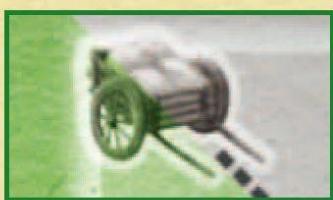
打在農場上方三個缺口其中之一的卡片是推車。
打在農場右邊的卡片是農場擴展。
打在農場下方三個缺口其中之一的卡片是有特殊能力的助手。

2 - 3 收入骰
遊戲中總共有九個骰子,根據玩家人數使用特定數量的骰子,並把這些骰子配置到遊戲圖板上的收入區域。
2 - 4 玩家圖板
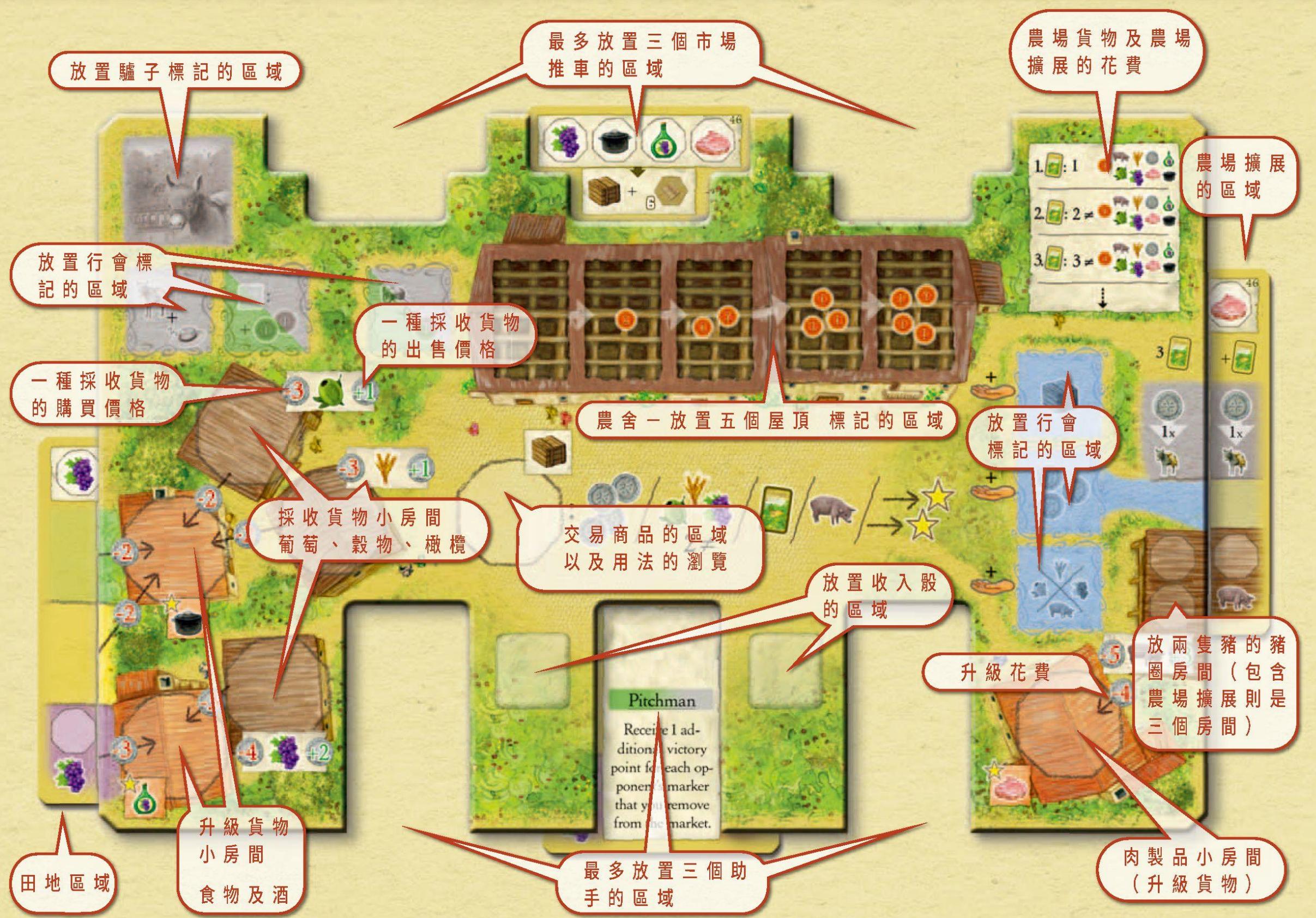
每個玩家有一個代表他們農場的圖板。在他的農場中,總共有六個可以放置行會標記的區域、許多小房間(用來採收貨物及升級貨物),以及升級的花費、購買及出售資源的價格、交易商品的中央區域、有兩個區域的豬圈、一個農場貨物及農場擴展的花費表(隨著卡片張數遞增)、五個可以放置屋頂標記的區域、一個放置驢子標記的區域,以及兩個挑選的收入殷放置區。
注意:交易商品、採收貨物的小房間,以及升級貨物,理論上是可以放置任意數量的玩家標記,而豬圈只能容納最多兩隻豬(因此只有兩個八角區域)。
農場卡可以放在農場四個邊的其中一邊;根據卡片的所在位置,分別代表不同的事物。在農場上方及下方的三個缺口,每個「缺口」只能放置一張卡片。農場左邊及右邊可以「疊放」卡片,可以放置的卡片數量沒有限制。
2 - 5 遊戲標記
2 - 5 - 1 銀色「錢幣」
銀幣是拉格蘭哈莊園的貨幣。遊戲中有數值為1及3的「錢幣」。遊戲過程中,玩家可以用一個數值為3的錢幣和銀行換三個數值為1的錢幣(或反過來換)。如果規則書中提到「1個銀幣」,這是指數值為1的銀色錢幣。

2 - 5 - 2 分數標記
當玩家獲得分數時,立刻從一般供應區拿取分數標記。分數標記的數值有1、3、5,以及10。
玩家隨時可以「交換」他們的分數標記(例如,拿一個數值3的分數標記換三個數值1的分數標記)。玩家擁有的分數數量的是秘密資訊。如果規則書提到「1分」,指的是數值為1的分數標記。

2 - 5 - 3 行會標記
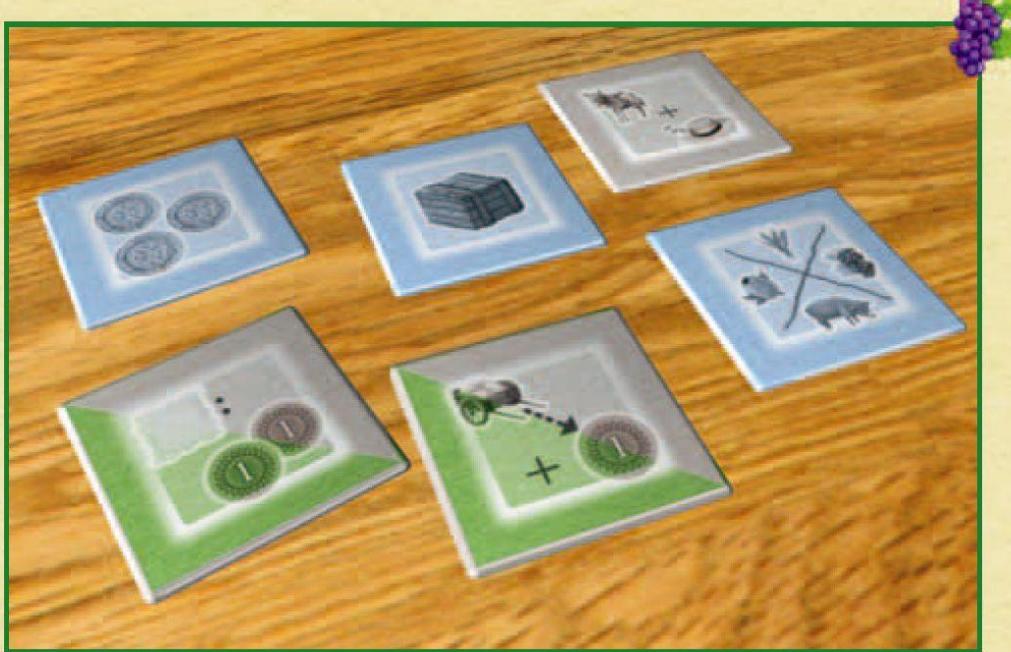
每個村莊裡的行會建築,有它特定的行會標記。每個玩家可以在每個行會建築中獲得一個標記。行會標記的正面顯示他的「立即功能」,見8-3-1。
2 - 5 - 4 屋頂標記
每輪每個玩家可以購買一個屋頂標記。一個屋頂標記總是帶來好處。此外,從第二個購買的屋頂標記開始,玩家可以獲得分數。

2 - 5 - 5 驢子標記
每個玩家有一組四個相同的驢子標記。每一輪中,每個玩家選擇一個驢子標記。這些標記顯示可以運送的數量(以驢子符號顯示),而有時則是顯示玩家可以在遊戲圖板的午休軌推進的格數(以帽子符號顯示)
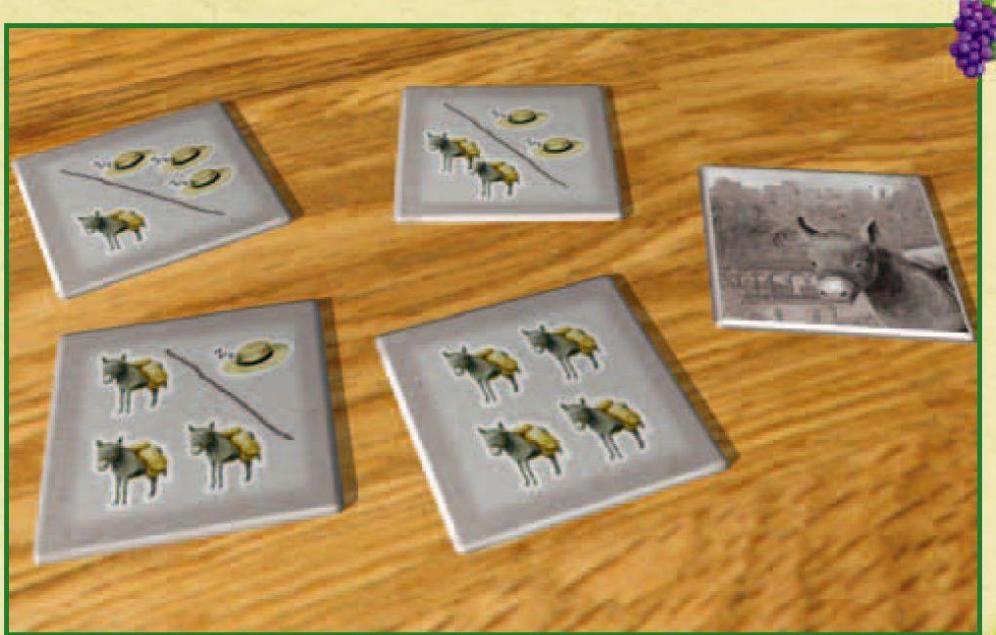
2 - 5 - 6 建造順位標記
拉格蘭哈莊園有三個建造順位標記,遊戲開始時,它們會放在村莊裡六個行會建築的其中三個,一開始這三個行會「禁止進入」。

2 - 5 - 7 遊戲順位標記
這些標記記錄玩家的順位。

2 - 6 玩家幫助卡
玩家幫助卡以簡潔的方式摘要一輪的流程。此外它也列出你可以獲得分數的來源。
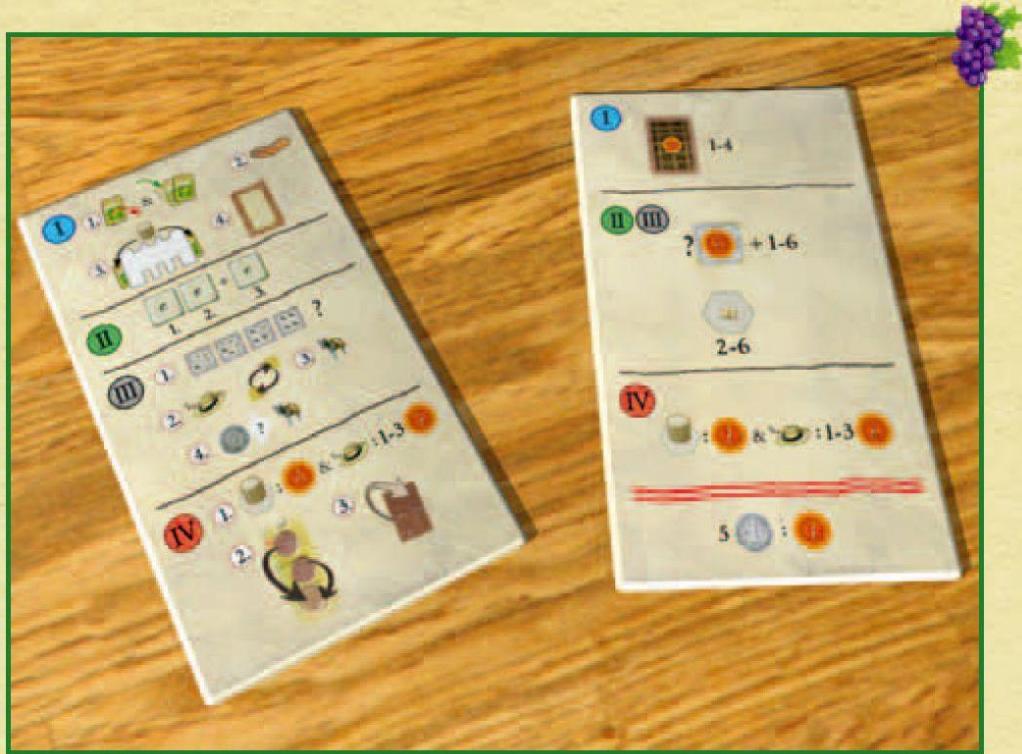
每個玩家獲得自己顏色的25個玩家標記。根據它們放在農場及遊戲圖板上的位置,一個玩家標記可以代表該玩家擁有或使用過的不同事物。
2-7 木製配件
2 - 7 - 1 玩家標記 / 八角柱
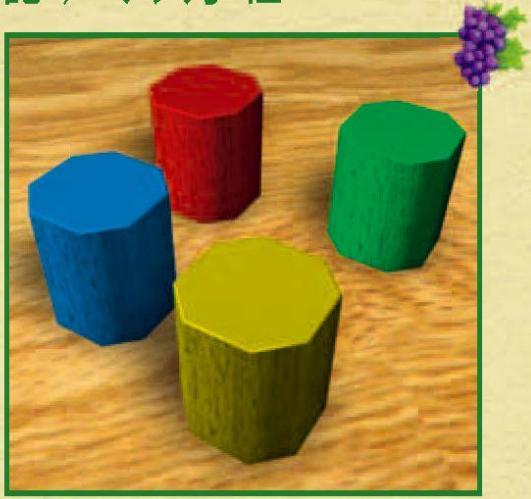
案例:如果一個玩家標記放在交易商品區,它就是交易的商品;如果它放在橄欖田中,它就是橄欖。如果它放在一個村莊的市場中,它就是市場攤位,依此類推。
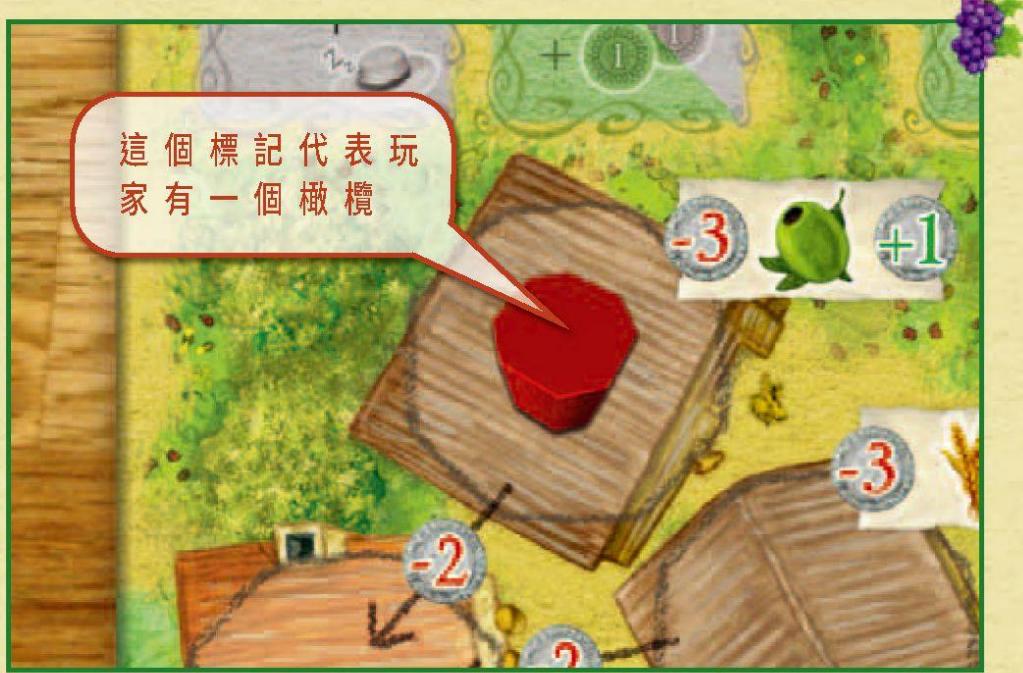
一個玩家最多有 25 個標記!
如果一個玩家的所有 25 個標記都在使用中(這是非常罕見的狀況),他可以從他的農場,或者從遊戲圖板上移除一個自己的玩家標記,然後重新使用它。
2 - 7 - 2 圓盤
圓盤先放在遊戲圖板上午休軌「0」的格子上。遊戲的一輪中,圓盤會從這個起點往前移動。
2 - 8 用語說明
以下用語在拉格蘭哈莊圖遊戲中有特別的意思:
採收貨物:有三種採收的貨物一橄欖、穀物,以及葡萄。玩家把它們種在田地裡,然後可以把它們放在小房間,也可以讓它們升級。所有不是在玩家的田地裡生長的採收貨物,在獲得的時候必須要放在它們的小房間裡。
資源:橄欖、穀物、葡萄,以及豬(傳統上的黑豬)是遊戲中的資源。它們可以被購買、出售,或者升級。
升級(升級貨物):葡萄升級成酒、豬升級成臘肉,橄欖及穀物升級成食物。進行一次升級需要花費銀幣。
收入:玩家透過骰子獲得收入。收入可能是一個或多個資源、銀幣、一次運送,一次或兩次免費的升級、在午休軌移動一格或兩格,以及抽一張卡片或打出一張卡片。
顏色標籤:一輪的四個階段以及每個階段本身的步驟會用一個顏色標示。
① 農場階段—藍色
II 收入階段—綠色
③ 運輸階段—灰色
IV 計分階段—紅色
交易商品:交易商品可換取資源及行動的好處。

農場:玩家的玩家圖板(以及附加上去的卡片),代表他們的農場。
農場貨物:一個總稱用語,包含以下項目:
銀幣
分數
採收貨物(橄欖、穀物、葡萄)
升級貨物(食物、酒、臘肉)
豬
玩家農場的右上角有農場擴展的花費及開放的農場貨物。
運送:一個驢子符號代表一次運送。一次運送代表送到村莊裡的一個行會建築,或者送到一個玩家農場裡的其中一個市場推車上。
3 - 0 遊戲目標
在六輪的遊戲中,玩家嘗試擴展他們的農場,並運送貨物到埃斯波爾萊斯的村莊。這會讓玩家獲得分數。
玩家有兩種選項可以獲得分數:
1、玩家完整供應一個行會建築的時候,他獲得分數以及有一個特殊效果的行會標記。
2、當玩家把農場卡放在他農場上方當作市場推車時,他用貨物完整的填滿市場推車,並把推車送到市場中。
他獲得分數及一個交易商品當做獎勵。
觀察其他玩家的行動非常重要,迅速採取行動並適應變化莫測的骰子及卡片。
遊戲結束時,最高分的玩家獲勝,並成為拉格蘭哈莊圈的新地主。
4 - 0 遊戲設置
遊戲圖板放到桌子中央。
每個玩家獲得一個農場、25個所屬顏色的玩家標記、一組驢子標記(四個標記;上面顯示一隻、兩隻、三隻,以及四隻驢子符號)、1分,以及1個銀幣。
分數標記及銀幣放在他們的農場旁邊;此外,
玩家把他們的一個玩家標記放在農場中的交易商品區。剩餘的玩家配件放一旁形成個人供應區。.
由一個玩家洗混66張農場卡,並秘密地發給每個玩家四張農場卡。剩餘的卡片背面朝上,放在桌面上形成牌庫。
注意:假設牌庫耗盡了,把所有棄掉的卡片洗混,並形成新的牌庫。
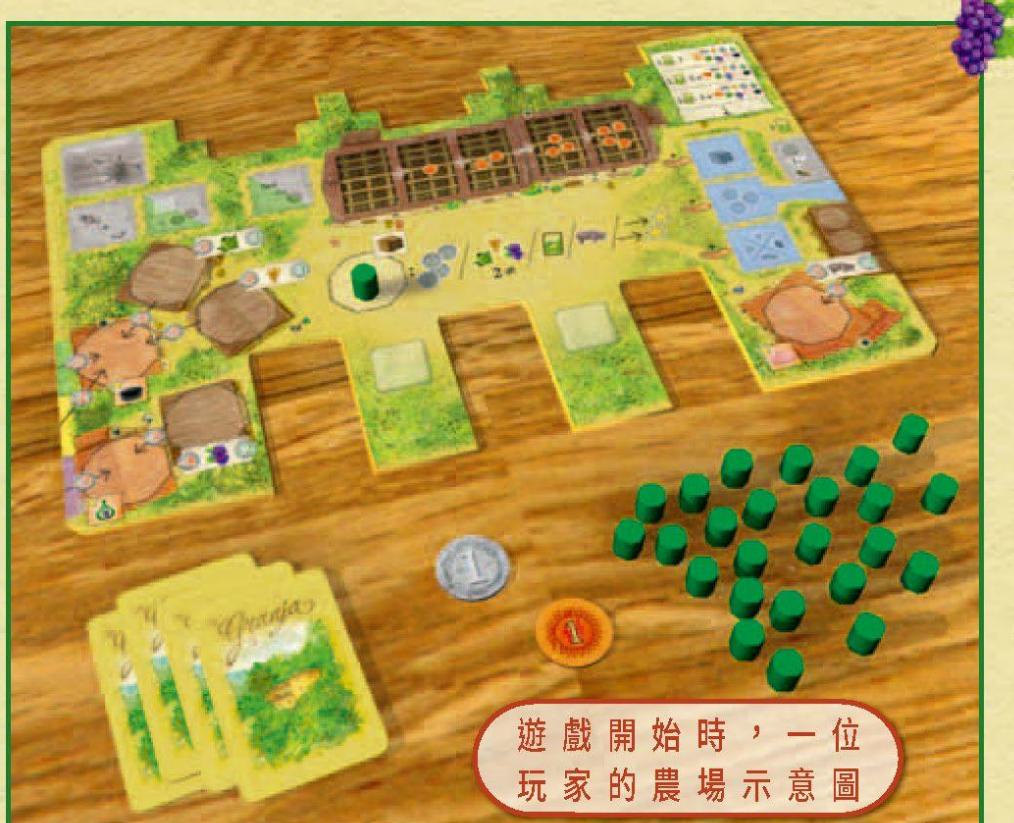
遊戲開始時,一位玩家的農場示意圖
由一位玩家分類所有的屋頂標記,並根據它們的遊戲輪數放置到遊戲圖板上對應的區域。在第1輪的屋頂標記正面朝上放置後,把編號2到6的屋頂標記背面朝上堆疊起來,放在第1輪的屋頂標記上方區域。
注意:如果進行 4 人以下的遊戲,每輪只會用到和玩家人數相等數量的屋頂標記,其餘的放回遊戲盒中,不要察看標記的正面資訊。
把和玩家人數相等的行會標記放在各自的行會建築中,並在每個建築旁邊的淺灰區域放上1分(可以放置4個玩家標記的區域)。
現在其中一個玩家擲一顆殼。擲出來的點數決定哪個建築會放置建造順位標記1。之後再擲殼子兩次。擲出的點數決定哪些建築會放置建造順位標記2及3。
如果一直擲到同一棟建築,則持續重殽直到三個標記都放完為止。建議把標記放在符號列的中間。此外,這三個建造順位標記旁各放上1分。

決定建造順位標記
要放在哪裡
現在隨機決定起始玩家。他獲得遊戲順位標記1。按照順時針方向,其他的玩家依序獲得剩餘的遊戲順位標記。如果進行4人以下的遊戲,沒有用到的遊戲順位標記放回遊戲盒中。
2人遊戲-5顆骰子 3人遊戲-7顆骰子 4人遊戲-9顆骰子
根據遊戲回合順位,每個玩家放置他的一個玩家標記到遊戲圖板上的中央市場區域(標有數字2、3、4、5)。起始玩家放置他的標記到數字最小的市場區域、其他玩家按順位依序放置到數字次大的市場區域。3人遊戲時,會用到區域2、3、4;2人遊戲時,會用到區域2、3。
按照反向的回合順位,每個玩家把他的圓盤放在午休軌最底部的位置。圓盤彼此堆疊,起始玩家的圓盤疊在最上面。
分數及銀幣放在一旁,形成一般供應區。
注意:2人及3人遊戲時,大部分的外圍市場區域不能進入。這些區域的中央會標有一個「X」的符號。


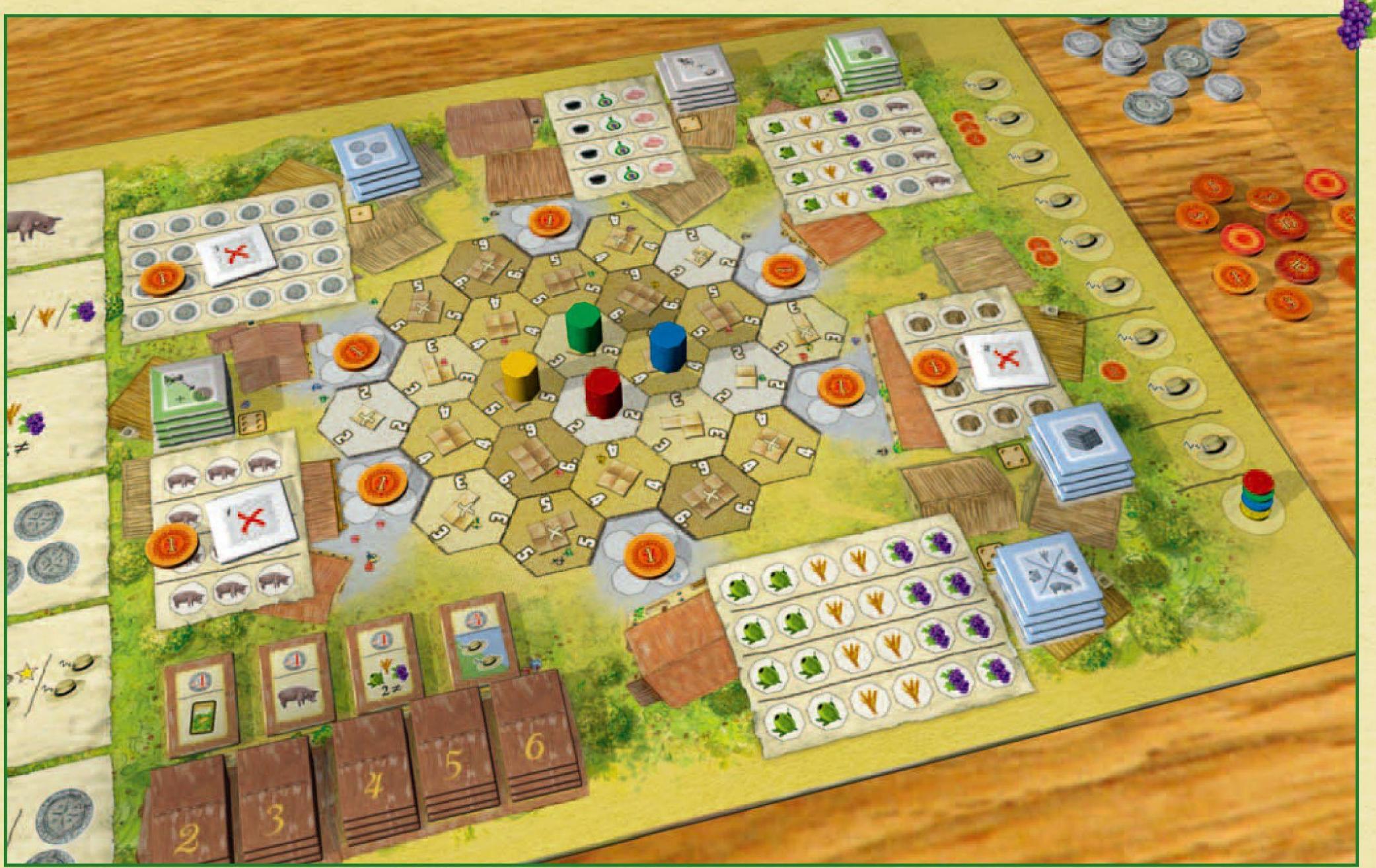
尤其重要,某些行動可以在遊戲一輪中不同階段的任何時候執行。這些行動包含使用自己的交易商品,購買和出售資源,以及升級資源。
5-0 遊戲流程
拉格蘭哈莊園總共進行六輪,一輪包含以下四個階段:
① 農場階段—藍色(見6-0)
② 收入階段—綠色(見7-0)
Ⅲ 運輸階段—灰色(見8-0)
IV 計分階段—紅色(見9-0)
注意:拉格蘭哈莊園沒有輪數紀錄標記。根據屋頂標記的背面以及遊戲圖板上空的屋頂標記區域,玩家可以輕易分辨當前的遊戲輪數。
5 - 1 「隨時」行動
拉格蘭哈莊園是一款非常有彈性的遊戲 — 輪到玩家回合的大部分時間裏(也只有這時候!),可以按照他選擇的順序做多種不同的事。這對某些行動來說遊戲過程中,玩家會時常獲得交易商品(大部分是來自完成對市場推車-農場卡的供給)。每個交易商品是由放在農場中央區域的玩家標記作代表。
5 - 1 - 1 使用交易商品
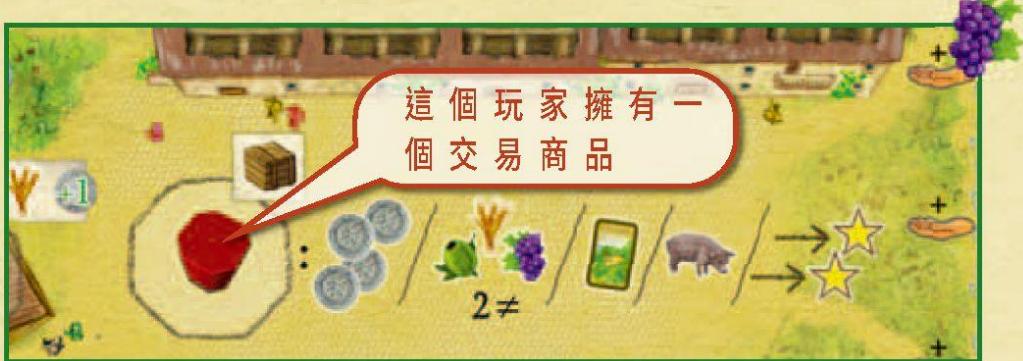
玩家可以把一個交易商品放一般供應區,以執行以下行動:
拿取 4 個銀幣
玩家從一般供應區拿取4個銀幣
拿取不同的採收貨物
玩家拿取兩種不同的採收貨物,並把他兩個玩家標記放在他農場中對應的小房間。

抽一張卡或打出一張卡
玩家從他手中選一張牌,塞到他的農場下方(要把農場擴展的花費列入考量,見6-0說明),或者他從牌庫抽一張牌到手中。
拿取一隻豬
玩家拿取一隻豬,並把他其中一個玩家標記放到豬圈區域。
免費升級兩個資源
玩家可以升級他任意兩個資源,並把它們從玩家的小房間或田地放到升級貨物各自的小房間裡。為了這麼做,他從一個小房間或田地把一個標記按照箭頭方向移到對應的升級貨物小房間。不用付箭頭上顯示的花費。
此外,玩家可以在運輸階段時,把交易商品運送到村莊裏的其中一個行會建築,見8-3-1的說明。
5 - 1 - 2 資源的購買與出售
當玩家購買資源時,他每買一個資源就把一個玩家標記放在各自的小房間或豬圈裡。
購買橄欖或穀物花費3個銀幣。出售這兩種資源各可以讓玩家獲得1個銀幣

當他出售資源時,他各自從他的小房間或豬圈移除玩家標記。採收貨物不能從田地出售!
玩家可以升級採收貨物以及豬,然後它們就會變成升級的貨物。為了這麼做,把玩家標記從它的資源區域移到升級的區域,當作升級的貨物。
例外:卡片35:農場工人
注意:升級的貨物不能直接購買或出售。玩家可以間接購買升級的貨物方式為先以買價購買資源,然後之後再升級這個資源。
5 - 1 - 3 升級資源
升級的花費列在農場上,小房間、採收貨物的田地、以及豬圈和升級貨物的小房間之間。
每個葡萄從田地或小房間升級成酒需要花費3個銀幣。
對應的玩家
標記移動到
酒的小房間

5 - 1 - 4 田地上的採收貨物
採收貨物絕不會在一個田地及一個小房間之間移動,它們會留在田地裡,直到以下其中一種狀況發生:
★ 升級(見 5 - 3 - 1 說明)
用來支付農場擴展的花費(見6-0的說明)
運送(見8-3的說明)
6 - 0 農場階段
農場階段包含四個步驟。等所有玩家都完整進行一個步驟後,下一個步驟才開始。在經過幾輪之後,前三個步驟也許可以同時執行。否則,農場階段會按照遊戲的回合順位進行。
1、打出一張農場卡並抽新的卡片
每個玩家可以打出一張卡片並在這個步驟結束後抽一張或一張以上的新卡片。
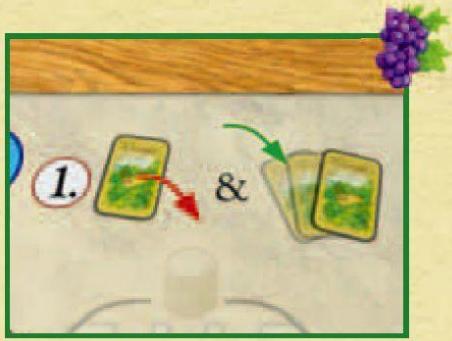
例外:第一輪的時候所有玩家打出兩張卡片!
2、拿取收入
根據玩家從農場卡片上選擇想要使用的功能,他把卡片放到農場四邊的其中一邊:
放在農場左邊的卡片是一塊田地,會有一個採收貨物在這塊田地生長,可能會是橄欖、穀物,或是葡萄(見農場階段的步驟3)。當玩家把卡片塞到他的農場底下時,只有卡片左邊的資訊會露出。玩家可以擁有任意數量的田地。一塊新的田地在進場時都是「空的」(也就是沒有任何的採收貨物在上面)!
一張放到市場上方三個缺口其中之一的卡片是市場推車。只有卡片上方的的資訊會露出!特定的貨物會以對應的符號呈現,玩家必須把它們運送到推車上。只有當市場推車已經完整補給後,它才會送到村莊的市場,並讓玩家獲得一個交易商品以及貨物符號下方第2列顯示的分數(見8-0的說明)。
放在農場右邊的卡片是農場擴展,當玩家把卡片塞到他的農場底下時,只有卡片右邊的資訊會露出。一個農場擴展會提供多種好處。
一張放到農場下方三個缺口其中之一的卡片是有特殊能力的特殊助手。只有卡片下方的資訊會露出!助手及它們的功能細節會在詞彙表中列出。
把一張卡片放置並當作一個市場推車、助手或者田地都是免費的。如果玩家的農場已經有三個市場推車(或三個助手),並想要取代其中一個,他首先必須棄掉一個舊的卡片,以騰出空間給新的市場推車(或助手)放置。玩家可以擁有任意數量的田地。
把一張卡片放置並當作一個農場擴展會有一筆花費。
農場擴展的花費透過農場貨物來給付。
每張打出的農場擴展卡花費,會比前一張農場擴展卡還多。第一張需要花費一個農場貨物,第二張需要花費兩個農場貨物,第三張需要三個農場貨物,依此類推。
註記:從第二張農場擴展卡開始,必須用不同的農場貨物支付。理論上來說,只要玩家能夠付的出花費,他們可以放置任意數量的農場擴展。
在玩家的農場右上角可以看到花費的農場貨物摘要。

這個步驟結束後,每個玩家抽取多張卡片,直到到達他們的手牌上限。遊戲一開始,每個玩家的手牌上限是三張卡片,這顯示在玩家的農場上。
玩家的每個農場擴展加上一些助手會增加手牌上限。
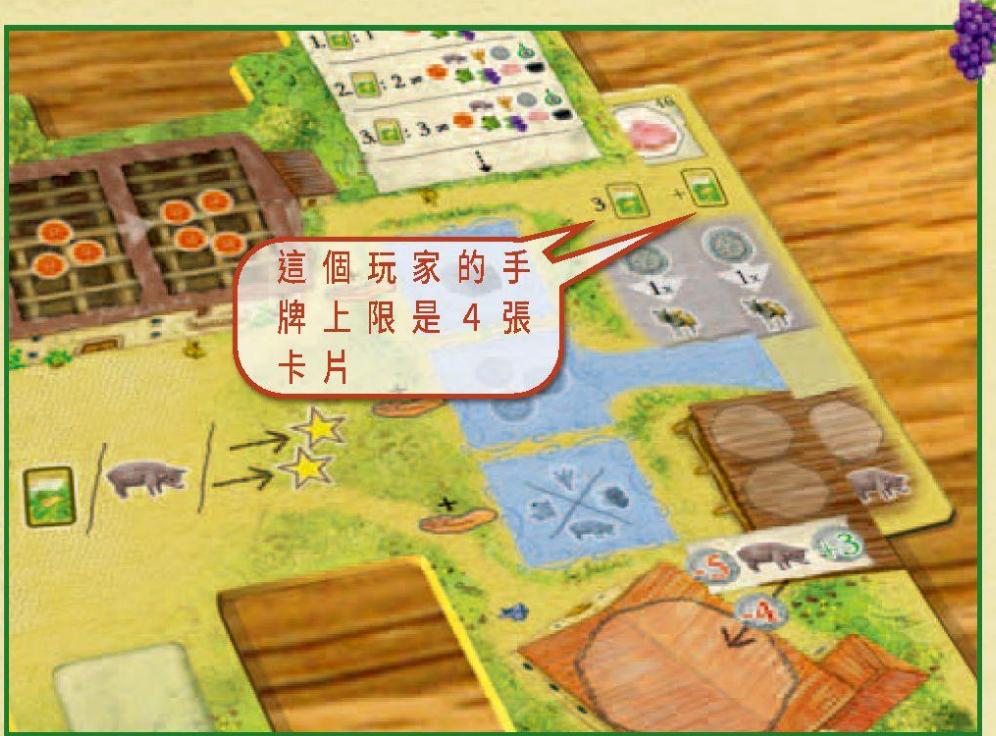
注意:手牌上限只會在這個時候影響;一輪中,玩家可以擁有多於手牌上限數量的卡片。有時候玩家會在這個步驟時棄掉多出來的卡片。
每個玩家從一般供應區拿取收入。
遊戲一開始,不會有玩家有任何的正常收入。
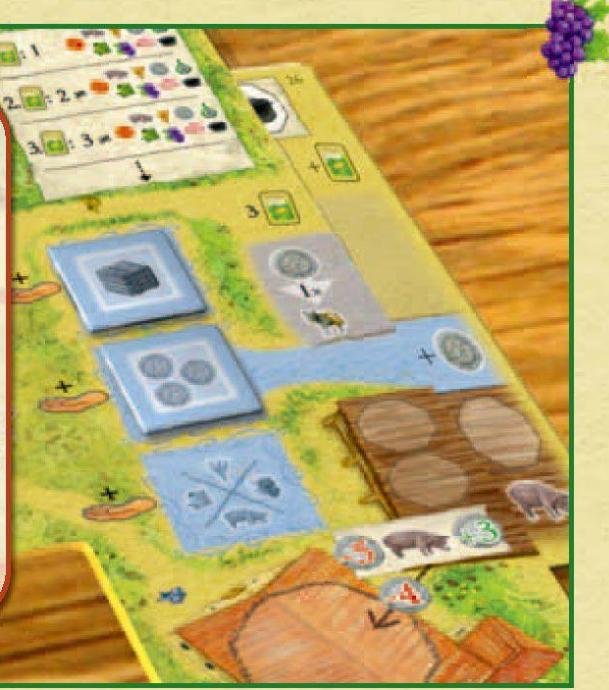
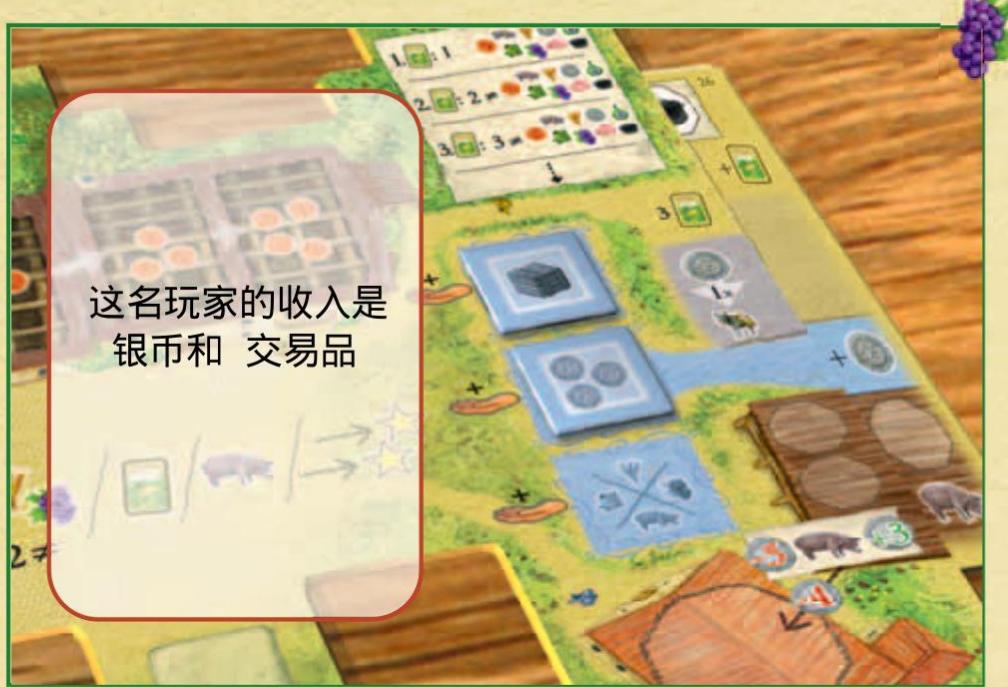
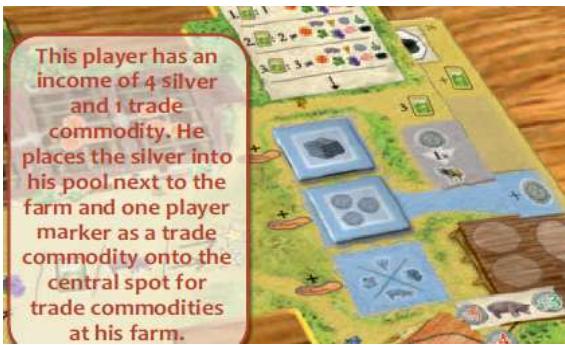
在農場裡的藍色行會標記(其中三個,見8-3-1的說明)以及有藍色部分的農場擴展會為玩家帶來收入。收入很可能是銀幣、採收貨物、豬,或是交易商品。
這個玩家的收入是4個銀幣以及1個交易商品。他把銀幣放到他農場旁的個人供應區,並把一個玩家標記放到他農場中央的交易商品區,當作是一個交易商品
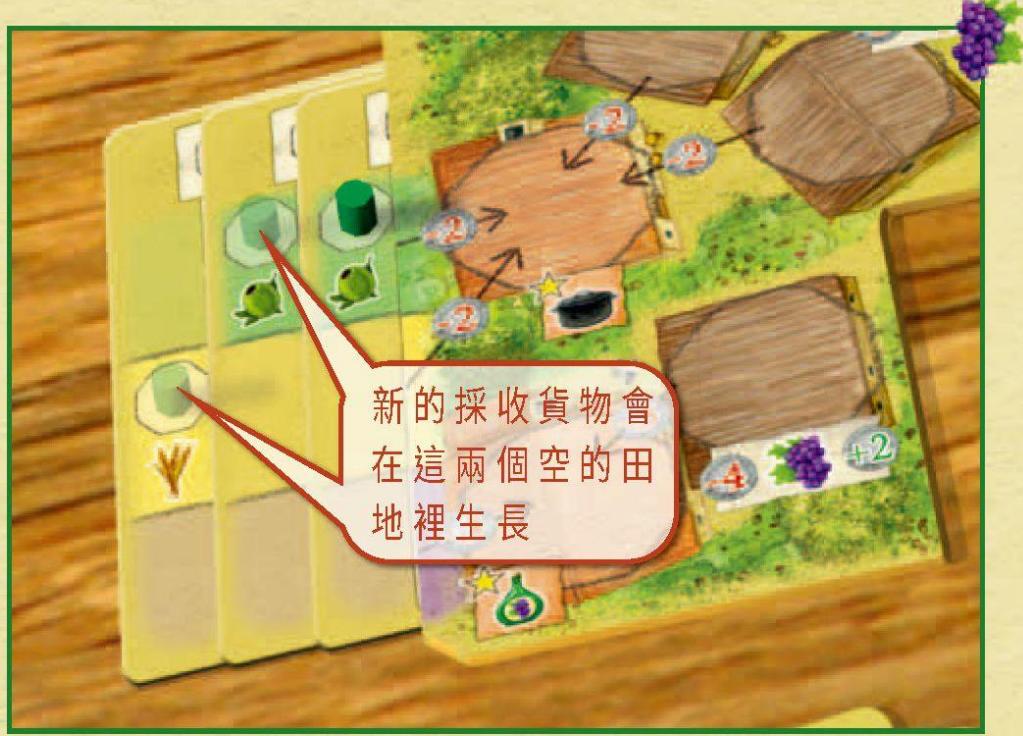
3、田地裡的作物以及小豬每個玩家獲得田地裡新的採收貨物以及他的豬新生的小豬。
玩家每個空的田地裡會放置一個採收貨物。他把自己的其中一個玩家標記放到田地裡。
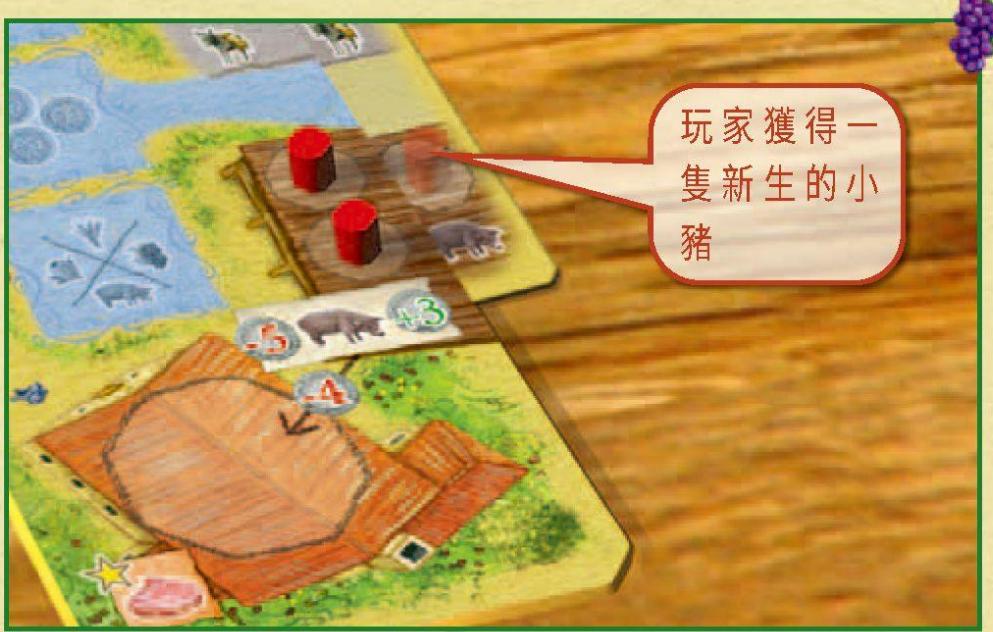
如果玩家至少有兩隻豬,則他可以獲得一隻新生的小豬。
註記:為了獲得這隻額外的豬,玩家的小房間裡必須要有足夠的空間。如果玩家空間不足,他不會獲得這隻小豬(玩家不能立刻出售新生的小豬!)。農場有兩個放置豬的空間,而合適的農場擴展則每張都有一個放置豬的空間。即使玩家有很多豬,但是玩家一樣只會獲得一隻新生的小豬。
4、購買屋頂標記
每個玩家現在可以購買當輪的其中一個屋頂標記(正面朝上的)。購買的順序總是遵照玩家的回合順位。注意:第一輪的時候,玩家以逆向的回合順位購買屋頂標記。

屋頂標記本身會顯示需要花費的銀幣。
註記:價格對應當輪輪數,第1輪花費1銀幣,第6輪花費6銀幣,依此類推。
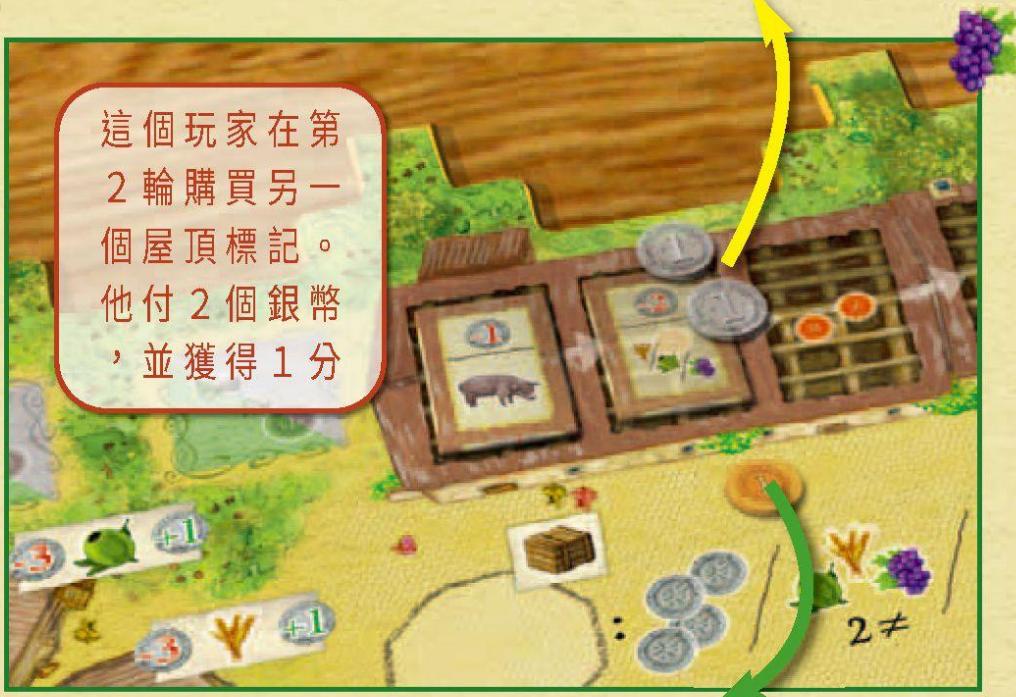
購買的屋頂標記放在農場最左邊空的區域(這個區域不必對應當輪的輪數!)。玩家立刻獲得剛購買的屋頂標記覆蓋的區域分數。
這個玩家在第2輪購買另一個屋頂標記。他付2個銀幣,並獲得1分
每個屋頂標記都有一個特殊功能。這個功能每場遊戲可以使用一次,可以在輪到玩家的回合時使用。所有的屋頂標記會根據可以使用的階段有對應的顏色。屋頂標記的功能使用過後,把它們翻到背面。
註記:每個玩家每輪可以購買一個屋頂標記。一個農場有五個區域,因此玩家可能只能購買最多五個屋頂標記(不過可以查看農場卡「倉庫建築師」的例外說明)。購買的屋頂標記不能棄掉。
屋頂標記有以下的功能:
拿取一個橄欖(拿取一個葡萄)

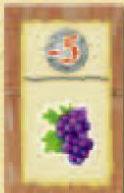
玩家拿取一個橄欖/葡萄,並把他的玩家標記放在農場中對應的小房間裡。
拿取一個穀物或橄欖

玩家拿取一個穀物或一個橄欖,並把他的玩家標記放在農場中對應的小房間裡。
拿取任何一個採收貨物

玩家拿取任何一個採收貨物(橄欖、穀物、葡萄),並把他的玩家標記放在農場中對應的小房間裡。
拿取兩個不同的採收貨物
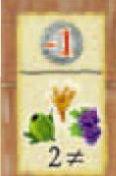
玩家拿取兩個不同的採收貨物,並把他的兩個玩家標記放在農場中對應的小房間裡。
拿取一隻豬

玩家拿取兩一隻豬,並把他的兩個玩家標記放在他的豬的小房間裡。如果玩家沒有足夠的空間可以放置這隻豬,他必須立刻賣掉這隻豬。
* 免費升級一個資源
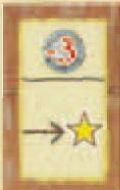
玩家可以從他的田地或小房間拿取他的任何一個資源,並移到對應的小房間當作升級的貨物。
執行一次運送
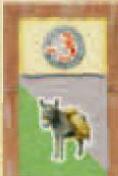
玩家可以執行一次運送(見8-3)。
发出一张卡或抽一张卡
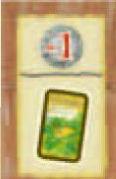
玩家從手中挑選一張卡片並放到農場中(記得農場擴展的花費,見6-0說明),或者從牌庫抽一張卡片到手中。

獲得 1 分
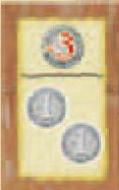
玩家從一般供應區拿取1分。
玩家從一般供應區拿取2個銀幣。
個屋頂標記翻回正面
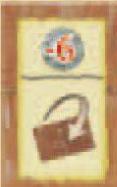
玩家把一個已經使用過的屋頂標記翻到正面,他可以再使用這個屋頂標記一次。
推進午休軌一格或兩格
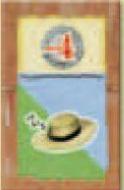

玩家可以推進午休軌一格或兩格(見8-2)。玩家可以根據屋頂標記顯示的圖示推進他午休軌上的圓盤一格或兩格。


7 - 0 收入階段

7 - 1 拿取收入骰
根據遊戲進行的玩家人數,起始玩家拿取特定數量的骰子(見4-0的說明),擲骰後並把它們按照點數放到左側對應的收入區域。
按照遊戲的回合順位,每個玩家拿取一個骰子,並把這個骰子放到他農場的左邊骰子區域。放好後,玩家立刻執行對應的行動!
當每個玩家都已經拿取一個骰子並執行一個行動後,每個玩家再次按照遊戲的回合順位,拿取第二個骰子,並把它放到他農場的右邊骰子區域,並執行一個對應的行動。
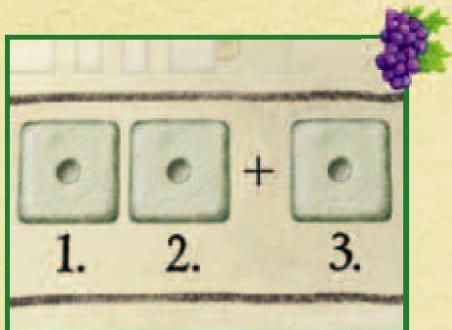
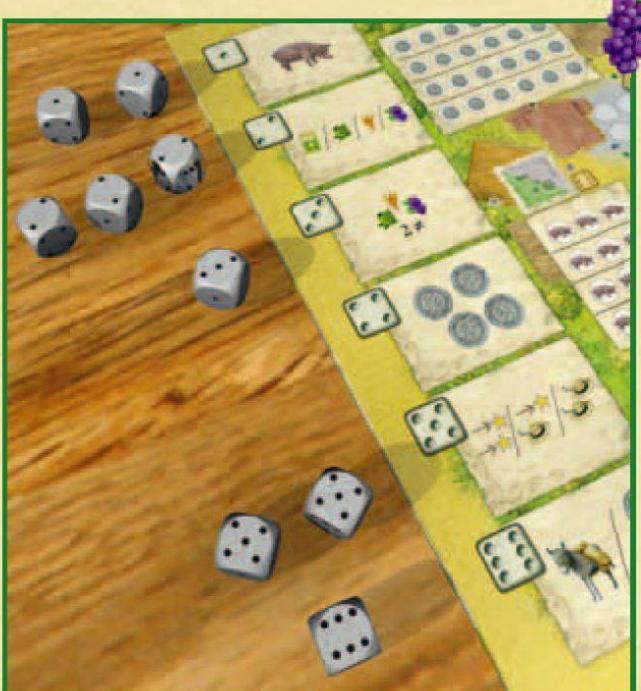

最後,收入區域會留下一個骰子,所有玩家現在按照遊戲的回合順位執行該骰子的行動。

7 - 2 收入區域
殷點 1:拿取一隻豬
玩家拿取一隻豬,並把他的一個玩家標記放在豬的小房間區域。如果玩家沒有足夠的小房間可以放置這隻豬,他必須立刻賣掉這隻豬。
✿ 殷點 2:打出一張卡、抽一張卡,或者拿取一個採收貨物
玩家可以選擇以下項目:
1、他從手中挑選一張卡片,並塞到農場下方(要記得農場擴展的花費!)或者他從牌庫抽一張卡到手中。
2、他拿取任一個採收貨物(橄欖、穀物、葡萄),並把他的一個玩家標記放在農場上對應的小房間裡。

✿ 殷點 3:拿取兩個不同的採收貨物
玩家拿取兩個不同的採收貨物,並把他的兩個玩家標記放在他農場上對應的小房間。
✿ 殷點 4:拿取 4 個銀幣
玩家從一般供應區拿取 4 個銀幣。
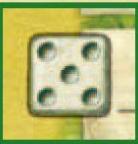
✿ 殷點 5:免費升級兩個資源、免費升級一個資源並在午休軌推進一格,或者在午休軌推進兩格
玩家可以選擇以下項目:
1、他可以免費升級他的兩個資源,並把這兩個資源從各自的田地或小房間移動到新的小房間,當作升級的貨物。
2、他可以免費升級他的任一個資源,並把這一個資源從田地或小房間移動到新的小房間,當作升級的貨物。此外他可以在午休軌上推進一格。

3、他可以在午休軌上推進兩格。

✿ 殷點 6:執行一次運送或者拿取 2 個銀幣玩家可以選擇執行一次運送(見 8 - 3 的說明),或者從一般供應區拿取 2 個銀幣。
8 - 0 運輸階段
運輸階段包含四個步驟,第1個步驟同時進行,其它的步驟則按照遊戲的回合順位進行。一個步驟完整進行後,下一個步驟才開始。
8 - 1 選擇驢子標記
每個玩家秘密選擇一個自己開放的驢子標記並正面朝下放到面前。遊戲的第一輪時,玩家有四個開放的驢子標記。第二輪開始,第1輪選的標記不能使用;第三輪開始,第1輪及第2輪選的標記不能使用。
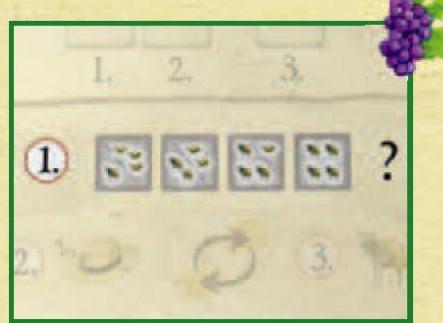
1.
第四輪的運輸階段一開始,玩家又可以再次選擇他的四個驢子標記。之後,遊戲的第5輪及第6輪闔第2輪及第3輪的進行方式相同。
當所有玩家都選擇一個驢子標記後,所有玩家同時翻開他們選擇的標記。
8 - 2 午休軌推進以及決定新的遊戲回合順位
按照回合順位,根據玩家選擇的驢子標記,他們現在可以在午休軌推進0、1、2或3格。如果玩家停在一格已經有其他玩家圓盤的格子上,他就把他的圓盤疊在該格的其它圓盤上方。
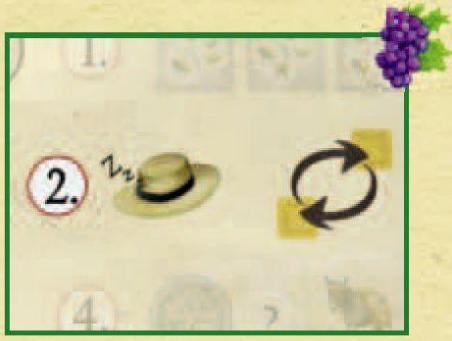
註記:其中一個行會標記會增加推進的格數(見8-3-1)。

如果玩家已經抵達午休軌的最上面的格子,他就不能再推進了。
現在新的遊戲順位根據午休軌決定。午休軌上圓盤為最前面的玩家是新的起始玩家,並獲得遊戲回合標記1。圓盤在第二位的玩家獲得遊戲回合標記2,依此類推。
如果有兩個或多個玩家佔據相同的格子,則圓盤疊在上方的玩家順位較前,獲得數字較小的遊戲回合標記。新的遊戲回合順位會立即生效,圓盤暫時保持現在的位置。
8 - 3 執行運送
按照新的回合順位,玩家開始執行運送。
每個瞳子標記上顯示的瞳子符號代表一次運送。
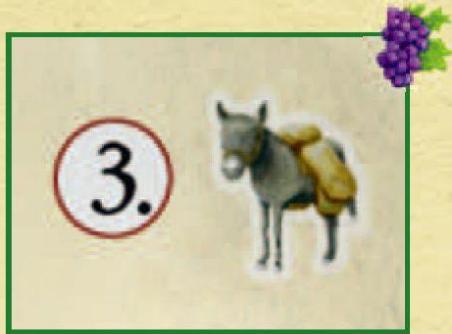
註記:其中一個行會標記會增加運送的次數(見8-3-1說明)。
標記上的驢子符號數量代表玩家可以執行的最大運送次數。

一次運送可以運到其中一個行會建築,或者運到塞到農場上方的其中一個市場推車。如果玩家可以進行一次以上的運送,他可以在一個步驟裡運到行會建築及市場推車(以任意順序)。
每個玩家整個執行完他的驢子標記可以讓他進行運送的次數後,下一個玩家才開始進行他的運送。
當玩家已經執行完所有的運送後,他把他的驢子標記正面朝下放到他的農場左上角。這個標記暫時不開放使用了(見8-1說明)。
8 - 3 - 1 運送到村莊的行會建築
每個玩家都可以運送到六個行會建築。不過遊戲一開始有其中三個行會建築是「封鎖」的狀態,上面會有一個標記做標示(見8-3-2),不能運送到封鎖的建築。
每個行會建築會提供每個玩家一排符號列,每個符號列之間有橫線隔開。當玩家第一次運送到這裡時,他選擇一排空的符號列。符號列會顯示哪些農場貨物必須運送到這個建築物。
玩家在一個運輸階段中,可以運送農場貨物到不同的行會建築。
為了要進行一次運送,玩家從他的農場拿取農場貨物或者交易商品,並把他的其中一個玩家標記放到行會建築裡「他專屬的」符號列上。農場貨物可以以任意順序運送到一個建築中;玩家不必按照他專屬的符號列顯示的順序運送貨物。可以分多個回合把貨物運送到建築中。
當玩家已經運送完一個行會建築所有需要運送的貨物後(也就是他專屬的符號列中每個區域都有他的玩家標記時),他立刻把符號列上的其中一個標記放到該行會淺灰色區域的格子上。該玩家不能再運送貨物到該行會,他把他專屬的符號列上剩餘的其它玩家標記放回他的個人供應區。

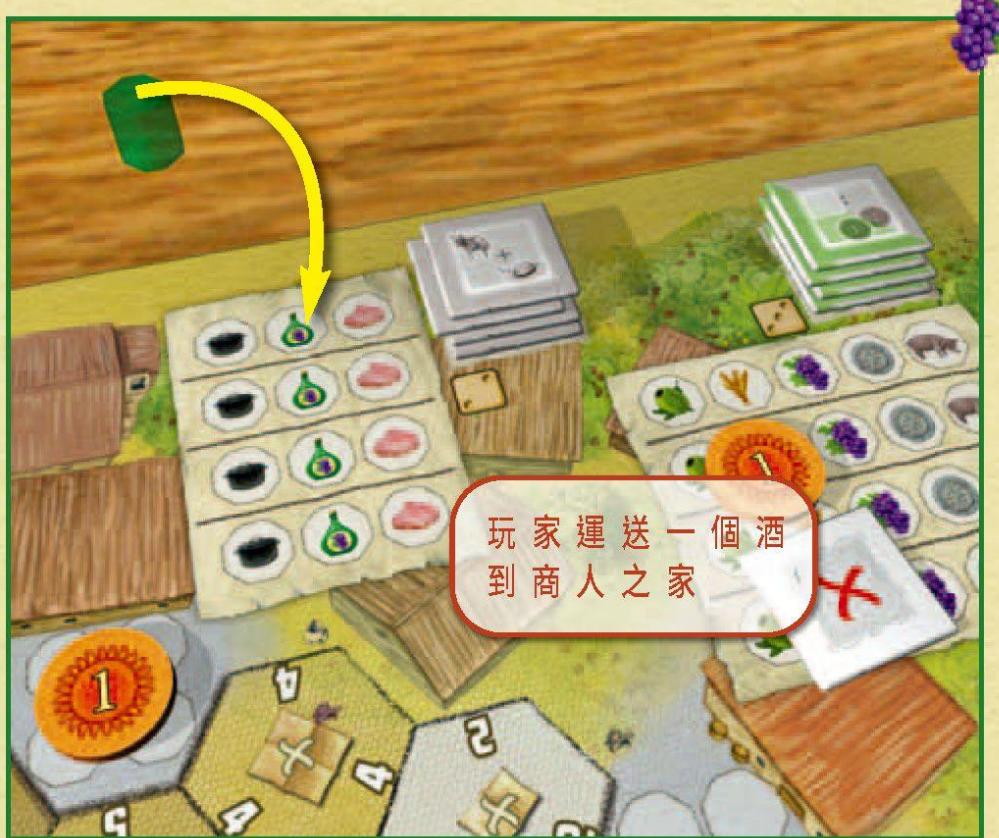
如果該玩家是第一個以此方式把他的玩家標記運送到這裡的玩家,他立刻從淺灰色區域上拿取分數。
每個玩家都可以以此方式運送他的玩家標記,同時從該建築拿取其中一個行會標記,並把它正面朝上放到他農場上的對應區域,然後根據當前輪數獲得特定數量的分數(因此,第一個運送到這裡的玩家等於獲得額外的分數)。每個玩家保留他的行會標記,直到遊戲結束。
玩家可以立刻使用這個行會標記的功能一次!註記:在此做個提醒,行會標記的正面比它的背面顏色淺一點。該輪結束時,所有行會標記翻到背面。
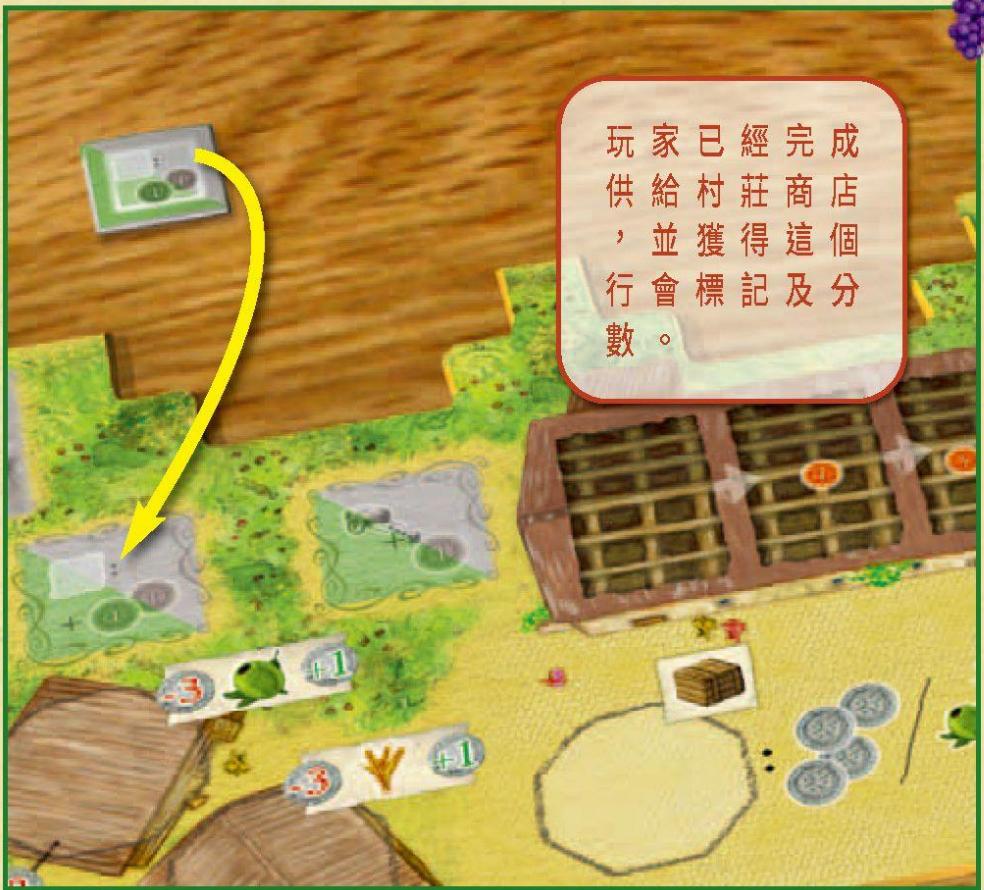
玩家已經完成供給村莊商店,並獲得這個行會標記及分數。
六個行會標記的其中四個,可以讓擁有的玩家在下一輪開始的特定階段使用標記的功能一次。
這個標記的顏色會與階段的顏色相符,以顯示這個標記可以在什麼時候使用:

藍色:這個標記可以增加收入。
灰色/綠色:這個標記可以用於收入或運輸階段。

灰色:運輸階段時有特殊功能。
行會標記的功能列表如下:
商人之家

運貨
商人之家會在農場階段的步驟3時給予玩家3個額外的銀幣(以及當這個標記被拿取時立刻給予)。
馬車製造廠

運貨馬車製造廠可以在運輸階段的步驟2時,在午休軌上推進額外的一步,並在運輸階段的步驟3有一次額外的運送(注意:不是在步驟4一額外的運送!)當拿取這個標記時,玩家立刻執行一次運送,並拿取他的圓盤在午休軌上顯示的分數(一次)。
熟食店
熟食店會在農場階段的步驟3時給予玩家一個交易商品(以及當這個標記被拿取時立刻給予)。
水果店
水果店會在農場階段的步驟3時給予玩家一個任意資源(以及當這個標記被拿取時立刻給予)。
以下兩個標記可以讓擁有者在下一輪開始達成特定條件時使用(可以多次使用!)。
村莊商店
村莊商店可以讓玩家在獲得任何行會標記時拿取2分(以及當這個標記被拿取時立刻給予)。
一般來說,村莊商店是在運輸階段的步驟4使用,不過如果玩家是在使用骰點6進行一次運輸之後獲取一個行會標記,那麼村莊商店也可以在收入階段使用。
✿ 肉攤
當玩家因為一個市場推車計分時,肉攤會給予玩家額外的1分(也就是當玩家已經填滿推車並「把它送到村莊」的時候)。當玩家個行會標記時,他的農場裡當下有多少個市場就立刻拿取這麼多的分數。
一般來說,肉攤是在運輸階段的步驟3使用,不過如果玩家是在使用骰點6進行一次運輸之後為一個市場推車計分,那麼肉攤也可以在收入階段使用。
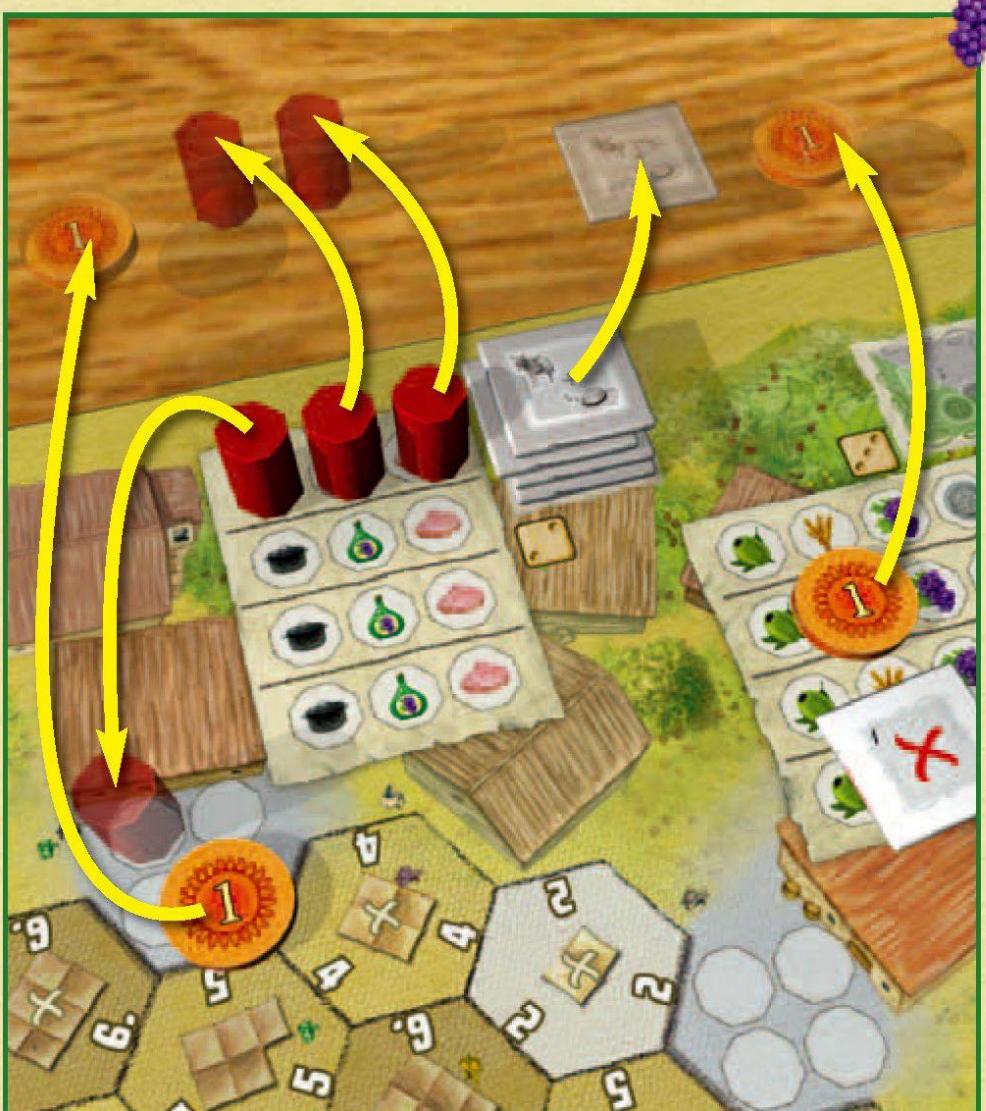
遊戲一開始會有三個行會建築「封鎖」(也就是進入這些行會是禁止的),而且它們會被建造順位標記佔據。一開始,這些建築不能讓玩家進行任何的運送。
第二輪,玩家執行三次運送升級的貨物到運貨馬車製造廠。他把其中一個自己的玩家標記放到其中一個淺灰色區域,並把另外兩個玩家標記放回他的供應區。他首先因此獲得行會標記,並獲得4分:
1 分(來自淺灰色區域的分數標記),以及1 分(來自解除「封鎖」的建築,請見8-3-2的說明),以及2 分(第二輪)。他立刻第一次使用行會標記,執行一次運送並獲得午休軌上他的圓盤所在位置顯示的分數
8 - 3 - 2 封鎖的行會建築
一旦第一個行會建築已經完整的由玩家供給(而該玩家的其中一個玩家標記已經移到淺灰色區域),移除建造順位標記1並放回遊戲盒中。即刻起,這棟建築可以讓所有玩家進行運送了(同一輪立即開放)。
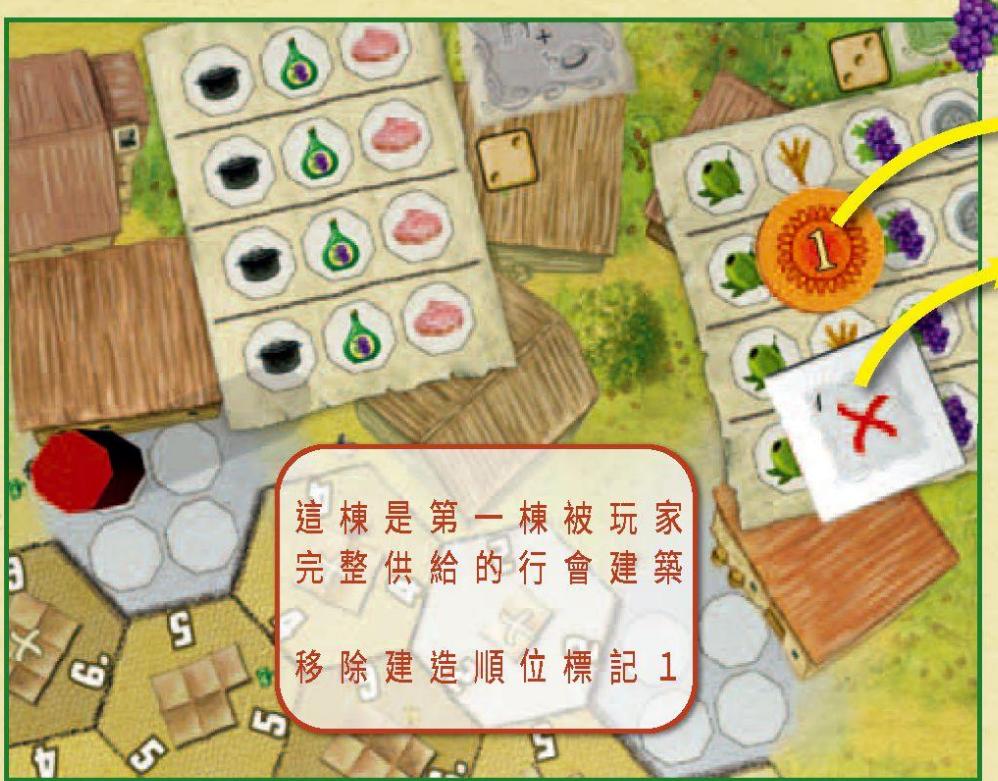
當有第二棟行會建築被一個玩家完整供給時,建造順位標記2按照同樣的方式移除;當有第三棟行會建築被一個玩家完整供給時,建造順位標記3按照同樣的方式移除。這些建築也可以在遊戲稍後讓玩家供給。每次觸發這種效果的玩家都會獲得一分。
8 - 3 - 3 運送到市場推車
玩家可以供給一個或多個自己的市場推車。市場推車(農場卡)上顯示的符號,代表玩家要運送哪些農場貨物到這個推車上。運送到市場推車的農場貨物可以以任何順序進行,而且可以在不同遊戲輪數運送。
首先玩家從他的農場或田地移除農場貨物,然後把一個玩家標記放在市場推車對應的符號上。
當玩家完整供給一個市場推車後(也就是每個符號區域都放置一個玩家標記後),他拿取這張卡上顯示數量的分數(2到6分),並把一個玩家標記放到他農場上的中央區域,當作一個交易商品。接者,從農場注意:額外運送的次數顯示在
移除這張卡片,並把它放到農場卡棄牌堆(正面朝上)。玩家標記放回供應區。
該玩家可以進行兩次運送,他從田地拿取一個橄欖,並從他的小房間拿取一個穀物,然後後把這兩個農場貨物運送到市場推車,貨物現在市場推車已經完成的供給了,玩家獲得4分以及一個交易商品當獎
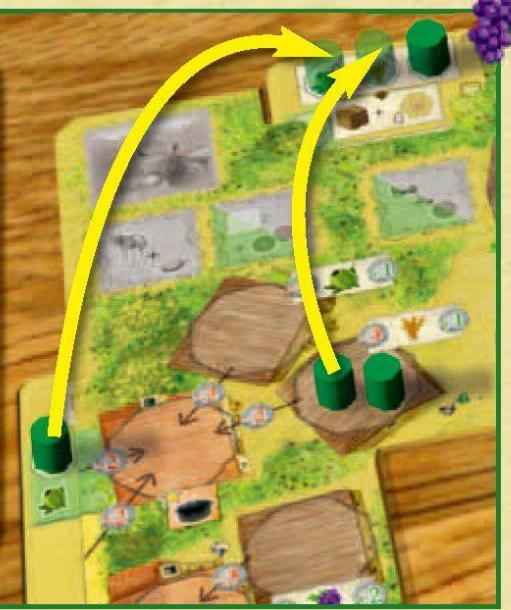
接下來,他把其中一個自己的玩家標記,放在一個對應市場推車分數數值空的市場區域上。現在該玩家移除所有和新放置的標記相鄰,而且數字較小的其他玩家的標記。他每個移除的標記都獲得一分。
其他玩家被移除的標記放回各自的供應區。
注意:在罕見的情況下,所有對應市場推車分數數值的市場區域都已經被佔據了,則玩家直接從市場區域移除其他玩家的標記,並放置自己的標記到市場區域上。接下來,所有相鄰且數字較小的標記再一次進行移除!為每個移除的標記獲得一分。
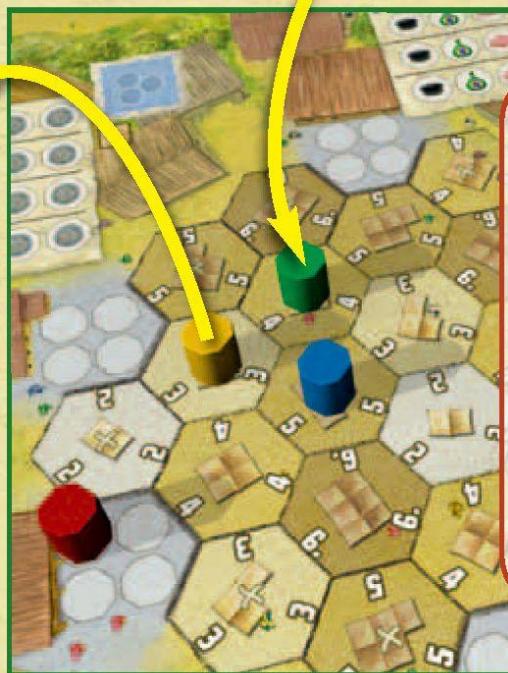
供給市場推車後,該玩家放置一個玩家標記到市場區域「4」。它移除對手在市場區域「3」的標記,而市場區域「5」的標記則不會被移除,並留在原地。玩家因為移除一個標記獲得為一分
8 - 4 購買並進行額外的運送
每個玩家現在按照回合順位購買額外的運送(運送一次花費1個銀幣)。玩家也可以不購買任何額外的運送。
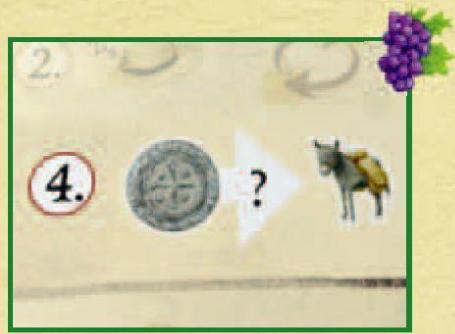
農場圖板(最右邊)及農場擴展的灰色區上。每個這樣的額外運送可以讓玩家進行一次運送,可以送到行會建築或是市場推車,見8-3的說明。
遊戲一開始,每個玩家可以購買一次額外運送。特定的農場擴展可以讓玩家購買額外的運送。
玩家一次購買他想要進行的額外運送,接著他一次進行完所有的額外運送。玩家不一定要購買所有他能夠購買的額外運送!

該玩家可以購買最多兩次的額外運送,他決定只買一次,並花費1個銀幣。他運送另一個農場貨物到其中一個行會建築
9 - 0 計分階段

玩家從使用過的助手移除標記之後,進行四個步驟。
最後一輪時,最後兩個步驟省略。
1、市場上玩家每個自己的標記獲得1分(在行會建築上的玩家標記不會獲得任何分數)
2、每個玩家根據他們午休軌圓盤的位置獲得0、1、2或3分。
3、玩家在午休軌上的圓盤放回起點。圓盤都放回「0」的格子裡,根據當前的回合順位疊成一疊。起始玩家疊在最上面(擁有遊戲回合順位標記1的玩家),接著放置順位為二的玩家圓盤,依此類推,疊在最下面的是順位最後的玩家。
4、起始玩家翻開下一輪的屋頂標記。如果有需要這麼做,玩家把他們農場上的行會標記翻到背面。

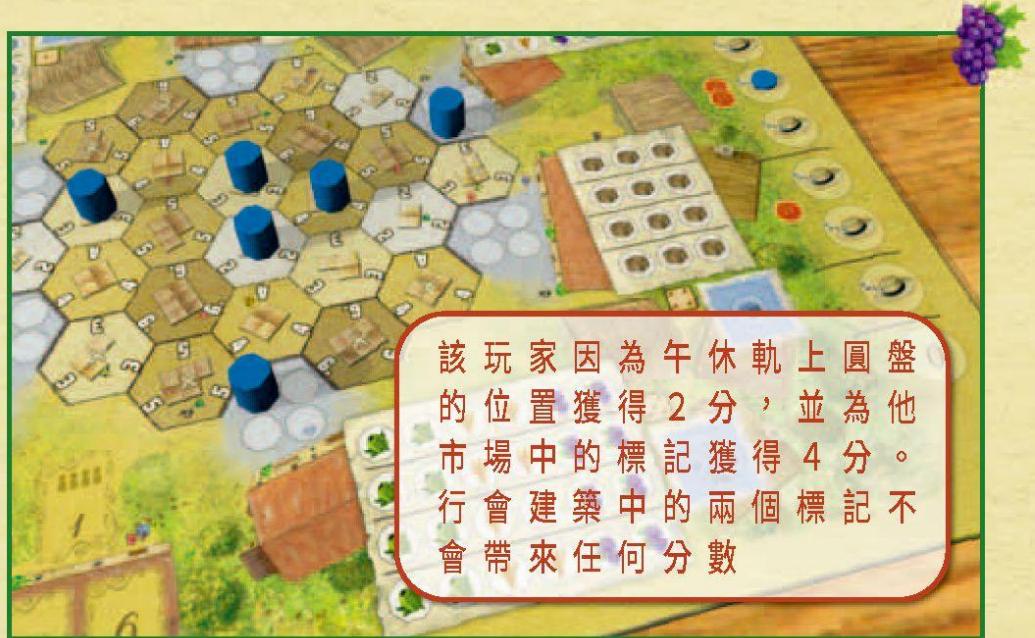
該玩家因為午休軌上圓盤的位置獲得2分,並為他市場中的標記獲得4分。行會建築中的兩個標記不會帶來任何分數
最高分的玩家獲勝。如果平手,平手玩家中有最多剩餘銀幣的玩家獲勝。如果還是平手,共享勝利。
10-0遊戲結束
拉格蘭哈莊園進行六輪後結束。
第六輪結束後,所有玩家進行以下兩個步驟:
1、根據一般售價(資源)或者換算價格(交易商品),玩家把他們的玩家標記換成銀幣。
2、之後,他們把銀幣以5:1的比率轉換成分數(5個銀幣換1分)。
11-0單人遊戲
拉格蘭哈莊園可以單人遊玩,尤其可以學習關鍵機制。所有的規則都相同,除了以下調整。
遊戲設置
1、準備一個玩家的配件,以及第二種顏色的玩家標記(用於「中立玩家」)。
2、使用五顆骰子。
3、使用遊戲順位標記 2、3。把這些標記洗混(隱藏資訊),接下來玩家從中抽一個標記,並把一個玩家標記放在市場中對應順位標記數字的區域上。中立玩家的玩家標記則放在另一個市場中央的六角區域裏。
4、玩家放置兩個屋頂標記。
遊戲進行
1、收入階段:如果玩家是起始玩家(他的順位標記是2),他選擇一顆骰子,接著棄掉一顆骰子一在遊戲第一、第二,以及第三輪時,棄掉點數最小的骰子,第四、第五,以及第六輪時,棄掉點數最高的骰子。現在該玩家選擇第二顆骰子,選擇後,如上敘述,再棄掉一顆骰子。最後,使用剩餘的最後一顆骰子。如果玩家不是起始玩家,根據以上規則,每次在玩家選擇一顆骰子前都先棄掉一顆骰子。如果玩家從市場中移除一個中立玩家的標記,每移除一個標記就獲得1分。
2、運輸階段:如果玩家是起始玩家,他執行完整的運輸階段。執行完之後,從牌庫抽一張卡片。現在中立玩家把一個玩家標記放在對應抽取的卡片分數數值(顯示在推車欄位)的市場區域。然後發生以下這些效果:
a)中立玩家儘可能的移除多個該玩家的標記。
b)如果有多個區域符合這個準則,他把他的玩家標記按最艱難的方式儘可能的移除(也就是,儘可能移除和其他標記相距最遠的玩家標記或者移除相鄰數字較高區域的玩家標記)。
c)如果市場中沒有玩家的玩家標記(或者沒有玩家標記是要被移除的),則中立玩家把他的玩家標記儘可能的放到移除這些標記最艱難的位置(見上一點說明)。
如果玩家不是起始玩家,從牌庫抽一張卡,中立玩家把一個玩家標記放在對應抽取的卡片分數數值(顯示在推車欄位)的市場區域,然後玩家才執行他的運輸階段。
3、計分階段:如果玩家至少抵達午休軌的第三格,他成為下一輪的起始玩家,否則中立玩家為起始玩家。
設計師: Andreas Odendahl, Michael Keller
開發: Henning Kröpke, Uli Blennemann
圖像設計: Harald Lieske
排版: Lin Lütke-Glanemann
最後註記:
Michael Keller's “Dice for the Galaxy” formed the basis for the design of La Granja. The dice distribution mechanic originates in the unpublished design “Arriba” by Matthias “Matze” Cramer and was the inspiration for the dice distribution system of this game. In “羅馬萬歲” (2005) Carl Chudyk demonstrated an outstanding way to use cards; hopefully we came up with a nice variation.
The central element in the center of the table was inspired by the temple in “月神” (H@ll Games, 2010) by Stefan Feld.
The authors would especially like to thank Stefan Feld, H@ll Games, Uwe Rosenberg and last but not least their significant others Linda and Claudia for their support.
遊戲測試員
Claudia Odendahl, Thorsten Hanson, Robert Bachmann, Ralph Bruhn, Gesa Bruhn, Uwe Rosenberg, Horst Sarchow, Thorsten Tolzmann, Karsten Esser, Grzegorz Kobiela, Silke Hüsges, Christian Stöhr, Julius Kündiger, Tobias Miliz, Uta Dohlenburg, Till Ullrich, Matthias Cramer, Susanne Cramer, Stefan Molz, Johanna Engels, Herbert Harengel, Henning Schröder, Stefan Heine, Tim Melkert, Johanna Moratz, Jens Grotholtmann, Jonas Blohm, Mathias Saurer, Selim Hamdani, Michael Keller, Andre Ruch, Marcel Ruch, Thomas Schmitz, Daniel Bader, Roan Weber, Marc Schmitz, Peter Raschdorf, Nicole Vogt, André Schröder, Monika Harke, Rainer Harke, Jan Degler, Marlies Strassburger, Rolf Raupach, Dirk Schröder, Carsten Büttemeier, Dagmar Bock, Dirk Bock, Jörg Schröder, Martina Weidner, Katharina Bock, Markus „Kusi“ Haldemann, Richard Büchi, Alexander Blaser, Dario Manzone, Markus Krug, Steffen Rieger, Eva Hein, Stefan Trümpler, Stefan Peterhoff, Kerstin Wollschläger, Kathrin Gerber, David Gerber, Hardy Krüger, Sven Graumann, Ilja Mett, Thyra Puls, Elmar Grubert, Kaspar Wyss, Manta and the testers at Bödefeld and Majorca.
目录
1.0 简介
2.0 配件与名词解释
3.0 游戏目标
4.0 游戏设置
5.0 游戏流程
6.0 庄园阶段
7.0 收入阶段
8.0 运货阶段
9.0 计分阶段
10.0 游戏结束
11.0 单人规则
1.0 简介
在La Granja中,1-4名玩家将扮演一名西班牙马略卡岛上,埃斯波尔莱斯附近的小庄园主。
在游戏过程中,玩家通过发展自己的农庄,为村庄交付货物来为自己的庄园赢得La Granja的称号。时间的安排将是决定性的!
La Granja是一款需要精密计划的迷人游戏。成功的玩家必须学会应对骰运与牌运的不确定性。
2.0 配件与名词解释
每份
游戏包括以下配件:
1 张游戏板
4 张玩家板
66 张农庄卡
9 枚收入骰
100 枚玩家标记(种颜色每种枚)
4 枚木质圆片(种颜色每种枚)
16 枚运货标记(每名玩家一套枚标记)
38 枚银币(元 元)
66 枚胜利分标记(分)
4 枚顺位标记
24 枚屋顶标记
24 枚作坊标记
3 枚建筑顺序标记(分别标有、、)
4 张提示卡
2 本规则书(英文、德文)
2 本卡牌说明(英文、德文)
2.1 游戏板
La Granja游戏板的中央代表埃斯波尔莱斯当地的村庄集市。集市分为许多6边形的小格,每一个小格中央有一个2-6不等的数字。中央有一个x标记的小格将不会在2-3人游戏中被用到(详见4.0)。
在集市边缘有6间作坊,每间作坊旁有4行标记(对应每名玩家1行)。玩家可以根据标记的指示向每间作坊运送对应的产品和交易品。作坊标记分别被放在每个作坊旁边对应的位置。
收入格位于游戏板的左侧,旁边标有点数为1-6的骰子。屋顶标记放在游戏板的左下角,将屋顶标记按照轮次分别放在2-6轮对应的格子中。当前轮次可用的屋顶标记位于这些屋顶标记的上方。
顺位轨在玩家板的右侧,用来决定下一轮的玩家顺位。
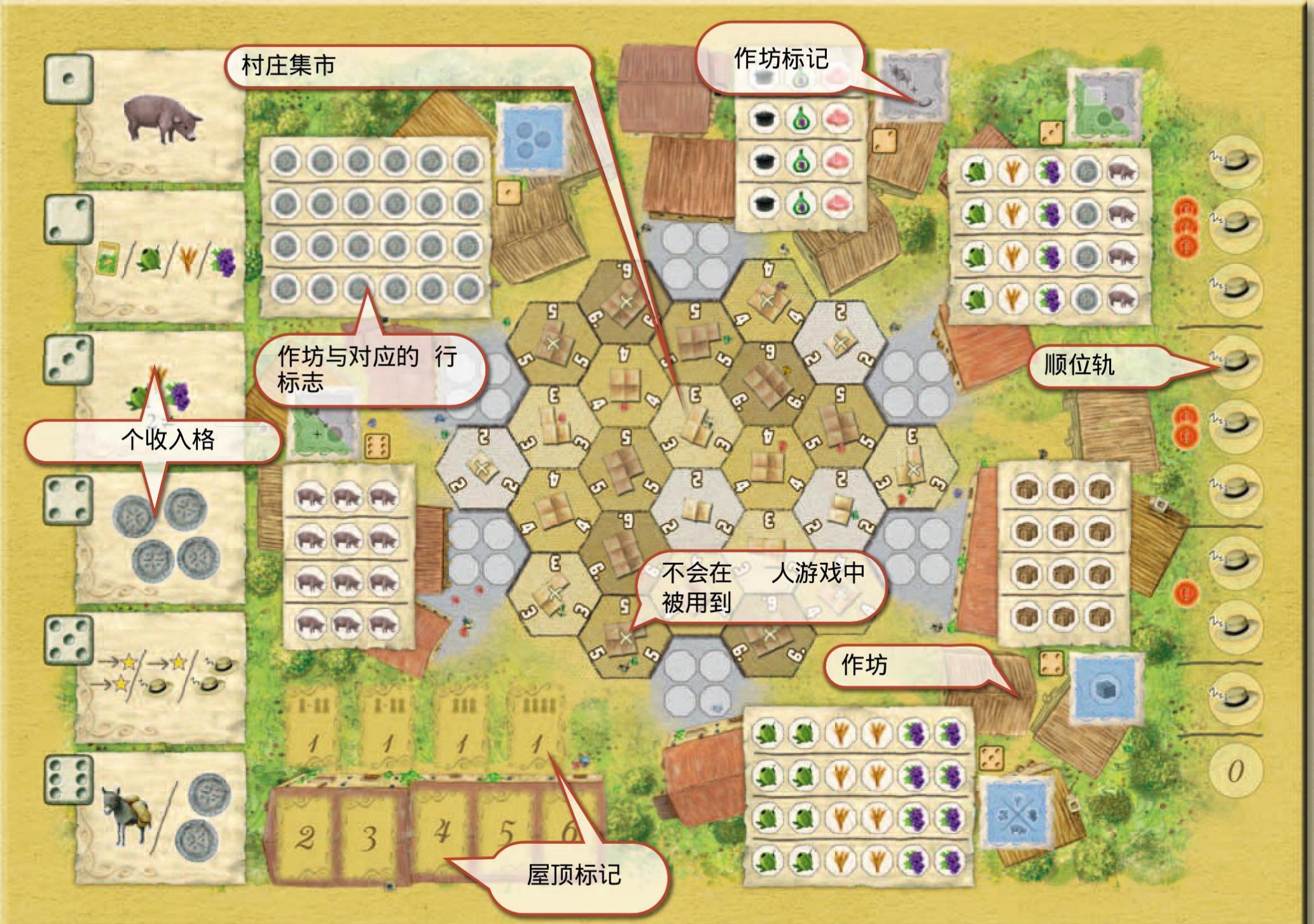
2.2 农庄卡
La Granja 游戏包含66张农庄卡,在游戏过程中,玩家摸取农庄卡,将农庄卡打出在玩家板的4条边旁来获得收益。
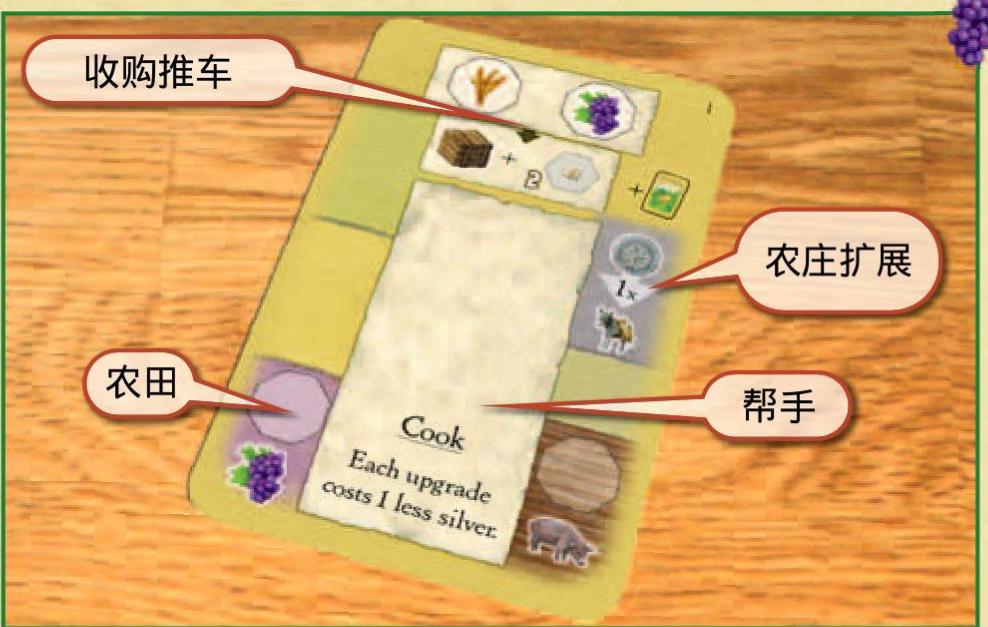
玩家打出的农庄卡,根据打出的位置不同,将产生不同的效果。
打出到玩家板左边的农庄卡将成为农田,农田可以生产特定的作物:橄榄、谷物或葡萄。
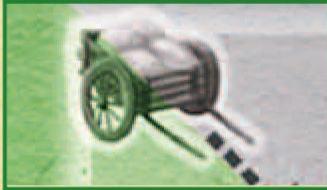
打出到玩家板上边的个槽位之一的农庄卡将成为收购推车。
打出到玩家板右边的农庄卡将成为农扩展。
打出到玩家板下边的个槽位之一的农庄卡将成为一个拥有特殊能力的帮手。
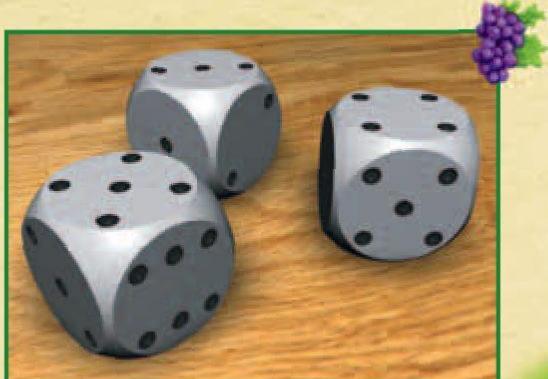
2.3 收入骰
游戏中共有9枚收入骰,在游戏中会使用到的收入骰数量由玩家人数决定。
2.4 玩家板
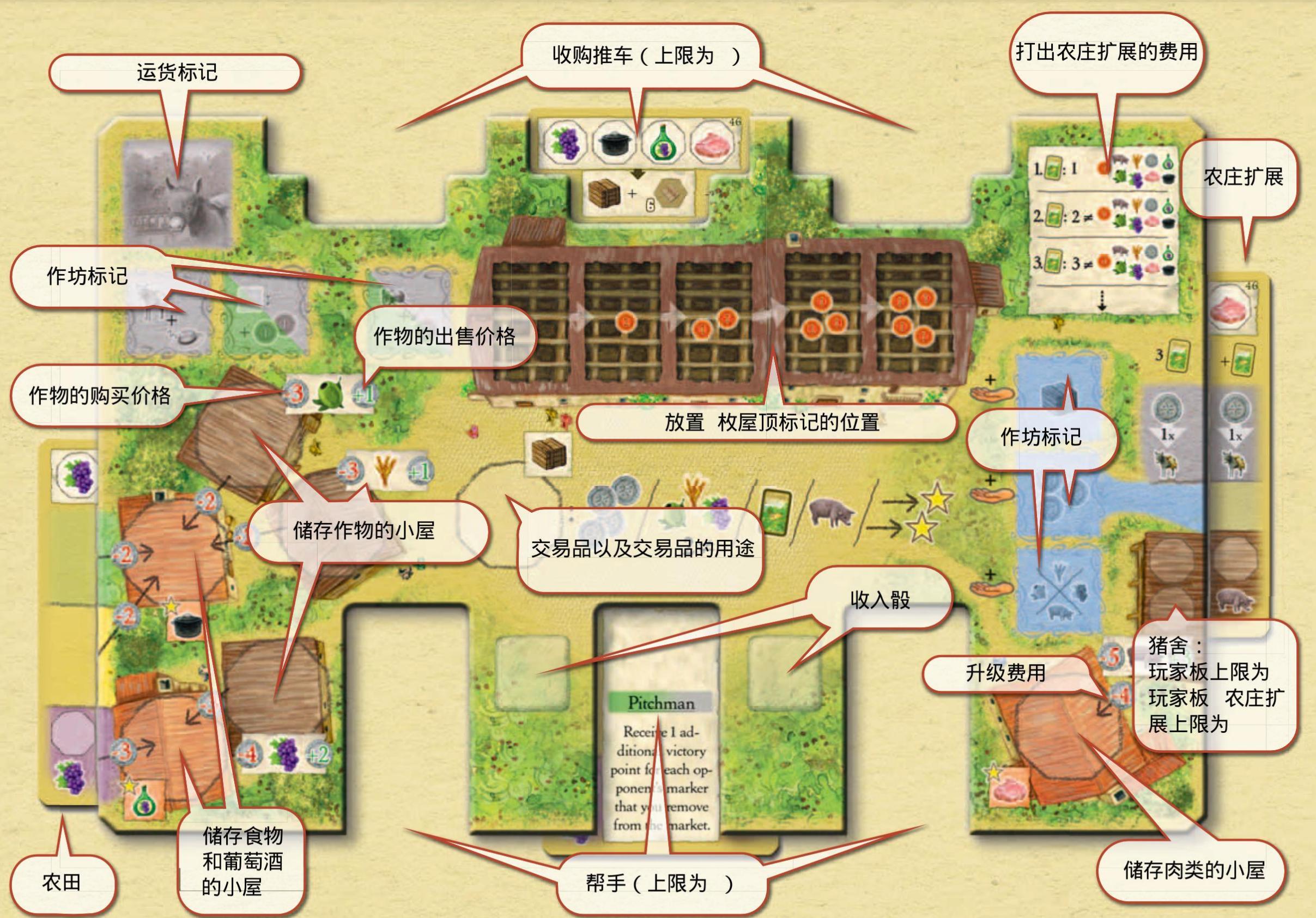
每名玩家拥有1张代表他的庄园的玩家板。在他的玩家板上标有6个用来放置作坊标记的格子;几间小屋(用来放置作物和加工产品);加工费用;资源的购买与出售价格;中心的1个放置交易品的格子;1个上限为2的猪舍;1个标明打出农庄扩展费用的表格;1间带有5个放置屋顶标记空格的农舍;1个用来放置运货标记的格子;以及用来放置每回合玩家选择的2枚收入骰的格子。
注意:每个用来放置作物、加工产品和交易品的小屋/格子可以放入任意数量的玩家标记,但猪舍中的每个八边形小格只能放入1枚玩家标记。
农庄卡可以放入农庄中相应的4边,根据放置位置的不同,农庄卡将具有不同的作用。放在上边/下边槽位中的农庄卡的上限为3;放在左边/右边的农庄卡没有上限。新放在左边/右边的农庄卡应当被压在之前打出的所有农庄卡下面以保证农庄卡用到的一边被展示出来。

2.5 游戏标记
2.5.1 银币
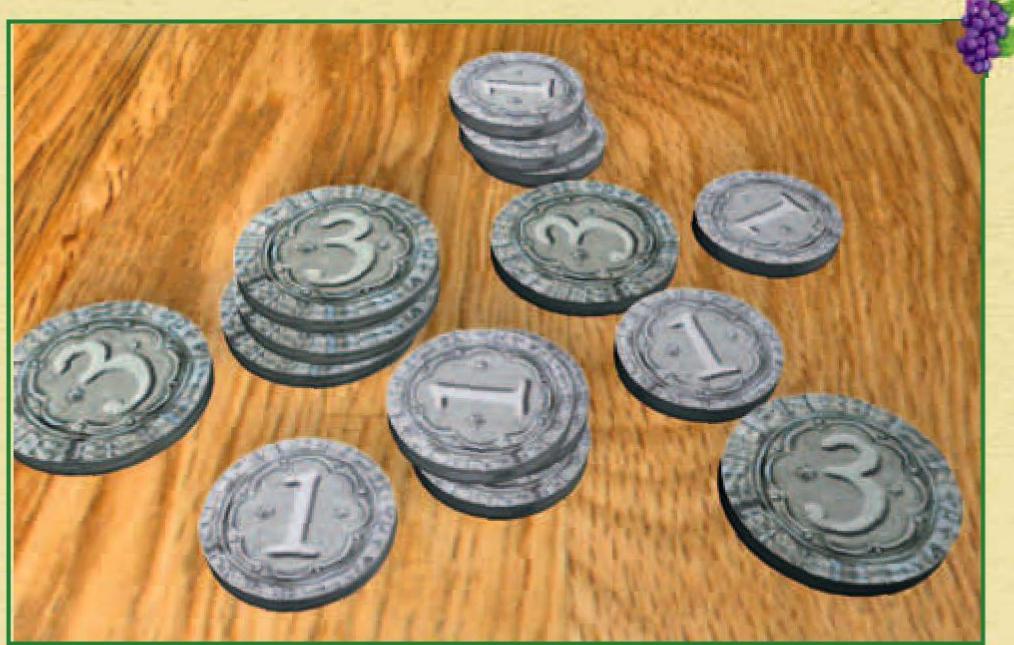
游戏中的银币分为1元和3元两种;在游戏过程中玩家可以和银行兑换银币。
2.5.2 胜利分标记
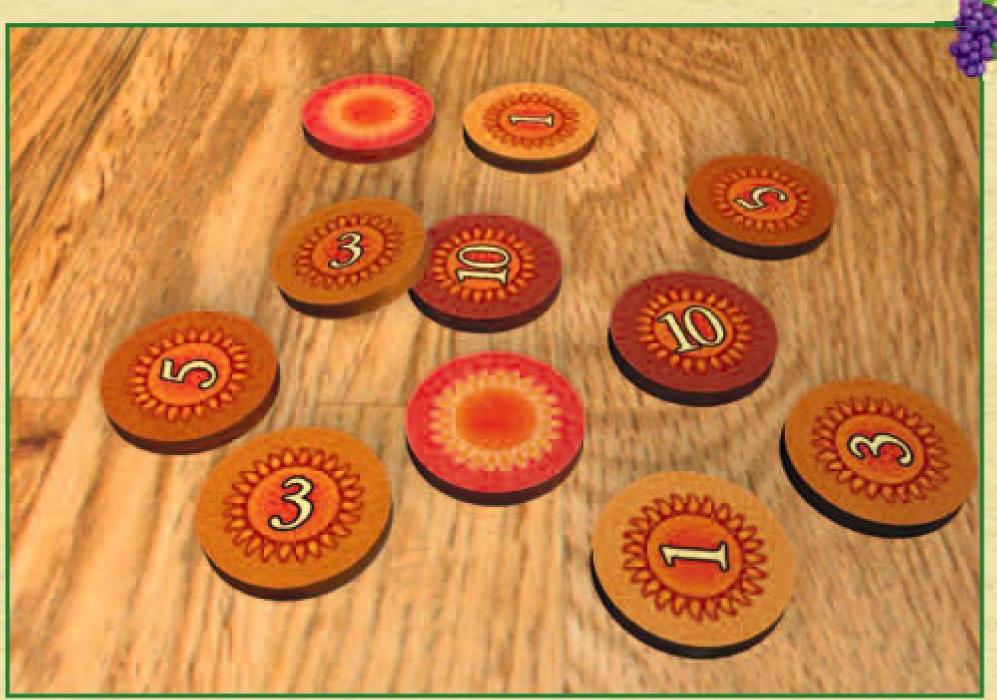
当一名玩家得到胜利分时,玩家立刻从供应堆拿取对应分值的胜利分标记。玩家可以在游戏过程中的任意时刻兑换胜利分标记(例如交出3枚1分标记来换取1枚3分标记)。玩家的胜利分标记可以对其他玩家保密。
2.5.3 作坊标记
村庄中的每间作坊都有对应的特定作坊标记。每名玩家在每间作坊可以得到1枚作坊标记。作坊标记的正面标明了标记带来的瞬时效果,详见8.3.1。

2.5.4 屋顶标记
每名玩家每轮可以购买1枚屋顶标记。屋顶标记会带给玩家一个一次性奖励。从第2个屋顶标记开始,每当玩家购买屋顶标记时,玩家立刻获得玩家板上标明的胜利分数。

2.5.5 运货标记
每名玩家拥有一组完全相同的运货标记。运货标记上的驴标明了玩家本轮可以进行的运货行动数量;帽子标明了玩家在顺位轨上可以前进的格数。

2.5.6 建筑顺序标记
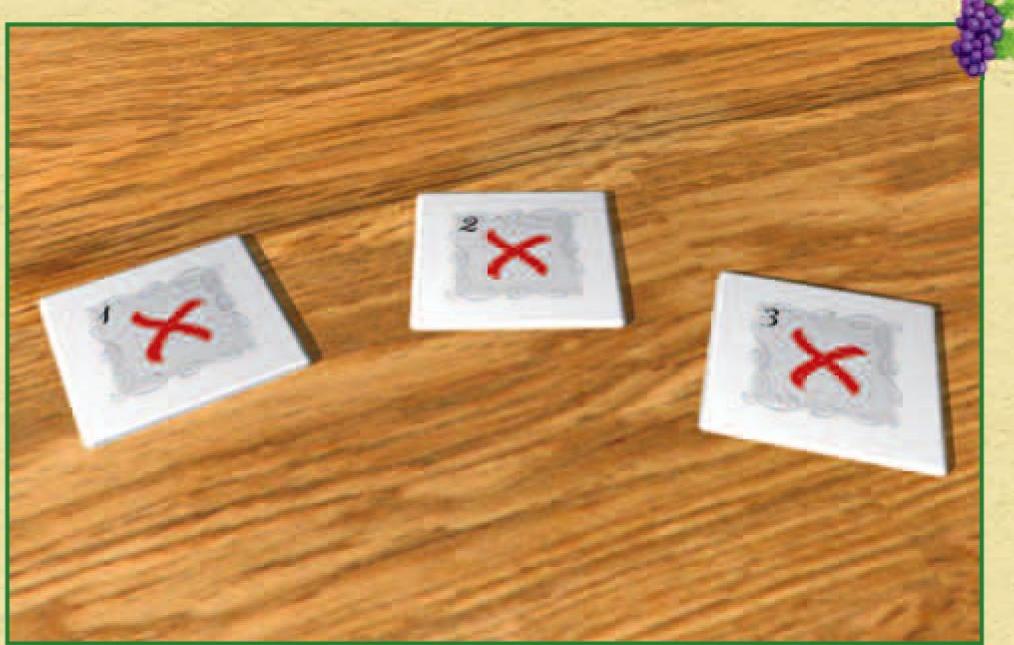
在游戏开始时,3枚建筑顺序标记被放在3间随机的作坊上,当作坊上有建筑顺序标记时,玩家无法为这间作坊运货。
2.5.7 顺位标记
这些标记用来记录玩家的顺位

2.6 提示卡
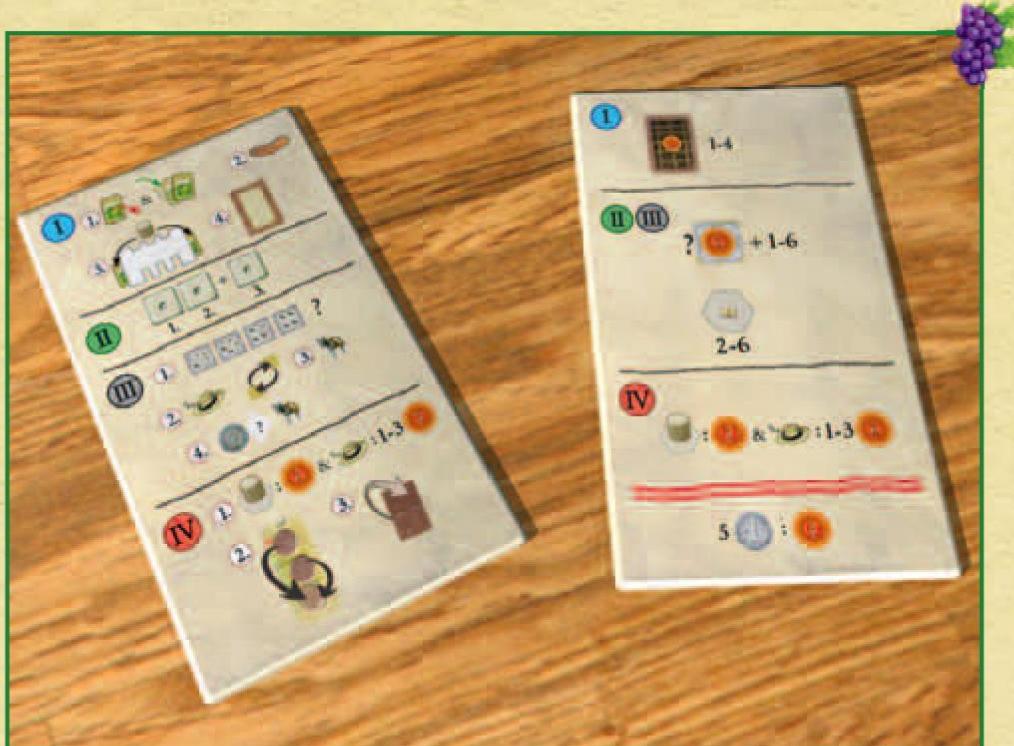
提示卡上概述了一个游戏轮的行动摘要。提示卡的背面总结了获取胜利分数的方式。
2.7 木质配件
2.7.1 玩家标记
每名玩家得到25枚对应颜色的玩家标记。根据玩家标记放置的位置,玩家标记将代表不同的货物。
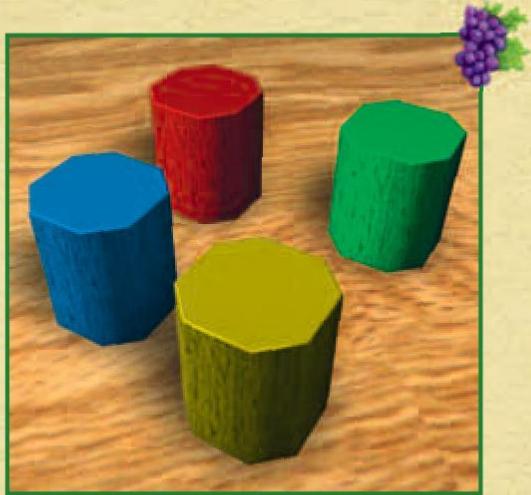
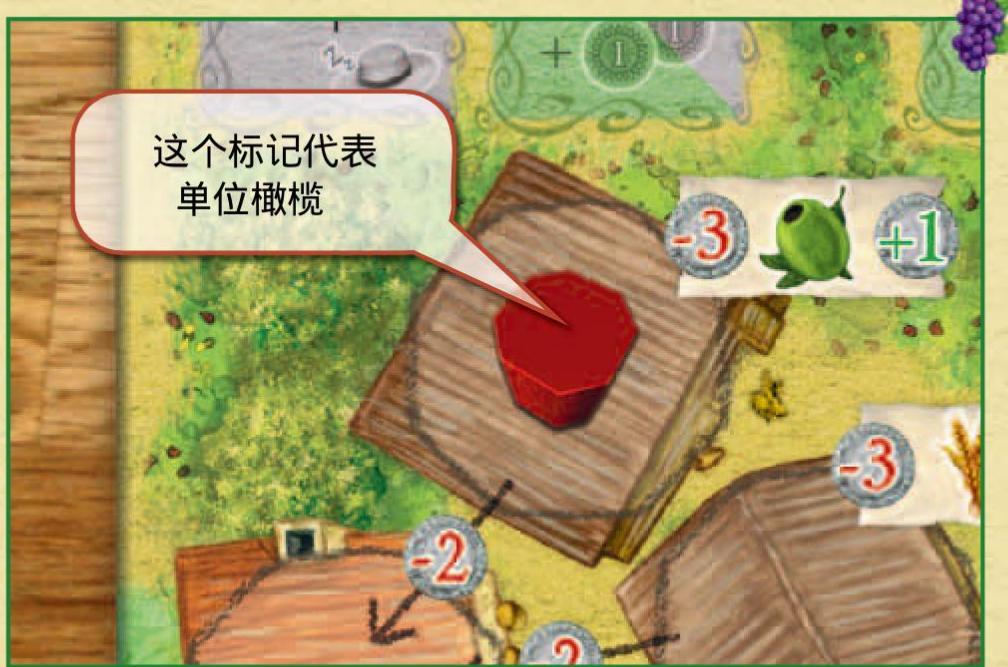
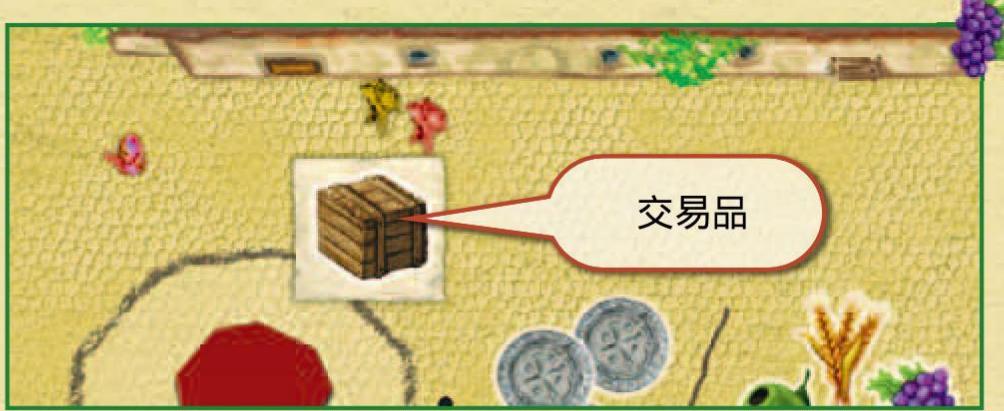
例:一个放在交易品格的玩家标记代表1个交易品;一个放在橄榄田的玩家标记代表1个橄榄;一个放在村庄集市的玩家标记代表1个货摊。
玩家拥有的标记上限为25,在罕见的情况下,玩家的25枚标记全部被使用,这时当玩家要用到1枚新的玩家标记时,必须前移除1枚已经加入游戏的玩家标记。
2.7.2 圆片
玩家的圆片将被放在顺位轨上o格的位置,在游戏进程中玩家的圆片可能会在顺位轨上前进。
2.8 名词解释
下面的名词在
中具有特定的含义:
作物:游戏中有3种作物 橄榄、谷物和葡萄。作物可以被放在农田或小屋中,所有作物都可以被加工。玩家得到的作物如果不是用来播种,必须被放入对应的小屋中。
资源:橄榄、谷物、葡萄和猪是游戏中的资源。资源可以被购买、出售和加工。
加工(加工产品):葡萄加工成为葡萄酒,猪被屠宰产出肉类,橄榄和谷物被加工为食物。加工过程需要消耗银币。
收入:玩家通过骰子来决定收入。收入可能是一个或多个资源、银币、一次运货、1-2次免费加工、在顺位轨上前进1-2格、摸取或打出1张农庄卡。
颜色标记:游戏的四个阶段将按照颜色标记出来。
① 农庄阶段 蓝色
II 收入阶段 绿色
③ 运货阶段 灰色
IV 计分阶段 红色
✿ 交易品:交易品可以用来换取资源和行动
农庄:玩家板和打出的农庄卡代表玩家的农庄
农庄产品:
银币
胜利分
作物
(橄榄、谷物、葡萄)
加工产品
(食物、葡萄酒、肉类)
猪
在玩家板的右上角的表格有打出农庄扩展的费用与农庄产品的总览
运货:一个驴标记代表1次运货行动。1次运货行动定义为将1单位农庄产品从农田或小屋(有时从1张农庄卡)移动到村庄中的作坊或者农庄中的收购推车。
3.0 游戏目标
游戏总共进行6轮,玩家将通过发展自己的农庄并向埃斯波尔莱斯运送货物来赢得胜利分数。玩家可以通过两种方式来赢取胜利分数:
-
当一名玩家为1间作坊提供了全部的对应货物,玩家得到胜利分数以及对应的作坊标记,作坊标记将在游戏的剩余时间内为玩家带来奖励。
-
当一名玩家为1个收购推车提供了全部货物,玩家得到胜利分数以及1个交易品。
在游戏过程中,观察其他玩家的行动;控制游戏顺位;根据莫测的骰运与牌运来调整自己的策略是非常重要的。
在游戏结束时,获得最多分数的玩家将赢得胜利,为自己的庄园赢得La Granja的称号。
4.0 游戏设置
将游戏板放在桌面中央的位置
每名玩家拿取1张玩家板,25枚选定颜色的玩家标记,1组运货标记(4枚分别标有1、2、3、4个驴标记的运货标记)
每名玩家得到1胜利分和1银币,将这些标记放在玩家板的旁边。每名玩家同时得到1单位交易品(将1个玩家标记放在交易品的空格),其余玩家标记保留在供应堆。
一名玩家洗混66张农庄卡并发给每名玩家4张,其余农庄卡面朝下放在桌面上组成农庄卡牌堆。

注意:当最后一张农庄卡被摸取时,洗混所有弃牌来组成一个新的农庄卡牌堆。
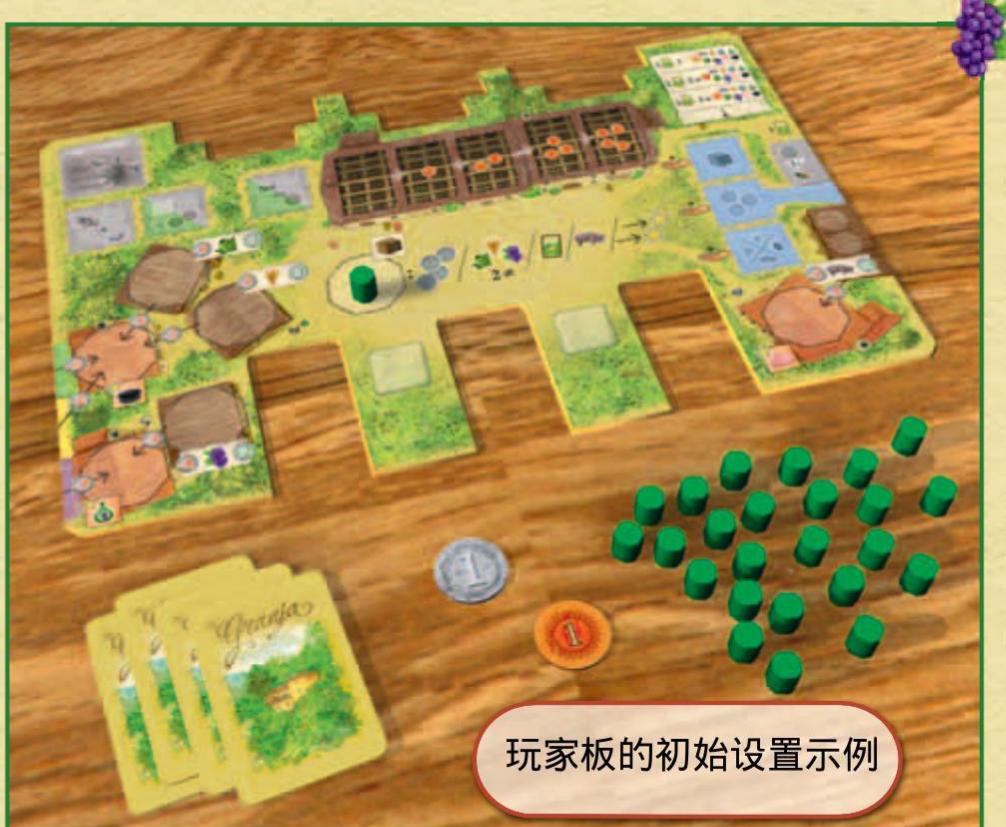
玩家板的初始设置示例
按照标记的轮次,一名玩家将屋顶标记面朝下分堆。如果玩家人数少于4人,那么随机移除屋顶标记直到每一堆的屋顶标记数等于玩家人数。将每一堆屋顶标记放在游戏板上对应的位置,第1轮的屋顶标记面朝上放在其余屋顶标记上方的格子中。
将作坊标记分别放在对应的作坊旁的空格中,在每一个作坊旁的浅灰色格子中放置1胜利分。
掷1枚骰子,将建筑顺序标记1和1胜利分放在对应的作坊上,再重复以上动作2次,将建筑顺序标记2和3也放在相应的作坊上(当然还有1胜利分)。如果掷出的作坊上已经有建筑顺序标记,重掷骰子直到掷出的位置没有建筑顺序标记。
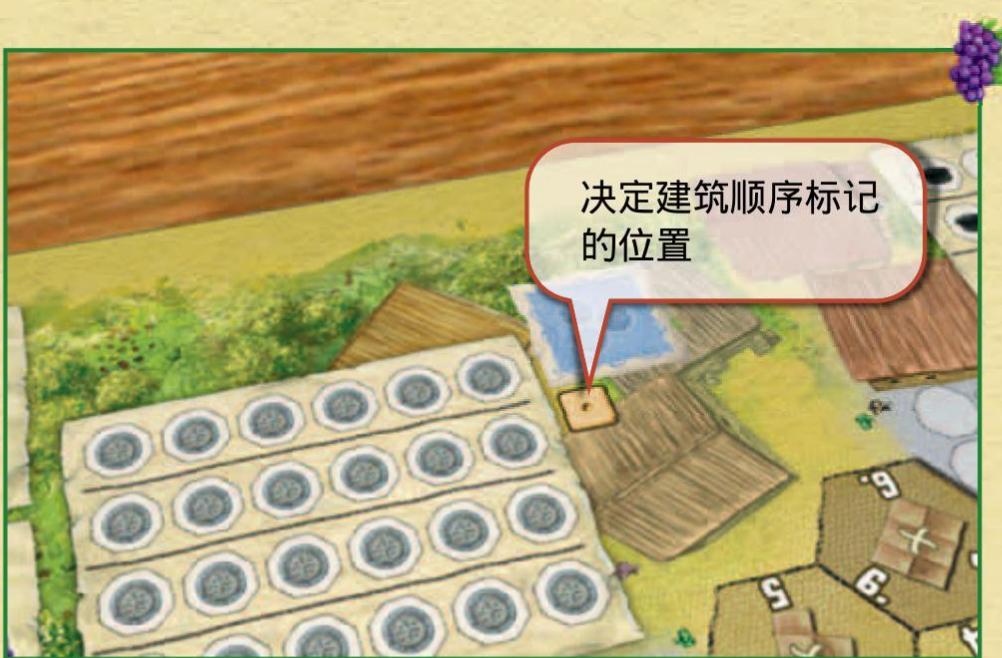
决定建筑顺序标记的位置
随机决定1名起始玩家,这名玩家得到顺位标记1,按照顺时针的顺序,每名玩家依次拿取下一个顺位标记。将没有用到的顺位标记放回游戏盒中。
根据玩家人数来决定游戏中用到的骰子数量,游戏中用到的骰子数量等于玩家人数的2倍加1。
| 2人游戏 | 5枚骰子 |
| 3人游戏 | 7枚骰子 |
| 4人游戏 | 9枚骰子 |
按照顺位,每名玩家将他的1枚玩家标记放在游戏板上的中央的一个集市格(分别标有数字2-5)中:起始玩家放在标有2的集市格中;第二名玩家放在标有3的集市格中,依此类推。在3人游戏中,3枚玩家标记分别放在标有2、3、4的中央集市格中。在2人游戏中,2枚玩家标记分别放在标有2、3的中央集市格中。
按照顺位的倒序,每名玩家将自己的圆片放在顺位轨的最下面1格。所有圆片堆叠在一起,起始玩家的圆片在最上面。
注意:在2或3人游戏中,大多数最外层的集市格将不能被使用。不能被使用的集市格中央有一个x标记。


5.0 游戏流程
游戏总共进行6轮,每轮分为4个阶段:
① 农庄阶段(详见)
② 收入阶段(详见)
③ 运货阶段(详见)
IV 计分阶段(详见)
注意:La Granja游戏中没有轮次轨,玩家可以通过屋顶标记的背面来确认当前的轮次。
5.1 任意时刻的行动
5.1.1 使用交易品
La Granja是一个非常灵活的游戏 大多数时间只有行动玩家可以按照他选择的顺序来执行行动。但很重要的是,一些行动可以在游戏中的任意时刻独立执行。这些行动包括:使用交易品;购买与出售资源以及加工资源。

在游戏过程中,玩家会不时得到交易品(通常是通过完成供应收购推车),玩家用1个放在农庄中央空格的玩家标记来代表1单位交易品。
玩家可以将1单位交易品放回供应堆来执行以下行动之一:
得到银币玩家从供应堆得到银币
得到2单位不同的作物
玩家拿取 单位不同的作物,将 枚玩家标记放在农庄上对应的小屋中
❖ 摸取或打出1张农庄卡
玩家从手中打出 张农庄卡(如果作为农庄扩展打出,需要支付对应费用,详见)或者摸取农庄卡牌堆最上面 张农庄卡。
得到1只猪
玩家得到 只猪,将 枚玩家标记放在猪舍的个空格上。
免费加工2单位资源
玩家可以免费加工自己的任意 单位资源。将加工的资源从对应的农田或小屋中移动到对应加工产品的小屋中。
玩家也可以选择在运货阶段将 个交易品运送到村庄中的 个作坊中,详见
5.1.2 购买与出售资源
当玩家选择购买资源时,每购买 单位资源,玩家就将 枚玩家标记放在对应的小屋或猪舍中。
购买橄榄或谷物需要银币。出售橄榄或谷物可以让玩家得到银币。
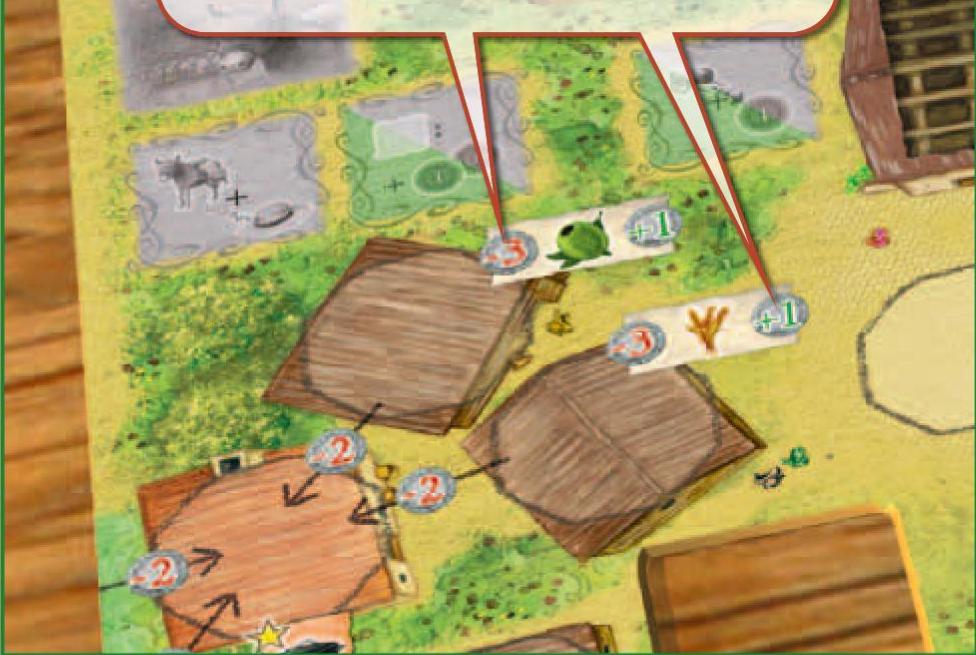
当玩家出售资源时,玩家将对应的玩家标记从小屋或猪舍中移除。作物不能从农田中直接出售!例外:35号卡牌
注意:加工产品不能被直接购买或出售。玩家可以购买资源并加工来得到对应的加工产品。
5.1.3 加工资源
玩家可以加工作物和猪来将它们转化为加工产品。玩家将代表被加工资源或猪的玩家标记移动到对应的加工产品的位置来执行这一行动。
加工费用在玩家板上用箭头上的银币来标记。
每将 单位农田中或小屋中的葡萄加工为葡萄酒的费用是 银币。将对应的玩家标记移动到葡萄酒小屋
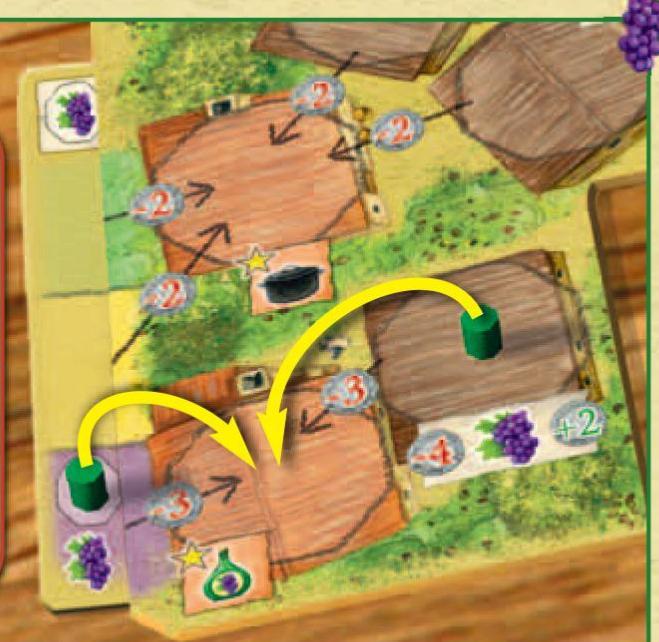
5.1.4 农田中的作物
除非发生下列情形之一,农田中的作物永远不会被移动到小屋中:
加工(详见)
作为支付农庄扩展的费用(详见)
在运货时使用(详见)
6.0 农庄阶段
农庄阶段分为4个步骤,在所有玩家都执行完前一个步骤之后,下一个步骤才开始执行。当玩家熟悉游戏规则之后,所有玩家可以同时执行前3个步骤。在此之前,每一个步骤将按照游戏顺位执行。
- 打出一张农庄卡并摸取新的农庄卡
在这一步中,每名玩家可以打出1张农庄卡并摸取1张或几张农庄卡。
例外:在游戏的第 轮玩家打出 张农庄卡!

玩家根据希望农庄卡产生的效果来将农庄卡打出在特定的位置:
打出在玩家板左侧的农庄卡称为农田。在第3个步骤中,农田会生产作物——橄榄、谷物或葡萄。玩家将打出的农田压在玩家板的左侧,确保农庄卡上农田的部分被展示出来。玩家拥有的农田数量没有上限。玩家在打出农田时,农田上总是没有任何玩家标记的。
打出在玩家板上方的三个槽位之一的农庄卡称为收购推车。玩家将打出的收购推车压在玩家板的上方,确保收购货物的部分被完整展示出来。收购推车上的标志表示这个推车收购的货物,玩家需要通过运货来把对应的资源或加工产品放在收购推车上。当收购推车上的全部需求都被满足时,推车被送往村庄,玩家得到1单位交易品和对应的胜利分数(详见8.0)
打出在玩家板右侧的农庄卡称为农庄扩展。农庄扩展会带给玩家多种多样的利益。
打出在玩家板下方的三个槽位之一的农庄卡成为一个具有一项特殊能力的帮手。帮手和他们的特殊能力在另一本卡牌说明中有详细解释。
打出农田、收购推车和帮手是免费的。如果玩家已经拥有3个帮手,再打出新的帮手前,玩家必须首先弃掉1个原有的帮手。收购推车也适用同样的规则。
打出一张农庄扩展需要特定数量的农庄产品:打出第1张农庄扩展的费用是1单位农庄产品;打出第2张农庄扩展的费用是2单位不同的农庄产品,依此类推。
玩家可以在玩家板的右上角看到一个农庄产品与打出农庄扩展费用的概览表格。

在这一步骤结束时,每名玩家摸取新的农庄卡知道达到手牌上限。游戏开始时每名玩家的手牌上限为3。农庄扩展和一些帮手会增加玩家的手牌上限。
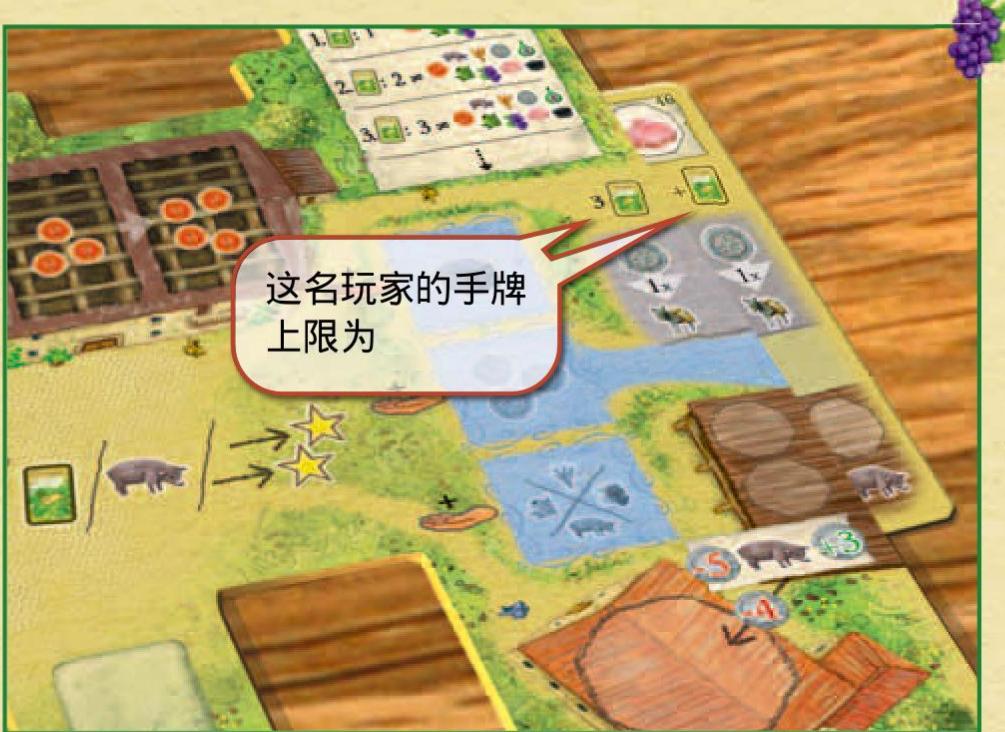
注意:只有在这个步骤结束时玩家需要检查手牌上限,在之后游戏进行的过程中,玩家的手牌可以超出上限。如果在这个步骤结束时玩家的手牌超出了上限,那么玩家选择弃掉自己的手牌直到手牌减少到上限。
2. 拿取收益
每名玩家从供应堆拿取自己的收益。在游戏开始时玩家并没有固定收益。玩家板上的蓝色作坊标记(详见8.3.1)以及农庄扩展
上的蓝色部分代表玩家获得的收益。收益可以是银币、作物、猪或者交易品。
3. 生长与繁殖
每名玩家检视自己的玩家板,在每一块空置的农田上放上 枚玩家标记,代表这块农田上生长出了新的作物。

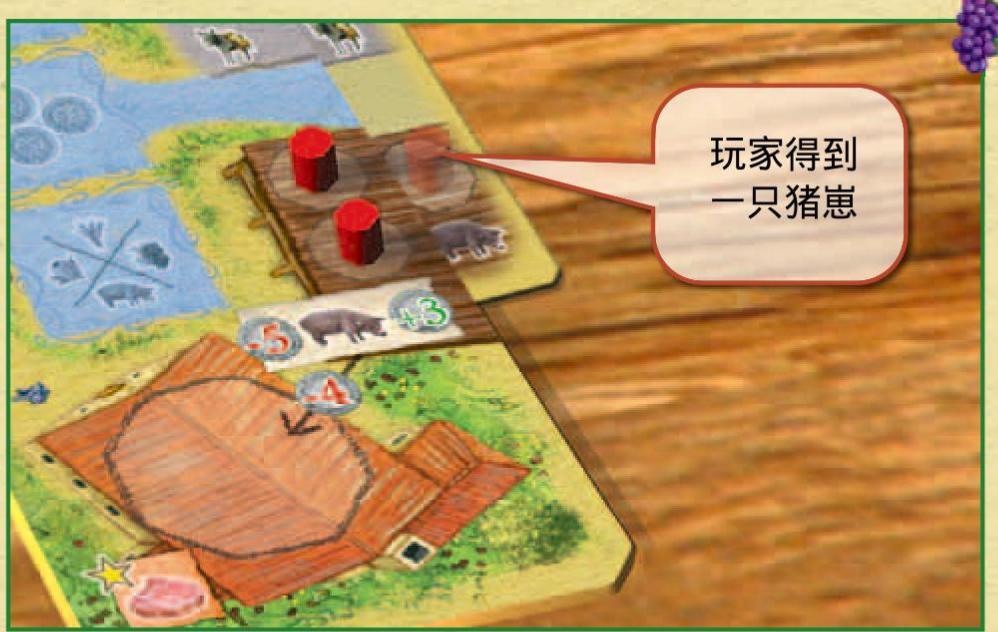
如果一名玩家至少有2只猪,他将得到1只猪崽(其实就是额外得到1只猪)。
注意:为了得到新的猪崽,玩家必须拥有足够的猪舍。如果玩家没有足够的猪舍,玩家将不能得到额外的一只猪。玩家不能立刻卖掉得到的猪崽。
游戏开始时,玩家板上已经有2间猪舍,一些农场扩展上带有额外的猪舍。即使玩家拥有4只甚至更多的猪,在这一步骤玩家也只得到1只猪崽。
4. 购买屋顶标记
按照游戏顺位,每名玩家可以购买1枚屋顶标记。

注意:在第1轮,按照游戏顺位的逆序购买屋顶标记。
屋顶标记上标注了标记的价格。屋顶标记的价格等于当前的游戏轮次:第1轮的屋顶标记价格为1银币,第6轮的屋顶标记价格为6银币。
玩家购买的屋顶标记将被放在玩家板上最左侧的屋顶标记格。当屋顶标记覆盖的空格上标有胜利分数时,玩家立即得到相应的胜利分数。
这名玩家购买了第二个屋顶标记,他支付银币并且获得胜利分。

每个屋顶标记都会提供1个一次性奖励,玩家可以自行决定在何时使用屋顶标记带来的奖励。使用过后的屋顶标记将被翻面。

注意:每名玩家每轮只能购买1枚屋顶标记。由于玩家板上只有5个屋顶标记格,因此玩家最多可以购买5个屋顶标记(唯一的例外是农庄卡Storage Builder)。屋顶标记一旦被购买将无法被弃除。
下面是屋顶标记的功能解释:

拿取 橄榄(拿取 葡萄)
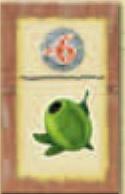

玩家获得 单位橄榄 葡萄,玩家将 枚玩家标记放在相应的小屋中。
拿取 谷物或 橄榄
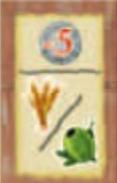
玩家获得 单位谷物或者 单位橄榄,玩家将 枚玩家标记放在玩家板上相应的小屋中。
拿取
单位任意作物

玩家获得 单位任意作物,玩家将枚玩家标记放在玩家板上相对应的小屋中。
拿取 单位不同作物
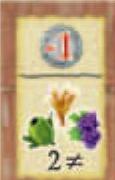
玩家获得 单位不同作物,玩家将枚玩家标记放在玩家板上对应的小屋中。
拿取 只猪
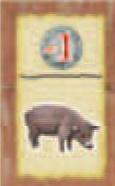
玩家获得 只猪,将 枚玩家标记放在 间空置猪舍中。如果玩家没有空置猪舍,玩家可以选择出售这只猪。
免费加工 单位资源
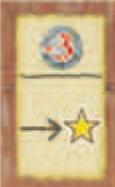
玩家可以免费加工 单位任意资源,将玩家标记从农田或小屋中移动到对应的加工品小屋中来完成加工。
进行一次运货行动
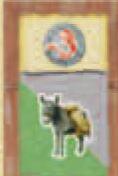
玩家立即进行 次运货行动(详见)
✿ 打出或摸取 张农庄卡

玩家打出 张手中的农庄卡(如果是农庄扩展仍需支付费用)或摸取农庄卡牌堆的第一张农庄卡。
✿ 获得 胜利分
玩家立即从供应堆得到 胜利分。
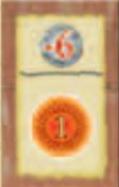
获得
银币
玩家立即从供应堆得到银币。
重置
枚屋顶标记

玩家可以将 枚使用过的屋顶标记翻面,这样玩家可以再次使用被翻面的屋顶标记。
在顺位轨上前进 格 格
玩家将自己的圆片在顺位轨上前进 格 格(详见)


7.0 收入阶段


7.1 拿取收入骰
起始玩家根据玩家人数拿取一定数量的收入骰(详见4.0),掷骰,并按照骰子点数将收入骰放在游戏板左侧对应位置。按照游戏顺位,每名玩家
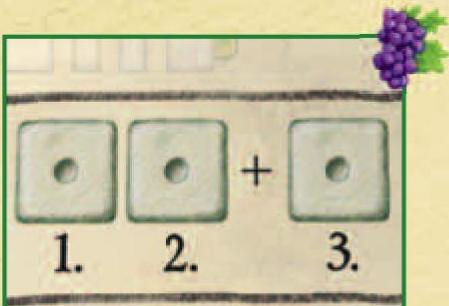
拿取1枚骰子放在玩家板上的对应位置,然后执行收入骰的行动。当所有玩家都拿取并执行了收入骰的行动后,按照游戏顺位,每名玩家拿取第2枚收入骰并执行对应行动。


最后会有1枚收入骰被留在游戏板旁,所有玩家按照游戏顺位依次执行这枚骰子的行动。
7.2 收入骰说明
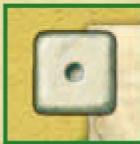
点数:拿取 只猪
玩家将 枚玩家标记放入 个空置猪舍中,如果玩家没有空置猪舍,那么玩家必须立刻出售这只猪。

点数:打出 张农庄卡 摸取 张农庄卡 拿取 单位作物
玩家必须从下列行动中选择一项执行:从手牌中打出 张农庄卡(需要为农庄扩展支付费用)
摸取农庄卡牌堆的最上面一张农庄卡拿取 单位任意作物,将 枚玩家标记放入对应的小屋中。
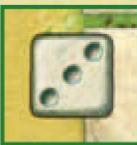
点数:拿取 单位不同作物
玩家拿取 单位不同作物,将 枚玩家标记放入对应的小屋中。
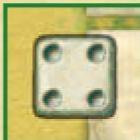
点数:拿取 银币
玩家从供应对拿取银币。
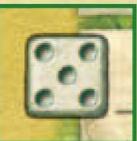
点数5:免费加工2单位资源/免费加工1单位资源并在顺位轨前进1格/在顺位轨前进2格
玩家可以从下列行动中选择 项执行:1. 玩家可以免费加工 单位任意资源,将玩家标记从农田或小屋中移动到对应的加工品小屋中来完成加工。
-
玩家可以免费加工 单位任意资源,将玩家标记从农田或小屋中移动到对应的加工品小屋中来完成加工。同时玩家可以将自己的圆片在顺位轨上前进格。
-
玩家可以将自己的圆片在顺位轨上前进格

点数:执行 次运货行动或者拿取银币
玩家可以选择立即执行 次运货行动(详见 )或者选择从供应堆拿取 银币。
8.0 运货阶段 III
运货阶段分为4个步骤。所有玩家同时进行第1个步骤,后3个步骤玩家将按照游戏顺位依次执行。
8.1 选定运货标记
每名玩家秘密选择1枚可用的运货标记。在第1轮,玩家的全部4枚运货标记均可用;第2轮时只有还没被使用过的3枚标记是可用的;第3轮时只
①. ?
有还没被使用过的2枚标记是可用的。
在第 轮的运货阶段开始时,玩家取回全部之前使用过的运货标记,这样玩家的全部 枚运货标记再次变为可用;之后的第 轮和第 轮就与第
轮和第 轮完全相同。
当所有玩家选定 枚运货标记后,所有玩家同时展示自己的运货标记。
8.2 顺位轨
按照顺位,根据选定的运货标记上草帽标记的数量,每名玩家将自己的圆片在顺位轨上前进对应的格数(0,1,2,3)。如果一名玩家的圆片最后停留的格子已经有其他玩家的圆片,那么这名玩家将他的圆片盖在之前玩家的圆片上。

注意:某一作坊标记会允许玩家在顺位轨上前进更多的格数(详见8.3.1)。

玩家的圆片不能超过顺位轨上的最后一格。在顺位轨上前进格数最多的玩家将成为新的起始玩家并拿取顺位标记1,前进格数次多的玩家将成为下一轮的第二顺位玩家并拿取顺位标记2,依此类推。
如果有多位玩家最终停留在顺位轨上的同一格,那么最上面的圆片对应的玩家获得最靠前的顺位,依此类推。新的顺位立即生效,但暂时不要移除顺位轨上的圆片。
8.3 执行运货行动
现在玩家按照顺位执行运货行动,运货标记上的每个驴标志代表玩家可以执行的1次运货行动。运货标记上的驴标志数量代表玩家本轮可以执行的最大运货行动数。
注意:某一作坊标记会增加玩家可执行的运货行动数(详见8.3.1)。
在一名玩家执行完他的全部运货行动后,下一名玩家才可以开始执行他的运货行动。1次运货行动是指玩家将1份农庄产品从农田或小屋(在一些罕见的情况下从一张农庄卡上)运送到1间作坊或玩家板上的1个收购推车上。
当一名玩家执行完他的全部运货行动后,这名玩家将他的运货标记面朝下放在玩家板的左上角。这个运货标记在第4轮运货标记重置前将无法被使用(详见8.1)。
8.3.1 向作坊运货
每名玩家都可以向全部6间作坊运货。然而在游戏开始时,其中3间作坊是关闭的。玩家暂时无法向关闭的作坊运货。
每间作坊都有4排标志,每名玩家1排。玩家在第一次运货时,可以任选一排空置的标志。这一排标志标明了玩家需要运送哪些农庄产品到这间作坊。
在一个运货阶段,玩家可以向多间作坊运货。
为了执行一次运货行动,玩家首先要从玩家板上拿取1单位农庄产品或交易品,将拿取的玩家标记放在作坊上玩家那一排的对应标志上。玩家不需要按照那一排标志的顺序来运送货物。
当一名玩家将一件作坊的全部需求满足时,玩家立即拿取那间作坊上的一枚玩家标记,放在作坊旁浅灰色格子中的一个空格中。这名玩家将不能再向这间作坊运货。这名玩家取回他在这间作坊上剩余的玩家标记。如果这名玩家是第一个满足这间作坊全部需求的玩家,这名玩家同时拿取浅灰色格子上的1胜利分。
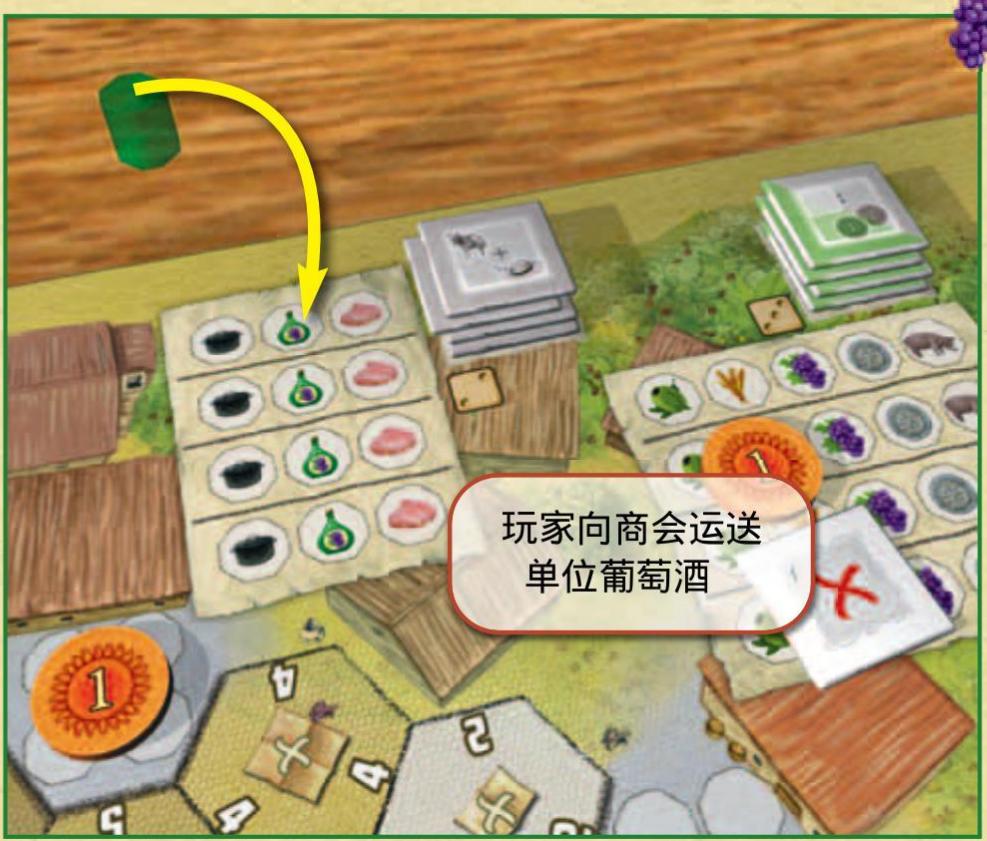
之后玩家拿取1个对应的作坊标记,并将拿取的作坊标记面朝上放在玩家板上对应的格子中。同时玩家根据目前的轮数得到相应的胜利分数。玩家拿取的作坊标记将一直被保留到游戏结束。
当玩家拿取作坊标记时,玩家可以立即执行作坊标记上的效果1次。注意:作坊标记的背面颜色比正面颜色略深。在当前轮结束时,作坊标记会被翻到背面。

玩家满足了杂货铺的全部需求,拿取杂货铺的作坊标记并获得胜利分
6枚作坊标记中的4枚允许玩家从下一轮开始在对应的阶段执行相应的效果。作坊标记的颜色代表了在游戏的哪一个阶段标记可以被使用。
✿蓝色:这些标记会增加玩家的收益
✿灰色 绿色:这些标记会在收入或运货阶段被用到。
✿灰色:这些标记在运货阶段会带给玩家奖励。
作坊标记效果的详解:
商会

玩家拿取商会标记时,立刻得到银币,之后每轮农庄阶段的步骤,玩家都可以获得额外银币。
马车行

玩家拿取马车行标记时,立即进行一次免费的运货行动,同时根据玩家圆片的位置拿取相应的胜利分。
在之后每轮运货阶段的步骤 ,玩家的圆片在顺位轨上可以额外前进 格 ,在运货阶段的步骤 ,玩家获得额外一次免费的运货行动。但是在运货阶段的步骤 玩家不会得到免费的运货行动。
熟食店

玩家拿取熟食店标记时,立即得到单位交易品。之后每轮农庄阶段的步骤,玩家都得到额外单位的交易品。
✿ 菜贩

玩家拿取菜贩标记时,立即得到 单位任意资源。之后每轮农庄阶段的步骤 ,玩家都得到额外 单位的任意资源。
下面两个作坊标记会在每次玩家满足相应条件时带给玩家额外的胜利分数。
杂货铺
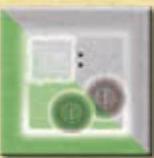
玩家拿取杂货铺标记时,立即得到胜利分,之后玩家每得到枚作坊标记,杂货铺标记就带给玩家胜利分。
一般情况下杂货铺的效果会在运货阶段触发,但是如果玩家在收入阶段选择了点收入骰并执行了运货行动,玩家也可能会在收入阶段触发杂货铺的效果。
✿ 肉贩
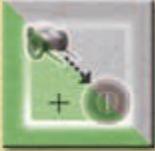
玩家拿取肉贩标记时,在玩家板上每个收购推车,玩家就得到胜利分。
此后每当玩家完成收购推车上的全部需求时,玩家就得到额外胜利分。
通常肉贩的效果会在运货阶段被触发,但是如果玩家在收入阶段选择了点收入骰并执行了运货行动,玩家也可能会在收入阶段触发杂货铺的效果。
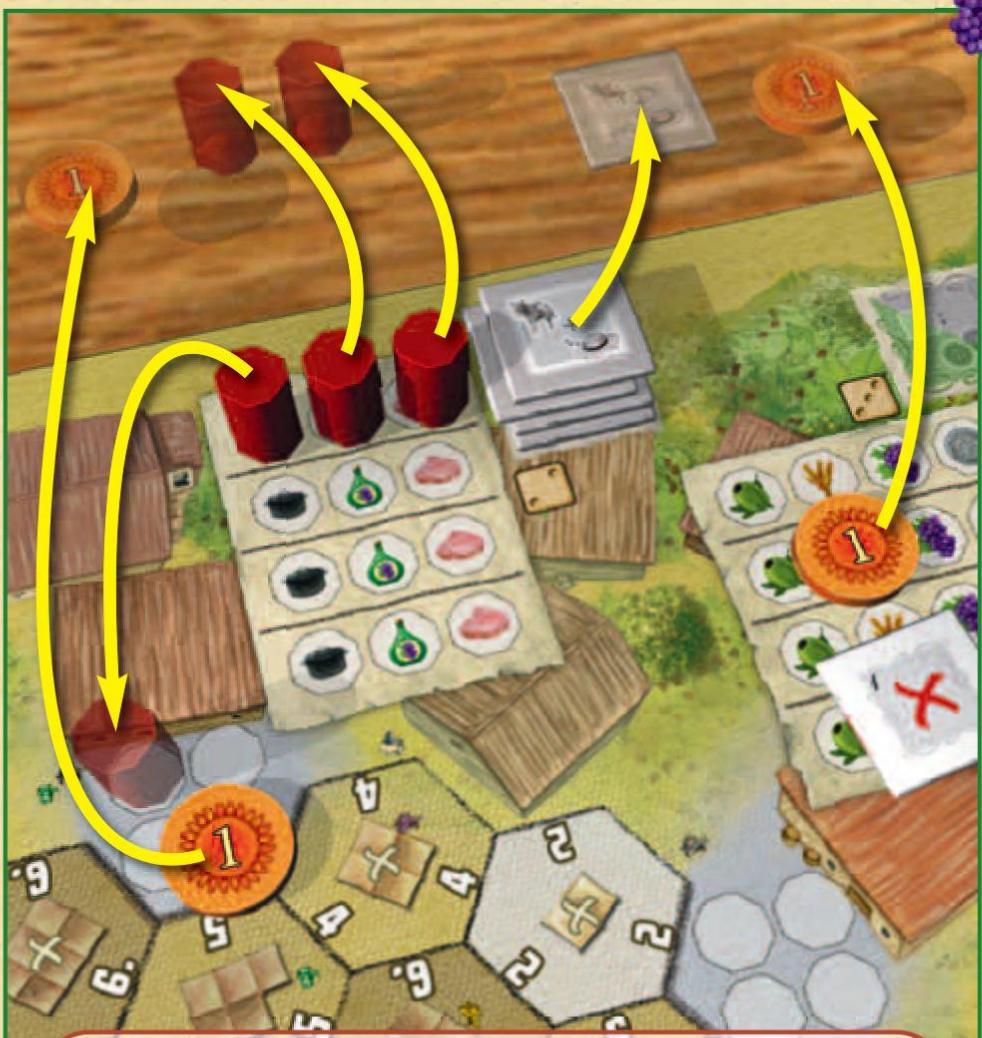
在游戏的第二轮,一名玩家率先满足了马车行的全部需求。这名玩家将枚玩家标记放在灰色格子里,收回了另外枚玩家标记。这名玩家是第一位满足马车行全部需求的玩家,因此他从灰色格子里得到胜利分,从解锁的作坊得到胜利分(详见),在第轮完成得到胜利分,合计胜利分。这名玩家立即执行一次马车行标记的效果:进行次免费运货并得到顺位轨上对应的分数。
8.3.2 关闭的作坊
在游戏开始时,3间附有建筑顺序标记的作坊处于关闭状态。玩家无法向这3间作坊运货,直到一名玩家完全满足了1间作坊的全部需求。这时标有1的建筑顺序标记被移除,玩家可以向一间新的作坊运货了。
作为奖励,触发这一效果的玩家拿取这间新作坊4排标志处的1胜利分;
当第2间作坊的需求被一名玩家完全满足时,标有2的建筑顺序标记被移除,作为奖励,触发这一效果的玩家拿取这间新作坊4排标志处的1胜利分;
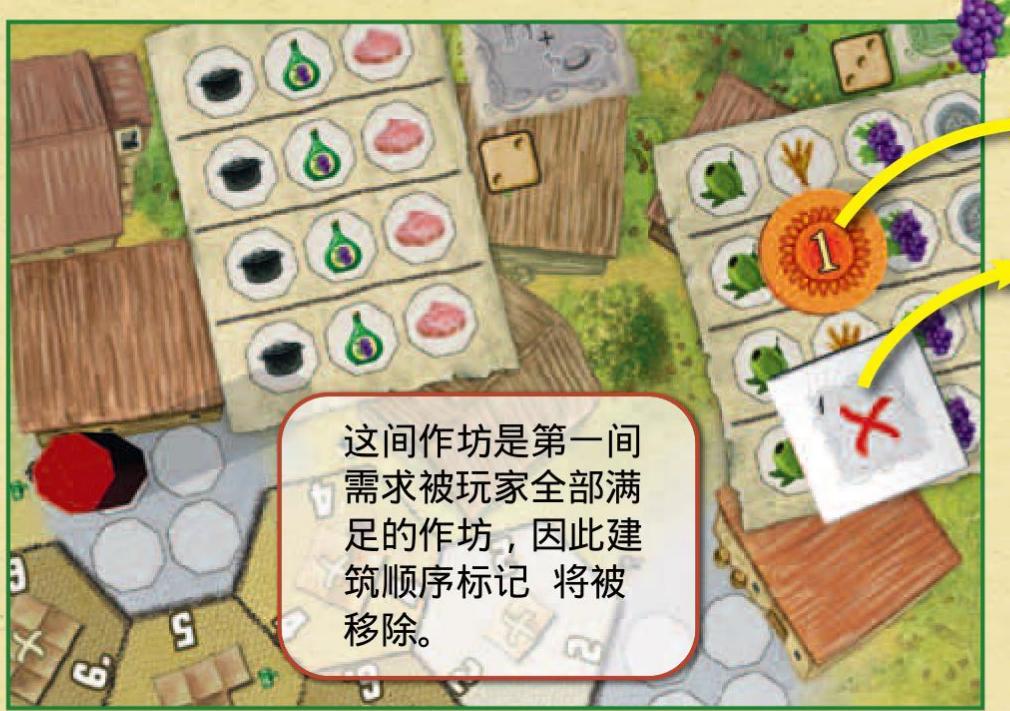
这间作坊是第一间需求被玩家全部满足的作坊,因此建筑顺序标记将被移除。
当第3间作坊的需求被一名玩家完全满足时,标有3的建筑顺序标记被移除,作为奖励,触发这一效果的玩家拿取这间新作坊4排标志处的1胜利分。
8.3.3 向收购推车运货
玩家也可以向玩家板上的1个或多个收购推车运货。
收购推车上的标志标明了哪些农庄产品需要被运送到收购推车上。玩家可以按任意顺序向收购推车运货。
当玩家向收购推车运货时,玩家将对应的玩家标志从玩家板上移动到收购推车的对应标志上。
当玩家完全满足了一个收购推车的需求时,玩家得到收购推车上标明的胜利分并且得到1单位交易品。将满足需求的收购推车从玩家板上移除,正面向上加入弃牌区。收购推车上的玩家标记返回供应堆。
玩家将农田中的 单位橄榄和小屋中的 单位谷物运送到收购推车上。收购推车上的全部需求被满足,玩家得到 胜利分和 单位交易品。
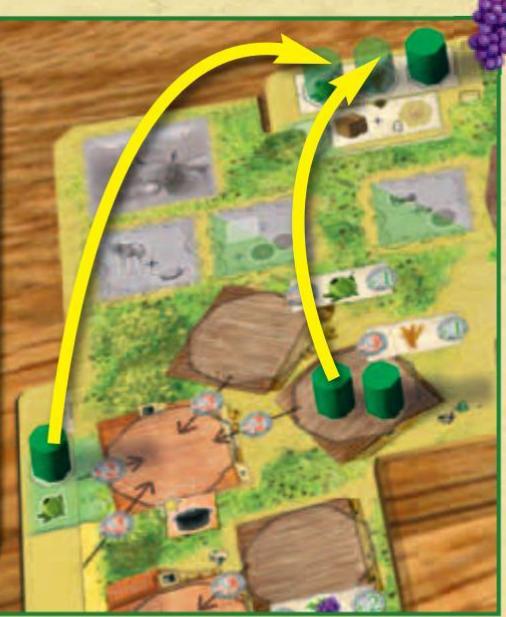
然后玩家将1枚玩家标记放入游戏板中央的集市中,与收购推车上标明的胜利分数数字对应的空置集市格中。移除所有数字小于这一集市格数字的相邻集市格中的对手玩家标记。每移除1枚对手玩家标记,玩家就获得1胜利分。
注意:如果所有与完成的收购推车上胜利分数数字相同的集市格都已经被占据,那么玩家可以任选1个数字与完成收购推车上胜利分数相同的被对手占据的集市格,将占据集市格的对手玩家标记替换为自己的玩家标记。然后移除所有数字小于这一集市格数字的相邻集市格中的对手玩家标记。每移除1枚对手玩家标记,玩家就获得1胜利分(包括被替换的1枚对手的玩家标记)。

向推车运货后,玩家将枚玩家标记放在格个标有的集市格中。随后玩家移除了旁边标有的集市格中的对手玩家标记。标有的集市格中的对手玩家标记不会被移除,玩家移除枚对手玩家标记得分。
8.4 购买与执行额外运货行动
按照顺位,每名玩家可以购买额外的运货行动(1次额外运货行动消耗1银币)。
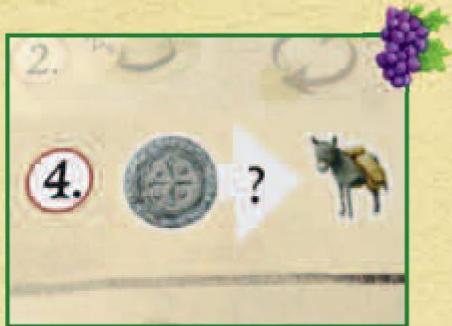
注意:玩家可以购买的额外运货行动上限被标示在玩家板和农庄扩展上。游戏开始时,每名玩家可购买的额外运货行动上限为1(标示在玩家板的右侧),一些农庄扩展会增加玩家可购买的额外运货行动上限。

这名玩家可以购买的额外运货行动上限为 ,他选择购买 次 ,支付 银币将 单位农庄产品运送到 间作坊
9.0 计分阶段
计分阶段分为 个步骤,其中后两个步骤在游戏的第6轮(也就是最后一轮)可以略去。

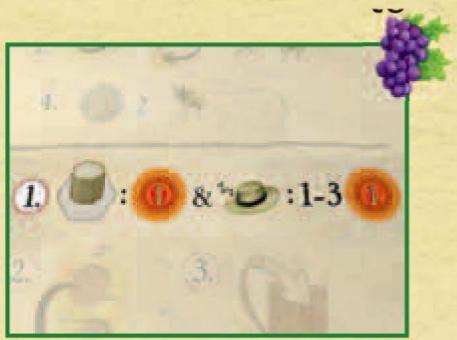
玩家每有1枚玩家标记在中央集市,就获得1胜利分(在作坊中的玩家标记不计分)。每名玩家根据圆片在顺位轨上的位置获得0,1,2,3胜利分。
将顺位轨上的圆片放回第o格,按照顺位堆叠在一起,起始玩家的圆片在最上面。

将下一轮的屋顶标记摆放出来,如果玩家在本轮拿取了作坊标记,将作坊标记翻面。在之后的轮次中,玩家将可以使用作坊标记的效果。
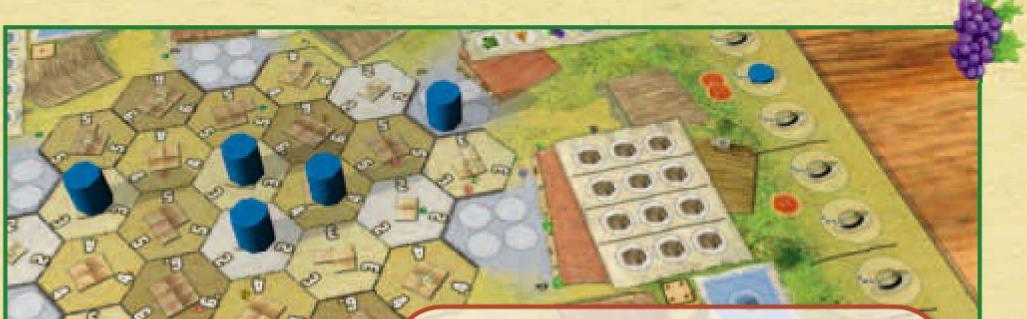
这名玩家在顺位轨上赢得胜利分,在集市上的玩家标记赢得胜利分。在作坊上的枚玩家标记不得分。
10.0 游戏结束
在第6轮游戏结束时,所有玩家执行以下行动:
将玩家板上的资源和交易品全部出售换为银币。加工产品和还在农田中的作物无法出售。
按照 银币 胜利分的兑换比例将全部银币换为胜利分。
拥有最多胜利分的玩家获得游戏胜利,如果出现平局,那么剩余银币更多的玩家获得胜利,如果仍然出现平局,那你们爱怎么着怎么着吧\~
11.0单人规则
La Granja支持单人游戏,单人游戏可以帮助玩家理解游戏的核心机制。除下面的内容外,单人游戏的所有游戏规则与多人游戏一致。
游戏设置
- 单人游戏需要用到1名玩家的全部配件和另1种颜色的全部玩家标记(用来扮演中立玩家)。
2. 使用5枚收入骰
-
使用顺位标记2和3。洗混两枚顺位标记并随机摸取1枚,将1枚玩家标记放在与顺位标记具有相同数字的中央集市格上。中立玩家标记放在与另一个顺位标记具有相同数字的中央集市格上。
-
每轮放置2枚可供购买的屋顶标记。
游戏进行
- 收入阶段:如果你是起始玩家,选择1枚收入骰并执行对应的行动。然后玩家弃掉1枚收入骰:在1-3轮中弃掉数字最低的收入骰,在4-6轮中弃掉数字最高的收入骰。然后玩家选择第2枚收入骰并执行对应行动,弃掉第2枚收入骰。最后玩家使用第三枚收入骰。
如果你不是起始玩家,那么首先按照上述规则弃掉1枚收入骰。当玩家从集市中移除中立玩家的玩家标记时,每移除1枚玩家标记,玩家就得1胜利分。
- 运货阶段:如果你是起始玩家,你执行完整的运货阶段,从农庄卡牌堆摸取1张农庄卡,将一枚中立玩家的玩家标记放在集市中对应数字的集市格中。按照以下的规则来放置这枚玩家标记:
a) 选择能让中立玩家移除尽可能多你的玩家标记的集市格。
b)如果有多个集市格满足前一条,将玩家标记放在最难被移除的集市格中(尽可能远离其他中立玩家的玩家标记或者选择一个周围更高数字的集市格都已经被占据的位置)
c)如果你在集市上没有任何一枚玩家标记(或者没有一枚可以被移除的玩家标记),将中立玩家的玩家标记放在最难被移除的集市格中。
如果你不是起始玩家,首先从农庄卡牌堆摸取1张农庄卡,将一枚中立玩家的玩家标记放在集市中对应数字的集市格中。然后你执行完整的运货阶段。
- 得分阶段:如果你的圆片到达了顺位轨的第3格,那么你将成为下一轮的起始玩家。否则你将成为下一轮的第2位玩家。
Authors: Andreas Odendahl, Michael Keller
Development: Henning Kröpke, Uli Blennemann
Graphics: Harald Lieske
Layout: Lin Lütke-Glanemann
Rules Editor: Garry Rice
End Notes
Michael Keller's “Dice for the Galaxy” formed the basis for the design of La Granja. The dice distribution mechanic originates in the unpublished design “Arriba” by Matthias “Matze” Cramer and was the inspiration for the dice distribution system of this game. In “Glory for Rome” (2005) Carl Chudyk demonstrated an outstanding way to use cards; hopefully we came up with a nice variation.
The central element in the center of the table was inspired by the temple in “Luna” (H@ll Games, 2010) by Stefan Feld.
The authors would especially like to thank Stefan Feld, H@ll Games, Uwe Rosenberg and last but not least their significant others Linda and Claudia for their support.
Testers
Claudia Odendahl, Thorsten Hanson, Robert Bachmann, Ralph Bruhn, Gesa Bruhn, Uwe Rosenberg, Horst Sarchow, Thorsten Tolzmann, Karsten Esser, Grzegorz Kobiela, Silke Hüsges, Christian Stöhr, Julius Kündiger, Tobias Miliz, Uta Dohlenburg, Till Ullrich, Matthias Cramer, Susanne Cramer, Stefan Molz, Johanna Engels, Herbert Harengel, Henning Schröder, Stefan Heine, Tim Melkert, Johanna Moratz, Jens Grotholtmann, Jonas Blohm, Mathias Saurer, Selim Hamdani, Michael Keller, Andre Ruch, Marcel Ruch, Thomas Schmitz, Daniel Bader, Roan Weber, Marc Schmitz, Peter Raschdorf, Nicole Vogt, André Schröder, Monika Harke, Rainer Harke, Jan Degler, Marlies Strassburger, Rolf Raupach, Dirk Schröder, Carsten Büttemeier, Dagmar Bock, Dirk Bock, Jörg Schröder, Martina Weidner, Katharina Bock, Markus „Kusi“ Haldemann, Richard Büchi, Alexander Blaser, Dario Manzone, Markus Krug, Steffen Rieger, Eva Hein, Stefan Trümpler, Stefan Peterhoff, Kerstin Wollschläger, Kathrin Gerber, David Gerber, Hardy Krüger, Sven Graumann, Ilja Mett, Thyra Puls, Elmar Grubert, Kaspar Wyss, Manta and the testers at Bödefeld and Majorca.
Download MarkdownThunkd's_Revised_La_Granja_Rulebook_V2.md37.7 KB
Introduction
In La Granja, 1-4 players control small farms by the Alpich pond near the village of Esporles on the island of Majorca. During the game, players develop their farms and deliver goods to the village as they vie to earn the title of La Granja for their country estate. Timing is critical! La Granja is a fascinating game that requires careful planning. Successful players must learn to cope with the vagaries of the dice and cards.
Aim of the game
Over the course of six game rounds, players will expand their farm and deliver goods to the village of Esporles, earning them victory points. Players have two options to earn victory points in the village:
-
Craft Buildings - When a player has fully supplied a craft building, they receive victory points and a craft building tile which grants a bonus for the remainder of the game.
-
Market Barrows - When a player has fully supplied a market barrow on their farm (i.e. the farm cards at the top of their farm), they receive victory points and a trade commodity.
It is important to observe the actions of the other players, to manipulate turn order, and to adjust for the vagaries of the dice and the cards during the game. The player who has earned the most victory points by the end of the game is the winner and earns the title of La Granja for their estate!
Components
Each copy of La Granja contains:
1 Game Board  | 4 Player Boards  | 4 Player Aids  | 66 Farm Cards  |
100 Player Pieces (25 per player)  | 4 Siesta Discs (1 per player)  | 16 Donkey Tiles (4 per player) 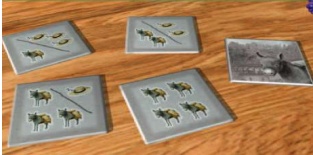 | 4 Turn Order Tiles (1, 2, 3 & 4) 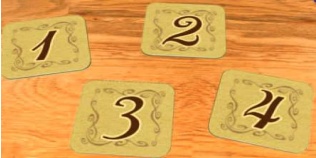 |
24 Roof Tiles (4 per Round)  38 Silver Coins (1's & 3s) | 24 Craft Tiles (4 per Craft Building) 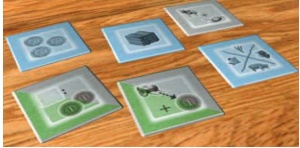 66 Victory Point Tokens (1's, 3's, 5's and 10's) | 9 Revenue Dice  Rulebook (English & German) | 3 Building Order Tiles 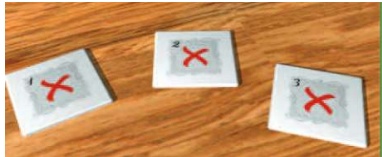 Glossary (English & German) |
Component Explanations
Game Board – The game board has five main areas:
Central Market – The central market is represented by hexagonal market spaces where each space has a number between 2 and 6. In games with fewer than four players the outer market spaces marked with an X cannot be used.
Craft Buildings – There are six craft buildings in a ring around the central market. Each craft building has four rows showing the items that can be delivered to that building. There is one row for each player. Once a player has assigned an item to a row, that row is reserved for their pieces.
Revenue Dice Spaces – The revenue dice spaces are on the left side of the board and are marked with die values.
Siesta track – The siesta track is on the right side of the board. It represents how rested players are in each round and is used to determine turn order.
Roof Tile Market – The roof tile market is at the bottom of the board. There are spaces for the current round's faceup roof tiles and spaces for the future round (rounds 2 through 6) facedown roof tiles.

Farm Cards - La Granja contains 66 farm cards. During the game, players draw cards into their hands and then play them by tucking them under one of the four sides of their farm. After playing a card, only the side chosen by the player is “Active” and influences the game. The information on the other three sides of the card is irrelevant for the rest of the game.
Fields – Played to the left side of the board. Has a spot for a harvest good, either olives, grain or grapes.
Market Barrow – Played to the three notches at top of the board. You can deliver goods to this card.

Farm Extension – Played to the right of the board. Increases your hand size. may provide income or space for pigs.
Helper – Played to the three notches at bottom of the board. Provides some special ability.
Player Boards - Each player has a player board which represents their farm. The following appear on that farm:
Craft Tile Spaces - There are spaces for the six craft tiles.
Harvest Good Dens - These three dens hold harvest goods acquired during the game. Each of these dens shows the picture of the harvest good that the den can hold, the cost to buy the harvest good (the red negative number) and the price you can sell the good for (the green positive number). Note: Goods on your fields cannot be moved to these dens and cannot be sold. Additionally, there is an upgrade cost shown to convert these goods either to food or wine (the red number between this bin and the upgraded goods den).
Upgraded Goods Dens - There are two dens that hold goods you have upgraded during the game. Note: Upgraded goods cannot be sold.
Trade Commodity Storage - There is a central space for trade commodities. This area shows what trade commodities can be redeemed for.
Pig stall – A space for your farm to hold two pigs.
Farm Extension Costs - A table showing the costs for farm extensions. Note: Farm extensions become more expensive with each additional extension.
Farmhouse - There is a farmhouse with five spaces for purchased roof tiles.
Donkey Tile Space - A space for played donkey tiles.
Revenue Dice Spaces – Spaces for the two revenue dice you will choose each round.

Attention: While the space for trade commodities and dens for harvest goods and upgraded goods may hold any number of player pieces, the pig stall only has room for a maximum of two pigs (hence two octagonal spaces). Farm cards may be placed at the appropriate spots on the four sides of the farm; their usage varies according to their location on the farm. At most three cards may be placed at the top and bottom of the farm – one card in each “notch”. Cards placed to the left and right are partially tucked underneath cards that have already been played so that only the appropriate side of the card is showing. There is no limit to the number of cards in these two locations.
Revenue Dice - There are nine dice in the game. Not all are used depending on the number of players. These dice wil be rolled and assigned to the matching revenue spaces of the game board.
Silver Coins - Silver is the currency in La Granja with denominations of 1 and 3.
Victory Point Tokens – Victory points are tracked via tokens in the denominations of 1, 3, 5, and 10.
Craft Building Tiles - Each craft building in the village has its own specific craft tile. Each player takes one tile when completing a craft building. Note: Craft buildings can only be completed by a player once. The front side of the tile shows its “immediate function” and the back side shows an ongoing ability.
Roof Tiles - Each player may purchase one roof tile per round. Roof tiles are placed on your farmhouse from left to right. When placed, a player receives the number of victory points that will be covered by the roof tile. Additionally, a roof tile provides its owner a one-time bonus. This bonus does not have to be taken immediately. When a player chooses to take the bonus, they flip the tile to the used side.
Donkey Tiles - Each player has an identical set of four donkey tiles. Each round, players will select a donkey tile. The tile shows the number of deliveries the player will get, as depicted by donkeys, and the number of advances on the siesta track they get (if any), as depicted by hats.
Building Order Tiles – There are three building order tiles. They will be placed on three closed craft buildings at the beginning of each game and may be removed during the game. The tiles will be removed in the order 1, 2 and 3 as marked.
Turn Order Tiles – There are four turn order tiles. Turn order will be recalculated each round.
Player Pieces – Pieces represent, depending where they are placed, goods, trade commodities, goods that have been delivered, your position in the central market or to signify that you have completed a craft building. Each player is limited to 25 player pieces in their color. In the rare case you run out of pieces, you may pick up a previously placed piece to use as a new piece.
Explanation of Terms
Harvest Goods – Olives, Grain and Grapes. These are stored on fields (if grown by the player) or in harvest dens and may not be moved between the two locations. If on fields, they remain until they are upgraded, used as payment for the cost of a farm extension or used as a delivery.
Resources – All the harvest goods, plus pigs. These may be bought, sold or upgraded. Exception: Harvest goods on fields may not be sold.
Upgrade – Grain and olives upgrade into food. Grapes upgrade into wine. Pigs upgrade into cured meat. After upgrading move the resource piece into the appropriate upgraded goods bin.
Revenue – Revenue is anything gained via the revenue dice. This can include resources, silver, a delivery, upgrades, advances on the siesta track, playing a card or drawing a card.
Trade Commodity – Trade commodities may be returned for resources or actions (as shown on your player board).
Farm – A player's board and attached cards represents their farm.
Farm Goods – Farm Goods (primarily used when referencing the cost of playing a farm extension) include silver, victory points, harvest goods (olives, grain, grapes), upgraded goods (food, wine, cured meat) and pigs.
Delivery – Represented by the Donkey symbol. A delivery is defined as moving one good from a field or den (or sometimes a card) to a craft building or to a market barrow on a player's farm.
Setup
1) Place the game board in the center of the table.
2) Shuffle the 66 farm cards. Place them next to the main board as a draw deck. Note: If during the course of the game the draw deck is exhausted, shuffle the discard pile to form a new draw deck.
3) Place the victory point tokens and silver coins next to the board.
4) Give each Player:
● 1 Player Board – This board represents their farm.
● 25 player pieces (wooden octahedrons) in their player color.
● 1 set of Donkey Tiles –This includes four tiles with one donkey, two donkeys, three donkeys and four donkeys.
● 1 Victory point token
● 1 Silver coin
● 1 Trade commodity – Represented by placing one of their player pieces on the trade commodity space on their player board.
● 4 Farm cards
5) Sort the roof tiles by the round number shown on the back and make face down stacks. If playing with fewer than four players, randomly remove roof tiles from each stack until it contains roofs equal to the number of players. The removed roof tiles can be returned to the box as they will not be used in this game.
6) Sort the craft tiles by the six types and place each stack on the matching image on the main board (next to the six craft buildings.)
7) Place a victory point token on each of the craft buildings completion spots. (The light gray spaces next to craft buildings with spaces for a piece from each of the four players.)
8) Determine the three closed craft buildings by rolling a die and placing a building order tile and a victory point token on the matching craft building (each craft building has a die symbol next to it). If you roll the same building again, reroll until you select three different craft buildings.
9) Determine how many dice will be used in the current game and return any extra dice to the game box. You will use two dice per player plus one extra die. 2 players = 5 dice; 3 players = 7 dice; 4 players = 9 dice
10) Randomly determine a start player. Give that player the #1 turn order tile. In clockwise order from the start player, each player takes the next turn order tile. Any unused tiles are returned to the game box.
11) In turn order, each player places one player piece on a center market space on the main board with a number that is one higher than their turn order position. 1st player = 2 space; 2nd player = 3 space; 3rd player = 4 space; 4th player = 5 space.
12) Note: In a game with fewer than four players, the outer market spaces (marked with an X in their center) may not be used.
13) In reverse turn order, each player places their siesta disc on the space at the bottom of the siesta track. The final stack should be in turn order from top to bottom.
Sequence of Play
La Granja is played over six game rounds. One game round consists of four phases:
Farm Phase – Play a card, take income, growth, purchase a roof tile
Revenue Phase – Draft revenue dice
Transportation Phase – Adjust turn order, make deliveries
Scoring Phase – Score the central market
Attention: La Granja does not contain a game round track. Players use the backs of the roof tiles and the empty roof tile spaces to determine the current game round.
Anytime Actions - La Granja is a very flexible game – most of the time the active player may perform various actions in the order of their choosing. This is especially important for certain actions that may be conducted anytime during the game independent of the phase of a game round. These actions include returning trade commodities, buying and selling resources, and upgrading resources.
Trade Commodities - Trade commodities (mostly commonly acquired via completed market barrows) are represented by player's pieces on the central space of their farm. A player may return a trade commodity to their supply to conduct one of the following actions:
● Silver - The player takes four silver.
● Havest Goods - The player takes two different harvest goods. Represented by pieces on the corresponding dens of their farm.
● Cards - The player either plays one cards to their farm (taking farm extension costs into account), or they draw a farm card to their hand.
● Pigs - The player takes one pig. Represented by a piece on their pig stall space.
● Upgrades – A player upgrades two resources free of charge. Represented by moving the resource into the appropriate upgraded good den.
Buying/Selling Goods – Generally resources may be bought or sold at any point during your turn. Harvest goods on fields, however, may not be sold (exception card #35) and upgraded goods may not be bought or sold. However, you may buy a resource and then pay to upgrade it.
Purchased harvest goods are placed into the appropriate den on your player board. The cost for buying a resource is shown next to the den of that type (see image).
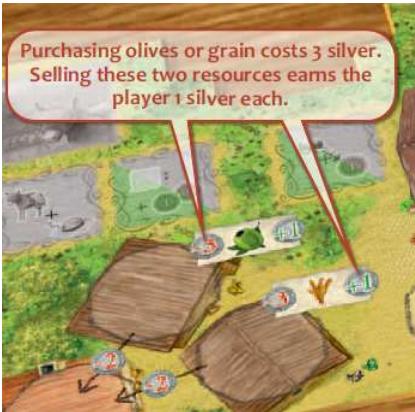
Upgrades - A player may upgrade harvest goods and pigs (henceforth referred to as upgraded goods). To do so, the player piece is moved from its resource space to its space as an upgraded good. The costs for upgrades are listed on the farm between the dens and fields of the harvest goods and the pig stall and the dens for upgraded goods.
Upgrading the grape from the field or from the den into wine costs 3 silver each. The corresponding player marker is moved to the wine den.

The farm phase consists of four steps. One step is always conducted completely by all players before the next step is started. After players are comfortable with the game, the first three steps of the farm phase may be conducted simultaneously. Otherwise, the farm phase is played in turn order.
- Farm Cards - Each player may play one farm card and draw new farm card(s) up to their hand limit (shown on right side of player board & on farm extension cards). Exception: In the first round, every player plays two cards.
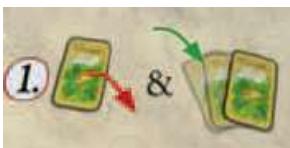
Farm Cards may be played in one of four ways:
Fields – A card placed on the left side of the farm becomes a field. A harvest good will be produced on an empty field (either olives, grain, or grapes) during the growth step of the farm phase. Tuck a card played as a field underneath the left side of the player’s farm board so that only the left side of the card is displayed. A player may have any number of fields. A field always enters the game “empty” (i.e. without a harvest good)!
Market Barrow – A card placed in one of the three slots on the top of the farm becomes a market barrow. Tuck the card underneath the top of the player’s farm board so only the information at the top of the card remains visible. Goods, shown by their corresponding symbols, can be delivered to the barrow by the player. When the market barrow has been fully supplied, it is sent to the village market and earns the player a trade commodity and victory points as shown on the second line (beneath the delivery good symbols).
Farm Extension – A card placed on the right side of the farm becomes a farm extension. Tuck a card played as a farm extension underneath the right side of the player’s farm board so that only the right side of the card is displayed. Farm extensions cost 1 different farm good (see the chart on your player board) for each farm extension card you will have after playing the card. A farm extension offers various benefits including
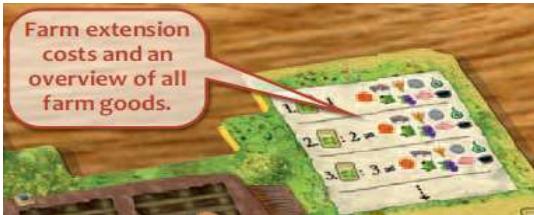
increasing the player's hand size. Attention: The hand limit is only in effect at this time; during the rest of the round a player may have more cards in their hand than their hand limit allows. If a player must discard surplus cards, they may choose which of their cards to discard in order to get back to their hand limit.

Helper – A card placed in one of the three slots at the bottom of the farm becomes a helper that gives the player special abilities. Tuck the card underneath the bottom of the player’s farm board so only the information at the top of the card remains visible! The helpers and their functions are listed in detail in the glossary. Some helpers have a 1X at the bottom right. This represents that the card may only be used once per round.
Playing a card as a market barrow, helper, or field is always free. If a player already has three market barrows (or three helpers) on their farm and would like to play another one, they must discard an existing one to make room for the new market barrow (or helper).
- Take Income - At the start of the game no player has any ②一 regular income. Blue craft tiles (placed on the river section of your player board) and farm extensions with a river section produce income for a player. Income may be silver, harvest goods, pigs, or trade commodities.

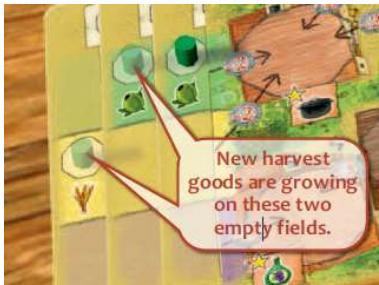
- Growth - Each player receives new harvest goods on empty fields and a pig if they have at least one breeding pair. Note: To receive a pig, a player must have the necessary space or they do not get offspring (a player may not sell the newborn pig
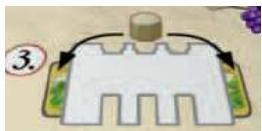
immediately!). The farm has space for two pigs, the appropriate farm extensions have space for one pig each. Even with several pigs a player only gets one pig as offspring.
- Purchase roof tiles – In turn order, each player may purchase one of the current round's roof tiles. Players may only buy one roof tile per round. Attention: In the first round, players purchase roof makers in reverse turn order!
A roof tile shows its costs in silver. The price corresponds to the current round, starting at 1 silver in round 1 and increasing to 6 silver by the sixth and final round. Since a farm only has five roof tile spaces, a player may buy a maximum of five roof tiles. A purchased roof tile may not be discarded.
Purchased roof tiles are placed on the leftmost empty roof tile space on the player’s farm (this space might not correspond to the current game round!). When a player covers up a roof tile space with victory points printed on it, they immediately receive those victory points.
Each roof tile provides a special one-time benefit, which may be used at the player’s discretion during one of their turns. All roof tiles are colored according to the phase(s) they may be used. After they have been used, they are turned face down.
Roof tiles:
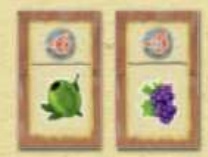 Take one olive (grape) | 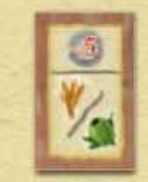 Take one grain or one olive | 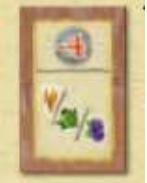 Take any harvest good |  Take two different harvest |
 Take one pig – (or 3 coins if you have no space for it.) | 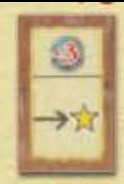 Upgrade one resource free of charge | 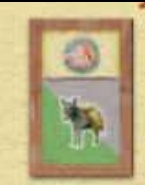 Carry out one delivery | goods 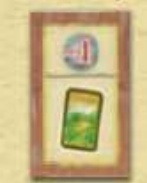 Play one card or draw one card |
 Receive 1 victory point |  Receive 2 silver |  Flip over one used roof tile. It may be used again. | 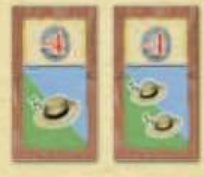 Advance one or two steps on the siesta track |
The start player rolls the revenue dice (9 Dice for 4 players, 7 dice for 3 players, 5 dice for 2 players). Sort the dice by die number and place each die next to the corresponding revenue

die space. In turn order, each player takes a single die and places it on one of the dice spaces on their player board and takes the revenue associated with that die. Then, in turn order, each player takes a second die and repeats the process. Finally, in turn order, each player takes the revenue associated with the leftover unchosen die.
Die number 1: Take one pig - The player takes one pig and places one of their pieces on a pig den space. If a player does not have an empty pig den space, they must immediately sell the pig.
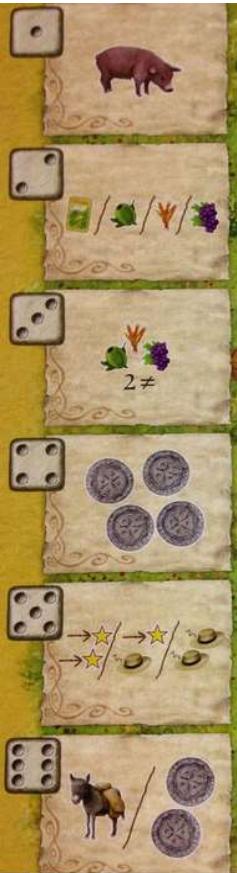
Die number 2: Play a card or draw a card or take a harvest good. The player may choose the following options:
a) Play a card to their farm (paying the costs for farm extensions!)
b) Draw a farm card to their hand.
c) Take any harvest good (olive, grain, grape)
Die number 3: Take two different harvest goods.
Die number 4: Take 4 silver
Die number 5: Upgrade/Take Siesta advances. The player chooses one of the following:
a) Upgrade two resources free of charge
b) Upgrade one resource free of charge and advance one step on the siesta track
c) Advance two steps on the siesta track.
Die number 6: Carry out one delivery or take 2 silver
Transportation Phase – Phase Three
Select Donkey Tiles - Each player secretly chooses one of their available donkey tiles and places it face down in front of them. This tile will determine how many deliveries and siesta advances the player gets this round. Tiles are revealed simultaneously
Tiles selected will be set aside after the round and will be unavailable in future rounds. In the fourth round, you will recover any used tiles and they will be available again.
Advance on the Siesta track – In turn order, players advance on the siesta track according to the number of hats on their chosen donkey tile (0, 1, 2, or 3 steps). If a player ends on a space occupied by another player, they stack their disc on top of any disc(s) already there. Note: One of the craft tiles increases the number of steps a player moves on the siesta track. A player may not advance beyond the topmost space of the siesta track.

Determine Turn Order - The new turn order is determined. The player who has advanced furthest on the siesta track is the new start player and takes turn order tile 1. The player who is second receives turn order tile 2, etc. If two or more players occupy the same space on the track, the player whose disc is on top is considered to come sooner in turn order than discs below. The new turn order takes effect immediately. Leave the discs where they are on the siesta track.
Carry out Deliveries - Players now carry out their deliveries in the new turn order. Each donkey symbol on a donkey tile represents one delivery. The number of donkey symbols on a tile is the number of deliveries a player may carry out. Note: One of the craft tiles increases the number of deliveries a player may make.
Each player will carry out all their regular deliveries before the next player makes their deliveries. A delivery is defined as moving one farm good from a field or den (and sometimes a card) to either a craft building in the village or to a market barrow on the player´s farm. A player continues making deliveries until they have used as many of their deliveries as desired. When a player has carried out all their deliveries, they place their donkey tile face down in the top left corner of their farm. This tile is no longer available until the donkey tiles reset in round four.
Extra Deliveries

After all the players have resolved their regular deliveries, players may buy extra deliveries based on how many extra deliveries are available to them, (as shown on their farm and farm extension cards; see image). Each player starts the game with 1 extra delivery as shown on the upper right of their farm board. Some farm extensions provide the player with additional extra deliveries. In turn order, each player may purchase as many of their extra deliveries as they desire, at a cost of 1 silver per delivery. Players are not required to use any of the extra deliveries available to them.
Craft Building Deliveries

There are six craft buildings that players may send their deliveries to. However, at the start of the game, three of the six buildings are “blocked”, (marked with a building order tile in that area). Players may not make deliveries to blocked buildings. Each craft building has four delivery rows, one for each player. Delivery rows are separated by lines.
Blocked Craft Buildings - Three craft buildings are "blocked" (i.e. access to them is barred) at the start of the game. This is indicated by putting building order tiles on the blocked buildings. These buildings

may not receive any deliveries. When the first unblocked craft building is completed, the building order tile #1 is removed and returned to the game box. This unlocks the locked craft building which is immediately available. The player who triggered this effect takes the victory point tile that was placed next to the building order tile. Building order tile #2 is removed in similar fashion when a second craft building is fully supplied; building order tile #3 likewise when a third craft building is fully supplied.
When a player makes a delivery to a craft building, they choose an empty row and move a player piece from an item on their farm to the matching the item in the craft building delivery row. That row is now reserved for that player and they must put future deliveries to that craft building in the same row. Items may be delivered in any order to a craft building. A player does not have to deliver goods in the order shown in their row. Deliveries to craft buildings may be
spread out over as many rounds as necessary. A player does not need to finish delivering to one craft building before starting deliveries to another.
When a player has fully supplied a craft building (i.e. their player pieces occupy each space in their row), they immediately transfer one of these tiles to one of the completed craft building spaces (highlighted in light gray). The player may no longer make deliveries to this craft building. Their remaining player pieces from the delivery row are returned to their supply. If the player is the first one to fully supply a craft building, they immediately take the victory point from the completed craft building spot.
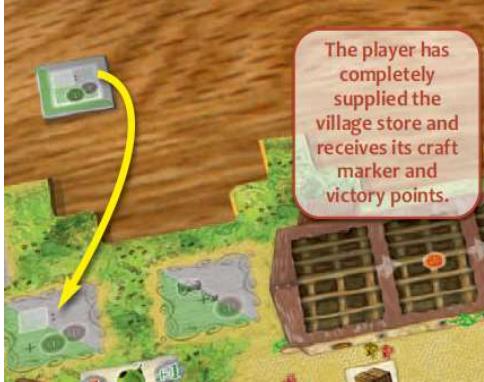
The player also takes one of the craft tiles from the building and places it, front side up, on the corresponding space of their farm. The player receives victory points equal to the current game round. The player may immediately use the function of the front side of the tile once! Each player keeps their craft tiles until the end of the game. Note: As a reminder, the front side of the tiles is somewhat lighter than the back side.
Craft building tiles are flipped to their back side at the end of the current round. Tiles have ongoing effects that start in the round after they are acquired. The color of the tile corresponds with the color of the phase(s) in which the tile may be used. Blue tiles provide income during the take income step of the farm phase. Gray/Green tiles may be used in either the revenue or transportation phase. Gray tiles may only be used in the transportation phase.
Craft Building Tiles:
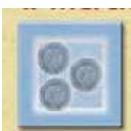
Merchant House - When the tile is taken, the player immediately takes 3 silver. Starting in the following round, the merchant house provides the player 3 additional silver in the 'calculate income' step of the farm phase.
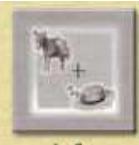
Wainwright - When the tile is taken, the player immediately carries out a free delivery and takes victory points (one time) as determined by the location of their disc on the siesta track. Starting in the following round, the wainwright allows the player an additional step on the siesta track in the 'advance on the siesta track' step of the transportation phase and an additional free delivery in 'make deliveries' step of the transportation phase (but not in step 4 – extra deliveries!).

Deli - When the tile is taken, the player immediately takes one trade commodity. Starting in the following round, the deli earns the player one trade commodity in 'calculate income' step of the farm phase.

Greengrocer - When the tile is taken, the player immediately takes any one resource (olive, grain, grape or pig). Starting in the following round, the greengrocer allows the player to take any one resource in the 'calculate income' step of the farm phase.

Village Store - When the tile is taken, the player immediately takes 2 victory points. Starting in the following round, the village store gives the player 2 victory points when they receive a craft building tile.
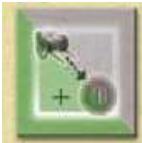
Butcher - When the tile is taken, the player immediately takes victory points equal to the number of market barrows at their farm (0 to 3). Starting in the following round, the butcher gives the player 1 additional victory point when they score a market barrow.
Market Barrow Deliveries
Players have space for three Market Barrows which they may deliver items to. When a player makes a delivery to a market barrow, they move a player piece from an item on their farm to the matching symbol on their market barrow card. Items may be delivered to the market barrows in any order and over multiple game rounds. When a player has fully supplied a market barrow (i.e., there is a player piece on each symbol), they take the number of victory points shown on the card (2 to 6) and moves a player piece from the card to the central space of their farm, representing a trade commodity.
The player then takes a player piece from their market barrow card and places it on an empty space of the central market whose number corresponds with the victory point number on the market barrow they just completed. If there is no empty space of the appropriate number, then the player selects a space of that number occupied by an opponent's piece and replaces their piece with their own, returning the opponent's piece to their supply. Additionally, all opponent pieces on adjacent market spaces which have a lower value are removed and returned to their owner's supply. The player takes 1 victory point for each player piece returned to their owner's supply. Any remaining player pieces on the completed market barrow card are returned to their owner's supply and the card is removed from the farm and placed in the discard pile face up.
Scoring Phase – Phase Four
Players perform end of round scoring and cleanup.
1) Each player takes 1 victory point for each of their player pieces in the central market. Players do not take victory points for player pieces on craft buildings.
2) Each player scores the siesta track, taking 0, 1, 2 or 3 victory points depending on their position.
3) Player pieces on helper cards (bottom of farm) are returned to their owner's supply.
4) The siesta track is reset by stacking the player discs on the starting space from top to bottom in turn order.
5) Roof tiles for the next round are placed in the roof market face up.
6) Craft building tiles acquired this round are flipped from their immediate effect side (front) to their ongoing effect side (back).
End of Game
After the sixth round (tracked by the six groups of roof tiles) the game ends. The following happens:
1) Trade Commodities are converted into four silver.
2) Resources are sold at normal sell prices. Note: Upgraded goods and resources on fields may not be sold.
3) Silver is converted to victory points at a rate of 5:1. (5 Silver for 1 VP).
The player with the most victory points wins! If there is a tie, the tied player with the most remaining silver wins. If there is still a tie, the tied players share the victory.
Solitaire Game
The solitaire version of La Granja is played the same as the original game with with the following exceptions.
Set Up
1) All the components for one player are used as well as another color's player pieces, the neutral player.
2) Five dice are used.
3) Shuffle the 2 and 3 turn order tiles secretly. Draw one tile randomly and place your player piece on the space in the center of the market matching that number. Place the neutral player's piece on the spot matching the other tile.
4) Use two roof tiles for each round.
Game play
1) Revenue phase:
When the player is start player (i.e. they have turn order tile #2), they choose one die and carry out its action. Then they discard one die (in rounds 1-3 they discard the die with the lowest number, in rounds 4- 6 they discard the die with the highest number). Then the player selects a second die and discards one die (same process as above) The player then uses the remaining die.
If the player is not the start player, one die is discarded before the player selects a die according to the above rule.
When the player removes a piece of the neutral player from the market, they takes 1 victory point per piece they remove.
2) Transportation phase:
When the player is the start player, they carry out their complete transportation phase.
The neutral player places a piece in the central market by drawing a farm card and putting a piece on the number that matches the victory point from the market barrow section of the card. The following rules apply to this placement:
a) The neutral player will attempt to remove the most of the player's pieces, if possible.
b) Then the neutral player will choose the space that is most difficult to be removed. (i.e., as far apart as possible from other neutral player pieces or in spaces where the adjacent higher numbers are already occupied).
If the player is not the start player, the neutral player's placement occurs first, then the player carries out their transportation phase.
3) Scoring phase:
If the player reaches the third space of the siesta track, they are the start player in the next game turn, otherwise they are not.
Download Markdown简繁检索对照.md1.6 KB
147886_146886_la-granja — 简体/繁体检索对照
本游戏的规则书是繁体中文原文。用户用简体提问时,把关键词按下面这张表转成繁体再去 grep 原文,命中率最高。
回答时用简体或繁体都可以,但引用的原文保持繁体。
简体 → 繁体 对照(按该游戏原文出现频率排序,共 60 字)
| 简体 | 繁体 | 原文出现次数 |
|---|---|---|
| 个 | 個 | 340 |
| 记 | 記 | 227 |
| 标 | 標 | 225 |
| 场 | 場 | 183 |
| 农 | 農 | 127 |
| 会 | 會 | 114 |
| 游 | 遊 | 104 |
| 戏 | 戲 | 103 |
| 数 | 數 | 98 |
| 运 | 運 | 93 |
| 区 | 區 | 83 |
| 货 | 貨 | 77 |
| 这 | 這 | 72 |
| 并 | 並 | 63 |
| 时 | 時 | 62 |
| 轮 | 輪 | 59 |
| 获 | 獲 | 50 |
| 后 | 後 | 49 |
| 顺 | 順 | 48 |
| 进 | 進 | 48 |
| 阶 | 階 | 46 |
| 间 | 間 | 45 |
| 应 | 應 | 44 |
| 两 | 兩 | 44 |
| 筑 | 築 | 42 |
| 当 | 當 | 42 |
| 张 | 張 | 41 |
| 从 | 從 | 41 |
| 币 | 幣 | 39 |
| 级 | 級 | 39 |
| 猪 | 豬 | 37 |
| 银 | 銀 | 36 |
| 资 | 資 | 36 |
| 里 | 裡 | 35 |
| 顶 | 頂 | 35 |
| 车 | 車 | 35 |
| 们 | 們 | 33 |
| 买 | 買 | 33 |
| 费 | 費 | 32 |
| 庄 | 莊 | 30 |
| 开 | 開 | 30 |
| 购 | 購 | 30 |
| 对 | 對 | 29 |
| 号 | 號 | 28 |
| 见 | 見 | 28 |
| 采 | 採 | 28 |
| 骤 | 驟 | 26 |
| 为 | 為 | 25 |
| 图 | 圖 | 25 |
| 显 | 顯 | 24 |
| 轨 | 軌 | 24 |
| 选 | 選 | 24 |
| 说 | 說 | 23 |
| 边 | 邊 | 23 |
| 扩 | 擴 | 22 |
| 圆 | 圓 | 22 |
| 盘 | 盤 | 22 |
| 来 | 來 | 22 |
| 给 | 給 | 22 |
| 执 | 執 | 22 |
Texts are community-compiled or publicly released by publishers; copyright remains with the original authors. For personal reference only.