
Luna Capital
At a glance
Rules, cards and Q&A (Chinese)
The rules, card data and player questions for this game are written in Chinese. Open the Chinese page to read them.
Where to find full rules
Full rules and card lookup are available in the cunlema app at cunlema.cn — pick this game and ask about any rule, card or turn you are unsure about.
Related games
Rulebook text (Markdown)
This game has 1 rulebook Markdown file(s) in our library; 1 rendered inline below — expand to read or download.
Rulebook_EN_LunaCapital_baja.md35.7 KB


The colonization of the moon has ceased to be a concept limited to science-fiction. Today, in the year 1977, it is a fully viable project. Various businesses and companies are eager to finance the development of human settlements and be the first to set up in the new colony. All kinds of pioneering colonists have traveled to our planet’s satellite with the hope of being the first to build a viable and prosperous settlement suited for human life... and to sell the other colonists everything they are going to need to be happy at LUNA Capital!
The players take on the roles of the various groups of colonists (engineers, scientists, exo-agriculturalists, miners, etc.) and will have to manage all of the opportunities available as they construct essential installations on the most appropriate terrain. The prize for success is not small: The agreement signed by all of the colonists states that the most eficient and impressive moon station shall become the capital of the new lunar colony.
Over 12 rounds, the players will be given access to delivery batches made up of blueprints for various structures (Construction cards) and one or more project options, such as resource silos, lunar greenhouses, and residential modules, among others (Project tiles), that they will then place in their own playing area, called a “Settlement.” At the end of round 12, the score is summed up and the Lunar Colonization Authority will designate the one who has done the best job as the capital of the satellite preferred by nine out of ten inhabitants of Earth.
setup
A
Separate the Construction cards from the Concession cards. Then separate the Concession cards into one deck for Short-Term Concessions and another for Long-Term Concessions. Shufle each of these three decks separately, face down.
B
Give each player 3 random Construction cards and 1 Sponsor tile, along with the three corresponding Identification tokens. Each player places their Sponsor tile in front of them to show their player color.

Place the board with the four card spaces facing up and place one of the Construction cards face up on each of the spaces. Place the Construction card deck in the card dispenser face down and place it on one side of the playing area. Place the Last Delivery marker on the card closest to the Construction card deck.
D
Draw a Long-Term Concession card and two Short-Term Concession cards. Place them face up above the row of Construction cards so that everyone can see them. Leave the Selenite Robot tokens and Logistics Redistribution tokens in the reserve where everyone can reach them.
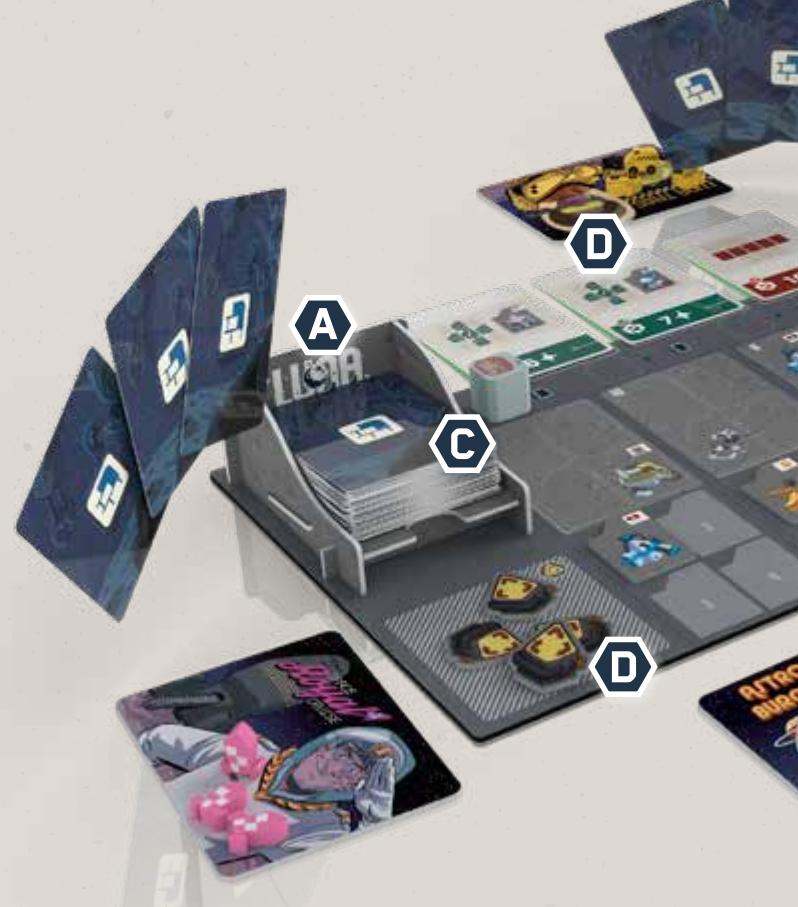
Separate the Project tiles into groups by the Phases on their back.

F

Taking into account the number of players, return the tiles with a number of dots equal or higher than the number of players. This means that if there are two of you playing, you discard the tiles with 2 or 3 dots in their top right corner. If there are three people playing, you discard those that have 3. If four people are playing, then none of the tiles are discarded.
Mix each set of Project tiles separately. Leave the Phase B and Phase C tiles to the side for now. Place one random Phase A tile face up under each of the Construction cards on the board and place the rest of the Phase A tiles face down in the Project Tower.
G
Randomly choose who will be the first player and give them the First Player marker. The turn will run clockwise starting from the First Player marker. Now, starting with the last player (who is sitting to the right of the first player) and working counterclockwise, each player has the option of exchanging one Construction card from their hand for a card in any of the 4 spaces on the board.

game components

68 construction cards
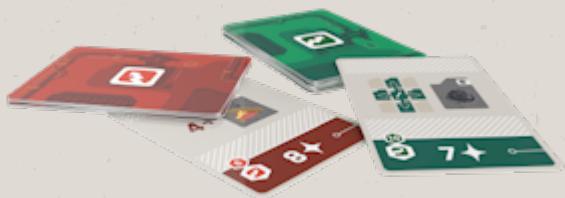
24 concession cards
15 Short-Term Concessions and 9 Long-Term Concessions


4 sponsor tiles
1 card dispenser
8 selenite robot tokens

1 last delivery marker

12 identification tokens 3 for each sponsor



4 logistics redistribution tokens
1 scoring pad
1 first player marker
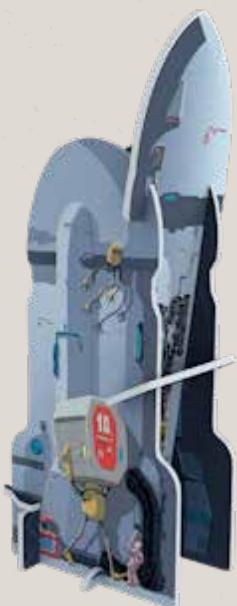
1 project tower
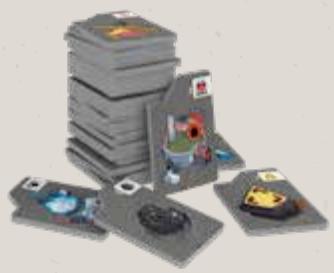
165 project tiles 55 Phase A tiles, 55 Phase B tiles, and 55 Phase C tiles
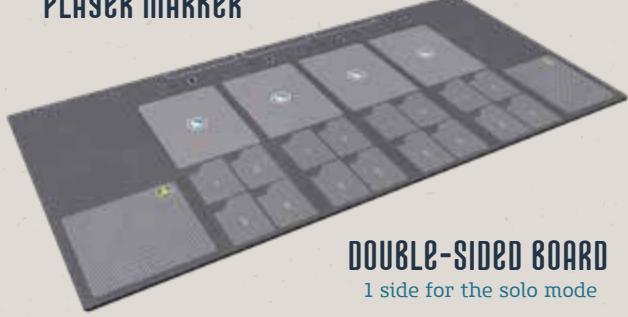


let’s build luna capital!
During our games of LUNA Capital we will often use these Project tiles. It is worth it to know about them before getting into the details of gameplay. If you want to learn the end game scoring details, check page 10.

vital systems


collectors and condensers

Hydrogen collector
Oxygen collector


Water condenser
Any human settlement that wants to survive longer than five minutes must have a clear plan for the rational use of its hydrogen and oxygen collectors, as well as the condensers that combine these two elements to make water.
SCORING: Each of these vital systems is scored separately by counting only the single largest group of orthogonally connected sites.


greenhouses

Pears Greenhouse
Apples Greenhouse

Lemons Greenhouse

Varied Fruits Greenhouse

If we are going to have people running around the surface of the moon, we had better be sure their stomachs are full! To begin with, we must be sure we are able to grow those fruits that are best suited to the special technologies we have developed for the lunar soil: pears, apples and lemons.
SCORING: The single largest group of connected greenhouses scores as a vital system, regardless of the type of fruits grown inside them. Additionally, greenhouses give the player points if they have sets of all three colors in their Settlement (the varied fruits greenhouse is a wildcard).

constructions


hab-mods (habitation modules)




These mobile constructions are the places that the technical staf inhabit while they are working on the Moon. The idea is that the Hab-mods are located near the structures where their specialists work so that they do not have any superfluous commuting.

SCORING: These give players 2 for each project of the indicated type in any of the 8 sites around it (10 sites if the one the Hab-mod is placed on is a double-site).

THEY CAN BE PLACED ON TOP OF LUNAR SCAFFOLDING

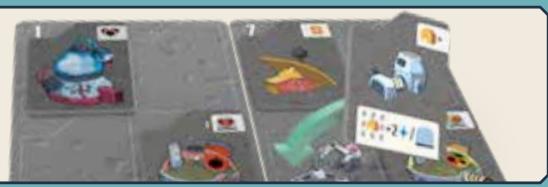
When placing this Hab-mod (over the Lunar Scaffolding or on an empty site), it will score 2 for any greenhouse around it. In this case, it would score 4 .

residential complexes

These structures are for the families that permanently settle on the Moon, with shops, discos, movie theaters, and all kinds of entertainment.
It is far easier to sell the apartments in these complexes if the settlement has enough sales ofices and if the Hab-mods are close so that the engineers and scientists will be nearby if they are needed.
SCORING: This gives players 1 for each project of the indicated type found anywhere in the player’s Settlement.
· THEY CAN BE PLACED ON TOP OF LUNAR SCAFFOLDING

moon landing grounds

Connections to the Earth are essential for inhabitants of the Moon, because they will naturally want to host their loved ones when they come to visit them from the old planet! Naturally,
the landing grounds also serve as a center for logistics, receiving resources and goods, as well as being interstellar hubs for ships that travel to remote places in the solar system and even deep space.
RULE: When this project tile is placed, the player immediately draws 3 Construction cards from the deck and keeps 1 of them. The other 2 cards are put at the bottom of the deck.
· THEY CAN BE PLACED ON TOP OF LUNAR SCAFFOLDING ·


sales offices

It is all well and good to set up a colony on the moon, but if we cannot get people to move up here, the business will go under. We ofer people a cup of cofee and lay out our pitch to those
families willing to live in space with spectacular lunar properties complete with views that are literally out of this world.
SCORING: Each sales office in the player’s Settlement generates 2 .

demolition

Sometimes, the progress of the colony does not quite fit with the plans laid out in the beginning. It’s no problem! A quick intervention by the demolitions team and everything is once again
ready for new constructions without missing a beat.
RULE: This Project tile can be placed on any Building Site, it covers any tile or printed element on the card as well as Lunar Scaffolding, meteorites, or anything else. This space is then considered empty and can be occupied later by any other Project tile.
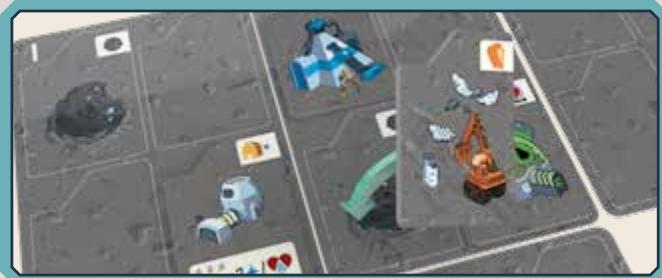

These little characters are fundamental in the construction of the human settlement on the Moon. They can move with great agility over the lunar terrain and help us plan the layout of the
installations, so they are eficient and safe.
RULE: Whenever a tile is placed that has Selenite Robots on it, that player takes the corresponding number of Selenite Robot tokens from the reserve (1 or 2) and places them on their Sponsor card. During later turns, when placing a Construction card in their settlement, the player can cover the number on that card with a Selenite Robot token and ignore the rule that requires that the numbers in the rows of cards increase from left to right (the rest of the rules in reference to the placement of the cards still apply normally).
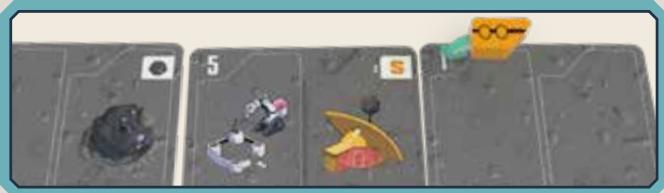

meteorites

While meteorites can be a hassle during construction work in the settlement, they also hold a certain scientific interest. They are treasure boxes of surprises that may contain unknown metals,
elements from other galaxies, or even traces of extraterrestrial life. But don’t get me wrong: in general they are nothing more than worthless cosmic rocks.
scoring: See who has accumulated the most meteorites in their settlement and they are given according to the number of players in the game.

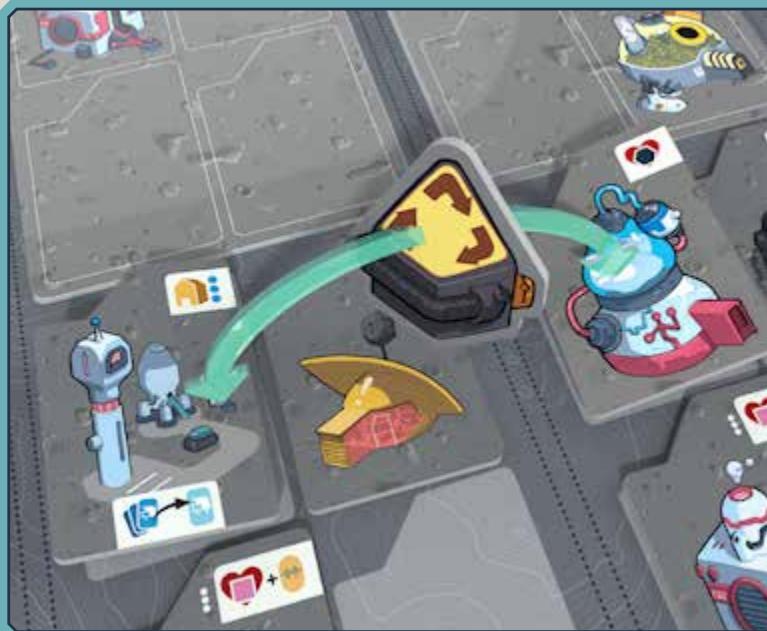
Sometimes, you have to use your influence as a sponsor to ensure we get the resources we need to win the race to become the capital of the moon.
RULE: When a player takes this tile, they place it on any empty site in their settlement and they take 1 Logistics Redistribution tile from the reserve, which is placed on their Sponsor card to be used in any later turn. To use it, at the beginning of any of their turns, the player discards the token and swaps the location of two Project tiles on the board before choosing their set of card and tiles.
game play
The game is played in 3 phases (A, B, and C) of 4 rounds each. During each round, every player plays one turn (for a total of 12 turns per player).
the player’s turn
Turns are always taken clockwise around the table starting from the first player. During the game, each player will create their own Settlement by building rows of Construction cards in front of them. Each Construction card shows a number of Building Sites. By placing Project tiles on their Building Sites, the players will improve their Settlement, earning victory points.
To start their turn, the player takes 1 of the 4 available sets of a Construction card and the Project tile(s) below it. The card is added to the player’s hand and the tile(s) is left in front of them for now. If the player chooses the combination with the Last Delivery marker on it (the last one drawn), they must first discard one of the cards from their hand and place it at the bottom of the deck.
Play 1 Construction Card. The player must now select 1 of the Construction cards they have in their hand (those they had before plus the one they just collected) and place it face up in their Settlement. The placement of the card must meet all 4 of these conditions:
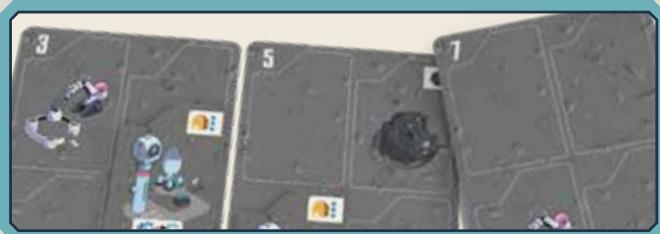
It cannot be placed covering any other card or rotated in any way. The number on the card must be visible in the upper left corner.
From the second card on, each card mustbe placed adjacent to and at a right angle 2 be placed adjacent to and at a right angle (above, below, to the left, or to the right) of at least one of the Construction cards placed in a previous round: At least two corners of the new card must touch two corners of an existing card. Once a card has been placed on a Settlement, it cannot be moved or rearranged.
3 There can be a maximum of 3 rows of cardsin each player’s Settlement. The length of each row has no limit. Each row can have a different length as well.
4 The Construction cards are numbered from 1 to 10. Within each row, the numbers on the cards must increase from left to right and no number can repeat within the row. If the player has no card that fulfills this condition in their hand, they must place the new card face down (while still fulfilling conditions 1, 2, and 3). Since the number will not be visible, it will not be taken into account. Also, the player will not be able to place any Project tiles on that card.
Play Project Tiles. After placing their card, the player must place all the Project tiles that they took that turn. Project tiles may be played on top of any empty Building Sites in their Settlement. The player is not required to place them on top of the card that was just added to their Settlement (except for the first turn when there are no other options).
Each tile must be placed on a Building Site that is completely empty, without any Project tile or building of any type. Some Construction cards have their own projects built on them beforehand that are treated the same way as Project tiles that are placed later. Some
Building Sites are larger than others. A player can still place only one Project tile in these “double” sites.
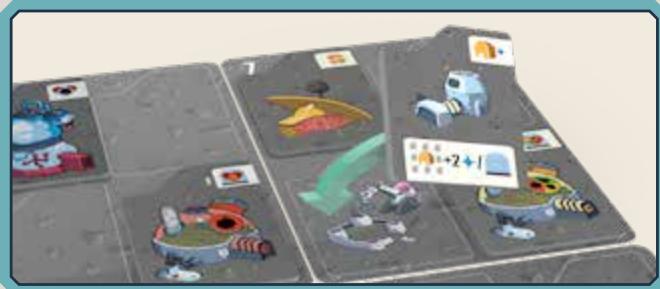
There are two exceptions. The only tiles that can be placed over other elements of the game are:

Constructions , which may be placed on empty sites or on Lunar Scaffolding 1 printed on the cards.
Demolitions tiles 2 , which may be placed on top of any element and make that site empty.
Some Project tiles give players Selenite Robot tokens and/or Logistics Redistribution tokens . These tokens are placed on their Sponsor tile until the player decides to make use of them.

Once their turn is completed, the player draws a new Construction card from the deck and places it face up in the empty area. They also take a number of Project tiles from the Tower equal to the number of the current round (1, 2, 3, or 4) and place them below the Construction card. The Last Delivery marker is then moved to that position and assigned to that card and tile(s) combination. If the next player takes this, they must discard
Once this is done, the next player in the clockwise direction begins their turn.
When the turn comes full circle and returns to the player who has the First Player marker, before they begin their turn, one more tile is added to each combination of card and tiles. That way, in the first round, there will be 1 Project tile below each Construction card. At the start of the second round, there will be 2. At the start of the third round, there will be 3. Then, at the start of the fourth round, each combination will have one Construction card and 4 Project tiles. At the end of the fourth round, the current Phase ends.
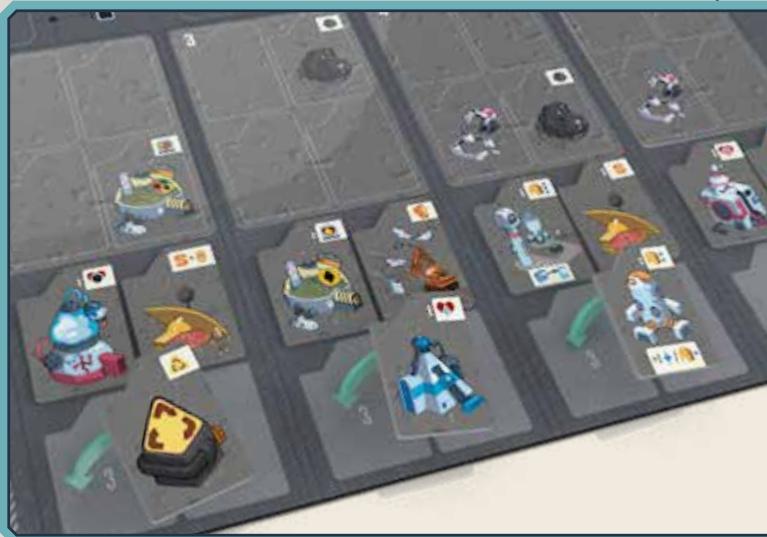
We place a third tile at the beginning of the third round.
end of the phase and concessions
At the end of each Phase, before the players begin the next round, each player checks whether they have fulfilled the requirements for any of the exposed Concessions that are still available.
Each player who has fulfilled the requirements for one or more of the Concessions places an Identification token on top of each of the Concessions for which they meet the requirements that does not already have any Identification tokens on it. It is possible for multiple players to claim the same Concession, but only if they do so at the end of the same Phase. Once a Concession has at least one Identification token on it, it will no longer be available to the other players for the rest of the game. You can find more detailed information on the Concessions on page 12.
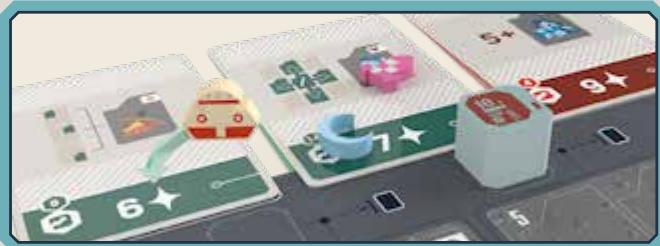
Once you have played 4 rounds, a new phase starts. The Construction cards on the board remain there (you must always have four of them in play at the start of each turn). Remove the leftover Project tiles from the Tower and the game board and return them to the box. Take the Project tiles for the next game phase and place one randomly under each Construction card and place the rest in the Project Tower.
The First Player marker is then passed to the next player.

final scoring
After the end of Phase C, the game ends and the players calculate their Victory Points based on the following concepts. Consult the detailed information on the Project tiles on page 5.

vital systems
There are four types of vital systems that are required for safe life on the Moon: hydrogen collectors , oxygen collectors and water condensers , as well as greenhouses (regardless of what type of fruit is grown in them). Each player finds the single largest set of orthogonally adjacent tiles of each type to score.
Depending on how big the area is, the VP ( ) awarded will be as shown on this table:
| 1 | 2 | 3 | 4 | 5 | 6 | 7 | 8 | 9 | 10+ |
| 1+ | 3+ | 6+ | 10+ | 15+ | 20+ | 25+ | 30+ | 35+ | 40+ |

greenhouses
In addition to scoring as vital systems, greenhouses generate their own points. Each player counts the number of complete sets of crops they have in their Settlement (pears , apples and lemons ) and are awarded 5 / 12 / 22 for having 1 / 2 / 3 complete sets. The greenhouses in a set DO NOT have to be adjacent to each other. Some greenhouses have all three types of fruits . Each of these may be counted once as any type of fruit as best suits the needs of the player (so they serve as a “wildcard”).
Check to see who has accumulated the most meteorites in their settlements. Players are awarded points based on their rank and the number of players in the game:
• 2 players: 10 for first place only
• 3 players: 10 for first and 2 for second place
• 4 players: 10 for first, 5 for second and 2 and third place
If there is a tie, the of the tied awards are added together and split between the players (rounding down when needed). For example: in a three-player game, two players tie for the number of meteorites; each of the tied players is then awarded 6 (10+2 divided by 2=6).

sales offices
Each sales office in a player’s settlement generates 2 .

constructions
The constructions are scored according to the conditions indicated for each building:
Each Hab-mod awards 2 for each tile of the indicated type in any of the 8 sites around it (10 sites if the one the Hab-mod is placed on is a double-site).
Each residential complex awards 1 for each tile of the indicated type in any location in the player’s Settlement.
Each player gets 3 for each Project card they have in their hand.

concessions
The for each of the Concessions the player has successfully claimed is added to their total.
Finally, the Lunar Colonization Authority adds up all the scores and the player with the highest score is declared the winner. Their settlement becomes the LUNA Capital to the great delight of all its investors and supporters! If there is a tie, the one with the least Lunar Scafolding showing in their Construction cards shall be declared the winner.
| 35 | ||||
| 15 | ||||
| + | 10 10 | |||
| + | 品4 | |||
| 5 | ||||
| 0 | ||||
| 2+ | 8 | |||
| x2+ | 28 | |||
| x3+ | 3 | |||
| + | 6 120 |
You can check this scoring example by seeing the image on the back of the box. We’ve counted the scored by Astro Burger, and written them down in this scoring pad.

detailed information on the concessions
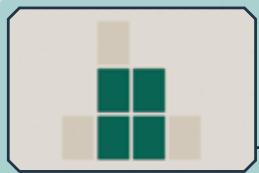


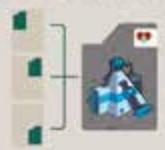
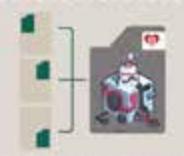
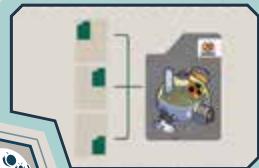
Have 4 Project tiles of any type arranged as shown on the Concession card.
0 8+
1
习
Complete a Phase without any Lunar Scaffolding showing in the player’s settlement.
0 8+
Have at least 4 different vital system buildings that are orthogonally adjacent to one another. Greenhouses are all one single type of vital system, regardless of the fruit.
0 8+
-07+
Have 3 cards in a column and at least one hydrogen collector on each one.
7
Have 3 cards in a column and at least one oxygen collector on each one.
2
Have 3 cards in a column and at least one greenhouse (any fruit) on each one.
-07+
习
3
习
4
习
5
习
6
习

Have 3 cards in a column and at least one water condenser on each one.
8
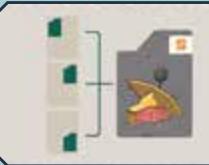
Have 3 cards in a column and at least one sales office on each one.
6

Have 3 cards in a column and at least one meteorite on each one.
0 6+

Have 3 meteorites in a line (either vertical or horizontal).
7

Have 3 oxygen collectors in a line (either vertical or horizontal).
0 6+

Have 3 greenhouses (any fruit) in a line (either vertical or horizontal).
0 6+
7
习
8
9
习
10
习
11

Concessions are special contracts that—provided the player is one of the first to fulfill the conditions required to obtain them—can give a huge boost to a Settlement’s drive to become the capital city of the moon. Here is a detailed explanation of the Long-Term Concessions and the Short-Term Concessions.






Have 3 hydrogen collectors in a line (either vertical or horizontal).
0 6+
13
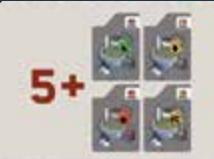
Have 3 water condensers in a line (either vertical or horizontal).
7
Have 3 sales offices in a line (either vertical or horizontal).
0 6+
10
Have fewer rows of cards than the other players.
–0 9+
Have 5 or more oxygen collectors.
10
Have 5 or more greenhouses of any type.
14
15
习
习
1
2

Have 5 or more hydrogen collectors.
-0 9+

Have 5 or more water condensers.
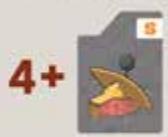
10
Have 4 or more sales offices.
8

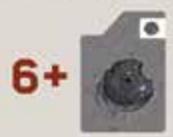
Have 6 or more meteorites.
0 9+
Have 8 Construction cards of any type arranged as shown.

10
Have 5 or more Construction cards in the same row.
10
5
6
7
8
9 M

solitaire mode
Surprise! Your company was not the first one to set foot on the moon! The megacorporation of Harrington & Sons, specialized in the production of fine boating hats, beat us to the punch. They sent an expedition made up of an extremely eficient automaton that is managing all of the business opportunities on ofer in order to take the prize of the selenite capital. Compete against the elegantly-dressed automaton from Harrington & Sons and seize your victory!
Set up a game as if 2 people were playing, but with the following changes:
Place the board on its solitaire side, with 3 spaces for construction cards.
Deal 3 Construction cards face up to each player (yourself and the Automaton). After seeing your own cards and those of the Automaton, you may exchange your 3 cards for his. Then, return the Automaton’s cards to the bottom of the deck.
Eliminate the “Have fewer rows of cards than the other players” Concession from the game.
The Automaton will have no Sponsor card, Identification tokens, or any kind of special tile.
game play
You will be the first player in all of the rounds. You play your turn normally, paying special attention to the Concessions (as indicated in the scoring section below). Before you replace the set of card and tiles you have chosen, the Automaton takes a turn.
the automaton’s turn
Out of the two cards and tile combinations that are left, the Automaton will choose the one furthest from the card dispenser that does not have the Last Delivery marker on it.
Place the Construction card and tile combination chosen by the Automaton of to the side. The Automaton does not place Construction cards
cards and tiles according to type in order to make the scoring calculation easier later. You can always look through the cards and tiles that the Automaton has taken. After his turn, refill the cards
and tiles as
normal
(without
forgetting
to place the
Last Delivery
marker) to prepare for your next turn.
After playing all 3 phases, the score is counted up.

Count up your points as normal, but with these changes:
The Short-Term Concessions score their full value if they are completed in Phase A. They are worth half their full value (rounding up) if they are completed in Phase B and are worth nothing at all if they are obtained in Phase C.
0 The Long-Term Concessions score their full value if they are completed in Phase A or B and are worth half their value (rounding up) if they are completed in Phase C.
Following these conditions, at the end of each phase, check whether you have completed the Concessions and mark them with an Identification token at the top of the card if you get the complete value and at the bottom of the card if you get a half score.
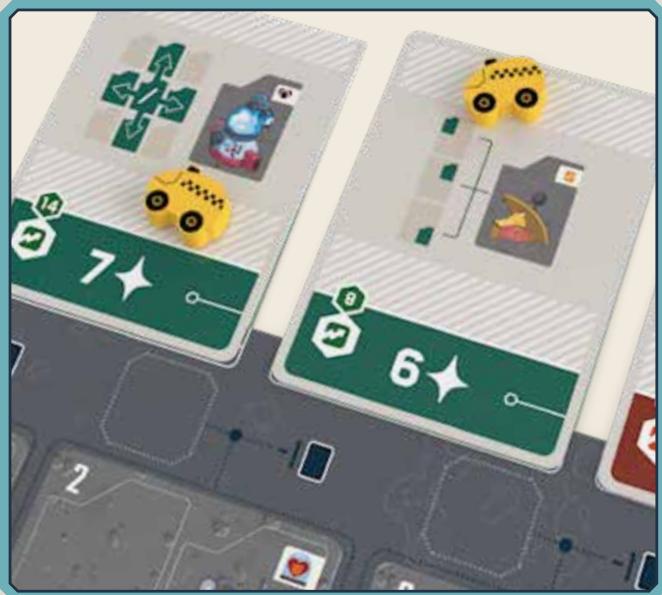
His score will take into account both his Project tiles and the projects printed on his Construction cards.
Vital Systems : Score all of his Project tiles and projects on the cards as if they were all adjacent.
Greenhouses : Score normally.
Sales Offices : Score normally.
Buildings (Hab-mods and complexes ): each construction of these types gives the automaton 5 .
has more meteorites than you).
Cards in Hand : Score as though the Automaton had 3 cards left from the first deal: 9
Special Tiles: (demolition , logistics redistribution , landing grounds ) 2 each.
Add up both scores and see who is the winner. If there is a tie, the Harrington & Sons automaton wins.

Astro Burger: The most popular fast food restaurant chain in the galaxy has finally landed on the moon with its whole range of cosmic burgers - soft drink, fries and surprise included. You can come along with your children and spend their birthday having fun in our zero-gravity kiddie park.
Moon Paradise Real Estate: We will design your perfect property in space, up to your most exclusive demands. Schedule a tour to visit our sample house with pool and a million dollar view of the Earth. The best location to raise your family!
Luna Taxis: Make the best use of your time by cruising the city in style, laying back and reading the papers while you breath the scented oxygen, available only in our lunar rovers. Our staf of professional drivers know the surface of the moon like the palm of their hand.
Space Royal Cruise: Landing on the moon in a high luxury space rocket is something that you will only find in our space cruise line. Spend your well deserved holidays orbiting the satellite and enjoying a soothing void-bath in your private suite.
credits
author: josé ramón palacios illustrator: albert monteys proofreader: jaume muñoz graphic design: meeple foundry 3d, wood and punchboards: bg fx editor: david esbrí
english translation: andrew campbell english adaptation: william niebling

Devir Iberia S.L. Rosselló 184 08008 Barcelona www.devir.com

The author would like to thank his friends and families for their support, and also all the people who played this game when it was still just a project.
Download MarkdownTexts are community-compiled or publicly released by publishers; copyright remains with the original authors. For personal reference only.