
Menara
At a glance
Rules, cards and Q&A (Chinese)
The rules, card data and player questions for this game are written in Chinese. Open the Chinese page to read them.
Where to find full rules
Full rules and card lookup are available in the cunlema app at cunlema.cn — pick this game and ask about any rule, card or turn you are unsure about.
Related games
Rulebook text (Markdown)
This game has 2 rulebook Markdown file(s) in our library; 2 rendered inline below — expand to read or download.
rules_zh_高塔神庙_3433.md16.5 KB

在马来西亚热带雨林的深处,发现了一块形状奇特的古代建筑碎片。这让前来探险的你们激动不已。通过对建筑碎片的研究发现,几千年前,这个地方曾经存在过一座寺庙。它会是什么样子?有没有可能重建?要做到这一点,你们必须共同努力。
古代建筑碎片上装饰着奇怪的符号以及若隐若现的神秘的建筑图案。这个地方仿佛存在一种上古诅咒。如果你犯了错误,重建的寺庙会倒塌,同时寺庙再次建造时就会要求再建高一层。所以,为了实现重建寺庙的目标,你要有必胜的决心以及不乏的耐心!
小心你的手指,不要因敬畏而颤抖。你将在重建寺庙的过程中成长,并将古老的《梅纳拉》神庙带进新的世界。
("menara"在马来西亚是寺庙的意思)
游戏目标
玩家一起重建寺庙。要做到这一点,你就需要尽量完成建造牌。谨慎的选取柱子和寺庙板块,巧妙的放置它们。重要的是,你要考虑这样做会带来怎样的结果。只有这样,你的队友才能在建造寺庙的过程中发挥作用!不幸、轻率和错误选择建造牌,都会带来同样可怕的后果。
你们必须把这座寺庙建得越来越高,也许比你想要的还要高。
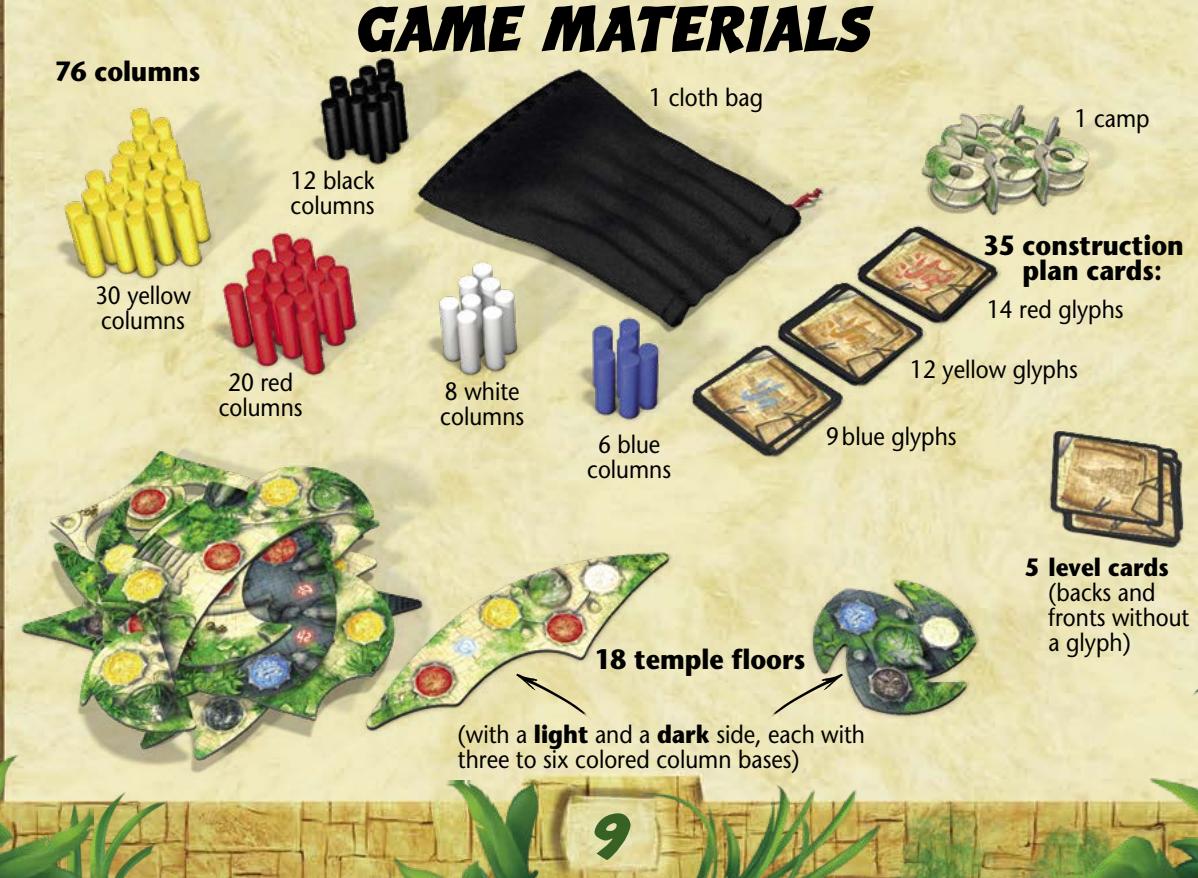
游戏配件


游戏设置
在游戏开始之前,从游戏模切板上取出所有零件,组装成柱子供应架。
把柱子全部放进黑色布袋里,随机抽出6根柱子放在柱子供应架上。

洗匀18块寺庙板块,随机的堆放在一起。形成寺庙建筑堆。
从寺庙建筑堆顶部取出3块寺庙板块,放在桌子中央,使它们两两接触○(但不重叠)。

这三块寺庙板块构成寺庙的地基。你可以自由地选择将寺庙板块的浅色面朝上还是深色面朝上。
接下来,把层数牌排成一行。放置的层数牌数量决定了寺庙建筑在游戏结束时必须有多少层。寺庙地基不算一层。
在《梅纳拉》游戏中,层数牌的数量决定了游戏的难度:
简单难度,放置3张层数牌。
中等难度,放置4张层数牌。
困难难度,放置5张层数牌。
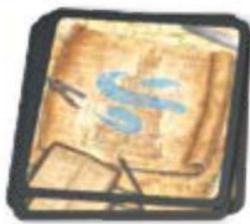
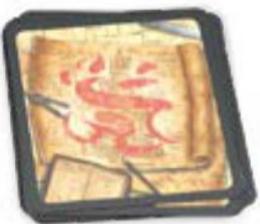
分别洗匀三种颜色的建造牌,三种建造牌单独放置,形成牌堆。
每位玩家从黑色布袋中随机抽取一定数量的柱子放在自己面前。
柱子的数量取决于玩家人数( )以及《梅纳拉》的难易程度。

| 柱子数量 | 1 | 2 | 3 | 4 |
| 简单 | 8 | 7 | 6 | 5 |
| 中等 | 7 | 6 | 5 | 4 |
| 困难 | 6 | 5 | 4 | 4 |
游戏流程
最近有去过寺庙的玩家成为起始玩家。游戏按顺时针方向进行。
轮到你时,按以下步骤执行:

- 交换柱子
2.选择建造牌
3.建造
4.补满柱子

在建造之前,可以充分与其他玩家讨论。团结坚强且目标一致,才能建造出恢宏大气的庙宇。
1. 交换柱子
你可以从柱子供应架上与自己手中任意数量的柱子交换。
2.选择建造牌
从三种建造牌中任意选择一种颜色,并从其牌堆顶部抽取1张并执行。

蓝色建造牌是比较容易的建造方式。

黄色建造牌是中等难度的建造方式。
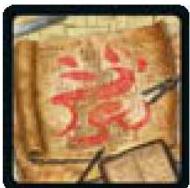
红色建造牌是比较困难的建造方式。
在选取哪种颜色建造牌的时候,应当遵循先蓝色后黄色,最后才是红色,逐级增加难度。
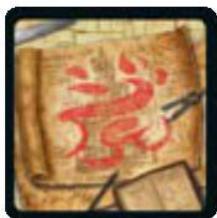
这些建造方式不确定,有可能高难度的建造方式没办法完成,尤其是在游戏刚开始的时候。
因此,要谨慎的选择建造牌。
3.建造
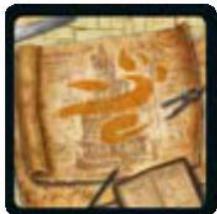
放置柱子的时候,柱子必须要放置在寺庙板块对应颜色的放置点上。建造牌有5种建造方式:
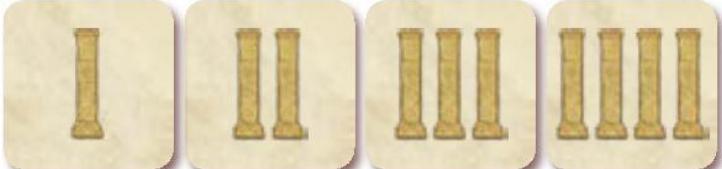
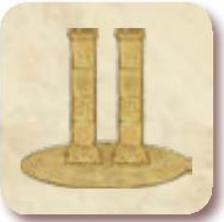
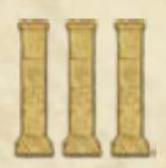
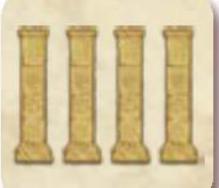
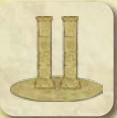
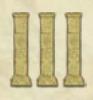
将1根、2根、3根、4根柱子放置在任意一层的寺庙板块对应颜色的放置点上。(数量可分配到不同的层)
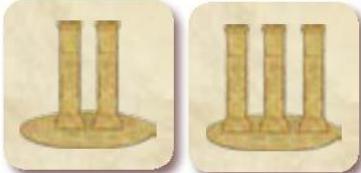
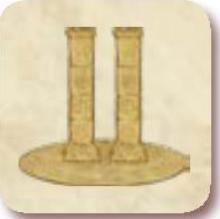
选择1块寺庙板块。将2根、3根柱子放置在这一块寺庙板块对应颜色的放置点上。(只能放置在选择的寺庙板块上)

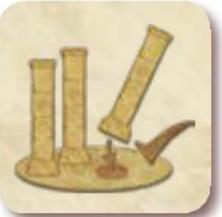
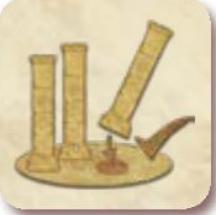
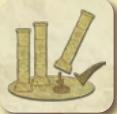
移动柱子。从某一层中拿取1根、2根、3根柱子,把它们移到更高的地方(层)的寺庙板块对应颜色的放置点上。你只能移动独立存在的柱子,且拿取的柱子必须是同一层的。本回合移动过的柱子不会再次移动。
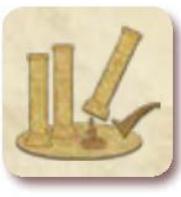
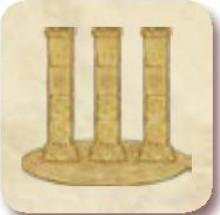
在一块寺庙板块上放置尽可能多的柱子,尽量占满所有的放置点。
这种建造牌往往会触发"放置新的寺庙板块"。(详见P5)
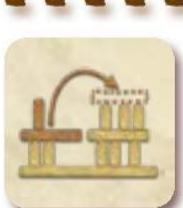
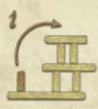
移动一块(已建造)寺庙板块一层或多层(上或下)到达其他层。如果
寺庙板块上已经有柱子,必须将它们和板块一起移动。移动过程中,如果柱子倒塌,本次建造失败,导致寺庙层数增加。(详见P4)
每个柱子都会放置在寺庙板块对应颜色的放置点上,且柱子必须完全覆盖放置点。
柱子可以同时放置到寺庙板块上。
你也可以把柱子放置在寺庙的地基上,小心的将柱子推到寺庙板块之间。
已完成的建造规划牌放在弃牌堆。
无法完成建造牌!?

如果不能正确完成建造牌,它将成为寺庙建筑额外的一层。将它面朝下放置在层数牌的位置。
这意味着在原来的基础上,游戏结束时,寺庙必须多建造一层。
放置一根柱子,倒塌不可能避免时,也被认定为无法完成建造牌。(把柱子放回)
当前玩家将无法完成的建造牌放在层数牌的位置后,可以重置柱子供应架。从黑色布袋中随机抽出6根柱子放在供应架上,原先供应架上的柱子放回黑色布袋。当前玩家回合结束。
如果在建造过程中放置或移动了柱子或寺庙板块,但结果无法完成建造。这些柱子或寺庙板块保持不动,不用撤回。除非有柱子倒塌,才需要重新放置。(柱子放回黑色布袋)
示例:
到目前为止,寺庙已经有三层了。但是由于其中一张建造牌无法完成,所以将这张牌放置在层数牌的位置。游戏结束时寺庙必须再建多一层。
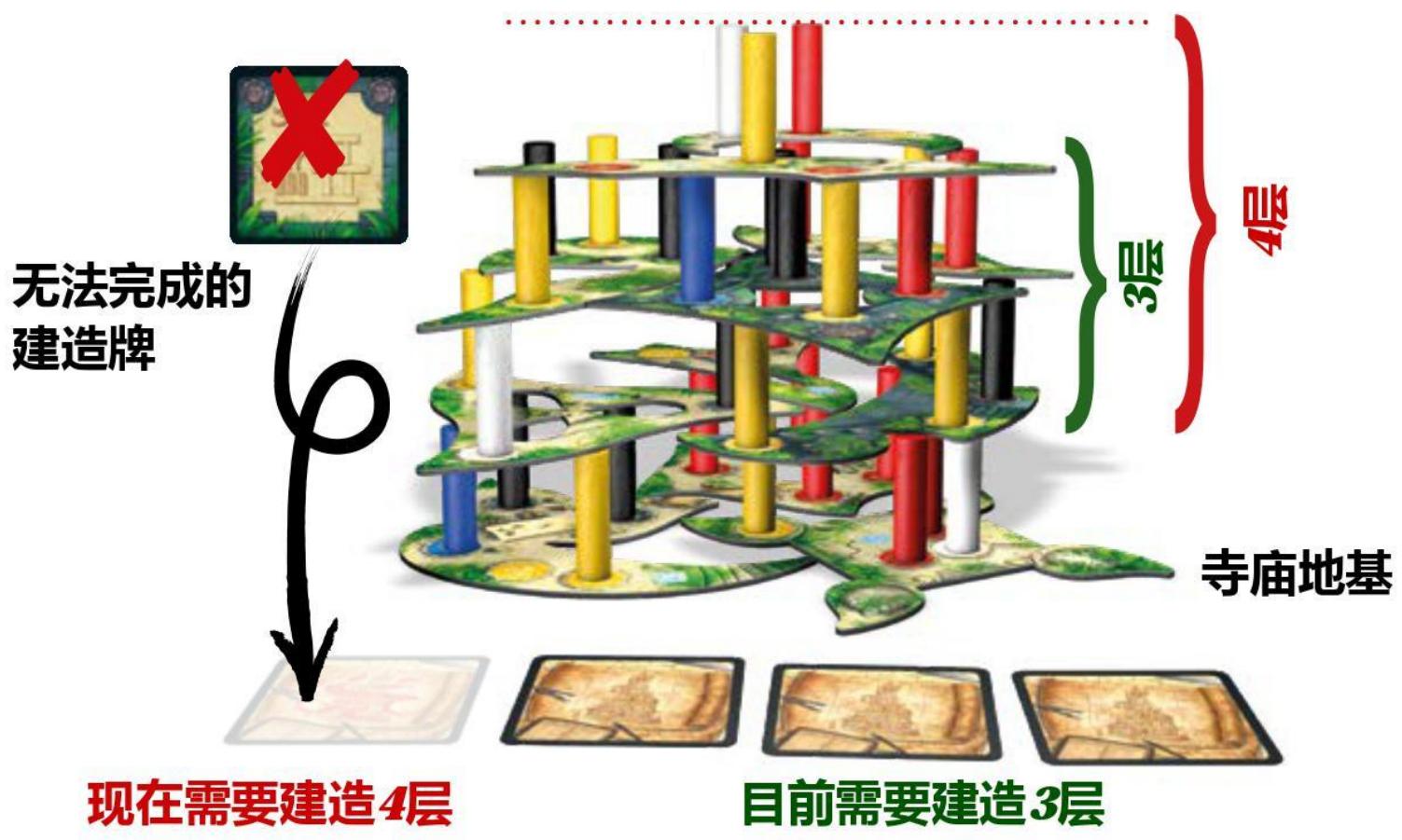
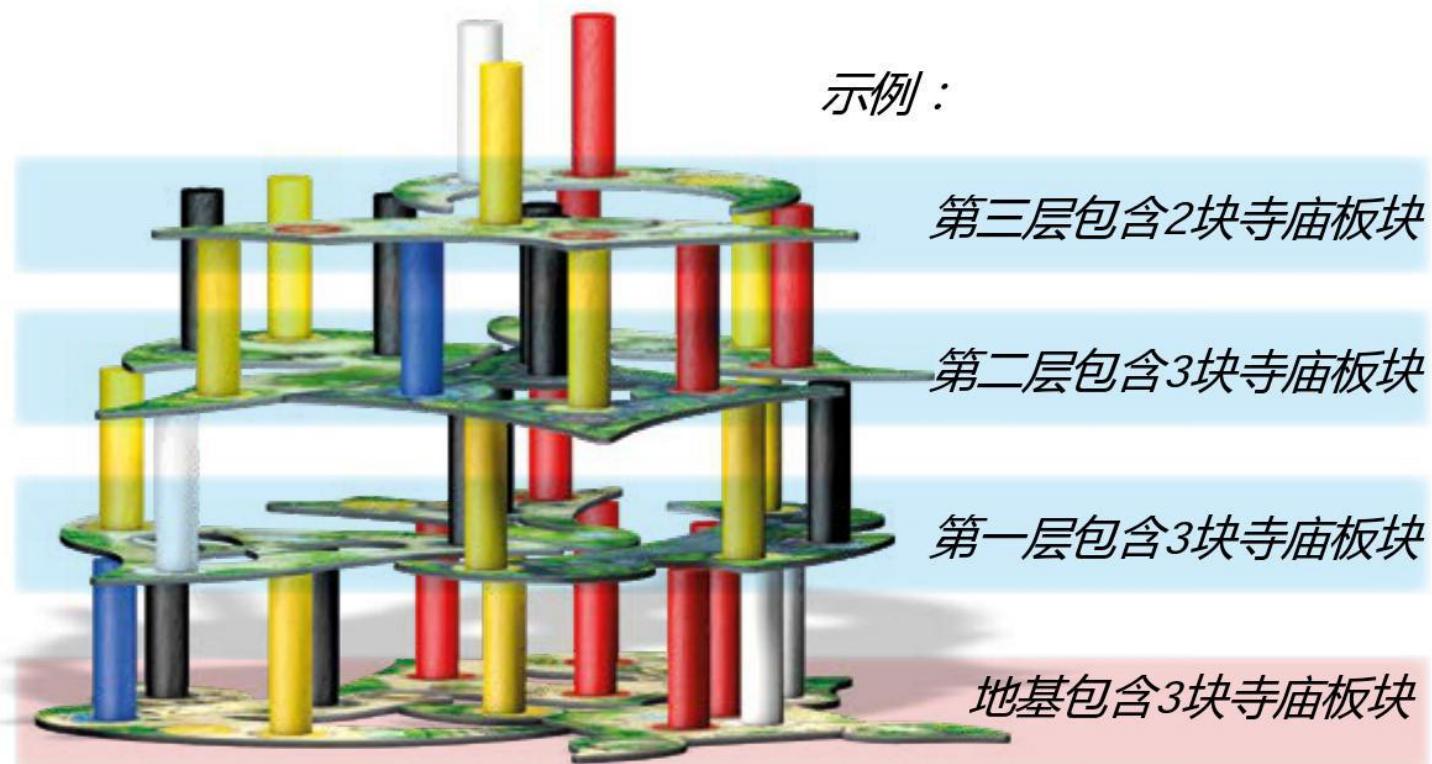
只有放置在柱子之上的寺庙板块才为一层。
三层的寺庙是不包括寺庙地基的。
寺庙的一层可以包含多块寺庙板块。
放置新的寺庙板块
当寺庙板块的最后一个放置点放置了柱子,此时暂停建造。从建筑堆顶部拿取寺庙板块,进行寺庙板块放置。在一个回合中,这种情况可能会发生好几次。之后,继续执行建造。

从建筑堆顶部拿取寺庙板块。
根据当前建造牌边缘的颜色,来确定使用寺庙板块的哪一面。

如果建造牌边缘是棕黄色的(有浅色和深色的图腾),自由决定使用寺庙板块的哪一面。

如果建造牌边缘是浅色的(有两个浅色图腾),使用寺庙板块的浅色面。

如果建造牌边缘是深色的(有两个深色图腾),使用寺庙板块的深色面。
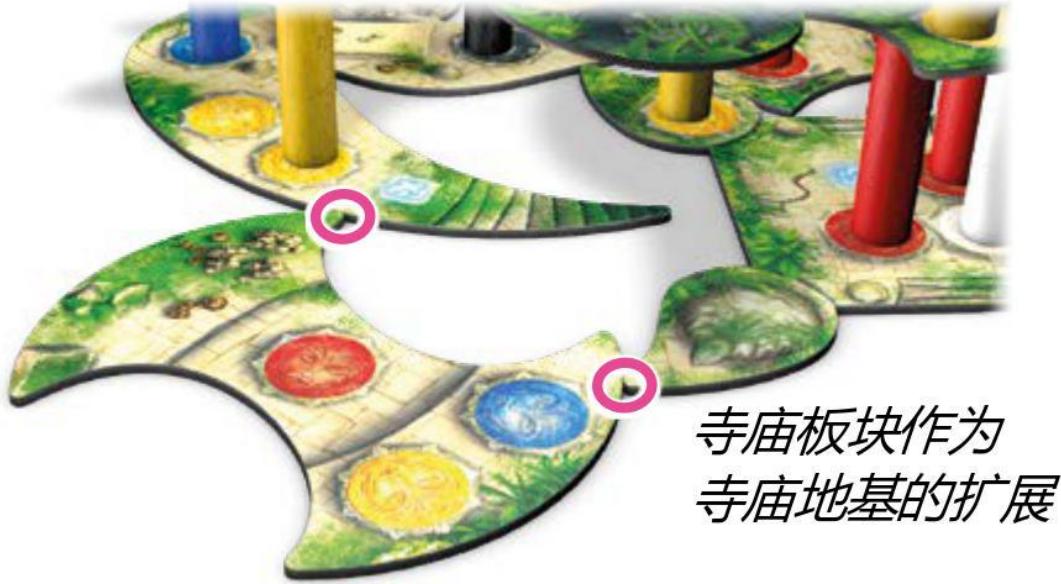
可以把寺庙板块放置在柱子之上也可以放置在寺庙地基上。
- 如果放在柱子上,保证至少有3根柱子撑起寺庙板块(稳定性)。自行决定哪些柱子用来支撑。
- 如果放在寺庙地基上,至少与(先前的)寺庙板块两两接触 ○ 。
注意:
虽然你扩展了寺庙的地基,让寺庙往稳固性方向又前进了一步,但也让游戏的结束时间延长了。
此时完成的建造牌不会进到弃牌堆,而是将它面朝下放在层数牌的位置上,游戏结束时,寺庙又要多建造一层。

如果在放置完寺庙板块后,还需要放置柱子,也可以将柱子放置在新的寺庙板块上。
4.补满柱子
建造步骤结束后,从黑色布袋中抽取等同于本回合放置数量的柱子,之后,当前回合结束。
寺庙倒塌
如果寺庙板块倒塌,游戏立即结束。结束时,倒塌的柱子以及寺庙板块不能放回原位。
游戏结束
游戏结束时,要么寺庙倒塌(见上文),要么:
玩家回合结束无法从黑色布袋中补满当前所需柱子。
玩家完成最后一张建造牌。
玩家放置最后一块寺庙板块(不需要再放置柱子)。
注意:
以上条件不满足,游戏不会结束。
游戏结束不代表赢得胜利,无论你的寺庙建的有多高。
看来寺庙建的高并不一定是好事,这是什么鬼的游戏结束……
赢了还是输了?
游戏结束后,观察建造的寺庙高度,如果寺庙的层数等于或超过最终层数牌的数量。全体玩家一起获得胜利。
如果寺庙的层数少于最终层数牌的数量,所有玩家一起失败。因为寺庙倒塌导致游戏结束,最终无法满足最终层数牌数量,同样认定为失败。

首次进行游戏
在进行《梅纳拉》第一次游戏之前,不使用建造牌。只需要放置柱子和寺庙板块即可,放置规则遵照正常游戏。通过这种方式,你可以感受到寺庙的建筑风格。
之后,再了解下建造牌,看看不同难度的建造牌包含哪些建造方式。

:
3x
4x
1x
1x
:
4x
3x
3x

1x
1x
1
:
2x
2x
1x
1x
1x
2x
2x
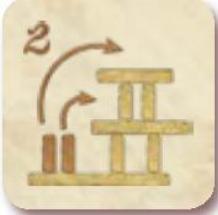
2x

1x
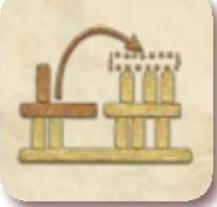
游戏技巧&提示
互相讨论!《梅纳拉》是一款合作游戏。通常,需要提前做好规划。只有大家齐心协力,才能使这座神庙焕发出新的光彩。
尽量将寺庙的前三层铺的宽一些(各个寺庙板块之间注意要两两接触)。
要时常留意寺庙板块上的放置点及其颜色。
同时也要注意柱子供应架上的柱子的颜色和玩家手中柱子的颜色。
仔细考虑,谨慎的选取一张简单、中等,还是困难的建造牌。你可以通过观察弃牌堆的牌,来帮助你做决定。
尝试在游戏早期阶段完成尽可能多的困难的建造牌。当寺庙被建造的很高的时候,困难的建造牌将会是一场灾难。
仔细检查,哪些柱子支撑着你想要放置新柱子的寺庙板块。它们能承受新柱子的重量吗?当你建造一块新的寺庙板块时,检查支撑它的柱子和你将要放置在新寺庙板块上的柱子之间的关系。
如果你已经是一名经验丰富的《梅纳拉》玩家,你可以尝试建造越来越高的寺庙。你能建造第十层吗?


总结
什么时候建造牌要放置在层数牌位置,从而增加了寺庙建筑的层数?
当建造牌未完成或仅部分完成时。
当寺庙板块被放置到寺庙地基上时。
什么时候和柱子供应架交换柱子?
在玩家回合内执行步骤1. 交换柱子(从柱子供应架上与自己手中任意数量的柱子交换)。
建造牌无法完成时,对柱子供应架的柱子重置。
游戏详细示例
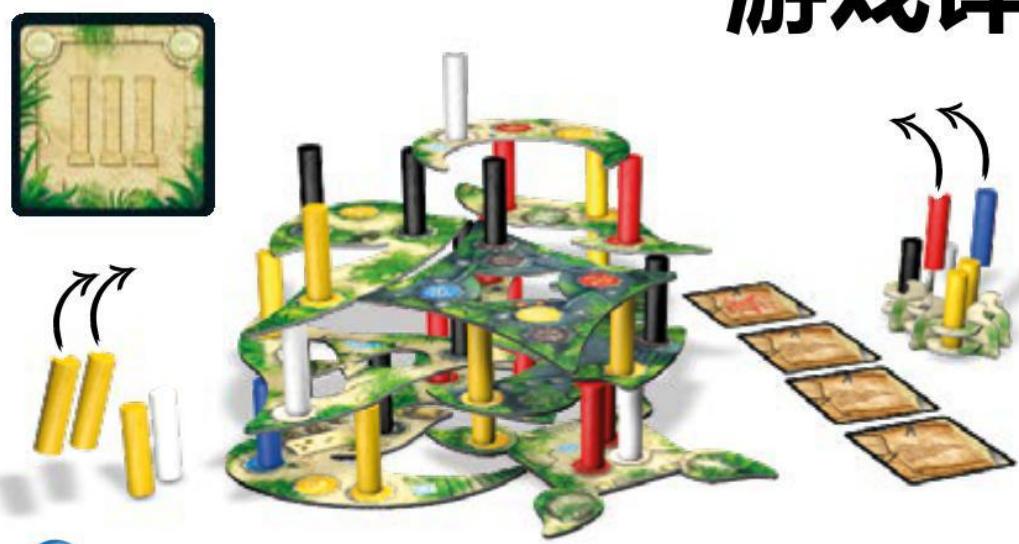
Marty 把两根黄色的柱子与柱子供应堆1红、1蓝交换。然后,他抽了1张放置3根柱子的建造牌。
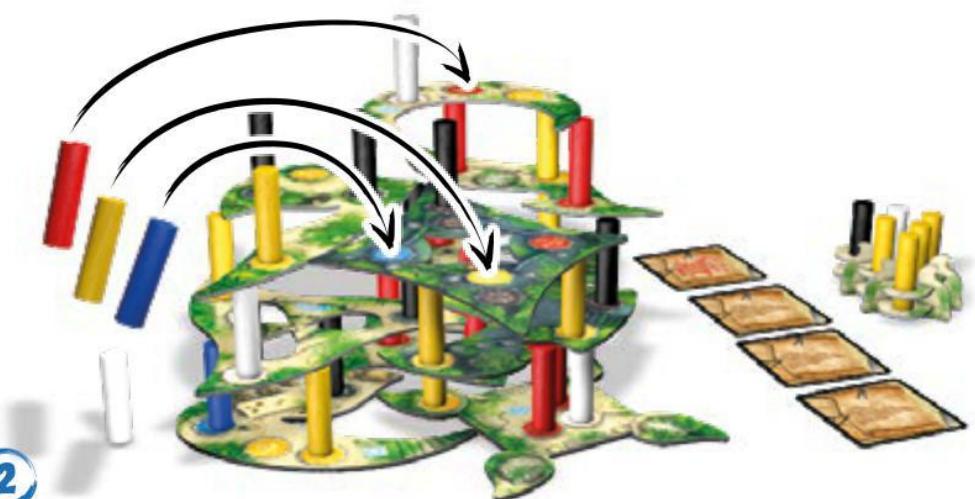
Marty 成功放置1红、1黄、1蓝三根柱子。弃掉建造牌,从黑色布袋里抽出3根新柱子后,回合结束。
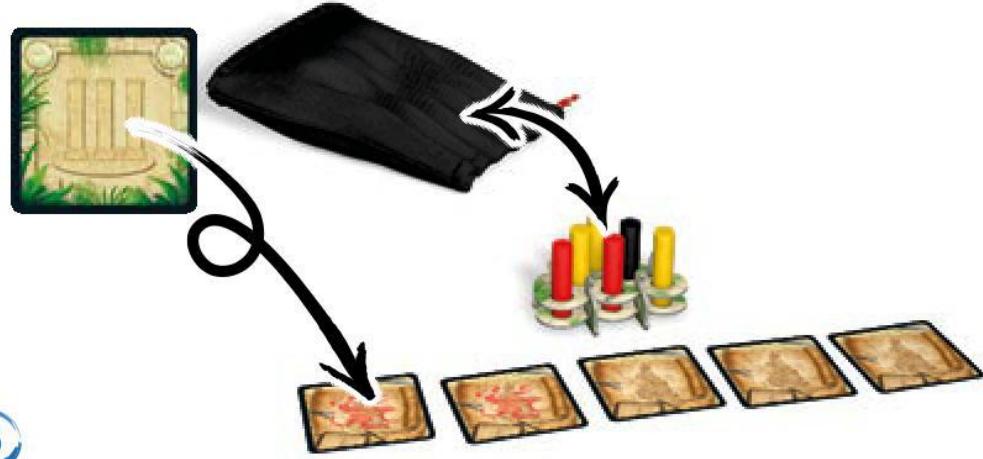
在队友的建议下,Melanie 没有执行步骤1. 交换柱子。她抽了1张红色的建造牌,要求在同一块寺庙板块上放置三根柱子。不幸的是,她做不到。因此,她必须将建造牌面朝下,放置在层数牌的位置。然后,从黑色布袋里抽出6根新柱子来交换柱子供应堆的柱子。现在寺庙必须建造5层而不是4层。
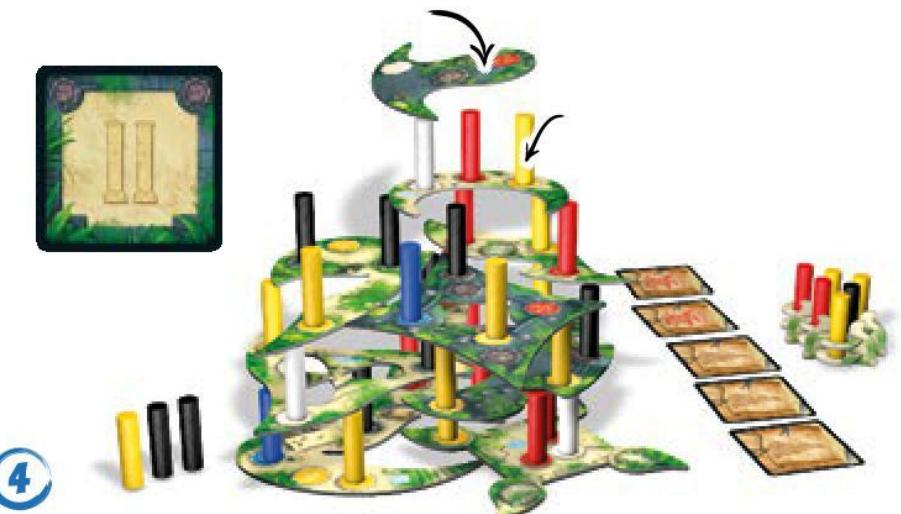
Miriam非常幸运。在放弃执行步骤1.交换柱子之后,她抽了1张只需要放置2根柱子的蓝色建造牌。首先,她把黄色的柱子放在寺庙的顶层,完成了这一层。因此,她从建筑堆顶部拿取了1块新的寺庙板块,把它盖在最顶层。建造牌的边缘是深色的,因此寺庙板块使用深色那一面。


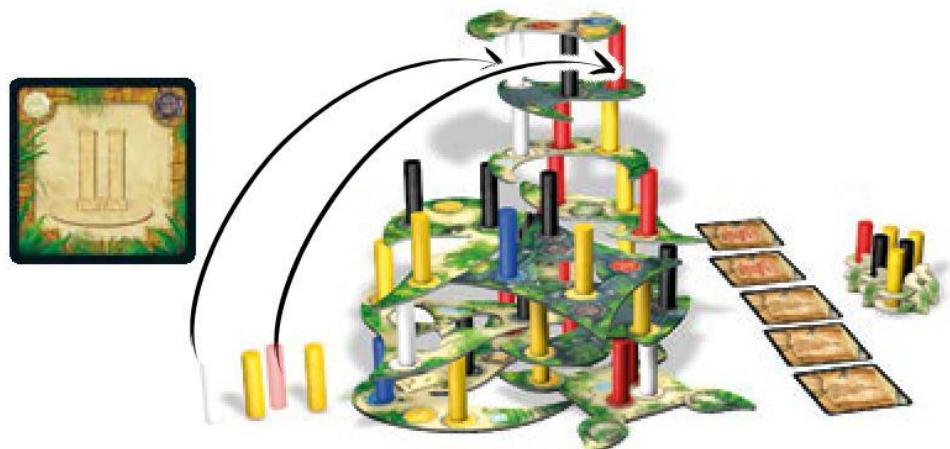
Miriam把第二根黑色柱子放在新建造的寺庙板块上。她从黑色布袋里抽出2根新柱子后,回合结束。
Michael 执行完步骤1. 交换柱子后。他抽了1张建造牌,要求把2根柱子放在同一块寺庙板块上。Michael 选择放置在最高层,完成了最高层的建造。随着新的寺庙板块被放置,这座寺庙现在有五层。因此,玩家们有机会赢得游戏,前提是寺庙的层数等于或超过最终层数牌的数量。
作者: Oliver Richtberg
衷心感谢:
美术设计: Sébastien Caiveau
排版: Oliver Richtberg
Miriam Paustian Markus Müller
英语规则书编写:
Art.Nr.: 60 110 5101 Sybille & Bruce Whitehill, "Word for Wort"
©2018 Zoch Verlag
Werkstraße 1
D-90765 Fürth
www.zoch-verlag.com

601105101_Menara-Spielregel-EN-2022.md21.5 KB
by Oliver Richtberg A cooperative temple-building game for 1–4 prospective builders, 8 years and up
Deep inside the green hell of MENARA, you discover wondrously shaped fragments of an ancient structure. This makes your explorer's heart beat faster. Many thousands of years ago, there must have been a temple at this place. What might it have looked like? Would it be possible to reconstruct it? To accomplish this, you have to work together.
Strange glyphs decorate the remains of the ancient masonry and mysterious construction plans of the temple tower have turned up. It is as if a primitive curse is upon this place. For any mistake you make, the old construction plans require the building of an additional level. So you will need to aim high in order to achieve your goal!
Mind your fingers and don't tremble with reverence. That way, you'll grow with your tasks and bring the ancient temple of MENARA to new life.
("menara" is Malaysian for temple tower)
OBJECT OF THE GAME
Reconstruct the temple together. To do so, you try to fulfill the instructions on each individual construction plan card whenever possible. Use the columns and temple floors wisely and place them very skillfully. It is important that you consider the consequences of your own game turns. Only then can your fellow players also be instrumental in the success of the building project! Mishaps, imprudence, and unfavorable construction plans always have the same dire consequence: You have to build your temple higher ... and higher ... and maybe higher than you would like to.

SET-UP
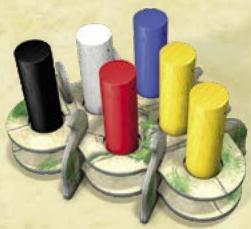
Before the first game, punch out all parts from the die-cut sheets and put the camp together.
Put the columns into the cloth bag, then randomly draw out six columns and place them in the camp.
Pile the 18 temple floors on top of one another in random order to form a quarry.
Next to that, lay
out the level cards in
a row. The number of level
cards you lay out determines
how many levels the temple must
have at the end of the game.
The temple base does not count as a level.
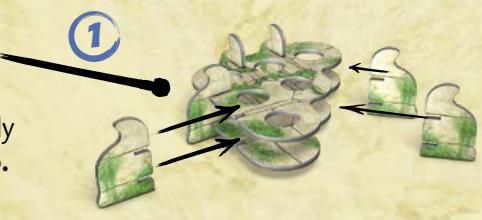
Take the 3 top temple floors and put them in the middle of the table so that they touch each other (but don't overlap) at two points O.
These three temple floors form the temple base. You may choose freely whether to place the light or the dark side of a temple floor facing up.
The number of level cards you lay out determines the degree of difficulty of that particular game of MENARA:
For an easy game, start with 3 level cards. For a medium game, start with 4 level cards. For a difficult game, start with all 5 level cards.
Sort the construction plan cards. Shuffle each glyph color separately. Form three separate (draw) piles.
Now each player randomly draws a certain number of columns out of the bag and places them in front of him. The number of columns depends on the number of players () and on the degree of difficulty at which you choose to play MENARA:

| Columns | 18 | 28 | 38 48 |
| easy | 81 | 71 | 6] 51 |
| medium | 71 | 61 | 51 4 |
| difficult | 61 | 51 41 | 41 |
COURSE OF THE GAME
The player who last entered the top floor of a building begins. After that, play proceeds in turn. On your turn, you carry out the following steps in this order:

-
You may exchange columns with the camp.
-
You reveal a construction plan card.
-
You build as specified by the revealed construction plan card.
-
You replenish your columns to their full number
Discuss the next steps with your fellow players. Build with foresight. Only together can you be strong.
1. EXCHANGE COLUMNS WITH THE CAMP
You may take as many columns from the camp as you like. In exchange, put the same number of your columns back into the camp.
2. REVEAL A CONSTRUCTION PLAN CARD
You may choose freely from which of the three piles of construction plan cards you draw a card.

The pile with blue glyphs contains mostly easy-to-solve construction plan cards.
The pile with yellow glyphs consists of construction plan cards of medium difficulty.

The construction plan cards with red glyphs are mainly difficult.
Reveal the top card of the pile you have chosen. Consider that the construction plan cards-from the blue to the yellow and then to the red glyphs-increase in difficulty and that you might not be able to solve them yet, especially at the beginning of the game.
Therefore, choose the pile carefully.
3. BUILD
Always put the columns on color-matching bases. There are five types of construction plan cards:
11ⅢⅢ
Place one, two, three, or four columns on matching bases of any temple floors in the tower.

Choose one temple floor of the tower. Place two or three columns on matching bases here.
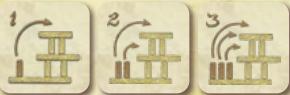
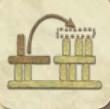
Move columns. Take one, two or three columns out of the tower, move them to any higher level and place them on matching empty bases there. You may move freestanding or overbuilt columns.
A column already moved may not be moved again on the same turn.

Place as many columns on a single temple floor as necessary to
occupy all bases on this floor. This construction plan card always triggers the placement of a new temple floor (see p. 13).

Move a (built-in) temple floor one or more levels (up or down).
If the temple floor already has columns on it, you have to move these along with that floor. If, in doing so, the columns fall over, you have not fulfilled the construction plan card.
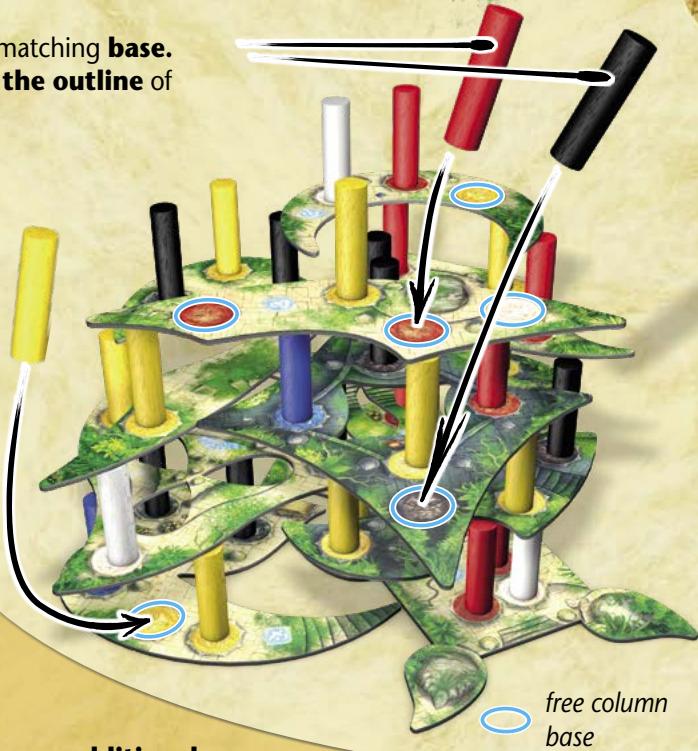
Each column is placed on a color-matching base. It should not protrude beyond the outline of this base.
Columns can also be placed simultaneously.
You may also place columns on empty bases that have already been overbuilt by a temple floor. Shove the column carefully between the temple floors.
Fulfilled construction plan cards are put on a discard pile.
YOU CAN'T FULFILL THE CONSTRUCTION PLAN CARD?
If you cannot completely fulfill a construction plan card, it becomes an additional level card. Add it face down to the row of level cards.
This increases the number of levels that the temple has to consist of at the end of the game by one more level.
This also applies if you try to place a column and realize that you can't without causing the tower to collapse. (Put this column back into your supply.)
Every time you add a construction plan card to the row of level cards, you may exchange the entire camp. First draw six new columns; then throw the previous columns back into the cloth bag. This ends your turn.
If you have placed or moved columns or temple floors during your failed attempt at fulfilling the construction plan card, these stay in place. Don't undo anything. If any columns have fallen over, set them up again in the same place.
Example:
Up to now, your temple was supposed to eventually be three levels high. But since one of the construction plan cards could not be fulfilled, this card is added to the row of level cards. Your temple now has to be built one level higher.

up to now, three level cards

Only temple floors that are sitting on columns are considered levels! The three temple floors of the temple base don't count as a level! One level can consist of several temple floors.
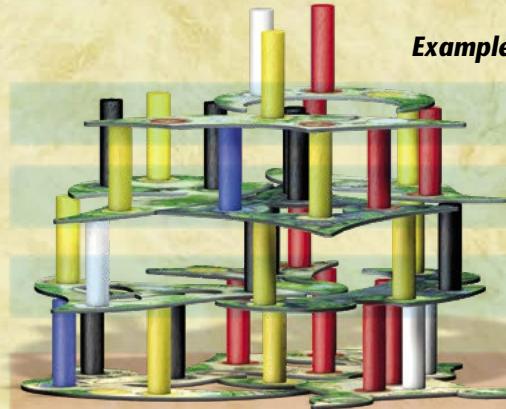
The 3rd level consists of two temple floors
The 2nd level consists of three temple floors
The 1st level consists of three temple floors
The temple base consists of three temple floors
PLACE A NEW TEMPLE FLOOR
Every time you place a column on the last free base of a temple floor, you immediately interrupt the execution of your construction plan card. You must place a new temple floor. This can happen several times during the same game turn. After that, you resume the execution of your construction plan card.
Take the top temple floor from the quarry.
Have a close look at the current construction plan card:

If it has an orange-brown rim (with a light and a dark face), you may choose freely whether the light or the dark side of the temple floor is to be facing up.

If the construction plan card has a light rim (with two light faces), you have to turn the light side of the temple floor face up.

If it has a dark rim, use the dark side of the temple floor.
Now add the temple floor to the temple. You can build it on columns or extend the temple base.
• If you build it on columns, you should cover at least three free columns (for stability). You can freely choose the columns on which you place the temple floor.
• If you extend the temple base, the new temple floor has to touch the (previous) temple base at two points at least .
Attention:
Even if you extend the temple base, the number of levels that the temple has to consist of at the end of the game increases by one more level. To indicate this, add your construction plan card face down to the row of level cards at the end of your turn.

If you still have to place columns after building a temple floor, you may place these also on newly built temple floors.
4. REPLENISH COLUMNS
At the end of your turn, draw as many columns out of the cloth bag as you just placed.
THE TEMPLE COLLAPSES
If any temple floors collapse, the game ends immediately. The game ends also if any columns fall over and then can't be put back on their previous place.
END OF THE GAME
The game ends either if the temple collapses (see above) or:
if a player can no longer replenish his columns to their full number at the end of his game turn.
if you have made use of the last construction plan card.
if you have placed the last temple floor (it doesn't have to be filled with columns any more).
Attention:
The game does not end unless one of the three above-mentioned conditions has been fulfilledeven if the height of your temple exceeds the number of laid-out level cards. That means you haven't won yet even if your temple is high enough at the moment, since this might be quite different by the actual end of the game ...
HAVE YOU WON OR LOST?
You win together if your temple now is high enough: In other words, the number of levels is equal to or higher than the number of the laid-out level cards.
If the temple does not have the number of levels required at the end of the game, you lose. This even applies if the temple has not collapsed.
FREQUENTLY ASKED QUESTIONS:
- If I cannot fulfill a card but nevertheless complete a temple floor, and use the completed temple floor I just got in order to extend the temple base, do I then have to increase the number of level cards by 1 card or by 2 cards?
• By 2 cards (to do this, use the unfulfilled card and another card from the discard pile).
- May I look at the bottom of the next temple floor at the quarry at any time?
• Yes, but don't do a test-fit“ of the temple floor in the tower.
(Only if you want to play Menara more strictly will you forbid looking).
-
When building in a column, may I – with my other hand – touch the temple floor where I’m placing the column? • Yes, you may basically touch everything in the tower when placing a column. But be careful: This might cause the tower to collapse!
-
May I slightly change the position of a temple floor while placing columns?
• Yes. In doing so, you may move a temple floor, as long as this doesn‘t let the floor slide onto another free column or slide off a coumn it is lying on. In other words, you may not relocate the temple floor.
- When I see that I cannot fulfill a just-drawn card, may I partially fulfill it?
• Yes, you may freely choose whether not to fulfill it at all, or to fulfill it to some extent. In any case, you add the card to the row of level cards. (Example: Construction building card Complete the columns of a temple floor“: If you would have to place 4 columns in order to complete the temple floor but you have only 3 columns that you can place, you may choose to place 0, 1, 2 or all 3 of your available columns.)

-
Does the construction building card Move a temple floor by one or more levels“ prompt me to build in another new temple floor? • No.
-
When fulfilling the construction building card Move a temple floor by one or more levels," may I put this temple floor onto the base and/or take it from the base? The temple base is not a LEVEI
• No. The temple base is not a LEVEL.
-
When a new temple floor is being built in, may another temple floor at the same level a) be touched or b) overlap? • a) Yes; b) no.
-
May I touch or move a column that is already standing in the temple when I build in other columns or new temple floors?
•Yes; however, you may do this only when you build in these other columns or the new temple floor. Before building in à column or a temple floor, you are not allowed, for example, to move any already-standing columns and only then start placing the new column or floor. Principally, already-placed columns may not be moved beyond their colored base area. Any columns that protrude past the color area of their base have to be put back there before you end your turn.
- If I extend the base by more than one temple floor during one turn, do I then have to increase the number of level cards by 1 or by several cards?
• By several cards (use the current card, plus others from the discard pile).
- Does the game end immediately if there are fewer than 6 columns left in the bag when you exchange columns with the camp? Yes.

TIPS FOR THE FIRST GAME
Before the very first game of MENARA, it is advisable simply to build a tower without using the construction plan cards. Just observe the rules for placing the columns and building the temple floors. This way, you get a feel for the architecture of the temple of MENARA.
After that, look at the construction plan cards in order to get an idea of what kinds of tasks exist in which pile.

: 3x
4x

1x


1x
•
4x

3x

3x

1x
1x

:2x

2x
1x

1x
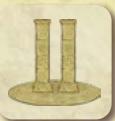
1x
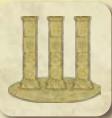
2x
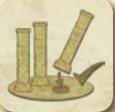
2x

2x
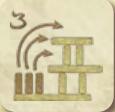
1x
TIPS & TRICKS
Talk to each other! MENARA is a cooperative game. Often, it is necessary to plan several turns ahead. Only together can you act wisely enough to resurrect the ancient temple in new splendor.
Lay out the three temple floors of the temple base as broadly as possible (nevertheless, all floors need to touch at two points).
Always keep an eye on the free bases of the entire temple tower and on their colors.
Also pay attention to the colors in the camp as well as those of the other players.
Consider carefully whether you take an easy, medium or difficult construction plan card. Your decision should also depend on what tasks have already been put on the discard pile.
Try to fulfill as many difficult construction plan cards as possible at an early stage of the game. When the tower is very high, difficult construction plan cards sometimes turn out to be disastrous.
Check carefully on each turn which columns support the temple floor on which you want to place new columns. Will they be able to carry the weight of the new columns? And when you build in a new temple floor, check where its column bases are in relation to the columns on which you are going to place the temple floor.
If you are already experienced MENARA players, you can try to build higher and higher temple towers. Can you manage to build the tenth level?
OVERVIEW:
When is a construction plan card added to a level card and thus to the row of level cards?
When the task of a construction plan card is not or only partially fulfilled.
When a temple floor is added to the temple base.
When are columns exchanged with the camp?
Directly before the construction plan card is drawn (in exchange for the same number of your own columns).
Out of the cloth bag when the construction plan card has not been fulfilled.
A DETAILED EXAMPLE

Marty exchanges two yellow columns with a red and a blue one from the camp. After that, he draws the task of placing three columns.
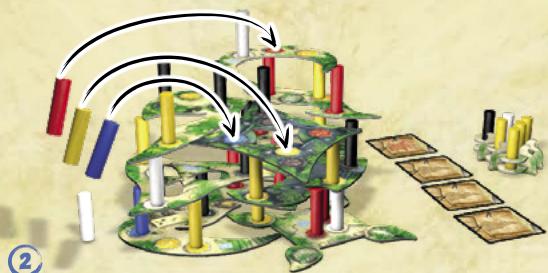
Marty decides to place a red, a yellow, and a blue column. He is successful. Then he draws three new columns and ends his turn.
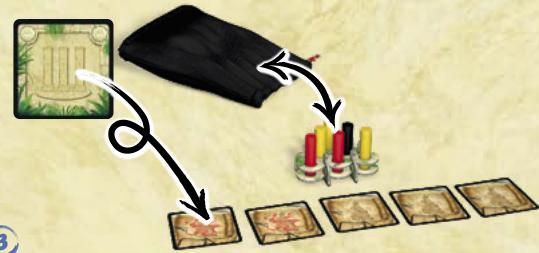

On the advice of her fellow players, Melanie does not exchange any columns with the camp. She draws a red construction plan card that requires the placement of three columns on the same temple floor. Unfortunately, she can‘t do this. Consequently, she has to add the card face down to the row of level cards. Then she draws six new columns from the cloth bag in exchange for the columns of the camp. Now the temple has to be 5 levels high instead of 4.
Miriam is lucky. After also forgoing an exchange with the camp, she draws a blue card that requires the placement of only two columns. First she places the yellow column on the top temple floor, which completes this floor. Therefore, she takes a new temple floor from the quarry and builds it in. The construction plan card indicates the dark side should be facing up.
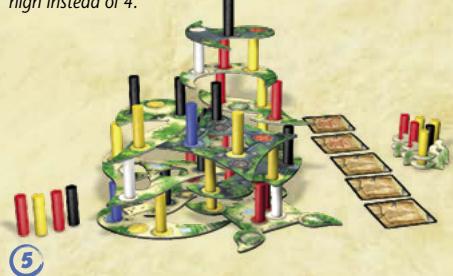

Miriam places the second column on the newly built temple floor on the new level. After she has drawn two new columns out of the cloth bag, her turn ends.
Michael exchanges columns with the camp. He draws the task to place two columns on the same temple floor. He succeeds and, with this, fills the top level. With the placement of a new temple floor, the tower now contains five levels. Consequently, the players have a chance to win the game, provided that the number of level cards won‘t exceed the number of temple levels at the end of the game.
Author: Oliver Richtberg
Illustrations: Sébastien Caiveau
Layout: Oliver Richtberg
Art.Nr.: 60 110 5101
With thanks to: Miriam Paustian Markus Müller English translation:
Sybille & Bruce Whitehill, Word for Wort“
Simba Toys GmbH & Co. KG Werkstraße 1
D-90765 Fürth
www.zoch-verlag.com

Texts are community-compiled or publicly released by publishers; copyright remains with the original authors. For personal reference only.