
Montana
At a glance
Rules, cards and Q&A (Chinese)
The rules, card data and player questions for this game are written in Chinese. Open the Chinese page to read them.
Where to find full rules
Full rules and card lookup are available in the cunlema app at cunlema.cn — pick this game and ask about any rule, card or turn you are unsure about.
Related games
Rulebook text (Markdown)
This game has 2 rulebook Markdown file(s) in our library; 2 rendered inline below — expand to read or download.
rules_zh_蒙大拿_1239.md19.6 KB
RÜDIGER DORN MONTANA
游戏概要
在十九世纪中叶,蒙大拿州出现了第一批永久性定居点。在此之后,许多寻找财富的旅行者与他们的商队前往这个地区寻找工作,为自己建立更美好的未来。这里有大量的工作机会,山里有贵重的金属可以开采,田里有无垠的庄稼等待收割。同时,定居点的数量正在增加,对物资的需求也与日俱增。招募最合适的工人,及时地运输物资,有策略性地选择你的定居点。这样,你才有可能赢得这场游戏。
游戏配件

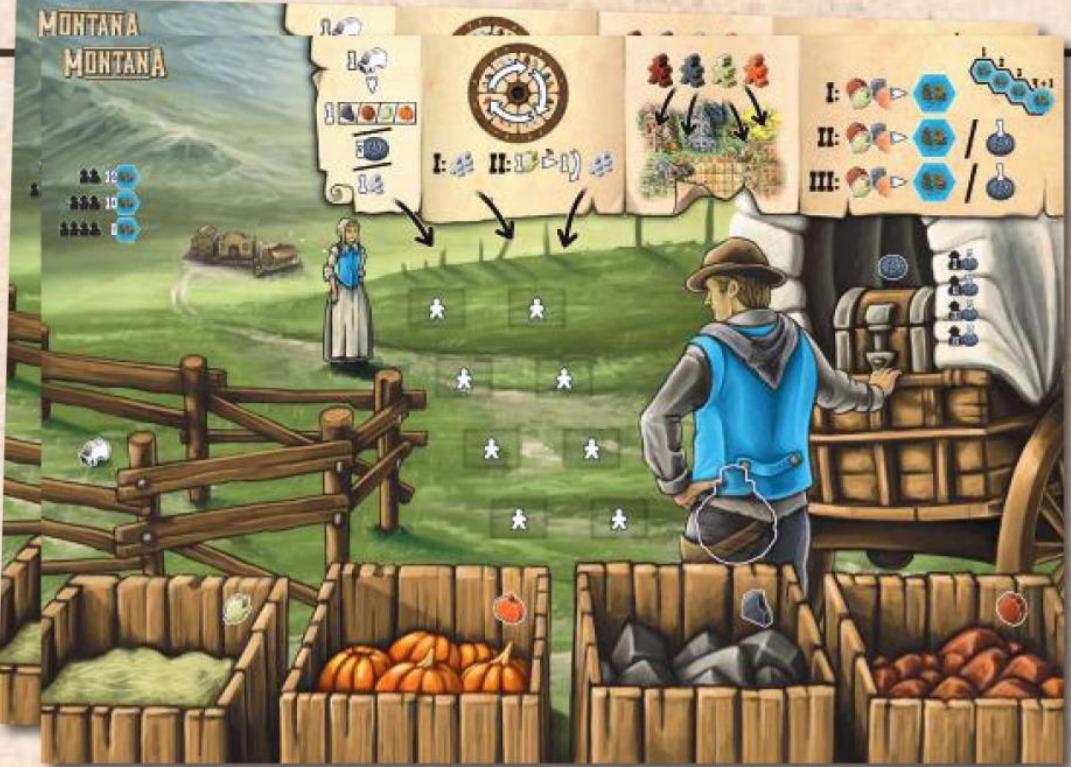
1个工人板图
工人板图由4个资源产区、银行和城镇(矿洞、采石场、麦田和农场)构成。游戏过程中,玩家需要把工人放置到这个板图上来获得物资和金钱。

5个水壶标记
4 个玩家板 - 每种颜色一个(蓝、黄、绿、红)
玩家板上可以存放各自的牛、物资、钱币和水壶。
玩家板上各种物资可以存放的数量是没有限制的。
另外,板上还有8个存放工人的位置,玩家最多只可以拥有8个工人。在玩家板的最上方,所有的可选行动都用图标表示。
1个招募轮盘
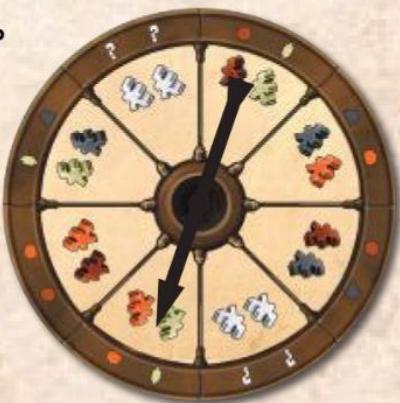
在首次游戏之前,请先组装好轮盘。把指针放在轮盘正面,从背面扣好。每次转动轮盘时,用手指轻弹指针,让它转起来。每次弹的时候,指针必须至少旋转超过360度。指针停下来的位置,表示你可以从供应堆拿取对应颜色的工人。
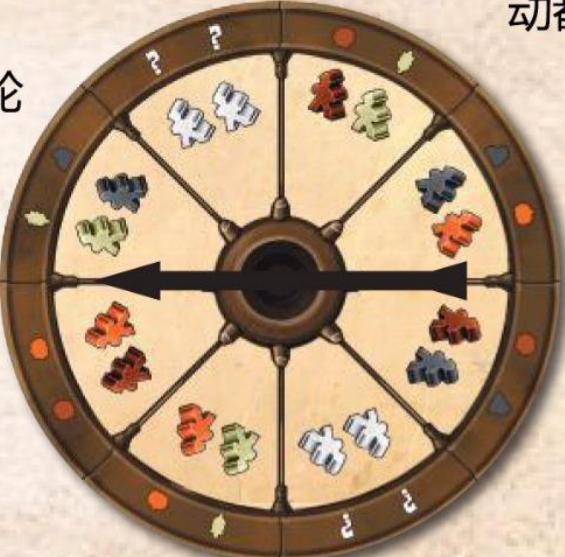
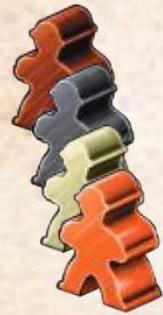
72个工人 - 每种颜色18个(分别对应铜块、石块、小麦、南瓜)
工人的颜色是与不同的物资相对应的,与玩家的颜色无关。在游戏过程中,你需要使用工人来获得相同颜色的物资。
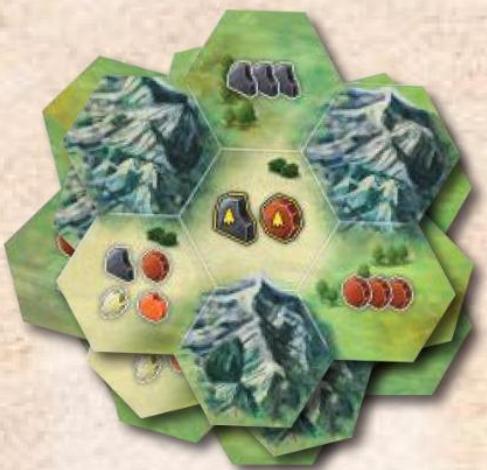

12个地形板块


4个工头 - 每种颜色一个(蓝黄绿红)

1个起始玩家板块
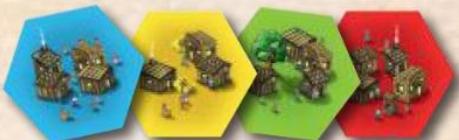
48个定居点板块 - 每种颜色12个(蓝、黄、绿、红)
49个钱币 - 10个金币(价值5)、39个银币(价值1)。

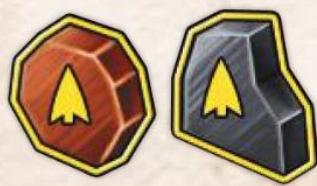
120个物资 - 24个小麦、24个南瓜、36个铜块(24个小铜块、12个大铜块)、6个石块(24个小石块、12个大石块)石块和铜块有两种不同的尺寸,在游戏中,用黄色边框和一个黄色箭头来表示大的石块和铜块。
使用随机的地形板块来组成地形板图。根据游戏人数不同,地形板图的形状及所使用的板块数量会有所不同:
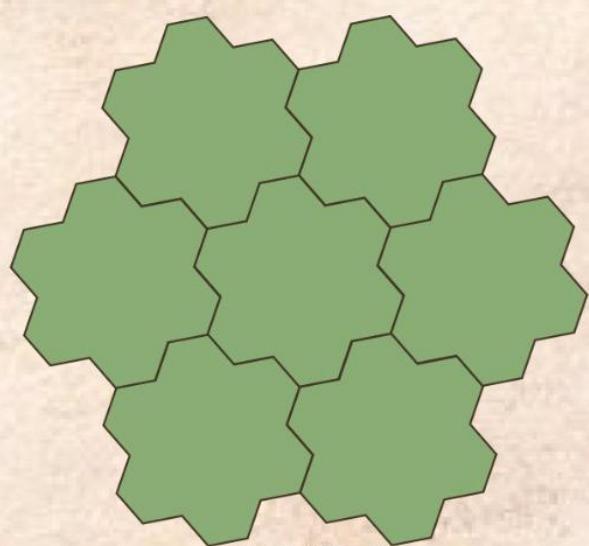
2人游戏 (7个地形板块)

3人游戏 (9个地形板块)
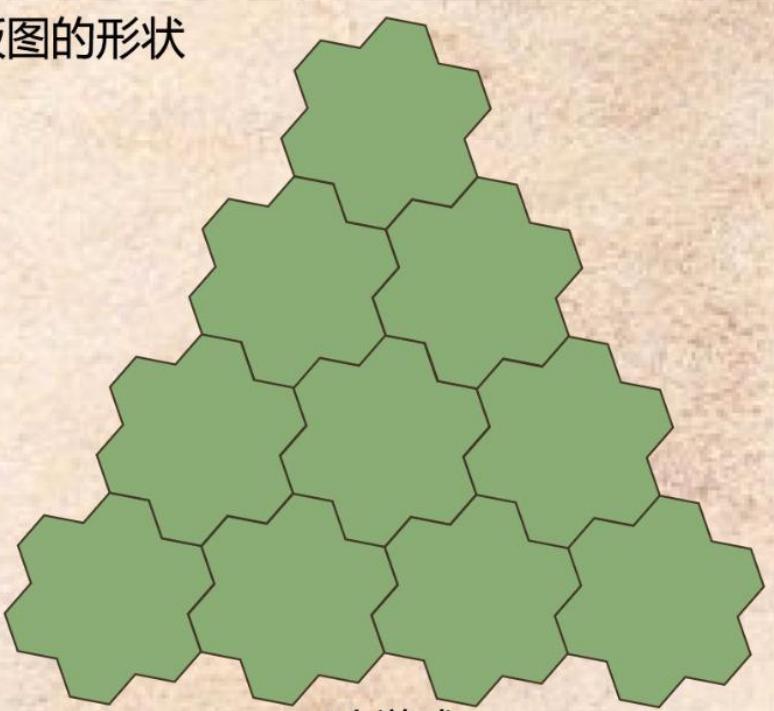
4人游戏 (10个地形板块)
在地形板图上选择一个点,放置起始板块。
在板图上每个有牛的图标的地方放置一头牛。
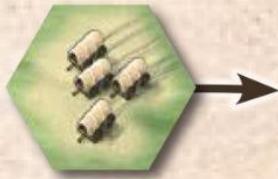
在板图上每个有水壶图标的地方放置一个水壶标记。
4 把招募轮盘和工人板图放在地形板图旁边。

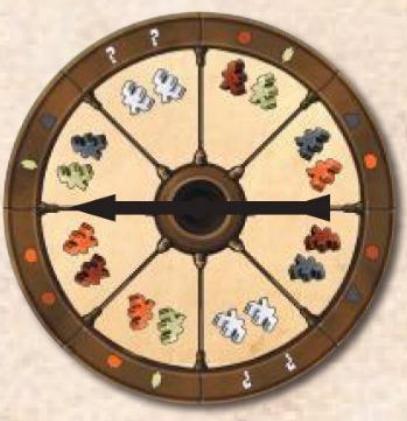
把所有的工人放在一旁,形成供应堆。

6 根据玩家人数不同,拿取一定数量的物资,形成供应堆。

 | 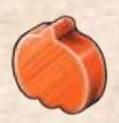 | 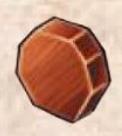 | 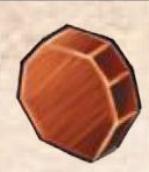 | |||
| 2人游戏 | 10 | 10 | 10 | 6 | 10 | 6 |
| 3人游戏 | 15 | 15 | 15 | 9 | 15 | 9 |
| 4人游戏 | 20 | 20 | 20 | 12 | 20 | 12 |
把剩余的物资放回游戏盒中,游戏中的物资供应是有数量限制的。
把剩余的牛放到一旁,形成供应堆。

所有的钱币形成供应堆。游戏中的钱币是没有限制的,如果出现钱币不足的情况,可以使用其他游戏的钱币或者其他替代物。
8 每位玩家拿取一种颜色的配件:
1 个玩家板
1个工头 - 把工头放到工人板图上的“五金店”上。
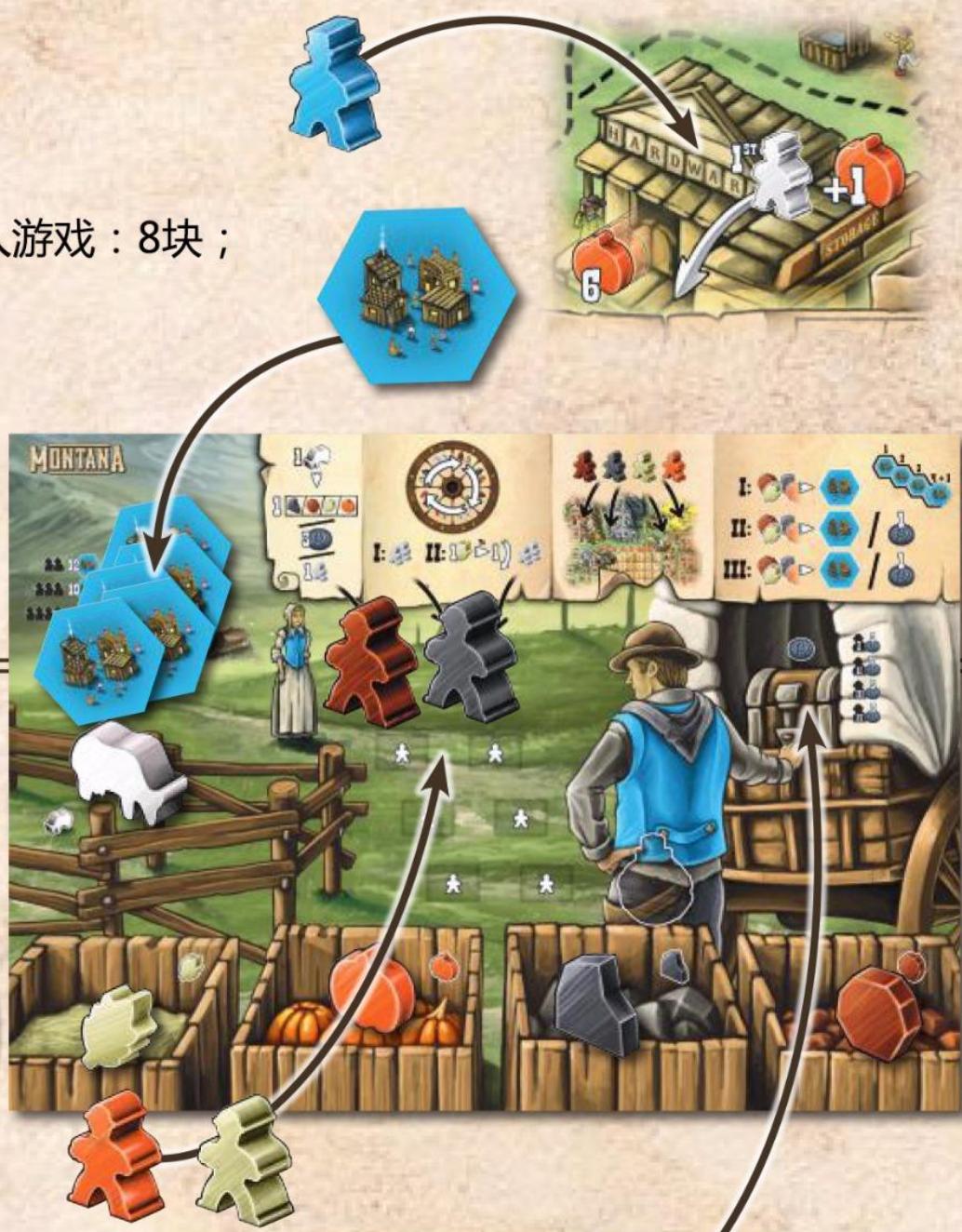
定居点板块(2人游戏:12块;3人游戏:10块;4人游戏:8块;剩余的板块放回游戏盒中)。
把定居点板块放到自己的玩家板上。
另外,每位玩家拿取1头牛、1个小麦、1个南瓜、1个小铜块、1个小石块,把这些物资放在玩家板上相对应的位置上。注意:初始设置的物资是从游戏盒中拿取的,不会动用到供应堆。
9 每位玩家起始有4个工人。玩家需要旋转招募轮盘来决定起始所拥有的工人。弹指针两次,
每弹一次,从供应堆拿2个工人。如果指针指向两个白色的工人,玩家可以任意拿取两个工人。把工人放在玩家板上的工人空位上。
10 决定起始玩家。起始玩家获得起始玩家板块,以及3个银币。按照顺时针方向,后面每位玩家比前一位玩家多拿取一个银币。即玩家2拿取4个银币,玩家3拿取5个银币,玩家4拿取6个银币。把银币放在玩家板上。

游戏目标
收集工人,派他们到采石场、矿洞、麦田和农场去工作。或者派往银行来得到钱币,派往城镇来完成贸易。可以向一个区域运输物资,来建立一个定居点。把定居点设置在关键的位置上是非常有价值的,而显然你的对手不会让你轻易得逞。尽可能地先设置你的定居点,将大大提升赢得游戏的机会。
游戏流程
游戏以回合制进行。
由起始玩家先开始,然后其他玩家按顺时针顺序依次进行回合。
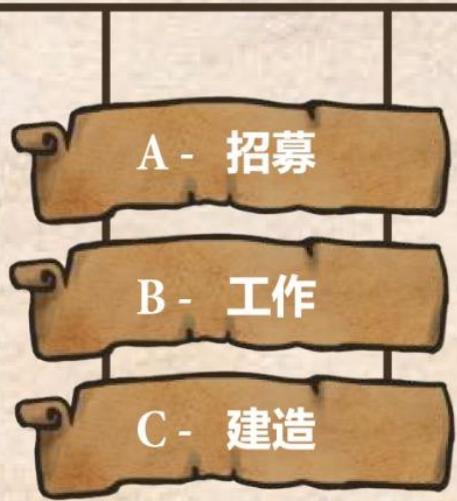
当轮到你时,你需要执行三个可选行动中的一个:
此外,任何时候你都可以执行额外行动——牛只交易(见第7页)。
有限的工人和物资
如果有玩家需要从供应堆拿取工人或物资、而供应堆已用完时,所有玩家需要从自己的玩家板上归还一个对应的工人或者物资(如果有的话)。如此重复,直到供应堆可以满足当前玩家的需求为止,然后当前玩家再拿取他所需要的资源。
举例:玩家A需要拿取3个石块,而供应堆只剩下2个石块。首先,所有玩家(包括玩家A)归还1个石块到供应堆,然后玩家A再从供应堆拿3个石块放到自己的玩家板上。
行动A:招募
招募工人,你需要工人来收集物资和建设定居点。
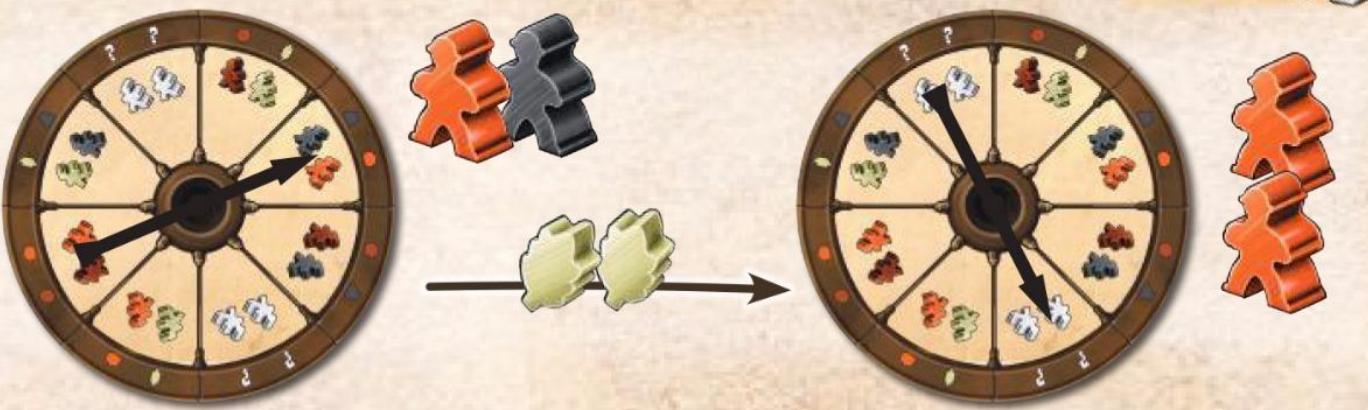
用手指轻弹 “招募轮盘” 上的指针,让指针旋转起来。指针停下来后所指的那一格,表示玩家可以得到的两个工人。从供应堆拿取对应的工人,放到自己玩家板上的工人空位上。
注意:指针必须至少旋转360度,否则你需要重新弹一次。如果指针停在两个格子中间的分隔线上,则把指针拨到后面的一格。
然后,你可以支付一个小麦,让指针沿顺时针方向前进一格。最多可以前进7次,每移动一次需支付1个小麦。接着从供应堆拿取指针所指向的格子对应的两个工人,放到自己玩家板上的工人空位上。
这个动作每回合只能执行一次。你不需要对额外获得的工人再支付小麦。
玩家板上只有8个工人空位。如果你没有足够的空位来容纳你的工人,你需要归还多出来的工人到供应堆。可以是你刚刚招募的工人,也可以移除已经放在板上的工人来腾出空位。
如果指针指向两个白色的工人,玩家可以从供应堆选择拿取任意两个工人。可以是两个相同颜色也可以是两个不同颜色。
举例:玩家A弹动指针,拿取一个灰色和一个橙色的工人。之后,玩家A支付2个小麦,把指针向前移动两格,再拿取2个橙色的工人。


行动B:工作
把你的工人派到不同的地方,以收集资源和钱币。
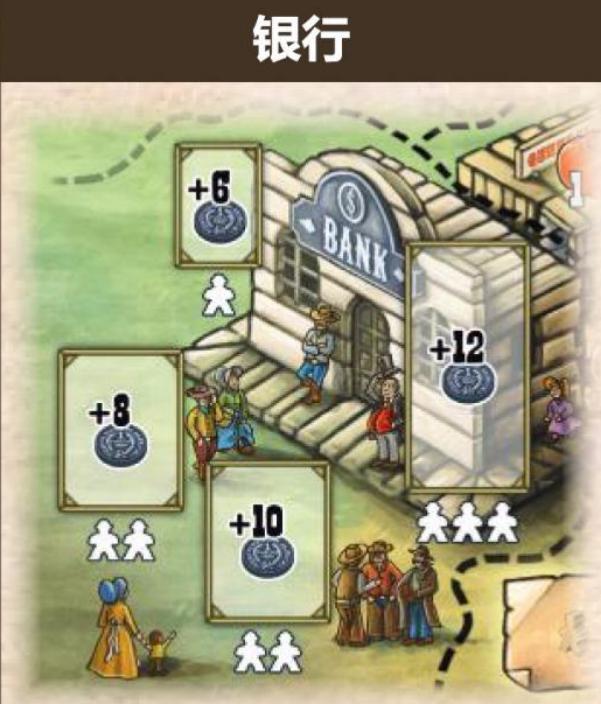
把1- 3个工人放置到银行前面一个未被占据的空格上,然后拿取对应数量的钱币。这些工人可以是任意颜色。
你必须在空格上放置如图标所示相应数量的工人。
如果一个玩家的回合结束时,银行前面所有的空格都已放满,所有的工人将返还供应堆。从下一回合开始,这些空格又可以使用了。
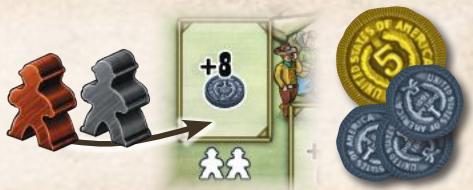
举例:玩家A放置一个棕色和一个黑色的工人在银行前面的空格上,他将从供应堆拿取8个钱币放到自己的玩家板上。


矿洞、采石场、麦田、农场

把工人放置到一个未被占据的空格上,支付钱币来获取物资。
当一片场地左边较大的那个空格上没有工人时,则是未被占据。
你必须放置一个对应颜色的工人,或者两个任意颜色的工人。然后你需要支付空格上所标示数量的钱币,以获得相对应的物资。你不能选取另外一个格子的收获。
在此之后,你可以按照同样的规则,在右边较小的那一格中雇佣工人,来获得额外的物资。你并不是一定要在右边的空格中雇佣工人。
如果一个玩家的回合结束时,一个物资产区所有较大的空格都已放满,这一区域所有的工人将返还供应堆。从下一回合开始,这些空格又可以使用了。
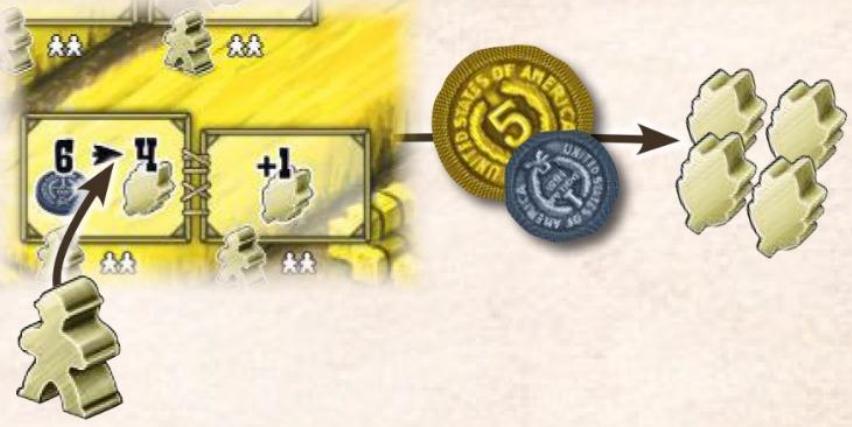
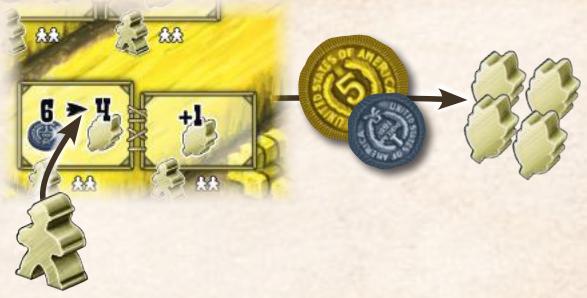
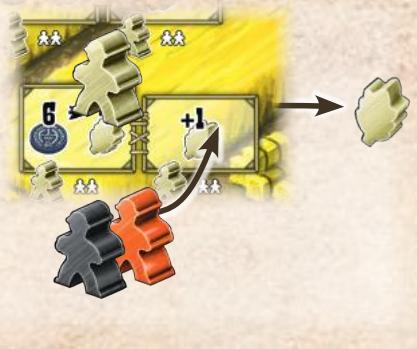
举例:一位玩家放置一个白色的工人到麦田中左手边的空格里,他支付6个银币,获得4个小麦。之后,他又放置两个工人到右边较小的空格里,获得1个额外的小麦。

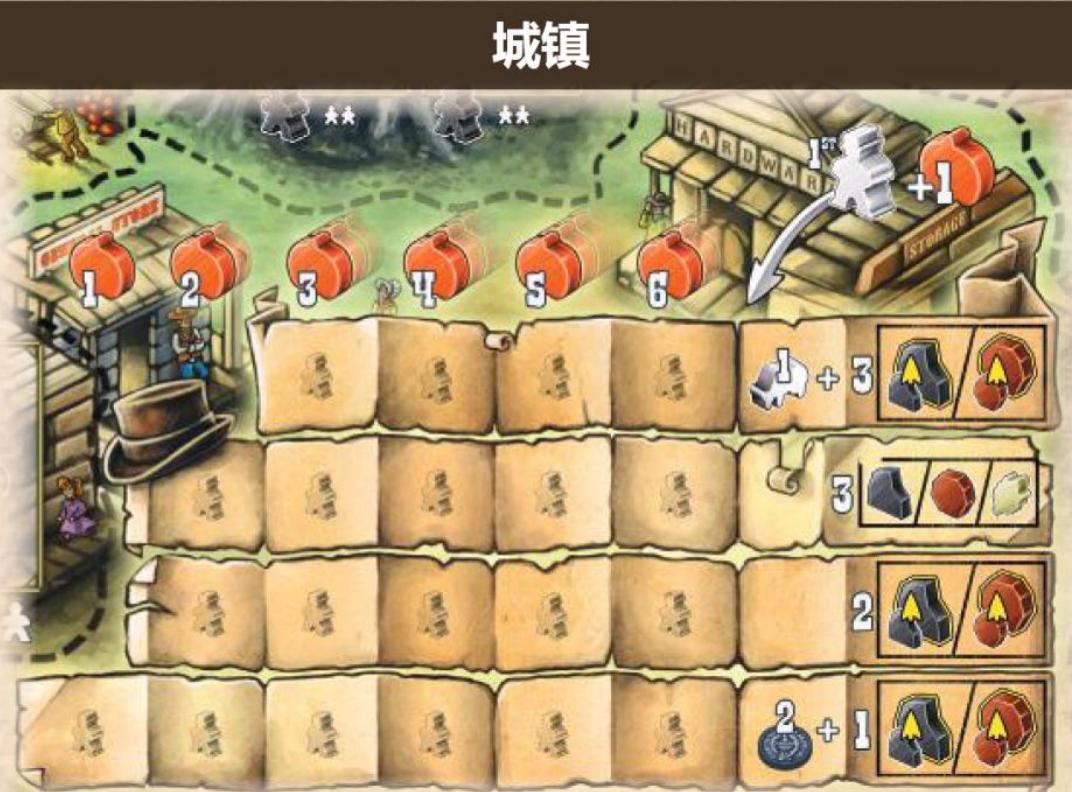
从供应堆拿1个南瓜,放到自己的玩家板上。把你的工头放到商店前任意一个空格上,你必须在回合结束时支付一定数量的南瓜,然后可以获得所在那一行最右边的奖励。所必须支付的南瓜数量标示在每一列的最顶端。当你放置工头到一个空格时,你必须有足够的南瓜来支付费用,否则你不能放置到那一格。
此后,按照顺时针的顺序,其他玩家也可以把他们的工头放到商店的空格中或者是Pass,只是此时他们不会再获得1个南瓜的奖励。
如果有玩家想要把自己工头放到已有其他玩家的工
头所在的同一行时,则他必须放到现有工头右边的空格上。被“反超”的玩家需要立即移动他的工头(遵照上面的规则),或者是Pass。如果一个玩家选择Pass,他必须把工头放到“五金店”来表示他已经Pass了,这回合将不能再放置他的工头。
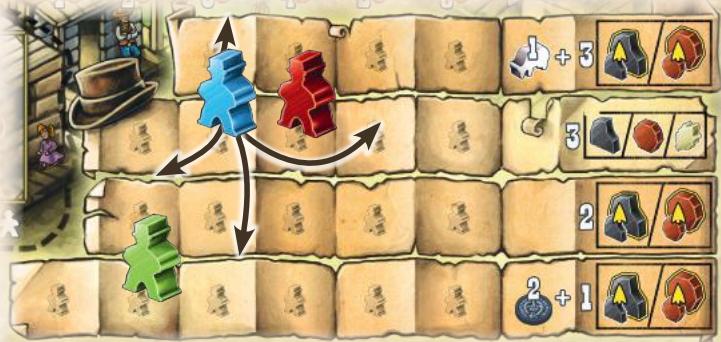
举例:红色玩家把工头放在第二行,此时蓝色玩家必须立即移动他的工头。他可以按如图所示的4个方向移动,也可以放到更靠右侧的位置来提高“竞拍”的成功率,当然也可以选择Pass(把工头放到“五金店”)。注意:如果他把工头放到第二或者第四行,则那一行上的其他工头也必须立即移开。

如果所有玩家都把工头放到不同的行上或者是Pass,从当前回合的玩家开始,向银行支付南瓜并结算奖励。其他玩家按顺时针方向依次结算。
最后,所有玩家把各自的工头放回到“五金店”中。
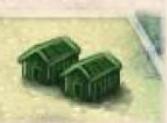 | 如果一块空地上有两个定居点的图标,那么放置两个定居点在这个空地上。放置这个额外的定居点属于同一个建设行动,不需要支付额外的物资。 |
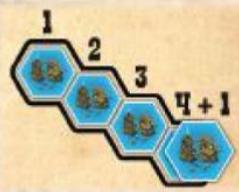 | 如果你在一条直线上建成连续四个定居点,则你立刻放置一个额外的定居点在第四个定居点上。放置这个额外的定居点属于同一个建设行动,不需要支付额外的物资。(然而,后续这条直线上新建立的其它定居点将没有奖励。) |
 | 如果一块空地上有一头牛,则你把这头牛放到自己的玩家板上。 |
 | 如果空地与湖泊相邻并且湖泊上有水壶的标记,则你可以获得这个水壶,把水壶放到自己的玩家板上对应的位置。你可以在自己的回合结束时,使用水壶来立刻获得一个新的回合。水壶使用过之后将放回游戏盒中,游戏中将不再使用。如果空地上的水壶已经被其他玩家拿走,你就不能再获得水壶了。 |
 | 从供应堆获得1头牛。此外,你可以把小石块/小铜块交换成大石块/大铜块,最多可以交换3次,以任意组合与供应堆进行交换。 |
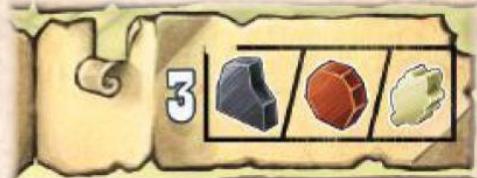 | 从供应堆获得3个物资。可以从小铜块、小石块、小麦中间选择任意组合。 |
 | 你可以把小石块/小铜块交换成大石块/大铜块,最多可以交换2次,以任意组合与供应堆进行交换。 |
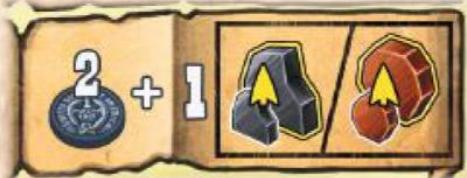 | 从供应堆获得2个银币。此外,你可以把1个小石块/小铜块交换成大石块/大铜块,与供应堆进行交换。 |
行动C:建设
向一个区域运送物资,建立一个定居点。
选择地形板图上一个与任意板块(起始板块或者其他定居点板块)相邻的空地,支付空地上所标示的物资到供应堆,放置一个你的定居点到这个空地上。
山地和湖泊区域是不允许建立定居点的。
重要:铜块和石块的需求有大小的区别,你必须支付与空地上所标示的完全相同的物资。你不能运输小石块/小铜块来替代大石块/大铜块,也不能用大的来替代小的。
每回合,你可以建立至多3个定居点。当你选择建设行动时,你必须至少建立一个定居点。如果你选择不建立第二或者第三个定居点,每少建一个你会获得一个银币。

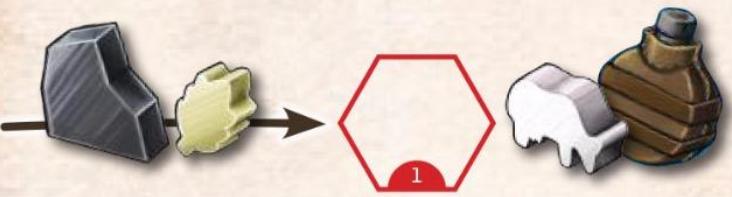
举例:红色玩家支付一个大石块和一个小麦,在湖泊旁边建立一个定居点。他获得那一格上面的一头牛,同时他是第一个在湖泊旁边建立定居点的玩家,他也将获得湖泊上的那个水壶。
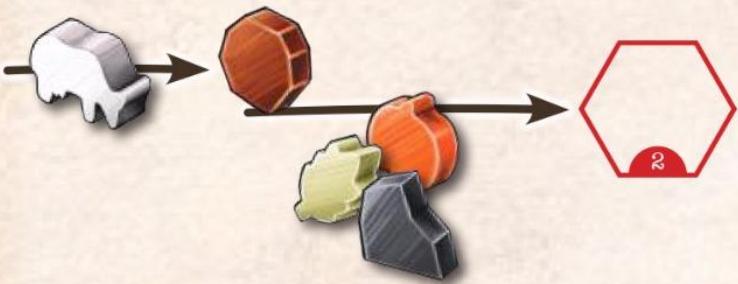

他的玩家板上还有3个物资(1个小石块、1个小麦、1个南瓜),他决定使用牛只交易行动(见下文详解)把刚获得的那头牛交换成1个小铜块。现在他有足够的物资来建立第二个定居点。由于这个空地上有两个定居点的图标,你可以放置两个定居点板块在这个空地上。
他的物资都已经用完了,他放弃建立第三个定居点的机会,从供应堆拿1个银币。

注意:如果在后面的游戏中,他在这条直线上建立第四个定居点,由于这是一条直线上的第四个定居点,同时空地上有两个定居点的图标,他可以在这个空地上放置三个定居点板块。
额外行动:牛只交易
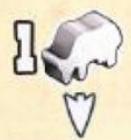
除了以上的行动之外,在你的回合中,你可以支付一头牛到供应堆,获得:

1个物资(小铜块、小石块、小麦、南瓜),或者

3个银币,或者
1个任意颜色的工人。
在你的回合中,你可以多次执行牛只交易行动。
游戏结束
当有玩家放置了自己最后一个定居点板块到地形板图上时,那一轮完成之后游戏结束。也就是当起始玩家右手边的玩家结束他的回合之后,游戏结束。
在板图上拥有最多定居点的玩家获得游戏胜利。如果出现平局,有水壶和牛的总数最多的玩家获胜。如果依然是平局,由钱币、工人、物资总数最多的玩家获胜。
特别鸣谢

游戏设计:Rüdiger Dorn
图形设计:Klemens Franz | atelier198
说明书编排:Jeroen Hollander
英文翻译:Kenny van den Bergh
项目经理:Jonny de Vries
© 2017 White Goblin Games
www.whitegoblingames.com
Montana_rules_ENG.md21.8 KB
MONTANA RÜDIGER DORN
rules
米
MONTAWA RÜDIGER DORN
INTRODUCTION
Halfway through the 19th century the first permanent settlements appear in Montana. After this many fortune seekers travel to this region with their caravans in search of work and building a better future for themselves. And there is an abundance of work, in the mountains precious metals are to be found and on the fields a lot of manpower is required. Meanwhile the number of settlements is growing and the demand for goods is rising. Recruit the right workers, deliver goods on time, and choose your settlements tactically. Only then you will have the biggest chance of winning the game.
COMPONENTS
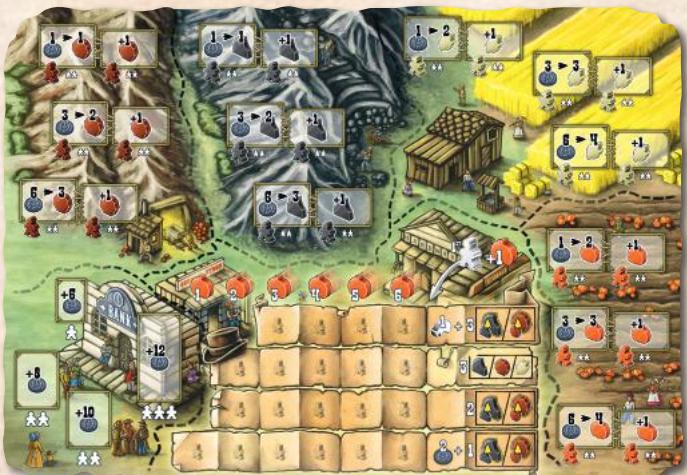

1 worker board
The worker board consists of 4 production areas (mine, quarry, grain field, and farmland), the bank and the city. During the game players will place their workers here to receive new goods and money.

6 canteen markers
4 player boards – 1 per player colour (blue, yellow, green and red) The player board shows the fields on which players can store their cattle, goods, money and canteens. There is no limit to the amount of goods a player can store on their player board. In addition, there are 8 spaces to store workers on. You can never have more than 8 workers. At the top of the player board all the different available actions are depicted.
1 recruitment wheel
Assemble the recruitment wheel prior to the first game. Place the arrow on the wheel and attach it on the backside. Each time you need to use the wheel, you spin the arrow by flicking it with your fingers. The arrow must rotate at least 360 degrees when doing this. The space on which the arrow stops determines which workers you may collect from the general supply.


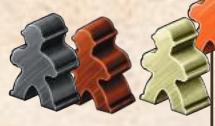
72 workers – 18 per goods colour (copper, stone, grain and pumpkin) The workers are not connected to the player colours, but are connected to goods of the same colour. During the game you will use your workers to collect goods of the same colour.

12 landscape tiles



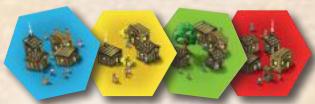
4 contractors – 1 per player colour (blue, yellow, green and red)
48 settlements – 12 per player colour (blue, yellow, green and red)
49 coins – 10x gold (value 5) and 39x silver (value 1)
1 starting player tile

24 cows
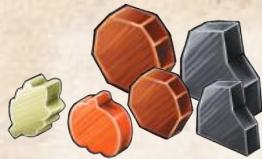
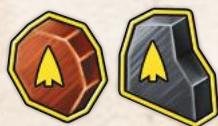
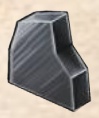
120 goods – 24x grain, 24x pumpkin, 36x copper (24x small; 12x big) and 36x stone (24x small; 12x big) There are two denominations of copper and stone. In this game an icon with a yellow border and a yellow arrow is used for the big denomination.
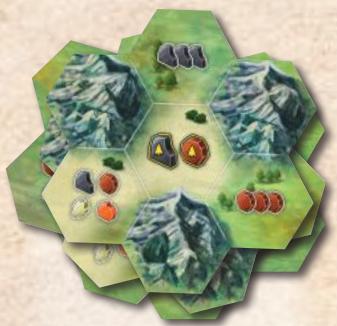
Create the landscape board with random landscape tiles. The shape of the board and the number of tiles depends on the number of players:
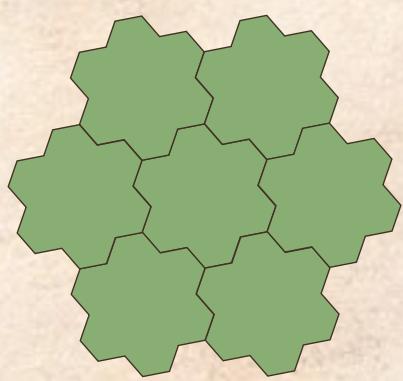
2 players (7 landscape tiles)

3 players (9 landscape tiles)

4 players (10 landscape tiles)
Place the starting tile on a field of your choice on the landscape board.
Place a cow on each field on the landscape board with a cow symbol.
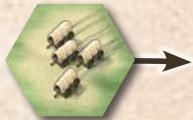
Place a canteen marker on each field on the landscape board with a canteen symbol.
4 Place the recruitment wheel and the worker board next to the landscape board.


Put all workers in the general supply.
6Put (depending on the number of players) a number of goods in the general supply:

 |  |  |  |  |  | |
| 2 players | 10 | 10 | 10 | 6 | 10 | 6 |
| 3 players | 15 | 15 | 15 | 9 | 15 | 9 |
| 4 players | 20 | 20 | 20 | 12 | 20 | 12 |
Return the remaining goods back to the game box. The goods in the game are limited.
Put the remaining cows in the general supply.
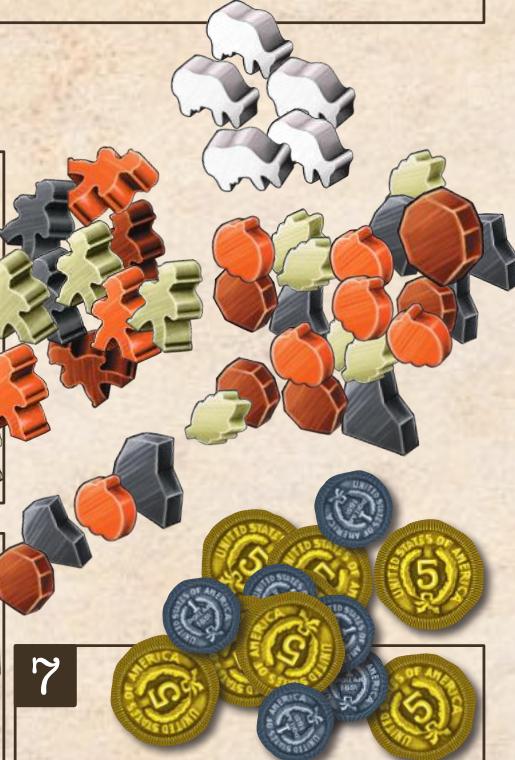
Put all coins in the general supply. The coin supply is virtually unlimited. Should there be insufficient money then use other (game) material to indicate the amount of coins a player has.
8Every player receives in the chosen player colour:
1 player board
1 contractor – Place the contractor on the "hardware store" on the worker board.
settlements (2 players: 12 settlements; 3 players: 10 settlements;
4 players: 8 settlements; remaining settlements are returned to the game box).
Place the settlements on your player board.
In addition, each players receives 1 cow and 4 goods (1 grain, 1 pumpkin, 1 (small) copper and 1 (small) stone). Each player places these on the depicted spaces on their player board. Take these goods from the game box (and thus not out of the general supply)!
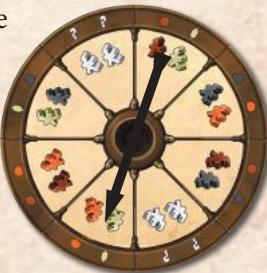
9 Each player starts the game with 4 workers. To determine these workers, each player spins the recruitment wheel twice. After each spin the player takes
the 2 workers depicted on the space on which the arrow stops from the general supply. If the arrow is pointing to a space with 2 white workers, then the player may take any 2 workers of his choice. Place these workers on the appropriate spaces of your player board.
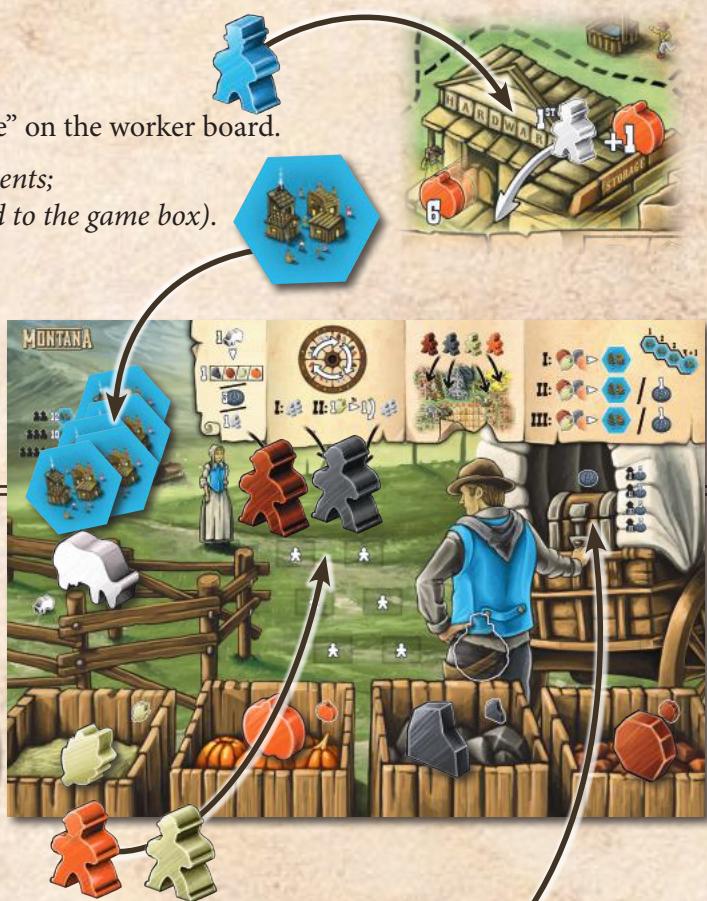
LO Choose a starting player. This player places the starting player tile in front of him and receives 3 silver. Every following player in playing order receives 1 coin more than the player in front of him. So player 2 receives 4 silver, player 3 receives 5 silver and player 4 receives 6 silver. Place these coins on your player board.

OBJECT OF THE CAME
Collect workers and put them to work in the quarry, in the mine, on the grain fields and on the farmlands. Send your workers to the bank for money and to the city for trading. Deliver goods in a region so that settlements can be built. Settlements on strategic places are more valuable, but others will try to cut you off. Make sure you have all your settlements on the board first and you will have a good chance of winning the game.
GAMEPLAY
The game will play out in turns.
The starting player begins. Then play continues in clockwise order.
When it is your turn, you have to perform one of the three following actions:
Additionally, as often as you want, you can perform the extra action Cattle trade (see page 7).
Limited workers and goods
If a player would get goods or workers which aren't available in the general supply at that moment, then all players must first (if possible) return 1 good of the missing type or worker of the missing colour from their player board to the general supply. Repeat this until there are enough goods and workers in the general supply to fulfil the player's demand. Thereafter the player takes the goods or workers he is entitled to.
Example: Example: A player would get 3 stone. There is only 2 stone in the general supply. First all players (including this player) must return 1 stone back to the general supply. Thereafter the player takes 3 stone from the general supply and places it on their player board.
Example: A player spins the wheel and takes a grey and an orange worker from the supply. After that he pays two grain to move the arrow two spaces and takes two additional orange workers.
Bank
Recruit workers who can help collect goods which are needed to build new settlements.
Spin the arrow on the recruitment wheel by flicking it with your fingers. The space on which the arrow stops indicates which 2 workers you receive. Collect these workers from the general supply and place them on two free worker spaces on your player board.
Note: The arrow must rotate at least 360 degrees, otherwise you must spin again. If the arrow stops on the line dividing two spaces, slide the arrow to the space after this line.
Then you can pay grain to advance the arrow, clockwise, one space. You can move the arrow up to 7 spaces. For each space advanced this way, you must pay 1 grain to the general supply. Then take the 2 workers indicated by the arrow from the general supply and place them on two free worker spaces on your player board.
You can only do this once per turn. You are not required to pay grain to gain extra workers.
The player board only offers room for 8 workers. If you do not have enough room to place workers on your player board you have to return the excess workers back to the general supply. These may be workers you have just received, but you can also remove workers from your board to make room for new workers.
If the arrow stops on a space with two white workers, the player can choose to receive any 2 workers from the general supply. These can be two workers of the same colour or two workers in different colours.


Action B: Work
Send your workers to different areas of the city to collect goods and/or money.
Place 1-3 workers on an unoccupied space at the bank and receive the indicated amount of coins. These workers may have any colour.
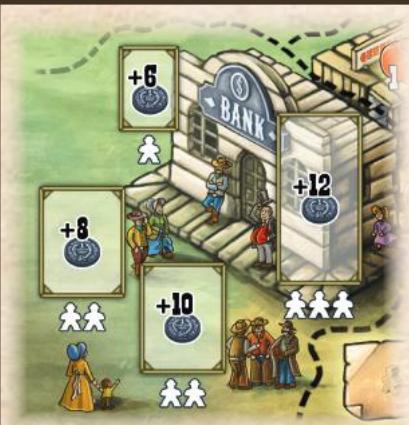
You must place the exact depicted number of workers on a space.
If at the end of a players turn all spaces at the bank are occupied, all workers in these spaces are returned to the general supply and these spaces will be available again starting from the next turn.
Example: A player places a brown and a black worker on a space at the bank. He takes 8 silver from the supply and places it on his player board.
Mine, quarry, grain field and farmland
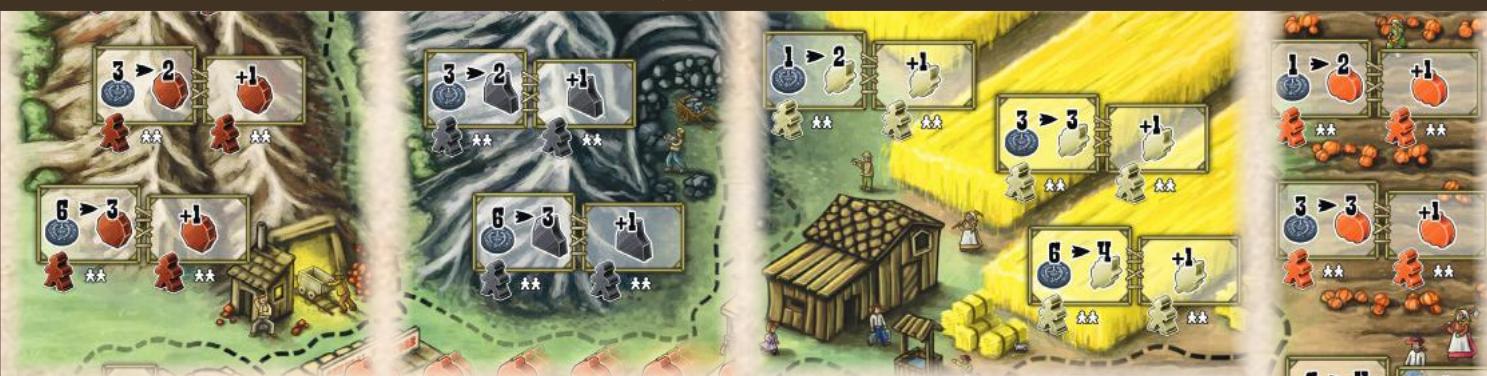
Place workers on an unoccupied space at the mine, the quarry, the grain fields or the farmlands and pay money to receive goods.
A field is unoccupied when there are no workers on the large left-hand space.
You must place 1 worker of the specified colour or 2 workers of any other colour. Then you have to pay the amount of money indicated on the space and receive the indicated number of goods. You cannot choose a reward from another space.
After that, you can use the same rules to employ workers on the small space to the right of this space to receive an additional good of the same type. You are not required to employ workers on the smaller space.
If at the end of a player's turn all large spaces in a goods area are occupied, all workers in this area (on either large and small space) are returned to the general supply. The spaces in this area will be available again starting from the next turn.
Example: First a player places a blanc worker on this lefthand space at the grain fields area. He pays 6 silver and gets 4 grain. After that he places two additional workers on the right-hand (smaller) space next to the initial space to gain 1 extra grain.
City

Take 1 pumpkin from the general supply and place it on your player board. Then place your contractor on a space of your choice in one of the rows at the store. To receive the reward on the right at the end of your turn you must be able to pay a number of pumpkins. This number is indicated at the top of each column. When you place your contractor on a space, you must have enough pumpkins to be able to pay the costs in order to receive the reward, otherwise you may not place your contractor there.
After that, the other players, in clockwise order, may also place their contractor on a space at the shops or pass. However, they do not receive a pumpkin from the general supply.
If someone wants to place their contractor in a row where
is already a contractor of another player present, he has to place it in a space to the right of that contractor. The player whose contractor was "outbid" must immediately move his contractor (according to the rules above) or pass. If a player passes he may not place his contractor this turn, he must place his contractor on the "hardware store" to indicate that he has passed.
Example: Red places his contractor on the second row. Now Blue has to move his contractor immediately. He has four options to move to. Of course he can also choose to pass (and move his contractor to the "hardware store") or to place his contractor on a space even more to the right in a row to increase his chances not to be forced to move again. Note that if he moves his contractor to a space on the second or fourth row, the contractor currently on that row must move immediately too.
If all players have placed their contractors in different rows or have passed, then the active player plays pumpkins first to receive his reward. Put the pumpkins in the general supply. The other players follow in clockwise order. Finally, all players place their contractor back on the "hardware store" in the city.
 | denomination up to three times in any chosen combination. Trade |
 You can choose from small copper, small stone and/or grain. | Receive 3 goods in any chosen combination from the supply. |
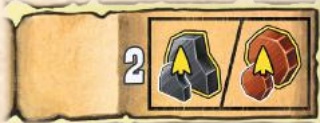 general supply. | tion up to two times in any chosen combination. Trade with the |

Action C: Build
Deliver goods to an area and build a settlement.
Choose a field on the landscape board that borders a field with a tile (the starting tile or any other settlement) and return the goods, which are depicted on that field, from your player board back to the general supply. Then place a settlement of your colour on that field.
It is not possible to build a settlement on a field with a mountain or a lake.
Important: There are two sizes of copper and stone. You have to hand in exactly what is depicted on the field. It is not possible to deliver small goods for large goods and vice versa.
In this way you can build up to three settlements during your turn. You must build at least one settlement when you choose this action. If you refrain from building a second or third settlement during your turn you will receive 1 silver for each settlement you refrain from building.


If the symbol for two settlements is depicted on the field, then you place two of your settlements on that field.
Placing this additional settlement is part of the same build action and doesn't cost you any goods..
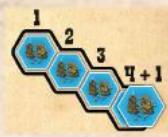
If you create a straight continuous line with exactly four fields containing settlements in your colour, you immediately place an additional settlement on the fourth field in this line. Placing this additional settlement is part of the same build action and doesn't cost you any goods. (However, for any subsequent settlement in this line you may not place an extra settlement).
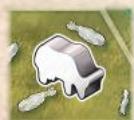
If a cow is present on the field, then you place this cow on your player board.
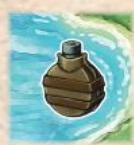
If the field is adjacent to a field with a lake containing a canteen marker, then you will receive the canteen. Place the canteen on the appropriate space on your player board. You can spend the canteen at the end of any own turn to immediately take another turn. When spent, the canteen is returned to the game box and can't be used again during this game. If the canteen on the field is already taken by another player, you will not receive anything.
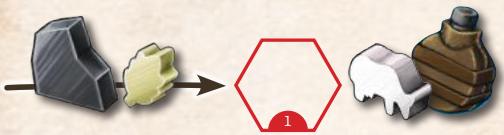
Example: Red decides to build a settlement. He pays one big stone and one grain, and places a tile in his colour on the space next to lake. He gets the cow on that space and also takes the canteen marker, since he was the first player to build a settlement next to this lake.

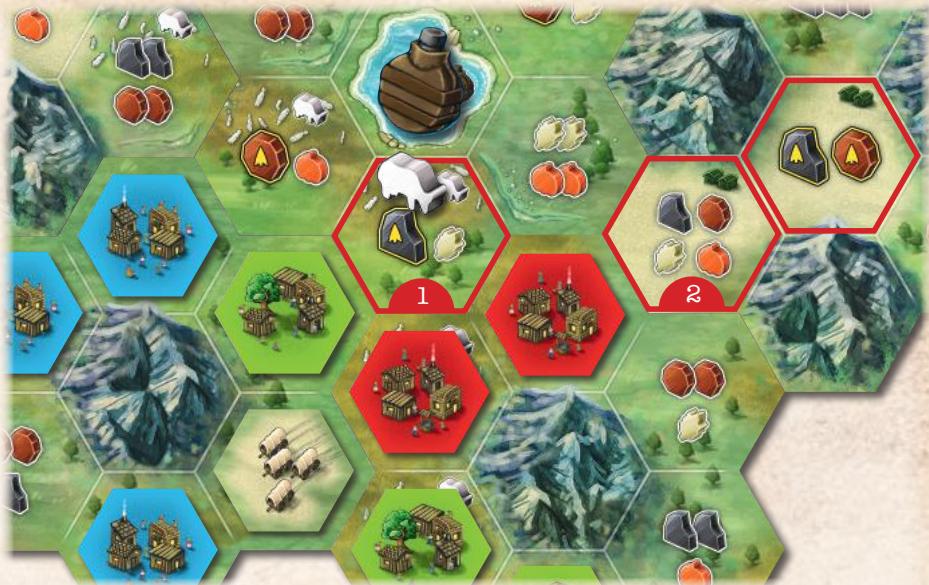
He has still 3 different goods (a small stone, a grain and a pumpkin) on his player board. So he decides to trade his just gained cow with a cattle trade action (see action below) to get a small copper. Now he has the required goods to build an additional settlement. Since this space shows a two settlement symbol, he places two tiles on the space.
With no goods left on his player board, he refrains from his third option to build a settlement and takes 1 silver from the supply. Note that if he builds a fourth settlement (in a later turn) in this line, he can place 3 tiles on that space since it's the fourth settlement in a straight line and it shows a two settlement symbol.

Extra action: cattle trade

In addition to any of the above actions, you can (at any time during your turn) return 1 cow from your player board to the general supply in exchange for:

a good of your choice (small copper, small stone, grain or pumpkin), OR

3 silver, OR
a worker of your choice.
You can perform an unlimited number of cattle trade actions during your turn. These may concern the same exchange or different ones.
ENDING THE CAME
The game ends after the round in which a player has placed his last settlement on the landscape board. When a player builds his last settlement, the current round is finished. The game ends after the turn of the player sitting to the right of the start player.
The player with the most settlements on the board wins the game. In a case of a tie, the tied player with the highest total of cows and canteens wins the game. If there is still a tie, then the tied player with the highest total of coins, workers and goods on his player board wins the game.
CREDITS

Game design: Rüdiger Dorn Graphic design: Klemens Franz | atelier198 Rulebook development: Jeroen Hollander English translation: Kenny van den Bergh Project manager: Jonny de Vries © 2017 White Goblin Games www.whitegoblingames.com
Download MarkdownTexts are community-compiled or publicly released by publishers; copyright remains with the original authors. For personal reference only.