
Noblemen
At a glance
Rules, cards and Q&A (Chinese)
The rules, card data and player questions for this game are written in Chinese. Open the Chinese page to read them.
Where to find full rules
Full rules and card lookup are available in the cunlema app at cunlema.cn — pick this game and ask about any rule, card or turn you are unsure about.
Related games
Rulebook text (Markdown)
This game has 3 rulebook Markdown file(s) in our library; 3 rendered inline below — expand to read or download.
rules_zh_贵族_8474.md34.7 KB
貴族野望
一款給 3 - 5 個 1 2 歲以上的貴族進行的策略遊戲
設計:Dwight Sullivan
翻譯/排版:小柴
(1) 沈海省91 沈海省91
遊戲介紹
16世紀的英格蘭:女王伊莉莎白一世的統治後沒有繼承人,貴族們為了獲得女王的青睞彼此競爭。
你是英國貴族的成員,並且為了你家族的影響力及聲望而努力。為了達成目標,你擴展你的莊園並建造了宮殿建築。運用政治的手腕,以及賄絡和利用醜聞,你為了假面舞會之後頒贈的關鍵頭銜而競爭。30年後,最高分的玩家將會獲得女王的最高推崇,並且贏得遊戲!
(地酒香) 地酒香
遊戲圖板

注意:因為材質的關係,遊戲圖板可能會有點彎彎的。會這樣是因為溫度的落差所造成,比如說把遊戲圖板放在一個冰冷的表面、溫暖的燈光、或者是陽光直接照射。如果圖板彎彎的話,把圖板翻到另一面(兩面圖案相同)。
| 1 | 遊戲圖板(有兩個組件) | 15 | 城堡 |
| 5 | 玩家擋板 | 15 | 教堂 |
| (每份有三個組件) | 12 | 宮殿 | |
| 12 | 頭銜 | 4 | 蚊子館 |
| 202 | 土地板塊(62片田野、44片噴泉、48片48片草地) | 1 | 女王 |
| 10 | 士兵(5種顏色) | ||
| 20 | 賄絡指示物 | 5 | 計分標記(5種顏色) |
| 5 | 稅收指示物(5種顏色) | ||
| 5 | 徵地指示物(5種顏色) | 5 | 聲望指示物(5種顏色) |
| 82 | 金錢指示物(40x1、26x5、16x10) | 1 | 計年標記 |
| 1 | 輪次標記 | ||
| 35 | 醜聞卡 | 1 | 布袋 |
| 10 | 幫助卡(5xA、5xB) |
遊戲配件
16
兩種幫助卡各拿一張(A及B),並把它們放到你的面前。
15
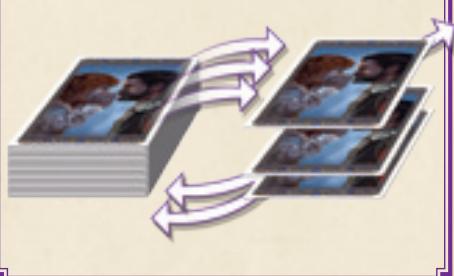
洗混醜聞卡並把它們正面朝下放到遊戲圖板旁形成牌庫。每個玩家從牌庫抽3張牌,並察看牌面內容。保留1張牌,並把它放到你的擋板後。把剩餘的2張卡片正面朝下放回牌庫的最底部。

14
把屬於你顏色的士兵放到遊戲圖板旁當作供應區。

13
把屬於你顏色的聲望標記放到聲望軌0的位置。這個標記只有在假面舞會舉行的期間才會移動。

遊戲設置 (4人範例)
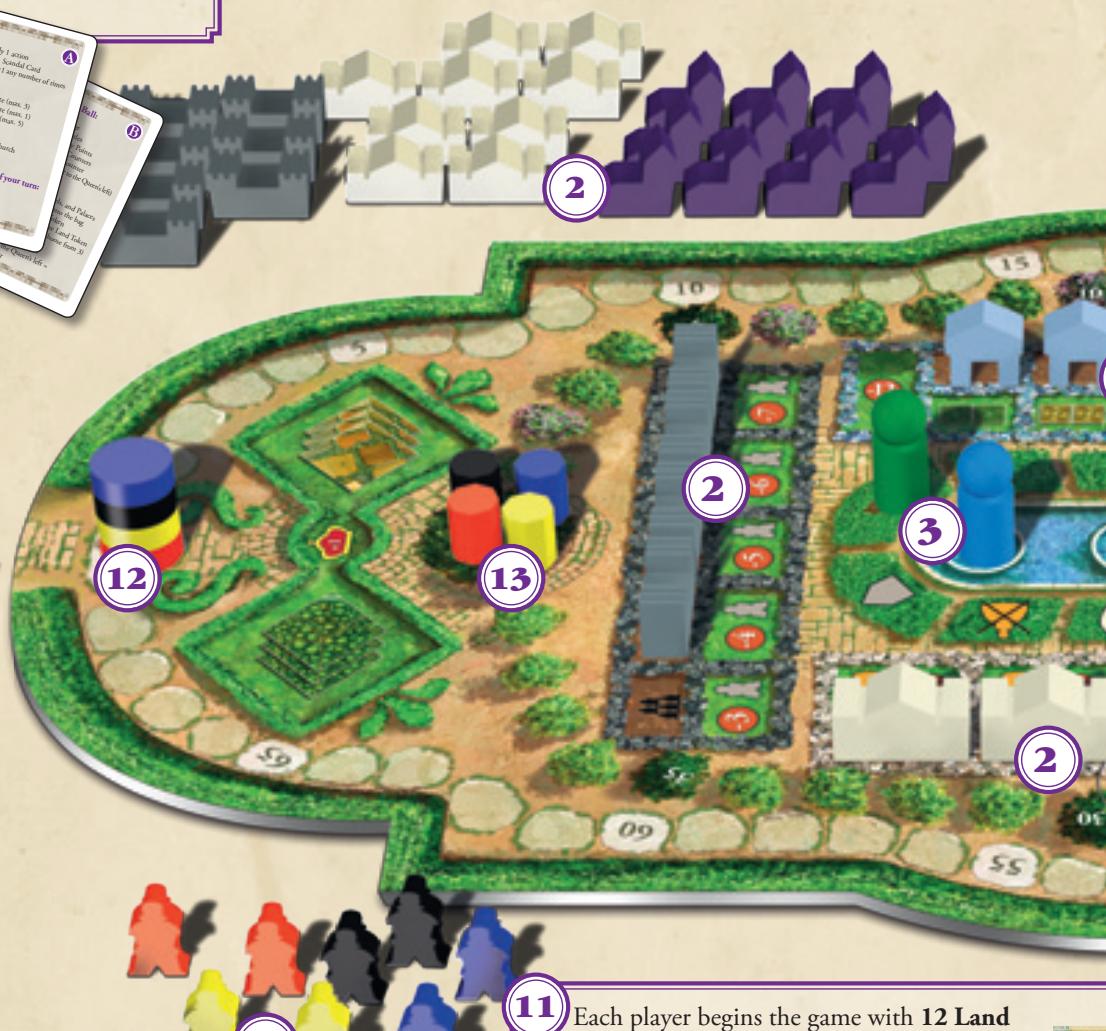
2
把遊戲圖板的兩個組件嵌合在一起,並放到桌子中央。
根據玩家人數,把特定數量的城堡、教堂、宮殿,以及蚊子館放到屬於它們的咖啡色區域:
| 城堡區域 | 教堂區域 | 宮殿區域 | 蚊子館區域 | |
| 3人遊戲 | 3座 | 3座 | 2座 | 4座 |
| 4人遊戲 | 4座 | 4座 | 3座 | 4座 |
| 5人遊戲 | 5座 | 5座 | 4座 | 4座 |
把這些建築物放到最昂貴的區域。把剩餘的城堡、教堂,以及宮殿放到遊戲圖板旁當作供應區。
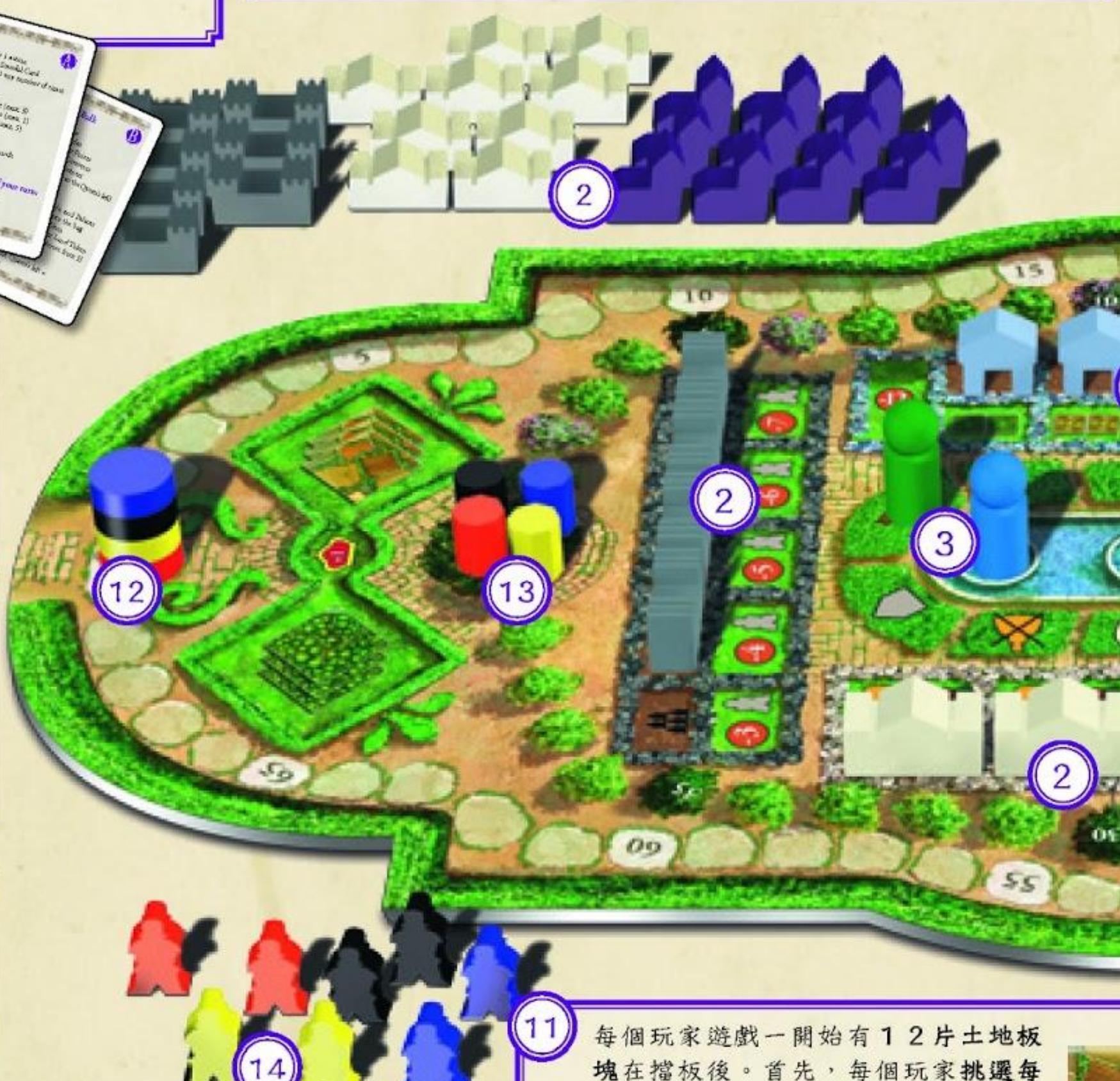
12
把屬於你顏色的計分標記放到計分軌0的位置。每當你獲得分數時,把它沿著計分軌移動。

每個玩家遊戲一開始有12片土地板塊在擋板後。首先,每個玩家挑選每種板塊最多3片(田野、樹林、噴泉、草地)。接著,把剩餘的板塊放回袋中並洗混。最後,每個玩家隨機從袋中抽板塊,直到他總共有12片板塊在他的擋板後。
注意!如果你第一次玩貴族野望,你應該4種土地板塊都各拿3片!不要再袋子抽額外的土地板塊,因為你已經有12片土地板塊了。


5
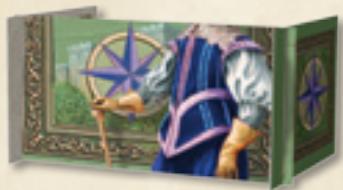
每個玩家選擇一個顏色並拿取該顏色的玩家擋板、稅收指示物及徵地指示物。把這兩個指示物放到你的擋板後。
4
把賄絡指示物堆疊好放到遊戲圖板上的對應位置。

3
把綠色的輪次標記放到輪次軌的箭頭位置。
把藍色的計年標記放到計年軌1的位置。
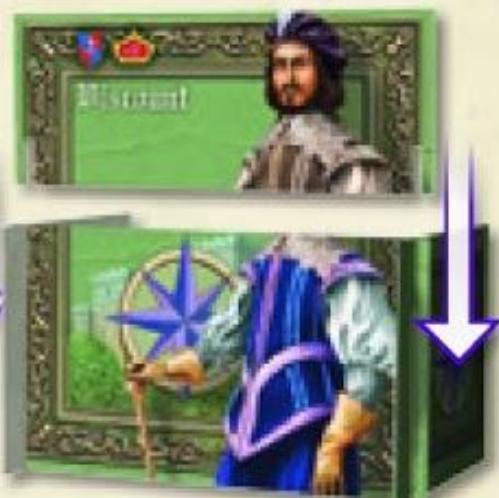
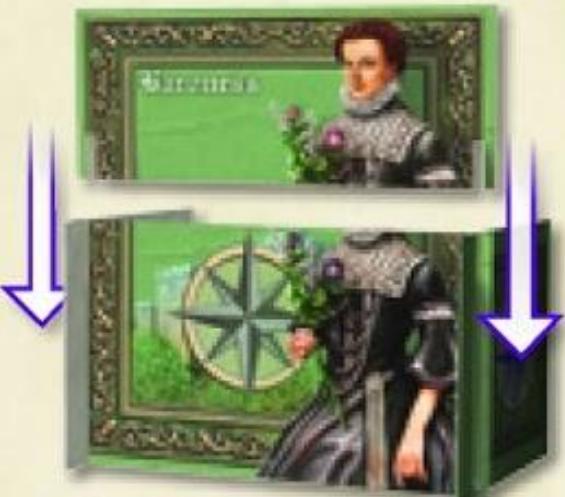
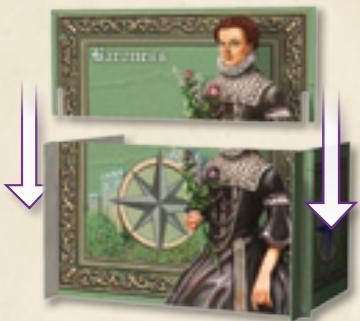
每個玩家拿取1個男爵/女爵(Baron/Baroness)頭銜,並把它插放到你的擋板上。
6

注意:所有的頭銜都印有兩面,因此,你可以把你想要給對手看到的頭(男人/女人)朝外插放。
7
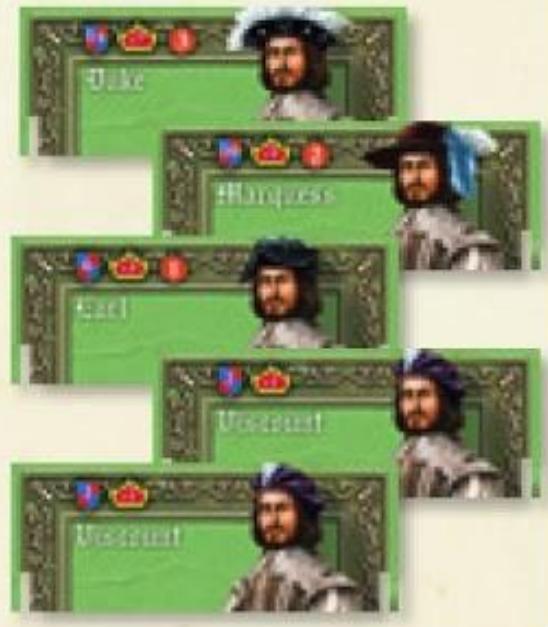
根據玩家人數,把特定數量額外的頭銜放到遊戲圖板旁當作供應區:
| 公爵/公爵夫人 | 侯爵/侯爵夫人 | 伯爵/伯爵夫人 | 子爵/子爵夫人 | |
| 3人遊戲 | 1 | 1 | 1 | 1 |
| 4人遊戲 | 1 | 1 | 1 | 2 |
| 5人遊戲 | 1 | 1 | 2 | 3 |

少於5人遊戲時,把剩餘的頭銜放回遊戲盒子裡,不會再用到。


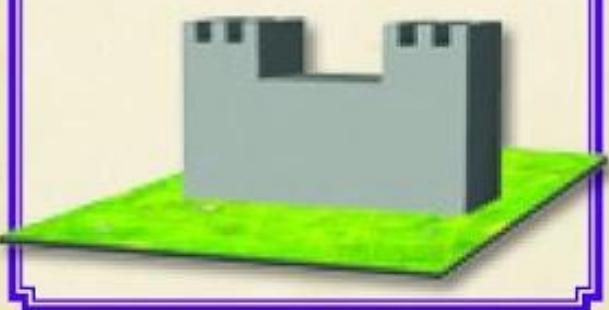
從土地板塊中拿取,每個玩家拿取1個草地,並把它放到他們的擋板面前開始他的莊園。接著每個玩家從供應區拿取1個城堡,並把它放到他的草地上。
在起始玩家右手邊的玩家拿
取女王,並把它放到他的擋板面前,讓每個玩家都能看見。
女王模型象徵女王的青睞。
最近有去花園的玩家當起始玩家。他拿取10元,其他每個玩家,都比右手邊的玩家各自多拿1元,也就是11元、12元、13元,以及14元。每個玩家把他的錢放到擋板後。把剩餘的錢放到遊戲圖板旁當作供應區。
土地板塊
這4種土地板塊(以下簡稱為:板塊)遊戲過程中會用來擴展你的莊園。
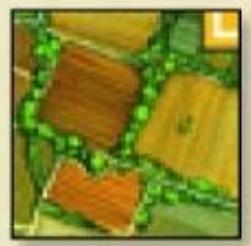
田野:供應金錢

樹林:供應板塊

噴泉:供應聲望

草地:供應建築的區域
4片相同的板塊(除了草地以外)拼組成一個四方型的區域,會出現一個區域符號:
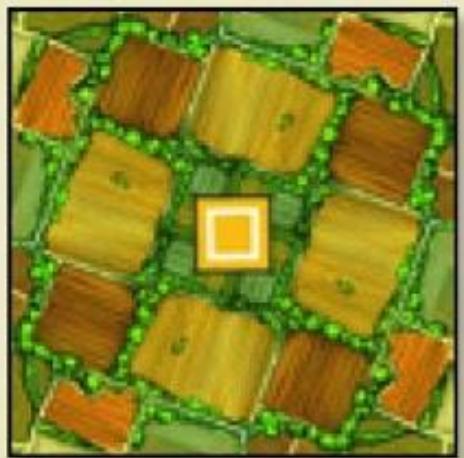
4片田野拼成一個農場:

4片樹林拼成一個森林:
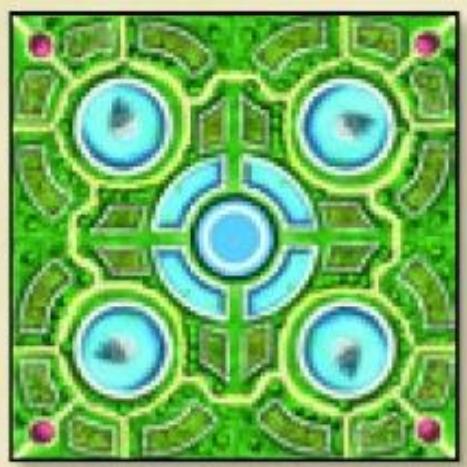
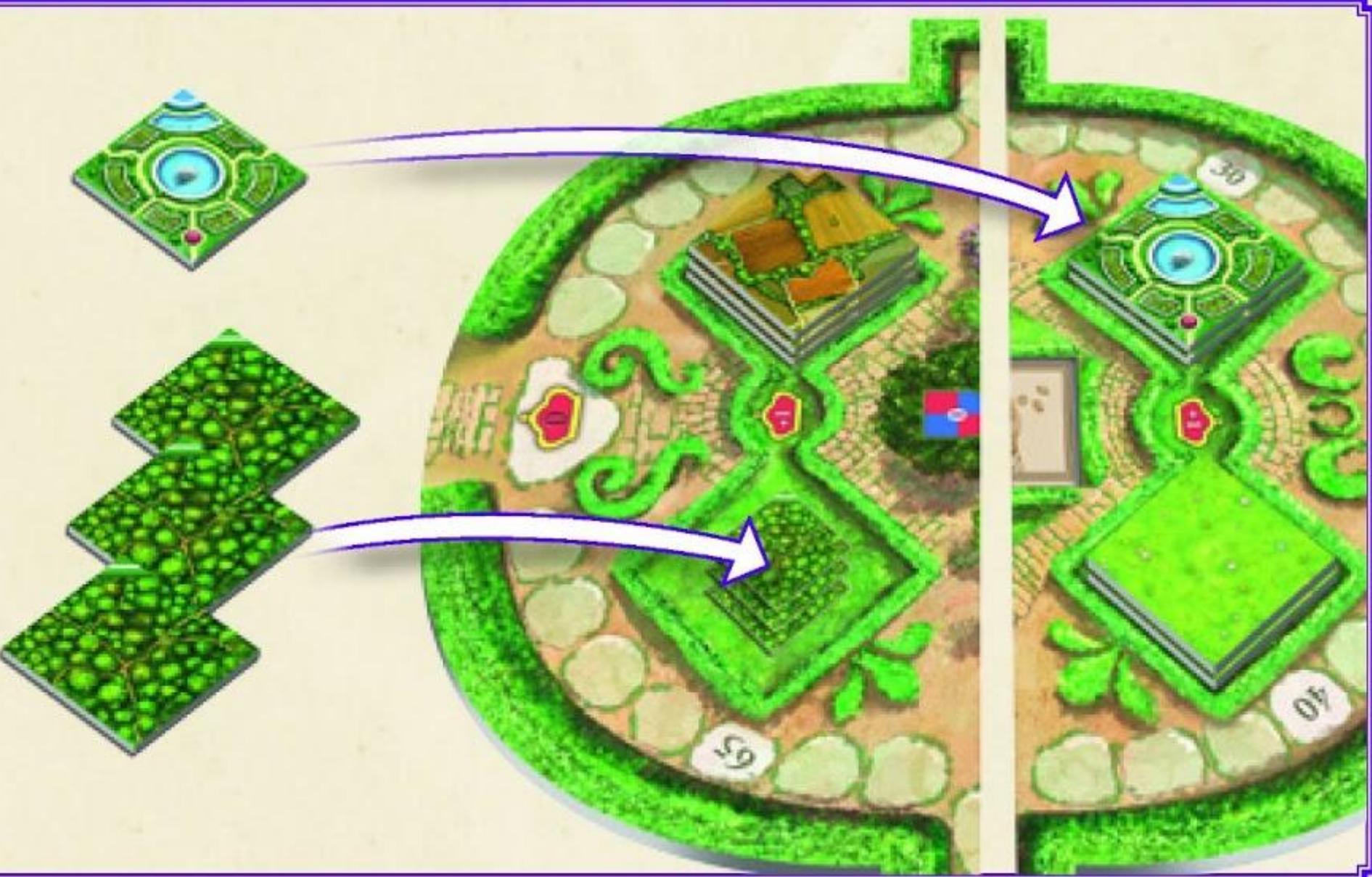
4片噴泉拼成一個花園:


每個農場、森林,以及花園會給予一個獎勵。

在罕見的情況下,布袋裡已經沒有足夠的板塊可以給玩家抽,則他抽完所有袋中剩餘的板塊。不夠抽的部分不會補充。
玩家的回合
无法识别
由起始玩家開始,按照順時針方向,每個玩家執行一個回合在你的回合時,你可以執行1個行動。此外,在你的行動前或後,你可以打出最多1張醜聞卡。而且,你也可以從你擋板後拿2個板塊來和袋中的任何1個板塊交換——你的回合時,你可以做多次這個動作。(你可以察看袋中的板塊,尋找你想要的,而且如果袋中沒有你想要的板塊,你可以放棄這個動作。)
你只能執行一個行動,在你自己的回合時打出一張醜聞卡,並且交換板塊,除非醜聞卡有特殊的功能可以讓你多做其他動作。
回合結束
如果你的回合結束時持有女王,那麼在下一個玩家執行他的回合前會有2件事發生:你獲得1分。
· 按照箭頭方向把輪次標記往前移動 1 步。

輪到你的回合時,你可以執行下列的其中1個行動:
A) 擴展莊園
B) 建造建築物
C) 賄絡王室
D) 收稅
E) 徵地
F) 捐獻
G) 度假

擴展莊園
你的莊園越大,就會供應越多影響力、金錢,以及聲望。
從你的擋板後拿取最多3片板塊,並加進你的莊園中。新放的板塊必須要至少與一個其他的板塊相鄰(水平或垂直方向)。
當放置一個板塊時,你根據放置的板塊種類獲得獎勵。(你會在你的玩家擋板中間區塊—左邊欄位找到相關資訊。)
每個新放的田野可以讓你從供應區拿1元。每有一個新完成的農場□可以額外多拿2元。把錢放到你的擋板後。


每個新放的樹林可以讓你從布袋隨機抽1個板塊。每有一個新完成的森林可以額外多抽2個板塊。(你這回合放置板塊後才從袋子裡抽新的板塊,並把它們放回擋板後)
每個新放置的噴泉可以增加你之後在假面舞會上的聲望,沒有立即的效果。特例:如果你完成一個新的花園,馬上拿取女王。

每個新放置的草地在之後供應建築的區域,沒有立即的效果。

範例:法蘭克之前已經用2片田野、2片樹林,以及2片噴泉擴展他的莊園。他新加入2片樹林及1片噴泉到莊園中。他接著從布袋裡抽2個板塊,因為他放了2片樹林。此時法蘭克也完成了一個森林,因此他可以從布袋裡多抽2片板塊。他不會從噴泉獲得任何東西(目前)。然而,如果之後的回合他又新加入另一片噴泉的話,就會完成一個花園,這時他會獲得女王。法蘭克不會獲得任何金錢,因為他這一回合沒有放置田野。
一個沒有任和輝煌建築的莊園會是什麼樣子?
這個行動可以讓你建造1個建築物。你只能建造遊戲圖板還有的建築物。建築物分成4種:城堡、宮殿、教堂,以及蚊子館。每種建築物會伴隨一些特殊的規則,之後會有更詳細的描述。每個建築物會有一個遊戲圖板上顯示的花費符號。當建造時,把花費付到供應區。如果你付不出這些花費,則你不能建造一個建築物。有些頭銜會讓你減少一個建築物的花費:
公爵/公爵夫人:每個建築物少花3元。
侯爵/侯爵夫人:每個建築物少花2元。
伯爵/伯爵夫人:每個建築物少花1元。
子爵/子爵夫人:不會減免。
男爵/女爵:不會減免。
一棟建築物的最低花費是0元。
城堡
拿取最便宜的城堡,並給付花費,然後把它放到你莊園裡一個空的草地板塊上。城堡不能和其他城堡或宮殿相鄰(水平、垂直、斜角方向都不行)。如果你的莊園沒有合法的位置,則你不能建造一個城堡。建造城堡的獎勵,可以讓你放置或移動你的士兵。從你的供應區或從一個對手的莊園拿取一個士兵,並把它放到一個對手完整的,還沒被佔據的區域符號上(農場、森林、花園)。根據符號,你的對手必須給你下列的東西。(你也會在你的玩家擋板的中間區塊—右邊欄位找到資訊。)
:

你的對手必須付你2元。如果他沒有足夠的錢,則他盡可能的付他能付的。
:

你的對手必須給你2個他自選的板塊。如果他沒有足夠的板塊,則他給你剩餘的板塊。

:

你的對手必須給你女王,如果他沒有女王,則你不會得到任何東西。
宮殿
拿取最便宜的宮殿,並給付花費,然後把它取代一個你莊園裡的城堡。把這個城堡放回供應區。(不要把它放回遊戲圖板中!)如果你沒有城堡,則你不能建造一個宮殿。
建造宮殿的獎勵,獲得女王。
教堂
拿取最便宜的教堂,並給付花費,然後把它放到你莊園裡一個空的草地板塊上。教堂不能和其他教堂相鄰(水平、垂直、斜角方向都不行)。如果你的莊園沒有合法的位置,則你不能建造一個教堂。
建造教堂的獎勵,你可以拿取1張醜聞卡:從牌庫抽3張並察看牌的內容。保留1張,然後把其他2張放回牌庫底部。

蚊子館
在英國的建築中,蚊子館是花園裡一個有誇張裝飾的小型建築物。
為了要建造蚊子館,首先你的莊園裡必須有完整的特定區域。遊戲圖板上每個蚊子館所列的區域都需要滿足。不用管這些區域是否有被一個對手的士兵佔據。


你的莊園裡必須至少有2個森林。
你的莊園裡必須至少有2個農場。


你的莊園裡必須至少有2個花園。
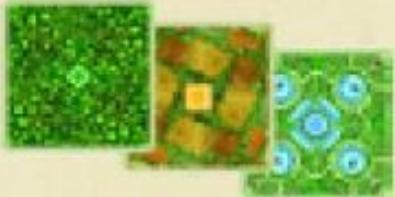
你的莊園裡必須至少有1個森林、1個農場,以及1個花園。
每個蚊子館花費12元。拿取對應的蚊子館,給付花費,然後把它放到你莊園裡一個空的草地上。如果你的莊園沒有空的草地,則你不能建造一個蚊子館。
建造蚊子館的獎勵,你獲得特定數量的分數。根據已經建造的蚊子館數量給予分數(任何玩家蓋出的):
如果這是第一個蓋的蚊子館有12分。
如果這是第二個蓋的蚊子館有10分。
如果這是第三個蓋的蚊子館有8分。
如果這是第四個蓋的蚊子館有6分。
有些王室成員不介意拿點蠅頭小利來給予你恩惠。
從遊戲圖板上拿取最多5個賄絡指示物,並把它們放到你的擋板後。你每拿一個指示物都要付2元,並且獲得1分。你必須要有足夠的錢給付拿取的賄絡指示物。

稅收
有些貴族為了最有創意的徵稅而競爭...
每個玩家每十年只能執行這個行動一次。拿取你的稅收指示物,並把它放到你的擋板面前。這意指你已經在當前的十年裡執行過這個行動了。
接著從供應區拿取金錢。(你也會在你的玩家擋板的中間區塊—第二欄位找到資訊。)

:

為每個你莊園裡的田野拿取1元。

:
為每個你莊園裡的尚未被佔據的農場符號拿取2元。如果有被對手的士兵佔據,你不會獲得任何金錢。

:
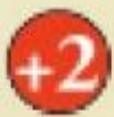
為每個對手莊園裡你自己的士兵佔據的農場拿取2元。

→

為每個你放回遊戲圖板供應區的賄絡指示物拿取1元。
範例:法蘭克想要稅收(見下圖)。他有7片田野,可以獲得7元。他的農場符號會再給予2元,而且,他的士兵佔據一個對手的農場(圖沒有畫出來)——會再給予2元。他沒有花掉任何賄絡指示物。他總共獲得 $7 + 2 + 2 = 1$ 元。
遊戲稍後,你可以於以下事件中花掉你的賄絡指示物:
· 稅收行動時
·徵地行動時
· 假面舞會時
把花掉的賄絡指示物放回遊戲圖板上的供應區。你可以再從那裏購買。

徵地
你不能在公開場合討論你是如何獲得新土地。
每個玩家每十年只能執行這個行動一次。拿取你的徵地指示物,並把它放到你的擋板面前。這意指你已經在當前的十年裡執行過這個行動了。
接著隨機從布袋中抽出板塊。(你也會在你的玩家擋板的中間區塊—第三欄位找到資訊。)
:


為每個你莊園裡的樹林抽取1片板塊。

:

為每個你莊園裡的尚未被佔據的森林符號抽取2片板塊。如果有被對手的士兵佔據,你不會獲得任何板塊。

:
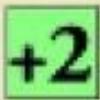
為每個對手莊園裡你自己的士兵佔據的森林抽取2片板塊。


為每個你放回遊戲圖板供應區的賄絡指示物抽取1片板塊。
範例:法蘭克想要徵地(見下圖)。他有7片森林,可以從布袋裡抽取7個板塊。他的森林符號被一個對手的士兵佔據,因此這不會讓他抽任何板塊。而且,他自己的士兵沒有佔據任何對手森林。法蘭克花掉3個賄絡指示物,可以讓他再抽3片板塊。他總共抽取7+3=10片板塊。

如果你給教會一些土地,他們通常會表達感激之情。
從你的擋板後拿取任意數量的板塊,並把它們放到遊戲圖板上捐獻給教會的區域。然而,在任何一個十年裡,每種種類的板塊,教會只會接收3片。你每捐給教會一個板塊就可以獲得1分。
範例:在遊戲圖板上,捐獻給教會的區域已經放有3片田野、2片噴泉,以及1片草地。法蘭克捐獻了3片樹林,以及1片噴泉給教堂,因此他可以獲得4分。
法蘭克也想要捐獻2片田野,但是教會不想再要更多田野了。教會在這個十年只想要再1片草地,但是法蘭克沒有草地可以捐獻了。

渡假
一般來說,渡假的時光是一個貴族的特權,他們讓自己沉浸在藝術與文化裡。甚至什麼都不做也是有理的。
當享受你的渡假的時光時,只會獲得1分。
十年
遊戲持續3個十年,用藍色計年標記來指示。在一個十年期間,綠色輪次標記會繞著輪次軌移動一圈。
在他的回合結束時,如果他持有女王,他獲得1分,並且往前移動綠色輪次標記1步。因此,一個「輪次」並非是指每個玩家都執行過一個回合之後。如果女王經常傳遞,輪次標記會移動得非常快。
有些格子會啟動一些特殊事件:


當輪次標記移進這格時,會舉辦假面舞會。
當輪次標記停留在這格時,沒有任何玩家可以拿走女王。你仍然可以執行一般來說會拿走女王的行動(例如:建造一個宮殿),但是女王會繼續留在持有者的手上。
當輪次標記移進這格時,會進行建築物計分。計分後,當前的十年結束。
一個十年裡會舉行兩次假面舞會。這時會授予夢寐以求的頭銜做為獎勵。
當輪次標記移進有面具的格子裡,會舉行假面舞會。假面舞會期間,按照以下介紹的順序進行:
1) 放回頭銜
2)計算聲望
3) 分配新的頭銜
4) 獲得分數
5) 重置聲望標記
6)移動輪次標記

放回頭銜
每個玩家把他現有的頭銜放回供應區。建議把頭銜按照位階排列(見第10頁)。

計算聲望
由持有女王的玩家開始,每個玩家決定他的聲望數值。其他玩家按照順時針依序決定。(你玩家擋板的左邊有摘要。)

每個你放回遊戲圖板上的供應區的賄絡指示物值1點聲望。

:

你莊園裡的每片噴泉值1點聲望。



每張你放回牌庫底部的黑函醜聞卡值3點聲望。

:

你莊園裡每個尚未被佔據的花園符號值2點聲望。被對手的士兵佔據的花園不會給予任何聲望。


:

每張你放回牌庫底部的醜聞卡值1點聲望。
每個被你自己的士兵佔據的對手的花園,值2點聲望。
:

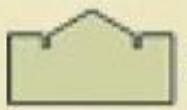
你莊園裡的每個宮殿值2點聲望。
決定你的聲望總值,並且移動你的聲望標記到聲望軌的對應區域。如果該區域被對手佔據,把你的聲望標記移到比較低且尚未被佔據的區域!接著,下個玩家決定他的聲望總值,依此類推,直到所有玩家都已經決定聲望數值。
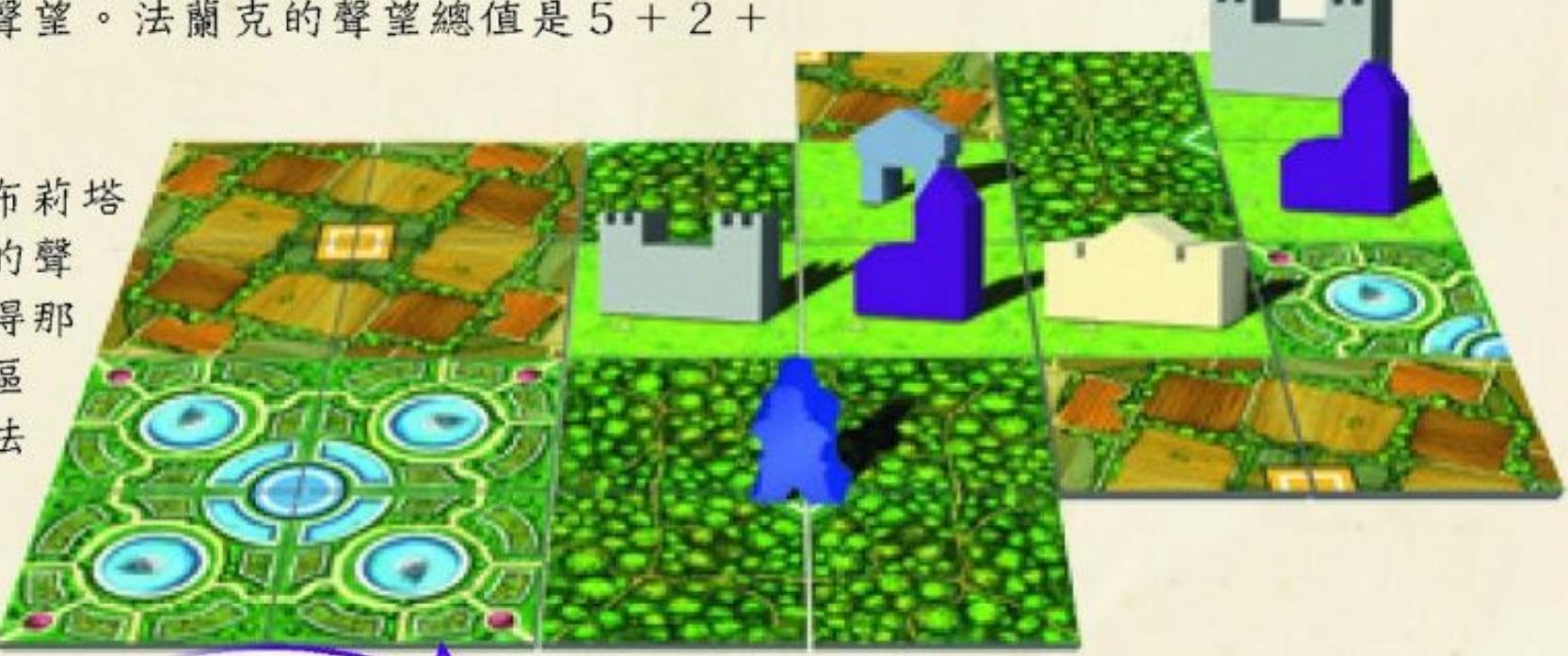
範例:法蘭克有5片噴泉板塊,共值5點聲望。花園符號再給予2點聲望。他的宮殿值2點聲望。法蘭克的聲望總值是 $5 + 2 + 2 = 9$ 點。
聲望軌區域9的位置已經被布莉塔佔據。因此,法蘭克要把他的聲望標記移動到區域8。他覺得那太不OK了!因為聲望軌的區域10已經被卡斯坦佔據,法蘭克花費1個賄絡指示物及1張醜聞卡,這可以讓他移動聲望標記到區域11。

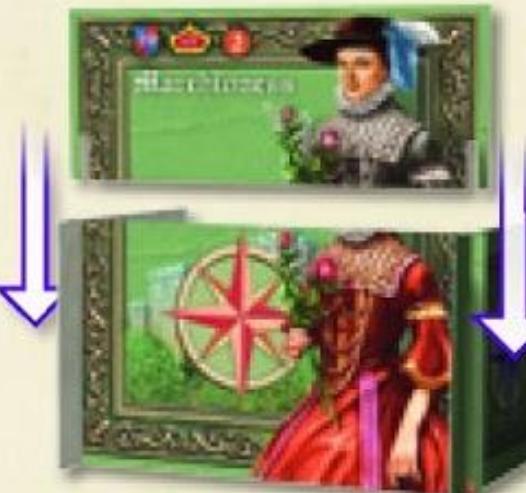
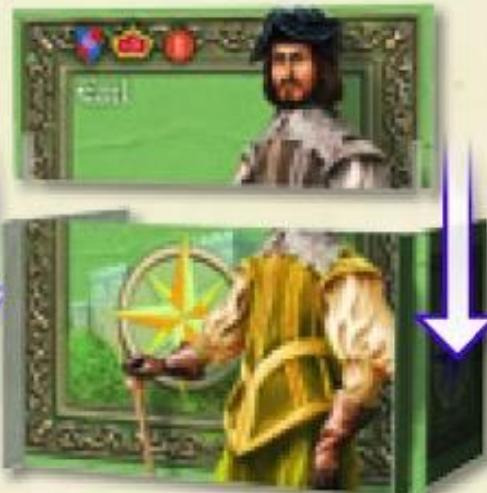
按照聲望數值由高到低的順序,每個玩家拿取新的頭銜。如果你的聲望數值比你想要拿取頭銜的最低數值還低,那麼你不能拿取這個頭現(見右表)。
把你的新頭銜插放到你的擋板上,你持續保有這個頭銜,直到下一次的假面舞會。有些頭銜會減少建造建築物的花費。
| 公爵/公爵夫人: | 需要14或更多聲望 |
| 侯爵/侯爵夫人: | 需要10或更多聲望 |
| 伯爵/伯爵夫人: | 需要6或更多聲望 |
| 子爵/子爵夫人: | 需要2或更多聲望 |
| 男爵/女爵: | 不需要聲望 |
法蘭克
卡斯坦
布利塔
保羅
範例:法蘭克總共有11點聲望、卡斯坦有10點、布利塔有9點,以及保羅有1點。在一場四人遊戲中,有以下的頭銜:1個公爵、1個侯爵、1個伯爵、2個子爵、4個男爵。法蘭克可以第一個選擇。他沒有足夠的聲望點數選擇公爵,但是他可以選擇侯爵。卡斯坦也有足夠的聲望點數可以選擇侯爵,但是唯一的一個侯爵頭銜被法蘭克拿走了。卡斯坦選擇拿取伯爵。布利塔拿取下一個頭銜—子爵。這時還剩下1個子爵,但是保羅沒有足夠的聲望點數可以拿取它,所以他必須選擇一個男爵。

獲得分數
根據新的頭銜,每個玩家獲得分數:
| 公爵/公爵夫人: | 7分 |
| 侯爵/侯爵夫人: | 5分 |
| 伯爵/伯爵夫人: | 3分 |
| 子爵/子爵夫人: | 1分 |
| 男爵/女爵: | 0分 |

重置聲望標記
每個玩家把自己的聲望標記放回聲望軌0的位置。
移動輪次標記
最後,往前移動綠色輪次標記1步。目前持有女王的玩家的左手邊玩家,開始執行他的回合。

建築物計分
當輪次標記移到一個十年的最後一格時,進行建築物的計分。每個玩家為他莊園裡的建築物獲得分數。(你的擋板後右側有相關資訊。)

你莊園裡每個被土地板塊完整包圍(垂直、水平,及斜角方向)的城堡可以獲得3分。你每個相鄰城堡(垂直、水平,及斜角方向)的教堂會再多得1分。
你莊園裡每個被土地板塊完整包圍(垂直、水平,及斜角方向)的宮殿可以獲得5分。你每個相鄰宮殿(垂直、水平,及斜角方向)的教堂會再多得2分。
蚊子館不會讓你獲得額外的分數。
計分結束後,當前的十年結束。遊戲在第三個十年後結束。
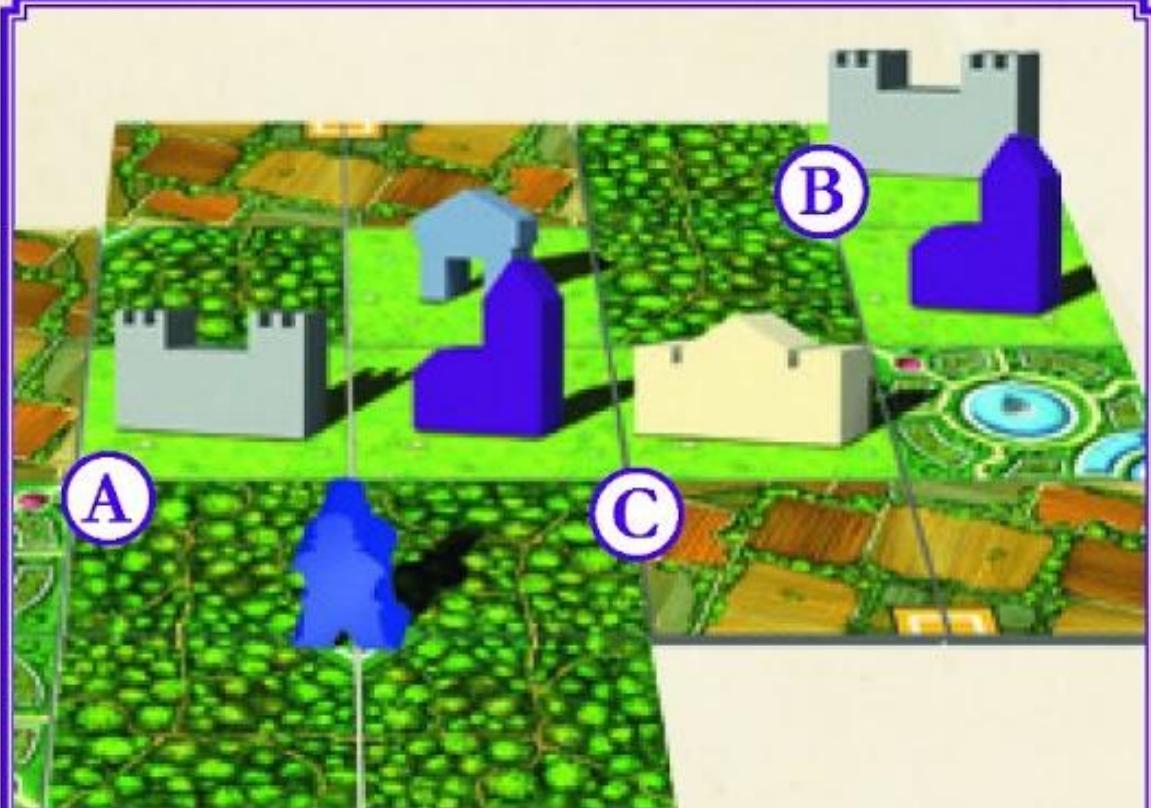
範例:城堡(A)完整的被土地包圍,而且相鄰1個教堂。法蘭克為他的城堡獲得 $3 + 1 = 4$ 分。城堡(B)沒有被土地包圍,所以不會有任何分數—儘管它有相鄰一個教堂。宮殿C完整的被土地包圍,而且相鄰2個教堂。法蘭克獲得 $5 + 2 + 2 = 9$ 分。蚊子館不會給予額外分數。加總起來,法蘭克獲得13分,並據此移動他的分數標記。
準備新的十年
下列的準備必須在第2及第3個十年開始時完成:
· 根據玩家人數重補遊戲圖板的城堡、教堂,以及宮殿(從供應區補):
| Castle area | Chapel area | Palace area | |
| 3 players | 3 Castles | 3 Chapels | 2 Palaces |
| 4 players | 4 Castles | 4 Chapels | 3 Palaces |
| 5 players | 5 Castles | 5 Chapels | 4 Palaces |
注意:第三個十年一開始,供應區可能會沒有足夠的城堡。如果發生這種狀況,把所有的城堡依序放到比較貴的格子裡。其他格保持空缺。
·移除所有圖板上捐獻的板塊,並洗回布袋中。
[Unreadable]
· 每個玩家把他的稅收指示物及徵地指示物放回擋板後(無論是否有沒有用掉)。
·每個玩家獲得1張醜聞卡。如同以往,他牌庫抽3張醜聞卡,保留1張,棄掉2張回牌庫底部。(第一個抽新醜聞卡的玩家,是持有女王的玩家)。所有其他的玩家照順時針方向進行。
· 往前移動藍色計年標記1步。
· 往前移動綠色輪次標記 1 步,到有箭頭的起始位置。
·持有女王的玩家的左手邊玩家,開始新的十年的第一個回合。遊戲依照往常進行。
遊戲結束
遊戲在第三個十年的建築物計分後結束。每個玩家為每張他擁有的私奔醜聞卡獲得3分。最高分的玩家獲勝,如果平手,最多錢的玩家獲勝,如果還是平手,共享勝利。
醜聞卡
每當玩家獲得一張醜聞卡時,他從牌庫抽3張牌,並察看牌面內容。保留1張牌,並把它放到你的擋板後。把剩餘的2張卡片正面朝下放回牌庫的最底部。每個十年開始時,玩家會獲得醜聞卡,蓋教堂時也會獲得。在你的回合時,你可以在你的行動前或後打出至多1張醜聞卡。打出的卡片放回牌庫的最底部。一場假面舞會期間,你每返回一張醜聞卡就可以得到1點聲望。以這種方式返回的卡片不能再被用做其他用途。返回的卡片都會回到牌庫的最底部。

黑函 (4x)
假面舞會時,這張牌值3點聲望。在同一場假面舞會期間,你可以打出任意數量的黑函卡。

狡詐伎倆 (4x)
執行一次額外的擴展莊園行動。如果你在同一回合執行一個擴展莊園行動後打出這張牌,等於你這回合執行了兩次擴展莊園行動。

嫁妝 (4x)
從布袋中隨機抽4個板塊。

教皇的賞賜 (3x)
陰謀 (3x)
你從擋板後把最多4個板塊放回布袋中。你每放回一個板塊就得1分。
當獲得一張醜聞卡時,你可以從牌庫抽3張牌,而且可以保留這3張牌。在這種情況下,你不用把牌放回牌庫底部。要這麼做之前,你必須要已經擁有陰謀卡。你被允許先察看抽出來的卡片,再決定要不要打出你已經擁有的陰謀卡來保留3張牌。
私奔 (4x)
如果遊戲結束時你還持有這張卡,可以獲得3分。
遊戲結束時,你可以計任意張數的私奔卡分數。


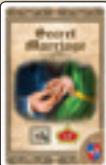
秘密婚姻 (4x)
馬上從遊戲圖板上拿取2個賄絡指示物,並獲得2分。(如果場上少於2個賄絡指示物可以拿取,則只能拿取這麼多,但是依舊會獲得2分。)
繼承 (3x)
獲得一個免費的城堡。從遊戲圖板上拿取一個最便宜的城堡,並把它放到你莊園裡空的草地板塊上—同樣的,不能相鄰其他的城堡或宮殿。沒有放置士兵的獎勵。如果你的莊園沒有合法的位置,則你不能打出這張卡。
進貢 (4x)
從供應區拿取5元。
白廳 (2x)
拿取女王。
易忘規則
·為了建築物的計分,城堡和宮殿必須要完整的被土地包圍(包含斜對角)。
· 在你回合的任何時間你,你可以用自己的2片板
[Unreadable]
- 城堡和宮殿不能相鄰其他的城堡或宮殿。
- 教堂彼此之間不能相鄰。
塊交換布袋裡的1片板塊。
銘謝
(2)
設計師:Dwight Sullivan
插圖: Claus Stephan & Oliver Schlemmer
圖像設計: Claus Stephan, Oliver Schlemmer, Hans-Georg Schneider
Realisation: Thygra Board Game Agency
中文翻譯/排板:小柴
Used under license of Pegasus Spiele GmbH.
© 2012 by Tasty Minstrel Games - All rights
www.pegasus.de - www.playtmg.com
The designer thanks Mark Galvez, Justine Love and
Andrew Juell for their tremendous help in the game's embryotic states, and Seth Jaffee who was a huge help refining the game. Also many thanks to the play testers, Clark Barthel, Greg Daigle, Bill Cox, Michele Cox, Bill Kull, Tim Moore, Cameron Silver, Scott Slomiany, Anna Sullivan, Graham West and the members of the Board Game Design Workshop. And last but not least thanks to the Hippodice Spieleclub e. V. fotoblemen getting place in its designer contest in 2009.

Peg_Noblemen_Regel_EN_RZ_low.md37.7 KB
A strategy game for 3-5 noblemen 12 and up by Dwight Sullivan
Introduction
England during the 16th century: Queen Elisabeth I rules without an heir. The nobles compete for the Queen's favour.
You are members of the British aristocracy and try to achieve influence and prestige for your family. For this purpose, you extend your lands and build palatial structures. With political skill, as well as bribery and exploiting scandals, you compete for crucial titles that are awarded during masquerade balls. After 3 decades, the player who has the most victory points will be held in the highest esteem by the Queen and win the game!
Game Board

Note: Due to the material, the game board may slightly warp. This happens due to differences in temperature, like when the game board lies on a cool surface and a warm lamp or the sun shines on top of it. In this case, flip the board to the other side (both sides are identical).
| 1 5 12 202 Land Tiles (62 Fields, | Game Board (two pieces) 15 Player Screens 15 (three pieces each) 12 Palaces Titles 4 Follies |
Assemble the game board from its two parts and place it in the middle of the table.
Depending on the player count, place a number of Castles, Chapels, Palaces and Follies on the brown spaces in their proper areas:
| Castle area | Chapel area | Palace area | Folly area | |
| 3 players | 3 Castles | 3 Chapels | 2 Palaces | 4 Follies |
| 4 players | 4 Castles | 4 Chapels | 3 Palaces | 4 Follies |
| 5 players | 5 Castles | 5 Chapels | 4 Palaces | 4 Follies |
Place these structures on the most expensive spaces. Place the remaining Castles, Chapels and Palaces as a supply next to the game board.
Take one each of the two Overview Cards (A and B) and place them in front of you.
them as a stack face-down next to the game board. Each player takes 3 cards from that stack and looks at them. Keep 1 card and place it behind your screen. Return the remaining 2 cards face-down to the bottom of the stack.
Place the Men-at-arms of your colour as a supply next to the game board.

Place the Prestige Counter of your colour on space 0 of the Prestige Track. This counter will only be moved during Masquerade Balls.

Place the Victory Point Counter of your colour on space 0 of the Victory Point Track. Move it along the track whenever you receive Victory Points.

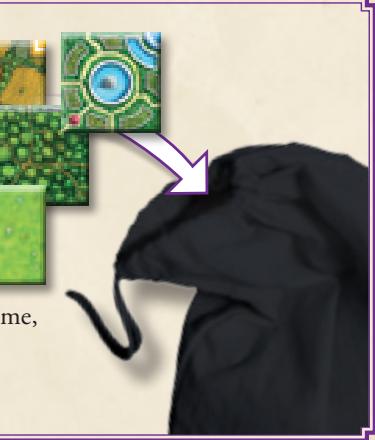
Each player begins the game with 12 Land tiles behind his screen. First, each player chooses up to 3 tiles of each type (Field, Wood, Fountain, Meadow). Then, place the remaining Land Tiles into the bag and mix them. Finally, each player draws additional Land Tiles at random from the bag until he has a total of 12 tiles behind his screen.
Attention! If you are playing Noblemen for the first ti you should take 3 Land Tiles of each of the 4 types! Do not draw any additional Land Tiles from the bag as you will then already have 12 tiles.

Each player selects a colour and takes the Player Screen, Tax Token and Acquire Land Token of that colour. Place both tokens behind your screens.
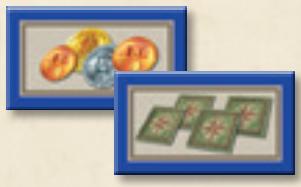

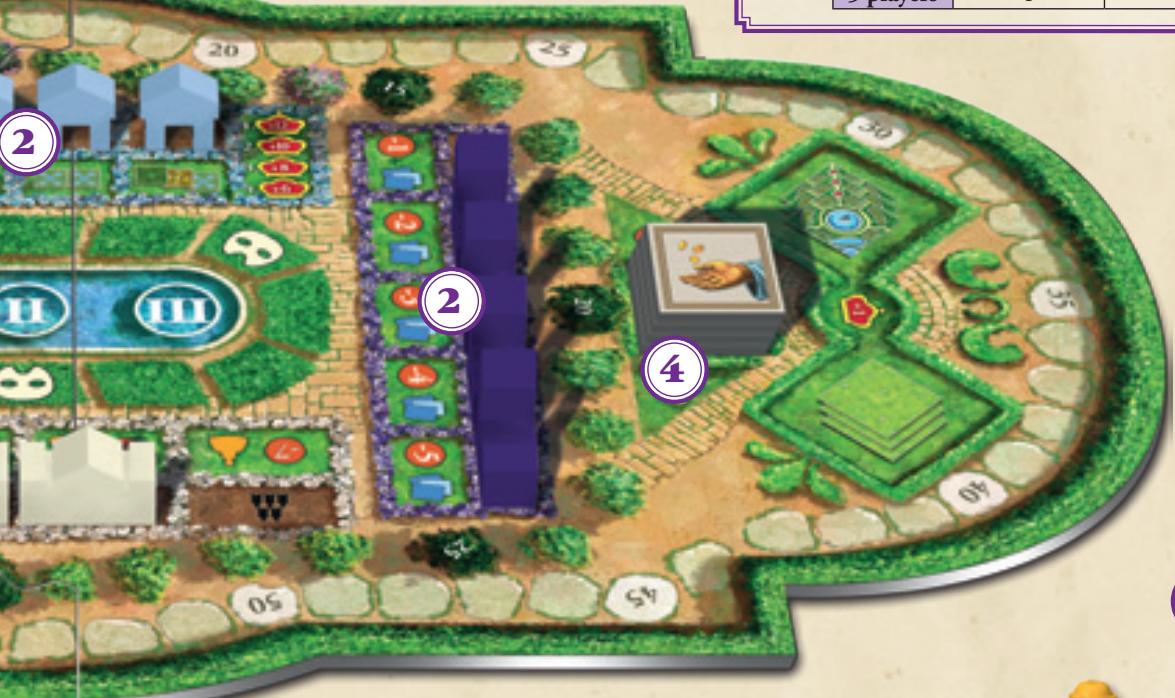
Stack the Bribe Tokens on their proper space on the game board.

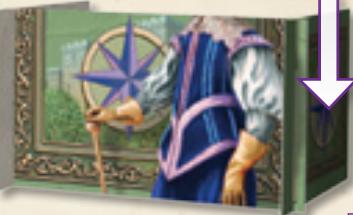
Hence, you can attach the Title to your screen such that your opponents see the proper head (male/female).

Each player takes 1 Title Baron/Baroness and attaches it to his screen.
Note: All Titles are printed on both sides.

Place the green Round Counter on the space with the arrow on the Round Track. Place the blue Decade Counter on space I of the Decade Track.


Depending on the player count, place a number of additional Titles as a supply
| Duke/Duchess | Marquess/Marchioness | Earl/Countess | Viscount/Viscountess | |
| 3 players | 1 | 1 | 1 | 1 |
| 4 players | 1 | 1 | 1 | 2 |
| 5 players | 1 | 1 | 2 | 3 |
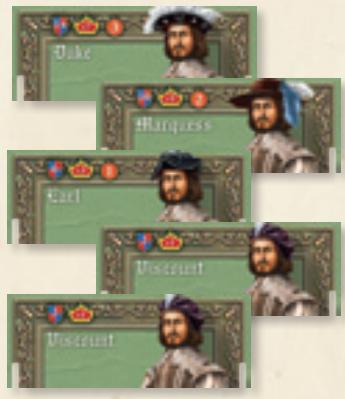
With fewer than 5 players, put the remaining Titles back into the game box – they will not be needed.
From the Land Tiles, each player takes 1 Meadow and places it in front of his screen to begin his Estate. Then each player takes 1 Castle from the supply and places it on his Meadow.




The player to the
right of the
Start Player takes
the Queen and and places it in front of his screen, so that all players can see it.
The Queen figure symbolizes the Queen's favour.
The player who most recently has been to a garden becomes the Start Player. He takes a number ofMoney Tokens worth a total of £10. Each other player takes £1 more than the player to his right, i.e. £11, £12, £13, and £14, respectively. Each player puts his money behind his screen. Place the remaining Money Tokens as a supply next to the game board.
The Land Tiles CMOCML GCMOLCMO
These 4 types of Land Tiles (hereinafter just: tiles) will be used to expand your Estate throughout the game:
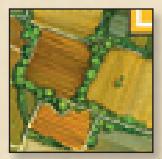
Fields: provide Money.

Woods: provide new Tiles.

Fountains: provide Prestige.
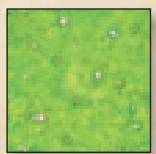
Meadows: provide space for Structures.
4 matching tiles (except Meadows) placed in a square create an Area, marked by an Area Symbol:
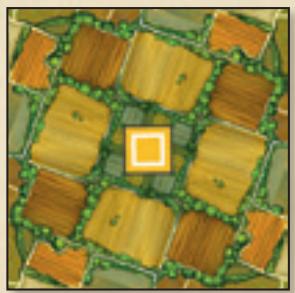
4 Fields create a Farm:
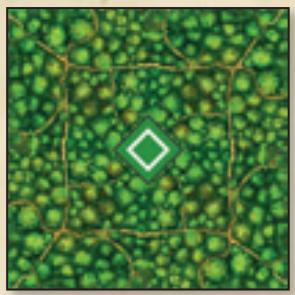
4 Woods create a Forest:
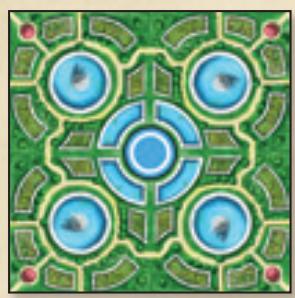
4 Fountains create a Garden:



Each Farm, Forest, and Garden provides a Bonus.
On the rare occasion that a player may draw more tiles from the bag than available, he draws all the remaining tiles.
There is no compensation for missing tiles.
A Player's Turn
Beginning with the Start Player, in clockwise order, each player takes a turn.
On your turn, you take exactly 1 action. Additionally, prior to or after your action, you may play at most 1 Scandal Card. Also, you may trade 2 tiles from behind your screen for any 1 Tile from the bag – you may do this any number of times during your turn. (You may look into the bag to find the tile you want, and you may abandon the trade if there is no such tile in the bag.)
You may only take an action, play a Scandal card, and trade tiles on your own turn, unless specifically allowed by a Scandal card.
End of the Turn
If you hold the Queen at the end of your turn, then 2 things happen before the next player takes his turn: • You get 1 Victory Point.
• Move the Round Counter forward by 1 space in the direction indicated by the arrow.

On your turn, you take exactly 1 action from the following list:
A) Expand Estate
B) Build Structure
C) Bribe Royalty
D) Collect Taxes
E) Acquire Lands
F) Donate to the Church
G) Leisure Time

Expand Estate
The larger your Estate, the more influence, money and prestige it provides.
Take up to 3 tiles from behind your screen and add them to your Estate. Newly placed tiles must be adjacent (horizontally or vertically) to at least one other tile.
When placing a tile, you receive a reward depending on its type. (You will also find this information in the middle section of your player screen – in the left column.)
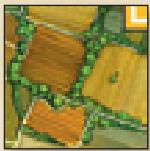
For each newly placed Field take £1 from the supply. Take an additional £2 for each newly completed Farm . Place the money behind your screen.
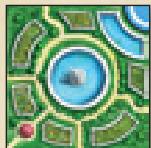
Newly placed Fountains increase your Prestige during future Masquerade Balls, but have no immediate effect. Exception: Immediately take the Queen if you complete a new Garden
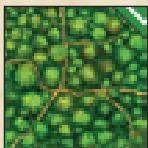
For each newly placed Wood draw 1 random Tile from the bag. Draw 2 additional tiles for each newly completed Forest . (Draw these new tiles after you have finished placing tiles during this turn and place them behind your screen.)

Newly placed Meadows provide space for future structures, but have no immediate effect.

Example: Frank has previously expanded his Estate by 2 Fields, 2 Woods and 2 Fountains. He now adds 2 Woods and 1 Fountain. He then draws 2 tiles from the bag due to the 2 Woods he has placed. Frank has also completed a Forest and, therefore, draws 2 more tiles. In total, he has drawn 4 new tiles.
He does not receive anything for the Fountain (for now). However, if he adds another Fountain in a future turn to complete a Garden, he will get the Queen. Frank does not receive any money as he has not placed any Fields this turn.
What would an Estate be like without any palatial structures?
This action allows you to build exactly 1 structure. You may only build a structure that is available on the game board. There are 4 types of structures: Castles, Palaces, Chapels, and Follies. Each type of structure comes with some special rules that will be explained in detail further below.
Each structure has a cost indicated by a a symbol on the game board. When building, pay the cost to the supply. You may not build a structure that you cannot afford at the moment.
Some Titles may reduce the cost of a structure:
• Duke/Duchess: Each structure costs £3 less.
• Marquess/Marchioness: Each structure costs £2 less.
• Earl/Countess: Each structure costs £1 less.
• Viscount/Viscountess: No reduction.
• Baron/Baroness: No reduction.
The minimum cost for a structure is 0.

Castle
Take the cheapest Castle, pay its cost, and place it on an empty Meadow Tile in your Estate. Castles may not be adjacent to other Castles or Palaces (neither horizontally, nor vertically, nor diagonally). You may not build a Castle if your Estate does not have a valid spot for it.
As a reward for building a Castle, you may place or move one of your Men-at-arms. Take a Man-at-arms from the supply or an opponent's Estate and place him on an opponent's completed, unoccupied Area Symbol (Farm, Forest, Garden). Depending on the symbol, your opponent has to give you something as follows. (You will also find this information in the middle section of your player screen – in the right column.)


Your opponent has to pay you £2. If he does not have that much, he pays you what he can.


Your opponent has to give you 2 tiles of his choice. If he does not have that many, he gives you what tiles he has left.


Your opponent has to give you the Queen. If he does not have it, you do not get anything.

Palace
Take the cheapest Palace, pay its cost, and replace a Castle in your Estate with it. Return the Castle to the supply. (Do not place it back on the game board!) You may not build a Palace if you do not have a Castle to replace.
Take the Queen as a reward for building a Palace.

Chapel
Take the cheapest Chapel, pay its cost, and place it on an empty Meadow Tile in your Estate. Chapels may not be adjacent to other Chapels (neither horizontally, nor vertically, nor diagonally). You may not build a Chapel if your Estate does not have a valid spot for it.
As a reward for building a Chapel, take 1 Scandal Card: Draw 3 cards from top of the stack and look at them. Keep 1 of them and return the other 2 to the bottom of the stack.

Folly
In English architecture, a folly is a small building for extravagant decoration of a garden.
In order to build a Folly, you must first have completed certain Areas in your Estate. The areas needed for each folly are displayed on the game board. It does not matter if an area is occupied by an opponent's Manat-arms.
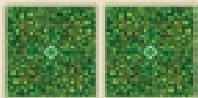
You must have at least 2 Forests in your Estate.
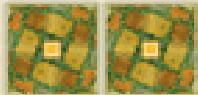
You must have at least 2 Farms in your Estate.

You must have at least 2 Gardens in your Estate.
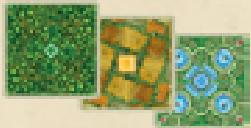
You must have at least 1 Forest, 1 Farm and 1 Garden in your Estate.
Each Folly costs £12. Take the proper Folly, pay its cost, and place it on an empty Meadow Tile in your Estate. You may not build a Folly if your Estate does not have an empty Meadow Tile.
As a reward for building a Folly, you get a number of Victory Points. This number depends on the number of Follies already built (by any player):
12 Victory Points if this is the first Folly built.
10 Victory Points if this is the second Folly built.
8 Victory Points if this is the third Folly built.
6 Victory Points if this is the fourth Folly built.
Some members of the Royal Family do not mind doing you a favour for a little pocket money.
Take up to 5 Bribe Tokens from the board and place them behind your screen. For each token you take, pay £2 and receive 1 Victory Point. You may not take more Bribe Tokens than you can pay for.
Later in the game, you may spend your Bribe Tokens during the following events:
• during the Collect Taxes action
• during the Acquire Lands action

[D]Colleect Taxes
Return spent Bribe Tokens back to the proper space on the game board.
From there, they can be purchased again.
Some noblemen compete for the most creative kind of tax ..
Each player can only take this action once per decade. Take your Tax Token and place it in front of your screen. This indicates that you have already taken this action during the current decade.
• during a Masquerade Ball
Then collect money from the supply. (There is an overview in the middle section of your player screen – in the second column.)


Collect £1 for each Field in your Estate.


Collect £2 for each unoccupied Farm Symbol in your Estate. You do not receive any money for Farms occupied by Men-at-arms.


Example: Frank wants to collect taxes (see figure below). He owns 7 Field Tiles and receives £7 for these. His one Farm Symbol yields another £2. Also, one of his Men-at-arms occupies an opponent's Farm (not displayed) - that is another £2. He does not spend any Bribe Tokens. In total, Frank receives £7+£2+£2=£11.

Collect £1 for each Bribe Token that you return back to the supply on the game board.

Acquire Lands
You do not talk in public about how you acquire new lands.
Each player can only take this action once per decade. Take your Acquire Lands Token and place it in front of your screen. This indicates that you have already taken this action during the current decade.
Then randomly draw tiles from the bag. (There is an overview in the middle section of your player screen – in the third column.)


Draw 1 tile for each Wood in your Estate.


Draw 2 tiles for each unoccupied Forest Symbol in your Estate. You do not receive any tiles for Forests occupied by Men-at-arms.


Draw 2 tiles for each of your own Men-at-arms occupying an opponent's Forest.
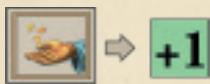
Draw 1 tile for each Bribe Token that you return back to the supply on the game board.
Example: Now Frank wants to acquire lands (see figure below). He draws 7 tiles from the bag for his 7 Woods. His Forest Symbol is occupied by an opponent's Man-at-arms, so he does not draw additional tiles for that. Also, none of his Men-at-arms are occupying opponent Forests. Frank spends 3 Bribe Tokens to draw 3 more tiles. In total, Frank draws 7+3=10 tiles.
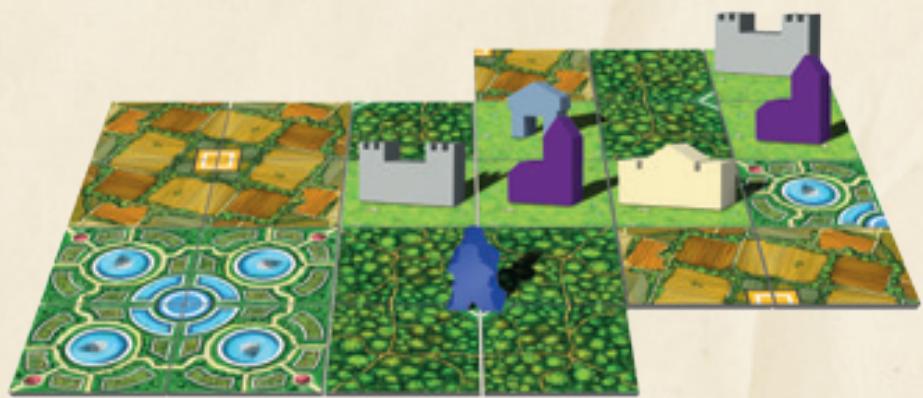
The Church usually shows Her gratitude if you give Her some land
Take any number of tiles from behind your screen and place them on the proper spaces for Donations to the Church on the game board.
However, in any decade the Church only accepts 3 tiles of each type. You receive 1 Victory Point for each tile that you donate to the Church.
Example: On the game board, the spaces for Donations to the Church already contain 3 Fields, 2 Fountains and 2 Meadows. Frank donates 3 Woods and 1 Fountain to the Church. Thus, he receives 4 Victory Points.
Frank also wanted to donate 2 Fields, but the Church does not want any more of these. The Church only wants 1 more Meadow in this decade, but Frank does not have one that he wants to donate.


Leisure Time
Formerly, leisure time was a noble privilege and allowed to devote oneself to the arts and culture. This way even doing nothing made sense.
Simply receive 1 Victory Point while enjoying your Leisure Time.
The Decades MM MM
The game lasts 3 Decades, as indicated by the blue Decade Counter. Throughout a Decade, the green Round Counter moves in a circle around the Round Track.
At the end of his turn, if a player has the Queen, he receives 1 Victory Point and moves the green Round Counter forward by 1 space. Thus, a “round" is not necessarily over after each each player has had one turn. If the Queen is passed around frequently, the Round Counter will move forward very quickly.
Some spaces introduce a special event:


When the Round Counter moves onto this space, there is a Masquerade Ball.
While the Round Counter remains on this space, no player can take away the Queen. You may still take actions that would normally result in getting the Queen (e.g. building a Palace), but the Queen stays at its current owner.
When the Round Counter moves onto this space, there is a Scoring of Structures. After this scoring, the current Decade ends.

Masquerade Ball wOaMCMo aMoLE
Twice a decade the Queen hosts a Masquerade Ball. This is when the coveted titles are awarded.
When the Round Counter moves onto a space with a mask, there is a Masquerade Ball. During such, follow these instructions in order:
1) Return Titles
2) Count Prestige
3) Assign new Titles
4) Receive Victory Points
5) Reset Prestige Counters
6) Move Round Counter

[1] Return Titles
Each player returns his current Title back to the supply. It is recommended that the Titles be sorted in rank order (see p. 10).
[2] Count Prestige
Beginning with the player holding the Queen, each player determines his Prestige Value. The other players follow in clockwise order. (There is an overview on the left side of your player screens.)


Each Fountain in your Estate is worth 1 Prestige.





Each unoccupied Garden Symbol in your Estate is worth 2 Prestige. No prestige is awarded for Gardens occupied by Men-at-arms.

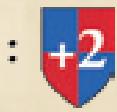
Each Bribe Token that you return back to the supply on the game board is worth 1 Prestige.
Each of your own Men-at-arms occupying an opponent's Garden is worth 2 Prestige.
Each Blackmail Scandal Card that you return to the bottom of the stack is worth 3 Prestige.

Each other Scandal Card that you return likewise is worth 1 Prestige.
•

Each Palace in your Estate is worth 2 Prestige.
Determine your total Prestige Value and move your Prestige Counter to the corresponding space on the Prestige Track. If the space is occupied by an opponent, move your Prestige Counter to the next lower unoccupied space! Then the next player determines his total Prestige Value, and so on until all players have done so.
Example: Frank owns 5 Fountain Tiles worth a total of 5 Prestige. The Garden Symbol is worth another 2 Prestige. His Palace is also worth another 2 Prestige. Frank's total Prestige Value is 5+2+2=9 Prestige.
Space 9 on the Prestige Track is already occupied by Britta. Thus, Frank would have to move his Prestige Counter to space 8. He is not OK with that! As space 10 of the Prestige Track is already occupied by Karsten, Frank spends 1 Bribe Token and 1 Scandal Card for 1 Prestige each, allowing him to move his Prestige Counter to space 11.

In order of total Prestige Value, from highest to lowest, each player takes a new Title. You may not take a Title if your Prestige Value is lower than the minimum required for that Title (see table to the right).
Attach your new Title to your Player Screen. You keep them until the next Masquerade Ball. Some Titles reduce the cost when building structures.
Frank
Karsten
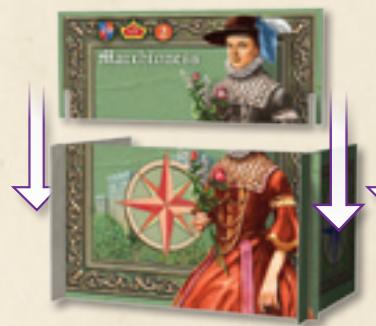
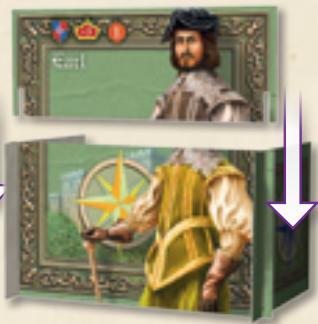
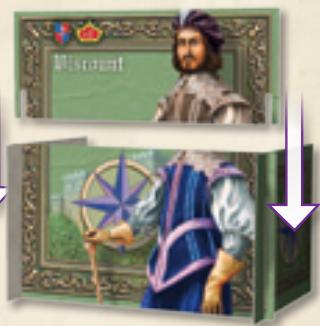
Example: Frank has 11 total Prestige, Karsten 10, Britta 9, and Paul 1. In a 4-player game, there are the following Titles: 1x Duke, 1x Marquess, 1x Earl, 2x Viscount, 4x Baron. Frank may choose first. He does not have enough Prestige for the Duke, but he may take the

Receive Victory Points
Depending on his new Title, each player receives a number of Victory Points:
| Duke/Duchess: | 7 Victory Points |
| Marquess/Marchioness: | 5 Victory Points |
| Earl/Countess: | 3 Victory Points |
| Viscount/Viscountess: | 1 Victory Points |
| Baron/Baroness: | no Victory Points |

Reset Prestige Counters
Each player moves his Prestige Counter back to space 0 of the Prestige Track.

Move Round Counter
Finally, move the green Round Counter forward by 1 space. The player to the left of the current holder of the Queen takes his turn.
| Duke/Duchess: | requires 14 or more Prestige |
| Marquess/Marchioness: | requires 10 or more Prestige |
| Earl/Countess: | requires 6 or more Prestige |
| Viscount/Viscountess: | requires 2 or more Prestige |
| Baron/Baroness: | does not require any Prestige |
Britta
Paul
Marquess. Karsten also has enough Prestige for the Marquess, but that Title has already been taken. Karsten takes the Earl instead. Britta takes the next Title – a Viscount. There is 1 more Viscount, but Paul does not have enough Prestige to take it, so he must settle for a Baron.

Scoring of Structures XMAM N%
When the Round Counter moves onto the last space of a Decade, there is a Scoring of Structures. Each player receives Victory Points for the structures in his Estate. (There is an overview on the right side of your player screens.)

You receive 3 Victory Points for each Castle in your Estate that is completely surrounded by land(horizontally, vertically, diagonally). You receive 1 more Victory Point for each Chapel adjacent to the Castle (horizontally, vertically, diagonally).
You receive 5 Victory Points for each Palace in your Estate that is completely surrounded by land(horizontally, vertically, diagonally). You receive 2 more Victory Points for each Chapel adjacent to the Palace (horizontally, vertically, diagonally).
You do not receive any additional Victory Points for Follies.
The current Decade ends after the scoring. The game ends after the third Decade.

Example: Castle (A) is completely surrounded by land and adjacent to 1 Chapel. Frank scores 3+1=4 Victory Points for this Castle. Castle (B) is not surrounded by land, so it does not score any Victory Points – despite the adjacent Chapel. Palace (C) is surrounded by land and is adjacent to 2 Chapels. Frank scores another 5+2+2=9 Victory Points. No extra Victory Points are awarded for the Folly. In total, Frank scores 13 Victory Points and moves his Victory Point Counter accordingly.
Preparing a new Decade
The following preparations must be done at the beginning of the 2nd and 3rd Decades:
• Refill the game board with Castles, Chapels and Palaces from the supply according to the player count:
| Castle area | Chapel area | Palace area | |
| 3 players | 3 Castles | 3 Chapels | 2 Palaces |
| 4 players | 4 Castles | 4 Chapels | 3 Palaces |
| 5 players | 5 Castles | 5 Chapels | 4 Palaces |
Note: At the beginning of the third Decade, it is possible that there are not enough Castles in the supply. In this case, take all the Castles that are left and place them on the most expensive spots. The other spots remain empty.
• Remove all donated tiles from the board and shuffle them back into the bag.
• Each player puts his Tax Token and Acquire Land Token back behind his screen (unless it is still there).
• Each player receives 1 Scandal Card. As usual, he draws 3 Scandal Cards from the stack, keeps 1 of them and returns the other 2 to the bottom of the stack. (The first player to get a new Scandal Card is the player holding the Queen. All other players follow in clockwise order.)
• Move the blue Decade Counter forward by 1 space.
• Move the green Round Counter forward by 1 space to the starting space with the arrow.
• The player to the left of the current holder of the Queen takes the first turn in the new Decade. 'The game continues as usual.
GAME EnD MMMCMMCMM
The game ends after the Scoring of Structures at the end of the third Decade. Each player scores a final 3 Victory Points for each Liaison Scandal Card that he owns. The player with the most Victory Points wins the game. In case of a tie, remaining money breaks the tie. If still tied, the tied players share the victory.
Whenever a player receives a Scandal Card, he draws 3 cards from the top of the stack, looks at them, keeps 1 card and returns the other 2 cards to the bottom of the stack. Players receive Scandal cards at the beginning of each Decade as well as when building Chapels.
On your turn, you may play at most 1 Scandal Card – prior to or after your action. Played cards are returned to the bottom of the stack.
During a Masquerade Ball, you may return any number of Scandal Cards to receive 1 Prestige each. Cards returned in this fashion cannot be used for anything else. Returned cards always go back to the bottom of the stack.

Blackmail (4x)
Worth 3 Prestige during a Masquerade Ball. You may play any number of Blackmail cards during the same Masquerade Ball.
Cunning Stroke (4x)
Play an extra Expand Estate action. If you play this card on the same turn that you take an Expand Estate action, you will expand your Estate twice in one turn.
Dowry (4x)
Randomly draw 4 tiles from the bag.


Favour of the Vicar (3x) Favour of the Vicar (3x)
Return up to 4 tiles from behind your screen back to the bag. Immediately receive 1 Victory Point for each such tile.
Receive a free Castle. Take the cheapest Castle from the game board and place it on an empty Meadow Tile in your Estate - as usual, not adjacent to another Castle or Palace. You do not get to place a Man-at-arms. You may not play this card if you do not have a valid spot for the Castle in your Estate.
Intrigue (3x)
Liaison (4x)
Inheritance (3x)
When receiving a Scandal Card and looking at the top 3 cards, you may play this card to keep all 3 Scandal Cards. In this case, you do not return any cards to the bottom of the stack. You must already own an Intrigue card in order to play it. You are allowed to first look at the drawn cards, before you decide to play an Intrigue card that you already own.
Worth 3 Victory Points at the end of the game if you still have this card. You may score any number of Liaison cards at the end of the game.

Secret Marriage (4x)
Immediately take 2 Bribe Tokens from the game board and receive 2 Victory Points. (If there are fewer than 2 Bribe Tokens available, take all that you can, but still receive 2 Victory Points.)
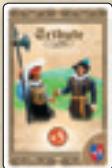
Tribute (4x)
Take £5 from the supply.
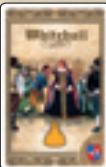
Whitehall (2x)
Take the Queen.
Easily Forgotten Rules wowaow wwaiow
• Castles and Palaces need to be completely surrounded by land (including diagonally) in order to score Victory Points.
• At any time during your turn, you may trade 2 tiles for any 1 tile from the bag.
• Castles and Palaces may not be placed adjacent to other Castles or Palaces.
• Chapels may not be placed adjacent to other Chapels.
CrEditS GCGAMOREMORM GCGEMDROCEMOROM
Designer: Dwight Sullivan
Illustration: Claus Stephan & Oliver Schlemmer Graphic design: Claus Stephan, Oliver Schlemmer, Hans-Georg Schneider
Realisation: Thygra Board Game Agency English Translation: Grzegorz Kobiela Used under license of Pegasus Spiele GmbH. © 2012 by Tasty Minstrel Games – All rights reserved. www.pegasus.de – www.playtmg.com
The designer thanks Mark Galvez, Justine Love and Andrew Juell for their tremendous help in the game's embryotic states, and Seth Jaffee who was a huge help refining the game. Also many thanks to the play testers Clark Barthel, Greg Daigle, Bill Cox, Michele Cox, Bill Kull, Tim Moore, Cameron Silver, Scott Slomiany, Anna Sullivan, Graham West and the members of the Board Game Design Workshop. And last but not least thanks to the Hippodice Spieleclub e. V. for Noblemen getting 1st place in its designer contest in 2009.

简繁检索对照.md1.6 KB
129931_128931_noblemen — 简体/繁体检索对照
本游戏的规则书是繁体中文原文。用户用简体提问时,把关键词按下面这张表转成繁体再去 grep 原文,命中率最高。
回答时用简体或繁体都可以,但引用的原文保持繁体。
简体 → 繁体 对照(按该游戏原文出现频率排序,共 60 字)
| 简体 | 繁体 | 原文出现次数 |
|---|---|---|
| 个 | 個 | 171 |
| 会 | 會 | 76 |
| 块 | 塊 | 66 |
| 园 | 園 | 54 |
| 游 | 遊 | 52 |
| 戏 | 戲 | 52 |
| 声 | 聲 | 51 |
| 这 | 這 | 45 |
| 区 | 區 | 45 |
| 获 | 獲 | 43 |
| 庄 | 莊 | 41 |
| 后 | 後 | 40 |
| 动 | 動 | 37 |
| 时 | 時 | 37 |
| 里 | 裡 | 37 |
| 并 | 並 | 36 |
| 标 | 標 | 34 |
| 图 | 圖 | 34 |
| 张 | 張 | 34 |
| 记 | 記 | 33 |
| 数 | 數 | 31 |
| 头 | 頭 | 29 |
| 从 | 從 | 29 |
| 挡 | 擋 | 28 |
| 应 | 應 | 28 |
| 没 | 沒 | 27 |
| 筑 | 築 | 27 |
| 为 | 為 | 26 |
| 据 | 據 | 26 |
| 给 | 給 | 25 |
| 计 | 計 | 24 |
| 宫 | 宮 | 23 |
| 衔 | 銜 | 23 |
| 点 | 點 | 22 |
| 对 | 對 | 22 |
| 兰 | 蘭 | 21 |
| 丑 | 醜 | 21 |
| 闻 | 聞 | 21 |
| 馆 | 館 | 20 |
| 轮 | 輪 | 20 |
| 当 | 當 | 20 |
| 占 | 佔 | 18 |
| 种 | 種 | 17 |
| 贿 | 賄 | 16 |
| 络 | 絡 | 16 |
| 库 | 庫 | 15 |
| 场 | 場 | 15 |
| 执 | 執 | 15 |
| 须 | 須 | 15 |
| 则 | 則 | 14 |
| 喷 | 噴 | 13 |
| 经 | 經 | 13 |
| 结 | 結 | 13 |
| 费 | 費 | 13 |
| 进 | 進 | 12 |
| 钱 | 錢 | 12 |
| 让 | 讓 | 12 |
| 征 | 徵 | 11 |
| 间 | 間 | 11 |
| 邻 | 鄰 | 11 |
Texts are community-compiled or publicly released by publishers; copyright remains with the original authors. For personal reference only.