
Oh My Goods
At a glance
Rules, cards and Q&A (Chinese)
The rules, card data and player questions for this game are written in Chinese. Open the Chinese page to read them.
Where to find full rules
Full rules and card lookup are available in the cunlema app at cunlema.cn — pick this game and ask about any rule, card or turn you are unsure about.
Related games
Rulebook text (Markdown)
This game has 3 rulebook Markdown file(s) in our library; 3 rendered inline below — expand to read or download.
rules_zh_喔我的好货_1067.md10.5 KB
Oh my Goods! 喔,我的好貨!
遊戲作者:Alexander Pfister
適合人數:2-4位玩家
適合年齡:10歲以上
遊戲時間:30分鐘
遊戲目的
玩家使用工人生產工具、木桶、鐵、玻璃和許多其他商品。最會管理自己的生產鏈,獲得最多勝利點數的玩家獲勝!
遊戲配件
110張牌
■ 這本中文規則書

遊戲設置
將牌背亮藍色的牌挑出來:
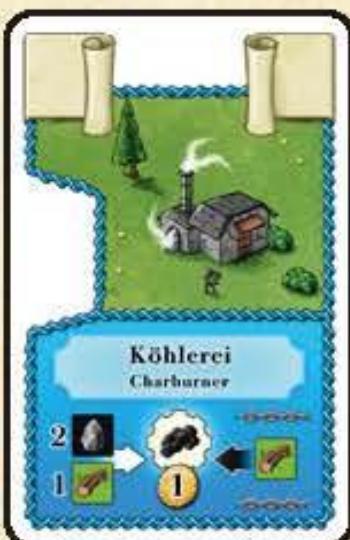
■ 每位玩家隨機拿取一張起始卡牌「製煤廠」
與對應的工人牌(背景棕色),移除沒有用到的製煤廠與工人牌,遊戲不再使用。
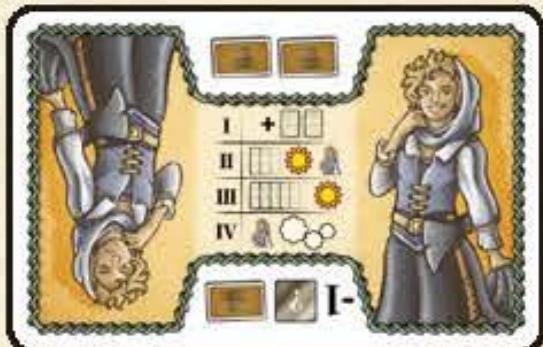
這個玩家放置了
一個工人在他的製煤廠
在2/3/4人遊戲裡,將4/6/8張隨機的助手牌任一面朝上放
至遊戲展示區,移除沒有用到的助手牌。
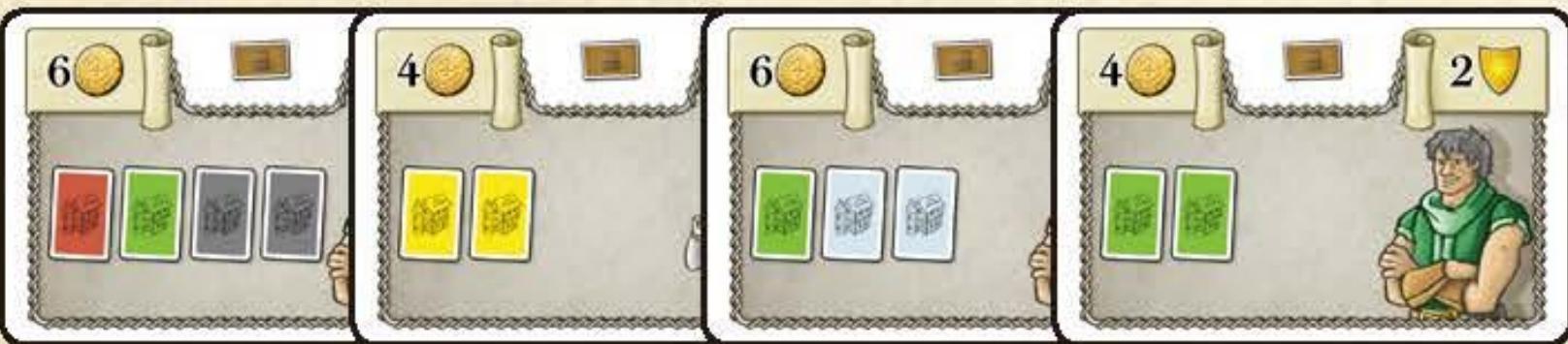
助手牌:
放置玩家人數×2
的助手牌
洗混剩下的牌,並且發給每位玩家5張手牌。每位玩家另外拿取7張牌面朝下放在起始卡牌「製煤廠」上。每張在製煤廠上的牌代表1單位的煤炭(且其價值一個金幣)。剩下的牌放在中間作為抽牌堆。最認真工作的玩家成為首位起始玩家。
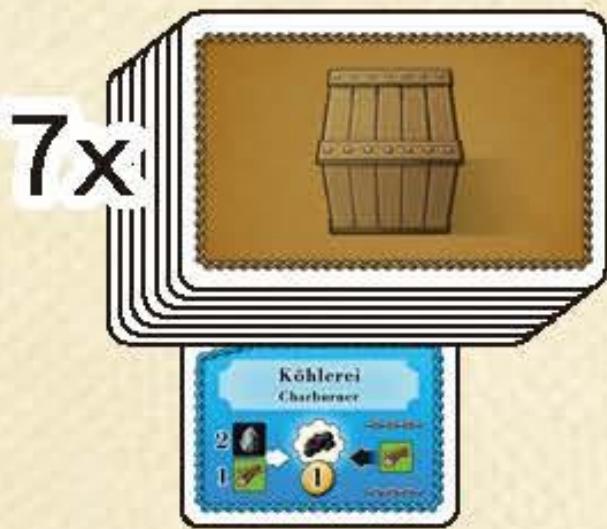
7張煤
與5張手牌
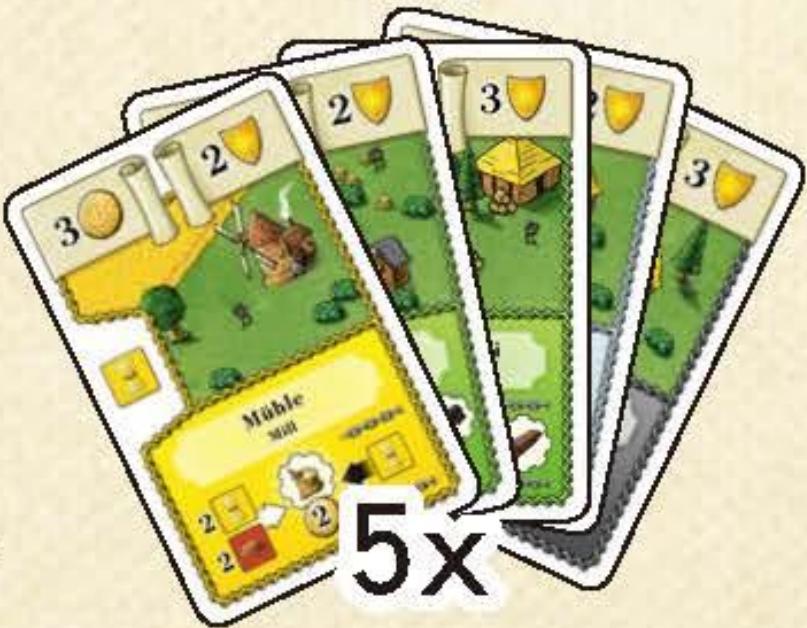
■ 你可以通過3種方式使用每張牌:
■ 作為一個資源(描繪在牌的左側)
或作為建築物
■ 或面朝下代表建築物的生產商品

生產物品與價格
游玩流程
遊戲由數輪遊戲構成。每輪有4個階段,如下列:
-
換牌與拿牌
-
日出
III. 日落
IV. 生產與建築
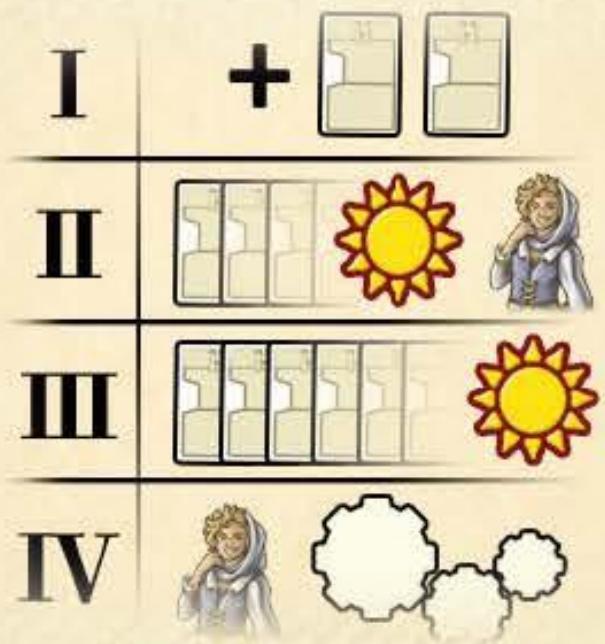
1. 換牌與拿牌
每位玩家可以棄掉任意張數的手牌,從抽牌堆抽同樣數量的牌。然後發給每位玩家2張手牌,手牌沒有數量上限。
當抽牌堆無牌可抽時,將棄牌堆的牌洗混變成新的抽牌堆,在極少的狀況下,抽牌堆與棄牌堆都沒有牌。每位玩家必須拋棄一半的手牌(向下取整:7張手牌剩3張)
11. 日出
■ 起始玩家翻開抽牌堆的牌,放至遊戲區中間成為市場。
直到翻開有兩張一半太陽的牌為止。
太陽起床了,市場開門囉!



2張一半太陽
提示:卡牌在市場時,只會顯示左邊資源。你可以將每張牌堆疊,只露出資源部分可以看到。
■ 然後所有玩家同時決定你這次要工作的工廠與在第四階段想要建造的建築物。
工作:把你的工人牌放在你的一間工廠牌旁邊。你可以有兩個生產選擇:品質的或是粗心的。擺放工人卡的不同側邊代表這次的生產方式。
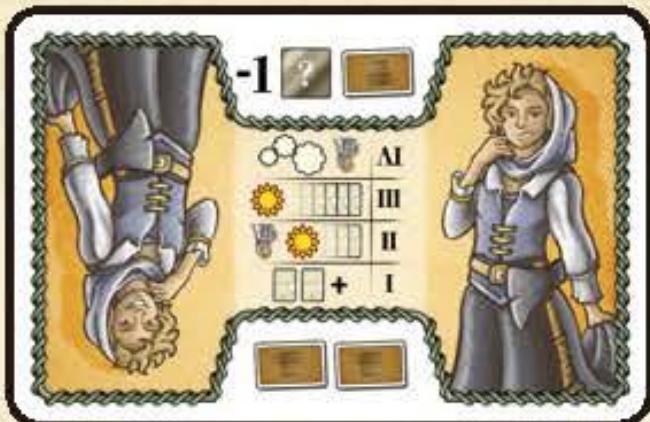
這個工人在製煤廠
粗心的工作。
注意:如果你決定有品質的生產,在第四階段,你需要所有需要的資源來生產貨品。如果你滿足條件,可以拿到2個貨品。如果你決定粗心的生產,在第四階段可以少一個資源需求,但你只能生產1個貨品。在第三階段,更多的牌將會出現在市場,你可以祈求你沒有的資源仍然會出現。此外,你可以打牌來當作沒有出現的資源。
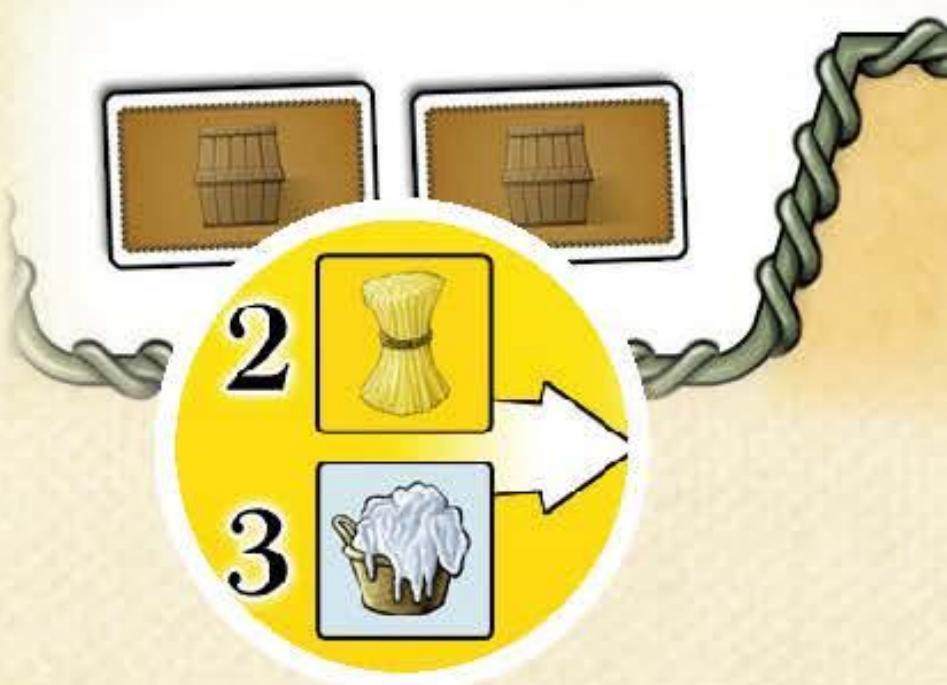
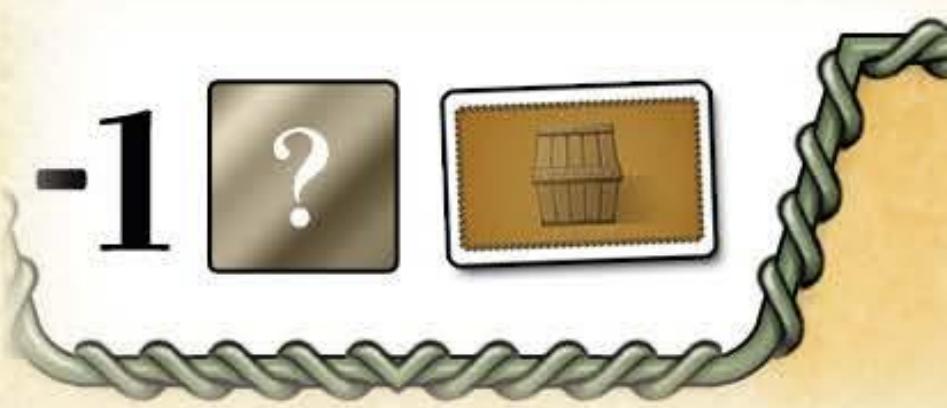
■ 建築:你可以打出一張牌,面朝下放至你的面前,這是你第四階段要建造的建築物。
III. 日落
起始玩家翻開抽牌堆的牌,放至遊戲區中間第二列成為市場。直到翻開有兩張一半太陽的牌為止。太陽下山,市場收攤。
IV. 生產與建築
第四階段每位玩家輪流進行,從起始玩家開始。你的回合時,你必須先生產,然後你可以建造一間建築物或是雇用一個助手。

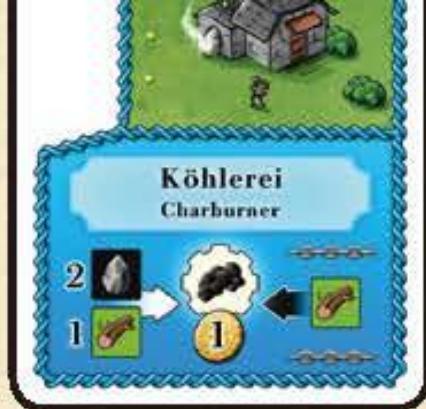
這間製煤廠需要
2個穀物與1個木頭
來生產1個煤。
每個生產建築物需要的資源描述都在牌的左下角。這些資源必須是在市場中有顯示的。如果你需要,你可以丟棄合適的牌供給你自己對應的資源。市場顯示的資源是供給給全部玩家。你不會拿走上面任何資源。玩家只需要檢查需求的資源有沒有在上面。只有你打出換資源的卡牌會被棄牌。
如果你在階段二決定有品質的生產,牌上所有要求的資源都必須要有。如果你滿足所有資源,你可以生產兩個貨品。拿抽牌堆2張卡並且面朝下橫放在建築物上。如不能滿足所有資源,則不能生產任何貨品。
如果你在階段二決定粗心的生產,牌上所有要求的資源可以少一個資源。如果你滿足牌上資源,你可以生產一個貨品。
例子:你讓你的工人在「製煤廠」粗心的工作,「製煤廠」需要2個穀物和1個木頭。市場上只有1個穀物,所以你少了1個穀物跟1個木頭。
因為你粗心的生產,可以少1個資源。那麼你只需要從手中丟棄1張木頭或1張穀物即可生產1個煤。如果你決定有品質的工作,你就必須棄掉兩張對應資源的手牌。如果你

成功棄牌,你就可以收到2張牌,放在製煤廠上代表煤。
助手:助手所在的工廠需要所有的資源來產生1個貨品。你依然可以棄掉手牌來補齊資源。每一張棄掉的牌都只能供給一間建築物使用。
■ 生產鏈:如果1間建築物產出至少1個貨品,你可以不限次數立刻使用工廠牌右下角的生產鏈。
你可以用手上的資源牌或是你已經有的商品,依照牌右下角的生產鏈生產建築物的貨品。將這些額外物品一樣疊在建築物上。
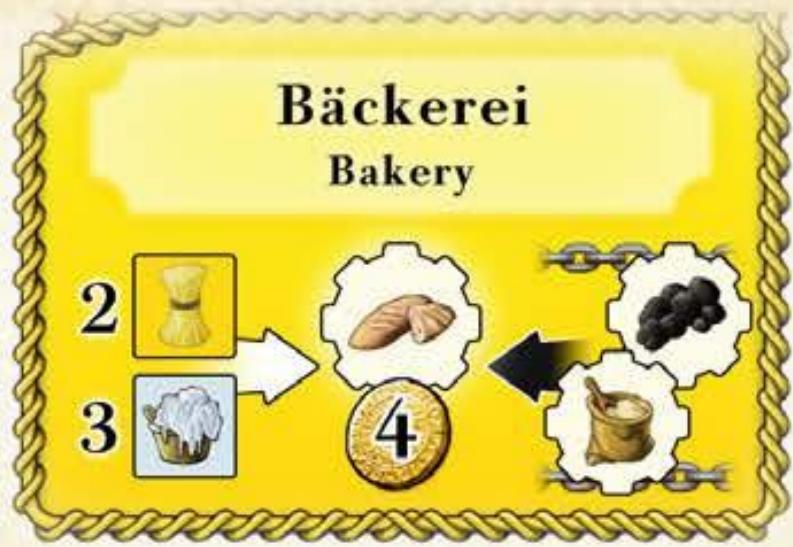
麵包店用麵粉與煤
製造麵包
例子1:如果磨坊生產了麵粉,你可以將任意的穀物牌面朝下放在磨坊上。這些牌代表了你用穀物額外生產的麵粉。當你轉換穀物成麵粉時,你必須將穀物牌展示給其他玩家檢查。

例子2:如果製鞋廠生產了鞋子,你可以從你稍早生產的皮革轉換成鞋子。從你的製革廠(每張牌代表1皮革)轉到製鞋廠(將這些牌變成鞋)。非常棒的交易!因為鞋子價值8個金幣,皮革只值6個金幣!

如果生產鏈有顯示2種資源或商品,你必須同時滿足這兩種條件。並且每一次會生產2個商品。
例子:磚頭工廠生產鏈需要1個黏土和1個煤來生產磚頭。如果你有3個黏土,但只有2個煤礦。你可以放置2個煤礦與2個黏土,有效的產生4個磚頭。
注意:助手所在的建築物如果有產生貨品,也一樣可以啟動生產鏈。
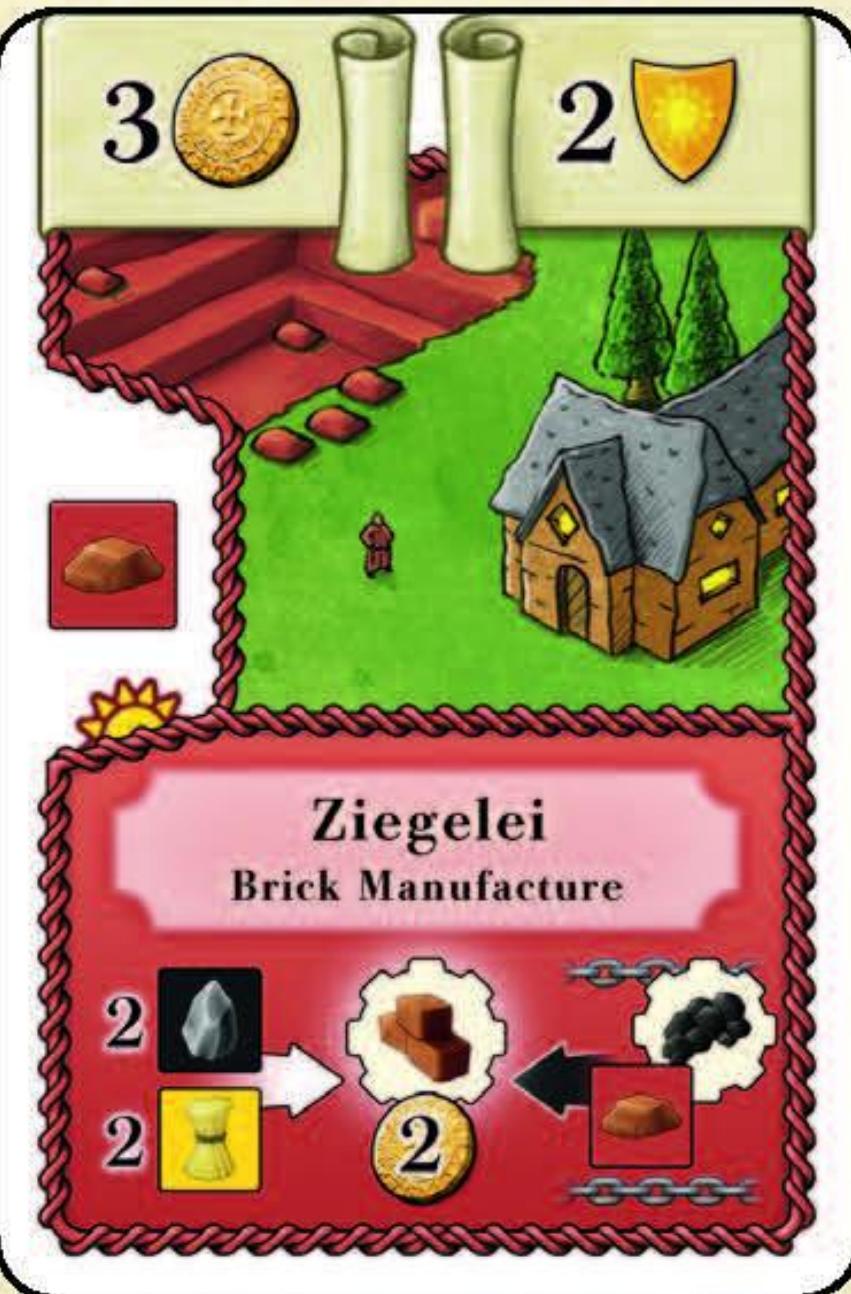
Fensterglaserei
Window Manufacture
■ 建築:現在,你可以建築第一階段面朝下放置的建築牌。如果你不能或是不想建築它,把此張牌拿回手牌。如果你要蓋此棟建築,丟棄貨品價值總數等於或大於建築物左上角的金幣數。你可以多付錢,但不會找任何錢回來。
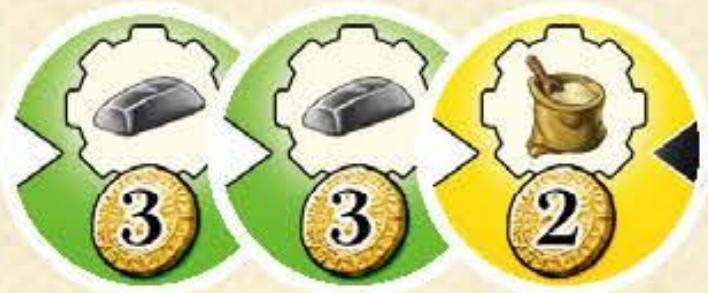
例子:你想建一個7金幣的建築物。你付了2鐵(每個3金幣)和1個麵粉(每個2金幣)共計3+3+2=8個金幣。
助手:當建築時,你可以在每一輪雇用最多一名助手。你必須花錢來僱助手,你雇用助手前,必須達到該助手所要求的建築物數與顏色。立刻擺放助手在一間你的建築物旁。


注意:
如果你已經有2個助手,你沒辦法再雇用更多的助手。
每間建築只能有一個工人或助手。
在第二階段時,你可以支付2金幣移動助手到另一個建築物。
在第四階段結束時,棄掉所有市場上的卡牌。按照順時針方向,下一位玩家成為起始玩家。
遊戲結束
當有任一位玩家建築8間建築物(包括製煤廠)在面前時,此輪結束後再多玩一輪遊戲便結束。在最後一輪,每個玩家都可以使用他們所擁有全部建築物的生產鏈,建築物就算沒有工人或助手,沒有生產任何東西也可以使用生產鏈。在此輪之後,每個玩家計算全部建築物與助手的分數、商品每5個金幣可換1分,擁有最多分數的玩家獲勝。若平手,則商品轉換後擁有最多金幣的玩家獲勝!
卡片
每種顏色的建築物都各代表一種資源。除了綠色建築物數量最多,其餘顏色建築物數量都一樣。灰色的建築物不是生產建築物,它提供給你永久資源收益。

玻璃工廠需要任意11個資源來生產玻璃。
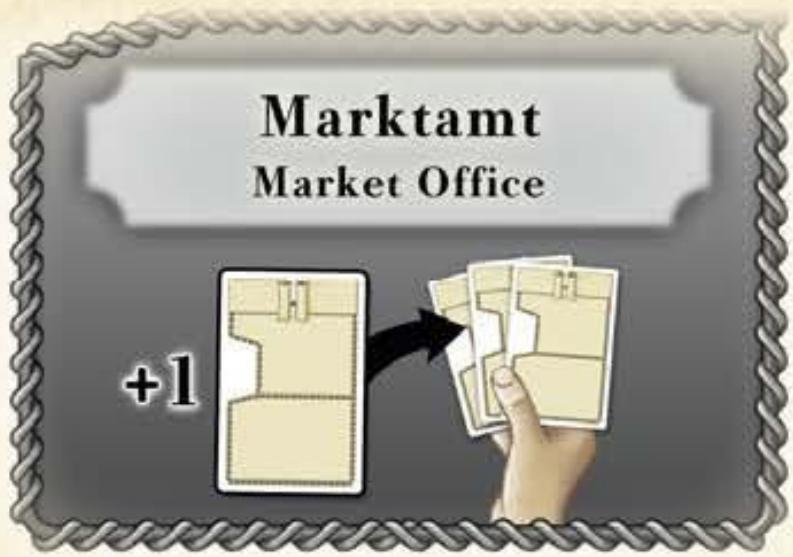
在階段一「換牌與拿牌」階段,你可以多拿取一張手牌。除非在階段一開始前你手上已經有3張牌。
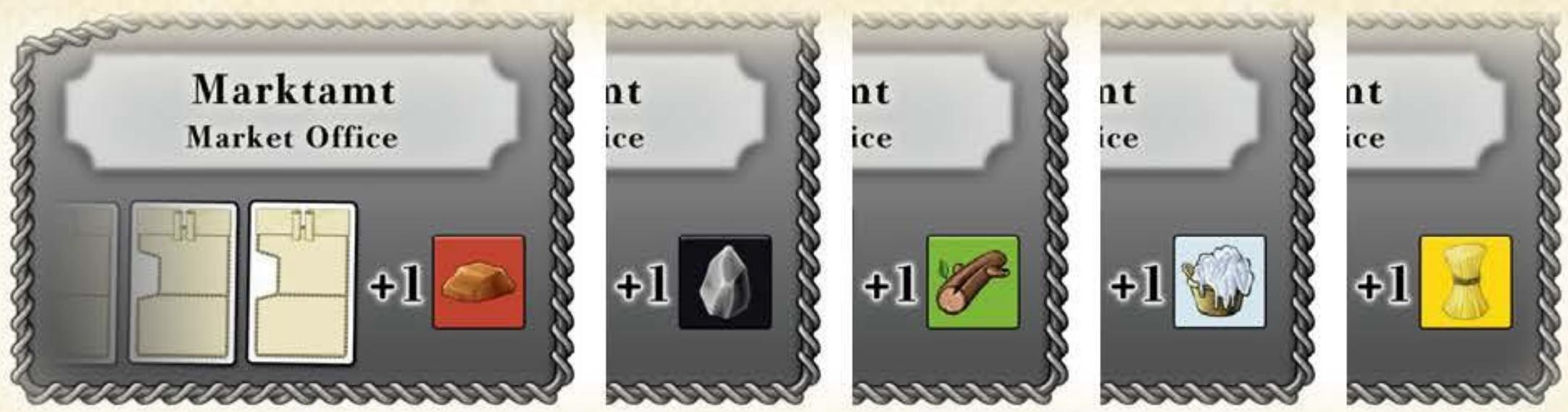
市場辦公室給你額外的市場資源,但你只可用在替代左半邊生產物品的資源(包括玻璃工廠),而不能用在右邊的生產鏈上。
中文翻譯:維良 中文編排/LOGO設計:阿圭
中文校稿:彥廷 中文出版:GoKids玩樂小子
Download MarkdownRoyalGoods_Rules_EN.md10.9 KB
Goods
A game by Alexander Pfister for 2-4 players aged 10 and up Playing time: 30 minutes
Objective
The players take the role of Workers producing Tools, Barrels, Iron, Glass, and many other Goods. The player who manages their Production Chains best will gain the most Victory Points and win.
Components
110 cards
this rule book
Setup
Separate the cards with a light blue border from the rest:
Each player receives a random Charburner
as well as a Worker (brown background color). Remove the remaining Charburners and Workers from the game.
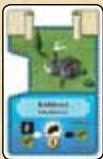
This player has a sloppy Worker in their Charburner.
In a 2-/3-/4-player game, place 4/6/8 random Assistants, respectively, with a random side facing up at the side of the play area. Remove the remaining Assistants from the game.
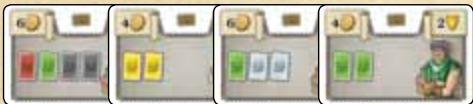
Assistants: 2 player count
Shuffle the remaining cards and draw 5 cards into your hands. Place another 7 cards face down and sideways on your Charburners. Each card on your Charburner represents one unit of Coal (and is worth 1 Coin). The player who most recently worked the hardest becomes the first active player.
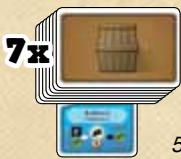
7 Coal and 5 hand cards

You can use each card in 3 ways:
as a Resource (depicted on the left side of the card),
or as the depicted Building.
Face-down cards on Production Buildings represent Goods that the Building produced.
Building Cost
Victory Points
Resource
Half Sun
Required Resources

Production Chain
Produced Good and its value
Course of Play
The game is played over several rounds. Each round consists of 4 phases, which are played in the following order.
I. New Hand Cards
II. Sunrise
III. Sunset
IV. Produce and Build
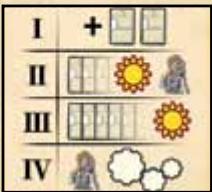
I. New Hand Cards
The active player deals each player 2 cards into their hand.
There is no hand card limit.
When the draw pile runs out of cards, shuffle the discard pile to form a new draw pile. In the extremely unlikely case that both the draw and the discard pile contain no cards, each player must discard half of the cards in their hand (rounded down).
II. Sunrise
The active player turns over cards from the draw pile, placing them in the middle of the play area as the Market Display, until there are 2 Half Suns.



2 Half Suns
The Sun has risen and the Market is open.
Tip: In the Market Display, only the Resource part of each card matters, so you can place the cards on top of each other such that only the Resource is visible on each card.
Then all decide simultaneously in which of your Buildings you would like to work and what you would like to build in phase 4.
Working: Take your Worker card and place it below one of your Production Buildings. You have two options:
You can either produce orderly or sloppily, indicating this by rotating your Worker card so that the appropriate side is on top.
Note: If you decide to produce orderly, in phase 4, you will need to have access to all of the Resources depicted at the bottom left of the Building. If you do, you will receive 2 Goods. If you decide to produce sloppily, you will need 1 less Resource, but you will only produce 1 Good. In phase 3, additional cards will be placed in the Market Display, so you can hope that the Resources you are missing right now will still show up. Also, you can play cards from your hand as Resources.
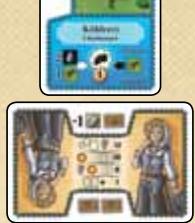
The player works sloppily in their Charburner
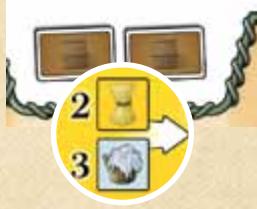
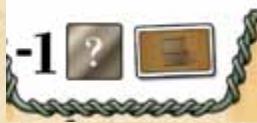
Building: You can place a card from your hand face down in front of you. This is the Building you are going to build this round.
III. Sunset
The active player turns over cards from the draw pile, placing them in a second row in the Market Display, until there are 2 more Half Suns. The Sun has set and the Market is closed.
IV. Produce and Build
This phase is played in turn order, beginning with the active player.
Each Production Building requires the Resources depicted at the bottom left to initiate Production. These Resources must be available in the Market Display in the required amounts.
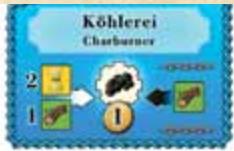
This Charburner requires 2 Grain and 1 Wood to produce Coal.
You can make missing Resources available for you by discarding an appropriate card from your hand. The Market Display remains the same for all players. You do not take any Resources away from it, you just check if what you need is there. Only the cards that you play from hand are discarded.
If you decided to produce orderly during phase 2, all of the required Resources must be available. If they are, you produce 2 Goods, taking 2 cards from the draw pile and placing them face down and sideways on the Building. Otherwise you produce nothing with that Building.
If you decided to produce sloppily during phase 2, all but one of the required Resources must be available. If they are, you produce 1 Good.
Example: You let your Worker produce sloppily in your Charburner, which requires 2 Grain and 1 Wood. The Market Display only has 1 Grain, so you are missing 1 more Grain and 1 Wood. Since you produce sloppily, you need 1
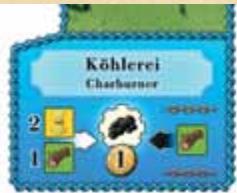
less Resource. So you only need to discard either 1 Wood or 1 Grain from hand to produce 1 Coal. If you decided to produce orderly, you would have to discard both missing Resources from hand. If you did, you would receive 2 cards on your Charburner representing Coal.
Assistant: An Assistant at a Building requires all of the depicted Resources to produce a single Good. You can discard missing Resources from your hand, as usual. Each card you discard from hand only counts for one Building.
Production Chain: If a Building produced at least 1 Good, you can immediately use the Production Chain depicted at the bottom right any number of times.

The Bakery produces Bread from Flour and Coal.
The Production Chain shows which Resource from hand or which Good that you already have you can place on the Production Building. This way you can refine additional Goods on top of the normal Production.
Example 1: If the Mill produces Flour, you can place any number of Grain cards from your hand face down on the Mill. These cards represent additional Flour that you produced from your own

Grain reserves. Before you place the Grain face down and sideways on your Mill, you must show it to the other players.
Example 2: If the Shoemaker produces Shoes, you can make additional Shoes from Leather you produced earlier. Move the cards from your Tanneries (each card represents 1 Leather) to your
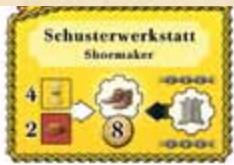
Shoemaker (turning those cards into Shoes). Great deal, since Shoes are worth 8 Coins, but Leather is only worth 6 Coins!
If the Production Chain shows 2 Resources or Goods, you must place both depicted items on the Building at the same time.
Example: The Brick Manufacture Production Chain requires 1 Clay and 1 Coal to produce Bricks. If you have 3 Clay in your hand but only 2 Coal on your Charburner, you can place 2 Coal and 2 Clay on the Brickworks, effectively producing 4 Bricks.

Note: Even an Assistant can start a Production Chain if their Building produced.
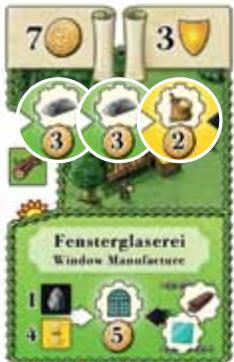
Building: You can now build the Building you placed face down in front of you during phase 2. If you cannot or do not want to build it, you must discard the card. You pay its Building cost by discarding Goods, totaling the values of the discarded Goods. You can overpay, but you do not receive any change.
Example: You would like to build a Building costing 7 Coins. You pay 2 Iron (each worth 3 Coins) and 1 Flour (worth 2 Coins), for a total of 3+3+2=8 Coins.
Assistant: After or in place of building, you can hire at most 1 Assistant per round. Not only must you pay Coins for them, but you must also have Buildings in the colors depicted on the Assistant card. (Keep the Buildings.)
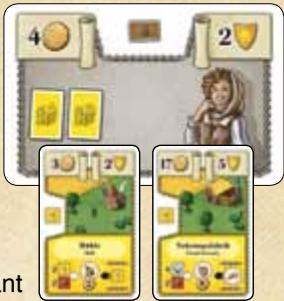
Immediately place the Assistant at one of your Buildings. Note:
If you already have 2 Assistants, you cannot hire any more.
There can only be one person (Worker or Assistant) in each Building.
In phase 2, you can pay 2 Coins to move an Assistant to another Building.
At the end of phase 4, discard all of the cards in the Market Display. The next player in clockwise order becomes the active player.
Game End
The game end is triggered when any player has 8 Buildings in front of them (including their Charburner). When that happens, finish the current round and play another complete round. After that, each player totals the Victory Points from their Buildings and Assistants, adding 1 Victory Point to that total for every 5 Coins they have in Goods (rounded down). The player with the most Victory
Points wins. In case of a tie, the player with the most Coins left after exchanging them 5:1 for Victory Points wins.
The Cards
Each Building color stands for a certain Resource. There is the same number of Buildings in each color except green, which is the most numerous. Gray Buildings do not count as Production Buildings—they provide a permanent benefit.
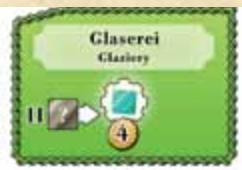
The Glaziery requires any 11 Resources to produce Glass.
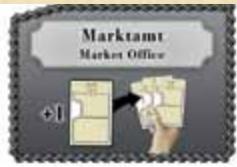
In phase 1, you receive 1 additional card into your hand.
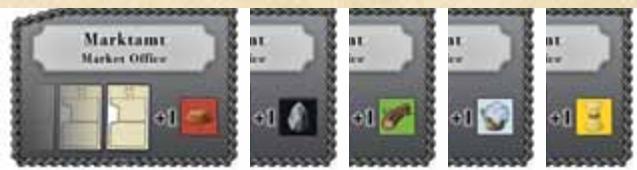
The Market Office adds the depicted Resource to the Market Display for you (which you can use as one of the 11 Resources needed for the Glaziery).
Goods
Österreichisches Spiele Museum e.V. ZVR-ZahI 004817012 Obfrau Dipl.Ing. Dagmar de Cassan Rassdorferstrasse 28 A-2285 Leopoldsdorf
Download Markdown简繁检索对照.md1.6 KB
184840_183840_oh-my-goods — 简体/繁体检索对照
本游戏的规则书是繁体中文原文。用户用简体提问时,把关键词按下面这张表转成繁体再去 grep 原文,命中率最高。
回答时用简体或繁体都可以,但引用的原文保持繁体。
简体 → 繁体 对照(按该游戏原文出现频率排序,共 60 字)
| 简体 | 繁体 | 原文出现次数 |
|---|---|---|
| 个 | 個 | 49 |
| 产 | 產 | 47 |
| 筑 | 築 | 38 |
| 资 | 資 | 31 |
| 张 | 張 | 28 |
| 厂 | 廠 | 21 |
| 游 | 遊 | 18 |
| 戏 | 戲 | 18 |
| 与 | 與 | 18 |
| 数 | 數 | 15 |
| 制 | 製 | 15 |
| 阶 | 階 | 15 |
| 弃 | 棄 | 13 |
| 货 | 貨 | 12 |
| 时 | 時 | 12 |
| 间 | 間 | 12 |
| 这 | 這 | 12 |
| 场 | 場 | 12 |
| 币 | 幣 | 11 |
| 为 | 為 | 11 |
| 链 | 鏈 | 10 |
| 来 | 來 | 10 |
| 没 | 沒 | 10 |
| 将 | 將 | 9 |
| 给 | 給 | 9 |
| 换 | 換 | 9 |
| 须 | 須 | 9 |
| 谷 | 穀 | 9 |
| 会 | 會 | 8 |
| 轮 | 輪 | 8 |
| 后 | 後 | 7 |
| 开 | 開 | 7 |
| 头 | 頭 | 7 |
| 面 | 麵 | 7 |
| 两 | 兩 | 6 |
| 决 | 決 | 6 |
| 种 | 種 | 5 |
| 从 | 從 | 5 |
| 当 | 當 | 5 |
| 阳 | 陽 | 5 |
| 边 | 邊 | 5 |
| 满 | 滿 | 5 |
| 结 | 結 | 5 |
| 获 | 獲 | 4 |
| 胜 | 勝 | 4 |
| 价 | 價 | 4 |
| 样 | 樣 | 4 |
| 显 | 顯 | 4 |
| 质 | 質 | 4 |
| 现 | 現 | 4 |
| 转 | 轉 | 4 |
| 适 | 適 | 3 |
| 则 | 則 | 3 |
| 设 | 設 | 3 |
| 对 | 對 | 3 |
| 应 | 應 | 3 |
| 区 | 區 | 3 |
| 并 | 並 | 3 |
| 丢 | 丟 | 3 |
| 经 | 經 | 3 |
Texts are community-compiled or publicly released by publishers; copyright remains with the original authors. For personal reference only.