
Quadropolis
At a glance
Rules, cards and Q&A (Chinese)
The rules, card data and player questions for this game are written in Chinese. Open the Chinese page to read them.
Where to find full rules
Full rules and card lookup are available in the cunlema app at cunlema.cn — pick this game and ask about any rule, card or turn you are unsure about.
Related games
Rulebook text (Markdown)
This game has 3 rulebook Markdown file(s) in our library; 3 rendered inline below — expand to read or download.
rules_zh_方格都市_925.md25.8 KB
建築
QUADORQ 方格 POLIS 都市
在方格都市中,你將擔任一位現代都市的市長。你需要根據城市中居民的需求制定都市規劃,分派建築師在城市中建造各類建築,從而戰勝你的對手。每棟建築都能讓你獲得勝利點數,但不同種類建築的計分方式各不相同,許多建築可以通過組合獲得更高的效益。你能接受挑戰,成為史上最富盛名的市長嗎?
遊戲配件
1塊建築工地版圖
(25格)
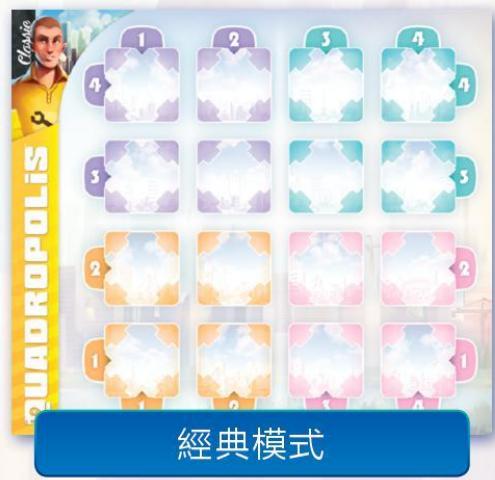
4塊雙面的玩家板,代表了每個玩家的城市,由數個街區所組成。
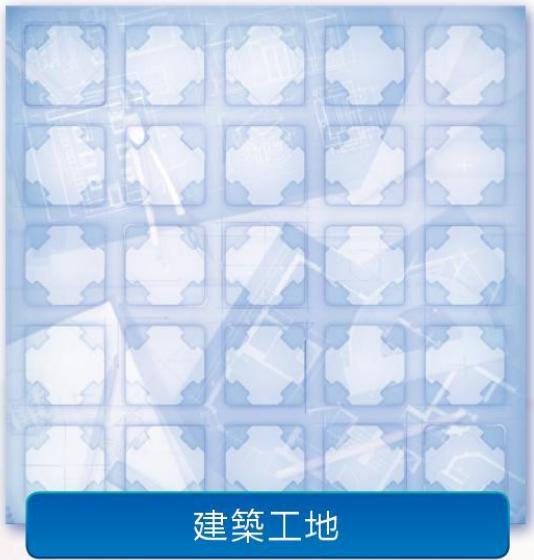
建築工地
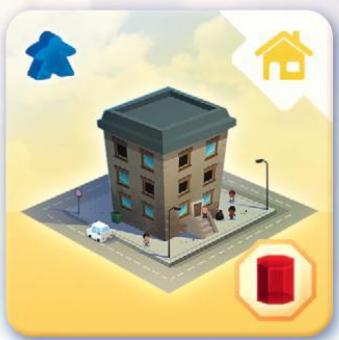
142塊建築板塊



20名建築師

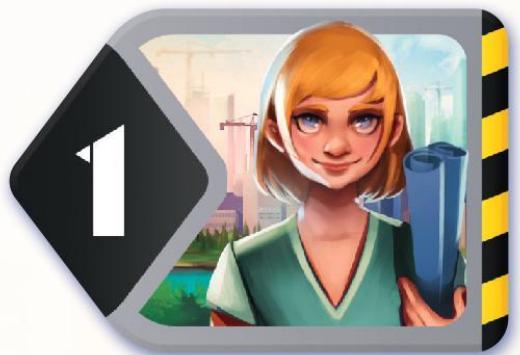
彩色面用於經典模式
灰色面用於專家模式
1名城市規劃師

1名市長
(起始玩家標誌)

65名居民
(藍色米寶)

1疊計分表

50點能源
(紅色圓柱體)
4張幫助卡
1本規則書
1個布袋
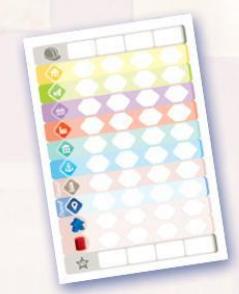


經典模式/專家模式
方格都市有兩種遊戲模式。
我們推薦您在第一次遊戲時使用經典模式,這能使您瞭解遊戲機制和各種策略。在您感覺游刃有餘後,您可以使用專家模式,此模式會加入全新的建築,同時規則的變化也會帶來更多挑戰。
詳見第7頁。

QUADROPOLIS
遊戲準備
將建築工地①放在桌上。
將居民和能源②放在建築工地旁。
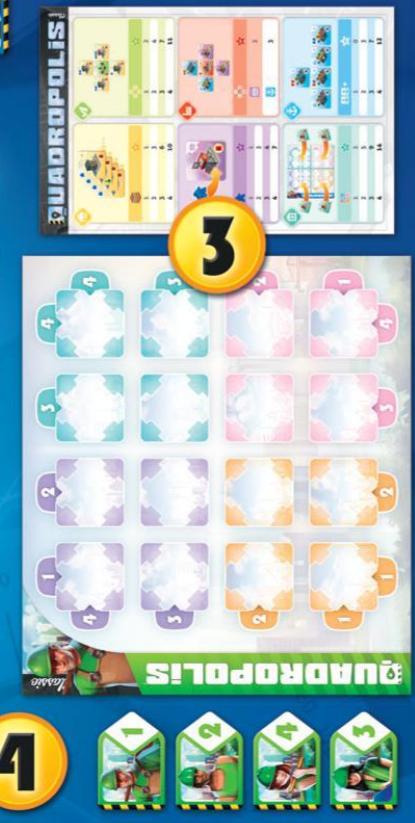
每位玩家拿取自己顏色的1塊玩家板,1張幫助卡和編號1-4號的4名建築師。
將背面標有『專家』的建築放回盒中,只有在專家模式下才會用到這些建築。
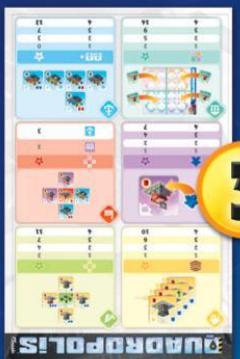

按照背面的數字(編號1-4)整理所有剩下的建築。
4
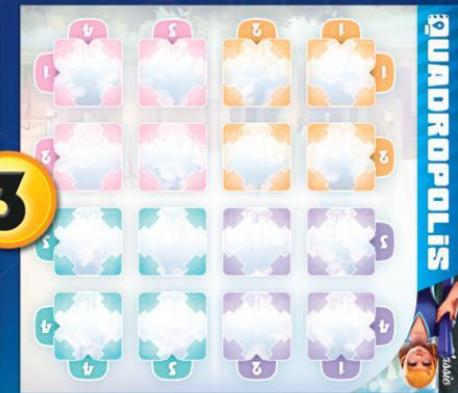
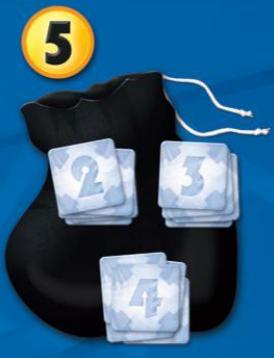
將所有編號為1的建築放入布袋 ⑤ 中,摸取並正面朝下隨機放到建築工地上。
放置完畢後,將它們正面朝上翻開:
在4人遊戲中,翻開所有建築。
在3人遊戲中,不要翻開標有4的建築。

在2人遊戲中,不要翻開標有4和3·4的建築。


7
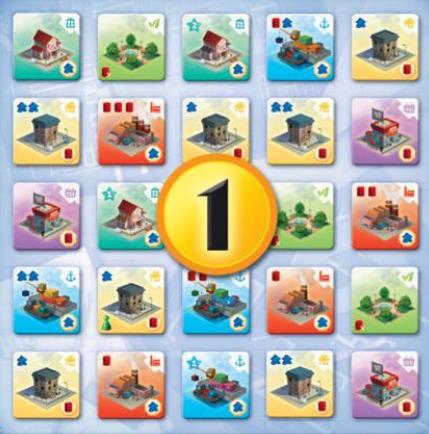
將城市規劃師放在建築工地旁方便所有玩家拿取的位置⑥。
1
2
Classic
QUADROPOLIS
按你們喜歡的方式決定起始玩家,並將市長標誌給予起始玩家。

1
2
3
4


專家模式的遊戲準備詳見第7頁。
QUADROPOLIS
5 1 2 3 4 10
1 2 3 4 5 11
2 3 4 5 6 7
3 4 5 6 7 8
4 5 6 7 8
5 6 7 8 9 10 11 12
遊戲目標
遊戲目標是獲得最多的勝利點數。勝利點數取決於你城市中建造的建築和它們的位置,每種建築都有不同的計分方式。
遊戲回合
方格都市中,一場遊戲需要進行4輪,每輪有4個回合。
每個回合中,從起始玩家開始,按順時針方向,玩家執行所有以下行動:
$1^{\circ}$ 從建築工地拿取一棟建築
$2^{\circ}$ 移動城市規劃師
3° 將建築放置到城市中
$4^{\circ}$ 獲得建築上的資源(如果可以獲得)所有玩家都完成以上步驟後,一個回合結束。
隨後,從起始玩家開始,按順時針方向,開始一個新的回合。所有玩家均完成4個回合之後,一輪結束。此時,所有建築師應該都已經放置到建築工地上了。
一輪結束後,所有玩家取回自己的建築師,放在自己城市旁。
清除建築工地上所有剩餘建築,將它們放回盒中,將城市規劃師放在建築工地旁。
從建築工地拿取一棟建築
選擇建築工地的一排或者一列,將建築師放在這一排或這一列前。注意,
■ 不能將建築師蓋在其他建築師上;
■ 建築師箭頭不能指向城市規劃師。
建築師上的編號表示你從哪格中拿取建築並放入你的城市中。例如,你將3號建築師放在第4排,那你就拿取第4排中第3格中的建築。

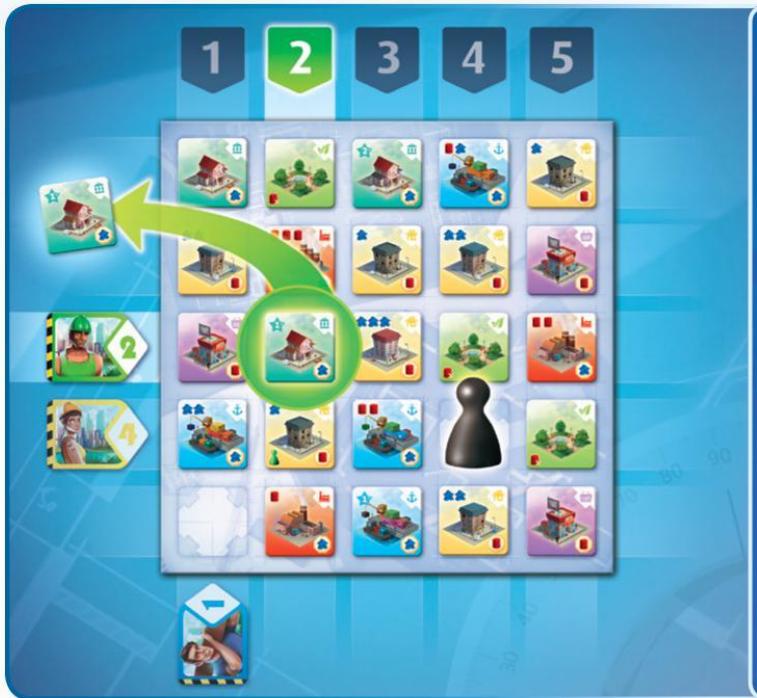

現在是綠色玩家的回合。
根據已有的建築師和城市規劃師的位置,標有X的位置不能放入建築師。
綠色玩家將2號建築師放在第3排前。
該玩家拿取第3排第2格中的建築:這是一個社區中心。
注意:在有些時候,有可能出現建築師指向一個空格,或格子中的建築你不想要。但你仍然必須放置你的建築師。

移動城市規劃師
從建築工地拿取建築後,移動城市規劃師,將其移動到你剛才拿取的建築的所在格。如果建築師指向一個空格,你也必須將城市規劃師移動到該格中。
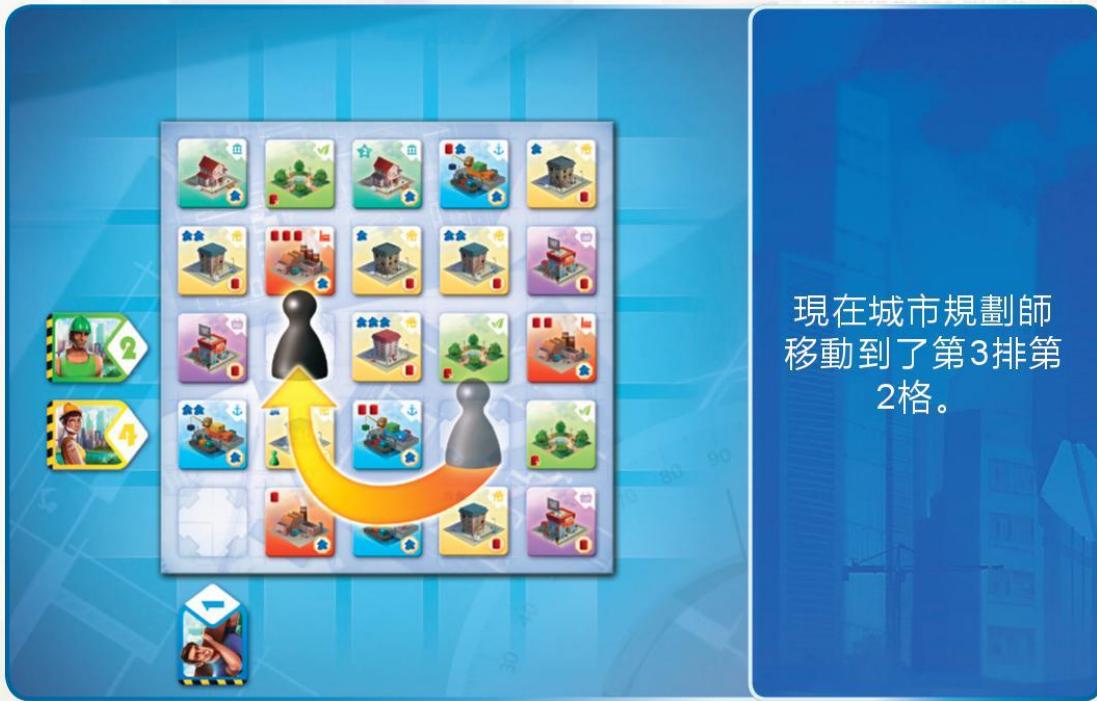
現在城市規劃師移動到了第3排第2格。
注意:遊戲開始時,你們可以指定一個玩家在每位玩家回合結束後負責移動城市規劃師,以免忘記執行這個重要的步驟。
3 將建築放置到城市中
你可以將你剛才拿取的建築放入:
與你剛才使用的建築師編號相同一排的空格中;或是
■ 與你剛才使用的建築師編號相同一列的空格中。

因為綠色玩家使用了2號建築師,該玩家可以將建築建造在第2排或第2列中任意空格中。
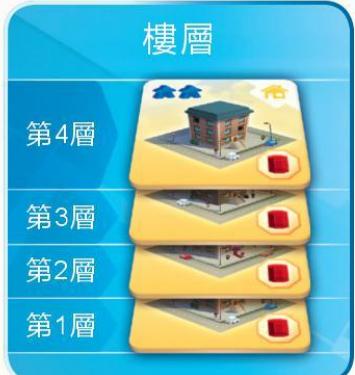
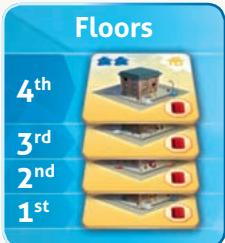
某些建築(例如住宅)可以堆疊。在這種情況下,已有的此類建築也視為有效格,但是需要:
所處的排數或列數與你剛才使用的建築師編號相同;或者
■ 你要建造的樓層與你剛才使用的建築師編號相同。
藍色玩家使用了3號建築師,因此可以將住宅建造在:
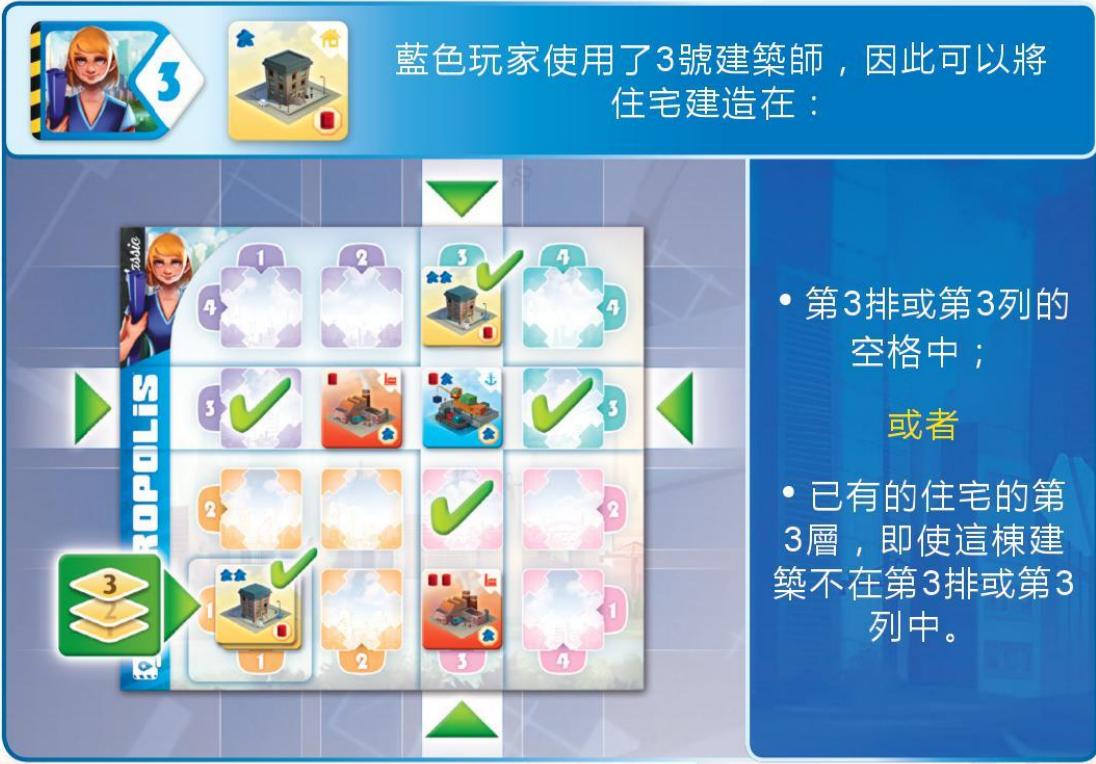
- 第3排或第3列的空格中;或者
- 已有的住宅的第3層,即使這棟建築不在第3排或第3列中。
如果城市沒辦法依規則建造在格子上,或者你不想建造在現有可以被建造的格子中,你可以丟棄剛才選擇的建築。在這種情況下,你將跳過下一步『獲得建築上的資源』:在你丟棄建築時,無法獲得資源。

獲得建築上的資源
從儲備區拿取建築板塊左上角標示數量的居民和/或能源,放在你城市旁。在遊戲結束時,你需要這些資源來啟用你的建築。
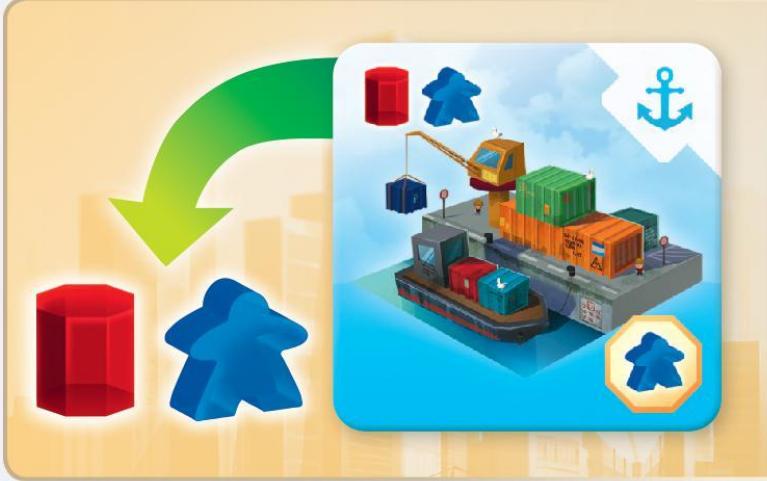
紅色玩家將港口放置到城市中,並立即得到1名居民和1點能源。
勝利點數
某些建築不會提供資源,但會帶來勝利點數。這些點數無法立即獲得,而是需要在遊戲結束時啟用後才能計分。
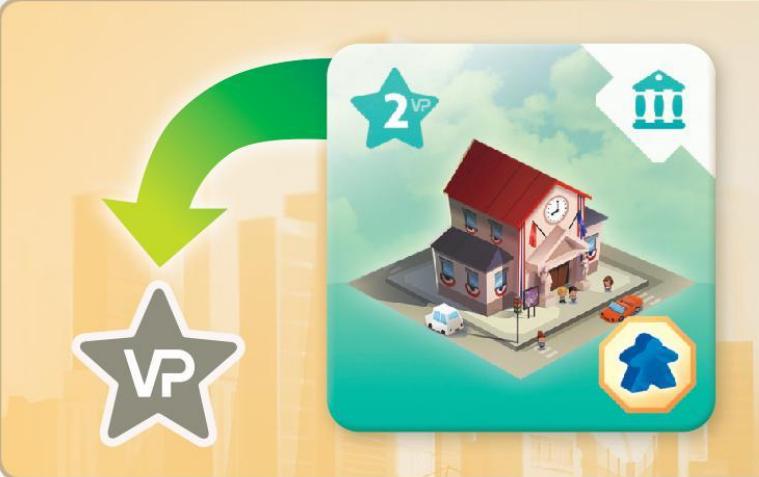
遊戲結束時,如果此建築已啟用,則將分值計入勝利點數。
起始玩家
遊戲中每輪都有一棟住宅用於獲得市長標誌,它可以讓你成為下一輪的起始玩家。住宅建造完畢後,立即將市長標誌放在自己面前。只要沒有人拿走標誌,下一輪中,你就是起始玩家。

在城市中建造這棟建築後,你將成為下一輪的起始玩家。
啟用建築
大部分建築需要資源來啟用後,才可以計分。這類建築的右下角有一個小圖示。在啟用建築時,只需將所需的資源放在圖示上即可。
啟用建築所需的資源與建築的高度無關:無論建築有多少樓層,啟用建築只需看最頂層的所需資源。
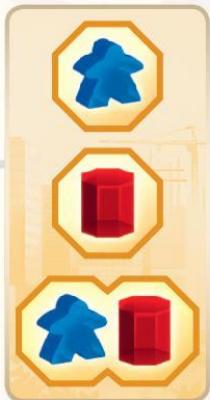
重要提示:在遊戲過程中,你隨時可以重新調配建築上的資源(居民與能源),這沒有任何限制。只是在遊戲結束時,你需要確定資源的分配方式,以便你得分最大化。
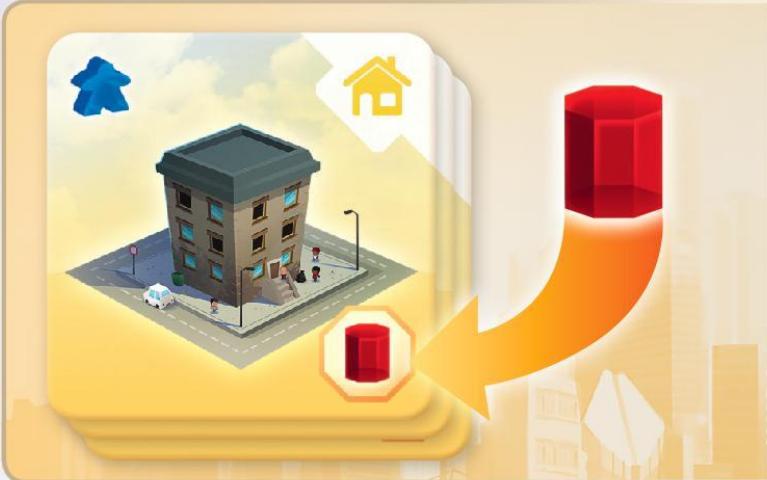
這棟三層高的住宅僅需1點能源即可啟用。
每輪結束
第一輪結束後,將所有剩餘的1號建築從建築工地上清除,隨後準備第二輪。將2號建築放入布袋中,摸取並正面朝下隨機放到建築工地上(詳見第2頁)。隨後,根據玩家人數,按照第一輪準備遊戲的規則,將他們正面朝上翻開。
擁有市長標誌的玩家是新一輪的起始玩家。
第三輪使用3號建築,第四輪使用4號建築。
遊戲結束
四輪之後遊戲結束。在這個階段,你還有最後一次機會在計分開始前重新調配你建築上的資源。
使用計分表記錄你城市中每類建築的勝利點數。(建築的分數詳見第5頁『方格都市中的建築』,參考卡上也有同樣的資訊。)

記住
要獲得勝利點數;必須先啟用建築。
在遊戲結束時,從玩家的城市中移除所有沒有啟用的建築,然後才開始進行計分。
此外:
每個沒有用於啟用建築或作為顧客放置在商店裡的居民,將扣除1點勝利點數。
每點沒有用於啟用建築的能源將變成污染,同樣扣除1點勝利點數。但是,你可以在城市的每座公園裡放置1點能源來避免污染的扣分(詳見第6頁,公園)。
獲得勝利點數最多的玩家贏得遊戲。
如果出現平手,建築中居民數量最多的玩家獲勝。如果仍然出現平手,城市中空地最少的玩家獲勝。

| 至少擁有1棟社區中心的街區數量 | 勝利點數 |
| 1 | 2 |
| 2 | 5 |
| 3 | 9 |
| 4 | 14 |
方格都市中的建築
在方格都市經典模式下,一共有6種建築。
每種建築都有不同的計分方式,影響計分的因素可能包括建築的分佈、位置,和是否與特定的建築相鄰。對角線所在格不算作相鄰。
每種建築的計分方式也可以參見幫助卡。
記住:遊戲結束時,只有啟用的建築才可以用於計分。啟用建築所需的資源類型就是建築右下角的小圖示。
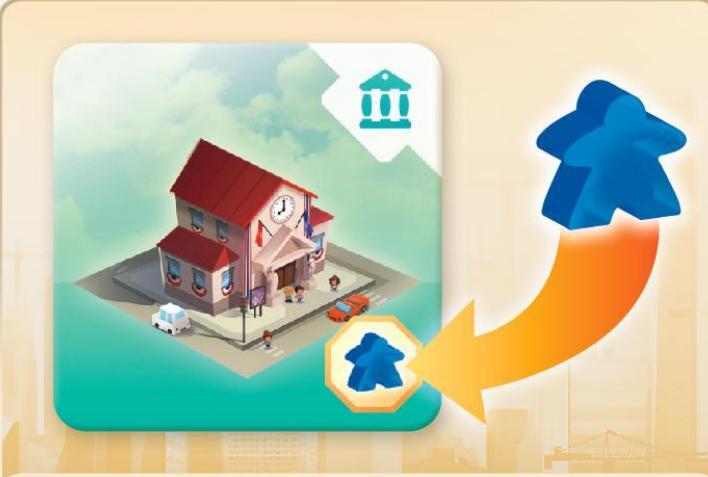
啟用這棟社區中心需要1名居民。
住宅
按照層高(樓層數量)獲得勝利點數。
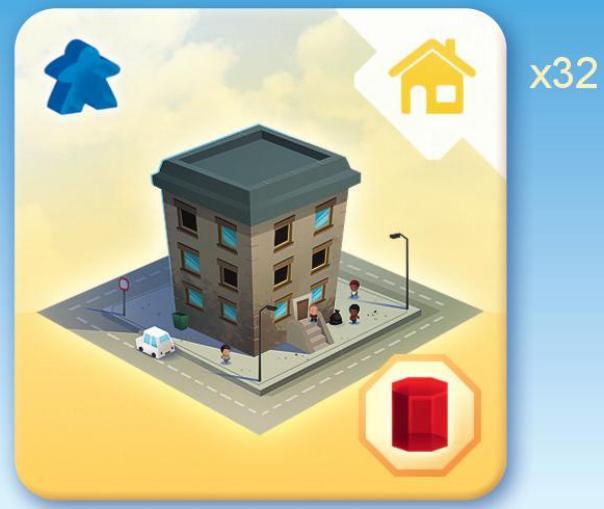
◆ 自带1-3名居民
◆ 啟用住宅需要1點能源
最多可建造4層:第1層之後的所有樓層只需符合建築師編號即可建造
在(除第一輪之後的)每輪中,都有一棟住宅帶有1名居民和市長標誌符號。將此棟住宅建造在自己城市的玩家成為下一輪的起始玩家。
商店
根據招攬的顧客(放置在商店裡的居民數量)獲得勝利點數。

◆ 啟用商店需要1點能源
◆ 每間商店最多招攬4名顧客
◆ 無法堆疊
在遊戲過程中,居民可以隨時在建築之間移動,這也適用於商店裡的顧客。只有在遊戲結束時,才會需要最終決定居民的分配。
社區中心
根據在城市各街區的分佈廣度獲得勝利點數。

在遊戲結束獲得0-2點勝利點數,計入玩家總分
◆ 啟用社區中心需要1名居民
◆ 無法堆疊
在計算社區中心的得分時,記住加上建築板塊本身所帶的勝利點數!
計分
根據樓層數量,每棟啟用的住宅按以下方式計分。
| 樓層數量 | 勝利點數 |
| 1 | 1 |
| 2 | 3 |
| 3 | 6 |
| 4 | 10 |
計分
根據顧客數量,每棟啟用的商店按以下方式計分。
| 居民數量 | 勝利點數 |
| 1 | 1 |
| 2 | 2 |
| 3 | 4 |
| 4 | 7 |
計分
根據建有啟用的社區中心的不同街區數量獲得勝利點數。
公園
與住宅相鄰時獲得勝利點數。
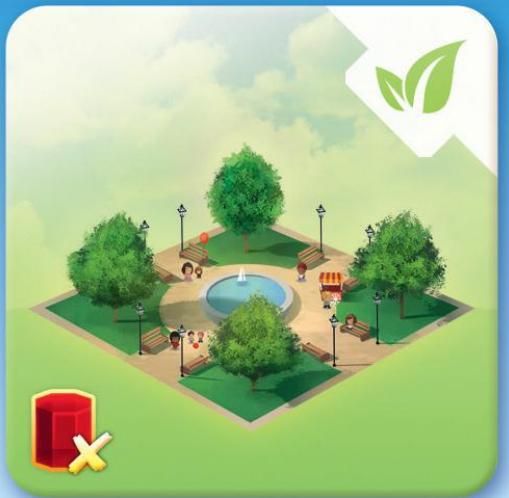
x15
◆ 無需任何資源即可啟用
◆ 無法堆疊
◆ 公園可以吸收污染:遊戲結束時,在計分前,你可以在每座公園裡放入1點過剩的能量來避免扣分(詳見『遊戲結束』)
計分
每座公園會根據相鄰的住宅數量獲得勝利點數,無視住宅的樓層高度。換句話說,擁有多層的住宅仍然只算作一棟住宅。
每座公園相鄰的住宅數量
| 1 | 2 |
| 2 | 4 |
| 3 | 7 |
| 4 | 11 |
工廠
與商店或港口相鄰時獲得勝利點數。
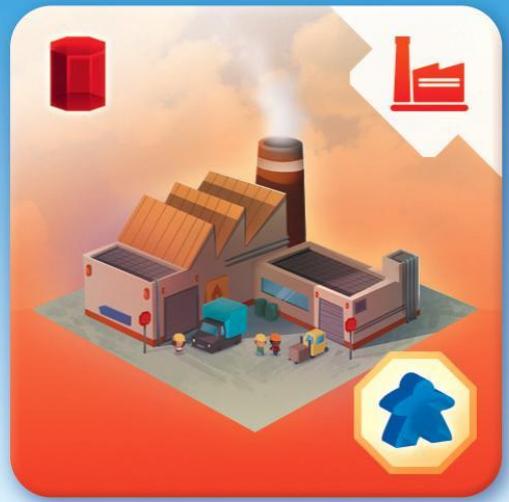
x19
◆ 自帶1-3點能源
◆ 啟用工廠需要1名居民
◆ 無法堆疊
計分
啟用的工廠與每間商店相鄰時獲得2點勝利點數,與每座港口相鄰時獲得3點勝利點數。
| 建築類型 | 勝利點數 |
| 商店 | 2 |
| 港口 | 3 |
更多計分範例可以搜尋:
www.daysofwonder.com/quadropolis
港口
建在一排或一列中獲得勝利點數。
x21

有4種不同類型的港口,可帶來居民、能量、或是勝利點數這三種的組合,其中勝利點數將在遊戲結束計入總分
◆ 啟用港口需要1名居民
◆ 無法堆疊
在計算港口的得分時,記住加上建築板塊本身所帶的勝利點數!
計分
啟動的港口在計分時,會計算玩家圖板上由港口所形成最長且連續的行與列,玩家只會由最長的行與列來獲得分數(會有兩個分數的加總,分別是最長連續的行分數與最長的列的分數)。
| 直線上的港口數量 | 勝利點數 |
| 1 | 0 |
| 2 | 3 |
| 3 | 7 |
| 4 | 12 |
提示
在開始遊戲前請確定理解每類建築的計分方式:請使用幫助卡。
制定大致的戰略方針:是否要透過港口和工廠打造工業性城市?如果是的話,你或許會需要建造商店來讓你的工廠收益最大化,同時使用公園來吸收污染。如果你想打造一個住宅區,你就需要建造住宅和一些社區中心,同時也需要建造商店來吸引你住宅所帶來的大量居民。
提前計畫:為你的城市預留出一些空間,避免在第一輪中就造滿一整排或一整列,否則你有可能在之後幾輪中無法行動。
在每輪開始時,盡力找出建築工地上你所需要的建築,並思考如何通過建築師以最佳的方式獲得它們。
確保你有足夠的資源來啟用你的建築。沒有啟用的建築在計分時是會被完全忽略的。
抓住機會:如果看到你的行動可以防止對手從建築工地拿到他們所需要的建築,不要遲疑,動手吧。


專家模式
經過幾次遊戲之後,你也許會想嘗試用專家模式進行全新的挑戰。以下的變體規則適用於掌握了經典模式並想要為遊戲增加一些新元素的玩家。
專家模式遊戲時間更長,會進行5輪而不是4輪。
以下段落將解釋遊戲準備和規則方面的不同之處。
專家模式下的遊戲準備
按照經典模式的規則,但會有以下幾處不同:
玩家板
使用玩家板的專家模式面。
這一面的城市共有5個街區組成,每個街區背景顏色不同,標有對應的數字,並分為4格。每個格子上同樣標有數字。
在拿取建築後,你可以放在城市:
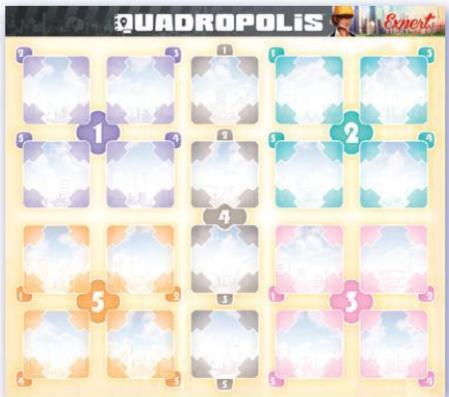
■ 與你使用的建築師編號相同的空格上;或是
■ 與你使用的建築師編號相同的街區(同顏色的格子內)裡的空格上。
建築師
玩家共同使用一群建築師。將建築師翻至灰色面,並加入5號建築師,把他們放在建築工地旁。
每個編號的建築師數量需要與玩
家人數保持一致(比如,2人遊戲時,使用2名1號建築師、2名2號建築師,以此類推)。將所有未使用到的建築師放回盒內。建築師不屬於玩家個人。在你的回合中,從公共的建築師中選擇一名使用。在同一輪中,你可以多次使用相同編號的建築師,只要沒有對手選走他們。
重要:和經典模式一樣,每輪有4個回合。這意味著不會使用到所有建築師:在每輪結束時,剩餘的建築師數量應該與玩家數量一致。
每輪結束後,將所有建築師放回建築工地旁,留待下一輪使用。
建築
加入了兩類新的建築。將背面印有『經典』字樣的建築替換成印有『專家』字樣的建築。
辦公大樓
專家模式下的建築
根據樓層高度與辦公大樓間是否彼此相鄰來獲得勝利點數。
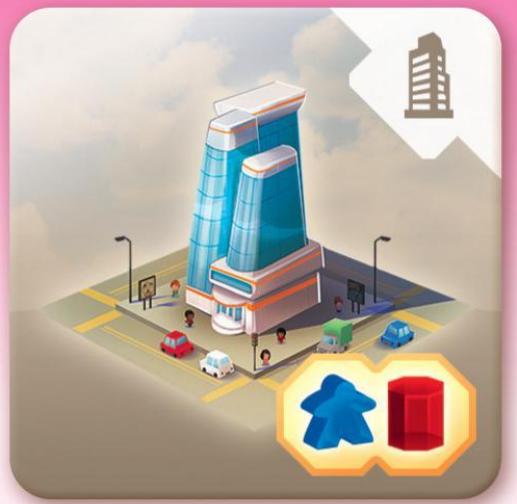
◆ 啟用辦公大樓需要1名居民和1點能源
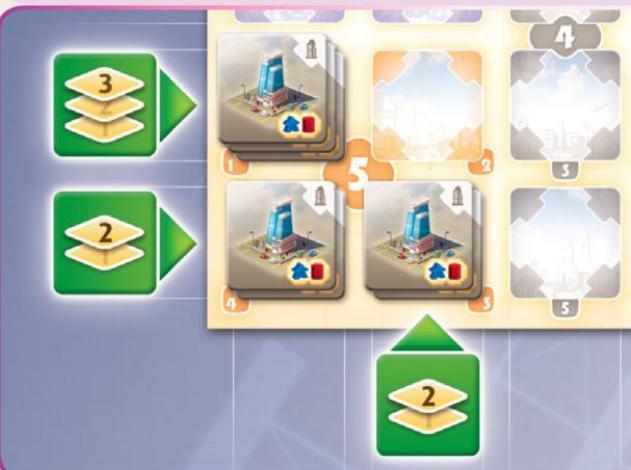
◆ 最多可建造5層:第1層之後的所有樓層只需符合建築師編號即可建造
計算辦公大樓的勝利點數時,先清點有多少相鄰的辦公大樓,隨後在參考卡上找到對應的一行,最後根據辦公大樓的樓層數量找到所能獲得的勝利點數。
計分



| 1座辦公大樓 | 0 | 1 | 3 | 6 | 10 |
| 2座相鄰的辦公大樓 | 1 | 3 | 6 | 10 | 15 |
| 3座相鄰的辦公大樓 | 2 | 5 | 9 | 14 | 20 |
| 4座相鄰的辦公大樓 | 3 | 7 | 12 | 18 | 25 |
| 5座相鄰的辦公大樓 | 4 | 9 | 15 | 22 | 30 |
瑪麗有三棟相鄰的辦公大樓。
所以在,計分時她需要查看表格的第3行。兩棟辦公大樓各有2層,每棟得5分,第三棟有3層,可以得9分。
因此,瑪麗辦公大樓的總計勝利點數是19分(5+5+9)。
相鄰的辦公大樓
同樣可獲得勝利點數
地標
根據相鄰的特定建築獲得勝利點數。
可以在5個街區內建造
工廠
相鄰的辦公大樓
可以獲得勝利點數
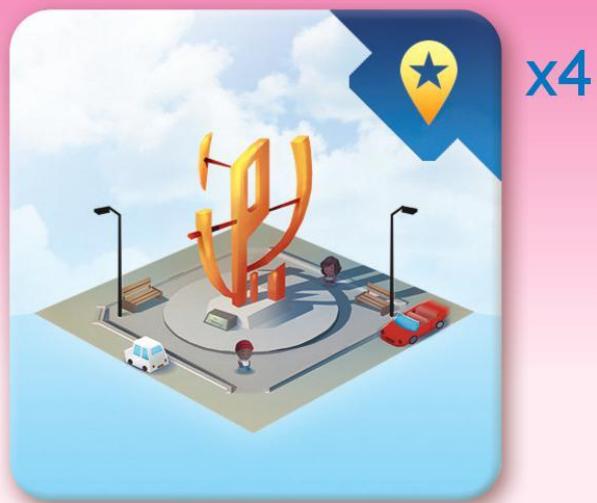
◆遊戲中地標的數量與玩家人數一致
◆除第一輪外,每輪都有一座地標(2人遊戲時:第1、4、5輪沒有地標;3人遊戲時:第1和第5輪沒有地標)。
◆無需任何資源即可啟用
◆無法堆疊
計分
每座地標根據相鄰建築的類型獲得勝利點數。
| 建築類型 | 勝利點數 |
| 工廠/港口 | -5 |
| 住宅 | |
| 辦公大樓 | 0 |
| 或其他建築物 | |
| 社區中心 | 2 |
| 商店 | 3 |
| 公園 | 5 |
專家模式下的計分
建築的計分與經典模式相同,但由於專家模式下的城市更大,而且加入了5號建築師,住宅、社區中心和港口比經典模式下所能獲得的勝利點數更高,商店可以招攬更多顧客,公園和工廠也可以與新建築辦公大樓互相影響。
住宅
最多可建造5層

| 樓層數量 | 勝利點數 |
| 1 | 1 |
| 2 | 3 |
| 3 | 6 |
| 4 | 10 |
| 5 | 15 |

商店
最多可招攬5名顧客

公園
| 居民數量 | 勝利點數 |
| 1 | 1 |
| 2 | 2 |
| 3 | 4 |
| 4 | 7 |
| 5 | 11 |
| 相鄰的住宅和辦公大樓數量 | 勝利點數 |
| 1 | 2 |
| 2 | 4 |
| 3 | 7 |
| 4 | 11 |

| 相鄰的建築類型 | 勝利點數 |
| 商店 | 2 |
| 港口 | 3 |
| 辦公大樓 | 4 |
港口
直線上最多可建造5座

社區中心

| 直線上的港口數量 | 勝利點數 |
| 1 | 0 |
| 2 | 3 |
| 3 | 7 |
| 4 | 12 |
| 5 | 18 |
| 1 | 2 |
| 2 | 5 |
| 3 | 9 |
| 4 | 14 |
| 5 | 20 |
製作人員
遊戲設計
François Gandon
美術原畫:Sabrina Miramon
美術設計:Cyrille Daujean
開發與製作:Adrien Martinot
作者特別感謝巴黎La Carte Chance桌遊店的David Martinez多年來幫助進行大量的遊戲測試,並經常提供詳細可靠的建議。同樣感謝所有玩過遊戲早期設計並幫助最終完成遊戲的各位:包括作者的妻子Valérie和女兒Juliette,以及其他好友Mathieu、Patricia、Jean-Marie、Virginie、Frédéric、Geneviève、Anne-Laure和他們的孩子:Gaspard、Fanny、Mathilde和Elsa。最後非常感謝第33屆布洛涅·比揚古國際遊戲設計師大賽的評委給予這個遊戲的褒獎,使得它的出版成為可能。
Days of Wonder Online
Register your boardgame

Days of Wonder、Days of Wonder標誌與Quadropolis均為Days of Wonder公司的商標或註冊商標。© 2016 Days of Wonder公司版權所有。
We invite you to join our online community of players at Days of Wonder Online, where we host a number of online versions of our games. To use your Days of Wonder Online number, add it to your existing Days of Wonder Online account or create a new account at
www.daysofwonder.com/Quadropolis and click on the New Player Signup button on the home page. Then just follow the instructions. You can also learn about other Days of Wonder games or visit us at:
www.daysofwonder.com
Download Markdownqp_rules_en.md26.7 KB
François Gandon


In Quadropolis you enact the role of the Mayor of a modern city. You will need to define a global strategy to build your city according to your Inhabitants' needs and outmatch your opponents, sending your Architects to have various Buildings erected in your city. Each Building allows you to score victory points. There are various types of Buildings with different scoring patterns; many of them may be combined for better effect. Will you be able to meet the challenge and become the most prestigious Mayor in history?
Game contents
1 Construction Site Board (25 Squares)
4double-sided Player Mats representing the city of each player, divided into districts

The Construction Site
20 Architects

Colored side for the Classic Mode
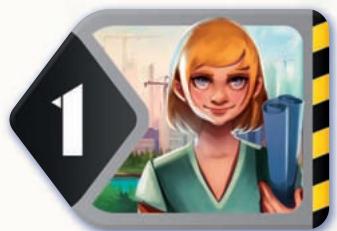
Gray side for the Expert Mode


1 1 Urbanist

1 Mayor (1st player marker)

65 Inhabitants (blue Meeples)
142 Building Tiles

50 Energy Units (red Cylinders)

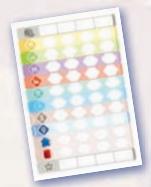
1 Scoring Pad
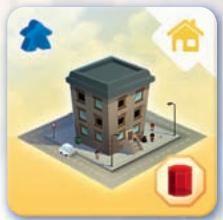

4 Helpers
1 Rulebook

Buildings
1 Cloth Bag

There are two game modes in Quadropolis.
We recommend that you play your first game(s) using the Classic
Mode which will hel you discover the game mechanic and the
various strategies available. Once you feel confident enough, you
can play using the Expert Mode that introduces new Buildings and rule changes for added challenge.
See p.7 for more information.
Setting up the game
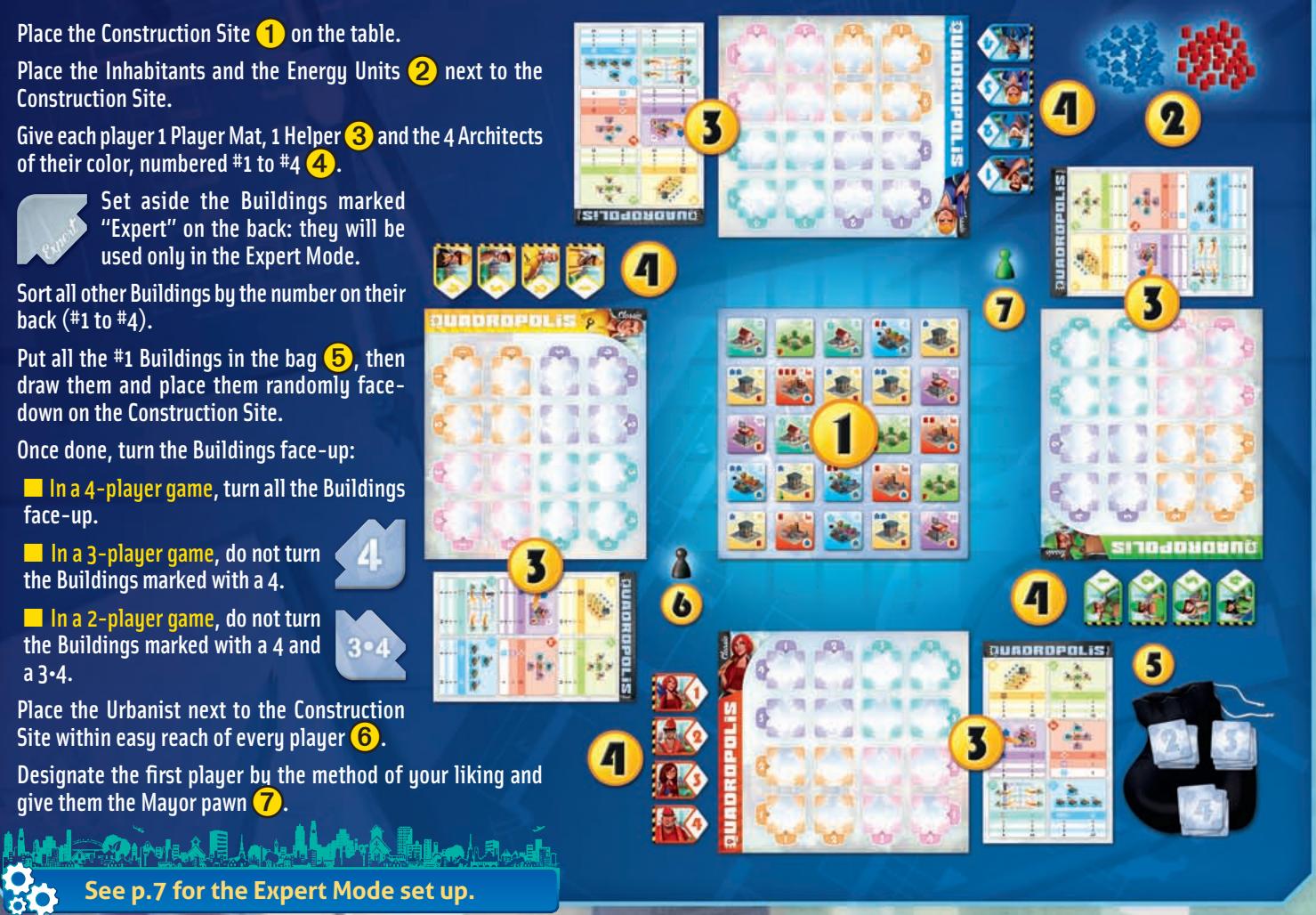
Object of the game
The object of the game is to score the highest total number of Victory Points (VPs). Points are tallied depending on the Buildings that you will place in your city and their respective locations, each one of them counted according to a different pattern.
The game turn
A game of Quadropolis plays in 4 rounds and there are 4 turns per round.
On each turn, starting with the first player and proceeding clockwise, players perform all of the following actions:
1° Take a Building from the Construction Site,
2° Move the Urbanist,
3° Place the Building in their city,
4° Receive Resources from the Building (if eligible).
A turn is complete when all players have played these steps.
A new turn then begins, starting with the first player and again proceeding in a clockwise direction. Once all players have taken 4 turns, the round is over. At this stage, all Architects should have been placed around the Construction Site.
When the round is over, all players recover their Architects and place them next to their city.
The Construction Site is cleared from all remaining Buildings, which are put back in the box, and the Urbanist is placed next to the Construction Site again.
from the Construction Site
Choose a line or column of the Construction Site and place an Architect in front of it. However:
You cannot place an Architect over any other Architect;
Your Architect cannot point to the Urbanist.
The number marked on the Architect indicates from which square you take a Building in order to place it in your city. For example, if you place your #3 Architect in front of the 4th line, then you will take the Building from the 3rd square in that line.

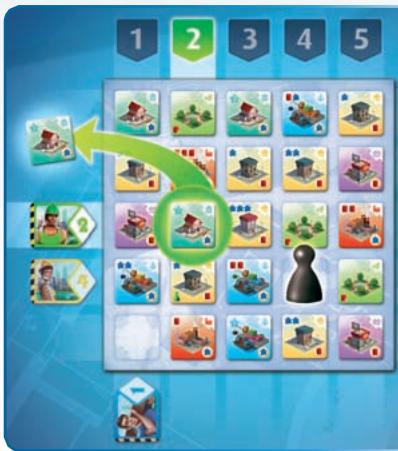
It is Green player's turn.
Because of existing Architects / Urbanist, spots
marked with an X are locked.
The Green player places his Architect #2 in front of the third line.
The player takes the Building that is in the second square in this line: here, a Public Service.
Note: At some point in the game, it might happen that your Architect only gives you access to empty squares or to Buildings you do not wish to add to your city. You must place your Architect nonetheless.
2 Move the Urbanist
As soon as you take a Building from the Construction Site, move the Urbanist so that it occupies the spot where the Building was. If the Architect that you played gave you access to an empty square, then you must still move the Urbanist to that square.


Note: At the beginning of the game, you can designate a player whose mission will be to move the Urbanist after each player's turn. This will minimize the risk of forgetting this important move.
3 Place the Building in your city
You may place the Building that you took:
either on an empty square in the line whose number matches the number of the Architect that you played;
or on an empty square in the column whose number matches the number of the Architect that you played.
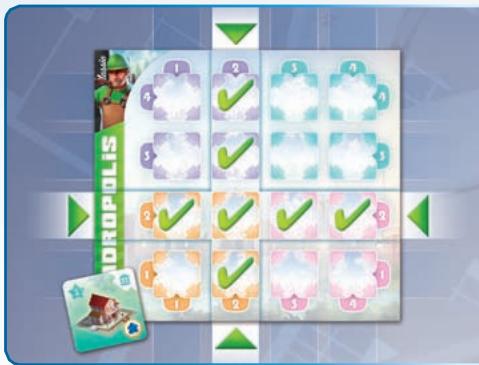
Since the Green player used his Architect #2, they may place their Building on any square in line or column #2.
Some Buildings (like Tower Blocks for instance) may be stacked. In that case, any existing Building of this type is also considered an eligible square, if:
the line or column where it is located matches the number of the Architect you play;
or the floor you want to build matches the number of the Architect you play.
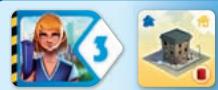
With Architect #3, the Blue player can build this Tower Block:
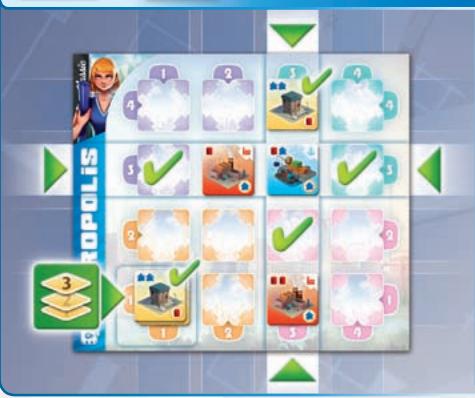
• either on a square that is in the line or column #3;
• on the 3rd floor of his existing Tower Block, even if it is not in the line or column #3.
If there is no eligible square in your city, or if your Architect only enables you to take a Building that you do not want to build, you simply discard the Building that you chose. In that case, skip the next phase "Receive Resources": you do not gain Resources when you discard a Building.
4 Receive Resources from the Building
Take the number of Inhabitants and/or Energy Units from the reserve as indicated on the top left corner of the Building Tile and place them next to your city. You will need them to activate your Buildings and score points at the end of the game.
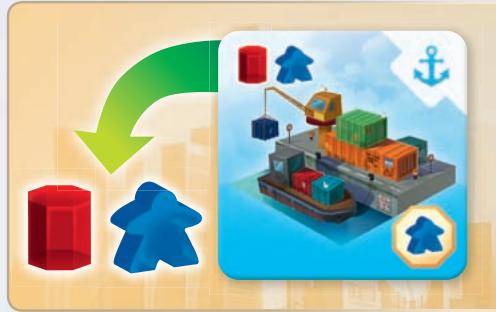
The Red player places this Harbor in his city and immediately receives 1 Inhabitant and 1 Energy Unit.
Victory Points
Some Buildings come with VPs instead of Resources. Those VPs are not awarded immediately. They will be added to your score at the end of game if the Building is activated.
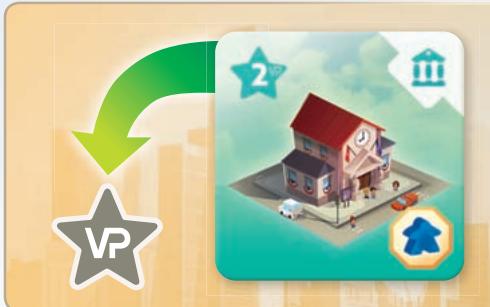
Add the value to your score at the end of game if the Building is activated.
First Player
There is one Tower Block in play each round that grants the Mayor pawn. It allows you to become the first player for the next round. When you build it, you immediately take the Mayor pawn from the player who possesses it and places it in front of you. If no one takes it, then the current first player remains first player for the next round.

Placing this Building in your city allows you to be the First Player for the next round.
Activating a Building
Most Buildings require Resources to be activated and score VPs. In that case, a small icon is visible in the bottom right-hand corner of the Building. To activate a Building simply put the required Resource(s) on it.
The number of Resources required to activate a Building is independent from its height: regardless of its number of floors, the Building will always require the Resources indicated on its top floor.
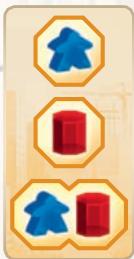
Important Note: You can re-allocate your Resources on your Buildings freely and with no limitation at any time during the game (Inhabitants and Energy Units). Only at the end of the game must you decide how you want to allocate them for good in order to maximize your VPs before the scoring begins.
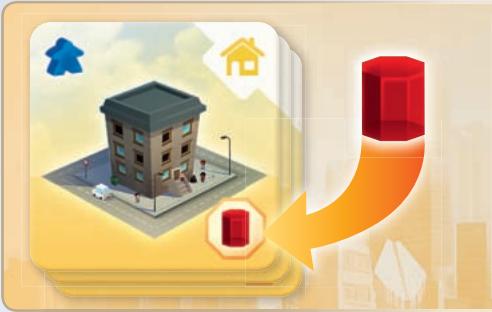
This 3 floor Tower Block requires only 1 Energy Unit to be activated.
End of round
Once the first round is complete, clear any remaining #1 Buildings from the Construction Site, then prepare the second round. Put all the #2 Buildings in the bag, then draw the Buildings randomly and place them face-down on the Construction Site before starting the second round (see Setting up the game on p.2). Then, turn them face-up with the same restrictions for 2-player and 3-player games as in the first round.
The player who possesses the Mayor pawn is the first player for the new round.
Proceed in the same manner with the #3 Buildings for the third round and the #4 Buildings for the fourth round.
Game End
The game ends after four rounds. At this step, you have the opportunity to re-allocate the Resources on your Buildings one last time before the scoring begins.
Use the Scoring Pad to note the Victory Points for each category of Building in your city (See "The Buildings of Quadropolis", p.5, for a detailed explanation of the Buildings' score values. Score values are also available on the Helpers).

Remember
To score VPs, a Building must be activated. Any Building that is not activated at the end of the game is removed from the player's city before calculating their score.
Additionally:
each Inhabitant that is not used to activate a Building or is not placed as a Customer in a Shop penalizes the city and is worth -1 VP.
each Energy Unit that is not used to activate a Building is considered as pollution and is also worth -1 VP. However, you may place 1 Energy Unit on each Park in your city to avoid these negative points (see Parks, p.6).
The player with the most Victory Points wins the game.
In the case of a tie, the players with the most Inhabitants on their Buildings wins. If players are still tied, the player that has the least empty spaces in their city wins.

The Buildings of Quadropolis
There are 6 types of Buildings in the Classic Mode of Quadropolis.
Each type of Building has its own scoring mode that depends on various factors such as its distribution, its location, and also whether it is adjacent to other specific Buildings or not. Diagonally positioned Tiles are NEVER considered to be adjacent.
Scoring modes for each type of Building are available on the Helpers.
Remember: a Building must be activated in order to score VPs at the end of the game. The type of Resources required to activate a Building are identified with a small icon at the bottom right of each Building.
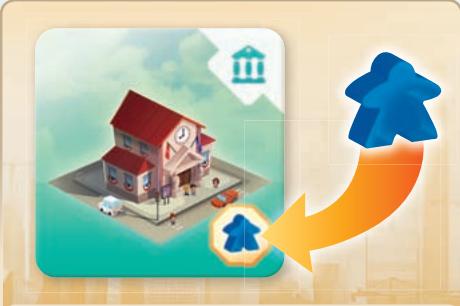
This Public Service requires 1 Inhabitant to be activated.
Tower Blocks
Score VPs depending on their height (number of floors).

Come with 1, 2 or 3 Inhabitants
◆Activating a Tower Block requires 1 Energy Unit
Can be stacked up to 4 floors: any floor after the 1st one may be built with any Architect that has the matching number
In each round (except the last one), there is one Tower Block that comes with 1 Inhabitant and has the Mayor pawn symbol. A player that places this tile in their city is the first player for the next round.
Scoring
Each activated Tower Block Building scores VPs as follows, depending on the number of floors it has.
| #of Floors | Victory Points |
| 1 | 1 |
| 2 | 3 |
| 3 | 6 |
| 4 | 10 |
Shops
Score VPs depending on the number of Customers they attract (how many Inhabitants are placed on them)
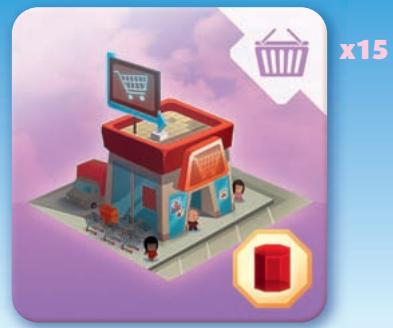
◆ Activating a Shop requires 1 Energy Unit
A Shop can welcome up to 4 Customers
Cannot be stacked
Inhabitants in α player's city can be moved from one Building to another at any moment during the game, and this applies to the Customers in the Shops as well. It is only when the scoring takes place at the end of the game that the allocation of Inhabitants is considered final.
Scoring
Each activated Shop scores VPs depending on the number of Customers it has, i.e. Inhabitants that are placed on it.
| #of Inhabitants | Victory Points |
| 1 | 1 |
| 2 | 2 |
| 3 | 4 |
| 4 | 7 |
Public Services
Score VPs depending on how well spread out they are in the various city Districts.
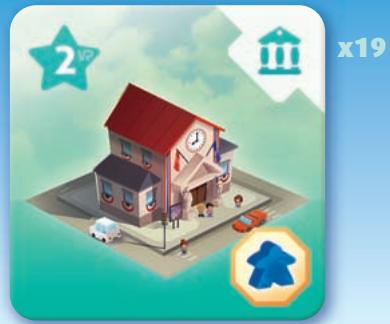
Grant 0, 1 or 2 VPs that will be added to the player's score at the end of the game
◆ Activating a Public Service requires 1 Inhabitant
◆ Cannot be stacked
When calculating the score for Public Services, remember to add the VPs marked on the Tiles, if any!
Scoring
Activated Public Services score VPs depending on the number of different Districts where you built them.
| #of Districts with at least 1 Public Service | Victory Points |
| 1 | 2 |
| 2 | 5 |
| 3 | 9 |
| 4 | 14 |
Parks
Score VPs when Tower Blocks are adjacent to them.
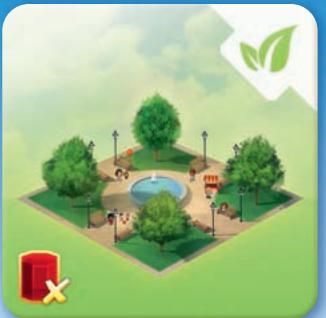
◆ Do not require any Resource to be activated
Cannot be stacked
Parks absorb pollution: at the end of the game, before scoring, you may place 1 Energy Unit that you have in excess in each Park to avoid negative points (see Game End).
Factories
Score VPs when Shops and Harbors are adjacent to them.

◆ Come with 1, 2 or 3 Energy Units
Activating a Factory requires 1 Inhabitant
◆ Cannot be stacked
Harbors
Score VPs when placed in a line or column.

◆ Come in 4 different versions, with a combination of Inhabitants, Energy Units and VPs that are added to the player's total at the end of the game
◆ Activating a Harbor requires 1 Inhabitant
Cannot be stacked
When calculating the score for Harbors, remember to add the VPs marked on the tiles, if any!
Scoring
Each Park scores VPs depending on the number of Tower Blocks that are directly adjacent to it and regardless of their height. In other words, a Tower Block with multiple floors still counts as one Tower Block.
Scoring
Each activated Factory scores 2 VPs for each adjacent Shop and 3 VPs for each adjacent Harbor.
#of Adjacent Tower Blocks
Victory Points
Building Type
Shop
Harbor
Victory Points
Scoring
Activated Harbors score VPs when forming a continuous line or column, depending on the length of that line or column. Regardless of the number of Harbor lines or columns you build, you only score your longest continuous line and your longest continuous column.
| 1 2 |
| 2 4 |
| 3 7 |
| 4 11 |
Find scoring examples on www.daysofwonder.com/quadropolis
| #of Aligned Harbors | Victory Points |
| 1 | 0 |
| 2 | 3 |
| 3 | 7 |
| 4 | 12 |
Tips
Make sure to understand the scoring mode of each different building before playing: use your Helper if needed.
Try to define a rough strategy: do you want to follow an industrial approach, building Harbors and Factories? If yes, you will probably need to build Shops to maximize the profits of your Factories and Parks to absorb pollution. If you choose a more residential strategy, you need to build Tower Blocks, some Public Services, and Shops to attract the numerous Inhabitants of your Tower Blocks.
Plan ahead: keep some room in your city and avoid filling a same line or column (e.g. line 1 and column 1) in the first rounds - otherwise you could be blocked in future turns.
At the beginning of each round, try to spot the Buildings that are of interest in the Construction Site and think about the best way to recover them with your Architects.
Make sure you have enough Resources to activate your Buildings. Buildings that are not activated are completely ignored when scoring!
Be opportunistic: do not hesitate to block an opponent if you see that your move may prevent your opponent from taking what they want on the Construction Site.
QUADRDPOLIS
The Expert Mode
After a few games, you may want to take a new challenge with the Expert Mode. This variant is reserved to players who master the Classic mode and want to add a new twist to their games.
It also lasts longer as you will play 5 rounds instead of 4.
The paragraphs below explain the different set up and gameplay modifications.
Expert Set Up
Follow the Classic setup, with the following exceptions:
Player Mat
Use your Player Mat on its Expert side.
The city is composed of 5 Districts, each with a different background. Each District has a specific number and is divided into 4 squares, that also have a number on each one of them.

When taking a Building for your city, you may place it:
■ either on an empty square whose number matches the number of the Architect you played;
■or on an empty square in the District whose number matches the number of the Architect you played.
Architects
Players play from a common pool of Architects. Turn the Architects on their gray-colored side, add the Architects #5 to the pool and place them next to the Construction Site.

There must be one Architect of each number per player (for instance, with 2 players, use 2 Architects #1, 2 Architects #2, etc.). All unused Architects are put back in the box.
Architects do not belong to any player. On your turn, simply take one Architect among those available to play. In the same round, you may play several Architects with the same number if your opponents don't take them.
Important: As in the Classic Mode, there are 4 turns each round. This means that all Architects will not be used: at the end of the round, there will be as many Architects remaining as the number of players.
At the end of each round, all Architects are placed back in the pool for the next round, next to the Construction Site.
Buildings
Two new types of Buildings come into play. Replace the Buildings that have a "Classic" back with the Buildings with an "Expert" back.
Expert Buildings dmrtBa
Office Towers
Office Towers score VPs depending on their height and when adjacent to each other.
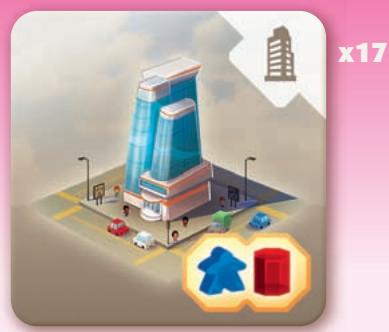
◆ Activating an Office Tower requires 1 Inhabitant and 1 Energy Unit
Can be stacked up to 5 floors: any floor after the 1st one may be built with any Architect with the matching number
Scoring
To calculate the score of your Office Towers, count how many of them are adjacent to each other. Then check the corresponding line on your Helper to know how many VPs you score per Office Tower, depending on its number of floors.


| 1 Office Tower | 0 | 1 3 | 6 | 10 | |
| 2 adjacent Office Towers | 1 | 3 | 6 | 10 | 15 |
| 3 adjacent Office Towers | 2 | 5 | 9 | 14 | 20 |
| 4 adjacent Office Towers | 3 | 7 | 12 | 18 | 25 |
| 5 adjacent Office Towers | 4 | 9 | 15 | 22 | 30 |
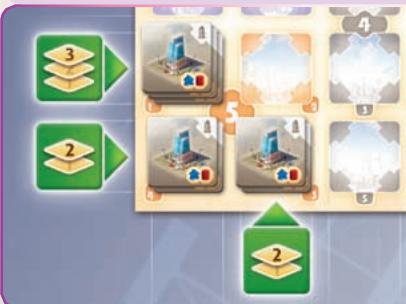
Mary has three adjacent Office Towers. As a result, she needs to check the third line of the table to calculate her score. Two of the Office Towers have 2 floors and score 5 VPs each, while the third one has 3 floors and score 9 VPs.
The final score for Mary's Office Towers is 19 VPs (5+5+9).
| #of Districts with at least 1 Public Service | Victory Points |
Register your boardgame
Monuments
Monuments score VPs when adjacent to specific Buildings.
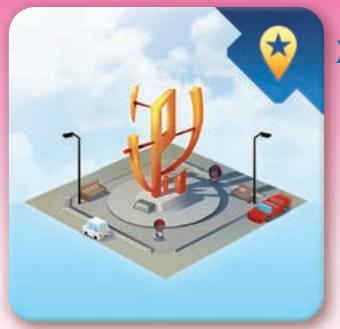
There are as many Monuments in play as there are players.
◆ There is 1 Monument per round except in the first round (2-player games: no monument in rounds #1, #4 and #5; 3-player games: no monument in rounds #1 and #5).
Do not need to be activated to score
Cannot be stacked
Scoring
Each Monument scores VPs depending on the types of Buildings that are adjacent to them.
| Building Type | Victory Points |
| Factory / Harbor | -5 |
| Tower Block Office Tower Other Monument | 0 |
| Public Service | 2 |
| Shop | 3 |
| Park | 5 |
Expert Scoring
Buildings are scored as in the Classic Mode. However, because the players' cities are larger and because of the addition of Architects #5, Tower Blocks, Public Services and Harbors may score more VPs than in the Classic Mode, Shops may welcome more Customers; Parks and Factories also interact with the new Office Tower Buildings.
Tower Blocks
May now be stacked up to 5 floors


| #of Floors | Victory Points |
| 1 | 1 |
| 2 | 3 |
| 3 | 6 |
| 4 | 10 |
| 5 | 15 |
Shops
May now welcome up to 5 Customers

| #of Inhabitants | Victory Points |
| 1 | 1 |
| 2 | 2 |
| 3 | 4 |
| 4 | 7 |
| 5 | 11 |
Adjacent Office Towers now also account in the scoring
Parks
| #Adjacent Tower Blocks and Office Towers | Victory Points |
| 1 | 2 |
| 2 | 4 |
| 3 | 7 |
| 4 | 11 |
Factories

Adjacent Office Towers now also account in the scoring
| #Adjacent Building Type | Victory Points |
| Shop | 2 |
| Harbor | 3 |
| Office Tower | 4 |
Harbors
Can now form a consecutive line of 5

| #of Aligned Harbors | Victory Points |
| 1 | 0 |
| 2 | 3 |
| 3 | 7 |
| 4 | 12 |
| 5 | 18 |
Public Services

May now be placed in 5 different Districts
| 1 | 2 |
| 2 | 5 |
| 3 | 9 |
| 4 | 14 |
| 5 | 20 |
Days of Wonder Online
Illustrations: Sabrina Miramon Graphic Design: Cyrille Daujean Development and Production: Àdrien Martinot
The author would like to thank David Martinez of the game shop La Carte Chance in Paris for being his primary tester of many games, always providing thorough and reliable advice. Many thanks also to all those who played the prototype and helped make it a game: my wife Valérie and my daughter Juliette, my dear friends Mathieu, Patricia, Jean-Marie, Virginie, Frédéric, Geneviève and Anne-Laure and their kids: Gaspard, Fanny, Mathilde and Elsa. And a big thank you to the jury of the 33rd International Game
Designers Contest of Boulogne Billancourt for awarding the game a prize and opening the way for its publication.

Days of Wonder, the Days of Wonder logo and Quadropolis are all trademarks or registered trademarks of Days of Wonder, Inc. and copyrights © 2016 Days of Wonder, Inc. All Rights Reserved.
We invite you to join our online
community of players at Days of Wonder
Online, where we host a number of online
versions of our games. To use your
Days of Wonder Online number, add it
to your existing Days of Wonder Online
account or create a new account at
www.daysofwonder.com/Quadropolis
and click on the New Player Signup button
on the home page. Then just follow the
instructions. You can also learn about other
Days of Wonder games or visit us at:
WWW.DAYSOFWONDER.COM
Download Markdown简繁检索对照.md1.6 KB
177396_176396_quadropolis — 简体/繁体检索对照
本游戏的规则书是繁体中文原文。用户用简体提问时,把关键词按下面这张表转成繁体再去 grep 原文,命中率最高。
回答时用简体或繁体都可以,但引用的原文保持繁体。
简体 → 繁体 对照(按该游戏原文出现频率排序,共 60 字)
| 简体 | 繁体 | 原文出现次数 |
|---|---|---|
| 筑 | 築 | 162 |
| 数 | 數 | 84 |
| 点 | 點 | 64 |
| 师 | 師 | 56 |
| 游 | 遊 | 54 |
| 戏 | 戲 | 53 |
| 胜 | 勝 | 50 |
| 计 | 計 | 44 |
| 将 | 將 | 39 |
| 时 | 時 | 37 |
| 获 | 獲 | 35 |
| 轮 | 輪 | 34 |
| 启 | 啟 | 32 |
| 楼 | 樓 | 31 |
| 后 | 後 | 28 |
| 号 | 號 | 28 |
| 个 | 個 | 26 |
| 标 | 標 | 26 |
| 与 | 與 | 24 |
| 结 | 結 | 23 |
| 层 | 層 | 23 |
| 区 | 區 | 22 |
| 这 | 這 | 22 |
| 办 | 辦 | 21 |
| 邻 | 鄰 | 21 |
| 规 | 規 | 20 |
| 专 | 專 | 19 |
| 资 | 資 | 19 |
| 栋 | 棟 | 18 |
| 会 | 會 | 18 |
| 类 | 類 | 15 |
| 来 | 來 | 15 |
| 编 | 編 | 14 |
| 开 | 開 | 14 |
| 动 | 動 | 14 |
| 无 | 無 | 14 |
| 长 | 長 | 13 |
| 据 | 據 | 13 |
| 划 | 劃 | 13 |
| 为 | 為 | 13 |
| 经 | 經 | 13 |
| 从 | 從 | 12 |
| 们 | 們 | 12 |
| 园 | 園 | 12 |
| 种 | 種 | 11 |
| 于 | 於 | 11 |
| 并 | 並 | 11 |
| 没 | 沒 | 10 |
| 过 | 過 | 9 |
| 则 | 則 | 9 |
| 备 | 備 | 9 |
| 厂 | 廠 | 9 |
| 块 | 塊 | 8 |
| 志 | 誌 | 8 |
| 叠 | 疊 | 8 |
| 带 | 帶 | 8 |
| 准 | 準 | 8 |
| 随 | 隨 | 8 |
| 样 | 樣 | 8 |
| 现 | 現 | 7 |
Texts are community-compiled or publicly released by publishers; copyright remains with the original authors. For personal reference only.