
Railroad Ink
At a glance
Rules, cards and Q&A (Chinese)
The rules, card data and player questions for this game are written in Chinese. Open the Chinese page to read them.
Where to find full rules
Full rules and card lookup are available in the cunlema app at cunlema.cn — pick this game and ask about any rule, card or turn you are unsure about.
Related games
Rulebook text (Markdown)
This game has 2 rulebook Markdown file(s) in our library; 2 rendered inline below — expand to read or download.
rules_zh_千墨交通河流湖泊版_7261.md14.4 KB
HJALMAR HACH & LORENZO SILVA 千星交通 RAILROAD™ ink
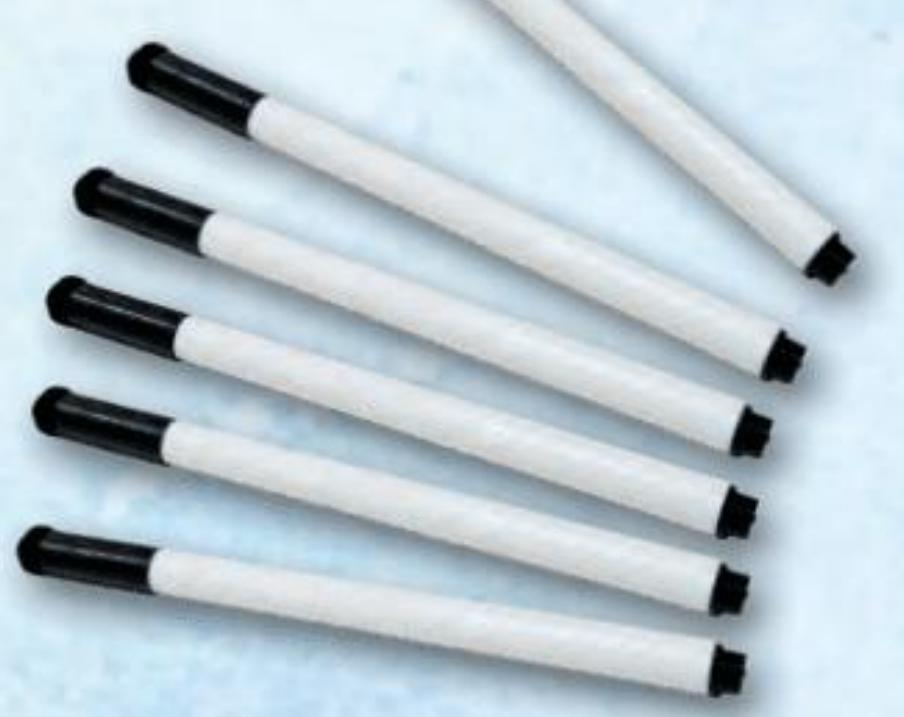
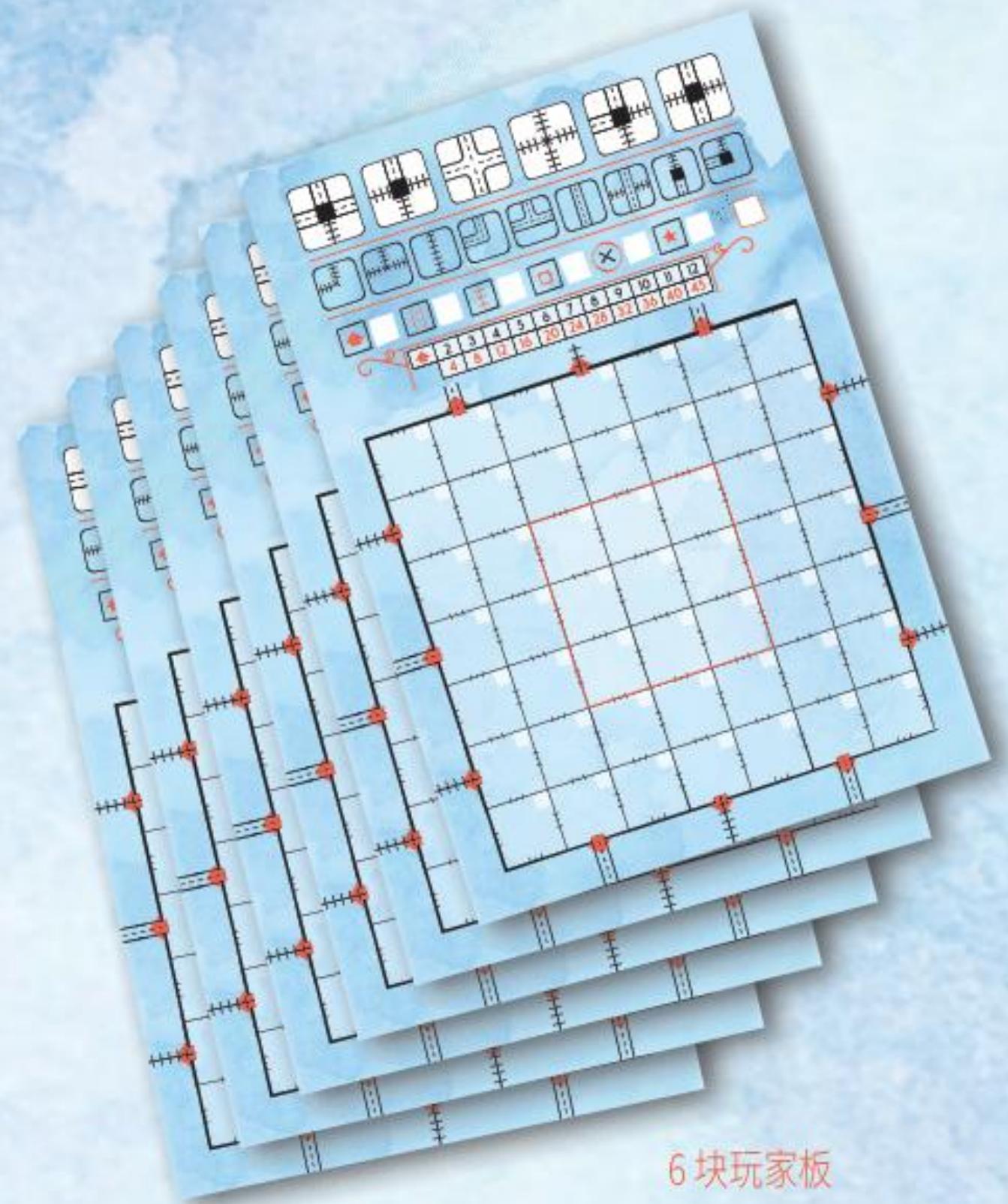
游戏配件
6支马克笔

4 枚路径骰子

2 枚河流骰子

2 枚湖泊骰子
游戏概览
一场千墨交通™游戏包含7个回合, 游戏目标是通过绘画路径的方式创造交通网络, 使得尽可能多的出口▲彼此相连。在同一个交通网络中彼此相连的出口▲越多, 该网络所价值的分数就越高。除此之外, 你的最长的铁路, 最长的公路, 以及被画在你的玩家板中央区域的路径, 都会为你提供额外的奖励分数。
游戏设置
-
每位玩家拿取一块玩家板,并将其放在自己面前。
-
每位玩家拿取一支马克笔。
-
将所有路径骰子放在桌子中央。
-
另外河流和湖泊骰子只会在扩展规则中使用(详见第10页)。

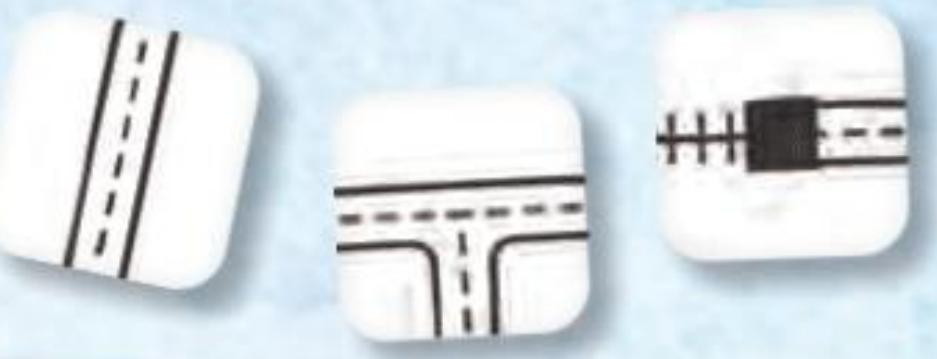
游戏流程
在每个回合开始时,所有路径骰子都会被投掷一次。投骰结果决定了所有玩家在本回合必须绘画的路径都有哪些。在投骰结束后,所有玩家同时开始游戏,将被投出的路径画在自己的玩家板上。
投掷骰子
拿取所有的路径骰子,并将它们投到桌子中央。然后将它们移动到所有玩家都可以轻易看到的地方。
游戏中共有2种路径骰子。
3枚骰子刻有以下6种路径:

笔直的公路
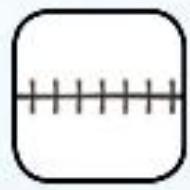
笔直的铁路

转弯的公路
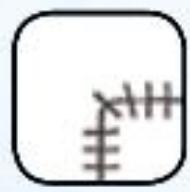
转弯的铁路
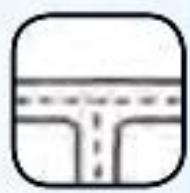
丁字路口的公路
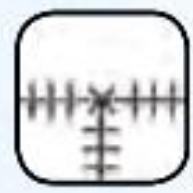
丁字路口的铁路
1枚骰子刻有以下3种路径:

铁路桥
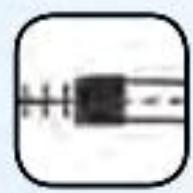
笔直的车站

转弯的车站
注意:车站可以使你的公路路径与铁路路径相连接。铁路桥会使两者互相穿越,而彼此并不产生任何链接。

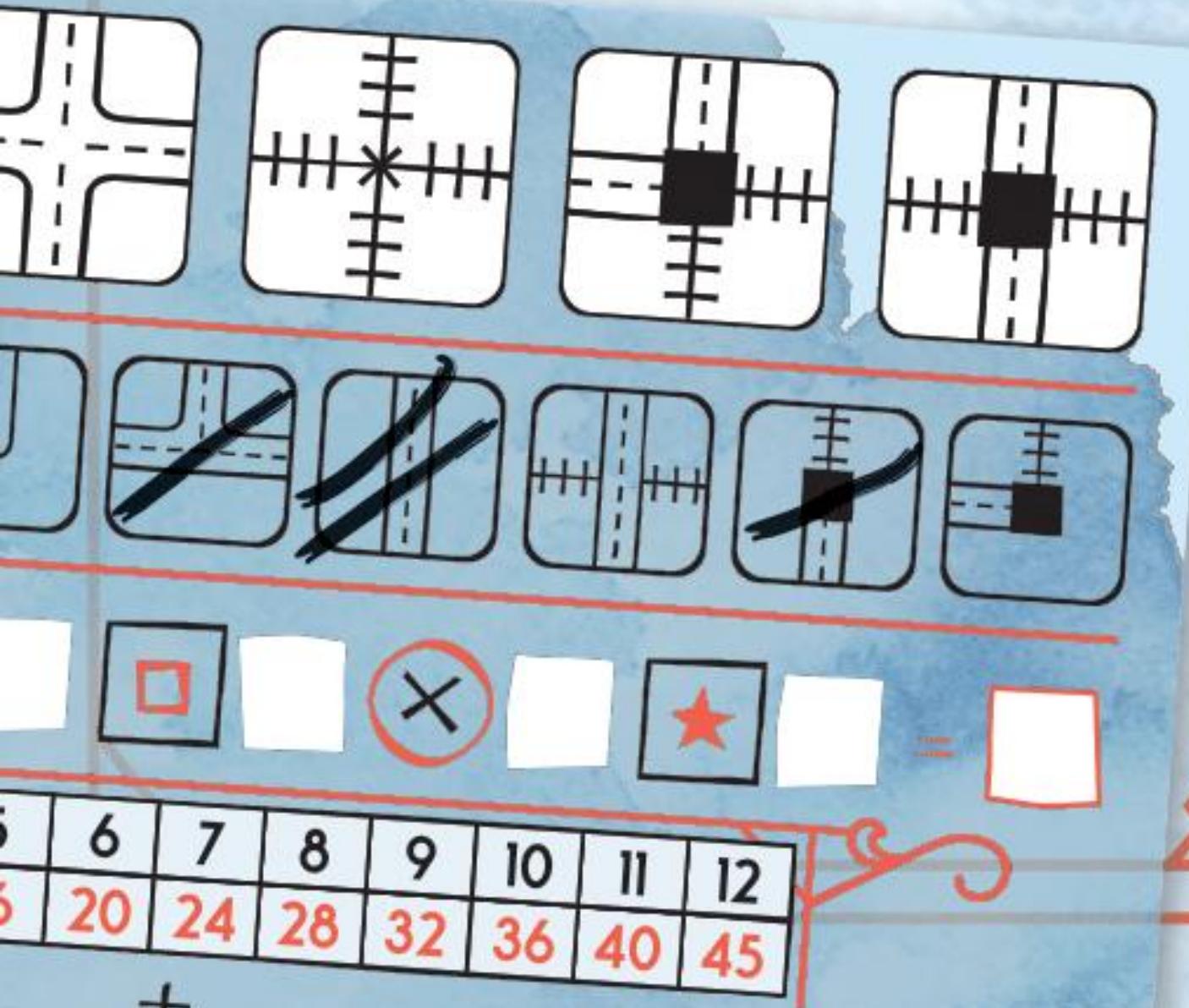
提示:如果你愿意,你可以使用在你的玩家板上的路径骰子参考图,来标记本回合还有哪些路径可用,这样可以使你更轻松地追溯本回合必须绘画的路径。
绘画路径
在投掷骰子后,所有玩家必须同时将投出的路径画在自己的玩家板上。以下有几条绘画规则需要在绘画过程中遵守:
-
每个你画出的路径至少要有一边与一个出口▲或一个之前画好的路径相连接。如果某个路径无法达到这个连接条件,你不能将它画上玩家板。
-
你必须画出每回合所有4枚路径骰子所投出的路径(尽可能画出,并且每个被投出的路径理所应当地只能画一次)。
-
在绘画过程中, 你不可以将一段铁路路径画成与公路直接相连, 反之亦然 (你需要利用车站来做到这件事)。
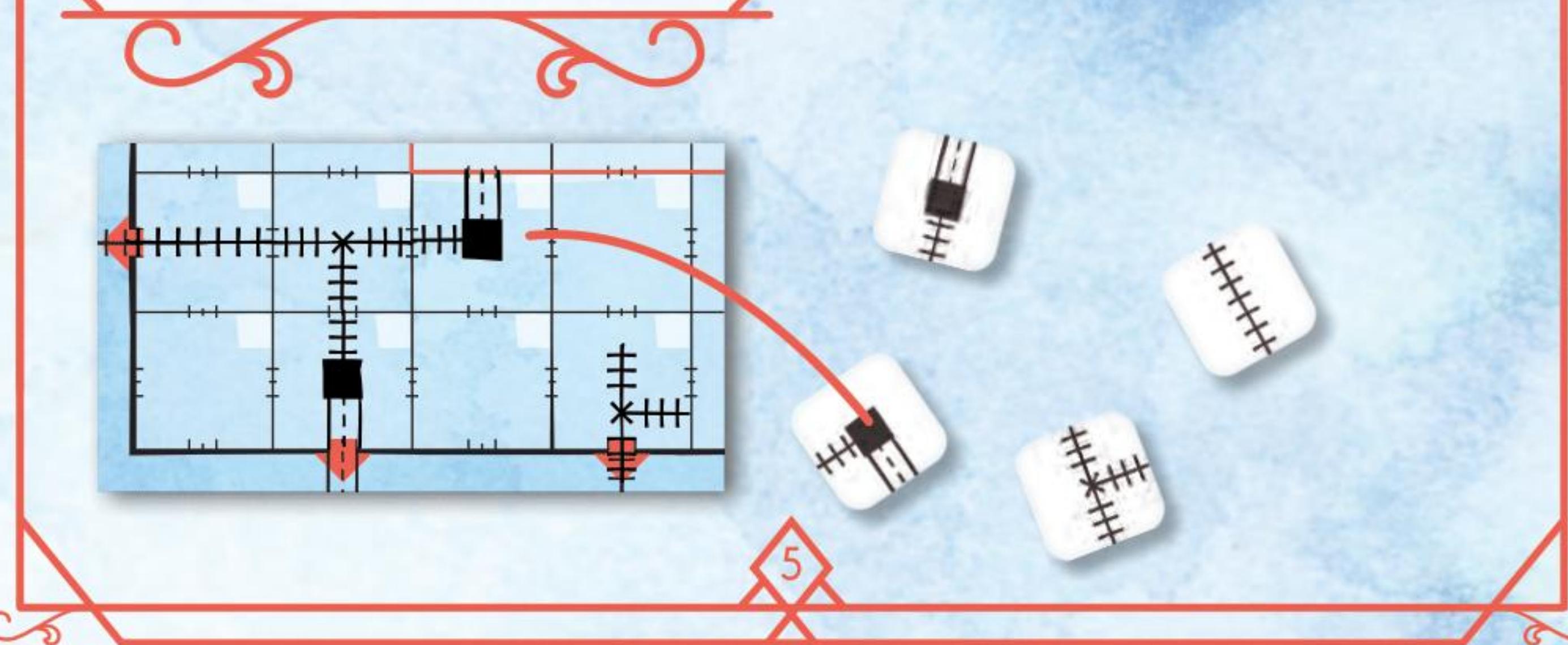
重要: 当你在绘画路径的时候, 你可以自由地旋转和/或翻转在路径骰子上的图案。

使用特殊路径
玩家们还可以使用6个特殊路径,这些不会由骰子投出的特殊路径,可以在玩家板的最上方找到。特殊路径可以让你将不同的交通网络连接到一起和/或让你创造出更大规模的交通网络。
每个回合你可以在所有被投出的路径之外,额外画出一个特殊路径,不过在一次游戏过程中每个特殊路径仅能够使用一次。在你使用过一个特殊路径后,务必在玩家板上将其划除,以便提醒你本次游戏中该特殊路径已经被使用过,无法再次使用了。
同时,在每次游戏中你最多仅可以使用3个特殊路径(同时要记住,每回合只能使用1个)。
游戏回合结束
当所有玩家都画完了所有的可用的路径,当前回合进入结束阶段。
每位玩家必须对格子进行标记,标记的方式是在当前回合绘画过路径的格子右上角的白色方块中,写上当前的回合数。玩家无论何时都不可以擦除之前回合所画的路径。
之后,投掷所有路径骰子并开始下一回合。

要记住:每回合最多用1个特殊路径,每次游戏最多用3个!
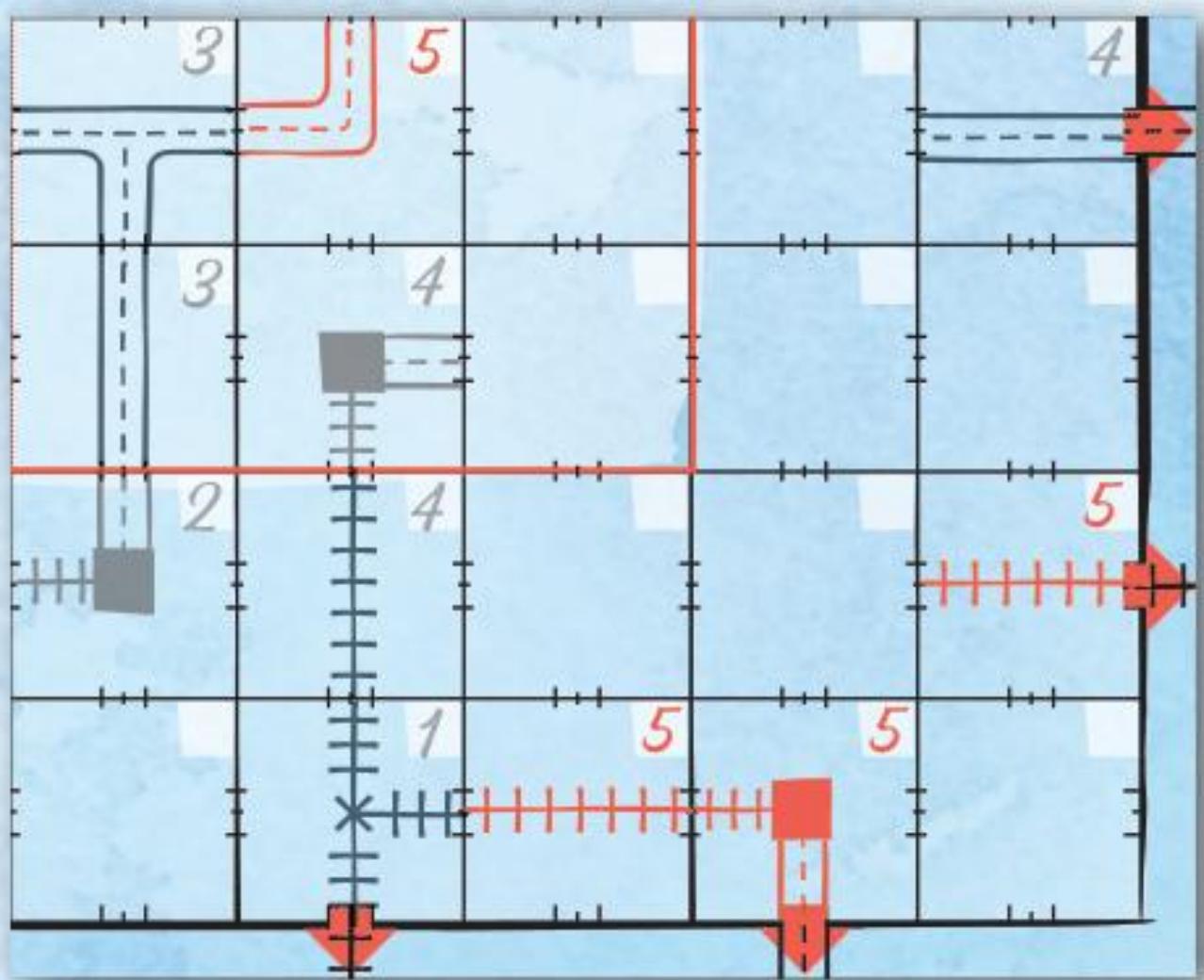
例如:第5回合的结束阶段。
游戏结束
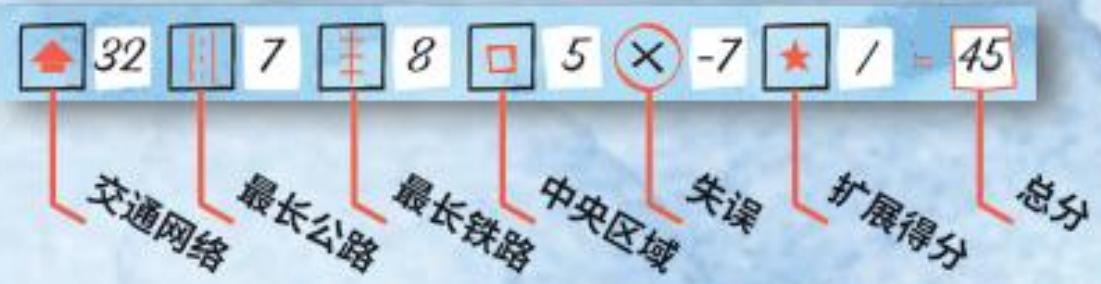
游戏会在第7回合结束后结束。现在是时候统计分数了!每位玩家统计他通过连接出口,通过最长铁路和最长公路,以及通过被绘画的中心区域所获得的分数,并将得分记录在玩家板上的记分表中的指定位置。至于更多的得分细则,详见下一页。
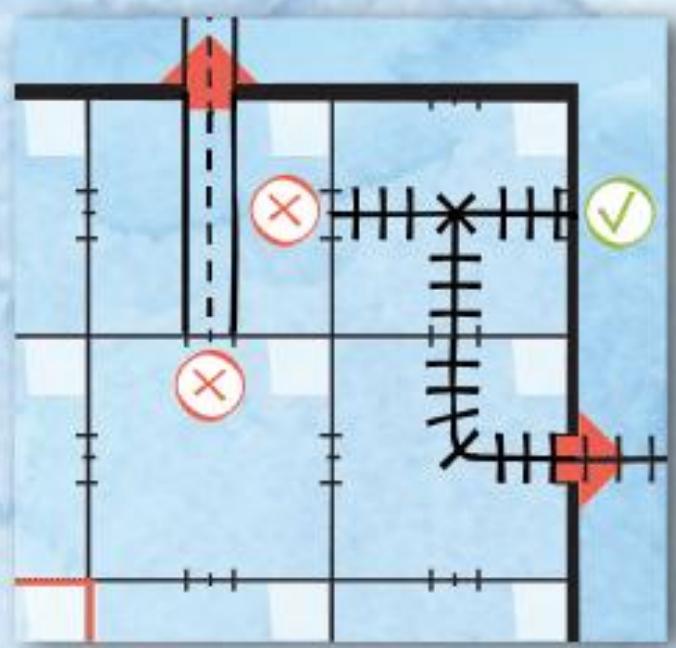
在此之后,各位玩家需要检查自己未完成的道路。每个没有连接任何其他路径或者地图边缘的路径端点都会被统计为一次失误。用这个标志:标识出每一处失误。你会因玩家板上的每一处失误而失去1分。将这些失分记录在得分表的对应位置。
注意:如果你正在进行带有扩展规则★的游戏(详见第10页),将额外得分记录在得分表的扩展规则位置。
最后,将你的所有得分相加(减去失误导致的失分)并将最终得分记录在得分表上。获得最多分数的玩家获得胜利!如果出现平局,则失误较少的玩家获得胜利。如果依然是平局,则共享胜利。

扫描二维码下载打印版的玩家板进行游戏吧!

工作人员
中文翻译:聪哥中文校对:民仔,无名中文美工: 姝姝 中文发行: 山火桌游

© 2019 Horrible Games.
All rights reserved.
CREDITS
Design:
Hjalmar Hach, Lorenzo Silva
Artwork:
Project Manager: Lorenzo Silva
Production Manager: Alessandro Pra', Flavio Mortarino
Rulebook: Alessandro Pra' English Revision: William Niebling www.horrible-games.com
www.cmon.com

CMON EDITION
Publisher:
David Preti
Graphic Design:
Gabriel Burghi
Production:
Patricia Gil (lead), Thiago Aranha, Thiago Gonçalves, Guilherme Goulart, Isadora Leite, Renato Sasdelli, and Bryan Steele
Proofreading:
Danny Renaud, Colin Young, and Jason Koepp
如何统计得分
相连接的出口↑
相连接的出口是千墨交通™游戏最主要的得分方式。在游戏结束时,每一组通过同一个由数个路径组成的交通网络相互连接的出口,根据相连接的出口数量的不同会价值不一样的分数,详见玩家板上交通网络分值表部分。
注意:铁路桥只会使你两个交通网络彼此穿过,并不会创建两个交通网络之间的连接。
注意:你可以利用车站使铁路路径与公路路径彼此相连接。

交通网络分值表

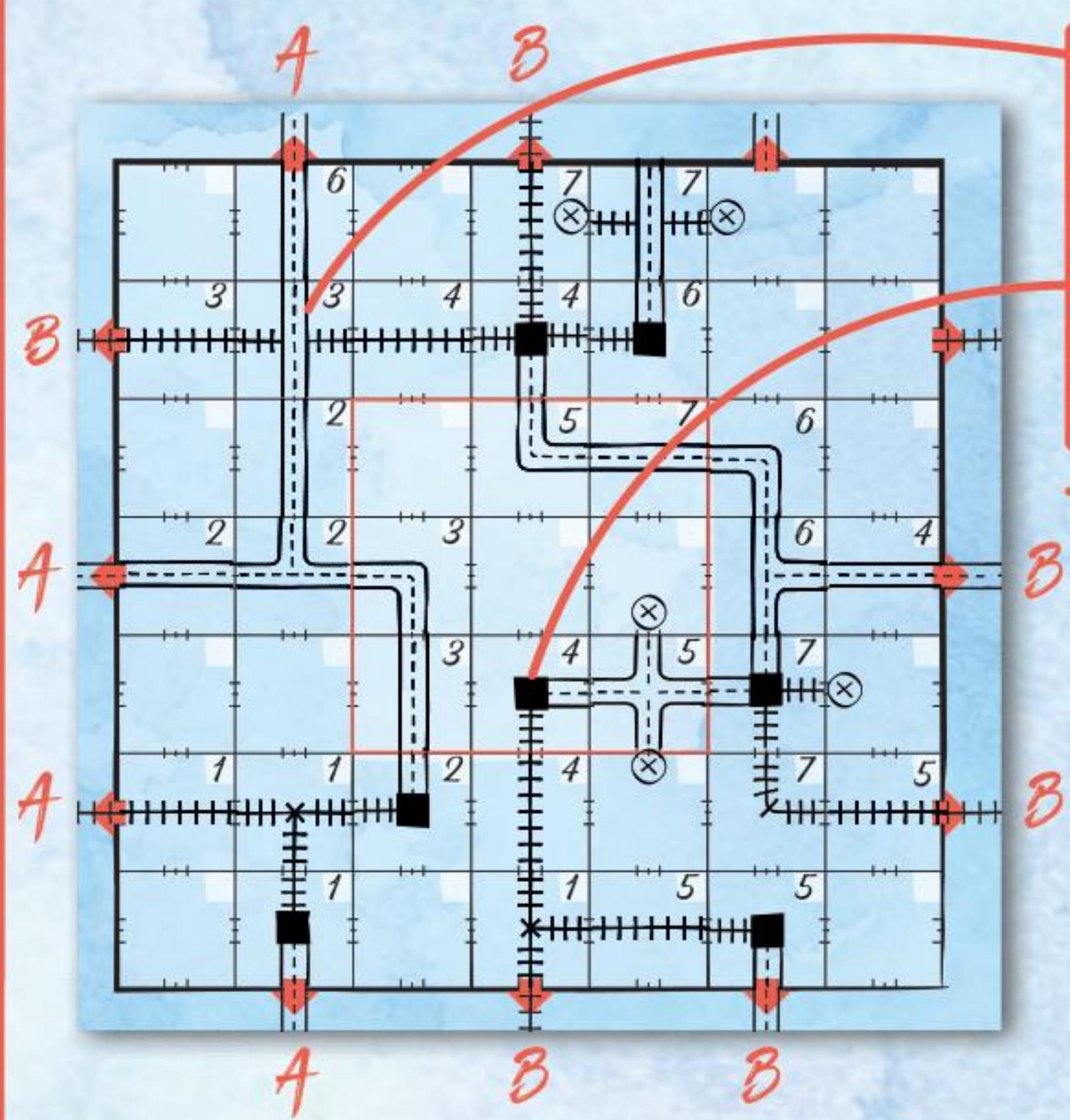
例如:图中的玩家板在游戏结束时有2个交通网络。其中一个(A)一共连接了4个出口,价值12分。另一个(B)连接了6个出口,价值20分。它们共计价值32分的交通网络分数!
奖励得分
当游戏结束统计得分时, 虽然通过相连接的出口 $\uparrow$ 的方式获得的分数是你的最终得分中的主要构成部分, 但是不要低估了奖励分数的重要性, 你可以通过最长公路, 最长铁路, 以及中央区域的方式获得奖励分数。

你的最长公路是指一条画有彼此相连的公路路径的最长的不中断的且彼此相连的空格(排除所有的环路或岔路,仅计算最长空格数),如右图中被标为蓝色的路径。组成你的唯一最长公路部分的每一格都会为你记1分。车站不会使你的最长公路中断。这个例子中展示了一条8格长度的最长公路。

你的最长铁路的定义与最长公路类似,唯一的区别是统计铁路路径而非公路路径,如右图中的被标为红色的部分(价值5分)。

你的中央区域是指玩家板正中央的9格区域。在中央区域中的每一个被绘画有任意图案的格子,都价值1分。

如果你有两条同类的最长路径(有相同的格数), 最终得分中只会统计其中1条。
扩展规则★
当你觉得对千墨交通™游戏的方方面面里里外外都了如指掌时,你可以通过加入游戏盒中所附带的2个可选扩展规则中的1个,为游戏增加新的乐趣。
如果你要进行一次带有扩展规则★的游戏,你需要在每个回合开始时,将独特的扩展骰子与4枚路径骰子一起投掷。除此之外,扩展规则可能会改变游戏需要进行的回合数并且给予玩家一种新的得分方式。
在游戏过程中, 除了很少一部分的改变, 整体游戏规则与常规游戏规则相同, 改变的部分详见后续几页内容。
在游戏结束时, 当你结算你的最终得分时, 记得要统计你通过扩展规则★获得的分数, 并在得分表的对应位置上记录这部分的得分。


河流骰子
6个回合
河流是第三种类型的路径。某种意义上来说是的。不过它们不能用来连接出口,它们可以彼此连接来创造一条河流。河流不能被公路或者铁路直接穿越,除非是河流骰子上桥梁的那一面才允许你这么做。这个附加规则的目标是创造出一条尽可能长的最长河流。当使用河流扩展规则★进行游戏时,在常规游戏规则的基础上使用以下的规则变更:
◇ 游戏只进行6个回合。
在绘画路径时,并不强制玩家一定要画出任何的河流骰子结果(不过你依然需要画出全部4个路径骰子的结果)。
在画河流骰子结果时,并不需要强制连接之前已经画好的路径和/或其他河流。
你不可以将河流路径直接连接到其他种类的路径上(也不可以连接出口)
当检查失误时, 每一个没有链接到任何一段其他河流路径或者玩家板图边缘的河流路径端点都会被视为一个失误。
在游戏结束时, 选择一条你的河流。该河流每流过一格都会为你带来1分。如果该河流的两端都与玩家板边缘相连接, 你获得额外的3分。
例如:小戴创造了2条河流,最长的那条价值7分,但是这条河的两个端点都没有与玩家板边缘相连接。不过
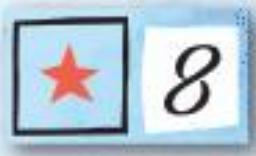
相对较短的那条却价值8分:5分的长度分,加上两端都与玩家板边缘相连接的3分附加分,所以,她选择较短的这条河流进行计分。
河流路径的骰面

桥梁的骰面

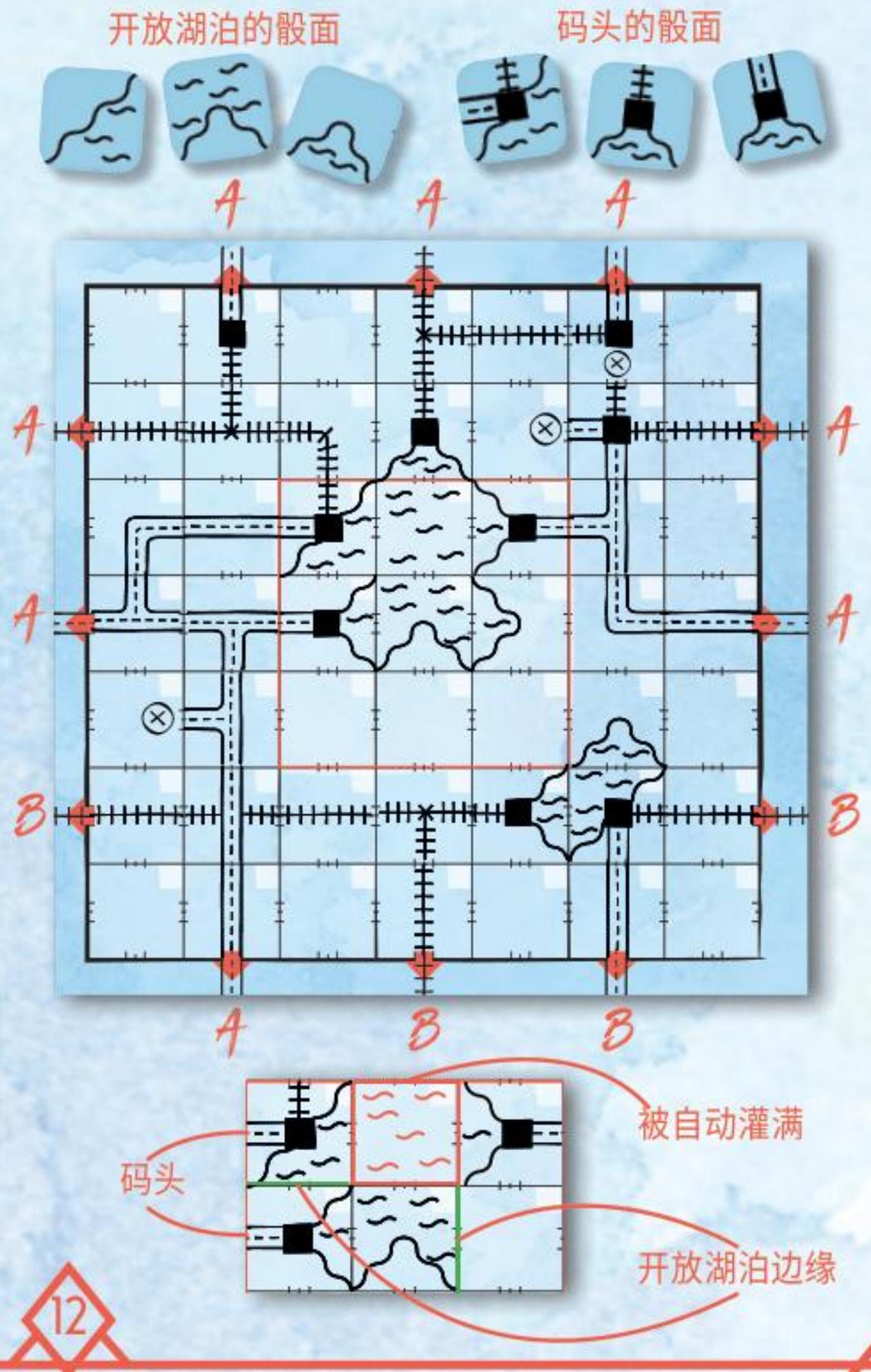
湖泊有两大好处。其一是它可以使你通过将路径与湖泊骰子上码头的面相连接的方式,创造出更大规模的交通网络。其二是你可以通过玩家板上的最小湖泊获得额外分数。当使用湖泊扩展规则★进行游戏时,在常规游戏规则的基础上使用以下的规则变更:
◇ 游戏只进行6个回合。
在绘画路径时,并不强制玩家一定要画出任何的湖泊骰子结果(不过你依然需要画出全部4个路径骰子的结果)。
在画湖泊骰子结果时,并不需要强制连接之前已经画好的路径和/或其他湖泊。
如果一个空格有3条边与湖泊的开放边缘相毗邻, 它必须立刻被水完全填满。
◇ 在游戏结束时, 湖泊的开放边缘并不会被视为失误。
◇ 与同一个湖泊相连接的不同交通网络(通过码头)也被视为彼此相互连接。
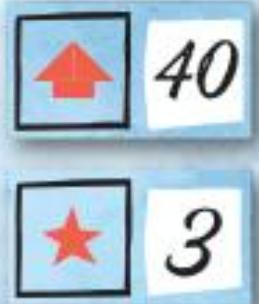
◇ 在游戏结束时,你的最小湖泊所占用的每一格都会为你带来1分
例如:如果不是小哈创造了一个更小的湖面,相对较大的湖泊价值本可以达到7分,但现在他只能拿到手3分。不过与此同时,较小的湖泊可以让他的两个小交通网络连接成了一个连接4个出口的交通网络,价值12分!
RRI_BLU_Rulebook_ENG_v05_light.md12.8 KB
HJALMAR HACH & LORENZO SILVA
RAILROAD ink

GAME OVERVIEW
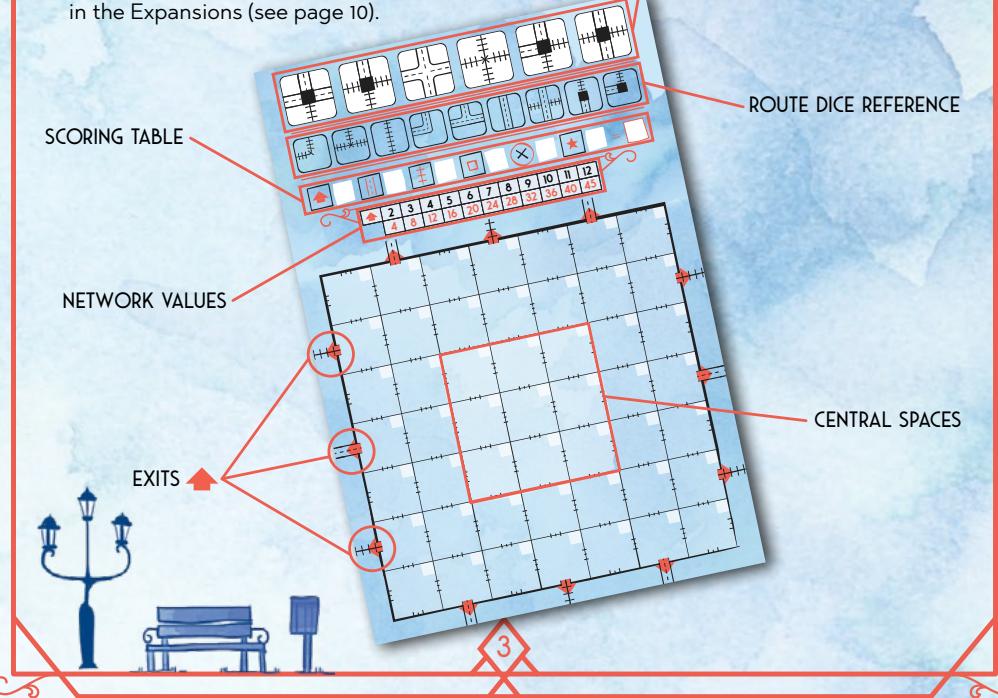
A game of Railroad Ink™ is played over 7 rounds. The goal is to connect as many Exits to each other as possible by drawing Routes that can create Networks. The more Exits you connect to the same Network, the more points it will be worth. Bonus points can be earned for your Longest Railway, your Longest Highway, and by drawing on the Central Spaces of your Board.
SETOP
-
Each player takes a Board and places it in front of them.
-
Each player also takes a marker.
-
Place the Route dice in the middle of the table.
-
The River and Lake dice are only used in the Expansions (see page 10).
GAME ROUNDS
At the beginning of each round, the Route dice are rolled once. The results of the roll will determine which Routes all players must draw that round. After the roll, al players play simultaneously, drawing the Routes rolled on their own boards.
ROLLING DICE
Take the Route dice and roll them in the middle of the table. Place the dice so they are easily visible to all players.
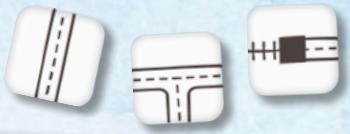

There are 2 kinds of Route dice.
3 dice show these 6 kinds of Routes:

Straight Highway


Straight Railway
Curved Highway

Curved Railway

T-junction Highway

T-junction Railway
1 die shows these 3 kinds of Routes:

Overpass

Straight Station

Curved Station
Note: Stations allow you to connect a Railway Route to a Highway Route. Overpasses allow the two to cross without being connected to each other.
Hint: To more easily keep track of the Routes you have to draw, you can use the dice reference on your board to mark the available Routes, if you so desire.
DRAWING ROUTES
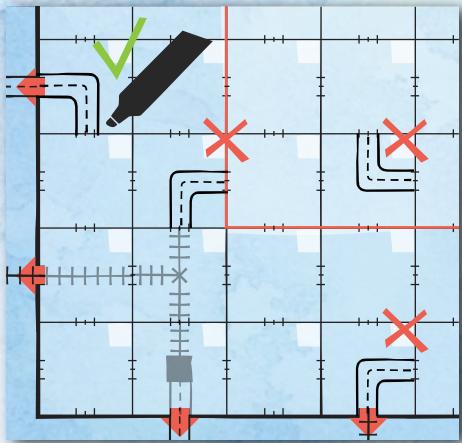
After the dice roll, all players must draw the Routes on their boards at the same time. There are a few drawing rules you need to follow:
-
Each Route you draw must be connected by at least one side to either one of the Exitsor a preexisting Route. If you can't connect a Route, you can't draw it.
-
You must draw all 4 Routes shown on the dice each round (if possible, and each Route showing can only be drawn once, of course).
-
You can't draw Routes in a way that directly connects Railways to Highways or vice versa (you need a Station to do that).
Important: When drawing Routes, you can freely rotate and/or reverse the pattern you see on the die.
USING SPECIAL ROUTES
Each player can also use 6 Special Routes, displayed in the top part of the boards, that do not appear on the Route dice. These Routes may allow you to connect different Networks together and/or make bigger Networks.
You may draw a Special Route once per round, in addition to the Routes shown on the Route dice, but you may use each Special Route only once per game. After you use a Special Route, you must mark it off on your board as a reminder that you can't use it again.
Also, you can only use up to 3 Special Routes during the entire game (and remember, only 1 per round).
END OF THE ROUND
Once all the players have drawn all of the available Routes, the round ends.
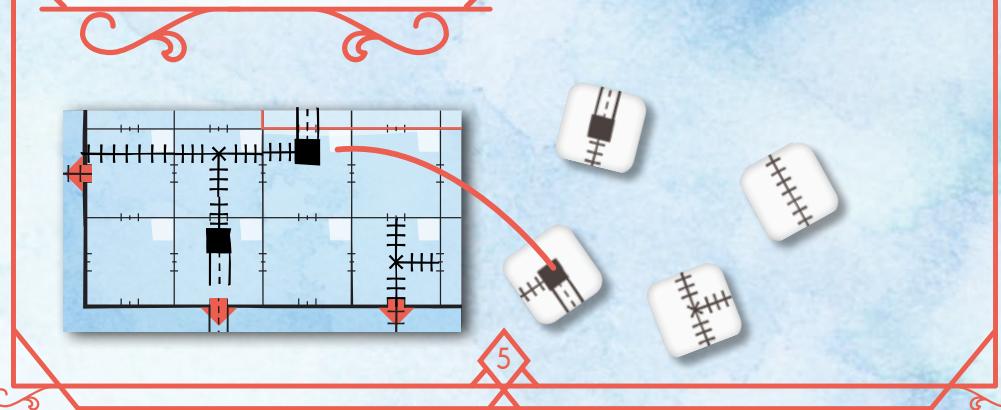
Each player must mark the spaces where they drew Routes this round by writing the number of the current round in the white boxes of each space they drew on. You can never erase the Routes you drew in a previous round.
After that, roll the Route Dice to start the next round.
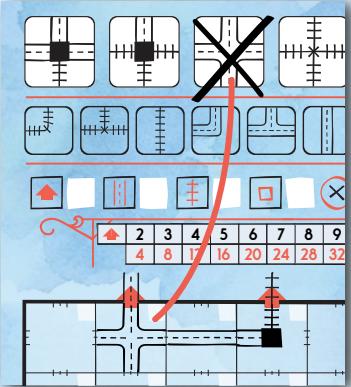
Remember: Only 1 Special Route per round, and only up to 3 per game!

Example: The end of the 5th round.
END OF THE GAME
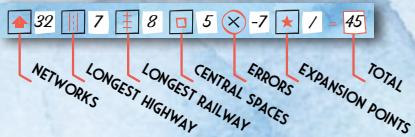
The game ends after the 7th round. Now it's time to count your score! Each player counts the points they earned for their connected Exits, their Longest Railway and Longest Highway, and the Central Spaces they drew on, marking their points on the designated spaces of the Scoring Table on their boards. For more details, see the next page.
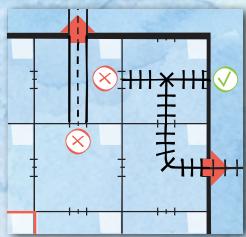
Then, each player must check for incomplete Routes. Each end of a Route that does not connect with any other Route or the outer edge of the board counts as an Error. Mark each one of these Errors with this symbol: . You lose 1 point for each Error on your board. Mark these penalty points on the matching space of your Scoring Table.
Note: If you are playing with an Expansion (see page 10), mark any additional points on the expansion space of your scoring board.
Finally, add up all the points you earned (subtracting any points from Errors) and write your total score on your Scoring Table. The player with the most points wins! In case of a tie, the winner is the player with the fewest Error marks on their board. If they're still tied, the victory is shared.

Scan the QR code to download a print-and-play game board!

© 2018 Horrible Games. All rights reserved.
CREDITS
Design:
Hjalmar Hach, Lorenzo Silva
Artwork:
Marta Tranquilli
Graphic Design:
Rita Ottolini, Noa Vassalli
Project Manager:
Lorenzo Silva
Production Manager:
Alessandro Pra'
Rulebook:
Alessandro Pra'
English Revision:
William Niebling
PARTNEREDITION
Publisher:
Graphic Design:
Production:
Proofreading:
www.horrible-games.com

HOW TO SCORE POINTS
CONNECTING EXITS
Connecting Exits is the main way to score points in Railroad Ink™. At the end of the game, each set of Exits that are connected to each other via the same Network of Routes is worth a number of points determined by the number of Exits connected together, as shown on the Network Values on your Board.

Note: Overpasses only allow you to make two of your Networks cross each other, but they don't create a connection between the two.
Note: You can use Stations to connect Railway Routes and Highway Routes to each other.

Network Values

Example: Dagmar's board at the end of the game has 2 Networks. One (A) connects a total of 4 Exits and is worth 12 points. The other (B) connects 6 Exits and is worth 20 points. They score 32 points for their Networks!
BONUS POINTS
While the points you get for connecting Exits may end up being the bulk of your score when you add up points at the end of the game, do not underestimate the importance of the bonus points you can earn from your Longest Highway, Longest Railway, and Central Spaces.
Your Longest Highway is streak of adjacent spaces where you drew Highway Routes that are connected to each other (not counting any loops or branches), such as the route marked in blue to the right. You score 1 point for each space that makes up your single longest Highway branch. Stations do not interrupt your Highway. This example show a Longest Highway of 8 spaces.
佳 Your Londet Railway is the Longest Highway,, only counting Railway Routes instead of Highway Routes, like the one marked in red to the right (worth 5 points).

Your Ce tnal Spaces ore the board. You score 1 point for each Central Space you drew anything on.
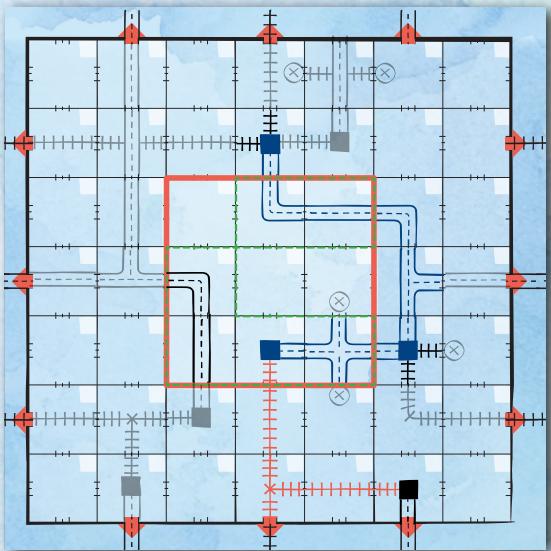
If you have two Longest Routes (with the same number of spaces), only 1 counts towards your final score.
EXPANSIONS★
Once you feel confident enough with the ins and outs of Railroad Ink™m, you can spice things up by using 1 of the 2 optional Expansions included in this box.
If you play with an expansion , you must roll the respective Expansion dice along with the 4 Route dice at the beginning of each round. In addition, the Expansion may change the number of rounds you must play and give you new ways to score points.
During the game, follow the same rules as the regular game with a few changes, as described on the following pages.
At the end of the game, when you add up your score, remember to count the points you earned from the Expansion you're using, and mark them in the designated space of your scoring table.
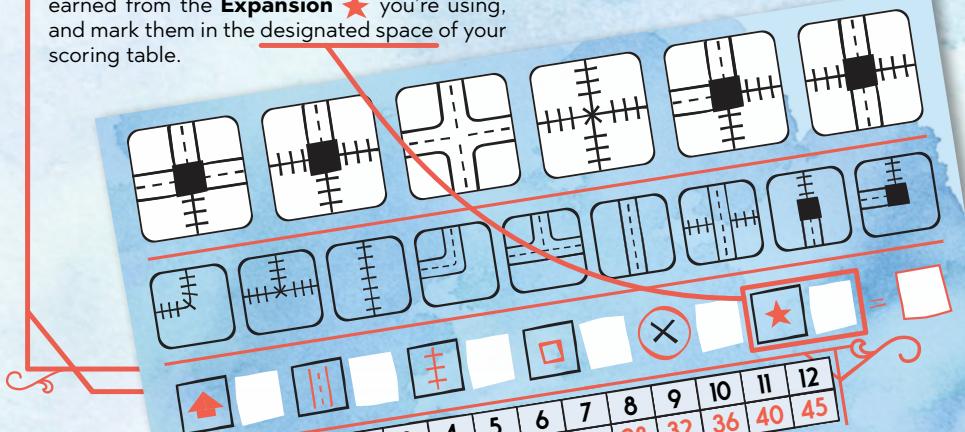
BRIDGE FACES
Rivers are a third kind of Route. Sort of. They can't be used to connect Exits, but they can be connected to each other to create a River. Rivers can't be crossed by Highways or Railways, unless a Bridge face on a River die allows you to do so. The additional goal is to make the Longest River possible. When playing with the River Expansion , apply these changes to the regular game rules:
The game only lasts 6 rounds.
When you draw Routes, you do not have to draw any of the River dice if you don't want to (you still have to use all 4 Route dice).
The Rivers you draw don't have to be connected to preexisting Routes and/or other Rivers.
◇ You can't connect River Routes with other kinds of Routes (nor Exits ).
When checking for Errors, each end of a River that does not connect to another River or the outer edge of the Board counts as an Error.
At the end of the game, choose 1 of your Rivers. You gain 1 point for each space the River runs through. If both ends of the River are connected to the outer edge of the board, you get 3 additional points.
Example: Diana created 2 River Routes. The longest would be worth 7 points, but its ends are not connected to the edges of the Board. Instead, the shortest one is worth 8 points: 5 for its length plus 3 extra points for having both ends connected to the edges of the Board, so she chooses to score points for that River.


RIVER ROUTE FACES


Lakes have two advantages. First of all, they allow you to create bigger Networks by connecting your Routes to a Lake with the Pier faces on the Lake dice. You also score additional points for the Smallest Lake on your Board. When playing with the Lake expansion , apply these changes to the regular game rules: OPEN IAKE FACES PIER FACES
The game only lasts for 6 rounds.
When you draw Routes, you do not have to draw any of the Lake dice, if you don't want to (you still have to use all 4 Route dice).
The Lakes you draw don't need to be connected to pre-existing Routes and/or other Lakes.
If a space has 3 sides adjacent to the open sides of Lakes, it must be completely filled with water immediately.
Open Lake sides do not count as Errors at the end of the game.
Networks connected to the same Lake (by Piers) are also connected to each other.
At the end of the game, you get 1 point for each space occupied by your Smallest Lake.
Example: The bigger Lake would be worth 7 points, but since Harry also made a smaller one, he only gets 3 points. At the same time, the Smallest Lake allowed him to join two small Networks into a single one with 4 Exits, which is worth 12 points!

Texts are community-compiled or publicly released by publishers; copyright remains with the original authors. For personal reference only.