
Remember Our Trip
At a glance
Rules, cards and Q&A (Chinese)
The rules, card data and player questions for this game are written in Chinese. Open the Chinese page to read them.
Where to find full rules
Full rules and card lookup are available in the cunlema app at cunlema.cn — pick this game and ask about any rule, card or turn you are unsure about.
Related games
Rulebook text (Markdown)
This game has 1 rulebook Markdown file(s) in our library; 1 rendered inline below — expand to read or download.
rot_en.md40.2 KB
REMEMBER OUR TRIP
Author : Saashi, Daryl Chow Illustration : Takako Takarai Graphic design : Saashi & Saashi Proofreader : HAL99 Translation : Daryl Chow

For 2-4 Players Playtime: 30 min. For ages 10+
“Remember Our Trip” is a board game in which players will recreate a map of a city they visited together. After returning to your own country, you the players have gotten together and are trying to recall the map of either Kyoto or Singapore. You will need to piece together the scenery of the map using fragments of your memories. You will earn bonus points if your memory matches that of the main board and other players. If you are able to recollect famous tourist destinations, you will help everyone have a clearer image of your journey together. When the map of our memories is formed, who can say that they' ve remembered our trip the most?
Overview of the Game
“Remember Our Trip” is a puzzle strategy board game for 2 to 4 players. Players try to recall their shared travel journey by placing image fragments on their image boards. An image fragment represents a memory of a location that you visited while travelling together. The objective of the game is to be the player who best recreates the scenery and who best contributes to the creation of a shared map of their memories. Players will score points during the game by recreating as well as matching locations on a common map, recalling places such as sightseeing spots, hotels, parks, shops and restaurants. Players also gain bonus points from objective cards and matching travel photos, and losing points for image fragments that couldn't be fit into their memories. The player with the most points will be the winner!

Back: Singapore

Front: Kyoto
(1 each in Blue/Red/Green/Yellow)
Front: Kyoto
1 Common Map Board

Back: Singapore
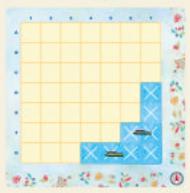
4 Image Boards
(1 each in Blue/Red/Green/Yellow)
Front: Kyoto

Back: Singapore
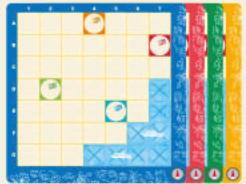
4 Summary Boards
120 Image Tokens
24 Sightseeing Tokens
24 Hotel Tokens

Front: Kyoto
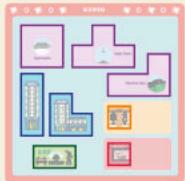
1 Scoring Board

24 Park Tokens (8 Statue, 8 Bench, 8 Fountain)
Front

1 Action Board
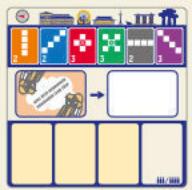
1 Location Tile Board
Back
Back: Singapore
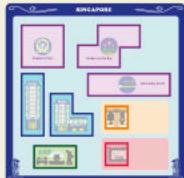

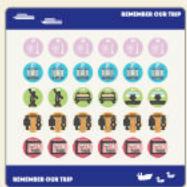
24 Restaurant Tokens
Back Front
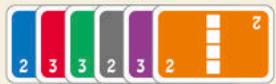
12 Memory Cards (2 each in Blue/Red/Green/ Grey/Purple/Orange)
Front
Front
Back
Front Kyoto
Back
5 Standard Objective Cards
5 Advanced Objective Cards
Back Singapore

· 1 Cloth Bag


· 5 Modifier Strips
· 6 Monument Stands
· 6 Sightseeing Monuments (1 each of 6 types)

· 1 Wooden Start Player Marker
· 4 Wooden Scoring Markers (1 each in Blue/Red/Green/Yellow)
· 2 Rulebooks (German/ English)
39 Location Tiles

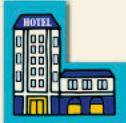
4 Hotel Tiles (2 each of 2 types)
12 Shop Tiles

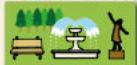
6 Park Tiles

[Example for a 4 player game】
Game Setup
The fronts of the Common Map board, Location Tile board, Image boards, and Summary boards are for the Kyoto map and the backs are for the Singapore map. Players decide which map to play before starting the game.
In addition to the standard rules, this game has optional rules that you can select to customize your game experience.
The following rules are the standard rules. (See page 14 for details on optional rules)
① Place all the round Image tokens that match the number of players into the cloth bag.
* When playing with 2 players, refer to the Token table printed on the back of the Action board and remove the corresponding 30 tokens. Return
Number of Image tokens to use:
| 3-4 Players | 2 Players |
| 120 tokens | 90 tokens |
these back to the box.
② Place the Common Map board in the centre of the table with the chosen city map facing upwards.
③ Each player receives one Image board and places the side up corresponding to the Common map board. Rotate their Image boards such that the Compass icons on their boards match the direction of the Compass icon on the Common map board.
④ Each player receives a Summary board of the same colour as their Image board and places it with the corresponding side facing up.
⑤ Place the Location tile board next to the Image boards with the side to be used this game facing up. (Refer to page 4 for Location tile board setup details)


*There is a compass icon on the Common map board, Action board and Image boards, all should be pointing in the same direction.
⑥Place the Scoring board beside the Image boards. Place a Scoring marker of each player's Summary board colour on the 0 space on the Scoring board.
⑦Shuffle the Standard Objective cards well under the table. Choose one at random and place it in the card frame of the Scoring board with the corresponding side facing up. The remaining cards are not used in the game, so you can return them to the box. (See page 13 for card details)
⑧Place the Action board beside the Image boards. Rotate the compass icon on the board so that it faces the same direction as the Common map board.
⑨Shuffle the 12 Memory
cards well into a deck. This is called the deck. Place the deck on the space meant for it on the Action board.
Location tile Setup
Place the Location tiles used for the game onto the Location tile board.
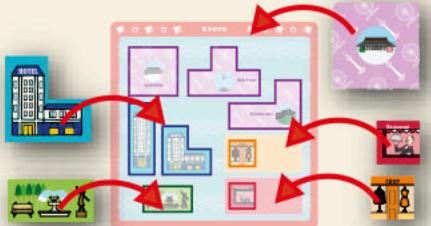
Hotel tiles
Place Hotel tiles (2 types of 2 each) in the place with the corresponding illustrations. Lay tiles of the same shape on top of each other.
Park tiles (Fountain, Bench, Statue)
Place Park tiles (3 types of 2 each) in the place with the corresponding illustrations. Lay tiles of the same shape on top of each other.
Shop tiles, Restaurant tiles
Place Shop and Restaurant tiles (2 types of 12 each) in the spaces with the corresponding illustrations. Pile up tiles of the same type with each other.
Sightseeing tiles
Only 3 Sightseeing tile shapes will be used for either the Kyoto map or the Singapore map. Place the tile in the space with the corresponding illustrations. The remaining Sightseeing tiles are not used in the game, so return them to the box.
For Kyoto map

Daytime Background
* The Square tile is used for both maps, and has a corresponding illustration on the front and back.
For Singapore map

Night Sky Background
Sightseeing Monuments
Sightseeing monuments are used in combination with a plastic Monument stand. Place the three Sightseeing monuments corresponding to the Sightseeing tiles next to the Location tile board.
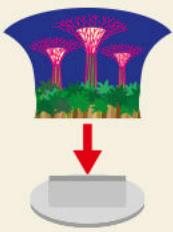
Flow of the Game
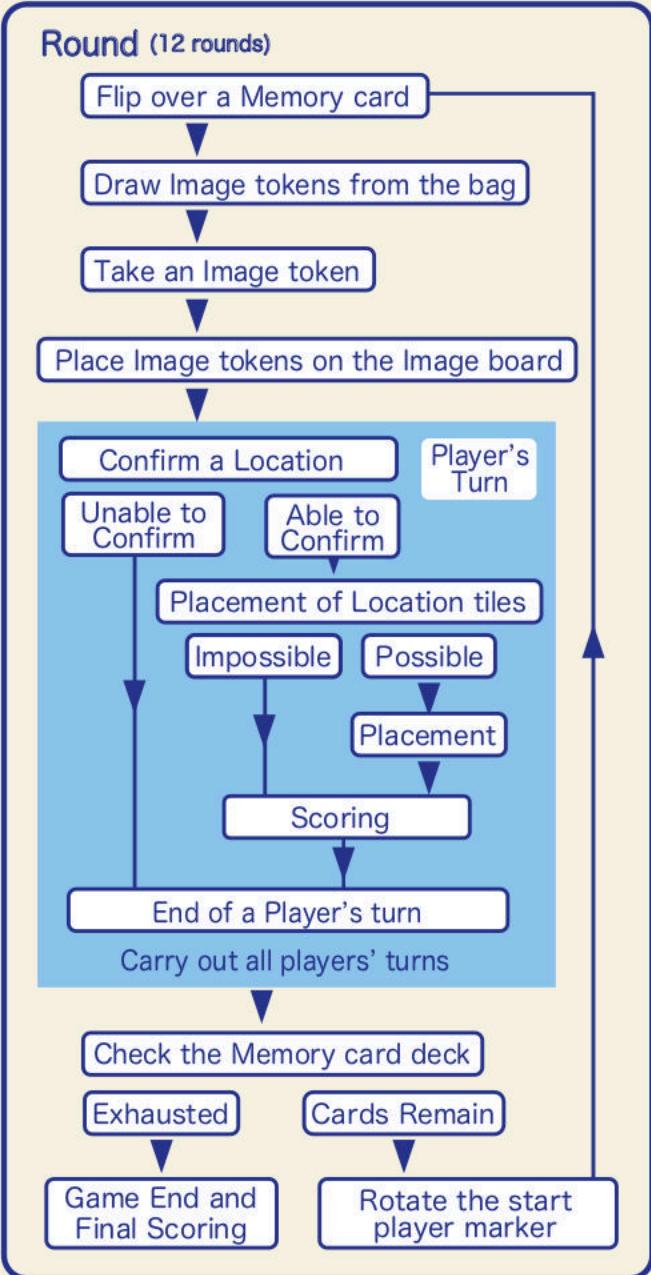
The game consists of 12 rounds. In each round, first flip over the Memory card from the deck, draw the number of Image tokens from the cloth bag and place them on the Action board.
Players pick up Image tokens in player order and place them on their Image board. When a location is confirmed, you can place tiles on the Common map board to gain points. This is the main structure of a turn. After that, the turn moves to the player on the left.
After all players have finished their turn, if there are any Memory cards remaining in the deck, the game moves to the next round. If the deck is exhausted, the game ends and the final score calculation starts.
Determining the Start Player
Decide on a start player. You are recommended to choose the person who most recently came back from an overseas trip. This player is the start player of the first round and takes the Start player marker and places it on the white circle space on their Summary board.

Flow of a Round
1. Flip over a Memory card
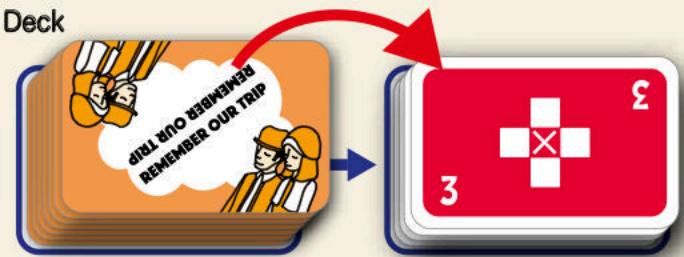
The start player flips the top card of the Memory card deck on the top of the Action board and places it face up in the adjacent stipulated space. If there is already a Memory card face up, place it on top of that card.
2. Draw Image tokens from the bag
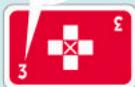
Memory cards contain both the number of tiles as well as the Memory formation shape. The start player will place a set of tokens in each frame of the Action board. The number on each card tells you how many Image tokens to draw and place into the frames.
Place tokens in all 4 frames when playing with 4 players or 3 players. When playing with only 2 players, only place Image tokens in 3 frames.
Image tokens have both a front and a back, and when placing tokens into Image boards, all the Image tokens have to be first placed face up.
* There are numbers on the back of the tile (the face-down side).
Placing Image tokens on the Action board

(Example) The red card is on display this round. The start player places three image tokens per frame on the Action board according to the number “3” on the card.
3. Take a set of Image tokens
In order from the start player, each player chooses one frame (set) of Image tokens. Take all the Image tokens in the selected frame and place them in your hand.
· 3 players / 2 players
After all players have finished taking their Image tokens, one frame of Image tokens will remain if you are playing a 3 player or 2 player game. Remove these tokens and return them to the box. These tokens will not be returned to the cloth bag.
4. Image Board placement
Players place their Image tokens on their Image board. The Image board is separated by square spaces. (Circular frames are in the squares for ease of placing tokens.)

During the round, all players will place their Image tokens onto spaces on their Image board according to the Memory formations (see figure below) stated on the Memory card.
How to place Image Tokens
Players place Image tokens face-up in empty spaces on their Image board.
If the spaces are empty, you may start placing the tokens in any order. All the Image tokens that you are placing must be placed according to the Memory formation shape starting from that space. Image tokens that cannot be placed will be counted for negative points at the end of the game.
There are 6 types of Memory formations.
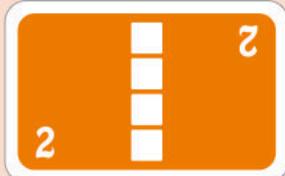
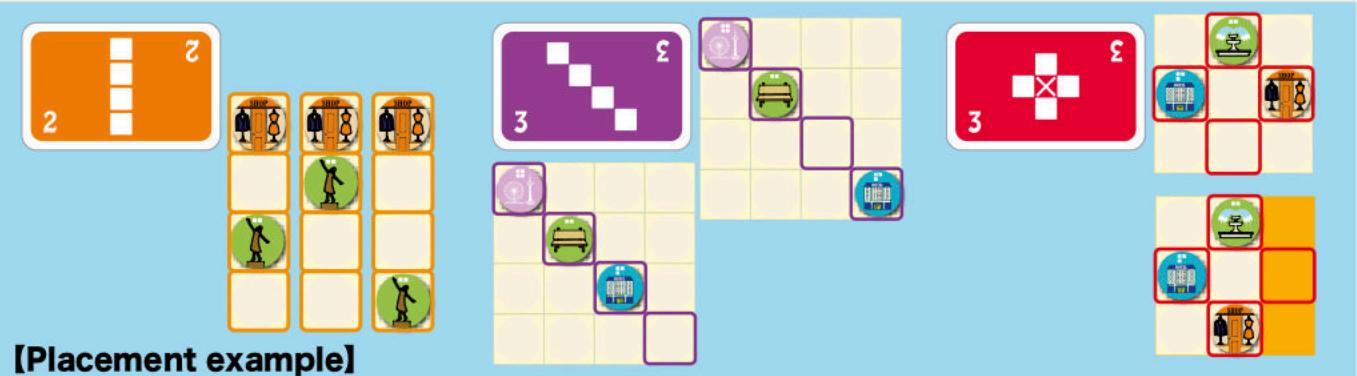
Place 2 Image tokens in the range of 4 vertical spaces. (Image tokens do not have to be adjacent)
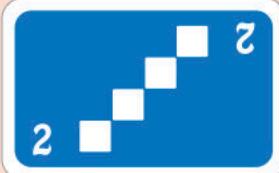
Place 2 Image tokens in the range of 4 diagonal spaces slanting upwards. (Image tokens do not need to be adjacent in sequence)
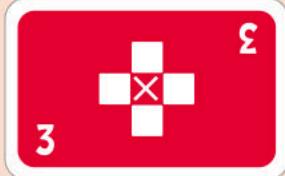
Place 3 Image tokens in a cross of 4 spaces. (An Image token cannot be placed in the centre space)
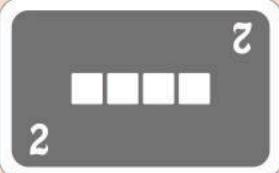
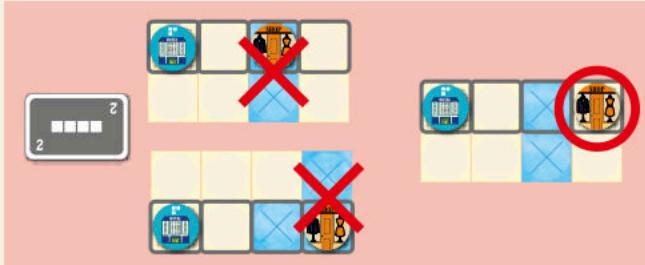
Place 2 Image tokens in the range of 4 horizontal spaces. (Image tokens do not have to be adjacent)

Place 3 Image tokens in the range of 4 diagonal spaces slanting downwards. (Image tokens do not need to be adjacent in sequence)
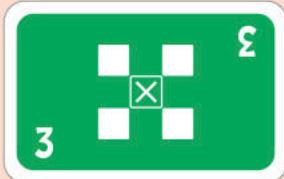
Place 3 Image tokens in an X of 4 spaces. (An Image token cannot be placed in the centre space)
About the direction of the compass
The Memory formation on the Memory card is oriented to the Image board of each player through the compass icon on the Action board. Players place their Image tokens according to the Memory formation shape on the Action board at the angle seen from their own Image board.
How to place over existing Image Tokens
If there are Image tokens that were previously placed in previous rounds, and if these tokens are face-up, you may still place your new Image tokens there.
Select either the already placed token or the token you are trying to place, and place it in the corresponding space. Place the remaining unchosen token in the “Mistaken Memories” area on your Summary board. These may be worth negative points at the end of the game.
If the Memory card is gray, Player 1 and Player 2 will place their Image tokens in the formation shown in the illustration.

Illegal Spaces
River and Sea
The blue spaces on the Image board are the river and the sea. Image tokens cannot be placed in any blue space. However, they can be placed across rivers.
Outside the Image board
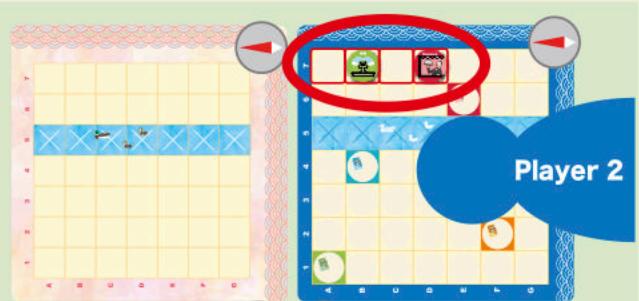
Image tokens cannot be placed outside the frame of the Image board.

Spaces occupied by face-down tokens
A new Image token cannot be placed on top of an Image token that has been turned face-down (by confirming a location, described later).
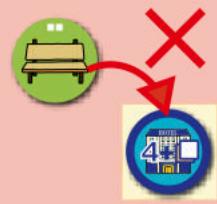
If a player is forced to place an Image token in a space corresponding to the above three, or chooses to place it in those spaces at his own discretion, the player will discard the Image token to the Summary board, to the area labelled 'Mistaken Memories'. These will count for negative points at the end of the game.
5. Confirm a Location
As Image tokens are placed next to each other vertically or horizontally, they may be confirmed' as a location memory when they reach the specified number for that token type. The player who confirms a location during their turn will score points. If players choose not to confirm a location on their turn after placing Image tokens, their turn ends and it is the turn to the player on their left.
When the specified number of Image tokens is reached, the player decides whether to confirm those Image tokens.
· The image tokens to be confirmed must all be adjacent vertically or horizontally. Diagonals are not considered adjacent.
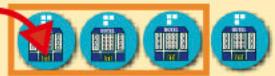
· To confirm a location, the target must contain at least one Image token that was newly placed this turn. If more than the specified number of Image tokens are adjacent, the player has to specify the tokens to be confirmed. The specified tokens must include at least one Image token placed this turn. (Example 1)
· The direction in which the Image token is placed does not matter as long as the specified number of tokens is satisfied. (It can be both portrait or landscape)
· The Image tokens, once confirmed, will all be turned face-down. (See page 11 for details on scoring)

Turn the Image tokens over when confirming a location
• If you decide not to confirm a location, the tokens remain in the configuration and you may confirm a location in a following round, as long as at least 1 Image token is placed in that turn.
Location Specific Requirements
Park tokens (Fountain, Bench, Statue) 2 required to confirm
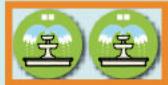

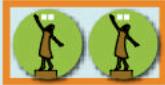
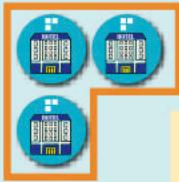
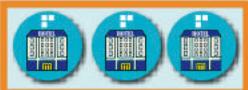
Hotel tokens 3 required to confirm
Sightseeing tokens 4 required to confirm
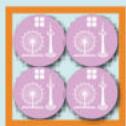
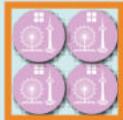
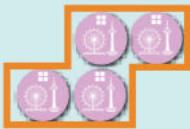
Sightseeing locations all require 4 tokens. However, the shapes that can be confirmed is different on both the Kyoto map and the Singapore map. You may only confirm the shapes present on the map that you are playing.
Shapes that can be confirmed on the Kyoto map


Shapes that can be confirmed on the Singapore map

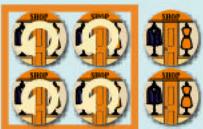
Shop/Restaurant tokens 3 or more required to confirm
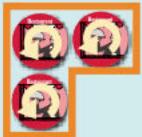
Shop tokens and Restaurant tokens are slightly different from the other token types in that the shapes or number of tokens are not fixed or specified as long as you have 3 or more tokens adjacent to each other. The player decides which 3 or more tokens will be used. There is no upper limit on the number of Image tokens that can be confirmed.
· Shop tokens and Restaurant tokens are different and should score separately.
· To confirm a location, the target must contain at least one Image token that was newly placed this turn.
· Image tokens to be confirmed must be connected vertically or horizontally. The entire connected area is called a “block”
· You may confirm only part of a block, turning these tokens over, and leave face-up tokens to be confirmed in a later turn.
3 or more to confirm
If there are 3 or more, you do not need to confirm all of them.
6. Location tile placement
Each player's Image board and the central Common map board have the same coordinates where the vertical lines are labelled with alphabets and the horizontal lines with numbers. These coordinates serve to link the Common map board and the Image board. When a location is confirmed during your turn, check the position coordinates of the Common map board with the same coordinates as on your Image board. If all the spaces that correspond are empty, the player must build a Location tile onto the Common map board.
(This is compulsory, not optional.)
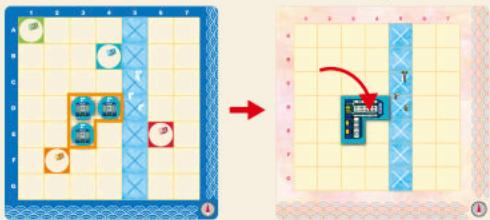
If a Location tile cannot be placed
In the following cases, new tiles cannot be placed.
Immediately move to “7. Scoring”.
• If a Location tile has already been placed or partially placed at the same coordinate position as the confirmed Image tokens. (Exceptions are Shops and Restaurants, see page 10)
• If the corresponding Location tile is not present on the Location tile board (i.e. already been built).
Hotel tile placement
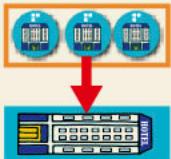
• Hotel location tiles are 3 spaces in size, L-shaped and l-shaped.
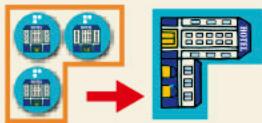
· Take the tile of the same shape from the Location tile board according to the confirmed Image token shape and place it on the Common map board. If there is no tile of the same shape left, a Location tile cannot be placed.
Park tile placement
· The Park location tiles are 2 spaces in size.
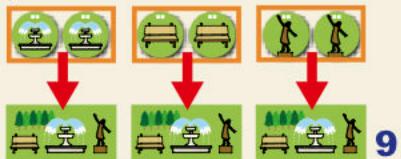
· All 3 Image token types for Parks (Fountains, Benches, Statues) use the same Park location tile.
Shop and Restaurant tiles Placement
· The Shop and Restaurant Location tiles are one space in size. According to the shape of the confirmed Image token block, it is placed on the common map board in 1 space units.
· Even if there are Location tiles occupying part of the Shop and Restaurant area that is being confirmed, as long as there are empty spaces on the Common map board that correspond to the area that the Shop or Restaurant is being confirmed, you must place Shop or Restaurant tiles in these empty spaces. (Example 2)
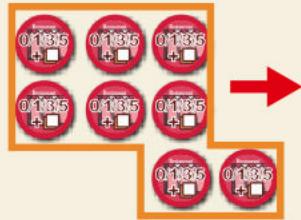

【Example 2】
Sightseeing tiles Placement
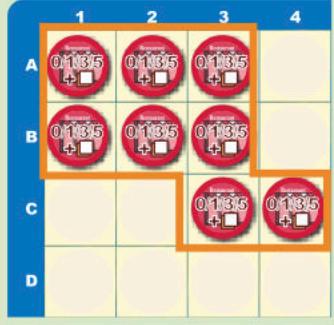
Player's Image board
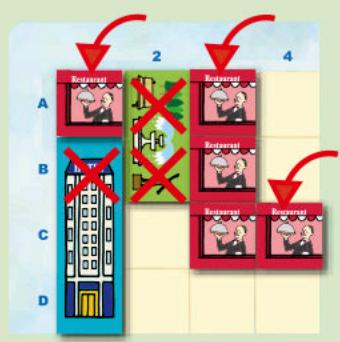
Common map board
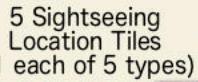
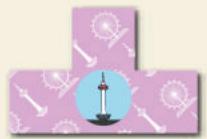
· There are 5 types of Sightseeing location tiles, each 4 spaces in size.
· There are three types of Sightseeing location tiles each for the Kyoto and Singapore maps (thus only 3 will be used in any given game).
· Take the same shape tile from the Location tile board according to the confirmed Image token shape and place it on the common map board. If there is no tile of the same shape, you may not place a tile.
· Except for the square shaped tile, all Sightseeing tiles/shapes may be rotated both sides (therefore mirror images are fine).
The 3 types used for the Kyoto map


The 3 types used for the Singapore map



Sightseeing Monuments
When placing a Sightseeing Location tile, the player places the same Sightseeing Monument on the Location tile as the illustration drawn in the circular frame of the tile.
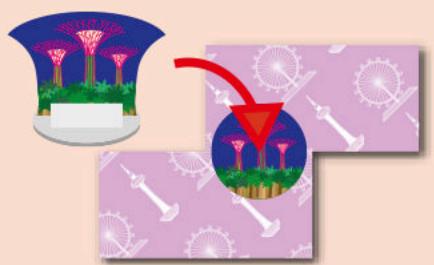
You' ve just recreated a landmark of our trip that everyone remembers well!

7.Scoring
Players will gain points when they confirm a location using Image tokens during their turn. In addition to the base points of the Location type, players will also gain a Memory Match bonus if conditions are met.
· After confirming the base points plus Match bonus, the player advances the disc of his / her colour on the scoring board by the amount scored.
· After that, the player's turn is over, and it is now the turn of the player on the left.
Base points
When a player confirms a location during their turn, they check their Image board for the number of points to score.
Park tokens (Fountain, Bench, Statue) (each set of 2) 2 points
Hotel tokens (each set of 3) 4 points


Sightseeing tokens (each set of 4) 6 points


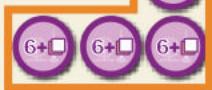
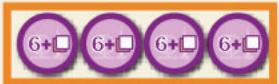
Shop / Restaurant tokens
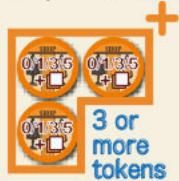

[Base points example】
3 tokens: 0 points
4 tokens: 1 point
5 tokens: 3 points
6 or more tokens:
5 points
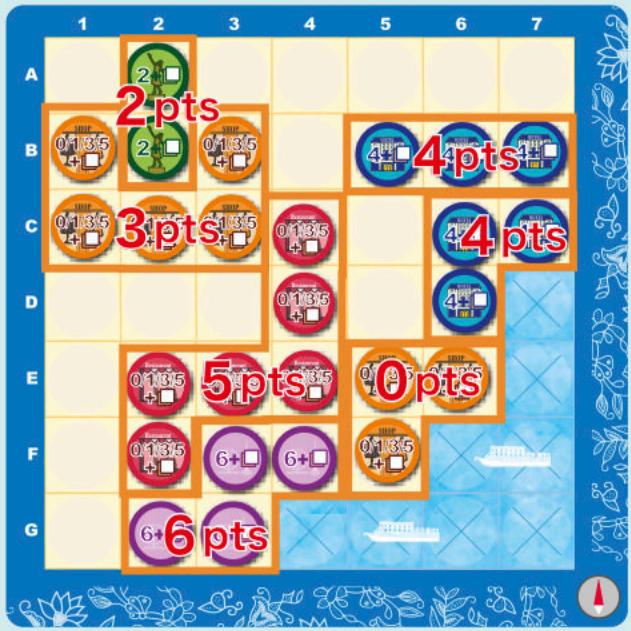
Player's Image board
• Treat Shop tokens and Restaurant tokens as different types when calculating the base points. (Shops and Restaurants are entirely different types.)
There is no upper limit on the number of locations that can be determined for Shop tokens and Restaurant tokens. However, the maximum number of base points that can be obtained is 5 points. 11 1
Memory Match bonus
The player checks the coordinates of the Image tokens (now face-down) that have been confirmed this turn. Next, check the same coordinates on the Common map board. If there is a same type of Location tile on the board as the Image token type that has just been confirmed, you will gain 1 Memory Match bonus for each matching space.
One point for each space whose coordinates match the Location tile on the Common map board

· If there is no matching space between the coordinates of the confirmed Image tokens and the Location tile, you will not get the Match bonus. (Example 3)
· In the case where a player built a Location tile in the same turn, the player will get a Match bonus for each of their tokens. (Since the player built the tile, their Image board will definitely match the Common map board.) (Example 4)
· You will also get a Match bonus if you are able to match Location tiles that other players placed in a previous turn.
· The shape and direction of each Location tile does not matter. As long as the Location type matches, the player' s tokens will get a Match bonus with a Location tile even if the coordinates match only partially.
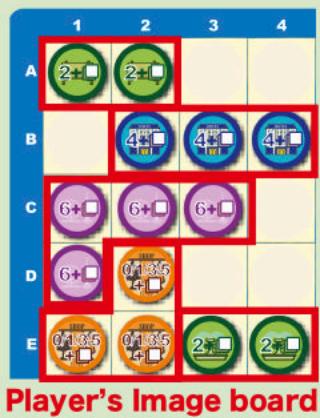
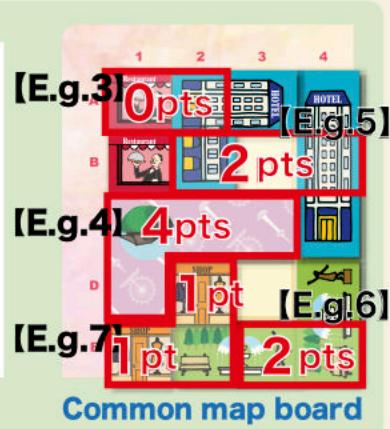
· You are able to get a Match bonus from two or more of the same type of Location tiles as long as the coordinates match. (Example 5, Example 6)
• Just like Shop/Restaurant tiles, you can also get a Memory Match bonus if the coordinates of the confirmed image tokens overlap different Location tiles (Example 7).
· The are 3 types of Park tokens (Fountains, Benches, Statues).
All 3 types will gain a Match bonus from all Park tiles.
· Sightseeing tokens will gain Match bonuses from any Sightseeing tile, regardless of shape.
Check the Memory card deck
Gain a Memory Match bonus when you match locations built by other players or yourself. Let's remember our trip together!
At the end of each round, check whether there are cards remaining in the Memory card deck.
| If there are cards remaining | Move on to the next round. The start player passes the start player marker to the player on the left and starts again from “1. Flip over a Memory card”. |
| When the deck is exhausted | The game is over and players will now proceed to “Game End and Scoring“. |
Objective cards
Standard Objective cards
There are 5 types of Standard Objective cards. These can be used for both Kyoto and Singapore maps. At the end of the game, players who meet the criteria of the Objective card at the end of the game will get 6 points. If more than one player meets the conditions, all players will each get 6 points.
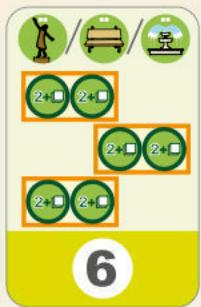
Target: Park (Statue, Bench, Fountain) Condition: There are three or more parks confīrmed on your Image board.
*The type of park (Statue, Bench, or Fountain) does not matter.
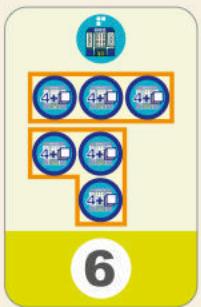
Target: Hotel Condition: There are two or more hotels confirmed on your Image board.

* The shape of the hotel does not matter.
Target: Shop
Condition: There are two or more
shop blocks (connected areas of three or more Image tokens) confirmed on your image board.

Target: Restaurant Condition: There are two or more restaurant blocks (connected areas of three or more Image tokens) confirmed on your image board.
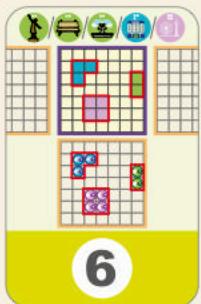
Target: Park, Hotel, Sightseeing Condition: There are at least three sets of Image tokens confirmed on your Image board that completely match Location tiles on the Common map board.
* The type of park (Statue, Bench, or Fountain) does not matter as all three types use the same Park tile.

In “Remember Our Trip” , in addition to the standard rules, there are two optional rules: the 7 × 6 Map and Advanced Objective cards. You can choose to play with either one or both.
You can play on a 7 x 6 space map that is one row narrower than the standard 7x 7 space map.
· Place a Modifier Strip on each player's Image board and the Common map board which will remove a row or column. For the Kyoto map, the strip will be placed on the row “G” and for the Singapore map, the strip will be placed on column “1”.
Kyoto map
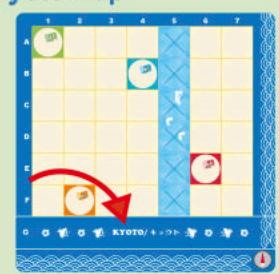
Each Image board

Common map board
Singapore map

Each Image board
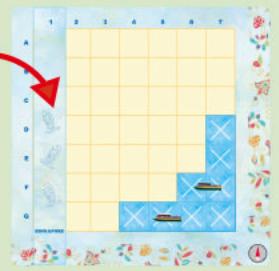
Common map board
② Advanced Objective cards
When selecting a Objective card during setup, instead of using standard Objective cards you may choose advanced Objective cards.
There are 5 types of advanced Objective cards. The front (pink) is for the Kyoto map and the back (light blue) is for the Singapore map. Use the face corresponding to the map you want to play.
After the game is over, check the Objective card conditions when calculating the final score.
· For Objective cards that state “6/3 points”, if there are multiple first-ranked players, all the players will get 6 points. Next, the 2nd player gets 3 points. If there are multiple players tied for 2nd place, all players will get 3 points.
• For other Objective cards, the score is calculated separately for each player.
Kyoto map
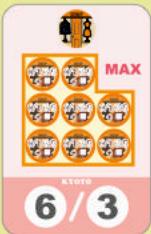
Target: Shop
Condition: Compare the largest shop block that has been confirmed on the players' Image boards. The player with the largest confirmed block gains 6 points. The player with the second largest block gains 3 points.
Singapore map
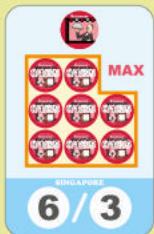
Target: Restaurant
Condition: Compare the largest restaurant block that has been confirmed on the players' Image boards. The player with the largest confirmed block gains 6 points. The player with the second largest block gains 3 points.
Kyoto map

Target: Park / Shop
Condition: 1 point for each Shop token adjacent vertically or horizontally to a Park confirmed on the Image board.
*The type of Park (Statue, Bench, or Fountain) does not matter.
*The Shop tokens do not need to have been confirmed. The Park tokens need to be confirmed.
* A maximum of 1 point can be obtained from each Shop token. Multiple parks do not give more points.
Singapore map
Target: Park / Restaurant
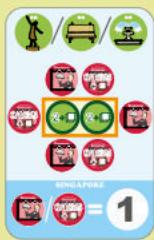
Condition: 1 point for each Restaurant token adjacent vertically or horizontally to a Park confirmed on the Image board.
*The type of Park (Statue, Bench, or Fountain) does not matter.
* The Restaurant tokens do not need to have been confirmed. The Park tokens need to be confirmed.
*A maximum of 1 point can be obtained from each Shop token. Multiple parks do not give more points.
Target: Park, Hotel, Sightseeing
Condition: If any of the confirmed Parks/Hotels/Sightseeing locations overlaps the coordinates of the specified 13 spaces on the west side of the Image board, gain 1 point for each of these locations.
*Only 11 spaces are available when using the 7 × 6 Map.
*Note that you gain points not for the number of Image tokens, but for the number of locations.
Singapore map


Target: Park, Hotel, Sightseeing Condition: If any of the confirmed Parks/Hotels/Sightseeing locations overlaps the coordinates of the specified 13 spaces on the Image board, gain 1 point for each of these locations.
*Note that you gain points not for the number of Image tokens, but for the number of locations.
Kyoto map
*When using the 7 × 6 Map, the 12 spaces in “2” and “A” columns are eligible.
Kyoto map
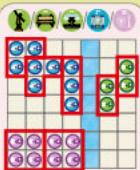
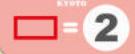
Target: Park, Hotel, Sightseeing
Singapore map
*The type of Park (Statue, Bench, or Fountain) does not matter.

Condition: If there are 2 confirmed locations (Parks/Hotels/Sightseeing only) of the same type that are adjacent vertically or horizontally, gain 2 points for each adjacent confirmed location.
*The shape of Hotels and Sightseeing locations does not matter.
Target: Park, Hotel, Sightseeing

Kyoto map
Condition: Compare the number of vertically or horizontally connected confirmed locations (Parks/Hotels/Sightseeing only). The player (s) with the most connected locations gain 6 points. The second placed player(s) gains 3 points.
*Note that this is not the total area or number of Image tokens, but the number of locations.

Target: Hotel
Condition: If a confirmed hotel overlaps or partially overlaps the coordinates of the 14 spaces adjacent to the river on the image board, you gain 2 points for each hotel.
*Note that you gain points not for the number of Image tokens, but for the number of locations.
*The shape of the hotel does not matter.
*Only 12 spaces are available when using the 7 × 6 Map.
Singapore map
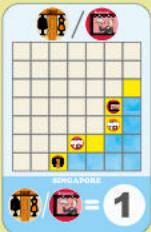
Target: Shop / Restaurant
Condition: If a shop / restaurant is placed in the 6 spaces adjacent vertically and horizontally to the sea of the Image board, gain 1 point for each Image token.
*The Shop/Restaurant tokens do not need to have been confirmed.
Game End and Scoring
Each player will calculate their score at the end of the game. Add up their Travel Photo card points, Mistaken Memory point penalty and Objective card points and move their score marker on the scoreboard to show the final score.
Travel Photo points
There are 4 coloured spaces with Photo icons on the Image board. These spaces are places that players took photos of during their trip, so they need to be matched with the respective
colours to gain points.
· Each player checks the four spaces with Photo icons on their Image board and counts the number of Image tokens that have the same colour as the space. It does not matter whether these tokens are face-up or face-down.
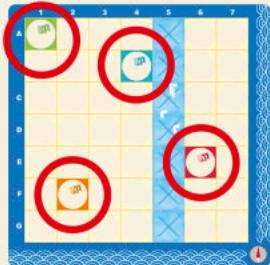
• Score or lose points depending on how many Image tokens of the same colour match the spaces: if the number of matching tokens is 0: -2 points, 1: -1 point, 2: 1 point, 3: 3 points, 4: 6 points.
Mistaken Memory point penalty
· All players count the number of tokens in the Mistaken Memory area of their Summary board and declares it to all players.
• The player(s) who have the most tokens in the Mistaken Memory area will lose a point penalty, which is -1 point per Mistaken Memory token. In case of a tie, all tied players will lose points.
· If all players have O tokens, no player loses any points.
Objective card points
. Each player checks on his / her Image board, and if it meets the conditions of the target card, he / she gets the score stated on the card. (See pages 13-15 for details on Objective cards)
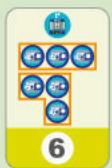
【Example of final score calculation】
Travel Photo points There were matching tokens in 3 places = 3 points
Mistaken Memory point penalty 3 tokens in the Mistaken Memory area, the most amongst the players = -3 points
Objective card points
2 or more confirmed hotels = 6 points

Player's Summary board
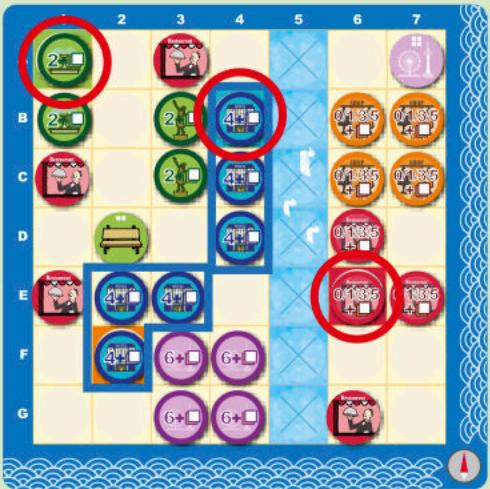
Player's Image board
After the calculation of the final score, the player with the highest score will be the winner. In the case of a tie, the player with the least number of tokens in the Mistaken Memory area is the winner. If this is also tied, all tied players are winners and may share the victory!
Download MarkdownTexts are community-compiled or publicly released by publishers; copyright remains with the original authors. For personal reference only.