Seasons
At a glance
Rules overview
English version of our rules overview, translated from the Chinese original (cunlema). The Chinese page is the source of record.
Game Overview
In the fantasy kingdom of Xidit, players take on the roles of rival mages, competing to amass the most prestige points over three cycles of the seasons by collecting energy, summoning magical artifacts and familiars, and accumulating crystals, ultimately vying for the title of Archmage.
Core Mechanisms: Dice selection, hand management, resource conversion (alchemy), and summoning slot limitations
1. Game Components
| Component | Quantity/Description |
|---|---|
| Game Board | 1 piece, including the year track, season wheel, and energy refining table |
| Player Boards | 1 per player, featuring an energy reserve area (maximum 7), a summoning slot, and a reward track |
| Season Dice | 20 dice, divided into 4 colors: blue (winter), green (spring), yellow (summer), red (autumn) |
| Ability Cards | 50 types, 2 each, totaling 100 cards (numbered 1–30 as basic cards, 31–50 as advanced cards) |
| Mage Tokens | 4 per player, used to track crystals, summoning slots, and rewards |
| Energy Tokens | Four types—wind, water, fire, and earth—serving as public resources |
| Crystal Track | 1 track, displaying each player's crystal count |
| Library Markers | 1 of Library II and 1 of Library III per player |
| Year Marker | 1 marker indicating the current year (Year 1/2/3) |
| Season Marker | 1 marker indicating the current season |
2. Setup
2.1 Public Area Setup
- Place the game board in the center of the table.
- Position the year marker on "1" on the year track and the season marker on "1" on the season wheel.
- Depending on the number of players, place the season dice (number of dice per color = number of players + 1, chosen randomly):
- 2 players: 3 dice of each color
- 3 players: 4 dice of each color
- 4 players: 5 dice of each color (all used)
- Set the crystal track next to the game board and place the energy markers beside it as a common supply.
2.2 Player-Specific Setup
Each player:
- Chooses 1 personal board and takes 4 wizard tokens of the same color.
- Places the wizard tokens at: the zero position on the crystal track (bottom), the hundred-zero position on the crystal track (top), the zero position on the reward track, and the zero position on the summoning slot.
- Receives one Library II and one Library III library token.
2.3 Dealing and Grouping
- Shuffle all ability cards and deal 9 face-down cards to each player.
- Place the remaining cards next to the game board as the draw pile, with space reserved for the discard pile.
- The youngest player goes first.
2.4 Difficulty Selection
| Difficulty | Description |
|---|---|
| Apprentice Wizard (Beginner) | Use a pre-built deck, skipping the card selection phase and going straight to the deck-building phase. Four pre-assembled decks are available. |
| Wizard (Intermediate) | Only use basic cards numbered 1–30; return cards numbered 31–50 to the box. |
| Archmage (Advanced) | Use all 50 types of cards. |
3. Gameplay
The game is divided into two phases: Prelude and Tournament.
3.1 Phase One — Prelude
Step One: Select 9 Ability Cards
- Each player examines their nine cards and selects one to place face-down in front of them.
- The remaining cards are passed to the player on the left.
- This process repeats until each player has selected all nine cards.
Step Two: Build Your Deck
- Divide the nine cards into three groups of three:
- Group 1: Directly forms your starting hand.
- Group 2: Placed under the Library II marker; added to your hand at the start of Round 2.
- Group 3: Placed under the Library III marker; added to your hand at the start of Round 3.
- You may view your chosen cards at any time.
3.2 Phase Two — Tournament
The tournament consists of multiple rounds, continuing until the end of Year 3.
Beginning of Each Round
Rolling and Choosing Dice:
- The current round's first player rolls the season die corresponding to the season indicated by the season marker.
- Starting with the first player and proceeding clockwise, each player selects one die from those remaining and places it in front of them.
- The single unchosen die remains on the table (used to determine how many spaces the season wheel advances).
Player Turn Order:
Starting with the first player and moving clockwise, each player may perform the following actions (in any order and any number of times):
- Perform the action shown on the season die.
- Summon or activate an ability card.
- Use a reward.
Action Resolution Priority: Drawing cards, gaining energy or crystals, and increasing your summoning slot must be resolved before other actions.
Season Die Actions
| Die Symbol | Effect |
|---|---|
| Energy Symbol | Take the corresponding type of energy token from the public supply and place it in your reserve (maximum 7 tokens). |
| Number | Gain crystals equal to the number rolled; advance the mage marker on the crystal track by that many spaces. |
| Alchemy Symbol | Convert energy tokens from your reserve into crystals during the round, according to the season's alchemy rate. |
| Summoning Slot Symbol | Increase your summoning slot level by 1 (maximum 15). |
| Draw Card Symbol | Draw one ability card; you may keep it or discard it. |
Alchemy Rules:
- Refer to the alchemy chart on the game board; conversion rates vary by season and energy type.
- Outer ring: 1 crystal; middle ring: 2 crystals; inner ring: 3 crystals.
- Alchemy actions take effect before the end of the round and can be performed multiple times within the same round.
Energy Reserve Cap: At no time may your reserve exceed seven energy tokens. If you already have seven, you must discard excess tokens before acquiring new ones.
Energy Scarcity (by Season):
| Season | Common | Rare | Unavailable |
|---|---|---|---|
| Winter | Water/Wind | Fire | Earth |
| Spring | Earth/Water | Wind | Fire |
| Summer | Earth/Fire | Water | Wind |
| Autumn | Fire/Wind | Earth | Water |
Summoning Ability Cards
Summoning Conditions:
- Pay the summoning cost indicated on the card (energy tokens and/or crystals).
- Your summoning slot level must be greater than or equal to the number of ability cards you currently have on the field (e.g., to summon a second card, your summoning slot must be at least 2).
After summoning, place the card face-up above your personal panel and announce its effects to your opponents.
Summoning Rules:
- You may summon multiple cards in a single round.
- Cards with the same name may coexist on the field, with their effects stacking.
- There is no limit to the number of cards in your hand.
- If a card's effect conflicts with another rule, the card takes precedence.
- Cards that grant free entry are not considered "summoned."
Types of Card Effects
| Type | Trigger Moment |
|---|---|
| Entry Effect | Activates immediately when the card enters the field. |
| Permanent Effect | Remains active until the card leaves the field. |
| Activation Effect | Requires active activation: rotate the card 90° and pay the activation fee. Once rotated, the card cannot be re-rotated during the same round; it will be straightened at the start of the next round. |
Using Rewards
Each player may use up to three rewards per round (either in the same round or across different rounds, and the same reward may be chosen repeatedly):
| Reward | Effect |
|---|---|
| Energy Exchange | Trade two energy tokens from your reserve for two energy tokens from the public supply. |
| Extra Alchemy | Convert energy into crystals at the season's alchemy rate, gaining one additional crystal per token. |
| Summoning Slot Boost | Increase your summoning slot by 1. |
| Double Draw | Replace the draw action on the dice with drawing two cards: keep one and discard the other. |
Reward Penalties: For each reward used, advance one space on the reward track. Deductions at the end of the game:
- 1 reward: -5 prestige points
- 2 rewards: -12 prestige points
- 3 rewards: -20 prestige points
End of the Round
- Season Wheel Advancement: Check the number shown on the unchosen die; move the season marker forward by that many spaces (die faces: 1×2, 2×2, 3×2).
- Season Change Trigger: When the season marker passes through spaces 3, 6, 9, or 12, a season change occurs, and some card effects respond accordingly.
- Year Transition: When the season marker returns to space 1 after completing space 12, advance the year marker by one. Players add the cards under their corresponding library markers to their hands (cards already in hand remain).
- First Player Change: The player to the left of the previous first player becomes the new first player and rolls the die for the corresponding season to begin the next round.
4. End of the Game & Scoring
In Year 3, when the round ends and the season marker passes the 12th space, the game ends.
Bonus Points:
- Total number of crystals (1 crystal = 1 prestige point)
- Sum of prestige points from ability cards on the board
Penalty Points:
- Remaining ability cards in hand (-5 prestige per card)
- Penalty values on the reward track
Tie-Breaker: The player with more ability cards on the board wins.
> Unused energy tokens do not count toward prestige.
5. Key Rules & FAQ
Commonly Misplayed Rules
- Reserve Limit of 7 Tokens: Energy on the Amulet of Water and the Glutton Cauldron does not count toward the reserve, but energy on the Bespelled Grimoire does.
- Summoning Slot Limit of 15
- Dice-Driven Actions Take Priority: Drawing cards, gaining energy/crystals, and increasing summoning slots must be resolved before other actions.
- Alchemy Actions Span the Round: Alchemy can be performed multiple times within a round, not just once.
- Free Entry ≠ Being Summoned: Cards with free entry do not trigger "when summoned" effects (e.g., Spring Staff, Forgotten Vase, Arcane Leech).
- Rotating = Activating: To activate an effect, you must rotate the card and pay its cost; you cannot rotate it again in the same turn.
- Reward/Penalty Accumulation: 1 time—5 points, 2 times—12 points, 3 times—20 points; this is not linear accumulation.
- Hand Cards Are Not Discarded at Year Change: Cards from the previous year remain in your hand.
- Always One Extra Season Die: The number of dice equals the number of players plus one, ensuring that the last player to choose always has two options.
Frequently Asked Questions
-
Q: What happens if all energy tokens are used up?
A: Shuffle the discard pile to form a new draw pile. Energy tokens are a public resource, and the rulebook does not specify how to handle depletion. -
Q: Is there a limit to the number of cards in your hand?
A: No, there is no limit to the number of cards in your hand. -
Q: Can you place two copies of the same card on the board?
A: Yes, effects stack. -
Q: What if a card's effect conflicts with the rules?
A: The card's effect takes precedence. -
Q: What happens when the Time Boots move the season marker from Winter back to Autumn?
A: The year marker moves back one space, while the cards in your hand remain unchanged. -
Q: Can the Elemental Amulet reduce costs via Fate's Hand?
A: Yes, after reducing the cost, you can still trigger the corresponding energy effect. -
Q: Does the energy on the Glutton Cauldron count as part of the reserve?
A: No. Energy on the Amulet of Water and the Glutton Cauldron does not belong to the reserve and is unaffected by related effects.
Rules Q&A
Questions below are real questions players asked cunlema about this game; answers are ours, translated into English.
What new rules were added in the Seasons expansion?
New Content in the Path of Destiny Expansion
This is the second expansion for Seasons, featuring 21 new magic cards—two copies of each—fully compatible with the base game and other expansions; 10 new barrier cards; 6 special ability tokens; and the introduction of the "Destiny Die" mechanism. Additionally, there are extra components: 10 copy magic cards, 2 trap tokens, and 2 steel-lock tokens.
1. New Magic Cards
Add the Path of Destiny magic cards to your apprentice wizard deck (beginner level, cards 1–30), your mage deck (intermediate level, cards 1–30), or your archmage deck (advanced level, cards 1–50) to form a stronger new draw pile. You can also freely mix these cards into any magic card deck within the Magic Kingdom. Each card features a series symbol for easy identification. Notably, "The Deceiver at the Banquet" is a divine servant magic card designed by Federico Latini, winner of the September 2013 Path of Destiny design contest.
2. New Barrier Cards (10 cards)
Before the first phase (Prologue), randomly draw one barrier card from the set of 10 and place it face-up where all players can see it (players may also collectively decide which card to use). Barrier cards alter the rules and affect every player. Among them, "Sacred Mission" and "Fated Pursuit" both utilize the Destiny Die.
… (condensed here; full text on the cunleme Chinese page)
Please provide a detailed introduction to the rules and gameplay of Seasons.
"Seasons" is a card game of magic and strategy, in which players take on the role of Grand Mages of the Sidith Kingdom, vying for the highest prestige over three years by summoning magical cards and transforming elemental energy.
Below is a detailed introduction to the basic rules and gameplay:
I. Game Objective
During the three-year competition, players strategically use magical cards and transform elemental energy to accumulate as many crystals as possible. At the end of the game, the number of crystals directly translates into prestige points, with the player holding the most prestige declared the winner.
II. Game Components and Setup
1. Game Board: Includes a year track (marking the year), a season wheel (indicating the current season), and an elemental transformation chart (showing the ratio of crystal conversion for each element in different seasons).
2. Dice: Depending on the number of players, select the corresponding number of same-colored dice (3 for 2 players, 4 for 3 players, 5 for 4 players), representing the season's elemental energy or actions.
3. Magic Cards: Divided into basic cards (numbers 1–30) and advanced cards (numbers 31–50, used in higher‑level games).
4. Initial Setup:
- Place the year marker on "1" and the season marker on "1."
- Each player selects a Mage Board, placing their crystal marker (initially at 0), summoning level marker (initially at 0), and emblem marker (initially at 0).
- Prepare the elemental energy pile and the crystal pool.
III. Game Phases
The game consists of two main phases: the Prologue and the Competition.
… (condensed here; full text on the cunleme Chinese page)
What new content does the Magic Kingdom expansion add?
What does the Enchanted Kingdom expansion add?
Conclusion: This expansion introduces 40 magic cards, 10 barrier cards, 12 special ability tokens, along with corresponding token-based accessories, and brings in two new mechanics—"Barrier Cards" and "Special Ability Tokens."
I. New Accessories
- 40 magic cards
- 10 barrier cards
- 12 special ability tokens
- 16 energy element tokens
- 2 crow tokens
- 1 starting player token
- 7 reserve‑reduction tokens
- 2 enchanted grimoire energy element reserve extension boards (as extensions to players' wizard panels)
II. How Magic Cards Are Added
Add the expansion's magic cards to the Apprentice Wizard level (beginner, cards 1–30), the Wizard level (intermediate, cards 1–50), or the Archmage level (advanced, cards 1–50) decks, forming a more powerful new draw pile. Each magic card in the expansion bears a series symbol to distinguish it from base‑set cards.
III. Barrier Cards
- Before the first phase of the game (the Prologue), randomly draw one barrier card from the ten available and place it face up where all players can see it; players may also collectively decide which card to use.
- Barrier cards alter the rules and affect every player, so their effects must be factored into your strategic planning.
- Some barrier cards specifically impact the Prologue. For example, "Elemental Structure" changes the very first step of the Prologue: before the Prologue begins, deal each player 18 magic cards, then have them choose nine cards from those 18 (skipping the usual round‑robin draft). Return any unchosen cards to the draw pile, reshuffle, and divide the nine cards into three groups of three according to standard rules; the competition phase proceeds as normal.
… (condensed here; full text on the cunleme Chinese page)
Can the Seasons thief fairy trigger multiple times in a single round?
Conclusion
It can trigger multiple times within a single round. The Seasons rulebook places no limit of "once per round" or "once per turn" on the Thieving Fairies. Its triggering condition is simply the event of "a player activating one of their Power cards"—as long as multiple activations occur within a round (either by different players or by the same player activating different cards), the Thieving Fairies will trigger accordingly.
Trigger Conditions and Details
1. Trigger Condition (original text):
> "The effect of the Thieving Fairies only applies if a player activates one of their Power cards. This doesn't affect Power cards with 'when entering play' effects or permanent effects."
In other words: It triggers only when a player activates a Power card; effects that activate "upon entering play" or permanent effects do not trigger the Thieving Fairies.
2. Rewards (original text):
> "One of the crystals gained comes from the crystals of the player who has activated a card with an activation effect.
> The second crystal gained is not stolen from the opponent."
That is: Each time it triggers, you receive 2 crystals—one taken from the player who activated the card (effectively deducted from them), and the other not stolen from your opponent (an additional gain).
3. Exceptions (original text):
> "If an opponent doesn't have any crystals when they use an activation effect card, you do not get any crystals from them; however, that opponent can still activate their Power card. You still get one extra crystal."
In short: If the activating player has no crystals, you won't receive the crystal from them—but you'll still gain the extra crystal, and this does not prevent that player from activating their Power card as usual.
The Boundary for Multiple Triggers Within the Same Round
… (condensed here; full text on the cunleme Chinese page)
The effect of the Sacred Golden Chalice?
Conclusion: "Free entry (free summoning into play)" refers to a magic card that is summoned directly into play without paying its own summoning cost, instead relying on the effects of other cards. The rulebook explicitly lists the following sources of free summoning: Holy Golden Chalice, Crystal Ball, and Dream Elixir.
Key differences from normal summoning (as clearly stated in the rulebook):
-
Not considered "summoning from hand": Only when you summon a magic card from your hand does it trigger any "upon summoning" effects; when a magic card is summoned via Holy Golden Chalice, Crystal Ball, or Dream Elixir, it does not gain the corresponding crystals or energy elements (for example, some cards specify that summoning through these three cards does not grant crystals/energy elements).
-
Does not trigger effects of named cards: Taking the Holy Golden Chalice as an example, the magic card summoned for free by this card will not trigger the effects of Sorcery Leech, Spring Staff, or Yuanqing Blue-and-White Porcelain.
-
No crystal cost for opponents' free summons: Certain card effects only apply to magic cards summoned from an opponent's hand. When an opponent uses Holy Golden Chalice, Crystal Ball, or Dream Elixir to summon a card for free, you are not required to pay them crystals.
Conditions that still must be met: Even with free summoning, you must still have sufficient summoning level to bring the card into play; otherwise, you can only discard the card drawn (as explicitly stated in the Holy Golden Chalice rulebook).
An exception: If a card is summoned using Holy Golden Chalice, Dream Elixir, or Crystal Ball, it is treated as if its summoning cost included four different types of elements, triggering four corresponding effects (as explicitly noted for one particular card in the rulebook).
… (condensed here; full text on the cunleme Chinese page)
What does "summoning" mean?
Conclusion: "When summoned" refers to the effect that triggers the moment a magic card is summoned onto the battlefield, i.e., the type of effect described in the rules as "effects that trigger upon entering the battlefield." Such effects resolve only once, at the moment the card is summoned.
Specific Procedures and Conditions:
-
Timing of Triggering: Card effects fall into three categories. Among them, "effects that trigger upon entering the battlefield" mean that the effect activates only when the card is summoned onto the battlefield—this is precisely the "when summoned" effect (often indicated on the card by phrases like "When you summon this card…"). The other two categories are "continuous effects" (which persist until discarded or sacrificed, affecting subsequent gameplay) and "activated effects" (which require the holder to actively activate them, with a maximum of one activation per turn). For activated effects, the cost appears before the colon, while the effect follows; these are distinct from "when summoned."
-
Must Be a Genuine Summon: Only when a magic card is summoned onto the battlefield (from your hand) will such effects trigger.
-
Exception—Free Entry Does Not Trigger: If a magic card enters the battlefield via another card's effect that allows it to be summoned for free (as explicitly listed in the rulebook: Sacred Golden Cup, Crystal Ball, Dream Elixir, and the effect of Evil Spell Leech), this process is not considered a "summon," and therefore "when summoned" effects will not trigger. The rulebook specifically names the following cards as affected: Evil Spell Leech, Springtime Scepter, and Yuan Blue-and-White Porcelain.
-
Important Judgment Precondition: Even if a card enters the battlefield for free, the player must still have sufficient summoning level to place it on the battlefield; otherwise, they must discard the card.
… (condensed here; full text on the cunleme Chinese page)
Can it trigger effects when summoning?
Conclusion: Generally, no. The rules explicitly state: "If a magic card enters the game for free, that process is not considered a summoning." And effects described as "activated upon entering the game" are defined as those that trigger only when the card is summoned onto the battlefield. Since a free entry does not count as a summoning, such effects will not activate.
Detailed Explanation and Exceptions:
-
Cards That Do Not Trigger When Named: The Sacred Golden Chalice itself states that magic cards summoned onto the battlefield for free by it will not trigger the effects of Evil Spell Leech, Springtime Scepter, or Yuan Blue-and-White Porcelain. The rulebook repeatedly emphasizes these cards: they only affect magic cards summoned from your hand; when summoned via cards like the Sacred Golden Chalice, Crystal Ball, or Dream Elixir, you do not gain the corresponding crystals or energy elements.
-
Conditions That Must Be Met: Even with a free summon, you must still have sufficient summoning levels to bring the card onto the battlefield; otherwise, you can only discard the card you drew.
-
One Clear Exception—Elemental Talisman: The rulebook specifically states: "If this card (the Elemental Talisman) is summoned using the Sacred Golden Chalice, Dream Elixir, or Crystal Ball, it is treated as including four different elements in its summoning cost and triggers four corresponding effects." In other words, this card is the exception explicitly mentioned in the text.
Points to Note Regarding Boundaries: The rulebook only explicitly lists "Evil Spell Leech, Springtime Scepter, Yuan Blue-and-White Porcelain," along with the aforementioned exception of the Elemental Talisman; for other cards with effects that activate "when summoned," the rulebook does not provide individual exceptions. Please refer to each card's own text and the general principle that "free entry is not considered a summoning."
This information is for reference only; in case of conflict, please consult the official rulebook and seek advice from experienced players.
What is the effect of the "Guan Chi Guo" card in Seasons?
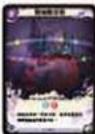
The effect of "Guan Chi Pot" (Base Set 35/50) is as follows:
- Free Summoning: Summoning it onto the board costs nothing.
- Place 1 Element per Round: During each action round, you may take 1 energy element from your reserve and place it on this card.
- Elements on the Card Cannot Be Used: Energy elements placed on Guan Chi Pot cannot be used.
- Trigger Immediately When 7 Are Collected: When the card accumulates its seventh energy element, its effect activates immediately—sacrifice the card, move all energy elements from the card into your reserve, and advance the magic markers in your crystal pool by 15 spaces.
- Not Part of the Reserve: Guan Chi Pot does not count as part of your reserve; the energy elements on it are unaffected by cards such as the Exotic Treasure Chest, Spirit Caller's Horn, Wind Spirit Messenger, Sidith's Magic Lamp, Grey-Faced Louis, Dream Potion, Life Potion, and the Cursed Book of Ares.
- Note on the Cap: At any time, the number of energy elements in a player's reserve must not exceed the cap.
This content is for reference only; in case of conflict, please refer to the rulebook and advice from experienced players.
What is the "Time-Traveling Boots" entry effect in Seasons?
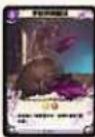
Conclusion: The entry effect of the Time-Traveling Boot (7/50, base version) is — summon it for free upon entering the game, and move the season marker when it enters.
Specific steps:
- Summon this card without paying any cost.
- When you summon this card, advance or retreat the season marker on the season track by 1 to 3 spaces (you choose the direction and number of spaces).
Conditions and exceptions:
- If the Time-Traveling Boot moves the season marker from Winter back to Autumn:
- Move the year indicator on the calendar track back by 1 space (retrograde by 1 year);
- All magic cards in your hand remain unchanged.
- If the Time-Traveling Boot causes a season change (by advancing or retreating the season marker), any card effects triggered by that season change still occur immediately, such as those from Greedy Figrin or the Hourglass.
This content is for reference only; in case of conflict, refer to the rulebook and advice from experienced players.
How do you use the "Selina's Codex" card in the Magic Kingdom expansion?
Conclusion: Selina's Codex (4/20, Magic Kingdom Expansion) is a magic artifact card whose effect returns all magic artifacts on the field to your hand.
Specific procedures and limitations:
- It only works on magic artifacts with summoning costs that include energy elements. If an artifact's summoning cost requires only crystals and no energy elements, this card cannot return it to your hand.
- It can be summoned even when the field is empty. Even if you have no magic artifacts on the field, or only artifacts whose summoning costs do not include energy elements, you can still play this card; however, its effect will not activate.
- Interaction with the "Spirit of Nature" barrier: While "Spirit of Nature" is active, the summoning cost of all magic cards (both artifacts and divine servants) increases by one additional energy element—its type determined by the caster—even cards that normally cost only crystals or are free now require one extra energy element. Under these circumstances, this card can return any magic artifact on the field to your hand.
This content is for reference only; in case of conflict, please refer to the rulebook and advice from experienced players.
Rules, cards and Q&A (Chinese)
The rules, card data and player questions for this game are written in Chinese. Open the Chinese page to read them.
Where to find full rules
Full rules and card lookup are available in the cunlema app at cunlema.cn — pick this game and ask about any rule, card or turn you are unsure about.