
Six Sojourns
At a glance
Rules, cards and Q&A (Chinese)
The rules, card data and player questions for this game are written in Chinese. Open the Chinese page to read them.
Where to find full rules
Full rules and card lookup are available in the cunlema app at cunlema.cn — pick this game and ask about any rule, card or turn you are unsure about.
Related games
Rulebook text (Markdown)
This game has 1 rulebook Markdown file(s) in our library; 1 rendered inline below — expand to read or download.
six sojourns DELUXE rulebook_(published ver 1.1).md32.6 KB
How to Play
Introduction
Your goal in Six Sojourns is to grow your family and broaden their influence. Players take turns selecting a card from five on display. Each card has actions that let players build houses, gain ships, move, and gain new family members.
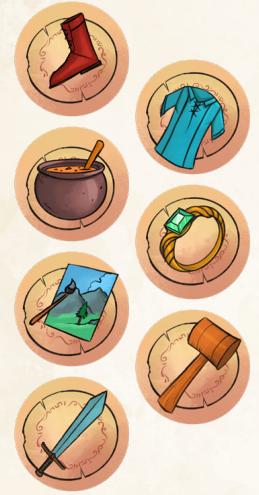
The cards also have special abilities and sets of icons that represent your family's expertise in various trades: cooking, carpentry, sewing, shoe-making, art, blacksmithing, and jewelry. Each game, you only select nine cards, and you'll be faced with crunchy choices each turn as you focus on trades, abilities, or the map.
Customize Your Game
Six Sojourns includes small expansions that you can add to the game that have unique components and rules. You can combine any of them in different ways to keep the game constantly fresh.
When setting up the game, you combine the base cards with the expansion-based cards, depending on the expansion you choose.
PLACES focuses on controlling specific places on the map. Each map has its own set of cards indicated by letter: A, B, C, etc.
TRADES TOKENS adds valuable trades tokens on the map that you can claim.
SPECIALTIES adds new cards to the deck with trades-focused objectives.
UPGRADES adds cards that allow players to increase or reduce the value of sets for all players!
SEA SERPENTS adds sea serpent tokens and cards to the game, which players can place on sea spaces to collect coins from other players and increase the value of sea spaces.
VALUES gives value cards to players, with special abilities and objectives unique to each player.
• FEUDS makes contested spaces worth more points.
EXPLORATION adds explore tokens to the map that players can claim to gain bonuses.
MOUNTAINS adds mountain tokens, which create new obstacles on the board.
SHRINES add shrine tokens, which players can build to increase the value of spaces on the board.
AIRSHIPS adds a airship tokens that lets you move to any space on the board!
Six Sojourn Campaign
You can play the game in standalone sessions or a campaign of six games! When playing a campaign, use a new combination of expansions each game, adding new rules and depth to the game. Track your score each game and add up the total at the end to determine a campaign winner! The recommended sojourns for a first campaign are:
SOJOURN r: "Enchanting Sites"
Places A
SOJOURN 2: "Learn from the Masters"
Places B and Trades Tokens
SOJOURN 3: "Golden Age" Any map, Trades Tokens and Specialties
SOJOURN 4: "Wild Rumors” Places B, Trades Tokens, and Upgrades
SOJOURN 5: “Unknown Paths" Places A, Exploration, and Sea Serpents
SOJOURN 6: "Feuding Families” Places B, Exploration, Values, Sea Serpents, Feuds
Components

One-value Coins (30)

Five-value Coins (18)
Upgrade Tokens (r0)
Explore Tokens (20)

Trades Tokens (2 of each)

Cards (9o), including:
• Base Cards (37)
Places Expansion Cards (r8)
• Specialties Expansion Cards ()
• Upgrades Expansion Cards (r0)
Sea Serpents Expansion Cards (9)
• Values Expansion Cards (4)
• Feuds Card (r)
(The expansion name is on the bottom left of each card face.)

Double-sided Game Board (Map A is pictured and Map B is on the other side.)
Sea Serpent Tokens (8) Mountain Tokens (8) Shrine Tokens (12) Airship Tokens (2)
Score Pad
Economy, Volcano, Simultaneous, and Solo mode components are listed on pages 12-Iş. Use the tuck boxes to organize cards and cardboard. Store wooden and metal components in bags.
Setup
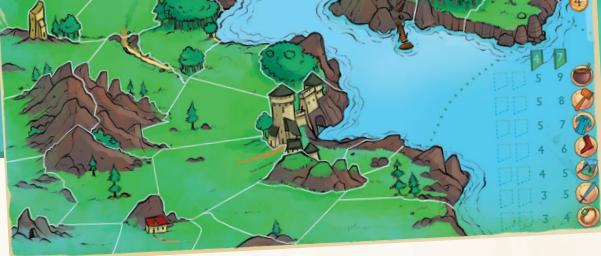
- Place the game board in the center of the table. Place the coin tokens in a supply nearby.
Map A
-
Shuffle the base cards and place them near the board. Base cards have no label in the bottom left corner on the faces.
-
Choose your expansions and collect the components for the chosen expansions. You may choose to play with no expansions but it is recommended to play with at least r. Setup instructions for each expansion are listed below:
PLACES: Shuffle the expansion cards with the “Places" label and letter matching your chosen map in with the base cards. If map A, use cards "Places A”, etc.
TRADES TOKENS: Shuffle the trades tokens in the box lid and place them on the map in various regions. No region can contain more than I token, but you can place them anywhere, even in sea spaces.
• SPECIALTIES: Shuffle the cards with the "Specialties" label into the base cards.
UPGRADES: Shuffle the cards with the "Upgrades" label into the base cards. Place the upgrade tokens next to the board.
SEA SERPENTS: Shuffle the cards with the “Sea Serpents” label into the base cards. Place the sea serpent tokens next to the board.
VALUES: Shuffle the value cards face down and deal 1 to each player. Each player places their value card face up in front of them.
• FEUDS: Place the feud card near the board. Choose the Feuds side or the Fierce Feuds side.
EXPLORATION: Shuffle the explore tokens face down and place them face down on the map in various regions. No region can contain more than I token, but you can place them anywhere, even in sea spaces.
MOUNTAINS: Place mountain tokens on land spaces on the board, preferably on spaces with rocky or mountain art. No space should contain more than I mountain token.
SHRINES: Give each player 3 shrine tokens. They place these in a supply next to their wooden pieces.
• AIRSHIPS: Place the airships on any 2 different land spaces on the board.

Base cards have no label here.

Cards have the expansion name here.

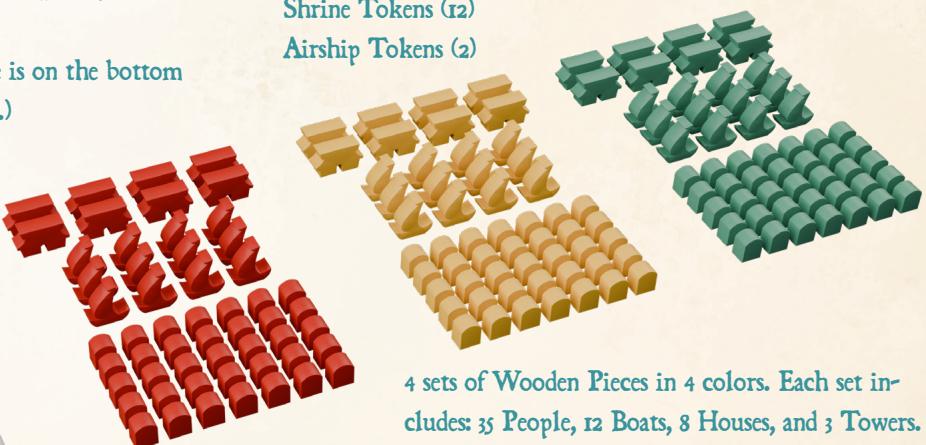
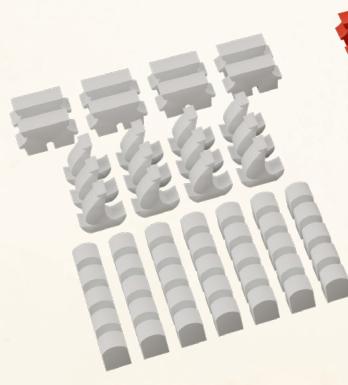
- Give each player 12 coins. Give each player a set of wooden pieces in 1 color.
s. Place the card deck near the board and draw I card for each card slot along the side of the board. Each slot indicates the cost of each card.
- Use a method to randomly determine Ist player. Play goes in clockwise order, starting with the first player. Each player must now return to the box a number of wooden tower pieces based on turn order. The LAST PLAYER always returns all towers. Each player retains I tower for each player AFTER THEM in turn order.
For example, if playing with 3 players, the ist player would keep 2 towers, the 2nd player would keep 1 tower, and the 3rd player would keep no towers. In a 2-player game, the ist player would keep 1 tower and the 2nd player would keep no towers. Etc.
- Choose a starting space on the board. It can be any land space, but it is recommended that the space be on the largest island and be next to a sea space. Each player places i house and 2 people on this space.
Place any unused components in the box.
You are now ready to play.
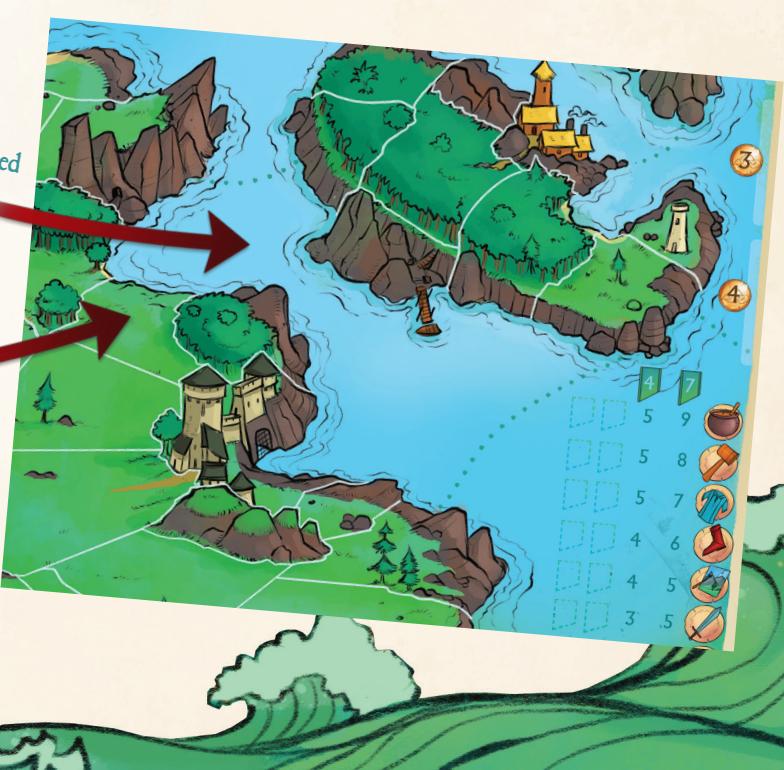
This is a sea space (separated from other sea spaces by dotted lines) and cannot be the starting space.
This is a good starting space.
How to Play
Starting with the ist player, players take turns in clockwise order until all players have had 9 turns. It's easy to keep track of this because each turn, a player selects I card to keep. Once all players have 9 cards, the game ends, you count victory points, and the player with the most wins.
Turn
On your turn, perform the following steps: first purchase a card from the row, then take actions.
Purchase a Card
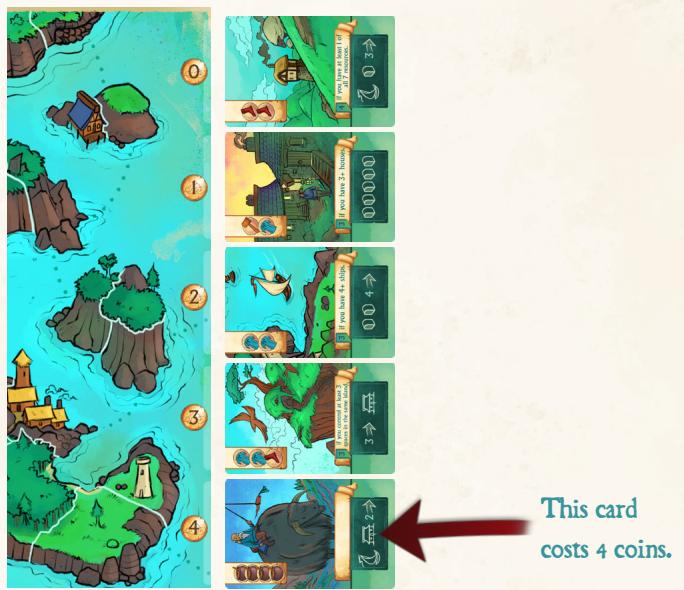
You MUST purchase I card from the card row. There are 5 available to choose from, and the price of each card is listed on its slot on the board, from o to 4. Pay the indicated coins to the supply and place the card face up in front of you. If you have no coins left, you MUST choose the o-cost card.
Each card gives you 1 or more trade icons, which are worth victory points at the end of the game. Most cards also have a special ability, which is active as soon as you place the card in front of you.
After you've taken your card, fill in the gap by sliding down cards toward the o-cost. Then draw a new card to fill in the empty 4-cost slot.
Action
Now perform the actions on your new card. You can perform actions IN ANY ORDER. You may even split move actions between other actions. For example, if the card says 3 move and build ı boat, you could move a person I space, build a boat, then move the boat 2 spaces.
You may choose to ignore any actions if you do not wish to take them. If you run out of pieces to place, you cannot place any more.
The actions are described below:
Gain People
Place people on any space where one of your houses is located. You may split people up between houses. You must place all people before the end of your turn.
Build a House
You may place a house on a land space that contains at least one of your people and NO OTHER HOUSES. The starting space contains one house from each player, but players cannot build houses in spaces that already have houses during the game.
If you do not yet want to build the house, you may “store" the house token on the card to save for a future turn. When taking actions on a future turn, you can place any “stored” houses from previous turns.
Build a Boat
You may place a boat on a sea space that is adjacent to a land space that has at least one of your people. Houses do not count; it must be a person.
If you do not yet want to build the boat, you may “store" the boat token on the card to save for a future turn. When taking actions on a future turn, you can place any “stored” boats from previous turns.

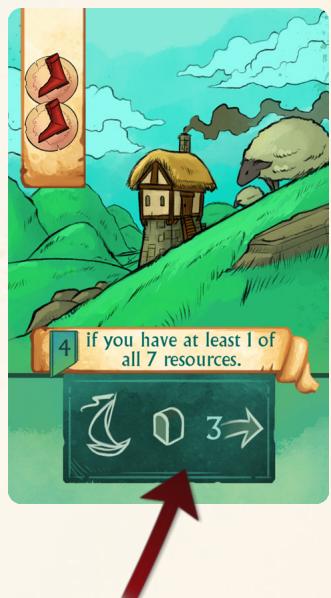
This card lets you build I boat, gain I person, and move 3, in any order.
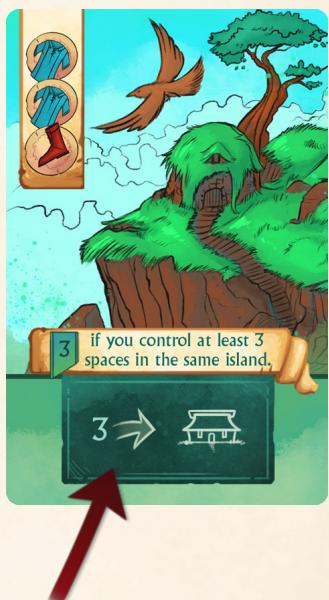
This card lets you move 3 and build 1 house, in any order.

Move
You may perform the indicated number of move actions, split between any people and/or boats.
On the map, adjacent land spaces are separated by white lines. Sea spaces are separated by dotted lines.
A move action consists of choosing one space on the board and moving any number of your people (or boats) there to an adjacent space. People must move to land spaces and boats must move to sea spaces.
For example, if you have a I-move action, you could move 6 people from one space to an adjacent space.
CROSSING A SEA: You can move a group of people across a sea if there is a boat there. To cross the sea, choose a group of people on a land space adjacent to a sea space that has a boat. Then move the group to ANY land space that is adjacent to that sea space.
If the boat is yours, this costs nothing, but if the boat belongs to another player, you must pay them a coin (and they cannot decline this). You must pay I coin per move action. For example, if you move 3 people to an island and another group of 2 to a different island using the same boat, you would pay 2 coins.
You cannot move people through multiple boats with 1 move action (moving through adjacent sea spaces with 1 move).
Crossing a sea costs I movement.
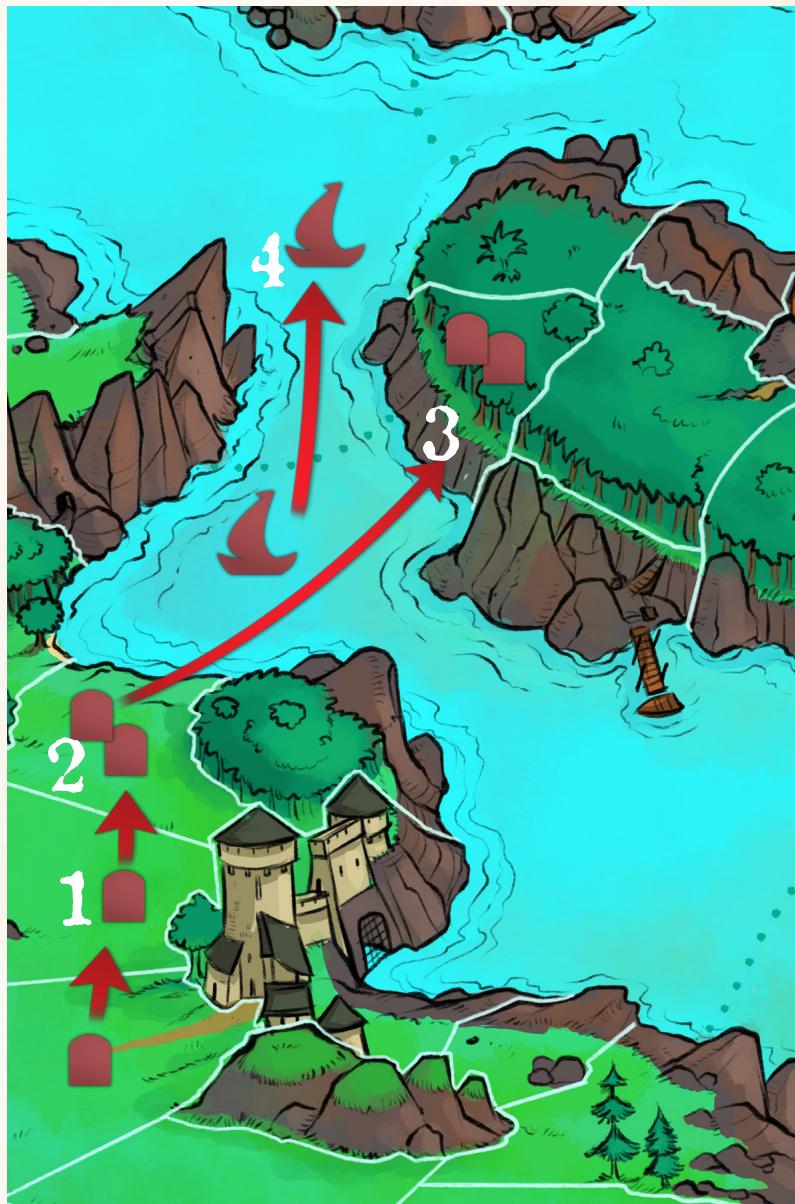
Example: You have 4 movement. You first spend 2 movement to move I person north 2 spaces to join another person that was already there. Then you cross the sea, using your boat to move the 2 people together to another island, which costs I movement point. With your last movement point, you move the boat north i sea space.
Towers
At the end of your 9th turn, you may place all towers you have. You may place a tower in a space you control, and it locks in your control for the rest of the game. Even if a player moves more people into the space and gains more control, if you have a tower there, you automatically control it. You CANNOT place towers on spaces that you do not control.
Game End
When all players have 9 cards, the game ends. Players count victory points for the following:
Spaces
Each space you control is worth 1 victory point. To control a space, you must have more people or boats there than any other player. For example, if you have 2 people and 2 other players only have 1 each, you control the space. When determining control, each house you have on a space is worth 2. So if you have a house on a space and another player only has I person, you control it. To control sea spaces, you must have more boats there than any player. If you're tied for control of a space, no one controls it and no one earns points for it.
Islands
If you control more spaces on an island than any player, you gain 1 victory point. Even if a land mass is not completely surrounded by water on the map, it is still considered an island. For example, map A has a total of 9 islands.

Trades
You also gain victory points if you have enough of each type of trade on your cards (and tokens if playing with sojourn 2). Calculate your points for each trade type: cooking, carpentry, sewing, shoe-making, art, smithing, and jewelry.
For example, if you have at least cooking, you gain 4 points. If you have 9 or more cooking, you INSTEAD gain 7 points (4 or 7, not both). If you have fewer than 4 cooking, you gain o points
Card Victory Points
Many cards have victory point objectives. If you meet the requirements listed on the card, you gain the specified victory points. These are described further on page x.
Add all these points together. The player with the most victory points wins! Coins are worth no victory points (unless you have an ability that gives points for coins, or are playing with an expansion that changes this rule). However, if players are tied for most victory points, the player with the most coins wins the tie.
10
Card Abilities
Many cards have victory point objectives or other abilities.
Objectives
Objectives award victory points at the end of the game if you meet the requirements. If you only partially meet the requirements, you do not gain the victory points.
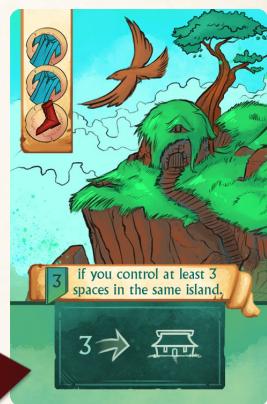
For example, if you have this card, you must have 3 or more houses on the
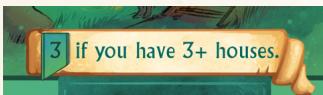
board to complete it. If you do, you gain 3 points at the end of the game.
If you have this card, you must have at least 7 cooking icons (on cards you own
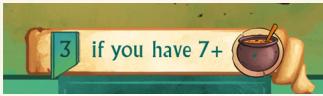
and trades tokens you have) to gain 3 points at the end of the game.
Abilities
Cards with abilities take effect as soon as you buy the card.
The card with this ability gives you 1 coin at the start of each of your turns.

It does not apply on the turn you buy it, because you gain it after the start of your turn.
The card that says, “You may build houses on spaces that contain houses," still requires you to build the house where you have at least 1 person.
To gain a bonus “when you build” something, you must place it on the map. Storing a house or boat does not count as building.
The card that says, “You may move your houses," allows you to move houses as if they were people. They may move over sea spaces. Your houses may not move into spaces that already contain houses.
If you have both of the above cards, you may move houses into spaces that already contain houses.
The card that says “Gain 1 house when you buy a 4-cost card," does not trigger itself, but activates every card purchased after it that costs 4 coins.
Expansion Rules
Specific rules for each expansion are explained below.
Places
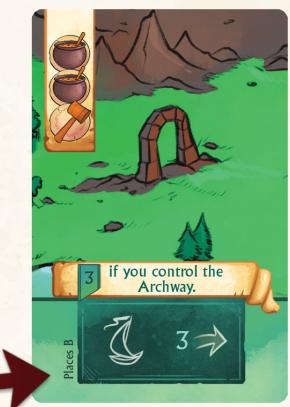
Cards with specific place objectives reward victory points if you control the space with the pictured landmark at game end.
Trades Tokens

If you control a space with a trades token at the end of the game, claim the token and add it to your trades total when calculating victory points. If tied, no one claims the token.
Specialties
To complete an objective like this, you must have at least the specified number
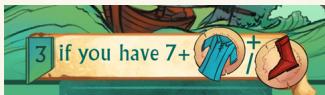
of trades (combined). For example, in this case, you could achieve this objective if you had 3 sewing and 4 shoe-making.
Upgrades
When you claim a card that says “Upgrade a Trade," you must imme-

diately place an upgrade token in a slot next to one type of trade. You may choose any unused upgrade token. The value on the token increases, or decreases, the victory point value of that trade at the end of the game (for ALL PLAYERS). The token applies to both the 4 and 7 victory point amounts. Each trade may have up to 2 upgrade tokens.
Sea Serpents
When you claim a card that says “Place a Sea Serpent," you must

immediately place a sea serpent token on a sea space. Each player that has at least 1 boat in the space must immediately pay you I coin (if they have no coins, they pay nothing). At the end of the game, each sea serpent gives I victory point to the player that controls its space. Sea spaces may contain any number of sea serpents.
Values
Each value gives a player a special ability and an ability that gives them extra victory points at the end of the game.
Feuds
When playing with this rule, each space you control that has at least one piece from another player is worth +1 victory point. Even if there are multiple players there, the point bonus is never more than 1. You can also choose to play with Fierce Feuds (the opposite side of the card), where the victory point reward increases to +2 per space that you control that has at least one piece from another player.
Exploration
During setup, shuffle the exploration tokens and place them randomly, face down, on spaces on the map, including water spaces. Each space may not have more than I explore token. When playing, if you have at least I person on a space with an explore token, you may spend r movement point to claim the explore token. Turn it face up and place it in front of you. If it is a person, you must place the person immediately. If it is a trade, keep it for the end of the game. If it is coins, gain the coins immediately. If it is a boat or a house, you can build it immediately OR save it for a later turn (place the boat or house on the explore token until placed on the board).
Mountains
Spaces with mountain tokens are harder to enter. When moving into a space with a mountain token, you can only move I person at a time. For example, if you want to move 3 people into an adjacent space with a mountain, you must use 3 movement points. Each space you control with a mountain token at the end of the game is worth ı victory point.
Shrines
On your turn, you may place 1 shrine on the board where you have a person AND there is at least I person or house belonging to another player. At the end of the game, each shrine gives I victory point to the player that controls the space. A space may contain any number of shrines.
Airship
When starting on a space with an airship token, you may pay I coin to move I group to any land space on the board for I movement point. Do not move the airship token when you do this. (The airship always returns to its dock.)
12
Volcano and Economy Expansions
Components
36 ten-value coins, volcano piece, 25 lava pieces, 6 extra houses per color, I5 extra people per color, 4 extra boats per color, 5 square markers in each color, 4 economy boards, 36 cards
Volcanoes
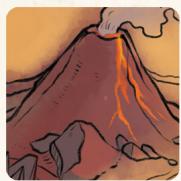
During setup, place lava tokens near the cost-ı and cost-o cards near the board. If playing on a map that does not have a volcano, place the volcano token on any land space on the map. Whenever a player purchases a cost-ı or cost-o cards, they must immediately place a lava token on the volcano space, a land space that already has a lava token, or a land space adjacent to a lava token. Lava tokens act as neutral control; to control a space with lava tokens, you must have more people (and houses, which are worth 2) than there are lava tokens.

Economy
Note: This clay pot is an extra token and you may throw it away or use it for home brew variants.
To play with this expansion, add 6 extra houses, 4 extra boats, and I extra people to each player's
supply. Each player should have a total of so people, etc. You must also play with 2 maps, instead of r. Place the maps side by side in the center of the table. Choose a starting space on each map. Each player places a house and 2 people ON EACH starting space.
When setting up the card deck, it must have at least 6o cards, so add expansions as necessary to reach this number. If using the PLACES expansion, be sure to add the cards for each map.
During setup, give each player an economy board and track tokens. Each player must place all their houses (except the starting houses) on the house track on the board, and the remaining track tokens on the spaces furthest to the left on each track. Each player only starts with 4 coins, instead of 12.
On your turn, when you buy a card, place it on the LEFT side of your player board. After you finish taking the card actions, you may choose to DEVELOP any cards on the left of your board. You can choose any number of cards that have not been developed. Note the trade icons on the cards and “spend" these icons to move up the tracks on your economy board, moving tokens on tracks to the right. Each icon can only be used once when moving up the tracks. Place the developed cards on the RIGHT side of your player board. When you reach the end of a track, place the piece off to the right of the track edge.

For example, to move on the track above, you would need to develop cards with at least I shoe-making and 1 cooking. This track would currently give you 1 coin at the end of the round (because there is 1 coin icon to the left of the track token).
At the end of each of your turns, collect coins. Collect coins from uncovered spaces on your house track, and coins for each space to the left of your track tokens on each trade track.
When taking actions, you may split the actions between the 2 maps. You may not travel BETWEEN the maps; they are not connected. But you can split movement between the maps. For example, if you have 4 movement, you can use 2 move actions on the first map and 2 on the second.
Card objectives with map-based requirements only need to be fulfilled on 1 of the 2 maps. For example, if you have the card that says “3 VP if you control 2+ islands," you only need to control 2 or more islands on 1 of the maps. If you have the card that says, “4 VP if all your controlled spaces are contiguous," they need only be contiguous on I map. If you have the card that says, “3 VP if you control more sea spaces than any player," you must only control more sea spaces than any player on 1 of the maps.
The game ends when all players have collected 14 cards (instead of9). At the end of the game, count victory points for trades as normal for ALL of your cards (whether they be on the left or right of your board). Also gain victory points for all coins you have according to the chart on the bottom of your economy board. For example, if you have 95 coins, you would gain 25 points.

Expansion Maps
Components
3 game boards (double-sided), 5s4 places cards (9 cards per map)
See the map designations on page . Specific rules for maps are explained below.
Map D (Jungle 4x)
On this map, players do not share a starting space. They each start on a different corner island on the map. During setup, in turn order, each player places their starting house and 2 people on one of the spaces on a different corner island.
Map F (Trade Isles)
On this map, at the end of the game, the player that controls more sea spaces than any player gains 4 victory points. If players are tied for control of most sea spaces, both players gain the victory points.
Map G (Lakes)
Instead of islands, there are lakes on this map. When a card objective includes the word “island," replace it with the word "lake." Each lake you control is worth 4 extra points (to control a lake, you must control the most spaces in the lake). Consider all land spaces as part of one big island (and control of the most land spaces gives you 1 extra point).


14
Simultaneous Mode
Components
4 player cost tokens, 1 ist player token
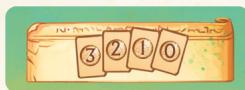
When setting up the game, deal a hand of four cards to each player. Players may not look at these cards or
change the order. Also, give each player a hand cost token. Place the ist player token near the board. Players start the game with no towers.

Game Rounds
During the game, instead of purchasing from a card row, players simultaneously select cards from their hands. This is accomplished by playing 9 game rounds, executed in the following manner:
-
Each round, the first player counts to 3, then all players simultaneously look at the cards in their hand. Each player then selects a card they would like to purchase. The cost of each card is specified on the cost token. The top card (facing the player) is free. The second card costs I, third costs 2, and fourth costs 3. When a player chooses a card, they declare out loud which one they've selected and place it face down, on the table in front of them. For example, "Second card!" The player then pays an amount of coins equal to the cost of the card. The player who declares their card first claims the ist player token.
-
When all players have chosen a card, the player with the ist Player token decides who will take their turn first.
-
Players take turns in clockwise order. On a player's turn, they reveal their chosen card and perform the actions as if it were a standard game turn.
-
After all players have completed their card actions, each player draws one card from the deck and adds it to the back of their pile of unchosen cards (their hand). Each player then passes the hand of cards to the player on their left (there should always be 4 cards to choose from, if possible).
Towers on the 9th Turn
On the 9th turn, after the ist player chooses who will go first, distribute the players' towers according to turn order (last player gets no tower, second-to-last gets I tower, etc.).
Solo Mode
Components 14 rival cards
Overview
Play vs. a simulated opponent called the "rival". The rival starts with many pieces already on the board, and it can gain more pieces throughout the game. The rival collects cards and scores victory points as a normal player, but does not collect coins and does not need to pay coins for anything. When the rival gains pieces on the board during the game, it does not follow normal placement rules.
You can mix and match expansions, except for the following, which cannot be used in solo mode: Sea Serpents, Upgrades, Values, Shrines, Volcano, and Economy.
SETUP: Shuffle the 1o rival cards and place 1 rival card above each standard card in the row so that there are 2 rows of cards. Place the deck of rival cards next to the deck of standard cards, face down. Decide the rival's level of difficulty: easy, medium, or hard.
Choose a color of pieces for the rival. The rival starts with a house and 2 people on the starting space as normal. Additionally, place 3-5 more rival houses on the map depending on the rival's difficulty.
EASY 3 more houses (total of 4) MEDIUM 4 more houses (total of s) HARD 5 more houses (total of 6)
Place these extra houses on I space on each island that isn't the starting island until you reach the difficulty's total. If there aren't enough islands, place the houses on spaces that either contain a trades token or are objectives on the places cards (if playing with these expansions). Note: If you want a harder game, place houses on spaces with many neighboring spaces. If you want an easier game, place houses on spaces with as few neighboring spaces as possible.
Place I rival boat in each sea space on the board. If there are not enough boats to place in each space, choose spaces that have trades tokens first. Place I rival person in each land space adjacent to spaces that contain rival houses.
Instructions
Each turn, when you claim a card, also claim the corresponding rival card (above the card you claim). After completing your actions and refilling the card market, consult the claimed rival card to take the rival's turn. The rival card tells you to claim a standard card from the row, and may give additional instructions.
When a rival claims a card from the row, do not perform any of the actions on the card. Only follow the action instructions on the rival card. The rival merely claims cards for their trades icons and victory point objectives. The rival ignores all other abilities on cards.
When you've completed the instructions on the rival card, discard it and slide down the rival row, drawing a new card for the 4-cost slot.
Follow the instructions on the rival cards as if you were the rival. When it says “you," it means the rival. When it says “the player," it means the rival's human opponent (you).
The rival instructions sometimes use the term SPARE PIECE, which means any boat or person on a space not needed to control it. For example, if the rival has 3 pieces on a space and you have I piece on the same space, the rival has I spare piece there, because it only needs 2 to control it.
HARD MODE: If any instructions have this label, only complete them when playing hard mode. Ignore them if playing easy or medium.
If the rival is unable to perform the specified actions, ignore them.
PLAYER ADVANTAGE: In all cases, when performing a rival action, if there are multiple possibilities, you (the player) chooses.
16
Maps
Map A
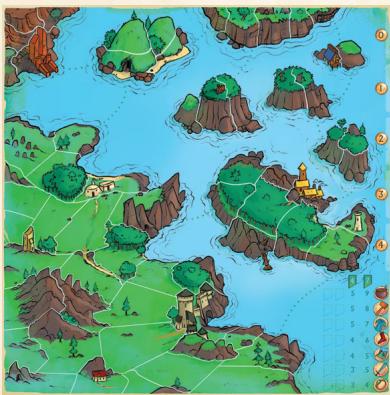
Map E
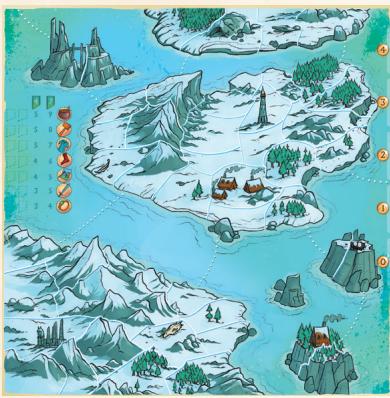
Credits Game Design: Ryan Laukat Illustration and Graphic Design: Ryan Laukat
Map B

Map F
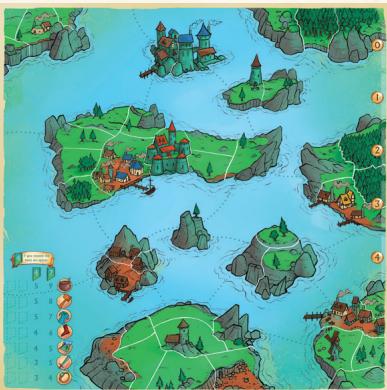
Map C
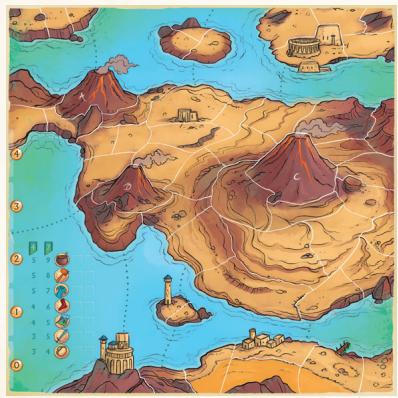
Map G
Map D


Map H

Head Developer: Malorie Laukat Development Team: Ryan Laukat, Malorie Laukat, Brandon Laukat, Brenna Asplund, Thomas Wetzel, T. Alex Davis Playtesters: Audrey St. Peter, Rachel Green, Matthew Green Copyright Red Raven Games 2025
Imported and distributed in the UK by: Esdevium Games Ltd t/a Asmodee UK Templars Way, Bordon
GU35 9GQ, UK
Imported and distributed in the EU by:
Asmodee Nordics
Valseholmen I
265o Hvidovre
DENMARK
Texts are community-compiled or publicly released by publishers; copyright remains with the original authors. For personal reference only.