
Street Masters
At a glance
Rules, cards and Q&A (Chinese)
The rules, card data and player questions for this game are written in Chinese. Open the Chinese page to read them.
Where to find full rules
Full rules and card lookup are available in the cunlema app at cunlema.cn — pick this game and ask about any rule, card or turn you are unsure about.
Related games
Rulebook text (Markdown)
This game has 2 rulebook Markdown file(s) in our library; 2 rendered inline below — expand to read or download.
rules_zh_街王_3472.md62.4 KB
STREET MASTERS
总览
街王是一款1-4人的合作游戏。每名玩家扮演一名独特的斗士,与一个被头领领导的黑恶团体进行战斗。游戏的目标是玩家在敌人完成他们的邪恶计划之前击败头领。然而一旦在游戏中有任何一名斗士被击败则立即视为玩家失利。
游戏模式
街王有2种游戏模式。街机模式是街王的主要模式,每名玩家选择控制1名斗士,然后所有玩家共同决定使用哪个敌人和场景牌组。
黄金准则
故事模式在玩法上与街机模式类似,但是在实际游玩中会延续若干个篇章,从而构成一个完整的故事故役。所有街机模式中的规则同样适用于故事模式,其中有一些特例会在本规则书中的“故事模式”章节作详细说明(第14页)。所有在本规则书“故事模式”之前叙述的规则都默认为针对街机模式。
如果卡牌上的效果与本规则书中的内容有冲突,则按照卡牌效果执行。如果多个卡牌效果的结算时序存在冲突,则优先结算场景卡牌,然后是敌人卡牌,最后是斗士卡牌。
游戏配件
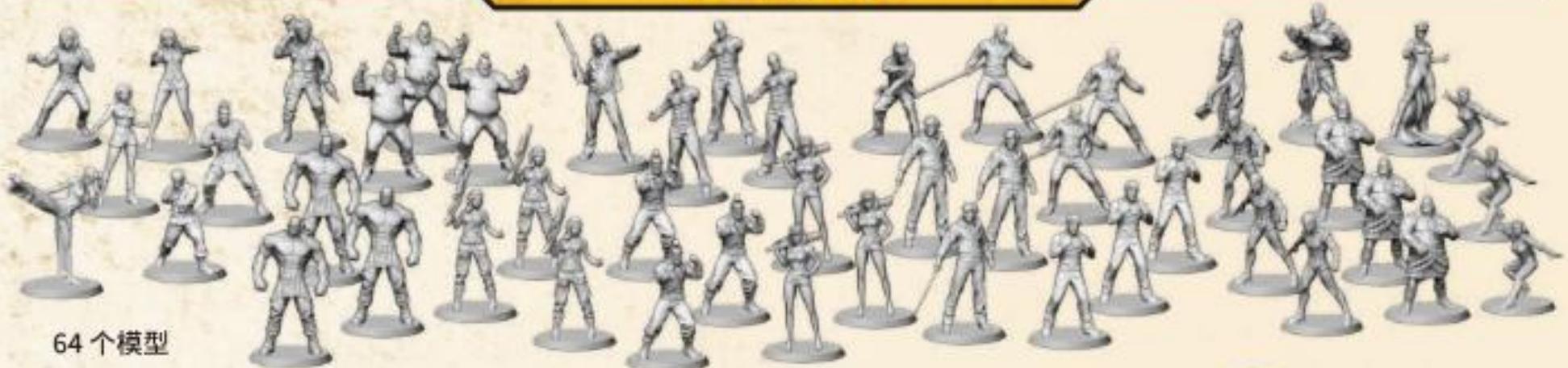
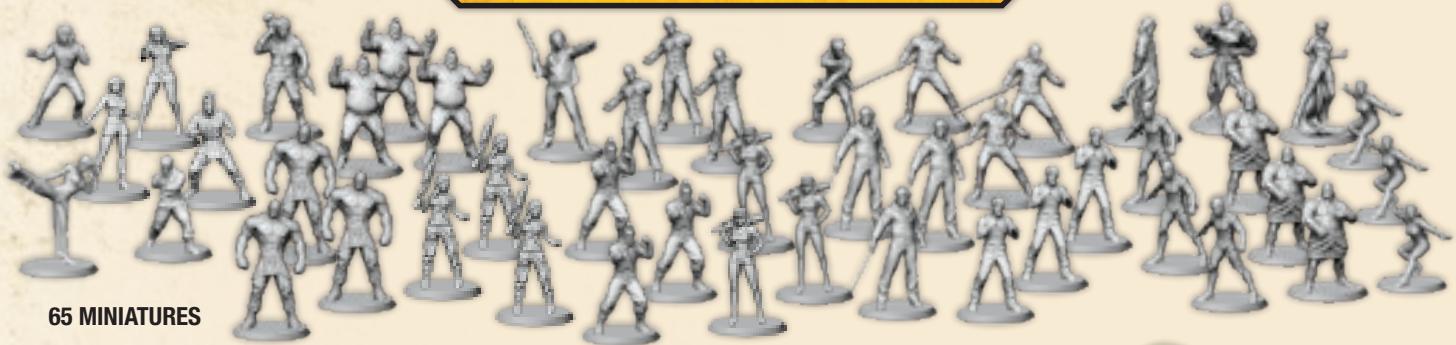
64个模型
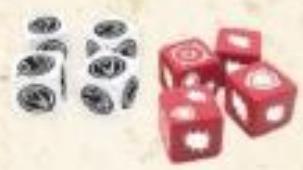

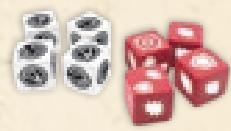
8个定制骰子
4个斗士骰子和4个敌人骰子

30 张战利品卡牌

13个底座
108 张故事卡牌
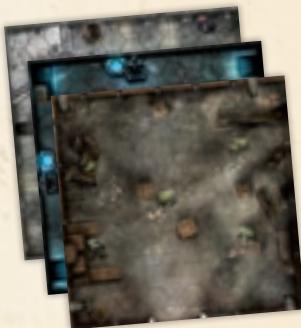
4 张双面版图

12 张盟友/爪牙卡牌
8个场景牌组
每个场景21张卡牌,共168张卡牌

6个斗士牌组
每名斗士25张卡牌,共150张卡牌

243个指示物
22张隔牌
4张回合卡
4个敌人牌组
每名敌人21张卡牌
(金龙会,兄弟会和商业联盟)
王朝有38张卡牌
共101张卡牌
81个伤害指示物
140个防御/能量指示物
5个木箱指示物
5个目标指示物
12个盟友/爪牙指示物

斗士人物卡
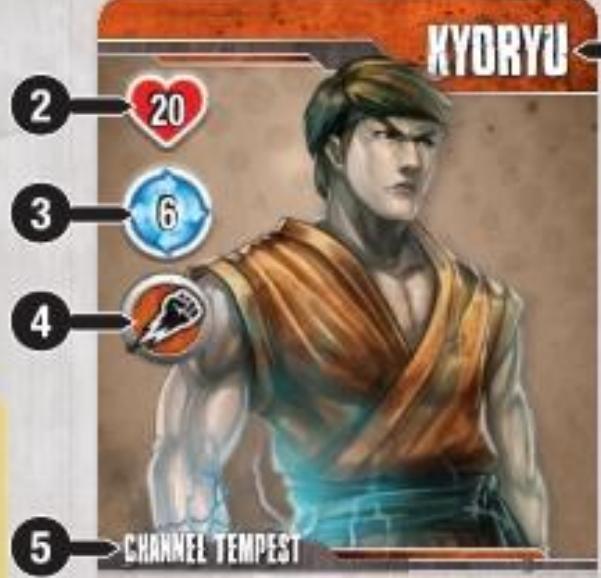
1. 斗士名称
- 生命值: 1名斗士在被击败前可以承受至多等于其生命值的伤害。

- 爆气值: 该数值代表了斗士在“爆气”前所需的能量。
- 伤害类型标识: 这是斗士结算其基础斗士行动时所造成的伤害类型。如果斗士人物卡上没有此标识, 其伤害类型会在行动中捉到。

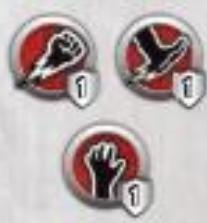
重拳伤害


飞踢伤害
投技伤害
-
基础斗士行动: 斗士总可以使用此行动。
-
卡牌名称: 这是本卡独特且切合主题的标题。
KYORYU 1
卡牌,而又有1张同名卡牌将要进场时,原先在场的卡牌将被弃掉,而新进场的卡牌将保留在场。

非煤气面
KYORYU
Action: Attack 🏠 🏠. After this attack, gain 1 power for each Tempest card you control.

- 爆气标识: 此标识代表该名斗士已经进入煤气状态。

>UNLEASH THE STORM
斗士卡
Action: Attack 🏠 🏠 🏠. This attack may target up to 3 different enemies within 4 spaces of you. Then, flip this card.
爆气面
-
独有标识: 此标识代表本卡是独有的。当1张独有卡牌在场时, 其他同名卡牌不能同时在场。如果当场上已经有1张独有
-
爆气斗士行动: 这即是斗士进入爆气状态后所能使用的终极技能。
-
卡牌类型: 此部分写明了卡牌的类型(攻击, 能力或战术)。
-
特性: 其他写在此处的特性仅适用于本牌组。这些特性会在牌组中的其他牌中提到, 专属于本牌组。
-
文本栏: 在这里叙述了该卡牌在游戏中的作用。在卡牌效果中通常会有1个或多个关键词。
-
伤害类型标识: 这是本卡所造成的伤害类型。除非特别说明, 所有由本卡造成的伤害皆为此种伤害。
3-4

1 RIDING LIGHTNING 2
Before each of your attacks, you may discard 1 power to gain +1 🔒 for that attack.
At the end of your turn, gain 1 power.
Faint: Move a number of spaces equal to your power.

重拳伤害


飞踢伤害
投技伤害
KANKETSUSEN
- You may move 1 enemy up to 3 spaces toward you and then attack 🏠 🏠 This attack targets each enemy engaged with you
升级卡牌
升级卡牌有黄金边框且右上角有▲标识。这些卡牌从属于对应的斗士故事牌组且不能被洗入斗士基础牌组中。

头领人物卡
1. 头领名称
- 生命值: 1个头领在被击败前可以承受至多等于其生命值的伤害。在数字旁的“P”代表“每名玩家”。当生命值

旁边有“P”时,将该生命值乘以游戏中的玩家数。同理,当游戏效果文本中有“P”时,它代表游戏中的玩家数。
-
从属: 这代表该头领属于哪个派系。
-
攻击值: 这代表该卡牌攻击时需要
打手人物卡
- 打手名称: 每个敌人牌组包含多张同名的打手人物卡。因为这些名字不是独有的, 所以场上可以有多个同名的打手同时在场。
- 颜色标识: 卡牌颜色必须与模型底座颜色相同。

-
生命值: 1个打手在被击败前可以承受至多等于其生命值的伤害。
-
攻击值: 这代表该卡牌攻击时需要投掷的敌人骰


场景目标卡
1. 目标名称
-
目标类型: 游戏中有3种目标: 人物, 物品和分数。这里写明了本目标卡的类型。
-
目标标识: 此标识标示了对应的目标指示物及其在版图上的起始位置。
-
颜色标识: 当需要用到模型来代表本目标时, 颜色标识代表该模型需要用到投掷的敌人骰子数。
-
文本栏: 在这里叙述了该卡牌在游戏中的作用。通常头领在文本栏中会有1个激活能力, 以及其他影响游戏的规则。
子数。
- 防御值: 当1个打手进场时, 该打手获得对应数量和种类的防御指示物。
6. 文本栏: 在这里叙述了
该卡牌在游戏中的作用。通常打手在文本栏中会有1个激活能力,以及其他影响游戏的规则。
什么颜色的底座。
- 文本栏: 在这里叙述了该卡牌在游戏中的作用。通常目标在文本栏中会有1个激活能力, 以及其他影响游戏的规则。
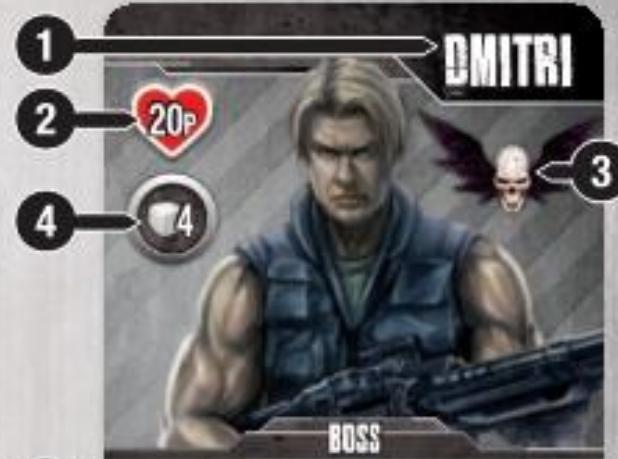
Activate: Dmitri attacks; if unable to, resolve his Equip effect. Then, Dmitri retreats 1 space.
Equip: Discard the top card of the enemy deck, then put the topmost Gear card in the enemy discard pile into play. If no Gear enters play this way, Dmitri gains 1 random defense token.
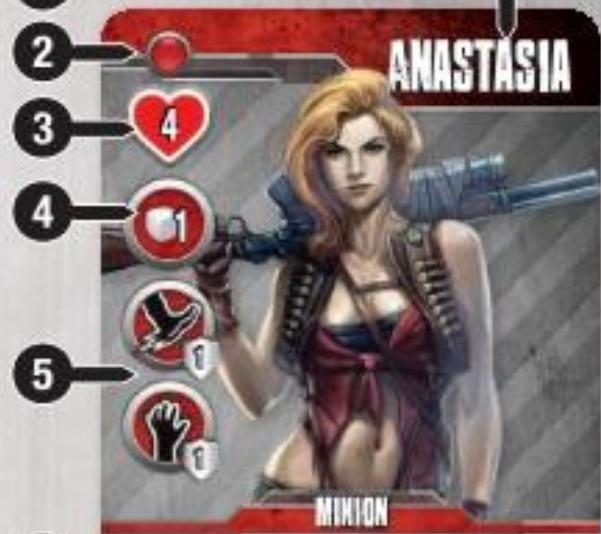
Activate: If unengaged, deal the nearest fighter within 6 spaces 1 direct damage, then move up to 3 spaces to be within 6 spaces of the nearest fighter. Otherwise, attack then retreat 3 spaces.

3 4 5
A figure deals +1 direct damage during each attack for each objective it carries. If the boss ever carries 3 objectives, the fighters knee.
Objective: The boss moves 3 spaces toward this objective. Then, if in this objective's space, the boss picks up this objective.
游戏设置
进行游戏设置时,玩家按照以下步骤依次进行:

选择斗士
每名玩家选择1个斗士牌组,找到其中的双面斗士人物卡,并将其放置在玩家的斗士区,非爆气面朝上(画有的那面)。然后每名玩家洗混各自的斗士牌组,洗好后面朝下放置在斗士人物卡一旁,同时给弃牌堆留出空间。每名玩家起手摸取4张手牌并找到相应的斗士模型。每名玩家可以在此时进行一次重调,从手中弃掉任意张数的卡牌(先不要将它们洗回牌组),然后摸取相同张数的卡牌,最后将刚才弃掉的卡牌洗回抽牌堆。

选择敌人牌组
玩家们共同选择1个将要挑战的敌人牌组。找到头领人物卡并将其放在敌人区。洗混敌人牌组,洗好后面朝下放置在敌人区一旁,同时给弃牌堆留出空间。找到与该敌人牌组对应的模型,把它们放在敌人区一旁。为每个打手模型套上底座,使每个同名打手的模型都拥有不同颜色的底座。

选择场景牌组
玩家共同选择1个场景牌组并找到其中的双面场景参考卡。将该卡(设置面朝上)放在场景区并洗混场景牌组,洗好后面朝下放置在场景区一旁,同时给弃牌堆留出空间。

设置版图
将所选的场景版图(在每张版图的角上标有场景名称)放置在桌子的中央。查阅场景参考卡上的特殊设置效果。在完成场景设置规则后,将参考卡翻至场景规则面。然后,在版图的每个位置上放置1个木箱指示物。将头领模型放置在头领起始位置,将每名斗士的模型放置在任意1个斗士起始位置上。

⑤ 准备指示物供应堆、骰子和战利品卡牌
构建伤害、防御、能量和目标指示物供应堆。将所有骰子放在所有玩家便于拿到的位置。然后将战利品卡牌洗成牌堆并将其面朝下放置在版图一旁。

拿取回合卡
每名斗士拿取1张回合卡,将其放在各自的斗士区,“斗士回合”面朝上。
第一次进行游戏
新手玩家建议在街机模式中学习游戏,选择“兄弟会”作为敌人牌组,“消失的军火”作为场景牌组,且至少有1名玩家需要选择“京隆”斗士牌组。用单人游戏来进行学习也是十分推荐的,但并不作强制要求。
打出和结算卡牌
当卡牌被打出(或从敌人和场景抽牌堆中抽出)和结算时,结算卡牌的玩家从上至下结算卡牌上的每个能力。如果卡牌上的效果与本规则书中的内容有冲突,则按照卡牌效果执行。
版图详解
场景名称: 这代表了与该版图对应的场景牌组。
头领起始位置: 此处即为头领在场景设置时被摆放的位置。

斗士起始位置: 每名斗士的模型在场景设置时必须被放在其中的1个位置。

木箱起始位置: 在场景设置时, 在每个这样的位置放置1个木箱指示物。
目标起始位置: 目标在进场时通常被摆放在这些位置。目标指示物在游戏开场时不一定在场, 它们会通过各种场景卡牌效果进场。

敌人起始位置: 当一名斗士抽取到一张打手人物卡时, 该打手进场, 将其放置到距离该斗士最近的空置敌人起始位置上 (如果所有敌人起始位置都被占据, 则放置到距离最近敌人起始位置最近的空置位置)。
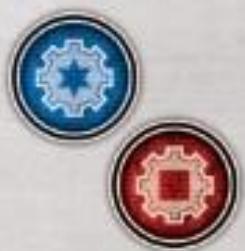

场景特殊标识:很多场景有自带规则
的独特标识。这些标识的特殊效果会在场景牌组的卡牌中加以描述。

敌人模型
一场2人游戏的设置实例

斗士区
游戏总览
一局街王的游戏中包含数个轮次,每轮按照以下次序依次执行其中的每个回合:

斗士回合: 每名斗士进行1个回合。

敌人回合: 在每名斗士都执行1个斗士回合后,玩家共同结算敌人回合。
在一轮结束时,由先手玩家执行其斗士回合以开始新的一轮。依此持续进行直到玩家胜利或者失利。

场景回合: 玩家共同结算场景回合。
胜利或失利
玩家通过击败头领获得游戏胜利。一旦有1名斗士被击败,或者场景卡牌效果触发失利条件,则玩家立即失利。
详细游戏流程

斗士回合
在一轮中,每名斗士各自执行1个斗士回合。当前执行斗士回合的斗士被称为“激活斗士”。1名斗士必须在下一位斗士执行其斗士回合之前完整执行他的斗士回合(除非使用最新的同步回合变体规则)。斗士可以按照任意顺序执行回合。回合卡可以用来记录哪些玩家已经在该轮执行了斗士回合。1个斗士回合包含以下阶段,按照顺序依次执行:
A 威胁阶段: 激活斗士重置其斗士区中的每张被消耗卡牌, 然后抽取并结算1张敌人卡牌。激活斗士无需在本阶段重置其威胁区中的被消耗卡牌。
B 执行阶段: 激活斗士可以按照任意顺序: 打出1张卡牌, 或移动至多3格, 抑或执行1个行动。

C 反应阶段: 激活斗士从左到右激活其威胁区中的每张卡牌。

D 抽牌阶段: 激活斗士从斗士抽牌堆中抽取1张卡牌, 将回合卡翻面, 即“斗士回合”面朝下, 代表该激活斗士已经执行完本轮的斗士回合。
消耗卡牌
一些效果会消耗卡牌。当卡牌被消耗时,将其旋转90度代表它已被消耗且无法再被消耗,直到被重置为止(转回正位)。
如果1个敌人被消耗了,则其无法激活。当它将要激活时,转而将其转回正位,且不结算它的“激活”效果。
A 威胁阶段
在威胁阶段开始时, 激活斗士重整其斗士区中每张被消耗的卡牌。然后激活斗士抽取并结算1张敌人卡牌。当敌人卡牌被抽取时, 该牌的类型将决定此牌的结算方式:
当1张人物卡牌(头领或打手)被抽取时,激活斗士将其放置在他的威胁区
(在最右侧卡牌的右侧)并找到对应颜色底座的模型(如果是打手的话)。模型被放置在距离激活斗士最近的空置敌人起始位置(▶)。如果场上已没有空置敌人起始位置,则将其放到距离激活斗士最近敌人起始位置最近的1个空置位置。如果该单位是个打手,激活斗士将卡牌上对应数量和种类的防御指示物放到该牌上。
当1张敌人战术或装备卡牌被抽取时,将其放到敌人区。
当1张敌人事件卡牌被抽取时,激活斗士根据卡牌文本结算其效果。通常事件卡牌在结算完效果后会被弃掉,除非它们被要求放置到1个斗士或威
敌人卡牌
游戏中有4种主要的敌人卡牌类型:人物(头领和打手),战术,装备以及事件卡牌。
敌人人物卡牌是1种特殊的敌人卡牌并自带相应的规则。标准的两种敌人人物卡牌是头领人物卡和打手人物卡。如果1张打手人物卡在非威胁阶段被抽出,如无特殊说明则由玩家决定将其放在哪名斗士的威胁区中。当1个敌人受到等于其生命值的伤害时,他就被击败:将他的模型移出版图,将其卡牌弃到敌人弃牌堆中。对该敌人造成致命一击的斗士抽取1张战利品卡牌。
虽然头领人物卡通常情况下位于敌人区,但有些特殊规则(比如有多张头
胁区。
威胁区
每名斗士都有各自的威胁区(位于其斗士区上方),通常敌人和场景卡牌被放置在这里。当一张卡牌进入1名斗士的威胁区时,该卡牌总是被放在威胁区中最右侧卡牌的右侧。此次序对记录卡牌的进场和结算顺序非常重要。
领人物卡的敌人牌组)会导致头领人物卡进场。当1张头领人物卡进场时,其规则与打手人物卡相似。
战术和装备卡牌被放置在敌人区(位于最右侧卡牌的右侧)。

事件卡牌通常在结算后被弃掉,除非该卡牌文本写明了放置的区域。
B 执行阶段
在执行阶段, 激活斗士可以以任意顺序执行以下每个环节各1次:
▶移动环节 ▶卡牌环节 ▶行动环节
激活斗士必须先完整结算完1个环节才能执行下1个环节(比如斗士不能在其移动环节移动1格,接着执行行动环节,然后再继续他的移动环节)。每个环节是可选的。
移动环节
1名斗士在执行移动环节时可以移动至多3格。此次移动必须一次性结算完成(即斗士不能先移动1格,接着执行1个不同的环节,然后再继续移动,除非卡牌效果有特殊说
占据和空置位置
占据位置:一些效果会导致位置被占据。斗士默认视敌人单位的位置为占据位置。同理,打手视有斗士的位置为占据位置。头领不会被占据位置影响,但是在移动结束时仍必须停留在1个空置位置。1个既不被视为斗士又不被视为敌人的单位所处的位置对其他单位来说不视为占据位置(比如目标)。然而,这种单位视所有敌人和斗士位置为占据位置。
如果1个效果指定1个占据位置为目标但又没有提供该位置被占据时的备选方案,则玩家应该选取1个距离该占据位置最近的空置位置作为新的目标。
空置位置: 空置位置指没有任何单位的位置。
明)。在移动时, 斗士不能穿过占据位置且移动结束时必须停留在1个空置位置(没有其他单位)。如果1个游戏效果将导致1名斗士停止移动, 则该斗士立即停留在当前位置(或最近的空置位置)且丧失剩下的通过各种效果获得的移动力。该斗士在另一个效果的作用下可以再次移动。
每当1名斗士可以移动时(通过移动环节或者卡牌效果),该斗士可以选择移动至多由各种效果允许的最多格数。他也可以选择完全不移动。强制移动效果(比如后撤或其他要求移动斗士的效果)会具体说明斗士该如何移动,此种情况下斗士需尽可能消耗为之所需的移动力。
游戏区域
游戏中有3个截然不同的区域:斗士区、敌人区和场景区。1个单位控制其所属区域中的所有卡牌。
卡牌在各个区域中被规整为1行,所以一个区域中最左侧的卡牌是最“老”的卡牌,而最右侧的卡牌是最“新”的卡牌。任何卡牌进入1个游戏区域时都被放在最右侧卡牌的右侧。
卡牌环节
激活斗士在卡牌环节能打出1张卡牌。攻击和能力卡牌被打出结算后即被立即弃掉。战术卡牌打出后被放置在斗士区并持续在场。当1张卡牌进入斗士区时,它总被放置在最右侧卡牌的右侧(即越右侧的卡牌越新)。一些效果允许激活斗士打出更多卡牌,这些效果发生于正常卡牌环节之外,除非卡牌效果特殊说明。
行动环节
在激活斗士回合的行动环节,他可以执行以下1个行动:
卡牌关键词
▶防御行动: 激活斗士获得2个随机的防御指示物。
▶卡牌行动: 激活斗士可以执行其斗士区中1张卡牌上的行动效果。1张卡牌上的每个行动在每个回合中只能被执行1次, 即使1个效果允许你再执行1次卡牌行动或该卡牌在同一个回合中离场后又重新进场。
▶奔跑行动: 此行动允许激活斗士在移动环节之外再次移动至多3格。
▶ 交互行动: 激活斗士可以结算场上任何1张卡牌上的交互效果。1张卡牌上的每个交互在每个回合中只能被执行1次,即使1个效果允许你再执行1次交互行动或该卡牌在同一个回合中离场后又重新进场。
一些卡牌上有1个或多个关键词,每个关键词紧跟着一段文本。除了几个特殊关键词专属于特定牌组以外,以下是一些在各种卡牌上常经出现的标准关键词:
行动: 此效果出现在斗士战术卡牌上且可以被激活斗士通过行动环节的卡牌行动来触发。斗士只能结算他们自己控制的卡牌上的行动关键词。
激活: 此效果叙述了1个单位的激活方式。当1名玩家激活1张卡牌时, 该玩家结算激活关键词之后的文本效果。如果1张卡牌上有激活(X)关键词(“X”表示卡牌当前所处的区域),则该效果只有在该卡牌当前处于相应区域时才会被结算,否则则无视它。
消耗: 消耗1张卡牌意味着将其旋转90度来提醒玩家该卡已被消耗。此效果可以在任何时候被控制其的斗士使用。1张被消耗的卡牌无法再次被消耗直到被重整。虽然消耗效果可以在1名斗士的常规回合之外被使用,但它无法打断另一个卡牌效果的结算过程(除非1个效果特殊说明)。比如,1名斗士无法在1个敌人卡牌的激活效果结算途中使用1个消耗效果(但可以在结算之前)。消耗效果可以用在结算另1个效果的之前或之后。当1张卡牌被另1张卡牌的消耗效果所消耗时,不要触发其消耗效果。
佯攻: 此效果可以在控制其的斗士回合中的任意时候被结算。这是1个针对斗士的可选行动,但是在完整结算完佯攻效果之后,该卡牌必须被从斗士区中弃掉。此效果不能在卡牌被强制弃掉或以另外方式移出游戏时触发。斗士必须在他的斗士回合中自发地弃掉卡牌来结算本效果。
攻击和伤害
在行动环节中,玩家经常会攻击和造成伤害。斗士可以用卡牌文本中的攻击来对单位造成伤害。斗士的攻击通过投掷斗士骰子来结算(在卡上以表示)。每次攻击的伤害类型由原卡牌所决定。攻击的伤害类型因为防御指示物(敌人和斗士都能获得)的存在变的十分重要。防御指示物可以格挡(取消)对应种类的伤害。以下是可以被造成的伤害类型:
| 伤害类型 | 描述 | |
 | 重拳伤害 | 重拳伤害可以被重拳防御指示物格挡。 |
 | 飞踢伤害 | 飞踢伤害可以被飞踢防御指示物格挡。 |
 | 投技伤害 | 投技伤害可以被投技防御指示物格挡。 |
| 普通伤害 | 普通伤害可以被任何防御指示物格挡。当1名斗士对敌人造成普通伤害时,该斗士可以选择敌人用来格挡的防御指示物。敌人在仍有防御指示物的情况下无法受到普通伤害。普通伤害在攻击的最后被结算,晚于其他所有种类的伤害。 | |
| 随机伤害 | 当1个敌人攻击时,他造成随机伤害。要结算随机伤害,被攻击的目标投掷等于进行攻击的敌人攻击值数量的敌人骰子。随机伤害经常造成多种类型的伤害。 | |
| 真实伤害 | 真实伤害完全无视所有防御指示物。只有特定的卡牌效果可以减少真实伤害。防御指示物无法用来格挡该伤害。 | |

当1个伤害类型标识出现在1张斗士卡上时,该卡牌提供的任何攻击都将造成此种类型的伤害。如果卡牌上没有伤害类型标识,则文本栏会说明造成的伤害类型。
伤害被施予后可能会导致单位承受或受到伤害。施予的伤害可以被格挡或减少,但是任何没有被完全格挡或减少的伤害就会导致单位承受或受到伤害。这个概念非常重要,因为有些只有在目标单位承受或受到伤害时才会被触发的效果只能在目标单位不能完全格挡或减少伤害时生效。
当1次攻击或效果造成伤害时,伤害类型的结算时机由玩家决定。然而,普通伤害总是在最后被结算,且永远晚于其他任何伤害。任何增加或减少伤害量的效果必须在伤害被格挡前结算。
受到(承受)和治疗伤害
每当1个单位受到一定量的伤害时,将等量的伤害指示物放在该单位的人物卡上。如果该单位已经受到等于或超过其生命值的伤害,则此单位就被击败。将他的模型移出游戏并弃掉他的人物卡。如果1名斗士被击败,则玩家失利。如果头领被击败,则玩家胜利。
每当1个单位治疗一定量的伤害时,从该单位的人物卡上移除等量的伤害指示物。
防御指示物和格挡
格挡伤害是1个重要概念,它被定义为弃掉1个或多个防御指示物来取消相应的伤害。
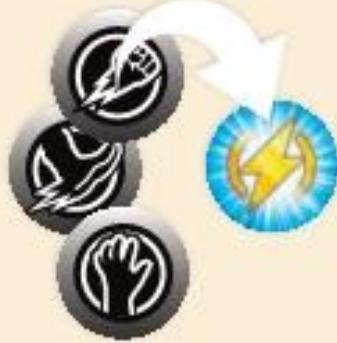
单位(不管是斗士还是敌人)可以通过各种效果获得防御指示物。防御指示物有3种,对应于3种主要伤害类型:重拳、飞踢和投技。防御指示物可以用来格挡相应类型的伤害。斗士可以自己决定是否要使用防御指示物来格挡伤害。然而,敌人必须使用防御指示物来格挡伤害,即敌人在失去所有同种防御指示物之前无法受到该种伤害。
每当1名斗士格挡1点伤害时,该斗士通过翻转对应的防御指示物到能量面来获得1点能量。这仅适用于玩家控制的斗士。除非卡牌效果有特殊说明,否则“视为斗士”的指示物/模型不会以此种方式获得能量。一些效果会导致斗士失去1个刚刚用来格挡的防御指示物。此种情况下,该玩家每有1个无法用来翻面的防御指示物,就从供应堆中拿取1个能量指示物。
攻击和骰子
通常当1个单位攻击时,他必须选择1个与之交战的单位作为攻击目标。除非卡牌效果有特殊说明,否则1个单位只能攻击与其交战的目标,且如果1个单位处于非交战状态,则他无法进行攻击。如果1个卡牌效果指定1个特定单位作为攻击目标,则进行攻击的单位无需处于交战状态。比如,如果1张敌人卡牌要求敌人攻击最近的斗士或者所有斗士,则哪怕他处于非交战状态也会攻击。在为本次攻击投掷骰子后,对目标施予伤害,接着目标能格挡(或减少)其中的一些或所有伤害。任何剩下的伤害由目标承受(因此而受到伤害),放置等量的伤害指示物到单位对应的人物卡上。
“交战”和“相邻”
1个单位和与之相邻的单位处于交战状态。在一些情况下,“交战”和“相邻”是等同的。然而,一些效果对1个单位的当前状态有特殊要求。在这种情况下,“交战”被用来表示该目标单位与1个或更多敌对单位相邻。敌人视斗士为敌对单位,反之亦然。“相邻”的概念则更为宽泛,指1个游戏配件或位置紧邻于另1个游戏配件或位置。
有些攻击会指定多个目标。除非有特殊说明,每1次指定多个单位为目标的攻击都只会进行1次投掷。多次攻击则会进行多次投掷。当1次斗士攻击指定多个单位为目标时,进行攻击的斗士只会总共结算每个防御结果1次(而不是每个目标1次)。
斗士攻击步骤
进行攻击的斗士在每次攻击时按以下步骤结算:
-
选择目标: 进行攻击的斗士选择1个与之交战的敌人作为本次攻击目标。如果此次攻击指定多个单位作为目标,则所有目标必须在此时被选取。
-
拿取骰子: 进行攻击的斗士拿取攻击中提到数量的骰子。如果1个效果将增加或减少此次投掷的骰子数,则立即在此时结算这些效果。
-
投掷和结算: 进行攻击的斗士投掷拿取的斗士骰子, 首先结算所有暴击结果, 然后结算剩下的成功结果 (见下一页的“斗士骰子”部分)。
-
获得防御指示物: 在施予所有伤害后, 激活斗士根据防御结果获得相应的防御指示物。

骰子
斗士骰子
攻击时,斗士根据原卡牌上的

数量来投掷等量的骰子。骰子会产生以下结果:

成功

成功结果会产生1点伤害。伤害类型由原卡牌决定。
防御
每有1个防御结果,激活斗士就在完整结算完攻击后获得1个防御指示物。防御指示物的类型与伤害类型相同。如果攻击仅造成普通或真实伤害,则由斗士选择获得的防御指示物类型。

成功和防御
1个成功和防御结果会提供1点伤害和1点防御。

暴击
1个暴击结果会提供1次成功且允许进行攻击的斗士投掷额外1颗骰子,并将那颗骰子的结果加入到本次攻击中。在单次攻击中可以结算的暴击结果次数没有限制。
敌人骰子
敌人进行攻击时将用到敌人骰子。每有1个结果,敌人都会造成1点相对应的伤害。敌人骰子也被用来产生随机防御指示物。

重拳

飞踢
投技
C 反应阶段
在激活斗士的反应阶段中,他将从左往右结算其威胁区中每张卡牌上的激活效果以激活它们。当1张在激活斗士威胁区中已被消耗的卡牌将要被激活时,激活斗士转而将其重整而非激活它。被消耗的卡牌不会在被重整的那个反应阶段被激活。
激活敌人
敌人的移动,前进和后撤
当1个敌人单位通过卡牌效果移动时,他可能进行移动,前进或后撤。移动是敌人在任意位置和条件下进行移动时最常用的概念。敌人可以移动穿过有其他敌人的位置,但不能穿过斗士。然而头领可以穿过任何位置,无论那个位置有什么单位。
所有敌人必须在结束移动时停留在1个空置位置。除非1个敌人起始位置是1个敌人唯一有效的停留位置,否则敌人不能在结束移动时停留在敌人起始位置。
当1个游戏效果移动1个敌人时,该效果会指明这个敌人的目的地(通常是1个非激活目标或另1个单位)。敌人总会选择通往目的地的最短路径,且会尽可能使用完其移动力,直到到达目的地。如果有多条路径都能等效地到达目的地,则由玩家选择使用哪个路径。除非目的地是1名斗士,否则敌人会尽可能避免在移动结束时与1名斗士进入交战状态,除非这是唯一一个有效位置。
前进 是当1个敌人朝1名斗士移动以进入交战状态时所用到的概念。前进时敌人会选择方向变化最少的最短路径,这样他移动进入的每一格都使其更接近于目的地。1个已经与1名斗士交战的敌人在被要求前进时不会移动,即使他被要求朝另1个不同的单位前进。如果1个敌人在前进的过程中进入交战状态,他并不会停止移动,除非这个与他交战的单位是他原来的目的地。
▶ 后撤 是当1个敌人朝远离1名斗士的方向移动以脱离交战状态时所用到的概念。后撤时敌人只会以1个方向移动(径直远离交战斗士的方向),这样他移动进入的每一格都使其更远离1名交战斗士。如果存在多个与其处于交战中的斗士,则由玩家共同决定使用这个敌人能后撤最多格的路径。1个已经处于非交战状态的敌人在被要求后撤时不会移动。后撤的敌人不能穿过任何单位的位置,此限制同样适用于头领。
“朝XX后撤”
当1个敌人被要求朝1个目的地后撤时,这种后撤与普通后撤略有不同。不同于直接朝径直远离交战斗士的方向后撤,1个朝某个目的地后撤的敌人会尝试进入1个既远离交战斗士又更接近目的地的格子。如果不能同时满足这两个条件,则不执行后撤。
如果1个效果使1个敌人朝1个目的地后撤(比如1个非激活目标),但是此时场上却没有有效的目的地,则将此次后撤视为普通后撤。
“最近的”
当1个敌人激活效果提到最近的目的地(斗士,目标等等),这代表在最有效的路径上最近的有效目的地。如果距离激活敌人最近的目的地因为任何原因无法达到(一个与斗士处于同格的目标,1个位于占据位置的目标等等),则敌人忽视这个目的地,转而朝其用最短路径及最少转向即可到达的最近有效目的地移动。如果所有目标都因为各种原因无法到达(比如斗士占据了他们的位置等等),那么敌人会指定最近的1个被斗士占据的目标位置为目的地。
敌人攻击和目标优先级
当1个敌人攻击时,该敌人会默认指定1个与之交战的斗士为目标。如果有多名斗士与之交战且攻击并没有特别指定其中1人为攻击目标,则由玩家共同选择1名斗士作为攻击目标。除非有特殊说明,否则所有敌人都在攻击时造成随机伤害。
要结算1个敌人的攻击,被攻击的目标玩家投掷等于进行攻击敌人攻击值数量的骰子。每颗骰子造成1点对应伤害类型的伤害。被攻击的目标可以选择格挡伤害。否则,该目标必须受到每点没有被格挡的伤害。
敌人的选择
当1个敌人单位被强制要求做1个选择(比如弃掉1个防御指示物)来避免1个惩罚时(比如丢下1个目标),敌人总会选择尽可能保住目标。如果敌人有多种可选结果(比如选择弃掉1种防御指示物),则由玩家共同为该敌人做出选择。为了提高挑战难度,我们鼓励玩家做出1个最有利于敌人的选择。
D 抽牌阶段
斗士回合的最终阶段即为激活斗士从斗士抽牌堆中抽取1张卡牌,然后将其回合卡翻面以表示他在本轮中已经执行了斗士回合。
方向
游戏中有6个不同的方向,由版图上每个格子连线的垂直线决定。如果对敌人应该移动的方向存在疑义时,玩家应当共同选择使用1个最有利于敌人的方向。

敌人前进
前进的敌人总会尝试使用方向变化最少的路径进行移动。两条绿色路径都是符合条件的,因为在这两个路径中敌人只改变了1次方向。
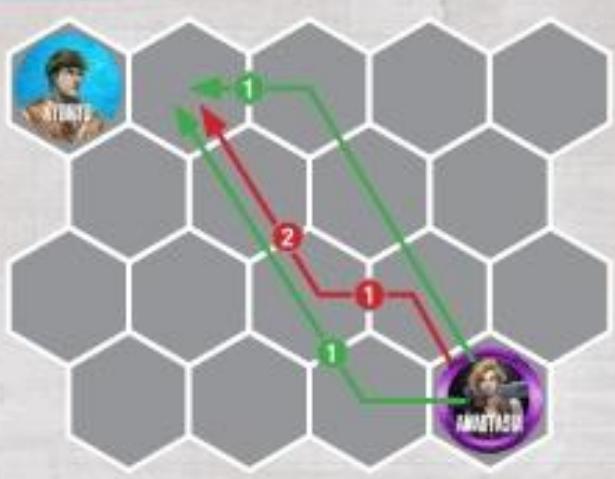
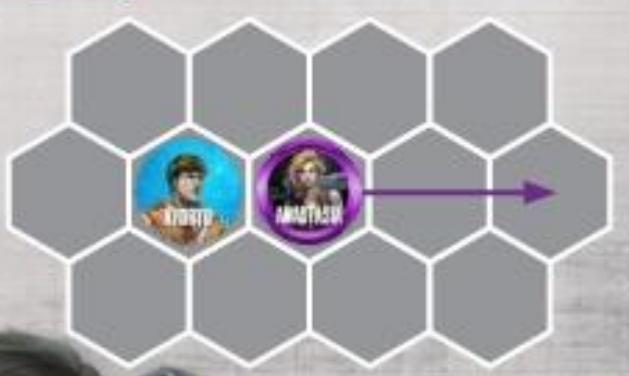
敌人后撤
后撤的敌人只会朝1个方向移动。

敌人回合
敌人回合中玩家共同从左到右激活敌人区中每张卡牌上的激活效果来激活它们。切记头领人物卡在游戏开始时位于敌人区,所以每个敌人回合都至少有1张卡牌需要被激活。
3 场景回合
场景回合中玩家共同依次结算以下每个阶段:
-
场景激活阶段: 玩家一起从左到右结算场景区中每张卡牌的激活能力来激活它们。
-
场景抽牌阶段: 玩家一起从场景抽牌堆抽取并结算1张明, 否则事件卡牌在结算后即被弃掉。查看下文来了解如何结算目标卡牌。
-
场景结束阶段: 每名玩家将他们的回合卡翻面, “斗士回合”面朝上, 然后游戏继续到下一轮。
场景状态
一些场景卡牌拥有场景状态特性。它们是1种不能通过场景卡牌效果以外方式离场的特殊卡牌。
目标指示物和目标卡牌
每个场景牌组包含1或更多张目标卡牌。每张目标卡牌对应1个目标指示物。目标指示物有两面(激活和非激活面)并有1个独特颜色符号对应版图上的相应目标起始位置。

激活目标
非激活目标
当1张目标卡牌被从场景抽牌堆中抽取时(或以其他方式进场),玩家将目标卡牌放在场景区并将对应的目标指示物(非激活面朝上)放在版图上对应的目标起始位置。除非特殊说明,在目标卡
目标物品
当1个目标指示物对应1张物品卡牌时,它的非激活面代表它此时被丢在版图上并可以被拾起。当1个目标指示物位于1张人物卡上时,它的激活面代表它正被人物卡对应的单位携带(该目标卡牌处于携带单位的对应区域同样说明了这点)。
非激活目标物品指示物可以通过不同的场景效果被捡起。除非有特殊说明,否则目标物品指示物的所处位置不属于占据位置且可以被视为1个空置区域。当1个单位捡起1个目标物品指示物时,将该指示物以激活面朝上放置在单位对应的人物卡上,并将对应的目标卡牌放到该单位的对应区域。如果1个打手捡
目标人物
当1个目标指示物对应1张人物卡牌时,该指示物被视为1个单位。场景效果会说明该单位被视为1名斗士还是1个敌人单位。如果两者都没有被提到,则该单位不属于这两者。每个目标人物单位的对应区域是场景区。
如果1个目标人物有生命值,他就可以

像斗士和敌人单位一样被击败。除非有特殊说明,否则1个目标人物被击败时不会有连带效果,1个拥有攻击值的目标人物会造成随机伤害,1个目标人物可以获得防御指示物,并可以在每次指定他们为目标的攻击中使用防御指示物来尽可能格挡伤害(与敌人类似)。
一些场景效果可以允许目标人物被捡起。在这种情况下,使用捡起/丢下目标物品的规则。
牌被弃掉时玩家将其放回至场景区。比如,当1名斗士失去1个目标时,目标卡牌就被放回到场景区且其指示物被丢下(见下述的目标物品)。
目标可以指代多种元素,比如物品,人物或分数。
起1个目标,则将目标卡牌附到其人物卡上。
当1个目标物品指示物被丢下时,将该指示物以非激活面朝上放置在距离丢下它的单位最近的空置位置(有多种情况时由玩家决定),然后它的对应卡牌就回到
场景区。除非1个目标指示物被视为1个单位,否则在同格中的目标指示物堆叠数量没有限制。
“被视为1个斗士单位”: 通常当1个非玩家控制的单位被视为斗士单位时(比如1个目标或盟友),该单位会被以玩家控制的斗士单位为目标的效果指定为目标,比如敌人的移动和攻击。然而游戏中还有一些复杂的卡牌效果,尽管它们的目标是“所有斗士”或“每个斗士”,但非玩家控制的斗士不会被它们指定为目标。比如任何导致玩家进行1次选择的效果都只会指定玩家控制的斗士为目标。由于街王的模块化特性,有时游戏中会有摸棱两可的情况,此时就由玩家共同决定如何结算这些效果。大致来说,如果1个效果要求1名斗士进行选择,或弃掉卡牌/指示物,抑或受到1个只有玩家控制的斗士才能避免的惩罚时,这个效果不会指定非玩家控制的斗士作为目标。
其他规则
附属卡牌和控制卡牌
一些卡牌会附属到其他卡牌上。当1张卡牌被附属到另1张卡牌上时,将附属卡牌放在被附属卡牌下面,以使附属卡牌的标题或文本栏可供阅读(由玩家选择哪种方式)。当1张卡牌被移出游戏时,附属卡牌也一同被移出。两张卡牌都被弃到它们对应的弃牌堆。
一些卡牌效果会指定被玩家或者敌人控制的卡牌作为目标。1位玩家控制所有位于其斗士区中的卡牌。1个敌人控制所有附属卡牌,如果是头领的话,则还包括所有位于敌人区的卡牌。任何时候1个单位弃掉1张他控制的目标卡时,该目标就被丢下。
人物卡和模型
每个游戏中的模型都有1张对应的人物卡。斗士和头领模型对应其牌组中的人物卡。
每个模型的底座颜色需要与其对应人物卡的颜色相同。当1个打手被击败时,将其人物卡弃掉,并将其模型移出版图。对该
敌人造成致命一击的斗士抽取1张战利品卡牌。
人物卡不能从游戏中被弃掉,除非他们被1个卡牌效果影响或受到了等于或超过其生命值的伤害而被击败。

Each time less carry would suffer client damage, reduce that damage by 1.
Activate Advance 3 spaces toward the nearest fighter and attack. Then, if an engaged, gain 1 random defense loss.
双面卡牌和将卡牌翻面
除非有特殊说明,否则当1张双面卡牌被翻面时,它仍保有所有原来在另一面上的指示物。此外,1张卡牌在每回合只能被激活1次,即使它在翻面后展示了1个新的激活能力。
重复人物
当有多名同名的头领和斗士时,注意指定特定名称人物为目标的卡牌效果只会影响与之属于同个牌组的单位。比如,如果你使用“无影”的斗士牌组对抗“无影”的敌人牌组,每张影响“无影”的敌人卡牌只会影响头领。
免疫
当1个能力使斗士免疫于1种伤害时(比如真实伤害),该斗士完全无视这种伤害(视其数值为0)。比如,若1个单位免疫真实伤害,则该单位仍可以被真实伤害指定为目标,但是不会受到任何该种伤害。因为该伤害数值被视为0,所以免疫该种伤害的单位无需格挡任何该种伤害。
将卡牌附属到没有人物卡的敌人上
一些敌人没有人物卡,或只有1张针对所有同种敌人的参考卡。如果有1张卡牌将要被附属到这种敌人上,玩家需要将此卡放在一旁以备参考并使用1个指示物来标记被附属的敌人单位/指示物。当该敌人被击败或离场时,附属卡牌就同普通规则一样被弃掉。
木箱和战利品卡牌
游戏设置时在每个木箱起始位置放置1个木箱指示物。当1名斗士第一次进入1个有木箱指示物的位置时,立即弃掉该指示物且该斗士立即抽取1张战利品卡牌。这可能会打断斗士的移动,但不会阻止斗士继续移动。
每当1名斗士击败1个打手时,该斗士立即抽取1张战利品卡牌。
战利品卡牌代表斗士在游戏中发现的辅助物品。当获得它们时,将其放在斗士区一旁,但它们并不属于任何区域。每张战利品卡牌都有针对其使用方式的说明。1名斗士可以在他执行阶段中的任何时候使用1张战利品卡牌上的效果,除非卡牌本身对使用时机作出了特殊说明。如果战利品抽牌堆耗尽了,则将战利品弃牌堆重洗成1个新的抽牌堆。只有玩家控制的斗士可以获得战利品卡牌。除非有特殊的卡牌效果允许,否则“被视为斗士”的指示物/模型不会获得战利品卡牌且不会与木箱指示物互动。但是当盟友将要获得战利品卡牌时,则转而将战利品卡牌交给控制其的斗士。
展示
一些效果要求玩家展示卡牌。当1张卡牌被从牌堆中展示时,让所有玩家都能看到卡牌内容。除非特殊说明,否则此卡在展示后就回到原来的牌堆顶部。当1张卡牌被从玩家手牌中展示时,让所有玩家都能看到卡牌内容。除非特殊说明,否则此卡在展示后就回到玩家的手牌中。
有一点需要注意的是,在1张卡牌被从玩家手牌中展示的那段时间里,它不属于玩家的手牌。这是1个重要的概念。此外,已经进场的卡牌无法被展示。
牌堆耗尽
任何时候,如果1名斗士从1个抽牌堆中抽牌时发现该牌堆已经耗尽,则立即将其弃牌堆重洗成1个新的抽牌堆并继续抽取剩余的卡牌。
查找卡牌
任何时候当1个游戏效果允许或要求1名玩家查找1张卡牌时,除非有特殊说明,否则该玩家必须在找到卡牌之后重洗搜寻过的牌堆。
平手
每当出现等效的方案或结果时,则由玩家共同决定选择哪种方案或结果。
独有卡牌
代表此卡是独有的。当1张独有卡牌在场时,其他同名卡牌不能同时在场。如果当场上已经有1张独有卡牌,而又有1张同名卡牌将要进场时,原先在场的卡牌将被弃掉,而新进场的卡牌将保留在场。


能量和爆气状态
每当1名斗士成功格挡1点伤害时,该斗士获得1个能量指示物并将其放在他的斗士人物卡上。当1名斗士拥有等于或者超过其煤气值的能量指示物时,立即弃掉等于其煤气值数量的能量指示物并将斗士人物卡翻至煤气面。该名斗士现在处于“煤气”状态并可使用终极技能。斗士可以保留任何剩下的能量指示物。如果斗士在翻回非煤气面后仍有足够的能量进行煤气,则立即再次进入煤气状态。

CHANNEL TEMPEST
Action: Attack 📄 🏠. After this attack, gain 1 power for each Tempest card you control.
在这个例子中,因为京隆有6个能量指示物,所以玩家必须弃掉这6点能量来使其进入爆气状态。
KYORYU

UNLEASH THE STORM
Action: Attack 🔒 🔒 🔒. This attack may target up to 3 different enemies within 4 spaces of you. Then, flip this card.
定制街机模式和狂野模式
当使用定制街机模式游玩时,玩家可以选择使用其故事牌组中的升级卡牌来对斗士牌组进行构筑,玩家可以选择将牌组中的每种卡牌各1张替换为对应的升级卡牌。或者玩家可以使用狂野模式,直接在牌组中加入所有升级卡牌。
故事模式
街王中的故事模式需要一组固定的斗士进行一系列剧情化的场景战役。每个故事以故事牌组为导向,故事牌组中包括故事场景卡牌,强化/惩罚卡牌,以及其他在故事中会出现的补充卡牌。以下限制适用于所有故事:
▶玩家共同选择1个单独的主线故事牌组进行游玩。为了防止出现遗漏和记录失误,玩家应该每次只进行1个激活故事(这不包括“斗士故事”及“敌人故事”)。
故事场景卡牌详解
一旦玩家们选好了故事中的斗士,他们就必须一直使用这几个斗士进行故事中的每个场景。
1.故事名称: 这是故事的标题, 每张故事牌组中的卡牌顶部都会有标题。
2.故事类型:主线故事牌组是标准类型的故事,如果是其他类型的故事牌组则会在此处标明(比如斗士故事)。
▶ 加入故事池的卡牌在故事中每个场景开始时进场。详见下一页的“故事池”部分。
3.序言: 每张故事场景卡牌的正面是序言面, 其中会有1段序言, 在故事开始之前需大声朗读这段内容。
5.胜利结果: 故事场景卡牌背面的上半部分写有玩家成功达成故事条件后将发生的故事内容(不一定需要胜利)。
4.设置:故事场景卡牌的底部写有场景设置规则以及其他特殊规则。
- 失利结果: 故事场景卡牌背面的下半部分写有玩家无法达成故事条件后将发生的
COMEBACK
Brandon sipped his macchiala, waiting for any sign of his stalker. Thinking back to what she said to him, he started to feel oddly ashamed of his expensive sunglasses, his ridiculous watch, the ostentatious car parked nearby.... All of it reminded him of her accusations.
"You're not a real martial artist," she spot at him in passing. "You just pretend to be one. Have you ever been in a fight with someone who's not planned every step ahead of three? Have you ever even taken a bit?"
He threw his still-steaming macchiato in the nearby Trafficman. "What are I doing here?" he said to himself. "What do I have to prove?" But even as he said it, he knew he had to prove it. He pulled out his cell phone. "Mike. Get the crew ready. I have a documentary idea, so bring all the gear. And find the girl. She can have her fight, but on my terms..."
Stage Setup: Put "Isabella" (rival) into play. Place the Isabella room in any empty space within 6 spaces of a fighter start space. Put the "Film Crew" park into play in your fighter play area.
故事内容(不一定是失利)。
7.尾声: 每张故事场景卡牌的背面是尾声
If Irs diabetes or deforced
Brandon helped Isabella up. "What is it that you want?" She primed as she rubbed her head, nodding to the camera. "Need a coster?"
"sa" (ally) and the "Film Crew" park to the story pool. Choose 2 upgrade cards to add to the story pool. Advance to Part 2A.
If Isolate is not defeated
Isabella stood over Brandon, shaking her head. "Such a shame. I thought you were real. I guess I'll have to go where the real fighters are. We'll meet again, movie star..."
"Cut!" Brandon shouted to the camera crew, ashamed of his foolish idea of making a comeback documentary. It was over
Add "Isabella" (rival) and the "Something to Prove" penalty to the campaign pool. Choose 1 upgrade card to add to the story pool. Advance to Part 28.
PART 1 EPILOGUE
面,在该场景结束时结算该面。
开始1个故事
要开始1个故事,小队在正常游戏设置前需要选择1个主线故事牌组作为激活故事。大声朗读该故事牌组“第1章”的“序言”面故事内容。然后开始设置第1个故事场景。
设置1个故事场景
查看场景设置卡来确定第1个故事场景是否需要1个特定的敌人牌组或场景牌组,如需要则在游戏设置时选择那个组合。此外,一些设置效果会入引新类型的卡牌,比如强化,惩罚,爪牙或盟友卡牌。这些概念会在之后详述。
在结算完当前故事场景卡的场景设置效果后,玩家将故事池中的所有卡牌放置进场。每张故事池中的卡牌都拥有与游戏互动的独特效果。详见右侧的“故事池”。
1个故事场景的胜利与失利
除非特殊说明,否则所有常规的胜利与失利条件都适用于该故事中的场景。一些故事场景会引入新的胜利或/和失利条件,这些新条件需要与现有的条件共存。在确定本场景的胜败后,将其故事场景卡翻至“尾声”面,玩家大声朗读其中与此次结果相符的故事内容和结算效果。
完成1个故事
玩家在每个场景结束后继续进入下一个场景,直到1个特定的故事效果要求玩家完成故事。此效果也会判定整个故事的胜败。最终的胜败通常取决于一系列因素,包括斗士是否在最终场景中胜利等等。
强化和惩罚
在设置中,每名斗士找到他们从故事池中获得的每张强化卡牌,并将它们放入其斗士区。同样,每名斗士找到他们从故事池中获得的每张惩罚卡牌,并将它们放入其威胁区。像往常一样结算这些卡牌上的设置效果。
如果1张没有从属的强化或惩罚卡牌被加入到故事池,则视为整个小队获得。玩家可以自由选择将它们放到哪个斗士或威胁区。
强化和惩罚卡牌不能离场,除非受到该卡本身效果的影响。如果1张强化或惩罚卡因为1个卡牌效果被弃掉,则如无特殊说明,一律将其移出游戏,但该卡仍留在故事池中。
故事池
小队会在故事进程中不断积聚卡牌,这些卡牌被放在一起,称为“故事池”。小队使用1个共用的故事池,但小队需记录或记住哪名斗士获得了故事池中的哪张卡牌。故事池中没有单独被1名斗士获得的卡牌被视为由整个小队一起获得。当开始1个新的故事场景时,每张故事池中的卡牌都需要被放置进场。大部分卡牌都会说明如何将该卡放置进场,以下将会详细介绍故事池中每种卡牌的进场方式:
▶ 强化/惩罚卡牌: 如果强化或惩罚卡牌属于1个特定斗士的“斗士故事”牌组,该斗士将此卡放置在其威胁区(惩罚卡牌)或斗士区(强化卡牌)。
▶爪牙卡牌: 故事池中的爪牙卡牌被放置在获得它的斗士的威胁区中。如果并没有单独1名斗士获得该爪牙,则玩家自由决定放置在哪名斗士的威胁区中。玩家将对应的爪牙指示物(或模型)放置在1个距离头领最近的空置位置。
盟友卡牌: 故事池中的盟友卡牌被放置在获得它的斗士的斗士区中。如果并没有单独1名斗士获得该盟友,则玩家自由决定放置在哪名斗士的斗士区中。玩家将对应的盟友指示物(或模型)放置在1个距离控制其的斗士最近的空置位置。
▶ 斗士升级卡牌: 每张斗士升级卡牌可以替换1张同名卡牌,以此加入到对应的斗士牌组中。每张因此从斗士牌组中移出的卡牌在当前场景进行中被放置在一旁,并会在场景结束后回到原牌组中。
▶ 敌人升级卡牌: 每张敌人升级卡牌可以替换1张同名卡牌,以此加入到对应的敌人牌组中。每张因此从敌人牌组中移出的卡牌在当前场景进行中被放置在一旁,并会在场景结束后回到原牌组中。如果1张敌人升级卡牌对应的敌人牌组并不在场,则该卡牌仍留在故事池中。
斗士故事
斗士故事与主线故事非常类似,不同的是每名斗士可以在主线故事中同时进行自己的斗士故事。大部分斗士故事场景卡牌没有特定的场景/敌人组合要求,这意味着多张斗士故事场景卡可以在主线的1个场景中被同时结算。
奖励场景
每张拥有奖励场景关键词的斗士故事场景卡牌将在主线故事中引入1个额外的场景。当玩家准备设置故事的下一个场景时,他们可以共同决定是否进行1个来自1张斗士故事场景卡牌的奖励场景。当进行1个奖励场景时,根据其故事场景卡上的设置规则选择对应的场景和敌人牌组用于本次奖励场景。该部分信息会在故事场景卡上以以下方式呈现:
▶ 奖励场景 (场景名称): 敌人牌组名称
如果玩家选择不进行奖励场景,则将其卡牌放在一旁且不结算它,直到玩家选择进行该场景。在推进主线故事的进程中不进行任何奖励场景也是可行的,但这意味着该奖励场景所属的斗士故事将无法推进,直到玩家选择进行该场景。如果主线故事结束时仍有未进行的奖励场景,则那些奖励场景所属的斗士故事也视为未完成。

盟友和爪牙
虽然爪牙和盟友是两种单位,但以下规则都适用于两者:
▶爪牙和盟友是占据位置的单位且使用敌人骰子进行攻击。
▶爪牙和盟友拥有生命值,当他们受到等于或超出其生命值的伤害时即被击败。
当1个爪牙或盟友被击败时,将他们移出游戏(但仍留在故事的故事池中,除非有特殊效果将他们移出故事池)。
如果1个故事效果将要在故事池中加入1个爪牙/盟友,但该人物的盟友/爪牙模式已经在故事池中时,该人物的盟友/爪牙模式需要被替换为爪牙/盟友模式。
如果1个故事效果将要在故事池中加入1个爪牙/盟友,但该
人物的爪牙/盟友模式已经在故事池中时,则无视该效果。
当1个盟友或爪牙进场时,他们获得其卡牌上对应种类和数量的防御指示物。
每当1个盟友将要获得1张战利品卡牌时,转而由控制其的斗士获得该卡牌。每当1个卡牌效果使1个盟友在攻击时获得额外的1个时,转而提升该盟友的攻击值1点。
盟友
盟友是在游戏中辅佐斗士的人物。盟友被视为非玩家控制的斗士,这意味着他们会像斗士般被敌人指定为目标。因为盟友不是玩家控制的斗士,他们无法在格挡时获得能量,不会与木箱指示物互动,不能抽取卡牌,也不能获得战利品卡牌(但可以帮助控制其的斗士获得)。
爪牙
爪牙是游戏中阻挠斗士的敌人单位。爪牙被视为会在其人物卡所处威胁区所属的斗士反应阶段被激活的敌人单位。当1个爪牙被击败时,击败他的斗士获得1张战利品卡牌。
在街机模式中使用盟友和爪牙
当玩家选择在街机模式使用1个或更多盟友和/或爪牙时,每名斗士可以选择至多1个盟友和1个爪牙加入游戏。不管在故事还是街机模式中以上限制都适用。
盟友/爪牙在街机模式中的设置规则
在常规设置后,每名选择1个盟友加入游戏的斗士将该盟友人物卡放置在其斗士区,并将盟友的指示物(或模型)放置在距离其最近的空置位置。同样的,每名选择1个爪牙加入游戏的斗士将该爪牙人物卡放置在其威胁区,并将爪牙的指示物(或模型)放置在距离头领最近的空置位置。
镜像爪牙和盟友
当使用1个与场上人物同名的爪牙或盟友时,该爪牙或盟友被称为“镜像爪牙”或“镜像盟友”。镜像爪牙和盟友不会被指定特定名称人物为目标的卡牌效果所影响。比如,如果1个“德拉戈”盟友(爪牙)和兄弟会敌人牌组同时在场,任何兄弟会卡牌中指定“德拉戈”为目标的效果不会影响“德拉戈”盟友(爪牙)。
同样的,当1个镜像爪牙/盟友卡牌效果以名称指定自己为目标时,其他在场的同名单位不会受此影响。
CREDITS
Publisher: Blacklist Games, LLC
Game Design & Development: Adam and Brady Sadler
Producer: Max Lei
Graphic Design: Chris Doughman
Writing & Story Development: Nicholas Kory
Editing: Sarah Sadler
Art Director: Max Lei
Art: The Creation Studio
Sculptors: Jin Wei, Jin Villa, Icarus Miniatures
Game Development & Playtest Lead: Mitch Schroeder
Playtesters: David Schneider, Jeff Russell, Nikki Flores, Alex Faurote, Dan Ormond, Andrew Cleverley, Matthieu Oricelli, Brian Bergdall, Scottie Mick, Joey Brogan, Sam Migues, Mitchell Gibson, Michel-Alexandre Larré, Koa Gasper, Allyssa Perry, Etienne Bonnaud, Justin McNeil, Kendra McNeil, Dustin Savage
Dedicated to Vincent (姨丈) and Susanna (亞姨) Tsang
Download MarkdownStreet Masters Rulebook 091818 REV2.md68.8 KB
王
RULES OF PLAY
8 CUSTOM DICE
4 FIGHTER DICE AND
4 ENEMY DICE
OVERVIEW
Street Masters is a cooperative board game for 1-4 players. Each player takes on the role of a unique fighter facing off against a villainous enemy faction led by a powerful boss. The object of the game is for the players to defeat the boss before the enemies' sinister plan comes to fruition. Players will also lose the game if any fighter is defeated
MODES OF PLAY
GOLDEN RULE
There are two main ways to play Street Masters. Arcade Mode is the core game, in which each player chooses a fighter to control, and the players collectively choose an enemy deck to face off against as well as a stage in which to battle.
Story Mode plays similarly to Arcade Mode, but is played across several game sessions, linking each game together to form a narrative campaign. All rules that govern Arcade Mode also apply to Story Mode, with a few exceptions that are detailed in the “Story Mode" section of this rulebook (page 14). All rules in this book up until the “Story Mode" section assume players are playing Arcade Mode.
If any card effect contradicts a rule found in this rulebook, the card effect takes priority. If there is ever any conflict in card effect timing when several effects would resolve at the same time, priority goes to stage cards, then enemy cards, then fighter cards, in that order.
GAME COMPONENTS
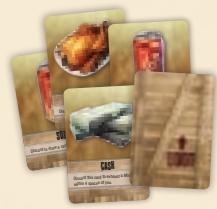
20 LOOT CARDS
4 DOUBLE-SIDED MAP TILES
13 SNAP-ON BASES
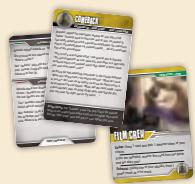
108 STORY CARDS

12 ALLY/RIVAL CARDS

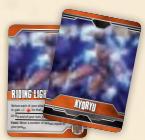
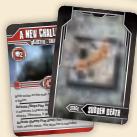
8 STAGE DECKS
21 CARDS PER STAGE, 168 CARDS TOTAL
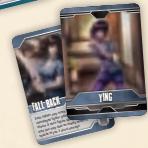
6 FIGHTER DECKS25 CARDS PER FIGHTER,150 CARDS TOTAL

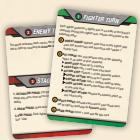
4 TURN CARDS
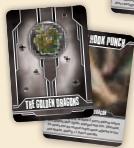
4 ENEMY DECKS
21 CARDS PER ENEMY + 1 KINGDOM REFERENCE CARD, 85 CARDS TOTAL
243 TOKENS

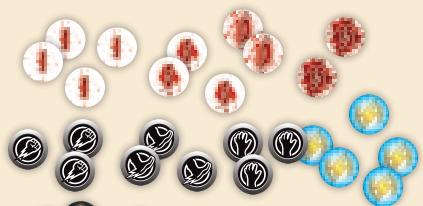
81 DAMAGE TOKENS
140 DEFENSE/POWER TOKENS
5 CRATE TOKENS
5 OBJECTIVE TOKENS
12 ALLY/RIVAL TOKENS

FIGHTER CHARACTER CARDS
1. NAME OF FIGHTER
- HEALTH VALUE: A fighter can suffer damage up to their health before being defeated.

- CHARGE VALUE: This value indicates how much power a fighter needs before becoming "charged."
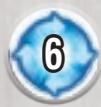
- DAMAGE TYPE INDICATOR: This is the type of damage dealt by the fighter when resolving their basic fighter action. If a fighter card does not have this damage type indicator, the damage type will be described by the action ability.

PUNCH DAMÁGE

KICK DAMAGE

GRAPPLE DAMAGE
5. BASIC FIGHTER ACTION: This is
the action that is always available to the fighter.
FIGHTER CARD
- NAME OF CARD: This is the card's unique and thematic identifier.
2. UNIQUE ICON: This icon
indicates that the card is unique. When a unique card is in play, no other card of that name can

be in play as well. If a unique card enters play while a copy of it is already in play, the card that was in play is discarded and the card that was just played stays in play.
-
CARD TYPE: This trait indicates what type of card it is (Attack, Ability, or Tactic).
-
TRAITS: Any other traits listed here apply only to the deck to which the card belongs. These traits are referenced by other cards in the deck, making that trait unique to the deck.
5. DAMAGE TYPE INDICATOR:
This is the type of damage dealt by the card. Unless otherwise specified, all damage dealt by the card will be of this type.
- TEXTBOX: This text defines what the card does.
There will often be 1 or more keywords in the card effect.
KYORYU-①
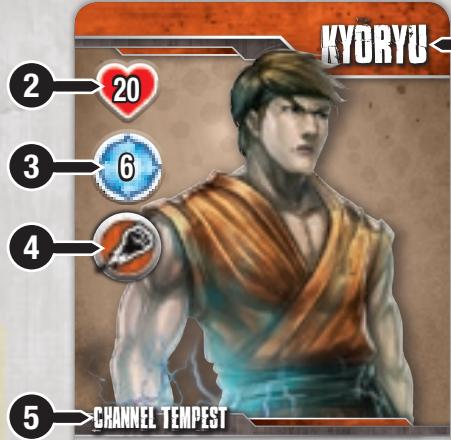
Action: Attack. After this attack, gain 1 power for each Tempest card you control.
CHARGING SIDE
6. CHARGED ICON: This
icon indicates that the fighter is charged.


①RIDING LIGHTNING2
Before each of your attacks, you may discard 1 power to gain +1for that attack.
At the end of your turn, gain 1 power.
Feint: Move a number of spaces equal to your power.


PUNCH DAMAGE

KICK DAMAGE
GRAPPLE DAMAGE
You may move 1 enemy up to 3 spaces toward you and then attack . This attack targets each enemy engaged with you.

Action: Attack .This attack may target up to 3 different enemies within 4 spaces of you. Then, flip this card.
CHARGED SIDE
- CHARGED FIGHTER ACTION: This is the signature action available to a fighter when they become charged.
KANKETSUSEN
UPGRADE CARDS
Upgrade cards are identified by gold borders and the upgrade iconin the top right corner of the card. These cards belong in the associated hero story deck and should not be shuffled into the fighter's standard deck.
BOSS CHARACTER CARD
1. NAME OF BOSS
2. HEALTH VALUE: A bOSS
can suffer damage up to his/ her health value before being defeated. The P next to a numerical value represents

"per fighter."When the health value has a P next to it, multiply that value by the number of fighters in the game. Likewise, when a P appears in any game effect, it always represents the number of fighters in the game.
- AFFILIATION: This indicates which faction the boss belongs to.
ENEMY MINION CARD
1. NAME OF MINION: Each enemy deck
contains multiple copies of minions with the same name. Because these names are not unique, there can be multiple minions of the same name in play at the same time.
- COLOR INDICATOR: This shows the correspondence between the card and the minion figure of the card's type with the matching color base.
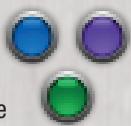
- HEALTH VALUE: A minion can suffer damage up to its health value before being defeated.

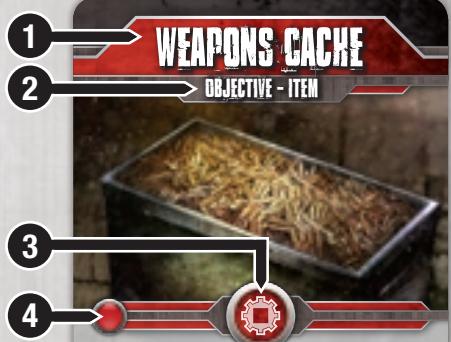
STAGE OBJECTIVE CARD
1. NAME OF OBJECTIVE
- TYPE OF OBJECTIVE: There are 3 standard types of objectives: characters, items, and points. This trait indicates which type of objective this card represents.
3. OBJECTIVE ICON:
This icon indicates where the matching objective token is placed on the map, and identifies the corresponding objective token.

4. ATTACK VALUE: This
indicates how many enemy dice are rolled when that card attacks.

-
TEXTBOX: This outlines how that card functions in the game. Typically, a boss will have an Activate ability in the textbox, as well as any other rules that govern how the boss affects the game.
-
ATTACK VALUE: A card's attack value indicates how many enemy dice are rolled when that card attacks.

- DEFENSE VALUE: When a minion enters play, that minion gains a certain number of 1 or more types of defense tokens.

- TEXTBOX: This outlines how that card functions in the game. Typically, a minion will have an Activate ability in the textbox, as well as any other rules that govern how the minion affects the game.
4. COLOR INDICATOR:
When a miniature is optionally used to represent the objective, this indicator signifies that the chosen objective figure with the

matching base corresponds to this card.
- TEXTBOX: This outlines how that card functions in the game. Typically, an objective will have an Activate ability in the textbox, as well as any other rules that govern how the objective affects the game.


Activate: Dmitri gains 2 random defense tokens and attacks each fighter engaged with him. Then, each target of that attack must discard 1 grapple defense token; if at least 1 fighter cannot, Dmitri retreats 2 spaces.

Activate: If unengaged, deal the nearest fighter within 6 spaces 1 direct damage, then move up to 3 spaces to be within 6 spaces of the nearest fighter. Otherwise, attack then retreat 3 spaces.
A figure deals +1 direct damage during each attack for each objective it carries. If the boss ever carries 3 objectives, the fighters lose.
Objective: The boss moves 3 spaces toward this objective. Then, if in this objective's space, the boss picks up this objective.
To set up the game, players perform the following steps in order:

CHOOSE FIGHTERS
Each player chooses 1 fighter deck, locates the chosen fighter's double-sided character card in that deck, and places that card so the Chargingsymbol is faceup in their play area. Then, each player shuffles their fighter deck and places it facedown next to their fighter's character card, leaving room for a discard pile. Each player draws a starting hand of 4 cards and collects their fighter's figure. Each player may choose to perform one mulligan at this time by discarding any cards from their opening hand and drawing replacements, shuffling the discarded cards back in.

CHOOSE ENEMY DECK
The players collectively choose an enemy deck to play against. Locate the boss card and place it faceup in the enemy play area. Shuffle the enemy deck and place it facedown near the enemy play area, leaving room for a discard pile. Locate the figures for the chosen enemy deck and place them near the enemy play area. Place the colored bases on the enemy minions so that each minion figure of a specific type has a different colored base than any other figures of that type.

CHOOSE STAGE
The players collectively choose a stage deck and locate that stage's double-sided reference card. Place this card (Setup side up) in the stage play area and shuffle the stage deck, placing it facedown near the stage play area, leaving room for a discard pile.

SETUP MAP
Place the chosen stage's map tile (indicated by the stage's name in the corner of the map tile) in the middle of the table. Refer to the stage reference card for any special setup effects. After following the stage setup rules, flip the reference card over to its Stage Rules side. Then, place 1 crate token on each crate icon on the map. Place the boss' figure on the boss start space, and each fighter places their fighter figure on any fighter start space.

PREPARE TOKEN POOLS, DICE,
Create supply pools for the damage, defense, power, and objective tokens. Place all the dice within easy reach of all the players. Then, shuffle the loot cards into a deck and place it facedown near the board.

DEAL TURN CARDS
Each fighter takes 1 turn card, placing it near their play area so the “Fighter Turn” side is faceup.
YOUR FIRST GAME
New players should begin learning the game in Arcade Mode, choosing “The Brotherhood” enemy deck and the “Gone Ballistic” stage, and at least one fighter should choose the “Kyoryu” fighter deck. Learning the game single player is also recommended, but not required.
PLAYING & RESOLVING CARDS
When cards are played (or drawn from the enemy or stage deck) and resolved, the player resolving the card resolves each ability on the card from top to bottom. Some card effects contradict the game rules presented in this rulebook; in these cases, card effects take precedent.
MAP TILE BREAKDOWN
Stage Name: This indicates which stage deck corresponds with this map tile.
Boss Start Space: This is where the boss figure is placed during stage setup.
Fighter Start Space: Each fighter figure must be placed on 1 of these spaces during stage setup.
Crate Spaces: During stage setup, 1 crate token is placed on each of these spaces.
Objective Spaces: These spaces are typically where objective tokens will enter play. Objective tokens do not always start in play, and will enter play through various stage card effects.
Entry Spaces: When a minion enters play, it always enters the map on the entry space nearest the fighter that drew that minion's card (or the empty space nearest that entry space).



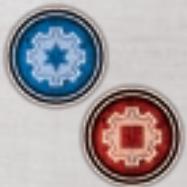

Stage Specific Icons:
Many stages introduce unique icons that have specific
rules. The effects
of these icons are
explained on the cards
in the associated
stage deck.

EXAMPLE SETUP OF A TWO-PLAYER GAME
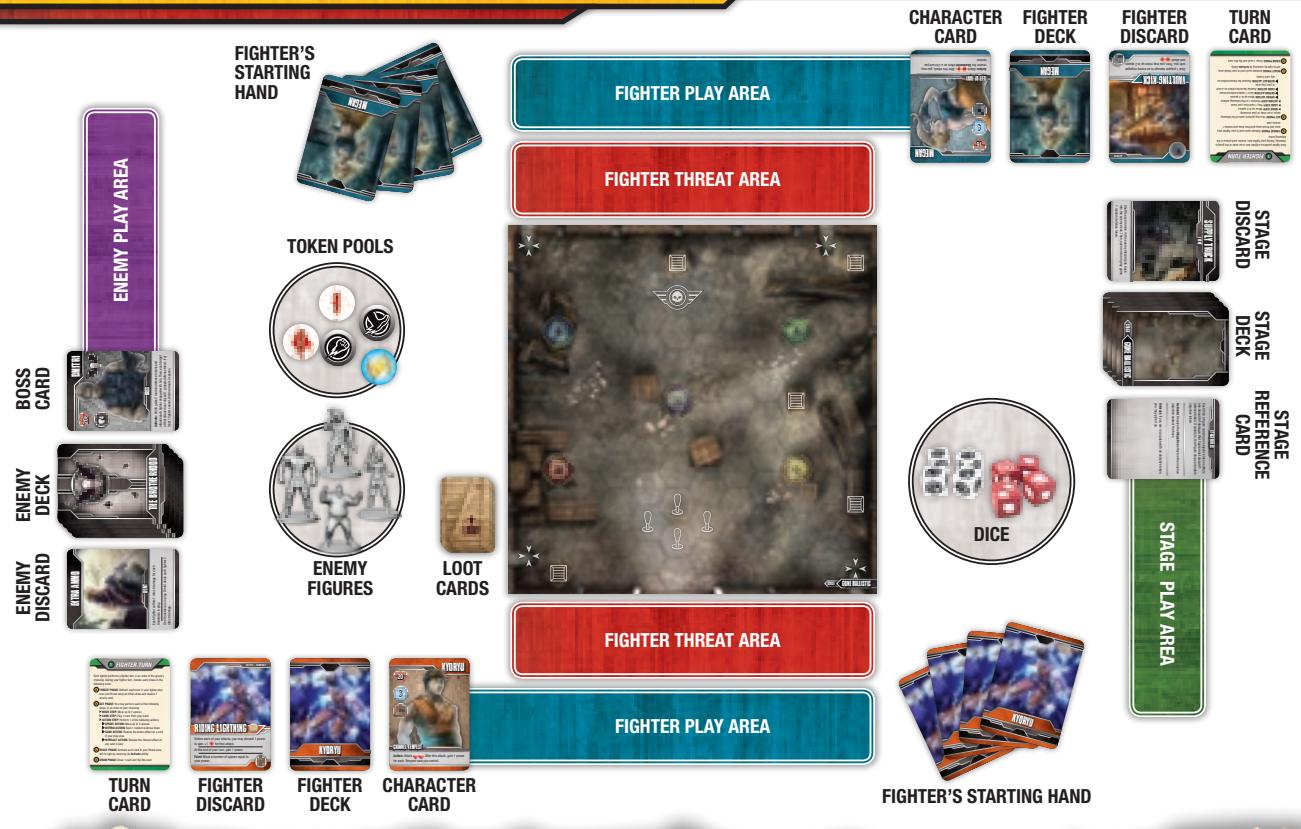
GAMEPLAY OVERVIEW
Street Masters is played over a series of rounds, with each round consisting of the following turns completed in order:
FIGHTER TURNS: Each fighter takes a turn.
ENEMY TURN: After each fighter takes a turn, the players resolve the enemy turn.
STAGE TURN: The players resolve the stage turn.
At the end of the round, players begin a new round with the first player's fighter turn. This continues until the players either win or lose.
WINNING AND LOSING
The players win the game by defeating the boss. The players lose if a fighter is defeated or if a stage card effect causes them to lose.
DETAILED GAMEPLAY

FIGHTER TURN
During a single round, each fighter individually takes a fighter turn. The fighter currently taking a fighter turn is referred to as the “active fighter." A fighter turn must be fully resolved by the active fighter before the next fighter begins their fighter turn. Fighters may take turns in any order. Turn cards track which players have already taken a turn that round. A fighter turn consists of the following phases, resolved in order:
THREAT PHASE: The active fighter refreshes each exhausted card in their fighter play area and then draws and resolves 1 enemy card. The active fighter does not refresh exhausted cards in their threat area during this phase.
B ACT PHASE: In any order, the active fighter may play 1 card, move up to 3 paces, and perform 1 action.
CRACT PHASE: From left o right, the active fighter activates each card in their threat area.
DRAw PHASE: The active fighter draws 1 card from their fighter deck and then flips the turn card so that the “Fighter Turn” side is facedown, indicating that the active fighter has completed their turn for the round.
EXHAUSTED CARDS
Some effects cause cards to become exhausted. When a card is exhausted, it is tilted sideways 90 degrees to note that it is exhausted and cannot be exhausted again until it is readied (returned to normal).
If an enemy is exhausted, that enemy cannot activate. When it would activate, it instead readies and does not resolve its “Activate” keyword.

THREAT PHASE
At the start of the threat phase, the active fighter readies each exhausted card in their fighter play area. Then, the active fighter draws and resolves an enemy card. When an enemy card is drawn, that card's type determines how that card is resolved:
When a character card (Boss or Minion) is drawn, the active fighter places that card in their threat area (to the right of the rightmost card) and locates the figure with the colored base that matches the card's color indicator (in the case of a minion). The figure is then placed on the empty entry space $( \succ _ { \star } ^ { \Psi } \mathbf { \prec } )$ nearest the active fighter. If no empty entry spaces remain, place the enemy in an empty space adjacent to the nearest entry space. If it is a Minion, the active fighter places defense tokens according to the type and quantity indicated by the minion card's defense value.
▶ If an enemy Tactic or Gear card is drawn, it is placed in the enemy play area.
ENEMY CARDS
There are 4 main types of enemy cards: character (Boss and Minion), Tactic, Gear, and Event cards.
Enemy character cards are a special type of enemy card that have specific rules governing them. The 2 standard types of enemy character cards are boss and minion. If a minion card enters play outside of a player's threat phase, unless otherwise specified, the players choose which player's threat area that minion is placed in. When an enemy suffers damage equal to its health value, that enemy is defeated: its figure is removed from the map and its card is discarded to the enemy discard pile. The fighter that dealt the final damage resulting in the enemy's defeat draws 1 loot card.
▶ If an enemy Event is drawn, the active fighter refers to the card text to resolve the card's effect. Typically, Event cards are discarded after the effect is resolved, unless they are played to a play area or threat area.
THREAT AREA
Each fighter has their own personal threat area (located directly above their fighter play area), where enemy and stage cards are typically placed. When a card enters a fighter's threat area, that card is always placed so that it is the rightmost card in the threat area. This order is important to keep track of which cards came into play in which order.
While boss cards typically remain in the enemy play area, some special effects (such as enemy decks with multiple boss cards) will cause a boss card to enter play. When a boss card enters play, it is treated similarly to a minion card.

Tactic and Gear cards are played in the enemy play area (to the right of the rightmost card).
Event cards are typically resolved and discarded, unless that card's textbox indicates an area in which it is put into play.
B ACT PHASE
During the act phase, the active fighter may perform each of the following steps in any order:
Move StepPlay Card Step Action Step
The active fighter must fully resolve each step before beginning a different step. (e.g., a fighter cannot move 1 space during its move step, perform its action step, and then continue its move step.) Each step is optional.
MOVE STEP
A fighter may move up to 3 spaces when performing a move step. 'This movement must be resolved all at once (i.e., the active fighter may not move 1 space,
perform a different step, and then continue moving, unless a card effect allows it). When moving, a fighter may not move through blocked spaces and must end their movement in an empty space (containing no other figure). If a game effect would cause a fighter to stop moving, the fighter ends their movement in their current space (or nearest empty space) and loses any additional movement they have remaining from the current game effect; that fighter may move again if different game effect would allow them to move.
BLOCKED AND EMPTY SPACES
BLOCKED SPACES: Some effects will cause spaces to be blocked. By default, a fighter treats each space containing an enemy figure as a blocked space. Likewise, minions treat each space containing a fighter as a blocked space. Bosses are not affected by blocked spaces, but must still end their movement in an empty space. Spaces that contain a figure that is not treated as a fighter or enemy (such as an objective) do not block spaces for other figures; however, such figures treat all spaces containing enemies or fighters as blocked.
Any time a fighter is given the choice to move (either during a move step or from a card effect), that fighter may choose to move up to the number of spaces allowed by the effect; that fighter may also choose to not move at all. Forced movement effects (such as retreat or other effects that forcibly move fighters) indicate how the fighter should move, in which case the fighter must satisfy the entire movement cost, if able.
If an effect targets a blocked space and provides no alternative effect if the space is blocked, the players should choose the empty space nearest the blocked space to be the target of the effect.
EMPTY SPACE: An empty space is a space that contains no figure.
PLAY AREAS
There are 3 distinct types of play areas in the game: fighter play areas, the enemy play area, and the stage play area. A figure is considered to control each card in its play area.
Cards are kept in a row in each play area so that the leftmost card is the “oldest" card in that play area, and the rightmost card is the “newest."Any card that enters a play area is placed to the right of the rightmost card in that play area.
PLAY CARD STEP
The active fighter may play 1 card during the play card step. Attack and Ability cards are played, resolved, and then discarded. Tactic cards are played into the fighter play area and remain in play. When a card is played into a play area, it is always placed to the right of the card most recently played into that play area (i.e., the cards go oldest to newest, left to right). Some effects allow the active fighter to play additional cards. These effects occur outside of the normal play card step, unless a card effect specifies otherwise.
ACTION STEP
During the action step of the active fighter's turn, they may perform 1 of the following actions:
Defend Action: The active fighter gains 2 random defense tokens.
Card Action: The active fighter may perform the Action effect on 1 of the cards in their fighter play area. Each action on a single card can only be performed once per turn, even if an effect would allow the fighter to perform additional actions or if that card leaves and enters play again during that turn.
▶Sprint Action: This action allows the active fighter to move up to 3 spaces in addition to their normal move step.
▶Interact Action: The active fighter may resolve the Interact effect on any card in play. Each interact on a single card can only be performed once per turn, even if an effect would allow the fighter to perform additional interacts or if that card leaves and enters play again during that turn.
CARD KEYWORDS
Some cards have 1 or more keywords, each one followed by a text effect. While there are some special keywords that are unique to specific decks, below are the standard keywords that may appear on various cards:
ACTION: This effect appears on fighter Tactic cards and can be resolved by the active fighter using the card action during the act step. Fighters may only resolve the Action keyword on cards that they personally control.
ACTIvATE: This effect instructs how a game element activates. When a player activates a card, that player resolves the text effect that follows that card's Activate keyword. If a card has the Activate (X) keyword (where “X” would be a card's current play area), that effect will only be resolved if the card is currently in the specified play area; otherwise, it is ignored.
EXHAuST: Exhausting a card means to tilt it sideways 90 degrees to remind the players that it has been exhausted. This effect can be used at any point by the controlling fighter exhausting the card. A card that is exhausted cannot be exhausted again until it is readied. While an Exhuast effect can be used outside of a fighter's normal turn, it cannot be used to interrupt another card effect that has not fully resolved (unless an effect specifically says so). For example, a fighter cannot use an Exhaust effect after (but before completing) an enemy card's Activation effect. Exhaust effects can be used before or after resolving another card's effect. When another effect exhausts a card with an Exhaust effect, do not trigger its Exhaust effect.
FEINT: This effect can be resolved at any time during the controlling fighter's turn. This is an optional effect that the fighter can choose to trigger, but after fully resolving the Feint effect, the associated card must be discarded from the fighter's play area. This effect is not triggered if the card is forcibly discarded or otherwise removed from play. The fighter must voluntarily discard the card during their turn in order to resolve this effect.
ATTACKS AND DAMAGE
During the act step, fighters will typically attack and deal damage. Fighters can deal damage to cards by performing the attacks listed in the effect text of cards. Fighter attacks are resolved by rolling a number of fighter dice indicated by the attack (appearing as on cards). Each attack deals a certain type of damage determined by the card providing the attack. The type of damage an attack deals is important because of defense tokens (gained by both enemies and fighters). Defense tokens can block (cancel) matching types of damage. Here are the different types of damage that can be dealt
| ATTACK TYPE | DESCRIPTION |
Punch  Damage | Punch damage can be blocked by punch defense tokens. |
Kick  Damage | Kick damage can be blocked by kick defense tokens. |
Grapple  Damage | Grapple damage can be blocked by grapple defense tokens. |
| General Damage | General damage can be blocked by any defense tokens. When a fighter deals general damage to enemies, that fighter may choose which defense tokens the enemy uses to block. General damage cannot be suffered by an enemy that still has any type of defense token. General damage is always applied to an attack last, after all other types of damage have been dealt. |
| Random Damage | When an enemy attacks, it deals random damage. To resolve an enemy attack, the target of the attack will roll enemy dice equal to the attacking enemy's attack value. Random damage usually results in more than 1 type of damage being dealt during an attack. |
| Direct Damage | Direct damage completely bypasses defense tokens. Only specific card effects can reduce direct damage; defense tokens cannot be used to block it. |
When a damage type icon appears on a fighter card, any attack that card provides will deal the type of damage indicated by the icon. If no icon is present on a card, the textbox will indicate what type of damage is dealt.
Damage is both dealt and then potentially inflicted or suffered. Dealt damage can be blocked and reduced, but any damage that is not blocked or reduced is either inflicted or suffered. This concept is important because effects that are triggered by figures actually suffering damage or inflicting damage will only trigger if that damage is not entirely blocked and/or reduced.
During an attack or an effect that deals damage, the timing of damage types is resolved by player choice. However, general damage is always applied last, after each different type of damage has been applied. Any effects that reduce or increase the amount of damage dealt are applied before damage is blocked.
SUFFERING AND HEALING DAMAGE
Each time a figure suffers any amount of damage, an equal number of damage tokens are placed on that figure's card. If that figure has suffered damage equal to or in excess of its health value, that figure is defeated; its figure is removed from the board and its card is discarded. If a fighter is defeated, the fighters lose. If the boss is defeated, the fighters win.
Each time a figure heals any amount of damage, an equal amount of damage is removed from that figure's card.
DEFENSE TOKENS & BLOCKING
Blocking damage is an important term, and is defined by discarding 1 or more defense tokens of the appropriate type to cancel incoming damage.
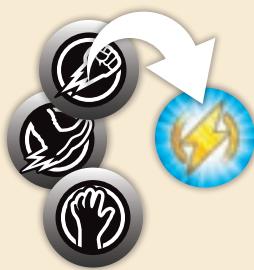
Figures (both enemies and fighters) gain defense tokens through various game effects. Defense tokens come in 3 types, corresponding to the 3 main types of damage: punch, kick, and grapple. Defense tokens are spent to block incoming damage of a matching type. Fighters have the option to spend defense tokens to block incoming damage; however, enemies must spend defense tokens to block incoming damage—i.e., enemies cannot suffer damage of a certain type unless they have no defense tokens of that type remaining.
Each time a fighter blocks a point of damage, that fighter gains 1 power by flipping the appropriate defense token to its power side. 'This only applies to player-controlled fighters; tokens/miniatures that are “treated as fighters" do not gain power this way unless allowed by a specific card effect. Some effects will cause a fighter to lose a defense token which they just used to block damage. In these cases, the player should gain 1 power token from the supply for each defense token they are unable to flip from such effects.
ATTACKING & DICE
Typically, when a figure attacks, it must choose a figure engaged with it to be the target of the attack. Unless a card effect specifies, a figure may only attack engaged targets, and if the figure is unengaged, it is not able to attack. If a card effect indicates a specific target of an attack, the attacking figure does not need to be engaged. For example, if an enemy card instructs the enemy to attack the nearest fighter or each fighter, the enemy will attack even when unengaged. After rolling dice for the attack, the resulting damage is dealt to the target, and that target has the opportunity to block (or reduce) some or all of that damage. Any remaining damage is inflicted on the target (who in turn suffers that damage), placing that amount of damage on the figure's corresponding character card.
Some attacks target multiple targets. Unless otherwise specified, each single attack uses a single die roll that affects all targets. Multiple attacks use multiple die rolls. When a single fighter attack targets more than one figure, the attacking fighter will only resolve each guard effect once total (not once for each target).
FIGHTER ATTACK PROCEDURE
For each attack they perform, the attacking fighter resolves these steps in the following order:
-
CHOOSE TARGET: The attacking fighter chooses an enemy engaged with them to be the target of the attack. If the attack targets multiple enemies, all target choices are made now.
-
GATHER DICE: The attacking fighter gathers a number of dice indicated by the attack. If a game effect would add or subtract dice from the attack, resolve those effects now.
“ENGAGED WITH”AND “ADJACENT TO”
A figure is engaged with each figure it is adjacent to. In some instances, the terms “engaged with" and “adjacent to" are interchangeable. However, some effects will target the current state of a figure. In this case, the term “engaged" is used to signify that the target figure is adjacent to 1 or more opponents. Enemies treat fighters as opponents and vice versa. The term “adjacent to" is more broad, referring to any game component or space being next to another game component or space.
-
ROLL & RESOLVE: The attacking fighter rolls the gathered fighter dice, resolving each critical result first, followed by all remaining success results (see “Fighter Dice" on the following page).
-
GAIN DEFENSE TOKENS: After all damage has been dealt, the active fighter gains defense tokens provided by any guard results.
DICE
FIGHTER DICE
When attacking, fighters roll a number of dice indicated by the number of

SUCCESS
A success result generates 1 damage. The type of damage is dictated by the card that provided the attack.

GUARD
For each guard result, the active fighter gains 1 defense token after fully resolving the attack. The type of defense token gained matches the type of damage dealt. If the attack deals only general or direct damage, the fighter may choose which type of defense token to gain.

on the card that provides the attack. The dice generate the following results:

SUCCESS/GUARD
A success/guard result provides 1 success and 1 guard.

CRITICAL
A critical result provides
1 success and allows the attacking fighter to roll an additional die, adding that result to the attack. There is no limit to the number of critical results that can be resolved during a single attack.
ENEMY DICE
The enemy dice are used when enemies attack. For each result, the attacking enemy deals 1 damage of the corresponding type. Enemy dice are also used to generate random defense tokens.
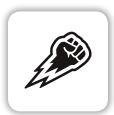
PUNCH
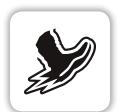
KICK
GRAPPLE


©REACT PHASE
During their react phase, the active fighter activates each card in their threat area, from left to right, by resolving its Activate effect. When an exhausted card in the active fighter's threat area would be activated, the active fighter readies that card instead of activating it; exhausted cards do not activate during a react phase in which they readied.
ACTIVATING ENEMIES
MOVING, ADVANCING, & RETREATING ENEMIES
When an enemy figure is moved by a card effect, it either moves, advances, or retreats. Moving is a general term used when an enemy moves regardless of its current position. Enemies may move through spaces containing other enemies, but not fighters. Bosses, however, can move through any space, no matter what figure is in that space. All enemies must end their movement in an empty space. Enemies will only end their movement in an entry space if that is the only valid space in which to end their movement.
When a game effect moves an enemy, the effect will indicate what that enemy is moving toward (typically an inactive objective or another figure). Enemies will always take the shortest path to their destination and will move up to their full movement until they reach their destination. In the case of multiple paths that are equidistant to the enemy's destination, players choose which path the enemy takes. However, enemies will avoid ending their movement engaged with a fighter unless there are no other valid spaces in which the enemy can end its movement.
Advancing is the term used when an enemy moves toward a fighter to become engaged. When advancing, an enemy will follow the shortest path in the fewest directions possible so that each space it moves into is directly closer to the target it is advancing toward. An enemy that is already engaged with a fighter does not move when it is instructed to advance, even if it is instructed to advance toward a different figure. If an enemy becomes engaged while advancing toward a destination, it will not stop advancing unless it is engaged with the target it began its advancement toward.
▶Retreating is the term used when an enemy moves away from a fighter to become unengaged. When retreating, an enemy will move in a single direction (the opposite direction from the engaged fighter) so that each space it moves into is directly farther away from an engaged fighter. In the case of multiple engaged fighters, the players collectively choose which fighter from which the enemy can retreat the most spaces. An enemy that is already unengaged does not move when it is instructed to retreat. Retreating enemies cannot move through spaces occupied by figures; this includes bosses.
“RETREAT TOWARD”
When an enemy is instructed to retreat toward a destination, this type of retreat modifies the standard rules for retreat. Instead of retreating directly away from an engaged fighter, an enemy that is retreating toward a destination will attempt to retreat into a space that is both further away from an engaged fighter and closer to the destination that it is retreating toward. If it cannot fulfill both conditions, the retreat is not resolved.
If an effect causes an enemy to retreat toward a target (such as an inactive objective) and no valid target is in play, treat this effect as a normal retreat.
“NEAREST”
When an enemy activation effect refers to the nearest target (fighter, objective, etc.) this implies the nearest eligible target following the most eligible path. If the target nearest the activating enemy is for any reason inaccessible (an objective in the same space as a fighter, an objective in a blocked space, etc.), the enemy will ignore that target for the activation and move toward the nearest eligible target that it could eventually reach using the quickest path and the least number of directions. If all objectives are inaccessible for any reason (such as fighters occupying their spaces, for example), then the enemy will target the nearest objective space occupied by a fighter.
ENEMY ATTACKS & TARGET PRIORITY
When an enemy attacks, that enemy will automatically target an engaged fighter. If more than 1 fighter is engaged to an attacking enemy and none are directly targeted by the attack, the players collectively choose which fighter becomes the target of the attack. Unless otherwise specified, all enemies deal random damage when they attack.
To resolve an enemy attack, the target of the enemy attack rolls dice equal to the attacking enemy's attack value. Each die will deal 1 damage of the type matching the result. The target of the attack has the opportunity to block this damage; otherwise, that target suffers each unblocked result as a point of damage.
ENEMY CHOICES
When an enemy figure is forced to make a choice (such as discard a defense token) in order to avoid a penalty (such as dropping an objective), the enemy will always choose to suffer any penalty before dropping or otherwise losing an objective. If the enemy has multiple choices (such as discarding 1 of several defense tokens of various types), the players collectively make the choice for the enemy. For a more challenging experience, players are encouraged to make these types of decisions in a way that most benefits the enemies.

DRAW PHASE
The final phase of a fighter's turn consists of the active fighter drawing 1 card from their fighter deck and then flipping their turn card to signify that they have taken a turn this round.
DIRECTIONS
There are 6 different directions in the game, determined by the lines between each hex on the map. If there is ever confusion about a direction that the enemy should go, players will mutually decide what direction most benefits the enemy, and use that direction.
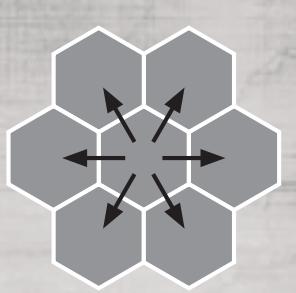
ENEMY ADVANCING
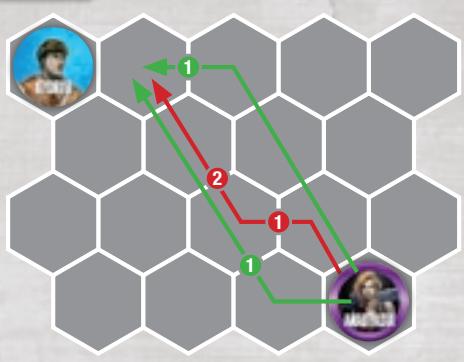
Advancing
enemies will
always try to
use the fewest
number of
DIFFERENT
directions when
it moves. Either
green path is
considered
correct, where
the enemy is only changing direction once.
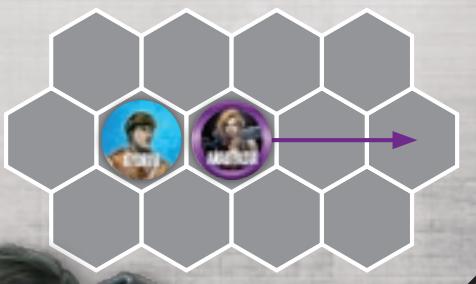
ENEMY RETREATING
Retreating
enemies will only ever use one
direction.


ENEMY TURN
The enemy turn consists of the players collectively activating each card in the enemy play area by resolving the Activate effect of each card (from left to right). Remember that the boss' character card begins play in the enemy play area, so there will be at least 1 card to activate during each enemy turn.

STAGE TURN
The stage turn consists of the players collectively resolving each of the following phases in order:
-
STAGE ACTIVATION PHASE: The players activate each card in the stage area by resolving the Activate ability of each card (left to right) in the stage play area.
-
STAGE DRAW PHASE: The players draw and resolve 1 card from the stage deck. Event cards are resolved and discarded, unless otherwise specified on the card. See below for resolving Objective cards.
-
STAGE END PHASE: Each player flips their turn card so that the "Fighter Turn" side is faceup, and then play continues to the next round.
STAGE CONDITIONS
Some stage cards have the Stage Condition trait. These are a unique type of card that cannot leave play except through stage card effects.
OBJECTIVE TOKENS AND OBJECTIVE CARDS
Each stage deck contains 1 or more objective cards. Each objective card corresponds to an objective token. Objective tokens have 2 sides (active and inactive) and a unique symbol on them that match certain spaces on the map.

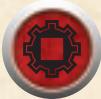
ACTIVE OBJECTIVE
INACTIVE OBJECTIVE
When an objective card is drawn from the stage deck (or otherwise put into play), the players place the objective card in the stage play area and place the matching objective token (inactive side up) on the matching
objective space on the map. Unless otherwise specified, when objective cards are discarded they are returned to the stage play area. For example, when a figure loses control of an objective, its card is returned to the stage play area and the token is dropped (see Objective Items below).
Objectives can represent various things, such as items, characters, or points.
OBJECTIVE ITEMS
When an objective token corresponds to an Item card, its inactive side indicates that it is on the map and can be picked up. While an objective token is on a figure's card, its active side indicates that the figure corresponding to that card is carrying it (also represented by the matching objective card moving to the carrying figure's play area).
figure's play area. If a minion would pick up an objective, that objective's card is attached to the minion while that minion carries it.
Inactive item objective tokens can be picked up through different stage effects. Unless otherwise stated, item objective tokens do not block spaces and may be treated as empty spaces. When a figure picks up an item objective token, that token is placed active side up on the figure's card and the matching objective card is put into that
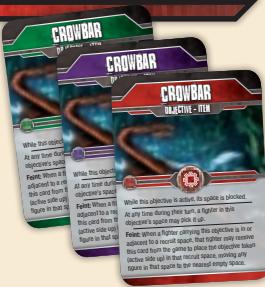
When an item objective token is dropped, that token is placed inactive side up in the nearest empty space adjacent to the figure
OBJECTIVE CHARACTERS
When an objective token corresponds to a Character card, that token is treated as a figure. Stage effects may indicate that this figure is treated as a fighter or an enemy figure; if not, the figure is treated as neither. The stage play area is the designated play area for each objective character figure.
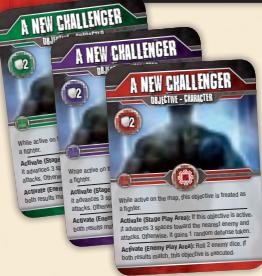
If a character objective has a health value, it can be defeated like a fighter or enemy figure. A character objective being defeated has no inherent effect unless a stage effect refers to it. A character objective with an attack value will deal random damage, unless otherwise specified. A character objective can gain defense tokens, unless otherwise specified, and will use these defense tokens to block as much damage as it can during each attack targeting it (similar to enemies).
Some stage effects may allow character objectives to be picked up. In these cases, follow the same rules as picking up/dropping item objectives.
that dropped it (players break ties), and then its corresponding card is returned to the stage play area. Unless an objective token is treated as a figure, there is no limit to the number of objective tokens that can be in a single space.
"Treated as a Fighter Figure": Typically when a non-player controlled element is treated as a fighter figure (such as an objective or ally), that game element will be targeted by the same effects that target player-controlled fighter figures, such as enemy movement and attacks. However, there are more complex card effects that target “all fighters" or “each fighter" that would not target non-player controlled fighters. For example, any effect that would cause players to make a choice or suffer a penalty, those effects exclusively target player-controlled fighters. Due to the modular nature of the game, there may be some ambiguities in these situations, but players can use their best judgement when agreeing on how to resolve these effects. As a rule of thumb, if an effect requires a fighter to choose, discard cards/ tokens, or suffer a penalty that only a player-controlled fighter could have prevented, that effect would not target game elements that are treated as fighter figures.
ADDITIONAL RULES
ATTACHING CARDS & CARD CONTROL
Some cards attach to other cards. When a card attaches to another card, place the card being attached underneath the card it is attached to, so the player can still either see the title of the card or the textbox (whichever is easier for the players to reference). When a card is removed from play, the attached card is also removed; both cards are discarded to their respective discard piles.
Some card effects target cards controlled by players or by enemies. A player controls each card in their fighter play area. An enemy controls each card attached to it or, in the case of a boss, in the enemy play area. Any time a figure discards an objective card it controls, that objective is instead dropped.
CHARACTER CARDS & FIGURES
Each figure in the game has a corresponding card. Fighter figures correspond to the character card from that fighter's deck. Boss figures correspond to the Boss card from the matching enemy deck.
Each enemy figure's colored base
corresponds to the Minion card with the matching figure color indicator on it. When a Minion is defeated, it's corresponding character card is discarded and the figure is removed from the map; the fighter that dealt the

last point of damage to the defeated minion draws 1 loot card.
Character cards cannot be discarded from play unless they are defeated, either by a card effect or by suffering damage equal to or exceeding their health value.
DOUBLE-SIDED CARDS AND FLIPPING CARDS
Unless otherwise stated, when a double-sided card is flipped, it retains all tokens currently on it. In addition, a single card may only be activated once per turn, even if flipping it reveals a new Activation effect.
DUPLICATE CHARACTERS
In situations where you have multiple bosses or fighters that share the same name, note that card effects that target specific characters by name will only affect the figure whose deck the card belongs to. For example, if you have a hero version of “Shadow" fighting the boss version of “Shadow," each enemy card that affects Shadow would only affect the boss.
IMMUNE
When an ability causes a figure to be immune to a type of damage (such as direct damage), that figure completely ignores that damage (treating it as if it were 0). For example, if a figure is immune to direct damage, that figure may still be chosen as the target of direct damage, but does not suffer any actual damage. Since it would be treated as 0, a figure that is immune to a type of damage does not have to block any incoming damage of that type.
ATTACHING CARDS TO ENEMIES WITHOUT CARDS
Some enemies do not have cards, or have a single reference card for each enemy within that group. When a card is attached to an enemy like this, players should set the card aside for reference and place a token to mark which enemy figure/token the card affects. When that figure is defeated or leaves play, the attached card is discarded as usual.
CRATES & LOOT CARDS
A crate token is placed in each crate space on the stage board during setup. 'The first time a fighter enters a space containing a crate token, that token is immediately discarded and that fighter draws one loot card. This may interrupt the fighter's movement, but does not prevent the fighter from continuing their movement
Each time a fighter defeats a minion, that fighter immediately draws 1 loot card.
Loot cards represent minor items that fighters can discover during the game. When gained, loot cards are placed near your play area, but are not part of any specific play area. Each loot card has specific instructions on how that card can be used. A fighter may use the effects of a loot card at any time during their act phase, unless the card itself specifically instructs when it may be used. If the loot deck is ever out of cards, reshuffle the loot discard pile to create a new loot deck. Only player-controlled fighters may gain loot cards; tokens/ miniatures that are “treated as fighters" do not gain loot cards and do not interact with crate tokens unless a specific card effect allows.
REVEAL
Some effects will instruct players to reveal cards. When a card is revealed from a deck, it is revealed for all players to see. Unless otherwise specified, this card is then returned to the top of the respective deck. When a card is revealed from a player's hand, that card is shown to all players, and then, unless otherwise specified, that card is returned to its owner's hand.
It is important to note that while a card is revealed from a player's hand, it is not part of that player's hand while it is revealed. This is an important distinction. Additionally, a card that is already in play cannot be revealed.
RUNNING OUT OF CARDS IN A DECK
At any time, if a player must draw a card from any deck and no cards remain, shuffle that deck's discard pile to create a new deck and draw the required card.
SEARCHING DECKS
Any time a game effects allows or instructs a player to search a deck, that player must then shuffle the searched deck unless specifically instructed not to.
TIES
Whenever there is a conflict that results in a tie, players should always mutually resolve the tie as the group sees fit.
UNIQUE CARDS
A indicates that the card is unique. When a unique card is in play, no other card of that name can be in play as well. If a unique card enters play while a copy of it is already in play, the card that was in play is discarded and the card that was just played stays in play.

POWER ANDCHARGED FIGHTERS
Each time a fighter successfully blocks a damage, that fighter gains 1 power token and places it on their fighter's character card. When a fighter has a number of power tokens on their character card equal to or exceeding that fighter's charge value, immediately discard a number of power tokens equal to the charge value and flip that fighter's character card to its charged side. That fighter is now considered to be “Charged" and has additional abilities. Fighters can retain any extra power they have when they become charged. If, after flipping back to their charging side, a fighter has enough energy to become charged again, immediately resolve that effect.
Action: Attack. After this attack, gain 1 power for each Tempest card you control.
In this example, because Kyoryu has 6 power tokens, the player must spend 6 power to transform him into his “Charged version".
UNLEASH THE STORM
Action: Attack . This attack may target up to 3 different enemies within 4 spaces of you. Then, flip this card.
CUSTOM ARCADE MODE AND HYPER MODE
When playing with the Custom Arcade Mode variant, players may choose to customize their chosen fighter's decks using that fighter's upgrade cards found in their hero story deck. Players may choose to replace 1 copy of each of their fighter's unique cards with a copy of its upgraded version, or the players can choose to play Hyper Mode and simply add all upgrade cards to their fighter deck.
STORY MODE
A story in Street Masters is a series of several narratively linked stages that a fixed group of fighters play through. Each story is guided by a story deck that contains story stage cards, perk/penalty cards, and other supplemental cards that could come into play during the story. The following parameters apply to all stories:
▶The group chooses a single story deck to play through. To avoid confusion and potential tracking issues, players should only have 1 story active at a time (this does not include "Hero Stories," of which there can be 1 active per fighter).
STORY CARD BREAKDOWN
1.) NAME OF STORY: This is the unique name given to a story, and each card in that story will have this name at the top.
2.) TYPE OF STORY: Story deck is the standard type of story, but additional types of story decks (such as Hero Stories) will be identified here.
3.) PROLOGUE: The front of each story card will have a prologue side which is to be read before starting that part of the story.
4.) SETUP: The bottom portion of the story card details how the stage should be setup and any special rules that apply.
5.) WIN RESULT: The top half of epilogue side of a story card details what happens if the fighters succeeded the story's stage (not necessarily won).
▶Once players have chosen fighters for a story, players must use the same fighters for each stage of that story.

COMEBACK
Brandon sipped his macchiato, waiting for any sign of his stalker. Thinking back to what she said to him, he started to feel oddly ashamed of his expensive sunglasses, his ridiculous watch, the ostentatious car parked nearby... All of it reminded him of her accusations.
“You're not a real martial artist," she spat at him in passing. "You just pretend to be one. Have you ever been in a fight with someone who's not planned every step ahead of time? Have you ever even taken a hit?"
He threw his still-steaming macchiato in the nearby trashcan. "What am I doing here?" he said to himself. "What do I have to prove?" But even as he said it, he knew he had to prove it. He pulled out his cell phone. "Mike. Get the crew ready. I have a documentary idea, so bring all the gear. And find the girl. She can have her fight, but on my terms..."

Stage Setup: Put "“Isabella” (rival) into play. Place the Isabella ken in any empty space within 6 spaces of a fighter start space Put the “Film Crew" perk into play in your fighter play area.
6.) LOSE RESULT: The bottom half of the epilogue side of a story card details what happens if the fighters failed the story's stage (not necessarily lost).


▶Cards that are added to the story pool are put into play at the start of each stage of that story. See “The Story Pool" sidebar for more details on the story pool.
If Isabella is defeated:
Brandon helped Isabella up, "What is it that you want?" She grinned as she rubbed her head, nodding to the camera. "Need a costar?"
"a" (ally) and the "Film Crew" perk to the story pool. Choose 2 upgrade cards to add to the story pool. Advance to Part 2A.
If Isabella is not defeated:
Isabella stood over Brandon, shaking her head. "Such a shame. I thought you were real. I guess I'll have to go where the real fighters are. We'll meet again, movie star..."
"Cut!" Brandon shouted to the camera crew, ashamed of his foolish idea of making a comeback documentary. It was over. Add “Isabella"” (rival) and the “Something to Prove” penalty to the campaign pool. Cho
Content is long; only the first part is inlined. Download the file or open the rules page for the full text.
Download MarkdownTexts are community-compiled or publicly released by publishers; copyright remains with the original authors. For personal reference only.