
The Search for Planet X
At a glance
Rules, cards and Q&A (Chinese)
The rules, card data and player questions for this game are written in Chinese. Open the Chinese page to read them.
Where to find full rules
Full rules and card lookup are available in the cunlema app at cunlema.cn — pick this game and ask about any rule, card or turn you are unsure about.
Related games
Rulebook text (Markdown)
This game has 2 rulebook Markdown file(s) in our library; 2 rendered inline below — expand to read or download.
rules_zh_X行星之谜_3459.md38.6 KB
X行星之谜 中文规则书
来源:
the-search-for-planet-x_source_zh_3459.pdf(集石文档 3459,扫描件,无文本层)
转写:本机 MinerU 3.4.5 + MinerU2.5-Pro-2605-1.2B(vlm-engine),2026-10-30
说明:原书图位保留为「〔图:images/xxx.jpg〕」并在mineru/images/存原图;文字条款以本文件为准,涉及图标数量的细节与英文官方规则书交叉核对。
THE SEARCH FOR
PLANET X
中文规则书
翻译 & 排版:陈斌华
在我们
太阳系的边缘。。。
…一个黑暗的星球可能潜伏着。
在这个
竞争逻辑游戏中,玩家
扮演天文学家的角色,
观察夜空
试图推断
这个隐藏行星的位置。
你能找到行星 X 吗?
游戏目标
通过定位行星 X 和提交关于太阳系中其他物体位置的正确理论来赢得声誉。
对这次天文调查贡献最大的玩家将获得最多的分数并赢得游戏!
游戏模式
游戏有两种模式:标准模式和专家模式。在专家模式,太阳系有更多的部门和游戏更具挑战性的整体。这两种模式的不同之处在这本规则书中都有记录。
配件
〔图:images/2fd5a95d01d2252ae3af80610c22021af7b089fb7c153efd52a5e40a1567c4e3.jpg〕
natural_image
Top-down view of a circular scientific instrument or spacecraft with numbered components and a central hub, set against a cosmic background (no text or symbols visible)1 太阳系版图 (双面)
〔图:images/11e64e7d31e218bb5726b6fe83aa2939e60c45a134c1441bb5a0b45f2d3be224.jpg〕
1 地球版图
〔图:images/4e36c0ca27ed38bf5eef8d3762db2ec4304dd8d77e61ef8c986e03bb6457837d.jpg〕
1 木质
太阳圆片
〔图:images/d19a34e4b606dcd23550c958aa9aa77229db4e7ea537332bf2783462cbf9e145.jpg〕
(图内文字:① ② ③ ④)
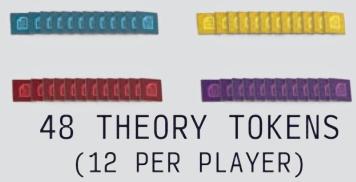
48 理论指示物 (每人 12 个)
〔图:images/a205164a09fa6476fbe5576f56d00aa7471e782b0b0f2f079b1d2ddb78eaa223.jpg〕
(图内文字:Dashboard interface with multiple panels showing system interfaces and status indicators, including '2' and '1' status panels.)
4 玩家屏风
〔图:images/519c68a8470c2c093ead843dd75dc514d74cc4c9476759ec986abaa7fd86250d.jpg〕
(图内文字:8 目标指示物 (每人 2 个))
4 玩家棋子
〔图:images/a540216198cf4a50079cd83634cc06de9e464d3b4a4a142f9c0676e2b091ea29.jpg〕
(图内文字:PLANET X)
1 记录便笺纸 (双面)
〔图:images/b0229680e2cc3c638b24db844e4241a49c9a8dd81f34784ffb7d825268b37334.jpg〕
(图内文字:PAGE 5 PAGE 6)
4 专家面板
重要!除了提供的配件,你还需要铅笔和一个或多个电子设备与配套应用程序。访问 www.PlanetXApp.com 下载应用程序。
扇区
太阳系被分成多个扇区,这些扇区被单独编号并按数字顺序排列。扇区的总数因模式而异:标准模式(12 个扇区)或专家模式(18 个扇区)。每个扇区要么包含一个对象,要么真的是真空的。
天体
有五种类型的天体: 小行星、彗星、矮行星、星云和行星 X 本身。每种类型的对象都有特定的逻辑规则,这些规则规定了该类型的对象相对于其他对象或扇区的位置。
〔图:images/bd43aadca4a35c88c61ace8c587c44587ef15a0ac41786c8aa5f1a33268be847.jpg〕
flowchart
graph TD
  A["Step 1"] --> B["Step 2"]
  B --> C["Step 3"]
  C --> D["Step 4"]
  D --> E["Step 5"]
  E --> F["Step 6"]
  F --> G["Step 7"]
  G --> H["Step 8"]
  H --> I["Step 9"]
  I --> J["Step 10"]
  J --> K["Step 11"]
  K --> L["Step 12"]
  L --> M["Step 13"]
  M --> N["Step 14"]
  N --> O["Step 15"]
  O --> P["Step 16"]
  P --> Q["Step 17"]
  Q --> R["Step 18"]
  R --> S["Step 19"]
  S --> T["Step 20"]
  T --> U["Step 21"]
  U --> V["Step 22"]
  V --> W["Step 23"]
  W --> X["Step 24"]
  X --> Y["Step 25"]
  Y --> Z["Step 26"]
  Z --> AA["Step 27"]
  AA --> AB["Step 28"]
  AB --> AC["Step 29"]
  AC --> AD["Step 30"]
  AD --> AE["Step 31"]
  AE --> AF["Step 32"]
  AF --> AG["Step 33"]
  AG --> AH["Step 34"]
  AH --> AI["Step 35"]
  AI --> AJ["Step 36"]
  AJ --> AK["Step 37"]
  AK --> AL["Step 38"]
  AL --> AM["Step 39"]
  AM --> AN["Step 40"]
  AN --> AO["Step 41"]
  AO --> AP["Step 42"]
  AP --> AQ["Step 43"]
  AQ --> AR["Step 44"]
  AR --> AS["Step 45"]
  AS --> AT["Step 46"]
  AT --> AU["Step 47"]
  AU --> AV["Step 48"]
  AV --> AW["Step 49"]
  AW --> AX["Step 50"]
  AX --> AY["Step 51"]
  AY --> AZ["Step 52"]
  AZ --> BA["Step 53"]
  BA --> BB["Step 54"]
  BB --> BC["Step 55"]
  BC --> BD["Step 56"]
  BD --> BE["Step 57"]
  BE --> BF["Step 58"]
  BF --> BG["Step 59"]
  BG --> BH["Step 60"]
  BH --> BI["Step 61"]
  BI --> BJ["Step 62"]
  BJ --> BK["Step 63"]
  BK --> BL["Step 64"]
  BL --> BM["Step 65"]
  BM --> BN["Step 66"]
  BN --> BO["Step 67"]
  BO --> BP["Step 68"]
  BP --> BR["Step 69"]
  BR --> BR2["Step 70"]
  BR2 --> BR3["Step 71"]
  BR3 --> BR4["Step 72"]
  BR4 --> BR5["Step 73"]
  BR5 --> BR6["Step 74"]
  BR6 --> BR7["Step 75"]
  BR7 --> BR8["Step 76"]
  BR8 --> BR9["Step 77"]
  BR9 --> BR10["Step 78"]
  BR10 --> BR11["Step 79"]
  BR11 --> BR12["Step 80"]
  BR12 --> BR13["Step 81"]
  BR13 --> BR14["Step 82"]
  BR14 --> BR15["Step 83"]
  BR15 --> BR16["Step 84"]
  BR16 --> BR17["Step 85"]
  BR17 --> BR18["Step 86"]
  BR18 --> BR19["Step 87"]
  BR19 --> BR20["Step 88"]
  BR20 --> BR21["Step 89"]
  BR21 --> BR22["Step 90"]
  BR22 --> BR23["Step 91"]
  BR23 --> BR24["Step 92"]
  BR24 --> BR25["Step 93"]
  BR25 --> BR26["Step 94"]
  BR26 --> BR27["Step 95"]
  BR27 --> BR28["Step 96"]
  BR28 --> BR29["Step 97"]
  BR29 --> BR30["Step 98"]
  BR30 --> BR31["Step 99"]
  BR31 --> BR32["Step 100"]
〔图:images/1ca81ab60f177aad70865019038d2a5948b4f44c035e9aa55c794e3c53125f8d.jpg〕
彗星 = 总共 2 个
每个彗星都位于这些特定的扇区之一,如你的记录表格所示:
标准模式:2、3、5、7或11
专家模式:2、3、5、7、11、13、17
〔图:images/9fb88199ca89e95de16448eb583a2f8f894b7262aeb2faa544fdbe6578b8e44b.jpg〕
星云 = 总共 2 个
每个星云都至少与一个真空扇区相邻。
〔图:images/7b0f38e09d5b2ce837c85ab3dd8fcf2f48a65292005e46b99d065a0eb6736b99.jpg〕
矮行星 = 总共 1 个 *
没有一颗矮行星会与行星 X 相邻。
* 在专家模式下,总共有 4 颗矮行星,而不是 1 颗。它们正处在一个由 6 个扇区组成的扇区带中,每一端都有一颗矮行星。
〔图:images/37360a505aa74fc4eb5054c5e0101634b31cf871ef13f11ec9a2763cf4165441.jpg〕
小行星 = 总共 4 个
每颗小行星都至少与一颗其他小行星相邻。(这意味着这些小行星要么是两对独立的,要么是四个一组的。)
〔图:images/6f6db70b69e6d3d3077a6fe0c5e22b36ddffe0022281503e35834dbaccd194f1.jpg〕
真空扇区 = 总共 2 个 *
* 在专家模式下,有 5 个真空扇区,而不是 2 个。
〔图:images/6027b0553ad404f61f05efb8ea37b366ef4af7d642ac95f860f3c8bb97b7d018.jpg〕
行星 $X =$ 总共1个
行星 X 与矮行星并不相邻。
在测绘和目标中,包含行星 X 的扇区看起来是空置的。
〔图:images/ba5d7eeba505c3ef6ed22c34b3029053d347033a490279e1661c4a1a1d1486e2.jpg〕
空置扇区和真空扇区是有区别的。包含行星 X 的扇区在测绘和目标中看起来是空的,但是它当然不是真空的;它包含行星 X!
太阳系
太阳系由太阳系版图和地球版图组成。地球版图绕其轴顺时针旋转,代表地球绕太阳公转时的运动。在地球版图的一半位置上有一部分被切下以便玩家可以看到扇区号。
可见的天空
可见天空是指在任何给定的时间内太阳系版图的内环上可见的扇区范围。可见天空总是正好占太阳系总扇区的一半。当地球版图旋转时,可见的天空发生变化。
时间轨道
时间轨道围绕太阳系版图的外缘运行。当玩家执行行动时,他们的棋子在时间轨道上顺时针前进。在时间轨道上最落后棋子的玩家总是当前的玩家。
〔图:images/c5f585b274ab976a790b3278bdda807f04c97aec678d01c322edc5022097957b.jpg〕
(图内文字:时间轨道 时间轨道围绕太阳系版图的外缘运行。 当玩家执行行动时,他们的棋子 在时间轨道上顺时针前进。 在时间轨道上最落后棋子 的玩家总是当前的玩家。)
理论
玩家可以提交他们认为哪个天体位于某个扇区的理论。提交的理论稍后会被同行评审,或者被证明是正确的或不正确的。在游戏结束时,玩家根据他们正确的理论得分。
同行评审轨道
每个扇区都有自己的同行评审轨道,由箭头连接的四个空格组成。当一个理论被提交时,它被放置在外层空间 ([+] ,然后被向内移动,直到它到达内部空间 ([\cong]) ,此时它将接受同行评审。
游戏设置
选择游戏模式
- 你必须首先选择一个游戏模式:标准模式或专家模式。我们建议您在第一次玩游戏时选择标准模式,然后在所有玩家都熟悉游戏后转到专家模式。(但如果玩家有演
绎游戏或逻辑谜题的经验,你可以从专家模式开始。)
版图设置
-
将太阳系版图放在桌子中央。确保你使用的是与所选游戏模式相对应的那一面。定位版图以便使每个玩家都从一个独特的图标所指示的一面观看:春分,夏至,秋分,冬至。
-
放置太阳圆片,使其位于太阳系版图中心的孔洞中。
-
将地球版图放在太阳系版图的顶部,太阳圆片在其中心孔洞中。旋转地球版图,使可见的天空从扇区 1 开始。
-
每位玩家选择一种颜色。找到与玩家选择的玩家颜色匹配的棋子。将所有这些棋子放在时间轨迹的第一扇区,以随机顺序排列。
玩家设置
-
给每位玩家一支铅笔和一张不同便笺纸,上面的图标与他们对太阳系版图的视角相匹配。另外,请确保所有玩家都在使用与所选游戏模式相对应的便笺纸的对应面。
-
给每位玩家一个与他们选择的玩家颜色匹配的玩家屏风。每位玩家都会调整自己的玩家屏风,以便隐藏他们的便笺纸。
-
在专家模式下,给每个玩家匹配他们的玩家屏风的专家面板。每位玩家将他们的面板滑入屏幕的插槽中。(在标准模式下,不使用这些专家面板。把它们放回游戏盒。)
-
给每个玩家两个目标指示物和 12 个与他们选择的玩家颜色匹配的理论标识。每位玩家将他们的指示物放在玩家屏幕后面。
-
在标准模式下,每位玩家只使用一个矮行星理论指示物。每位玩家将三个矮星指示物放回游戏盒子。(在专家模式下,每个玩家使用他们所有的四个矮星理论指示物。)
〔图:images/ed0f8c0c218da989b2e7cc726b1e64ef9ec063ae3ae3846992a34b33a8daad06.jpg〕
单人模式。对于单人游戏,只需完成步骤 1-11(跳过步骤 12-16)。在应用程序的初始屏幕上按“开始单人游戏”按钮以获得附加设置和规则。
〔图:images/1e2ee0ae11801c024632480fa110d414d17df5f4a2f041a942158a9e8d872705.jpg〕
(图内文字:3人游戏的设置 标准模式)
应用程序设置
每个玩家都需要在电子设备上访问配套应用程序。每个玩家可以使用自己的设备,或者与一个或多个其他玩家共享一个设备。
- 在游戏期间使用的所有设备上安装并启动该应用程序。要在设备上安装应用程序,请用手机电脑访问
。 - 在一台设备上,生成一个游戏代码。要执行此操作,请在应用程序的初始屏幕上按“开始新游戏”按钮。然后按与所选游戏模式匹配的按钮。然后按“开始游戏”按钮。
-
在其他设备上,从应用程序的初始屏幕按“输入游戏代码”。输入第一台设备生成的游戏代码,然后按“加入游戏”按钮。
-
验证所有设备显示的游戏代码是否相同。然后按“继续”按钮。
- 每个玩家将收到一定数量的起始信息,这取决于他们选择的经验等级。每个玩家都应该按照应用程序中的说明来接收他们的出发信息并记录在他们的便笺表上。
* 如果你以前没有玩过这个游戏,我们推荐“初学者”级别。
* 如果你以前玩过这个游戏,你可能希望尝试“经验丰富”或“天才”的水平来迎接更艰巨的挑战!
-
一旦所有玩家都记录了他们的开始信息,按所有设备上的“开始游戏”按钮。你现在可以开始了!
-
一旦所有玩家都记录了他们的开始信息,按所有设备上的“开始游戏”按钮。你现在可以开始了!
游戏玩法
游戏流程
The Search for Planet X 的游戏流程不会按照限定的回合顺序进行。取而代之的是,回合顺序取决于玩家棋子在时间轨道上的位置。
在时间轨道上最落后棋子的玩家是当前玩家。在当前玩家的回合中,玩家执行一个行动,然后根据行动的时间费用()推进他的棋子,
回合概述
通常会移动棋子越过其他的棋子。
一旦当前玩家的回合结束,在时间轨道上最落后棋子的玩家成为新的当前玩家。玩家们一直持续这样进行回合直到其中一位玩家正确定位行星 X 为止。
当你是当前玩家时,按顺序执行以下 3 个步骤:
- 执行一个行动 - 选择 4 种可用行动中的其中一种来执行。
- 推进你的玩家棋子 - 根据行动的时间费用移动你的棋子。
- 旋转地球版图 - 顺时针方向旋转地球板块(如果有需要的话)。
→ 会议阶段 - 如果地球版图因为旋转而抵达会议图标位置,暂停游戏来执行一个会议阶段。
→ 理论阶段 - 如果地球版图因为旋转而抵达理论图标位置,暂停游戏来执行一个理论结算。
〔图:images/c335743f66d6c2e64e1f4c2d7df612109185e99f71d8157fdd1bb4a142672ae5.jpg〕
〔图:images/43adec26c792ef7d7a4f2146709ba0aae35f194a791372a7e8d7f4acf29fefd4.jpg〕
1. 执行一个行动
- 调查一个天体——选择一种类型的天体和可见天空内连续扇区的一个范围。APP将展示该范围内有多少数量该类型的天体。
- 瞄准一个扇区为目标——选择可见天空内的一个扇区。APP 将展示哪个天体位于该扇区内或者该扇区是空置的。
- 研究一个课题——选择一个可用研究课题。APP 将展示该课题的信息,应用于这局特别游戏的逻辑规则。
定位行星 X——选择你认为包含行星 X 的扇区和你认为在这 2 个相邻扇区内的天体。APP 将展示你是正确还是错误。
〔图:images/cfb36a19d0299b77b460f8af04990d149a4a9bd8f3548ad1f788f8f1eb7cb3a4.jpg〕
注意:每个行动都需要你与 APP 交互。在你的记录表格上,记录 APP 展示的信息,以及你可以从这些信息中作出的任何推理。(见第 11 页关于如何使用记录表格)
天体的调查
一种特殊的天体引起了你的兴趣。调查一系列可见扇区,以确定该范围内有多少该类型的对象。
从应用程序内的游戏菜单屏幕,按“Survey”按钮。选择一种天体类型,然后在可见天空中选择一系列连续扇区。向其他玩家宣布你的选择。
该应用程序现在将显示有多少该类型的天体位于该范围内。这是私人信息,记录在你的记录表格上,但不要告诉其他玩家。
此行动的时间费用因选定范围的大小而异:
→调查 1,2 或 3 扇区花费 4 ①
→调查 4,5 或 6 扇区花费 3 ①
→调查 7,8 或 9 扇区花费 2 ①
〔图:images/c6f8395c5038c13074bdcc520196081066811650a68027096c7ce03a14ea4c33.jpg〕
大多数调查将跨越多个扇区,但调查可以在同一个扇区开始和结束,以跨越1个扇区的范围。(视为使用目标行动。)
〔图:images/a4ca7f02fd2a936d2feaeff77e9f52a0cb0ca63cb060cba1cab8bb5243f850f6.jpg〕
注意:当你为彗星调查时,该范围必须起始和终结于一个包含彗星的扇区。
〔图:images/3ec8fbd5e9dd99dfacd936056909143429db57b1d9b46349917abc03a0e08e0f.jpg〕
重要提示!记住包含行星 X 的扇区会在调查中出现空置。如果你为空置扇区调查,包含行星 X 的扇区可能被包含在内。
- 只在专家模式:可见天空在标准模式内只有 6 个扇区宽度。
瞄准一个扇区为目标
你的搜索已引导您进入一个你认为拥有关键信息的特定扇区。当发现包含哪个天体时,可以瞄准一个扇区为目标。
当你执行此行动时,你必须支付你的2个目标指示物的其中一个。一旦你支付了你的2个目标指示物,你就无法在剩余游戏过程中再次执行此行动。
从 APP 内的游戏菜单屏幕,按 “Target” 按钮。在天空中选择一个可见扇区。向其他玩家宣布你的选择。
APP 现在将显示哪个天体位于该扇区中,或者该扇区是空置的。这个是私人信息,记录在你的记录表格上,但不要告诉其他玩家。
此操作的时间成本为 4 Ⓛ。
〔图:images/134f61b5446f791e13f4d2de33fbeb4e84b3e82d6d3156b16941e0b48e7eb203.jpg〕
重要!请记住,包含行星 X 的扇区在调查和目标中显示为空置。如果你的目标扇区显示为空置,则该扇区可能是真正的空置扇区,或者可能包含行星 X。
科学内幕:最近发现的一些天体,如可能是矮行星的 Sedna (2003 年) 和 2012 年的 VP113,都有高度椭圆的轨道,它们最接近太阳的点聚集在一起。九号行星假说试图解释这些独特的轨道。
研究一个课题
在这个领域的其他进步可能会帮助你的努力。回顾这项研究,了解某些天体之间的关系。
在 APP 的游戏菜单屏幕上 , 按下 “Research” 按钮。在下一个屏幕上,根据课题中列出的天体类型,选择一个可用的研究课题。向其他玩家宣布你的选择。
该 APP 将揭示该研究课题的信息。这将是一个逻辑规则,适用于这个特定的游戏。这是私人信息;
记录在你的记录表格上指定区域,但不要向其他玩家宣布。
此行动的时间成本为 1 ⓣ。
〔图:images/d008d5e96517de8fc8c8df57d16433fdda15edd135dc6f63ce09d0f6f3b22f44.jpg〕
限制。你不能连续执行两次研究行动。如果你在一个回合内研究,你必须在下一个回合选择一个不同的行动。
〔图:images/7966201fb217096218995fdff17dec4cc844ae4195abd78c02f55d96da1f4b14.jpg〕
注意。每个研究课题只揭示一条信息。一旦你研究了一个特定的课题,你就没有理由再选择那个课题了。
定位行星 X
就是这样!你所有的努力都会有回报的。这个看起来空无一物的区域真的是行星 X 的位置吗?
在 APP 的游戏菜单屏幕上,按下 “定位行星 X” 按钮。选择你认为包含行星 X 的扇区,然后选择你认为位于两个相邻扇区的天体。
该应用程序现在将显示你是否正确定位行星X。不要宣布你所看到的扇区,但要宣布你是否成功或失败。
这个行动的时间成本是 5 Ⓛ。
〔图:images/0c1a57eefd13f8ea0c29beafb4a6b7509820f85de2e3274a5fd108a52e6d0a7f.jpg〕
(图内文字:? ? ☒ ?)
为了定位行星 X 的扇区,你必须知道其在哪个扇区和相邻扇区有什么。
〔图:images/24cd73103be6bcc28e3876099eca71554405c1891880a6a5b64a574341acd8ee.jpg〕
重要提示!如果你在回合中正确定位了行星 X,你就触发了游戏的结束。在推进你的棋子后,直接跳到游戏结束。
当你确定扇区不包含特定天体时,划掉扇区内的天体图标。
〔图:images/a19456de55bfb0e0d174919d9d44d58d98ef9c43ed2b894b845de5c0049c64a1.jpg〕
(图内文字:当你确定扇区内的天体时,在该扇区的天体图标上画圈(并划掉扇区内其他图标) SUMMER SOLSTICE Standard Mode (12 sectors) OBJECTS C 2 Comets A 4 Asteroids D 1 Dwarf Planet G 2 Gas Clouds X 1 Planet X E 2 Truly Empty Sectors LOGIC RULES only in particular sectors adjacent to at least 1 other not adjacent to adjacent to at least 1 not adjacent to , appears empty remember, appears empty 一些玩家发现把X和[ ] 图标圈在一起来记录该扇区出现过空置是很有用的。 使用独特的标记比如实心方块来标记起始信息。 会议 记录)
调查:记录你调查和结果数量的天体和范围。
〔图:images/8bdfd32028c505b31401ec3c8820b0bd755fd8dee263102d207deeb9295ec9ec.jpg〕
(图内文字:目标:记录你瞄准的扇区目标和 结果天体。 研究:记录你研究的课 题和结果信息。 THE SEARCH FOR PLANET X Name: BLUE Game Code: A1A1 Action Result A 1-6 3 A 1-6 D 4-9 1 D 4-9 Target 8 E/X Target 8 Research B A+D Research & Conference Notes Other Notes A C B A+D - At least 1 A is adj to D C A+G D C+G E D+C F G+D X1 X+D - X is not w/in 3 of D Final Score 1:① ③:② ④:③ ⑤:④ ⑦:④ ⑧:⑩⑧⑥④⑤ 11 :根据会议来 信息在线上。 如果你想要记录你对 手已经执行过的行 动,请使用这些列。)
如果你想要记录你对手已经执行过的行动,请使用这些列。
2. 推进你的玩家棋子
在这个步骤中,顺时针方向在时间轨道上移动你的玩家棋子。
你的棋子推进的扇区数量等同于你本回合所选行动的费用。所有可能行动的时间费用都记录在下方,同时也在玩家屏风上。
如果你的棋子停止推进的扇区已经包含 1 和或多个其他棋子,将你的棋子放置其他棋子前面,但依旧留在同一扇区内(这意味着这
些玩家会在你行动之前进行他们的下一回合。)
〔图:images/d747cd57dff69cf273e236ad4f76abc7081eaa01d9bde05e31a368df8974c534.jpg〕
重要提示!如果你在你的回合中正确定位了行星 X,你已经触发了游戏结束。在推进你的棋子后,直接跳到游戏结束。
| 行动 | 定位行星X | 以1个扇区为目标 | 调查一个天体 | 研究一个课题 | ||
| 1,2,OR3扇区 | 4,5,OR6扇区 | 7,8,OR9扇区 | ||||
| 51 | 41 | 41 | 31 | 21* | 11 | |
* 只在专家模式。在标准模式下的可见天空只有 6 个扇区宽。
〔图:images/111f59ff1d5411945296f2f44a79b03af28f2a96ac34be312b2e6808c6c3573f.jpg〕
flowchart
This diagram illustrates the orbital mission sequence of a spacecraft, showing the progression from the Earth's orbit through various spacecraft orbiters to the planet.举例:黄色棋子在时间轨道上的扇区 10。黄色玩家完成了目标行动,花费 4 ⏻。黄色玩家在时间轨道上推进 4 扇区到扇区 2。
科学内幕:如果行星九的假设是正确的,那么这颗行星的质量将是地球的 5 倍左右。绕太阳运行大约需要 10000 年。而目前它离太阳的距离是地球的 500 倍左右。
3. 选择地球版图
在这个步骤中,检查地球版图是否需要转动。如果地球版图上的箭头不是直接指向包含时间轨道上最落后棋子的扇区,则顺时针方向选择地球版图,一次转动一个扇区。
当你旋转地球版图时,如果箭头抵达含有会议图标或理论图标的扇区,暂停游戏来执行对应的阶段。
继续顺时针方向旋转地球版图,有需要的话暂停来执行这些阶段,直到箭头抵达一个包含最落后棋子的扇区为止。
〔图:images/f0d077f8387bfe0fd9a053914c66e2724d7e391d36871c5f2f174e56bc5d0422.jpg〕
flowchart
This diagram illustrates the orbital mission timeline and mission sequence of a space station, showing the progression from the Earth's orbit to the planet's orbit.举例:蓝色棋子是时间轨道上最落后的棋子。向着该棋子的方向顺时针方向旋转地球版图。当箭头抵达包含会议图标的扇区时,暂停游戏来执行会议阶段。然后继续旋转地球版图直到抵达扇区12。蓝色玩家之后进行其下一个回合。
① 会议阶段
在这个阶段中,所有玩家获得关于行星 X 位置的一些碎片信息。
使用 APP,按下 “Planet X Conference” 按钮,然后选择匹配当前会议图标的选项(X1 或 X2)。
APP 现在将展示会议的信息。这将是一个逻辑规则,适用于这个特定的游戏。将这个信息宣
告给所有玩家。每位玩家在各自记录表格上的指定区域记录这个信息。(第11页)
这个阶段只会在地球版图抵达每个会议图标时执行一次。如果地球版图在其下一次选择中再次抵达相同的会议图标,无需再次翻开相同的会议信息。
目理论阶段
在这个阶段中有 2 个步骤。在第一步骤中,玩家可以提交理论。在第二步骤中,一些理论可能会接受同行评审。
1. 理论提交
A. 选择理论——所有玩家同时选择他们想要提交的理论。在标准模式内,每位玩家可以选择至多 1 个理论;在专家模式内,每位玩家可以选择至多 2 个理论。无论玩家选择多少理论,每位玩家将手放在各自玩家屏风外的桌面上覆盖各自选择的理论以便没有其他人能看到玩家选择的理论数量。
B. 放置理论——每位玩家之后将各自选择的理论正面朝下放在他们认为包含该类型天体的扇区内的同行评审轨道的外围区域内 $[+$ ]。这会按照玩家顺序来执行(从后往前),如同时间轨道上指示的那样。
注意:如果该扇区内的天体已经被同行评审确认,你不能将理论放置该扇区内。(见第 15 页)
C 推进理论——移动所有正面朝下的理论——包括在此理论阶段刚放置的和之前理论阶段的理论——在各自扇区内的同行评审轨道向内推进一格。
〔图:images/2b607797e40e95d2fc3c10e4a4c28a681fe7fff0eec6a86aba0a3898166fe5c2.jpg〕
flowchart
graph TD
  A["Initial Step"] --> B["Process Step 1"]
  B --> C["Process Step 2"]
  C --> D["Process Step 3"]
  D --> E["Final Output"]
额外规则 & 解释
- 多位玩家可以在同一个理论阶段中提交理论到同一个扇区。当发生这种情况时,这些理论会堆放在外围区域。对于计分来说,它们视为同时提交。
- 玩家们可以在太阳系的任何扇区提交理论,包含那些不在当前可见天空内的扇区,只要该扇区的天体还未被同行评审确认。
- 一旦玩家提交了理论到一个扇区,他就不能移动该理论到另一个扇区。如果玩家用光了特定类型的天体理论,他就不能再提交该类型的天体理论。
- 没有任何一位玩家可以在同一扇区提交 2 个相同理论,但一位玩家可以在同一扇区提交 2 个不同理论,只要这 2 个不同理论不是在同时提交的就行。
- 如果玩家忘记在某个扇区提交了哪个天体,玩家们可以随时拾取并秘密查看自己提交的理论,但他必须将其放回原位。
2. 同行评审
对于现在至少含有一个理论在内部区域 [ ≈ ] 的同行评审轨道的每个扇区来说,进行一次同行评审。如果这应用于多个扇区,对每个这样的扇区进行一次同行评审,每次一个扇区,按编号顺序依次进行。
A. 展示力量——展示该扇区内同行评审轨道的内部区域的任何力量,将它们翻到正面朝上。不要翻开这个扇区内同行评审轨道上更远位置的理论。
B. 评审理论——使用 APP 按下 “Peer Review” 按钮。选择评审哪个扇区以及哪一个天体在被评审的理论中显示。然后按下 “View Results” 按钮。
C. 结算理论——屏幕将真实这个理论是正确或是错误。为所有玩家宣告这个信息。根据正确或错误结算这个理论(见下文)。
〔图:images/e4899b246241e85f589555cae71cb23cd15db852ec3b58fd3c6fda11cc61df54.jpg〕
flowchart
graph TD
  A["Start Node"] --> B{"Feedback Loop"}
  B -->|Green Arrow| C["Process Loop"]
  B -->|Red Arrow| D["Feedback Loop"]
  C --> E["Process Loop"]
  E --> F["Output Node"]
  D --> G{"Feedback Loop"}
  G -->|Red X| H["Error Output"]
  G -->|Green X| I["Feedback Loop"]
举例:2 个力量都抵达了同行评审轨道的内部区域。同行评审确认了扇区 9 包含 1 个小行星,但发现扇区 10 不包含矮行星。
正确理论
位于这个扇区内的天体现在被确认。每位玩家在各自记录表格上圈出这个扇区的天体图标。玩家们不能再将新的理论放进这个扇区内。
将这个扇区内同行评审轨道上更远位置的所有理论翻到正面朝上以便查看其是否正确或错误。
将所有错误的力量移除游戏。提交这些理论的玩家每人在时间轨道上推进各自棋子一个扇区作为惩罚。
将所有正确理论留在它们所在位置。提交它们的玩家将在游戏结束时获得分数。
错误理论
位于这个扇区内的天体依旧未确认。每位玩家在各自记录表格上为该扇区划掉该天体图标。
不要展示此扇区内同行评审轨道上更远位置的任何理论。它们现在依旧保持正面朝下放置。
将错误的理论移出游戏。提交该理论的玩家必须在时间轨道上提升他的棋子一个扇区作为惩罚。
如果多个理论在此扇区内的同行评审轨道的内部区域内,为这些理论重复进行此同行评审流程。
注意:如果多位玩家同时在同一扇区因为错误理论而获得时间惩罚,按玩家顺位轮流推进他们的棋子(从后到前)以便他们的回合顺位的位置相对于彼此不会变更。
游戏结束
游戏结束条件
当一位玩家正确定位行星 X 时会触发游戏结束。触发游戏结束的玩家依旧根据他的行动费用(5 ⏻)来推进他的棋子,但无需转动地球版图。
〔图:images/6fc3ca1016d7787b78e14ef63c35827ff8c8a934770b9ec8351d66b0a9104c0c.jpg〕
重要提示!通过正确定位行星 X 而触发游戏结束的玩家不会对其他玩家宣告行星 X 的正确位置。
最终计分机会
一旦游戏结束条件被触发,不会再进行额外的回合。然而,每位距离定位行星 X 的玩家的棋子至少落后 1 个扇区棋子的玩家获得一次最终得分的机会。
根据玩家棋子与定位行星 X 玩家的棋子之间的举例,每位玩家可以提交理论或者尝试定位行星 X。最终的得分机会按照玩家在时间
轨道上的顺位轮流进行(从后到前)。
(为了计分,在最终得分机会提交的力量视为同时提交的理论。)
提交理论
如果你落后 1,2 或 3 扇区,你可以提交一个理论。如果你落后 4 或 5 个扇区,你可以提交至多 2 个理论。
或
定位行星 X
按照这个行动的常规步骤执行。
如果正确,根据你落后的距离,你将获得2至10分。
〔图:images/0b448b55adf2e7fa60f11e3d5eed6d8db7d27bf7bec2693a7e94dd68f1a3b71a.jpg〕
重要提示!无论玩家选择哪个选项,玩家都不能在最终得分机会中推进各自的棋子。对于最终计分来说,其他玩家的棋子必须停留在行星 X 被正确定位时所在的位置。
展示天体
在最终得分机会结算完后,使用 APP 按下 “Reveal Objects” 按钮。每个扇区的内容现在将被展示在屏幕上。将展示的结果对所有玩家宣告。
为所有扇区将同行评审轨道上的剩余的正面朝下的理论翻到正面朝上。然后再次检查这些理论与展示结果的。将所有错误理论移出游戏,但将所有正确理论留在原处。
最终计分
一旦游戏结束,统计最终分数。每位玩家统计各自最终分数,记录在各自记录表格底部的计分表内。
〔图:images/ffc1441e08a008d21e92a6df2a668b647e53f9778ba78e0fa8a4b464255b25cf.jpg〕
(图内文字:最终计分 1st:① 3 1 2 2 2 3 4 4 4 4 4 X:⑩|8|6|4|2|1st/70 TOTAL 8 22 1 2 3)
1. 领袖奖励
在每个扇区第一位(并列第一)提交关于该扇区内天体的正确理论的玩家获得 1 分。
2. 正确理论
你提交的每个正确理论,按照表格指示来获得分数:
- 小行星——每个 2 分。
- 彗星——每个 3 分。
- 星云——每个 4 分。
- 矮行星——(标准模式)每个4分或者(专家模式)每个2分。
3. 定位行星 X
如果你是第一位正确定位行星 X 的玩家则获得 10 分。
如果你正确定位行星 X 但不是第一位这样做的玩家,你的棋子与第一位这样做的玩家棋子每落后 1 扇区(比如 1-5 扇区)就获得 2 分(比如 2-10 分)。
赢得游戏胜利
统计最终得分。得分最多的玩家对这次天文调查贡献最大并且是胜利者!
- 如果出现平局平局玩家中对行星 X 定位最多分的玩家成为胜利者!
- 如果还出现平局平局玩家中对领袖奖励最多分的玩家成为胜利者!
- 如果还出现平局平局玩家共享胜利者!
〔图:images/f3a5b45aa7e029f52ec1f0d1fc253ad1b81943789ed07f8979158656807d5549.jpg〕
重要!本节提供了空间术语的定义,您需要了解这些术语,以便根据游戏期间收到的信息进行推断。
| 术语 | 定义 | 举例 |
| 相邻 | 当一个天体被描述为与另一个天体“相邻”,这个的意思是其所在扇区的左边或右边扇区包含另一个天体。举例,这里有2个扇区与扇区8“相邻”:扇区7和扇区9 | 我们假设矮行星位于扇区8内。然后你研究一个课题并展示,“至少有一个星云与矮行星相邻。”这意味着星云必须在扇区7或扇区9内。 |
| 连续扇区 | 当相同类型的一定数量天体被描述为在“连续扇区”内,这意味着它们位于一组完整的扇区中,其间没有任何其他天体。 | 你知道扇区9和扇区12有小行星。然后你研究一个课题并展示,“所有小行星在连续扇区内。”这意味着其他小行星必须在扇区10和扇区11。 |
| 正对面 | 每个扇区都有“正对面”的一个扇区,该扇区围绕着版图与其有一半版图距离或者是180°的距离。 | 在标准模式中,假设我们知道彗星在扇区3和扇区5。然后一个会议展示,“行星X不在彗星的正对面。”这意味着行星X不在扇区9或扇区11。 |
| N个扇区范围内 | 当一个天体被描述为与另一个天体“在N个扇区范围内”,这意味着它可以在任何一个扇区内,最多可以远离另一个天体的N个扇区的距离。举例:有4个扇区是在扇区5的“2个扇区范围内”:扇区3,4,6,7。 | 我们假设知道彗星在扇区5或扇区7。然后我们研究一个课题并展示,“矮行星不在彗星的2个扇区范围内。”这意味着矮行星必须在以下其中一个扇区内:3,4,6,8,9。 |
| 在N个扇区带或更少 | 波段是一组连续的扇区。当天体被描述为一定数量或更少的“扇区带”时,这意味着包含它们的连续扇区的数量等于或小于这个数字。举例,扇区7,8,9和10创造了一个“4扇区带”。 | 我们假设知道2个小行星在扇区5和6。然后你研究一个课题并展示,“所有小行星在5个扇区带或更少。”这意味着其他2个小行星必须在以下其中一个范围内:2-3,3-4,4-7,7-8或者8-9 |
Game Design: Ben Rosset, Matthew O'Malley
Game Development: Randy Hoyt, John Shutters
Illustration: Michael Pedro, James Masino
Graphic Design: Jason D. Kingsley, Tyler Segel, John Shutters
Editing: Dustin Schwartz
App Development: Randy Hoyt, Randy Jensen, Alexander Mont, Matthew O'Malley
Playtesting: Darren Anderson, Heather Anderson, Brian Blankstein, Eddie Brooks, Austin Browne, Brian Brubach, Dr. Rubén Cabezón, Richie Campbell, Jeff Chin, Eric Clason, Steve Cuccaro, Kevin Delp, Melissa Delp, Joe Dickinson, Nick Ferris, Ryan Ford, Jason Gilby, Sarah Graybill, Richard Gricius, Rose Hanson, Elizabeth Hargrave, Dr. Gerhard Hartsleben, Tammy Haynes, Joe Hopkins, Kyle Houfek, Jeff Hughes, Thomas Huter, Brooke Johnson, Hilary Johnson, Jonah Kasallis, Franklin Kenter, Perry Kleinhenz, Johan Konter, Karyn Kost, Brad Lackey, Jeff Lanning, Michael Lenard, Dan Leroy, Steve Lewis, Janene Liston, Davin Loegering, Daibhre MacColiane, Jess Malkin, Ryan Malone, Emerson Matsuuchi, Kris Mayer, Nick McCleerey, David McCord, Joe McCord, Jason McHargue, Nate McInnis, Darion Miller, Alexander Mont, Annie Nelson, Nick Nelson, Andrew Nerger, Ryan Neumann, Jake Nicholson, Melissa Nicholson, Katelin O'Malley, Margaux O'Malley, Peter O'Malley, Rob Pearce, Roman Pearce, Stephanie Pearce, Alex Pearson, Amanda Preston, Leo Preston, Madeline Revier, Pat Revier, Andrew Roberts, Lisa Romano, Elaine Silver, Robin Silver, Steven H Silver, Adam Skelding, Brett Sobol, Shelley Spence, Dr. Yves St-Denis, Kimberly Stout, David Studley, Ryan Swanigan, Josh Tempkin, Bogdan Tudose, Hirginia Vallejo, Miranda Van Zeumeran, Lance Vanderbush, Josh Walawender, Josh Ward, Heidi Wilson, Timothy Wilson, Sonia Wisniewski, Ian Wright, Aron Yert, Bethany Yert, Derek Zimmer, Adelheid Zimmerman
〔图:images/41966d925cc908af5af75958eb49a7e54d9a55d3f1de7e3298e43b09e33390dc.jpg〕
© 2020 Foxtrot Games LLC. All Rights Reserved.
在我们太阳系的边缘,一颗黑暗的行星潜伏着。从那以后世纪之交,天文学家们一直在寻找遥远的天体并跟踪它们的轨道,以便更好地了解太阳系。一些人认为,这些证据表明存在一颗遥远的、未被发现的行星。你能找到行星X吗?
〔图:images/43058f58edba0f299e0089a083db50e03ba3fd44f55badc5f538283b4aef7a83.jpg〕
natural_image
Night sky scene with a starry night sky, a telescope on a snow-covered hill, and a distant starry comet in the sky (no text or symbols)PlanetX_Rulebook_web.md39.3 KB
THE SEARCH FOR PLANETX
RULEBOOK
AT THE EDGE OF OUR SOLAR SYSTEM...
...a dark planet may lurk. In this competitive logic game, players take on the role of astronomers, surveying the night sky and attempting to deduce the location of this hidden planet.
Do you have what it takes to find Planet X?
Goal of the Game
Earn renown by locating Planet X and by submitting correct theories about the locations of other objects in the solar system. The player who contributes the most to this astronomical investigation will score the most points and win the game!
Inside the Science: In January 2016, Konstantin Batygin and Michael E. Brown published their “Planet Nine” hypothesis, using a computer model to show that a distant planet could explain the unique orbits of observable objects in the solar system.
8 TARGET TOKENS(2 PER PLAYER)
Game Modes
The game has two modes: Standard Mode and Expert Mode. In Expert Mode, the solar system has more sectors and the game is more challenging overall. The diferences between the two modes are noted throughout this rulebook.
Components
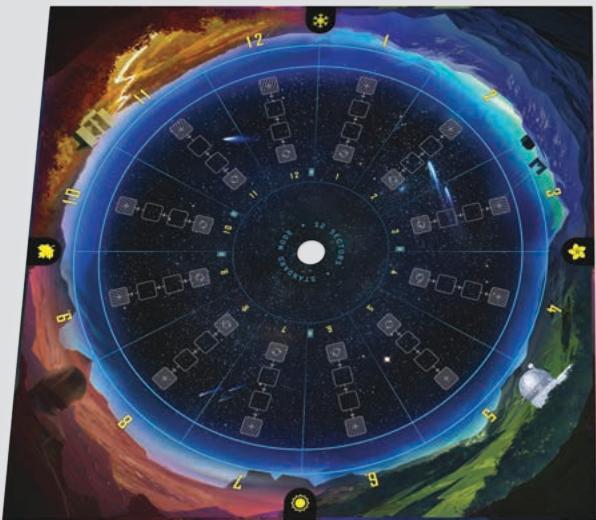
1 SOLAR SYSTEM BOARD(DOUBLE-SIDED)



4 PLAYER SCREENS

1 PAD OF NOTE SHEETS(DOUBLE-SIDED)
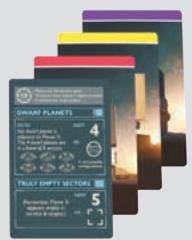
4 EXPERT PANELS
Important! In addition to the components provided, you will need pencils and one or more electronic devices with the companion app. Visit www.PlanetXApp.com to download the app.
PRINCIPLES OF ASTRONOMY
Sectors
The solar system is divided into sectors, which are individually numbered and arranged in numerical order. The total number of sectors varies by mode: Standard Mode (12 sectors) or Expert Mode (18 sectors). Each sector either contains one object -OR- is truly empty.
Objects
There are five types of objects: asteroids, comets, dwarf planets, gas clouds, and Planet X itself. Each type of object has certain logic rules that dictate where objects of that type can be located in relation to other objects or sectors.

| O COMETS = 2 TOTAL | ASTEROIDS = 4 TOTAL |
| Each comet is located in one of these particularsectors, as indicated on your note sheet:Standard Mode: 2, 3, 5, 7, or 11Expert Mode: 2, 3, 5, 7, 11, 13, or 17 | Each asteroid is adjacent to at least one otherasteroid. (This means that the asteroids areeither in two separate pairs or in one group offour.) |
| GAS CLOUDS = 2 TOTAL | TRULY EMPTY SECTORS = 2 TOTAL*L |
| Each gas cloud is adjacent to at least one trulyempty sector. | * In Expert Mode, there are 5 truly empty sectorsinstead of 2. |
| 室) DWARF PLANETS = 1 TOTAL* | XPLANET X = 1 TOTAL |
| No dwarf planet is adjacent to Planet X.* In Expert Mode, there are 4 dwarf planets totalinstead of 1. They are in a band of exactly6 sectors, with a dwarf planet at each end. | Planet X is not adjacent to a dwarf planet.In surveys and targets, the sector containingPlanet X appears empty. |
There is a distinction between sectors that appear empty and sectors that are truly empty. The sector containing Planet X appears empty in surveys and targets, but of course it isn’t truly empty; it contains Planet X!
Solar System
The solar system is made up of the solar system board and the earth board. The earth board rotates clockwise on its axis to represent the motion of Earth as it orbits the sun. On one half of the earth board, a portion is cut away so that the sector numbers are visible.
Visible Sky
The visible sky is the range of sectors whose numbers are visible on the inner ring of the solar system board at any given time. The visible sky is always exactly half of the total sectors in the solar system. As the earth board rotates, the visible sky changes.
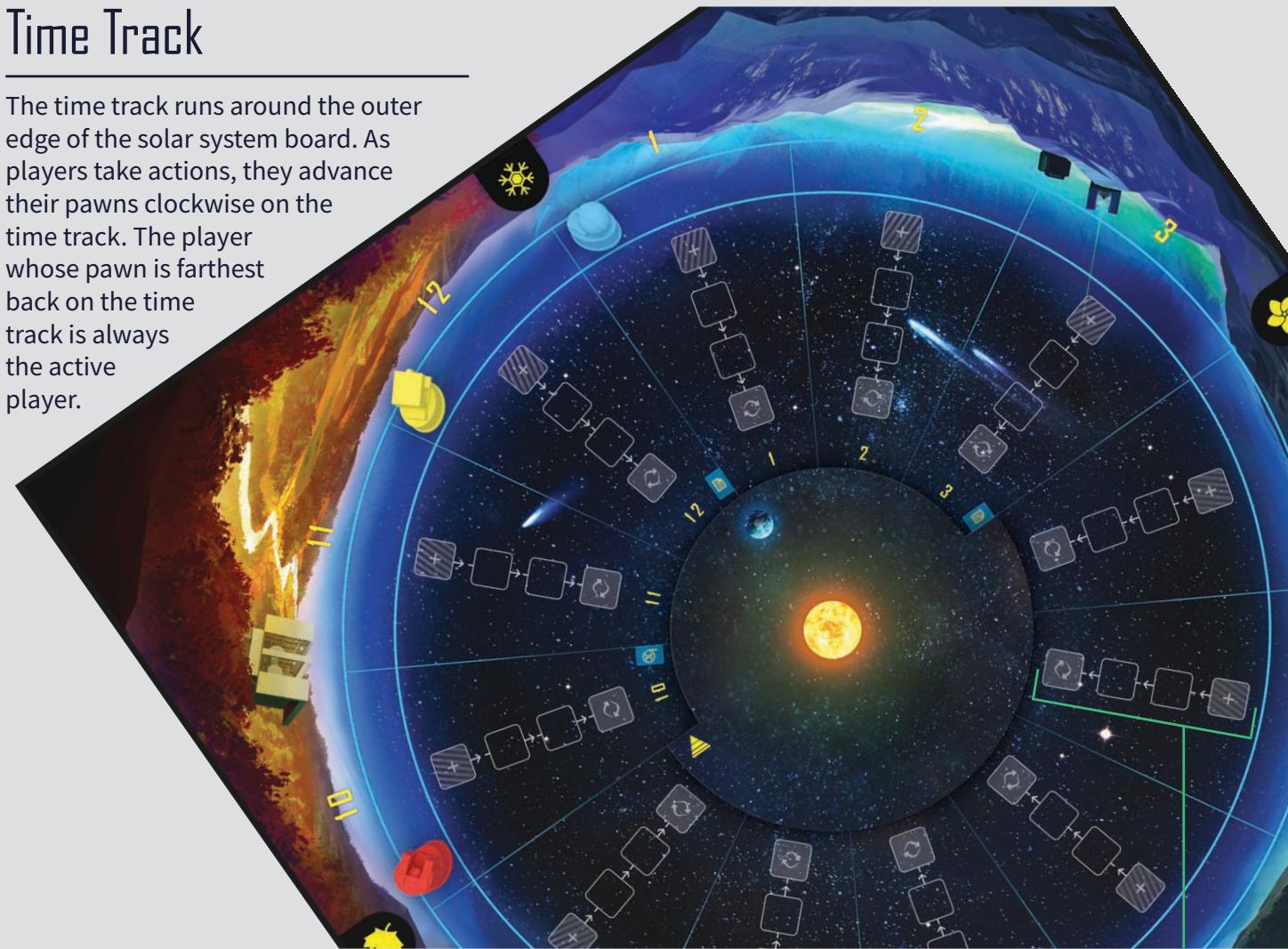
Theories
Players can submit theories about which object they think is located in a certain sector. Submitted theories are peer reviewed later and either proven to be correct or incorrect. At the end of the game, players score points for their correct theories.
Peer Review Tracks
Each sector has its own peer review track, made up of four spaces connected by arrows. When a theory is submitted, it is placed on the outer space [ + ], then is moved inward until it reaches the inner space [ ], at which point it undergoes peer review.
GAME SETUP
Choose Game Mode
- You must first choose a game mode: Standard Mode or Expert Mode. We recommend that you choose Standard Mode the first time you play, then move to Expert Mode once all players are
Board Setup
-
Place the solar system board in the center of the table. Make sure that you are using the side of the board which corresponds to the chosen game mode. Orient the board so that each player is viewing it from one side indicated by a unique icon: spring equinox, summer solstice, autumn equinox, or winter solstice.
-
Place the sun disc so that it sits in the hole in the center of the solar system board.
Player Setup
-
Give each player a pencil and a diferent note sheet with the icon matching their view of the solar system board. Also, make sure that all players are using the sides of their note sheets which correspond to the chosen game mode.
-
Give each player a player screen matching their chosen player color. Each player positions their player screen so that it hides their note sheet.
-
In Expert Mode, give each player the expert panel matching their player screen. Each player slides their panel into the slots in their familiar with the game. (But if the players have some experience with deduction games or logic puzzles, you should feel free to start with Expert Mode.)
-
Place the earth board on top of the solar system board with the sun disc in its center hole. Rotate the earth board so that the visible sky starts with sector 1.
-
Each player chooses a color. Find the player pawns matching the players’ chosen player colors. Place all of these pawns in sector 1 of the time track, lined up in random order.
screen. (In Standard Mode, do not use these expert panels. Return them to the game box.)
-
Give each player two target tokens and the 12 theory tokens which match their chosen player color. Each player puts their tokens behind their player screen.
-
In Standard Mode, each player uses only one of their dwarf planet theory tokens. Each player returns three dwarf planet tokens to the game box. (In Expert Mode, each player uses all four of their dwarf planet theory tokens.)
Solo Mode. For a 1-player game, complete only Steps 1-11 (skipping steps 12-16). Press the “Start Solo Game” button from the app’s initial screen for additional setup and rules.

App Setup
Each player needs to have access to the companion app on an electronic device. Each player can use their own device –OR– share a device with one or more other players.
-
Install and launch the companion app on all devices that will be used during the game. To install the app on a device, visit
from the device. -
On one device, generate a game code. To do this, press the “Start New Game” button from the app’s initial screen. Then press the button that matches the chosen game mode. Then press the “Start Game” button.
-
On each other device, press “Enter Game Code” from the app’s initial screen. Enter the game code generated by the first device and then press the “Join Game” button.
-
Verify that all devices are displaying the same game code. Then press the “Continue” button.
-
Each player will receive a certain amount of starting information, based on which experience level they choose. Each player should follow the instructions in the app to receive their starting information and record it on their note sheet.
* If you have not played the game before, we recommend the “Beginner” level.
* If you have played the game before, you may wish to try the “Experienced” or “Genius” level for a tougher challenge!
- Once all players have recorded their starting information, press the “Start Game” button on all devices. You are now ready to begin!
GAMEPLAY
Gameplay Sequence
Gameplay in The Search for Planet X does not proceed in a fixed turn order. Instead, turn order depends on the positions of the player pawns on the time track.
The player whose pawn is farthest back on the time track is the active player. On the active player’s turn, they take one action, then advance their pawn based on the time cost ( ) of the action, usually moving it past other pawns as they do so.
Once the active player’s turn is over, the player whose pawn is now farthest back on the time track becomes the new active player. Players continue taking turns until one player correctly locates Planet X.
Turn Overview
When you are the active player, carry out the following three steps, in order:
-
Take One Action – Choose one of the four available actions.
-
Advance Your Player Pawn – Move your pawn based on the time cost of the action.
-
Rotate the Earth Board – Rotate the earth board clockwise (if necessary).
1. Take One Action
Survey for an Object – Select a type of object and a range of consecutive sectors in the visible sky. The app will reveal how many objects of that type are located in that range.
In this step, choose one of the four available actions:
Target a Sector – Select one sector in the visible sky. The app will reveal which object is located in that sector –OR– that the sector appears empty.
Theory Phase – If the earth board reaches a theory icon as it rotates, pause the game to perform a theory phase.
Conference Phase – If the earth board reaches a conference icon as it rotates, pause the game to perform a conference phase.
Research a Topic – Select one of the available research topics. The app will reveal the information for that topic, a logic rule that applies in this particular game.


Locate Planet X – Select the sector that you believe contains Planet X -AND- the objects you believe are located in the two adjacent sectors. The app will reveal whether you are correct or incorrect.

Note. Each action requires you to interact with the app. On your note sheet, record the information revealed by the app, along with any deductions you can make from that information. (See page 11 for examples on how to use the note sheet.)
SURVEY FOR AN OBJECT
One particular type of object has drawn your interest. Survey a range of visible sectors to find out how many objects of that type are located in that range.
From the game menu screen within the app, press the “Survey” button. Select a type of object, then select a range of consecutive sectors in the visible sky. Announce your selections to the other players.
The app will now reveal how many objects of that type are located in that range. This is private information; record it on your note sheet, but do not announce it to the other players.
The time cost of this action varies based on the size of the selected range:
Surveys of 1, 2, or 3 sectors cost 4 .
Surveys of 4, 5, or 6 sectors cost 3 .
Surveys of 7, 8, or 9 sectors cost 2 .*

Note. Most surveys will span multiple sectors, but a survey can start and end in the same sector to span a range of 1 sector. (Consider using the Target action instead.)

Note. When you survey for comets, the range must start and end with one of the sectors that can contain a comet.

Important! Remember that the sector containing Planet X appears empty in surveys. If you survey for empty sectors, the sector containing Planet X may be included in the count.
★ Expert Mode only. The visible sky in Standard Mode is only six sectors wide.
TARGET A SECTOR
Your search has led you to a particular sector that you feel holds key information. Target that sector when it is visible to discover which object it contains.
When you take this action, you must spend one of your two target tokens. Once you have spent both of your target tokens, you cannot take this action again for the rest of the game.
From the game menu screen within the app, press the “Target” button. Select one sector in the visible sky. Announce your selection to the other players.
The app will now reveal which object is located in that sector –OR– that the sector appears empty. This is private information; record it on your note sheet, but do not announce it to the other players.
The time cost of this action is 4 .

Important! Remember that the sector containing Planet X appears empty in surveys and targets. If the sector you targeted appears empty, that sector could be truly empty or it could contain Planet X.
RESEARCH A TOPIC
Other advancements in the field might be able to assist you in your eforts. Review this research to learn about the relationships between certain objects.
From the game menu screen within the app, press the “Research” button. On the next screen, select one of the available research topics, based on the types of objects listed in the topic. Announce your selection to the other players.
The app will then reveal the information for that research topic. This will be a logic rule that applies in this particular game. This is private information;
record it in the designated space on your note sheet, but do not announce it to the other players.
The time cost of this action is 1 .
Restriction. You cannot take the Research action twice in a row. If you research on one turn, you must choose a diferent action on your next turn.


Note. Each research topic reveals only one piece of information. Once you research a specific topic, there is no reason for you to select that research topic again.
LOCATE PLANET X
This is it! All of your hard work may be about to pay of. Could this sector, which appears empty, really be the location of Planet X?
From the game menu screen within the app, press the “Locate Planet X” button. Select which sector you think contains Planet X, then select which objects you think are located in the two adjacent sectors.
The app will now reveal whether or not you correctly located Planet X. Do not announce the sector where you looked, but do announce whether you succeeded or failed.
The time cost of this action is 5 .

To locate Planet X, you must know what sector it is in AND what is in the two adjacent sectors.

Important! If you correctly located Planet X on your turn, you have triggered the end of the game. After advancing your pawn, skip directly to END OF THE GAME.
Inside the Science: The computer model behind the Planet Nine hypothesis predicted some objects would orbit the Sun perpendicular to the Earth’s orbit. Objects like those predictions had been discovered by other astronomers: 2012 DR30, 2013 BL76, etc.
Survey: Record the object and range you surveyed and the resulting quantity.
When you determine that a sector does not contain a certain object, cross out the object icon in that sector.

| -A 1-6-D 4-9Research BCD+C | Target: Record the sector you targetedand the resulting object.Research: Record the topicyou researched and theresulting information.THE SEARDH FORPLANET X Name:BLUEGame Code:A1A1 | ||||||||||
| Result | 8 | 8 RED | 8Y | ||||||||
| A 1-6 | 3 | G 1-4 | A | ||||||||
| D 4-9 | 1 | G 4-7 | Res | ||||||||
| Target 8 — | E/X | C 7-11 | C | ||||||||
| Research B | A+D | Research B | Res | ||||||||
| C 11-3 | |||||||||||
| Research & Conference Notes | Other | Notes | |||||||||
| B A+D - At least 1 A is adj to D | |||||||||||
| X1 X+D - X is not w/in 3 of D | |||||||||||
| Final Score | |||||||||||
| 6:30:④:4 | ⑧:p③⑥④ | ||||||||||
| erence: Record theled information onne correspondingconference.Use these columns ifyou want to record theactions your opponentshave taken. | 11 | ||||||||||
2. Advance Your Player Pawn
In this step, move your player pawn clockwise on the time track.
The number of sectors that your pawn advances is equal to the time cost of the action you chose this turn. The time costs for all possible actions are noted below, as well as on the player screens.
If your pawn ends its advance in a sector that already contains one or more other pawns, place your pawn ahead of the other pawns, but still in the same sector. (This means that those players will take their next turns before you do.)

Important! If you correctly located Planet X on your turn, you have triggered the end of the game. After advancing your pawn, skip directly to END OF THE GAME.
| ACTION | LOCATEPLANET X | TARGET ASECTOR | SURVEY FOR AN OBJECT | RESEARCH ATOPIC | ||
| 1, 2, or 3 SECTORS | 4, 5, Or 6 SECTORS | 7, 8, or 9 SECTORS | ||||
| TIME COST | 5 ⑤ | 4⑤ | 4 ⑤ | 3 ⑤ | 20★ | 10 |
* Expert Mode only. The visible sky in Standard Mode is only six sectors wide.
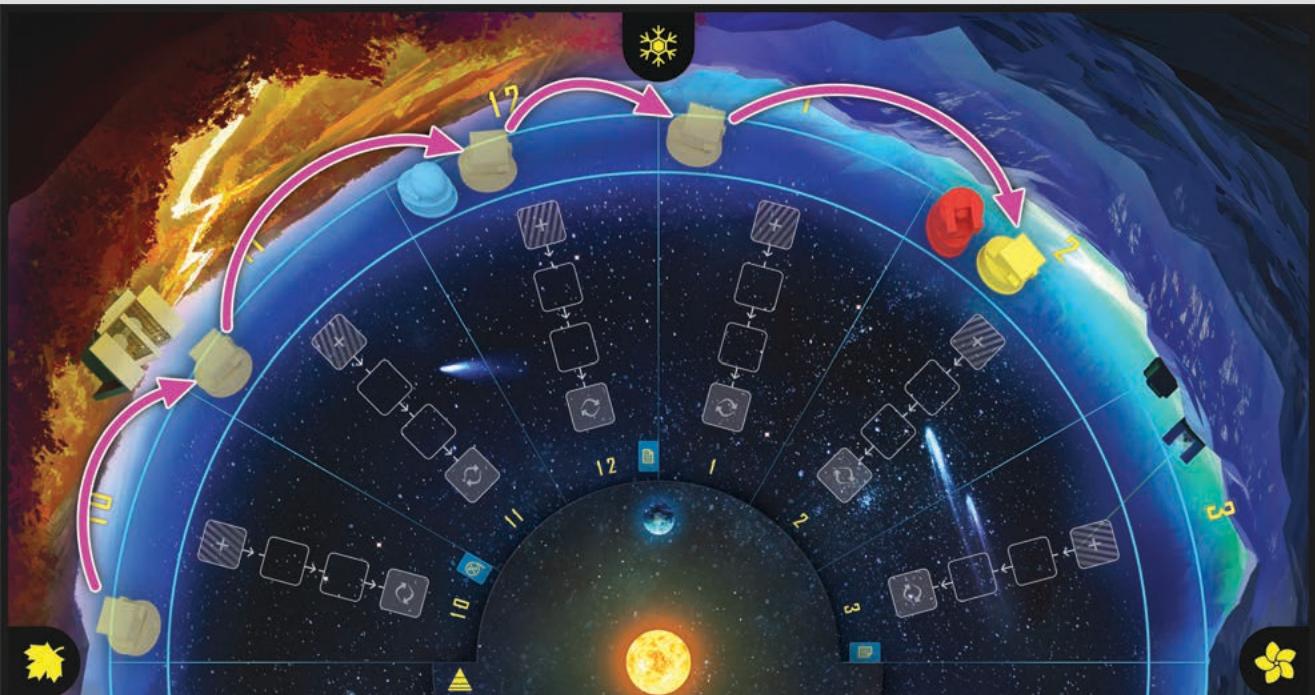
Example. The yellow pawn is in sector 10 on the time track. The yellow player completes a Target action, costing 4 . The yellow player advances their pawn 4 sectors on the time track to sector 2.
Inside the Science: If the Planet Nine hypothesis is correct, the planet would have a mass around 5 times that of Earth. It would take around 10,000 years to orbit the Sun, and it would currently be around 500 times farther from the Sun than the Earth is.
3. Rotate the Earth Board
In this step, check to see if the earth board needs to be rotated.
If the arrow on the earth board is not pointing directly at the sector which contains the pawn that is farthest back on the time track, rotate the earth board clockwise, one sector at a time.
As you rotate the earth board, if the arrow reaches a sector with a conference icon or theory icon, pause the game to perform the associated phase.
Continue rotating the earth board clockwise, pausing the game to perform these phases as necessary, until the arrow reaches the sector which contains the pawn that is farthest back on the time track.
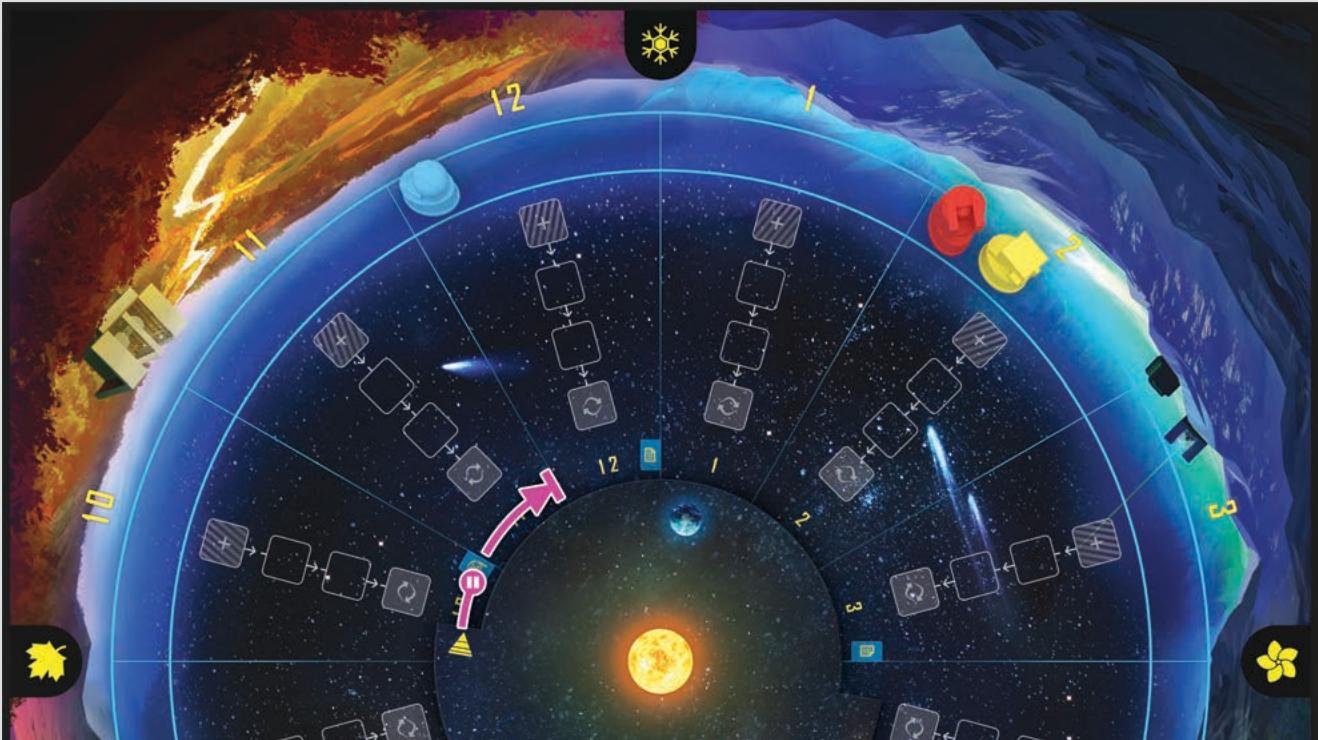
Example. The blue pawn is farthest back on the time track. Rotate the earth board clockwise toward that pawn. When the arrow reaches the conference icon, pause the game to perform the conference phase. Then continue rotating the earth board until it reaches sector 12. The blue player will then take the next turn.

CONFERENCE PHASE
During this phase, all players receive a new piece of information about the location of Planet X.
Within the app, press the “Planet X Conference” button, then select the option which matches the current conference icon (either X1 or X2).
The app will now reveal the information for that conference. This will be a logic rule that applies in this particular game. Announce this information to all players. Each player should record this information in the designated space on their note sheet. (See page 11.)
This phase is only performed the first time that the earth board reaches each conference icon. If it reaches the same conference icon again on its next rotation, there is no need to reveal the same conference information again.

THEORY PHASE
During this phase, there are two steps. In the first step, players can submit theories. In the second step, some theories might undergo peer review.
1. THEORY SUBMISSION
A. Select Theories – All players simultaneously select the theories they wish to submit. In Standard Mode, each player may select up to 1 theory; in Expert Mode, each player may select up to 2 theories. No matter how many theories they select, each player places their hand on the table outside their player screen, covering their selected theories so that no one else can see how many theories they selected.
B. Place Theories – Each player then places their selected theories face down in the outer space [ + ] of the peer review track in a sector they believe contains that type of object. This is done in player order (back to front), as indicated by the time track.
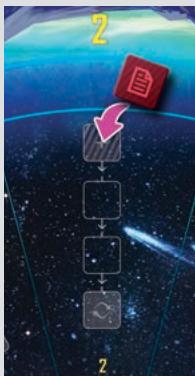
Note: You cannot place a theory in a sector if the object in that sector has already been confirmed by peer review. (See page 15.)
C. Advance Theories – Move all face-down theories — both those just placed in this theory phase and those from previous theory phases — one space inward on the peer review tracks in their sectors.
ADDITIONAL RULES & CLARIFICATIONS
• Multiple players can submit theories in the same sector during the same theory phase. When this happens, those theories are stacked in the outer space. For scoring purposes, they are considered to have been submitted at the same time.
Players can submit theories in any sector of the solar system, including sectors that are not currently in the visible sky, as long as the object in that sector has not yet been confirmed by peer review.
Once a player has submitted a theory in a sector, they cannot move that theory to a diferent sector. If a player runs out of theories for objects of a certain type, they cannot submit any more theories for objects of that type.
• No player can submit two identical theories in the same sector, but a player can submit two diferent theories in the same sector, as long as they do not submit those two diferent theories at the same time.
• Players can pick up and secretly view their own submitted theories at any time, if they have forgotten which ones they submitted in which sectors, but they must put them back exactly where they were.
2 . P E E R R E V I E W
For each sector that now has at least one theory in the inner space [ ] of the peer review track, conduct a peer review. If this applies to multiple sectors, conduct a peer review for each of those sectors, one at a time, in numerical order.
A. Reveal Theories – Reveal any theories that are in the inner space of the peer review track in this sector, flipping them face up. Do not reveal any theories that are farther out on the peer review track in this sector yet.
B. Review Theories – Press the “Peer Review” button within the app. Select which sector is being reviewed and which object is shown on one of the theories being reviewed. Then press the “View Results” button.
C. Resolve Theories – The results screen will now reveal whether the theory is correct or incorrect. Announce this information to all players. Resolve the theory, based on whether it is correct or incorrect (see below).
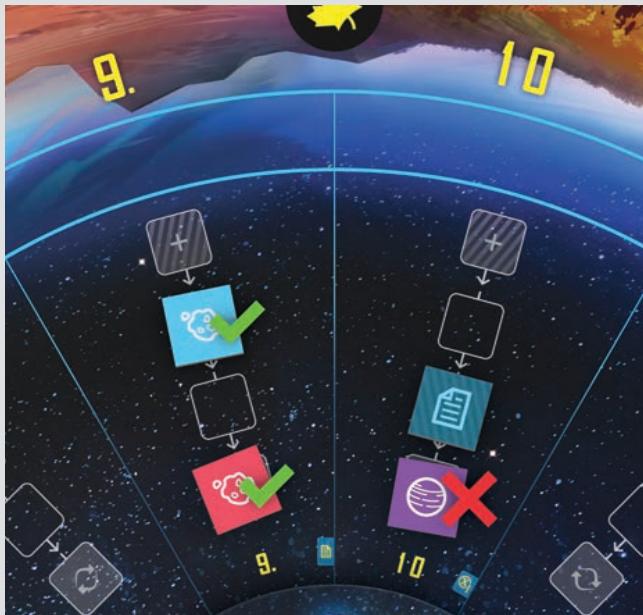
Example. Two theories reach the inner space of the peer review track. Peer review confirms that sector 9 contains an asteroid, but it finds that sector 10 does not contain a dwarf planet.
CORRECT THEORY
The object located in this sector is now confirmed. On their note sheet, each player can circle that object icon for this sector. Players may no longer place new theories in this sector.
Flip all theories that are farther out on the peer review track in this sector face up to see whether they are correct or incorrect.
Remove all incorrect theories from the game. The players who submitted them must each advance their pawn one sector on the time track as a penalty.
Leave all correct theories exactly where they were. The players who submitted them will score points at the end of the game.
INCORRECT THEORY
The object located in this sector remains unconfirmed. On their note sheet, each player can cross out that object icon for this sector.
Do not reveal any theories that are farther out on the peer review track in this sector. They remain face down for now.
Remove the incorrect theory from the game. The player who submitted it must advance their pawn one sector on the time track as a penalty.
If multiple theories are in the inner space of the peer review track in this sector, repeat this peer review process for those theories.

Note. If multiple players receive a time penalty for an incorrect theory in the same sector at the same time, advance their pawns in player order (back to front) so that their position in turn order, relative to each other, does not change.
END OF THE GAME
Game-End Condition
The end of the game is triggered when one player correctly locates Planet X. The player who triggered the end of the game still advances their pawn based on the time cost of that action (5 ), but does not rotate the earth board.

Final Scoring Opportunities
Once the end of the game has been triggered, no more turns are taken. However, each player whose pawn is at least one sector back from the pawn of the player who located Planet X gets one final opportunity to score points.
Important! The player who triggered the end of the game by correctly locating Planet X should not announce the correct location of Planet X to the other players.
Based on how far back their pawn is from the pawn of the player who located Planet X, each player may
SUBMIT THEORIES
either submit theories or attempt to locate Planet X. These final opportunities occur in player order (back to front), as indicated by the time track.
If you are 1, 2, or 3 sectors back, you may submit one theory. If you are 4 or 5 sectors back, you may submit up to two theories.
(For scoring purposes, theories submitted during these final scoring opportunities are considered to have been submitted at the same time.)
OR
LOCATE PLANET X
Follow the normal steps for this action.
If correct, you will score 2–10 points, based on how far back you are.

Important! Players do not advance their pawns during these final scoring opportunities, no matter which option they choose. For final scoring purposes, the other players’ pawns should remain where they were when Planet X was correctly located.
Reveal Objects
After all final scoring opportunities have occurred, press the “Reveal Objects” button within the app. The contents of each sector will now be displayed on the screen. Announce these displayed results to all players.
Flip all remaining face-down theories on the peer review tracks for all sectors face up. Then check these theories against the displayed results. Remove all incorrect theories from the game, but leave all correct theories where they are.
Final Scoring
Once the game has ended, tally up final scores. Each player tallies their own final score, recording their points in the score chart at the bottom of their note sheet.
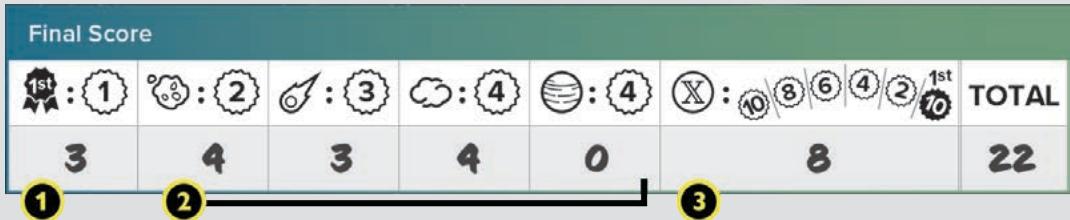
1. Leader Bonuses
Score 1 point for each sector where you were the first player (or tied for first) to submit the correct theory about the object in that sector.
2. Correct Theories
Score points for each correct theory you submitted, as indicated by the chart:
• Asteroids – Score 2 points each
• Comets – Score 3 points each
• Gas Clouds – Score 4 points each
Dwarf Planets – Score 4 points (Standard Mode) or 2 points each (Expert Mode)
3. Locating Planet X
Score 10 points if you were the first player to correctly locate Planet X.
If you correctly located Planet X but were not the first player to do so, count how many sectors back your pawn is from the pawn of the player who did so first (i.e., 1–5 sectors). Score two points for each sector back (i.e., 2–10 points).
WINNING THE GAME
Tally the final scores. The player who scored the most points has contributed the most to this astronomical investigation and is the winner!
• If there is a tie…
The tied player who scored the most points for locating Planet X is the winner.
• If there is still a tie…
The tied player who scored the most points for leader bonuses is the winner.
• If there is still a tie…
The tied players rejoice in their shared victory.
IMPORTANT TERMS

Important! This section ofers definitions of the spatial terms you will need to know in order to make deductions based on the information you receive during the game.
| TERM | DEFINITION | EXAMPLE |
| ADJACENT TO | When an object is said to be “adjacent to”another object, that means it is locatedone sector to the left or to the right of thesector containing the other object.For example, there are two sectors“adjacent to” sector 8: sectors 7 and 9. | Let's say you know the dwarf planet isin sector 8. Then you research a topicthat reveals, “At least one gas cloudis adjacent to the dwarf planet." Thismeans one of the gas clouds must be ineither sector 7 or sector 9. |
| CONSECUTIVESECTORS | When a number of objects of one type aresaid to be in “consecutive sectors," thatmeans they are in an unbroken groupof sectors without any other objectsbetween them. | You know there are asteroids in sectors9 and 12. Then you research a topic thatreveals, “All asteroids are in consecutivesectors." This means the other asteroidsmust be in sectors 10 and 11. |
| DIRECTLYOPPOSITE | Each sector has one sector that is“directly opposite” it, the one sectorhalfway around the board or 180º awayfrom it.For example, in Standard Mode, sector 4is “directly opposite” sector 10. | In Standard Mode, let's say you knowthe comets are in sectors 3 and 5. Thena conference reveals, “Planet X is notdirectly opposite a comet." This meansPlanet X is not in sectors 9 or 11. |
| WITHIN NSECTORS | When an object is said to be “within Nsectors” of another object, that means itcould be in any of the sectors up to thatnumber of sectors away from the otherobject.For example, there are four sectors“within 2 sectors” of sector 5:sectors 3, 4, 6, and 7. | Let's say you know the comets are insectors 5 and 7. Then you research atopic that reveals, “The dwarf planetis within two sectors of a comet." Thismeans the dwarf planet must be in oneof these sectors: 3, 4, 6, 8, or 9. |
| IN A BAND OF NSECTORS OR LESS | A band is an unbroken group ofconsecutive sectors. When objects aresaid to be “in a band” of a certain size orless, it means the number of consecutivesectors that contains them is thatnumber or fewer.For example, sectors 7, 8, 9, and 10 makeup a “band of 4 sectors." | Let's say you know two asteroids arein sectors 5 and 6. Then you research atopic that reveals, “All asteroids are ina band of 5 sectors or less.” This meansthe other two asteroids must be in one ofthese ranges: 2-3, 3-4, 4-7, 7-8, or 8-9. |
Game Design: Ben Rosset, Matthew O’Malley
Game Development: Randy Hoyt, John Shulters
Illustration: Michael Pedro, James Masino
Graphic Design: Jason D. Kingsley, Tyler Segel, John Shulters
Editing: Dustin Schwartz
App Development: Randy Hoyt, Randy Jensen, Alexander Mont, Matthew O’Malley
Playtesting: Darren Anderson, Heather Anderson, Brian Blankstein, Eddie Brooks, Austin Browne, Brian Brubach, Dr. Rubén Cabezón, Richie Campbell, Jef Chin, Eric Clason, Steve Cuccaro, Kevin Delp, Melissa Delp, Joe Dickinson, Nick Ferris, Ryan Ford, Jason Gilby, Sarah Graybill, Richard Gricius, Rose Hanson, Elizabeth Hargrave, Dr. Gerhard Hartsleben, Tammy Haynes, Joe Hopkins, Kyle Houfek, Jef Hughes, Thomas Huter, Brooke Johnson, Hilary Johnson, Jonah Kasallis, Franklin Kenter, Perry Kleinhenz, Johan Konter, Karyn Kost, Brad Lackey, Jef Lanning, Michael Lenard, Dan Leroy, Steve Lewis, Janene Liston, Davin Loegering, Daibhre MacColiane, Jess Malkin, Ryan Malone, Emerson Matsuuchi, Kris Mayer, Nick McCleerey, David McCord, Joe McCord, Jason McHargue, Nate McInnis, Darion Miller, Alexander Mont, Annie Nelson, Nick Nelson, Andrew Nerger, Ryan Neumann, Jake Nicholson, Melissa Nicholson, Katelin O’Malley, Margaux O’Malley, Peter O’Malley, Rob Pearce, Roman Pearce, Stephanie Pearce, Alex Pearson, Amanda Preston, Leo Preston, Madeline Revier, Pat Revier, Andrew Roberts, Lisa Romano, Elaine Silver, Robin Silver, Steven H Silver, Adam Skelding, Brett Sobol, Shelley Spence, Dr. Yves St-Denis, Kimberly Stout, David Studley, Ryan Swanigan, Josh Tempkin, Bogdan Tudose, Hirginia Vallejo, Miranda Van Zeumeran, Lance Vanderbush, Josh Walawender, Josh Ward, Heidi Wilson, Timothy Wilson, Sonia Wisniewski, Ian Wright, Aron Yert, Bethany Yert, Derek Zimmer, Adelheid Zimmerman


RENEGADE GAME STUDIOS
© 2020 Foxtrot Games LLC. All Rights Reserved.
AT THE EDGE OF OUR SOLAR SYSTEM, A DARK PLANET MAY LURK. SINCE THE TURN OF THE CENTURY, ASTRONOMERS HAVE BEEN DISCOVERING DISTANT OBJECTS AND TRACKING THEIR ORBITS TO BETTER UNDERSTAND THE SOLAR SYSTEM. SOME BELIEVE THE EVIDENCE POINTS TO THE EXISTENCE OF A DISTANT, UNDISCOVERED PLANET. DO YOU HAVE WHAT IT TAKES TO FIND PLANET X?
Download MarkdownTexts are community-compiled or publicly released by publishers; copyright remains with the original authors. For personal reference only.