
The Speicherstadt
At a glance
Rules, cards and Q&A (Chinese)
The rules, card data and player questions for this game are written in Chinese. Open the Chinese page to read them.
Where to find full rules
Full rules and card lookup are available in the cunlema app at cunlema.cn — pick this game and ask about any rule, card or turn you are unsure about.
Related games
Rulebook text (Markdown)
This game has 3 rulebook Markdown file(s) in our library; 3 rendered inline below — expand to read or download.
rules_zh_仓库城_3245.md11.9 KB
THE PEICHERSTADT
概要
漢堡市(Hamburg)是德國最大的港口,也是僅次於柏林的第二大城市,這套遊戲要講述的時代背景是19世紀的漢堡港倉庫城。利用招標、購買系統獲得卡片,卡片包含了裝載貨物的貨運船、賣出貨物的貿易商、預防火災的消防員等等。在行動中累積分數,最後獲得最高分的玩家贏得勝利。
配件
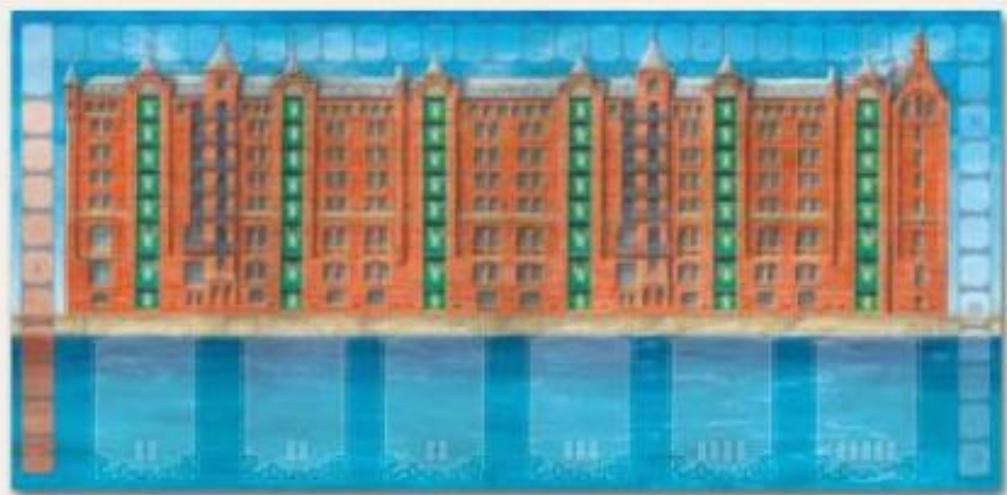
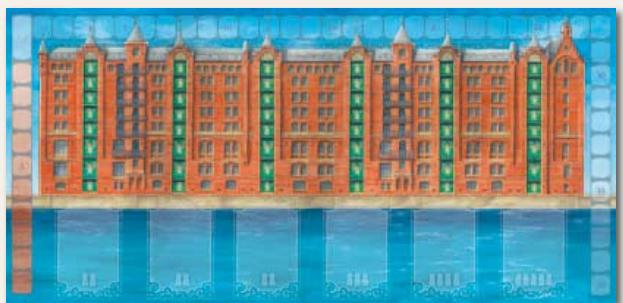
一個遊戲板塊
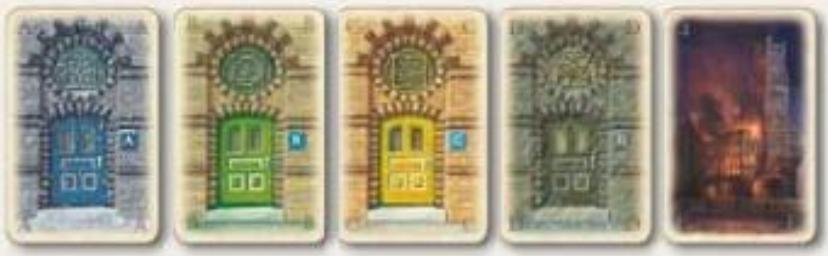

54張貿易卡
12張冬季[A]
13張春季[B]
13張夏季[C]
15張秋季[D]
1張火災[E]
25個硬幣
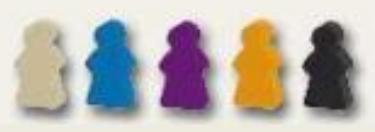
20個工人
五種顏色各五個
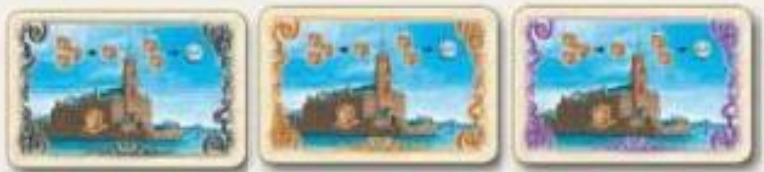
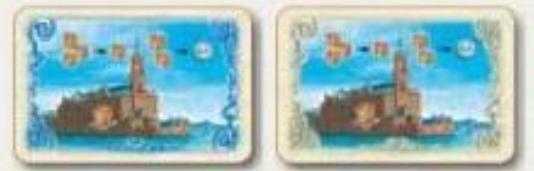
5張交易所
(5個不同顏色的玩家)

1個金屬硬幣
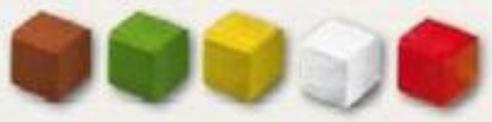
45個貨物方塊
9個咖啡[咖啡色]
9個茶葉[青綠色]
9個香料[亮黃色]
9個橡膠[純白色]
9個地毯[深紅色]
一個袋子

-
將板塊打開放置在玩家中間。
-
每個玩家各自拿取一種顏色的工人(四個),將一個擺在板塊0分位置,其餘三個自行保管排隊時使用。
-
每個玩家拿取對應顏色的交易所(market hall)。
-
每個玩家發 5 元。
-
將所有貨物(5色各9個,共45個)放到袋子裡,遊戲結束時袋子裡的貨會全部被拿完。
-
根據玩家人數將D時期特定的卡片抽出不使用。
- 二人:能力3的消防員、港口
- 三人:能力3的消防員、船工教堂
- 四人:不用抽出任何卡片
- 五人:能力3的消防員、船工教堂
- 將ABCD四個季節的卡片分別洗好,然後按照順序擺放在板塊旁邊,遊戲時按照順序翻最後會剛好用完,最後一回合動作完畢後進行E時期失火結算,然後遊戲就結束算分。
玩家們輪流當起始玩家,金屬硬幣是起始玩家指示物,回合結束時將它交給下一個玩家。
遊戲分成若干回合,每回合有五個階段:
1) 供給(Supply)
2) 排隊(Demand)
3) 購買(Purchase)
4) 卸貨(Loading)
5) 收入(Income)
第一階段:供給(Supply)
由冬季[A]開始翻開貿易卡,根據玩家人數翻不同張數(2/3/4/5人翻出3/4/5/6張)卡片,由左至右放在板塊上面的空格。
若翻出貨運船則立即從袋子隨機拿出三個貨物放在卡片上,代表該貨運船的貨物。
若翻出失火則立即結算失火得失分,然後棄掉失火卡片,重新補一張。
(貨運船和失火都是B時期以後才會出現,A時期沒有)
※失火
比較玩家所擁有的消防隊員能力值加總,最高的玩家可得到失火卡片上面數字的分數,最低的玩家則必須
扣失火卡片上面數字的分數,若平手則都加分或扣分,但若"所有"玩家的消防隊員能力值加總皆相同,則沒有人要加分或扣分。
第二階段:排隊(Demand)
從起始玩家開始,順時針輪流放一個工人在任一卡片上的建築物,必須放在該建築物最低的樓層,
進行三輪之後進入第三階段。
注意事項:
- 工人不得放棄排隊,排隊階段過後,玩家手上不能有工人。
- 一個玩家可以派二個以上的工人去同一個建築排隊
- 排隊工人達到8人時,建築所有樓層佔滿後,此卡片無法再被排隊。
第三階段:購買(Purchase)
由左邊第一張卡片開始詢問,最低樓層的工人擁有優先購買權,若願意購買則必須付目前排隊人數的錢(包
括自己,所以最少就是一塊,付的錢給銀行),將卡片買走,其它剩下的工人鍛羽而歸。若不願意或無法購
買,則收回工人,由下一個工人遞補,並選擇是否購買。若所有人都不願意購買或沒人排隊就棄掉那張卡
片。同樣步驟依序處理剩餘的卡片。
注意事項:
金屬硬幣無法用來購買
無人排隊或被所有人放棄購買的卡片,移入棄牌堆中。
第四階段:卸貨(Loading)
-
如果有買到貨運船,則必須在此階段處理上面的貨物,有幾種選擇
-
若擁有貿易商,對應的貨物可以一個賣一元(由銀行獲得一元賣掉的貨放到貨物區,不能放回袋子)
-
若擁有合約,可以把得到的貨物擺在合約上對應的位置,但一放上就無法再移動該貨物了。
-
賣任意二個貨換一元。(賣掉的貨放到貨物區)
-
用任意三個貨交換一個貨物區的貨。(不是和袋子裡的換)
-
可將多餘的貨物儲藏在交易所(market hall)(只能存一個),或是儲藏到倉庫(可以存4個),儲藏的貨可供之後使用。
-
有多的貨無法處理則棄掉放進貨物區。
第五階段:收入(Income)
每人拿一元,這回合沒買到卡的人拿二元。擁有銀行的玩家可多拿一元。
ABCD四個時期的卡片會剛好用完,最後一回合動作完畢後進行E時期失火結算,然後遊戲就結束算分。
卡片介紹
| 卡片 | 每時期的張數 | 功能 | |||
| A | B | C | D | ||
| 貿易商 | 5 | 0 | 0 | 0 | 五種貨物各一張,對應的貨一個可賣一元,遊戲結束時得一分。 |
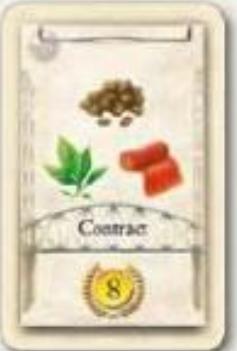
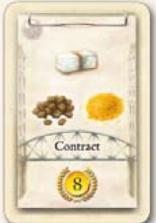
| 合約 | 3 | 3 | 4 | 0 | 完成合約遊戲結束時可獲得上面的分數,沒完成不算分 |
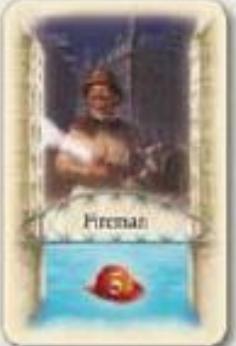
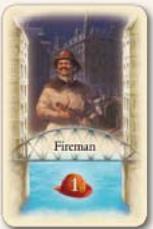
| 消防員 | 2 | 3 | 2 | 3 | 有不同能力值,失火時結算用 |
| 倉庫 | 1 | 0 | 0 | 0 | 可儲藏四個貨物供使用,遊戲結束時若上面有貨每個可得一分 |
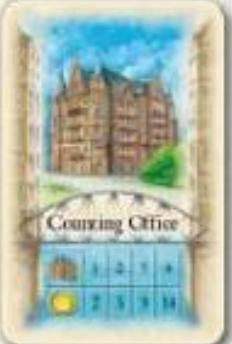
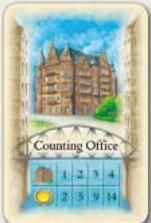
| 會計行 | 1 | 1 | 0 | 2 | 擁有1/2/3/4棟,便可獲得2/5/9/14分 |
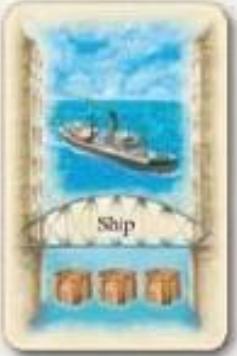
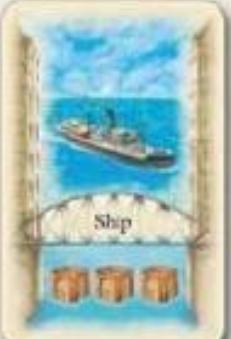
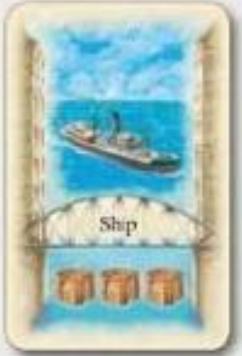
| 貨運船 | 0 | 5 | 5 | 5 | 上面會有三個貨 |
| 銀行 | 0 | 0 | 1 | 0 | 第五階段收入時多一元 |
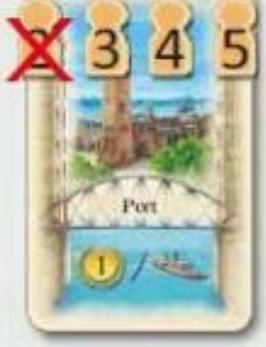
| 港口 | 0 | 0 | 0 | 1 | 遊戲結束時,買到的每艘貨運船可得一分 |
| 商會 | 0 | 0 | 0 | 1 | 遊戲結束時,每塊錢可得一分 |
| 船工教堂 | 0 | 0 | 0 | 1 | 遊戲結束時得三分 |
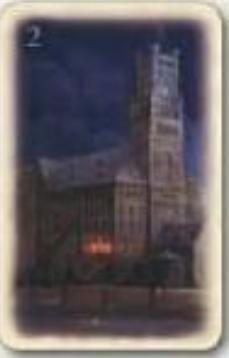
| 聖米歇爾 | 0 | 0 | 0 | 1 | 遊戲結束時得四分 |
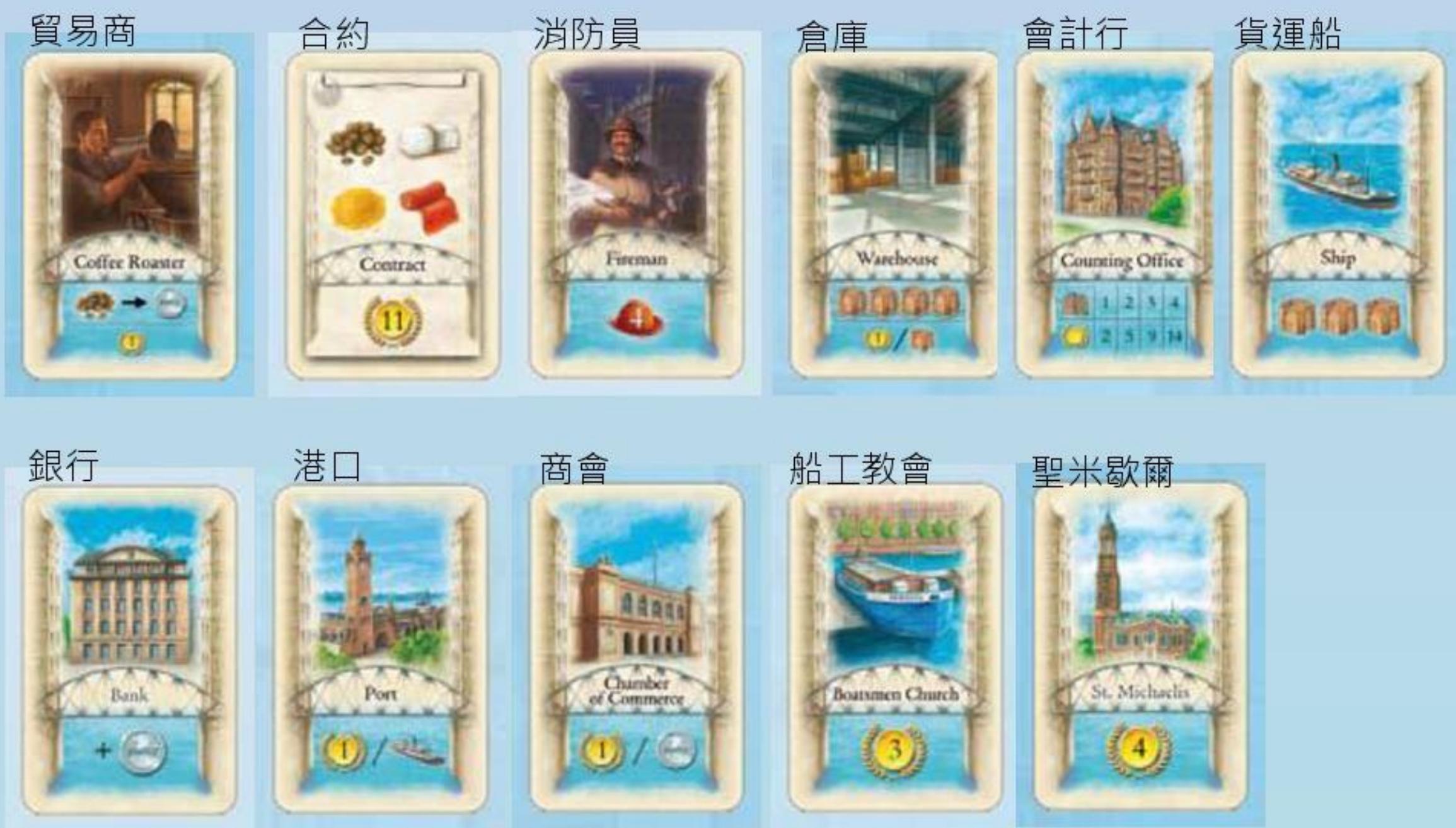
卡片一覽
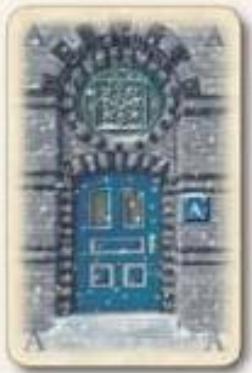


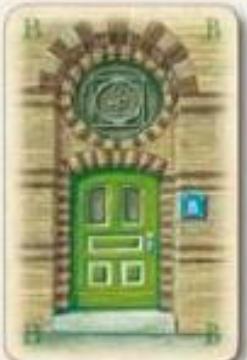

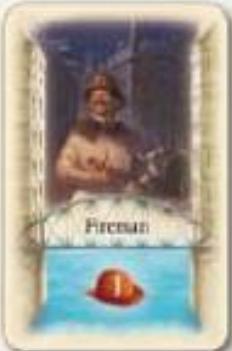
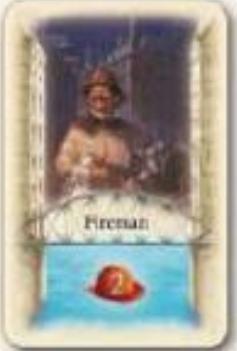
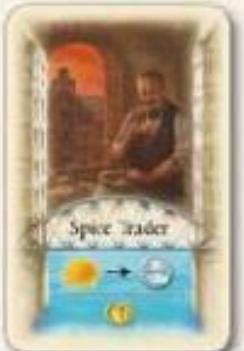
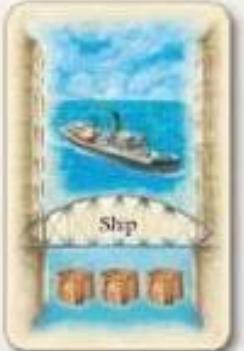
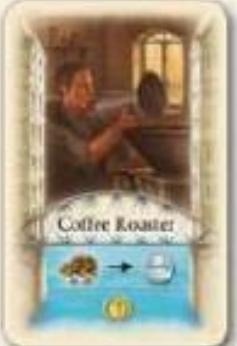

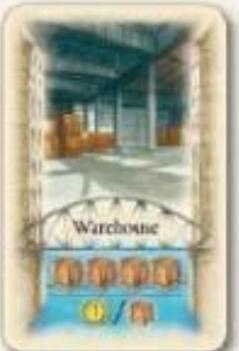
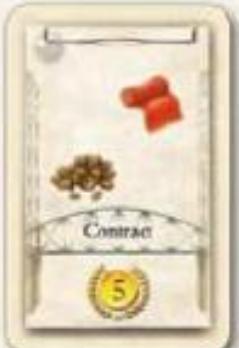

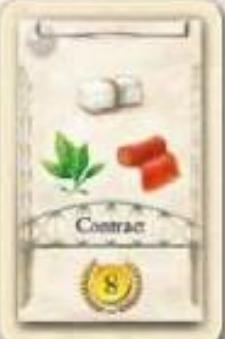

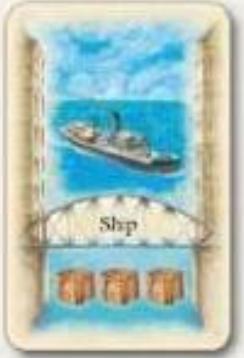

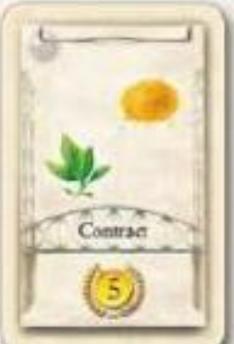

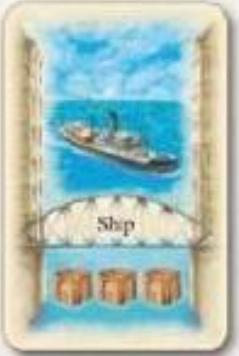


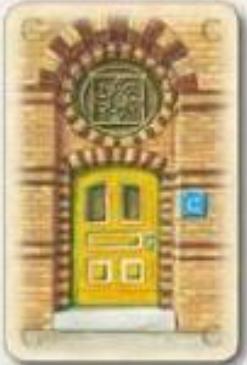
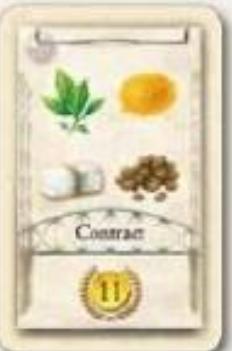
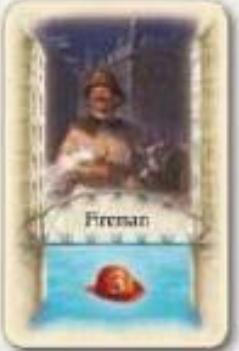





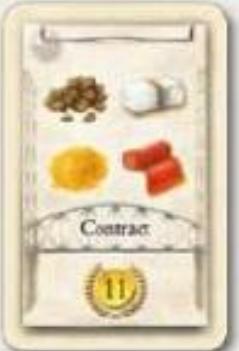
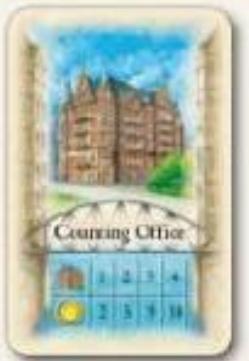
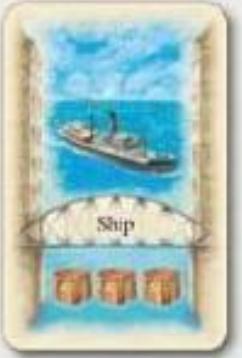

SpSt_rules_en.md22.5 KB
OVERVIEW2
You're the head of a large trading house in Hamburg's warehouse district, the Speicherstadt. Using a bidding-and-buying system, you purchase trade cards. These cards give you, for instance, ships loaded with cargo, which you take to your contractors, or firemen to protect you against fire. Collect points for your activities. In the end, the player with the highest score wins the game.
COMPONENTS2
1 game board
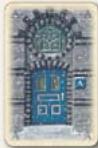
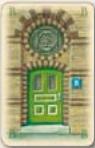


54 trade cards
·12 x Winter (A)
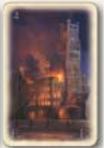

· 13 x Spring (B)
25 coins
·13 x Summer (C)
·15 x Autumn (D)
·1 x 4th Fire (E)
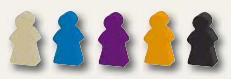
20 workers (4 in 5 player colors each)

5 market hall cards (in 5 player colors)
45 goods cubes
1 metal coin
· 9 x coffee (brown)
·9 x tea (green)
· 9 x saffron (yellow)
· 9 x rubber (white)
· 9 x carpet (red)

1 bag
GAME PREPARATIONS
At first, cut off the quick guide (pages A/B) from this rules manual. Follow the setup as described on page A. Afterwards, continue reading here if you want to know about all the rules before you start playing, or get acquainted with the game via the quick entry on page B of the quick guide if you want to start the game immediately.
GAME SEQUENCE2
The game consists of several rounds. Each round comprises 5 phases:
1) Supply
2) Demand
3) Purchase
4) Loading
5) Income
1) Supply
In this phase you determine the supply of trade cards that's available for the current round. For that purpose, take the top cards from the drawing pile (according to the number of players) and place them in a row face-up, from left to right on the water spaces of the Speicherstadt:
• 2 players: 3 cards
· 3 players: 4 cards
· 4 players: 5 cards
· 5 players: 6 cards
If you revealed 1 or more ships, randomly draw for each ship 3 goods cubes from the bag and place them on the ship.
2) Demand
In this phase you determine the size of the demand for the supplied trade cards. The player with the metal coin is the first player and begins. In clock-wise turn order choose 1 card by placing 1 worker of your color above that card. Place your worker on the lowest unoccupied building space. After all players have placed 1 worker, repeat this process until all players have placed 3 workers.
You may choose cards freely for each worker. In case there are already workers placed above the card you chose, simply place your worker on the next unoccupied space above. You cannot forgo placing a worker. You may, however, place more than 1 of your workers above a single card. If all 8 building spaces of a card are occupied by workers, you cannot place any further workers there.
In this way, bit by bit, rows of workers form above the cards. It is also possible that there is no demand for a card and no-one places a worker above it.
As soon as all players have placed all 3 workers, this phase ends.
For an example, see page B of the quick guide.
3) Purchase
Now, carry out the purchase of each card individually, from left to right. The procedure is the same for every card.
The player whose worker sits directly above the card (that is the lowest of the row) decides first whether or not they want to buy the card. If they do, they pay as many coins into the stock as the total number of workers above that card. (You can't pay with the metal coin.) The player then takes the card and places it in front of him- or herself. From now on that player may use the card's function. All workers in the row above that card return to their owners.
If the player is unwilling or unable to buy the card, take their worker back. Now, the player whose worker is next in line may buy the card. The price has dropped by 1 coin, since there is 1 worker less sitting above the card now. If that player doesn't want to buy the card either, it's the next player's turn, and so on.
Thus, the card is offered to all players who have workers placed above it in turn until one of them buys it. If no-one wants to buy the card, place it on the discard pile. The same applies if no worker at all was placed above a card. Afterwards, carry on with the next card.
For an example, see page B of the quick guide.
4) Loading
This phase happens for the first time in Spring (B), once the first ship has been purchased. You sell goods cubes, or you move them among various trade cards or the market hall.
The First Player begins, the others follow in clock-wise turn order. (In order to quicken the pace, you may also all act at the same time.)
Attention: As a rule, you may not trade or swap among yourselves – neither coins nor goods cubes or trade cards!
You may use the following cards in this phase:
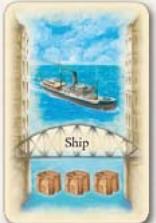
Ship
If you bought one or more ships this round, you need to unload them now. Take all goods cubes off the ship. You may now choose what to do with each goods cube individually:
· Place it on a contract.
·Sell it to a merchant.
· Keep it in your warehouse.
• Convert, sell or keep it in the market hall.
At the end of each loading, no goods cubes may remain on any ships. Any unused goods cubes expire. Put them into the stock of goods (or forming a stock if there is no stock yet): do not return them into the bag!
Contract
You may place any number of goods cubes from ships to the warehouse, or the market hall on one or more contract cards. The type of goods must match the contract card. For instance, you may only place a brown cube on a coffee symbol or a white cube on a rubber symbol. You may place single goods on a contract, fulfilling it in partial steps. You may not remove goods cubes that are already placed on contracts.
Merchant
You may sell any number of goods cubes from ships, the warehouse, or the market hall to one or more merchants. There are 5 different merchants:
·coffee roaster
· tea taster
·spice trader
·carpet trader
·vulcanizer
Each merchant pays 1 coin per goods cube of the depicted type of goods. For example, the tea roaster pays 1 coin for each green goods cube. Take the coin from the stock. Put the sold goods into the stock, do not return them to the bag!
Warehouse
During the loading you may place goods cubes in your warehouse or remove them from your warehouse. Here, you may keep goods cubes for use in later rounds or for gaining points at the end of the game. There may be no more than 4 goods cubes in a warehouse at any time, however.
Market Hall
You may use the market hall for various purposes during the loading:
• Convert: Put any 3 goods cubes of your choice to the stock and take any 1 other goods cube of your choice from the stock.
Note: For this purpose you may not draw goods cubes from the bag or return them to the bag!
· Sell: Put any 2 goods cubes to the stock and take 1 coin from the stock.
• Keep: You may keep no more than 1 goods cube in the market hall for use in a later round.
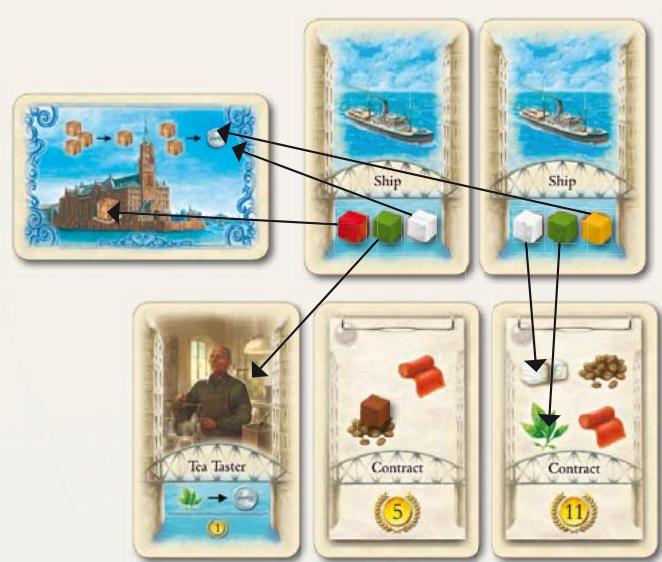
Example: Blue bought 2 ships in this round and needs to unload them now. He places 1 rubber and 1 tea on his right-hand contract. He could place the carpet on the left-hand contract; this would fully complete the contract and yield 5 points at the end of the game. But Blue decides to place the carpet in his market hall, to keep it for a later time since the carpet may also be used to fulfill the other contract, which may yield 11 points, after all.
Blue could convert the remaining 3 goods cubes rubber, tea, and saffron into 1 coffee at the market hall and fulfill his right-hand contract with that. But Blue is confident that he'll get the needed coffee later on. He would rather have a few more coins for the next round. So, Blue sells the tea to the tea taster and receives 1 coin from the stock. He sells rubber and saffron at the market hall and receives 1 further coin from the stock.

Both ships are now unloaded and Blue wants to take no further action during the loading.
5) Income
Each player receives 1 coin. Players who bought no trade card this round receive 1 additional coin. Afterwards, the First Player hands the metal coin to the player on their left.
In the rare case that there are not enough coins in the stock during the income phase, make do with tokens outside of the game, for example real coins or dice.
END OF THE GAME 2
As soon as in phase 1) “Supply“ the only card left on the drawing pile after the drawing of the trade cards is the card 4th fire (E), your last round has started. Proceed as per usual. Afterwards, carry out the final card on the drawing pile, 4th fire (see p. 4, “fire’). After that, the game ends.
Attention: Occasionally it may happen that the card 3rd fire (D) is the final autumn card and sits right above the card 4th fire (E). In that event, the round ends after revealing and carrying out the 3rd fire, but carry out the 4th fire immediately. After that, the game ends.
Now, determine all the points you've collected. Use the score track on the game board to show your points.
The player with the highest score wins. In case of a tie, the player who owns more coins wins. We will now explain the functions of the various trade cards (in alphabetical order) and the market hall. Each card may only be used by the player who bought it.
The figures underneath the illustrations indicate the number of appearances of a card in total and in the 4 seasons (A/B/C/D), respectively.

Bank
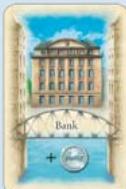
1:0/0/1/0
As owner of the bank you receive 1 additional coin in phase 5) “Income”. That way, you receive 2 coins if you bought at least 1 trade card this round, and 3 coins if you bought no trade cards this round.
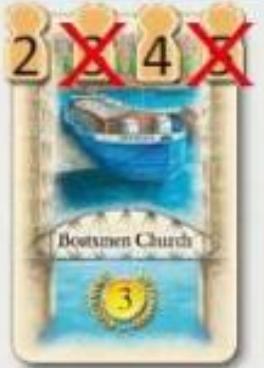
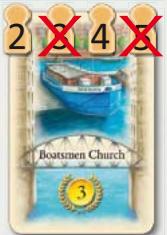
Boatsmen Church
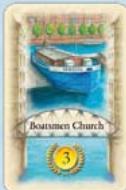
1:0/0/0/1
At the end of the game you will receive 3 points for the Boatsmen Church.
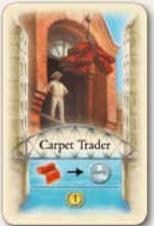
Carpet Trader

1:1/0/0/0
In phase 4) “Loading“ you may sell any number of red goods cubes (carpets) to the carpet trader. For each carpet cube sold take 1 coin from the stock. Put the sold carpet cubes into the stock and do not return them to the bag! At the end of the game you will receive 1 point for the carpet trader.
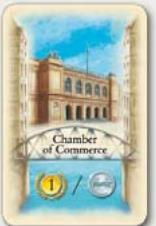
Chamber of Commerce
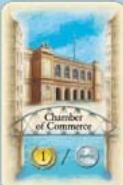
1:0/0/0/1
At the end of the game you will receive 1 point for each coin you own. (You do not have to return the coins.)
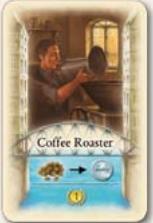
Coffee Roaster
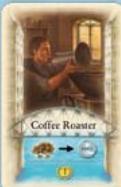
1:1/0/0/0
In phase 4) “Loading“ you may sell any number of brown goods cubes (coffee) to the coffee roaster. For each coffee cube sold take 1 coin from the stock. Put the sold coffee cubes into the stock and do not return them to the bag!
At the end of the game you will receive 1 point for the coffee roaster.
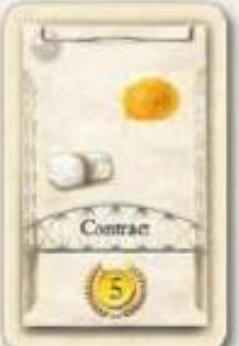
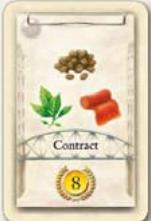
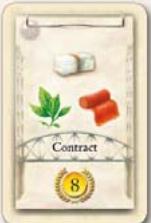
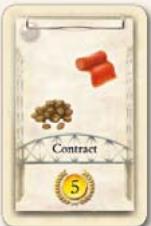
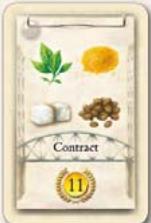
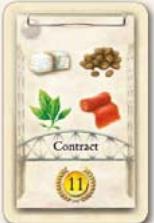
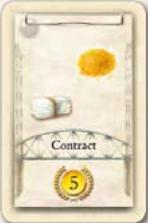
Contract
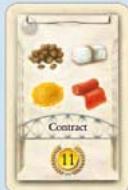
10:3/3/4/0
In the course of the game you should supply your contracts with goods cubes, since you will gain points for this. Contracts come in 3 different sizes:
· small contract: 2 goods for 5 points
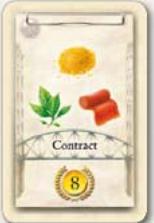
· medium contract: 3 goods for 8 points · large contract: 4 goods for 11 points In phase 4) “Loading“ you may place any number of goods cubes from ships, the warehouse, or the market hall on one or more contract cards. The type of goods of the cube and of the contract card must match. For instance, you may only place a brown cube on a coffee symbol or a white cube on a rubber symbol. You may place single goods on a contract, fulfilling it in partial steps. You may not remove goods cubes that are already placed on contracts.
At the end of the game you receive the number of points (5/8/11) shown on the contract, but only if all required goods cubes have been placed on it. There are no points for incomplete contracts.
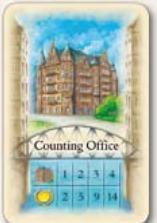
Counting Office
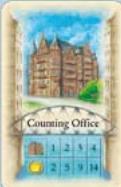
4:1/1/0/2
At the end of the game you will receive points for your Counting Offices, as follows:
·2 points if you own 1 Counting Office,
· 5 points if you own 2 Counting Offices,
· 9 points if you own 3 Counting Offices,
· 14 points if you own all 4 Counting Offices.
Fire
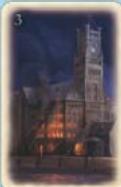
4:0/1/1/1/ end of game
There are 4 fire cards. As soon as you reveal a fire in Phase 1) “Supply”, immediately halt the game. Each player adds the values of their firemen. The player with the largest sum immediately receives as many bonus points as shown on the fire card. The player with the smallest sum immediately receives as many negative points. Use the score
track on the game board to show your points.
In case of a tie, each participant receives the points or negative points. In the rare case that all players possess the same sum, nobody receives any points (positive or negative).
After carrying out the fire card, place it on the discard pile. Reveal a further trade card to replace the fire and completely stack the water spaces. Continue the game.
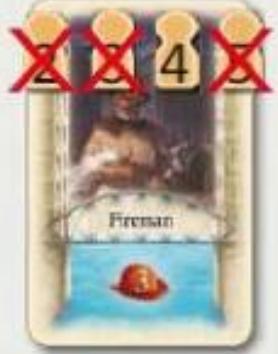
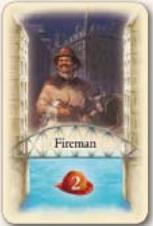
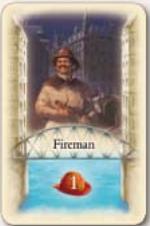
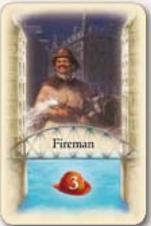
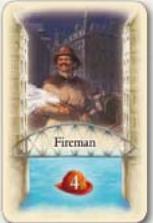
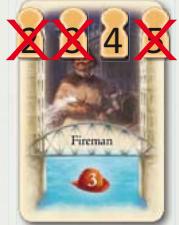
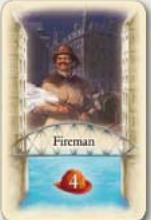
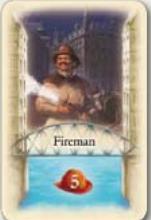
Fireman
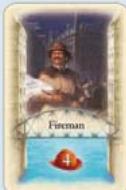
10:2/3/2/3
Firemen will protect you from the 4 fires that will start during the course of the game. Each fireman has a value (1-5). In the event of a fire, the sum of the values of your firemen will determine whether you may receive bonus or negative points.
Market Hall
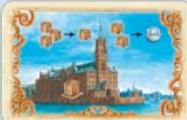
During the game set-up each player receives 1 market hall. In phase 4) “Loading” you may use it in various ways:
• Convert: Put any 3 goods cubes of your choice to the stock and take any 1 other goods cube of your choice from the stock.
· Sell: Put any 2 goods cubes to the stock and take 1 coin from the stock.
• Keep: You may keep no more than 1 goods cube in the market hall for use in a later round.
For an example, see page 3.
Port

1:0/0/0/1
At the end of the game the port will gain you 1 point for each ship you own.
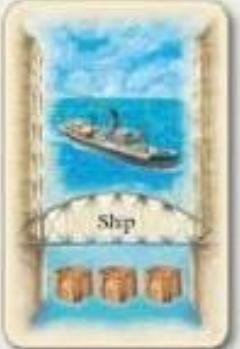
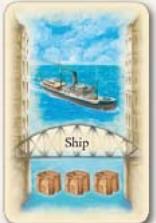
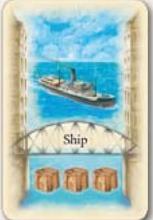
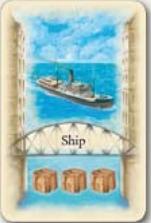
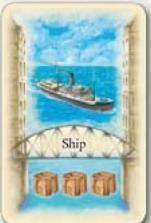
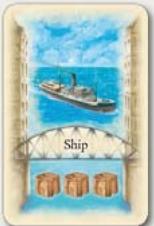
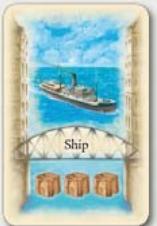
Ship
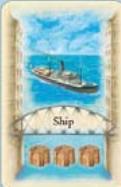
15:0/5/5/5
As soon as you reveal a ship in phase 1) "Supply", randomly draw for each ship 3 goods cubes from the bag and place them on the ship.
If you buy a ship, you need to unload it in the same round. Take all goods cubes off the ship. You may now choose what to do with each goods cube individually:
· Place it on a contract.
· Sell it to a merchant.
· Keep it in your warehouse.
· Convert, sell or keep it in the market hall.
At the end of each loading, no goods cubes may remain on any ships. Any unused goods cubes expire. Put them into the stock and do not return them to the bag!
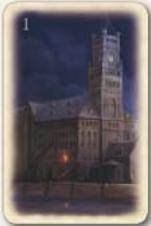
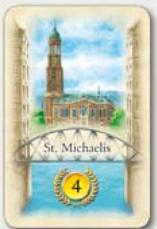
St. Michaelis
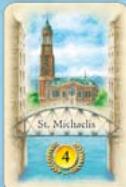
1:0/0/0/1
At the end of the game you receive 4 points for St. Michaelis.
Spice Trader

1:1/0/0/0
In phase 4) “Loading“ you may sell any number of yellow goods cubes (saffron) to the spice trader. For each saffron cube sold take 1 coin from the stock. Put the sold saffron cubes into the stock and do not return them to the bag!
At the end of the game you will receive 1 point for the spice trader.
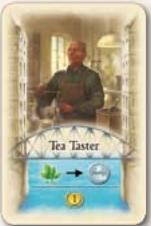
Tea Taster
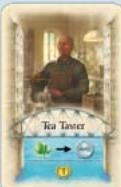
1:1/0/0/0
In phase 4) “Loading“ you may sell any number of green goods cubes (tea) to the tea taster. For each tea cube sold take 1 coin from the stock. Put the sold tea cubes to the stock, do not return them to the bag!
At the end of the game you will receive 1 point for the tea taster.
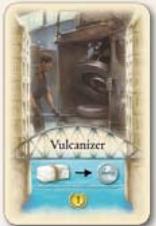
Vulcanizer

1:1/0/0/0
In phase 4) “Loading“ you may sell any number of white goods cubes (rubber) to the vulcanizer. For each rubber cube sold take 1 coin from the stock. Put the sold rubber cubes into the stock and do not return them to the bag!
At the end of the game you will receive 1 point for the vulcanizer.
Warehouse
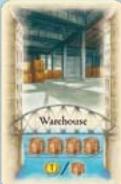
1:1/0/0/0
In phase 4) “Loading" you may place goods cubes in your warehouse or remove them from your warehouse. Here, you may keep goods cubes for use in later rounds or for gaining points at the end of the game. There may be no more than 4 goods cubes in a warehouse at any time, however.
At the end of the game you receive 1 point for each goods cube in your warehouse.
ABOUT
Author: Stefan Feld
Illustration: Michael Menzel and Harald Lieske
Title Writing: Andreas Resch
Instruction: Thygra Board Game Agency
Layout: Harald Lieske
© 2010 eggertspiele GmbH & Co KG
TRADE CARDS OVERVIEW


















简繁检索对照.md1.6 KB
67505_66505_the-speicherstadt — 简体/繁体检索对照
本游戏的规则书是繁体中文原文。用户用简体提问时,把关键词按下面这张表转成繁体再去 grep 原文,命中率最高。
回答时用简体或繁体都可以,但引用的原文保持繁体。
简体 → 繁体 对照(按该游戏原文出现频率排序,共 60 字)
| 简体 | 繁体 | 原文出现次数 |
|---|---|---|
| 个 | 個 | 42 |
| 货 | 貨 | 39 |
| 时 | 時 | 23 |
| 买 | 買 | 15 |
| 后 | 後 | 15 |
| 结 | 結 | 15 |
| 阶 | 階 | 15 |
| 游 | 遊 | 14 |
| 戏 | 戲 | 14 |
| 张 | 張 | 14 |
| 队 | 隊 | 14 |
| 购 | 購 | 11 |
| 数 | 數 | 11 |
| 块 | 塊 | 9 |
| 则 | 則 | 9 |
| 将 | 將 | 8 |
| 运 | 運 | 7 |
| 员 | 員 | 7 |
| 会 | 會 | 7 |
| 卖 | 賣 | 6 |
| 弃 | 棄 | 6 |
| 拥 | 擁 | 6 |
| 无 | 無 | 6 |
| 获 | 獲 | 5 |
| 贸 | 貿 | 5 |
| 开 | 開 | 5 |
| 进 | 進 | 5 |
| 给 | 給 | 5 |
| 没 | 沒 | 5 |
| 动 | 動 | 4 |
| 币 | 幣 | 4 |
| 种 | 種 | 4 |
| 颜 | 顏 | 4 |
| 对 | 對 | 4 |
| 应 | 應 | 4 |
| 须 | 須 | 4 |
| 筑 | 築 | 4 |
| 银 | 銀 | 4 |
| 区 | 區 | 4 |
| 约 | 約 | 4 |
| 储 | 儲 | 4 |
| 仓 | 倉 | 3 |
| 库 | 庫 | 3 |
| 属 | 屬 | 3 |
| 摆 | 擺 | 3 |
| 余 | 餘 | 3 |
| 里 | 裡 | 3 |
| 顺 | 順 | 3 |
| 轮 | 輪 | 3 |
| 该 | 該 | 3 |
| 楼 | 樓 | 3 |
| 层 | 層 | 3 |
| 愿 | 願 | 3 |
| 钱 | 錢 | 3 |
| 处 | 處 | 3 |
| 换 | 換 | 3 |
| 汉 | 漢 | 2 |
| 这 | 這 | 2 |
| 灾 | 災 | 2 |
| 据 | 據 | 2 |
Texts are community-compiled or publicly released by publishers; copyright remains with the original authors. For personal reference only.