
Ticket to Ride
At a glance
Rules, cards and Q&A (Chinese)
The rules, card data and player questions for this game are written in Chinese. Open the Chinese page to read them.
Where to find full rules
Full rules and card lookup are available in the cunlema app at cunlema.cn — pick this game and ask about any rule, card or turn you are unsure about.
Related games
Rulebook text (Markdown)
This game has 3 rulebook Markdown file(s) in our library; 3 rendered inline below — expand to read or download.
rules_zh_Ticket_to_Ride_M_rklin_1099.md17.8 KB


配件
◆ 1块带铁路线的德国游戏版图
◆ 240个彩色火车车厢(白色、红色、紫色、黄色和黑色,每色45个;另加每色3个额外“替换”车厢)
◆ 165张绘有图片的卡牌:


118张火车车厢牌 - 蓝色、红色、绿色、黄色、黑色、紫色、白色和橙色,每种各11张


14张火车头牌


6张火车头(+4)牌

10张乘客牌


23张短程目的地车票牌
(价值5到11分)


23张长程目的地车票牌(价值12到22分)


◆ 5个记分标记(每位玩家1个)
◆ 74个商品标志:

白色标志
(16个,所有数值为2)


黄色标志
(数值为3、2、1,
每种各12个)

红色标志
(数值为4、3、2,
每种各6个)

黑色标志
(总共4个,数值为7、6、5、4)


◆ 1片完成最多车票奖励板块(价值10分)


◆ 1份规则书
◆ 15个乘客(白色、红色、紫色、黄色和黑色,每色3个)
◆ 1个 Days of Wonder 在线访问编号(位于规则背面)


重要注意事项
熟悉该系列之前游戏如车票之旅和车票之旅欧洲的玩家,应该关注以下新的特征:乘客、百搭牌。


游戏设
将游戏版图放在桌子中间①。将标志按大数值在上、小数值在下、从大到小叠成多叠。应该有一叠黑色标志(7、6、5、4)、六叠红色标志(4、3、2)、十二叠黄色标志(3、2、1)和十六个分开的白色标志(2)。将标志叠放在对应的城市上。城市的颜色与标志叠的颜色一致。②


每位玩家获得一套45个彩色火车车厢、对应的乘客和记分标记③。每位玩家将他的记分标记放在围绕地图版的记分条上的起始位置④。在游戏中,每次玩家获得分数,他将他的标记向前相应移动。
洗混车厢牌,并发给每位玩家4张作为起始手牌⑤。然后将剩余的车厢牌叠放在版图旁边,并从牌叠中面朝上翻开顶部的五张牌⑥。
将完成最多车票奖励板块面朝上放在版图旁边⑦。
将目的地车票牌叠分成短程线路一叠(蓝色背景)、长程线路一叠(棕色背景)。将它们放在版图旁边⑧。在游戏开始时,每位玩家摸取四张车票。玩家可以摸取两种类型车票的任意组合,但是他必须首先声明所要摸取车票是怎样的组合。


然后每位玩家查看自己的目的地车票,并决定希望保留哪些。玩家必须至少保留两张,但是可以选择保留三张或全部四张车票。不要的车票放回它们对应的牌叠。将两叠车票洗混,并将两叠分开的短程和长程目的地车票放在版图旁边。玩家对自己的目的地车票保密直到游戏结束。
现在准备开始游戏。
游戏的目标
游戏的目标是获得最高的总分。分数能通过以下手段获得:
-
声明地图上两个城市间的一条线路;
-
成功完成一条你的目的地车上列出的两个城市之间的连续路径路径;
-
聚动乘客;
-
完成最多目的地车票。
你没有成功完成保留的目的地车票上的线路,分数将扣除。
游戏回合
拥有最佳马克林(Märklin)模型火车收藏的玩家或最年轻的玩家首先开始。然后按顺时针进行,每位玩家一次执行一回合游戏直到游戏结束。在玩家的回合中,他必须执行以下四个行动中的一个(且只有一个):
-
摇车厢牌 —— 玩家可以摸两张火车车厢牌。他可以获得任意一张面朝上的牌,或者摸牌叠顶的牌(这是盲抽)。如果他摸了一张面朝上的牌,他立即从牌叠翻开一张替代。然后他可以从面朝上的牌或牌叠顶摸他的第二张牌。(对于火车头牌和乘客牌的特殊规则参见火车车厢/乘客牌)
-
声明一条线路 —— 玩家可以声明版图上的一条线路,打出一套与该线路的颜色和长度相应的火车车厢牌,然后在该线路的每格上放置一个自己颜色的火车。然后,他在版图上沿着记分条移动自己的记分标记相应格数(参见线路计分表)记录自己的分数。
当玩家声明一条线路时,他也可以将他的一个乘客放在这条线路连接的一个城市中。每个城市中只允许有一个乘客。
-
摇目的地车票——玩家从牌叠顶摸4张目的地车票。他必须至少保留它们中的一张,但他可以选择保留两张、三张或全部四张。退回的牌放在其对应的目的地车票牌叠底部。
-
移动乘客——玩家可以移动自己的任何一个已经在版图上的乘客。乘客必须从当前所在的城市开始沿着玩家的任意一条或全部的连续的线路移动,并从其移动通过的每一个城市获取一个商品标志(当然将获得剩余的最高分标志)。每回合玩家只能使用相同线路一次,例如乘客不能从原路返回。玩家不能从乘客最初所在的城市获取商品标志。乘客能够移入或通过其他乘客所在的城市。在回合结束,刚移动的乘客从游戏中移除。因此,在游戏中每位玩家最多能在三回合移动乘客。获得的分数立即记录,但玩家保留商品标志,以防之后需要重新计分。
火车车厢和乘客牌
在任何时候,玩家可以拥有任意数量的手牌。
当牌叠被用完时,将弃牌洗混组成一个新的摸牌叠。这些牌必须被彻底洗乱,因为它们通常都是被按套丢弃的。
万一在牌叠中没有剩余的牌,并且弃牌也没有(因为玩家在手上保留了大量的牌),玩家不能再摸火车车厢牌。相反,他只可以声明一条线路、移动一个乘客或摸目的地车票牌。
大车牌
共有8种类型的常规火车车厢牌。每种火车车厢牌的颜色与版图上的城市间不同线路匹配——紫色、蓝色、橙色、白色、绿色、黄色、黑色和红色。


火车头是彩色的,当声明一条线路时,作为一张百搭牌能够组成任意套牌的一部分。如果火车头牌是五张面朝上的牌中的一张,摸这张牌的玩家只可以摸一张牌代替普通的两张。如果玩家摸了一张普通牌后翻开的替代牌是一张火车头,则玩家不能再获得这张火车头牌。在任何时候,五张面朝上的牌中如果有三张是火车头,所有五张牌立即被丢弃,并面朝上翻开五张新的牌来替代。

大车兵+4牌
火车头+4牌是彩色的,可以作百搭牌,但只能在声明一条4格及以上的线路时,作为套牌的一部分。它们不能用于少于4格的线路。与标准火车头牌不同,当玩家摸火车头+4牌时仍然可以摸两张牌。


乘客牌能够像其他火车牌一样被获取。当移动一个乘客时,玩家能够打出任意数量的乘客牌,每张打出的乘客牌使用一条属于对手的线路。在任何时候,五张面朝上的牌中如果有三张是乘客牌,所有五张牌立即被丢弃,并面朝上翻开五张新的牌来替代。


玩家不能从乘客最初所在的城市获取商品标志。
当玩家声明一条线路时,他也可以将他的3个乘客之一放在这条线路的任一城市中。每个城市中只允许有一个乘客。
一旦乘客完成旅行,其从游戏中移除。

声明线路
一条线路是在地图上两个相邻城市之间一套连续的彩色格子(在某些情况下是灰色格子)。为了声明一条线路,玩家必须打出一套颜色和数量与所选择线路格子的颜色和数量相匹配的火车车厢牌。

这套牌必须是相同类型的。大多数的线路需要一种特定的套牌。例如,一条蓝色的线路必须使用蓝色车厢牌声明。一些线路——那些是灰色的——能够使用任意一种颜色的套牌声明。

当一条线路被声明时,玩家在该线路的每个格子上放置一个他的塑料火车。然后用于声明这条线路的套牌全部被丢弃。然后玩家立即,按线路计分表,通过沿着记分条移动他的记分标记相应格数来记录他的分数。
玩家可以声明版图上任意一条开放的线路。他无需连接之前他已经声明的任意线路。
一条线路必须在一个回合中整个被一起声明。例如,你不能在一条三格线路上放置两个火车,并等待下回合放置第三个火车。
在一个玩家的回合中,不能声明超过一条线路。

一些城市由双线线路连接。一位玩家不能声明两条连接相同城市的线路。同样的规则适用于三线线路。


为了声明一条三格长度的蓝色线路,玩家可以打出以下任意一套卡牌组合:三张蓝牌、两张蓝牌和一张火车头、一张蓝牌和两张火车头、或者三张火车头。
一条两格长度的灰色线路能够通过打出两张红牌、一张黄牌和一张火车头、或者两张火车头来声明。


重要注意事项
在2人或3人游戏中,两个城市间的双线线路或三线线路中只有一条能被使用。一位玩家能够声明两条或三条线路中的一条,但其他线路对其他玩家关闭。


线路计分表

摸目的地车票牌
一位玩家能够使用他的回合摸更多目的地车票牌。他从两个目的地车票牌叠顶摸4张新的牌。玩家可以摸两种类型车票的任意组合,但是他必须首先声明所要摸取车票是怎样的组合。如果牌叠的目的地车票剩余少于4张,玩家只能摸那些可供使用的牌。他必须保留至少一张牌,但也可以选择保留两张、三张或所有四张。退回的牌被放回对应目的地车票牌叠底部。
每张目的地车票包含地图上两个城市的名字和一个分数值。如果玩家成功完成连接这两个城市的一系列线路,在游戏结束时,将加上目的地车票上注明的分数。如果没有成功连接这两个城市,将扣除注明的分数。
一些目的地车票包含一个城市名字和一个国家名。每条通往其他国家的线路都是死胡同,不再连接两个城市。乘客不能放在一个国家上,或移动通过一个国家。目的地车票对其他玩家保密直到游戏最终计分。在游戏中,玩家可以拥有任意数量的目的地车票牌。
游戏结束
当一位玩家的回合结束,他的彩色火车车厢只剩0、1或2个时,每位玩家,包括那位玩家,进行最后一回合。然后游戏结束,玩家计算他们的最终得分。
计算分数
玩家应该已经计算了他们完成的不同线路和搜集的不同商品标志的分数。为了确信没有错误发生,你可以要求重新计算每位玩家的线路和通过乘客搜集的商品标志的分数。
然后玩家应该翻开他们所有的目的地车票,并基于是否成功连接那些城市,增加或扣除他们手上的目的地车票分数。
完成最多目的地车票的玩家获得完成最多车票奖励板块,并增加10分。如果完成最多车票平局,所有平局的玩家获得10分奖励。未完成的车票不影响对该奖励的分配。
拥有最多分数的玩家赢得游戏。如果两人或更多玩家拥有相同的最多分数,(平局玩家中)完成最多目的地车票的玩家获得胜利。万一仍然平局,拥有最高商品标志总分的玩家获得胜利。
翻译与制作:Welkin
在线游戏
这是你的 Days of Wonder 在线访问号码:
使用号码,只需访问:www.ticket2ridegame.com,并在首页点击新玩家注册按钮。然后只需按指示探索变体、附加地图、论坛,并与车票之旅和其他 Days of Wonder 游戏的在线版本的玩家加入我们的社区。
你也可以在 www.daysofwonder.com 了解其他的 Days of Wonder 游戏,或拜访我们。
作者
游戏设计 Alan R. Moon
插图 Julien Delval
照片 Märklin
规则翻译 Welkin
游戏测试: Phil Alberg, Buzz Aldrich, Dave & Jenn Bernazzani, Pitt & Radonna Crandlemire, Terry Egan, Brian Fealy, Dave Fontes, Matt Horn, Craig Massey, James Miller, Janet Moon, Mark & Tery Noseworthy, Michael Robert, Bob Scherer-Hoock, Mike Schloth, Eric Schultz, Ricardo Sedan, Scott Simon, Rob Simons, Adam Smiles, Tony Soltis, Richard Spoonts, Briant Stormont, Evan Tannheimer, Rick Thornquist, Days of Wonder的每一人和来自 Märklin的 Lars Schilling 和 Wolfgang Stein。
Download MarkdownTtR_DragonTombRules_v1.md5.3 KB
TickeT To Ride
Overview:
Players take on the role of garbage men collecting dumpsters that have bene strewn across North America. Players get points by collecting dumpsters along their trash routes. The player with the most points at the end of the game wins the game.
Components:
45 Green Dumpsters
45 Red Dumpsters
45 Blue Dumpsters
45 Black Dumpsters
45 Yellow Dumpsters
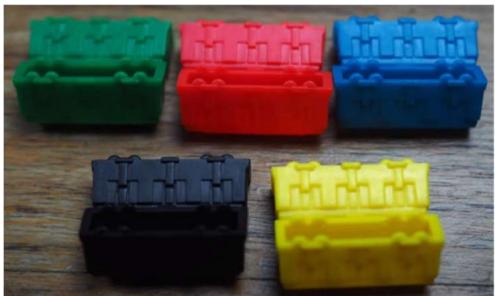
5 Player Point Tracker Tokens
(1 for each player color)

Garbage Cards (a lot of them)
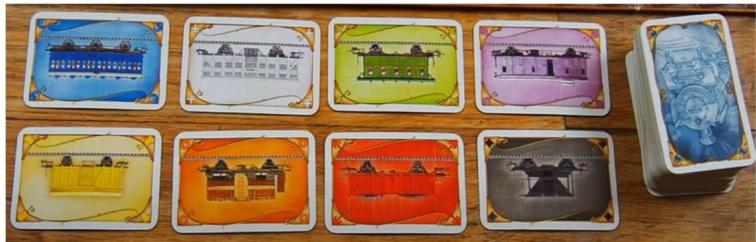
Rainbow Pride Dumpster Cards

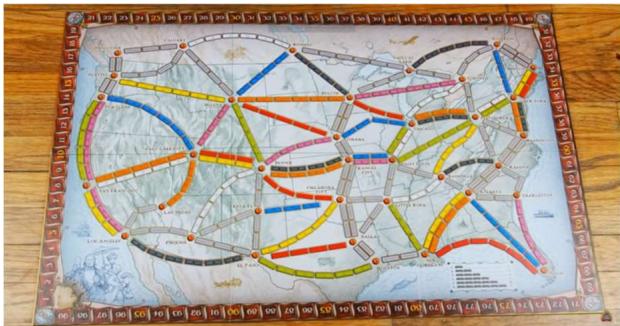
The Game Board of Dumpster Routes
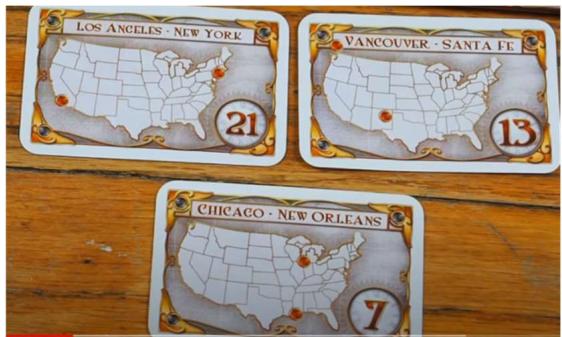
Trash Route Cards
TickeT To Ride
Setup:
-
Lay the board out on the table.
-
Each player should select a color and take all the dumpsters of their selected color. (Each player should select a different color)
-
Put each players point tracker token next to the board next to the “1” on the score tracker.
-
Shuffle the garbage cards and put the deck on the table.
-
Deal each player one trash route card (face up).
-
Each player will create a path placing their dumpsters on a route that connects the starting city and the ending city on their trash route card. The player with the longest trash route goes first, then the player with the next highest trash route goes next, and so on.
-
At this point, you are ready to start playing. The player with the longest trash route goes first.
How To Play:
On a player’s turn, they can do one of two things. They may collect garbage cards or collect garbage dumpsters from their route. Once a player performs their one action, it is the next player’s turn.
1. Collect Garbage Cards
Look at the number in the lower right corner of your trash route card. You may draw that many garbage cards from the garbage card deck. There is no hand limit, so players may hold as many cards as they can hold. Note, if you drop any of your cards, you must return the cards to the top of the garbage card deck.
2. Collect Garbage Dumpsters
You may collect one set of dumpsters along your trash route. Discard a number of dumpster cards equal to the color and quantity of dumpsters between two cities in your trash route. You must start in your starting city (this is the city listed on the top left of your trash route card), and work your way to your end city just like real garbage men. After discarding the appropriate number and color of cards into a discard pile, claim the route by collecting the dumpsters and returning them to your supply.
Rainbow-Colored Pride Dumpster Cards
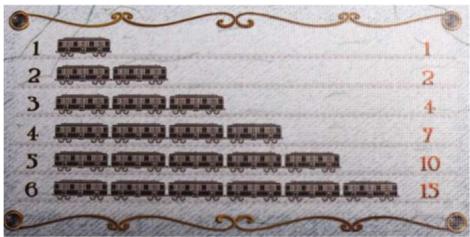
Alternately, instead of discarding cards that match the color and quantity of the next segment of your route, you may turn in rainbow-colored pride dumpster cards. As indicated on the board, if you turn in 1 rainbow-colored pride dumpster card then you may collect 1 dumpster from your
trash route. If you turn in 2 rainbow-colored pride dumpster cards then you collect 2 dumpsters. If you turn in 3 rainbow-colored dumpster cards, collect 4 dumpsters. Trading in 4 lets you collect 7, 5 lets you collect 10, and 6 lets you collect a whomping 15 dumpsters from your route!
TickeT To Ride
Completing a Trash Route:
Once a player has collected all their dumpsters from the board, they have completed their trash route. That player increases their point marker on the point track up by one and draws a new trash route card repeating the process all over again starting with placing their dumpsters on the board connecting the two cities on their new trash route card.
End of Game:
The game will end immediately as soon as a player completes 100 trash routes. The first player to get to 100 points wins the game. This means that it is possible that all players will not get the same number of turns.
Calculating Scores
At the end of the game, players should have already accounted for all the points that they earned during the game. To make sure that no mistakes were made, you may want to re-count all of the trash route cards for each player. If a trash route card was used multiple times, then next time you play, write down on a piece of paper each player’s completed trash routes so a re-count can be verified.
Endorsement:

“All in all, this game is a blast to play. It’s a great mix of luck and strategy. And I love the nod to the old traditional garbage man saying, `Once you complete your first 100 trash routes, you’ll finally have earned your Ticket To Ride peacefully into heaven.` So true.” –Jeff
Credits
Game design mechanisms by Jeff Kornberg. Writer and document editor by Gwommy. A special thank you to the garbage men community and their inclusion of the rainbow-colored pride dumpsters which represents their unwavering commitment to sexual equality.
Copyright @2018 Dragon’s Tomb https://www.youtube.com/watch?v=a6cICFEy-hY
Download MarkdownTicketToRideMaerklin.md4.9 KB
Ticket to Ride: Märklin
A game for 2-5 players by Alan R. Moon. Condensed rules by Eric Postpischil, https://edp.org.
Setup
Put the board and the Most Completed Tickets tile on the table.
Give each player 45 train cars and 3 passengers of one color and put the matching score marker by the start of the score track.
On each city in Germany, stack tokens shown by the color of the city’s dot, highest numbers on top:
• On the 1 black city, stack 4 black tokens: 7, 6, 5, 4.
• On the 6 red cities, stack 3 red tokens: 4, 3, 2.
• On the 12 yellow cities, stack 3 yellow tokens: 3, 2, 1.
• On the 16 white cities, put a single white token: 1.
Shuffle the train cards. Deal each player 4 facedown. Deal 5 face-up in a row by board. Stack rest facedown by row.
• (The deck has 11 each of 8 colors, 14 plain locomotives, 6 “+4” locomotives , and 10 passenger cards.)
Shuffle the short destination tickets (blue background). Stack facedown by board.
Shuffle the long destination tickets (brown background). Stack facedown by board.
Each player announces a combination of 4 short and long destination tickets and draws them.
Each player keeps 2-4 destination tickets and returns others. Shuffle returned tickets into their respective decks.
The player with the best collection of Märklin trains or the youngest player starts.
Play
Play clockwise until a player has 2 or fewer train cars left. Then each player, including that one, takes a final turn.
On each turn, a player either draws train cards, claims a route, draws destination ticket cards, or moves a passenger.
• You must perform an action. If there are no train cards to draw, you must perform a different action.
(All player cards are held secretly.)
Draw Cards
Draw 1 face-up plain locomotive or draw 2 cards (neither of which is a face-up plain locomotive).
• You may draw from the top of the train deck or take a face-up train card and replace it from the deck.
• You may see the new face-up card before deciding where to take your second card from.
• If, at any time, 3 of the 5 face-up cards are plain locomotives, discard all 5 and deal 5 new cards.
• If, at any time, 3 of the 5 face-up cards are passenger cards, discard all 5 and deal 5 new cards.
• When the deck is exhausted, shuffle the discards thoroughly.
Claim a Route
A route is a set of marked spaces on the board connecting 2 cities, including unnamed cities outside Germany.
Play a set of train cards matching the color and length (one card per space) of an empty route.
• For a gray route, use any 1 color.
• You may play any number of plain locomotives in lieu of the same number of cards of the color.
• On a route of 4 or more spaces, you may play “+4” locomotives in lieu of the same number of cards of the color.
• In a double or triple route, claim any individual route. No player may have two routes in a double or triple.
• With 2 or 3 players, only one route of a double or triple route may be claimed.
Fill in the route with your train cars and discard the played cards. (You may not claim a route you cannot fill.) For a route of 1/2/3/4/5/6/7 spaces, score 1/2/4/7/10/15/18 points.
You may also place a passenger in one of the cities on the route, if there is currently no passenger there.
• Passengers may not be placed in the unnamed cities outside Germany.
Draw Destination Ticket Cards
Announce a combination of 4 short and long destination tickets and draw them. Keep 1-4 of them. Return unkept cards to the bottoms of their decks.
• If there are insufficient cards left, draw only what is available.
Move Passengers
Move a passenger on the board along any of your connected routes, using each route at most once (on this turn).
You may also move along a route with an opponent’s train cars by discarding 1 passenger card per such move.
Passengers may not move to an unnamed city outside Germany, either as an intermediate or a final stop.
At each city the passenger moves to (not the start city), take the highest merchandise token.
• Score merchandise points immediately (but keep the tokens for later recounting).
Your passenger may visit cities with other passengers.
After completing the moves, remove the passenger from the game.
Ticket to Ride: Märklin
Game End
Recount completed route and merchandise scores, to correct errors and omissions.
Add or subtract the points of each held destination ticket according to whether the player completed it or not.
• A destination ticket is completed if there is a path of the player’s train cars connecting the two cities it shows.
Give the Most Completed Tickets tile to the player who completed the most tickets and give them 10 points.
• If there is a tie, give each tied player 10 points.
• Break a tie in favor of the player who completed the most destination tickets, then in favor of highest merchandise total.
The player with the most points wins.
Download MarkdownTexts are community-compiled or publicly released by publishers; copyright remains with the original authors. For personal reference only.