
Tournay
At a glance
Rules, cards and Q&A (Chinese)
The rules, card data and player questions for this game are written in Chinese. Open the Chinese page to read them.
Where to find full rules
Full rules and card lookup are available in the cunlema app at cunlema.cn — pick this game and ask about any rule, card or turn you are unsure about.
Related games
Rulebook text (Markdown)
This game has 2 rulebook Markdown file(s) in our library; 2 rendered inline below — expand to read or download.
rules_zh_图尔奈_8621.md28.0 KB



General supply
Concept of the Game
Tournay 是一款卡牌游戏,你将扮演城中的一个富豪家庭来在建设城市的同时得到家族声望
游戏卡牌被等级和颜色分为9种,你可以用3种不同的工人来进行抓牌,建设城区,收入等行动。
你可以打出手中的卡牌来放置在自己的城区中(九宫格)
等级I和II的卡牌有自己的作用,等级III的卡牌主要是用来最终计分
最终获得最高声望分数的家族赢得游戏

Contents
- 90张基础版游戏卡牌,卡牌的一角印有 ☑ 标记和
- 标记(每种颜色和每种等级都分别是30张)玩家帮助板块解释了卡牌的图标作用
- 18张扩展行动卡,卡牌的一角印有 ☑ 标记(每种颜色和等级各是六张,此规则书解释了卡牌的作用)

- 4个玩家广场卡
• 4个玩家计分圆片

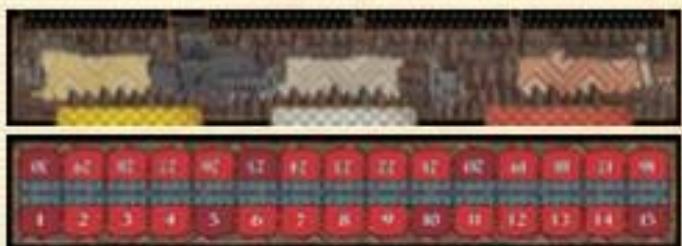


◆1个游戏版正/反
(供应堆/计分条)
*15个事件卡
- 一个起始玩家标记



(11个黄色市民, 11个白色修道士, 11个红色军人)
20个伤害/灰色市民标记
•33个工人



♦ 第纳尔
( × 30), 5 ( × 9), and 10 ( × 10)
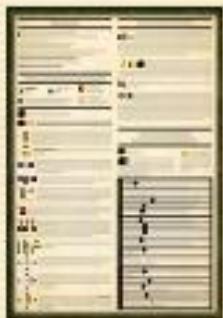
•6个玩家板块
Getting up the Game

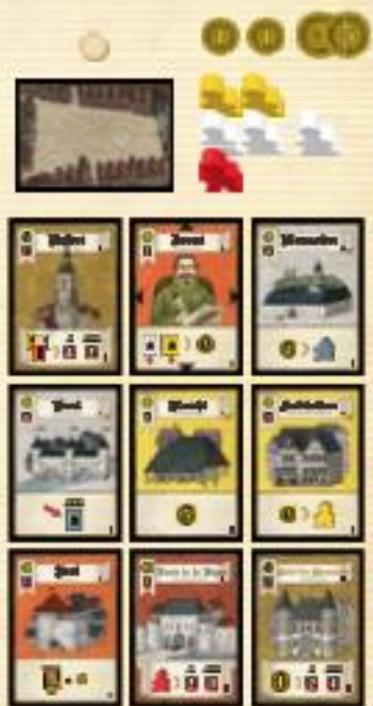
将游戏版“供应堆”一面正面放置在桌子上放置每种颜色3个工人在游戏版上
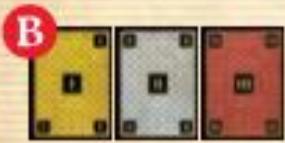
将行动卡按照等级,颜色分成9叠,第一次游戏请使用基础卡洗混每叠卡牌,并将他们按照右图放置

将15张事件卡洗混并放置在游戏版上,翻开其上的3张事件卡
每个玩家获得6第纳尔,一个广场卡,和计分圆片,并获得红,黄白每种2个工人站立在自己的广场卡上。游戏中,站立在广场卡上的工人是可用工人。
将其他标记放置在一边

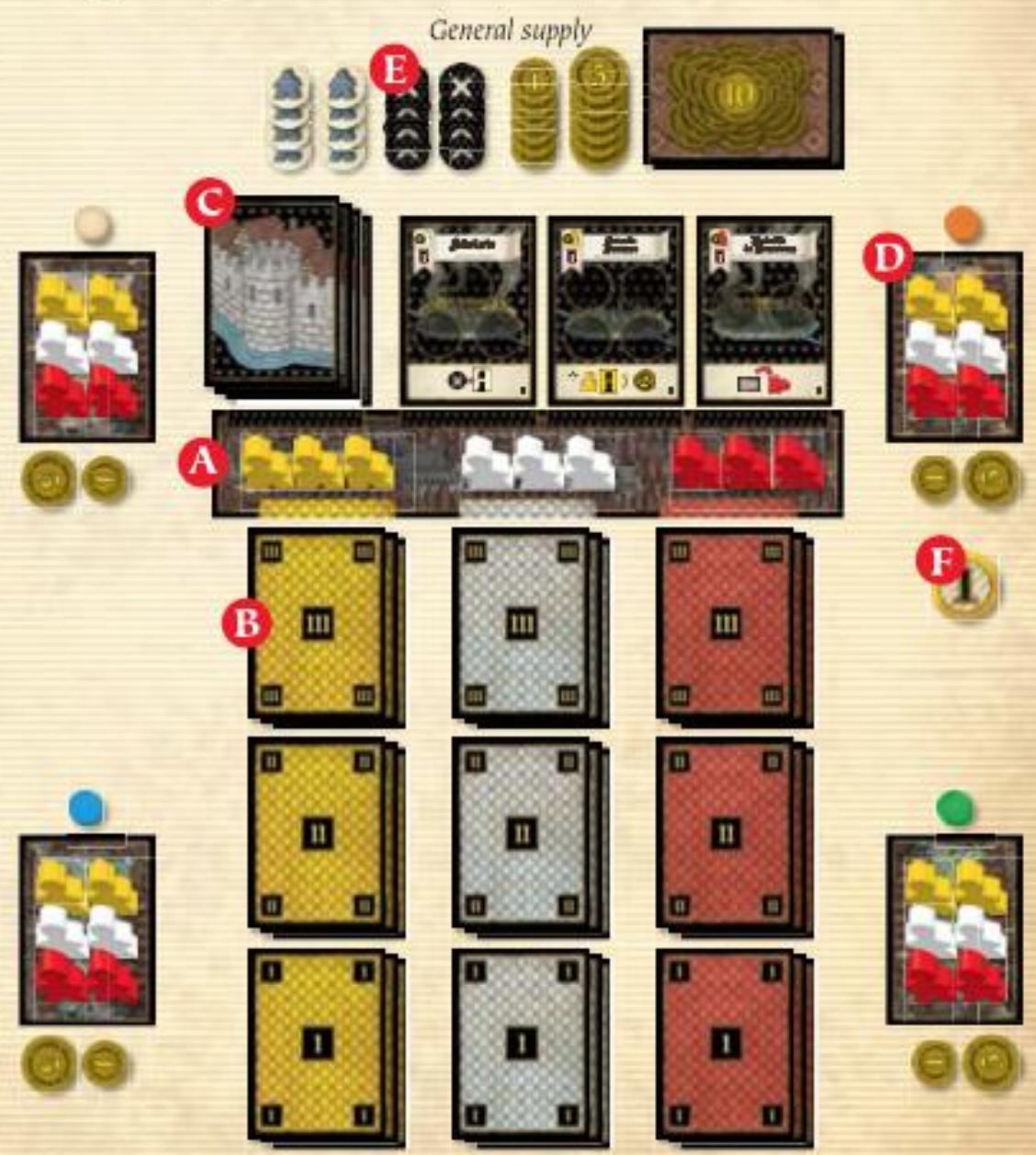
决定起始玩家,并获得对应标记,起始玩家在整局游戏中都不会改变

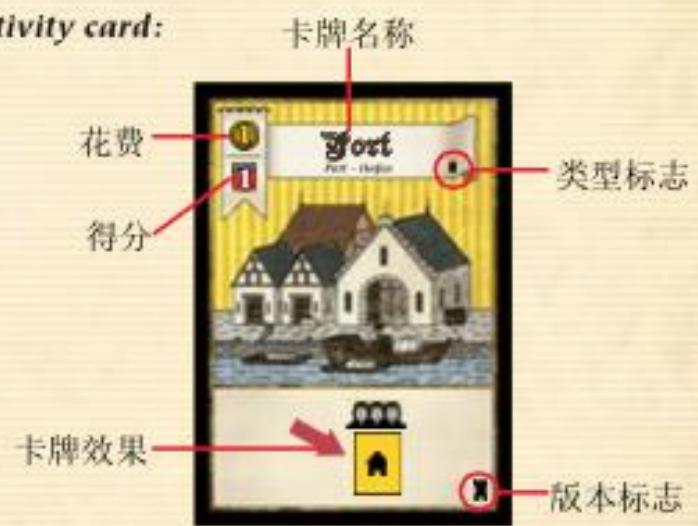
Activity Cards

The 9 decks comprise 4 types of cards:
- 建筑卡:玩家可以在自己的城区建造它们,与卡牌同色的工人可以激活此卡,以此通过建筑卡上的影响来获得好处。
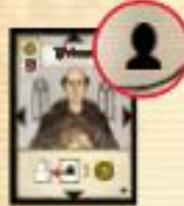
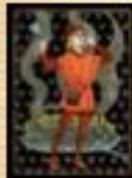
- 人物卡:玩家可以将他们放置在自己的城区内,然后如左图所示,卡牌周围的箭头表示他们可以与同一列或同一行的其他卡牌产生互动。你不需要在人物卡上放置工人来激活他们
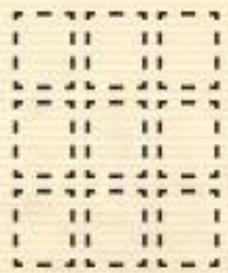
玩家只能在九宫格内建造

-
声望建筑卡:这是属于等级III的卡牌,这些卡可以在游戏结束时提供声望点数。每建造一个声望建筑卡的会令所有玩家在游戏结束时获得分数。
-
城市布告使卡:9叠卡牌堆的每一叠都会有一张。这些卡会宣告发生事件。当翻开一张城市布告使卡时,将会激活一个事件卡队列。
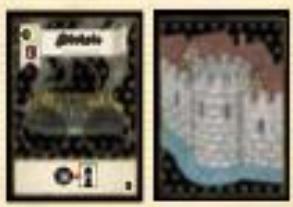
Zoom on one Activity card:
Game Play
玩家按逆时针顺序开始自己的回合,每个玩家的回合按照下面的顺序进行2个阶段
1-从你手中打出一张卡(可选)
2-使用工人来执行一个行动(强制)
1-从你手中打出一张卡(可选)
你可以从手中打出一张卡,将其放置在你的城区中。
你必须支付卡牌左上角标识的建造费用才可以打出此卡。此卡必须直线相邻在已打出的卡牌边上,第一张打出的卡牌忽略此条。玩家只可在3*3的城区内放置卡牌。
注意:
- 卡牌可以放置在同色的卡牌的上面(允许堆叠2张或以上的卡牌)
- 另一方面,如果你希望打出一张卡并放置在城区中已有的不同颜色的卡牌上,那么之前的那张卡牌被面向下弃置于之前所属的牌堆,新卡则取代其位置
· 你可以将卡牌放置在存在标识物的位置。如果是一个损坏标志或者是一个灰色市民,则将起放回供应堆,如果是你的工人,则将其倒置于你的广场旁
· 你不可以建造2个同名的声望建筑(等级III),但是你可以放置两个同名的等级I和等级II的建筑
例子:madeline ● 开始她的回合,她的城区已经放置了5张卡,她想打出一个市场卡。打出这张卡需要1第纳尔,她可以将她放置在城区4个空置的地方,或者放置在已经打出的2张黄色卡牌之上,或者用它取代红色或白色卡牌。

2-使用工人来执行一个行动(强制)

你必须使用1个或更多的同色可用的工人来执行一个行动你可以使用:
位于自己的广场卡上的可用工人(站立在广场卡上的工人)。这些工人是免费的和/或位于对手广场卡上的可用工人,你必须为每个别人的工人支付2第纳尔给拥有者,在使用之后,将工人倒置于他的广场卡边上:它仍属于原来的玩家,但是暂时是不可用的,你可以在一个行动中使用几个不同玩家的工人。
你必须选择下列的行动之一:
1.抓一张卡
-
激活自己区域的一个建筑
-
解决一张事件卡
4.获得收入
5.在广场卡上聚集你的工人


1.抓一张卡
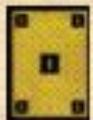
依据工人的颜色, 你可以用一个单独的工人, 你可以摸一张同色等级I的卡, 2个同色的工人你可以摸一张同色的等级II的卡, 3个同色的工人允许你摸一张同色的等级III的卡。将使用的工人倒置原来所在的广
场卡的边上,表示已使用。
执行次行动,你需要遵循:
·要么拿去一叠卡上面朝上的那一张(如果只有一张的话),
·要么拿去一叠卡最上方的两张,查看之,选择拿一张,将另一张面朝上的放置在卡叠上。
若卡叠上已经有一张翻开的卡,你依然可以选择执行后一个行动:首先将面朝上的那张卡面朝下的放置于卡堆的底部。如果卡叠只剩下最后2张卡(则无视哪一张是可见的),拿取其2张,保留一张,并将另一张面向上的放回。如果只有最后一张,你必须拿去那张。
事件卡和壁垒
事件卡的使用有两个特别的规则,之后将会有详细说明。规则如下:
· 当玩家抓取一张城市布告者卡时会触发事件队列中的事件卡的效果。这种效果可能是正面的,也可能是负面的
· 你可以对抗队列中的一个事件。若如此做,则事件卡归你所有并成为一个壁垒。当城市布告者出现时,你可以建设这个壁垒,来保护你不受事件卡的影响。

抓取一张城市布告者卡并触发事件。
若在执行抓取两张面向下的卡牌时,你摸到一张城市布告者
,在决定拿取哪张卡牌之前,你必须抓取一张额外的卡牌,然后:1. 将城市布告者横置于原先所在的卡叠底部,与牌叠成90度。
如此做来表示在接下来的游戏中,此叠卡牌堆不会再有城市布告者。2. 在队列中每一张事件卡的空置圆圈处放置1第纳尔(从供应堆中拿去)如果卡上的空圆被放满了,则不用添加
- 所有的玩家都受到事件卡列上的所有事件卡效果的影响。(这些效果按照玩家顺序结算)每张卡上的一个金币都会导致结算一次该卡效果(无论这个金币是否是在早先的步骤中刚放上的)。

每个玩家可以通过从手上打出一张壁垒卡来建设一个壁垒,用来避免他所挑选一张事件卡的影响(无论卡上有多少枚金币)。若你如此做,面朝下的放置一张壁垒卡在你的城区旁,游戏结束时,此卡将会给你带来1PP。你可以建设多少壁垒卡来防御由同一个城市布告者引发的复数张的事件卡。为了方便起见。一个玩家所打出的所有壁垒卡单独放置一堆。

2. 激活你建设的一个建筑
你可以在你城区的空置的建筑上放置一个工人去工作。这个工人必须和卡同色。
如果这个工人来自于其他玩家,则横置于拥有着的广场边,并放置一个灰色的工人指示物来激活此卡。不同的建筑物上的不同的记号在玩家辅助版上有对应解释
重要:·只有空置的建筑可以被激活,一个建筑其上没有工人也没有损毁和灰色工人标志才算是空置建筑物
·你不能将工人放置在角色卡上,这些卡仅仅可以强化你的城区中的其他卡
例子:
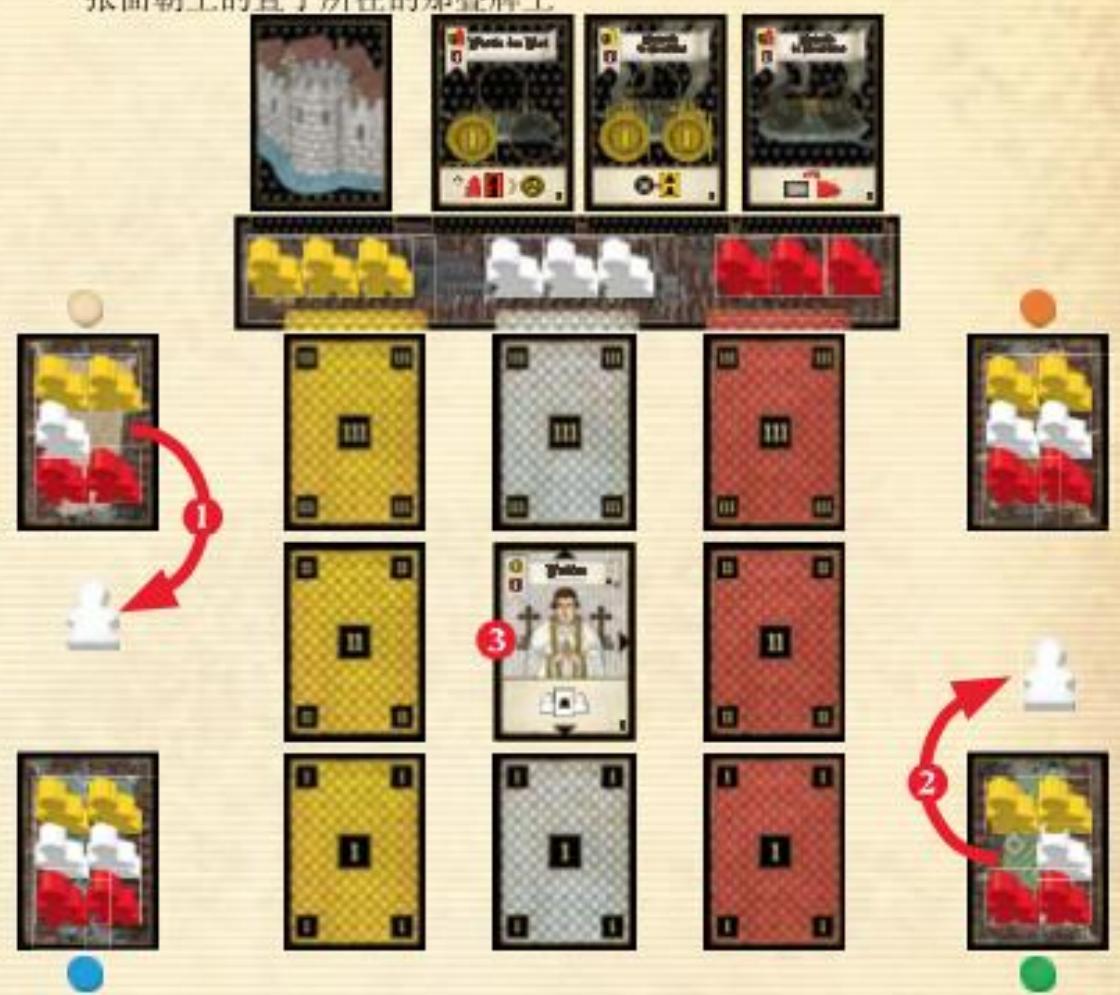
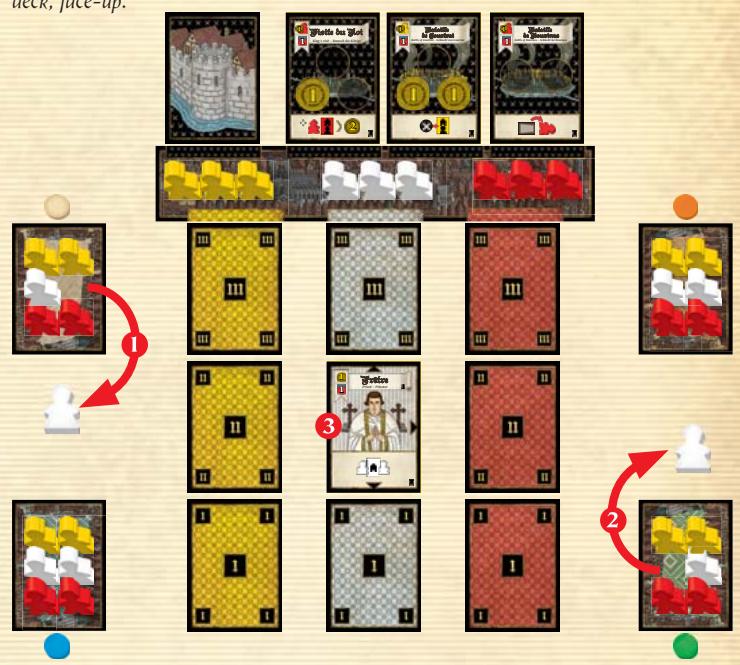
① Nell 使用自己的白色工人和一个② Madeline 的白色工人来抓取一张等级II的卡,她支付Madeline 2第纳尔并将她的工人倒置在Madeline的广场卡边上。面朝上的那张白色等级II的卡对她来说没什么吸引力,于是她将去翻面置于牌叠的底部,然
③后抓取最上面的2张面朝下的卡牌,并选择保留一张,然后将另一张面朝上的置于所在的那叠牌上
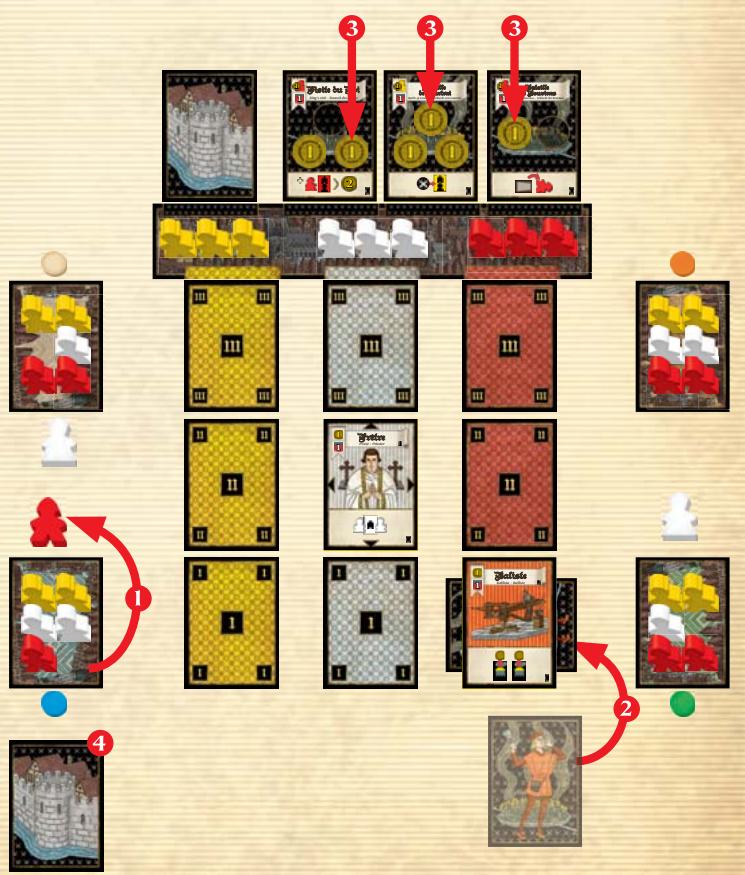
例如:
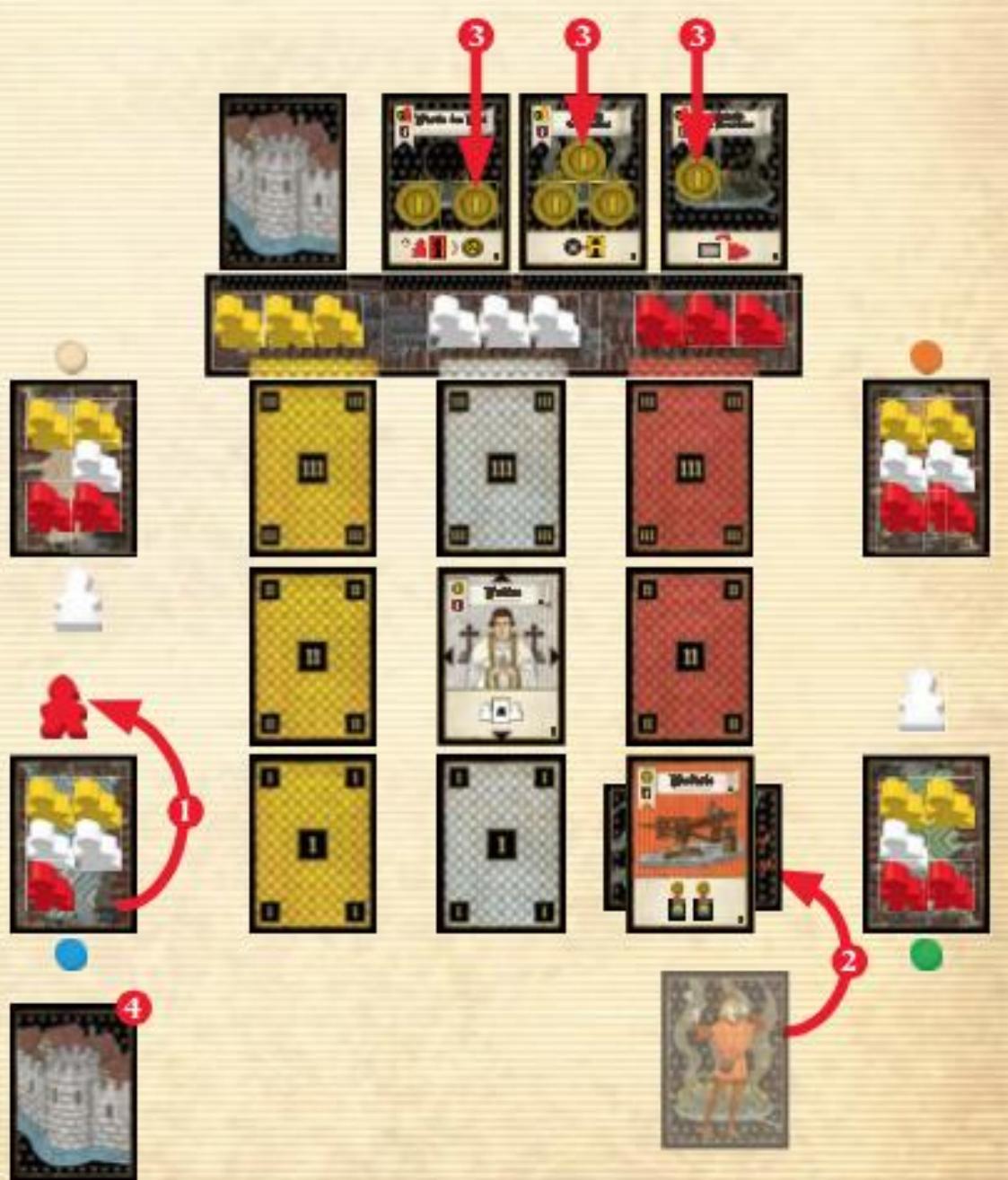
① Nell 抓取一张红色的卡,用的是Justine 的红色工人,她要为其支付2第纳尔。她抓取2张面朝下的卡牌,其中有一张是城市布告者,在选卡之前,她可以再摸一张。
② 然后他将城市布告者转90度置于此叠卡堆的底部
③ 然后在每一个有空格的事件卡上放置一枚金币,然后3个时间
4 产生效果:第一张激活2次,第二张激活3次,第三张之激活一次。
Justing从手中打出一张壁垒卡来为自己防御第二张事件卡的效果

3. 解决一个事件

你可以使用外交手段来对抗至少有一枚金币的事件卡。
为了解决一个让你失去金币的事件卡,你必须使用和卡牌左上角同色的2个工人。
为了解决其他类型的事件卡,你必须使用1个和左上角同色的工人并支付等同印刷于卡牌左上的数字的金币的数字,卡上每个金币额外+1
以上2种情况中,将已经使用的工人倒置于拥有者的广场卡旁(可能是你的也可能是别人)。将卡上的金币放回到供应堆,然后拿取事件卡到你手上(此卡可以当作壁垒来使用)。从事件牌堆中翻开一张新的卡牌。

4获得收入

你可以使用一个货更多的自己的同色工人来获得2第纳尔/每工人。工人只可以来此你自己的广场卡,行动后倒置在自己的广场卡旁


5.在广场卡上聚集你的工人
这个行动允许你移动你所有的工人,包括在建筑卡上的工人,放置在广场卡上。将他们竖置。将自己城区所有的损坏标记和灰色市民标记还回供应堆,当你还有工人在广场卡上时,你也可以执行此行动
例如
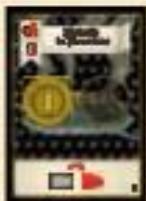
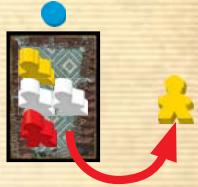
Justing 想要对抗第三张卡的事件,她使用一个黄色的工人并支付2第纳尔(1第纳尔+1,因为卡上有一个金币)然后她将此卡拿回手中,为了以后可以防御未来的事件。
重要:你不可以解决一个没有金币在其上的事件
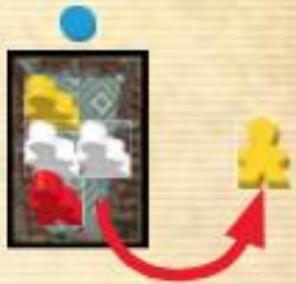
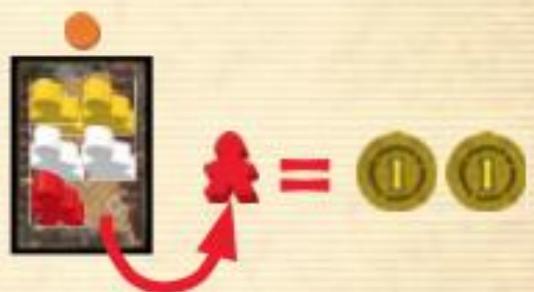
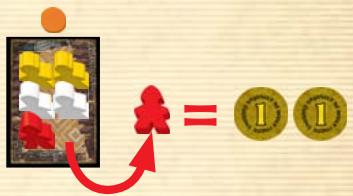
例如:Aude 想要获得一些钱,她使用自己的红色工人来获得2第纳尔,她也可以使用2个红色工人来获得4第纳尔
重要
回合结束时候,你不能拥有多于4张的手牌。如果你多于4张手牌。你必须面朝下的弃回多的手牌返回对应的牌堆。壁垒卡计入手牌上限。你可以建设1个或更多的要色在回合结束时,以此来减少你的手牌。但是这样做的话,那么壁垒不能保护你免于事件的影响。
End of the game
游戏结束的两个条件
条件1:一个玩家的城区的9个位置都建设好了,并至少有2个可见声望建筑。
条件2:翻开的城市布告者的数量多于玩家人数
在起始玩家开始回合前满足以下情况会触发游戏结束:
·有至少2位玩家满足条件1或者
· 条件1和条件2同时被满足
每个玩家可以执行最后一轮回合。
然后,所有的玩家向他的城区可以打出最后一张卡,玩家同时和秘密的选择一张卡并面朝下放置在自己的城区中,然后玩家同时翻开自己的卡,支付花费,然后从触发此卡的同行或同列的现有的角色卡的效果并获得好处。玩家可以打出自己所有的壁垒卡。
1. 2. 3. 4. 5. 6. 7. 8. 9. 10. 11. 12. 13. 14. 15. 16. 17. 18. 19. 20. 21. 22. 23. 24. 25. 26. 27. 28. 29. 30. 31. 32. 33. 34. 35. 36. 37. 38. 39. 40. 41. 42. 43. 44. 45. 46. 47. 48. 49. 50. 51. 52. 53. 54. 55. 56. 57. 58. 59. 60. 61. 62. 63. 64. 65. 66. 67. 68. 69. 70. 71. 72. 73. 74. 75. 76. 77. 78. 79. 80. 81. 82. 83. 84. 85. 86. 87. 88. 89. 90. 91. 92. 93. 94. 95. 96. 97. 98. 99. 100. 101. 102. 103. 104. 105. 106. 107. 108. 109. 110. 111. 112. 113. 114. 115. 116. 117. 118. 119. 120. 121. 122. 123. 124. 125. 126. 127. 128. 129. 130. 131. 132. 133. 134. 135. 136. 137. 138. 139. 140. 141. 142. 143. 144. 145. 146. 147. 148. 149. 150. 151. 152. 153. 154. 155. 156. 157. 158. 159. 160. 161. 162. 163. 164. 165. 166. 167. 168. 169. 170. 171. 172. 173. 174. 175. 176. 177. 178. 179. 180. 181. 182. 183. 184. 185. 186. 187. 188. 189. 190. 191. 192. 193. 194. 195. 196. 197. 198. 199. 200. 201. 202. 203. 204. 205. 206. 207. 208. 209. 210. 211. 212. 213. 214. 215. 216. 217. 218. 219. 220. 221. 222. 223. 224. 225. 226. 227. 228. 229. 230. 231. 232. 233. 234. 235. 236. 237. 238. 239. 240. 241. 242. 243. 244. 245. 246. 247. 248. 249. 250. 251. 252. 253. 254. 255. 256. 257. 258. 259. 260. 261. 262. 263. 264. 265. 266. 267. 268. 269. 270. 271. 272. 273. 274. 275. 276. 277. 278. 279. 280. 281. 282. 283. 284. 285. 286. 287. 288. 289. 290. 291. 292. 293. 294. 295. 296. 297. 298. 299. 300. 301. 302. 303. 304. 305. 306. 307. 308. 309. 310. 311. 312. 313. 314. 315. 316. 317. 318. 319. 320. 321. 322. 323. 324. 325. 326. 327. 328. 329. 330. 331. 332. 333. 334. 335. 336. 337. 338. 339. 340. 341. 342. 343. 344. 345. 346. 347. 348. 349. 350. 351. 352. 353. 354. 355. 356. 357. 358. 359. 360. 361. 362. 363. 364. 365. 366. 367. 368. 369. 370. 371. 372. 373. 374. 375. 376. 377. 378. 379. 380. 381. 382. 383. 384. 385. 386. 387. 388. 389. 390. 391. 392. 393. 394. 395. 396. 397. 398. 399. 400. 401. 402. 403. 404. 405. 406. 407. 408. 409. 410. 411. 412. 413. 414. 415. 416. 417. 418. 419. 420. 421. 422. 423. 424. 425. 426. 427. 428. 429. 430. 431. 432. 433. 434. 435. 436. 437. 438. 439. 440. 441. 442. 443. 444. 445. 446. 447. 448. 449. 450. 451. 452. 453. 454. 455. 456. 457. 458. 459. 460. 461. 462. 463. 464. 465. 466. 467. 468. 469. 470. 471. 472. 473. 474. 475. 476. 477. 478. 479. 480. 481. 482. 483. 484. 485. 486. 487. 488. 489. 490. 491. 492. 493. 494. 495. 496. 497. 498. 499. 500. 501. 502. 503. 504. 505. 506. 507. 508. 509. 510. 511. 512. 513. 514. 515. 516. 517. 518. 519. 520. 521. 522. 523. 524. 525. 526. 527. 528. 529. 530. 531. 532. 533. 534. 535. 536. 537. 538. 539. 540. 541. 542. 543. 544. 545. 546. 547. 548. 549. 550. 551. 552. 553. 554. 555. 556. 557. 558. 559. 560. 561. 562. 563. 564. 565. 566. 567. 568. 569. 570. 571. 572. 573. 574. 575. 576. 577. 578. 579. 580. 581. 582. 583. 584. 585. 586. 587. 588. 589. 590. 591. 592. 593. 594. 595. 596. 597. 598. 599. 600. 601. 602. 603. 604. 605. 606. 607. 608. 609. 610. 611. 612. 613. 614. 615. 616. 617. 618. 619. 620. 621. 622. 623. 624. 625. 626. 627. 628. 629. 630. 631. 632. 633. 634. 635. 636. 637. 638. 639. 640. 641. 642. 643. 644. 645. 646. 647. 648. 649. 650. 651. 652. 653. 654. 655. 656. 657. 658. 659. 660. 661. 662. 663. 664. 665. 666. 667. 668. 669. 670. 671. 672. 673. 674. 675. 676. 677. 678. 679. 680. 681. 682. 683. 684. 685. 686. 687. 688. 689. 690. 691. 692. 693. 694. 695. 696. 697. 698. 699. 700. 701. 702. 703. 704. 705. 706. 707. 708. 709. 710. 711. 712. 713. 714. 715. 716. 717. 718. 719. 720. 721. 722. 723. 724. 725. 726. 727. 728. 729. 730. 731. 732. 733. 734. 735. 736. 737. 738. 739. 740. 741. 742. 743. 744. 745. 746. 747. 748. 749. 750. 751. 752. 753. 754. 755. 756. 757. 758. 759. 760. 761. 762. 763. 764. 765. 766. 767. 768. 769. 770. 771. 772. 773. 774. 775. 776. 777. 778. 779. 780. 781. 782. 783. 784. 785. 786. 787. 788. 789. 790. 791. 792. 793. 794. 795. 796. 797. 798. 799. 800. 801. 802. 803. 804. 805. 806. 807. 808. 809. 810. 811. 812. 813. 814. 815. 816. 817. 818. 819. 820. 821. 822. 823. 824. 825. 826. 827. 828. 829. 830. 831. 832. 833. 834. 835. 836. 837. 838. 839. 840. 841. 842. 843. 844. 845. 846. 847. 848. 849. 850. 851. 852. 853. 854. 855. 856. 857. 858. 859. 860. 861. 862. 863. 864. 865. 866. 867. 868. 869. 870. 871. 872. 873. 874. 875. 876. 877. 878. 879. 880. 881. 882. 883. 884. 885. 886. 887. 888. 889. 890. 891. 892. 893. 894. 895. 896. 897. 898. 899. 900. 901. 902. 903. 904. 905. 906. 907. 908. 909. 910. 911. 912. 913. 914. 915. 916. 917. 918. 919. 920. 921. 922. 923. 924. 925. 926. 927. 928. 929. 930. 931. 932. 933. 934. 935. 936. 937. 938. 939. 940. 941. 942. 943. 944. 945. 946. 947. 948. 949. 950. 951. 952. 953. 954. 955. 956. 957. 958. 959. 960. 961. 962. 963. 964. 965. 966. 967. 968. 969. 970. 971. 972. 973. 974. 975. 976. 977. 978. 979. 980. 981. 982. 983. 984. 985. 986. 987. 988. 989. 990. 991. 992. 993. 994. 995. 996. 997. 998. 999. 1000. 1001. 1002. 1003. 1004. 1005. 1006. 1007. 1008. 1009. 1010. 1011. 1012. 1013. 1014. 1015. 1016. 1017. 1018. 1019. 1020. 1021. 1022. 1023. 1024. 1025. 1026. 1027. 1028. 1029. 1030. 1031. 1032. 1033. 1034. 1035. 1036. 1037. 1038. 1039. 1040. 1041. 1042. 1043. 1044. 1045. 1046. 1047. 1048. 1049. 1050. 1051. 1052. 1053. 1054. 1055. 1056. 1057. 1058. 1059. 1060. 1061. 1062. 1063. 1064. 1065. 1066. 1067. 1068. 1069. 1070. 1071. 1072. 1073. 1074. 1075. 1076. 1077. 1078. 1079. 1080. 1081. 1082. 1083. 1084. 1085. 1086. 1087. 1088. 1089. 1090. 1091. 1092. 1093. 1094. 1095. 1096. 1097. 1098. 1099. 1100. 1101. 1102. 1103. 1104. 1105. 1106. 1107. 1108. 1109. 1110. 1111. 1112. 1113. 1114. 1115. 1116. 1117. 1118. 1119. 1120. 1121. 1122. 1123. 1124. 1125. 1126. 1127. 1128. 1129. 1130. 1131. 1132. 1133. 1134. 1135. 1136. 1137. 1138. 1139. 1140. 1141. 1142. 1143. 1144. 1145. 1146. 1147. 1148. 1149. 1150. 1151. 1152. 1153. 1154. 1155. 1156. 1157. 1158. 1159. 1160. 1161. 1162. 1163. 1164. 1165. 1166. 1167. 1168. 1169. 1170. 1171. 1172. 1173. 1174. 1175. 1176. 1177. 1178. 1179. 1180. 1181. 1182. 1183. 1184. 1185. 1186. 1187. 1188. 1189. 1190. 1191. 1192. 1193. 1194. 1195. 1196. 1197. 1198. 1199. 1200. 1201. 1202. 1203. 1204. 1205. 1206. 1207. 1208. 1209. 1300. 1301. 1302. 1303. 1304. 1305. 1306. 1307. 1308. 1309. 1400. 1401. 1402. 1403. 1404. 1405. 1406. 1407. 1408. 1409. 1500. 1501. 1502. 1503. 1504. 1505. 1506. 1507. 1508. 1509. 1600. 1601. 1602. 1603. 1604. 1605. 1606. 1607. 1608. 1609. 1610. 1611. 1612. 1613. 1614. 1615. 1616. 1617. 1618. 1619. 1620. 1621. 1622. 1623. 1624. 1625. 1626. 1627. 1628. 1629. 1630. 1631. 1632. 1633. 1634. 1635. 1636. 1637. 1638. 1639. 1700. 1701. 1702. 1703. 1704. 1705. 1706. 1707. 1708. 1709. 1710. 1711. 1712. 1713. 1714. 1715. 1716. 1717. 1718. 1719. 1720. 1721. 1722. 1723. 1724. 1725. 1726. 1727. 1728. 1729. 1730. 1731. 1732. 1733. 1734. 1735. 1736. 1737. 1738. 1739. 1740. 1741. 1742. 1743. 1744. 1745. 1746. 1747. 1748. 1749. 1750. 1751. 1752. 1753. 1754. 1755. 1756. 1757. 1758. 1759. 1760. 1761. 1762. 1763. 1764. 1765. 1766. 1767. 1768. 1769. 1770. 1771. 1772. 1773. 1774. 1775. 1776. 1777. 1778. 1779. 1780. 1781. 1782. 1783. 1784. 1785. 1786. 1787. 1788. 1789. 1790. 1791. 1792. 1793. 1794. 1795. 1796. 1797. 1798. 1799. 1800. 1801. 1802. 1803. 1804. 1805. 1806. 1807. 1808. 1809. 1810. 1811. 1812. 1813. 1814. 1815. 1816. 1817. 1818. 1819. 1820. 1821. 1822. 1823. 1824. 1825. 1826. 1827. 1828. 1829. 1830. 1831. 1832. 1833. 1834. 1835. 1836. 1837. 1838. 1839. 1840. 1841. 1842. 1843. 1844. 1845. 1846. 1847. 1848. 1849. 1850. 1851. 1852. 1853. 1854. 1855. 1856. 1857. 1858. 1859. 1860. 1861. 1862. 1863. 1864. 1865. 1866. 1867. 1868. 1869. 1870. 1871. 1872. 1873. 1874. 1875. 1876. 1877. 1878. 1879. 1880. 1881. 1882. 1883. 1884. 1885. 1886. 1887. 1888. 1889. 1890. 1891. 1892. 1893. 1894. 1895. 1896. 1897. 1898. 1899. 1900. 1901. 1902. 1903. 1904. 1905. 1906. 1907. 1908. 1909. 1910. 1911. 1912. 1913. 1914. 1915. 1916. 1917. 1918. 1919. 1920. 1921. 1922. 1923. 1924. 1925. 1926. 1927. 1928. 1929. 1930. 1931. 1932. 1933. 1934. 1935. 1936. 1937. 1938. 1939. 1940. 1941. 1942. 1943. 1944. 1945. 1946. 1947. 1948. 1949. 1950. 1951. 1952. 19
然后开始最后计分:将游戏版翻转到计分版处。然后放置玩家的对应圆盘
所有玩家每一个可见的声望建筑获得PP。根据各自拥有的进行积分,建造的玩家获得左边的PP,☑ 其他的玩家获得右边的PP ☑ 从起始玩家开始一种一种的计算,在计算过的建筑上放置一个损坏标记。
然后每个玩家获得自己城区的所有卡牌花费下面的PP。
(被盖住的卡牌也计分)每个壁垒计1PP。

Madeline has ended the game and the final scoring commences:
| Madeline | Nell | |
| Saint-Brice (●) | 1x4 = 4PPs | 2x2 = 4PPs |
| Belfry (○) | 1x2 = 2PPs | 2x4 = 8PPs |
| Porte de la Vigne (● and ○) | 4x2 = 8PPs | 1x2 = 2PPs |
| Mint (○) | 1x1 = 1PP | 3x2 = 6PPs |
重要:
- 你不可以通过同样的声望建筑中获得超过12PP
· 同名声望建筑只触发一次记分,建造者获得左
边的PP,其他人获得右边的PP。
Advanced rules 进阶规则 更长时间,更策略的规则如下
起始设置:
· 每个玩家只有每个类型1个工人和9第纳尔,放置3+玩家人数的工人在供应板块(4人游戏7工人,3人游戏6工人,2人游戏5工人)开始游戏:加入第六种行动
6 6招聘新的工人
你可以使用一个工人和5第纳尔来雇佣一个新工人。招聘的这个工人和你使用工人必须同色,将使用的工人倒置于你的广场卡边,雇佣的工人竖置在广场卡上,他是可用状态
Expansion
当你完全的掌控所有卡牌的效果后,你可以使用这些扩展卡,你可以按照以下集中方式使用它们
- 你可以使用标记的卡牌来取代同等级,同颜色的卡牌
- 洗混 ✅标记和 ✅标记同等级同颜色的所有卡牌,在每一叠随机弃除3张卡牌。其他规则不变
Note:
注意,这个扩展介绍没有箭头的角色卡,不能影响同列或同行的卡牌。但是给打出它的玩家提供一个永久的效果
Cards of the expansion卡牌解释
·面包店(II)在你广场上每拥有一个军人
或修道院士,获得2第纳尔
·啤酒厂I广场上每一个工人获得1第纳尔
- 啤酒厂II 每个倒置在你广场卡边上的工人 获得2第纳尔
·客栈 广场上每对市民+军人获得4第纳尔
· 参议员(I/II)每当你使用“在广场卡上聚集工人这一行动时”你获得2第纳尔,3第纳尔。
- 大修道院(I/II):翻开3个等级1/II牌叠最顶上的一张卡,从3张卡上拿去其中的两张入手,如果你翻开一张城市布告者,在结算事件之前再抓一张新卡
- 僧侣(I/II):如果你激活同行/同列的一张白色的卡,你可以再使用一个黄色的工人来激活一张同行/同列的黄色的卡
· 圣殿骑士(I/II):同僧侣卡,但是是激活红色卡·石弩(Ⅰ):在每一个对手的城区选择一个空置的卡牌,放置一个毁坏标记,如果有一个工人(即使是灰色的)在石弩卡上,那么当城市布告者触发了事件卡队列时,你可以选择防御一张其中的事件卡(就想你打出一张壁垒卡一样)
·法院(II)最富有的玩家给4第纳尔给激活此卡的玩家,如果平手,那么所有平手玩家支付3第纳尔
(1/11) 在此卡内行或列为放置第二个工人(红色或黄色)时,你允许你解决一个事件卡,这2个工人不要求在同行/同列。放置第4个或者第6个工人时候同样触发此效果,被解决的事件卡必须至少有一枚金币,另外,等级II的此卡允许你拿去事件卡上的金币
·贵族(Ⅰ)选择一个颜色,每个玩家依照自己城区里面的存在此颜色的数量支付你第纳尔。
·雇佣兵(II)当你使用“获得收入”的行动时,每个同色的工人获得3第纳尔,而不是2第纳尔
Designers: Sébastien Dujardin, Xavier Georges, Alain Orban ♦ Illustrations and Graphics: alexandre-roche.com
Editing of the rules: Sébastien Dujardin ♦ English Translation: Nathan Morse
Thanks:
The designers thank Etienne, Shadi, Emmanuel, Denis, Madeline, Anaëlle, Fanny, François, Muriel, Nathan, Marcus, Nicolas and all others who helped us to finalize this project.

TOURNAY_RULES_ENG.md25.0 KB
Grigée par les Romains au ler siècle dans la Gaule belge, Tournag doit l’essentiel de son essor à l’Gscaut. Malheureusement, ce dernier participa également à sa perte puisqu’en 881, les Normands remontèrent son cours et purent ainsi s’emparer de la cité, ce qui arrêta net son ascension. Le cataclysme normand obligea les Tournaisiens à fuir ce qui devint un énorme champ de ruines. Ce jeu vous invite à réparer les dégâts causés par l’invasion normande en construisant et en exploitant les prestigieux bâtiments de la ville. Participez ainsi à la nouvelle et glorieuse ère qui portera la ville pendant plus de sept siècles !
Ruilt by the Romans during the first centuryg in Belgian Gaul, Tournay
experienced most of its growth along the Scheldt river. In 881, the Normans upstream conquered the city, squelching its magnificent boom. The Norman disaster forced the Tournaisians to flee what became an enormous field of ruins. Only thirty years after their escape did people begin to return to their homes. This game invites you to repair the damage caused by the invasion of Normandy, by constructing and operating the prestigious buildings of the city. Join the new and glorious era, which will see more than seven centuries of prosperity for the rebuilt city.
Tournag wurde im 1. Yahr hundert von den Römern im belgischen Gallien am Ufer der Schelde gegründet. Diese günstige Lage brachte der Stadt rasch Pracht und Wohlstand. Unglücklicherweise trug sie auch entscheidend zu Tournays jähem Niedergang bei, als im Jahr 881 die Normannen stromaufwärts kommend die Stadt erobern konnten. Erst dreißig Jahre später begannen die Menschen, in ihre Häuser zurückzukehren. Dieses Spiel lädt Sie ein, prächtige Gebäude in der Stadt zu errichten und zu nutzen, um die Schäden zu reparieren, die durch den Einfall der Normannen verursacht wurden. Haben Sie Teil an dieser neuen, glorreichen Ära, die der Stadt mehr als sieben Jahrhunderte Wohlstand bringen wird.

Concept of the Came

Tournay is a card game in which you play a wealthy Tournaisian family directing a district of the city and managing its citizens, which are of three classes: the military (associated with red), religious (white), and civilian (yellow).
The game's activity cards are separated by level (from I to III) and color (red, white, and yellow) to form 9 distinct decks. Players initially have 2 citizens of each class that they will use to perform different actions: draw a card, activate a building in their district, combat an event, earn money, or gather their citizens on their Plaza in order to make them available again.
Cards you draw may be placed in your district (a 9-space grid) at the beginning of a turn. Level I and Il cards provide you with various benefits, while level IIl (prestige buildings) will score for all players at the end of the game — not just for the player who built them.
The player with the most prestige after the final scoring will win the game!
Contents

90 activity cards for the basic game, with the symbolsand (30 of each color, comprising 3 levels). The player aid describes the icons used on these cards.
18 activity cards for the expansion, with the symbol (6 of each color, comprising levels I and Il). The expansion cards are explained at the end of the rules.



1 gameboard front/back (Supply side/Scoring side)
15 Event cards


20 damage / gray citizen tokens
4 Plaza cards
33 citizens (11 yellow civilians, Il white religious, Il red military)

players' colors

1 start player marker

Deniers in denominations of 1 (× 30), 5 (× 9),and 10 (× 10)
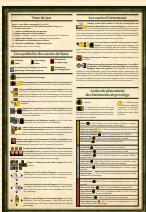
6 Player Aids
Setting up the Game

Place the gameboard with its “Supply" side face-up. Place 3 citizens of each color on the board, on the designated spots.

Sort the activity cards by color and level so as to have 9 decks of 10 cards each. For an introductory game, use only the basic cards. Shuffle each of these place them in descending level order below the appropriately of the gameboard.

Form a deck with 15 Event cards and place it above the board, above the first black slot. Reveal the top 3 cards from the event deck and form the event queue by placing them above ther three black slots.

Each player takes 6 deniers, a Plaza card, and the scoring token of the same color, and sets them in front of himself. Each player stands 2 citizens of each class (yellow, red, and white) on his Plaza card. Throughout the game, the citizens standing on his Plaza card are the available citizens.

Place the remaining deniers and the damage / gray citizen tokens in a general supply.

Designate a starting player who takes the start player marker for the whole game. The start player marker is only used to determine exactly when the game ends.


Activity Cards
The 9 decks comprise 4 types of cards:

Buildings: Players construct them in their districts, where they can activate them with citizens of the same color, in order to benefit from the buildings' effects.

Characters: Players place these in their districts, and they interact with the cards situated in the same row or column, as indicated by the four arrows around the edge of the card. You never place a citizen on a character card to activate it.
Prestige buildings: These are the Level Ill cards, which can provide prestige points at the end of the game. Each prestige building built causes a scoring for all players at the end of the game.


Zoom on one Activity card:
Cost
Prestige Points earned at the end of the game
Each player can place Building, Character, or Prestige Building cards in order to construct his district. This district will have a maximum size of 3 rows by 3 columns, which is 9 spaces total.
Town Criers: There is one of these in each of the 9 decks. These cards announce events. When such a card is drawn, the events in the queue are activated!
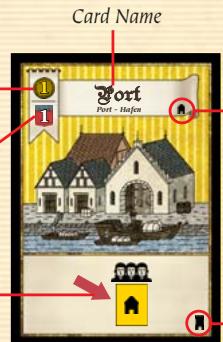
Effect of the card
Card type (building, character or prestige building)
Basic game or expansion symbol
Game Flay
Players take turns in clockwise order. Your turn comprises two phases that must be played in this order: 1- play a card from your hand (optional), 2- perform an action with the citizens (mandatory).
Play a card from your hand (optional)
You may play one card from your hand in order to build it in your district. You must pay the construction cost that is depicted in the upper-left corner of the card in order to play it. The card must be orthogonally adjacent to a card already played, with the obvious exception of the first card you play into your district. Each player's district can neither extend more than 3 rows nor more than 3 columns.
Notes:
It is possible to play a card on top of another card of the same color (two or more samecolor cards can be stacked)
On the other hand, if you want to play a card in a space occupied by cards of a different color, the old ones are discarded face-down under their respective decks before being replaced by the new one.
It is possible to place a card on a card occupied by a token. If it is a damage marker or a gray citizen, return it to the supply. If it is your citizen, lay it near your Plaza.
You can not build two prestige buildings (Level III) with the same name; however, you can place two Level I or Level Il cards with the same name.
Example: Madelinebegins her turn with her district already comprising 5 cards. She wants to place a market card from her hand. Placing this card costs her a denier. She can put it on one of 4 empty spaces in the grid that forms her district, or lay it atop one of the two yellow cards already played, or replace the red card or one of the two white cards with it.

Perform an action with the citizens (mandatory)

You must use one or more available citizens of the same color to perform an action.
You can use:
the available citizens on your own Plaza card (the citizens standing on your Plaza card). Using these citizens is free. AND/OR
• the available citizens on your opponents' Plaza cards. You must pay 2 deniers per citizen to the citizen's owner. After using it, lay the citizen down beside its Plaza card: it still belongs to the same player, but it is unavailable for the time being. It is possible to use citizens from several players for one action.
You must choose one action from the following:
1- Draw a card.
2- Activate one building in your district.
3- Combat an Event card.
4- Earn deniers.
5- Gather your citizens on your Plaza card.

I Draw a card

With a single citizen, you can draw a Level I card of the same color as the citizen. Two citizens of the same color permit you to draw a Level Il card of the citizens' color. Three citizens of the same color permit you to draw a Level Ill card of the
citizens' color. The citizens used to draw cards are simply laid down, beside the Plaza card from which they came.
In order to draw a card, you may:
either take the first face-up card from the deck, if there is one,
or take tne nirst two face-down caras trom tne deck, look at tnem, then choose one and put the other face-up on top of the deck. It is possible to choose this second option when a card is already faceup on top of the deck: First place the face-up card face-down under the deck. If there are only 2 cards in the deck (regardless of whether one is visible), draw them both, keep one, and put the other back face-up. If there is only one card, you must take it.
Event cards and ramparts
Event cards play two distinct roles in the game, which will be described in more detail later on. These two roles are::
In the event queue, its effect is triggered when a player draws a Town Crier card. This effect can be positive or negative.
You can combat an event in the queue. In this case, the card goes into your hand and becomes a rampart. It is possible to construct the rampart when a Town Crier appears, in order to protect yourself from the effect of one event card.

If one of the two face-down cards drawn is a Town Crier, you must draw an additional card before choosing which card to add to your hand.Then:
1 - Place the Town Crier card under the deck from which it was drawn, at a 90° angle relative to the other cards in the deck. Twisting the card 90° shows that there will be no more town criers found in that deck for the rest of the game,
2 - Place a 1-denier coin from the supply on one empty circle on each of the Event cards in the queue. If all the circles on a card are already full, do not add a coin to that card,
3 - All players are affected by all the cards in the Event queue (these effects are described on the player aid). Each effect is applied once for each coin on the card (regardless of whether a coin could be added to the card in the previous step).

Each player can construct a rampart by playing one Rampart card from his hand in order to avoid the effects of one entire Event card of his choice (regardless of the number of coins on it). If you do this, place the rampart card face-down near your district. It will bring you I PP at the end of the game. It is possible to construct several ramparts in order to defend against several event cards triggered by the same town crier. For convenience, all the Rampart cards played by a player are simply kept in a single pile.
2 Activate a building in your district

You can put a citizen to work in an unoccupied building in your district. The citizen and the building must be the same color. If the citizen comes from another player's Plaza, lay that citizen beside its own Plaza, and then place a gray citizen token from the supply on the activated card. The different icons used to indicate the effects of the different buildings are explained on each player's player aid.
Important:
Only unoccupied buildings can be activated. A building is unoccupied if there is neither a citizen nor a damage / gray citizen token on it.
You never place citizens on the character cards. These cards merely improve other actions in your district.
Example:

1 Nelluses her white citizen and2one of Madeline'swhite citizens to draw a Level Il card. She pays Madeline 2 deniers for her citizen and lays it down beside Madeline's Plaza. The face-up card on top of the Level Il white deck does not interest her, so she chooses to tuck it under its deck and take one of the first two face-down cards from the deck. 3 She keeps the chosen card in her hand and places the card not chosen on top of the deck, face-up.
Example:
① Nell draws a Level I red card with Justine'sred citizen, for which she must pay 2 deniers. She draws 2 face-down cards from the deck, one of which is a Town Crier. She can draw a replacement card before selecting a card. 2 Then she places the Town Crier card under the deck, rotated 90°.
3 She places a coin on each of the 3 Event cards in the queue. The 3 events take effect: the first is activated 2 times, the second is activated 3 times, and the third is only activated once.
4 Justine plays an event card from her hand in order to protect herself from the 2nd event.
3Combat an event
You can work diplomatically against one of the events in the queue that has at least 1 denier on it.

In order to combat an Event card that makes you lose deniers, you must use 2 citizens of the color designated in the upper-left corner of the card.

In order to combat the other types of Event cards, you must use one citizen of the color designated in the upper-left corner of the card, and pay a ransom equai to tne number oi coins present on tne card, pius 1 denier. m equal to the number of coins present on the card, plus I denier.
In both cases, the lay the used citizens beside the Plaza card(s) from which they originated (which may be yours or someone else's). Return the coins on the card to the supply, and take the Event card into your hand (lt can be built later as a Rampart). Replace the old event with a new one from the deck.
4 Earn deniers

You can use one or more of your own citizens of the same color to earn 2 deniers per citizen. The citizens used must come from your own Plaza card. Lay these citizens down beside your Plaza card after this action.
5Gather your citizens on your Plaza card

This allows you to move all your citizens, including those that were played on your building cards, onto your Plaza card. Place them standing upright. Return any damage tokens and gray citizens in your district to the supply. You can even execute this action if you still have citizens on your Plaza card.

Example: Justinewants to combat the 3rd card in the event queue. She uses a yellow citizen from her Plaza and pays 2 deniers (1 denier plus 1, because there is one coin on the card), then she adds the card to her hand in order to protect herself from a future event.
Important: It is impossible to combat an event that has no coins on it.

Example: Aude wants to earn some money. She uses a red citizen to earn 2 deniers. She could have used both red citizens to earn 4 deniers.
Important: You can never have more than 4 cards in your hand at the end your turn. If your hand has more than 4 cards after your action, you must discard the extras face-down under the appropriate decks. The Rampart cards count toward this hand limit of 4 cards. You can build one or more ramparts at the end of your turn in order to reduce your hand to 4 cards; but a Rampart card built this way will not be protecting you from an event.
End of the game
Two conditions must be taken into account for the end of the game:
Condition 1: a player has constructed a district of 9 spaces with at least 2 prestige buildings visible.
Condition 2: one Town Crier card more than the number of players has been revealed and placed under the decks (5 town criers with 4 players; 4 with 3 players; 3 with 2 players).
The end of the game is triggered at the beginning of the start player's turn if: Condition 1 is met by at least 2 players OR
Condition I and Condition 2 are met simultaneously.
Each player can take one final turn.
Then, all players can play one last card from their hand into their district. The players simultaneously and secretly choose one card and place it face-down in their district. Then the players reveal their card at the same time, paying its cost, and gaining any benefit from extant character cards in the same row or column that are triggered by that one card. The players can place all their Rampart cards from their hand into their pile of built ramparts.
Now the final scoring commences: Flip over the gameboard to reveal the score track, and set the players' discs next to the board.
Each visible prestige building earns Prestige Points (PPs) for all players. For each element in his possession that is scored, the player who built the building earns the left PPs , while other players earn the right PPs . Score the cards one by one, starting with the start player, placing a damage marker on each building as it's scored, in order to keep track of what has been scored already.
Next, each player earns the PPs indicated just below the costs on all the cards in his district (cards that have been covered also count for this), and 1 PP per card in his constructed ramparts pile.
Example:

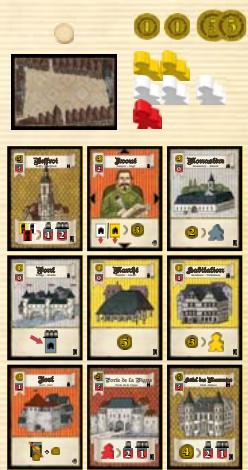
Madeline has ended the game and the final scoring commences:
| Madeline | Nell | |
| Saint-Brice ( | 1x4 = 4PPs | 2x2 = 4PPs |
| Belfry () | 1x2 = 2PPs | 2x4 = 8PPs |
| Porte de la Vigne and | 4x2 =8PPs | 1x2=2PPs |
| Mint () | 1x1 =IPP | 3x2 = 6PPs |
Important:
You cannot gain more than 12 PPs from the same prestige building
Prestige buildings with the same name only trigger a single scoring: Anyone who built
the building earns the PPs on the left; the other players, the PPs on the right.
Advanced rules
For longer and more strategic games, modify the following rules:
Setup:
each player starts with only one citizen of each type on his Plaza, and 9 deniers.
place 3 citizens more than the number of players in each of the 3 supplies on the gameboard (7 citizens with 4 players; 6 with 3 players; 5 with 2 players).
Game Play: Add a 6th action:
6 Recruit a new citizen
You can use a citizen and 5 deniers to recruit a citizen from the general supply. The citizen you use and the citizen you recruit must be of the same color. Lay the citizen you used beside your Plaza card. Stand the recruited citizen on your Plaza; it is available for use.
Expansion
Once you master the effects of the cards, you can play with the expansion cards. You can use several methods:
replace the cards bearing a symbol with the cards of the same color and level bearing the symbol.
shuffle together the cards of the same color and level with the symbol and with the symbol. Draw 3 cards at random for each deck.
No other rules change. The expansion cards are not included on the player aid, but they are explained in detail below.
Note: The expansion introduces character cards without arrows. They do not interact with the cards of the same row or column, but give a permanent effect to the player who has played it.
Cards of the expansion
Bakery (II) : 2 deniers per military or 2 deniers per religious citizen on your Plaza.
Brewery (I) : I denier per citizen on your Plaza card.
Brewery (II) : 2 deniers per citizen lying beside your Plaza.
Inn (I) : 4 deniers per civil + military citizen pair on your Plaza.
Senator (I/II) : 2 deniers/3 deniers when you use the “Gather your citizens on your Plaza" action.
Abbey (I/II) : Reveal the top card of the three Level I / II decks. Add 2 of the 3 cards to your hand. If you reveal a Town Crier card, resolve the event cards before revealing a new card.
Monk (I/II) : If you activate a white card in the same row/column, you can also activate a yellow card in the same row/column with a second white citizen.
Templar (I/II) : Same as the monk above, but with a red card.
Catapult (I) : Place a damage token on an unoccupied card of your choice in each opponent's district. If there is a citizen (even a gray one) on this Catapult card when events are triggered by a town crier, you can protect yourself from one event of your choice (as if you were building a rampart).
Courthouse (II) : The richest player gives 4 deniers to the active player. In case of ties for the richest, all tied players pay 3 deniers.
Knight (I/II) : Placing a 2nd citizen (red or gray) in the same row or column as this card permits you to combat an event card. The 2 citizens do not need to be in the same row / column as each other. Placing a 4th or a 6th citizen provides the same effect. There must be at least one denier on the event card. The Level Il card permits you to take the deniers on the event card, as well.
Lordship (I) : Choose a color. Each player pays you l denier per building of this color present in his district.
Mercenary (II) : Earn 3 deniers per citizen instead of 2 deniers when you use military citizens for the “Earn deniers" action.
Designers: Sébastien Dujardin, Xavier Georges, Alain Orban Illustrations and Graphics: alexandre-roche.com Editing of the rules: Sébastien Dujardin English Translation: Nathan Morse
Thanks:
The designers thank Etienne, Shadi, Emmanuel, Denis, Madeline, Anaëlle, Fanny, François, Muriel, Nathan, Marcus, Nicolas and all others who helped us to finalize this project.

Texts are community-compiled or publicly released by publishers; copyright remains with the original authors. For personal reference only.